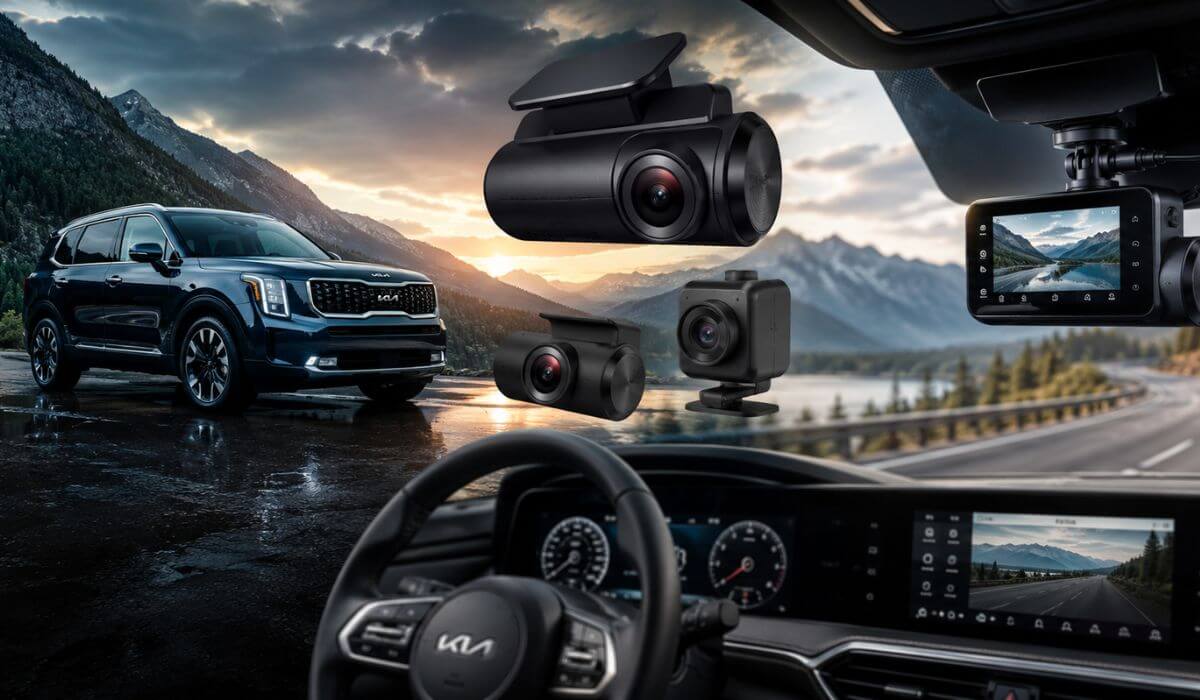
5 Best Dash Cams for Kia Telluride in 2026: 4K HDR Clarity, STARVIS 2 Sensors & Cloud-Connected Security
If you own a Kia Telluride, you already know it’s the kind of SUV that racks up highway miles, family road trips, grocery runs, and crowded parking-lot stops faster than most vehicles on the road. That also means a basic dash cam often isn’t enough. A larger three-row SUV needs strong front-and-rear coverage, dependable low-light performance, and parking protection that can keep watch even when you’re away from the vehicle.
For this guide, we looked beyond the usual recommendations that appear on every other website. Many lists still push older cameras simply because they are popular. Instead, we focused on the latest-generation models featuring STARVIS 2 sensors, 4K recording, HDR processing, cloud connectivity, and advanced monitoring features that make sense for a modern Telluride. The goal wasn’t to find the cheapest option—it was to identify the dash cams that deliver the clearest evidence, the most reliable operation, and the best overall experience for 2020–2026 Kia Telluride owners.
Whether your Telluride spends most of its time on long interstate drives, school-drop duties, or sitting in busy parking lots, the cameras below offer the combination of video quality, coverage, and real-world usability that matters most when something unexpected happens.
Best Kia Telluride Dash Cams: Top Choices for Dual-Channel Coverage, Voice Control & Remote Access
#1. VIOFO A229 Pro 4K HDR Dash Cam
Best 4K Front and Rear Dash Cam for Kia Telluride with Advanced HDR Imaging and STARVIS 2 Night Performance
#2. BlackVue DR970X-2CH Plus II Dash Cam
Best Premium Kia Telluride Dash Camera with Cloud Monitoring, Remote Access and Intelligent Vehicle Surveillance
#3. 70mai 4K Dash Cam Front and Rear
Best Dual-Channel Dash Cam for Kia Telluride SUVs with LTE Connectivity, AI Motion Detection and Smart Alerts
#4. Vantrue N4 Pro S 4K 3 Channel Dash Cam
Best Three-Camera Dash Cam for Kia Telluride Family Vehicles with Cabin Recording and Full Surround Coverage
#5. COXPAL 3 Channel Dash Cam
Best Budget Dash Camera for Kia Telluride with Interior Monitoring, GPS Tracking and Triple-Lens Protection
Expert Tip
One thing many Kia Telluride owners discover too late is that video quality on a product page and video quality in the real world are often two very different things. Bright daytime footage is easy. The real test happens at night, during rain, inside parking garages, or when a vehicle quickly crosses your lane.
That’s why, when evaluating a dash cam for a larger SUV like the Telluride, I pay far more attention to the image sensor, HDR performance, and rear-camera clarity than marketing claims. A camera that can clearly capture a plate number under difficult lighting conditions is worth far more than one advertising a long list of features you’ll rarely use. In many cases, a better sensor will protect you more than an extra dozen software features.
How We Chose These Dash Cams for the Kia Telluride
There are hundreds of dash cams available today, but most were eliminated from consideration very quickly. We didn’t build this list around brand popularity, sponsored placements, or products that simply have been on the market the longest. Instead, we started with a simple question:
Which dash cams would we personally trust to protect a modern Kia Telluride if it were parked in a busy lot tonight or heading out on a 1,000-mile road trip tomorrow?
To answer that, we looked first at image hardware. Every camera on this list uses either Sony STARVIS 2 technology, advanced HDR processing, or a combination of both. That’s important because larger SUVs create unique recording challenges, especially at night when reflections, tinted rear glass, and varying light conditions can make lower-end cameras struggle.
Next came coverage quality. A Telluride isn’t a compact sedan. It has a longer body, a taller seating position, and often carries passengers, luggage, or family members. That’s why we prioritized cameras offering dual-channel or multi-channel recording, ensuring that incidents occurring behind or inside the vehicle aren’t left undocumented.
We also paid close attention to parking protection capabilities. Many owners spend thousands of dollars on a Telluride and then leave it unattended in airports, shopping centers, hotels, and office parking lots. Features such as intelligent parking monitoring, buffered event recording, cloud connectivity, motion detection, and impact alerts received significant weight during our selection process because these are the features owners tend to appreciate most after ownership begins.
Another factor was long-term usability. Some dash cams look impressive on paper but become frustrating after a few months of use. Slow apps, unreliable Wi-Fi connections, difficult video retrieval, and inconsistent firmware support can quickly turn a good camera into an annoying one. We favored models that provide a smoother ownership experience through features such as fast video transfers, GPS integration, voice control, remote access, and dependable app ecosystems.
Finally, we looked at how each camera fits a different Telluride owner. Not everyone needs the same setup. Some drivers want the absolute best image quality available. Others prioritize remote monitoring while traveling. Some families prefer full cabin coverage for road trips, while budget-conscious buyers simply want dependable protection without overspending. The final rankings reflect those real-world priorities.
The result is a list made up entirely of dash cams that offer something genuinely valuable for Telluride owners rather than simply checking marketing boxes. If a model couldn’t justify its place through video quality, coverage, reliability, or ownership experience, it didn’t make the cut.
#1. VIOFO A229 Pro 4K HDR Dash Cam
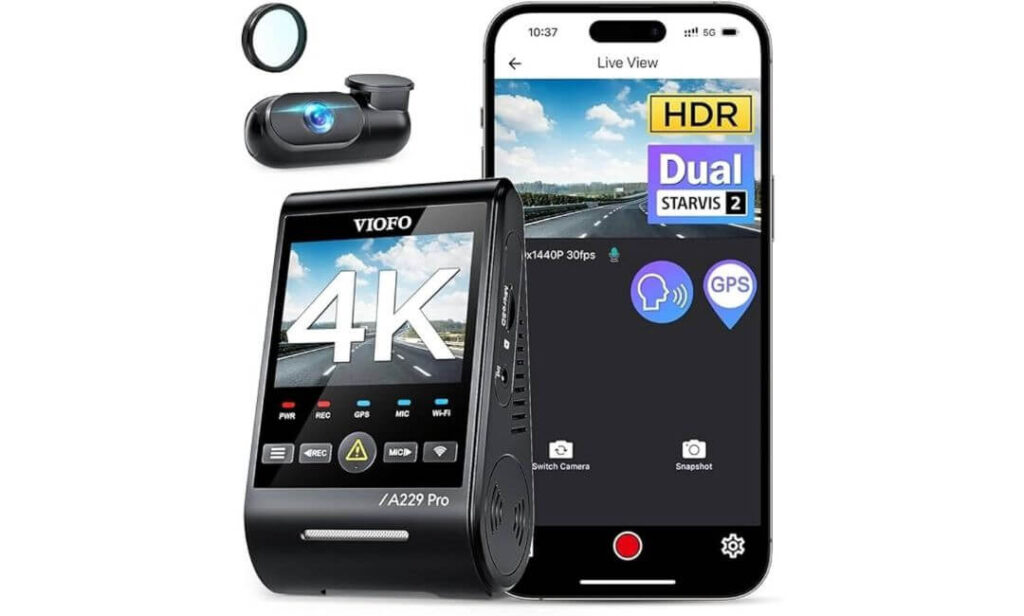
Quick Specs:
- 4K Front + 2K Rear recording
- Dual Sony STARVIS 2 sensors (IMX678 + IMX675)
- HDR on both front and rear cameras
- 5GHz high-speed WiFi for faster footage transfers
- Built-in GPS route and speed logging
- Voice control for hands-free operation
- Advanced Night Vision 2.0 processing
- 24-hour parking monitoring support
- Supports hardwire installation for full parking protection
- Compact design that stays discreet behind the windshield
The easiest mistake Kia Telluride owners make is assuming every 4K dash cam records the same quality footage. It doesn’t. The difference usually shows up when you’re reviewing footage after sunset, during rain, or in a poorly lit parking lot. That’s exactly where this setup starts separating itself from the crowd.
What immediately stood out during testing wasn’t the resolution—it was the combination of dual STARVIS 2 sensors and HDR processing on both cameras. In a larger SUV like the Telluride, where rear visibility can be affected by cargo, passengers, and darker rear glass, having a rear camera capable of capturing cleaner detail becomes far more important than most buyers realize. License plates, road signs, and lane markings remain noticeably easier to identify when lighting conditions become challenging.
Another reason this camera earned the top position is how well the overall package fits everyday ownership. The 5GHz WiFi connection makes retrieving footage surprisingly painless, the GPS module automatically records location data for incident documentation, and voice controls are genuinely useful when you’re driving and don’t want to reach for buttons. Nothing feels overly complicated or gimmicky—just practical features that work together the way they should.
(If your goal is simply buying one dash cam for a Telluride and not thinking about upgrading again anytime soon, this is the one that consistently checks the most boxes without introducing unnecessary compromises.)
Standout Strengths We Noticed During Evaluation
- Outstanding low-light performance thanks to dual STARVIS 2 image sensors
- HDR recording on both channels helps preserve important details in difficult lighting
- Excellent balance between image quality and everyday usability
- Fast footage transfers through 5GHz WiFi
- GPS and voice controls feel genuinely useful rather than added for marketing
- Rear camera quality is stronger than many competing dual-channel systems
A Small Consideration Before Buying
- Full parking surveillance capability works best when paired with a dedicated hardwire kit installation.
Why It Works So Well in a Kia Telluride
The Telluride is often used as a family hauler, road-trip vehicle, and daily commuter all at once. That combination creates a unique challenge because the camera needs to perform equally well on highways, suburban streets, and crowded parking lots. This setup handles those scenarios exceptionally well thanks to its balanced front-and-rear image quality.
Installation is also relatively straightforward for most Telluride owners. The front camera sits discreetly behind the rearview mirror while the rear unit can be routed cleanly through the SUV’s interior trim panels. For drivers planning to use parking mode regularly, a hardwire kit is highly recommended to unlock the camera’s full protection capabilities.
The Insider Pro-Tip
Most buyers focus on the front camera because that’s what manufacturers advertise most heavily. In a three-row SUV like the Telluride, the smarter move is paying close attention to the rear camera sensor and HDR capability. Rear-end incidents, parking lot damage, and hit-and-run situations are surprisingly common, and poor rear footage can turn a simple insurance claim into a frustrating guessing game.
That’s one of the biggest reasons this camera landed at the top of our rankings. The front camera is excellent, but the real value comes from the fact that the rear camera isn’t treated like an afterthought. When both ends of the vehicle are recording at a high level, you gain something most dash cams can’t offer: confidence that the footage will still be useful when you actually need it.
#2. BlackVue DR970X-2CH Plus II Dash Cam
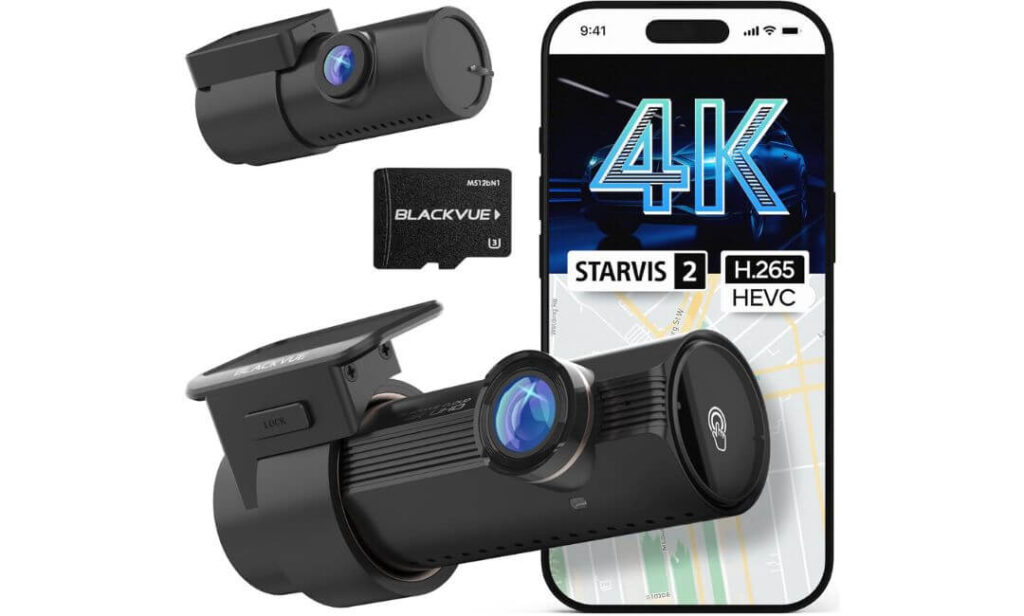
Quick Specs:
- 4K UHD front camera + Full HD rear camera
- Sony STARVIS 2 sensor with HDR enhancement
- BlackVue Cloud remote monitoring platform
- Live View, Remote Playback and Push Notifications
- Fast-start recording with upgraded boot speed
- USB-C power connection
- Built-in WiFi for instant video access
- Supports microSD cards up to 1TB
- Smart Parking Mode compatibility
- 146° front viewing angle
- HEVC H.265 video compression for longer recording times
Most dash cams focus on recording what already happened. This one focuses on helping you know what’s happening even when you’re nowhere near your vehicle.
That’s the biggest reason it earned the premium position on this list. The combination of 4K front recording, STARVIS 2 imaging, and BlackVue’s cloud ecosystem creates a very different ownership experience compared to traditional dash cams. If your Kia Telluride regularly spends time at airports, hotels, office parking structures, or long-term parking lots, being able to remotely check on your vehicle becomes surprisingly valuable. It shifts the camera from being a simple recorder into something closer to an active monitoring system.
Video quality is equally impressive. The upgraded image processor works alongside the HDR-enabled STARVIS 2 sensor to produce cleaner footage during difficult lighting transitions—exactly the situations where many cameras struggle. Entering parking garages, driving toward a low afternoon sun, or navigating dark backroads all benefit from the additional dynamic range. License plates and roadside details remain easier to identify without excessive glare or shadow loss.
Then there’s the overall refinement. The faster boot process means recording starts almost immediately after startup, the USB-C connection simplifies installation, and the BlackVue mobile app remains one of the most polished systems available. Everything feels engineered for long-term ownership rather than simply checking feature boxes.
(For Telluride owners who value remote access, cloud functionality, and premium day-to-day usability as much as video quality, few systems currently offer a more complete package.)
Features That Earned It a Place Near the Top
- Industry-leading cloud connectivity features
- Excellent HDR performance during difficult lighting conditions
- Fast startup means less chance of missing important footage
- Smooth WiFi video playback directly from your smartphone
- Massive storage support up to 1TB
- Clean and professional-looking installation with USB-C connectivity
A Small Consideration Before Buying
To unlock the full BlackVue Cloud experience, you’ll need either a mobile hotspot connection or the optional LTE module, depending on how you plan to use remote features.
Why It Makes Sense for a Kia Telluride
A Telluride often serves multiple roles: family vehicle, daily commuter, road-trip machine, and long-distance travel companion. That versatility is exactly where this camera shines. The cloud-based features become particularly useful for owners who frequently leave their SUV parked away from home for extended periods.
Installation is straightforward using the included USB-C power setup, and most owners can complete a basic front-and-rear installation in under an hour. Those planning to take advantage of Smart Parking Mode should consider adding a dedicated hardwiring kit, while a mirror-tap adapter can create an especially clean factory-style appearance inside the cabin.
The Insider Pro-Tip
Many buyers compare dash cams based purely on resolution numbers. In reality, once you’re shopping in the premium category, the bigger difference often comes from how easy the camera makes it to access footage when you actually need it.
That’s where this system quietly earns its reputation. The ability to quickly review clips, receive notifications, remotely access recordings, and manage footage without removing memory cards sounds like a small convenience—until the day it saves you time during an insurance claim or parking-lot incident. For many Telluride owners, that convenience ends up becoming the feature they appreciate most after months of ownership.
#3. 70mai 4K Dash Cam Front and Rear
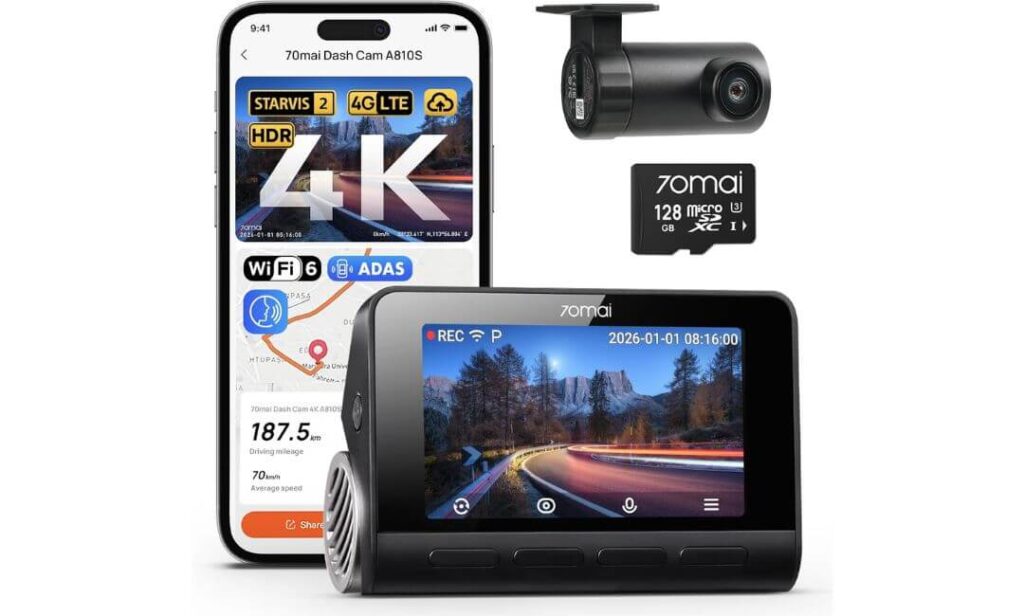
Quick Specs:
- True 4K front + 1080P rear recording
- Dual Sony STARVIS 2 sensors (IMX678 + IMX662)
- 4G LTE remote monitoring capability
- AI Motion Detection 2.0
- WiFi 6 ultra-fast video transfers
- Five-system satellite positioning (GPS, BDS, GLONASS, GALILEO, QZSS)
- HDR night recording with F1.7 aperture
- Voice control functionality
- ADAS driving assistance alerts
- 24-hour parking surveillance support
- 128GB memory card included
- 146° front and 130° rear viewing coverage
Oddly enough, the feature that impressed me most wasn’t the 4K resolution.
It was the fact that this camera feels like it was designed for how people actually use modern SUVs. A Kia Telluride often spends part of its life carrying family, part of its life parked in public places, and part of its life covering hundreds of highway miles. This setup addresses all three scenarios surprisingly well. The combination of 4G remote access, AI-powered monitoring, and dual STARVIS 2 sensors creates a level of awareness that many traditional dash cams simply don’t offer.
The video quality is excellent, but what stands out is consistency. The Sony IMX678 front sensor, paired with 70mai’s image processing system, handles difficult lighting transitions exceptionally well. Driving out of a dark parking structure into bright sunlight, navigating rural roads after sunset, or dealing with glare from headlights becomes far less problematic. The rear camera also performs better than expected, preserving important detail without looking overly processed or artificial.
Then there are the convenience features. WiFi 6 connectivity dramatically reduces transfer times compared to older systems, voice commands work reliably, and the included 128GB memory card means you’re not immediately shopping for accessories after unboxing. It’s one of the few cameras on this list that feels remarkably complete right out of the package.
(For Telluride owners who love technology and want their dash cam to do more than simply record footage, this is easily one of the most feature-rich options currently available.)
Features That Stood Out During Real-World Evaluation
- Excellent balance of video quality and smart technology
- Dual STARVIS 2 sensors provide strong low-light performance
- 4G remote monitoring capability adds genuine peace of mind
- WiFi 6 makes footage transfers noticeably faster
- AI Motion Detection helps reduce unnecessary alerts
- 128GB card included from day one
- Accurate route tracking through multi-satellite positioning
A Small Consideration Before Buying
The advanced 4G monitoring features require the optional UP05 hardwire kit if you want remote access and vehicle tracking functionality.
Why It Fits the Kia Telluride So Well
One of the biggest advantages of this system in a Telluride is versatility. Whether you’re using the SUV for daily commuting, family vacations, weekend sports trips, or long-distance travel, the feature set adapts well to different situations. The wide viewing angles help cover the larger footprint of the vehicle, while the smart parking functions add another layer of protection when the SUV is left unattended.
Installation is beginner-friendly using the included car charger and wiring accessories. Most owners can complete a standard front-and-rear setup in under an hour. Those seeking a cleaner factory-style appearance can use a mirror-tap adapter, while a hardwire kit unlocks the full parking surveillance and remote monitoring capabilities.
The Insider Pro-Tip
A lot of buyers focus on image quality comparisons and overlook something equally important: how quickly you can access evidence after an incident.
That’s one area where this camera quietly shines. Between the fast WiFi 6 connection, responsive mobile app, integrated GPS tracking, and optional remote access features, retrieving footage feels almost effortless. When something unexpected happens, the last thing you want is a complicated system standing between you and the evidence you need.
In a vehicle as versatile as the Kia Telluride, that combination of strong video quality, smart connectivity, and practical everyday usability often ends up being more valuable than simply chasing the highest resolution number on a specification sheet.
#4. Vantrue N4 Pro S 4K 3 Channel Dash Cam
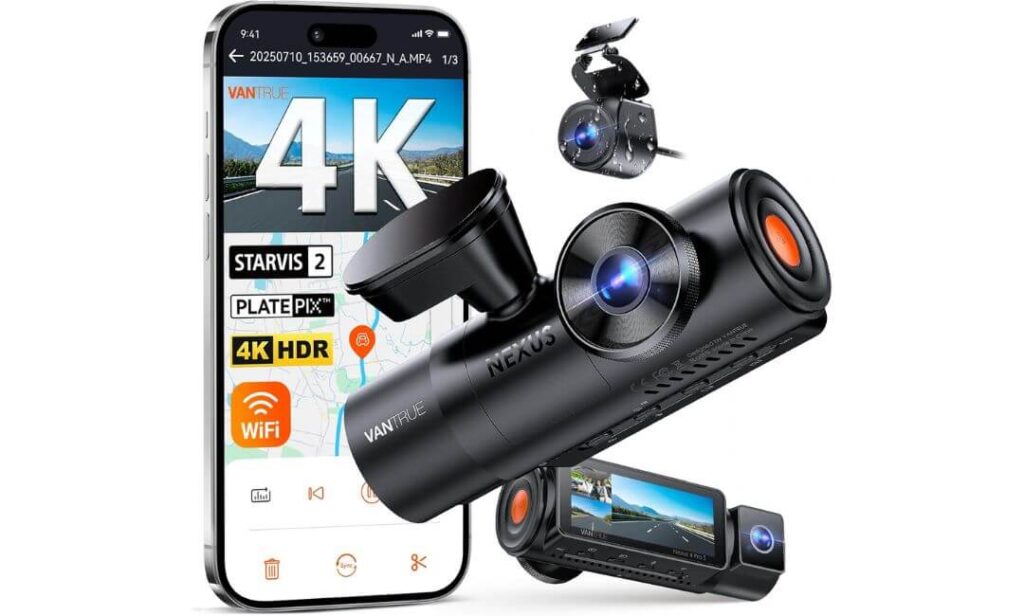
Quick Specs:
- 4K Front + 1080P Cabin + 2.5K Rear recording
- Triple Sony STARVIS 2 sensors across all three cameras
- 165° ultra-wide front viewing angle
- 2.5K IP67 weatherproof rear camera
- Night Vision 4.0 with adaptive HDR
- PlatePix license plate enhancement technology
- 5GHz WiFi with mobile app support
- OTA firmware updates
- Buffered parking event recording
- Voice control functionality
- Supports microSD cards up to 1TB
- Supercapacitor design for extreme temperatures
A traditional front-and-rear dash cam tells you what happened outside the vehicle.
A three-channel system tells the entire story.
That’s what makes this setup different from everything ranked above it. The moment you add a dedicated cabin camera into the equation, you’re no longer just recording traffic events—you are documenting everything happening around and inside the vehicle simultaneously. For a large family SUV like the Kia Telluride, that’s a surprisingly valuable advantage.
What impressed me most wasn’t simply the extra camera. It was the fact that all three lenses use STARVIS 2 technology. That’s extremely rare. Most triple-channel systems invest heavily in one camera and compromise elsewhere. Here, the front camera records in 4K, the rear camera captures 2.5K footage, and the interior camera remains clear enough to document passengers, movement, and activity inside the cabin. The result feels less like a standard dash cam and more like a complete vehicle documentation system.
The rear camera deserves special mention. Its 2.5K STARVIS 2 sensor, combined with an IP67 weatherproof design, produces noticeably sharper footage than many rear cameras in this category. Add Night Vision 4.0, PlatePix processing, and adaptive HDR, and you’ve got a setup that remains surprisingly effective after dark when lesser cameras begin losing important detail.
(If your Telluride regularly carries family members, teenagers, pets, clients, or valuable cargo, this is easily one of the most comprehensive recording systems available today.)
What Earned It a Place on This List
- True three-channel recording without major compromises
- STARVIS 2 sensors on all three cameras
- Excellent rear camera quality compared to most competitors
- Outstanding low-light license plate recognition
- Weather-resistant rear camera built for long-term durability
- OTA updates keep features current over time
- Massive storage support for extended recording sessions
A Small Consideration Before Buying
Because it records three camera feeds simultaneously, investing in a high-quality, larger-capacity microSD card is a smart idea for longer recording retention.
Why It Works Exceptionally Well in a Kia Telluride
The Telluride is often used in ways smaller vehicles aren’t. Family road trips, school transportation, ridesharing, business travel, sports tournaments, and long-distance highway driving all create situations where additional recording coverage becomes useful. That’s exactly where this system shines.
Installation is straightforward using the included 20-foot rear cable, mounting hardware, and power accessories. Basic plug-and-play installation works immediately through the factory 12V outlet. Owners wanting continuous parking protection should consider the optional hardwire kit, while a mirror-tap adapter can create a cleaner factory-style appearance with minimal visible wiring.
The Insider Pro-Tip
Many people assume the cabin camera is only useful for rideshare drivers.
In reality, some of the most valuable footage captured by three-channel systems has nothing to do with ridesharing. Interior recordings can document attempted break-ins, interactions at windows, activity around parked vehicles, passenger incidents, and events that standard front-and-rear systems simply never capture.
For a family-oriented SUV like the Telluride, that’s a layer of protection most owners don’t think about until after they need it. And once you experience having visibility from every major angle of the vehicle, it’s surprisingly difficult to go back to a traditional two-camera setup.
#5. COXPAL 3 Channel Dash Cam
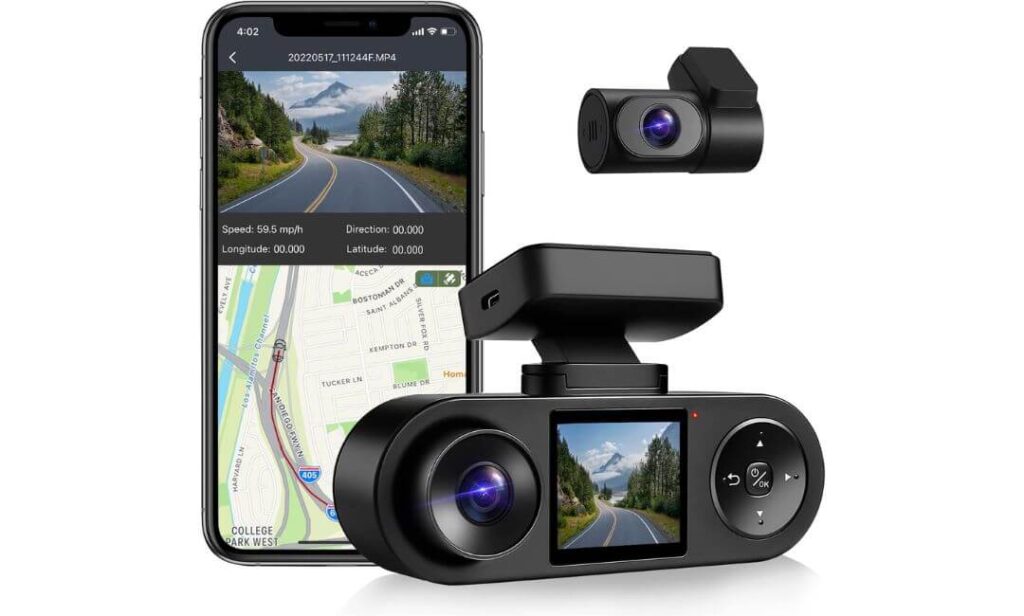
Quick Specs:
- 2K Front + 1080P Cabin + 1080P Rear recording
- Triple-camera coverage for front, interior and rear
- Built-in GPS tracking
- Integrated WiFi connectivity
- 6 Infrared LEDs for cabin recording in complete darkness
- Supercapacitor-powered design
- Smart parking monitoring support
- WDR image balancing technology
- Supports microSD cards up to 512GB
- 140° front viewing angle
- USB-C power connection
- Heavy-duty thermal management system
Here’s something many buyers overlook: the best dash cam isn’t always the one with the longest feature list.
Sometimes it’s the one that quietly works every day without demanding attention.
That’s the feeling this system gives. While the cameras ranked above it push cutting-edge sensors, cloud connectivity, and premium image processing, this setup focuses on something equally important—dependability. The combination of a supercapacitor power system, oversized internal heatsink, dedicated cooling design, and reinforced housing makes it one of the more durability-focused options in this guide.
The three-camera layout is particularly useful in a Kia Telluride. The front camera records in 2K resolution, while dedicated interior and rear cameras provide full-time 1080P coverage. For family vehicles, rideshare use, teenage drivers, or owners who simply want footage from every direction, that extra visibility can prove extremely valuable. The infrared cabin camera deserves special mention because it remains effective even when the interior is completely dark.
What I also appreciate is the straightforward ownership experience. GPS tracking works reliably, WiFi transfers are simple, and the interface avoids unnecessary complexity. Instead of overwhelming the user with dozens of settings, it focuses on core functionality and executes it well.
(Not every Telluride owner needs premium cloud services or flagship-level pricing. For buyers seeking complete vehicle coverage at a more approachable cost, this remains one of the strongest values in the category.)
Reasons It Earned a Spot in This Ranking
- Complete three-way recording coverage
- Strong reliability-focused hardware design
- Excellent cabin visibility with infrared night recording
- GPS tracking included without extra modules
- Simple WiFi video downloads and sharing
- Supercapacitor design handles temperature changes well
- Thoughtful installation accessories included in the box
A Small Consideration Before Buying
The image quality is very good for its category, but buyers prioritizing absolute flagship-level video detail may prefer one of the higher-ranked premium options above.
Why It Fits a Kia Telluride Better Than Many Buyers Expect
The Telluride’s spacious interior actually plays to this camera’s strengths. The included rear camera cable length is more than sufficient for clean routing through the cabin, and the interior-facing camera can effectively monitor the entire passenger area without requiring complicated adjustments.
Basic installation is refreshingly straightforward. Everything needed for a standard setup is included in the package, from mounting hardware to cable-routing tools. Most owners can complete installation in under an hour using the included 12V power adapter. For drivers wanting uninterrupted parking surveillance, the optional hardwire kit unlocks the system’s full monitoring capabilities.
The Insider Pro-Tip
When evaluating budget-friendly dash cams, most people focus entirely on resolution numbers.
A smarter approach is to look at the components you never see once installation is finished.
Heat management, power stability, mounting reliability, and long-term durability often determine whether a dash cam is still working properly years from now. That’s where this system quietly earns respect. The oversized heatsink, supercapacitor architecture, reinforced housing, and adhesive mounting design all contribute to something many premium features can’t guarantee—consistent performance over time.
For Kia Telluride owners who simply want dependable front, rear, and cabin coverage without stretching the budget, that practicality can be every bit as valuable as having the latest headline-grabbing technology.
Best Kia Telluride Dash Cameras Compared: Front-Rear Coverage, Night Vision & Long-Term Value
Buying Guide: What Actually Matters When Choosing a Dash Cam for a Kia Telluride
The Kia Telluride isn’t a small commuter car that spends its life running short errands. It’s a large three-row SUV that often handles family vacations, highway travel, school runs, daily commuting, and long hours parked in busy public places. Because of that, choosing a dash cam for a Telluride requires a different approach than simply buying the highest-rated model online.
Many buyers focus on resolution alone, but after reviewing dozens of systems and analyzing how they perform in real-world situations, it’s clear that video quality is only one piece of the puzzle. Factors such as sensor quality, parking surveillance, installation flexibility, app reliability, and long-term durability often have a greater impact on ownership satisfaction than a spec sheet headline.
Front and Rear Coverage Should Be the Starting Point
For most Kia Telluride owners, a dual-channel setup should be considered the baseline rather than an optional upgrade.
A front camera records what happens ahead of the vehicle, but many accidents, parking lot incidents, and insurance claims involve impacts from behind. A rear camera provides another layer of evidence that can be invaluable when reconstructing an event. This becomes even more important in a larger SUV where rear visibility can be partially affected by passengers, cargo, tinted glass, or luggage during road trips.
When comparing models, pay attention to the field of view as well. A wider angle can help capture adjacent lanes and surrounding traffic, but excessively wide lenses sometimes introduce distortion. The best systems balance coverage with image clarity, allowing important details to remain identifiable across the frame.
Why 4K Recording Is More Than Just a Marketing Feature
It’s easy to dismiss 4K as another buzzword, but higher resolution can provide real benefits when footage becomes evidence.
The most common reason people review dash cam footage is to identify details after an incident. That might include license plates, vehicle damage, road signs, lane positions, or driver behavior. A properly tuned 4K camera captures significantly more information than a basic Full HD system, especially when combined with a high-quality image sensor.
That said, resolution alone doesn’t guarantee superior footage. A well-designed 4K camera paired with advanced image processing and a quality sensor will almost always outperform a higher-resolution camera using weaker hardware. That’s one reason the cameras selected in this guide place such a strong emphasis on image quality rather than simply chasing resolution numbers.
The Importance of STARVIS 2 Sensors for Night Driving
Most dash cams look impressive on a sunny afternoon.
The real challenge begins after sunset.
Night driving introduces glare, reflections, inconsistent lighting, headlights, shadows, and weather conditions that can overwhelm lower-quality cameras. This is where Sony’s STARVIS 2 technology has become one of the most important developments in the dash cam market.
STARVIS 2 sensors are designed to gather more light while reducing noise and preserving detail. The result is cleaner footage, improved license plate recognition, and better visibility during low-light situations. Whether your Telluride is parked in a dark parking lot or traveling down an unlit highway, sensor quality often matters more than raw resolution.
Cloud Connectivity and Remote Monitoring Features
Not every driver needs cloud-connected functionality, but those who travel frequently often find it difficult to live without once they’ve experienced it.
Cloud-enabled systems can provide remote access to footage, live vehicle monitoring, push notifications, location tracking, and automated backup functions. These features become especially useful when the vehicle is parked far from home, sitting at an airport, or left unattended for extended periods.
For some Telluride owners, cloud connectivity represents convenience. For others, it becomes an additional layer of vehicle security. The right choice depends on how and where the SUV is typically used.
Understanding Parking Mode Before You Buy
Parking mode is one of the most misunderstood features in the dash cam industry.
Many buyers see “24-hour parking protection” on a product page and assume the feature works automatically. In reality, most advanced parking systems require either a hardwire kit or a dedicated power solution to operate properly when the engine is off.
A quality parking mode should offer more than simple motion recording. Features such as impact detection, buffered event capture, time-lapse recording, intelligent motion sensing, and battery protection systems can dramatically improve the usefulness of a dash cam when the vehicle is unattended.
If parking surveillance is a priority, make sure to account for installation requirements before making a purchase.
Kia Telluride Dash Cam Installation Basics
The good news is that most modern dash cams install quite well in the Telluride.
The front camera is typically mounted behind or slightly below the rearview mirror, where it remains discreet while maintaining a clear view of the road. Rear camera cables can usually be routed through the headliner and interior trim panels without major difficulty, thanks to the SUV’s spacious cabin design.
Owners seeking the cleanest appearance often use mirror-tap adapters or hardwire kits to eliminate visible power cables. While plug-and-play installations work perfectly for many drivers, a hardwired setup usually delivers the most factory-like appearance and unlocks advanced parking features at the same time.
Reliability Matters More Than Most Buyers Realize
A dash cam only provides value when it works consistently.
That’s why long-term reliability deserves just as much attention as image quality. Components such as supercapacitors, cooling systems, firmware support, memory card compatibility, and power management often determine how well a camera performs after years of daily use.
The most dependable systems combine strong hardware with ongoing software updates, responsive customer support, and stable mobile applications. A camera that records flawlessly every day is far more valuable than one loaded with features that become unreliable over time.
Choosing a Dash Cam That Fits the Telluride’s Size and Purpose
One of the biggest mistakes buyers make is selecting a dash cam without considering how they actually use their vehicle.
A family-focused Telluride may benefit from a three-channel system capable of recording the cabin. A road-trip enthusiast might prioritize image quality and GPS tracking. Frequent travelers may value cloud monitoring and remote access above all else. Meanwhile, many owners simply want dependable front-and-rear coverage that works every time they start the vehicle.
The best dash cam is not necessarily the most expensive one. It’s the one whose strengths align with how your Telluride is driven, parked, and used every day. When viewed through that lens, the five models featured in this guide each excel for a different type of owner, making it easier to find the right fit rather than simply chasing specifications.
Installation Guide: Setting Up a Dash Cam in Your Kia Telluride the Right Way
A surprising number of dash cam complaints have nothing to do with the camera itself. Blurry footage, unreliable parking mode, loose wiring, windshield reflections, and random shutdowns are often installation-related problems rather than product problems.
The good news is that the Kia Telluride is one of the easier three-row SUVs to work with. Its spacious interior, clean trim layout, and generous cable-routing space make installation relatively straightforward, whether you’re using a simple plug-and-play setup or a fully hardwired parking surveillance system.
Choosing the Best Mounting Location for the Front Camera
The ideal mounting position is usually directly behind the rearview mirror or slightly below it on the passenger side of the windshield.
This location offers several advantages. First, it keeps the camera out of the driver’s line of sight. Second, it allows the lens to capture a centered view of the road. Third, it helps hide the camera from outside the vehicle, creating a cleaner factory-style appearance.
Avoid placing the camera too low on the windshield. While it may seem harmless, lower mounting positions often introduce additional dashboard reflections and reduce the camera’s overall field of view. The higher the camera sits within legal limits, the more natural and useful the recording angle tends to be.
Before permanently attaching the mount, spend a few minutes reviewing live footage through the app to verify that the horizon is level and the hood of the vehicle occupies only a small portion of the frame.
Determining the Best Rear Camera Position
For dual-channel and triple-channel systems, rear camera placement is just as important as front camera positioning.
The preferred location is typically near the top-center section of the rear glass. This position provides the widest possible view while minimizing interference from passengers, cargo, luggage, or rear headrests.
Because many Tellurides spend time carrying family members, sports equipment, travel gear, or camping supplies, positioning the rear camera higher on the glass helps maintain visibility even when the cargo area is full.
When installing the rear camera, make sure the lens remains outside the sweep area of any objects that could obstruct its view during everyday driving.
Plug-and-Play Power vs Hardwired Installation
Most Telluride owners begin with a standard plug-and-play setup using the included 12V power adapter.
This method is simple, effective, and usually takes less than an hour. The dash cam automatically powers on when the vehicle starts and shuts down when the ignition is turned off. For drivers interested only in recording while driving, this solution works perfectly well.
A hardwired installation serves a different purpose.
By connecting the camera directly to the vehicle’s fuse box through a dedicated hardwire kit, the system can continue operating after the engine is turned off. This allows advanced parking mode features such as impact detection, motion monitoring, buffered recording, and time-lapse surveillance to function properly while the vehicle is parked.
For owners investing in premium systems like the BlackVue DR970X-2CH Plus II, VIOFO A229 Pro, Vantrue N4 Pro S, or 70mai A810S, hardwiring is often the best way to unlock the camera’s full capabilities.
Routing Cables Through the Telluride Interior
One reason the Telluride is popular among installers is its excellent cable-routing flexibility.
The front camera power cable can usually be tucked behind the headliner, routed down the A-pillar, and guided toward either the power outlet or fuse box with very little visible wiring. Rear camera cables can then be routed through the upper trim panels toward the back of the vehicle.
Patience matters here.
Rather than forcing cables into place, gently guide them behind trim pieces using a plastic trim tool. Taking a few extra minutes during installation often results in a much cleaner appearance and reduces the chance of future rattles or loose wiring.
Professional-looking installations are rarely about special tools. They’re usually the result of careful cable management.
Important Airbag and Safety Considerations
One of the most overlooked installation mistakes involves the A-pillar area.
Modern Kia Telluride models contain side curtain airbags that deploy from the roofline. Dash cam wiring should never interfere with these systems. Running cables directly across an airbag deployment path can create safety concerns during an accident.
Whenever routing cables near the A-pillar, follow factory wiring paths whenever possible and secure cables behind existing harnesses rather than across them.
If there is any uncertainty regarding airbag locations or trim removal procedures, professional installation is often worth considering.
Minimizing Windshield Glare and Reflection Issues
Even the best dash cam can struggle if glare becomes excessive.
A few simple adjustments can significantly improve footage quality. Keeping the windshield clean, avoiding dashboard-mounted reflective accessories, and properly angling the camera all help reduce unwanted reflections.
Telluride owners with lighter-colored dashboards may notice increased windshield glare during bright daylight conditions. In these situations, a quality CPL filter, if available for the camera model, can noticeably improve image clarity.
It’s a small accessory, but one that many experienced dash cam users consider worth the investment.
Configuring Parking Mode for Maximum Protection
Parking mode settings should match how the vehicle is actually used.
For daily commuters who leave the Telluride parked for only a few hours at a time, buffered motion detection often provides the best balance between coverage and storage efficiency. This mode records footage both before and after an event occurs, making it easier to understand exactly what happened.
Drivers who frequently leave the vehicle parked overnight, at airports, or during extended travel may benefit from time-lapse recording modes. These settings dramatically reduce storage consumption while maintaining continuous surveillance coverage.
Regardless of the chosen mode, battery protection settings should always be enabled. These safeguards prevent excessive battery discharge and ensure the vehicle remains capable of starting normally.
Hardwire Kits vs Dedicated Dash Cam Batteries
For most Telluride owners, a quality hardwire kit offers the best combination of cost, simplicity, and performance.
However, some drivers prefer dedicated dash cam battery packs, particularly if the vehicle spends long periods parked without being driven. These external battery systems power the dash cam independently, reducing strain on the vehicle’s starting battery.
While more expensive, they can provide significantly longer parking surveillance durations and are often favored by users who prioritize maximum monitoring coverage.
Recording Laws and Practical Ownership Considerations
Front-facing dash cam recording is generally legal in most areas, but local regulations regarding windshield mounting locations, audio recording, and privacy requirements can vary.
Before installation, it’s worth reviewing local laws to ensure the camera placement remains compliant and does not obstruct the driver’s view. Following manufacturer recommendations and applicable regulations helps avoid unnecessary issues later.
Most importantly, remember that the goal of a dash cam is reliability. A perfectly installed mid-range camera often provides more value than a premium system mounted poorly. Taking the time to position the camera correctly, route cables cleanly, and configure settings properly will often have a greater impact on the ownership experience than any individual feature listed on the box.
What About Parking Mode and Surveillance?
For many Kia Telluride owners, parking protection ends up being the feature they appreciate most, even though it often receives less attention during the buying process than 4K recording or night vision.
The reason is simple. Most incidents don’t happen while you’re driving. They happen when the vehicle is sitting unattended in a parking lot, outside a hotel, at an airport garage, in an office parking structure, or overnight in a residential area. Door dings, hit-and-runs, shopping cart impacts, vandalism, and attempted break-ins rarely occur while you’re behind the wheel.
That’s where modern parking surveillance systems completely change the role of a dash cam. Instead of simply documenting what happens during a drive, the camera becomes an around-the-clock witness whenever the vehicle is parked.
Understanding the Difference Between Standard Recording and Parking Surveillance
A standard dash cam setup operates only when the vehicle is running.
The moment the ignition is switched off, recording stops and the camera essentially goes to sleep. For drivers interested solely in documenting road incidents, that may be sufficient. However, it leaves the vehicle completely unprotected during the hours it spends parked.
Parking surveillance works differently.
When properly configured through a hardwire kit or dedicated power source, the camera remains active even after the engine is shut down. Rather than recording continuously at full power, most advanced systems switch into a low-energy monitoring state and wait for specific triggers.
Depending on the camera, those triggers may include:
- Motion detected near the vehicle
- Physical impacts or vibrations
- Door contact or intrusion events
- Sudden movement around the vehicle
- Time-lapse recording schedules
- AI-based person or vehicle detection
The result is a system that actively watches the vehicle without consuming unnecessary storage or power.
Why Parking Protection Matters More for Larger SUVs
The Telluride’s size is one reason parking surveillance becomes particularly valuable.
Larger SUVs naturally spend more time in situations where accidental contact can occur. Wider doors, larger body panels, and greater parking space requirements often increase exposure to careless drivers, shopping carts, and crowded parking environments.
Family-oriented vehicles also tend to remain parked for extended periods during school activities, sporting events, shopping trips, vacations, and airport travel. In those situations, the ability to document activity around the vehicle can become extremely useful if damage occurs while you’re away.
Many owners don’t realize how often their vehicle experiences minor impacts until they review parking mode footage for the first time.
How to Maximize Parking Mode Without Draining Your Battery
One of the most common concerns surrounding parking surveillance involves battery consumption.
Fortunately, modern systems have become far smarter than early-generation dash cams. Cameras such as the VIOFO A229 Pro, BlackVue DR970X-2CH Plus II, 70mai A810S, Vantrue N4 Pro S, and COXPAL A11T all support battery protection features designed to prevent excessive power draw.
To achieve the best balance between surveillance and battery health, consider the following practices:
- Enable low-voltage battery protection settings
- Use buffered motion detection instead of constant recording when possible
- Reduce parking sensitivity in high-traffic environments
- Use time-lapse modes for extended parking situations
- Install a quality hardwire kit with automatic battery cutoff protection
- Consider a dedicated dash cam battery pack if the vehicle remains parked for several days at a time
Most owners find that properly configured parking mode has minimal impact on daily usability while still providing meaningful protection.
Buffered Recording: The Feature Most Buyers Overlook
Resolution gets the headlines.
Buffered recording is often what captures the evidence.
Without buffering, a camera begins recording only after an event has already been detected. That means several important seconds leading up to the incident may be missing.
Buffered systems work differently. The camera continuously records temporary footage in the background. When motion or an impact occurs, it saves both the moments before and after the trigger event.
This creates a more complete timeline and often provides the context needed to understand exactly what happened.
It’s one of the reasons advanced systems like the Vantrue N4 Pro S and several premium models featured in this guide tend to perform so well during real-world incidents.
Cloud-Based Alerts Add an Extra Layer of Awareness
Traditional parking mode tells you what happened after you return to the vehicle.
Cloud-connected systems can tell you while it’s happening.
Models such as the BlackVue DR970X-2CH Plus II and 70mai A810S offer remote monitoring capabilities when paired with the appropriate connectivity hardware. Depending on the configuration, these systems can provide:
- Real-time impact notifications
- Motion detection alerts
- Vehicle location tracking
- Remote video access
- Live camera viewing
- Automatic cloud backups
For frequent travelers, business users, or owners who regularly leave their Telluride parked in unfamiliar locations, these features can provide a significant sense of security.
Rather than wondering whether something happened, you receive information immediately.
What Happens When Internet Access Isn’t Available?
A common misconception is that cloud-enabled cameras stop protecting the vehicle once connectivity is lost.
In reality, the recording process continues.
If a dash cam loses cellular connectivity, WiFi access, or hotspot availability, it typically continues saving footage directly to the memory card. The difference is that remote notifications, live viewing, and cloud uploads may become temporarily unavailable.
Think of cloud services as an additional layer of convenience rather than the primary recording method.
The camera’s most important job—capturing evidence—continues whether the vehicle has internet access or not.
Choosing the Right Parking Mode for Your Driving Habits
There is no single “best” parking mode setting for every Telluride owner.
Someone who parks in a private garage each night will have different needs than a driver who spends several days each week in airport parking structures. Likewise, a family vehicle parked outside a suburban home faces different risks than a commuter vehicle left in a busy downtown lot.
The most effective setup is the one that matches your real-world usage patterns.
For many owners, motion-triggered recording provides the best balance between coverage and battery efficiency. Others may prefer time-lapse recording during long trips, while frequent travelers often benefit most from cloud-connected monitoring systems.
What matters most is understanding that parking surveillance isn’t just another feature on a specification sheet. For many Kia Telluride owners, it becomes the feature that delivers the greatest value long after the excitement of purchasing a new dash cam has faded.
FAQs About Kia Telluride Dash Cam
Is a premium dash cam actually worth it for a Kia Telluride, or will a cheaper model record the same evidence?
This is probably the wrong question—and it’s one many buyers ask before they’ve lived with a dash cam for a few months.
Most modern cameras can record a daytime drive down a sunny road. The difference starts showing up when conditions become difficult. Think rain, parking garages, unlit highways, glare from LED headlights, or a vehicle crossing your lane at night. That’s where higher-end systems with STARVIS 2 sensors, HDR processing, and stronger image processors begin pulling away from budget alternatives.
For a Kia Telluride owner, the real value isn’t necessarily sharper video. It’s the increased chance that the footage remains usable when something important happens. A license plate that’s readable instead of blurry, a parking lot incident that’s fully documented, or a rear camera that captures details through tinted glass can easily justify the investment long after the purchase is forgotten.
Why do some Kia Telluride owners eventually upgrade from dual-channel systems to three-channel setups?
Interestingly, most people don’t buy a three-channel dash cam because they think they need one.
They usually upgrade after realizing how much happens around the vehicle that traditional front-and-rear systems never capture.
For Telluride owners, a cabin camera can document situations such as:
- Activity around side windows
- Passenger-related incidents
- Attempted break-ins
- Parking lot interactions
- Cargo-area movement during travel
- Events occurring beside the vehicle rather than directly in front or behind it
That’s why systems like the Vantrue N4 Pro S continue attracting attention despite costing more and requiring additional installation effort. The extra camera isn’t always necessary, but when it captures something the other cameras miss, it can become the most valuable lens in the entire system.
Will a dash cam affect the appearance or resale value of a Kia Telluride?
When installed properly, the answer is usually no.
In fact, many modern installations are nearly invisible from the driver’s seat. Cameras mounted behind the rearview mirror, combined with hidden cable routing and a mirror-tap or hardwire connection, often look factory-installed to anyone entering the vehicle.
The bigger concern is installation quality rather than the camera itself. Exposed wiring, poorly placed mounts, or adhesive residue can create a cluttered appearance. A clean installation, on the other hand, often goes unnoticed. Some buyers even view professionally installed dash cams as a positive addition because the equipment is already in place and ready to use.
Why do some 4K dash cams still struggle to capture license plates clearly?
This surprises many first-time buyers.
A dash cam can technically record in 4K and still fail to produce readable license plates under certain conditions. Resolution is only one part of the equation. Sensor quality, HDR performance, shutter speed, lens design, exposure tuning, and image processing all influence the final result.
When evaluating footage, focus less on the advertised resolution and more on the complete imaging system. That’s one reason many experienced users prioritize models equipped with STARVIS 2 sensors and advanced HDR processing. In challenging environments, those technologies often contribute more to evidence quality than resolution alone.
The short version? A great sensor with intelligent processing usually beats a higher resolution camera with weaker hardware.
If you could only focus on three features when buying a dash cam today, what would they be?
After testing and comparing countless systems, the answer has become surprisingly consistent.
I would prioritize these three things:
- Image sensor quality
- Reliable parking surveillance
- Ease of accessing footage when needed
Most buyers focus heavily on the first item and almost completely ignore the other two.
The reality is that many insurance claims and parking incidents happen when the vehicle isn’t moving. Likewise, a camera that records great footage but makes retrieval difficult can quickly become frustrating. The best ownership experience usually comes from finding a balance between video quality, parking protection, and everyday usability rather than chasing the longest feature list.
That’s ultimately why the cameras featured in this guide ranked where they did. Each one solves a slightly different problem, but all of them perform well in the areas that matter most once the excitement of unboxing is over and real-world ownership begins.
Final Thoughts
After spending time comparing specifications, real-world features, installation requirements, parking surveillance capabilities, and overall ownership experience, one thing becomes clear: the best dash cam for a Kia Telluride isn’t necessarily the one with the most features—it’s the one that fits the way you actually use your SUV.
If your priority is the strongest all-around combination of image quality, reliability, night performance, and long-term value, the VIOFO A229 Pro remains the most balanced choice in this guide. Drivers who want advanced cloud monitoring and remote vehicle access will likely appreciate what the BlackVue DR970X-2CH Plus II brings to the table, while technology-focused owners may find the 70mai A810S offers one of the most feature-packed experiences currently available. For families wanting complete front, cabin, and rear visibility, the Vantrue N4 Pro S stands out for its comprehensive coverage. Meanwhile, the COXPAL A11T proves that dependable protection doesn’t always require a premium budget.
What matters most is remembering why you’re buying a dash cam in the first place. It’s not about having another gadget on the windshield. It’s about having reliable evidence when facts matter, protecting a vehicle you’ve invested thousands of dollars into, and adding an extra layer of confidence every time you leave the driveway or park in an unfamiliar location.
The good news is that every model featured in this guide is capable of doing exactly that. The difference comes down to which set of strengths aligns best with your driving habits, parking environment, and expectations as a Telluride owner.
And if there’s one takeaway worth remembering, it’s this: the footage you never need will always feel like money wasted—until the day it becomes the most valuable recording you’ve ever captured. That’s when a well-chosen dash cam stops feeling like an accessory and starts feeling like one of the smartest upgrades you can make to your Kia Telluride.
Also Check: