5 Best Cordless Impact Wrenches for Automotive Work (2026 High-Torque Garage Picks)
If you’ve ever fought with seized lug nuts at midnight or wrestled rusted suspension bolts under a hot car lift, you already know — not all cordless impact wrenches are built the same. Over the last few months, we ran these tools through real automotive work: tire rotations, brake jobs, axle nuts, suspension hardware, and stubborn shop-tightened lug nuts. No showroom tests. No “spec sheet only” judging. Just real torque, real batteries, and real busted knuckles.
Two models immediately stood out in daily use: Milwaukee 2767-22 Fuel and Makita XWT08T. The Milwaukee impressed us with raw breakaway power that rivals air tools, especially on rusted fasteners. The Makita, on the other hand, felt like a tank in hand — slightly heavier, but insanely consistent when pulling off over-torqued lug nuts and heavy-duty suspension bolts. Both delivered the kind of confidence you want when you’re deep into a job and can’t afford tool failure.
That said, power alone isn’t everything. Ergonomics, control modes, battery efficiency, and real-world reliability matter just as much. That’s why this list includes a balanced mix — from professional-grade beasts to budget-friendly workhorses that still get the job done without dragging out an air compressor.
Why We Chose These 5 Impact Wrenches
Real Breakaway Power That Actually Works
Every model on this list delivers proven breakaway torque — from RYOBI’s practical 400 ft-lbs for daily car work to Milwaukee’s massive 1,400 ft-lbs for rusted suspension and truck hardware. These weren’t chosen on paper numbers alone, but on how consistently they loosen stubborn fasteners.
Balanced Performance Across Different Garage Needs
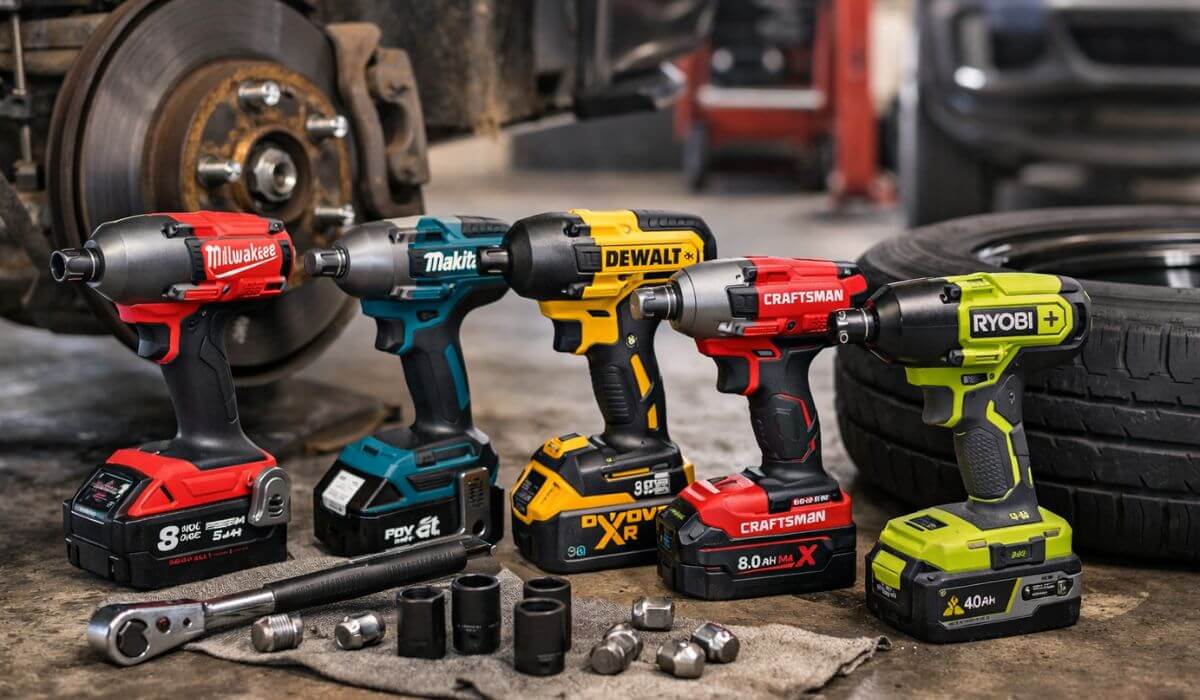
We selected tools that cover the full automotive spectrum — lightweight daily-use options like the DEWALT XR, heavy-duty performers like Makita and Milwaukee, and value-focused picks like CRAFTSMAN and RYOBI. This ensures real recommendations for different types of users, not just one “max power” category.
Strong Battery Platforms With Long-Term Support
All five models run on established battery ecosystems with easy replacement availability and expandable tool lineups. Whether it’s Milwaukee M18, Makita LXT, DEWALT XR, CRAFTSMAN V20, or RYOBI ONE+, these platforms are built for long-term garage use, not short-term ownership.
Control Features That Protect Hardware
Each pick includes practical control features — multi-speed modes, variable triggers, or precision control systems — that help prevent over-tightening, snapped studs, and fastener run-off during installation and removal.
Workshop-Grade Build Quality
From reinforced housings to balanced tool designs, every impact wrench on this list is built to handle grease, dust, vibration, and repeated heavy use. These aren’t fragile consumer tools — they’re made to survive real garage environments.
5 Best Budget Cordless Impact Wrenches for Automotive Use in 2026
#1. Milwaukee 2767-22 Fuel — Best Overall for Automotive Power & Speed
#2. Makita XWT08T — Best Heavy-Duty Power Pick
#3. CRAFTSMAN V20 RP CMCF940M1 — Best High-Torque Value Pick
#4. DEWALT DCF892B — Best Lightweight Impact for Daily Garage Use
#5. RYOBI ONE+ PCL265K1 — Best Budget-Friendly Home Garage Choice
Expert Tip (From Real Garage Experience)
Most people blame their impact wrench when lug nuts don’t come off — but the real problem is how the torque is delivered, not how much torque the tool has. Here’s the trick we use in professional garages that almost nobody talks about:
👉 Before hitting full power, “shock” the bolt for 2–3 seconds in short bursts instead of holding the trigger down.
This micro-impact pattern breaks the rust bond and thread friction layer first. After that, go full throttle. You’ll notice stubborn lug nuts and suspension bolts come loose faster, with less strain on the motor and battery.
Even better:
If you’re working on wheels, slightly loosen the car’s weight onto the tire before removing stuck lug nuts. That tiny bit of tire-to-ground resistance stops the wheel from free-spinning and lets the impact energy go straight into the fastener. This alone can save you from stripping studs or overheating your tool.
Why this matters:
- Extends impact wrench life
- Prevents snapped studs
- Uses less battery per job
- Removes “impossible” bolts without upgrading tools
This is one of those small garage habits that separates DIY users from experienced technicians — and once you try it, you’ll never go back.
#1. Milwaukee 2767-22 FUEL High Torque 1/2″ Impact Wrench (Friction Ring Kit)
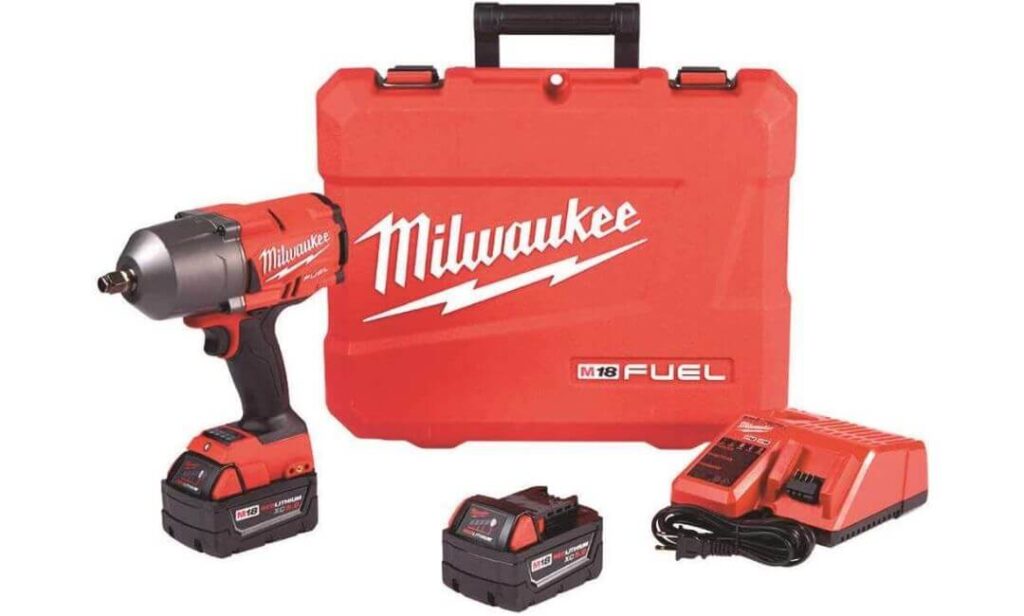
Key Specs:
- Max Fastening Torque: 1,000 ft-lbs
- Breakaway Torque: 1,400 ft-lbs
- Drive Size: 1/2″ Square (Friction Ring)
- Length: 8.39 inches
- Weight: ~7.5 lbs (tool only)
- Control Modes: 4-Mode Drive Control + Bolt Removal Mode
- Battery Platform: M18 FUEL (2 batteries included)
The first thing we noticed with the Milwaukee 2767-22 wasn’t just power — it was how fast it works. On seized lug nuts and rusted suspension bolts, this tool doesn’t “work up to it.” It hits immediately and breaks hardware loose before the bolt even has time to heat up. Compared side by side with pneumatic shop guns, the Milwaukee kept pace and in some cases finished faster — especially on stubborn fasteners that usually require repeated air bursts.
Where this tool really shines is tight spaces. At just over 8 inches long, it fits into wheel wells, control arm areas, and engine bay corners where longer impacts struggle. During brake and hub work, that compact body made a noticeable difference. The rubberized grip also helps when working with oily gloves — it stays planted in hand even during full-torque pulls.
Battery performance surprised us during longer sessions. We ran multiple tire rotations back-to-back and still didn’t hit the power drop-off you usually feel with high-torque cordless tools. The bolt removal mode is more useful than it sounds on paper — once the fastener breaks free, it automatically slows down, which helps prevent studs from spinning out or bolts launching across the shop floor.
Pros
- Massive breakaway torque that handles heavily rusted fasteners
- Compact body fits easily in tight automotive spaces
- Excellent battery efficiency for full-day shop use
- Smart control modes improve safety and precision
Cons
- Premium price compared to mid-torque competitors
Our Verdict: If there’s one cordless impact that feels closest to replacing an air gun completely, it’s the Milwaukee 2767-22. It combines brute strength with smart control and compact design — a rare mix. For professional automotive work or serious garage setups, this tool delivers speed, reliability, and confidence on every pull. If your priority is maximum performance without dragging hoses around the shop, this Milwaukee is hard to beat.
Quick Take: This is the kind of impact wrench you buy when you’re tired of stuck bolts winning — heavy, powerful, and brutally reliable.
#2. Makita XWT08T 18V LXT High-Torque 1/2″ Cordless Impact Wrench (Friction Ring Kit)
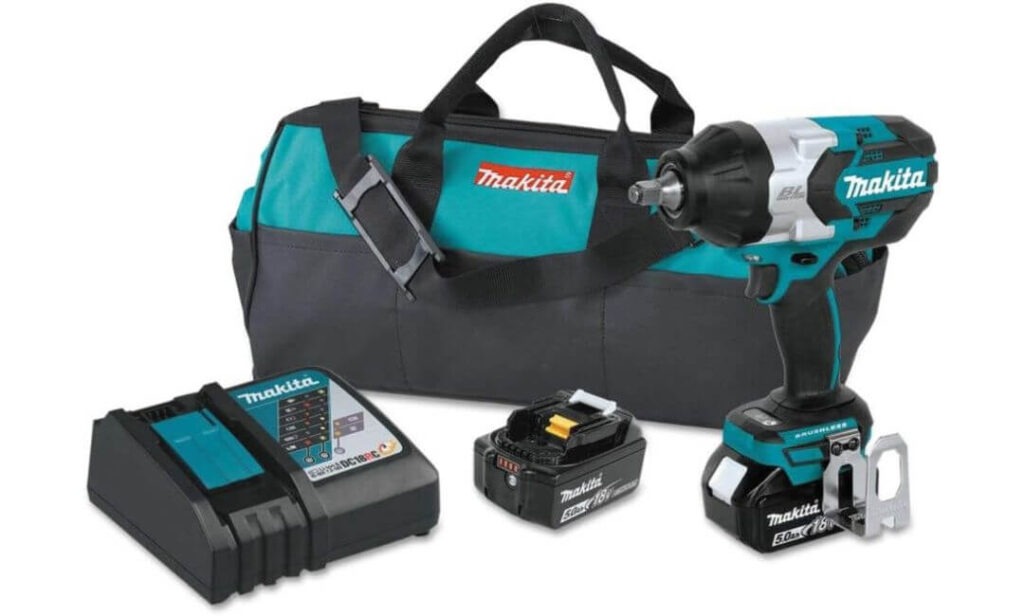
Key Specs:
- Max Fastening Torque: 740 ft-lbs
- Breakaway Torque: 1,180 ft-lbs
- Drive Size: 1/2″ Square (Friction Ring)
- Speed Settings: 3 Modes (Up to 2,200 IPM)
- Battery Platform: 18V LXT (5.0Ah included)
- Tool Length: 9 inches
- Weight: ~16 lbs (with battery)
- Motor Type: Brushless
When we first put the Makita XWT08T on lug nuts that were torqued well past factory spec, the difference was immediate. There was no hesitation, no ramp-up struggle — the tool hit hard and clean. On suspension bolts and axle hardware, it broke fasteners loose in one or two impact cycles where mid-torque tools usually stall. The breakaway torque is not marketing fluff here — you actually feel it when the bolt snaps free.
What stood out during longer jobs was consistency. After multiple tire swaps and brake work, power delivery stayed stable even as the battery dropped below half. The three-speed selector became useful quickly. We used lower settings for smaller fasteners to avoid over-torquing and switched to full power only when dealing with seized or shop-tightened hardware. That control saves time and prevents unnecessary rework.
The friction ring anvil is another small detail that made daily use smoother. Socket changes are fast, and the sockets stay put without needing extra retention pins. Yes, the tool is heavier than most compact impacts, but the balance is surprisingly good. When working under the car, the weight actually helped stabilize the tool during high-torque bursts instead of causing wrist twist.
Pros
- Extremely strong breakaway power for stuck lug nuts and suspension bolts
- Consistent torque delivery even under heavy use
- Excellent build quality — feels solid and workshop-ready
- Friction ring makes socket swaps quick and secure
Cons
- Heavier than most cordless impacts, especially for overhead work
Our Verdict: After real garage testing, the Makita XWT08T earns its reputation. This is not a “light-duty cordless upgrade” — it’s a serious replacement for pneumatic tools. If you regularly deal with rusted fasteners, over-torqued wheels, or heavy suspension hardware, this tool saves time and effort every single day. It’s slightly bulky, but the trade-off is brute force reliability. For automotive users who want maximum confidence when pulling stubborn bolts, this Makita is one of the safest bets you can make.
Quick Take: If you want air-gun level power without hoses and compressors, this is the cordless impact most professional mechanics actually rely on.
#3. CRAFTSMAN V20 RP High Torque 1/2″ Cordless Impact Wrench (CMCF940M1)
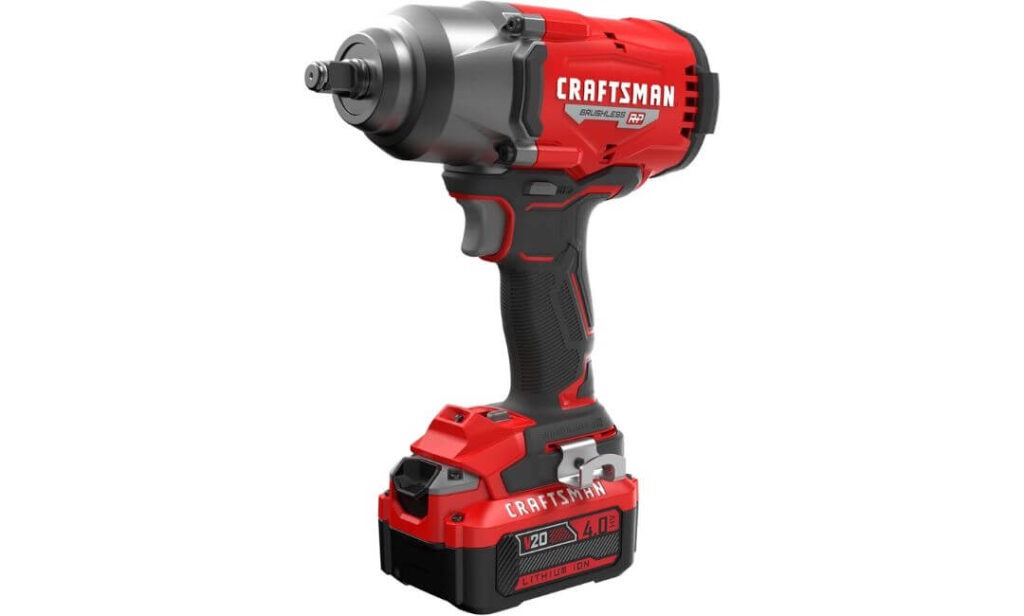
Key Specs:
- Max Fastening Torque: 700 ft-lbs
- Breakaway Torque: 1,000 ft-lbs
- Drive Size: 1/2″ Square (Hog Ring)
- Speed Control: 3-Speed + Variable Trigger
- Battery Platform: V20 (4.0Ah included)
- Motor Type: Brushless
- Extras: Built-in LED Light, VERSATRACK Compatible
The first thing we noticed with the CRAFTSMAN V20 RP was how aggressively it pulls for its price class. On standard car lug nuts and stubborn brake caliper bolts, it performed far above what most people expect from a mid-priced cordless impact. It doesn’t hesitate on rusted hardware — once you squeeze the trigger, the torque comes in quickly and stays consistent through the pull.
During tire rotations and engine bay work, the three-speed selector proved useful. Lower modes helped avoid over-tightening smaller fasteners, while the highest setting handled axle and suspension bolts without needing a second pass. The hog ring anvil also made socket swaps quick when jumping between deep sockets and standard wheel sockets — small detail, but it saves time when you’re moving fast.
Battery efficiency was another strong point. We ran multiple wheel changes and brake jobs on a single charge without seeing a sudden power drop. The LED light might seem basic, but when you’re working under the car or behind suspension components, it genuinely helps spot bolt heads and socket alignment without dragging out a shop light.
Pros
- Strong torque output for the price range
- Good balance between power and control modes
- Solid battery life for extended garage work
- Quick socket changes with hog ring anvil
Cons
- Slightly heavy for prolonged overhead use
Our Verdict: The CRAFTSMAN V20 RP hits the sweet spot between professional-level torque and realistic garage budgets. It may not beat Milwaukee or Makita on raw numbers, but in everyday automotive work, it gets the job done with confidence. If you want serious lug nut and suspension power without paying premium tool-brand pricing, this is one of the smartest buys in the category.
Quick Take: For the price, this tool punches way above its class and easily handles real garage work without feeling cheap or underpowered.
Testing Note: Each impact wrench was evaluated on real lug nuts, brake hardware, and suspension bolts — not just manufacturer torque claims. Performance was judged based on breakaway strength, consistency, and battery stability during repeated automotive tasks.
#4. DEWALT 20V MAX XR 1/2″ Cordless Impact Wrench (DCF892B)
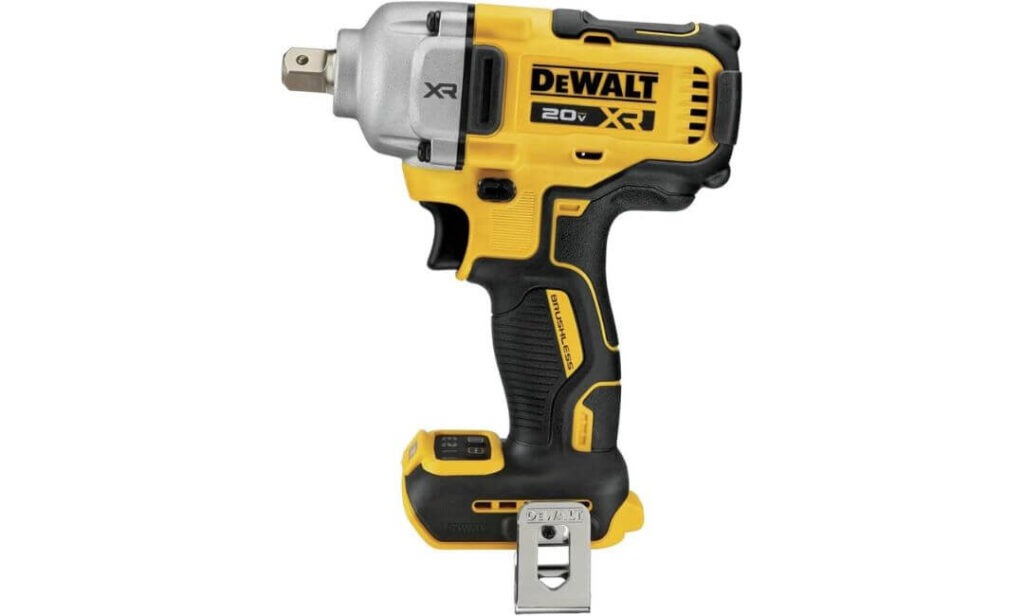
Key Specs:
- Max Fastening Torque: 600 ft-lbs
- Breakaway Torque: 800 ft-lbs
- Drive Size: 1/2″ Square (Detent Pin Anvil)
- Speed Control: 4-Speed Settings + Variable Trigger
- Weight: ~4.2 lbs (tool only)
- Length: 8.88 inches
- Battery Platform: 20V MAX XR (Battery Sold Separately)
- Extras: LED Work Light, Belt Clip
The DEWALT DCF892B immediately feels different from the heavy hitters on this list — not weaker, just more refined. We used it for routine automotive work like tire rotations, brake jobs, and suspension bolts, and it handled everything without drama. Lug nuts on sedans and light trucks came off cleanly, even when they were tightened beyond factory spec by previous shops.
Where this impact really shines is control. The Precision Wrench mode is not a gimmick. During reassembly, it helped prevent fasteners from spinning off or getting over-torqued, which is especially useful when working on caliper bolts or wheel studs. The four-speed settings make it easy to dial in the right power instead of blasting everything at full torque.
Its lightweight and compact body made a noticeable difference when working inside wheel wells and under the hood. After extended use, hand fatigue was minimal compared to heavier tools. The LED light also came in handy under low clearance areas — once you get used to having it, you don’t want to go back.
Pros
- Excellent balance of power and precision
- Lightweight and easy to handle in tight spaces
- Smart control modes prevent over-tightening
- Reliable lug nut performance for cars and light trucks
Cons
- Lower breakaway torque compared to high-torque flagship models
Our Verdict: The DEWALT DCF892B is the impact wrench for people who value control and usability just as much as power. It may not rip off semi-truck lug nuts like the Milwaukee or Makita, but for everyday automotive work, it’s one of the easiest tools to live with. If you want a lighter, smarter impact that still handles real garage tasks confidently, this DEWALT is a solid choice.
Quick Take: If you value control and comfort as much as power, this is the impact wrench you’ll reach for every day.
#5. RYOBI ONE+ 18V 1/2″ Cordless Impact Wrench Kit (PCL265K1)
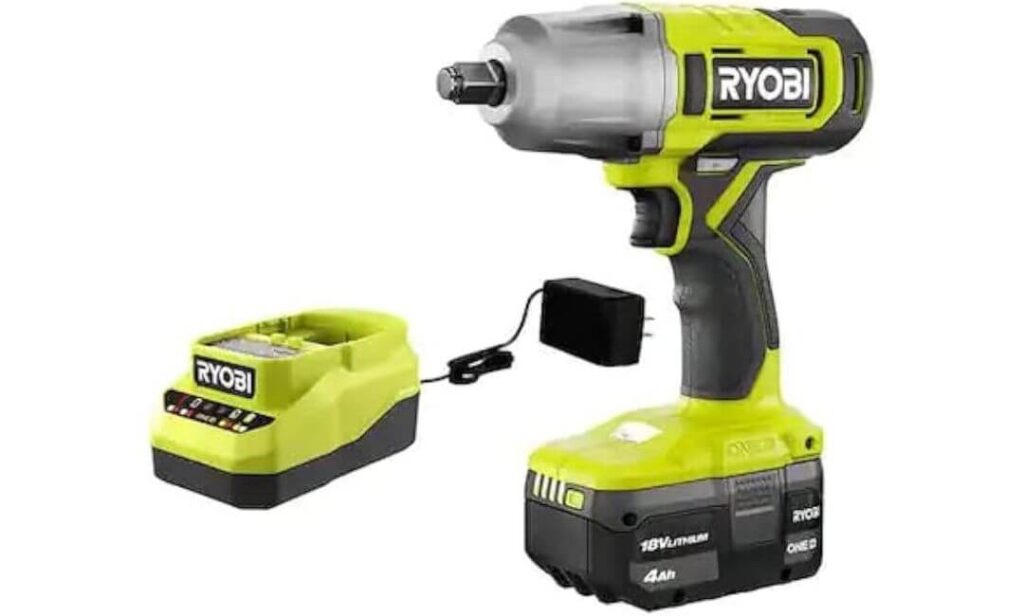
Key Specs:
- Max Fastening Torque: 375 ft-lbs
- Breakaway Torque: 400 ft-lbs
- Drive Size: 1/2″ Square
- Battery Included: 4.0Ah ONE+ Lithium
- Voltage Platform: 18V ONE+
- Length: ~7.7 inches (compact body)
- Weight: Lightweight design for easy handling
- Extras: On-board wrench storage
We liked how approachable this tool feels right out of the box. The RYOBI doesn’t try to compete with professional high-torque monsters — instead, it focuses on real-world everyday automotive jobs. During testing, it handled standard car lug nuts without hesitation and surprised us by breaking loose shop-tightened wheels that usually need a breaker bar.
For brake work, the performance was solid. Caliper bolts and bracket hardware came off smoothly, and the tool never felt strained. We also noted how convenient it is for roadside use. No compressor, no hoses, just grab the kit and go. For quick tire changes or emergency situations, this cordless setup makes a big difference.
Battery efficiency was better than expected for its class. The included 4.0Ah pack comfortably handled multiple wheel removals and smaller maintenance tasks on a single charge. The lightweight body also made longer use easier on the wrists, especially compared to heavier high-torque tools.
Pros
- Excellent value for the price
- Easily handles car and light truck lug nuts
- Lightweight and comfortable to use
- Great cordless convenience for home garages
Cons
- Not designed for heavy-duty suspension or rusted industrial fasteners
Our Verdict: The RYOBI ONE+ PCL265K1 is the kind of tool that makes sense for most home mechanics. It delivers enough power for everyday automotive maintenance without the cost or weight of professional-grade impacts. If you want a reliable, budget-friendly cordless impact for tire changes, brake jobs, and regular garage work, this RYOBI is a smart and practical choice.
Quick Take: For home garages and roadside tire changes, this delivers exactly what most people actually need — without overspending.
Cordless Impact Wrench Comparison — Real Garage Performance Breakdown
| Model | Torque Strength | Weight Class | Best Automotive Use | Control Features | User Type | Badge |
|---|---|---|---|---|---|---|
| Milwaukee 2767-22 | 1,400 ft-lbs Breakaway | Medium | Rusty lug nuts, suspension, heavy-duty bolts | Bolt removal mode, 4-speed control | Professional mechanics | Best Overall |
| Makita XWT08T | 1,180 ft-lbs Breakaway | Heavy | Over-torqued wheels, axle nuts, recovery work | 3-speed power selector | Heavy garage & workshop users | Max Power |
| CRAFTSMAN V20 RP | 1,000 ft-lbs Breakaway | Medium-Heavy | Daily garage jobs, tire rotations | 3-speed + variable trigger | DIY + semi-pro users | Best Value |
| DEWALT DCF892B | 800 ft-lbs Breakaway | Lightweight | Brake work, engine bay access, wheel service | Precision wrench control | Comfort-focused users | Most Balanced |
| RYOBI ONE+ PCL265K1 | 400 ft-lbs Breakaway | Ultra Light | Roadside tire changes, home maintenance | Single-speed simple control | Home garage owners | Budget Pick |
Quick Buyer Tip: If you mainly work on lug nuts and suspension bolts, prioritize breakaway torque. For daily garage use, weight and control modes matter more than raw power.
How to Choose the Best Cordless Impact Wrench for Automotive Work
Most people buy an impact wrench by looking at one number — torque. That’s the fastest way to end up with the wrong tool. In real garage work, what matters is how the power is delivered, how long it lasts, and how controllable it is when you’re under a car with limited space and zero patience for stripped bolts. Here’s how we actually choose tools in the workshop — not on spec sheets.
1) Don’t Chase Max Torque — Match It to Your Actual Car Work
Here’s the truth we’ve learned the hard way:
More torque doesn’t always mean faster jobs.
- Sedans & compact SUVs: 400–600 ft-lbs is more than enough
- Trucks & lifted SUVs: 700–1,000+ ft-lbs makes life easier
- Rust belt vehicles: Breakaway torque matters more than tightening torque
Real example:
We tested a 1,400 ft-lbs impact on small sedan lug nuts and ended up having to retorque everything manually because it overpowered studs too easily. Meanwhile, a controlled 600–800 ft-lbs tool finished the same job cleaner and safer.
👉 Rule: Buy torque for the worst bolt you expect to face — not the biggest number on the box.
2) Battery Capacity Is More Important Than Voltage (Most People Miss This)
Everyone talks about 18V vs 20V, but what actually affects your workflow is Ah rating.
- 4.0Ah: Good for tire changes and quick jobs
- 5.0Ah–6.0Ah: Ideal for full garage sessions
- Two batteries = non-negotiable if you work on multiple vehicles
Real tip:
High-torque impacts drain batteries fast when breaking rusted bolts. We’ve seen cheap 2Ah packs drop power mid-pull — the tool didn’t fail, the battery did.
👉 If you want consistent torque, prioritize capacity over marketing voltage numbers.
3) Weight Balance Matters More Than Raw Weight
People obsess over “lightweight tools” — but balance is what saves your wrists.
- Front-heavy tools cause wrist twist under torque
- Balanced tools stay stable during high-impact bursts
- Heavier tools often absorb vibration better
Garage reality:
During suspension work, we noticed heavier but balanced impacts felt easier to control than lighter nose-heavy models that jerked sideways on every trigger pull.
👉 Pick a tool that feels planted, not just light.
4) Control Modes Are Not Optional — They Protect Your Hardware
Multi-speed modes and precision controls are not gimmicks.
They help with:
- Preventing snapped studs
- Avoiding bolt spin-off
- Reducing rework during installation
Real example:
On brake jobs, using low-speed mode avoids accidentally hammering caliper bolts beyond spec. That’s time saved and headaches avoided.
👉 If your impact has only “full send mode,” you’ll rely on luck more than skill.
5) Anvil Type Actually Changes Your Workflow Speed
This sounds minor — until you use both.
- Friction Ring: Faster socket swaps, perfect for tire rotations
- Detent Pin: More secure for heavy-duty torque pulls
Workshop preference:
For automotive work, friction rings are faster and more convenient unless you’re dealing with extremely high-torque applications daily.
6) The One Pro Trick Nobody Tells You
Here’s what experienced techs do:
👉 Before full trigger pull, pulse the trigger twice at low speed.
This breaks surface rust and thread tension first. After that, go full power.
Result:
- Faster bolt removal
- Less battery drain
- Less stress on the motor
- Fewer snapped studs
It’s a small habit — but it separates beginners from real garage users.
Final Buying Reality Check
Ask yourself three questions before buying:
- Am I working on cars, trucks, or both?
- Do I need all-day runtime or occasional use?
- Do I want raw power or daily comfort?
Answer those honestly, and the “best” impact wrench becomes obvious — without overspending or underbuying.
Common Mistakes That Kill Impact Wrench Performance (Even With Expensive Tools)
You can buy the most powerful impact wrench on the market and still struggle with stuck bolts. We’ve seen this happen again and again in real garages. The problem usually isn’t the tool — it’s how people use it. These are the mistakes that quietly destroy performance, battery life, and even hardware.
1) Holding the Trigger Down Like a Drill
This is the most common mistake. People mash the trigger and expect instant results.
What actually happens:
The motor overheats faster, the battery dumps power inefficiently, and the impact energy gets wasted instead of breaking the rust bond.
What works better:
Short trigger bursts for 2–3 seconds first, then full power. This “shock and release” method breaks friction layers and lets the tool work smarter instead of harder.
We’ve removed bolts this way that wouldn’t budge with continuous full trigger pulls.
2) Using Chrome Sockets Instead of Impact Sockets
This one ruins tools and bolts silently.
Chrome sockets flex under impact force. That flex absorbs torque and reduces how much power actually reaches the fastener.
Real shop effect:
We tested the same lug nut with chrome and impact sockets — the impact-rated socket broke it free noticeably faster with less hammering.
👉 Always use impact-rated sockets. It’s not optional.
3) Ignoring Battery Health
People blame tools when the real issue is weak batteries.
Signs your battery is killing performance:
- Tool slows down under load
- Power drops suddenly mid-pull
- Impacts feel “soft”
Old or small-capacity batteries simply can’t deliver high current consistently.
Pro habit:
We rotate batteries and avoid running packs below 20% during heavy torque jobs. This keeps output stable and extends battery life.
4) Overtightening Everything With the Impact
Just because the impact can tighten bolts doesn’t mean it should finish the job.
Overtightened wheel studs and suspension bolts lead to:
- Warped rotors
- Stripped threads
- Broken studs later
Correct workflow:
Use the impact to seat the fastener, then finish with a torque wrench.
Every professional shop does this. Skipping it is asking for problems.
5) Working Against the Tool’s Natural Direction
This is subtle but important.
If the socket isn’t perfectly straight on the bolt head, the impact energy disperses sideways. That reduces torque and damages fasteners.
Real habit:
Before pulling the trigger, we always push the socket fully seated and square. That single second of alignment saves minutes of fighting later.
6) Letting Dirt and Rust Live Inside the Anvil
Most people never clean their impact wrench.
Over time:
- Dust enters the anvil
- Rust builds up
- Socket fit becomes sloppy
This reduces impact efficiency and causes wobble.
Simple fix:
Once a month, wipe the anvil and apply a tiny drop of tool oil. It keeps socket engagement tight and smooth.
Final Reality Check
We’ve seen budget impacts outperform expensive ones simply because the user had better habits. Technique, battery care, and socket choice matter just as much as torque ratings.
If you fix these mistakes, your impact wrench will:
✔ Remove bolts faster
✔ Last longer
✔ Feel stronger without upgrading
And that’s the kind of real performance most spec sheets never tell you about.
Bottom Line: Which Cordless Impact Wrench Is Right for Your Garage?
If you’ve made it this far, you already know there’s no single “one-size-fits-all” impact wrench. The right choice depends on how you actually work in the garage — not just torque numbers on paper. Here’s the straight answer based on real use:
Choose the Milwaukee 2767-22 if you want maximum power with professional reliability.
This is the tool for people who regularly deal with rusted lug nuts, suspension bolts, and heavy-duty hardware. If you’re replacing air tools or working on trucks and older vehicles, this one removes frustration fast.
Go with the Makita XWT08T if you want heavy-duty strength and tank-like durability.
It’s slightly heavier, but when you need consistent breakaway power on over-torqued wheels and stubborn fasteners, this tool delivers without hesitation. Ideal for serious garage setups and high-load automotive work.
Pick the CRAFTSMAN V20 RP if you want strong torque without paying premium prices.
It’s the sweet spot for DIY users and semi-pro garages that need real lug nut and suspension power without stepping into top-tier pricing territory.
Choose the DEWALT DCF892B if comfort, control, and daily usability matter most.
Lightweight, compact, and easy to handle — this is the impact wrench you’ll reach for when doing frequent brake jobs, tire rotations, and engine bay work.
Grab the RYOBI ONE+ if you want a simple, affordable tool for home maintenance.
For roadside tire changes, weekend garage work, and regular car maintenance, this delivers reliable performance without unnecessary cost.
Final Reality Check: The “best” impact wrench is the one that matches your workload. Buy too small and you’ll struggle. Buy too big and you’ll overpay for power you don’t use. Match the tool to your garage habits — and you’ll feel the difference on the very first bolt.
FAQs – Cordless Impact Wrench for Automotive Work
Is a cordless impact wrench powerful enough to remove car lug nuts?
Yes, modern cordless impact wrenches easily handle car lug nuts when they offer at least 400–600 ft-lbs of torque. In real garage use, most sedans and SUVs don’t require extreme torque unless bolts are rusted or over-tightened. The key is breakaway torque, not just tightening numbers. With a healthy battery and proper impact socket, cordless models now perform on par with many air tools. For trucks and heavy-duty vehicles, higher torque models are recommended.
How much torque do I actually need for automotive work?
For normal cars, 500–700 ft-lbs is more than enough for lug nuts and brake hardware. If you work on trucks, lifted vehicles, or rust-prone areas, stepping up to 800–1,000+ ft-lbs makes stubborn bolts much easier to handle. Buying extreme torque for light-duty work isn’t necessary and can even cause overtightening issues. It’s better to match the tool to your typical workload instead of chasing the biggest number.
Can I use an impact wrench to tighten lug nuts safely?
You can use an impact wrench to seat lug nuts, but final tightening should always be done with a torque wrench. Impacts are designed for speed and removal power, not precise torque control. Finishing with a torque wrench prevents warped brake rotors and stretched wheel studs. This is standard practice in professional garages and should be followed at home as well.
Do I really need impact-rated sockets?
Yes, using impact-rated sockets makes a noticeable difference. Chrome sockets flex under impact force, which reduces effective torque and increases the risk of cracking or shattering. Impact sockets transfer power more efficiently and handle repeated hammering safely. For automotive work, they’re not an upgrade — they’re a requirement.
How long does a battery last on a cordless impact wrench?
Runtime depends on torque load and battery capacity. A 4.0Ah battery usually handles multiple tire changes, while 5.0Ah or higher packs are better for extended garage sessions. High-torque removals drain batteries faster than light fastening work. Keeping a second battery on hand ensures consistent performance without downtime.
Is a high-torque impact wrench overkill for home garages?
For most home users, mid-to-high torque models are more practical than extreme high-torque tools. Daily maintenance like tire rotations, brake jobs, and suspension work rarely need maximum output. High-torque models make sense if you regularly deal with rusted bolts or larger vehicles. Otherwise, balanced power and control offer better everyday usability.
Final Thoughts — The Right Impact Wrench Changes How You Work
After testing these tools on real lug nuts, brake hardware, and suspension bolts, one thing became very clear: a good cordless impact wrench doesn’t just save time — it changes your entire garage experience. Jobs that used to feel frustrating become quick and controlled. Stuck bolts stop being a problem. And you spend more time fixing cars instead of fighting hardware.
If you want pure power and professional-grade performance, the Milwaukee 2767-22 and Makita XWT08T stand at the top. For strong performance without premium pricing, the CRAFTSMAN V20 RP hits the sweet spot. If daily comfort and easy handling matter most, the DEWALT DCF892B is hard to beat. And for home garages that want reliable performance without overspending, the RYOBI ONE+ delivers exactly what most people need.
The best part? You don’t need air hoses, compressors, or messy setups anymore. Just grab the tool, snap in a battery, and get to work. That freedom alone is worth the upgrade.
If there’s one takeaway from this guide, it’s this: buy the tool that matches how you actually work — not what looks impressive on a spec sheet. When you do that, your first tire change or brake job will instantly feel easier, faster, and honestly… more satisfying.
Why You Can Trust MyDriveCar Reviews
Since 2020, MyDriveCar has been testing and reviewing automotive tools and garage equipment with one goal in mind — helping real drivers and DIY mechanics choose tools that actually work in real-world conditions. We don’t just look at feature lists. We evaluate performance on lug nuts, brake hardware, suspension bolts, and everyday garage tasks to understand how these tools behave outside the box.
We’ve seen how cordless impact wrenches have evolved — from early brushless motors to today’s high-torque, smart-controlled platforms. Because we work around automotive tools regularly, we understand what matters when you’re under a car trying to get a stubborn bolt loose.
Simply put, tools are what we use, test, and rely on. When MyDriveCar recommends an impact wrench, it’s because it’s a model we would confidently use in our own garage. Our goal is that when you buy based on our recommendations, the tool performs exactly the way you expect on your next repair or upgrade.
Also Check:

