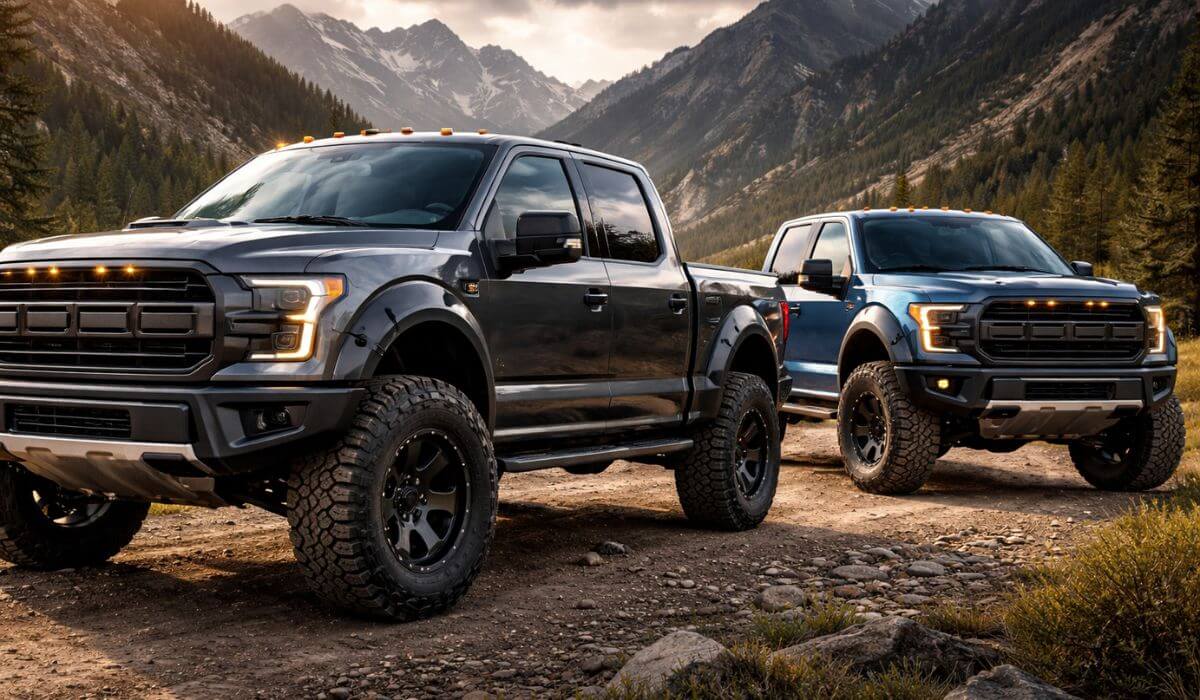
6 Best Fender Flares for Ford F150 in 2026: Perfect Fit, Zero Drill & Aggressive Style Picks
If you’ve owned a Ford F-150 long enough, you already know this: the stock wheel arches don’t stay clean for long—and once you step up to wider tires, things get messy fast. Fender flares aren’t just about looks; they’re about saving your paint, keeping debris in check, and making the truck actually look finished.
I’ve gone through the usual cycle—cheap flares that fade in months, “no-drill” kits that still needed tweaking, and some that just didn’t sit right on newer body lines. The 2021+ F-150 changed things, and not every flare kept up. So this list cuts through that noise. These are the ones that actually fit right, install without drama, and hold up to real use—whether you want a clean OEM look or something more aggressive. No fluff, just what works.
Best Ford F150 Fender Flares: Top 2026 Picks for No-Drill Install & Wide Coverage
#1. Rough Country SF1 Fender Flares (2021–2026 Ford F-150)
Extra Tire Coverage Fender Flares with No-Drill Install & UV-Resistant Matte Black Build
#2. Titibett Fender Flare Protector (2021–2026 Ford F-150)
Budget Fender Flare Kit for Wheel Arch Protection & Easy Exterior Upgrade
#3. Spec-D Tuning Factory Style Fender Flares (2021–2024 Ford F-150)
OEM Style Fender Flares with Smooth Finish & Direct Fit Compatibility
#4. YHTAUTO OE Factory Style Fender Flares (2021–2023 Ford F-150)
OE Replacement Fender Flares with Hardware Kit & Factory Fit Design
#5. Tyger Auto Bolt-Riveted Fender Flares (2021–2023 Ford F-150)
Pocket Style Fender Flares with Textured Finish & Off-Road Ready Look
#6. Husky Liners DRT Style Fender Flares (2018–2020 Ford F-150)
Heavy-Duty Fender Flares for Older F150 with Trail Protection Design
Expert Tip (From Someone Who’s Installed More Than a Few)
If you’re running stock tires, almost any flare will look fine. The moment you step up to wider rubber or even a slightly aggressive offset, that’s when cheap flares start showing their limits—gaps, flex, or worse, rubbing at full turn.
The smartest move? Don’t buy flares for how your truck looks today—buy them for how you plan to run it 6 months from now. A slightly wider flare with proper edge sealing will save your paint, keep things legal, and avoid that “something feels off” look most trucks end up with after a rushed upgrade.
How We Chose These Fender Flares for Ford F-150
There’s no shortage of fender flares online. Most of them look similar in photos. That’s exactly where people get burned. What actually matters only shows up after installation—and a few weeks of real driving.
We didn’t build this list around brand names or specs alone. We focused on what holds up once these are bolted onto a real Ford F-150, especially the newer body styles where fitment tolerances are tighter than before.
First thing we looked at was fitment accuracy. The 2021+ F-150 has sharper lines and tighter panel gaps compared to older models. A flare that’s even slightly off will either leave uneven spacing or sit under tension. That’s why every option here is tied to a specific year range, not vague “fits most” claims. If it doesn’t sit right out of the box, it didn’t make the list.
Then comes installation reality. A lot of products claim “no-drill,” but still end up needing adjustments, extra clips, or forcing alignment. We filtered for flares that actually line up with factory mounting points or come with hardware that doesn’t feel like an afterthought. The goal is simple: install once, tighten properly, and not think about it again.
Material quality was the next cutoff. On paper, almost all of them say ABS plastic—but there’s a difference between something that survives daily sun exposure and something that starts fading or turning chalky in a few months. The picks here lean toward UV-stable finishes and thickness that doesn’t flex every time you hit a rough patch.
We also paid close attention to real-world use cases, not just looks. Some of these flares are built for extra tire coverage—useful if you’re running wider setups or dealing with mud and debris regularly. Others stick closer to a factory style for people who just want a clean, finished edge without changing the truck’s character. That balance matters, because not every F-150 owner is building the same truck.
And finally, we avoided anything that felt like a compromise. If a flare looked good but had inconsistent mounting, it was out. If it was cheap but didn’t sit right, it didn’t stay. Every product here earns its place because it solves a specific problem—fit, protection, or style—without creating a new one after installation.
That’s the difference. Not just what looks good in a listing—but what actually works once it’s on your truck.
#1. Rough Country SF1 Fender Flares (2021–2026 Ford F-150)
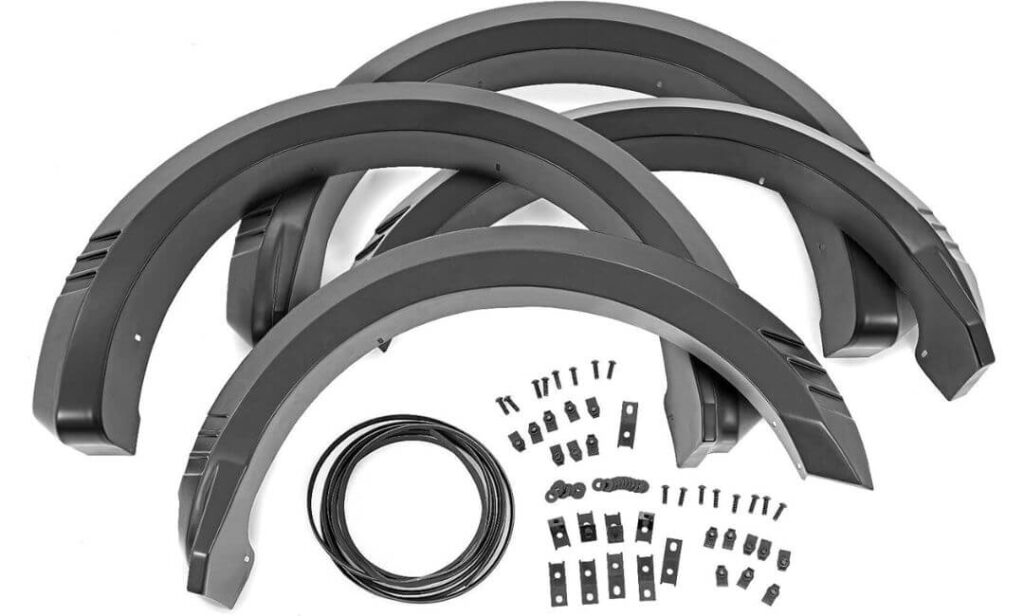
Quick Specs:
- Adds ~2-inch extra tire coverage (you’ll notice it the moment you step back)
- 5.5-inch flare height — fills the arch properly, not that half-done look
- Tri-blend ABS build (thicker feel, not flimsy plastic)
- UV-resistant matte black (won’t chalk out after one summer)
- Paint-ready surface (if you care about color match)
- No-drill, factory mounting points (this part actually holds true here)
You don’t realize how much your truck needs proper flares until you see one fitted right. This setup changes the whole stance—wider, planted, and finally proportional if you’re running anything bigger than stock tires. That 2-inch coverage isn’t just a number; it actually pulls the tire line back under control, especially on newer F-150s where the body lines are sharper and less forgiving.
Where this one earns its place is in daily use. The added coverage combined with those integrated mud catchers quietly does its job—less road spray on the doors, fewer chips along the lower panels. It’s the kind of thing you stop noticing after a week, which honestly means it’s working. And the material doesn’t feel like those lightweight kits that flex every time you press them—there’s some real structure here.
Then there’s the install. A lot of brands throw “no-drill” around loosely, but this one actually lines up with the factory points the way it should. No forcing, no weird gaps if you take your time. And if you’re picky about looks, the matte black finish being paintable gives you that option to go full OEM-match or keep it rugged. (if your goal is a wider, cleaner F-150 without turning it into a full build, this hits that sweet spot)
What Stands Out in Real Use:
- Coverage that actually matches wider tire setups, not just cosmetic
- Material feels solid, doesn’t flex or cheap out under pressure
- Matte finish holds up well against sun and road grime
- Factory mounting alignment saves time and frustration
- Paintable surface gives you room to customize later
Where It Falls Short (Just Being Honest):
- Not compatible with power running boards or Raptor models, so fitment needs a quick check before ordering
Real Fit on Ford F-150 (2021–2026)
This is built specifically around the newer F-150 body, and it shows once installed. The edges follow the arch cleanly, and the flare height fills that gap newer trucks tend to have with stock setups. No awkward overhang, no tucked-in look—it sits where it should.
Works across 2WD and 4WD models, but you’ll want to double-check if your truck has factory power boards, because that’s where most people run into issues. Outside of that, fitment is straightforward and predictable.
Installation Notes (What It’s Actually Like)
Set aside some time, don’t rush it. Start loose, line everything up, then tighten—it makes a difference in how clean it sits. Good lighting helps more than you think, especially on the rear sections.
If you’re planning to paint them, test fit first, then remove and prep properly—saves you from redoing anything later. And once installed, just turn the wheel lock-to-lock and check clearance. That’s it. No drama, no surprises—just how it should be.
#2. Titibett Fender Flare Protector (2021–2026 Ford F-150)
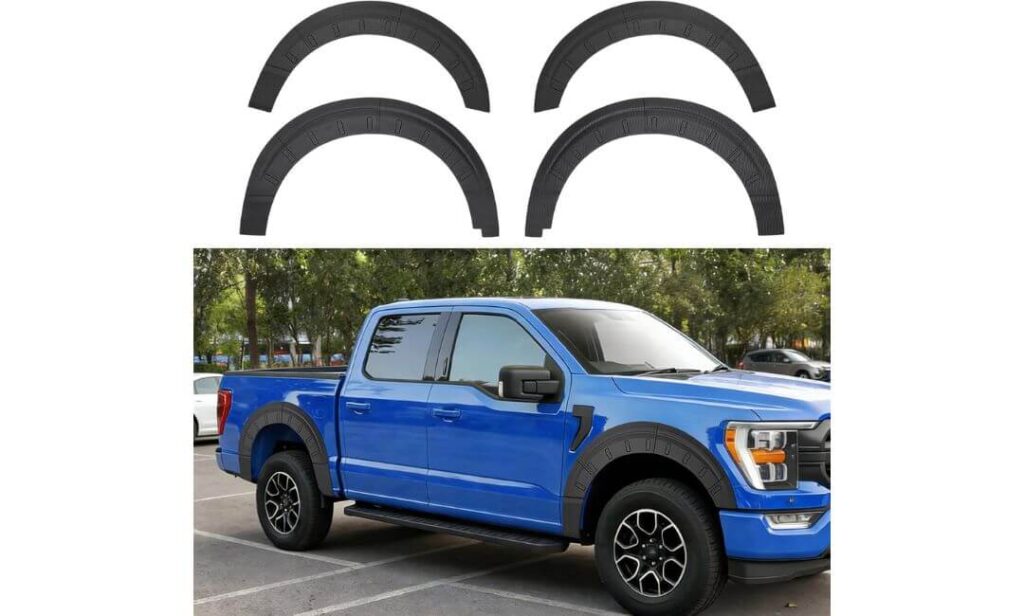
Quick Specs:
- Slim wheel arch protector design (no extra width, just clean coverage)
- TPE flexible material (absorbs small impacts instead of cracking)
- Matte black OEM-like finish (blends in, not flashy)
- Self-adhesive install (no tools, no drilling, no hardware)
- Full 4-piece set (covers all arches evenly)
- Built for scratch + debris protection (not for widening stance)
This is the kind of product you go for when you’re not trying to build a show truck—you just want your Ford F-150 to stay clean and protected without changing how it looks. And honestly, that’s where most people land after dealing with chipped paint around the wheel arches. This doesn’t add bulk, doesn’t try too hard—it just sits tight and does its job.
The TPE material is what makes the difference here. Instead of rigid plastic that can crack or feel brittle over time, this has a slight give to it. Small stones, light contact, daily road grime—it handles all that without marking up your actual body panels. And because it’s designed to follow the factory arch lines, it doesn’t look like an add-on. It looks like it came with the truck.
Installation is about as simple as it gets. Clean surface, line it up, press it down—that’s it. No alignment struggle, no clips, no second guessing. It’s the kind of upgrade you can finish in under an hour and immediately see the benefit, especially if you drive on rougher roads or deal with loose gravel regularly. (if your goal is protection without changing the personality of your truck, this is the quiet fix most people overlook)
What Works Well in Everyday Driving:
- Flexible TPE build absorbs minor hits instead of cracking
- Keeps wheel arch edges safe from scratches and stone chips
- Clean, factory-style appearance without adding extra width
- No-drill, no-tools install—anyone can handle it
- Low maintenance, easy to clean with just water
What to Keep in Mind:
- Doesn’t add extra tire coverage—this is more about protection than aggressive stance
Real Fit on Ford F-150 (2021–2026)
Designed specifically for the newer F-150 body, and it shows in how closely it follows the arch shape. There’s no awkward spacing or overhang—it hugs the panel the way a factory trim piece would.
It works across most trims, but like most arch-specific accessories, it skips the Raptor. As long as your truck falls within the standard F-150 lineup, fitment is straightforward and predictable.
Installation Notes (What It’s Actually Like)
Surface prep is everything here. Take a few extra minutes to clean and dry the area properly—adhesion depends on it. Once you start applying, go slow and press evenly instead of rushing through it.
If you get the alignment right on the first go, it sits perfectly. And after that, there’s nothing to maintain—just rinse it when you wash your truck and forget about it.
#3. Spec-D Tuning Factory Style Fender Flares (2021–2024 Ford F-150)
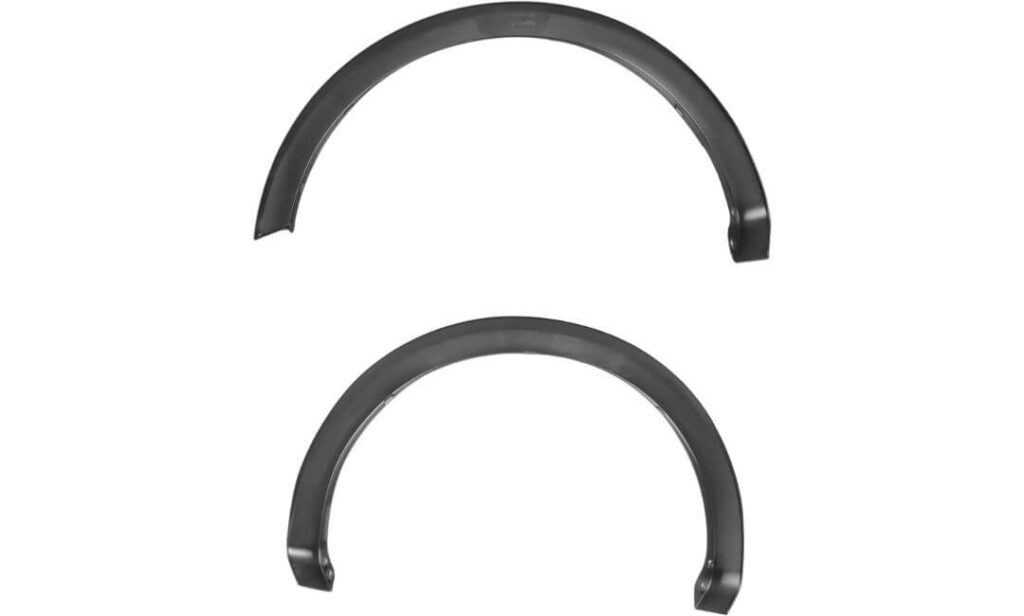
Quick Specs:
- Factory-style smooth design (no rivets, no extra bulk)
- Polypropylene construction (OEM-like flexibility, doesn’t feel brittle)
- Direct bolt-on setup (uses existing mounting points, no cutting)
- UV + impact resistant build (holds shape and color over time)
- Full 4-piece kit (front + rear matched properly)
- Clean black finish (closest to stock appearance out of the box)
There’s a point where you stop chasing “aggressive” and just want your Ford F-150 to look right. Not louder, not overdone—just finished. That’s exactly where this setup lands. It doesn’t try to widen the truck or fake a bolt-on look. It simply fills the arches the way the factory should have done it from day one.
What stands out immediately is how natural it sits. The smooth OEM-style profile follows the body lines without adding visual weight, which matters more on the 2021+ trucks where everything is sharper and more defined. No awkward edges, no sticking out—it blends in like it belongs there. And because it’s made from polypropylene, there’s a slight flexibility to it, so it doesn’t feel like it’ll crack the moment things get rough.
Install-wise, it’s straightforward—but this is one of those cases where taking your time pays off. The direct bolt-on design lines up with factory points, but getting that perfectly flush fit takes a bit of patience. Once it’s on right, though, it looks like a clean factory upgrade, not an aftermarket add-on. (if you’re aiming for that “stock but better” finish, this hits it without overcomplicating anything)
What Stands Out in Real Use:
- Clean OEM-style finish that doesn’t mess with factory design
- Material has slight flex, feels closer to OEM quality than hard plastic
- Sits flush when aligned properly—no odd gaps or tension points
- Full set gives balanced front and rear coverage
- Subtle upgrade that actually makes the truck look more complete
Where It Falls Short (Keeping It Real):
- Fitment is limited to specific years, so newer 2025–2026 models are not covered
Real Fit on Ford F-150 (2021–2024)
This one is built strictly around the 2021–2024 body, and that’s why it fits the way it does. The edges line up clean with the arch, and the finish matches well with factory trim pieces—nothing looks out of place.
It avoids the Raptor and Lightning models, so it’s meant for standard F-150 trims. If your truck falls in that range, the fit feels intentional, not forced.
Installation Notes (What It’s Actually Like)
Don’t rush the alignment. Start each piece loose, get it sitting flush, then tighten gradually—it makes a noticeable difference in the final look. Having a second pair of hands helps more than you’d think, especially on the rear sections.
Once installed, give it a quick check after a few drives—just to make sure everything stays tight. After that, it’s a set-and-forget kind of upgrade.
#4. YHTAUTO OE Factory Style Fender Flares (2021–2023 Ford F-150)
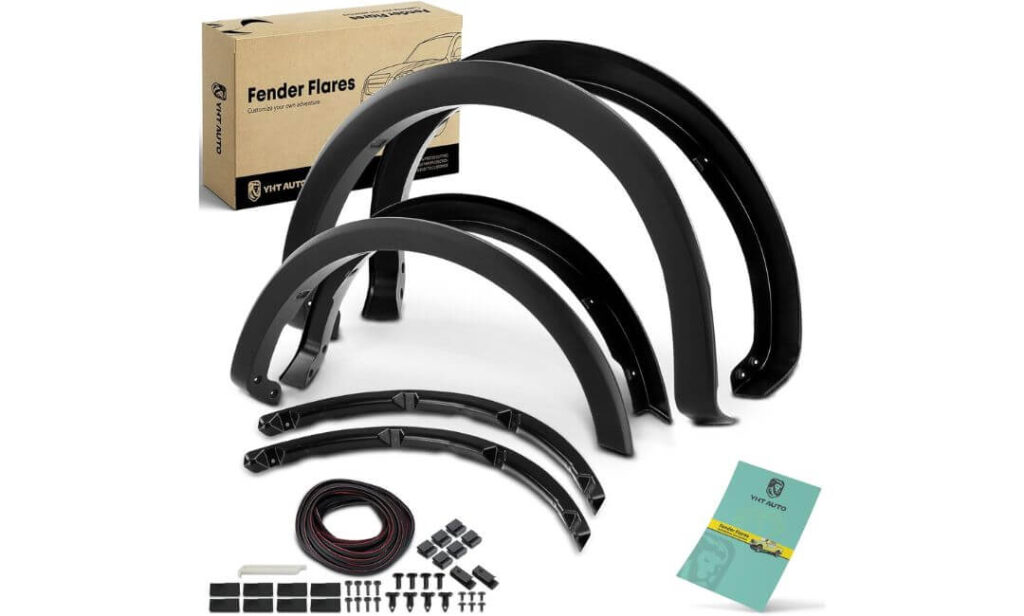
Quick Specs:
- OE factory-style profile (clean, subtle, not oversized)
- Polypropylene construction (lightweight but flexible like OEM parts)
- Textured black, paintable finish (works stock or color-matched)
- Complete hardware kit included (no hunting for extra clips)
- Bolt-on setup (mostly no-drill) (designed around factory points)
- Balanced coverage (protects without changing truck width)
There’s a certain type of upgrade that doesn’t scream for attention—but once it’s on, the truck just looks right. That’s exactly where this setup lands on a Ford F-150. No fake rivets, no oversized edges—just a clean extension of the factory body line that makes the truck feel properly finished.
What makes this one stand out is how close it stays to that OE factory look. The contours follow the wheel arch naturally, and the textured black finish blends in with existing trim pieces without looking like an add-on. If your goal is to clean up the edges and add protection without changing the truck’s personality, this hits that balance perfectly. And because it’s paintable, you’ve got the option to take it further if you care about a full color-match build.
On the practical side, it does what most people actually need—keeps debris off the body and adds that extra layer of protection where chips usually start. The polypropylene build has enough flex to handle daily use without feeling cheap, and the included hardware means you’re not stuck mid-install trying to figure things out. (if you want your F-150 to look newer, cleaner, and properly finished without going aggressive, this is the quiet upgrade that works)
What Feels Right in Real Use:
- True factory-style finish that blends in naturally
- Doesn’t add unnecessary bulk—keeps the truck clean and balanced
- Paintable surface gives flexibility for custom builds
- Hardware kit included, so install doesn’t stall halfway
- Material has enough give to handle daily wear without cracking
What to Keep in Mind:
- Doesn’t work with running boards or certain trims, so fitment check is important
Real Fit on Ford F-150 (2021–2023)
Built specifically for the 2021–2023 body style, and it shows once everything lines up. The flare follows the arch smoothly, without gaps or forced alignment, giving that “factory-installed” feel.
It avoids models like Lightning, Raptor, and trucks with running boards, so compatibility matters here. But on a standard F-150 setup, it fits the way you’d expect from an OE-style part.
Installation Notes (What It’s Actually Like)
This is one of the quicker installs if everything’s in place. Lay out the hardware first, match each piece, and go one flare at a time—it keeps things simple and controlled.
Before tightening anything fully, step back and check alignment. Small adjustments early make a big difference in how clean it looks once done. And one thing—double-check the box contents before starting, just to avoid stopping midway.
#5. Tyger Auto Bolt-Riveted Fender Flares (2021–2023 Ford F-150)
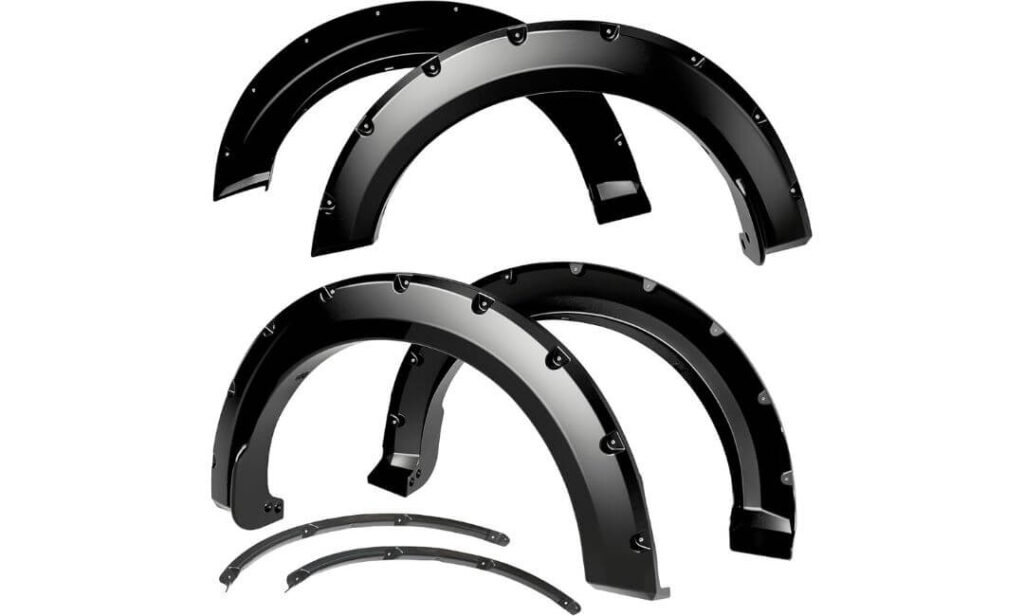
Quick Specs:
- Pocket / bolt-riveted style design (adds that off-road edge visually)
- Injection-molded polypropylene (stronger, less prone to warping)
- Smooth-textured, UV-resistant finish (doesn’t fade out quickly)
- Paintable surface (works stock or custom matched)
- Bolt-on install with hardware kit (no drilling needed)
- Full 4-piece setup (balanced front + rear stance)
If your Ford F-150 still looks a little too “stock” even after wheels and tires, this is usually the missing piece. Not subtle, not trying to blend in—this is the kind of flare that actually changes how the truck feels standing still. That bolt-riveted pocket style gives it that off-road presence without going overboard or looking fake.
What makes this one different from cheaper pocket-style kits is the build. The injection-molded polypropylene feels denser and more consistent, so it doesn’t have that hollow or flimsy feel when you handle it. Once installed, it holds its shape properly—no weird flex or uneven edges. And the smooth textured finish strikes a good balance, rugged but still clean enough for daily driving.
Installation takes a bit more time compared to basic flares, but that’s expected with this style. The bolt-on setup still uses factory points, but getting that aggressive look aligned evenly takes patience. Once it’s done right, though, the truck looks wider, tougher, and more intentional. (if you want your F-150 to actually look like it’s built for more than just pavement, this is where the visual shift happens)
What Actually Feels Different Here:
- Pocket-style design gives a real off-road stance, not just cosmetic change
- Strong molded build holds shape better than entry-level flares
- UV-resistant finish keeps it from fading unevenly over time
- Paintable surface if you want a more custom finish later
- Full set gives a properly balanced aggressive look
What to Know Before You Buy:
- Fitment can vary slightly depending on trim, so alignment needs attention during install
Real Fit on Ford F-150 (2021–2023)
Built specifically for this generation, and when lined up properly, it sits tight against the arches with that bold outward profile. It doesn’t tuck in like OEM styles—it’s meant to stand out, and it does that well.
It skips Lightning models and newer 2024+ updates, so staying within the 2021–2023 range is key. On the right truck, the fit feels aggressive but controlled—not oversized or awkward.
Installation Notes (What It’s Actually Like)
Plan for a bit more time here—this isn’t a quick stick-on job. Lay everything out first, test fit each piece, and only tighten once you’re happy with the alignment.
Having someone hold the flare while you line up bolts makes things easier, especially on the rear. And after a week or two of driving, recheck the bolts—just to keep everything sitting tight and even.
#6. Husky Liners DRT Style Fender Flares (2018–2020 Ford F-150)
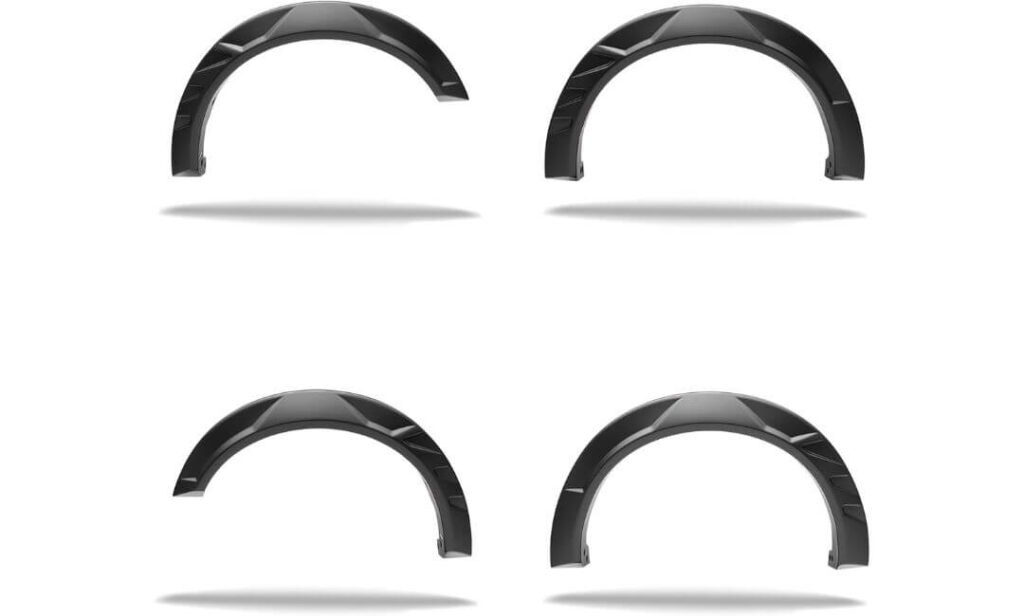
Quick Specs:
- DRT vented aggressive design (built for wider setups, not just looks)
- Dura-Flex 2000 ABS material (thicker, tested, doesn’t warp easily)
- Up to ~3-inch tire coverage (real protection for bigger tires)
- UV-tested for long-term use (no fading, cracking, or chalking)
- No-drill bolt-on install (hardware included, no cutting needed)
- Made in USA with lifetime backing (not something you replace often)
If you’re running an older Ford F-150 (2018–2020) and feel like most newer flares don’t quite match the toughness of your truck, this is where things shift. This isn’t built to just “cover” the arches—it’s built to take abuse and still hold its shape. The moment it goes on, the truck feels more planted, more complete, like it’s actually ready for rough use.
The DRT vented design isn’t just for looks either—it pairs with that extra tire coverage to handle real road spray, mud, and debris. You’ll notice the difference especially if you’re running wider tires or driving through mixed terrain. And the material here is a step above typical plastic kits. The Dura-Flex 2000 ABS has been UV-tested heavily, so it doesn’t fade out or turn brittle over time like cheaper alternatives.
Installation stays straightforward, which is surprising for something this solid. The no-drill setup lines up well with factory mounting points, and once it’s tightened down, it sits firm—no movement, no flex under pressure. It’s one of those upgrades you install once and forget about. (if your goal is durability first and looks second—but still want both—this delivers without cutting corners)
What Actually Makes a Difference Here:
- Strong, tested material that holds up in real driving conditions
- Wider coverage works well with bigger tires and rough roads
- Vented design adds function, not just style
- Doesn’t fade or warp even with long sun exposure
- Lifetime backing gives confidence it’s built to last
What to Keep in Mind:
- Only fits 2018–2020 models, so not for newer F-150 body styles
Real Fit on Ford F-150 (2018–2020)
This is built specifically around the pre-2021 F-150 design, and it fits the way it should—tight along the arches with that slightly wider, aggressive stance. It doesn’t feel oversized or forced; it complements the older body lines well.
If your truck falls in this range, the fit feels solid and intentional. Outside of that, it’s not meant to adapt—this is a precise, model-specific setup.
Installation Notes (What It’s Actually Like)
Give yourself a couple of hours and don’t rush it. Start each piece loose, align properly, then tighten once everything sits flush—it makes a big difference in the final look.
All hardware is included, and you won’t need anything complicated tool-wise. After installation, just do a quick recheck after a few drives to make sure everything stays tight. Once that’s done, you’re set for the long run.
Best Ford F150 Fender Flares Side-by-Side: Which One Fits Your Setup, Style & Tire Size?
| Product | Fitment | Style | Install | Best For |
|---|---|---|---|---|
|
Rough Country SF1
Best Overall
|
2021–2026 | Aggressive / Wide Coverage | No-Drill Bolt-On | Wider tires + full protection + bold stance |
|
Titibett Protector
Budget Pick
|
2021–2026 | Slim / OEM Clean | Stick-On (No Tools) | Daily driving + scratch protection |
|
Spec-D Factory Style
OEM Look
|
2021–2024 | Smooth Factory Style | No-Drill Bolt-On | Stock look upgrade + clean finish |
|
YHTAUTO OE Style
Factory Fit
|
2021–2023 | Subtle / Factory Match | Bolt-On (Hardware Included) | Balanced look + simple upgrade |
|
Tyger Auto Riveted
Aggressive Style
|
2021–2023 | Pocket / Bolt Look | No-Drill Bolt-On | Off-road stance + visual upgrade |
|
Husky Liners DRT
Heavy Duty
|
2018–2020 | Vented / Rugged | No-Drill Bolt-On | Tough use + max durability |
Why Fender Flares Actually Matter on a Ford F-150 (Beyond Just Looks)
Most people think fender flares are just a styling add-on—until they run their truck for a few months without them. That’s when the small things start adding up: chipped paint near the arches, mud sprayed along the doors, and that slightly “unfinished” look once you upgrade wheels or tires. On a Ford F-150, especially the newer body styles, fender flares aren’t optional—they’re part of getting the truck to feel complete.
Let’s break this down the way it actually plays out in real use.
The Look Isn’t Just Cosmetic — It Fixes Proportion
The F-150 has a wide stance from the factory, but once you step into aftermarket wheels or even slightly wider tires, the proportions shift. The tires start to sit more exposed, and the arches suddenly look underbuilt.
That’s where the right set of flares changes everything.
They visually widen the truck, but more importantly, they bring balance back. A clean OEM-style flare makes the truck look finished. A pocket-style or wider flare gives it that planted, aggressive presence without needing a full build. It’s not about making the truck louder—it’s about making it look right again.
Real Protection — Not the Kind You Notice Immediately
This is the part most people ignore at first.
Every time you drive, your tires are throwing up fine debris—sand, small stones, water spray. Without proper coverage, that hits the same areas over and over: lower doors, rear panels, and the edge of your fenders. Over time, that’s where paint damage starts.
A properly fitted flare adds that extra layer of coverage right where it’s needed, especially if you’re running wider setups. Some designs even catch and redirect debris before it spreads across the side of the truck.
You don’t notice it daily—but after a few months, the difference between protected and unprotected trucks is obvious.
Built Around Real-World Driving, Not Just Specs
Whether you’re commuting, hitting rough roads, or dealing with mixed conditions, the F-150 sees everything. Fender flares help manage that without adding complexity.
- They reduce road spray during rain or wet conditions
- They limit mud buildup around wheel arches
- They make cleaning easier because less grime sticks to painted panels
It’s a small upgrade that quietly improves how the truck holds up over time.
Tire Upgrades Without Compromise
The moment you move to wider tires or a more aggressive offset, stock arches start falling short. Either the tire sticks out too much, or you end up dealing with constant dirt spray and potential legal issues in some regions.
Fender flares solve that cleanly.
They bring the tire back under control visually and functionally, giving you the freedom to run a better setup without making the truck look mismatched. Wider coverage options—like the ones we listed above—are especially useful here.
Fitment Matters More Than People Think
This isn’t a one-size-fits-all upgrade.
The 2021+ F-150 has tighter lines and more defined arches compared to older models. A poorly designed flare won’t just look off—it’ll sit unevenly, create gaps, or even stress mounting points over time.
That’s why every option in this guide is tied to specific model years and built around actual fitment—not generic compatibility claims. When the fit is right, the flare disappears into the truck. When it’s not, you notice it every time you walk up to it.
Long-Term Value — Where Most Cheap Options Fail
At first glance, many flares look similar. But after exposure to sun, heat, and daily driving, differences show up fast.
- Lower-quality materials start fading or chalking
- Thin builds begin to flex or loosen
- Poor finishes lose that clean look within months
The better options hold their finish, stay tight against the body, and don’t need constant attention. That’s where spending a bit more upfront actually saves you from replacing them later.
The Bottom Line
On a Ford F-150, fender flares aren’t just about appearance—they’re about balance, protection, and making upgrades actually work together.
Once installed properly, they don’t stand out—they just make everything else on the truck feel more complete. And that’s exactly how you know you picked the right ones.
Installation & Fitment Reality for Ford F-150 Fender Flares (What Actually Makes Them Sit Right)
Most problems people blame on the product usually come down to fitment mistakes or rushed installs. Fender flares aren’t complicated—but they are unforgiving if you skip the basics. On a Ford F-150, especially the newer generations, small misalignment shows up immediately. This is where doing it right once saves you from living with gaps, uneven edges, or worse—loose panels.
Here’s what actually matters before and during installation.
Start With Exact Fitment — Not “Close Enough”
Every F-150 generation is slightly different, and that difference shows up right at the wheel arch. A flare designed for 2021–2023 won’t always sit correctly on a 2024+, even if it looks similar online.
Before ordering, double-check:
- Model year range (don’t assume overlap)
- Trim-specific limitations (Raptor, Lightning, running boards, etc.)
- Whether the flare is designed for your exact body style
If the fitment isn’t precise, no amount of adjustment during install will make it look right.
“No-Drill” Only Works If You Respect Alignment
A lot of kits say no-drill, and technically they’re right—but that doesn’t mean you can rush it. These flares depend on factory mounting points lining up correctly.
What actually works:
- Mount everything loose first, don’t tighten immediately
- Align the flare along the arch line visually, not just by bolt holes
- Tighten gradually once the entire piece sits flush
If you tighten one side too early, the rest of the flare shifts—and that’s where uneven gaps come from.
Tire Size & Offset Decide How Good It Looks
This is where most installs fall short.
If you’re running wider tires or aftermarket wheels, the flare needs to match that setup, not just fit the truck. A narrow flare on a wide tire setup looks incomplete. A wide flare on stock tires can look overdone.
Before installing, check:
- How far your tire sits outside the fender
- Whether the flare actually covers that width
- Clearance during full turns (especially front wheels)
The goal isn’t just fitment—it’s proportion.
Surface Prep Makes or Breaks the Result
For bolt-on kits, this is about alignment.
For adhesive-style protectors, this is everything.
Always:
- Clean the wheel arch thoroughly (no dust, no residue)
- Dry completely before starting
- Inspect factory edges and seals for damage
If the surface isn’t right, even the best product won’t sit properly or stay secure long-term.
Hardware, Clips & Edges — Small Details That Matter
Don’t skip checking the small things before installation:
- Make sure all clips, bolts, and brackets are accounted for
- Inspect rubber seals or edge trim if included
- Replace any worn factory clips if needed
A missing or weak mounting point is usually what causes flares to loosen later—not the flare itself.
Take Your Time With Final Positioning
This is the difference between an install that looks “okay” and one that looks factory-level clean.
Before final tightening:
- Step back and check the flare from multiple angles
- Look for even spacing along the arch
- Make sure both sides match visually
Once everything is tightened, adjustments become harder. This step is where you lock in the final result.
When It’s Worth Letting a Shop Handle It
Most of these can be installed at home—but not every setup is worth rushing through solo.
Consider professional install if:
- You’re dealing with bolt-riveted or aggressive styles
- Fitment feels slightly off and needs adjustment
- You want a perfectly flush, factory-level finish
A good shop will align everything faster and cleaner, especially if you care about long-term fit.
After Installation — The Part People Forget
Once installed, you’re not completely done.
After a few drives:
- Recheck all bolts and mounting points
- Look for any slight shifts or looseness
- Clean edges to make sure everything stays seated properly
This quick follow-up keeps the flares sitting tight and prevents issues later.
The Bottom Line
Installing fender flares on a Ford F-150 isn’t difficult—but doing it properly is what separates a clean, factory-like finish from something that always feels slightly off.
Take your time, match the flare to your setup, and focus on alignment over speed. When everything lines up the way it should, the result doesn’t just look better—it lasts.
Buying Fender Flares for Ford F-150 (What Actually Separates a Smart Buy from a Regret)
Most people don’t mess up because they chose the “wrong” brand—they mess up because they didn’t match the flare to how their Ford F-150 is actually used. On paper, almost every option looks similar. In reality, the difference shows up after a few weeks of driving, washing, and living with it.
This is how you avoid that.
Start With Your Truck Setup — Not the Product
Before even looking at options, look at your truck as it sits today.
- Stock wheels and tires?
- Slightly wider setup?
- Full aggressive offset with poke?
Because the flare needs to match your current or planned setup, not just fit the truck. A lot of people buy based on looks, install them, and then realize the coverage doesn’t match their tires—or worse, it looks off from certain angles.
If you’re planning upgrades later, buy for that—not for today.
Coverage Is the Real Decision (Not Just Style)
Most buyers focus on whether they want OEM, smooth, or pocket style. That’s surface-level.
What actually matters is how much coverage you need.
- Light daily use → Slim or OEM-style works fine
- Moderate upgrades → Mid-width flares (balanced look + protection)
- Wider tires / off-road → Full coverage flares (2–3 inch range)
If your tires sit outside the body line and the flare doesn’t cover them properly, it defeats the purpose—both visually and functionally.
Material Quality Shows Up After 3–6 Months
This is where cheaper options fall apart.
Almost all flares will say “ABS” or “polypropylene.” That doesn’t tell you much. What matters is how they’re made and how they hold up under real conditions.
Look for:
- UV resistance (prevents fading and chalking)
- Slight flexibility (so it doesn’t crack under pressure)
- Thickness that doesn’t feel hollow or weak
You won’t notice the difference on day one. You will notice it after a few months in sun, rain, and daily use.
Installation Type Isn’t Just About Effort
“No-drill” sounds great—and in most cases, it is—but there’s more to it.
- Bolt-on (no-drill) → More secure, better long-term fit
- Adhesive / stick-on → Faster, but depends heavily on surface prep
- Riveted / pocket style → Needs more alignment precision
If you want something that stays tight for years, bolt-on setups are usually the safer bet. Adhesive kits are great for light protection—but only if installed properly.
Fitment Precision Is Everything on Newer F-150s
The 2021+ trucks have sharper lines and tighter panel tolerances. That means poor fitment stands out immediately.
Avoid anything vague like:
- “Fits most F-150 models”
- “Universal style”
Instead, go for flares that clearly mention:
- Exact year range
- Specific exclusions (Raptor, Lightning, running boards)
A properly designed flare should follow the arch like it belongs there—not look like it was adjusted to fit.
Paintable vs Pre-Finished — Think Long-Term
A lot of people ignore this and regret it later.
- Matte / textured black → Easy, durable, low maintenance
- Paintable surface → Better for custom builds or color match
If you plan to keep your truck long-term or care about a clean build, having that paint option matters—even if you don’t use it right away.
Don’t Ignore How It Ages on the Truck
The best flare isn’t the one that looks good on install day—it’s the one that still looks right months later.
Pay attention to:
- Edge fit (does it stay tight or start lifting?)
- Color consistency (does it fade unevenly?)
- Mounting stability (does it loosen over time?)
A good flare disappears into the truck. A bad one slowly starts drawing attention for the wrong reasons.
Balance Style With Use — Not Just Preference
This is where most decisions go wrong.
- If your truck is mostly daily-driven → Clean OEM or subtle styles age better
- If you’re building for presence → Pocket / aggressive styles make sense
- If you need real protection → Go wider, even if it’s less subtle
There’s no “best” style—only what fits your use and setup.
Buying fender flares for a Ford F-150 isn’t about picking the most popular option—it’s about choosing something that fits your truck, your setup, and how you actually use it.
When those three line up, you don’t second-guess the purchase. It just works, looks right, and stays that way.
Maintaining Fender Flares on a Ford F-150 (So They Still Look Right a Year Later)
Most people install fender flares, admire the look for a week… and then forget about them. That’s exactly why you start seeing faded edges, loose corners, or uneven color after a few months on some trucks.
On a Ford F-150, flares sit in one of the harshest zones—constant sun, road grime, pressure washing, and debris hits. If you want them to keep that clean, factory-like finish, a little attention goes a long way.
Washing Them the Right Way (Not Just Along With the Truck)
When you wash your truck, flares usually get the same quick pass as the body—but they need a bit more intention.
- Use a separate soft brush or mitt for the edges
- Focus on the inner lip where dirt and salt build up
- Don’t let grime sit for weeks—it slowly eats into the finish
Textured and matte finishes especially tend to hold onto dirt more than painted panels, so a quick rinse isn’t always enough.
UV Exposure Is What Kills the Finish (Not Time)
The biggest enemy here isn’t usage—it’s sun.
Even UV-resistant materials can fade if left untreated over time. That dull, chalky look you see on older flares? That’s usually from neglect, not poor quality.
What actually helps:
- Apply a trim restorer or UV protectant every few weeks
- Park in shade when possible (makes a bigger difference than you think)
- Avoid harsh chemical cleaners that strip protective layers
Keeping that deep matte or textured black look intact is mostly about consistent protection, not heavy effort.
Watch the Edges — That’s Where Problems Start
Most flare issues don’t start in the middle—they start at the edges.
After regular driving:
- Check for slight lifting or gaps near mounting points
- Look for dirt buildup between the flare and body
- Make sure edge trim (if included) is still seated properly
Catching this early prevents water or debris from getting underneath, which is what eventually loosens the fit.
Re-Tightening Isn’t Optional (Even on Good Kits)
Bolt-on flares settle slightly after installation. It’s normal.
After the first couple of weeks:
- Go back and check all bolts or fasteners
- Tighten anything that feels loose
- Do a quick visual alignment check
This one step alone keeps flares sitting tight long-term. Skipping it is why some setups start shifting over time.
For Adhesive Flares — Care Is Different
If you’re running stick-on or protector-style flares, maintenance is more about adhesion than hardware.
- Avoid high-pressure water directly on edges
- Don’t pick or press unevenly on corners
- If an edge lifts slightly, address it early before it spreads
Adhesive holds well—but only if it stays clean and undisturbed.
Seasonal Changes Matter More Than You Think
Heat expands materials. Cold contracts them.
On an F-150 that sees different weather:
- Expect slight movement between seasons
- Check fitment after extreme temperature changes
- Clean more frequently in winter (salt + grime buildup is faster)
These small checks keep everything sitting flush year-round.
Small Scratches and Marks — Handle Them Early
Fender flares take hits—it’s part of the job.
For minor marks:
- Use a plastic-safe restorer or trim product
- Light scuffs can often be blended out visually
- Don’t wait until multiple marks build up
Keeping them fresh is easier when you stay ahead of damage instead of fixing it later.
The Long-Term Mindset
A good set of fender flares on a Ford F-150 shouldn’t feel like something you’re constantly fixing. But they do need occasional attention to stay looking the way they did on day one.
It’s not about over-maintaining—it’s about not ignoring them completely.
Because when they’re clean, tight, and holding their finish, they don’t just protect your truck—they keep it looking like everything was done right in the first place.
FAQs About Ford F150 Fender Flares
Do I really need wider fender flares on a Ford F-150 if I’m only running slightly bigger tires?
Short answer—depends on how “slightly bigger” actually looks on your truck. On a Ford F-150, even a mild upgrade (say +1 or +2 tire size with a different offset) can push the tire just enough to sit outside the factory line.
That’s where things get tricky. It might not look extreme standing still, but once you drive, you’ll notice more road spray, dirt on the doors, and that slightly unfinished stance. A mid-width flare fixes that balance without overdoing it.
If your tire is even visually peeking out, a proper flare isn’t optional anymore—it’s the clean way to correct it.
Why do some fender flares on a Ford F-150 look “off” even when they claim perfect fitment?
Because “fits” and “fits right” are two completely different things.
On newer Ford F-150 models, the body lines are sharper and less forgiving. If a flare doesn’t follow that exact curve, even a few millimeters of mismatch shows up as uneven gaps or tension points.
Most of the time, it’s not the install—it’s the design tolerance of the flare itself. That’s why vehicle-specific engineering matters more than brand name. When the contour is right, the flare disappears into the truck. When it’s not, you keep noticing it every time you walk up to it.
Is “no-drill” actually reliable long-term on a Ford F-150, or just a marketing thing?
It’s reliable—but only if the mounting design is done properly.
On a Ford F-150, true no-drill setups use factory mounting points that are already reinforced. When those are used correctly, the flare sits just as secure as drilled setups.
Where people run into issues is rushing the install—tightening too early, skipping alignment, or ignoring hardware checks after a few drives. Done right, no-drill isn’t a shortcut. It’s actually the cleaner, smarter install.
Will fender flares affect how my truck drives or handles at highway speeds?
Not in the way most people think. You won’t feel a direct change in handling—but you might notice small differences in airflow and road noise depending on the style.
Aggressive or wider flares can slightly change how air moves along the side of the truck, especially at higher speeds. It’s subtle, but on long drives, some setups feel a bit louder compared to slim OEM-style flares.
Nothing dramatic—but if you care about quiet highway driving, that’s where style choice actually matters.
What’s the biggest mistake people make after installing fender flares?
They install them… and never check them again.
The first 1–2 weeks are where everything settles—bolts seat properly, materials adjust slightly, and alignment locks in. If you skip that follow-up check, small looseness turns into long-term fit issues.
The guys whose flares still look perfect after a year? They didn’t do anything complicated—they just went back once, tightened everything properly, and kept an eye on the edges.
It’s not about maintenance—it’s about not walking away too early.
Final Verdict (What Actually Makes Sense for Your Ford F-150)
At this point, it’s not really about “which fender flare is best.” It’s about which one actually fits your Ford F-150, your setup, and how you use it day to day.
Because here’s the truth—most of these will look good on install day. The real difference shows up later. When the truck is dirty, when you’ve driven through rough roads, when the sun has hit it for months… that’s when you see which one still sits right, still holds its finish, and still feels like it belongs on the truck.
If you want a wider, more aggressive stance with real coverage, the Rough Country setup is the one that changes how the truck feels instantly.
If you just want clean protection without altering the look, something like the Titibett or OE-style options quietly does the job without overcomplicating things.
And if your goal is purely visual—making the truck look tougher, more built—the pocket-style Tyger setup delivers that presence without needing a full overhaul.
There’s no wrong pick here—but there is a wrong match. That’s where most people get it wrong.
The right choice is the one that:
- Matches your tire setup
- Fits your exact model year without compromise
- And still looks right after the “new install” feeling wears off
Once that lines up, you stop thinking about the flares completely—and that’s exactly how it should be.
Because on a Ford F-150, the best upgrades aren’t the ones that stand out the most…
they’re the ones that make everything else on the truck feel complete.
Also Check: