Best Level 2 EV Chargers 2026: Top Home Picks for Fast & Safe Charging
Choosing a Level 2 EV charger today isn’t about chasing the highest numbers on a spec sheet. What really matters is how the charger performs once it’s installed at home and used day after day—overnight charging, changing weather, power fluctuations, and the small issues that only show up after weeks of real use. That’s why people searching for the best Level 2 EV chargers are usually past the basics and ready to make a confident buying decision.
For this guide, we didn’t rely on brand claims or glossy product pages. We went through recent owner discussions on EV forums, long-term feedback shared on Reddit, electrician recommendations, and real installation experiences from everyday EV owners. After filtering out short-term impressions and inconsistent models, we narrowed the field down to seven Level 2 EV chargers that have proven dependable in real-world use—not just during the first few weeks, but over months of regular charging.
This article focuses strictly on personal EV charging setups, leaving out public stations, workplace infrastructure, and fleet-only equipment. The goal is simple: highlight chargers that deliver consistent performance, meet proper safety standards, and are practical to live with—whether that means straightforward daily charging or higher-output setups for demanding use cases. Every recommendation here reflects how these chargers actually perform over time, not how they’re marketed.
If you’re looking for a Level 2 EV charger that matches how you really charge and holds up in daily use through 2026, this guide is designed to help you choose with confidence—without second-guessing later.
7 Best Level 2 EV Chargers for Home Charging in 2026
#1. PRIMECOM 80 Amp Level 2 EV Charger — Maximum Power Choice
#2. Autel MaxiCharger AC (50A) — Best Build Quality & Reliability
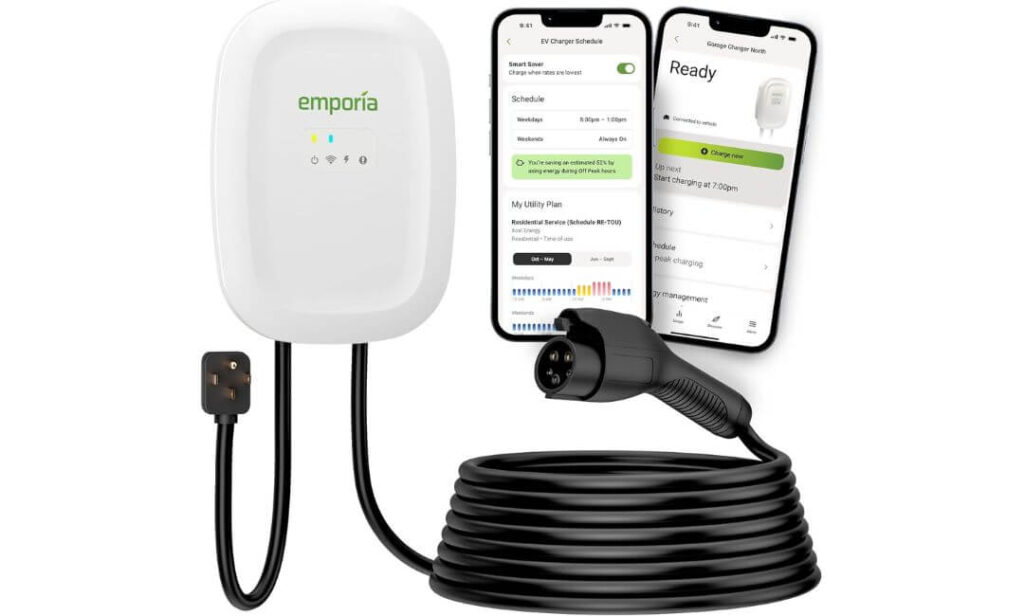
#3. EMPORIA Level 2 EV Charger (48A) — Best Smart & Data-Focused Charger
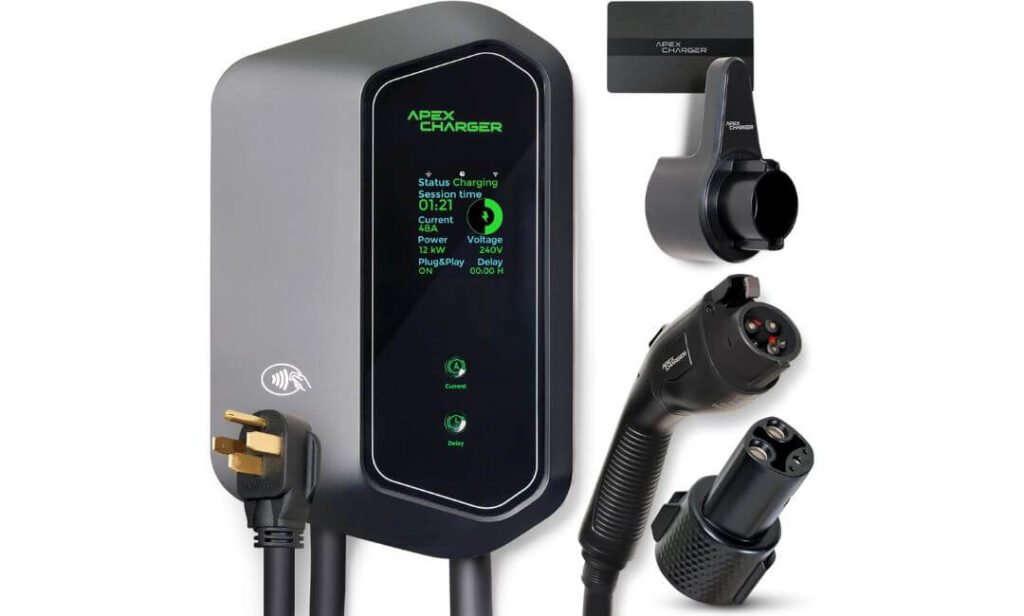
#4. MACH 1 Level 2 EV Charger (ApexCharger, 48A) — Best Universal Setup
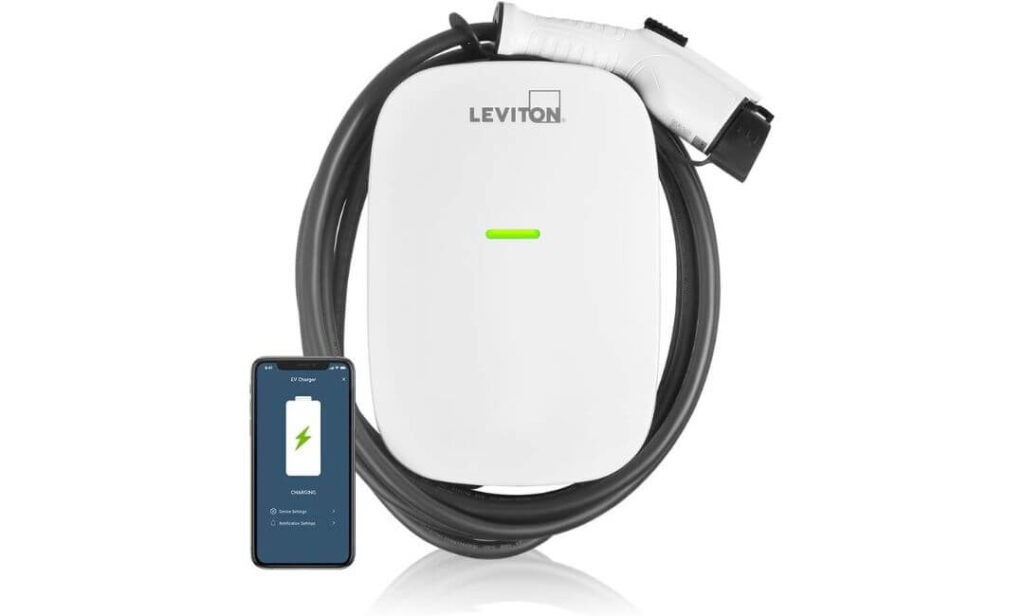
#5. Leviton EV48W Level 2 Smart EV Charger — Best Electrical-Grade Trusted Brand
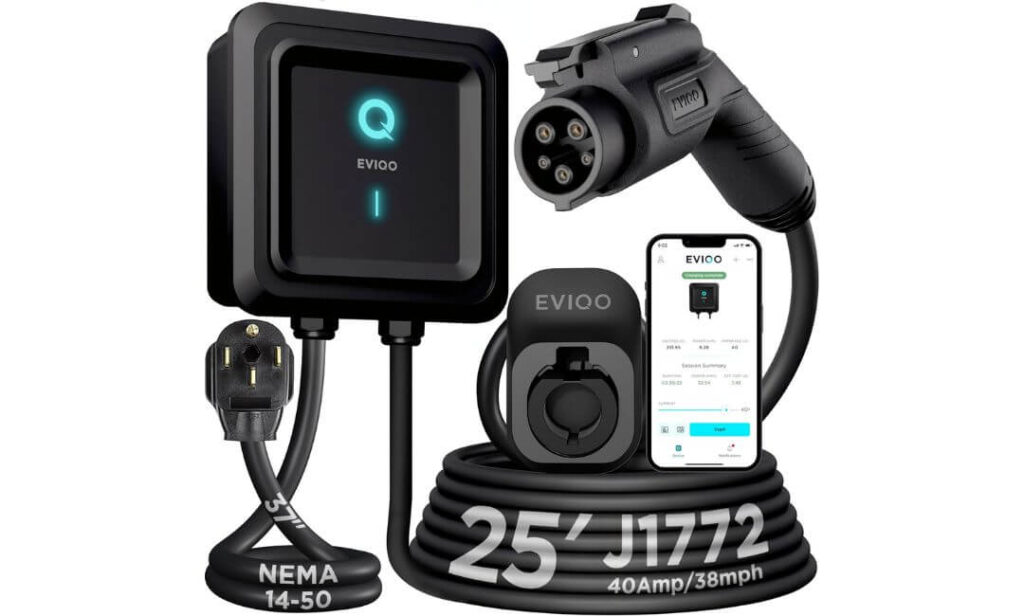
#6. EVIQO Level 2 EV Charger Gen 2 (40A) — Best Value for Daily Use
#7. LENZ Level 2 EV Charger (40A) — Best No-App Simple Charger
Note: All chargers in this list are Level 2 EV chargers for home, covering both standard overnight charging needs and high-amp setups for faster home EV charging in 2026.
Expert Tip
Also Check:
- Best Car Battery Charger and Jump Starter
- Best Battery Powered Dash Cams for Cars
- Best Bi-Directional Scanner Tools with OBD2
Why These 7 Chargers Made the Cut
Not every Level 2 EV charger that looks good on paper holds up in real use. Many models perform fine during the first few weeks, then start showing issues—overheating cables, unreliable apps, loose connectors, or charging sessions that fail without warning. To avoid those problems, this shortlist was built around long-term reliability, not advertised specs.
Each charger included here repeatedly surfaced in owner discussions across EV forums and Reddit, supported by real installation stories and follow-up feedback months after purchase. We focused on patterns, not one-off opinions—chargers that people continued to recommend well after the novelty wore off.
The final seven were chosen using a few non-negotiable criteria. All of them deliver stable Level 2 charging performance, meet recognized safety and certification standards, and show solid build quality where it matters most—cables, connectors, enclosures, and heat management. Smart features were treated as a bonus only when they worked consistently and didn’t become a source of frustration over time.
Just as importantly, we filtered out chargers with repeated complaints about installation headaches, software instability, weak customer support, or inconsistent charging behavior. What remains is a group of chargers that owners trust for regular, long-term use—not just occasional testing.
These chargers didn’t make the list because of brand reputation or marketing claims. They earned their place by continuing to perform reliably in real garages and driveways through 2026.
Benefits of Owning a Level 2 EV Charger (What Changes After You Live With One)
The real benefit of a Level 2 EV charger isn’t how fast it fills the battery—it’s how quietly it removes friction from everyday driving. Once charging stops being something you plan around, the EV starts fitting into your routine instead of shaping it.
Charging Becomes Background Noise
With a proper Level 2 setup, charging fades into the background. You stop checking percentages, calculating hours, or thinking about whether tonight’s charge will be “enough.” You plug in, walk away, and expect the car to be ready—because it usually is.
Your Driving Decisions Feel Less Constrained
One subtle shift owners notice is freedom. You don’t hesitate before an extra errand or a longer return trip because charging no longer feels scarce. That mental freedom matters more over time than raw charging speed.
Overnight Charging Feels Reliable, Not Optimistic
Level 1 charging often feels like a gamble—sometimes it’s enough, sometimes it isn’t. Level 2 charging feels predictable. Night after night, you get roughly what you expect, which builds confidence in both the charger and the vehicle.
The EV Starts Feeling “Normal”
This is something many owners don’t anticipate. Once charging stops being a limitation, the EV stops feeling like a special case. It becomes just a car—one that happens to charge at home. That psychological shift is a big part of long-term satisfaction.
Ownership Gets Simpler Over Time
Fewer public charging stops. Less waiting. Fewer last-minute decisions. A Level 2 charger quietly reduces the number of small inconveniences that add up over months of ownership. You don’t notice the benefit every day—but you definitely notice if it’s gone.
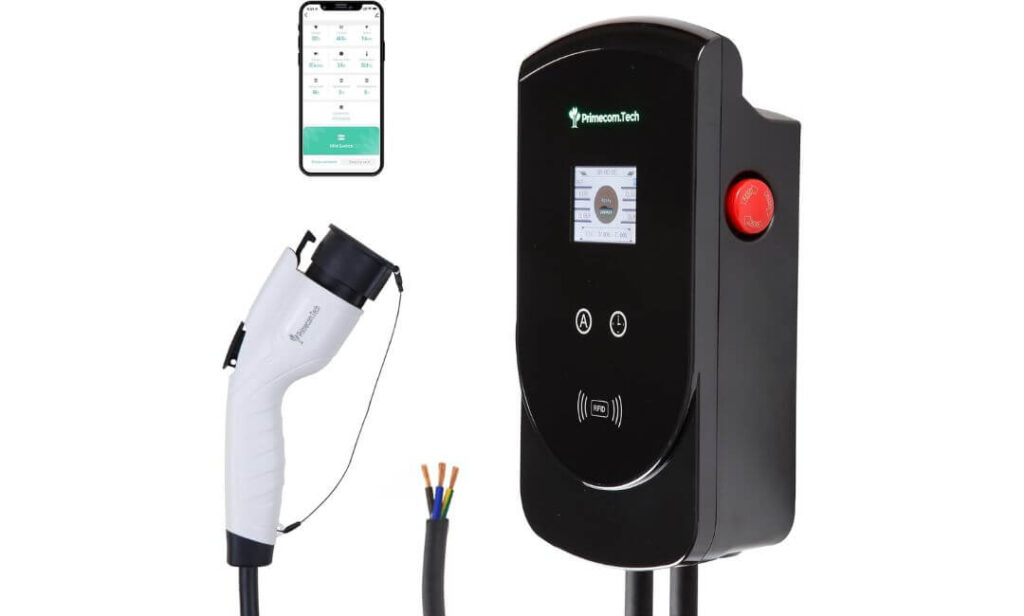
#1. PRIMECOM 80 Amp Level 2 EV Charger (Up to 22 kW)
- Max Output: 22 kW
- Amperage: Up to 80A (adjustable)
- Connector: J1772
- Install Type: Hardwired
- Cable Length: 18–50 ft (model dependent)
This is the most expensive charger on this list—and it’s also the most aggressive when it comes to raw charging power. The PRIMECOM 80A charger isn’t designed for casual upgrades or future planning. It’s built for drivers who already know they need serious output and want charging times pushed as low as possible.
With a maximum output of up to 22 kW at 80 amps, this charger operates in a different league than typical Level 2 units. In real-world use, that kind of power translates to extremely fast recovery, especially for large-battery EVs and electric trucks. What stands out is not just the peak number, but the flexibility—amperage can be stepped down across multiple levels, allowing the charger to match the electrical setup rather than force a single high-output mode.
PRIMECOM clearly expects this charger to be installed deliberately. It’s a hardwired-only unit, built around a dedicated 220V circuit, and intended for setups where electrical capacity isn’t a limiting factor. Once installed properly, owners describe charging sessions as short, controlled, and predictable—even when pushing higher amperage settings.
The feature set matches the performance intent. A built-in display shows live charging data—amperage, voltage, energy usage, and temperature—without relying entirely on an app. For those who want remote control, the smartphone app adds scheduling, monitoring, and usage tracking. RFID access control further signals that this charger can live comfortably in shared or semi-public environments, not just private garages.
Cable options are another practical advantage. With lengths available up to 50 feet, placement constraints largely disappear. Combined with the rugged, waterproof housing and extensive safety certifications, the charger feels purpose-built for demanding, long-term use rather than occasional charging.
Performance Highlights
- Extremely high 80A output, far beyond typical Level 2 chargers
- Wide amperage adjustment range, allowing precise electrical matching
- Long cable options up to 50 feet, offering maximum placement flexibility
- On-unit display with real-time data, not app-dependent
- Heavy-duty safety design, including ETL and TÜV certifications
Important Trade-Offs
- Requires a high-capacity electrical setup, often meaning higher install cost
- Overkill for many drivers, especially those with smaller battery packs
Best suited for: drivers with large EV batteries, electric trucks, or demanding usage patterns who want the fastest possible Level 2 charging and are prepared for a professional, high-capacity installation.
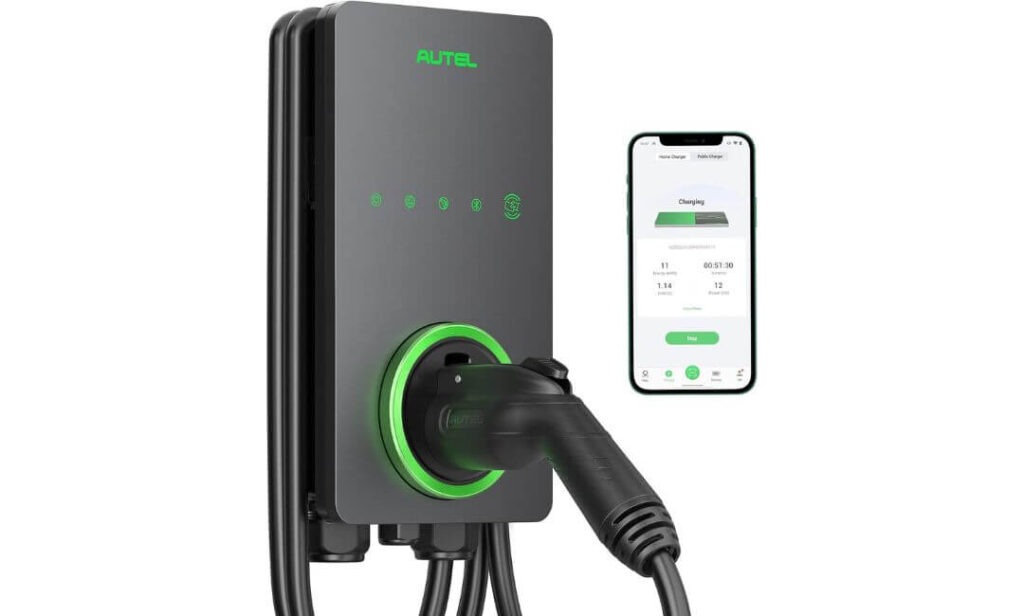
#2. Autel MaxiCharger AC Home (Up to 50A)
- Max Output: 12 kW
- Amperage: Up to 50A
- Connector: J1772
- Install Type: Hardwired
- Cable Length: 25 ft
One customer summed it up perfectly: “My 212 kWh battery went from 30% to usable overnight without me thinking about it once.” That line captures why Autel’s MaxiCharger has quietly become a favorite among drivers who care more about consistency than marketing promises.
Autel didn’t enter EV charging as a lifestyle brand—it came from years of building professional-grade automotive diagnostics. That background shows in how this charger behaves. The 50-amp output (up to 12 kW) isn’t just about speed; it’s about holding that speed steadily, without thermal pullbacks or random session drops. Owners regularly point out that charging remains smooth even during long sessions, which is where lesser chargers start to struggle.
The physical build is confidence-inspiring. This isn’t a lightweight plastic box meant to look good on a wall—it feels engineered. The NEMA 4X enclosure, fire-resistant components, and internal protections against overcurrent, voltage spikes, and overheating make it clear this unit was designed to live through years of real conditions, not just showroom installs. Cold weather performance is another quiet strength, with the cable staying flexible even when temperatures dip far below freezing.
Autel’s app experience feels purpose-built rather than rushed. Scheduling, monitoring, and firmware updates all work in the background without demanding constant attention. The addition of Wi-Fi, Bluetooth, and Ethernet gives it redundancy that many chargers lack—if one connection is unstable, another usually holds. That matters more over time than flashy UI design.
Installation leans toward the professional side. This charger is designed primarily for hardwired setups, and most users treat that as a feature rather than a drawback. Once installed correctly, it feels like part of the electrical system, not an accessory you might replace in a year.
Where It Excels
- High-capacity 50A charging that stays stable through long sessions
- Industrial-grade enclosure and protections, built for demanding conditions
- Cold-weather cable performance, remaining flexible when others stiffen
- Multiple connectivity options (Wi-Fi, Bluetooth, Ethernet) for reliability
- Long-term support mindset, backed by a multi-year warranty and OTA updates
Points to Keep in Mind
- Hardwired installation required for full performance, adding install complexity
- Electrical capacity must support a higher breaker, which may not suit every setup
Best suited for: drivers who want a no-compromise Level 2 charger with maximum output, serious build quality, and a system-level feel rather than a plug-and-play gadget.
#3. EMPORIA Level 2 EV Charger (Up to 48A)
- Max Output: 11.5 kW
- Amperage: 48A (40A plug-in)
- Connector: J1772 / NACS option
- Install Type: Plug-in or Hardwired
- Cable Length: 25 ft
One of the fastest-growing product lines in the EV charging space right now, Emporia’s Level 2 charger has earned attention by doing something simple but rare: combining high power with genuinely usable smart controls. Instead of leaning on branding or flashy promises, this charger has grown through word of mouth among EV owners who care about data, control, and long-term reliability.
What immediately separates the Emporia charger from many competitors is its flexibility. Out of the box, it supports a NEMA 14-50 plug for up to 40 amps, but when hardwired, it unlocks the full 48-amp output—up to 11.5 kW. In real-world terms, that extra headroom matters for drivers who want faster overnight recovery without stretching charging into the next day. Users consistently report stable sessions even at higher amperage, without excessive heat or unexpected throttling.
Emporia’s background in energy monitoring shows up clearly in how this charger behaves. The Wi-Fi integration isn’t an afterthought—it’s central to the experience. Through the app, owners can see real-time power draw, track charging history, and schedule sessions around utility rate changes. For people who actually want insight into energy usage rather than just a start/stop button, this charger delivers more visibility than most options in this category.
Build quality is another strong point. The enclosure feels solid and purpose-built, not decorative. With a NEMA Type 4 weather rating, it’s designed to handle outdoor exposure without relying on fragile seals or cosmetic covers. The 25-foot cable strikes a practical balance—long enough for flexible parking without becoming stiff or unwieldy over time.
Installation flexibility adds to its appeal. Many users start with the plug-in setup and later convert to hardwired when upgrading their electrical capacity. That adaptability makes the Emporia charger easier to grow into rather than replace.
Strengths That Stand Out
- High-output capability up to 48A, offering faster recovery for higher-capacity batteries
- Exceptionally detailed energy monitoring, well beyond basic charging stats
- UL and Energy Star certifications, meeting strict electrical and safety standards
- Dual installation paths (plug-in or hardwired) without changing hardware
- Strong app reliability, with scheduling and data tools that actually get used
Limitations to Consider
- Hardwiring required to access full 48A output, which may increase install cost
- Smart features assume regular app use, which may feel unnecessary for minimalists
Best suited for: drivers who want maximum Level 2 charging speed paired with deep energy insight and precise control, especially those planning to hardwire for full output.
#4. MACH 1 Level 2 EV Charger (Up to 48A)
- Max Output: 11.5 kW
- Amperage: 48A (40A plug-in)
- Connector: J1772 + Tesla NACS Adapter
- Install Type: Plug-in or Hardwired
- Cable Length: 30 ft
The MACH 1 Level 2 EV Charger is built as a wall-mounted charging station that connects to a 240V NEMA 14-50 outlet or can be hardwired for a permanent, higher-output setup—giving it flexibility without feeling modular or temporary. From the first look, it’s clear this unit is designed to feel like installed equipment, not an accessory.
Power delivery is where MACH 1 earns attention. At 48 amps (up to 11.5 kW) when hardwired, it offers a noticeable step up in charging speed, while still allowing a plug-based setup for users who prefer simplicity. Owners often highlight how confidently it holds output over longer sessions, without abrupt slowdowns or heat-related interruptions that show up in cheaper high-amp chargers.
One standout detail is how ApexCharger handles compatibility. Instead of forcing Tesla owners into aftermarket solutions, MACH 1 includes a dedicated NACS adapter alongside the J1772 connector. That makes it genuinely universal out of the box, especially for households with mixed EV brands or drivers planning a vehicle switch in the future.
The design leans practical but deliberate. A 30-foot heavy-duty cable removes parking precision from the equation, and the built-in holder keeps things tidy rather than turning into an afterthought. The front-facing LED display gives quick, glanceable information without requiring the app, while the app itself adds scheduling, amp control, and session tracking for those who want deeper insight.
Security and durability haven’t been ignored either. With RFID access cards, anti-theft mounting hardware, and a weather-resistant enclosure, MACH 1 feels equally comfortable in semi-public spaces or exposed outdoor installs. It’s the kind of charger that looks intentional wherever it’s mounted.
Where MACH 1 Delivers
- High-output 48A capability, with stable performance when hardwired
- True universal compatibility, including a bundled Tesla NACS adapter
- Long 30-foot cable, reducing placement and parking constraints
- Dual control options, via onboard display and mobile app
- Security-focused design, including RFID access and anti-theft hardware
Consider Before Choosing
- Full 48A output requires hardwiring, which may add install cost
- Feature-rich setup may feel excessive for users who want basic charging only
Best suited for: drivers who want a powerful, future-proof Level 2 charger with built-in Tesla support, long reach, and both smart and physical controls in one system.
#5. Leviton EV48W Level 2 Smart EV Charger (48A)
- Max Output: 11.6 kW
- Amperage: 48A
- Connector: J1772
- Install Type: Hardwired
- Cable Length: 18 ft
The EV48W is UL-listed and EnergyStar-certified, which already tells you a lot about who this charger is built for. This isn’t a flashy, trend-driven EV charger—it’s a piece of electrical equipment designed by a company that has been wiring homes for generations. The focus here is compliance, long-term safety, and predictable performance rather than aggressive feature marketing.
Running at up to 48 amps with an 11.6 kW output, the EV48W is meant for drivers who want strong Level 2 performance without cutting corners on electrical standards. Once hardwired on a 60-amp circuit, charging sessions stay consistent, with no signs of power fluctuation or throttling. Owners often describe it as “invisible” in daily use—plug in, charge completes, no surprises.
What sets this charger apart is how it fits into a broader electrical ecosystem. Through the My Leviton app, it integrates cleanly with other Leviton products, making it appealing to users who already rely on the brand’s load centers, breakers, or smart devices. The app experience is straightforward—scheduling, monitoring, and basic control—without turning charging into another thing to manage constantly.
The physical design reflects its purpose. The NEMA 3R enclosure and cold-resistant cable are engineered for real exposure, not just occasional outdoor use. The cable resists stiffening and cracking in extreme temperatures, which is something owners in colder climates consistently appreciate. Installation is also electrician-friendly, with a pre-attached input cable and mounting hardware that reduces time on the wall.
Leviton also takes a measured approach to access control. RFID is available, but intentionally disabled by default. It’s there when needed—shared spaces, controlled access—but it doesn’t complicate basic use for single-driver setups.
Where It Excels
- Strong electrical credibility, backed by UL and Energy Star certification
- Stable 48A output, designed for continuous, long charging sessions
- Cold-weather cable design, resisting freezing and cracking
- Clean integration with My Leviton ecosystem, not a standalone app silo
- Installer-friendly design, reducing setup time and errors
Limitations to Be Aware Of
- Hardwired-only installation, no plug-in option
- Shorter 18-foot cable, which may limit placement flexibility
Best suited for: drivers who prioritize electrical safety, brand trust, and long-term reliability over extra features or extended cable reach.
#6. EVIQO Level 2 EV Charger (40A, Gen 2)
- Max Output: 9.6 kW
- Amperage: 40A
- Connector: J1772
- Install Type: NEMA 14-50 Plug
- Cable Length: 25 ft
Every month, more than a thousand buyers choose this charger on Amazon—not because it looks flashy, but because it quietly does its job without drama. The EVIQO Gen 2 has built a reputation for being the kind of Level 2 charger you install once and then stop thinking about, which is exactly what most EV owners want.
At its core, this is a 40-amp Level 2 charger delivering up to 9.6 kW, a sweet spot for drivers who want meaningful overnight charging without pushing their electrical setup to the edge. In real use, that translates to consistent, predictable charge sessions rather than headline numbers that only work under ideal conditions. Owners frequently mention that charging sessions start cleanly, stay stable, and don’t randomly drop or reset.
One reason the EVIQO stands out is how much attention has been paid to reliability rather than gimmicks. The internal steel-shielded mainboard, combined with UL and ETL certification, shows up where it matters—steady performance, even when installed in harsher environments. The IP66/NEMA 4 enclosure isn’t just marketing language; users running this charger through rain, snow, heat, and dust report very few weather-related complaints.
The smart features feel mature rather than rushed. The enhanced Wi-Fi antenna makes a real difference for garages and basements where many chargers struggle to stay connected. Through the app, you can fine-tune current in 1-amp steps, schedule charging around off-peak hours, and track energy usage without the app becoming a daily frustration. Importantly, the charger still works perfectly well even if you don’t want to interact with the app constantly.
Installation is another area where EVIQO earns points. With its NEMA 14-50 plug design, most users are able to mount it and start charging quickly using the included hardware and guide. The 25-foot cable is long enough to avoid awkward parking compromises, and the rubberized J1772 connector feels solid in hand, not flimsy or hollow.
What It Gets Right
- Consistent 40A performance that holds steady over long charging sessions
- Strong safety credentials (UL, ETL, FCC, Energy Star) that also help with rebate eligibility
- Reliable Wi-Fi connectivity, even in locations where other chargers drop offline
- Flexible current control, allowing fine adjustment instead of fixed presets
- Durable outdoor-ready enclosure that actually matches real-world conditions
Where It Falls Short
- Tesla compatibility requires a separate NACS adapter, which adds extra cost
- No built-in load balancing, which may matter for more complex electrical setups
Best suited for: drivers who want a dependable 40A Level 2 charger with smart control that works reliably over time, not just on day one.
#7. LENZ Level 2 EV Charger (40A)
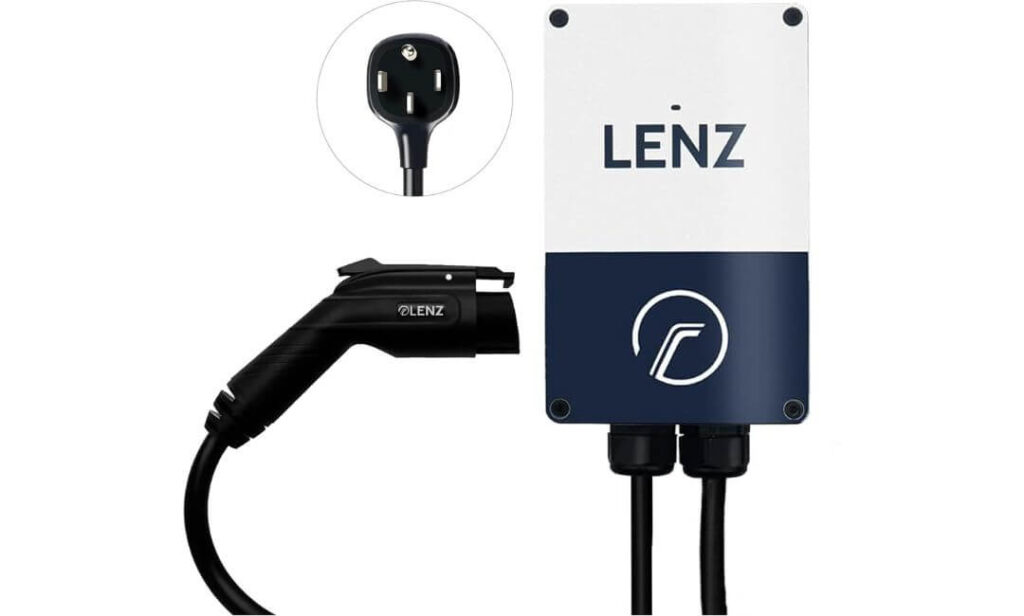
- Max Output: 9.6 kW
- Amperage: 40A (adjustable)
- Connector: J1772
- Install Type: NEMA 14-50 Plug
- Cable Length: 24 ft
Do you need something solid that just works every night without apps, updates, or second-guessing? That’s the mindset LENZ clearly designed this charger around. Instead of chasing smart features or headline-grabbing numbers, this unit focuses on dependable, repeatable charging—the kind you stop noticing once it’s installed.
The 40-amp, 9.6 kW output lands right in the practical zone. It’s fast enough to handle daily driving without stretching charge times, yet conservative enough to stay stable over long sessions. Owners often point out how predictable it feels: plug in, charging starts, and it finishes without interruptions or warnings. There’s no app to babysit and no software layer that can fail at the wrong moment.
Build quality is where the LENZ charger quietly stands out. The NEMA 4X / IP67 enclosure isn’t just a spec—it’s backed by materials that resist corrosion and sealed electronics that don’t flinch at rain, dust, or temperature swings. Whether mounted indoors or outside, the charger feels designed for permanent installation, not seasonal use.
The simplicity extends to installation and daily handling. With its NEMA 14-50 plug, most setups are straightforward, and the included wall holster keeps the 24-foot cable managed instead of hanging awkwardly. The J1772 connector has a reassuring weight to it, and users who switch between vehicles appreciate the no-nonsense compatibility.
What really defines the LENZ charger is what it deliberately leaves out. No Wi-Fi. No app. No firmware updates. For many owners, that’s a feature, not a limitation. It behaves like a piece of electrical equipment rather than a smart device—and for overnight charging, that reliability matters more than graphs and notifications.
Where It Shines
- Straightforward 40A charging with no software dependency
- ETL listing and UL 2594 compliance, focused on electrical safety
- Rugged weatherproof enclosure, built for long-term exposure
- Plug-in installation, avoiding hardwire complexity
- Solid cable and connector feel, with practical cable management
Trade-Offs to Know
- No app or remote monitoring, by design
- Tesla compatibility requires an adapter, not included
Best suited for: drivers who value simplicity, durability, and repeatable performance over smart features and connected dashboards.
Level 2 EV Charger Comparison Table (2026 Picks)
Quick Decision Guide: Pick the Right Level 2 EV Charger in 30 Seconds
If you don’t want to compare specs or read every review, use this quick guide to match a charger to how you actually charge your EV.
- You want the fastest possible charging and don’t mind a heavy-duty install
→ Go with PRIMECOM 80 Amp
Best for large batteries, electric trucks, and drivers who want charging done as quickly as possible. - You care most about long-term reliability and build quality
→ Choose Autel MaxiCharger AC
A solid, professional-grade charger that focuses on stability over gimmicks. - You want detailed energy data and smart scheduling
→ Pick EMPORIA Level 2 EV Charger
Ideal if you track usage, optimize charging times, or want insight into power consumption. - You have Tesla now—or might switch vehicles later
→ Go with MACH 1 (ApexCharger)
Works seamlessly with Tesla and non-Tesla EVs without juggling adapters. - You trust established electrical brands and strict safety standards
→ Choose Leviton EV48W
Built for compliance, consistency, and electrical peace of mind. - You want a balanced charger that just works day after day
→ Pick EVIQO Gen 2 (40A)
Strong everyday performer without overcomplicating things. - You don’t want apps, updates, or smart features at all
→ Go with LENZ 40A
Plug in, charge, and forget about it.
Who Should Buy a High-Amp Charger (And Who Shouldn’t)
High-amp Level 2 chargers sound tempting on paper. Bigger numbers feel like a future-proof choice, and for some drivers, they absolutely are. But for many others, they quietly add cost and complexity without delivering real-world benefits. This is where most buyers get it wrong.
You should consider a high-amp charger if:
- Your EV has a large battery and you regularly drain it deep
Vehicles with big packs—or drivers covering long daily distances—actually benefit from faster recovery. If you’re often charging from low percentages and need the car ready again quickly, higher amperage makes sense. - Your electrical setup already supports it (or you’re upgrading anyway)
If a panel upgrade or dedicated circuit is already part of the plan, stepping up to 48A or beyond can be a smart long-term move rather than a stretch. - You want shorter charging windows, not just overnight completion
Some drivers don’t just want “full by morning”—they want meaningful charge in fewer hours. High-amp chargers shine here. - You plan to keep the charger through multiple vehicle upgrades
Buying once and growing into it later can justify the extra capacity, especially if future EVs are likely to have larger batteries.
You shouldn’t buy a high-amp charger if:
- Your EV is already fully charged by morning on a 40A setup
If you plug in at night and wake up to a full battery, higher amperage won’t improve your daily experience—it just sits unused. - Your home electrical capacity would need major changes
Paying for panel upgrades, thicker wiring, and higher breakers just to shave a little charging time rarely makes sense for typical driving habits. - You prefer simplicity over maximum output
Higher-amp chargers often come with stricter installation requirements and more to think about. For many owners, fewer variables mean fewer headaches. - Your driving pattern is predictable and light
Short commutes, occasional charging, or second vehicles don’t benefit meaningfully from extreme output.
The Practical Takeaway: High-amp chargers aren’t “better” by default—they’re more specific. When they match your driving habits and electrical setup, they feel brilliant. When they don’t, they quietly become expensive overkill. The right choice isn’t about buying the biggest number—it’s about buying the charger that fits how you actually use your EV.
What Actually Matters in a Level 2 EV Charger (Beyond the Specs)
Most Level 2 EV chargers look similar on a comparison chart. Same voltage, similar amperage ranges, familiar connector types. But ownership doesn’t happen on spec sheets—it happens over months of plugging in, unplugging, and trusting that the car will be ready when you need it. That’s where the real differences show up.
Charging Speed vs. Charging Usability
More amps don’t automatically mean a better experience. What matters is whether the charger can hold its output consistently during long sessions. Some chargers advertise high amperage but quietly throttle down after heat builds up. Others maintain stable output for hours without intervention. Over time, consistency beats peak numbers every single night.
Cable Quality Is a Bigger Deal Than Most People Expect
Cable length is easy to compare. Cable behavior is not.
A good cable stays flexible in cold weather, doesn’t fight you when coiling, and doesn’t transfer heat back into the connector. Poor cables stiffen, drag on the ground, and eventually become the most annoying part of daily charging. This is one of the first things owners complain about—and one of the last things buyers think to check.
Smart Features Only Matter If They Stay Invisible
Apps sound useful until they become mandatory. The best smart chargers are the ones where scheduling, tracking, and updates happen quietly in the background. If a charger needs frequent reconnecting, firmware babysitting, or manual resets, it stops feeling smart very quickly. Many long-term owners eventually judge a charger by how rarely they open its app.
Installation Reality Shapes Ownership
Some chargers are forgiving. Others demand precision.
Hardwired units with higher amperage can be excellent, but only when the electrical setup supports them cleanly. Chargers that tolerate minor voltage fluctuation, handle load gracefully, and don’t trip unnecessarily create a calmer ownership experience—especially in older homes or shared panels.
Heat Management Is the Silent Reliability Test
You’ll never see heat management listed as a headline feature, but it’s one of the biggest indicators of long-term reliability. Chargers that run cooler protect internal components, reduce connector wear, and maintain performance year after year. When chargers fail early, heat is often the reason—even if it’s never mentioned in reviews.
Build Quality Shows Up Late, Not Early
Almost every charger works well in the first few weeks. The difference shows up later: faded housings, loose connectors, cracked mounts, or enclosures that don’t age well outdoors. Chargers built like electrical equipment—not consumer gadgets—tend to disappear into the background, which is exactly what you want.
The Real Measure of a “Good” Charger
A good Level 2 EV charger isn’t the one you think about most—it’s the one you stop thinking about entirely. When charging becomes routine instead of something you monitor, adjust, or troubleshoot, you’ve chosen the right one.
Common Buying Mistakes That EV Owners Realize Too Late
Most EV charger mistakes don’t show up on day one. They surface weeks or months later—after installation is done, money is spent, and returning the charger is no longer an option. These are the mistakes experienced owners wish someone had warned them about earlier.
Assuming “More Amps” Automatically Means Better Charging
Many buyers jump straight to the highest amp rating without thinking through their actual charging routine. If your EV is already reaching a comfortable charge level overnight, higher amperage doesn’t improve daily life—it just increases install cost and electrical complexity. More amps only matter when charging time is genuinely a bottleneck.
Ignoring Electrical Reality Until Installation Day
A charger may support 48A or even 80A, but that doesn’t mean your electrical system does. The most common frustration comes from discovering—too late—that panel capacity, breaker size, or wiring needs upgrades. Chargers that sound affordable can become expensive once electrical work enters the picture.
Underestimating Cable Length and Placement
Short cables look fine on product pages. In real use, they force awkward parking, tighter maneuvering, or constant repositioning. Many owners end up wishing they had chosen a charger with extra reach, especially in shared driveways or garages with limited space.
Overvaluing Smart Features You Rarely Use
Apps, graphs, and notifications feel impressive at first. Months later, many owners stop opening them entirely. Chargers that depend on constant app interaction often feel like work instead of convenience. The best smart chargers still work perfectly even when you ignore their apps.
Forgetting About Heat and Long Sessions
Charging for eight or ten hours straight stresses a charger more than short bursts ever will. Units with poor heat management may throttle, disconnect, or age faster. This is rarely mentioned in marketing but shows up clearly in long-term owner feedback.
Assuming Tesla Compatibility Is Automatic
Not all chargers handle Tesla compatibility the same way. Some require adapters, some include them, and some handle switching more smoothly than others. Buyers often realize this only after owning multiple EVs or switching brands.
The Quiet Truth About EV Chargers
The “best” charger isn’t the one with the longest feature list—it’s the one that fits your electrical setup, driving habits, and tolerance for complexity. Most regret comes from buying for hypothetical future needs instead of current, predictable use.
Installation and Long-Term Care: How to Get the Most Out of a Level 2 EV Charger
A Level 2 EV charger is not a plug-and-forget accessory. Once installed, it becomes part of your electrical system, and the way it’s set up and treated over time directly affects reliability, charging stability, and lifespan. Most long-term issues aren’t caused by the charger itself, but by small installation and usage details that get overlooked.
Match the Charger to the Electrical System—Not the Other Way Around
One of the most common mistakes is installing a charger at its maximum rated output simply because it’s available. Chargers tend to run cooler, quieter, and more consistently when they’re not constantly operating at the edge of the electrical system’s capacity. Setting a charger slightly below its maximum rating often results in fewer interruptions and better long-term performance.
Installation Quality Shows Up Months Later
A charger can appear to work perfectly on day one and still be poorly installed. Loose terminations, rushed mounting, or undersized wiring often reveal themselves later through intermittent faults or thermal throttling. A clean, well-secured installation reduces resistance, heat buildup, and nuisance errors that surface after weeks of use.
Treat the Cable and Connector as Wear Items
The charging cable and connector handle the most physical stress. Repeated tight bends, ground contact, or twisting near the handle slowly degrade internal conductors. Chargers that stay trouble-free over years are almost always the ones where the cable is stored properly and allowed to hang naturally between uses.
Allow for Heat Dissipation, Not Just Weather Protection
Weather-rated enclosures protect against moisture, but heat still needs a place to go. Chargers installed in cramped or sealed spaces are more likely to throttle or age prematurely. Even outdoor-rated units benefit from thoughtful placement that avoids trapping heat during long charging sessions.
Smart Features Should Reduce Attention, Not Increase It
Well-designed smart chargers operate quietly in the background. If a charger requires frequent app checks, reconnects, or manual resets, that’s a sign of software friction—not advanced functionality. Apply stable firmware updates when available, then let the charger run without intervention.
Periodic Checks Beat Reactive Repairs
Level 2 chargers don’t require routine maintenance, but a brief inspection every few months helps catch small issues early. Checking mounting stability, cable condition, and connector temperature during use can prevent long-term wear from turning into downtime.
FAQs About Level 2 EV Chargers
Is a 48-amp Level 2 EV charger worth it over a 40-amp model?
A 48-amp charger makes sense if you regularly need faster turnaround or drive long distances daily. For many drivers, a 40-amp charger already completes charging overnight without issue. The real difference shows up when charging windows are short or battery sizes are large. Otherwise, the practical gap is smaller than most expect.
Do all Level 2 EV chargers work with Tesla vehicles?
Most Level 2 chargers use a J1772 connector, which works with Tesla using an adapter. Some chargers include the adapter, while others require it separately. Functionally, charging performance is the same either way. The main difference is convenience, not speed.
Can a Level 2 EV charger be installed without an electrician?
Some plug-in models can be used if a properly rated outlet already exists. Hardwired chargers and higher-amp units usually require professional installation. Electrical safety, breaker sizing, and local code compliance matter more than saving on installation costs.
Is Wi-Fi or a smart app actually necessary for a Level 2 charger?
Smart features are useful for scheduling and tracking energy use, but they aren’t required for reliable charging. Many owners use the app heavily at first and then rarely open it later. What matters most is that the charger works consistently even without app interaction.
How much faster is Level 2 charging compared to a standard outlet?
Level 2 charging is significantly faster than a standard 120V outlet, often adding several times more range per hour. For daily use, this means overnight charging instead of multi-day sessions. The exact speed depends on the charger’s amperage and the vehicle’s onboard charger.
Final Buying Call: Choose for How You Actually Charge
By this point, the differences between Level 2 EV chargers should be clear—not just on paper, but in how they fit real daily use. There isn’t a single “best” charger for everyone. The right choice is the one that matches your driving habits, electrical setup, and tolerance for complexity.
If charging overnight already covers your daily needs, a reliable 40-amp or 48-amp charger will feel effortless and predictable. If you’re working with a larger battery, shorter charging windows, or heavier daily mileage, stepping up in amperage can meaningfully improve convenience—provided your electrical system supports it cleanly.
What matters most is consistency. A charger that starts every session, holds power without drama, and doesn’t demand attention over time is far more valuable than one with the longest feature list. Build quality, heat management, and installation fit tend to shape long-term satisfaction more than any single spec.
Every option in this guide earned its place through real-world reliability, safety standards, and owner feedback—not marketing promises. Choose the charger that aligns with how you actually charge today, not a hypothetical future scenario, and you’ll end up with something you trust night after night.