Best Running Boards for Ford F-150 SuperCrew (2026) Top Bolt On Options
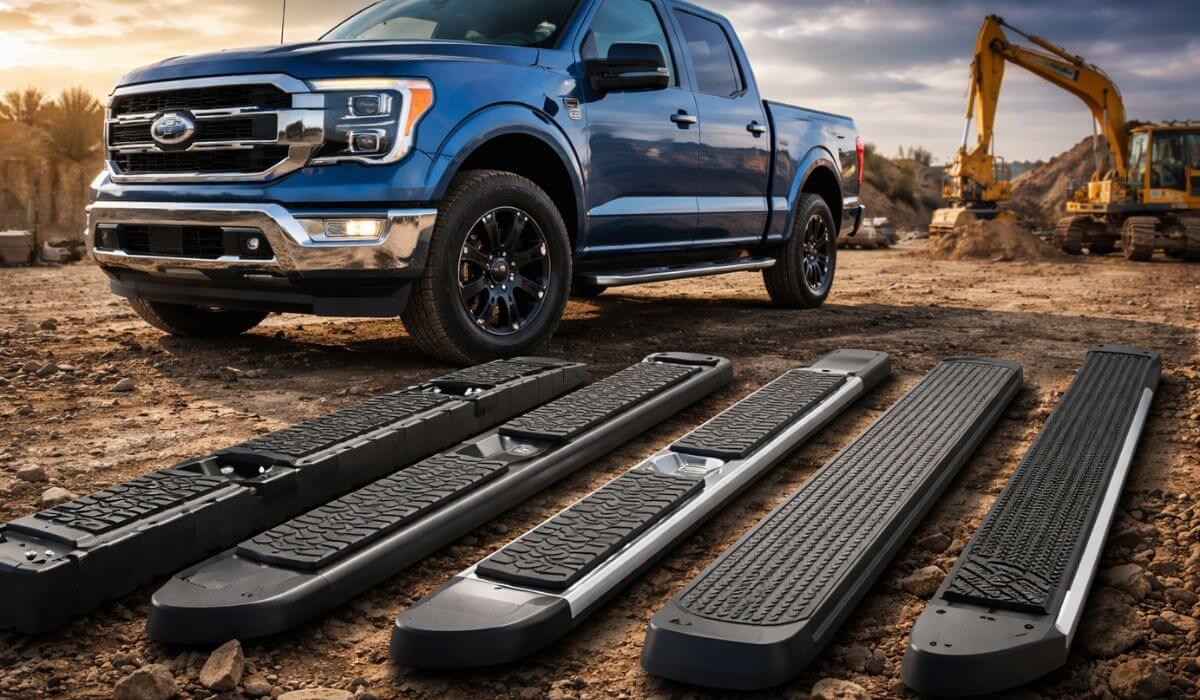
When you own a Ford F-150 SuperCrew, you learn quickly that not all running boards are created equal. The SuperCrew cab is longer, heavier at the doors, and used harder than most people admit—kids climbing in, jobsite boots dragging across the paint, lifted suspensions making entry a stretch. I’ve seen too many owners order the wrong length boards, fight misaligned brackets, or end up with flimsy aluminum that flexes after one winter.
That’s why this guide focuses strictly on 2015–2026 Ford F-150 SuperCrew (4 full doors) fitment. No universal steps. No SuperCab confusion. No guessing. Every option below is selected with SuperCrew mounting points, door coverage, and real-world use in mind—whether you daily drive, tow on weekends, or run a work truck that earns its keep.
We’re looking at aluminum vs steel durability, true bolt-on installation, step width, grip design, and long-term corrosion resistance. If you want something that installs clean, supports real weight, and actually matches the stance of your SuperCrew, these are the four worth your attention.
4 Best Running Boards for Ford F-150 SuperCrew in 2026
#1. Best Overall Fit: Raptor Series Running Boards Steps 5in Oval Style Black Aluminum
#2. Best for Aggressive Traction: MTNTOPCN Side Steps Running Boards Sawtooth Design
#3. Best Wheel-to-Wheel Coverage: TrailFX A7051B 5 Inch Oval Wheel-to-Wheel Nerf Bars
#4. Most Compact Door Access Option: Trumgeta 2PC EZ Side Steps Running Boards
Expert Tip Before You Pick One
If there’s one thing most SuperCrew owners realize late, it’s this — step width matters more than brand name. A lot of boards look tough in photos but feel narrow once you’re actually climbing in with work boots, winter mud, or kids jumping up after school.
For daily use, a true 5-inch flat or oval step is the sweet spot. Anything slimmer starts feeling like you’re balancing instead of stepping. And if your truck is lifted even slightly, traction design becomes just as important as width. Smooth boards look clean, but aggressive grip saves you the first time your boots are wet.
Choose the step you’ll trust at 6 AM in the rain — not just the one that looks good parked.
Must Check: Best Running Boards for F150
How We Chose These Running Boards
We didn’t build this list from spec sheets or seller descriptions alone. Every board here was evaluated the same way a SuperCrew owner actually judges them — by fit, strength, and how they hold up once the truck stops being showroom clean.
First came fitment accuracy.
SuperCrew trucks use different mounting points and require longer cab coverage than SuperCab or Regular Cab models. We filtered out anything universal or loosely compatible. If it didn’t line up clean with factory holes on a 2015–2026 SuperCrew, it didn’t make the cut.
Then we looked at real construction quality.
Not just aluminum vs steel — but wall thickness, bracket strength, weld consistency, and coating durability. Because running boards don’t fail on day one… they fail after a year of weight, weather, and road salt.
Step usability was next.
Width, grip pattern, and entry comfort all matter more in real life than photos suggest. A board can look aggressive but feel awkward underfoot. We prioritized designs that actually make climbing into a SuperCrew easier for families, workers, and lifted truck owners alike.
Installation had to be realistic.
Every option here is true bolt-on with included brackets and hardware. No drilling guesswork. No fabrication. If a weekend DIY install wasn’t realistic, it wasn’t included.
And finally — value over hype.
Brand names didn’t decide placement. Coverage, durability, and everyday practicality did. Some owners want lightweight corrosion resistance, others want full steel wheel-to-wheel strength. This list reflects those real buying paths — not just price tiers.
The result is a tight selection built around how SuperCrew trucks are actually used — stepped on, worked from, loaded up, and driven daily — not just accessorized for looks.
#1. Raptor Series Running Boards Steps 5in Oval Style Black Aluminum
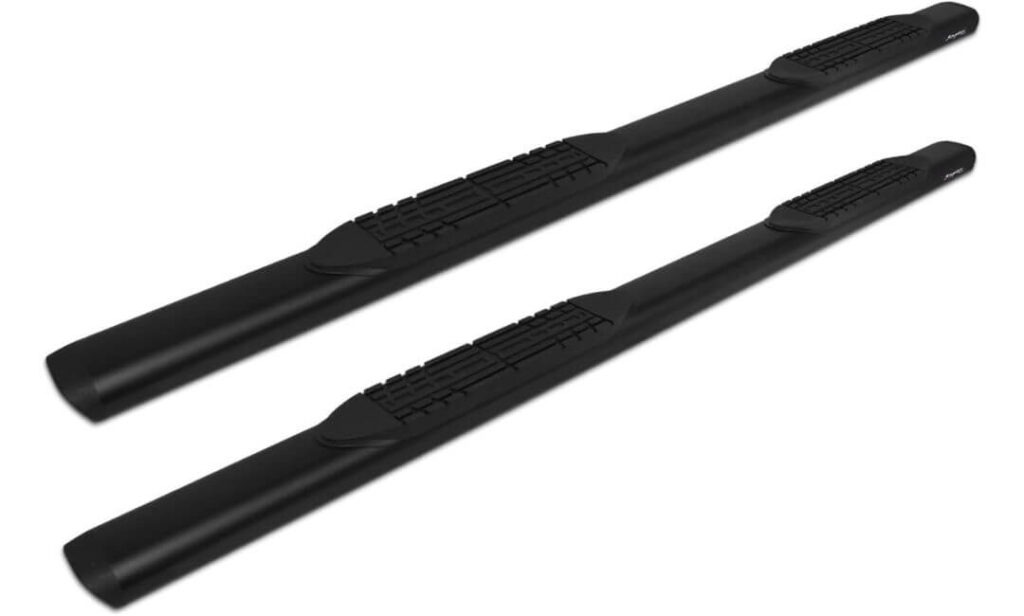
Quick Specs:
- Material: Aircraft-Grade Aluminum
- Finish: Textured Black Powder Coat
- Step Width: 5 Inches Oval Profile
- Length: 86 Inches
- Weight Capacity: 400 lbs per side
- Item Weight: 26 lbs
- Mounting: Factory Rocker Panel Bolt-On
- Fitment: 2015–2026 Ford F-150 SuperCrew
First thing you notice pulling these out of the box — they don’t feel like budget aluminum pretending to be tough. The boards are lightweight, yes, but not hollow or flimsy. That aircraft-grade aluminum has a denser feel to it, and once the powder-coated brackets are torqued down, the whole setup sits tight against the rocker like it came factory.
That 5-inch oval step is where these really win daily use. It’s wide enough that you’re not “searching” for footing — work boots, sneakers, even wet soles land flat. The slip-resistant pads are positioned exactly where your foot naturally hits, not just stuck on for looks. And those angled end caps aren’t cosmetic fluff either — they deflect road debris that usually chews up exposed board edges over time.
Installation is straightforward but clever. The slide-track system lets you shift the boards slightly forward or backward before locking them down. Sounds minor — until you realize you can dial step placement to match your seat height or lift setup. No drilling, no improvising, just factory mounting points doing their job the way they were meant to.
What Stands Out to Us
- 5-inch oval step actually feels usable, not decorative
- Aluminum build keeps rust out of the equation long-term
- Adjustable slide-track mounting adds real positioning flexibility
- Textured powder coat holds up well against boot scuffs
- Lightweight boards make install easier solo
Where It Falls Slightly Short
- Aluminum won’t feel as tank-solid as full steel under heavy commercial abuse
SuperCrew Fitment Confidence
These are built specifically around SuperCrew cab mounting geometry, which means full front-to-rear door coverage — no awkward gaps, no short board overhang. On a 2015–2026 F-150 SuperCrew, bracket alignment lands clean on factory rocker points without forcing bolt angles or spacer hacks.
Length is dialed for the four full-door layout, so rear passengers get the same step access as the front. That matters more than people think — especially with family use or crew transport.
Pro Tip: Before final torque, sit in the truck and test foot placement with the boards loosely mounted. Sliding them even half an inch forward can make entry feel more natural — especially on leveled or lifted SuperCrew builds. Small adjustment, big comfort difference.
#2. MTNTOPCN Side Steps Running Boards Sawtooth Design
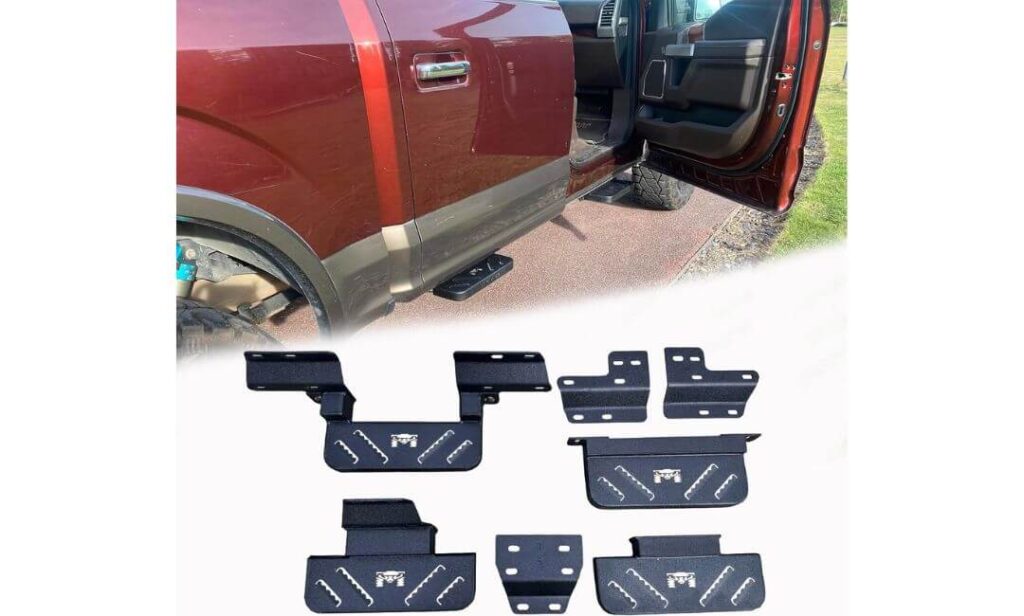
Quick Specs:
- Material: Q235 Alloy Steel
- Finish: Textured Black Coating
- Step Design: Sawtooth Two-Tier Step
- Weight Capacity: 350–440 lbs per side
- Item Weight: 42 lbs
- Mounting Type: Vehicle-Specific Bolt-On
- Fitment: 2015–2026 Ford F-150 SuperCrew (4-Door)
You can tell right away these weren’t built for mall parking lots. The steel construction has real heft to it — not the kind of weight that complicates install, but the kind that reassures you once they’re mounted. Step down with work boots, tool bags, or muddy soles — there’s no flex, no hollow echo, just planted stability.
The sawtooth step layout is the highlight here. Instead of a flat pad, you get an aggressive, serrated grip surface that bites into your boot tread. In rain, slush, or jobsite dust, that extra traction makes a noticeable difference. It’s the kind of design you appreciate more after a few early mornings climbing in before sunrise.
Despite the rugged look, clearance stays intact. These hug the rocker panels tighter than most steel steps, so you’re not sacrificing breakover angle or catching them off-road. Visually, they also add that “built with purpose” stance — not flashy, just functional in a way that suits a working SuperCrew.
What Stands Out to Us
- Sawtooth grip pattern adds real traction in wet conditions
- Steel build feels planted under heavy stepping
- Two-tier stepping helps on leveled or lifted trucks
- Textured coating resists scratches and surface rust
- Tight body fitment preserves ground clearance
Where It Falls Slightly Short
- Heavier steel build takes a bit more effort during solo installation
SuperCrew Fitment Confidence
These are cut specifically for the 4-door SuperCrew cab layout, so step positioning lines up evenly across both rows. No short rear coverage, no misaligned brackets — everything lands where factory mounting points are designed to support weight.
Bracket geometry also keeps the steps tucked close without interfering with door swing or mud flap setups, which matters if your SuperCrew sees mixed highway and off-road use.
Pro Tip: If your SuperCrew runs all-terrain tires or a mild lift, position these slightly lower during install. That extra drop pairs perfectly with the sawtooth grip and makes entry feel natural instead of a stretch — especially for rear passengers.
#3. TrailFX A7051B 5 Inch Oval Wheel-to-Wheel Nerf Bars
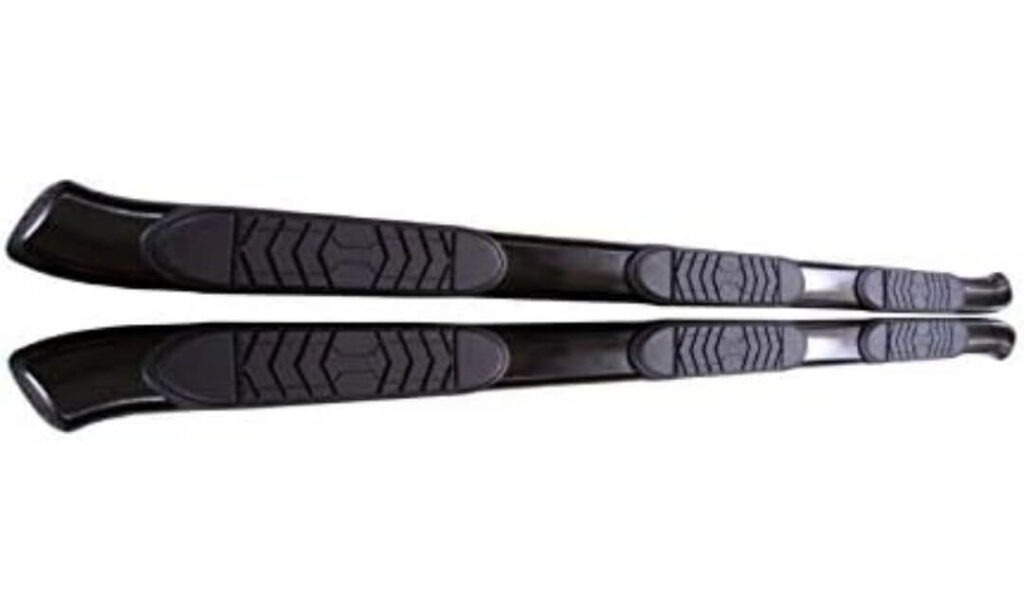
Quick Specs:
- Material: Q235A Alloy Steel
- Finish: Black Gloss Powder Coat
- Step Width: 5 Inches Oval
- Length: Wheel-to-Wheel Coverage
- Item Weight: 70.4 lbs
- Bed Compatibility: 5.5 Ft Bed SuperCrew
- Mounting: Rocker Panel Bolt-On
- Fitment: 2015–2026 Ford F-150 SuperCrew
The difference shows up before you even step on them. Wheel-to-wheel boards change how a SuperCrew functions day to day — not just how it looks. Instead of stopping at the rear door, these stretch all the way toward the bed, adding a usable step where you normally end up climbing on the tire or door sill.
That extra reach pairs with a full steel build that feels unapologetically heavy duty. At over 70 pounds, these aren’t trying to win weight contests — they’re built for load, repeat stepping, and long-term abuse. The Q235A steel tubing holds firm under pressure, while the gloss powder coat seals the surface against corrosion and road salt.
Slip-resistant step pads are oversized and well placed, not tiny inserts. Whether you’re loading tools, strapping cargo, or reaching into the box daily, the integrated bed step becomes the feature you didn’t realize you needed until you have it. It turns bed access from a climb into a single step motion.
What Stands Out to Us
- True wheel-to-wheel length adds functional bed access
- Heavy-gauge steel construction feels work-truck ready
- Oversized molded step pads improve footing stability
- Integrated rear step saves tire climbing
- Gloss powder coat holds up against debris and salt
Where It Falls Slightly Short
- Heavier build means install is easier with two people
SuperCrew Fitment Confidence
These are engineered around the SuperCrew 5.5-foot bed configuration, so coverage aligns perfectly from front door to rear bed edge. No dead space behind the cab — the step line flows continuously, which is exactly what wheel-to-wheel boards should do.
Mounting uses factory rocker points with direct-fit brackets, so despite the size, installation stays drill-free. Once tightened down, the length actually adds side protection against road debris kicked up near the rear wheel zone.
Pro Tip: If you load your bed more than twice a week — tools, gear, even groceries — wheel-to-wheel boards pay for themselves in convenience alone. It’s one of those upgrades you stop noticing visually but rely on constantly without thinking.
#4. Trumgeta 2PC EZ Side Steps Aluminum Front Door Set
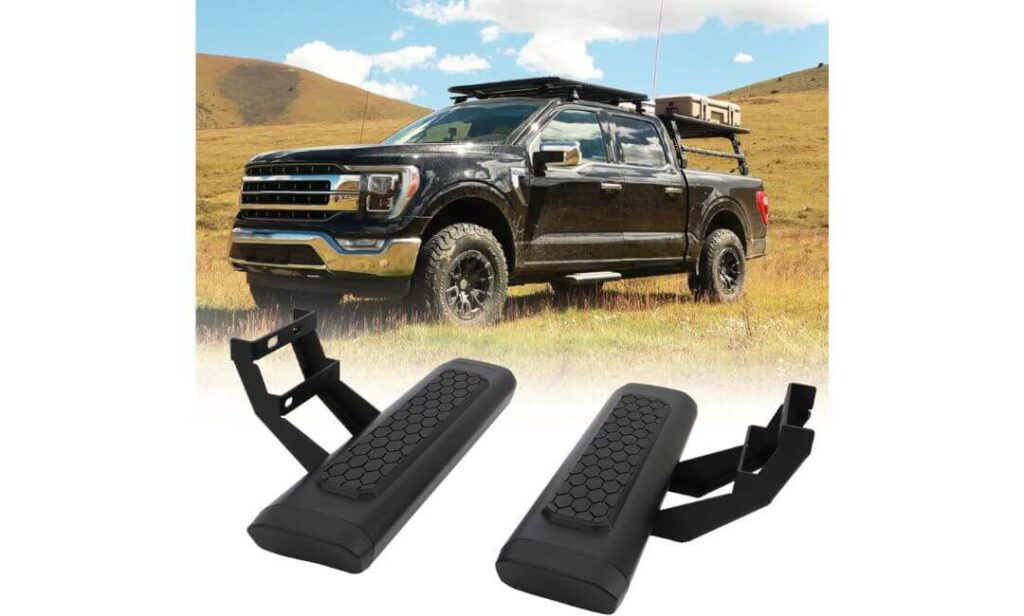
Quick Specs:
- Material: Aluminum
- Finish: Raw Aluminum
- Weight Capacity: 350 lbs per step
- Set Type: 2-Piece (Front Door Position)
- Item Weight: 9.64 kg
- Mounting: No-Drill Bolt-On
- Fitment: 2015–2026 Ford F-150 SuperCrew (Front Door Position)
Not everyone wants a full-length running board stretching across the cab. Some SuperCrew owners just need a solid boost where it actually matters — right under the driver and front passenger doors. That’s exactly where this 2-piece setup makes sense.
Each step mounts independently, keeping ground clearance intact while giving you a sturdy, focused stepping point. The aluminum construction keeps weight manageable without sacrificing strength, rated to handle up to 350 pounds per side. Step on it and it doesn’t wobble or feel like an accessory add-on — it feels planted.
This design also works well for trucks that see light trails or uneven terrain. Because there’s no long bar running the length of the cab, you reduce the risk of catching or scraping. It’s a minimalist solution, but not a cheap one. Installation stays drill-free, and once mounted, the steps sit tight to the body line without looking oversized.
What Stands Out to Us
- Compact design preserves ground clearance
- 350 lb weight capacity feels confident under load
- Lightweight aluminum simplifies install
- Clean look without full board bulk
- Ideal for drivers who only need front-door access
Where It Falls Slightly Short
- Rear passengers won’t get dedicated stepping support
SuperCrew Fitment Confidence
For a 2015–2026 F-150 SuperCrew, these mount securely at the front door position using factory alignment points. Because they’re vehicle-specific, bracket placement doesn’t require guesswork or modification.
If your SuperCrew runs stock height or a mild level kit, this setup gives enough lift assist without adding unnecessary hardware along the rocker panels. It’s simple, direct, and purpose-built for drivers who want function without full-length coverage.
Pro Tip: If most of your daily use is solo driving or front-seat commuting, front-door steps make more sense than full boards. You get the support where you step 90 percent of the time — and keep the truck’s side profile clean.
Side by Side Comparison Best Running Boards for Ford F-150 SuperCrew
| Running Board | Build Material | Step Width | Weight Capacity | Coverage Style | Best Use Case |
|---|---|---|---|---|---|
|
Raptor Series 5in Oval Aluminum
Overall Fit
|
Aircraft Aluminum | 5 Inch Oval | 400 lbs | Cab Length | Daily driving, family entry, rust resistance |
|
MTNTOPCN Sawtooth Steel Steps
Grip Focused
|
Q235 Alloy Steel | Sawtooth Dual Step | 350–440 lbs | Cab Length | Work trucks, lifted builds, muddy terrain |
|
TrailFX A7051B Wheel-to-Wheel
Full Coverage
|
Q235A Steel | 5 Inch Oval | Heavy Duty Rated | Wheel to Wheel | Bed access, cargo loading, jobsite use |
|
Trumgeta 2PC EZ Side Steps
Compact Access
|
Aluminum | Single Step Pads | 350 lbs | Front Door Only | Solo drivers, minimal look, clearance focus |
SuperCrew Running Boards Buying Guide That Actually Matches How These Trucks Are Used
Buying running boards for a Ford F-150 SuperCrew isn’t the same as shopping for generic truck steps. The cab length, door layout, rocker spacing, and even how people use the rear seats all change what “the right board” really means.
Most buyers focus on looks first — oval vs flat vs aggressive. In reality, long-term satisfaction comes down to three things: coverage accuracy, stepping comfort, and structural confidence under repeated load. Get those right, and the style follows naturally.
Let’s break this down the way SuperCrew ownership demands — practical, mechanical, and experience-driven.
1. Cab Length Geometry Changes Everything
A SuperCrew isn’t just “four doors.” It has a longer cabin footprint than SuperCab, which means:
- Longer rocker panel span
- Wider bracket spacing
- Full rear door stepping zone
If a board stops short of the rear door edge, rear passengers will end up stepping on paint — which defeats the purpose entirely. Proper SuperCrew boards extend cleanly across both rows without dead gaps.
Wheel-to-wheel setups go even further, adding bed access — useful if your truck sees tool hauling or cargo duty.
2. Step Width Determines Daily Comfort
Here’s something spec sheets rarely explain properly:
There’s a huge difference between a board you can step on and one you want to step on.
- 4-inch steps → Functional but narrow
- 5-inch oval/flat → Comfort zone sweet spot
- 6-inch+ → Maximum stability but bulkier look
SuperCrew trucks sit taller at the door sill, so a wider platform makes repeated entry easier — especially for families, older passengers, or work boots with mud buildup.
If the step forces you to angle your foot sideways, it’s too narrow for real use.
3. Material Choice Isn’t Just About Strength
Steel and aluminum both have their place — but usage decides the winner.
Aluminum advantages
- Rust-free long term
- Lighter during install
- Cleaner daily-driver look
Steel advantages
- Higher structural rigidity
- Better for heavy stepping
- More impact resistant off-road
If your SuperCrew is a commuter with occasional trips, aluminum keeps maintenance low. If it’s a jobsite truck or lifted build, steel absorbs abuse better.
4. Grip Design Matters More Than Finish
A glossy board might photograph well — until rain hits.
Look for:
- Serrated or sawtooth patterns
- Deep molded step pads
- Textured anti-slip coatings
Flat smooth pads wear down faster and lose traction. SuperCrew height amplifies slip risk, especially in winter or wet work conditions.
5. Mounting System Quality
Every board in this guide uses factory rocker mounting points — and that matters.
A proper SuperCrew system should:
- Align with OEM bolt holes
- Include vehicle-specific brackets
- Require no drilling
- Distribute weight evenly across mounts
Poor bracket geometry leads to flexing — not because the board is weak, but because load isn’t spread correctly.
6. Coverage Style Should Match Usage
There are three real-world coverage types:
Cab Length
Covers both rows — best for families and daily entry.
Wheel-to-Wheel
Extends to bed — ideal for cargo access and work use.
Door-Specific Steps
Minimal footprint — suited for solo drivers or clearance-focused builds.
Choosing wrong coverage isn’t cosmetic — it affects how often you actually use the step.
Two Things That Matter Before FAQs
Entry Habit Matters More Than You Think
Some owners step straight down. Others pivot from the seat. Some grab the wheel and drop weight fast.
That movement pattern determines whether you need:
- Wide flat boards
- Aggressive grip steps
- Lower drop positioning
It’s less about the truck — more about how you enter it daily.
Installation Reality vs Expectation
All boards here are bolt-on — but install experience varies.
Lightweight aluminum = easier solo install.
Full steel wheel-to-wheel = second set of hands recommended.
Knowing this beforehand saves frustration on install day — especially if you’re working on the driveway without a lift.
Final Fitment & Usage Verdict for Ford F-150 SuperCrew Owners
Before you scroll into FAQs, this is the part most buyers wish they had read first — because running boards aren’t just an accessory on a SuperCrew… they quietly change how the truck functions every single day.
A SuperCrew sits in a strange middle ground. It’s not as tall as a lifted build, but it’s high enough that repeated entry without a step becomes tiring — especially for rear passengers. Add kids, older family members, jobsite gear, or roof access into the equation, and stepping support stops being optional. It becomes practical equipment.
What separates a well-matched board from a regret purchase usually comes down to how naturally it integrates into your entry motion. If your foot lands without looking, if weight transfers without flex, and if rear passengers stop grabbing door seals for support — that’s when you know the setup is right.
Coverage length plays a bigger role than most expect. Cab-length boards handle daily commuting well, but if you’re accessing the bed multiple times a day, wheel-to-wheel coverage reduces strain more than you’d think. That extra rear step removes the need to climb tires or lean across paintwork — small change, big long-term comfort difference.
Material choice also defines ownership experience over time. Aluminum boards stay visually cleaner and resist corrosion quietly in the background. Steel boards trade that low maintenance for heavier-duty confidence — the kind you notice when stepping in with gear, tools, or uneven footing.
And then there’s clearance psychology — something spec sheets never explain. Full boards visually lower the truck’s side profile, while compact steps keep the bodyline open and off-road ready. Neither is right or wrong — it just depends on whether your SuperCrew leans toward daily usability or terrain flexibility.
At the end of the day, the right running board doesn’t draw attention to itself. It just becomes part of how you use the truck — every morning, every fuel stop, every bed load, every passenger entry.
When that happens, you stop thinking about the purchase… and start wondering how you ever climbed in without it.
Ford F-150 SuperCrew Running Boards FAQs
Do SuperCrew Running Boards Fit SuperCab or Regular Cab?
No — and this is where a lot of buyers mess up.
The SuperCrew has four full-size doors and a longer rocker panel span. SuperCab boards are shorter because the rear doors are half-sized. If you install the wrong length, the rear stepping area either won’t exist or won’t align properly with factory mounting points.
For 2015–2026 F-150 SuperCrew, always confirm:
- 4 full doors
- Correct cab length
- Factory rocker mounting compatibility
Anything labeled “universal” is a gamble.
How Long Should Running Boards Be on a SuperCrew?
For proper coverage, cab-length boards should run from just behind the front wheel well to slightly past the rear door edge.
On a 5.5-foot bed SuperCrew, wheel-to-wheel boards extend further — adding a rear step near the bed. That’s ideal if you access cargo frequently.
If rear passengers use your truck daily, shorter boards become noticeable fast. SuperCrew rear entry deserves full coverage.
Is Aluminum Strong Enough for a SuperCrew?
Yes — if it’s properly engineered.
Aircraft-grade aluminum boards rated for 350–400 pounds per side are more than capable for daily stepping, including work boots and gear. The advantage is corrosion resistance and lower long-term maintenance.
Steel steps feel more rigid under heavy repeated load, especially for jobsite use. But strength isn’t about weight alone — it’s about bracket design and load distribution.
If brackets mount to factory rocker points correctly, aluminum performs extremely well.
Will Running Boards Reduce Ground Clearance?
Full-length boards will visually lower the side profile, but most cab-length setups mount tight to the rocker panel and do not significantly reduce usable clearance.
Compact door-mounted steps preserve clearance best because they don’t extend along the entire cab.
For leveled or mildly lifted SuperCrew trucks, mounting position can be adjusted slightly for better entry height without sacrificing clearance.
Are These Difficult to Install at Home?
All options in this guide are no-drill bolt-on systems using factory mounting holes.
Typical install time:
- Aluminum cab-length boards → 60–90 minutes solo
- Steel wheel-to-wheel boards → 90–120 minutes, easier with a second person
Basic hand tools are enough. No fabrication required.
If you can rotate tires or change brake pads, you can install running boards.
Will They Interfere With Mud Flaps or Factory Steps?
Proper SuperCrew-specific boards are designed around factory mounting points and typically clear OEM mud flaps.
Interference usually only occurs when:
- Universal boards are used
- Aftermarket oversized flaps are installed
- Incorrect cab length boards are purchased
Vehicle-specific fitment avoids these issues.
Closing Thoughts That Actually Matter Once You Live With Them
By the time most SuperCrew owners start researching running boards, the decision is already half made — the truck’s height, the daily climb, the rear passenger reach… it all adds up. What you’re really deciding now isn’t whether you need them — it’s which setup will feel right every single time you open the door.
Because here’s the truth nobody puts in spec sheets:
The right running board disappears into your routine.
You stop thinking about stepping in.
Your passengers stop grabbing door seals.
Loading the bed stops feeling like a stretch.
Rain, mud, work boots — none of it changes how you enter the truck.
It just works.
On a SuperCrew, that matters more than styling, badges, or brand hype. This cab layout gets used — family rides, long drives, jobsite stops, grocery runs, weekend towing. A proper step setup supports all of it quietly in the background.
And once installed, you’ll notice something funny…
You won’t remember the day you added them —
but you’ll immediately notice anytime you drive a truck without them.
That’s when you know the upgrade made sense.
So whether your priority is lightweight daily comfort, aggressive traction, full bed access, or minimal entry assist — the boards in this guide cover the real-world ways SuperCrew trucks get used.
Install them once, torque them right, and from that point forward…
Every entry feels easier.
Every exit feels natural.
And the truck finally feels complete from the ground up.
Also Check: