
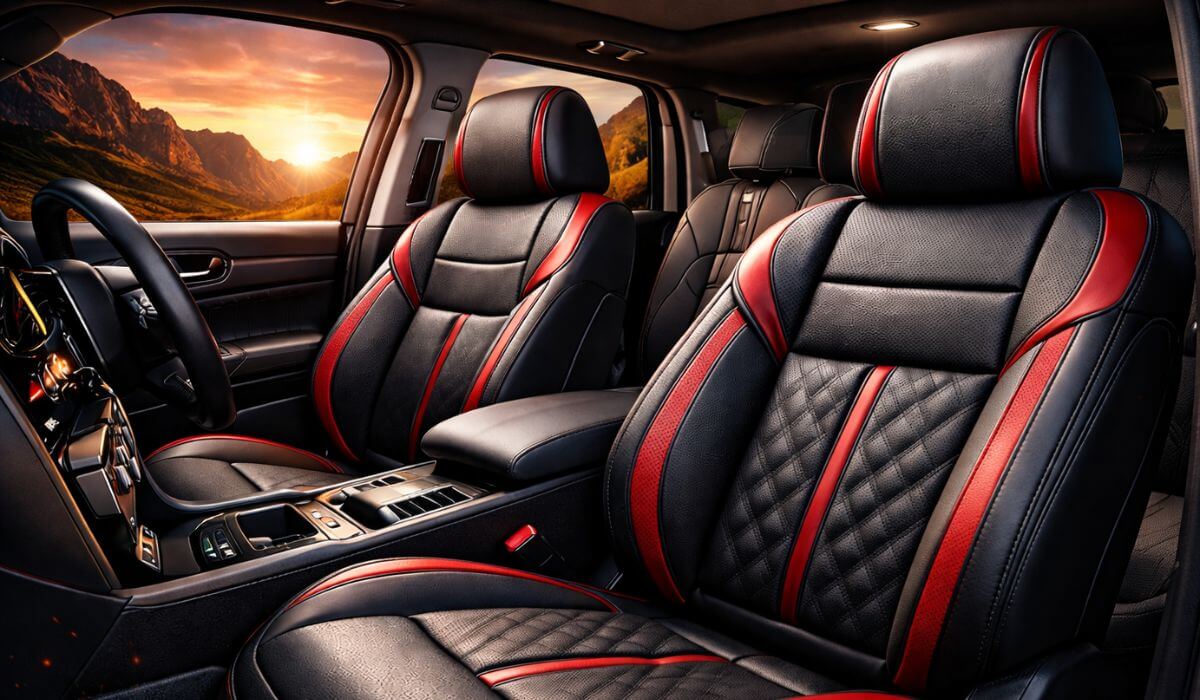
5 Best Seat Covers for Nissan Pathfinder in 2026: Top Waterproof, Custom-Fit & Airbag Safe Picks
If you own a Nissan Pathfinder, you already know one thing—this SUV gets used hard. School runs, highway trips, luggage, kids, dust, heat… the seats take the hit first. And the truth is, most “generic” seat covers don’t really work here. Either they don’t fit right, block folding seats, mess with airbags, or start peeling after a few months.
I’ve gone through the latest 2026 options specifically made for the Pathfinder—no random picks, no fluff. Just covers that actually match how this SUV is used in real life: multi-row seating, daily wear, Indian heat, and long drives. Some focus on tight custom fit, some on full 7-seat protection, and some on that premium leather feel without turning your cabin into a sauna.
The goal here is simple: find seat covers that fit properly, protect long-term, and don’t ruin the comfort or safety of your Pathfinder. If you’re planning to upgrade once and not worry again, this list will save you time—and probably money too.
Best Nissan Pathfinder Seat Covers: Top 2026 Picks Worth Installing Right Now
#1. AOMSAZTO Leather Seat Covers (Custom Fit Pathfinder 2011–2026)
Best Custom-Fit Waterproof Seat Covers for Nissan Pathfinder (2-Row Protection)
#2. RAWAKORW Leather Seat Covers (Red Line Edition)
Sporty Waterproof Leather Seat Covers for Nissan Pathfinder with Airbag Compatibility
#3. CTDS Premium Nappa Leather Seat Covers
Premium Nappa Leather Seat Covers for Nissan Pathfinder (Luxury Feel & Durability)
#4. AUNM Full Set 7-Seater Seat Covers
Best Full Set Custom Seat Covers for Nissan Pathfinder 7-Seater (Complete Interior Protection)
#5. Mascys Nappa Leather Front Seat Covers
Budget-Friendly Nappa Leather Seat Covers for Nissan Pathfinder (Front Seat Upgrade)
Expert Tip (From Someone Who’s Seen These Go Wrong Too Many Times)
If you’re buying seat covers for your Nissan Pathfinder, don’t get distracted by looks first. The biggest mistake people make is choosing design over fit and compatibility. This SUV isn’t a basic 5-seater—it has folding rows, airbags in the seats, and real daily abuse.
A cover that looks premium in photos but doesn’t sit tight will start shifting within days. Once that happens, it ruins comfort, blocks seat functions, and honestly feels cheap no matter what you paid.
The smart move?
Always prioritize proper fit, airbag safety, and material quality. Style should come after that. Because when the fit is right, even a simple black cover will feel like a factory upgrade.
How We Chose These Seat Covers (No Guesswork, Just Real Criteria)
We didn’t just pick random “top-rated” products. Most of those lists ignore what actually matters in a Pathfinder. These selections are based on how these covers perform in real usage conditions, not just specs on paper.
Fit That Actually Matches the Pathfinder Layout
The first thing we filtered was fit accuracy. Pathfinder seats aren’t flat or simple—they have contours, split-folding rows, and armrest access.
That’s why you’ll see a mix here:
- Some covers built for first two rows (daily-use focus)
- Some designed for full 7-seat coverage
If a cover didn’t align with how the seats actually function, it didn’t make this list.
Airbag Compatibility (Non-Negotiable)
A lot of cheap covers claim “airbag safe” but don’t explain how. We only considered options where:
- Side seams are designed to release properly
- No tight stitching that blocks deployment
Because safety isn’t optional—it’s built into the seat itself in the Pathfinder.
Material That Survives Daily Use
This SUV is used for everything—family trips, groceries, long drives. So we focused on materials that:
- Don’t crack or peel quickly
- Handle heat without sticking
- Are easy to clean after spills
That’s why you’ll see a strong presence of leather and Nappa leather options—they balance durability and comfort better than cheap fabric.
Real Comfort, Not Just Looks
Some covers look great but feel terrible after 30 minutes. We avoided those.
The selected ones offer:
- Enough cushioning for long drives
- Non-slip backing so you’re not adjusting every time you sit
- Breathability that actually works in warm conditions
Because if it’s not comfortable, it doesn’t matter how premium it looks.
Coverage Based on Real Needs
Not everyone needs a full set. Some people just want to upgrade the front seats, others want full protection.
So instead of forcing one type, we included:
- 2-row focused options for daily drivers
- Full 7-seater sets for complete protection
- Front-seat upgrades for budget-conscious buyers
This way, you’re not overpaying for something you don’t need.
New Products, Chosen Carefully
Yes, these are relatively newer options with limited long-term reviews. That’s exactly why we didn’t rely on ratings alone.
We looked at:
- Build quality and material consistency
- Fitment claims vs actual design
- Practical usability based on Pathfinder seat structure
Only the ones that made sense in real-world use are here.
At the end of the day, this list isn’t about what’s trending—it’s about what actually works on a Nissan Pathfinder without creating problems later.
If a product made it here, it’s because it passed fit, safety, comfort, and durability together—not just one of them.
#1. AOMSAZTO Leather Seat Covers (Custom Fit Pathfinder 2011–2026)
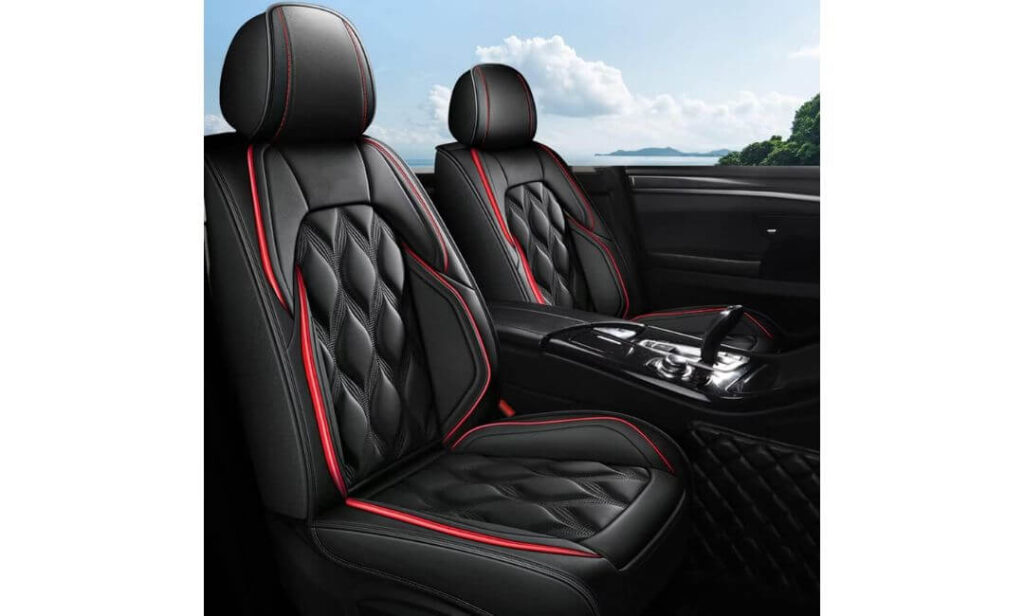
Quick Specs:
- Fit Type: True custom-fit for Nissan Pathfinder (2011–2026, first two rows)
- Material: Multi-layer faux leather (breathable + scratch-resistant)
- Protection: Waterproof, stain-resistant, UV-resistant
- Safety: Built-in airbag release stitching + exposed seatbelt slots
- Grip: Anti-slip base with elastic side panels (no sliding feel)
- Install Time: ~15 minutes DIY (no tools drama)
Let’s be honest—most seat covers look good in photos, but once you install them in a Nissan Pathfinder, reality hits fast. Loose edges, awkward folds, blocked seat functions. This one doesn’t play that game. The moment it’s on, it actually feels like it belongs there—tight, aligned, no weird bunching. That “custom-fit” claim? Here, it’s not marketing… it shows up the second you sit down.
Material is where it quietly wins. The faux leather isn’t that cheap plastic-type stuff (you know the one that heats up and sticks). It’s layered, slightly breathable, and has enough softness that long drives don’t turn annoying. Spills wipe off without leaving marks, and even after regular use, it doesn’t lose shape or start sagging. The anti-slip base + elastic sides do their job—you’re not fixing your seat every time you get in.
What really matters in a Pathfinder setup is functionality—and this cover respects that. Airbag stitching is properly placed (not fake), seatbelt slots are open, and nothing interferes with how the seats fold or move. Even rear adjustments with Velcro actually make sense instead of being a headache. Install is quick too—15 minutes and it’s done, no frustration. (Feels less like an add-on, more like something the car should’ve come with.)
Why It Stands Out in Real Use
- Fit actually locks in place—no shifting after a week
- Material balances comfort + durability (not overly stiff, not too soft)
- Waterproof layer handles real-life mess (not just “light spills”)
- Airbag compatibility is properly designed, not just claimed
- Clean, simple design upgrades interior without overdoing it
Where It Could Be Better
- Doesn’t cover the third row, so full 7-seat protection isn’t there
Nissan Pathfinder Fit Reality
For a Pathfinder owner, this setup makes sense if your daily use revolves around front and middle rows—which, let’s be real, it usually does. The fit is aligned with seat contours, and nothing interferes with folding or adjustments, so you’re not sacrificing practicality for looks.
Also important—this doesn’t mess with safety or usability. Airbags, seatbelts, even seat heating (if equipped)—everything works like it should. That’s where most covers fail, and this one doesn’t.
The Insider Pro-Tip:
If you mainly use your Pathfinder for daily drives and occasional trips, don’t rush into full 7-seat sets just for the idea of “complete coverage.” Most wear happens in the first two rows. A tight, well-fitted 2-row setup like this will feel better every single day than a loose full set that just looks complete.
Get the fit right first—everything else becomes secondary.
#2. RAWAKORW Leather Seat Covers (Red Line Edition)
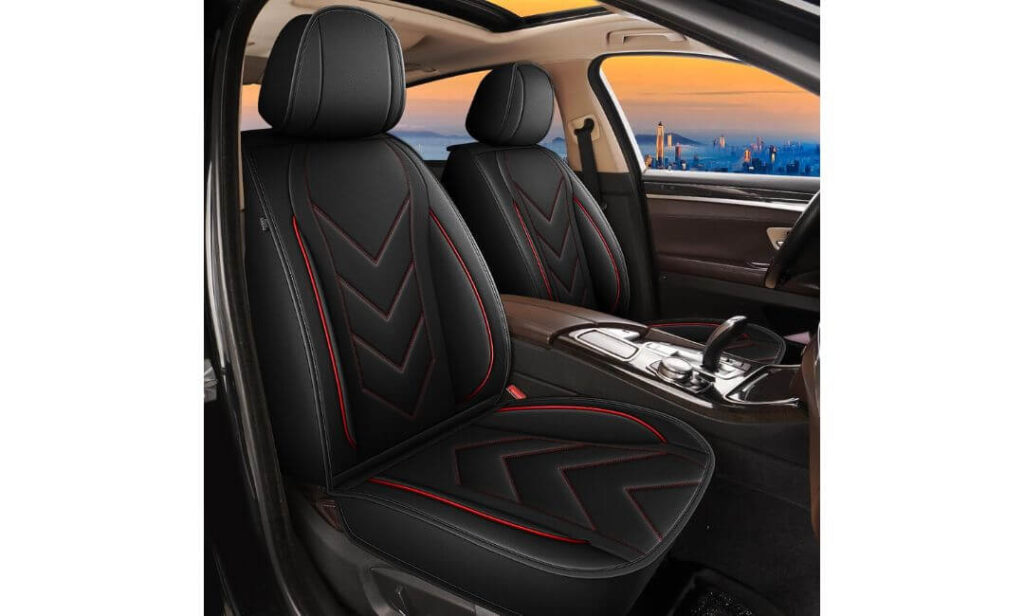
Quick Specs:
- Fit Type: Custom-fit for Nissan Pathfinder (2011–2026, 2 rows / 5 seats)
- Material: Faux leather with sponge padding (soft + structured)
- Protection: Waterproof, scratch-resistant, pet-hair resistant
- Coverage: 360° wrap design (full seat coverage, no exposed sides)
- Safety: Airbag & seatbelt compatible (function stays intact)
- Grip: Non-slip base with secure fasteners
- Style: Black with red stitching (sport-inspired interior look)
This is the kind of seat cover that changes the feel of your Nissan Pathfinder the moment you open the door. Not because it’s flashy—but because it finally gives that “complete” look. The red line detailing hits just right… not loud, not cheap-looking, just enough to break the all-black monotony and make the cabin feel sharper.
Underneath that look, there’s proper structure. The faux leather + sponge combo adds a slight cushioning effect, so the seats don’t feel flat or tired—especially on longer drives. It’s waterproof in a real sense (not marketing talk), so spills don’t turn into stress. Pet hair, dust, daily mess—it all stays on the surface and wipes off easily. And thanks to the non-slip base, it doesn’t keep shifting around like cheaper covers do.
Where it actually earns trust is in the full-wrap design. Unlike basic covers that leave sides exposed, this one wraps around the seats properly—front to back, edge to edge. That matters more than people think, especially in a Pathfinder where side wear shows up fast. And importantly, nothing interferes with airbags or seatbelts. It keeps everything functional while still giving that upgraded look. (Feels like a subtle interior upgrade rather than an obvious add-on.)
Why It Stands Out in Real Use
- Full 360° wrap gives better protection than standard covers
- Red line design adds a sporty edge without overdoing it
- Sponge-backed leather improves comfort on longer drives
- Non-slip base actually holds position (no constant adjusting)
- Handles daily mess easily—spills, dust, pet hair
Where It Could Be Better
- Only available for 2-row setup, so third-row coverage is missing
Nissan Pathfinder Fit Reality
For Pathfinder owners who want both protection and a bit of personality, this hits a nice balance. The fit follows the original seat layout closely, and the wrap-around design ensures the sides don’t wear out early—which is a common issue in SUVs like this.
Functionally, nothing feels compromised. Seats still move, fold, and adjust normally. Airbags and seatbelts remain fully usable, so you’re not trading safety for style—which is where many covers fall short.
The Insider Pro-Tip:
If your Pathfinder interior feels a bit “plain” but you don’t want to over-modify it, go for something like this instead of full flashy upgrades. A subtle design change with proper fit will do more for your cabin than adding random accessories that don’t match.
Focus on upgrades that you see and feel every day—that’s where the real value is.
#3. CTDS Premium Nappa Leather Seat Covers (Pure Black Edition)
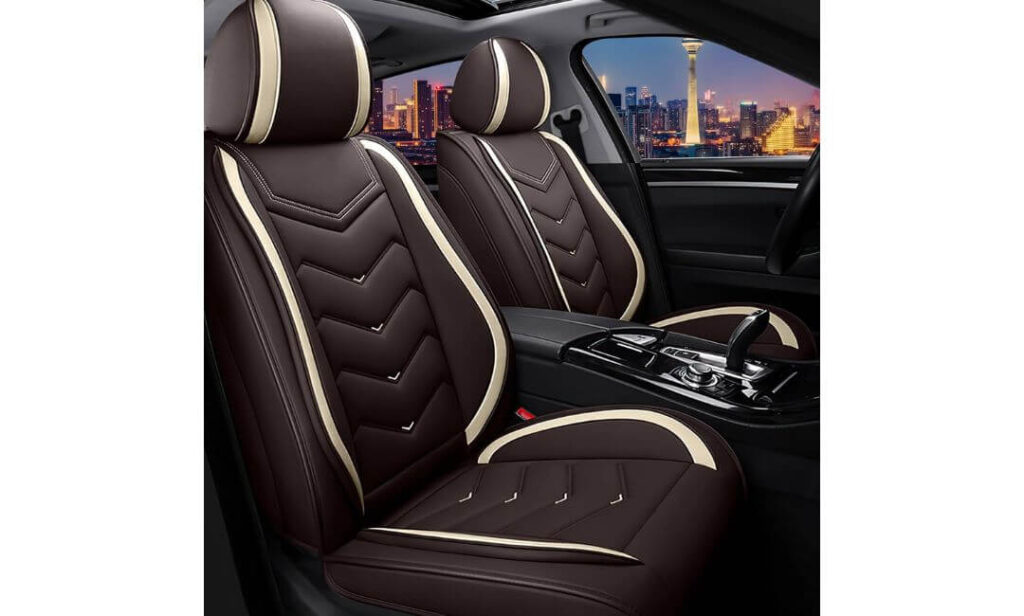
Quick Specs:
- Fit Type: Snug-fit design for Nissan Pathfinder (2000–2026, 2 rows / 5 seats)
- Material: Premium Nappa-style faux leather + double-layer rebound sponge
- Protection: Waterproof, scratch-resistant, wear-resistant surface
- Safety: Airbag-compatible side exposure + seatbelt-ready design
- Comfort: Thick cushioning with strong elasticity (no flattening over time)
- Maintenance: Wipe-clean surface (no stain retention)
- Finish: Pure black minimal design (clean OEM-style look)
Some seat covers try too hard to stand out. This one does the opposite—and that’s exactly why it works so well inside a Nissan Pathfinder. No loud stitching, no forced styling… just a clean, deep black finish that blends in like it was always part of the interior. And when something looks this natural, you stop noticing it—and that’s actually a good sign.
The real story here is in the material. That Nappa-style leather feel isn’t just about softness—it’s about how it holds up. The double-thick sponge underneath gives it structure, so it doesn’t collapse or feel flat after weeks of use. Even with daily driving, weight pressure, or pets jumping in and out, it keeps its shape. Scratches don’t easily show, and spills don’t soak in—they stay on the surface, easy to wipe off without leaving marks.
Functionally, it keeps things simple and right. The side exposure for airbags is intentional—not a flaw—so deployment isn’t delayed. Seatbelt access stays clean, and nothing interferes with how the seats actually work. Installation is straightforward, no complicated steps, and once it’s on, it doesn’t feel like something you need to keep adjusting. (This is the kind of upgrade that quietly improves your daily drive without shouting about it.)
Why It Stands Out in Real Use
- Clean OEM-style look that doesn’t feel aftermarket
- Thick sponge backing adds real comfort (not just surface softness)
- Scratch resistance holds up well with pets and daily use
- Waterproof surface makes cleaning quick and stress-free
- Maintains shape over time—no sagging or flattening
Where It Could Be Better
- Design is very minimal, so it may feel too plain for those wanting a sporty look
Nissan Pathfinder Fit Reality
For Pathfinder owners who prefer a factory-like interior feel, this fits right into place. The snug design follows seat contours properly, and because it avoids bulky padding or flashy elements, it doesn’t interfere with space or movement.
More importantly, it respects how the seats function—airbags deploy cleanly, seatbelts remain accessible, and nothing feels forced or misaligned. It’s built to blend in, not fight the original design of the vehicle.
The Insider Pro-Tip:
If you’re someone who plans to keep your Pathfinder long-term, don’t underestimate the value of a clean, neutral interior setup. Loud designs get old fast—but something like this ages well and still looks right years later.
Go for what feels right every day, not what just looks exciting on day one.
#4. AUNM Full Set 7-Seater Leather Seat Covers (Luxury Black Edition)
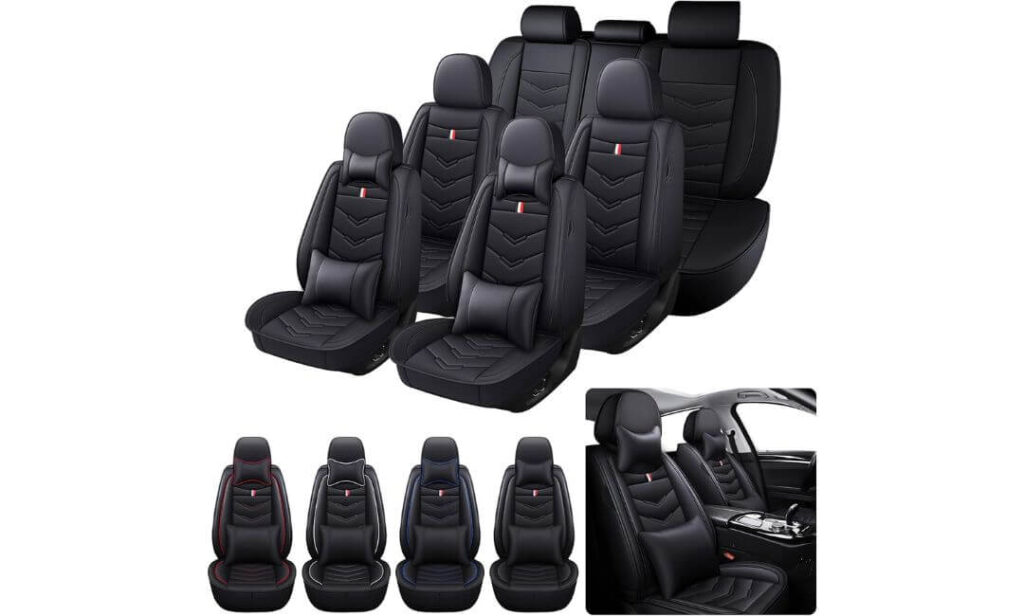
Quick Specs:
- Fit Type: Full custom-fit for Nissan Pathfinder (2000–2026, complete 7-seat layout)
- Material: Premium Nappa leather with water-repellent coating
- Coverage: Full set (2+2+3 / 2+3+2 configurations supported)
- Protection: Waterproof, spill-resistant, pet-safe surface
- Safety: Airbag-compatible splicing design (no deployment blockage)
- Grip: Non-slip rubber backing + adjustable straps
- Maintenance: Easy wipe-clean (no deep cleaning needed)
This is where things shift from “just covering seats” to actually transforming the entire interior of your Nissan Pathfinder. Most seat covers stop at the front and middle rows—but if you’ve ever looked at your third row after a few months of use, you already know that’s where the real damage builds up. This one doesn’t leave anything exposed. It’s a full 7-seat solution that finally treats the Pathfinder like the family SUV it actually is.
The Nappa leather here feels properly upgraded—not stiff, not overly soft, just balanced. It has that slightly cushioned surface that makes long drives easier, but more importantly, it holds up against real use. Spills don’t seep in, dirt doesn’t settle, and even with regular in-and-out movement across all rows, it doesn’t start shifting around. The non-slip base and straps quietly do their job—you don’t notice them, and that’s exactly how it should be.
What stands out is how well it adapts to the full seat layout. Whether your Pathfinder uses a 2+2+3 or 2+3+2 setup, the fit follows the structure without awkward gaps or loose corners. Airbag compatibility is handled through proper stitching design, not shortcuts, so safety stays intact. And once installed, it doesn’t feel like a patchwork of covers—it feels like one consistent interior upgrade. (This is the kind of setup that makes your cabin feel complete, not partially protected.)
Why It Stands Out in Real Use
- Full 7-seat coverage—no part of the interior left exposed
- Nappa leather gives a balanced mix of comfort and durability
- Non-slip backing keeps everything stable across all rows
- Handles family use well—spills, kids, pets, daily wear
- Maintains a uniform, premium look throughout the cabin
Where It Could Be Better
- Takes more time to install compared to 2-row sets
Nissan Pathfinder Fit Reality
If you’re using your Pathfinder as it’s meant to be used—with all rows active—this setup makes practical sense. The fit follows the full seating layout properly, and once installed, it doesn’t interfere with folding or adjustments across rows.
More importantly, it protects the areas most people ignore until it’s too late—the third row. And when all seats match in material and finish, the interior feels more cohesive instead of patched together.
The Insider Pro-Tip:
If your Pathfinder regularly carries passengers in all rows, don’t mix different seat covers for different sections. It might save money upfront, but it ruins both the look and long-term durability.
Go full-set once—and you won’t have to think about your seats again for years.
#5. Mascys Nappa Leather Front Seat Covers (Black Gray Edition)
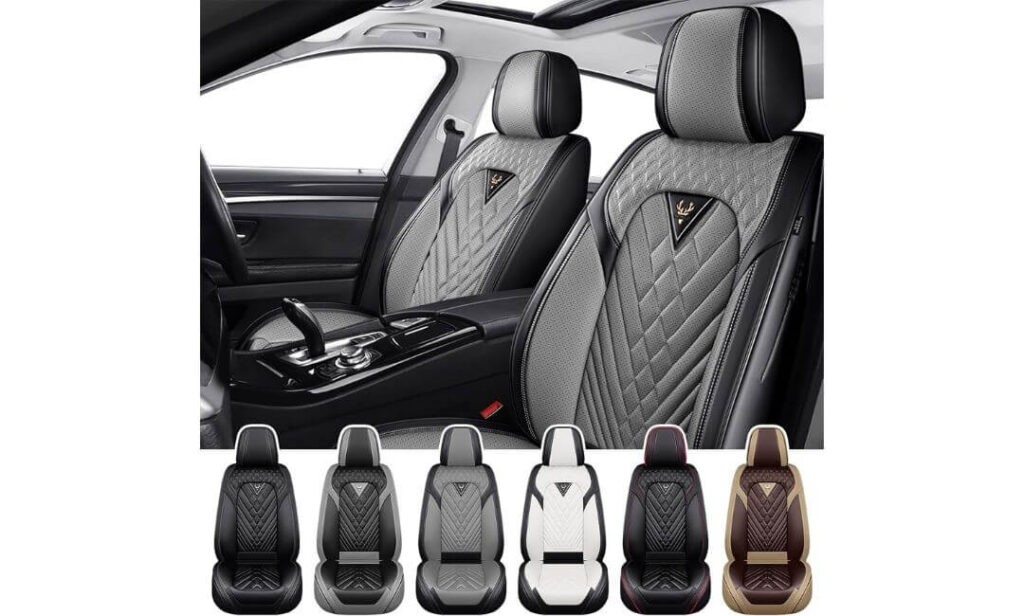
Quick Specs:
- Fit Type: Custom-fit for Nissan Pathfinder (2000–2026, front seats only)
- Material: Premium Nappa leather with breathable finish
- Coverage: Front seat set (driver + passenger)
- Protection: Waterproof, scratch-resistant, fade-resistant
- Safety: Dual-side airbag openings + seatbelt/child-seat compatible
- Grip: Anti-slip base with hook & chuck fixing system
- Design: Diamond stitching with dual-tone (black + gray) finish
If your Nissan Pathfinder still feels fine overall but the front seats are starting to show wear, this is the kind of upgrade that makes immediate sense. Not overkill, not expensive full-set commitment—just fixing the part of the cabin you actually use every single day. And the moment these go on, the front row stops looking “used” and starts feeling properly refreshed.
The Nappa leather here has a different kind of finish—slightly textured, breathable, and not overly glossy. That matters more than people think, especially in warmer conditions where cheap covers start feeling sticky. The diamond stitching adds a bit of depth without making it look flashy, and the dual-tone black-gray combo gives a subtle contrast that feels more premium than plain black. It’s not trying too hard—it just looks right.
Functionally, it keeps things simple and effective. Waterproofing handles spills and daily mess without effort, scratches don’t easily show, and the anti-slip base actually keeps the cover in place. Airbag cutouts are properly aligned, and even child seat setups aren’t affected. Installation is quick with hooks and chucks—once done, you’re not revisiting it every week. (This is the kind of small upgrade that quietly fixes what you notice the most—your driving seat.)
Why It Stands Out in Real Use
- Perfect for upgrading worn-out front seats without full replacement
- Breathable Nappa leather avoids heat and stickiness
- Diamond stitching adds depth without over-designing
- Strong grip system keeps it stable during daily use
- Works well with airbags and child seat setups
Where It Could Be Better
- Only covers front seats, so rear rows remain unchanged
Nissan Pathfinder Fit Reality
For Pathfinder owners who mainly use the front seats daily, this is a practical move. The fit aligns well with seat shape, and since it’s focused only on the front, installation and maintenance stay simple.
It doesn’t interfere with any core functions—airbags deploy correctly, seatbelts remain accessible, and even child safety setups work without adjustment. It’s built to improve daily comfort without adding complexity.
The Insider Pro-Tip:
If your budget is limited but you still want your Pathfinder to feel better instantly, start with the front seats instead of going all-in on a full set.
That’s where you sit, drive, and notice everything—fix that first, and the whole car will feel upgraded without spending more than needed.
Best Nissan Pathfinder Seat Covers: Quick Comparison of Custom Fit, Coverage & Value
| Product | Coverage | Material | Key Strength | Best For | Verdict |
|---|---|---|---|---|---|
| AOMSAZTO | 2 Rows (5 Seats) | Faux Leather | Tight Custom Fit + No Slip | Daily Use Protection | Best Fit |
| RAWAKORW | 2 Rows (5 Seats) | Leather + Sponge | 360° Wrap + Sport Design | Stylish Interior Upgrade | Sport Pick |
| CTDS | 2 Rows (5 Seats) | Nappa Leather | Soft Feel + Long Durability | Premium Minimal Look | Luxury Feel |
| AUNM | Full Set (7 Seats) | Nappa Leather | Complete Interior Coverage | Family / Full Usage | Full Protection |
| Mascys | Front Seats Only | Nappa Leather | Budget Front Upgrade | Driver Comfort Focus | Value Pick |
Why Seat Covers Actually Matter for a Nissan Pathfinder (More Than Most SUVs)
If you’re driving a Nissan Pathfinder, you’re not dealing with a basic 5-seat setup—you’re managing a multi-row, family-used, real-world SUV. And that changes everything when it comes to seat protection. This isn’t about keeping things “clean”… it’s about protecting function, comfort, and long-term value in a vehicle that gets used properly.
It’s Not Just Wear—It’s Layered Damage Over Time
Most people notice damage only when it becomes visible—cracks, stains, fading. But in a Pathfinder, the real issue starts much earlier. Daily friction from getting in and out, kids climbing into the back, luggage sliding across seats… all of this slowly breaks down the original upholstery.
Spills don’t just sit on the surface—they seep in. Heat exposure dries out materials. Even small scratches from keys or pets turn into permanent marks over time.
Seat covers don’t just “hide” this—they stop it from happening in the first place. And once the original seats are preserved, the interior ages very differently. You’re not trying to fix damage later—you’re preventing it completely.
Resale Value Isn’t About Mileage Alone
When it comes time to sell or exchange your Pathfinder, buyers don’t just check kilometers—they look inside. Worn-out seats immediately change how the entire vehicle feels, no matter how well the engine runs.
Clean, well-maintained seats create a different impression:
- The car feels “less used”
- Buyers trust the condition more
- Negotiation pressure drops instantly
Seat covers act like a protective layer for your resale value. Remove them after years of use, and the original seats still look fresh—that’s something most buyers notice within seconds.
Custom Fit vs Universal Fit—This Is Where Most People Go Wrong
This is one of the biggest mistakes people make.
Universal seat covers might look similar online, but once installed in a Pathfinder, the difference is obvious:
- Loose edges
- Misaligned headrests
- Blocked folding mechanisms
- Constant shifting
A proper vehicle-specific fit changes everything. It follows the seat shape, stays in place, and doesn’t interfere with how the SUV actually works. In a multi-row vehicle like this, that’s not optional—it’s necessary.
Because if a cover doesn’t fit right, it doesn’t just look bad—it becomes uncomfortable and annoying to use every day.
Airbag Safety Isn’t a Feature—It’s a Requirement
Modern Pathfinders have side airbags built into the seats themselves. That means your seat cover isn’t just a cosmetic add-on—it’s sitting directly over a safety system.
Cheap or poorly designed covers can:
- Delay airbag deployment
- Block proper expansion
- Increase risk in emergencies
That’s why proper seat covers include dedicated stitching or release zones designed to open instantly when needed. It’s not something you can “assume”—it has to be built into the design.
In simple terms: if a seat cover doesn’t respect airbag function, it doesn’t belong in your car.
Comfort Matters More Than You Think (Especially in Daily Driving)
The Pathfinder is built for long drives—highways, family trips, daily commutes. And seat comfort plays a bigger role than most people realize.
Bad seat covers:
- Trap heat
- Feel sticky in summer
- Shift while driving
- Add pressure points
Good ones:
- Stay stable
- Feel breathable
- Add subtle cushioning
- Improve overall driving comfort
It’s something you don’t notice immediately—but once you experience a properly fitted, well-made cover, going back feels wrong.
The Reality Most People Realize Too Late
By the time most Pathfinder owners think about seat covers, the damage has already started. Small stains, slight fading, minor wear—it doesn’t look serious at first, but it builds up fast.
The smarter approach is simple:
- Protect early
- Choose the right fit
- Focus on material and function, not just design
Because once the original seats are damaged, you’re either living with it… or spending much more to fix it.
In a vehicle like the Pathfinder, seat covers aren’t an accessory—they’re part of long-term ownership strategy. Get them right once, and you stop worrying about your interior altogether.
Buying Guide: What Actually Matters When Choosing Seat Covers for a Nissan Pathfinder
Buying seat covers for a Nissan Pathfinder isn’t as simple as picking a design you like. This SUV has a complex seat layout, built-in safety systems, and real-world usage pressure—and that means the wrong choice will show up fast. Loose fit, blocked functions, discomfort… all the things people regret after installing the wrong set.
If you want to get this right the first time, these are the factors that actually matter—not the marketing lines.
Start With Model-Year Compatibility (This Decides Everything)
Pathfinder seat design has changed across generations—especially from older models (2000–2012) to newer ones like 2022–2026. Seat shape, stitching layout, airbag position, even headrest design—everything differs.
If a seat cover says “universal” or doesn’t clearly mention your model year, that’s a red flag.
What you want is:
- Exact model-year compatibility
- Covers designed for your seat structure (not adjusted later)
- Proper alignment with headrests, side bolsters, and seat controls
Because once the fit is off, nothing else—comfort, look, safety—will feel right.
Waterproof Doesn’t Always Mean What You Think
A lot of seat covers claim “waterproof,” but there’s a difference between:
- Surface-resistant (handles small spills)
- Layer-protected (prevents liquid from reaching original seats)
In a Pathfinder—where you’re dealing with kids, bottles, groceries, long trips—you need more than just surface protection.
Look for:
- Multi-layer leather or Nappa finish
- Spill resistance that doesn’t absorb immediately
- Easy wipe-clean surface (no stain retention)
Because once liquid seeps into the original seat foam, that smell and damage stays.
Custom Fit vs Semi-Custom—This Is Where Comfort Is Decided
This isn’t just about appearance—it’s about daily usability.
A true custom-fit cover:
- Follows seat curves properly
- Doesn’t shift when you sit or move
- Keeps all seat functions accessible
A semi-custom or loose fit:
- Slides over time
- Creates folds and pressure points
- Interferes with folding seats and adjustments
In a multi-row SUV like the Pathfinder, even small misfits become frustrating quickly. That’s why most of the solid options lean toward vehicle-specific designs, not adjustable ones.
Airbag Safety Must Be Built Into the Design
Modern Pathfinder seats have side airbags integrated into them. That means your seat cover is sitting directly over a safety system.
A proper cover will include:
- Airbag release stitching or open-side design
- No tight seams blocking deployment
- Clean seatbelt access points
Anything else is a risk. And this isn’t something you can “fix later”—it has to be correct from the start.
Seat Layout Compatibility (This Is Often Ignored, But Critical)
The Pathfinder isn’t a flat-seat vehicle. You’re dealing with:
- Front bucket seats
- Split rear rows (60/40 or 50/50 depending on model)
- Fold-flat functionality
- Armrests and access points
If the seat cover doesn’t account for this:
- Rear seats won’t fold properly
- Armrests get blocked
- Sections don’t align
That’s why some covers focus on 2-row setups, while others handle full 7-seat layouts. The right choice depends on how you actually use your vehicle—not just what’s available.
Material Quality Decides Longevity (Not Just Feel)
This is where many people get fooled. A seat cover can feel good on day one but degrade quickly.
What holds up long-term:
- Nappa-style leather (balanced comfort + durability)
- Reinforced stitching
- Scratch-resistant surface (especially if you have pets)
What fails early:
- Thin synthetic layers
- Overly glossy finishes (crack and peel faster)
In real use, durability matters more than first impression. Because replacing seat covers again in a few months defeats the whole point.
Installation Should Be Simple—But Stability Is More Important
Most good seat covers install within 10–20 minutes, but the real question is what happens after that.
A proper setup should:
- Stay tight after installation
- Not require constant adjustments
- Use straps, hooks, or non-slip backing effectively
If you’re fixing your seat cover every few days, it’s not installed wrong—it’s designed wrong.
Maintenance Should Be Effortless, Not a Task
In a daily-use SUV, cleaning matters more than you think.
The right seat covers:
- Wipe clean in seconds
- Don’t hold stains
- Don’t require special products
Because the whole point is to reduce effort, not add another thing to maintain.
The Reality Most Buyers Overlook
People often focus on price, design, or brand—but ignore how the seat cover will behave after a month of real use.
The better approach is simple:
- Match the cover to your actual usage (daily driving, family, long trips)
- Prioritize fit, safety, and material over looks
- Choose something that works quietly in the background
Because the best seat cover isn’t the one you notice—it’s the one you stop thinking about completely once it’s installed.
Installation Guide: Getting Seat Covers Right on a Nissan Pathfinder (Without Messing It Up Later)
Installing seat covers on a Nissan Pathfinder isn’t complicated—but doing it properly is what separates a clean, factory-like finish from something that feels loose and annoying every time you drive.
Most people rush this part, and that’s exactly why even good seat covers end up looking average. If you take a few extra minutes and follow the right approach, the difference is obvious from day one—and it stays that way.
Start With a Clean Base (Don’t Skip This Step)
Before you even open the seat cover box, clean your seats.
Not just a quick wipe—properly:
- Remove dust, crumbs, and debris from seams
- Wipe down surfaces so there’s no moisture or oil
- Check for anything that could create uneven pressure under the cover
Why this matters:
If dirt or particles are trapped underneath, the cover won’t sit flat. Over time, this creates uneven wear and small bumps that ruin both comfort and fit.
Step-by-Step Install (The Right Order Makes a Difference)
Don’t install randomly—there’s a sequence that works best with Pathfinder seats.
- Start with the seat base (bottom cushion)
Align it properly and secure straps/hooks underneath. This is your foundation. - Move to the backrest
Pull the cover down evenly from top to bottom. Avoid forcing it—let it follow the seat shape. - Adjust headrests separately
Install covers cleanly without twisting or stretching. - Secure all straps and anchors
Tighten gradually, not all at once. This helps maintain alignment. - Smooth out the surface
Use your hands to remove wrinkles and settle the material into place.
Done right, the cover should feel tight, aligned, and natural—not stretched or forced.
Airbag Safety: The One Thing You Can’t Get Wrong
This is not optional.
Pathfinder seats have side airbags built into them, and your seat cover must respect that design.
During installation:
- Make sure airbag stitching or side openings are correctly aligned
- Never tuck or tighten fabric over airbag zones
- Avoid adding extra clips or straps near side seams
If something feels too tight around the side bolsters, loosen it. Airbags need space to deploy instantly—any obstruction is a risk.
Common Mistakes That Ruin the Fit (Avoid These)
Even good seat covers can look bad if installed wrong. These are the most common issues:
- Over-tightening straps early → causes misalignment later
- Ignoring seat splits (60/40 sections) → blocks folding function
- Skipping strap anchoring → leads to sliding and shifting
- Forcing material into place → creates tension and premature wear
The goal isn’t to “force it to fit”—it’s to let the cover settle naturally into the seat shape.
Test Everything Before You Drive (Most People Skip This)
Once installation is done, don’t just sit and go. Take 2–3 minutes to test:
- Slide the seat forward and backward
- Adjust recline positions
- Fold rear seats (if applicable)
- Check seatbelt access points
- Press along the sides to confirm airbag zones are clear
If anything feels restricted or off, fix it now—not after a week of use.
Let the Material Settle (Important for Leather Covers)
After installation, give it some time.
Faux leather and Nappa-style materials often:
- Adjust to seat contours
- Relax slightly after first few uses
- Smooth out minor wrinkles on their own
Avoid constant readjusting on day one. Let the material settle naturally—it will fit better after a couple of drives.
The Real Difference Between “Installed” and “Properly Installed”
Anyone can put on seat covers. But when installed properly:
- They don’t move when you sit
- They don’t block any function
- They feel like part of the seat, not something added on
That’s the goal.
The Reality Most People Realize Too Late
When installation is rushed, even premium seat covers:
- Start shifting
- Develop wrinkles
- Feel uncomfortable
And then people blame the product.
But in most cases, it’s not the cover—it’s the install.
Take your time, follow the structure, and once it’s done right, you won’t have to touch it again. That’s when a seat cover actually starts doing its job—quietly, every single day.
Care & Maintenance: Keeping Your Nissan Pathfinder Seat Covers Looking Right (Not Worn-Out in 3 Months)
Once you’ve installed seat covers on your Nissan Pathfinder, the job isn’t “done”—it just shifts to how you maintain them. And this is where most people unknowingly ruin even good-quality covers. Not because they’re careless, but because they treat them like regular fabric seats… which they’re not.
If you handle them right, these covers will stay tight, clean, and premium-looking for years. If not, you’ll start seeing cracks, fading, or loose fit much sooner than expected.
Cleaning Based on Material (Not One Method for All)
Different materials behave differently—and cleaning them the same way is a mistake.
For faux leather / Nappa-style covers (like most in this list):
- Use a slightly damp microfiber cloth for regular cleaning
- For deeper cleaning, use a mild soap solution (no harsh chemicals)
- Always wipe dry after cleaning—don’t leave moisture sitting
These materials are designed to resist spills, not absorb them. So cleaning should be light and controlled—not aggressive.
What to avoid:
- Strong detergents or alcohol-based cleaners
- Scrubbing with hard brushes
- Soaking the surface with excess water
Because once the top layer gets damaged, that “premium finish” is gone—and it doesn’t come back.
Maintaining Waterproof Performance Over Time
Waterproof doesn’t mean “indestructible.” It means the surface can repel liquids—but only if maintained properly.
To keep that protection working:
- Clean spills quickly, don’t let them sit
- Avoid letting dirt build up (it breaks the protective layer over time)
- Occasionally wipe with a protective conditioner made for synthetic leather
If you ignore maintenance, even good covers will start absorbing moisture instead of resisting it—and that’s where long-term damage begins.
Preserving the Fit (This Is What Keeps It Looking Premium)
A seat cover doesn’t look good because it’s new—it looks good because it stays tight and aligned.
To maintain that fit:
- Recheck straps and hooks after the first few weeks
- Smooth out any minor shifts early (before they turn into wrinkles)
- Avoid dragging heavy objects across the seats
Loose fit doesn’t happen overnight—it builds slowly. And once it becomes visible, it’s harder to correct.
Heat, Sunlight & Daily Exposure (Silent Damage Factors)
In real-world use, especially in warmer conditions, heat is one of the biggest enemies of seat covers.
Over time, direct sunlight can:
- Fade color
- Dry out the surface
- Reduce flexibility (leading to cracks)
Simple habits make a difference:
- Use sunshades when parked outside
- Crack windows slightly to reduce heat buildup
- Avoid parking in direct sunlight for long durations when possible
These small steps extend the life of your seat covers more than people realize.
Handling Daily Use (Where Most Wear Actually Happens)
Most damage doesn’t come from big events—it comes from daily habits:
- Sliding into the seat with sharp objects in pockets
- Letting dirt accumulate before cleaning
- Ignoring small spills or stains
Being slightly mindful here prevents long-term wear:
- Enter and exit seats without dragging
- Clean light dirt regularly instead of waiting
- Keep sharp or rough items away from seat surfaces
It’s not about being careful—it’s about being consistent.
When to Do a Quick Reset (Simple but Effective)
Every couple of months, take 10–15 minutes to:
- Wipe down all surfaces properly
- Re-adjust straps if needed
- Check alignment across seats
This small “reset” keeps everything feeling fresh and prevents small issues from building up.
The Reality Most People Learn Late
Seat covers don’t fail suddenly—they fade, loosen, and wear out gradually. And by the time it’s noticeable, the damage is already done.
The smarter approach is simple:
- Clean lightly but regularly
- Maintain fit before it becomes loose
- Protect against heat and long-term exposure
Because at the end of the day, a well-maintained seat cover doesn’t just protect your Pathfinder—it keeps the entire interior feeling like it hasn’t aged at all.
FAQs About Nissan Pathfinder Seat Covers
Do seat covers affect seat ventilation or long-drive comfort in a Nissan Pathfinder?
Yes—and this is where most people get surprised. The Nissan Pathfinder is built for long drives, and its seats are designed to balance support and airflow. When you add covers, especially cheaper ones, you can accidentally trap heat and lose that comfort.
Good-quality Nappa or layered faux leather covers don’t block airflow completely—but they do change how heat dissipates. That’s why breathable finish and proper padding matter more than just “soft feel.”
Real talk:
If a seat cover feels slightly warm at first but stays consistent after 10–15 minutes, it’s fine. If it keeps getting hotter the longer you sit, that’s a bad material choice—not something that improves over time.
Will installing seat covers on a Nissan Pathfinder cause issues with folding seats or third-row access?
It can—if the design doesn’t respect the seat layout.
Pathfinder seats are not static. You’ve got:
- Split rear sections
- Fold-flat functionality
- Third-row access mechanisms
If a cover ignores these, you’ll start noticing:
- Resistance while folding
- Misalignment in seat sections
- Covers pulling or stretching when seats move
Properly designed covers (like the ones listed above) allow movement without tension.
Real truth:
If you feel like you have to “force” your seat to fold after installing covers, something is wrong—and it will only get worse over time.
Is it better to go full 7-seat coverage or just protect the first two rows in a Nissan Pathfinder?
This depends entirely on how you actually use your Pathfinder—not what looks better on paper.
If your daily use is:
- Driving + front passengers → 2-row setup is smarter
- Family use + regular third-row passengers → full set makes sense
Most people overestimate how much they use the third row, then end up paying more for coverage they don’t really need.
Real talk:
If 80% of your usage is front and middle rows, invest in better quality there instead of spreading your budget thin across all seats.
Do seat covers damage original seats over time or help preserve them long-term?
They preserve—but only if installed and maintained correctly.
A well-fitted cover:
- Reduces friction wear
- Blocks UV exposure
- Prevents liquid damage
But a poorly fitted one can actually cause:
- Micro-abrasion from constant movement
- Pressure points from trapped debris
- Uneven wear patterns
That’s why fit matters more than material alone.
Reality check:
Seat covers don’t damage seats—bad installation and loose fit do.
How do you know if a seat cover is genuinely “worth it” after installation?
This is the simplest test—and most honest one.
After 2–3 days of use, ask yourself:
- Did you have to adjust it again?
- Do you notice it while driving?
- Does anything feel restricted or unnatural?
If the answer is “yes” to any of these, it’s not the right cover.
A good seat cover disappears into the experience.
You stop thinking about it completely—it just works.
Real truth:
The best seat cover isn’t the one that impresses you on day one. It’s the one you forget is even there after a week.
Final Verdict: What Actually Makes Sense for Your Nissan Pathfinder
At this point, it’s not about “which seat cover is best” in general—it’s about which one fits how you actually use your Nissan Pathfinder every single day.
Because the reality is simple. This isn’t a show car. It’s a working SUV. Kids, bags, long drives, heat, daily entry-exit—everything adds up. And your seats take all of it first.
If you’ve gone through this guide properly, you already know:
- A tight, proper fit matters more than brand names
- Material quality decides whether it lasts months or years
- Safety and seat function can’t be compromised—not even slightly
And once you get those three things right, everything else—design, color, stitching—becomes secondary.
Here’s the Straight Call (No Overthinking Needed)
- If you want clean fit + daily protection without hassle → go with a solid 2-row custom setup
- If you want a slightly upgraded interior feel without going overboard → pick something with better material and finish
- If your Pathfinder is used fully (all rows active)** → don’t cut corners, go full-set once and be done with it
There’s no perfect option—only the one that matches your usage best.
The Part Most People Don’t Say Out Loud
Seat covers are one of those upgrades you don’t appreciate immediately—but after a few months, they quietly become one of the smartest decisions you made for your car.
Because while others are dealing with:
- Stains they can’t remove
- Seats that look older than the car
- Small damages turning into permanent ones
You’re not thinking about any of that.
Final Real Talk
If you’re already considering seat covers, you’re at the right time.
Not too early, not too late.
Pick the right one now, install it properly, and you’re done worrying about your interior for years.
And that’s the whole point—
not upgrading your Pathfinder… but protecting it from everything that slowly wears it down.
Also Check:


