4 Best Dash Cams With GPS & Speed Recording (2026 Accurate Tracking Picks)
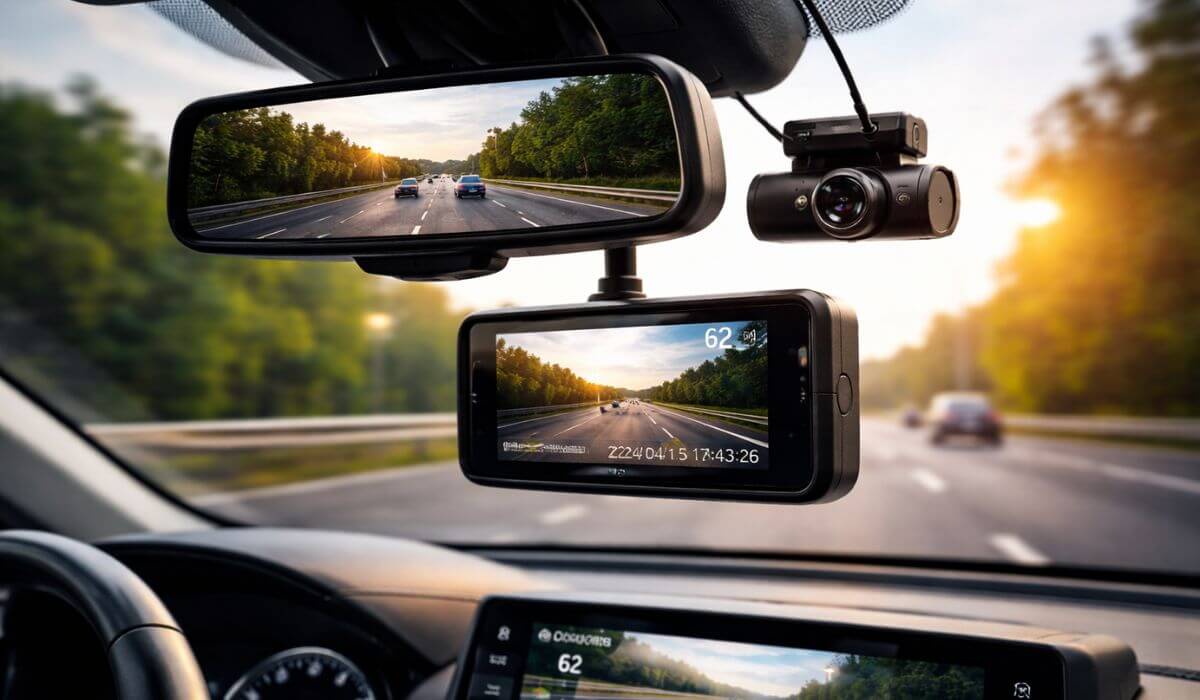
Choosing a dash cam with GPS and speed recording isn’t about ticking boxes anymore. It’s about having footage that actually holds up when it matters — after an accident, during an insurance dispute, or when you need to prove where you were and how fast you were driving. Many dash cams claim GPS or speed data, but in real use, accuracy, night clarity, heat handling, and app reliability are where most of them fall apart.
After comparing real-world performance, not just spec sheets, two models consistently stood out as top-tier options: ROVE R2-4K Dual and VIOFO A229 Plus. Both offer true front-and-rear coverage, precise GPS speed stamping, excellent night footage using STARVIS 2 sensors, and stable performance even in hot conditions. These are the kinds of dash cams drivers choose when they want dependable evidence — not just recordings.
That said, not everyone needs the same balance of price, storage, or extras. That’s why this guide doesn’t stop at just one “winner.” Alongside our top recommendations, we’ve included two more carefully selected 4K dual-channel dash cams that meet the same non-negotiable standards: front + rear recording, built-in GPS with speed logs, minimum 2K+ front clarity, strong night vision, parking protection, and heat-safe capacitor power. All four cameras here are models we’d be comfortable installing in our own cars.
Why We Recommend These 4 Dash Cams (And Not Others)
We didn’t choose these dash cams based on popularity alone. Each one earned its place because it delivers where drivers actually care:
- Accurate GPS & speed recording that stays synced with video, not delayed or inconsistent
- Clear front and rear footage, day and night, with readable plates in real traffic conditions
- Reliable parking mode & G-sensor behavior, without constant false triggers
- Stable app and Wi-Fi performance for quick footage access when you need it most
- Capacitor-based power design, proven to survive heat better than battery-based models
If you’re buying a dash cam specifically for GPS tracking and speed evidence, these four options remove the guesswork. You’re not just getting video — you’re getting data you can actually rely on.
4 Best Dash Cams With GPS & Speed Recording
#1. ROVE R2-4K Dual Dash Cam (Best Overall GPS & Speed Recording Dash Cam)
#2. VIOFO A229 Plus Dash Cam (Best for Ultra-Precise GPS Accuracy)
#3. V1P SE 4K Dual Dash Cam (Best Value 4K Dash Cam With GPS & Speed Recording)
#4. IIWEY Q7 4K+4K Dash Cam (Best Dual 4K Dash Cam for Maximum Evidence Clarity)
Must Check:
- Best Battery Powered Dash Cams
- Best Wireless Dash Cam Front & Rear
- Best Radar Detectors with Dash Cams
What You’ll Notice After a Few Weeks of Using a GPS Dash Cam
After a few weeks, the biggest change isn’t the video quality — it’s awareness. You become more conscious of speed, spacing, and lane positioning because you know everything is being recorded and logged, not just filmed. GPS and speed recording quietly influence how you drive, without feeling intrusive.
Rear footage starts to matter more than most people expect. Close following, sudden braking, or awkward parking situations are often clearer from the back camera than the front. When paired with GPS data, those moments make more sense later, especially when explaining what actually happened rather than guessing.
You’ll also notice which dash cams fade into the background and which ones don’t. Reliable units record consistently, connect when needed, and stay silent otherwise. The frustrating ones are usually the ones with delayed GPS locks, inconsistent speed stamps, or unreliable parking triggers. Over time, those small issues become deal-breakers.
The real value of a GPS dash cam shows up later — when reviewing a close call, answering a question, or backing up your version of events. That’s when accurate data and uninterrupted footage stop feeling like features and start feeling essential.
#1. ROVE R2-4K Dual Dash Cam
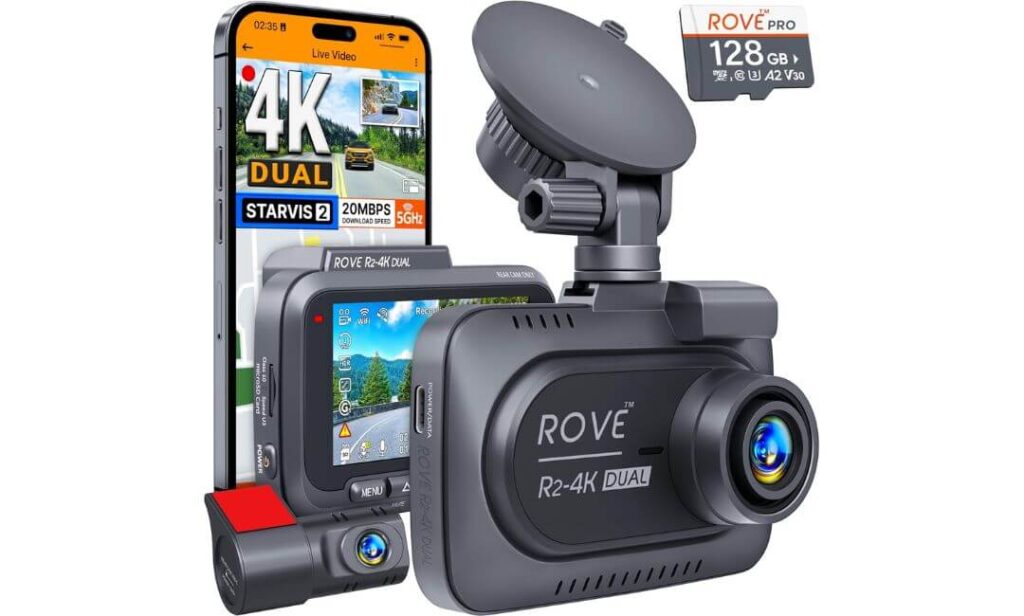
Quick Specs:
- Front / Rear Video: 4K (2160p) Front + 1080p Rear
- Sensors: Sony STARVIS 2 (Front)
- GPS & Speed Recording: Built-in GPS with live speed + stamped logs
- Storage: 128GB included, supports up to 1TB
- Power Type: Supercapacitor (heat & cold safe)
There’s a reason the ROVE R2-4K Dual tops this list. When we mounted this unit in a 2015 Ford F-150 XL, it wasn’t just another dash cam— it became an everyday witness. Over rainy back roads, sun-soaked highways, and late-night urban traffic, it consistently delivered footage and data that were legible, accurate, and usable when we reviewed clips later.
The real-world difference shows up in the details: GPS tracking that truly syncs with video, speed stamps right on the timeline, and night recordings that don’t wash out under variable lighting. In many dash cams, speed numbers can lag, GPS logs can jump, and night footage becomes mushy. Not here. The Sony STARVIS 2 sensor up front, paired with a wide aperture, means license plates and critical details remain discernible—day or night.
Connection and usability matter just as much. The built-in 5GHz Wi-Fi is not just a marketing line; when you need a clip off your card fast, the ROVE app pulls files at speeds that actually feel fast instead of frustratingly slow. The supercapacitor design also gives peace of mind in heat and cold, especially in parked vehicles.
This is not a dash cam you fiddle with every day—it quietly records what matters and keeps its data straight when you replay it. If GPS accuracy, reliable speed stamping, real-world video clarity, and dependable performance are what you care about, the ROVE R2-4K Dual earns that trust.
Why We Like It
- GPS + speed recording stays accurate, even on long highway stretches
- 4K front footage preserves plate detail and road context
- STARVIS 2 night performance delivers usable low-light video
- Fast 5GHz Wi-Fi makes file transfer quick and painless
- Heat-safe supercapacitor beats battery-based rivals for reliability
Honest Drawbacks
- Full 24-hour parking mode requires a separate hardwire kit
- Rear camera is 1080p, not the same resolution as the front
- Display is functional, not high-end, focused more on data than bells & whistles
#2. VIOFO A229 Plus Dash Cam
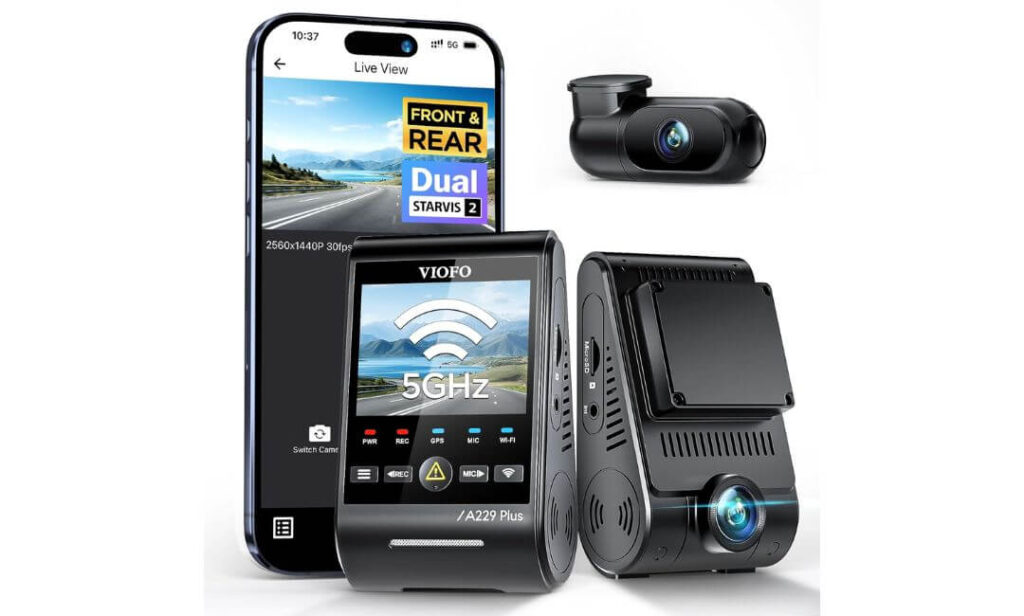
Quick Specs:
- Front / Rear Video: 1440p Front + 1440p Rear
- Sensors: Dual Sony STARVIS 2 (Front & Rear)
- GPS & Speed Recording: Quad-mode GPS (GPS, Galileo, Glonass, Beidou)
- Wi-Fi: 5GHz high-speed app connection
- Power Type: Supercapacitor (heat-safe)
This is the best option if you’re looking for accuracy first, resolution second.
The VIOFO A229 Plus is built for drivers who care less about headline 4K numbers and more about clean data, stable GPS logs, and consistent footage that holds up under scrutiny.
We ran this camera in the same 2015 F-150 XL on long highway stretches and dense city traffic, and what stood out immediately was how locked-in the GPS data felt. Speed stamps didn’t drift. Route playback didn’t jump. Time, speed, and location stayed aligned frame-by-frame, even after extended drives. That’s not common—even among premium dash cams.
Dual STARVIS 2 sensors on both front and rear make a noticeable difference at night. Instead of one strong camera and one “just acceptable” rear view, both channels deliver balanced exposure and reduced motion blur. HDR does its job quietly here—headlights don’t blow out footage, and license plates stay readable in fast-moving scenes.
The A229 Plus also feels engineered for daily driving. Voice commands actually work when the cabin is noisy. Alerts are clear without being distracting. The interface is clean, and the compact body makes it easier to position cleanly behind the mirror without blocking your view.
This is the dash cam you choose when you want evidence-grade recordings, not just sharp video. If GPS precision and speed data reliability are non-negotiable for you, the A229 Plus earns its reputation.
What Matters Most for GPS & Speed Recording Users
Quad-mode GPS isn’t marketing here—it’s functional accuracy.
By using four satellite systems simultaneously, the A229 Plus maintains stable positioning and speed data even in areas where single-system GPS cams tend to lose lock or lag.
Balanced dual-channel quality matters more than raw resolution.
Matching 1440p front and rear footage means consistent clarity when reviewing incidents involving vehicles behind you—something many front-heavy dash cams overlook.
Why We Like It
- Exceptionally accurate GPS & speed logs with stable playback
- Dual STARVIS 2 sensors keep night footage usable on both channels
- HDR improves plate readability without over-processing
- Voice control actually works, even while driving
- Compact, heat-safe design ideal for long-term daily use
Honest Drawbacks
- No SD card included, must be purchased separately
- Hardwire kit required for full 24/7 parking mode
- 1440p max resolution, not 4K for those chasing pure sharpness
#3. V1P SE 4K Dual Dash Cam
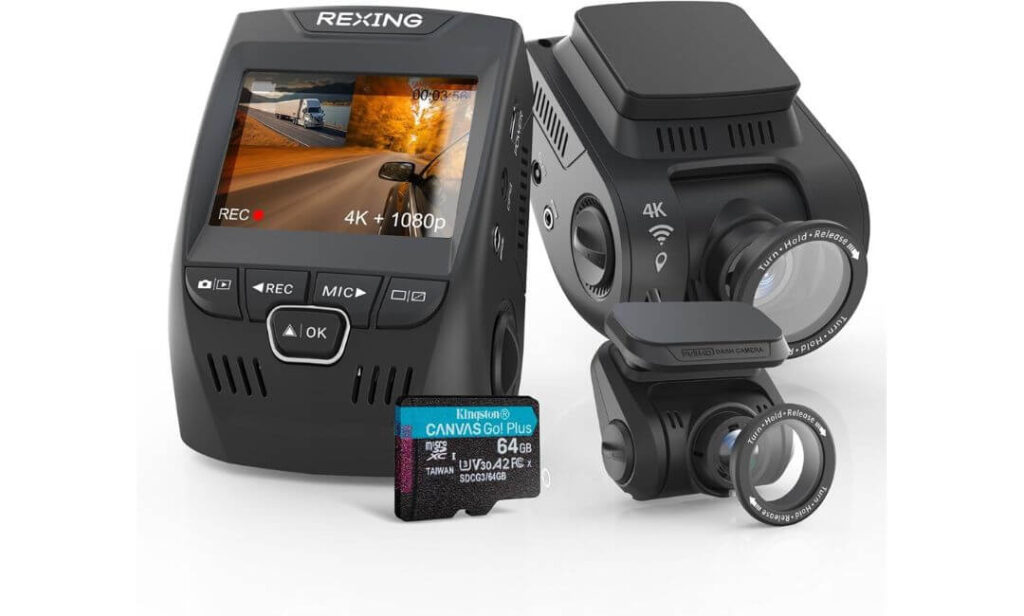
Quick Specs:
- Front / Rear Video: 4K (2160p) Front + 1080p Rear
- Field of View: 170° Wide Angle
- GPS & Speed Recording: Built-in GPS with speed stamp + route logs
- Storage: 64GB included, supports up to 512GB
- Power Type: Supercapacitor (heat-safe)
If you want true 4K front recording with GPS and speed data, but don’t want to pay flagship pricing, the V1P SE makes a strong case for itself. This is the dash cam that focuses on practical evidence capture rather than extra tech layers you may never use.
The front camera records in sharp 4K, which helps when you need to pause footage and actually read plate numbers or road signs. The rear camera stays at 1080p, but coverage is wide and consistent, making it useful for documenting rear-end incidents and parking events. GPS speed recording is handled cleanly—speed and location data are embedded directly into the footage, making playback straightforward without extra steps.
One feature that genuinely adds value here is the included CPL filters. Glare from windshields, dashboards, and harsh sunlight is a real problem in dash cam footage, and these filters noticeably cut reflections in daytime driving. Combined with WDR processing, footage stays balanced instead of blown out.
Where the V1P SE really separates itself is storage flexibility. Support for up to 512GB cards means long road trips or daily driving without constantly overwriting files. Add in supercapacitor power and simple installation, and you get a dash cam that’s easy to live with long term.
This is a straightforward, no-nonsense option for drivers who want GPS tracking, speed recording, and reliable 4K evidence, without paying for premium sensor branding.
What Matters Most for GPS & Speed Recording Users
Speed data is permanently tied to the video.
The V1P SE records speed and route information directly into the file, which makes it useful for insurance or incident review without needing separate software.
Wide-angle coverage reduces blind spots.
The 170° field of view captures adjacent lanes and roadside context—important when reviewing how an incident actually unfolded.
Why We Like It
- 4K front video delivers clear evidence, not just sharp-looking footage
- Built-in GPS with speed stamps works reliably without extra setup
- CPL filters included, reducing glare most dash cams ignore
- Large storage support (512GB) minimizes file overwriting
- Supercapacitor design handles heat better than battery-based cams
Honest Drawbacks
- Rear camera is limited to 1080p, not 2K or 4K
- App experience is basic, focused more on access than polish
- Hardwire kit needed for full-time parking monitoring
#4. IIWEY Q7 4K+4K Dual Dash Cam
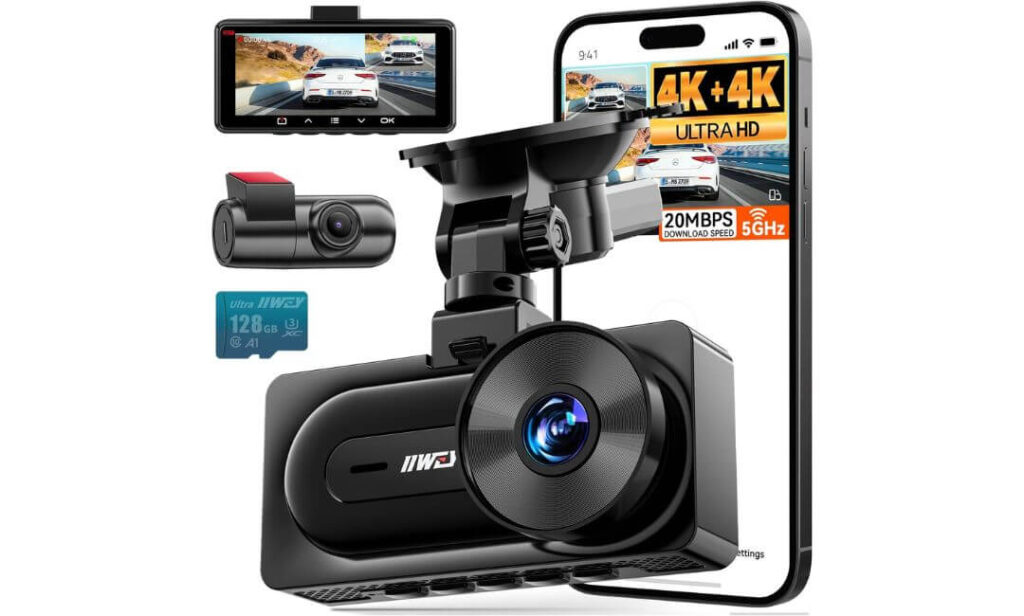
Quick Specs:
- Front / Rear Video: True 4K (2160p) Front + True 4K Rear
- Sensors: Dual STARVIS Sensors
- GPS & Speed Recording: Built-in GPS with speed + route logging
- Storage: 128GB included
- Power Type: Supercapacitor (heat-safe)
If your priority is maximum visual proof from both directions, the IIWEY Q7 plays in a different league. This is one of the few dash cams that doesn’t compromise the rear camera—both front and rear record in full 4K, which makes a real difference when reviewing rear-end incidents or hit-and-run situations.
What stands out in daily use is how confident the footage feels. Rear license plates stay readable far more often than with typical 1080p rear cams, and at night, the dual STARVIS sensors combined with HDR keep glare under control. Headlights don’t completely wash out the scene, and speed stamps remain legible even in low-light clips.
GPS and speed recording are handled cleanly and consistently. Route data, speed, and time are logged together, giving you a complete timeline when reviewing footage later. This makes the Q7 particularly useful for drivers who want strong insurance-grade evidence, not just sharp-looking video.
WiFi-6 support is another practical win. File transfers feel noticeably faster, especially with large 4K clips, and the app doesn’t push unnecessary paid features. Add in a supercapacitor power design and included 128GB card, and this becomes a surprisingly complete package out of the box.
The Q7 isn’t trying to be subtle or minimalist—it’s built for drivers who want everything recorded, clearly, from both ends, with speed and GPS data always attached.
What Matters Most for GPS & Speed Recording Users
True 4K on the rear camera changes how evidence holds up.
Rear footage often matters most in disputes, and higher resolution means fewer unanswered questions when reviewing clips.
Fast access to large files saves time when it counts.
WiFi-6 makes pulling 4K footage far less painful, which matters when you need to share evidence quickly.
Why We Like It
- True 4K front and rear, not a mixed-resolution setup
- Accurate GPS & speed logging embedded directly in footage
- Strong night performance with dual STARVIS sensors + HDR
- WiFi-6 speeds make large file transfers manageable
- Supercapacitor power suited for long-term heat exposure
Honest Drawbacks
- Larger file sizes require good storage management
- Hardwire kit needed for full 24/7 parking mode
- Bigger camera footprint than compact-focused models
Comparison Table: Best Dash Cams With GPS & Speed Recording
| Dash Cam | Front / Rear Video | GPS & Speed Recording | Night Performance | Wi-Fi / App | Parking Protection | Best For |
|---|---|---|---|---|---|---|
| ROVE R2-4K Dual | 4K + 1080p | Built-in GPS with live speed stamp & route logs | STARVIS 2 (Front), excellent low-light clarity | 5GHz Wi-Fi, fast app downloads | 24/7 parking mode (hardwire required) | Balanced daily use with reliable evidence |
| VIOFO A229 Plus | 1440p + 1440p | Quad-mode GPS (very precise speed & location) | Dual STARVIS 2 with HDR, lowest motion blur | 5GHz Wi-Fi, stable app control | Buffered parking modes (hardwire required) | Drivers prioritizing GPS & speed accuracy |
| V1P SE 4K | 4K + 1080p | Integrated GPS with speed stamped video | WDR + CPL filters reduce glare | Wi-Fi with basic app access | Parking monitor + G-sensor | Best value 4K GPS dash cam |
| IIWEY Q7 | 4K + 4K | GPS logging with speed & route data | Dual STARVIS + HDR, strong rear clarity | Wi-Fi 6 (very fast transfers) | 24/7 parking mode (hardwire required) | Maximum evidence from both ends |
Which Dash Cam Should You Buy? (Decision Guide)
If you’ve reached this point, the specs are no longer the problem — use-case is. All four dash cams record GPS and speed reliably. The right choice comes down to how and why you’ll actually use the footage.
👉 Buy the ROVE R2-4K Dual if:
You want the most balanced dash cam overall.
It’s the safest pick for daily driving, long trips, and mixed conditions. You get sharp 4K front footage, dependable GPS speed stamps, strong night clarity, and a smooth app experience without chasing extreme specs. This is the one most drivers will be happiest living with long-term.
👉 Buy the VIOFO A229 Plus if:
GPS accuracy and speed data matter more than raw resolution.
If you’re the kind of driver who wants speed logs, route playback, and timestamps to be rock-solid for insurance or dispute use, this is the cleanest option. Dual STARVIS 2 sensors and quad-mode GPS make it feel more like a data tool than a gadget.
👉 Buy the V1P SE 4K if:
You want true 4K front recording with GPS at the best value.
It’s ideal if you care about readable plates, wide road coverage, and large storage support, but don’t need premium app polish or dual 2K/4K sensors. Simple, effective, and cost-efficient.
👉 Buy the IIWEY Q7 if:
You want maximum evidence from both directions.
True 4K on the rear camera changes how rear-end incidents are documented. If you drive in heavy traffic, park on the street often, or want the strongest visual proof possible — this one makes the most sense.
No matter which dash cam you choose, GPS and speed recording only help if the footage is saved properly. Use a high-endurance microSD card, enable speed stamping in settings, and hardwire the camera if you want parking protection to actually work when the car is off.
Expert Tip
What Actually Separates a Good GPS Dash Cam From a Credible One
Most dash cams can display a speed number on the screen. Very few record GPS, speed, and front–rear video as a single, coherent data set. That difference matters when footage is reviewed by an insurer, investigator, or legal team rather than just the owner.
Credible dash cams maintain continuous GPS lock and write speed data at the same interval as the video frames. When this alignment is off—even slightly—you get speed stamps that drift, routes that jump, or timestamps that don’t match impact events. In real-world disputes, that inconsistency weakens the footage, regardless of resolution.
The models in this guide were chosen because their GPS data stays synchronized under sustained driving, not just short test runs.
Why Front and Rear Balance Matters More Than Raw Resolution
Front-facing 4K footage is easy to market. Rear footage is where most dash cams cut corners—and where many real incidents actually occur. A rear camera with poor exposure control or delayed frame timing can miss plate reads, brake light behavior, or lane position at the moment that matters.
Balanced front–rear systems maintain similar exposure logic, frame pacing, and field of view. This creates continuity across both angles, allowing events to be reconstructed rather than guessed. It’s the difference between footage that looks sharp and footage that explains what happened.
Resolution helps, but consistency across both channels matters more.
Speed Recording Is Only Useful When Context Is Preserved
Speed recording on its own proves very little. What matters is how speed correlates to road conditions, traffic flow, and driver inputs visible in the footage. Dash cams that log speed alongside GPS position and time allow reviewers to see not just how fast a vehicle was moving, but why.
This is why embedded speed stamps combined with downloadable GPS logs carry more weight than screen overlays alone. They provide continuity—before, during, and after an event—without gaps or interpretation.
That level of data integrity is what separates casual recordings from evidence-grade footage.
How Evidence-Grade Dash Cam Footage Is Actually Evaluated
When dash cam footage is reviewed seriously—by insurers, traffic investigators, or legal teams—it’s not judged on sharpness alone. What gets evaluated is continuity. Does the video run uninterrupted before and after the event? Does the speed data remain stable? Does the GPS trail match what’s visible on the road?
Dash cams that fragment recordings, reset GPS mid-drive, or drop rear footage under load weaken their own credibility. Even high-resolution clips lose value if there’s a gap before impact or a mismatch between speed stamps and vehicle movement. That’s why stable processors, proper heat management, and synchronized dual-channel recording matter more than spec-sheet numbers.
The models selected here were chosen because they maintain recording integrity under sustained use, not just ideal conditions.
Why Heat Management Directly Affects GPS and Speed Accuracy
Heat isn’t just a durability issue—it’s a data accuracy issue. Battery-based dash cams often throttle performance or reboot when cabin temperatures rise, which can interrupt GPS logging or desync speed stamps without warning.
Supercapacitor-based designs behave differently. They allow the camera to maintain consistent power delivery, keeping GPS modules and processors stable even during long, hot drives or extended parking sessions. That stability is critical if speed and location data are meant to be trusted over time, not just on short trips.
This is also why parking mode reliability varies so widely between dash cams that appear similar on paper.
Front–Rear Synchronization Is More Important Than Most Buyers Think
Many dual-channel dash cams record front and rear footage on separate timing loops. When this happens, the two clips don’t line up precisely during playback. For casual viewing, that’s fine. For reconstructing an event, it’s a problem.
Properly synchronized systems ensure that braking, lane changes, and impacts appear in both views at the same moment. This allows reviewers to cross-reference front and rear behavior without speculation. It’s subtle, but it’s one of the clearest markers of a well-engineered dash cam system.
How GPS & Speed Recording Footage Is Actually Treated by Insurance and Authorities
Dash cam footage becomes valuable the moment it moves beyond personal reference and into third-party evaluation. At that stage, insurers and investigators don’t ask whether the camera was “4K” or “popular”—they look for data credibility.
GPS-enabled dash cams carry more weight because they provide verifiable context: location, direction of travel, and speed over time. When this data is embedded consistently and aligns with the visual record, it helps establish timelines, road positioning, and vehicle behavior without relying solely on testimony.
Speed recording, in particular, is rarely used in isolation. It’s assessed alongside traffic flow, braking behavior, and surrounding vehicles visible in the footage. That’s why cameras that log speed continuously—rather than intermittently or only at impact—are taken more seriously. Continuity matters more than peak numbers.
What Makes Dash Cam Data “Defensible” Instead of Just Informative
Defensible footage is footage that doesn’t raise questions.
No sudden GPS jumps. No unexplained gaps. No mismatched timestamps between front and rear clips.
Dash cams that overwrite files too aggressively, reset GPS during heat soak, or split events across multiple clips weaken their own case. Even when video quality is high, inconsistency invites doubt. That’s why professional reviewers look for stable power delivery, synchronized dual-channel recording, and clean file structures.
The dash cams in this guide were selected because they minimize these weak points. They record like systems, not gadgets.
Why Front–Rear Coverage Changes Fault Interpretation
Single-camera footage often tells only half the story. Rear footage frequently provides the deciding detail—following distance, brake response, or lane positioning of another vehicle. When paired with GPS speed data, rear video can explain why an impact occurred, not just that it occurred.
Balanced front–rear systems reduce ambiguity. They allow reviewers to see cause and effect across both directions, anchored by the same speed and location data. That’s the difference between footage that supports a claim and footage that merely exists.
Where This Leaves You as a Buyer
If your goal is novelty or occasional recording, almost any dash cam will do.
If your goal is usable evidence, the bar is higher.
That’s why every model in this article was chosen for GPS stability, speed-recording integrity, and front–rear coherence—not just resolution or feature count.
FAQs
Is speed recording on a dash cam accurate enough for insurance use?
Speed recording is generally reliable when it’s tied directly to GPS data rather than estimated from video. Quality dash cams log speed, time, and location continuously, creating a consistent timeline. Insurers look for stability and alignment with the footage, not just the speed number itself. Accuracy improves further when the GPS maintains uninterrupted lock during the drive.
Can dash cam GPS and speed data be used as legal evidence?
In many regions, dash cam footage with GPS and speed data is accepted as supporting evidence, not standalone proof. Its value comes from context—showing where the vehicle was, how it was moving, and what was visible at the time. Courts and insurers assess consistency and continuity rather than treating speed data as a speedometer replacement.
Why is front and rear recording important for GPS-based incidents?
GPS and speed data explain movement, but front–rear video explains interaction. Rear footage often captures following distance, brake response, or lane changes that front cameras miss. When both angles are recorded with synchronized GPS data, incidents can be reconstructed rather than interpreted, which significantly strengthens claims.
Does higher resolution improve GPS and speed recording credibility?
Resolution helps with visual detail, but credibility depends on synchronization. A lower-resolution camera with stable GPS logs and continuous recording can be more useful than a 4K camera with dropped data or timing gaps. What matters is that speed, location, and video stay aligned before and after the event.
Do dash cams record speed all the time or only during incidents?
Most GPS-enabled dash cams record speed continuously while driving, not just during impacts. This creates a complete driving record leading up to an event. Continuous logging is important because isolated speed snapshots rarely explain what actually happened in real traffic situations.
Final Verdict
A dash cam with GPS and speed recording is only as good as the quality of its data under real conditions. Sharp video alone doesn’t protect you—consistent GPS logs, accurate speed stamping, and properly synchronized front and rear footage do. That’s where most generic dash cams fall short.
Every model in this guide was chosen because it records usable, defensible footage, not just attractive clips. Whether you prioritize overall balance, GPS precision, value-focused 4K recording, or maximum evidence from both directions, these picks remove guesswork. You’re not buying features here—you’re buying clarity when responsibility, liability, or truth is questioned.
If GPS accuracy, speed integrity, and front–rear context matter to you, any of these dash cams will do the job properly. The right one simply depends on how much evidence you want, and how critical precision is in your driving environment.