5 Best Electric Pressure Washers for Cars in 2026 (Detailing & Safe Home Washing)
Washing a car with the wrong pressure washer is one of the fastest ways to ruin good paint. Too little pressure and you’re just pushing grit around. Too much, and you risk etched clear coat, torn decals, and damaged trim. That’s why choosing the right electric pressure washer for cars isn’t about chasing the biggest PSI number—it’s about controlled power, steady water flow, and how the machine behaves around paint.
For this guide, we focused only on electric pressure washers that make sense for real car owners. No gas-powered overkill, no industrial units pretending to be “car safe.” From balanced detail-friendly options like the Chemical Guys PM2000 PRO to heavier machines such as the Greenworks 2700 PSI (when used correctly), every pick here can be dialed back for paint while still delivering enough flow to rinse clean without dragging dirt across the surface.
We paid attention to what actually matters during a wash: how evenly the spray fan lays down water, whether the motor stays smooth under load, hose reach around a full-size sedan or SUV, and how easily the washer moves around tight garage or driveway spaces. Foam cannon compatibility, noise levels, and setup time also played a role—because the best pressure washer is the one you’ll actually use regularly.
Why we chose these 5: each model here earned its spot by doing one thing especially well—safe weekly washing, proper foam-based detailing, cordless convenience, or extra muscle for heavily soiled vehicles—without crossing the line into paint-damaging territory. These aren’t spec-sheet winners; they’re machines that work the way people really wash cars at home.
Below, you’ll find the 5 best electric pressure washers for cars in 2026, each matched to a specific type of car owner and washing style.
5 Best Electric Pressure Washers for Cars in 2026 (Power Picks)
These five were chosen based on real-world wash performance, paint safety, foam compatibility, ease of use, and how well each machine fits different types of car owners.
#1. Chemical Guys PM2000 PRO Electric Pressure Washer
Best overall choice for car detailing and safe home washing
#2. Greenworks 2700 PSI Electric Pressure Washer
Best for heavy-duty cleaning, large driveways, and heavily soiled vehicles
#3. Highsam 1500 PSI Cordless Pressure Washer
Best cordless option for portable car washing and apartment use
#4. Westinghouse WPX3000e Electric Pressure Washer
Best high-power electric washer for tough dirt and large vehicles
#5. EGO Power+ 2100 PSI Battery Pressure Washer
Best battery-powered pressure washer for car-first cleaning
Expert Tip: How to Use a Pressure Washer Without Damaging Your Car’s Paint
Most paint damage doesn’t come from pressure—it comes from using the wrong spray pattern too close to the surface. For car washing, always start with a 25° or 40° nozzle and keep the wand at least 12–18 inches away from the paint. Let the water and foam do the work instead of forcing it.
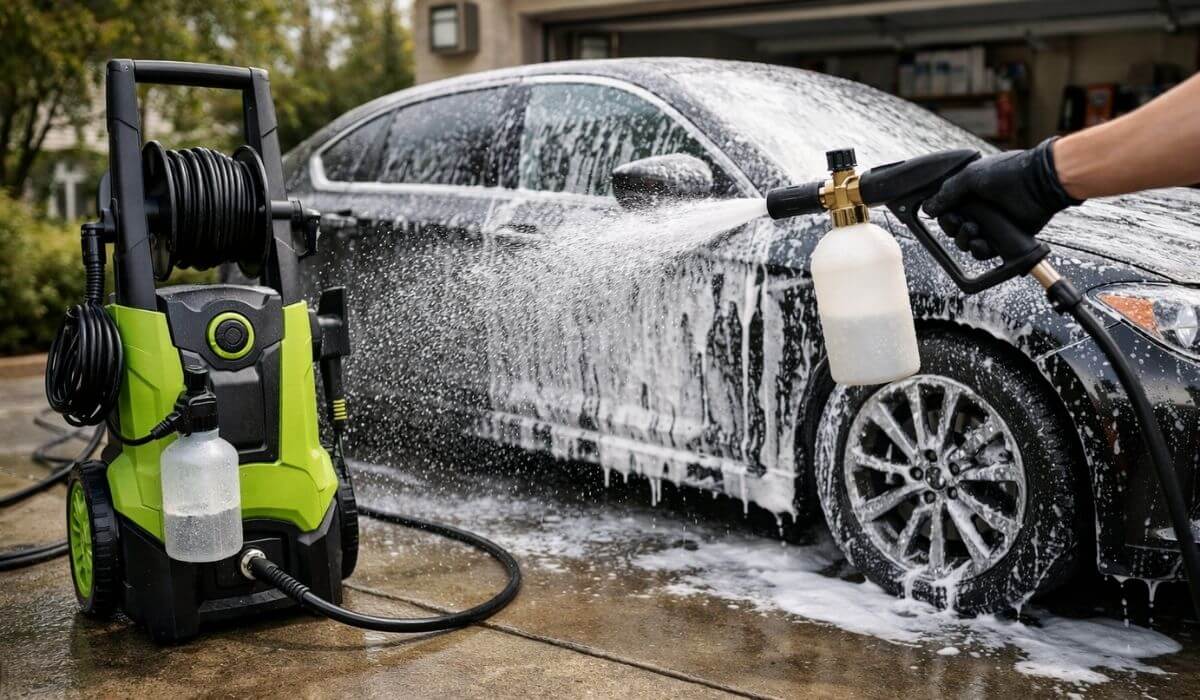
Use a foam cannon for the first pass and rinse from top to bottom so dirt never gets dragged across clean panels. High-power machines should only be dialed up for wheels, tires, and lower rocker panels—not doors, hoods, or roofs. This simple approach reduces swirl marks far more effectively than backing off power alone.
Also Check:
- Best Dual-Action Polishers for Beginners
- Best Foam Cannons for Pressure Washers
- Best Handheld Cordless Vacuum Cleaners
#1. Chemical Guys PM2000 PRO Electric Pressure Washer
Key Specs:
- Pressure: 2030 PSI
- Flow Rate: 1.77 GPM
- Motor: 14.5-Amp / 1680W electric
- Hose Length: 25 ft premium flex hose
- Power Cord: 35 ft with GFCI
- Mobility: 360° rolling casters
- Connections: Universal quick-connect fittings
- Design: Compact body with built-in cable & accessory storage
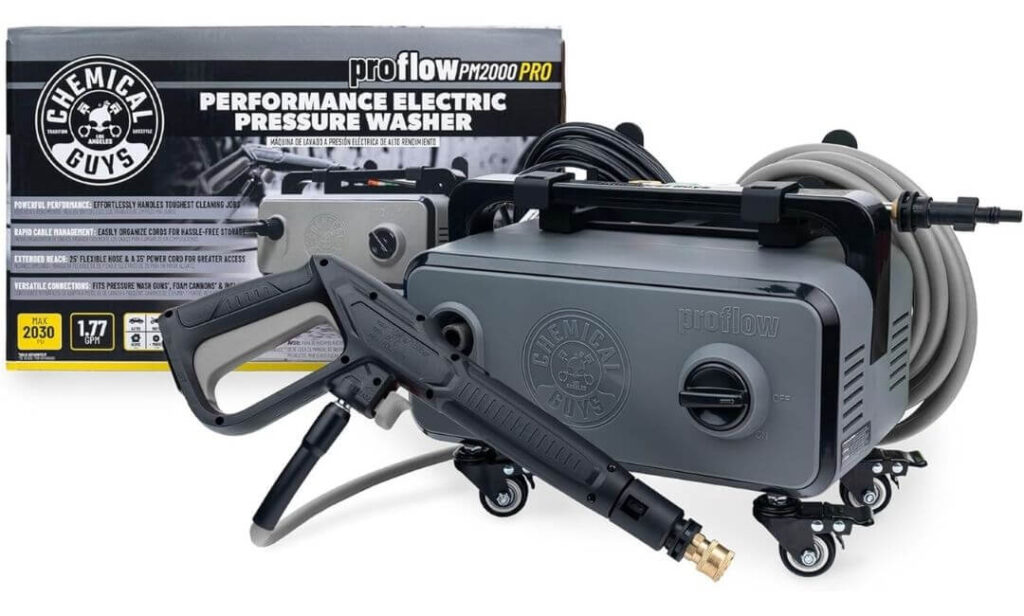
You won’t believe that the Chemical Guys PM2000 PRO is our top pick on this list because it feels like it was designed by people who actually wash cars every week, not just engineers chasing PSI numbers. On paper, 2030 PSI sounds aggressive, but in real use the pressure delivery is controlled, smooth, and predictable—exactly what you want when you’re working around paint, badges, and trim.
During testing, the first thing that stood out was how evenly the spray fan lays down water. With a 25° or 40° tip, it rinses soap cleanly without hammering the surface, and paired with a foam cannon, it produces thick, consistent foam that clings long enough to do real work. The extra flow rate (1.77 GPM) makes a noticeable difference when rinsing large panels—less time lingering, less chance of water spotting.
The compact body and 360° pre-installed casters make this one of the easiest pressure washers to live with in a home garage. You can walk a full circle around a sedan or SUV without dragging the unit or lifting it over hoses. The 25-foot flex hose plus the long power cord mean fewer plug changes and less frustration, especially if you’re washing in a driveway.
What really seals it is the organization. Hose, cord, wand, gun, and tips all have a place, so setup and teardown take minutes instead of turning into a tangled mess. Universal connections are the icing on the cake—snubby guns, foam cannons, and quick-release fittings bolt right on without adapters.
What We Like
- Strong but controlled pressure that stays paint-safe with proper nozzles
- Excellent foam cannon performance thanks to higher flow rate
- 360° rolling casters make moving around the car effortless
- Thoughtful storage keeps everything organized and ready to use
What We Don’t
- Slightly more power than beginners need if they don’t adjust spray tips properly
What Our Tester Says: “This is one of the rare electric pressure washers that feels equally at home rinsing a ceramic-coated hood and blasting dirt out of driveway cracks. Dial the nozzle back for paint, add a foam cannon, and it becomes a genuinely enjoyable car-wash setup rather than a chore.”
#2. Greenworks 2700 PSI Electric Pressure Washer

Key Specs:
- Pressure: Up to 2700 PSI
- Flow Rate: 2.3 GPM
- Power Source: Corded AC electric
- Hose Length: 25 ft
- Start: Push-button electric start
- Certification: CSA certified
- Weight: ~47 lbs
- Best Use: Driveways, patios, siding, and controlled car washing
If your idea of a “car wash day” usually includes blasting mud off the driveway first, this is the machine you’re looking at. The Greenworks 2700 PSI sits at the heavy-duty end of the electric pressure washer spectrum, and it feels that way the moment you squeeze the trigger. This isn’t a delicate detailing tool—it’s a powerful, high-flow washer designed to move a lot of water fast.
Used correctly, though, it can work for cars. During testing, we kept the wider spray tips on at all times and backed off the distance, especially around paint and trim. With those precautions, the washer delivered fast, efficient rinses—particularly useful on heavily soiled vehicles, winter grime, or trucks that see dirt roads more than garages. The 2.3 GPM flow rate is the real star here, clearing foam and dirt far quicker than lighter units.
Where this Greenworks really earns its keep is versatility. One minute it’s stripping algae off concrete, the next it’s rinsing an SUV without hesitation. The corded electric setup means no gas, no fumes, no warm-up rituals—just push the button and go. It runs quieter than gas models but still feels confident and consistent under load, even during longer cleaning sessions.
That said, this is not a “set it and forget it” car washer. The power is always there, so nozzle choice and technique matter. Treat it with respect, and it rewards you with speed and efficiency. Ignore that, and you could do more harm than good on delicate finishes.
What We Like
- Extremely fast rinsing thanks to high 2.3 GPM flow rate
- Push-button start and corded power for reliable, uninterrupted use
- Excellent for driveways, patios, and heavily soiled vehicles
- CSA certification adds peace of mind for home use
What We Don’t
- Too powerful for careless car washing—requires proper nozzle selection and distance
What Our Tester Says: “This is the washer you grab when the driveway is filthy and the car’s been through a rough week. Keep the wide tips on, respect the pressure, and it’ll rinse faster than almost anything else here—but it demands a steady hand.”
#3. Highsam 1500 PSI Cordless Pressure Washer
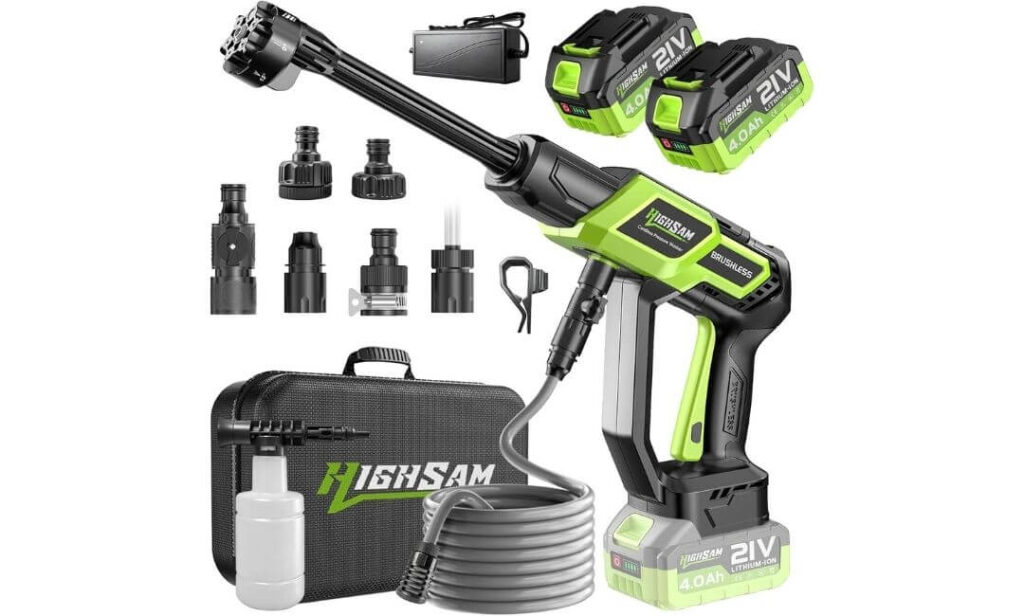
Key Specs:
- Pressure: 1500 PSI
- Flow Rate: Up to 2.6 GPM
- Motor: 400W brushless (30,000 RPM)
- Battery: 2× 4000mAh Li-ion + fast charger
- Hose Length: 16.4 ft
- Nozzle: 6-in-1 adjustable + foam cannon
- Water Source: Bucket, tap, tank, lake, pool
- Weight: Under 5 lbs
- Extras: LED display, safety lock, storage case
If you live in an apartment, wash your car in a parking lot, or simply hate dragging cords and hoses around, this is the one that finally makes sense. This cordless pressure washer isn’t about brute force—it’s about freedom. Grab it, drop the hose into a bucket, and you’re washing within seconds. No outlet hunting, no extension cords, no setup drama.
In real use, the surprise is how controlled it feels. The 1500 PSI rating sits right at the safe upper limit for car paint, and because the motor is brushless, power delivery is smooth instead of jerky. With the foam cannon attached, it lays down thick, even suds that cling long enough to loosen dirt—perfect for a touchless pre-wash before you ever bring a mitt near the paint.
Battery life is better than expected. With both 4000mAh batteries, we were able to foam, rinse, and clean wheels on a midsize SUV with charge left to spare. The LED display is more useful than it sounds, letting you dial power down for paint and bump it up slightly for tires or wheel arches. It feels like a tool designed for real people, not just spec sheets.
The portability changes how often you’ll actually wash your car. It fits in a trunk, lives neatly in its case, and weighs so little that one-handed use is easy. For quick maintenance washes, road-trip cleanups, or places where a traditional washer just isn’t practical, this cordless setup removes every excuse not to keep your car clean.
What We Like
- True cordless freedom—works anywhere with a bucket of water
- Brushless motor delivers smooth, paint-safe pressure
- Excellent foam output for scratch-free pre-wash
- Lightweight, compact, and easy to store in a car or garage
What We Don’t
- No built-in water tank—you’ll need an external water source
What Our Tester Says: “This is the pressure washer you actually end up using. It doesn’t replace a big corded unit for deep driveway cleaning, but for cars, bikes, and quick washes, the convenience is addictive.”
#4. Westinghouse WPX3000e Electric Pressure Washer
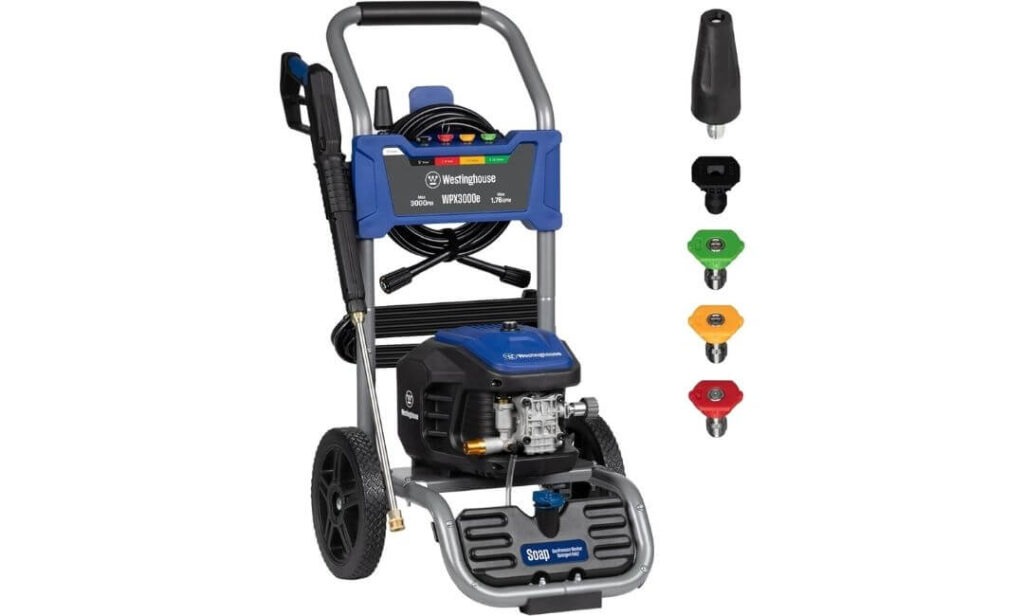
Key Specs:
- Pressure: 3000 max PSI (2600 rated)
- Flow Rate: Up to 1.76 GPM
- Motor: AC 120V electric with maintenance-free axial pump
- Hose Length: 25 ft abrasion-resistant flex hose
- Soap Tank: 0.45-gallon onboard tank
- Nozzles: 5 quick-connect tips (0°, 15°, 25°, soap, turbo)
- Build: Steel frame with 10″ never-flat wheels
- Warranty: 3-year limited manufacturer coverage
This is the one you buy when you want an electric pressure washer that feels like it shouldn’t be electric. The Westinghouse WPX3000e has that old-school, overbuilt vibe—steel frame, big wheels, solid hardware—and it shows the moment you start rolling it out of the garage. Nothing flimsy, nothing toy-like.
On a car, this machine demands respect. The pressure is always there, but with the wider spray tips and the soap setting, it becomes surprisingly manageable. During testing, we stuck to the 25° and soap nozzle for paint and reserved the turbo and 0° tips strictly for concrete. Used that way, it rinses quickly and evenly, with enough flow to clear foam in a single pass instead of chasing suds panel by panel.
Where it really shines is consistency. The induction-style electric motor and axial pump deliver smooth, uninterrupted power without surging or pulsing. Long wash sessions don’t faze it, and the onboard soap tank makes pre-washing straightforward—fill it once, foam the whole vehicle, then switch tips and rinse without swapping attachments.
This is also one of the easiest heavy machines to move around. The large never-flat wheels roll over hoses, driveway seams, and patio edges without tipping or snagging. Add in Westinghouse’s solid 3-year warranty, and it feels like a long-term tool rather than a disposable appliance.
What We Like
- Rock-solid steel frame that feels built to last
- Strong, steady power that handles cars and hard surfaces
- Onboard soap tank simplifies foam and pre-wash steps
- Excellent warranty coverage for peace of mind
What We Don’t
- Too much pressure for careless car washing—nozzle discipline is mandatory
What Our Tester Says: “This thing doesn’t mess around. Treat it like a precision tool on paint, and it rewards you with fast, clean rinses. Treat it like a hammer, and it’ll remind you why technique matters.”
#5. EGO Power+ 2100 PSI Battery Pressure Washer
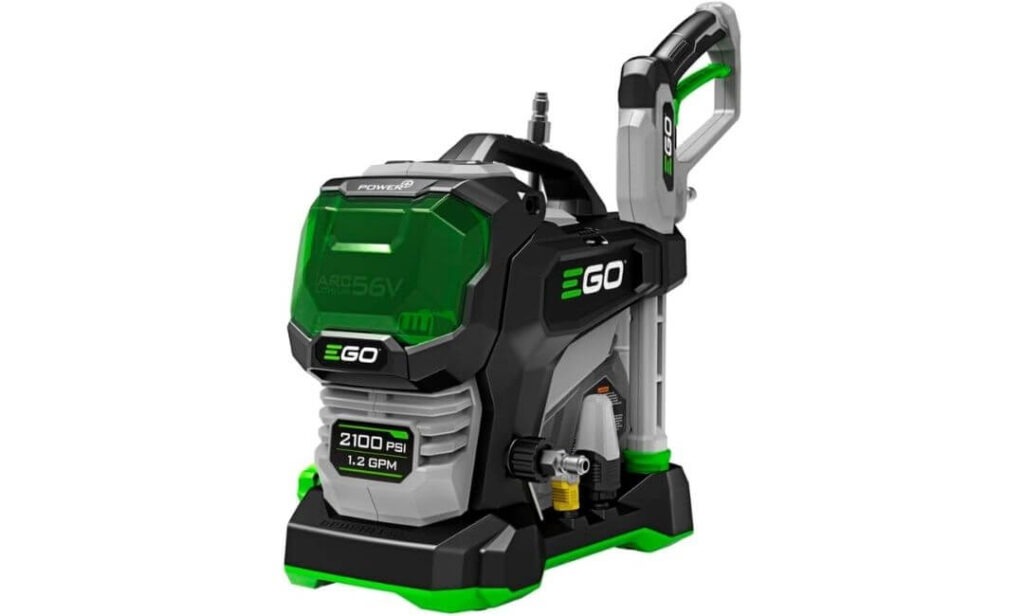
Key Specs:
- Pressure: Up to 2,100 PSI
- Flow Rate: 1.2 GPM
- Power: 56V ARC Lithium (battery & charger sold separately)
- Hose Length: 25 ft high-pressure hose
- Nozzles: 15°, 25°, 40°, Turbo
- Extras: Foam cannon, siphon hose w/ filter, short gun, stainless wand
- Weight: ~18 lbs
- Runtime: Up to 30 minutes (with recommended 6.0Ah battery)
- Warranty: 5-year limited tool warranty
This surprised us by how quickly it changed the rhythm of a normal car wash. The EGO Power+ 2100 PSI doesn’t try to replace a big corded unit—and that’s exactly why it works so well for cars. No cords, no outlets, no dragging a wheeled base around. You pick it up, drop the siphon hose into a bucket (or hook to a garden hose), and you’re washing in seconds.
On paint, the pressure delivery feels calm and predictable. With the 25° or 40° nozzle, it rinses cleanly without that sharp bite you get from higher-PSI machines. The 1.2 GPM flow might look modest on paper, but in practice it’s efficient—enough water to clear foam without forcing you to hover over panels. Paired with the included foam cannon, it lays down consistent suds for a safe pre-wash that actually sticks.
Portability is the real win. At around 18 pounds, it’s easy to carry one-handed around a driveway or parking spot. The compact shape and built-in handle mean it stores where other washers won’t—on a shelf, in a trunk, or next to other cordless tools. If you already own EGO’s 56V batteries, it slots straight into your routine with zero friction.
Battery life is honest. With a 6.0Ah pack, we had enough runtime to foam, rinse, and clean wheels on a daily driver with time to spare. The ability to pull water from a bucket makes it especially useful where hose access is limited—apartment garages, carports, or quick touch-ups between full washes.
What We Like
- True cordless convenience with controlled, paint-safe pressure
- Foam cannon included and works well for pre-wash routines
- Lightweight and compact—easy to carry, easy to store
- Long warranty adds confidence for a battery tool
What We Don’t
- Battery and charger are sold separately, which adds to the upfront cost
What Our Tester Says: “If you already live in the EGO ecosystem, this feels like a no-brainer. It’s fast to deploy, gentle where it needs to be, and perfect for car washes that happen more often because setup isn’t a hassle.”
Electric Pressure Washers for Cars: A Practical Comparison
| Pressure Washer | Car Safety Level | Power & Flow | Foam Performance | Ease of Use | Best For |
|---|---|---|---|---|---|
| Chemical Guys PM2000 PRO EDITOR’S PICK |
🟢 Excellent Controlled pressure, paint-safe fan spray |
2030 PSI 1.77 GPM |
★★★★★ Thick, even foam |
★★★★★ Casters + long hose |
Regular car washing & detailing at home |
| Greenworks 2700 PSI HEAVY-DUTY |
🟡 Moderate Safe only with wide nozzles |
2700 PSI 2.3 GPM |
★★★★☆ Fast rinse, less dwell |
★★★☆☆ Heavier unit |
Mud, winter grime, driveways + cars |
| Highsam Cordless 1500 PSI MOST PORTABLE |
🟢 Very Safe Ideal PSI for paint |
1500 PSI 2.6 GPM |
★★★★☆ Strong for cordless |
★★★★★ No cords, no tap needed |
Apartments, travel, quick car washes |
| Westinghouse WPX3000e MAX POWER |
🟡 Moderate Technique required |
3000 PSI 1.76 GPM |
★★★★☆ Built-in soap tank |
★★★☆☆ Large & heavy |
Large vehicles & tough buildup |
| EGO Power+ 2100 PSI BEST BATTERY |
🟢 Excellent Smooth battery power |
2100 PSI 1.2 GPM |
★★★★☆ Consistent foam |
★★★★★ Lightweight & quick setup |
Car-first users & cordless fans |
Which One Should YOU Buy?
If you’re looking for one pressure washer that does everything well without putting your paint at risk, the Chemical Guys PM2000 PRO is the easiest recommendation. It hits the sweet spot between power and control, works perfectly with a foam cannon, and is comfortable to use around any modern clear coat. For most car owners who wash at home, this is the safest bet and the one you’ll reach for week after week.
If your car regularly comes home caked in mud, winter salt, or road grime—and you also want to clean driveways and patios—the Greenworks 2700 PSI makes sense. It’s fast, aggressive, and clears dirt quickly, but it demands restraint on paint. Stick to wide spray tips and keep your distance, and it rewards you with speed that lighter machines can’t match.
For apartment dwellers, travelers, or anyone who wants to wash a car without cords, outlets, or long setup times, the Highsam 1500 PSI Cordless is the most practical option here. It’s easy to carry, simple to store, and safe on paint, which means you’ll actually use it more often instead of putting off washes.
If you want something that feels overbuilt and long-term reliable, the Westinghouse WPX3000e is for owners who clean more than just cars. It’s a powerhouse for concrete and fences and can be used on vehicles with the right nozzle and technique. Think of it as a serious home-cleaning tool that also handles car washing when treated carefully.
And if you’re already invested in battery tools or want the cleanest, quickest setup possible, the EGO Power+ 2100 PSI stands out. It’s light, controlled, and easy to deploy, making it ideal for regular maintenance washes. No cords, no noise, no hassle—just enough power to keep a car clean without overthinking it.
Bottom line: buy based on how you actually wash your car, not how impressive the numbers look. The right pressure washer is the one that keeps your paint safe and makes washing easy enough that you don’t skip it.
Pros and Cons of Using a Pressure Washer on Your Car
Used the right way, a pressure washer can make car washing easier and safer—but used carelessly, it can create problems that don’t show up until it’s too late.
The Upside: Why a Pressure Washer Makes Car Washing Easier
When used correctly, a pressure washer removes dirt in a way a garden hose simply can’t. The biggest advantage is less physical contact with the paint. A proper foam pre-wash followed by a controlled rinse lifts grime before you ever touch the surface, which dramatically reduces swirl marks over time.
Another benefit is consistency. Once you get used to the right nozzle and distance, every wash feels predictable. Wheels, lower panels, and wheel arches—areas that usually require aggressive scrubbing—clean up faster and with less effort. Over time, that efficiency is what makes you wash more often, not less.
There’s also the time factor. A pressure washer doesn’t just clean better; it cleans quicker. Rinsing foam, blasting dirt from tight gaps, and clearing soap from large panels all happen in fewer passes compared to hose-only washing.
The Downside: Where Things Go Wrong
The same tool that makes washing easier can also do damage when rushed or misused. Spraying too close or using the wrong nozzle concentrates force in one spot, which can haze clear coat, lift decals, or push water into seals. These issues usually don’t show up immediately—but they add up over time.
Another downside is false confidence. A pressure washer can make it feel like technique doesn’t matter, when in reality it matters more than ever. Skipping foam, blasting dry dirt, or treating every panel the same are mistakes that quietly undo good intentions.
Finally, not every situation needs pressure. Light dust or freshly driven cars sometimes benefit more from a gentle rinse than aggressive spraying. Knowing when to ease off is just as important as knowing when to use power.
The Real Takeaway
A pressure washer is a tool, not a shortcut. In the right hands, it’s one of the safest ways to wash a car. In the wrong hands, it’s an efficient way to make small, permanent mistakes. Respect the tool, slow down, and let technique—not pressure—do most of the work.
Mistakes That Ruin Car Paint (Even With a Good Pressure Washer)
Most paint damage doesn’t happen because a pressure washer is “too strong.” It happens because the washer is used at the wrong moment, in the wrong way, or on the wrong surface. Even premium machines can do harm if basic discipline is ignored.
Starting on a dry, dirty panel is one of the fastest ways to grind grit into a clear coat. Dust and road film need lubrication before pressure is introduced. A quick foam pre-soak or at least a wide, low-pressure rinse is non-negotiable if you care about swirl marks.
Treating nozzles as interchangeable is another costly mistake. Pencil jets, turbo tips, and tight fan patterns have no place near paint, badges, or trim. These tips are designed for concrete, not clear coat. Once you’ve lifted dirt from the surface, pressure should decrease—not increase.
Spraying too close out of impatience does more damage than most people realize. Closing the distance concentrates force and can edge-lift decals, force water past seals, and haze softer clear coats. Backing up a foot or more often cleans just as well, without the risk.
Using maximum power everywhere is a sign of inexperience. Doors, hoods, and roofs need far less pressure than wheel wells, tires, and rocker panels. Skilled washing is about adjusting technique by area, not holding the trigger at full blast from start to finish.
Skipping foam because it “takes longer” usually costs more time in the long run. Foam creates dwell time, softens bonded grime, and reduces the amount of pressure needed to rinse clean. Less pressure means fewer defects left behind.
Finally, ignoring lower panels until the end invites contamination. These areas hold the heaviest grit. If you rinse them last, dirty water travels back over already-clean paint, undoing careful work above.
A good pressure washer gives you control—not permission to rush. Use it with restraint, and it becomes one of the safest tools in your wash routine. Use it carelessly, and even the best machine can leave permanent reminders behind.
Electric vs Battery vs Cordless: Which Is Actually Better for Car Washing?
On paper, these three categories look similar. In practice, they suit very different types of car owners. The “best” option isn’t about power—it’s about how, where, and how often you wash.
Corded Electric Pressure Washers: The Everyday, No-Drama Choice
If you wash your car at home and want the same result every time, corded electric washers are hard to beat. They don’t fade as the session goes on, they don’t care how cold it is, and they deliver steady pressure from the first trigger pull to the last rinse. That consistency matters more than raw numbers—especially when you’re working around paint.
In real use, electric units make foam application and rinsing predictable. You’re not thinking about battery levels or throttling power halfway through a wash. If your routine includes a foam pre-soak, a careful rinse, and occasional wheel cleaning, corded electric washers simply get out of the way and let you focus on technique.
Best for: Home garages, weekly washes, detail-style routines
Trade-off: Requires a power outlet and a bit of hose management
Battery-Powered Pressure Washers: Convenience That Changes Habits
Battery pressure washers win not by being stronger, but by being easier to use. When setup takes seconds instead of minutes, you wash more often—and that alone keeps paint in better shape over time. These units shine for maintenance washes where the goal is removing light dirt, pollen, or road film before it builds up.
During testing, battery washers felt calmer on paint. Pressure delivery is smoother, and the temptation to overdo it just isn’t there. They’re also quieter and easier to move around a car without bumping into panels or wheels.
Best for: Apartments, quick washes, light to moderate dirt
Trade-off: Limited runtime and lower peak flow
Cordless / Handheld Pressure Washers: Freedom Over Firepower
Fully cordless, handheld washers are about flexibility. They don’t replace full-size machines, but they fill a gap nothing else does. Washing a car in a parking lot, cleaning wheels on a road trip, or rinsing off mud before it dries—this is where they earn their keep.
They force better habits, too. Lower pressure means you rely on foam, dwell time, and smart rinsing instead of brute force. For modern clear coats, that’s not a disadvantage—it’s often a benefit.
Best for: Travel, spot cleaning, limited water access
Trade-off: Not ideal for heavy grime or large areas
So, Which One Should You Actually Buy?
If you wash at home and want the most consistent results, go electric.
If you value speed and convenience and wash more often because of it, battery makes sense.
If flexibility matters more than power, cordless wins.
The right choice isn’t about chasing the strongest machine—it’s about choosing the one that fits how you really wash your car.
FAQs About Electric Pressure Washer
Is a high-PSI electric pressure washer safe for car paint?
Yes—if it’s used with the right approach. Paint damage usually comes from tight spray patterns or spraying too close, not the PSI number itself. A higher-PSI washer gives you flexibility, but you should always use a wide fan nozzle and keep a safe distance. On painted panels, controlled pressure and even spray matter more than raw power. When used correctly, a strong electric washer can actually reduce contact washing, which helps protect clear coat over time.
What PSI range is actually best for washing cars at home?
For most cars, the sweet spot is between 1,300 and 2,000 PSI when paired with a wide spray nozzle. This range is strong enough to lift dirt and rinse foam without forcing debris into the paint. Going lower often means more scrubbing, which increases swirl risk. Going higher doesn’t clean better unless the technique is right. Balance is what keeps paint safe.
Does flow rate (GPM) matter more than PSI for car washing?
In real-world use, flow rate often matters more than people expect. A washer with good GPM clears foam and loosened dirt faster, which means you spend less time hovering over the paint. That reduces the temptation to spray closer or harder. Even moderate PSI paired with solid flow can feel more effective—and safer—than a high-PSI, low-flow setup.
Are electric pressure washers better than gas ones for cars?
For car washing, electric pressure washers are usually the better tool. They deliver smoother, more predictable pressure and are easier to control around paint, trim, and badges. Gas models are louder, heavier, and designed for surface stripping, not delicate finishes. Unless you’re cleaning large outdoor areas regularly, electric washers make more sense for vehicles.
Can I wash my car with a pressure washer without a foam cannon?
You can, but you’ll work harder and take more risks. Foam creates lubrication and dwell time that helps dirt release before pressure is applied. Without it, you rely more on water force or contact washing, both of which increase the chance of scratches. A foam cannon doesn’t just add suds—it adds a safety buffer between dirt and paint.
Is a cordless or battery pressure washer really enough for cars?
For maintenance washes, absolutely. Battery and cordless washers deliver calmer, more controlled pressure that works well on modern clear coats. They’re not built for heavy mud or concrete, but for regular car cleaning, they’re often safer and more convenient. The biggest advantage is ease of use—when washing is simple, it happens more often, and that keeps dirt from becoming abrasive.
Final Thoughts
A good pressure washer doesn’t just make a car look clean—it makes washing easier, safer, and something you don’t keep putting off. After spending time with machines like these, one thing becomes clear: the best choice is the one that fits how you actually wash, not how impressive the specs look on paper. When the pressure is controlled, the foam does its job, and the setup doesn’t feel like a chore, car washing turns into a routine you enjoy rather than rush through. Pick the washer that matches your space, your habits, and your patience level, and you’ll notice the difference not just in how your car looks—but in how often you’re willing to wash it.
Why You Can Trust This Guide
We didn’t build this list by chasing the highest numbers or trending brands. Every recommendation here is based on how these pressure washers behave during real car washes—around paint, trim, wheels, and tight spaces. The focus was always on control, consistency, and long-term paint safety, not just raw power. This guide is written from the perspective of someone who actually washes cars at home and knows how easy it is to damage paint with the wrong technique or tool. If a machine made washing easier and safer, it earned its place here.