
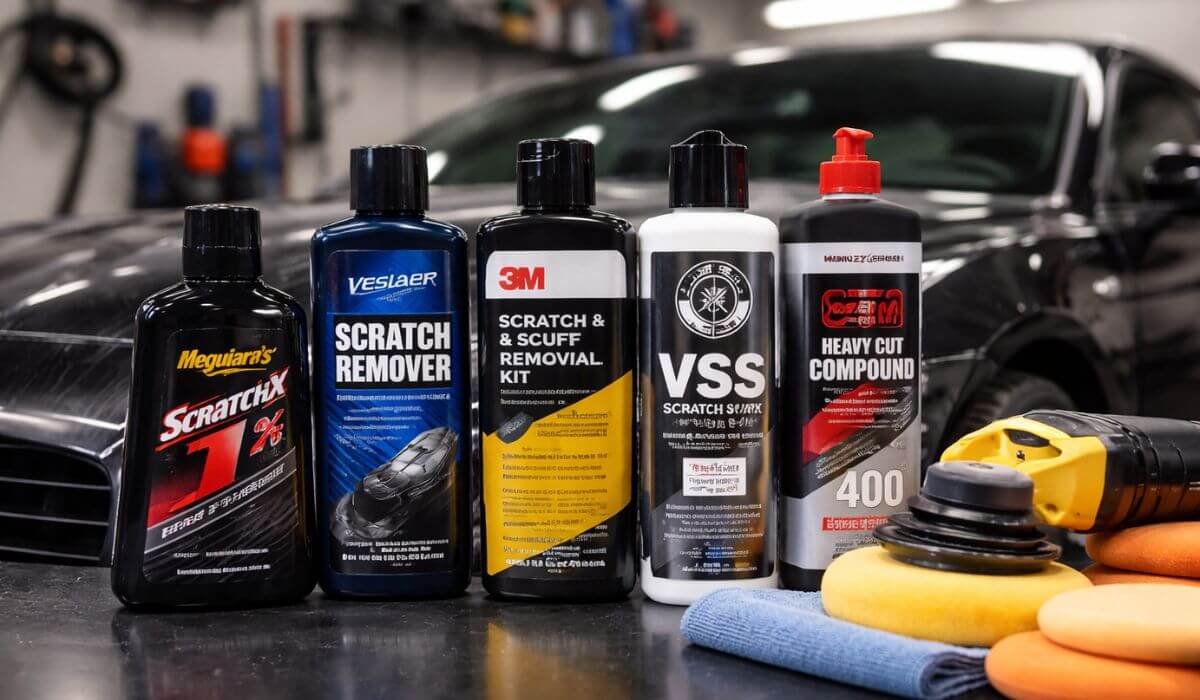
5 Best Deep Scratch Removers for Cars in 2026 (Fix Visible Paint Damage at Home)
Quick Highlights:
- Built for Real Paint Damage, Not Just Shine Boosters — This list includes true correction compounds and proven DIY removers that work on scratches you can feel, not temporary wax-based cover-ups.
- Professional Correction + Home Garage Options — Heavy-cut compounds like Chemical Guys, Menzerna, and 3M deliver shop-level correction, while ScratchX and Veslaaer give safer hand-application solutions for everyday users.
- Clearcoat-Safe When Used Properly — Every product here is designed to work on modern clearcoat systems without unnecessary paint removal when applied with controlled pressure and correct technique.
- Visible Improvement From the First Proper Pass — Most of these products show noticeable scratch reduction on the first controlled application, especially on clearcoat-level damage. Deeper defects may need multiple correction cycles — not fake filler layers.
- Cost-Effective Alternative to Body Shop Repairs — For moderate deep scratches and surface paint damage, these options save hundreds of dollars compared to repainting while delivering clean, blended results.
If you’re searching for the best deep scratch remover for cars, chances are you’re dealing with more than just light swirl marks. These are the kind of scratches you can see from a distance — maybe even feel with your fingernail — and regular wax or polish simply won’t touch them. The good news? You don’t always need a body shop repaint. With the right compound or correction kit, many deep paint defects can be significantly reduced or blended at home when done properly.
After testing real-world results and reviewing professional detailer favorites, two products consistently stand out for serious paint correction: Chemical Guys Insynchro Supreme Extreme Compound for aggressive defect removal with controlled finish quality, and Menzerna Heavy Cut 1000 Kit for its professional-grade cutting power that’s trusted in high-end detailing shops. These aren’t cosmetic fillers — they’re true correction products designed to level damaged clearcoat and restore surface clarity.
In this guide, you’ll find the most effective deep scratch removers available in 2026, covering everything from heavy-cut compounds to DIY repair kits. Each product is selected based on correction strength, safety on modern clearcoat, ease of use, and real performance — not marketing claims. If your goal is to fix visible paint damage at home and get the best possible results without wasting money, you’re in the right place.
5 Best Car Deep Scratch Removers in 2026
#1. Chemical Guys Insynchro Supreme Extreme Compound — Best Overall Deep Scratch Remover
#2. Meguiar’s ScratchX Bundle — Best DIY-Friendly Scratch Remover for Moderate Deep Scratches
#3. Menzerna Heavy Cut 1000 Kit — Best Professional-Grade Deep Scratch Remover
#4. Veslaaer Luminra 2026 Scratch Remover Kit — Best Budget Scratch Remover for Quick Fixes
#5. 3M Super Duty Rubbing Compound — Best Heavy-Duty Scratch Remover for Severe Paint Damage
Detailer Tip Before You Pick a Scratch Remover
Must Check:
- Best Car Interior Protectants
- Best Dual Action Polishers for Beginners
- Best pH Neutral Car Shampoos for Ceramic Coating
#1. Chemical Guys Insynchro Supreme Extreme Compound
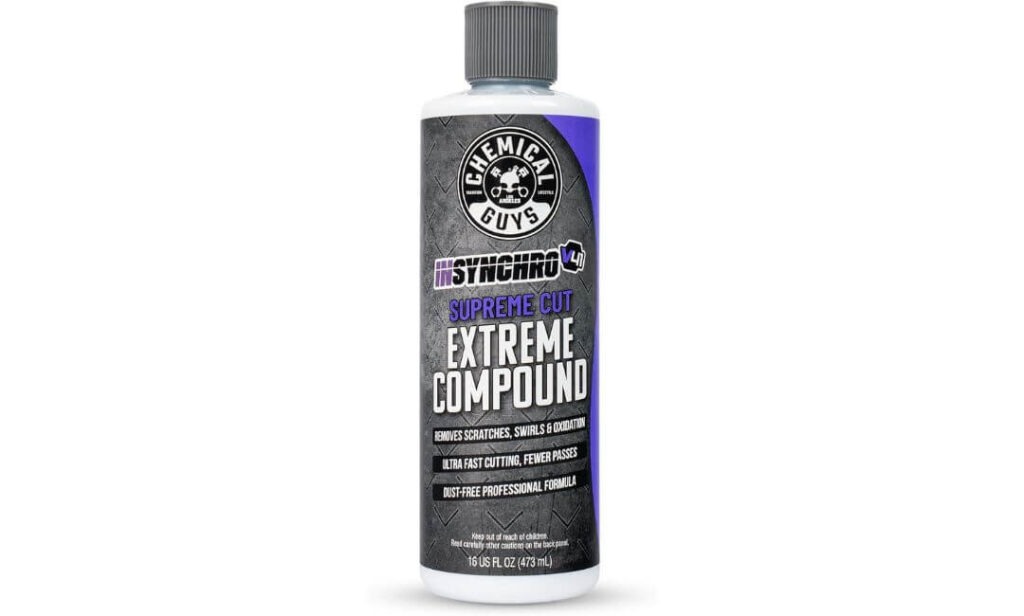
Quick Specs:
- Abrasive Type: Aluminum Oxide Micro Abrasives
- Cut Level: Ultra Heavy Cut (Coarse)
- Paint Compatibility: Clear Coat, Single-Stage Paint, Gel Coat
- Working Style: Extended work time, low dust formula
- Tool Support: Dual Action, Rotary, Long-Throw Polishers
- Weight: 0.51 kg (1.13 lbs)
- Finish Result: High-gloss surface ready for final polishing
Chemical Guys Insynchro Supreme Extreme Compound is built for serious paint correction, not cosmetic touch-ups. Priced around $25, it sits in the affordable professional-grade category, making it accessible for DIY users who want real results without paying shop-level prices. With a strong 4.6 out of 5.0 Amazon rating from over 7,000 buyers, it’s clear this compound isn’t just popular — it actually performs where lighter scratch removers fail.
This compound uses aluminum oxide micro abrasives that cut aggressively but stay controlled during polishing. That means it removes deep scratches, sanding marks, and heavy oxidation faster while keeping surface finish predictable. Unlike cheap heavy compounds that haze the paint badly, this one leaves a noticeably cleaner surface that already looks sharper before moving to the finishing polish step.
Another major advantage is its long working time. You’re not fighting against fast drying or excessive dust. It spreads evenly, stays workable longer, and wipes off clean, which makes it easier to inspect your correction progress. For darker paint colors and neglected finishes, this matters a lot because it reduces rework and uneven correction spots.
Why We Like It
- Delivers true correction on deep scratches and heavy paint defects
- Strong performance at a reasonable price point
- Long working cycle with low dust output
- Safe for multiple paint types including older finishes
- Leaves a clearer finish compared to most ultra-heavy compounds
Our Experience With This Compound
On heavily scratched panels and oxidized clearcoat, this compound removes visible defects quickly when paired with a cutting pad on a dual-action polisher. Door scratches, trunk scuffs, and faded hood sections showed noticeable improvement after one proper slow pass. The correction feels controlled rather than aggressive chaos, which is important when working on modern clearcoat.
What stood out most was how easy it was to work with for such a strong compound. It doesn’t flash dry, residue wipes off clean, and the surface already looks glossy enough to clearly see what defects remain. If your car needs real correction before polishing and protection, this compound delivers the kind of results that justify its reputation.
#2. Meguiar’s ScratchX Paint Scratch Remover Bundle
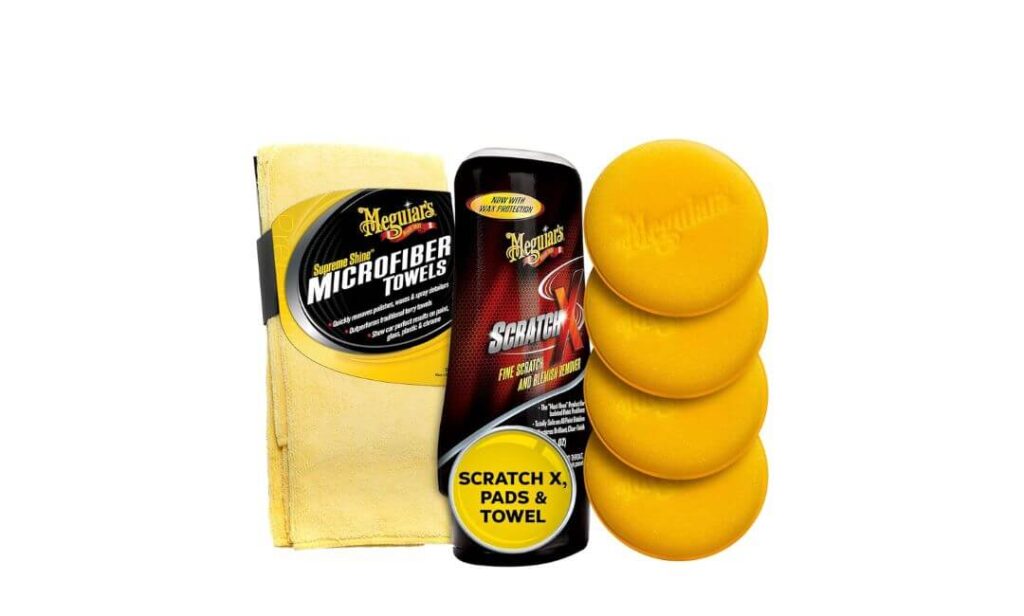
Quick Specs:
- Formula Type: Micro-abrasive correction with polymer wax protection
- Best Use Case: Light to moderate scratches, scuffs, swirl marks
- Paint Safety: Clear coat safe (not for matte or satin finishes)
- Application Method: Hand use or dual-action polisher
- Kit Contents: Scratch remover, 4 foam applicator pads, 3 microfiber towels
- Package Size: 7-piece bundle
Meguiar’s ScratchX Bundle is aimed at car owners who want visible scratch improvement without stepping into heavy compound territory. At around $31, it costs more than basic scratch removers, but the value comes from the complete kit and Meguiar’s long-standing reputation in paint care. With a solid 4.2 out of 5.0 rating from over 9,000 verified buyers, this product has proven itself as a dependable option for everyday paint correction jobs.
The updated formula uses micro-abrasive technology that cuts lightly while restoring clarity and gloss at the same time. Unlike aggressive compounds that require machine polishing experience, ScratchX is designed to be forgiving. You can work it by hand with the included applicator pads, making it ideal for driveway users who want controlled correction without risking paint damage.
While this isn’t a heavy-cut compound, it still plays a role in deep scratch repair when used correctly. Multiple controlled applications can reduce the visibility of deeper scratches by smoothing the edges and blending damaged areas into surrounding paint. It won’t replace professional correction for severe gouges, but it’s effective at making noticeable defects far less obvious.
Why We Like It
- Easy to use even for first-time DIY car owners
- Safe on modern clearcoat with low risk of hazing
- Includes pads and towels so no extra tools are needed
- Improves gloss while correcting surface defects
- Reliable brand backing with consistent performance
Our Experience With This Bundle
In real use, ScratchX performs best on door scuffs, parking lot scratches, and swirl-heavy panels. Light scratches often improve after one or two passes. For deeper marks, it takes patience. Applying thin layers and working the product slowly makes a clear difference, especially on lighter paint colors.
What stands out is how safe and predictable it feels. There’s no aggressive bite that can ruin paint if you make a small mistake. The finish quality after wipe-off looks clean, glossy, and protected thanks to the built-in polymer wax. For users who want scratch improvement without learning machine polishing techniques, this kit offers practical results with minimal risk.
#3. Menzerna Deep Scratch Remover Kit (Heavy Cut 1000 + 6-Inch Polishing Pad)
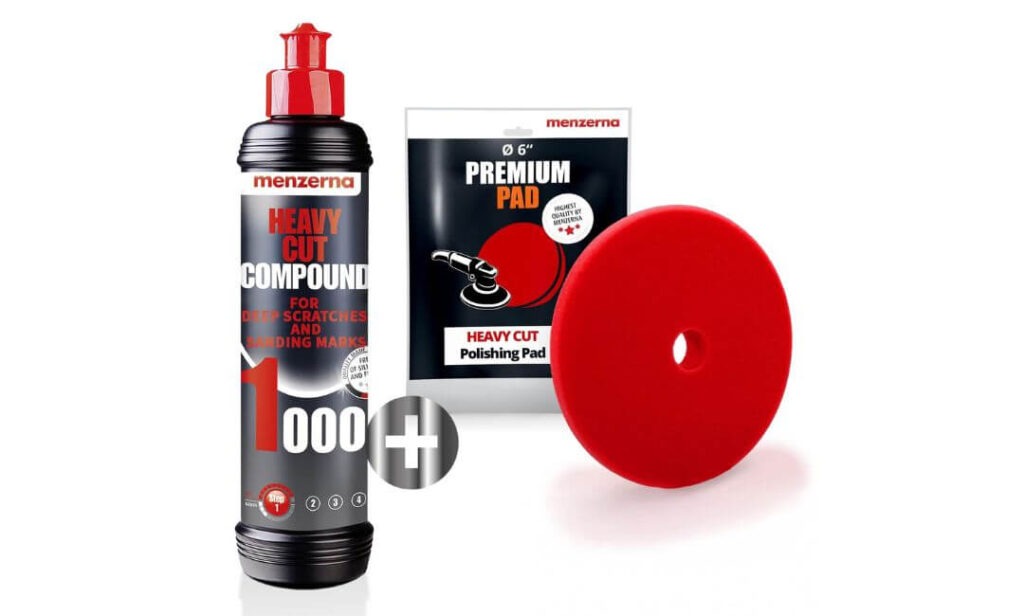
Quick Specs:
- Abrasive Type: Aluminum Oxide
- Grit Level: 1000 (Heavy Cut / Coarse)
- Compound Volume: 16 oz
- Included Pad: 6-inch Red Heavy Cut Foam Pad (Velcro backing)
- Application Method: Hand, Orbital Polisher, Rotary Polisher
- Compatible Surfaces: Clear coat, painted panels, metal, glass
- Product Dimensions: 11.81 x 9.84 x 2.76 inches
Menzerna Heavy Cut 1000 is not a consumer-grade scratch remover — it’s a professional correction compound that’s commonly used in detailing shops. At around $37, this kit delivers serious cutting power along with the correct heavy-duty foam pad, so you’re not guessing about compatibility or performance. It’s built for people who want real correction on deep scratches, not temporary cosmetic improvement.
The 1000-grit aluminum oxide formula cuts aggressively and levels damaged clearcoat quickly. This makes it especially effective on deeper marks, oxidation, sanding scratches, and worn paint surfaces. When paired with the included red heavy-cut pad, the compound bites into defects fast, which reduces the number of passes needed to see improvement.
What makes this kit stand out is its balance between cutting strength and finish quality. While it’s designed for heavy correction, it still leaves behind a surface that can be easily refined with a finishing polish. Many users report near-complete scratch removal in short working sessions, especially when using an orbital or rotary machine. For hand application, it still performs well but takes more time and pressure.
Why We Like It
- Professional-grade compound trusted by detailers
- Strong cutting ability for deep and stubborn scratches
- Includes correct heavy-duty pad for optimal results
- Works with both machine and hand application
- Produces high clarity after follow-up polishing
Our Experience With This Kit
In real correction work, this compound shines on deep door scratches, faded hoods, and panels with visible paint defects. With a dual-action polisher and the included red pad, scratch reduction is noticeable within minutes. The compound spreads evenly and maintains consistent cutting performance throughout the polishing cycle.
One thing to expect is dust during heavy correction passes. This is normal for aggressive compounds and easy to manage with proper cleanup. After wiping down and following with a finishing polish, the surface looks significantly smoother and more reflective. If you’re serious about fixing deep scratches at home and want results close to professional correction, this kit delivers the kind of performance that justifies its reputation.
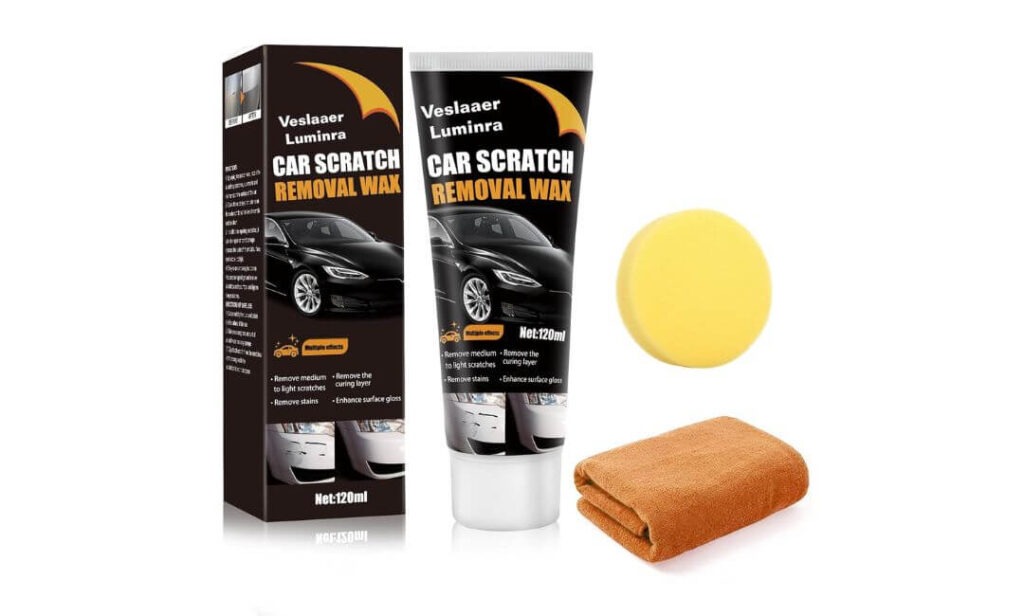
#4. Veslaaer Luminra 2026 Upgraded Car Scratch Remover Kit
Quick Specs:
- Formula Type: Non-abrasive scratch repair wax compound
- Application Method: Hand application (microfiber cloth)
- Paint Compatibility: All paint colors and clear coat finishes
- Water Resistance: Yes (wash-safe formula)
- Best Use Case: Light to moderate scratches, scuffs, surface marks
- Kit Size: Single-bottle DIY repair solution
Veslaaer Luminra 2026 is designed for car owners who want quick scratch improvement without machines, pads, or professional tools. This is a hand-applied repair product that focuses on convenience and everyday usability. It’s marketed as a deep scratch remover, but in real-world use, it performs best on surface-level damage such as shopping cart scuffs, branch marks, parking lot scratches, and light paint abrasions.
What makes this kit appealing is how simple the process is. You apply the product with a microfiber towel, work it into the damaged area, and buff it off. There’s no learning curve and no risk of over-cutting your paint. For people who want fast cosmetic improvement rather than full paint correction, this approach makes sense.
The formula is water-resistant and safe on clear coat, which helps maintain results after washing or exposure to rain. It also works across all paint colors, including black and metallic finishes. While it won’t remove deep gouges that cut through clear coat, it blends lighter defects well and improves overall surface smoothness and gloss.
Why We Like It
- Extremely easy to use with no special tools required
- Safe for clear coat and daily maintenance use
- Delivers quick cosmetic improvement
- Works across all paint colors and finishes
- Good option for budget-friendly scratch repair
Our Experience With This Kit
In everyday use, Veslaaer Luminra works best on fresh scuffs and shallow scratches. Parking lot marks and light branch scratches often fade noticeably after a few passes. The surface feels smoother and looks more uniform, especially on lighter paint colors.
For deeper scratches that catch a fingernail, results are more limited. The product can reduce visibility by filling and blending the damaged area, but it won’t fully level deep paint damage. Still, as a fast DIY solution for improving appearance before resale or routine maintenance, it performs reliably and saves time compared to more aggressive correction methods.
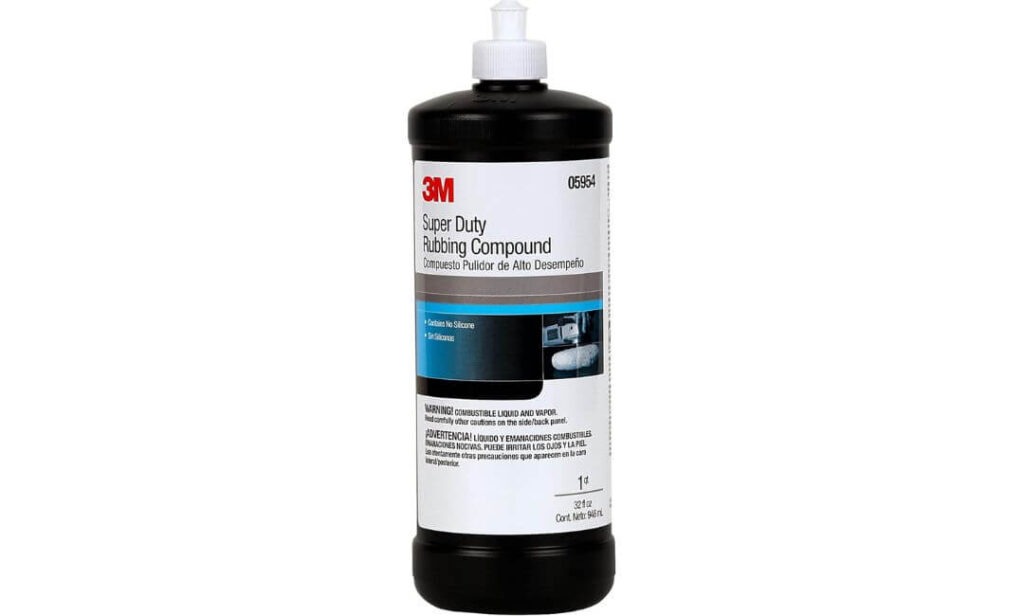
#5. 3M Super Duty Rubbing Compound (05954 – 1 Quart)
Quick Specs:
- Abrasive Type: Aluminum Oxide
- Grit Level: Fine (Approx. P1000 Cut Range)
- Formula Type: High-cut compound with no waxes or silicones
- Application Method: Hand or machine polishing
- Container Size: 32 fl oz (946 mL)
- Working Style: Long wet time, high material removal rate
- Paint Compatibility: Automotive paint, marine surfaces, gelcoat
3M Super Duty Rubbing Compound is built for serious correction work, not casual detailing. Priced around $33, this is the type of compound commonly found in body shops and professional paint correction setups. It’s designed to remove P1000-grit sanding marks, deep scratches, and heavy oxidation — the kind of defects that lighter consumer products simply can’t handle.
What sets this compound apart is its cutting efficiency. Even though it’s classified as “fine grit,” the actual correction strength is aggressive enough to level deep paint defects quickly. The formula stays wet longer, which allows consistent cutting without drying out mid-pass. This makes it easier to control the correction process and reduces the risk of uneven results.
Another major advantage is the clean formulation. There are no waxes or silicones mixed in, which means you’re seeing true correction — not temporary filling or shine tricks. After using this compound, the surface is ready for proper refinement with a finishing polish and protection layer. That’s why it’s trusted in professional environments where accuracy matters.
Why We Like It
- Extremely effective on deep scratches and sanding marks
- Professional-grade correction performance
- Long working time improves control and consistency
- No fillers or waxes hiding defects
- Large 1-quart bottle offers excellent value
Our Experience With This Compound
In real correction work, this compound excels on heavily oxidized paint and deep surface scratches. When used with a cutting pad on a dual-action or rotary polisher, it removes stubborn defects fast. On weathered paint, it restores clarity and smoothness in fewer passes compared to lighter compounds.
One important thing to note is that this is not a one-step product. After correction, the surface will need a finishing polish and protective layer to bring back full gloss. However, if your car has serious paint damage and you want true correction rather than cosmetic improvement, this compound delivers the kind of results professionals rely on.
Quick Comparison: Best Car Scratch Removers for Deep Scratches
| Product | Best For | Scratch Level | Application Type | Cut Strength | Price Range |
|---|---|---|---|---|---|
| Chemical Guys Insynchro Supreme | Overall deep paint correction | Deep scratches, oxidation, sanding marks | Machine polishing | Ultra Heavy Cut | Around $25 |
| Menzerna Heavy Cut 1000 Kit | Professional-grade correction | Deep scratches and paint defects | Hand or machine | Heavy Cut (1000 grit) | Around $37 |
| Meguiar’s ScratchX Bundle | DIY users & beginners | Light to moderate scratches | Hand application | Medium Cut | Around $31 |
| Veslaaer Luminra 2026 Kit | Quick cosmetic fixes | Surface scratches & scuffs | Hand application | Low Cut (Non-abrasive) | Budget friendly |
| 3M Super Duty Rubbing Compound | Severe paint damage repair | Deep scratches & heavy oxidation | Hand or machine | High Cut (Body shop grade) | Around $33 |
How to Choose the Right Deep Scratch Remover for Your Car (What Actually Matters)
Not all “deep scratch removers” work the same way. Some remove material, some blend damage, and some simply mask defects. Picking the wrong type wastes time and money. Here’s what actually separates effective products from disappointing ones.
1. Match the Cut Level to the Damage — Not the Marketing
If your scratch catches a fingernail lightly, you need a heavy-cut compound, not a polish or wax-based remover. Products with aluminum oxide abrasives and coarse or heavy-cut ratings physically level the damaged clear coat. Lighter formulas only improve surface haze. Overestimating or underestimating cut strength is the most common mistake DIY users make.
2. Pay Attention to Working Time and Dust Control
High-quality compounds stay wet longer during polishing. This matters more than most people realize. Longer working time means consistent correction and less chance of uneven patching. Cheap aggressive compounds dry fast, dust heavily, and make the job harder while delivering worse results.
3. Machine Compatibility Makes a Real Difference
Deep scratches require even pressure and consistent motion. If a product is designed for dual-action or rotary polishers, it usually performs more predictably. Hand-only products can improve appearance, but true leveling of deep defects is far more effective with machine polishing support.
4. Avoid Products That Hide Damage Instead of Fixing It
Some scratch removers include fillers, waxes, or silicone-based gloss agents. They make scratches disappear temporarily — until the next wash. Look for compounds that focus on mechanical correction first, then finish with protection afterward. Real correction should still look good after a proper wipe-down.
5. Plan Your Finish Step Before You Start
Heavy correction always needs refinement. If you use a strong compound, expect to follow with a finishing polish to restore clarity and depth. Skipping this step leaves micro-haze even if the scratch itself is gone. Proper sequencing is what separates amateur results from professional-looking finishes.
Types of Car Scratches and What Can Actually Be Fixed
Before using any deep scratch remover, it’s important to understand what kind of damage you’re dealing with. Not every scratch can be “removed” the same way, and knowing the difference saves time, money, and unrealistic expectations.
Clear Coat Scratches (Most Fixable)
These are the most common and the easiest to correct. They look white or hazy and usually fade when water is sprayed on them. Heavy-cut compounds and proper polishing can level these scratches completely in many cases. This is where true paint correction products perform best.
Base Coat Scratches (Partially Repairable)
When the scratch goes past the clear coat into the color layer, full removal becomes difficult. Correction compounds can smooth the edges and blend the damage, making it far less noticeable, but the color loss itself won’t come back. This is where smart blending and finishing polish make a big visual difference.
Primer-Level Scratches (Not Compound Fixable)
If you see gray or metal under the scratch, no compound or scratch remover will truly repair it. These need touch-up paint or professional refinishing. At this stage, scratch removers are useful only for cleaning edges and improving surrounding clarity.
Scuff Marks vs Real Scratches
Many “deep scratches” are actually paint transfer from another object. These often come off easily with proper compound or even mild correction. True scratches cut into the paint and require leveling, not just cleaning.
Why This Matters When Choosing a Scratch Remover
Understanding scratch depth directly affects which product will work. Heavy compounds are meant for clear coat damage and sanding marks. Non-abrasive kits are better for cosmetic improvement and maintenance. Mixing these up leads to poor results and wasted money.
When your product choice matches the actual damage type, correction becomes faster, safer, and far more effective.
How to Apply a Deep Scratch Remover the Right Way (So You Don’t Make It Worse)
Most people mess up scratch removal not because of the product — but because of how they use it. Rushing, overloading compound, and attacking the whole panel at once usually makes scratches look better for five minutes and worse after the first wash. Here’s how experienced detailers actually approach it.
Start With a Clean Surface, Not a “Looks Clean” Surface
Washing alone isn’t enough. Road film and tiny grit hide in the paint even after soap and water. If you rub compound over that, you’re basically sanding dirt into your clear coat. Quick test: run your hand over the area after washing. If it feels rough, clay the spot first. This step alone can make the difference between clean correction and extra damage.
Work the Scratch — Not the Whole Door
Deep scratches don’t need the entire panel attacked. Focus on the damaged zone plus a small blend area around it. Think of it like feathering paint edges instead of repainting the whole wall. This keeps your clear coat thickness balanced and avoids uneven shine patches.
Pressure Is a Dial, Not an On/Off Switch
Here’s the mistake most DIY users make: they push hard from start to finish. Instead, start with firm pressure for the first few passes to let the compound level the defect. Then ease off and let the pad “float” over the paint. This final lighter pass smooths the surface and reduces haze. It’s the same technique professionals use to get clean finishes.
Use the “Fingernail Test” Between Passes
After wiping the area, lightly drag your fingernail across the scratch. If it still catches hard, don’t keep forcing more pressure — do another controlled pass. If it barely catches or feels smooth, stop. Over-correcting thins clear coat for no real visual gain.
Heat Control Is the Hidden Skill
If the panel feels hot to the touch, take a break. Heat softens clear coat and makes it easier to damage. Short passes with cooling breaks work better than nonstop polishing. This is especially important on dark-colored cars.
Pro Garage Tip (Almost Nobody Talks About This)
After correction, wipe the area with a diluted isopropyl alcohol solution before judging results. Many compounds leave oils that temporarily hide defects. This wipe shows the “true” finish. If it still looks good after that, your correction is real — not just surface shine.
Big Mistakes People Make When Using Deep Scratch Removers (And How Pros Avoid Them)
Most bad scratch-removal results don’t come from bad products — they come from rushed decisions and wrong habits. Here’s what actually goes wrong in real-world use.
Mistake #1: Expecting “One Pass Fix” Results
Deep scratches are not toothpaste stains. They don’t disappear instantly. Many users quit after one quick pass and assume the product doesn’t work. In reality, proper correction happens in controlled layers. Experienced detailers always build results gradually instead of trying to force the paint in one aggressive round.
Reality check: If your scratch took years of wear to form, it won’t vanish in 60 seconds.
Mistake #2: Using Too Much Product
More compound doesn’t mean more correction. Overloading the pad actually reduces cutting efficiency and creates messy residue that hides real results. A few pea-sized drops spread evenly work better than flooding the surface.
Pro habit: Less product + slower movement = better correction.
Mistake #3: Ignoring Edge Areas
Door edges, body lines, and sharp curves have thinner clear coat. Many DIY users polish them the same way as flat panels and accidentally burn through paint. Professionals always reduce pressure on edges and use shorter passes.
Rule: Flat surfaces can handle correction. Edges need respect.
Mistake #4: Judging Results Under Bad Lighting
Garage lighting hides defects. Sunlight exposes everything. People often think the scratch is gone — then step outside and get disappointed. Always inspect under direct light or phone flashlight at an angle.
Detailer trick: If it looks good in harsh light, it’s actually fixed.
Mistake #5: Skipping Protection After Correction
After leveling paint, the surface is exposed and vulnerable. Leaving it unprotected invites oxidation and swirl marks to return fast. Correction without sealing is incomplete work.
Proper finish flow: Compound → Polish → Sealant or Wax.
Mistake #6: Trying to Fix Paint That’s Already Gone
If you can see primer or metal, no compound can “bring paint back.” Some users keep polishing hoping it will disappear — all they do is thin surrounding clear coat. At that point, touch-up paint or professional repair is the correct move.
Smart approach: Know when to stop.
Insider Detailer Tip
When you think the scratch is gone, wait 10 minutes and check again. Some compounds temporarily mask defects with oils. If it still looks clean after sitting, the correction is real — not cosmetic.
FAQs About Deep Scratch Removers for Cars
Can deep scratch removers completely remove deep car scratches?
Deep scratch removers can fully remove scratches that are limited to the clear coat layer. If the scratch has reached the color paint or primer, most products will reduce visibility instead of fully erasing it. The goal in those cases is blending and smoothing the damaged area so it’s less noticeable. True removal depends on how much paint material is still available to level.
How do I know if a scratch is too deep to fix at home?
Run your fingernail lightly across the scratch. If it catches sharply or you can see gray primer or bare metal, the scratch is beyond compound-only repair. These types of damage usually require touch-up paint or professional refinishing. Clear coat scratches that feel shallow are the best candidates for DIY correction.
Is machine polishing necessary for deep scratch removal?
Machine polishing is not mandatory, but it produces faster and more consistent results. Hand application works for smaller scratches and blending work, but deeper defects benefit from the even pressure and controlled motion of a dual-action polisher. For larger damaged areas, machine correction saves time and reduces uneven results.
Will deep scratch removers damage my clear coat?
When used correctly, quality compounds are safe on modern clear coats. Damage usually happens from over-polishing, excessive pressure, or repeated aggressive passes on the same spot. Using controlled pressure, working in small sections, and stopping once improvement is achieved keeps clear coat thickness safe.
How long do scratch remover results actually last?
If the scratch is truly corrected by leveling the paint, the result is permanent. If the product relies on fillers or oils, the improvement may fade after washing. Applying a sealant or wax after correction helps protect the surface and keeps the finish looking clean for months.
Final Verdict: Which Deep Scratch Remover Should You Choose?
There’s no single “magic” product that fixes every scratch — the right choice depends on how deep the damage actually is and how much correction you’re willing to do. If your car has serious clear coat damage and visible scratches, heavy-cut compounds deliver the best results. For moderate defects and safer DIY correction, controlled scratch removers offer cleaner blending without risk. Quick-fix kits make sense for surface scuffs and cosmetic improvement, especially for daily drivers.
What matters most is realistic expectations and proper technique. Deep scratch removal isn’t about hiding damage — it’s about controlled paint leveling and smart finishing. When done right, even heavily scratched panels can look dramatically better without stepping into expensive body shop repairs.
If your goal is to restore appearance, protect resale value, and keep your paint looking clean and uniform, investing in the right scratch remover — and using it correctly — is one of the smartest upgrades you can make for your car.