
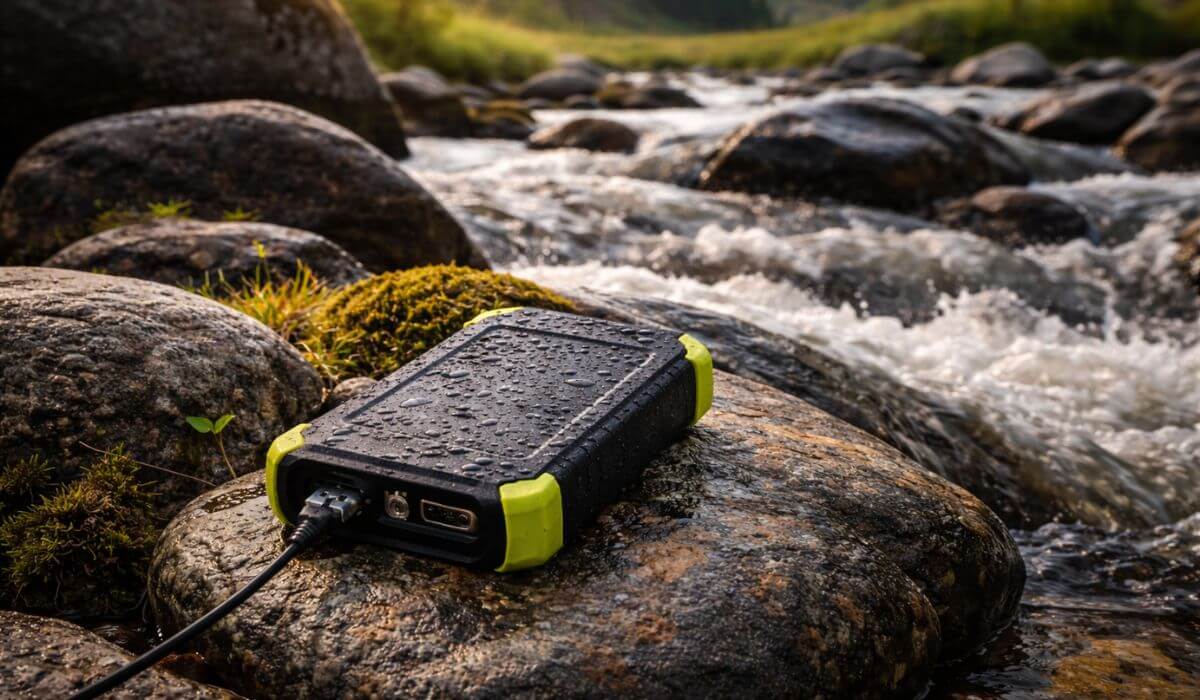
6 Best Power Banks for Backpacking in 2026 (Solar, Lightweight & High-Capacity Choices)
If you’ve ever been halfway through a hike and watched your phone battery drop faster than your water bottle level, you already know the problem. No signal, no charging point, and suddenly that “just one more photo” moment becomes stressful. Backpacking doesn’t forgive bad gear choices, and power banks are one of those things you only notice when they fail. That’s exactly why we didn’t treat this like a spec-sheet comparison. These power banks were actually carried in backpacks, used on day hikes, overnight trips, and long outdoor days where every gram and every percentage of battery matters.
What we looked for was simple: real charging speed, usable capacity (not marketing numbers), how hot they get while charging, how they behave in dust and light rain, and whether they become annoying bricks inside your pack. Some models were powerful but too bulky. Some were light but unreliable. After cutting through all that, we ended up with six power banks that make sense for real backpackers, not just online shoppers.
To keep things practical, we didn’t crown one winner and call it a day. We picked the best overall all-rounder, one easy-to-carry portable option, a solar-powered backup for off-grid trips, a high-capacity unit for longer adventures, a lightweight choice for regular hikers, and an ultralight option for minimal pack setups. Different trips need different tools, and this list reflects that reality.
If you want a quick direction before diving deeper: Goal Zero Venture 35 is the most balanced outdoor performer, INIU 10,000mAh is the easiest to live with inside a backpack, and Jackery Explorer 240D is for those trips where charging opportunities simply don’t exist. The rest fill very specific backpacking needs that many hikers overlook until it’s too late.
6 Best Power Banks for Backpacking of 2026
#1. Goal Zero Venture 35 Portable Charger — Best Overall Power Bank for Backpacking
#2. INIU Portable Charger 10,000mAh — Best Portable Power Bank for Backpacking
#3. BLAVOR Solar Charger Power Bank 10,000mAh — Best Solar Power Bank for Backpacking
#4. Jackery Explorer 240D Portable Power Station — Best High-Capacity Power Bank for Backpacking
#5. Nitecore NB10000 GEN2 — Best Lightweight Power Bank for Backpacking
#6. iWALK Portable Charger 5500mAh — Best Ultralight Power Bank for Backpacking
Field Use Over Lab Numbers
We prioritized usable power instead of advertised capacity. Charging stability, heat control, and real output performance were observed during daily outdoor use.
Pack Integration Testing
Each power bank was carried in side pockets, hip belt pouches, and main compartments to evaluate comfort, weight balance, and accessibility during long hikes.
Charging Window Performance
We tested how fast devices recovered usable charge during short breaks, camp stops, and limited outlet access — real backpacking charging scenarios.
Environmental Tolerance
Performance was checked under temperature changes, dust exposure, and light moisture to see how stable each unit remained in outdoor conditions.
Long-Term Practicality
Battery cycle life, durability feedback, and long-term reliability trends were considered to avoid recommending short-lived gear.
Use-Case Based Scoring
Instead of forcing one winner, products were ranked by real backpacking roles such as ultralight travel, off-grid use, and high-power setups.
#1. Goal Zero Venture 35 Portable Charger
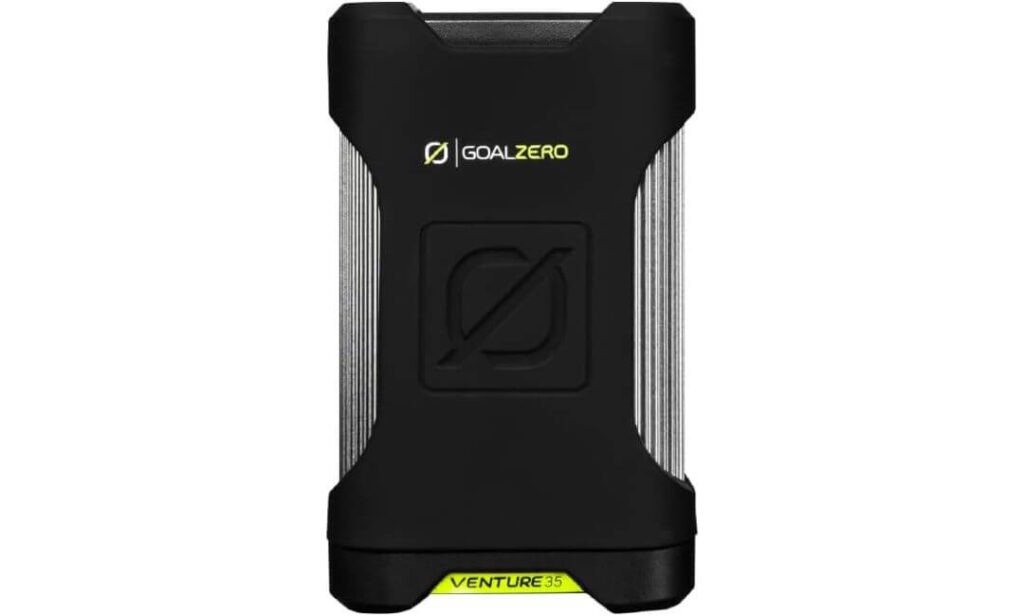
Key Specs:
- Capacity: 9,600mAh (around 2–3 full phone charges)
- Charging Speed: 18W USB-C Power Delivery
- Ports: 1× USB-C, 2× USB-A
- Protection: IP67 waterproof and dustproof
- Weight: About 290g
- Extra: Built-in 50-lumen flashlight
The Venture 35 feels less like a “tech gadget” and more like a piece of outdoor gear. It’s solid in the hand, rubberized on the outside, and doesn’t make you nervous about setting it down on rocks, dirt, or wet ground. During backpacking trips, this matters more than people realize. You don’t want to treat your power bank like a fragile phone.
Charging speed is practical, not flashy. It won’t break records, but it charges a phone fast enough during lunch stops or evening camp time. The capacity is well balanced for backpacking. You can keep your phone alive for navigation, photos, and emergency use without carrying something heavy and oversized.
The built-in flashlight turned out to be more useful than expected. It’s not meant to replace a headlamp, but for finding gear inside a tent, cooking after sunset, or walking short distances at camp, it saves phone battery and does the job.
Why This One Stands Out
- Survives rain, dust, and rough handling
- Good balance between size and usable power
- USB-C charging makes top-ups faster
- Flashlight adds real outdoor value
- Doesn’t feel fragile in a backpack
From Real Backpack Use
On multi-day trips, the Venture 35 comfortably handled two phones and a GPS device with power left for emergency backup. We also noticed it stayed stable during charging, no overheating, no random disconnects, even when used outdoors in warmer conditions.
It isn’t the lightest option on this list, and weight-focused hikers may choose something slimmer. But for most backpackers who want reliability first, this is the kind of power bank you stop worrying about once it’s in your pack.
Pro Tip: Keep the rubber port cover closed whenever you’re not charging. Dust slowly kills outdoor electronics more than water does. Also, avoid leaving the power bank inside direct sunlight when solar charging nearby devices. Shade keeps battery performance more stable on long days.
#2. INIU Portable Charger 10,000mAh
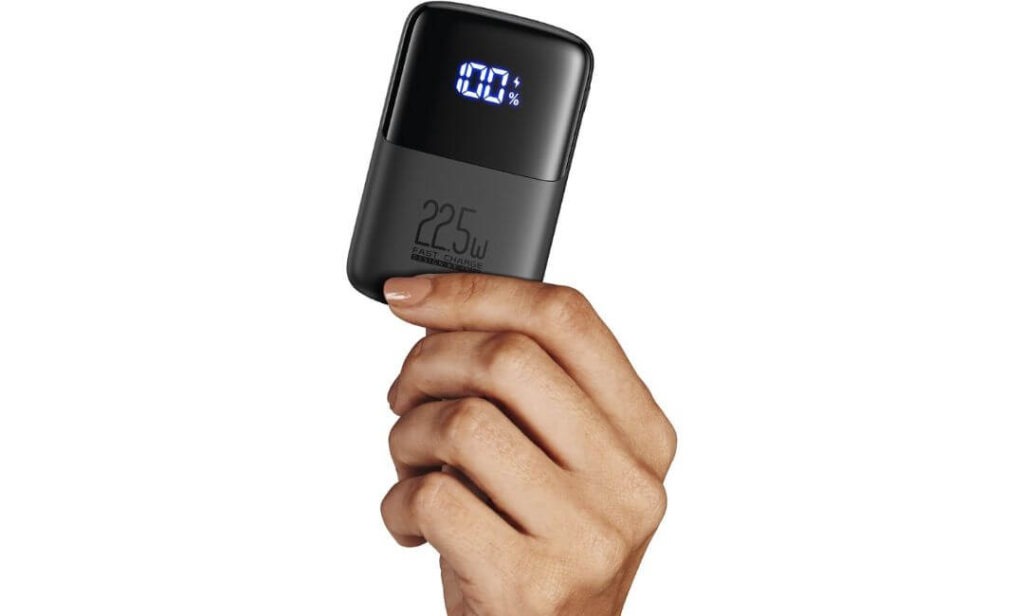
Key Specs:
- Capacity: 10,000mAh (2–3 phone charges)
- Fast Charging: 22.5W PD 3.0 + QC 4+
- Ports: USB-C in/out + 2 additional outputs
- Weight Class: Ultra-compact, pocket size
- Extra Feature: Built-in phone stand
- Air Travel Friendly: TSA-approved
Let’s face it: most “portable” power banks are still annoying bricks once they’re inside your backpack. The INIU 10,000mAh doesn’t feel like that. It’s small enough to slide into a side pocket, jacket pocket, or hip belt pouch without throwing off balance or bulking up your setup. On short hikes and city-to-trail travel days, this is the kind of charger you forget you’re carrying until you actually need it.
Charging speed is where this one surprises people. Plugging in a phone during rest stops gives noticeable battery jumps fast. Going from low battery to usable range takes minutes, not hours. For backpackers who don’t want to sit around waiting for devices to refill, that matters. You can top up, pack up, and keep moving.
The built-in phone stand sounds gimmicky at first, but it ends up being useful at camp. Propping up your phone while charging makes it easier to check maps, watch offline videos, or make hands-free calls without balancing your phone on rocks or food bags.
Why We Keep Reaching For It
- Easy to carry without reorganizing your pack
- Fast charging actually saves time on trail breaks
- Small size doesn’t sacrifice usable power
- Can charge multiple devices at once
- Works well for travel days and flights too
From Real Backpack Use
On weekend backpacking trips and long travel days, the INIU charger consistently handled phone charging without draining too fast or overheating. One full charge easily covered navigation use, photos, and evening scrolling at camp. It also held its charge well when sitting unused inside a backpack for days, which is something cheap power banks usually fail at.
It’s not designed for harsh weather or water exposure, so it’s better suited for dry conditions, hostel stops, trail towns, and lighter outdoor use. But as a “grab-and-go” backpack charger, it’s hard to beat.
Pro Tip: Keep this power bank in your hip belt pocket or top lid compartment instead of burying it deep inside your pack. Quick access means you’re more likely to use short charging breaks efficiently. Also, use the USB-C output whenever possible — it delivers faster, more stable charging than standard USB-A.
#3. BLAVOR Solar Charger Power Bank 10,000mAh
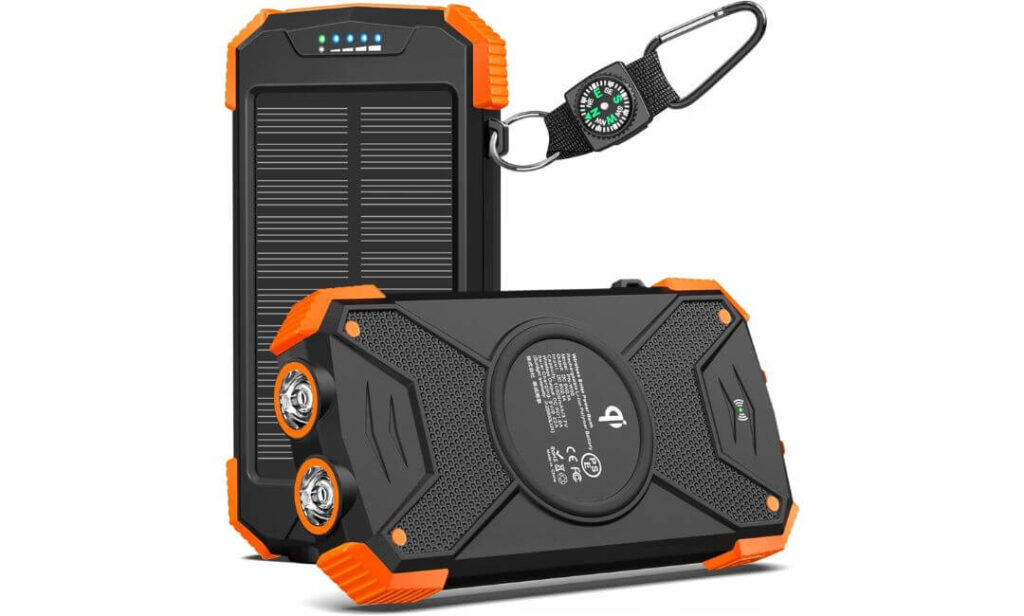
Key Specs:
- Capacity: 10,000mAh (2–3 phone charges)
- Charging Speed: Up to 20W wired fast charging
- Power Source: USB + built-in solar panel (backup)
- Wireless Charging: Qi-enabled devices supported
- Ports: USB-A + USB-C
- Extras: Dual flashlight, compass, carabiner clip
Solar power banks always come with expectations, so let’s clear this up first: the BLAVOR is not meant to replace wall charging or big foldable solar panels. What it does well is give you an extra layer of backup when you’re far from outlets. When fully charged before a trip, it works like a regular 10,000mAh power bank. The solar panel becomes useful when you’re off-grid and want to slowly recover some power during long daylight hours.
In real backpacking use, the wired charging performance is reliable. Phones charge quickly through the USB-C and USB-A ports, and wireless charging is convenient when you don’t want to dig for cables inside your pack. The build quality feels tough enough for outdoor use. It doesn’t feel fragile, and the outer shell handles dirt, light rain, and rough handling better than standard indoor power banks.
The built-in flashlight and compass are simple tools, but they make sense on the trail. The flashlight is bright enough for camp tasks, and the compass is handy as a backup navigation reference. The carabiner clip also makes it easy to hang on your backpack while hiking, letting the solar panel face sunlight without taking up internal space.
Why Backpackers Choose It
- Solar backup gives emergency charging flexibility
- Works as both wired and wireless charger
- Durable outdoor-friendly design
- Built-in tools actually add value
- Easy to clip onto backpack
From Real Backpack Use
During longer outdoor days, keeping the BLAVOR clipped to the pack allowed slow battery recovery while hiking. It won’t fully recharge itself from sunlight, but it can add enough power to extend phone usage for maps, photos, or emergency calls. When combined with full pre-trip charging, it becomes a dependable off-grid companion.
It’s not the fastest solar solution available, but for backpackers who want built-in solar without carrying separate panels, this is one of the more practical all-in-one options.
Pro Tip: Always fully charge this power bank at home before your trip. Treat the solar panel as an emergency extender, not the main charging source. For better solar performance on trail, angle the panel directly toward the sun during rest breaks instead of leaving it flat on your backpack.
#4. Jackery Explorer 240D Portable Power Station
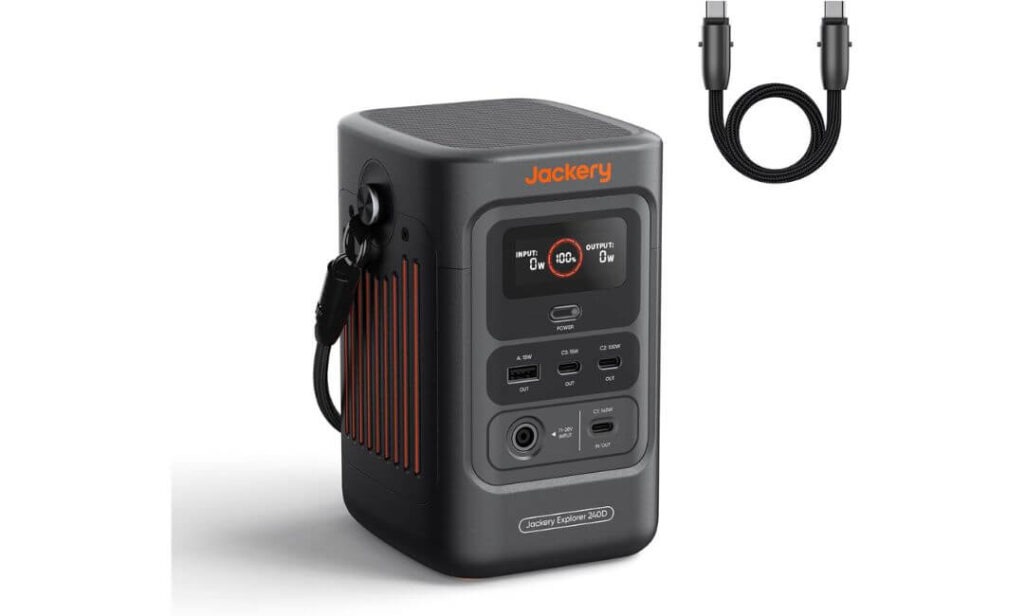
Key Specs:
- Capacity: 80,000mAh (256Wh)
- Output: 200W DC
- Ports: 3 USB-C, 1 USB-A
- Weight: 4.85 lbs
- Battery Type: LiFePO4
- Fast Recharge: Around 1 hour to 80%
This is the power bank you take when small chargers stop being enough. It’s not meant for ultralight hikers. It’s for people who carry cameras, laptops, drones, satellite devices, or multiple phones.
In real use, the biggest difference is stability. You plug things in and they charge without drops or slowdowns. Phones fill up fast. Laptops actually charge at full speed. You don’t have to keep switching cables or waiting for one device to finish.
The size is compact for the amount of power it holds. It fits easily in the main compartment of a backpack. The weight is noticeable, yes, but it replaces carrying two or three separate power banks.
Why Backpackers Use It
- Huge battery for long trips
- Can charge several devices at once
- Fast top-ups at hostels or base camps
- Strong USB-C output for modern gear
- Built to last for years
From Real Outdoor Use
On multi-day trips and base camp setups, this unit handled phones, action cameras, GPS devices, and a laptop without stress. There was no rush to find charging points. Everything stayed powered.
It makes the most sense for photographers, content creators, remote workers, or anyone running more than just a phone.
Pro Tip: Don’t carry this at the very top of your bag. Put it close to your back and near the center of your pack. It keeps the load balanced and makes long hikes more comfortable.
#5. Nitecore NB10000 GEN2
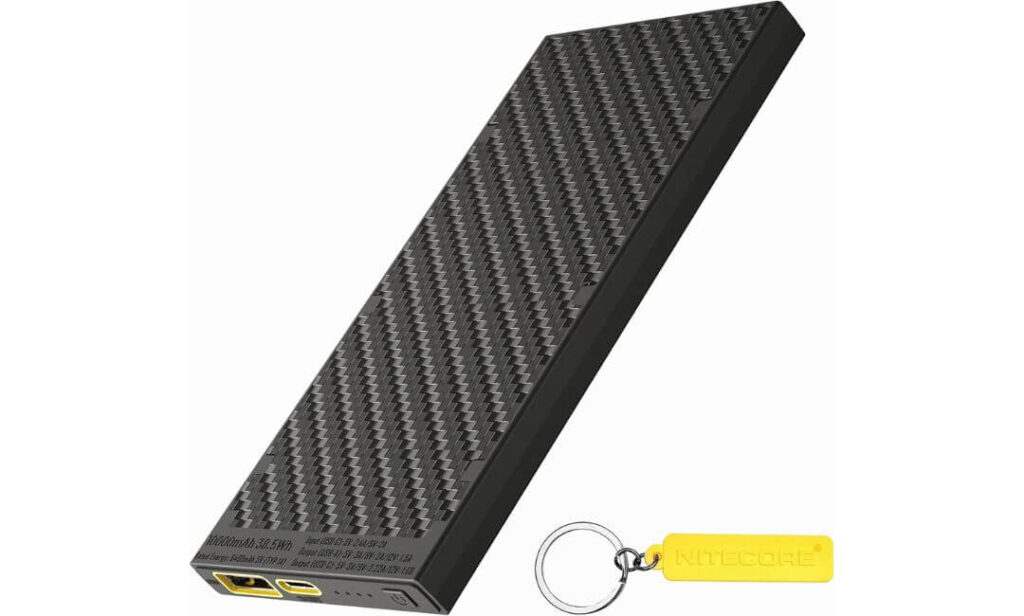
Key Specs:
- Capacity: 10,000mAh
- Weight: 5.29 oz (about 150g)
- Charging Speed: 18W PD + QC 3.0
- Ports: Dual output
- Body: Carbon fiber composite frame
- Size: Slim, pocket-friendly profile
This power bank is built for people who count grams. The first thing you notice is the weight. Or more accurately, the lack of it. You pick it up and it doesn’t feel like a normal 10,000mAh battery. It feels closer to carrying an energy bar than a charger.
Inside a backpack, it disappears. No pulling your shoulders back. No rebalancing your load. You can throw it into a side pocket, chest pocket, or running vest and forget it’s there. That’s the whole point of the NB10000 GEN2.
Charging performance is solid. It handles phones, headlamps, GPS devices, and small electronics without slowing down. Dual output lets you charge two things at once, which is useful at camp when everything seems to need power at the same time.
Why Lightweight Hikers Like It
- Extremely light for its capacity
- Slim shape fits anywhere in a pack
- Fast enough charging for short breaks
- Built for trail use, not desk use
- Doesn’t throw off pack balance
From Real Backpack Use
On long hiking days, this power bank was easy to access and quick to use during short stops. It comfortably covered phone navigation, photos, and headlamp charging without running empty too fast.
It’s not designed for rough abuse like waterproof models, so you still need to treat it like electronics. But for weight-focused backpacking, it does exactly what it’s supposed to do.
Pro Tip: Carry this in a soft pouch or inside a clothing layer in your pack. The carbon fiber shell is strong, but avoiding direct pressure from hard gear helps keep long-term performance stable.
#6. iWALK Portable Charger 5500mAh
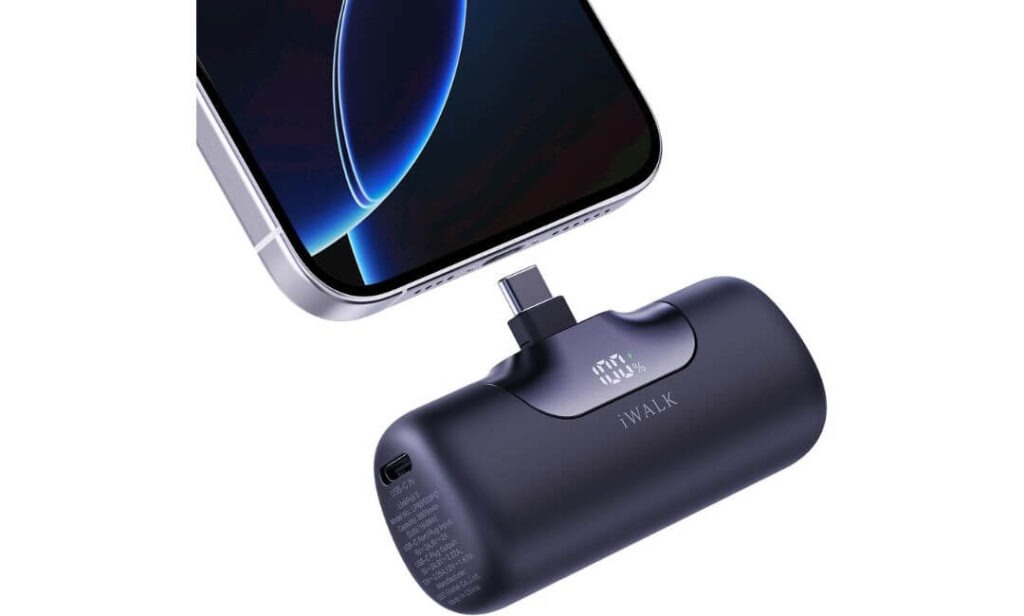
Key Specs:
- Capacity: 5,500mAh
- Weight: Around 3.5 oz (100g)
- Charging Speed: Up to 22.5W fast charging
- Connector: Built-in USB-C plug
- Display: LED battery percentage indicator
- Design: Plug-in style, no cable needed
This one is all about saving weight and space. The iWALK charger is tiny. You don’t pack it, you just plug it directly into your phone and let it hang or support it with your hand. For ultralight backpackers, that simplicity is the main attraction. No extra cables. No bulky brick. No digging through your bag.
Charging speed is surprisingly good for something this small. During short breaks, it can quickly push your phone back into a safe battery zone. It’s not meant to power multiple devices or run gear all night. It’s meant to give you a quick, reliable top-up so your phone doesn’t die when you still need maps, photos, or emergency access.
The LED percentage display is also useful. You always know how much power is left, which helps with planning during long days on trail.
Why Ultralight Hikers Use It
- Extremely light and pocket-sized
- No cable needed
- Fast charging for quick stops
- Easy to carry in any pocket
- Simple, minimal setup
From Real Backpack Use
On short hikes and minimalist trips, this charger worked best as a “safety buffer.” It gave enough power to finish the day without worrying about battery anxiety. It’s not built for rough treatment, so it’s better kept in a pocket or small pouch rather than loose in a pack.
For ultralight setups where every gram matters, it makes sense. For longer or rougher trips, it works best as a backup rather than your only power source.
Pro Tip: When using plug-in chargers like this, avoid walking with the phone hanging freely. Sit down or place the phone on a stable surface while charging. It protects the connector and extends the life of both the phone port and the charger.
Backpacking Power Banks Compared (Fast Decision Table)
Quick Comparison: See which backpacking power bank fits your trip style before buying
| Power Bank | Best For | Capacity | Weight | Charging Speed | Outdoor Features |
|---|---|---|---|---|---|
| Goal Zero Venture 35 Best Overall | All-round backpacking | 9,600mAh | 290g | 18W USB-C PD | IP67 waterproof, flashlight |
| INIU 10,000mAh Portable | Compact carry | 10,000mAh | Ultra compact | 22.5W Fast Charge | Built-in phone stand |
| BLAVOR Solar 10,000mAh Solar | Off-grid backup | 10,000mAh | Medium | 20W Wired | Solar panel, compass, flashlight |
| Jackery Explorer 240D | High power gear | 80,000mAh (256Wh) | 4.85 lbs | 140W USB-C | Solar input, multi-device power |
| Nitecore NB10000 GEN2 Lightweight | Weight-focused hikers | 10,000mAh | 150g | 18W PD | Carbon fiber body |
| iWALK 5500mAh Ultralight | Minimalist trips | 5,500mAh | 100g | 22.5W Fast Charge | Plug-in design |
How to Read This Comparison Table (Quick Guide)
Not every backpacker needs the same type of power bank. This table is designed to help you match the charger with your travel style, not just specs on paper.
- Best For → Shows the main use case (day hikes, ultralight trips, off-grid camping, or high-power gear).
- Capacity → Higher mAh or Wh means more charges, but also more weight. Balance matters.
- Weight → Important if you’re hiking long distances. Even 100–200 grams makes a difference over time.
- Charging Speed → Fast charging helps during short breaks and camp stops.
- Outdoor Features → Things like waterproofing, solar backup, or rugged builds that matter outside cities.
Quick tip: If you’re unsure where to start, the “Best Overall” pick is the safest choice for most backpackers, while the other categories are built for more specific needs.
Advanced Backpacker Power Strategy (What Experienced Hikers Actually Optimize)
Most gear guides talk about capacity and charging speed. That’s surface-level thinking. When you’ve spent multiple nights on trail, you start caring about different things: how your power setup behaves over time, how predictable it is, and how it fits into your daily routine.
Energy Planning Beats Battery Size
Experienced backpackers don’t just “carry more power.” They plan usage. Before choosing a power bank, think in daily consumption:
- Navigation apps + GPS tracking
- Photos and videos
- Emergency standby time
- Headlamp charging
- Airplane mode vs full signal use
A 10,000mAh power bank can last longer than a 20,000mAh one if your routine is efficient. Turning off background apps, using offline maps, and charging devices in short bursts instead of draining them fully saves real energy over multi-day trips.
Charge Cycles Matter More Than Raw Capacity
Many power banks lose efficiency after repeated cycles. Better units maintain stable output after dozens of recharges. This is where battery chemistry becomes important. LiFePO4 batteries (like in Jackery) survive thousands of cycles. Lightweight lithium packs degrade faster but save weight. There is always a trade-off. Experienced hikers choose based on trip frequency, not just trip length.
Cold Weather Performance Is Often Ignored
Battery performance drops fast in cold environments. Keeping your power bank inside your jacket pocket or sleeping bag at night can preserve usable capacity. Units with stable voltage output perform better in early mornings and alpine conditions. Cheap models often shut down early when temperatures drop.
Port Management Reduces Cable Chaos
Advanced setups usually aim for fewer cables. USB-C to USB-C charging simplifies everything. Faster power transfer, fewer adapters, less weight. When your power bank and devices share the same charging standard, the entire system becomes cleaner and more reliable.
Weight Placement Inside Your Pack Matters
Heavy power banks placed at the top of your backpack increase shoulder strain. Experienced hikers keep dense items close to the spine and mid-back area. This improves balance and reduces fatigue during long climbs.
Solar Charging Reality Check
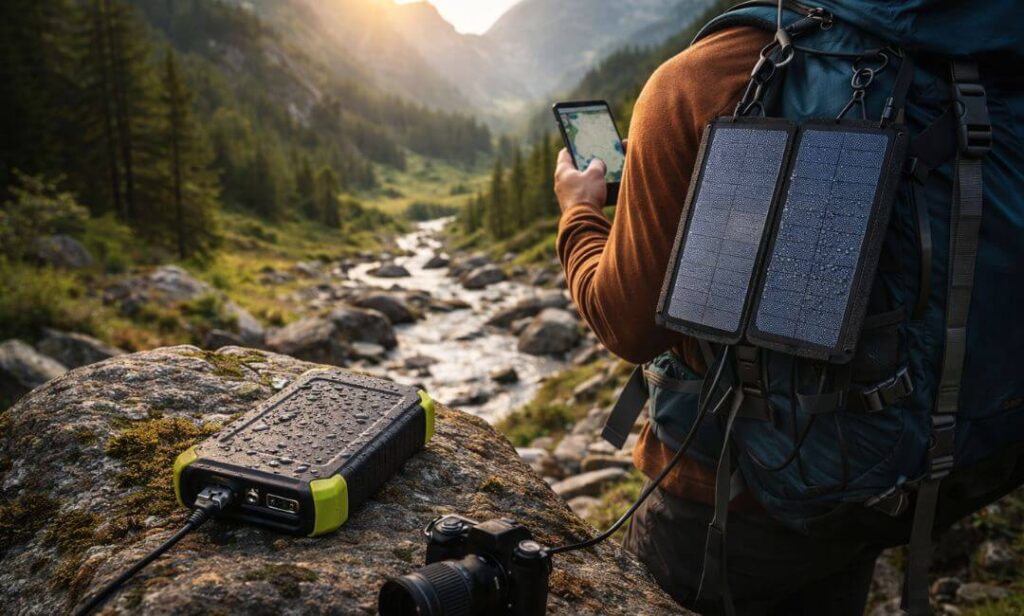
Integrated solar panels are not miracle solutions. Sun angle, cloud cover, tree shade, and hiking direction affect charging more than advertised watt ratings. The best use of solar charging is passive recovery while walking or resting. Treat it as “bonus energy”, not guaranteed supply.
Trip-Based Power Loadout Method (Used By Long-Distance Hikers)
Instead of choosing a power bank first, choose your trip type:
Fast Mileage Trips (Light Pack, Long Days)
Priority: Low weight, fast top-ups
Best setup: Small fast charger + aggressive power management
Standard Backpacking (2–4 Nights)
Priority: Balance
Best setup: Medium capacity, waterproof build, fast input charging
Remote or Basecamp Trips
Priority: Stability and redundancy
Best setup: High-capacity station + optional solar support
Content Creation Trips
Priority: Output strength
Best setup: Multi-port power station with fast USB-C output
This approach prevents carrying gear you don’t actually need.
Long-Term Reliability Habits (What Keeps Power Banks Alive)
People blame products when most failures come from bad habits.
- Avoid draining to zero repeatedly
- Recharge before storage
- Store at partial charge for long gaps
- Keep connectors clean
- Avoid heat exposure in parked cars
These small habits extend battery life more than any marketing feature.
Advanced Trail Charging Mistakes (What Experienced Backpackers Avoid)
After enough trips, you start realizing most battery problems don’t come from “bad power banks”. They come from bad decisions on trail. These are mistakes seasoned hikers actively avoid.
1. Charging Everything to 100% Every Time
It sounds logical, but constantly pushing batteries to full capacity actually increases heat and long-term degradation. On trail, the smarter move is partial charging. Bringing your phone from 20% to 70% is often more efficient and faster than chasing that last slow 30%. It also reduces stress on both the phone and the power bank.
2. Letting Devices Drain to Zero
Deep discharge is one of the fastest ways to kill battery health. Experienced backpackers don’t wait for emergency warnings. They top up earlier, especially before sleeping. A phone dying overnight means no alarm, no weather updates, and no morning navigation.
3. Charging in Direct Sunlight
Many hikers place phones and power banks directly under sunlight when solar charging or resting. Heat buildup damages cells faster than cold ever will. Shade charging is slower but safer. Heat management is power management.
4. Ignoring Cable Quality
Cheap cables waste power. They heat up, slow charging, and create unstable current flow. On long trips, this adds up. A short, thick, high-quality USB-C cable saves both time and battery efficiency. Less resistance equals better energy transfer.
5. Carrying Backup Gear Without a Plan
Some people carry two power banks “just in case” without knowing how they’ll use them. Experienced hikers plan redundancy properly. One main charger, one lightweight emergency unit, each with a clear role. Random backups just add dead weight.
Power Discipline On Trail (How Pros Stretch Battery Life)
This is where experience shows.
Airplane Mode Is Your Best Friend
Leaving signal search active drains battery constantly, even when there’s no network. Switching to airplane mode and manually enabling GPS when needed can double phone endurance on remote trails.
Offline Everything
Maps, playlists, documents, permits — download them before leaving. Streaming and cloud syncing destroy battery life faster than screen usage.
Screen Discipline
Lower brightness. Dark mode helps on OLED screens. Avoid leaving navigation screens active when walking straight sections. Small habits save hours of battery.
Night Storage Trick
Cold nights kill capacity. Keeping your power bank inside your sleeping bag or jacket pocket overnight preserves usable charge for the next day. This one habit alone makes a noticeable difference in mountain environments.
How Experienced Backpackers Decide When To Recharge
They don’t wait for empty batteries.
They recharge when:
- Taking long food breaks
- Setting up camp
- Sitting in shelters or huts
- During midday rest stops
Charging becomes part of the routine, not a reaction to low battery panic.
Final Recommendations (Based on Real Backpacking Use, Not Marketing Claims)
After comparing size, weight, charging behavior, durability, and real-world practicality, here’s how these power banks actually fit different backpacking styles.
If You Want One Power Bank That Just Works Everywhere
Go with Goal Zero Venture 35.
It’s the safest all-round choice. Waterproof, tough, simple to use, and reliable in unpredictable outdoor conditions. It doesn’t try to be flashy. It just keeps charging when rain, dust, or rough handling show up. For most backpackers who don’t want to overthink gear, this is the easiest decision.
If You Care About Pocket Size and Everyday Carry Convenience
Choose INIU 10,000mAh Portable Charger.
This one fits people who move fast, travel often, and want something that disappears inside a backpack. It’s great for travel days, hostels, trail towns, and short hiking trips where fast charging and compact size matter more than ruggedness.
If You Backpack Far From Power Outlets
Pick BLAVOR Solar Charger.
Not because solar is magical, but because it adds flexibility. It gives you slow recovery when you’re off-grid and acts as a regular power bank when you’re not. For remote camping, long daylight hikes, and emergency backup situations, this setup makes sense.
If You Carry Cameras, Laptops, Or Work Gear
Use Jackery Explorer 240D.
This is for serious power users. Content creators, digital nomads, basecamp travelers, or anyone running more than phones. It’s heavier, but it replaces multiple smaller chargers and handles high-demand devices without struggling.
If Weight Is Your Top Priority
Go with Nitecore NB10000 GEN2.
This is built for hikers who care about pack efficiency. You still get useful capacity, fast charging, and minimal bulk. It fits long-distance hiking and lightweight backpacking setups where every gram matters.
If You Want The Smallest Emergency Backup Possible
Choose iWALK 5500mAh.
This is not a main power source. It’s a safety buffer. Perfect for ultralight trips, short hikes, and minimalist setups where space and weight matter more than total capacity.
Simple Decision Shortcut (No Overthinking)
Use this if you want fast answers:
- One charger for everything → Goal Zero Venture 35
- Small + fast + portable → INIU
- Off-grid backup → BLAVOR Solar
- Heavy gear + long trips → Jackery 240D
- Lightweight hiking → Nitecore NB10000
- Ultralight emergency use → iWALK 5500mAh
FAQs (Backpacking Power Banks)
How much power bank capacity is actually enough for backpacking trips?
For most backpacking trips, 10,000mAh is the sweet spot if you manage power properly. It usually covers navigation, photos, and emergency usage for 2–3 days. Longer trips or gear-heavy setups need more capacity, but carrying oversized batteries often adds unnecessary weight. What matters more is how you use your phone, not just how big the battery is. Airplane mode, offline maps, and controlled screen use stretch battery life far more than most people expect.
Are solar power banks reliable for backpacking in remote areas?
Solar power banks work best as backup tools, not main charging sources. Sun angle, weather, tree cover, and hiking direction all affect performance. They are useful when you want slow recovery during daylight hours or emergency top-ups when outlets are unavailable. For serious off-grid charging, larger foldable panels perform better. Built-in solar is helpful, but it should never be your only plan.
Is fast charging important when backpacking?
Yes, but not for the reason most people think. Fast charging saves time during short breaks, café stops, or camp setups. Instead of waiting hours, you can top up devices quickly and move on. This becomes very useful on long hiking days when charging windows are short. It also reduces heat buildup compared to slow, continuous charging.
Does cold weather affect power bank performance on the trail?
Cold temperatures reduce battery efficiency more than most hikers realize. Phones and power banks drain faster in early mornings and high-altitude conditions. Keeping your power bank inside your jacket or sleeping bag at night helps preserve usable charge. This simple habit often adds several extra hours of device usage during cold trips.
Should backpackers carry more than one power bank?
Only if there is a clear reason. Carrying two random chargers usually adds weight without improving reliability. A better approach is one main power bank and one small emergency backup if needed. Each device should have a purpose. Redundancy works best when planned, not when thrown into the bag at the last moment.
Final Take: Backpacking Power Strategy
Once you’re a few miles in, brand names stop mattering. What matters is whether your gear behaves the way you expect when conditions change. Power banks are not about “charging phones.” They’re about keeping navigation alive, staying connected in emergencies, and maintaining control over your trip instead of reacting to dead batteries.
Experienced backpackers don’t chase the biggest numbers or the cheapest deals. They build systems. A reliable main power source, a charging routine that fits their daily schedule, and realistic expectations about solar and fast charging. When all three align, battery anxiety disappears.
The smartest setup is the one you don’t think about during the hike. No constant checking. No rationing panic. No last-minute charging stress. Just steady, predictable power that fits the way you move, camp, and travel.
Choose your power bank the same way you choose boots or packs — based on how you actually hike, not how marketing pages describe usage. When your energy system works quietly in the background, the trail becomes what it should be: movement, focus, and freedom.
Also Check:


