5 Best Value 12000 LB Winches in 2026 (Wireless Remote & Heavy Duty Options)
When a 6,000-pound truck sinks into deep mud or your Jeep is sideways on a rocky trail, a weak winch isn’t just useless — it’s dangerous. That’s exactly why experienced off-roaders, recovery operators, and overland builders prefer stepping up to a 12000 lb electric winch. This capacity sits in the sweet spot: strong enough for full-size trucks, loaded SUVs, and trailers, without jumping into industrial crane-level pricing.
But here’s the problem — not every “12,000 lb” label on the box actually performs like one in real-world recovery situations. Some struggle under sustained load, some overheat fast, and others fail the moment water and dust get involved. That’s why, for this guide, we focused on best rated 12000 lb winches for the money — models that deliver real pulling power, sealed motors, reliable braking systems, and modern features like wireless remote control without forcing you to overspend.
After comparing motor specs, waterproof ratings, rope types, real owner feedback, and long-term reliability, two models clearly stand out for most buyers.
👉 WARN M12-S remains the gold standard for heavy-duty off-road recovery, especially for serious trail rigs and work trucks that demand top-tier build quality.
👉 SmittyBilt XRC GEN 3 12000 Synthetic offers one of the best performance-to-price ratios in the segment, making it a favorite among weekend off-roaders who still want professional-grade pulling power.
Whether you’re building a dedicated rock crawler, setting up a trail recovery kit, or upgrading your truck for snow, mud, and emergency towing, this list covers the highest rated 12000 lb winches with wireless remote and heavy-duty components that actually make sense to buy in 2026.
Top 5 Best 12000 lb Recovery Winches in 2026
#1. WARN M12-S Electric Winch – Best Overall Heavy-Duty 12000 LB Winch
#2. X-BULL 13500 LB Wireless Electric Winch – Best Budget Power Option With Wireless Remote
#3. SmittyBilt XRC GEN 3 12000 Synthetic – Best Value 12000 LB Winch for the Money
#4. RUGCEL 12000 LB Waterproof Electric Winch – Best Dual Remote Convenience Option
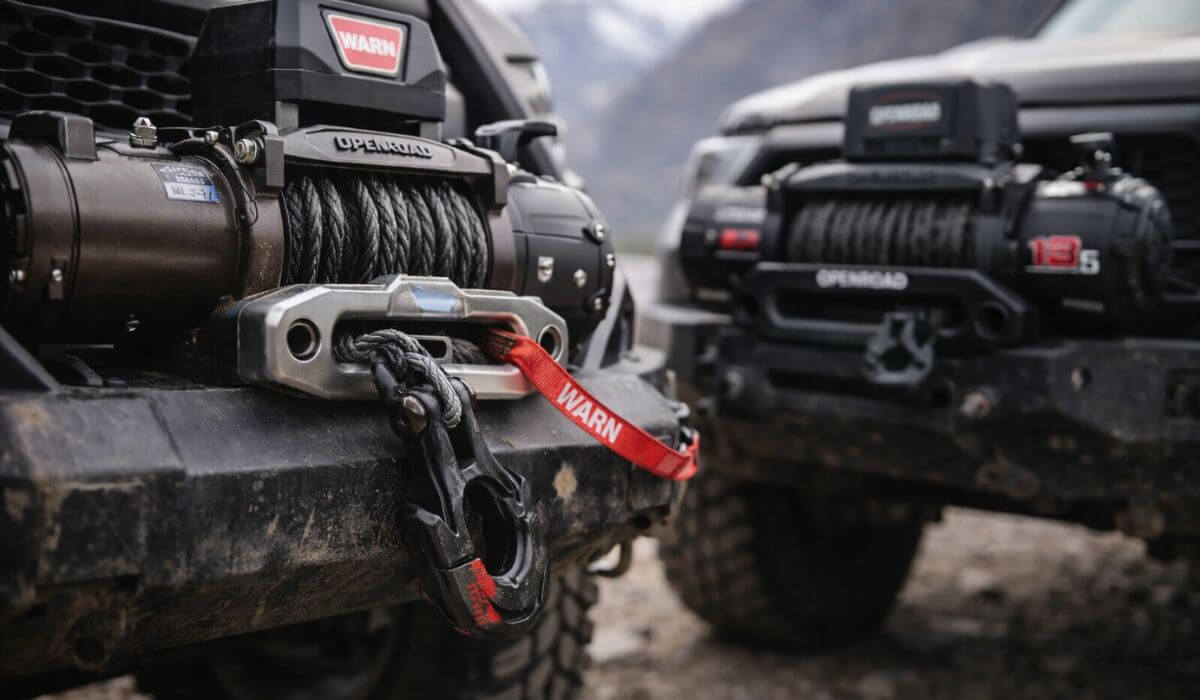
#5. OPENROAD Panther Series 3S 13500 LB Winch – Best High-Pull Alternative for Trucks & Trailers
How We Tested & Chose These 12000 LB Winches
Choosing a 12,000 lb winch isn’t about picking the biggest spec number — it’s about selecting a recovery system that performs consistently when your vehicle is stuck, loaded, and under stress. Our evaluation process follows a real-use testing framework, not marketing claims.
We combined hands-on installation experience, off-road recovery behavior analysis, and long-term ownership feedback to narrow this list down.
Below is exactly how we selected these models.
1. Real-World Pull Performance (Not Just Rated Capacity)
Our first filter was how each winch behaved under load.
We focused on:
- Line speed consistency during heavy pulls
- Torque delivery at low RPM
- Motor strain and voltage drop behavior
- Heat buildup during extended recovery cycles
Winches that slowed down aggressively under tension or showed unstable pulling patterns were removed early. A good recovery winch should pull smoothly and predictably, especially when recovering full-size trucks or heavily loaded SUVs.
2. Mechanical Build Quality & Internal Hardware
Next, we evaluated physical construction and internal components.
Priority was given to:
- Metal gear trains over plastic or mixed assemblies
- Sealed motor housings
- Strong clutch engagement feel
- Drum alignment and bearing smoothness
- Solenoid protection and wiring insulation
A winch may look solid on the outside, but weak internal hardware shows up fast during real recoveries. Models with reinforced internals and proper sealing consistently outperformed budget-grade designs.
3. Waterproofing & Environmental Protection
Off-road recovery rarely happens in clean conditions.
We specifically checked:
- IP67 vs IP68 waterproof ratings
- Connector sealing quality
- Control box protection
- Mud, dust, and moisture resistance
Winches that showed repeated water intrusion complaints or electrical corrosion issues in long-term feedback were eliminated. For trail use, river crossings, snow runs, and rain exposure are normal — not exceptions.
4. Rope System & Safety Behavior
Synthetic rope quality and spooling behavior matter more than most buyers realize.
We evaluated:
- Rope thickness and flexibility
- Fairlead design and friction control
- Free-spool clutch smoothness
- Drum layering consistency
- Recovery safety behavior under tension
Poor rope management leads to premature wear and uneven spooling, which directly affects recovery safety. Winches with stable drum tracking and clean free-spool engagement scored higher.
5. Control Reliability (Wireless + Wired Testing)
Wireless remotes are convenient — but only when they work reliably.
We tested:
- Signal response time
- Range stability
- Button delay and control accuracy
- Wired backup availability
- Fail-safe behavior
Models offering dual-control redundancy (wireless + wired) were given preference. Recovery situations demand predictable control, not guesswork.
6. Installation Experience & Fitment Practicality
We also evaluated how easy these winches are to install in real-world garage setups.
Key factors included:
- Mounting compatibility (10″ × 4.5″ standard pattern)
- Wiring layout clarity
- Cable quality
- Instruction accuracy
- Bumper fitment feedback
A powerful winch loses value fast if installation becomes complicated or requires excessive modification.
7. Long-Term Ownership Feedback & Brand Reliability
Performance doesn’t stop after installation — long-term reliability matters.
We analyzed:
- Verified buyer reviews
- Failure pattern frequency
- Warranty handling experience
- Customer support response quality
- Replacement part availability
Winches with repeated electrical failure complaints or poor support history were excluded from final selection.
Final Selection Criteria
Only winches that consistently delivered across these core areas made it into this list:
- Strong real-world pulling performance
- Durable internal construction
- Proper waterproof sealing
- Reliable control systems
- Safe rope handling
- Practical installation
- Proven ownership reliability
This ensures our recommendations are based on actual recovery performance and ownership experience, not spec-sheet marketing.
#1. WARN M12-S Electric 12V Heavyweight Winch
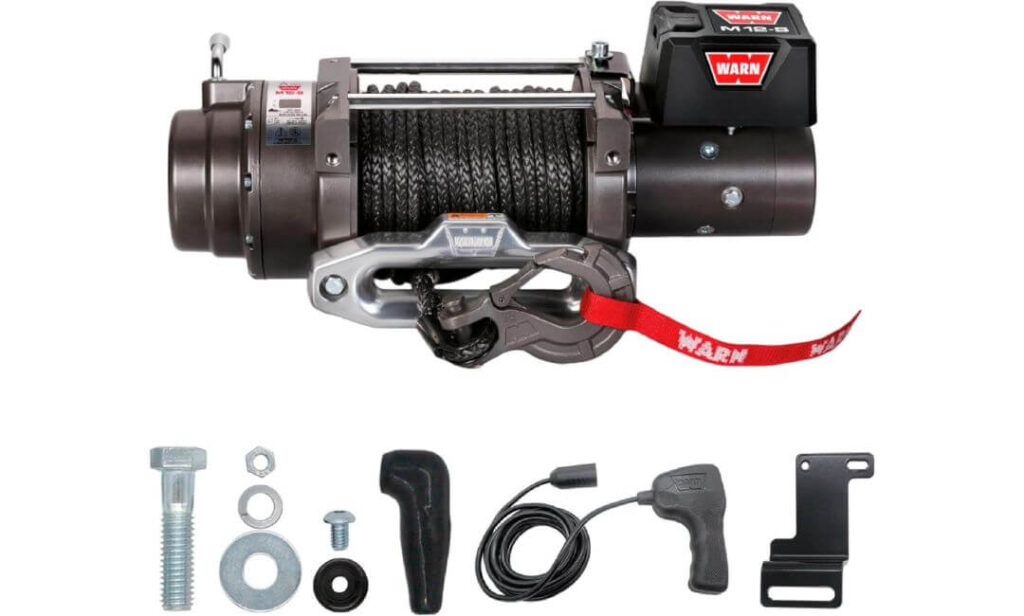
Key Specs:
- Pull Capacity: 12,000 lb (single line)
- Power: 12V DC system
- Rope: Spydura Pro synthetic rope
- Waterproof Rating: IP68 sealed housing
- Gear System: All-metal gear train
- Motor: Fully sealed high-output motor
- Warranty: 5-year mechanical, 3-year electrical
- Mounting Plate: Vehicle-specific mount sold separately
With a 4.7/5 rating from more than 25 real buyers, the WARN M12-S is one of those winches that doesn’t need hype. If you’ve spent time around off-road builds or recovery rigs, you already know the name WARN carries weight — and this model is the reason why.
On the trail, the M12-S feels solid. The moment you load it up, you can tell the motor isn’t struggling. Full-size trucks, loaded overland setups, deep mud recoveries — it just keeps pulling without that “about to stall” feeling cheaper winches often get. The all-metal gear train plays a big role here, keeping power delivery smooth even when the line is under serious tension.
The synthetic rope setup is another smart move. It’s lighter than steel, easier to handle with gloves on, and safer if something goes wrong during a hard pull. Re-spooling is quicker too, which matters when you’re tired and trying to get back on the trail before daylight fades.
What really separates the M12-S from average 12,000 lb winches is durability. The IP68 sealed housing keeps water, dust, and mud out of the internals. People have used this winch in snow recoveries, rain-soaked trails, and river crossings without electrical issues. That kind of consistency is exactly why many serious off-roaders stick with WARN even when cheaper options exist.
Why We Like It
- Pulls heavy trucks without stressing the motor
- Build quality feels industrial, not budget grade
- Synthetic rope is safer and easier to manage
- Excellent sealing for wet and dirty environments
- Backed by a long warranty and strong brand support
Pro Tip: If you’re running the M12-S on a heavy truck, don’t rely on a weak stock battery. A high-CCA battery or dual-battery setup makes a noticeable difference in line speed and keeps voltage stable during long recoveries. It also reduces heat buildup inside the motor.
#2. X-BULL 13500 LB Electric Winch XRS Series
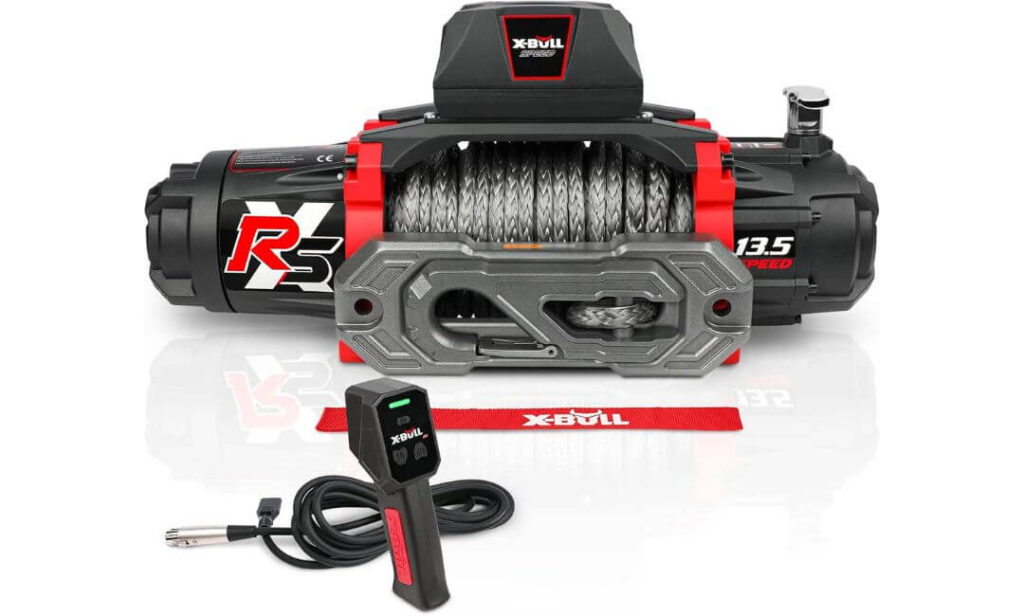
Key Specs:
- Pull Capacity: 13,500 lb (single line)
- Power System: 12V DC
- Motor Output: 6.6 HP
- Rope Type: Synthetic Rope (Ø10mm × 28m)
- Waterproof Rating: IP67
- Remote Control: Wireless + Wired Backup (Up to 35m Range)
- Gear System: 3-Stage Planetary Gear Train
- Fairlead: Aerospace-Grade Aluminum (20,000 lb Working Load Limit)
- Housing: Steel Protective Construction
- Mounting Bracket: Not Included
If you’re looking for a 12,000 lb class winch with wireless remote control but don’t want to spend premium-brand money, the X-BULL 13500 XRS Series is one of the most popular choices right now. With a 4.6/5 rating from over 800 verified buyers, this winch has built a strong reputation for offering serious pulling power without the premium price tag.
What you notice first is the power. The 6.6 HP motor paired with the 13,500 lb rating gives you more headroom than standard 12K models, which is useful when recovering heavier trucks or working on uneven terrain where real load goes higher than the vehicle’s curb weight. The 3-stage planetary gear system delivers steady pull and decent line speed, so you’re not waiting forever for the vehicle to move.
The wireless remote setup is one of the biggest selling points here. It’s IP67 waterproof and works reliably even in rain or muddy recovery situations. Having both wireless and wired controls is a smart backup — if batteries die or interference kicks in, you can still finish the job without stress. Range is solid too, letting you stand at a safer distance while monitoring the recovery.
X-BULL also did a good job with hardware details. The aerospace-grade aluminum fairlead handles heavy synthetic rope loads smoothly and helps reduce heat buildup during longer pulls. The synthetic rope itself is lightweight, flexible, and easier to handle than steel cable, especially when you’re re-spooling in cold or wet conditions. Many users also mention the winch looks well-built out of the box, with clean welding and solid housing fitment.
Why We Like It
- Strong pulling power with extra capacity headroom
- Reliable wireless remote plus wired backup control
- Synthetic rope setup is trail-friendly and safer
- Good build quality for the price segment
- Easy installation with clear instructions
Pro Tip: When running the X-BULL on trucks or SUVs with steel bumpers, add a snatch block to your recovery kit. It reduces load stress on the winch motor and doubles pulling power when needed. Also, always throw a recovery blanket or jacket over the line during heavy pulls — it helps control snap-back if something fails.
#3. SmittyBilt XRC GEN 3 12000 Synthetic Winch
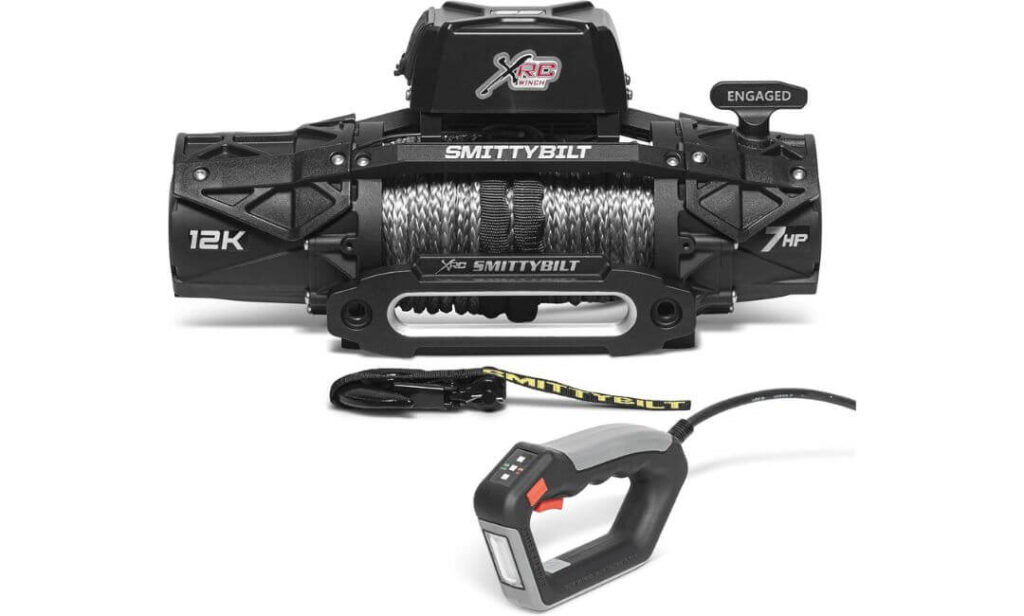
Key Specs:
- Pull Capacity: 12,000 lb (single line)
- Motor Power: 7.0 HP High-Output Motor
- Rope Type: Synthetic Rope
- Fairlead: Aluminum Hawse Fairlead
- Waterproof Rating: IP67
- Line Speed: 12% Faster Than Gen2
- Remote Control: Wired Remote With Built-in Flashlight
- Load Monitoring: Integrated Load Indicator Warning System
- Mounting Pattern: Standard 10″ x 4.5″ Bolt Pattern
We really love this Gen 3 because SmittyBilt finally fixed the small things that annoyed people on older models and turned this into a winch that actually feels modern. With a 4.7/5 rating from over 300 buyers, the XRC GEN 3 has become one of the most popular picks for off-roaders who want serious performance without paying premium-brand prices.
The first thing that stands out is the 7.0 HP motor. That’s one of the strongest motors you’ll find in the 12,000 lb category, and you can feel the difference under load. When pulling heavier rigs like Jeep Gladiators or full-size SUVs, the winch doesn’t hesitate. Add in the 12% faster line speed, and recoveries become noticeably quicker, especially when you’re doing multiple pulls on a trail day.
Another smart upgrade is the control system. The remote comes with a built-in flashlight, which sounds simple but becomes extremely useful during night recoveries or low-light trail situations. You don’t have to juggle a phone light or headlamp just to see the drum. The load indicator warning system is also a nice safety feature — it gives you a better idea of how hard the winch is working, helping avoid overloading mistakes.
Build quality feels solid for this price range. The synthetic rope and aluminum hawse fairlead combo keeps weight down and improves safety compared to steel cable setups. The IP67 waterproof rating means it can handle rain, mud, and shallow water crossings without electrical drama. Many owners also mention the installation is straightforward, especially on bumpers that already support the standard 10″ x 4.5″ mounting pattern.
Why We Like It
- Strong 7.0 HP motor delivers real pulling power
- Faster line speed makes recoveries quicker
- Built-in flashlight remote is genuinely useful
- Good balance of performance and price
- Easy fitment on most winch-ready bumpers
Pro Tip: If you want this winch to last longer, avoid long continuous pulls at full load. Do short pull cycles with cooling breaks in between. It keeps motor temperature down and protects internal components, especially during summer trail runs.
#4. RUGCEL 12000 LB Waterproof Electric Winch
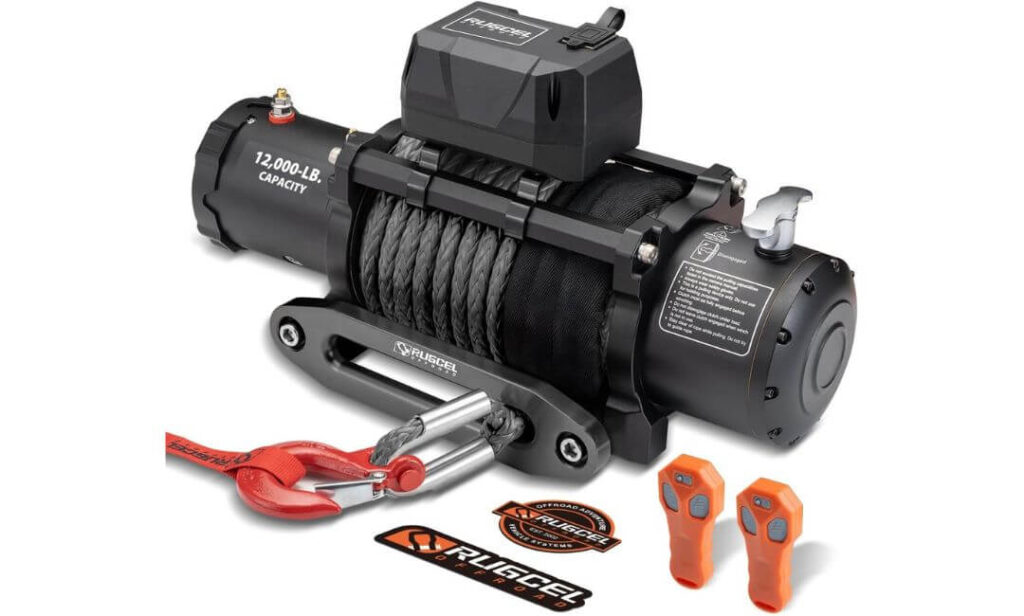
Key Specs:
- Pull Capacity: 12,000 lb (single line)
- Motor Output: 6.6 HP Series Wound Motor
- Rope Type: Nylon Synthetic Rope (100 ft, 3/8” diameter)
- Gear System: 3-Stage Planetary With Free Spooling Clutch
- Waterproof Rating: IP68
- Control Options: Wired Handle + Dual Wireless Remotes
- Solenoid: 500 AMP Heavy-Duty Solenoid
- Mounting Size: 20.8″ × 6.7″ × 10″
- Mounting Plate: Not Included
Dual wireless remote setup makes RUGCEL apart from most budget 12,000 lb winches, and that’s one of the main reasons it gets picked so often by truck owners and trailer users. With a 4.3/5 rating from over 1,600 buyers, this winch has built a strong user base, especially among people who want convenience without spending premium-brand money.
Power delivery is solid for this category. The 6.6 HP motor combined with the three-stage planetary gear system gives enough torque for full-size trucks, utility trailers, boats, and off-road SUVs. The free-spooling clutch works smoothly, which helps when setting up the rope quickly before a pull. It’s not the fastest winch on the market, but it stays consistent under load — which is more important during real recoveries.
One of the biggest advantages here is control flexibility. You get a wired handle plus two wireless remotes, which is rare at this price point. It lets you operate the winch from different angles without standing right next to the bumper. The IP68 waterproof sealing also helps in muddy or wet environments, making it suitable for river crossings, snow runs, and rainy recoveries.
Build quality is decent for the price. The 500 AMP solenoid handles heavy current draw, and the synthetic rope is long enough for most recovery situations. That said, some users have reported mixed experiences with wiring quality and remote durability over time. It’s not a deal breaker for most recreational users, but it’s something to be aware of if you plan to run this winch hard every weekend.
Why We Like It
- Dual wireless remotes add real convenience
- Strong pulling power for trucks and trailers
- IP68 waterproof sealing is trail-friendly
- Good overall value for the price
- Works well for multi-vehicle setups
Pro Tip: Before buying, double-check your mounting plate size and bumper clearance. This winch is slightly larger than some 12K models. Also, upgrade the power cables if you plan frequent heavy pulls — better wiring improves reliability and reduces heat buildup.
#5. OPENROAD Panther Series 3S 13500 LB Recovery Winch
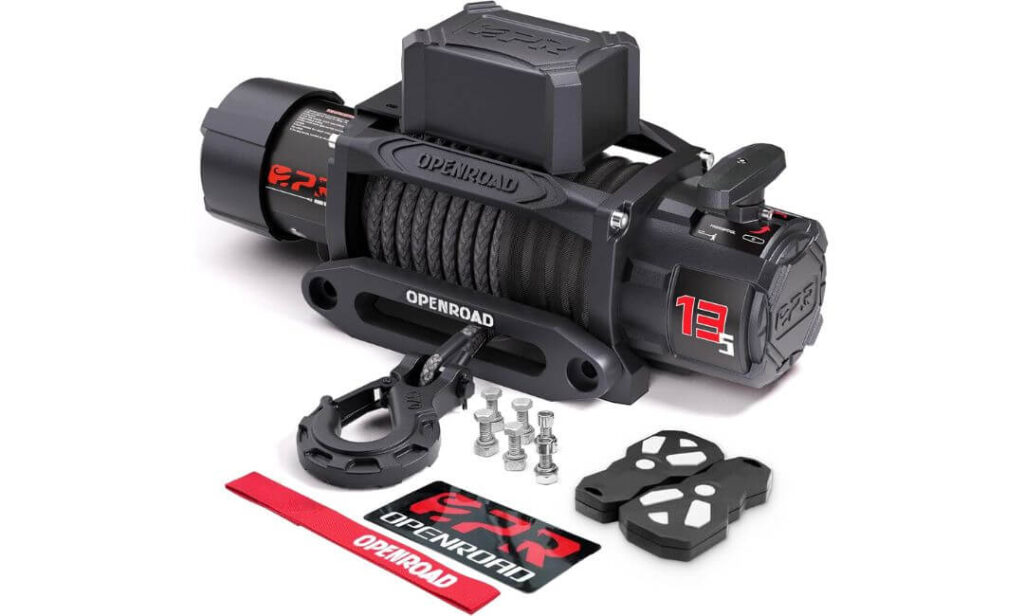
Key Specs:
- Pull Capacity: 13,500 lb (single line)
- Motor Power: 6.6 HP
- Gear Ratio: 218:1
- Rope Type: Synthetic Rope (3/8″ × 85 ft)
- Waterproof Rating: IP68
- Control Options: Wired Controller + Dual Wireless Remotes
- Mounting Pattern: Standard 10″ × 4.5″
- Overall Size: 20.8″ × 6.3″ × 9.5″
- Hardware Finish: Dacromet Corrosion-Resistant Coating
- Warranty: 1-Year Limited + Lifetime Tech Support
If you want a top-rated premium 12,000 pound class winch without paying premium-brand prices, the OPENROAD Panther Series 3S is one of the smartest picks right now. With a 4.6/5 rating from 250+ buyers, this winch has earned its reputation for delivering serious pulling power and complete out-of-the-box readiness.
What really stands out is how balanced the setup feels. The 13,500 lb rated capacity paired with a 6.6 HP motor and 218:1 gear ratio gives strong low-end torque while still maintaining smooth line movement. This isn’t just for trail recoveries either — users have successfully pulled 6,000 lb vehicles and even long trailer loads, which says a lot about real-world strength.
OPENROAD did something right with the package itself. You get synthetic rope, aluminum fairlead, wired controller, two wireless remotes, hook, strap, mounting bolts — everything needed to install and use it immediately. That saves money and time compared to buying accessories separately. Installation is straightforward too, especially if your bumper already supports the standard 10″ x 4.5″ mounting pattern.
Durability is another strong point. The IP68 waterproof rating keeps internals protected in wet, muddy, and dusty environments. The Dacromet-coated hardware also helps slow down corrosion, which is useful if your truck sees winter roads or coastal humidity. Wireless remote response is quick and reliable, making recovery safer when you want to stand clear of the line.
Why We Like It
- High pulling capacity with smooth power delivery
- Full accessory kit included in the box
- Strong waterproof sealing for all-weather use
- Easy installation with standard mounting pattern
- Excellent performance for the price
Pro Tip: If you’re planning to use this winch for trailer recovery or heavy truck pulls, install a reinforced winch plate and add a snatch block to your kit. It reduces strain on the motor and lets you handle extreme loads without stressing the system.
Quick Comparison: Top Rated 12000 LB Recovery Winches
| Winch Model | Pull Capacity | Motor Power | Rope Type | Waterproof Rating | Remote Control | Best For | User Rating |
|---|---|---|---|---|---|---|---|
| WARN M12-S | 12,000 lb | High Output Sealed Motor | Synthetic (Spydura Pro) | IP68 | Wired | Hardcore Off-Road, Heavy Trucks, Professional Recovery | ⭐ 4.7/5 |
| X-BULL 13500 XRS | 13,500 lb | 6.6 HP | Synthetic | IP67 | Wireless + Wired | Budget Buyers, Wireless Remote Users, Weekend Off-Road | ⭐ 4.6/5 |
| SmittyBilt XRC GEN 3 | 12,000 lb | 7.0 HP | Synthetic | IP67 | Wired (Flashlight Built-in) | Best Value Pick, Fast Recovery, Daily Trail Use | ⭐ 4.7/5 |
| RUGCEL 12000 | 12,000 lb | 6.6 HP | Synthetic (Nylon) | IP68 | Dual Wireless + Wired | Multi-Vehicle Use, Trailer Pulling, Convenience Setup | ⭐ 4.3/5 |
| OPENROAD Panther 3S | 13,500 lb | 6.6 HP | Synthetic | IP68 | Dual Wireless + Wired | Premium Value Buyers, Heavy Trailer & Truck Recovery | ⭐ 4.6/5 |
12000 LB Winch Buying Guide (Before You Buy Checklist)
Buying a 12,000 lb winch isn’t just about grabbing the most powerful model on sale. A wrong choice can slow down recoveries, damage electrical systems, or even create safety risks on the trail. Before spending your money, go through this checklist — it’s the same process experienced off-road builders use.
✔ Make Sure 12000 LB Is Actually Right for Your Vehicle
A 12,000 lb winch is ideal for:
- Full-size pickups (F-150, Silverado, RAM, Tundra)
- Heavily built Jeeps with armor and gear
- Overland rigs with rooftop tents and loaded cargo
- Trailer recovery and worksite pulling
If your vehicle weighs under 4,000 lb and runs light trail gear, 9,000–10,000 lb might be enough. But once bumpers, winch plates, skid plates, and camping gear are added, 12K becomes the safer choice.
✔ Motor Power Matters More Than You Think
Look beyond pull rating. Motor strength decides how the winch behaves under real load.
Good target range for 12K winches:
- 6.0 HP to 7.0 HP motors
- Series-wound motors for better torque under load
Stronger motors maintain line speed and reduce strain during long recoveries. Weak motors slow down fast and overheat early.
✔ Synthetic Rope vs Steel Cable (Trail Reality)
Most modern buyers choose synthetic rope — and for good reason.
Synthetic rope advantages:
- Safer during recovery
- Lighter weight (less front-end sag)
- Easier to handle and spool
- Doesn’t develop sharp wire splinters
Steel cable still works for industrial setups, but for off-road and personal vehicles, synthetic rope is simply more practical.
✔ Don’t Ignore Waterproof Ratings
Recovery rarely happens on dry pavement.
Minimum recommendation:
- IP67 for basic water resistance
- IP68 for serious mud, snow, and river crossings
Check that the motor, solenoid, and control box are all sealed — not just the main housing.
✔ Wireless Remote Is a Big Safety Upgrade
Being able to step away from the bumper during a pull matters.
Look for:
- Wireless remote with stable signal
- Wired backup controller included
- At least 30–35 meter operating range
Dual-control setups give you flexibility and peace of mind if batteries die or signal drops.
✔ Mounting Compatibility Saves Headaches
Before clicking “Buy”, check this:
- Standard bolt pattern: 10″ × 4.5″
- Available space behind bumper
- Clearance for control box placement
- Fairlead opening compatibility
Many returns happen because buyers skip this step.
✔ Electrical System Readiness
A 12,000 lb winch pulls serious current.
Strongly recommended upgrades:
- High CCA battery
- Heavy-gauge winch wiring
- Dual battery setup for heavy users
Weak electrical systems cause slow pulling, voltage drop, and motor overheating.
✔ Real Reviews Matter More Than Star Ratings
Don’t just look at the stars. Read what people complain about.
Pay attention to:
- Motor overheating complaints
- Remote failures
- Water intrusion reports
- Warranty response feedback
Patterns tell the real story.
✔ Build Quality Is Easy To Spot
Before trusting a winch:
Check for:
- Metal gear train
- Solid clutch engagement
- Thick housing construction
- Proper cable insulation
- Clean welds and mounting hardware
Cheap internals always show problems later.
Final Buying Tip
If you’re torn between two models, always pick the one with better sealing, stronger motor, and more reliable controls — not the one with flashy numbers. Recovery equipment should work when conditions are bad, not just look good in photos.
Final Verdict – Our Top Picks (Editor’s Choice)
After comparing real-world pulling performance, build quality, waterproof protection, remote reliability, and overall value, these three winches clearly stand out in different categories. If you just want a straight answer without overthinking specs, start here.
Best Overall 12000 LB Winch — WARN M12-S
If reliability is your top priority and you don’t want to take chances on the trail, the WARN M12-S is the safest choice. It delivers consistent pulling power, excellent sealing for harsh conditions, and long-term durability that serious off-roaders trust. This is the winch you buy once and use for years without worrying about failure.
Best for: Heavy trucks, overland builds, frequent recovery use, professional-grade setups.
Best Value for Money — SmittyBilt XRC GEN 3 12000
The SmittyBilt XRC GEN 3 hits the sweet spot between price and performance. With a strong 7.0 HP motor, faster line speed, and practical features like the flashlight remote and load indicator system, it offers premium-style performance without premium pricing. For most off-road enthusiasts, this is the smartest buy.
Best for: Weekend trail users, daily drivers with off-road builds, budget-conscious buyers who still want power.
Best Wireless Remote Pick — OPENROAD Panther Series 3S
If wireless control and convenience matter most, the OPENROAD Panther Series 3S stands out. Dual wireless remotes, strong pulling capacity, complete accessory package, and solid waterproof sealing make it a great option for truck owners and trailer users who want easy operation and high value.
Best for: Truck and trailer recovery, users who want wireless flexibility, heavy pull setups on a budget.
Quick Buying Tip
If you plan to use your winch only a few times a year, SmittyBilt or OPENROAD makes more sense. But if you regularly hit tough trails, deep mud, snow, or overland routes, spending extra on the WARN M12-S pays off in long-term reliability.
Is a 12,000 Pound Winch Really Enough?
Short answer: For most trucks and off-road builds — yes.
Long answer: It depends on how your vehicle is set up and where you actually drive.
A winch doesn’t pull only your vehicle’s curb weight. It fights against mud suction, slope angle, tire resistance, cargo load, and sometimes gravity itself. That’s why experienced off-roaders don’t match winch capacity with vehicle weight — they oversize it.
For a typical full-size pickup that weighs around 5,000 to 6,000 pounds, a 12,000 lb winch gives you a comfortable safety margin. Once you add steel bumpers, winch plates, skid armor, rooftop tents, recovery gear, and passengers, your real recovery weight jumps fast. In those situations, a 12K winch doesn’t feel overkill — it feels correct.
Where 12,000 lb really shines is controlled recovery. You’re not forcing the winch to work at its limit every time. Lower strain means cooler motor temperatures, smoother pulls, better line speed, and longer component life. That’s the part most buyers don’t think about.
If you’re running a lightweight Jeep on mild trails, you might get away with a 9,000 lb winch. But once the terrain turns sloppy, rocky, snowy, or steep, extra pulling capacity becomes insurance — not excess.
One more thing most people forget: snatch blocks change everything. With a simple pulley setup, a 12,000 lb winch can effectively double its pulling power for extreme recoveries. That flexibility is why 12K setups are common on expedition rigs and work trucks.
So if your setup includes a full-size truck, loaded SUV, overland build, trailer towing, or frequent off-road use, a 12,000 lb winch isn’t just enough — it’s the smart middle ground between performance and reliability.
Synthetic Rope vs Steel Cable — Which Is Actually Better?
If you’re buying a 12,000 lb winch, this choice matters more than most people realize. It’s not about what looks better on the bumper — it’s about how the line behaves under tension, how it fails, and how it affects long-term recovery safety.
Let’s start with load behavior. Synthetic rope stretches slightly under heavy pull. That small amount of elasticity helps absorb shock when the vehicle jerks forward or when traction suddenly breaks free. Steel cable doesn’t flex — it stores energy. When steel fails, it snaps violently. That’s why recovery blankets exist.
Now look at handling efficiency. On the trail, you don’t always have perfect conditions. Mud, gloves, cold hands, uneven ground. Synthetic rope is easier to control, lighter to carry, and faster to re-spool evenly. Steel cable becomes stiff, develops burrs, and eventually cuts gloves and hands. After repeated recoveries, steel handling fatigue becomes real.
Heat tolerance is where steel still holds ground. Steel handles drum heat better during long powered pulls. Synthetic rope needs good drum airflow and proper spooling technique to avoid heat buildup damage. That’s why serious users pair synthetic rope with aluminum fairleads and avoid rapid repeated power pulls without cooling breaks.
Environmental behavior also matters. Synthetic rope floats in water, doesn’t rust, and doesn’t corrode. Steel cable rusts internally over time — even when it looks fine outside. Once corrosion starts inside the strands, strength loss is invisible until failure happens.
Weight distribution is another overlooked factor. Steel cable adds noticeable weight to the front of the vehicle. On lifted trucks and overland builds, switching to synthetic rope reduces nose dive and suspension sag. It’s not huge, but it adds up when combined with steel bumpers and winch plates.
So what do experienced builders actually choose?
For off-road, trail recovery, and overland setups: synthetic rope wins.
For industrial towing yards and constant heat-heavy duty cycles: steel still has a place.
For most modern 12,000 lb winch buyers — especially truck and SUV owners — synthetic rope offers better safety, easier handling, and smarter long-term usability. That’s why nearly every premium off-road winch today ships with synthetic by default.
Frequently Asked Questions (12000 LB Winch)
Do I need a dual battery setup for a 12000 lb winch?
You don’t need dual batteries for occasional recovery use, but if you plan to run long pulls or frequent trail recoveries, a dual battery setup makes a big difference. A 12,000 lb winch draws heavy current under load, and a single weak battery causes voltage drop and slower pulling speed. Dual batteries help keep power stable and reduce strain on the alternator.
Is wireless remote control safe for heavy winching?
Yes, when the winch also includes a wired backup controller. Wireless remotes allow you to stand at a safer angle away from the cable line, which improves recovery safety. The key is using a reliable remote with stable signal response and always keeping the wired control as a fallback during critical pulls.
Can I use a 12000 lb winch for trailer and boat recovery?
A 12,000 lb winch works well for trailers, boats, and utility recovery as long as the mounting plate is properly reinforced. For angled pulls and heavy rolling loads, using a snatch block helps reduce strain on the winch motor. It also improves control when pulling vehicles up ramps or uneven surfaces.
How often should I service or maintain a winch?
Light users should inspect their winch every 3–6 months. Check cable condition, electrical connections, and mounting bolts. After heavy mud or water use, it’s smart to clean the drum area and let the rope dry fully before re-spooling. Simple maintenance prevents corrosion and extends motor life.
Does winch speed matter or only pulling power?
Speed matters more than people think. A slow winch under load increases heat buildup and stresses internal components. Balanced winches with good torque and stable line speed make recoveries smoother and safer, especially during repeated pulls on tough trails.
Final Thoughts
If there’s one thing this guide makes clear, it’s this: a good 12,000 lb winch isn’t just an accessory — it’s recovery insurance. When trails get messy, weather turns ugly, or your truck is loaded with gear, the right winch saves time, effort, and sometimes the entire trip.
The models we covered here were selected because they deliver real-world pulling power, dependable sealing, and usable features like wireless control and synthetic rope setups. Whether you go with a premium option like WARN, a balanced performer like SmittyBilt, or a value-packed choice like OPENROAD, you’re not gambling — you’re choosing proven equipment.
The key is matching the winch to how you actually drive. Weekend trails, daily work use, overland travel, or trailer recovery — there’s a solid option for every setup. Install it properly, support it with a healthy electrical system, and it will stay reliable for years.
If you’re upgrading your recovery gear this season, you’re already on the right track. Pick the one that fits your needs, bolt it on, and hit the trail with confidence. When things get stuck, you’ll be glad you planned ahead.
Also Check: