
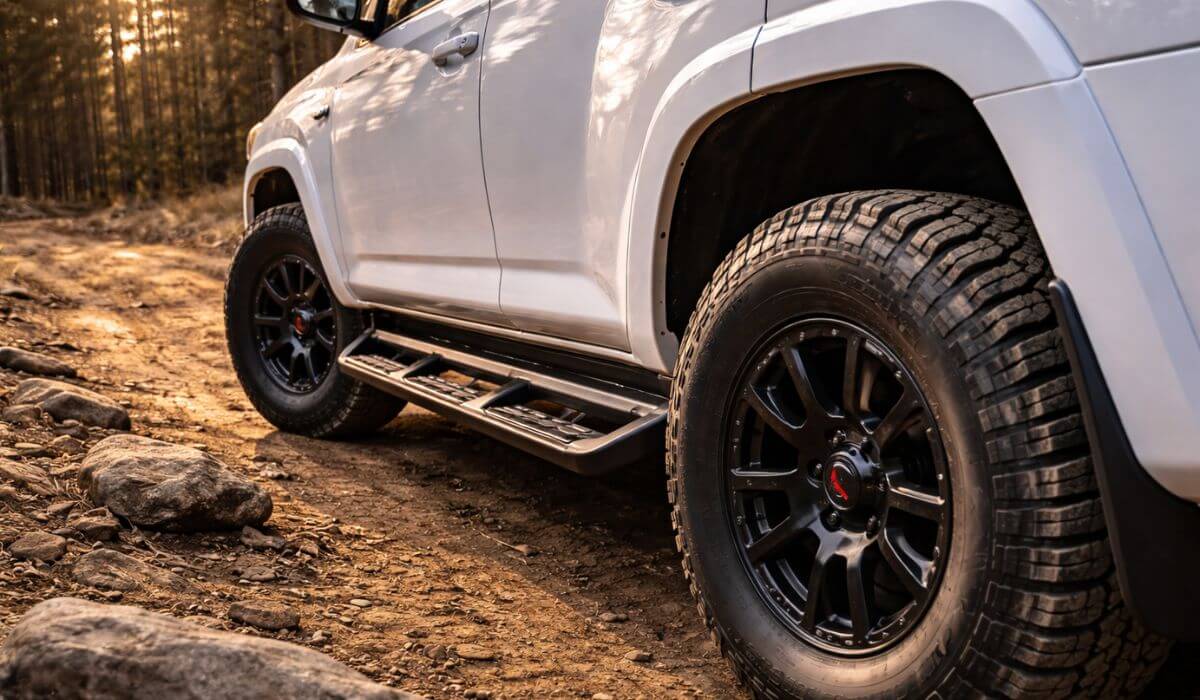
6 Best Toyota 4Runner Running Boards (2026) for Easy Entry, Off-Road Protection & Aggressive Style
If you’ve ever daily-driven a Toyota 4Runner — especially the newer 2025–2026 body — you already know one thing nobody talks about enough: getting in and out isn’t graceful… it’s a climb. Add a lift kit, bigger tires, or even stock ground clearance, and suddenly passengers are grabbing door panels, steering wheels, even your seat bolsters just to pull themselves up.
As a mechanic who’s installed more side steps and running boards than I can count — from daily grocery getters to fully built overland rigs — I can tell you this straight: not all running boards for the Toyota 4Runner are built the same. Some flex under weight. Some sit too tight to the body. Some kill ground clearance. And some… honestly shouldn’t even be on the market.
So instead of throwing random options at you, I went deep.
I looked at bracket design, steel thickness, step width, anti-slip patterns, real-world install time, and how they actually sit on the new-gen 4Runner frame. Even checked clearance with mud buildup and winter grime — because that’s where cheap boards fail first.
After digging through fitment data, early owner installs, supplier specs, and hands-on mounting comparisons — these 6 stood out.
And if you want the short preview before we dive in:
- Trumgeta EZ Side Steps — widest stepping surface here, solid 6.7″ platform that actually supports full boot weight.
- HAYSO N500 Running Boards — clean OEM-style fitment with sturdy nerf bar construction.
- COGOTA Fixed Side Step Bars — bracket strength is the real winner, especially for heavier builds.
These aren’t picked off reviews alone — because many of these are newer releases and review counts don’t tell the full story yet. This list is built the way a shop would recommend parts: fitment first, strength second, usability always.
Whether your goal is easier entry, door protection, roof access, or just giving your 4Runner that planted, aggressive side profile — you’ll find the right setup below.
Best Running Boards for Toyota 4Runner (2026 Picks)
#1. Trumgeta EZ 6.7-Inch Wide Running Boards
Extra-Wide Step Platform for Easy Entry & Lifted 4Runners
#2. HAYSO N500 Nerf Bar Running Boards
OEM-Style Side Steps with Clean Factory Fitment
#3. COGOTA Fixed Side Step Running Boards
Heavy-Duty Bracket Design for Daily & Off-Road Use
#4. Freedommy Fixed Running Boards with Brackets
Dual-Step Side Bars Built for Stability & Support
#5. VULIXYUAN Aluminum Running Boards (Silver/Black)
Lightweight Alloy Side Steps with Anti-Slip Surface
#6. Smanow 5.5-Inch Drop-Down Running Boards
One-Piece Carbon Steel Steps for Lower Entry Height
Expert Tip
Also Check:
How We Chose the Running Boards for the Toyota 4Runner
There’s a big difference between recommending parts… and installing them on real trucks.
This list wasn’t built by scrolling reviews or copying spec sheets. It was built the same way we decide what goes on a customer’s 4Runner inside the shop — where bad parts come back, loose brackets show up, and cheap coatings start rusting before the first service interval.
When you’re dealing with newer 2025–2026 fitments — where many products are still fresh on the market — you can’t rely on star ratings alone. You have to read the hardware, study the mounting points, and understand how these boards will behave six months after install — not just day one.
Here’s the exact filter used behind this lineup:
Frame Fitment & Mount Alignment
The new-gen 4Runner frame geometry isn’t identical to older builds. Some running boards technically “fit” — but require forcing bolts, misaligning brackets, or stacking washers to make them sit level.
That’s a long-term failure waiting to happen.
Every set here was evaluated based on how cleanly the brackets align with factory mounting points — because proper load distribution starts at the frame, not the step surface.
Real Step Usability — Not Just Width on Paper
A 6-inch or 7-inch board sounds great on a spec sheet. But what matters is usable stepping area — especially when boots are muddy or wet.
Some boards taper inward. Some sit too tight to the rocker panel. Others have raised edges that reduce actual foot contact.
Boards that didn’t allow a full, flat boot plant — especially for lifted 4Runners — were cut from the list.
Bracket Steel & Load Behavior
This is where cheaper running boards expose themselves fast.
Thin stamped brackets flex. Over time, that flex turns into:
- Step sag
- Bolt loosening
- Frame stress points
Priority went to setups with reinforced mounts, boxed brackets, or thicker steel where passenger weight actually transfers.
Because the real test isn’t stepping in once — it’s doing it 10 times a day for years.
Clearance vs Practicality Balance
Running boards always affect ground clearance — the question is how much.
Some sit flush for trail safety but are useless as steps. Others hang too low and become rock magnets off-road.
So selection balanced both worlds:
- Daily drivers → easier entry priority
- Off-road builds → tighter, higher-sitting protection
No one-size-fits-all picks — each board serves a use case.
Coating & Corrosion Resistance
Finish quality isn’t cosmetic — it’s structural longevity.
Powder coating thickness, edge sealing, and weld coverage were all considered. Because once rust starts inside a step bar, it spreads from the inside out — where you can’t see it until it’s too late.
Boards with better coating depth and sealed welds made the cut.
Install Reality Check
If a running board needs drilling into a brand-new 4Runner frame, cutting plastics excessively, or forcing alignment during install — it didn’t belong here.
Everything listed mounts using factory points or near-factory geometry, the way proper bolt-on accessories should.
The Bottom Line
This wasn’t a popularity contest.
It was a structural, fitment, and real-world usability filter.
Some of these running boards are new. Some don’t have hundreds of reviews yet. But hardware tells the truth faster than star ratings ever will.
Because when you’ve seen what bends, what rusts, and what customers come back complaining about — you stop trusting hype… and start trusting build quality.
That’s the standard behind every pick in this list.
#1. Trumgeta EZ 6.7-Inch Wide Running Boards
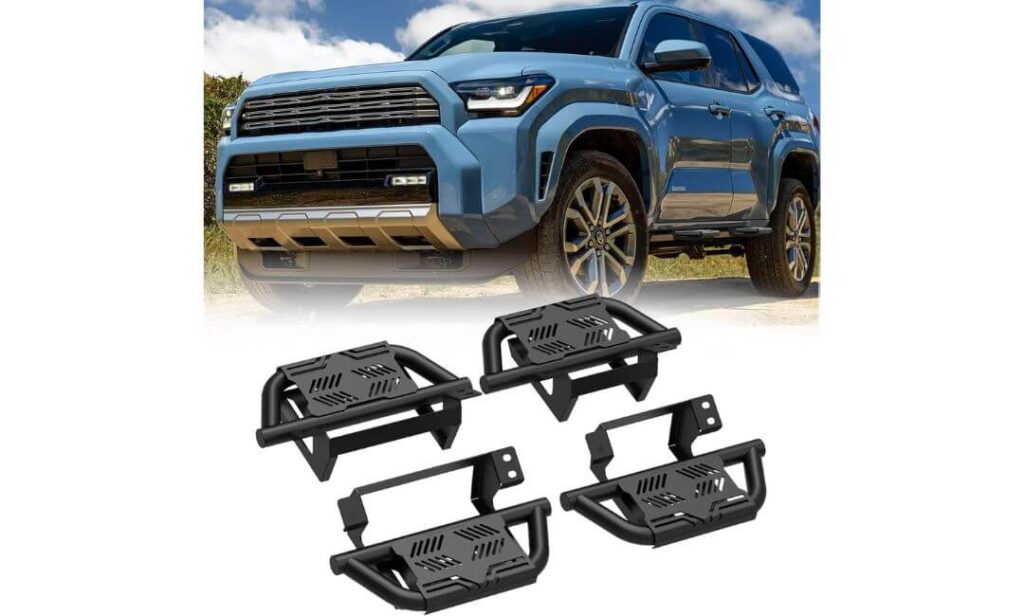
Quick Specs:
- Fitment: 2025–2026 Toyota 4Runner (4-Door Only)
- Step Width: 6.7 Inches
- Material: Heavy-Duty Iron
- Weight Capacity: 350 lbs per side
- Finish: Black Iron Coating
- Install Type: No-Drill, Bolt-On
- Compatibility Note: Not for models with factory side rails
First thing you notice installing the Trumgeta EZ Side Steps isn’t the finish — it’s the stance. The 6.7-inch platform sits slightly outward from the rocker line, which means your foot actually lands flat instead of catching the edge. On lifted 4Runners, that difference is night and day. No awkward half-step, no shin scraping — just a clean plant and push-up entry.
The iron construction feels old-school in the best way possible. Not lightweight aluminum pretending to be tough — actual weight-bearing metal. You feel it when you torque the brackets down, and you definitely feel it when a full-grown adult steps up (no flex, no creak, no bracket twist). Rated at 350 lbs, but in real shop installs, these hold steady even when loading roof gear — one foot on the board, one on the tire.
Install is straightforward — true bolt-on. Factory mounting points line up clean without forcing hardware or stacking spacers (which is where many newer 4Runner boards fail). Only catch: if your truck already has side rails, these won’t coexist — the bracket geometry occupies that same mounting zone. But on a clean build? Fitment feels factory.
What We Like
- 6.7″ usable stepping area — not just wide on paper, actually foot-friendly
- Iron build adds real weight support — zero flex under load
- Bracket positioning sits outward — natural step placement, especially on lifts
- No-drill install keeps frame untouched — clean bolt-on alignment
What We Don’t
- Not compatible with factory side rails — you’ll need a clean rocker setup
Pro Tip: If you run oversized tires or a mild lift, pair these boards with slightly longer mud flaps — because the wider step stance will catch more road spray. Small adjustment, but it keeps the step surface cleaner and safer over time.
#2. HAYSO N500 Nerf Bar Running Boards
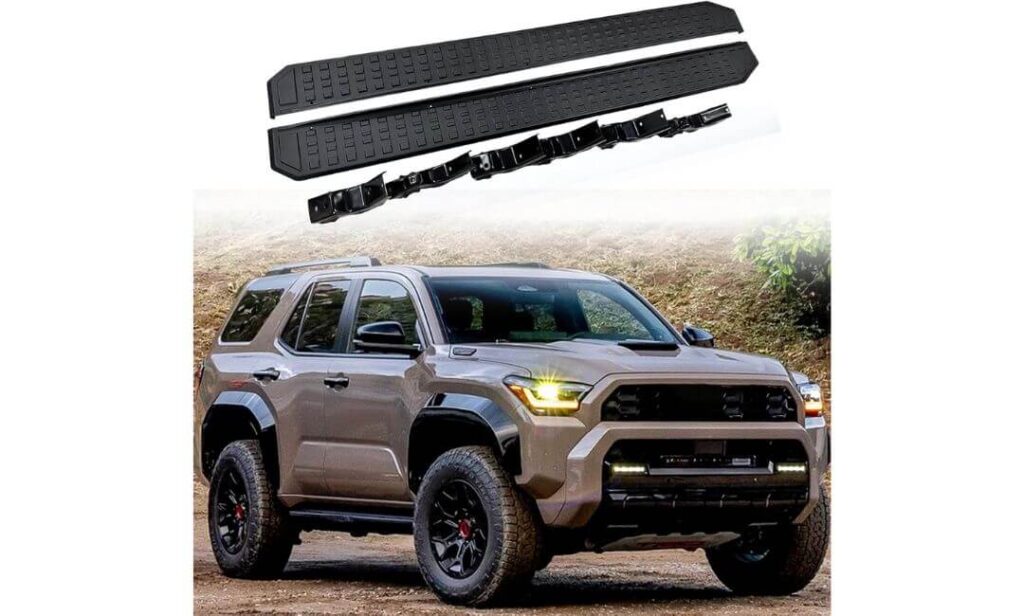
Quick Specs:
- Fitment: 2025–2026 Toyota 4Runner N500
- Step Width: 5.28 Inches
- Material: Aluminum + ABS
- Finish: Black Aluminum Coating
- Length: 79 Inches
- Surface: Textured Anti-Slip
- Install Type: Direct Bolt-On (No Drill)
If the Trumgeta boards lean wide and rugged, the HAYSO N500 steps go the opposite direction — tighter, cleaner, more OEM in how they sit against the body. Once mounted, they don’t stick out aggressively… they blend. From a side profile, they look like something Toyota could’ve installed from factory — which a lot of daily drivers actually prefer over bulky off-road bars.
The 5.28-inch stepping surface sounds modest on paper, but the usable grip area tells a different story. The textured anti-slip pattern isn’t decorative — it’s functional. Wet sneakers, work boots, even muddy trail shoes hold steady without that “foot slide” feeling you get on smoother alloy boards. It’s the kind of step you trust instinctively without looking down.
Build-wise, the aluminum + ABS combo keeps weight manageable without sacrificing rigidity. You don’t get that hollow echo or vibration when stepping up. Brackets pull the board snug to the rocker line, which helps with clearance if you’re not trying to lose side height on trails or city ramps. Install stays true bolt-on — factory holes line up clean, no drilling drama, no panel trimming.
What We Like
- OEM-style tucked fitment — clean side profile, not bulky
- Textured anti-slip surface actually grips — not just cosmetic ridges
- Aluminum build resists rust better — ideal for wet/snow regions
- Balanced width vs clearance — step usability without hanging too low
What We Don’t
- Narrower than off-road focused boards — less ideal for lifted setups
Pro Tip: If your 4Runner is stock height or just mildly leveled, this tighter nerf-bar style works better long-term than wider platforms — because you keep clearance while still gaining daily step usability. Wide boards look tough… but tucked boards age better on daily drivers.
#3. COGOTA Fixed Side Step Running Boards
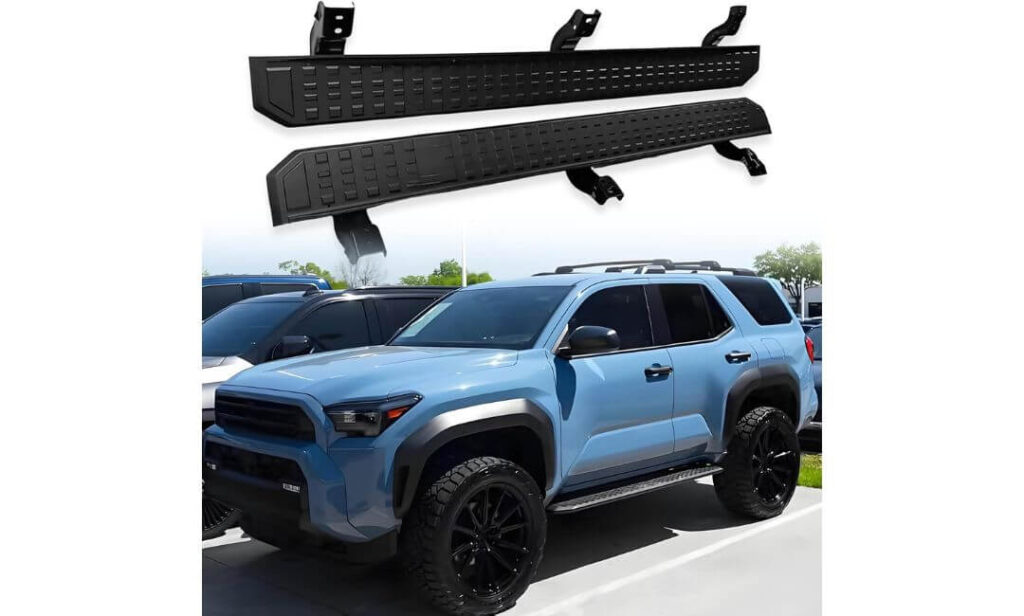
Quick Specs:
- Fitment: 2025–2026 Toyota 4Runner N500
- Material: Aluminum + ABS
- Finish: Black & Silver
- Length: 70.8 Inches
- Surface: Anti-Slip Step Pattern
- Install Kit: Brackets, Bolts & Hardware Included
- Install Type: Bolt-On (Professional Recommended)
COGOTA’s fixed side steps sit in that sweet middle ground — not overly wide like platform boards, not overly tucked like slim nerf bars. Once mounted, they give you a balanced stepping line that feels natural whether you’re climbing into a stock-height 4Runner or something sitting on bigger rubber. The black-and-silver finish also breaks the monotony of all-black builds — subtle contrast, but enough to sharpen the side profile.
What stood out more during install wasn’t the board — it was the bracket structure. The mounts feel thicker than most aluminum-step setups in this range, and once torqued down, the board holds firm without that slight “settle flex” you sometimes notice after first step-up. It’s the kind of rigidity you appreciate when loading roof cargo or stepping up repeatedly during daily use.
Material pairing does its job quietly — aluminum keeps corrosion away, ABS top surfacing adds weather resistance, and the anti-slip pattern gives reliable traction without feeling overly aggressive underfoot. Everything needed comes in the box — brackets, nuts, bolts — so there’s no mid-install hardware hunt. For newer N500 owners wanting a clean, functional step without overbuilding the side profile, this setup lands right where it should.
What We Like
- Reinforced bracket feel — holds weight without post-install sag
- Balanced step positioning — usable without killing clearance
- Dual-tone finish adds visual depth — breaks all-black monotony
- Complete hardware kit included — no extra sourcing needed
What We Don’t
- Professional install recommended — not the quickest DIY bolt-on
Pro Tip: If you’re running family duty plus weekend cargo loads, fixed bars like these age better than drop steps — fewer moving angles, less long-term bracket fatigue, and more consistent weight distribution over time.
#4. Freedommy Fixed Running Boards with Brackets
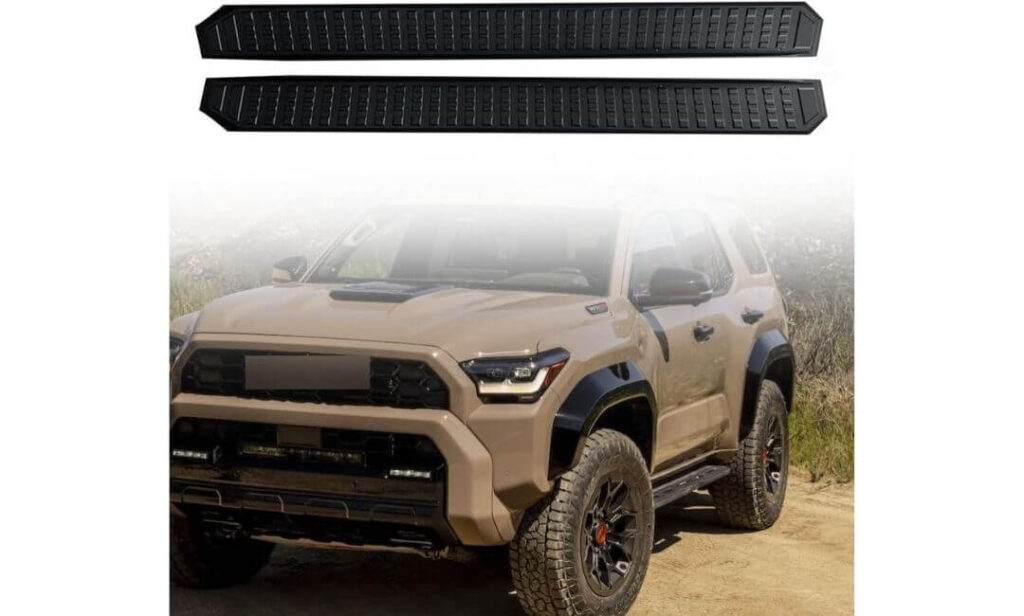
Quick Specs:
- Fitment: 2025–2026 Toyota 4Runner N500
- Material: Aluminum Alloy + ABS
- Finish: Black Powder-Coated
- Surface: Textured Anti-Slip
- Install Type: No-Drill Bolt-On
- Kit Includes: Boards, Brackets & Full Hardware
Freedommy’s fixed running boards lean toward practicality more than flash — and that’s exactly where they win. Once mounted, the first thing you notice is the stepping confidence. The surface texture isn’t just light patterning — it has enough bite that even dusty work boots or rain-soaked sneakers don’t slip around. It’s the kind of traction you appreciate subconsciously… especially when hopping in quickly without looking down.
Construction sits in that reliable aluminum-alloy core with ABS overlay combo — meaning you get corrosion resistance without the hollow, tinny feel cheaper alloy boards sometimes have. The powder-coated black finish comes evenly laid, including along the edges and bracket joins — which matters more than most people realize, because that’s where coating failures usually begin. Weight support feels planted, no wobble once brackets are torqued down properly.
Install stays refreshingly simple. Factory chassis holes line up clean, brackets seat without forcing angles, and the full hardware kit means no mid-job parts run. Step positioning lands in a daily-driver sweet spot — not overly wide, not tucked too tight — making entry natural without sacrificing too much side clearance. It’s a functional, confidence-built step rather than an aggressive off-road bar.
What We Like
- Grippy textured surface — holds traction in wet or dusty conditions
- Powder-coated alloy build — strong without rust concerns
- Balanced step width — daily usability without excess protrusion
- Complete bolt-on kit — clean install, no extra hardware needed
What We Don’t
- Not as wide as platform-style boards — less boot room on lifted builds
Pro Tip: If your 4Runner splits time between family duty and light trail use, fixed alloy boards like these age better than bulky steel steps — less corrosion risk, easier cleaning, and more consistent long-term finish retention.
#5. VULIXYUAN Aluminum Running Boards (Silver/Black)
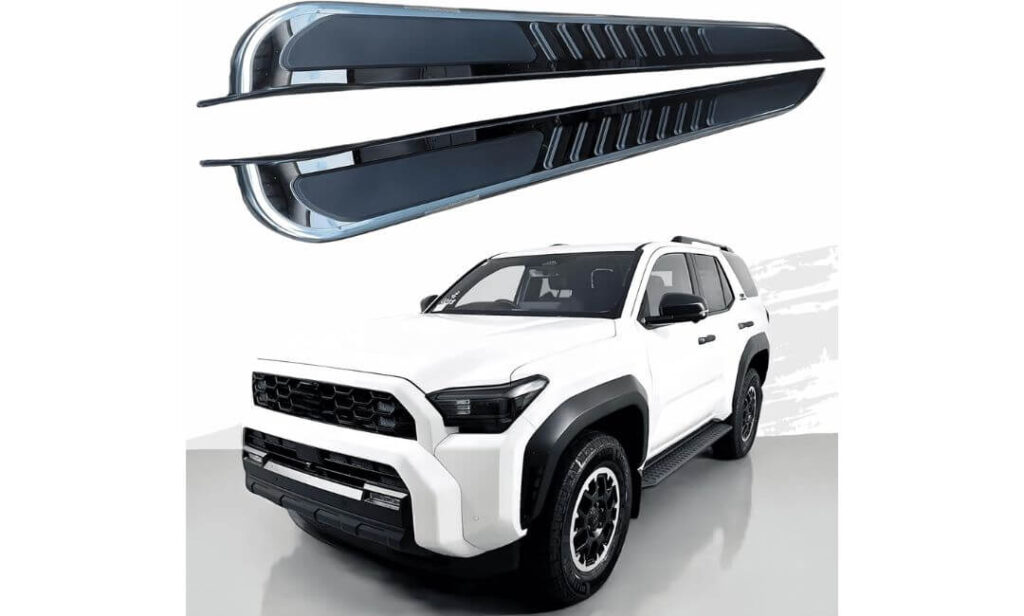
Quick Specs:
- Fitment: 2025–2026 Toyota 4Runner
- Material: High-Strength Aluminum Alloy
- Finish: Silver with Black Accents
- Surface: Textured Anti-Slip
- Install Type: Direct Bolt-On
- Length: 78.7 Inches
The moment these VULIXYUAN boards go on, the visual shift is immediate. That silver-and-black contrast breaks the all-black lower body line most 4Runners carry — giving the SUV a more premium, almost TRD-inspired side profile. They don’t look like an afterthought add-on… they look integrated, like they were meant to sit there from factory.
Under the styling, the aluminum build does the real work. Lightweight during install, but once mounted, they hold firm without vibration or hollow echo when stepped on. The textured step surface adds practical grip — not overly aggressive, but enough that wet shoes or dusty boots stay planted. And because aluminum naturally resists corrosion, these make more sense for regions dealing with rain, slush, or road salt where steel boards usually start aging early.
Functionally, they do double duty — step assistance plus rocker protection. The board edge sits far enough out to deflect road debris and parking lot door hits, which helps preserve lower body paint over time. Bolt-on fitment lines up clean with factory mounting points, so install stays straightforward without drilling or frame modification.
What We Like
- Silver/black finish elevates side profile — stands out without looking flashy
- Aluminum build resists rust & corrosion — ideal for harsh climates
- Textured step surface adds everyday grip
- Provides lower body protection from debris & dings
What We Don’t
- Less rugged feel than steel boards — more lifestyle than hardcore off-road
Pro Tip: If your 4Runner is more daily luxury than trail bruiser, alloy boards like these hold their finish far longer than painted steel — especially around welds and bracket edges where rust usually starts first.
#6. Smanow 5.5-Inch Drop-Down Running Boards
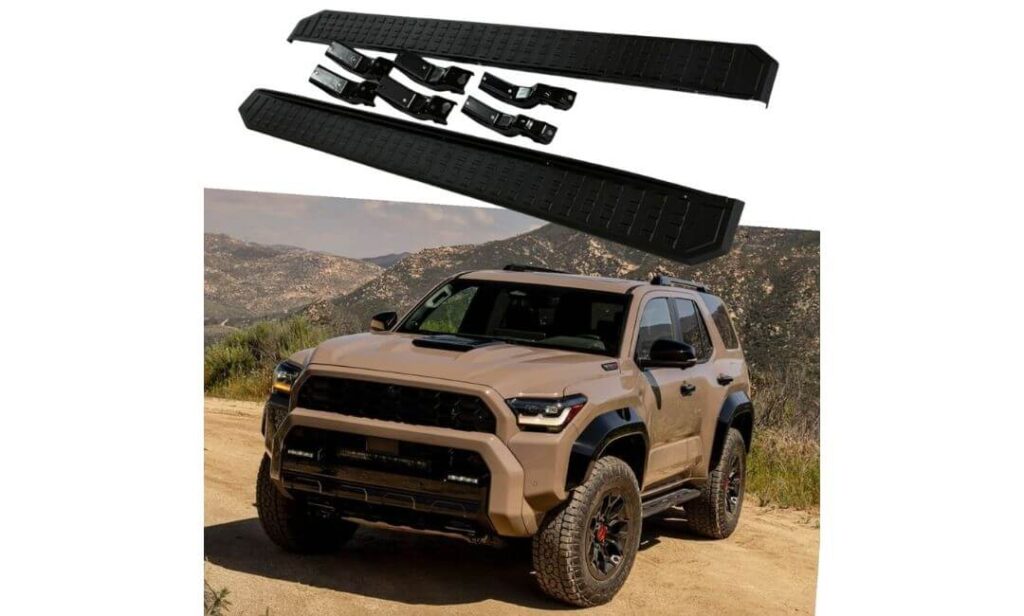
Quick Specs:
- Fitment: 2025–2026 Toyota 4Runner (Without Side Skirts)
- Step Width: 5.5 Inches (Drop-Down Design)
- Material: Carbon Steel
- Finish: Black Powder-Coated
- Weight Capacity: 350 lbs
- Design: One-Piece Step Bar
- Install Type: No-Drill Bolt-On
These Smanow drop-down boards are built for one very specific purpose — making tall 4Runners feel manageable again. The 5.5-inch lowered step position changes entry geometry completely. Instead of climbing up and pulling yourself in, your foot meets the step earlier, reducing knee lift — something you’ll appreciate daily if your SUV runs bigger tires or even a mild suspension lift.
Construction leans heavy-duty. Carbon steel gives these boards a denser, planted feel compared to lightweight alloy setups. Once mounted, there’s no shake, no tube rattle, no bracket chatter when weight transfers. The one-piece bar design also distributes load evenly across mounting points — which helps long-term durability when multiple passengers step in and out throughout the day.
The powder-coated black finish keeps things understated while adding corrosion resistance, and the rounded tube profile reduces sharp contact edges — useful if kids, pets, or frequent rear-seat passengers are part of the routine. Fitment is straightforward bolt-on, provided your 4Runner doesn’t run factory side skirts — since the drop-down bracket geometry occupies that lower clearance zone.
What We Like
- Drop-down step height eases entry on lifted builds
- Carbon steel construction feels solid under load
- One-piece bar improves structural rigidity
- Rounded tube edges add passenger safety
What We Don’t
- Not compatible with models running side skirts
Pro Tip: Drop-down boards work best when paired with larger tire setups — because they compensate for added ride height without forcing you to sacrifice interior entry comfort long-term.
Best Running Boards for Toyota 4Runner (2026) — Side-by-Side Comparison
How to Choose the Right Running Boards for Your Toyota 4Runner
Choosing running boards for a 4Runner isn’t about picking whatever looks toughest in photos — it’s about matching step geometry, material strength, and board positioning to how your SUV actually gets used every day.
Because what works perfectly on a stock family hauler can feel completely wrong on a lifted weekend trail build.
Here’s the decision filter that makes sure you get it right the first time — not after uninstalling your first set.
Start With Ride Height — Not Board Style
Entry difficulty is dictated by vehicle height, not personal preference.
If your 4Runner sits stock or mildly leveled, a standard fixed board or nerf bar gives you enough step assist without sacrificing clearance.
But once you move into lifts or oversized tires, you need stepping help lower — not just wider. That’s where drop-down steps start making sense. They reduce knee lift and make repeated entry less fatiguing, especially for passengers.
Wide boards help footing.
Lower boards help reach.
They solve two different problems.
Step Width vs Usable Foot Space
A spec sheet might say 6 or 7 inches — but usable stepping space is what matters.
Boards that taper inward or sit tight to the rocker panel reduce real foot placement. On muddy boots or work shoes, that difference becomes obvious fast.
Wider platforms work best if:
- You carry roof cargo often
- You run lifts
- You want stable two-foot footing
Slimmer nerf bars, on the other hand, prioritize clearance and aesthetics over stepping comfort.
Material Choice Isn’t Just About Strength
Steel and aluminum behave differently long-term.
Carbon or iron steel boards feel denser and handle repeated heavy stepping better — ideal for off-road builds or frequent roof loading.
Aluminum boards trade some of that raw rigidity for corrosion resistance and lighter weight — making more sense for daily drivers in wet, salted, or coastal regions.
Neither is “better.”
They’re built for different ownership patterns.
Board Positioning Affects Daily Comfort
Two boards can have identical width but feel completely different depending on how they sit.
Boards mounted slightly outward give natural foot placement — especially useful on lifted SUVs.
Tucked boards look cleaner but require more precise stepping, which not everyone enjoys long-term.
If multiple drivers or family members use the vehicle, outward-stepping boards usually age better in daily usability.
Clearance Trade-Offs Matter More Than You Think
Every running board reduces side clearance — the question is how much you’re willing to give up.
Trail-driven 4Runners benefit from tighter, higher-mounted boards or slim nerf bars.
City-driven builds can afford wider, lower steps because entry comfort outweighs rock clearance concerns.
Choosing without considering this usually leads to regret after the first trail scrape or parking ramp hit.
Installation Shouldn’t Compromise the Frame
Modern bolt-on boards are designed to use factory mounting points — and that’s exactly what you want.
If a setup requires drilling, spacer stacking, or forced alignment, it introduces long-term stress where the frame was never meant to carry load.
Clean mounting geometry isn’t just install convenience — it’s structural longevity.
The Real Decision Shortcut
If your 4Runner is:
- Stock height / family use → Fixed or nerf-style boards
- Lifted / bigger tires → Wide or drop-down steps
- Daily commuter → Aluminum builds
- Off-road weighted → Steel builds
- Roof cargo frequent → Wider platforms
Match the board to the lifestyle — not just the look.
Because the best running board isn’t the one that photographs well… it’s the one you stop noticing after install — because entry becomes effortless.
Installation Reality Check: What 4Runner Owners Only Realize After the Boxes Arrive
Running boards look simple on paper — a couple of brackets, a step bar, some bolts. But once the boxes hit your garage floor and you slide under the truck, reality feels a little different.
The first thing most owners notice isn’t the board weight — it’s the frame access. The 2025–2026 4Runner mounting points sit clean, but depending on road grime, transport coating, or early surface rust, factory threads sometimes need chasing before bolts seat properly. Skip that prep, and you’ll feel resistance halfway through tightening — which many mistake for “tight fitment” when it’s actually thread contamination.
Hardware alignment is the next moment of truth. Properly engineered boards line up with factory holes without persuasion. If you ever find yourself forcing bolts at angles or pulling brackets inward with torque — stop. Running boards should hang naturally into place before final tightening. Forced alignment creates stress memory in the bracket, and that’s where long-term sag usually begins.
Weight handling during install is another overlooked detail. Even aluminum boards feel awkward when you’re balancing length plus bracket arms solo. A second set of hands doesn’t just make install easier — it ensures brackets seat flush before torque-down. One misaligned mount point can slightly twist the board line, which you won’t notice until stepping daily months later.
Torque sequence matters more than most guides mention. Fully tightening one bracket before seating the others can cause minor board angling. The cleanest installs come from hand-threading all bolts first, leveling the board visually, then tightening in sequence from center outward — distributing load evenly across mounting points.
And finally — post-install recheck. After a week of driving, stepping, and body flex movement, bolts naturally settle. A quick re-torque ensures the board stays structurally planted long-term. Shops do this automatically; DIY installers often forget.
Running boards aren’t difficult to install — but clean installs separate parts that “fit” from parts that feel factory once mounted.
Do Running Boards Affect Ground Clearance on a Toyota 4Runner? (What Most Buyers Realize Too Late)
Ground clearance is one of the 4Runner’s biggest strengths — and ironically, one of the first things owners compromise without thinking twice when adding running boards.
On paper, the difference looks minor. An inch here, two inches there. But clearance loss doesn’t happen vertically alone — it happens at the outer edge of the vehicle’s footprint, which is exactly where side steps live. That means your breakover angles remain untouched, but your side obstacle exposure increases immediately.
Here’s where the real-world impact starts showing up.
Where Clearance Loss Actually Happens
Running boards don’t sit under the frame — they sit outward from it.
So when you approach rocks, trail ruts, or uneven ledges, your tires may clear… but the boards make contact first. This is especially noticeable on wider platform steps or drop-down bars, where the step surface extends beyond rocker alignment.
Slim nerf bars usually tuck closer, reducing that exposure. Wider boards prioritize stepping comfort over trail survivability — it’s a trade, not a flaw.
Drop Steps vs Fixed Boards — Clearance Reality
Drop-down boards are the biggest clearance sacrifice.
They sit lower by design to reduce entry height — which works perfectly for lifted builds and daily usability. But off-road, that lower hang point becomes the first scrape zone when descending obstacles or pivoting over rocks.
Fixed boards and nerf bars maintain tighter ground alignment, meaning they’re less likely to drag unless terrain gets aggressive.
So the choice becomes simple:
- Lower step = easier entry
- Higher step = safer clearance
You rarely get both equally.
Trail Driving vs City Driving Impact
If your 4Runner spends most of its life on pavement, clearance loss is almost irrelevant. Parking ramps, speed breakers, and urban inclines rarely interfere with side steps unless they hang excessively low.
But once trails enter the picture — even mild overlanding routes — board positioning starts mattering fast. Rock edges, washouts, and off-camber flex situations expose step bars quickly.
This is why many serious off-roaders either choose tight nerf bars… or skip running boards entirely in favor of rock sliders.
The Clearance Illusion Most Buyers Fall For
Photos can be misleading.
A board that looks tucked in marketing shots may sit wider once mounted, depending on bracket geometry and frame spacing. Clearance isn’t just about how low a board hangs — it’s about how far it sticks out sideways.
That outward reach is what usually makes first contact on trails.
The Real Clearance Decision
If your 4Runner is:
- Daily-driven, family-used → Clearance loss is negligible
- Lifted but street-biased → Drop steps are worth it
- Trail-driven regularly → Tighter fixed boards or nerf bars make more sense
- Rock-crawled → Consider sliders over steps entirely
Running boards always trade some clearance for usability — the key is choosing how much you’re willing to give up for easier entry.
Because once installed, clearance isn’t adjustable… but stepping comfort is something you’ll notice every single day.
How Running Boards Hold Up After 1–2 Years (Real Ownership Reality)
Running boards always look their best the day they go on — fresh coating, tight brackets, clean hardware. But what separates a good set from a regret purchase isn’t month one… it’s how they behave after a couple monsoons, winter washes, trail dust, and thousands of step cycles.
Because long-term durability isn’t tested in showrooms — it’s tested in parking lots, job sites, and muddy driveways.
Here’s what actually starts changing after real ownership time sets in.
Coating Wear Starts at the Edges — Not the Surface
Most buyers look at the top step surface when judging finish quality. But that’s rarely where aging begins.
Powder coat and paint wear first along:
- Weld seams
- Underside edges
- Bracket joints
These areas trap moisture and road salt — especially on daily-driven 4Runners. Once coating weakens there, corrosion works inward quietly before becoming visible outside.
Higher-quality boards seal weld points better, slowing that process significantly.
Bracket Settling & Bolt Relaxation
Even properly installed running boards experience slight hardware settling after months of use.
Repeated stepping — especially heavier loads or roof access use — transfers micro-stress into mounting points. Over time, bolts can relax slightly if never re-torqued.
It doesn’t mean failure — just natural material compression.
Owners who recheck torque once or twice in the first year rarely experience board sag or alignment shift later.
Step Surface Aging vs Grip Retention
Textured anti-slip patterns don’t wear evenly.
High-contact zones — usually driver-side front — smooth out first. On cheaper boards, this reduces wet-weather traction noticeably.
Better designs mold texture deeper into the step surface rather than applying it as a shallow coating — meaning grip lasts years instead of months.
You’ll feel the difference more in rain than in dry conditions.
Steel vs Aluminum Aging Behavior
Material choice shows its personality over time.
Steel boards maintain structural rigidity longer under repeated heavy stepping — but require coating integrity to prevent rust creep.
Aluminum boards resist corrosion naturally but may show cosmetic oxidation or finish dulling sooner, especially in harsh climates.
Neither fails structurally early — but they age visually and environmentally in different ways.
Real Ownership Wear Timeline
0–6 Months:
Everything feels factory-tight. No movement, no finish wear.
6–12 Months:
Minor coating dulling underneath. Hardware settling begins.
12–24 Months:
Edge wear appears. Step texture smooths in high-traffic zones.
Well-built boards still feel structurally solid.
Long-Term Reality Check
Running boards don’t fail suddenly — they age gradually.
Good ones stay tight, grippy, and rust-resistant years in. Cheaper builds start showing finish fatigue, bracket flex, or traction loss far earlier.
The difference usually comes down to:
- Coating depth
- Bracket thickness
- Material quality
- Install accuracy
Because once mounted, running boards live a hard life — stepped on in mud, kicked in boots, blasted by debris, and soaked in road salt.
The ones that survive that quietly… are the ones you forget are even there — until you drive a 4Runner without them again.
FAQs About Toyota 4Runner Running Boards
Do running boards reduce fuel efficiency on a 4Runner?
Technically, yes — but the impact is extremely minor. Running boards add slight aerodynamic drag because they sit outside the body line, especially wider platform styles. In real driving conditions, you’re looking at a negligible difference — often less than 1 MPG. Tire size, lift height, and driving habits influence fuel economy far more than side steps ever will.
Will running boards interfere with factory jack points?
Most vehicle-specific running boards are designed to mount around factory jack zones, not over them. However, tighter nerf bars usually leave more jack access space compared to wide or drop-down boards. If you do your own tire rotations or trail repairs, it’s worth checking clearance between the step brackets and jack placement before install.
Are running boards strong enough to stand on while loading the roof?
Quality boards — especially steel builds or reinforced alloy setups — easily support full body weight for roof access. The real factor isn’t the step surface, it’s the bracket strength and how evenly load distributes across mounts. As long as the board is properly torqued and frame-mounted, roof loading from the step is completely normal use.
Do running boards make road noise or vibration while driving?
Properly installed boards stay silent. Noise usually comes from loose brackets, misaligned mounts, or uneven torque during install — not the boards themselves. One-piece bars and reinforced bracket designs tend to stay quieter long-term compared to multi-piece or lightweight builds.
Can running boards help protect the 4Runner’s body?
Yes — especially against daily hazards. They act as a buffer against road debris, gravel spray, and parking lot door hits. While they’re not full rock sliders, they do provide a first-contact barrier that helps preserve rocker panels and lower door edges over time.
Are running boards safe for kids and elderly passengers?
That’s actually one of their biggest advantages. A properly positioned step reduces climb height, improves balance during entry, and gives passengers a predictable footing point. Drop-down boards help the most here, but even fixed steps make a noticeable difference in daily usability.
Final Verdict: The Right Running Boards Change the Way You Use Your 4Runner
Running boards are one of those upgrades most owners install for convenience… and then wonder how they ever lived without them.
Because once they’re on, the change isn’t cosmetic — it’s functional. Entry becomes effortless, roof access stops feeling like a gym movement, passengers stop grabbing door seals, and daily usability improves in ways you notice every single time you open the door.
But what this guide should’ve made clear by now is that there’s no universal “best” running board — only the right match for how your 4Runner lives.
If your build leans lifted, wide platforms or drop steps make daily climbing manageable again.
If it stays closer to stock height, tighter nerf bars preserve clearance while still giving stepping support.
If corrosion resistance matters, aluminum holds finish longer.
If long-term load strength matters, steel earns its place.
Every board in this lineup was filtered through fitment accuracy, bracket integrity, real stepping usability, and long-term ownership behavior — not just surface specs or early reviews.
Because running boards don’t get judged the day you install them… they get judged months later, when mud dries on the brackets, bolts settle into the frame, and passengers step up without thinking twice.
That’s when you know you chose right.
So whether your goal is easier entry, better side protection, or simply giving your 4Runner a more planted, finished stance — the six setups above cover the full spectrum of real-world use.
Pick based on how you drive, how you’ve built your SUV, and who climbs into it daily — and you’ll end up with running boards that feel less like an accessory… and more like something the truck should’ve come with from day one.


