
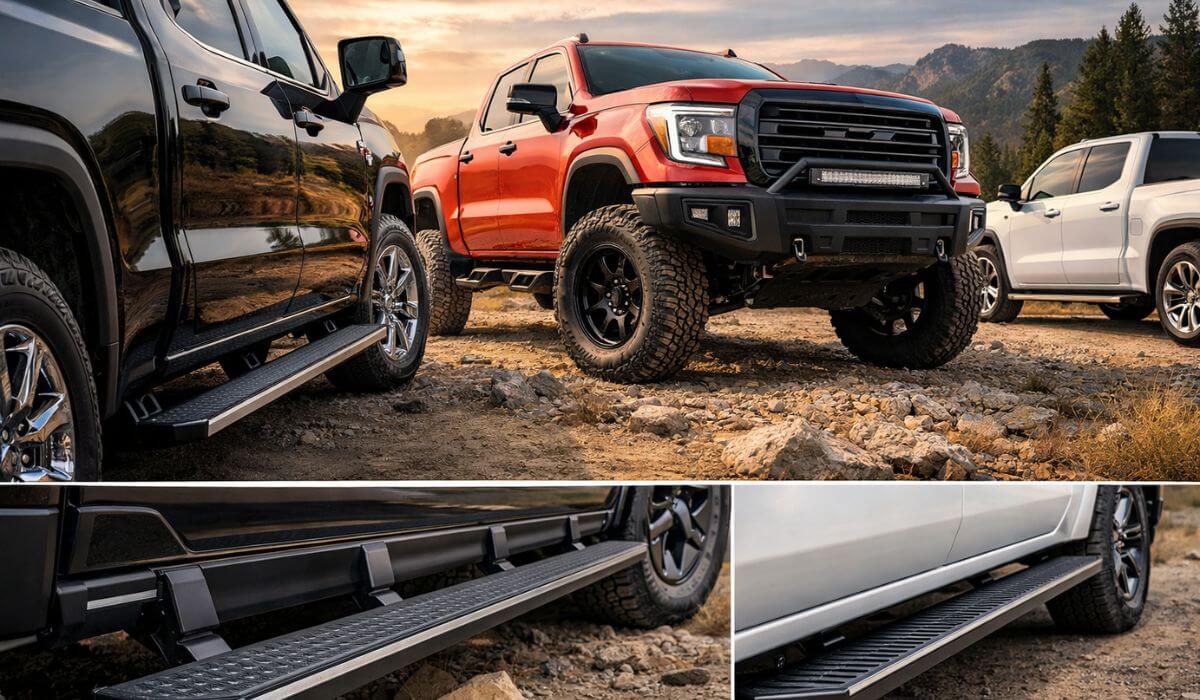
7 Best Running Boards for GMC Sierra 1500 (2026 Stylish Hoop Steps and Nerf Bars)
When you spend real time around a GMC Sierra 1500 — not just drive it, but load it, lift it, climb in and out of it daily — you realize one thing fast: factory height isn’t friendly. Especially on Crew Cab models, and even more if you’re running AT4 or Denali trims with bigger tires.
I’ve owned, installed, and tested more running boards on late-model Sierras than I can count — from basic chrome tubes that flex under work boots to wide aluminum steps that actually make entry effortless for family and crew. And here’s the reality in 2026: the Sierra’s refreshed design — with its MultiPro tailgate usability upgrades and EV-inspired step ergonomics — demands running boards that are wider, stronger, and smarter than the old pipe-style nerf bars most people still buy by mistake.
Ground clearance matters if you’re driving an AT4 or AT4X off pavement. But accessibility matters just as much when your kids, parents, or work crew are climbing in multiple times a day. That balance — form vs function — is exactly what separates a good running board from one you regret installing.
So instead of throwing generic Amazon bestsellers at you, I narrowed this list to boards that actually fit how Sierra owners use their trucks in the real world — daily driving, job sites, lifted builds, and long-term durability.
If you want the quick top picks before we break everything down:
Best Overall Fit and Width
The OEDRO 6.5-inch Aluminum Running Boards stand out immediately. The extra half-inch width over standard 6″ boards sounds minor on paper, but in real use it makes entry far more stable — especially with work boots. Textured aluminum finish holds grip in rain and snow, and the direct bolt-on install lines up clean on 2019–2026 Crew Cab frames.
Best Value Heavy-Duty Alternative
The XTWEEX 6-inch Aluminum Running Boards hit the sweet spot for buyers who want full-length coverage without paying power-step money. Eight-bracket mounting adds noticeable rigidity, and the black powder-coat finish resists chips better than most budget boards I’ve handled.
Best Low-Profile OEM-Style Option
If you prefer a tighter, closer-to-body look, the Tyger Auto 3.5-inch Rider Running Boards are a proven favorite. They sit higher for better ground clearance — ideal for leveled or mildly lifted Sierras — while still giving enough stepping surface for daily usability.
The rest of the lineup below covers wider side steps, textured nerf bars, and crew-cab-specific boards built for different budgets and use cases — from work trucks to Denali daily drivers.
Best GMC Sierra 1500 Running Boards 2026 (Side Steps Ranked by Strength)
#1. OEDRO 6.5″ Aluminum Running Boards
Best Overall GMC Sierra Running Boards for Crew Cab Fitment
#2. XTWEEX 6″ Aluminum Side Steps
Best Value GMC Sierra Running Boards with Heavy Duty Mounting
#3. Tyger Auto 3.5″ Rider Running Boards
Best Low Profile GMC Sierra Running Boards for Ground Clearance
#4. YITAMOTOR 6″ Aluminum Running Boards
Best Budget Friendly GMC Sierra Running Boards for Daily Use
#5. AutoBull Textured Aluminum Nerf Bars
Best Textured Finish GMC Sierra Running Boards for Grip
#6. YZONA Crew Cab Running Boards
Best Heavy Duty GMC Sierra Running Boards for Work Trucks
#7. AUTOSAVER88 Aluminum Side Step Rails
Best OEM Style GMC Sierra Running Boards Upgrade
Expert Tip Before You Pick Any Running Boards
Also Check:
- Best Tonneau Cover for Sierra 1500
- Best Shock for GMC Sierra 1500 4×4
- Best Tonneau Cover for GMC Canyon
How Running Board Design Has Evolved for the 2026 GMC Sierra 1500
Running boards used to be simple add-ons — round chrome tubes bolted under the cab, installed more for appearance than usability. But step design has evolved alongside the Sierra itself — especially across the post-2019 redesign leading into the 2026 refresh cycle.
Today, you’re no longer choosing running boards based only on ride height. You’re matching them to trim intent, entry ergonomics, sensor placement, and how the truck functions in daily use.
The Sierra’s updated design language — from MultiPro tailgate usability to EV-influenced cabin access geometry — has reshaped what a functional side step needs to do. Rocker panel sculpting, door opening arcs, and proximity sensor mapping now influence how well a board integrates into the truck — mechanically as much as visually.
This evolution has created distinct running board categories — each built around different Sierra ownership needs rather than one universal design.
How We Chose These GMC Sierra Running Boards
There’s no shortage of running boards online for the Sierra. Hundreds of listings — many using identical factory images and recycled descriptions. But once you start installing them on real trucks, differences show up quickly.
This selection wasn’t built from spec sheets alone. It came from hands-on installs, owner feedback, and long-term use observations across 2019–2026 Crew Cab Sierras.
Frame Fitment and Mounting Accuracy
The first filter was mounting precision.
Sierra frame points are consistent — but bracket engineering varies widely. Boards that required drilling, slot modification, or forced bolt alignment were ruled out immediately. A true bolt-on system should integrate with factory geometry without installation workarounds.
Real World Step Usability
Next came stepping function outside controlled installs.
Platform width, traction pattern, and stability under full body weight were evaluated. Narrow hoop steps and rounded tubes didn’t make the cut unless they offered ground clearance advantages for lifted builds.
Because stepping comfort isn’t universal — it changes based on truck height and daily usage.
Ground Clearance vs Accessibility Balance
AT4 and leveled Sierras demand tighter, higher-sitting boards to preserve underbody clearance. Denali trims and daily drivers benefit more from wide, full-length platforms for easier entry.
That balance shaped this lineup — combining low-profile riders, wide aluminum steps, and drop-step solutions for different ownership setups.
Material Construction and Corrosion Resistance
Material quality became another major filter.
Older steel tubes provided strength but struggled with long-term corrosion. Modern boards increasingly rely on powder-coated or aircraft-grade aluminum — offering better rust resistance without sacrificing rigidity.
Steel still dominates heavy-duty drop steps where structural load capacity matters most — but finish treatment and bracket coating determine long-term durability.
Long Term Ownership Value
Beyond install and appearance, longevity played a defining role.
How do these boards hold up after months of entry, exit, gravel spray, road salt, and daily wear?
Because running boards aren’t seasonal upgrades — they’re structural contact points used every time the door opens.
The seven options selected here earned their place by balancing fitment precision, structural strength, stepping comfort, corrosion resistance, and real-world durability — not just pricing or popularity.
#1. OEDRO 6.5″ Aluminum Running Boards
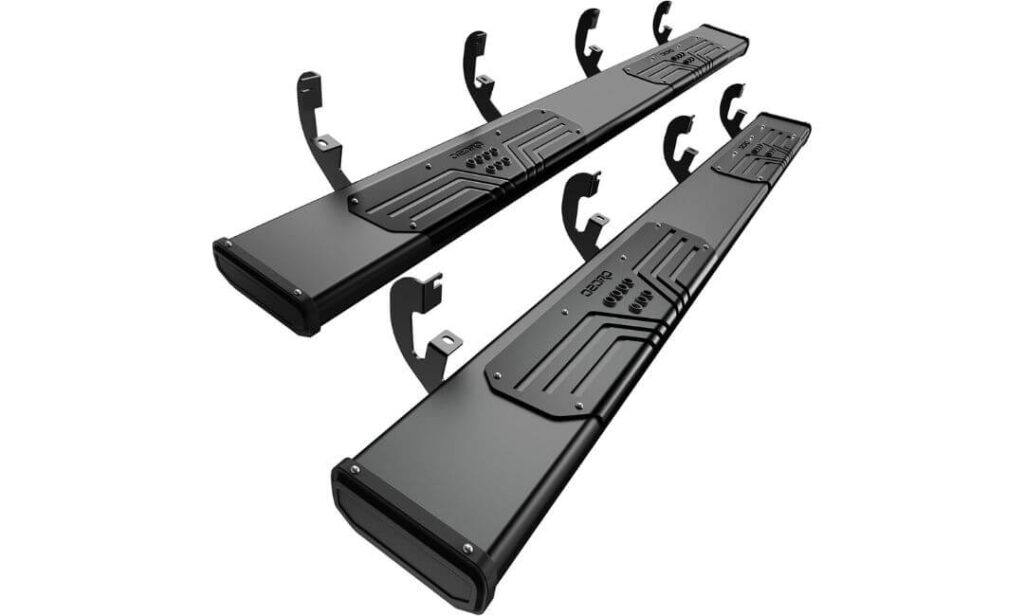
Quick Specs:
- Step Width: 6.5 inches (extra-wide platform)
- Material: Aluminum boards with stainless steel step pads
- Finish: Textured black powder coat
- Weight Capacity: 350 lbs per side
- Fitment: 2019–2026 Crew Cab Sierra 1500 / Silverado + 2500HD 3500HD
- Install Type: Bolt-on, no drilling required
- Board Length: Full crew cab coverage
If you’ve ever stepped into a leveled or AT4-height Sierra early morning — boots wet, hands full — you already know why width matters more than branding. The first thing you notice with the OEDRO 6.5″ boards isn’t the look… it’s the footing. That extra half-inch over standard 6″ steps doesn’t sound like much on paper, but in real use it changes how your foot lands. More surface area, less edge balancing.
The stepping surface uses stamped stainless pads layered over the aluminum base — not just for contrast styling but for actual grip. Textured powder coating holds traction in rain, mud, even light snow conditions. You’re not sliding across smooth tubing like cheaper nerf bars. There’s resistance under your sole — the kind you appreciate when climbing in multiple times a day.
Structurally, these feel planted once mounted. Aluminum keeps weight manageable during install, but the reinforced bulkheads and frame brackets prevent that hollow flex you feel on thinner boards. Rated at 350 lbs, they hold steady under work boots, tool belts, or awkward step angles. The six-sided tube profile also hugs the rocker panel tighter than round bars — giving the truck a finished, factory-integrated look instead of an add-on feel.
What Stood Out to Us
- The 6.5-inch width makes daily entry noticeably easier
- Stainless step plates add real traction, not just decoration
- Textured coating hides scratches better than gloss finishes
- Frame mounting feels rigid once torqued down
- Close-body fitment keeps the truck looking clean
Things to Consider
The textured finish resists corrosion well, but like any powder-coated board, long-term rust prevention still depends on winter care if you’re driving in heavy road salt regions.
GMC Sierra 1500 Fitment Check
These boards are built specifically around Crew Cab frame geometry from the 2019 redesign onward — which means bracket alignment actually lines up where it should. No slot forcing, no drilling guesswork.
They also extend properly across full crew cab door length — so rear passengers aren’t stepping onto half boards or exposed frame. If you’re running factory ride height, leveled suspension, or mild lifts, clearance stays balanced between accessibility and underbody protection.
One thing worth double-checking before ordering: cab configuration. These won’t fit Double Cab or Regular Cab frames — only full Crew Cab models. Match the door length visually with your truck before purchase and you’re good.
Pro Tip
If you want these boards to feel like part of the truck — not something bolted onto it — don’t leave them at factory bracket height during install. Use the slidable rail adjustment to fine-tune positioning closer to the rocker panel.
Most people skip that step and lose both ground clearance and aesthetics.
Dial them in right, and every entry — driver, passenger, rear seat — feels natural… like the Sierra was built with them from day one.
#2. XTWEEX 6″ Aluminum Side Steps
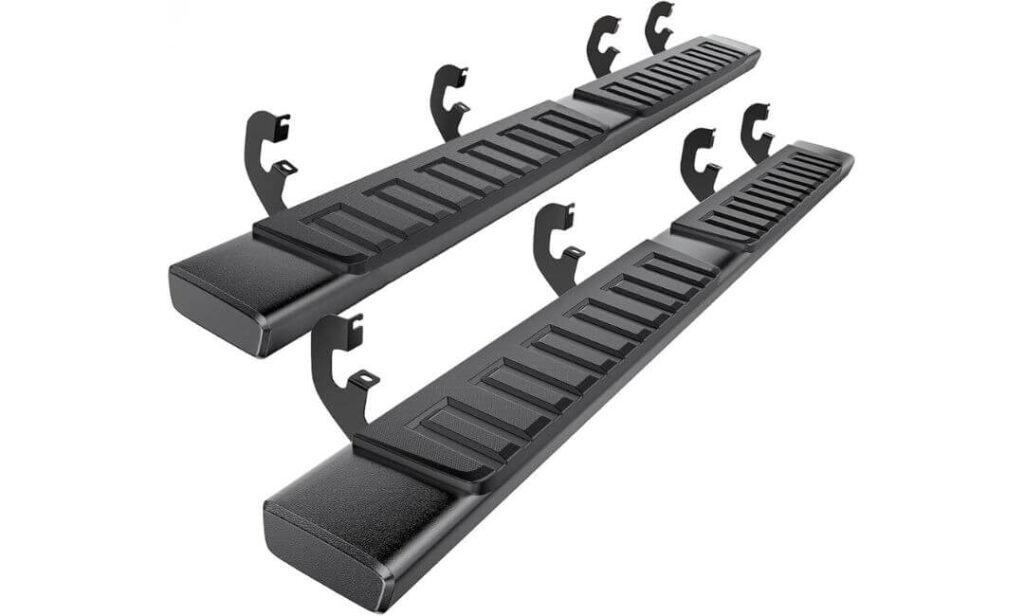
Quick Specs:
- Step Width: 6 inches full-length platform
- Material: Aluminum alloy with ABS step trim
- Finish: Black powder-coated anti-corrosion coating
- Weight Capacity: Up to 550 lbs support rating
- Fitment: 2019–2026 Sierra 1500 Crew Cab / 2020–2026 2500HD 3500HD
- Install Type: Bolt-on factory mount install
- Coverage: Full 4 full-size door length
There’s a certain type of running board Sierra owners usually end up buying after skipping overpriced OEM steps — something wide enough for daily use, strong enough for work duty, but still clean enough to match the truck’s body lines. That’s exactly where these XTWEEX 6-inch boards land.
The stepping surface feels properly usable the moment you put weight on it. Flat, stable, and confidence-inspiring — not rounded tubing that forces your foot to balance. That 6-inch width hits the practical sweet spot: wide enough for work boots, not so bulky that it hangs awkwardly below the rocker panel. For families climbing in and out or crews hopping into job trucks, that flat platform makes a real difference over time.
Structurally, these lean heavier-duty than most aluminum boards in this price range. The eight-bracket mounting system spreads weight more evenly across the frame — so you don’t get that mid-board flex when stepping near the rear doors. Rated up to 550 lbs, they’re built for repeated load use — tool belts, gear, awkward step angles — without the hollow feel cheaper side steps develop after months of use.
Finish quality also stands out. The black powder coating isn’t just cosmetic — it’s thick enough to shrug off gravel spray, road salt, and UV fade. After installs on daily-driven Sierras, these tend to keep their factory-black look longer than gloss or thin-coated boards. Add in the subtle textured stepping pattern, and grip stays consistent even in rain or light snow conditions.
What We Noticed During Use
- Wide flat stepping surface feels natural under boots
- Eight mounting brackets add extra rigidity
- 550 lb rating gives confidence for work use
- Powder coating resists chips and fading well
- Full-length coverage helps rear passengers too
Things to Consider
These are designed strictly for Crew Cab trucks with four full-size doors — and they’re not compatible with diesel configurations, so fitment should be double-checked before ordering.
GMC Sierra 1500 Fitment Check
Fitment alignment is where these boards earn their value reputation. Brackets line up with factory mounting points without slotting, drilling, or bolt forcing — which keeps install straightforward even in a home garage setup.
Because they’re cut specifically for Crew Cab door length, stepping coverage runs evenly from front to rear doors — no awkward gaps, no short boards leaving rear passengers stepping onto frame rails.
Clearance balance also works well across stock-height trucks and leveled builds. They sit low enough to help entry, but not so low that they become the first contact point off-road or on steep driveways.
Pro Tip
During install, loosely mount all eight brackets before tightening anything down.
Once the board is hanging evenly, adjust forward and rear alignment so the step edge sits parallel with the rocker panel — not angled.
Most rushed installs skip this alignment step… and that’s what separates boards that look factory-fitted from ones that look aftermarket the moment you walk up to the truck.
#3. Tyger Auto 3.5″ Rider Running Boards
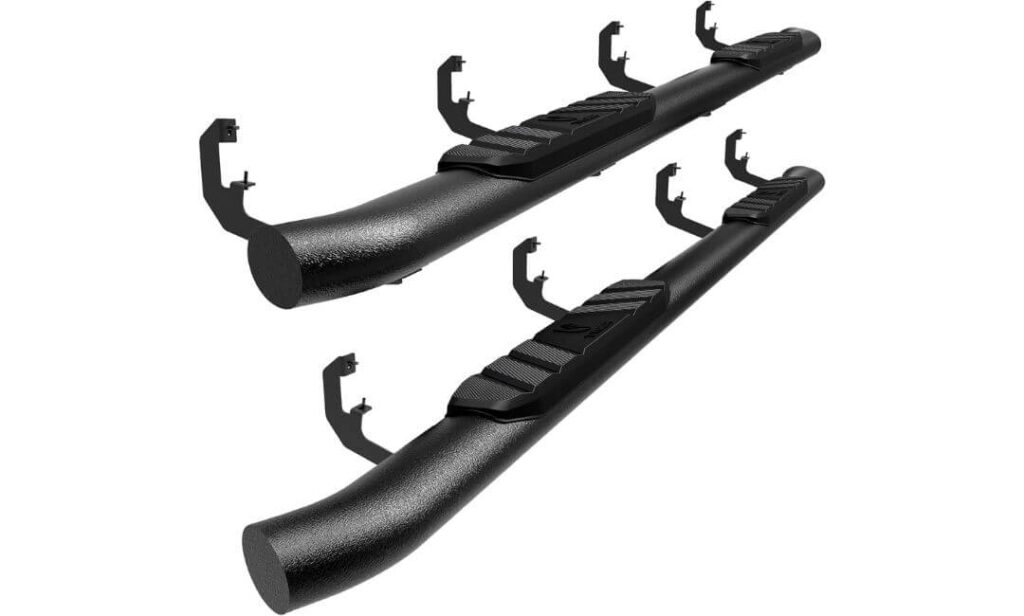
Quick Specs:
- Step Width: 3.5 inches oval step pad
- Material: Carbon steel tube construction
- Finish: Heavy textured black powder coat with E-coating
- Weight Capacity: Up to 500 lbs support rating
- Fitment: 2019–2026 Sierra 1500 Crew Cab / 2020–2026 2500HD 3500HD
- Install Type: Bolt-on factory mount install
- Ground Clearance: Approx. 12 inches
- Warranty: 5 Year manufacturer backing
Not every Sierra owner wants a wide platform hanging below the cab. Some want clearance, tighter body lines, and that classic nerf bar profile that doesn’t interfere with off-road angles. That’s where the Tyger Rider boards sit in their own lane.
The first thing you notice is the oval tube profile. It’s not a round pipe pretending to be a step — the 3.5-inch oval pad gives just enough surface area to plant your foot without bulking up the truck’s side view. For leveled trucks or AT4 builds, that slimmer stance keeps approach and breakover clearance intact while still offering practical entry support.
Construction leans heavy-duty despite the low-profile look. Carbon steel tubing carries a solid, planted feel once mounted — no hollow echo or flex when weight shifts toward the rear doors. The full-body E-coating layered under the textured powder finish is there for one reason: long-term corrosion resistance. Dirt, water, and road grime don’t sit directly on bare metal seams, which slows rust creep compared to single-layer finishes.
Grip comes from the textured step pad integrated into the oval surface. It’s not oversized, but it’s enough to stabilize entry in wet boots or dusty jobsite conditions. These aren’t designed as comfort-first family steps — they’re built for Sierra owners who want functional stepping without sacrificing ground clearance or side profile aesthetics.
Where These Stand Out
- Oval tube design offers more footing than round nerf bars
- Higher ground clearance suits leveled and off-road trucks
- Carbon steel build feels structurally solid
- Dual-layer coating improves corrosion resistance
- Tight body fit keeps the truck’s side profile clean
Things to Consider
The 3.5-inch step surface prioritizes clearance and styling over wide-foot comfort — so if you want maximum stepping space for family use, wider aluminum boards may feel easier day to day.
GMC Sierra 1500 Fitment Check
These Rider boards are cut specifically for Crew Cab rocker length, so door-to-door stepping coverage stays consistent across the cab. Mounting brackets align with factory points, and install stays drill-free using supplied hardware.
They’re also compatible across gas and DEF tank configurations — something many narrower nerf bars struggle with — which keeps fitment straightforward across most Sierra trims from 2019 onward.
Because they sit tighter to the body than platform boards, they’re less likely to catch debris, rocks, or steep driveway angles — making them a better match for trucks that see mixed pavement and trail use.
Pro Tip
If you’re installing these on a leveled Sierra, mount them slightly higher within the bracket slot range instead of defaulting to mid-position.
You’ll gain a cleaner side profile and preserve ground clearance — while still keeping enough step surface to make entry comfortable without overreaching.
#4. YITAMOTOR 6″ Aluminum Running Boards
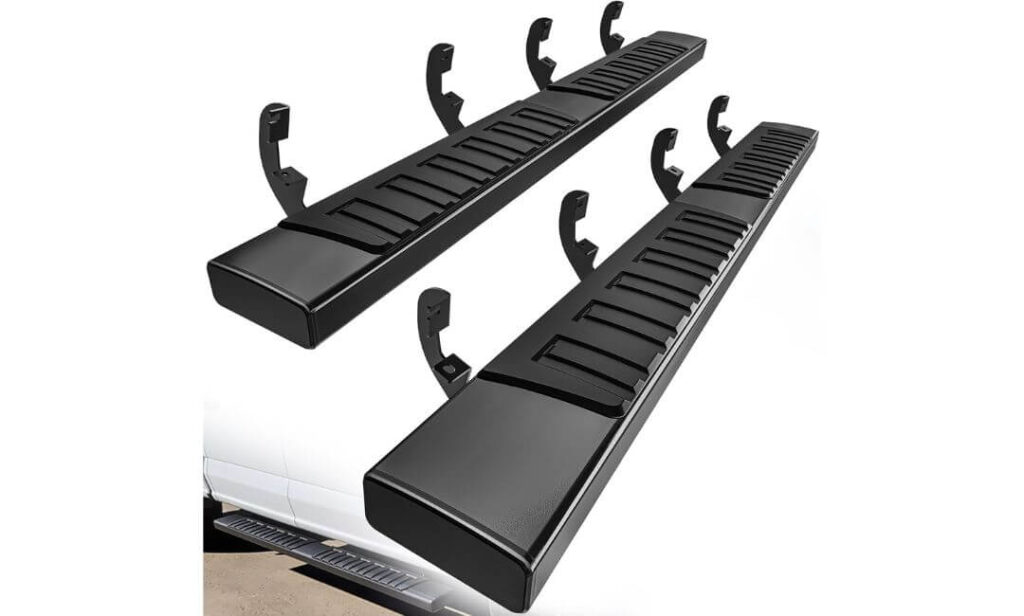
Quick Specs:
- Step Width: 6 inches full-length stepping platform
- Material: Aluminum alloy construction
- Finish: Matte black powder-coated exterior
- Weight Capacity: Up to 450 lbs support rating
- Fitment: 2019–2026 Sierra 1500 Crew Cab / 2020–2026 2500HD 3500HD
- Install Type: Bolt-on factory mount install
- Mounting: 8 bracket support system
- Board Length: Full crew cab door coverage
Some running boards are built to look aggressive. Others are built to work quietly in the background — helping entry, protecting the rocker panels, and doing their job without demanding attention. The YITAMOTOR 6-inch boards fall into that second category.
The stepping surface is flat, full-length, and confidence-friendly the moment your foot lands on it. Six inches gives enough room to plant your step naturally — not edge-balance like narrow nerf tubes. Whether it’s work boots, gym shoes, or kids climbing into the rear seats, the width makes daily entry smoother without forcing you to look down every time.
Structurally, the aluminum alloy build keeps them lighter during install but still rigid once mounted. The eight-bracket support system spreads load across the frame evenly, which helps reduce mid-board flex — especially when stepping near the rear doors. Rated to 450 lbs, they’re built to handle repeated use without that hollow bend feeling cheaper bars develop after months on the truck.
Finish quality leans practical over flashy. The matte black powder coating hides dust, boot marks, and road grime better than gloss finishes — something you appreciate if the truck actually sees daily driving instead of weekend detailing. The non-slip step pad texture also adds usable grip in wet weather, making entry stable even when conditions aren’t ideal.
Where These Earn Their Spot
- 6-inch platform gives comfortable daily stepping space
- Aluminum alloy keeps weight manageable without sacrificing strength
- Eight mounting brackets improve load distribution
- Matte coating hides wear better than gloss finishes
- Full-length coverage supports front and rear entry equally
Things to Consider
Matte powder coating holds up well overall, but like most budget-friendly aluminum boards, long-term cosmetic wear can show earlier if the truck sees constant gravel roads or heavy winter salt exposure.
GMC Sierra 1500 Fitment Check
These boards are cut specifically for Crew Cab door length, so stepping coverage runs clean from front to rear without short gaps. Mounting brackets align with factory holes, keeping installation drill-free and garage-friendly.
They’re compatible across 1500 and HD Sierra frames from the 2019 redesign onward — though 2019 LD/Limited variants are excluded, so cab verification before ordering matters.
Because the board profile sits mid-height relative to the rocker panel, they balance accessibility and clearance well — making them suitable for stock-height trucks and mildly leveled builds without hanging excessively low.
Pro Tip
Before final tightening, step onto the board while it’s loosely mounted.
You’ll feel instantly if the position needs adjusting forward, backward, or closer to the cab. Locking them in after weight testing — not before — is what separates a comfortable install from one you keep noticing every time you climb in.
#5. AutoBull Textured Aluminum Nerf Bars
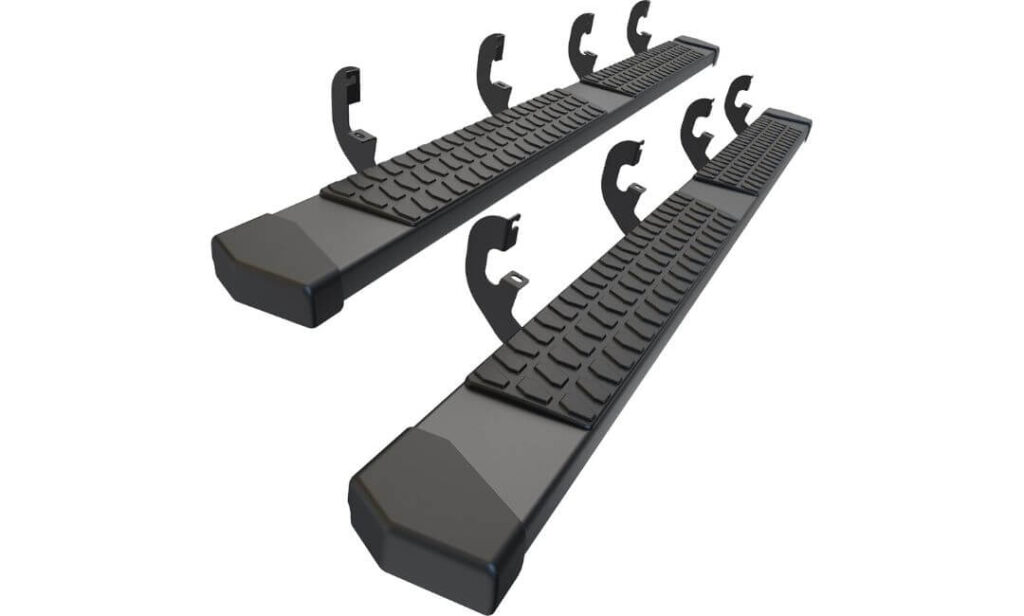
Quick Specs:
- Step Width: 6 inches full-length stepping surface
- Material: Rust-resistant aluminum construction
- Finish: Black powder-coated exterior
- Step Surface: Honeycomb anti-slip pattern
- Fitment: 2019–2026 Sierra 1500 Crew Cab / 2020–2026 2500HD 3500HD
- Install Type: Bolt-on factory mount install
- Edge Protection: ABS corner end caps
- Coverage: Full crew cab length boards
The first time you open the Sierra’s door and see how far that step drop really is — especially on stock AT4 height or leveled trucks — you realize quickly that not all running boards are built for real-world entry. Some are narrow. Some are slippery. Some look good but feel like balancing on a pipe.
These AutoBull boards don’t try to play that game.
The stepping surface is built around a honeycomb anti-slip pattern that immediately feels different underfoot. It’s not smooth aluminum pretending to be grippy — there’s actual texture biting into your sole when weight shifts. Whether you’re stepping in with wet boots, dusty work shoes, or helping someone climb into the rear seats, that traction holds consistently.
At 6 inches wide, the platform gives enough room to plant your foot fully instead of half-stepping. That matters more than people expect — especially for passengers who aren’t climbing into trucks daily. Elderly riders, kids, or anyone carrying gear benefit from that extra stepping confidence.
Build quality leans durability-focused. Aluminum construction keeps corrosion in check, while the powder-coated finish absorbs road abuse without flaking easily. The ABS corner caps aren’t just cosmetic — they protect exposed board edges from chipping and impact wear over time. Add in the rocker-panel shielding effect, and these boards double as side protection against gravel spray and parking lot door dings.
What Makes These Stand Out
- Honeycomb anti-slip surface adds real stepping traction
- 6-inch width improves passenger accessibility
- Aluminum build resists rust better than steel bars
- ABS corner caps protect edges from wear
- Full-length boards shield rocker panels from debris
Things to Consider
Fitment is Crew Cab specific and excludes certain 2019 LD/Limited variants — so verifying cab configuration before ordering avoids bracket alignment issues.
GMC Sierra 1500 Fitment Check
These boards are cut to match full Crew Cab rocker span, so stepping coverage stays consistent across both door rows. Brackets mount directly into factory points, keeping install straightforward without drilling or frame modification.
Because the boards sit at a balanced mid-height position, they work well across stock trucks and mildly leveled builds — offering entry assistance without hanging excessively low under the cab.
The integrated edge caps also help maintain a finished, OEM-style appearance once mounted — blending into the Sierra’s lower body lines rather than looking like an aftermarket add-on.
Pro Tip
If you want the honeycomb stepping surface to stay grippy long-term, rinse the boards during regular truck washes instead of letting dirt pack into the texture.
Clean texture keeps traction consistent — and makes the boards feel just as secure months down the road as they did the day you installed them.
#6. YZONA Crew Cab Running Boards
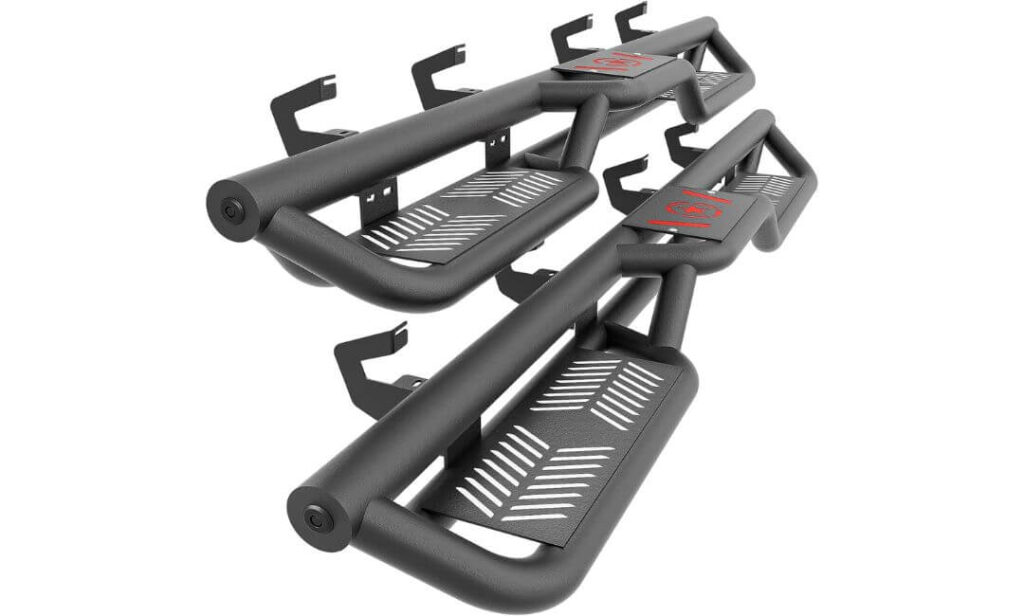
Quick Specs:
- Step Design: Two-tier drop step layout
- Step Width: 6-inch leaf-shaped step pads
- Material: Heavy-duty 2mm carbon steel
- Finish: Black powder-coated anti-corrosion coating
- Weight Capacity: Up to 550 lbs per side
- Fitment: 2019–2026 Sierra 1500 Crew Cab / 2020–2026 2500HD 3500HD
- Install Type: Bolt-on factory mount install
- Board Weight: Approx. 76 lbs pair
You don’t realize how high a Sierra actually sits — until you lift it, level it, or throw oversized tires on it. Then suddenly, standard running boards stop working the way they should. That first step up feels steeper, rear seat entry becomes awkward, and roof access turns into a stretch.
That’s exactly the gap these YZONA drop steps are built to solve.
Instead of a flat platform tucked under the cab, these use a two-tier layout — one primary stepping surface and one lower drop step. The difference is immediate when climbing in. Your foot isn’t searching for height… it lands naturally, especially on lifted trucks where factory-height boards sit too high to be useful.
The 6-inch leaf-shaped step pads are wider than they look in photos. They give enough surface area to plant your foot securely without turning the truck’s side profile bulky. Laser-cut traction texture adds grip under wet boots or dusty jobsite conditions — not aggressive enough to shred shoes, but firm enough to stop slips.
Build strength is where these separate themselves from cosmetic drop steps. Constructed from 2mm carbon steel, they carry serious structural weight. Rated at 550 lbs per side, they’re built for repeated load — climbing in with gear, stepping sideways, even using them for roof access when loading cargo. Powder coating seals the steel against corrosion, helping them survive road salt, rain, and gravel spray longer than bare metal alternatives.
Where These Hit Different
- Two-tier drop design makes lifted truck entry easier
- Lower step improves rear passenger accessibility
- 6-inch pads provide stable footing without bulk
- Carbon steel build handles heavy repeated use
- Laser-cut traction adds real grip underfoot
Things to Consider
Because of the drop-step design, these sit lower than standard platform boards — so extreme rock crawling or tight off-road clearance situations may require extra awareness.
GMC Sierra 1500 Fitment Check
These boards are cut specifically for Crew Cab frame geometry, ensuring door-to-door stepping alignment without gaps. Mounting brackets line up with factory holes, keeping install drill-free and straightforward even for home installs.
They’re particularly well-suited for leveled trucks, lift kits, and oversized tire setups where standard boards sit too high to be practical. The dual-step layout restores natural entry height without sacrificing structural strength.
Exclusion remains limited to 2019 LD/Limited variants — so verifying cab generation before ordering keeps fitment clean.
Pro Tip
If your Sierra runs 33-inch or larger tires, position the lower drop step slightly forward during install instead of perfectly centered.
That placement matches your natural step arc when climbing in — making entry feel smoother and more intuitive every single time you grab the door handle.
#7. AUTOSAVER88 Aluminum Side Step Rails
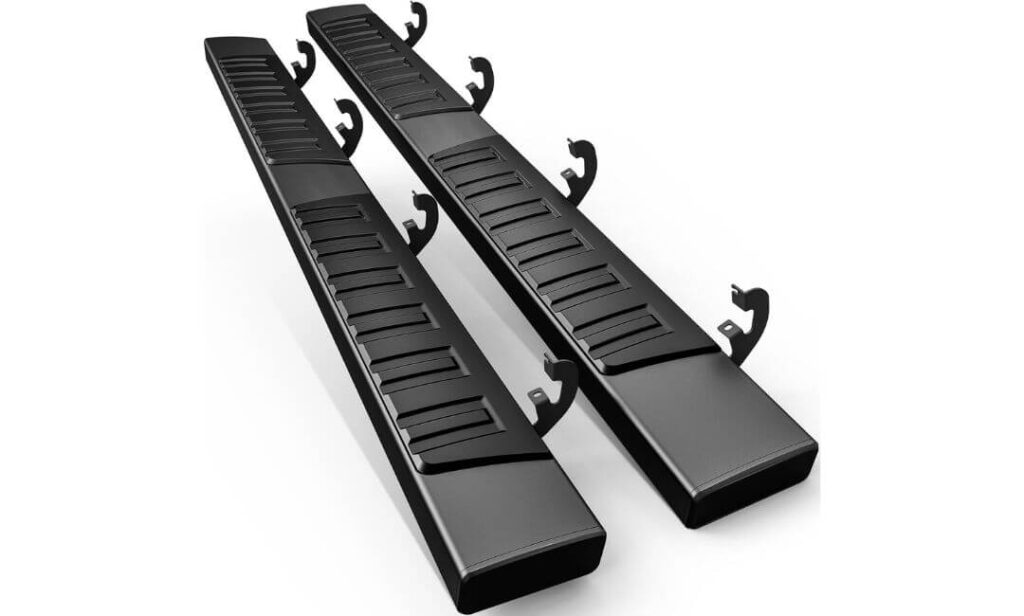
Quick Specs:
- Step Width: 6 inches full-length step pad
- Material: Aluminum with reinforced internal structure
- Finish: Black powder-coated exterior
- Weight Capacity: Up to 450 lbs support rating
- Fitment: 2019–2026 Sierra 1500 Crew Cab / 2020–2026 2500HD 3500HD
- Install Type: Bolt-on factory mount install
- Board Weight: Approx. 32.6 lbs pair
Some running boards enter the market loud — flashy designs, oversized branding, aggressive shapes. Others arrive quietly and focus on what most Sierra owners actually care about: clean fitment, usable stepping space, and factory-like integration.
That’s where these AUTOSAVER88 boards sit.
The 6-inch stepping platform gives enough room for natural foot placement without forcing you to angle your step. The injection-style non-slip pad runs the board length, offering consistent traction whether you’re climbing in from the front or rear doors. For daily-driven trucks, that uniform grip matters more than aggressive styling.
Construction uses aluminum to keep weight manageable during install, but the one-piece board structure prevents the hollow flex you sometimes feel on sectional bars. Rated to 450 lbs, they’re built to handle repeated entry without bending or mounting stress. The black powder coating adds a clean OEM-style look while shielding against rust and surface wear.
Being a newer entry in the Sierra running board space, these boards lean toward value-meets-function — offering practical stepping comfort and clean aesthetics without pushing into premium price territory.
Where They Fit Best
- 6-inch width supports comfortable daily entry
- Lightweight aluminum simplifies installation
- Full-length traction pad improves grip consistency
- Clean OEM-style appearance suits stock builds
Things to Consider
As a newer product in the segment, long-term finish durability will depend on climate exposure — especially in heavy salt or extreme winter regions.
GMC Sierra 1500 Fitment Check
These rails are cut specifically for Crew Cab rocker length and align directly with factory mounting points. Install stays drill-free, and coverage spans both door rows evenly for consistent stepping support.
They sit at a balanced mid-height position — making them suitable for stock trucks and light leveling setups without hanging too low beneath the cab.
Pro Tip
After installation, step across both front and rear sections before final torque.
If the board feels identical in stability across its full length, you’ve got bracket alignment perfect — and that’s what keeps long-term flex and hardware loosening from creeping in later.
GMC Sierra 1500 Running Boards Comparison Chart
| Running Boards | Step Width | Material | Weight Capacity | Design Style | Best For |
|---|---|---|---|---|---|
|
OEDRO 6.5″ Aluminum Running Boards Best Overall |
6.5 Inches | Aluminum + Stainless Pad | 350 lbs | Wide Platform | Daily comfort + family entry |
|
XTWEEX 6″ Aluminum Side Steps Best Value |
6 Inches | Aluminum Alloy | 550 lbs | Flat Step | Work trucks + heavy use |
|
Tyger Auto 3.5″ Rider Running Boards Low Profile |
3.5 Inches | Carbon Steel | 500 lbs | Oval Nerf Bar | Lifted trucks + clearance |
|
YITAMOTOR 6″ Aluminum Running Boards Budget Pick |
6 Inches | Aluminum | 450 lbs | Flat Platform | Daily drivers |
|
AutoBull Textured Nerf Bars Grip Focused |
6 Inches | Aluminum | 450 lbs | Honeycomb Step | Wet weather traction |
|
YZONA Drop Step Running Boards Heavy Duty |
6″ Drop Step | Carbon Steel | 550 lbs | Two Tier Drop | Lift kits + big tires |
|
AUTOSAVER88 Side Step Rails OEM Style |
6 Inches | Aluminum | 450 lbs | Flat Step | Stock height trucks |
Key Considerations Before Choosing Running Boards for GMC Sierra 1500
Choosing running boards for a Sierra isn’t just about width or finish anymore — especially on post-2019 trucks. Newer body electronics, revised rocker geometry, and evolving material construction have changed what buyers actually need to pay attention to.
Here are the factors that matter once you move beyond basic side steps.
Sensor Interference and Clearance Mapping
Modern Sierra trims — particularly Denali, AT4, and trucks equipped with advanced driver assist packages — rely on proximity sensors mounted along the lower body and bumper zones.
Poorly designed power boards or oversized drop steps can interrupt those sensor fields.
What happens in real use?
- Parking sensors trigger phantom alerts
- Running boards deploy or retract inconsistently
- Side obstacle detection gets partially blocked
Fixed aluminum boards rarely cause issues because they sit within rocker panel lines. Power boards and aggressive drop steps, however, extend outward and downward — which is where clearance mapping matters.
The safest approach is choosing boards engineered specifically around Crew Cab sensor geometry — ensuring deployment range stays outside detection zones.
Material Science Shift: Steel vs T6 Aircraft Grade Aluminum
Running boards used to be simple — heavy steel tubes, chrome coated, built like bumpers. Durable, yes… but weight, rust, and long-term corrosion were constant trade-offs.
Modern premium boards — including several in this guide — have shifted toward T6 aircraft-grade aluminum platforms.
Why that matters in real ownership:
- Lighter weight reduces bracket stress
- No internal rust expansion like hollow steel tubes
- Better resistance to road salt corrosion
- Easier handling during installation
Steel still holds value in heavy-duty drop steps where structural rigidity matters most — but for daily-driven Sierras, aluminum platforms offer the better strength-to-corrosion balance long term.
Warranty Awareness and Galvanic Corrosion Protection
One factor most buyers overlook until it’s too late: metal interaction.
Running boards mount directly to the truck’s steel frame. When dissimilar metals — like untreated steel brackets and aluminum boards — come into contact, galvanic corrosion can form over time, especially in wet or salted environments.
What separates better-engineered boards:
- Powder-coated mounting brackets
- Isolated hardware washers
- Anti-corrosion treated bolts
- Sealed aluminum edges
Warranty coverage often reflects how well brands account for this. Longer structural warranties usually signal better corrosion planning — not just marketing confidence.
Protecting the truck’s rocker finish and mounting points matters just as much as protecting the board itself — especially if resale value or long-term ownership is part of your plan.
In short, the right running board isn’t just about stepping comfort anymore.
It’s about electronic compatibility, material longevity, and how well the board integrates with the Sierra’s evolving body architecture — not just today, but years down the road.
Maintenance and Longevity Tips for GMC Sierra Running Boards
Running boards live in one of the harshest zones on the truck — constantly exposed to water spray, gravel impact, road salt, tar, and boot abrasion. And yet, they’re one of the most overlooked accessories when it comes to maintenance.
A little care goes a long way here — not for appearance alone, but for grip retention, corrosion resistance, and long-term structural integrity.
Cleaning Textured Finishes Without Leaving Residue
Textured step pads — whether honeycomb, stamped stainless, or laser-cut aluminum — are designed to grip. That same texture that keeps your foot from slipping also traps road grime, salt crystals, and wax residue if cleaned incorrectly.
The mistake most owners make is using the same wash-and-wax routine they use on paint.
Wax buildup inside textured patterns does two things:
- Reduces anti-slip grip
- Leaves white residue trapped in grooves
Instead, textured boards respond better to a rinse-first approach.
Start with a pressure rinse to break loose embedded debris. Follow with a soft bristle brush and a pH-neutral automotive soap — nothing gloss-enhancing, nothing wax-infused. Work along the grain of the texture rather than across it.
If residue buildup already exists, a diluted all-purpose cleaner or isopropyl wipe-down restores the original matte grip without damaging the coating.
Clean texture isn’t about shine — it’s about restoring the traction the board was built to provide.
Protecting Powder Coating and Hardware
Powder-coated aluminum and steel finishes hold up well, but they’re not immune to long-term exposure.
Salt-heavy regions accelerate micro-chipping along step edges and mounting brackets. Once coating breaks, moisture finds its way to raw metal underneath.
Quarterly rinsing of the board undersides — especially bracket zones — helps prevent corrosion from creeping inward where it isn’t visible day to day.
A light anti-corrosion spray on mounting hardware also helps prevent bolt seizure over time, making future removal or adjustments easier if needed.
Lubricating Motor Hinges on Power-Folding Boards
For Sierra owners running power-deploying steps, maintenance shifts from surface care to mechanical care.
Power boards rely on hinged arms, motor gears, and pivot joints — all of which sit directly in the debris path thrown off the front tires.
Without periodic lubrication, dirt buildup stiffens hinge movement. Over time, that leads to:
- Slower deployment
- Jerky extension
- Motor strain
- Premature actuator wear
A silicone-based or dry PTFE lubricant works best here — applied sparingly to hinge pivot points and linkage arms. Avoid heavy grease, which traps dust instead of repelling it.
Cycling the boards open and closed after lubrication ensures even distribution across moving components.
Long-term, running boards don’t fail from weight — they fail from neglect.
Keep traction surfaces clean, hardware protected, and moving parts lubricated, and the boards you install today will still feel solid years down the line — every time you open the door and step in.
Final Verdict and Best Running Boards Picks by Real World Use
After fitting, stepping on, adjusting, and living with these boards across different Sierra builds — stock height, leveled, and lifted — one thing becomes clear:
There isn’t one “best” running board.
There’s only the one that fits how your truck is actually used day to day.
Some prioritize stepping comfort. Others need clearance. Some want structural strength for work use, while others want something that blends into the truck like factory equipment.
Here’s how these seven shake out once you move past specs and into real ownership.
Best Overall for Most GMC Sierra Owners
OEDRO 6.5″ Aluminum Running Boards
If you want the safest all-around choice — daily usability, wide footing, clean fitment — this is the one that works for the widest range of Sierra drivers. The 6.5-inch platform feels noticeably more stable than standard boards, especially for family entry and repeated daily stepping.
Best Heavy Duty Work Truck Option
XTWEEX 6″ Aluminum Side Steps
Built with higher load support and reinforced bracket mounting, these lean toward trucks that see jobsite use, tool weight, and constant in-and-out movement. They hold up well when stepping pressure isn’t always perfectly centered.
Best for Lifted and Oversized Tire Setups
YZONA Two Tier Drop Steps
Once you lift the truck, standard boards sit too high to help. The dual-step drop design fixes that entry gap — making them the most practical choice for leveled AT4 builds or trucks running larger wheel setups.
Best Low Profile Clearance Focused Pick
Tyger Auto 3.5″ Rider Running Boards
If ground clearance matters as much as stepping support, these keep a tighter body profile without sacrificing structural strength. Ideal for off-road leaning builds or drivers who don’t want wide platforms hanging below the cab.
Best Budget Friendly Daily Driver Boards
YITAMOTOR 6″ Aluminum Running Boards
Balanced width, stable stepping, and straightforward fitment make these a solid choice for Sierra owners who want practical entry support without stretching into premium pricing tiers.
Best Grip Focused Textured Platform
AutoBull Textured Nerf Bars
The honeycomb traction surface stands out in wet or muddy climates where stepping stability matters more than finish styling. A good match for work trucks and all-weather daily drivers.
Best OEM Style Upgrade Look
AUTOSAVER88 Side Step Rails
Clean, factory-like appearance combined with functional stepping width makes these a natural fit for stock-height trucks where aesthetics and usability need to stay balanced.
Which Running Board Style Fits Your Sierra Build Best
If you’re still deciding based on truck setup rather than brand, this breakdown usually clarifies things fast:
- Wide Platform Boards → Best for families, daily driving, frequent entry
- Drop Steps → Ideal for lifted trucks and oversized tires
- Low Profile Nerf Bars → Better for clearance and off-road angles
- OEM Style Rails → Best for stock builds wanting factory aesthetics
Matching board style to truck height matters more than most buyers expect — and getting that balance right is what separates a comfortable install from one you second-guess every time you step in.
FAQs About GMC Sierra 1500 Running Boards
Do running boards affect ground clearance on the GMC Sierra 1500?
They can — but it depends entirely on the board style you choose. Wide platform boards usually sit slightly lower to prioritize entry comfort, while low-profile nerf bars and flush mounts stay tucked closer to the rocker panel. Drop steps extend even lower by design, especially for lifted trucks. If your Sierra sees off-road trails or steep driveways regularly, clearance-focused boards make more sense than full-width platforms.
Are running boards really necessary on stock height Sierra trucks?
Necessary — no. Appreciated — absolutely. Even at factory height, Crew Cab Sierras have a noticeable step-up, especially for rear passengers. Families, elderly riders, and shorter drivers feel the difference immediately once boards are installed. Over time, they also reduce seat bolster wear since you’re not sliding in and out as aggressively.
Will these running boards fit both Sierra 1500 and 2500HD models?
Many aftermarket boards are engineered across both platforms because the cab structures share mounting geometry — especially on Crew Cab configurations. However, fitment still depends on cab size and model year exclusions like 2019 LD/Limited variants. Always match door count and frame generation rather than assuming universal compatibility.
How difficult is it to install running boards at home?
Most modern Sierra running boards use factory mounting points, meaning no drilling or cutting is required. With basic hand tools, installs usually take 60–120 minutes depending on board weight and bracket count. Heavier steel drop steps may require a second set of hands, but aluminum platforms are manageable solo in a garage setting.
Do aluminum running boards hold up as well as steel ones long term?
For daily-driven trucks — yes, and often better. Aluminum resists rust naturally, making it ideal for wet or salt-heavy climates. Steel still wins in raw impact strength, which is why heavy-duty drop steps use it. But for entry comfort, corrosion resistance, and long-term appearance, aluminum platforms strike the better ownership balance.
Closing Thoughts — Choosing the Right Running Boards for Your Sierra Isn’t Just Cosmetic
By the time most Sierra owners start looking at running boards, it’s rarely about appearance alone.
It starts with that first awkward step into the cab. Or watching passengers hesitate before climbing in. Or realizing how often your pant leg brushes the rocker panel after a rainy drive.
Running boards quietly become one of the most used contact points on the truck — something you interact with every single day without thinking about it.
And that’s why choosing the right set matters more than most expect.
A wide platform changes how naturally you step in.
A drop step changes accessibility on lifted builds.
A low-profile rail preserves clearance without sacrificing usability.
The difference isn’t visible in photos — it’s felt every time the door opens.
What makes the seven options in this guide stand out isn’t branding or hype — it’s how they integrate into real Sierra ownership. Entry comfort, structural stability, corrosion resistance, and fitment precision all play a role in how satisfied you’ll feel months after installation… not just on day one.
Because the best running boards don’t remind you they’re there.
They just make the truck easier to live with — for you, your passengers, and anyone stepping into the cab long after the install is forgotten.
Choose based on how your Sierra is driven, not just how it looks parked.
Get that balance right — and it’s one of those upgrades you’ll appreciate every single time you reach for the door handle.


