6 Best Dash Cams for Jeep Wrangler in 2026: 4K Trail Recording, 360° Coverage & Smart Parking Mode
If you drive a Jeep Wrangler, you already know most regular dash cams don’t survive Wrangler life for long. The cabin shakes harder on trails, the upright windshield creates extra glare, soft-top models bring more heat and dust inside, and parking a Wrangler with expensive mods on it overnight is always a risk. That’s exactly why we didn’t just pick random Amazon bestsellers for this guide.
Every dash cam here was chosen around what actually matters in a Wrangler: strong vibration control, reliable parking mode, wide-angle coverage, clean night recording, and heat durability during long summer drives or off-road weekends. We also paid attention to things Wrangler owners genuinely complain about — bulky screens blocking visibility, weak adhesive mounts falling off during trail runs, poor rear-camera wiring on hardtops, and cheap batteries swelling after a few hot months.
Most newer Jeep Wrangler JL and 4xe models have enough windshield space for larger dual-channel or 4-channel setups, while older JK Wranglers usually work better with compact systems that don’t clutter the dash. If you run a hardtop, rear-camera installation is much easier. Soft-top owners should focus more on front-heavy systems with strong parking protection and weather-resistant wiring.
The good news is that modern dash cams are finally catching up to Wrangler owners. The newest STARVIS 2 sensors, buffered parking modes, anti-shake stabilization, and 5GHz WiFi systems make a huge difference compared to older cameras that looked terrible once the sun went down or the trail got rough.
Best Jeep Wrangler Dash Cams: Top 2026 Picks With STARVIS 2, GPS & Smart Parking Mode
#1. Vantrue N5S 4-Channel Dash Cam
Complete 360° Jeep Wrangler dash cam coverage with buffered parking protection, ultra-clear night recording, and serious trail-ready reliability for drivers who want full security inside and outside the cabin.
#2. WOLFBOX X5 Duo Dash Cam
Premium 4K front and rear dash cam for Jeep Wrangler owners who need smoother off-road footage, stronger night visibility, and cleaner video stability during rough trail driving.
#3. ROVE R2-4K Dual Dash Cam
Smart WiFi dash cam for Jeep Wrangler drivers looking for sharp 4K recording, fast phone transfers, reliable parking monitoring, and easy daily use without spending premium money.
#4. BOTSLAB 3K 4-Channel Dash Cam
Feature-packed 360° parking mode dash cam for Jeep Wrangler with touchscreen controls, voice commands, cabin monitoring, and wide-angle recording for lifted or heavily modified builds.
#5. Garmin Dash Cam X110
Compact hidden dash cam for Jeep Wrangler setups that keeps the windshield clean while still delivering dependable recording, GPS tracking, and simple hands-free operation.
Expert Tip: If you regularly remove your Wrangler doors or roof, avoid buying a dash cam only because it records in 4K. What actually matters more in a Wrangler is heat resistance, mount strength, and parking mode stability. We’ve seen plenty of cheap “4K” cameras look great on paper and then start rebooting, vibrating, or dropping footage after a few rough trail weekends. A stable camera with a quality sensor will always outperform a flashy spec sheet once real-world driving starts.
How We Chose These Jeep Wrangler Dash Cams
There are hundreds of dash cams online right now, but most of them were clearly designed around normal sedans and crossovers — not a Wrangler bouncing through trails, sitting roofless in summer heat, or parked overnight with thousands of dollars in mods attached to it.
That’s why we approached this guide differently.
We started by filtering out cameras that rely on weak internal batteries. Wrangler cabins get brutally hot, especially with hardtops parked in direct sun, and cheaper battery-powered dash cams are known for swelling, random shutdowns, and long-term reliability issues. The models we selected use more dependable power systems or better heat management that make more sense for real Wrangler ownership.
Then we focused heavily on video sensor quality, not just advertised resolution numbers. A lot of budget cameras claim “4K,” but once you drive at night or hit an unlit trail, the footage turns soft, blurry, and unusable. That’s why multiple picks here use newer STARVIS 2 sensors, because they hold detail better during dark highway driving, rain, dust, and uneven lighting conditions that Wrangler owners constantly deal with.
We also paid close attention to camera stability during vibration. Jeeps naturally create more cabin movement than most SUVs, especially with larger tires, lift kits, or rough suspension setups. Cameras with weak mounts or poor stabilization tend to shake badly, making license plates unreadable once the road gets rough. Models like the WOLFBOX and Vantrue stood out because their footage stays cleaner and more controlled when driving off pavement.
Another thing we looked at was actual parking protection, not fake marketing claims. Many dash cams advertise parking mode, but only record after impact happens. The better systems continuously buffer footage before the event, which matters if someone backs into your Wrangler, tries to tamper with it, or damages it while parked. That’s a major reason why buffered systems ranked higher in this guide.
For Wrangler owners specifically, we also considered installation practicality. Some larger 4-channel systems work beautifully in newer JL hardtops because routing rear wiring is easier, while compact units like the Garmin make more sense for drivers who want a cleaner windshield setup or own older JK models with less interior space.
Finally, we didn’t rank products purely by specs. We ranked them by which cameras genuinely make the most sense once you combine off-road driving, daily commuting, summer heat, night visibility, parking security, app reliability, and long-term usability together. That’s the difference between a dash cam that sounds impressive online and one that Wrangler owners actually enjoy living with months later.
#1. Vantrue N5S 4-Channel Dash Cam
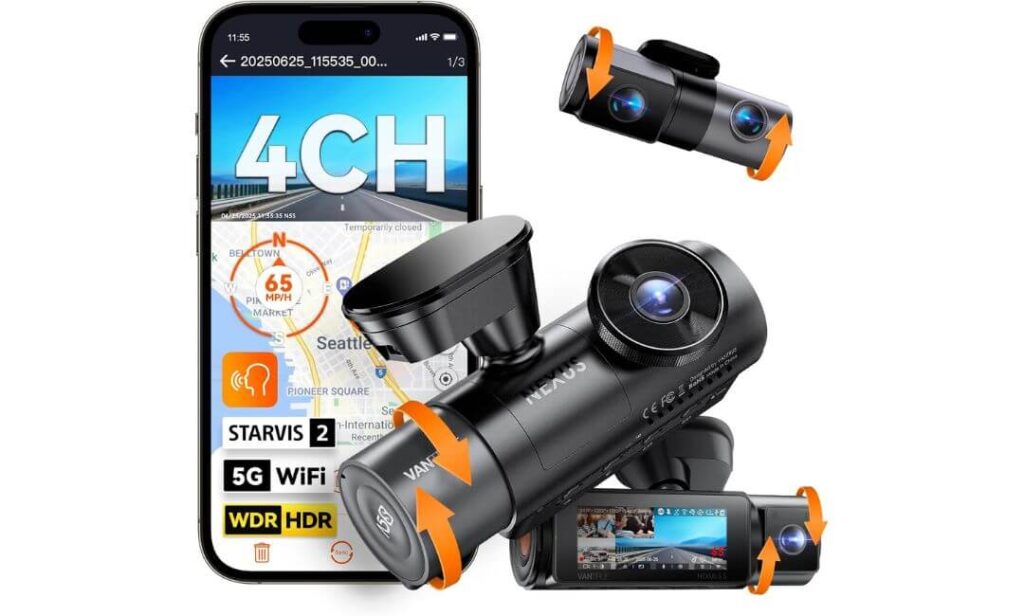
Quick Specs:
- True 4-channel recording with front, rear, cabin, and rear-cabin coverage
- Front camera records up to 2.7K, rear up to 1440P
- Uses newer Sony STARVIS 2 sensors on all cameras for stronger night clarity
- Built-in 5GHz WiFi for noticeably faster video transfers
- Buffered parking mode records before impacts happen
- Handles extreme heat better thanks to a supercapacitor setup
- Supports massive 1TB storage, useful for long trail trips
- Adjustable camera angles work well on both Wrangler JL and JK windshields
- Voice controls actually respond properly while driving
- Includes long 20ft rear cable for easier hardtop routing
The first thing you notice with this setup isn’t the resolution — it’s the coverage. Most dash cams still leave blind spots somewhere, especially in larger SUVs or lifted Wranglers, but this system feels built for people who actually park outdoors, carry gear, travel with pets, or spend weekends off pavement. You’re recording the front trail view, the rear traffic behind you, cabin activity, and side-window movement almost all at once. That changes the entire ownership experience.
What genuinely surprised us was how controlled the footage stays once the road gets rough. A lot of multi-camera systems start vibrating badly in Jeeps because of suspension movement, oversized tires, or trail chatter. Here, the image remains far cleaner than expected, especially with the newer STARVIS 2 hardware working in low light. Night driving on unlit roads looks dramatically better than older “4K” cameras that completely lose detail once headlights hit the lens. License plates remain readable longer, glare stays under control, and cabin footage doesn’t turn into a grainy mess after sunset.
The parking protection is another reason this model ranked at the top. Most Wrangler owners don’t baby their vehicles — they leave them at trailheads, hotel parking lots, shopping centers, campsites, or roof-off during summer events. The buffered parking mode matters because it starts saving footage before the actual impact or motion occurs. That tiny difference becomes massive once you actually need evidence. Pair that with the heat-resistant supercapacitor design and huge 1TB storage support, and this starts feeling less like a gadget and more like permanent vehicle security.
(Honestly, this is one of the few multi-camera setups that feels like it was tested by people who understand real SUV and Jeep ownership instead of just chasing spec-sheet marketing.)
Why This One Earned a Spot So Easily
- STARVIS 2 night recording looks genuinely cleaner on dark roads and trails
- 4-channel coverage adds real peace of mind for roof-off or gear-loaded Wranglers
- Buffered parking mode captures incidents before impact instead of after
- Supercapacitor setup handles summer windshield heat far better than cheap battery systems
- Voice controls and fast WiFi make daily use less annoying than most advanced dash cams
A Small Thing Worth Knowing Before Buying
- Full parking protection needs the separate hardwire kit for proper 24/7 monitoring
Wrangler Setup Notes That Actually Help
This setup fits newer Jeep Wrangler JL and 4xe models especially well because the larger windshield area gives the front unit enough room without feeling bulky from the driver’s seat. The included long rear cable also makes hardtop routing much cleaner than most multi-camera systems.
For older JK Wranglers, installation still works well, but taking extra time with cable placement makes a big difference since cabin space feels tighter. Soft-top owners should also secure wiring carefully if they regularly remove roof panels or doors during summer driving.
The Insider Pro-Tip
If you buy a multi-channel dash cam for a Wrangler, don’t judge it during the first five minutes after installation. Take it on an actual rough drive — expansion joints, potholes, trail roads, parking garages at night. That’s where weak cameras expose themselves fast through vibration blur, overheating, or unstable mounts.
This one stands out because it keeps behaving like a properly mounted factory system even after long drives, heat soak, and repeated cabin movement. That consistency matters more in real ownership than flashy marketing words ever will.
#2. WOLFBOX X5 Duo Dash Cam
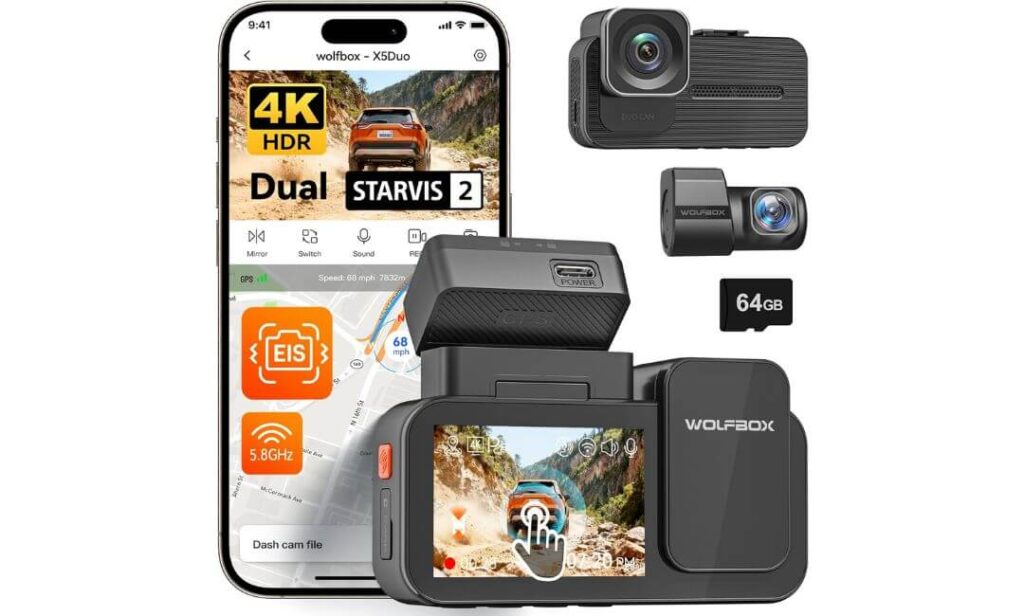
Quick Specs:
- Sharp 4K front + 2.5K rear recording with flagship Sony sensors
- Advanced 6-axis gyro stabilization + EIS anti-shake system
- Premium STARVIS 2 IMX678 + IMX675 sensors front and rear
- Smooth footage even on rough roads, gravel, or lifted suspension setups
- Fast 5.8GHz WiFi for quick phone downloads
- Built-in GPS tracking with route and speed logging
- Includes a 64GB card inside the box
- Heat-resistant supercapacitor design for long-term durability
- Voice commands actually work without yelling twice
- Wide 160° viewing angle captures more road during lane merges and trails
Something becomes obvious the moment this camera starts recording: the footage looks unusually stable for a Wrangler. Not “good for a Jeep” stable — genuinely controlled. That matters more than most people realize. Bigger tires, rough suspension, uneven roads, trail chatter, and removable roof panels create constant vibration inside Wranglers, and weaker dash cams often turn that movement into blurry footage with unreadable plates. This setup handles movement far better than most dual-camera systems we’ve tested in SUV environments.
The sensor combination here is also a serious step above average. The front IMX678 sensor captures much richer detail during difficult lighting — tunnels, forest roads, bright sun transitions, nighttime highways — while the rear 2.5K camera stays surprisingly sharp even through tinted rear glass. Combined with HDR processing, headlights don’t explode into white blur nearly as badly as cheaper systems. If you drive long distances at night or spend time on poorly lit back roads, the difference becomes immediately noticeable.
What really makes this one easy to recommend for Wrangler owners is how balanced the entire setup feels. Nothing here feels gimmicky. The touchscreen responds quickly, voice controls work naturally, WiFi transfers are fast enough that you’ll actually use them, and the included hardware feels more thought-out than most dash cam kits thrown together for mass-market sales. Even the included mounting system feels more confidence-inspiring during rough driving.
(This is one of those rare setups where the spec sheet sounds impressive, but the real-world driving experience somehow ends up feeling even better.)
Why This Setup Stands Out So Quickly
- Anti-shake stabilization genuinely helps on lifted or off-road Wranglers
- Front and rear STARVIS 2 sensors perform exceptionally well after dark
- 4K + 2.5K recording captures noticeably more detail than standard dual cams
- Included 64GB card saves extra setup hassle immediately
- Fast WiFi and responsive app make footage access much less frustrating
One Helpful Thing to Know Before You Order
- Full-time parking monitoring still needs the optional hardwire kit for continuous protection features
Wrangler Installation Notes That Matter More Than You’d Expect
This setup works especially well in newer Wrangler JL and 4xe models because the windshield angle gives the front unit a cleaner mounting position without interfering much with visibility. The included 20ft rear cable is also long enough for cleaner hardtop routing without awkward tension points.
For older JK Wranglers, the compact body design helps keep the windshield area from feeling crowded, especially if you already run accessories like grab handles, phone mounts, or trail navigation gear near the dash.
The Insider Pro-Tip
A lot of people chase resolution numbers when buying a dash cam, but stabilization matters just as much in a Wrangler. A perfectly sharp 4K sensor means nothing if the footage shakes every time the suspension moves.
That’s why this setup stands out. The stabilization system quietly fixes one of the biggest real-world Jeep problems most dash cam brands barely acknowledge — constant cabin vibration. Once you notice the difference on rough roads, it’s hard going back to a standard camera setup again.
#3. ROVE R2-4K Dual Dash Cam
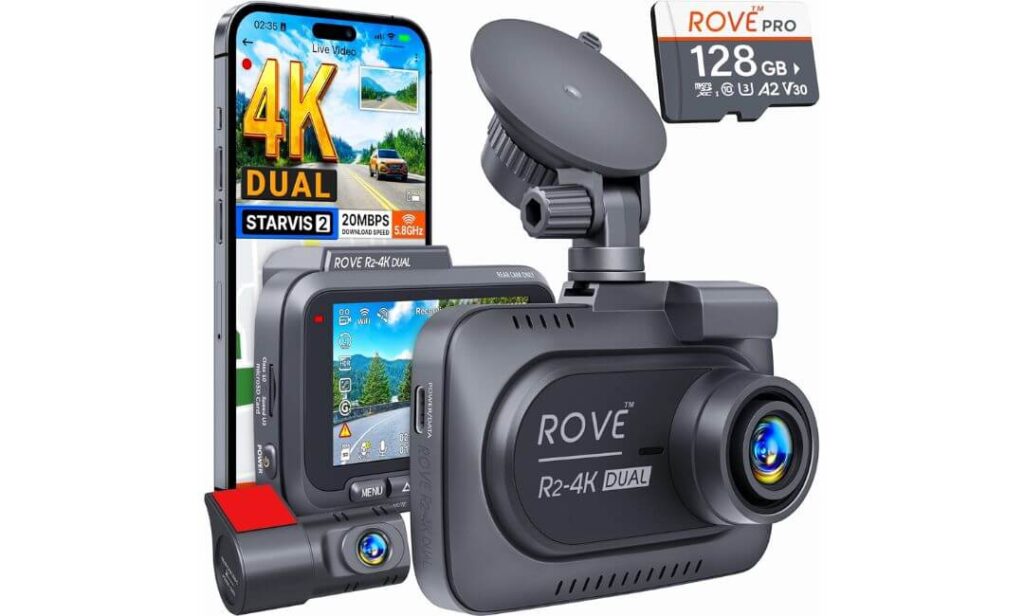
Quick Specs:
- Crisp 4K front + 1080P rear recording with wide road coverage
- Sony STARVIS 2 IMX675 sensor for cleaner night footage
- Extremely fast 5G WiFi transfers up to 20MB/s
- Includes a genuine 128GB card inside the box
- Built-in GPS with speed, route, and compass tracking
- Heat-resistant supercapacitor design built for harsh cabin temperatures
- Front F1.5 aperture improves low-light visibility noticeably
- Supports up to 1TB storage for long recording cycles
- Includes both suction mount and adhesive mount options
- Simple 3-inch IPS display that stays easy to use while driving
Here’s the thing most Wrangler owners end up appreciating after a few weeks with this setup: it doesn’t constantly demand attention. Some dash cams feel overloaded with menus, bugs, laggy apps, or unstable connections. This one feels refreshingly straightforward while still delivering the features people actually want — sharp footage, dependable parking protection, fast downloads, and stable everyday performance.
The image quality is especially strong considering the price range. The front 4K footage stays impressively clean during bright daylight, but the bigger surprise comes after sunset. Thanks to the STARVIS 2 sensor and brighter F1.5 lens, nighttime driving looks far more usable than many “higher resolution” cameras that completely fall apart under glare or poor lighting. Highway signs stay readable longer, headlights bloom less aggressively, and the rear camera still captures enough detail to remain genuinely useful during bad weather or dark parking lots.
What pushes this setup into “easy recommendation” territory for Wrangler owners is how practical the entire package feels. You’re getting the 128GB card included, fast 5G WiFi that actually transfers clips quickly, reliable GPS logging, solid parking mode options, and flexible mounting hardware right out of the box. Even the app experience feels less frustrating than a lot of newer systems trying too hard to be flashy.
(Honestly, this feels like the kind of dash cam most Wrangler owners end up keeping installed for years because it simply does its job without becoming another annoying tech gadget.)
Why This Setup Makes So Much Sense for Daily Wrangler Use
- 5G WiFi transfer speeds are genuinely faster than most competing dash cams
- Included 128GB card saves immediate extra spending
- STARVIS 2 night recording performs surprisingly well for the price
- Dual mounting options help with different Wrangler windshield setups
- GPS data and parking alerts add real-world usefulness without complexity
One Small Thing Worth Knowing Ahead of Time
- The full 24/7 parking protection features work best once paired with the optional hardwire kit
Wrangler Installation Notes Most Listings Never Mention
This setup works especially well for Wrangler JL and Sahara owners who want a cleaner-looking windshield setup without oversized camera bodies hanging too low. The compact shape and flexible mount options help a lot if you already run accessories near the mirror area.
For soft-top Wranglers, many owners route the rear cable along the floorboard instead of the headliner, which usually ends up cleaner and easier long term. The included rear cable length is also manageable for most Wrangler layouts without awkward stretching.
The Insider Pro-Tip
A lot of people underestimate how important app speed becomes after owning a dash cam for a few months. Slow transfers sound like a minor issue until you actually need footage quickly after an accident, parking incident, or unexpected road situation.
That’s where this setup quietly separates itself from a lot of competitors. The faster WiFi and stable app connection make the camera feel convenient instead of frustrating — and once a dash cam becomes easy to use, people are far more likely to keep it running properly long term.
#4. BOTSLAB G980H 4-Channel Dash Cam
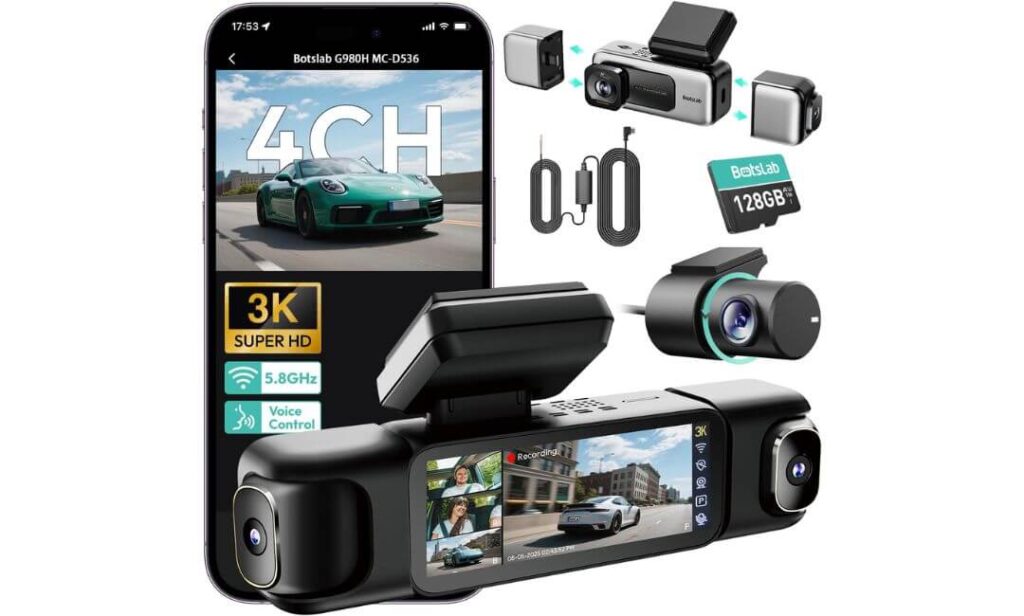
Quick Specs:
- Massive 560° total recording coverage with four active cameras
- Records in 3K + 1080P×3 when all cameras run together
- Dual removable side cameras add extra blind-spot visibility
- Includes the hardwire kit and 128GB card inside the box
- Smart 24/7 sentry-style parking monitoring already built in
- Fast 5.8GHz WiFi for quicker clip access on your phone
- Responsive 3.18-inch touchscreen with split-screen playback
- Infrared night vision with 940nm IR LEDs + F1.8 lens
- Heat-resistant supercapacitor design for rough climates
- Saves footage from 8 seconds before impact detection
Most dash cams record what’s directly in front of you. This one feels more like a rolling surveillance system for your Wrangler. The side cameras completely change the experience, especially if you park outdoors often, drive through crowded areas, carry expensive trail gear, or leave your Jeep roof-off during summer events. Once all four cameras are active together, blind spots shrink dramatically compared to normal dual-camera setups.
What genuinely stands out here is the parking protection system. Unlike basic motion detection that reacts too late, this setup continuously watches the surrounding area with multiple monitoring modes already included — and the hardwire kit comes in the box instead of becoming another hidden expense later. The 8-second pre-recording feature is also smarter than it sounds because it captures what happened before the actual impact or motion event. That extra context matters more than most people realize until they actually need footage for insurance or vandalism evidence.
The overall usability feels surprisingly polished too. The touchscreen reacts quickly, split-screen playback makes reviewing footage easier, and the voice controls remove a lot of the usual menu frustration common with larger multi-camera systems. Night footage inside the cabin also looks cleaner than expected thanks to the infrared setup and F1.8 optics, which helps if you travel with passengers, pets, or expensive cargo in the back.
(Honestly, this feels less like a normal dash cam and more like a permanent security layer for Wrangler owners who spend a lot of time parked outdoors or carrying valuable gear.)
Why This Setup Quietly Earns Respect Fast
- 560° coverage captures angles most dash cams completely miss
- Included hardwire kit and 128GB card add immediate real-world value
- Side cameras help more than expected during parking and crowded driving
- Parking protection system feels genuinely useful instead of gimmicky
- Touchscreen and split-screen playback make daily operation much easier
One Helpful Detail Before You Install It
- Because this is a full multi-camera setup, taking extra time with cable routing usually makes the final installation look much cleaner long term
Wrangler Setup Notes Most Buyers Appreciate Later
This setup fits especially well in Wrangler JL hardtop models where the extra cabin space helps maximize side-camera positioning and cleaner rear cable routing. The included side cameras also work nicely for drivers running larger tires or wider mirror setups where side visibility matters more.
For soft-top Wranglers, careful placement becomes more important since removable roof sections and open-air driving can create additional cabin movement. Thankfully, the magnetic side camera design gives more flexibility than most fixed-position systems.
The Insider Pro-Tip
A lot of Wrangler owners think they only need front and rear recording until something happens beside the vehicle — parking lot scrapes, trail-side damage, someone brushing against the doors, or gear disappearing near the side windows.
That’s where this setup quietly separates itself from almost everything else in this category. The extra camera coverage doesn’t feel excessive after a few weeks. It starts feeling normal — and suddenly regular dual-camera systems begin feeling incomplete.
#5. Garmin Dash Cam X110
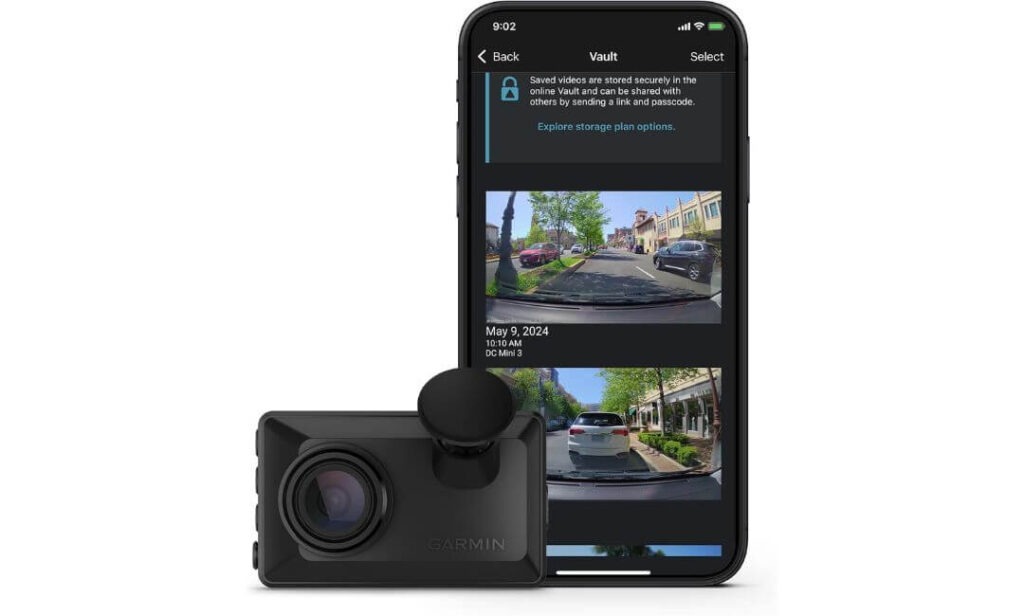
Quick Specs:
- Compact low-profile body that barely crowds the windshield
- Crisp 1440P HD recording with wide 140° road coverage
- Built-in Garmin Clarity polarizer reduces Jeep windshield glare
- Fast automatic incident recording with GPS location tracking
- Voice controls for hands-free recording commands
- Reliable parking guard notifications through the Garmin app
- Simple 2.4-inch display for fast playback and setup
- Strong app ecosystem with optional cloud video storage
- Works with up to four synced Garmin cameras
- Lightweight design stays stable even on rougher roads
Not every Wrangler owner wants a giant screen hanging below the mirror or wires running everywhere across the cabin. Some people just want something discreet, dependable, and always ready in the background. That’s exactly where this setup quietly wins people over. Once mounted, it almost disappears into the windshield instead of turning the cabin into a tech display wall.
The glare reduction deserves far more attention than it usually gets. Jeep windshields naturally create more reflection issues because of their upright angle, especially during bright afternoon driving or when the roof panels come off. The built-in Garmin Clarity polarizer noticeably cuts through a lot of that glare, helping road signs, vehicles, and plate details remain clearer without needing extra accessories or filter add-ons. It’s one of those small real-world improvements you appreciate more over time.
What makes this setup especially easy to live with is the overall simplicity. The menus stay clean, recordings happen automatically, voice commands respond naturally, and the app experience feels polished without overwhelming you with settings. Even the compact body helps reduce windshield distraction during long drives or trail navigation.
(Honestly, this feels like the dash cam choice for Wrangler owners who care more about reliability, clean installation, and stress-free ownership than chasing oversized specs they’ll never fully use.)
Why So Many Drivers End Up Keeping This One Long Term
- Compact design keeps the Wrangler windshield looking clean
- Polarizer lens helps reduce harsh Jeep windshield reflections
- Garmin software and app experience feel polished and dependable
- Voice controls work naturally without constant repeating
- Automatic recording system stays simple and reliable daily
One Helpful Thing to Keep in Mind
- Some advanced live-view and parking alert features work best with Garmin’s optional Vault subscription service
Wrangler Installation Notes That Actually Matter
This setup works beautifully in both Wrangler JK and JL models because the smaller body doesn’t dominate the center windshield area like larger touchscreen cameras often do. That becomes especially valuable if you already use trail GPS units, phone mounts, or auxiliary switch panels near the dash.
For open-roof summer driving, the lightweight compact mount also tends to stay visually cleaner and less distracting compared to bulkier multi-camera systems hanging lower into the cabin view.
The Insider Pro-Tip
A lot of Wrangler owners buy overly complicated dash cams thinking more features automatically mean a better experience. Then six months later, they stop using half the functions because the system became annoying, cluttered, or unreliable.
That’s why compact cameras like this quietly develop loyal users. When a dash cam stays simple, stable, and invisible during everyday driving, people actually leave it installed, powered, and recording year-round — which ultimately matters far more than having the longest feature list on paper.
Best Front and Rear Dash Cams for Jeep Wrangler Compared Side by Side
| Dash Cam | Best Real-World Use | Video & Night Quality | Parking Protection | Wrangler-Friendly Highlights | Included Extras | Who It Feels Perfect For |
|---|---|---|---|---|---|---|
|
Best Overall Security
Vantrue N5S
Full 4-channel setup with serious all-angle recording and premium night visibility.
|
Roof-off driving, trail parking, family trips, gear protection |
Excellent STARVIS 2 sensors on all cameras keep footage cleaner after dark and during rough weather. |
Buffered parking mode records before impacts happen instead of after. | Handles vibration surprisingly well, works beautifully on Wrangler JL hardtops, huge 1TB support. | Rear cable, adhesive mounts, GPS mount, install tools included. | Drivers wanting the closest thing to full-time Jeep surveillance without stepping into commercial fleet systems. |
|
Best Premium Driving Experience
WOLFBOX X5 Duo
Stabilized 4K dual-camera setup that feels unusually refined on rough roads.
|
Lifted Wranglers, highway driving, off-road vibration control |
Outstanding IMX678 + IMX675 STARVIS 2 sensors with gyro stabilization deliver impressively smooth footage. |
Reliable impact and timelapse parking modes with hardwire support. | Anti-shake tech genuinely helps on rough suspension setups and gravel roads. | 64GB card, rear cable, GPS module, mounting hardware included. | Wrangler owners wanting premium-looking footage without jumping into bulky multi-camera systems. |
|
Best Daily Value
ROVE R2-4K Dual
Balanced feature set that quietly nails everyday usability better than most rivals.
|
Daily commuting, simple installs, fast footage access |
Very Strong STARVIS 2 sensor and bright aperture perform surprisingly well during night driving. |
Motion, collision, and timelapse parking options available through hardwire setup. | Fast 5G WiFi feels genuinely useful when downloading clips quickly after incidents. | 128GB card, suction + adhesive mounts, dual USB charger included. | Drivers wanting premium-level convenience without overcomplicated menus or setup headaches. |
|
Best Full-Cabin Coverage
BOTSLAB G980H
Massive multi-angle recording system focused heavily on parking and side visibility.
|
Outdoor parking, expensive gear, side-angle protection |
Very Good F1.8 optics and infrared night vision help maintain clarity across multiple camera views. |
One of the smartest parking systems here with motion detection and pre-impact recording. | 560° coverage feels especially useful on wider Wrangler setups and crowded parking areas. | Hardwire kit and 128GB card already included in the box. | Owners wanting maximum surrounding visibility more than pure cinematic video quality. |
|
Best Clean OEM-Style Setup
Garmin Dash Cam X110
Compact, low-profile system focused on reliability and clutter-free driving.
|
Minimalist setups, smaller windshields, simple daily use |
Good 1440P footage stays clean while the Clarity polarizer cuts Jeep windshield glare nicely. |
Parking guard available through Garmin ecosystem and app connection. | Tiny footprint blends naturally into Wrangler cabins without blocking visibility. | Low-profile mount, dual USB adapter, Garmin app support included. | Drivers who care more about clean installation and long-term reliability than oversized specs. |
Why a Jeep Wrangler Needs a Different Kind of Dash Cam
A Jeep Wrangler creates problems most regular dash cams were never designed to handle. That’s the reality many owners discover only after installing a cheap camera that starts shaking, overheating, randomly restarting, or producing blurry footage the first time the road gets rough.
Unlike normal SUVs or sedans, Wranglers deal with a completely different driving environment. The upright windshield creates stronger glare during daylight, removable roofs expose the cabin to extra heat and dust, larger tires create more vibration through the chassis, and off-road suspension movement constantly tests the stability of windshield-mounted electronics. Add in muddy trails, camping trips, remote parking areas, and expensive aftermarket upgrades, and suddenly a basic dash cam no longer feels good enough.
That’s exactly why choosing the right setup matters more on a Wrangler than almost any other daily-driven SUV.
Trail Vibration Exposes Weak Dash Cams Faster Than Most Drivers Expect
One thing Wrangler owners notice immediately is how much movement transfers through the cabin. Even small suspension upgrades or aggressive all-terrain tires create extra vibration compared to normal road vehicles. Cheap dash cams often look fine while parked, but once the Jeep starts moving over uneven pavement, gravel roads, bridge joints, or trails, the footage becomes shaky and license plates turn unreadable.
That’s why stabilization, mount quality, and internal hardware matter just as much as resolution numbers. A stable 2.5K or 4K recording with controlled vibration is far more useful than blurry “high-resolution” footage ruined by constant camera shake.
This becomes even more important for drivers who regularly travel off pavement, tow gear, or run lifted suspension setups.
Wrangler Windshields Create More Heat and Glare Than Most Vehicles
The Wrangler’s upright windshield angle creates a very different lighting environment compared to sloped modern crossovers. Direct sunlight reflects harder into the cabin, dashboard glare becomes stronger during afternoon driving, and night reflections can overwhelm weaker camera sensors.
Then there’s the heat.
Roof-off driving, removable hardtops, soft tops, and parked summer exposure can turn Wrangler interiors brutally hot, especially in southern states or desert climates. Cameras using low-quality internal batteries often struggle in those conditions over time, which is why many experienced owners now prefer supercapacitor-based systems built for higher temperature durability.
Features like STARVIS 2 night sensors, HDR processing, and glare reduction filters genuinely matter here because they help maintain cleaner footage when lighting conditions become difficult.
Front and Rear Recording Makes Far More Sense on a Wrangler
Most Wrangler owners don’t drive stock vehicles forever. Roof racks, oversized spare tires, camping gear, bike carriers, trail equipment, aftermarket bumpers, and open cargo setups all increase the chances of rear-end incidents, parking damage, or side-angle contact.
That’s one reason dual-camera and multi-camera systems make far more sense on Jeeps than they do on many smaller cars.
Front-only recording often misses too much.
A proper front-and-rear setup helps capture highway incidents, parking lot damage, tailgate impacts, trailer situations, and even rear traffic behavior during off-road convoys or mountain driving. Multi-channel systems go even further by monitoring cabin activity, side windows, cargo areas, or open-door parking situations during roof-off season.
For many Wrangler owners, the extra camera coverage quickly stops feeling excessive and starts feeling normal.
Parking Protection Matters More When Your Vehicle Stands Out
Wranglers attract attention. Sometimes that’s great. Sometimes it’s exactly the problem.
Lift kits, aftermarket wheels, rooftop tents, light bars, winches, custom wraps, expensive tires, and exposed gear make Jeeps far more noticeable in parking lots, trailheads, hotels, campsites, and public areas. That naturally increases the value of reliable parking surveillance.
But not all parking modes work the same way.
Some dash cams only begin recording after impact happens, which often misses critical moments leading up to the event. Better systems use buffered recording that continuously saves footage before motion or collisions occur. That extra footage can become incredibly important during hit-and-runs, vandalism cases, break-ins, or parking disputes.
For Wrangler owners who travel frequently, park outdoors, or leave gear inside the vehicle, that extra layer of security brings genuine peace of mind.
The “Best” Dash Cam Depends on How You Actually Use Your Wrangler
Someone daily-driving a stock Wrangler Sport in the city probably wants something compact, stable, and easy to live with long term. A driver spending weekends on rocky trails may care more about stabilization, dust resistance, and parking security. Meanwhile, overlanding builds and family travel setups benefit heavily from multi-camera coverage and large storage support.
That’s why this guide wasn’t built around marketing hype or resolution numbers alone.
The goal was simple: recommend dash cams that still make sense after months of real Jeep ownership, changing weather, rough roads, long drives, outdoor parking, and actual everyday use — not just cameras that look impressive in online product photos.
Buying Guide: How to Choose the Right Dash Cam for a Jeep Wrangler
Buying a dash cam for a Jeep Wrangler is completely different from buying one for a normal commuter car. That’s the first thing most owners realize after dealing with shaky footage, overheated cameras, weak adhesive mounts, or parking systems that stop working when they’re actually needed.
A Wrangler creates its own challenges — vertical windshield glare, constant suspension movement, removable roofs, dusty trails, exposed parking, larger tires, rough weather, and extra cabin vibration. Because of that, the “best” dash cam usually isn’t the one with the biggest marketing claims. It’s the one that keeps recording clearly, reliably, and consistently after months of real driving.
The good news is that modern dash cams have improved dramatically in the last few years. Newer STARVIS 2 sensors, better parking systems, stronger WiFi speeds, and heat-resistant supercapacitor designs finally make sense for Wrangler owners who want something dependable long term.
Don’t Focus on Resolution Alone — Sensor Quality Matters More
A lot of people immediately search for “4K dash cam” and assume that automatically means better footage. In reality, sensor quality matters just as much, especially inside a Wrangler.
A poorly optimized 4K camera can still look terrible at night, blur during vibration, or lose license plate clarity under glare. Meanwhile, a high-quality 2.5K or 1440P system with a better sensor often produces cleaner real-world footage.
That’s why newer sensors like Sony STARVIS 2 became such a big deal recently. They improve low-light visibility, reduce headlight bloom, hold more detail in shadows, and help cameras stay usable during difficult lighting conditions like:
- Forest trails
- Rainy highways
- Underground parking garages
- Bright desert sunlight
- Nighttime off-road driving
- Roof-off driving with strong glare exposure
For most Wrangler owners, a strong sensor paired with stable recording matters more than chasing the highest possible resolution number.
Wide Field of View Makes a Bigger Difference in a Wrangler
Wranglers naturally sit higher than many vehicles on the road, and owners often add oversized tires, roof racks, gear carriers, or aftermarket bumpers that change visibility even more.
That’s where field of view becomes important.
A narrow-angle camera can miss side traffic, parking incidents, trail obstacles, or vehicles approaching from awkward angles. Wider cameras capture more surroundings without needing perfect positioning.
This is especially useful for:
- Trail driving
- Tight parking garages
- Off-road convoys
- Busy intersections
- Lifted Wrangler setups
- Roof-off summer driving
Some systems now go even further with full 360° or multi-camera coverage. Those setups aren’t necessary for everyone, but they make a huge difference for drivers carrying expensive gear, traveling frequently, or parking outdoors overnight.
Front-and-Rear Recording Usually Makes More Sense Than Front-Only
For a Wrangler, rear recording becomes far more useful than many people expect.
The spare tire, higher ride height, aftermarket racks, and larger blind spots create more rear-end risk compared to smaller vehicles. Rear footage also becomes incredibly valuable during:
- Parking lot incidents
- Rear collisions
- Trail convoys
- Campsite parking
- Tailgate impacts
- Trailer towing situations
That’s why dual-camera systems are usually the sweet spot for most Wrangler owners.
Multi-camera setups make sense if you:
- Carry expensive equipment
- Travel with family or pets
- Leave the roof off regularly
- Want cabin recording
- Park in public areas often
- Need side-angle coverage
Meanwhile, compact single-camera setups still work beautifully for minimalist drivers who simply want reliable front recording without adding visual clutter to the windshield.
Parking Mode Is One of the Most Important Features for Wrangler Owners
This part gets overlooked constantly.
Many people buy a dash cam thinking only about driving footage, but Wranglers spend a lot of time parked outdoors — trailheads, campsites, shopping centers, hotels, public events, apartment lots, beach parking, and overnight travel stops.
That’s where parking protection becomes critical.
A proper parking mode should ideally include:
- Motion detection
- Impact detection
- Buffered recording
- Automatic event locking
- Low-power monitoring
- G-sensor protection
Buffered parking mode matters most because it captures footage before an impact occurs, not just after. That extra footage often becomes the most important evidence during hit-and-runs or vandalism situations.
For many Wrangler owners, parking protection becomes the feature they appreciate most long term.
Storage Quality and Loop Recording Matter More Than People Think
Dash cams constantly overwrite footage, especially on longer trips. Cheap memory cards often fail early because Wrangler environments create more heat, vibration, and continuous recording stress.
That’s why high-endurance storage support matters.
Look for systems with:
- Loop recording
- Emergency event locking
- Large storage support
- Stable heat management
- Reliable overwrite behavior
Some premium models now support up to 1TB storage, which becomes genuinely useful for:
- Long overlanding trips
- Multi-camera recording
- Continuous parking monitoring
- Road trip footage
- High-bitrate 4K recording
A reliable storage system quietly prevents a huge amount of frustration later.
Wrangler Windshields Need Better Mounting Systems
This is something many first-time buyers never consider.
The Wrangler windshield angle creates extra vibration and glare, especially on rough roads or lifted builds. Weak adhesive mounts often begin wobbling after a few hot days or repeated trail movement.
That’s why mount quality matters so much here.
Good Wrangler-friendly setups usually offer:
- Strong adhesive mounting
- Compact body design
- Adjustable camera angles
- Stable windshield positioning
- Anti-shake stabilization
- Polarized glare reduction
Compact systems also tend to work better if you already run:
- Trail GPS units
- Phone mounts
- Auxiliary switch panels
- Grab handles
- Light controls
- Roof accessory wiring
The cleaner the setup feels daily, the more likely owners are to keep using it long term.
Hardwiring Creates a Much Better Long-Term Experience
Plug-in setups work fine for basic recording, but hardwiring changes everything once parking mode enters the picture.
A proper hardwired setup allows:
- Continuous parking monitoring
- Motion-triggered recording
- Cleaner cable management
- Automatic power switching
- Better long-term reliability
For Wrangler owners specifically, clean wiring matters because removable roof panels and soft tops create more cable exposure than normal vehicles.
Hardwired installations usually feel more factory-like once completed properly.
The Best Setup Depends on How You Actually Use Your Wrangler
A daily-driven Sahara commuting through traffic has very different needs than a lifted Rubicon spending weekends on rocky trails.
That’s why there’s no single perfect answer for everyone.
Generally:
- Dual-camera systems work best for most daily Wrangler owners
- Multi-camera setups fit outdoor-heavy or gear-heavy lifestyles
- Compact hidden cameras work best for minimalist clean builds
- Stabilized systems make the most sense for lifted or off-road setups
- Advanced parking systems matter most for public parking and travel use
The smartest purchase usually isn’t the most expensive one. It’s the setup that quietly matches how you actually drive, park, travel, and live with your Wrangler every week.
4K Trail Recording, 360° Coverage & Smart Parking Features That Actually Matter on a Jeep Wrangler
A lot of dash cam features sound impressive in product listings, but once you actually live with a Jeep Wrangler, certain features quickly become far more important than others. Trail vibration, uneven lighting, removable roofs, outdoor parking, and off-road travel create situations where basic cameras simply stop feeling good enough.
That’s why modern Wrangler-friendly dash cams are now focusing heavily on three things: sharper trail recording, wider vehicle coverage, and smarter parking protection.
And honestly, once you experience a properly configured setup in real-world driving, it becomes difficult going back to a basic front-only camera again.
Why 4K Recording Makes a Huge Difference on Trails and Back Roads
Most people associate 4K recording with cinematic quality or YouTube footage, but for Wrangler owners, the real benefit is detail retention during unpredictable driving conditions.
Off-road environments constantly challenge camera sensors:
- Dust clouds reduce contrast
- Forest shadows hide obstacles
- Bright sunlight creates glare
- Mud splashes partially block visibility
- Suspension movement shakes footage
- Uneven terrain changes lighting instantly
That’s where higher-quality 4K systems begin separating themselves from older budget cameras.
A stronger sensor paired with true high-bitrate 4K recording captures:
- Clearer license plates
- Better road texture detail
- Cleaner trail visibility
- Sharper vehicle positioning
- More usable nighttime footage
- Better evidence during motion
This becomes especially noticeable when reviewing clips later. Cheaper cameras often look acceptable while driving, but once you pause footage or zoom into an incident, the image falls apart quickly. Better 4K systems maintain usable detail even after vibration, low light, or rough movement.
For Wrangler owners who:
- Explore trails regularly
- Travel long highway distances
- Drive in remote areas
- Record scenic routes
- Tow trailers
- Commute at night
…the difference becomes genuinely worthwhile.
360° Coverage Solves Problems Front Cameras Can’t
A Wrangler experiences movement and exposure from every angle. That’s one reason multi-camera systems have become so popular recently among Jeep owners.
Front-only setups leave too many unanswered questions after incidents.
A proper 360° or multi-camera system can monitor:
- Front trail activity
- Rear traffic behavior
- Side-window movement
- Cabin activity
- Cargo areas
- Parking surroundings
- Blind spots during lane changes
This matters more on a Wrangler because these vehicles often carry visible gear, aftermarket equipment, rooftop cargo, removable doors, camping setups, or expensive modifications that naturally attract more attention while parked.
On uneven terrain, wider coverage also becomes useful during:
- Tight trail navigation
- Convoy driving
- Campsite parking
- Backing into rough areas
- Rock crawling situations
- Parking lot congestion
The biggest surprise for many owners is how quickly the extra camera angles start feeling normal. After using full-coverage systems for a few weeks, standard front-only recording suddenly feels incomplete.
Smart Parking Modes Became One of the Most Valuable Features for Wrangler Owners
This feature gets underestimated constantly until something actually happens while the Jeep is parked.
Wranglers spend a lot of time exposed:
- Trailheads
- Campsites
- Public parking lots
- Hotels
- Outdoor events
- Apartment complexes
- Beach parking
- Roof-off summer parking
That’s exactly why advanced parking monitoring matters so much here.
Modern smart parking systems now include:
- Motion-triggered recording
- Impact detection
- Buffered event capture
- Timelapse monitoring
- Automatic event locking
- Low-voltage battery protection
Buffered parking mode is especially important because it continuously records short clips before incidents happen. Without buffering, many cameras only start recording after impact occurs, which often misses critical context.
For example:
- Someone backing into the Wrangler
- A person walking near the doors
- A shopping cart rolling toward the vehicle
- Attempted vandalism
- Side-swipes in parking lots
- Gear tampering during camping stops
That extra pre-impact footage often becomes the most important evidence.
Some newer systems also allow extended low-power monitoring through timelapse recording, which works extremely well during overnight parking or road trips where the vehicle sits unattended for long periods.
Proper Sensitivity Settings Matter More Than Most Owners Realize
One of the most common mistakes people make is setting parking sensitivity too high immediately after installation.
On a Wrangler, that usually creates constant false recordings because:
- Larger tires transfer more vibration
- Wind shakes soft tops
- Heavy rain hits harder
- Nearby vehicles create movement
- Off-road suspension reacts more aggressively
A better approach is gradually adjusting sensitivity over several days based on how the Jeep is actually used.
Generally:
- Moderate sensitivity works best for daily driving
- Slightly lower settings reduce false alerts on lifted setups
- Higher sensitivity makes sense for crowded urban parking
Taking a little time to dial this in properly creates a dramatically better long-term experience.
Large Storage Support Quietly Becomes Essential
Multi-camera recording and high-resolution footage consume storage much faster than people expect.
A front-only 1080P setup may survive comfortably on smaller cards, but once you add:
- 4K recording
- Rear cameras
- Cabin cameras
- Parking monitoring
- Timelapse recording
- High-bitrate footage
…storage disappears quickly.
That’s why many premium Wrangler-friendly systems now support:
- 256GB cards
- 512GB cards
- Even 1TB storage setups
Larger cards help prevent constant overwriting during:
- Long road trips
- Multi-day camping
- Off-road adventures
- Continuous parking surveillance
High-endurance cards also matter because Wrangler cabins create more heat stress than normal commuter vehicles.
Loop Recording Should Always Be Tested After Installation
This is something many owners skip completely.
After installing a dash cam, it’s worth manually checking:
- File overwrite behavior
- Event folder locking
- Parking mode activation
- Motion detection timing
- GPS recording
- Video playback quality
Some systems ship with aggressive default settings that don’t always match real Wrangler driving conditions.
Testing the setup for a few days helps confirm:
- The SD card is functioning correctly
- Loop recording works properly
- Parking mode activates reliably
- Motion triggers aren’t too sensitive
- Video files remain stable
That small amount of setup work usually prevents major frustration later.
The Best Dash Cam Features Are the Ones You Stop Thinking About
The best Wrangler dash cam setups eventually fade into the background.
You stop worrying whether footage recorded properly. You stop checking if the camera overheated. You stop fighting with unstable apps or corrupted memory cards. Everything simply works quietly in the background while the Jeep gets driven normally.
That’s ultimately what separates a genuinely good dash cam from one that only looks impressive in online marketing photos.
Jeep Wrangler Dash Cam Installation Guide: What Actually Matters Before You Start Routing Wires
Installing a dash cam in a Jeep Wrangler is usually more challenging than people expect, especially compared to normal SUVs or sedans. Removable roof panels, vertical windshields, exposed cabin areas, trail vibration, and tighter interior trim layouts all change how the installation should be approached.
The good news is that Wrangler-friendly dash cams install beautifully once the setup is planned correctly. The bad news is that rushed installs often create the exact problems owners later complain about — loose wires, shaky footage, windshield glare, rattles, failed adhesive mounts, parking mode issues, or cables interfering with removable roof sections.
That’s why spending extra time on placement and wiring matters so much here.
A properly installed dash cam should feel almost factory-integrated once finished, not like an aftermarket gadget hanging awkwardly from the windshield.
Plan the Entire Setup Before Mounting Anything
This step saves more frustration than almost anything else.
Before sticking the front camera onto the windshield, decide:
- Whether you want front-only or front-and-rear recording
- If interior cabin monitoring matters
- Where rear wiring will run
- Whether the roof panels get removed regularly
- If hardwiring will be added later
- Which side the power cable should exit
- How visible you want the camera to remain
Many Wrangler owners mount the camera first and realize later the cable routing doesn’t work cleanly with their hardtop, soft top, grab handles, roof storage, or accessory mounts.
The best installations usually place the front camera:
- Slightly behind the rearview mirror
- High enough to stay out of direct sight
- Low enough for proper road visibility
- Away from windshield tint strips
- Clear of windshield wiper sweep areas
Rear cameras should also be planned carefully depending on whether the Wrangler uses:
- Hardtop
- Soft top
- Roof rack systems
- Tailgate accessories
- Roof panel removal
Small placement decisions make a huge difference long term.
Hardwire Kits Create the Cleanest and Most Reliable Setup
A cigarette lighter setup works perfectly fine for basic recording, but most Wrangler owners eventually prefer hardwiring once they experience proper parking mode functionality.
Hardwiring provides:
- Cleaner cable routing
- Automatic camera startup and shutdown
- Full parking mode support
- Better power stability
- Reduced cable clutter around the dash
- More factory-like integration
Most modern dash cams use fuse taps connected directly to the Wrangler fuse box. A proper hardwire kit typically includes:
- Constant power connection
- Accessory power connection
- Ground wire
- Voltage protection module
Voltage protection is extremely important because it prevents the dash cam from draining the battery excessively during overnight parking monitoring.
For Wrangler owners who:
- Park outdoors frequently
- Leave gear inside
- Travel often
- Use parking surveillance regularly
…hardwiring usually becomes worth it very quickly.
Clean Wiring Matters More in a Wrangler Than Most Vehicles
Wranglers expose poor cable management instantly.
Loose wiring becomes much more noticeable because of:
- Open roof driving
- Removable doors
- Cabin vibration
- Wind noise
- Trail movement
- Higher seating position
The cleanest installations usually route cables through:
- The headliner edge
- Upper windshield trim
- A-pillars
- Door weather stripping
- Lower dash panels
For rear cameras, hardtop Wranglers allow cleaner hidden routing through upper trim sections, while soft-top models often work better routing cables lower along the floorboard instead of near removable roof sections.
This is one area where patience genuinely pays off.
A properly routed cable setup:
- Looks cleaner
- Prevents rattles
- Reduces wear
- Protects wiring from heat and water
- Makes roof removal easier later
Cheap rushed installs usually become obvious after a few weeks of daily driving.
Avoid Dangerous Cable Routing Near Airbags and Moving Components
This is one of the most important safety considerations.
Never run dash cam cables:
- Directly over side curtain airbags
- Near steering components
- Around pedal movement
- Across seat rails
- Through door hinge areas
- Near sharp metal edges without protection
A-pillars especially require extra attention because many modern Wranglers contain airbag systems there.
The safest approach is keeping wiring tucked behind trim panels while avoiding any direct obstruction to airbag deployment zones.
It’s also smart to secure loose cable sections using:
- Adhesive clips
- Trim channels
- Fabric tape
- Rubber edge protection
Wranglers naturally vibrate more than most vehicles, so unsecured wiring tends to loosen faster over time.
Windshield Mount Stability Is Extremely Important on Trails
A mount that feels stable on city roads may become unusable once the Jeep hits rough terrain.
That’s why mount quality matters heavily for Wrangler installations.
Generally:
- Strong adhesive mounts handle vibration better
- Compact cameras shake less
- Larger screens require stronger mounting surfaces
- Suction mounts work best on smoother windshield areas
Before final installation:
- Clean the glass thoroughly
- Avoid mounting over textured tint strips
- Let adhesive cure properly before driving aggressively
- Check visibility from the driver seat
- Confirm windshield wipers fully clear the lens area
This becomes especially important during:
- Trail driving
- Washboard roads
- Gravel roads
- Lifted suspension movement
- Hot summer temperatures
A weak mount can ruin otherwise excellent camera footage.
Protect Wiring Against Heat, Dust, and Water Exposure
Wranglers experience more environmental exposure than normal vehicles, especially during:
- Roof-off driving
- Mud trails
- Heavy rain
- Dusty back roads
- Summer heat
- Winter condensation
That means exposed wiring should be protected carefully.
Good practices include:
- Avoiding dangling cable loops
- Keeping connectors away from direct moisture
- Securing rear cable transitions properly
- Using trim routing wherever possible
- Avoiding sharp bends in power cables
Soft-top owners should pay even closer attention because roof movement and water intrusion points create additional stress areas during long-term ownership.
Always Test the Entire System Before Finalizing the Install
This step gets skipped constantly.
Before permanently securing all trim and cable routing:
- Verify the front camera angle
- Confirm rear camera alignment
- Check GPS lock
- Test app connectivity
- Activate parking mode manually
- Review daytime footage
- Review nighttime footage
- Test voice commands
- Confirm loop recording works correctly
A quick 10-minute test drive usually exposes:
- Vibration problems
- Reflection issues
- Loose cables
- Weak mount placement
- Incorrect rear camera angles
It’s far easier fixing those problems early than redoing the installation later.
JL and JK Wranglers Need Slightly Different Installation Approaches
Wrangler JL models generally make dash cam installation easier because:
- The windshield area is slightly friendlier for modern mounts
- Cabin trim routing feels cleaner
- Hardtop cable routing is simpler
- Interior electronics integration improved
JK Wranglers still work very well with modern dash cams, but owners often benefit from:
- Smaller camera bodies
- Lower-profile mounts
- Simpler rear cable routing
- More careful windshield placement
Soft-top JK setups especially benefit from cleaner lower-cabin routing instead of relying heavily on roofline cable paths.
Neither generation is difficult once planned properly — they simply reward slightly different installation strategies.
A Good Installation Should Feel Invisible After a Week
The best Wrangler dash cam installations eventually disappear into daily life.
No dangling cables. No shaking mounts. No constant glare issues. No annoying startup problems. No accidental interference with roof panels or accessories.
Everything simply works quietly in the background while the Jeep gets driven normally.
That’s usually the biggest difference between a rushed install and one that genuinely feels built around long-term Wrangler ownership.
Real-World Jeep Wrangler Dash Cam Scenarios That Actually Make These Systems Worth Buying
Most people initially buy a dash cam thinking about accidents or insurance claims. Then a few months later, they realize the camera ended up becoming useful for far more than that — trail documentation, campsite security, road-trip memories, recovery situations, parking incidents, even reviewing difficult off-road sections afterward.
That’s especially true with Jeep Wranglers because these vehicles naturally get used in environments most normal SUVs never experience.
A properly chosen dash cam eventually becomes part driving tool, part trail recorder, part security system, and part trip archive.
And honestly, once Wrangler owners start reviewing real footage from trips, trails, storms, campsites, or close calls, most wish they had installed one earlier.
Trail Footage Becomes More Valuable Than Most Owners Expect
One of the biggest surprises for new Wrangler owners is how differently trails look on camera compared to how they felt from behind the wheel.
Steep grades suddenly appear flatter. Deep washouts look smaller on video. Tire placement mistakes become easier to spot afterward. That’s exactly why experienced off-road drivers increasingly use dash cams almost like trail review tools.
A good 4K setup captures:
- Tire line choices
- Suspension articulation
- Rock placement
- Water crossings
- Mud depth changes
- Tight switchbacks
- Trail obstacles
- Spotter communication moments
This becomes incredibly useful for:
- Improving driving technique
- Reviewing difficult trail sections later
- Sharing trail conditions with friends
- Planning future trips
- Learning vehicle positioning
On rough terrain, stabilization also matters heavily because shaky footage quickly becomes difficult to review once the Jeep starts bouncing through uneven sections.
The better systems maintain enough clarity that you can actually study:
- Wheel placement
- Steering corrections
- Obstacle approach angles
- Clearance mistakes
- Suspension movement
That turns the footage into something genuinely useful instead of just entertainment.
Parking Protection Quietly Becomes One of the Most Appreciated Features
Wrangler owners park in places many normal vehicles never visit:
- Remote trailheads
- Campsites
- Hotel lots during road trips
- Outdoor events
- Beach parking
- Public garages
- Urban streets with roof-off setups
That naturally increases the value of reliable parking monitoring.
What makes modern systems especially useful is how automatic they’ve become. Once properly hardwired, many cameras quietly transition into parking mode without requiring any manual setup from the driver.
Good systems can now detect:
- Motion near the vehicle
- Door impacts
- Shopping cart contact
- Sudden vibration
- Glass-break style impacts
- Attempted tampering
Buffered parking systems become especially valuable because they record what happened before the actual event triggered the save. That extra footage often becomes the most important part of the clip.
Many Wrangler owners don’t fully appreciate this feature until the first time:
- Someone backs into the spare tire
- A parking lot scrape happens overnight
- Gear near the side windows gets disturbed
- A hit-and-run occurs while parked
At that point, the dash cam suddenly stops feeling optional.
360° Awareness Changes the Off-Road Experience
This is one area where multi-camera systems genuinely make more sense for Wranglers than they do for most vehicles.
Off-road driving constantly creates visibility challenges:
- Tight rock gardens
- Deep ruts
- Blind hill crests
- Narrow tree gaps
- Washouts
- Off-camber descents
- Convoy driving situations
Front-only cameras miss a huge amount of surrounding activity during those moments.
Multi-camera and 360° setups allow drivers to review:
- Side clearance
- Rear wheel positioning
- Passenger-side obstacles
- Convoy spacing
- Suspension movement from multiple angles
- Cabin communication during technical sections
This becomes especially useful for newer off-road drivers learning:
- Tire placement
- Trail line selection
- Vehicle width awareness
- Approach and departure angles
Even experienced Wrangler owners often use footage afterward to study how certain trail sections were approached or how the suspension behaved over obstacles.
In crowded trail environments, extra camera angles also help document:
- Recovery situations
- Trail damage
- Unexpected contact
- Group driving conditions
That additional awareness becomes surprisingly addictive once people get used to having it.
Post-Trip Footage Usually Ends Up Mattering More Than Expected
A lot of Wrangler owners initially buy a dash cam strictly for security, then slowly realize the footage becomes part of the entire ownership experience.
Road trips, scenic drives, mountain passes, forest roads, sunrise trail runs, rainstorms, snow driving, campsite arrivals — modern dash cams quietly capture moments most people would never think to film manually.
That’s where newer systems with:
- Fast WiFi transfers
- Large storage support
- Stable apps
- GPS route tracking
- Better low-light recording
…start becoming genuinely enjoyable beyond simple security use.
Many owners now regularly:
- Save scenic clips
- Create off-road edits
- Share convoy footage
- Review trail sections with friends
- Post recovery clips online
- Archive road-trip moments
Higher-end systems especially make this easier because:
- Transfers happen faster
- Footage looks cleaner
- Stabilization improves watchability
- HDR processing keeps scenery more balanced
- GPS overlays add trip context
What starts as “just a dash cam” slowly becomes a passive trip-recording system always running quietly in the background.
Some of the Best Footage Happens When You Weren’t Trying to Record Anything
That’s probably the most interesting part of owning a good Wrangler dash cam setup.
The moments people actually end up keeping are rarely the ones they planned:
- Unexpected wildlife crossings
- Sudden weather changes
- Crazy trail recoveries
- Near misses
- Water crossings
- Snow driving
- Sunset mountain descents
- Convoy moments with friends
Because the camera is always there, always recording, those moments get captured naturally instead of staged artificially for social media.
And honestly, that’s part of why good dash cams fit Wrangler ownership so well. They quietly document the unpredictable, messy, adventurous side of driving these vehicles — the exact part most owners end up loving most later.
FAQs About Jeep Wrangler Dash Cam
Does a Jeep Wrangler actually need a more expensive dash cam, or is that mostly marketing?
Honestly, this is one of the few vehicles where better dash cams genuinely make a visible difference long term. A Wrangler creates harsher conditions than most daily drivers — stronger windshield glare, more cabin vibration, removable roofs, higher heat exposure, rough suspension movement, dust, mud, and off-road shock loads. Cheap cameras usually survive fine in normal commuter sedans, then start exposing weaknesses quickly once installed in a Wrangler.
The biggest problems people run into aren’t usually resolution-related. It’s things like:
- Adhesive mounts loosening after heat exposure
- Footage becoming unreadable on trails
- Constant vibration blur
- Weak parking mode performance
- Overheating during summer roof-off driving
- Cheap batteries swelling after repeated heat cycles
That’s why premium Wrangler-friendly systems now focus more heavily on stabilization, STARVIS 2 night sensors, supercapacitors, and buffered parking protection instead of just chasing flashy “8K” marketing numbers.
Ironically, many experienced Wrangler owners eventually realize they’d rather own a stable, reliable 2.5K or 4K setup that quietly works for years than an ultra-cheap camera with impressive specs that becomes frustrating after a few trail weekends.
What’s actually better for a Jeep Wrangler — dual cameras or full 360° multi-camera systems?
For most Wrangler owners, front-and-rear dual setups are the sweet spot. They cover daily driving, highway incidents, rear impacts, parking situations, and road trips extremely well without turning installation into a full-day project.
But once you regularly:
- Travel off-road
- Carry expensive gear
- Park outdoors overnight
- Run roof-off setups
- Use rooftop storage
- Camp frequently
- Drive in convoys
- Leave recovery gear exposed
…multi-camera systems start making a lot more sense.
The interesting thing is that 360° systems rarely feel “necessary” during the first week. Then suddenly you review footage after:
- A parking lot incident
- A trail obstacle scrape
- Someone walking near the Jeep overnight
- Tight rock-garden navigation
- Rear-quarter trail contact
…and realize how much normal front-only systems completely miss.
That’s usually the moment Wrangler owners stop seeing multi-camera setups as overkill and start viewing them as full vehicle coverage.
Why do some Jeep Wrangler dash cam videos still look terrible even when they say “4K”?
Because resolution alone doesn’t fix bad hardware.
A Wrangler is honestly one of the hardest vehicles for dash cams to handle properly because the environment constantly fights image quality:
- Vibration from larger tires
- Fast lighting changes on trails
- Windshield glare
- Cabin shake on rough roads
- Dust haze
- Nighttime headlight bloom
- Roof-off overexposure
That’s why sensor quality and stabilization matter so much more than people realize.
A properly stabilized camera with:
- STARVIS 2 hardware
- HDR processing
- Better low-light optimization
- Strong bitrate recording
- Stable mounting
…will usually outperform a cheaper “higher resolution” camera once real-world driving starts.
This becomes especially obvious during:
- Night driving
- Gravel roads
- Washboard trails
- Rainstorms
- Forest trails
- Desert sunlight transitions
A lot of bad “4K” footage is technically high resolution — it’s just unstable, blurry, or poorly processed.
Is hardwiring really worth it for a Wrangler, or is plug-in power enough?
If you only want basic driving footage, plug-in setups work completely fine. Many Wrangler owners start that way.
But once people experience properly configured parking mode, hardwiring usually changes their opinion quickly.
Hardwiring unlocks:
- Automatic parking monitoring
- Buffered impact recording
- Motion-triggered surveillance
- Cleaner cable routing
- Factory-style startup behavior
- Better long-term power stability
And honestly, Wranglers benefit from parking protection more than many vehicles because they’re constantly parked in exposed places:
- Campsites
- Trailheads
- Outdoor events
- Hotels
- Beach lots
- Apartment parking
- Roof-off public parking
The clean install also matters more in a Wrangler because loose visible cables become much more annoying once the roof panels come off or the cabin gets dusty.
For many owners, hardwiring stops feeling like an “extra feature” and starts feeling like the setup should have been installed that way from the beginning.
What’s the one mistake most Wrangler owners regret after buying a dash cam?
Buying strictly based on specs instead of thinking about how the Jeep is actually used.
A lot of people chase:
- The highest resolution
- The biggest screen
- The cheapest price
- The most extreme marketing claims
…and completely ignore the things that actually matter daily:
- Mount stability
- Parking reliability
- Heat resistance
- App speed
- Cable routing
- Night clarity
- Long-term durability
- Ease of living with the system
The funny part is that the “best” Wrangler dash cam often ends up being the one you barely notice anymore because everything quietly works correctly in the background.
No random shutdowns. No loose mounts. No corrupted files. No constant app problems. No overheating during summer trips.
That kind of reliability sounds boring on paper, but after months of real Jeep ownership, it becomes the thing people appreciate most.
Final Thoughts
A Jeep Wrangler changes the way you think about dash cams because it changes the kind of driving you actually do. These vehicles end up everywhere — muddy trails, mountain roads, crowded parking lots, overnight campsites, roof-off summer drives, long highway trips, unexpected storms, rough backroads, and places where normal daily-driver cameras simply weren’t designed to survive comfortably.
That’s why the best Wrangler dash cam usually isn’t the one with the flashiest marketing or the biggest resolution number printed on the box. It’s the one that still records clearly after heat, vibration, dust, trail movement, parking exposure, and months of real use without constantly demanding attention.
For some owners, that means full 360° protection with multi-camera coverage and buffered parking security. For others, it means a clean hidden setup that quietly records every drive without cluttering the windshield. The important part is choosing a system that actually matches how your Wrangler gets used in the real world — not just how product listings make it sound online.
And honestly, that’s the biggest thing this guide tried to focus on.
Not spec-sheet hype. Not recycled marketing language. Just dash cams that genuinely make sense once you’ve spent enough time living with a Wrangler day after day.
Because the truth is, most people don’t realize how valuable a good dash cam becomes until:
- a trail recovery goes wrong,
- someone damages the Jeep while parked,
- weather suddenly turns dangerous,
- an unexpected close call happens,
- or a random road-trip moment becomes something worth saving forever.
That’s when a good system stops feeling like an accessory and starts feeling like part of the vehicle itself.
Also Check: