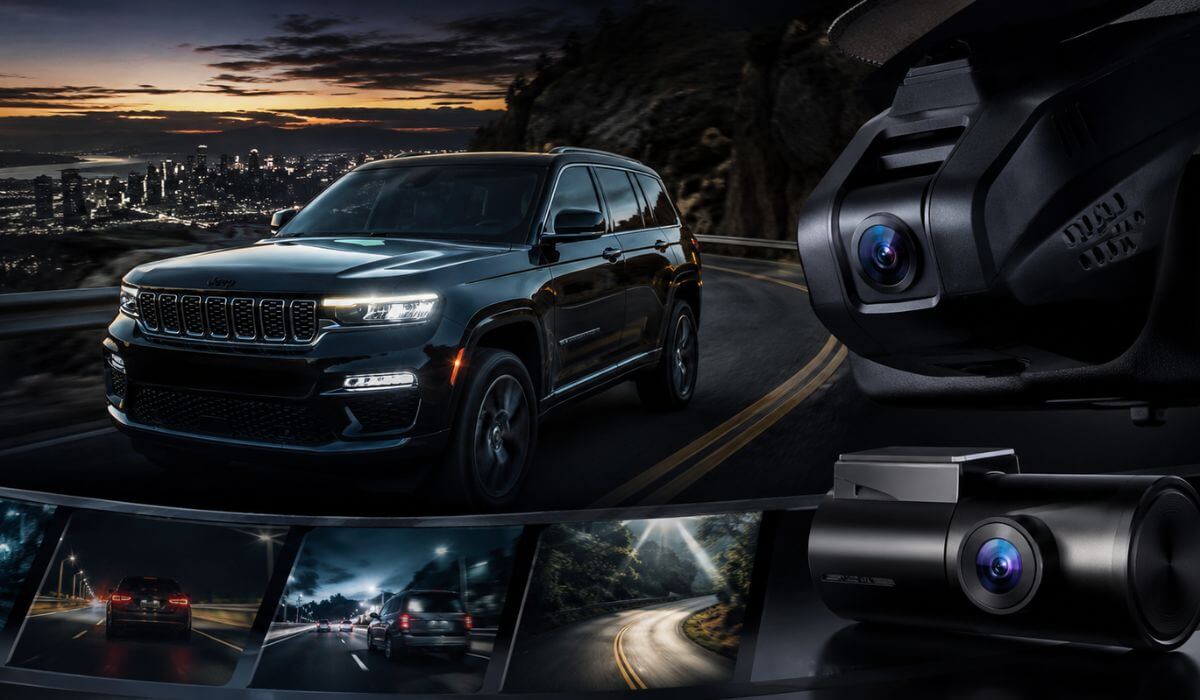
5 Best Dash Cams for Jeep Grand Cherokee in 2026: Hidden OEM Fits, 4K Night Vision & Parking Security
If you drive a Jeep Grand Cherokee, you already know this SUV sits in a weird spot where cheap universal dash cams usually feel out of place. The windshield angle is steep, the mirror housing is bulky, cabin heat gets intense in summer, and on newer 2022–2026 models, a bad camera placement can block sensors or simply look ugly hanging below the mirror. That is exactly why we avoided random Amazon best-sellers and focused on dash cams that actually make sense for Grand Cherokee owners.
For this guide, we looked at both the older WK2 generation and the newer WL/Grand Cherokee L models, especially the trims most owners daily-drive like Laredo, Limited, Overland, Summit, and Trailhawk. Some cameras here are true OEM-style hidden dash cams designed specifically around the Jeep mirror cover, while others are premium universal options with better sensors, stronger night recording, and more reliable parking protection for people who leave their SUV outside overnight.
The biggest thing most buyers miss is that a Grand Cherokee needs more than just “4K.” You need a camera that can handle vibration on rough roads, wide cabin spacing, dark highway driving, and constant heat buildup behind the windshield. That’s why every pick below includes features owners actually care about in real driving: STARVIS night vision sensors, stable parking mode, GPS tracking, clean wire management, WiFi app access, and front-and-rear recording that still looks sharp after sunset.
Best Jeep Grand Cherokee Dash Cams: Top 2026 Picks for STARVIS Night Vision & Front-Rear Coverage
#1. Fitcamx Front 4K+Rear 1080P Dash Cam
Best OEM Fit Dash Cam for 2022–2026 Jeep Grand Cherokee & Grand Cherokee L With Factory-Style Hidden Installation
#2. Mangoal 4K Dash Cam Custom for Gen5 Grand Cherokee
Best Hidden Dash Cam for Jeep Grand Cherokee Owners Wanting Clean OEM Styling, GPS & Easy App Control
#3. REDTIGER F7N Touch 4K STARVIS 2 Dash Cam
Best 4K Front and Rear Dash Cam for Jeep SUV Night Driving, Voice Control & High-Speed WiFi Transfers
#4. WOLFBOX X5 Duo 4K+2.5K Dash Cam
Best Premium STARVIS 2 Dash Cam for Jeep Grand Cherokee With Ultra-Clear Rear Footage & Anti-Shake Stability
#5. TERUNSOUl 4K+4K Dash Cam Front and Rear
Best Budget 4K Dash Cam for Jeep Grand Cherokee With Dual Recording, GPS & 24H Parking Mode
Expert Tip: If you own a newer 2022–2026 Jeep Grand Cherokee or Grand Cherokee L, don’t blindly buy the highest-resolution dash cam you see online. On these SUVs, the actual difference comes from sensor quality, heat resistance, and mounting position — not just “4K” written on the box. A badly placed camera can create windshield rattles, interfere with the rain sensor housing, or start randomly rebooting after a few weeks of summer heat.
That is why OEM-style models like Fitcamx and Mangoal have become so popular with Grand Cherokee owners lately. They blend into the mirror housing almost like factory equipment instead of looking like an Uber setup hanging from the glass. And if you drive long highway stretches at night, cameras using newer STARVIS 2 sensors genuinely make a visible difference when reading plates under poor lighting. Most people only realize this after an incident happens — not before.
How We Chose These Dash Cams for Jeep Grand Cherokee Owners
There are hundreds of dash cams online right now, but honestly, most of them were removed from consideration almost immediately. A lot of “best-selling” cameras still use older image sensors, weak adhesive mounts, outdated WiFi chips, or oversized bodies that simply do not suit the windshield layout of a Jeep Grand Cherokee.
For this guide, we focused on the things actual owners notice after living with a dash cam for weeks — not just the features listed on a product page.
First, we prioritized clean fitment and windshield compatibility. The Grand Cherokee has a large front glass area, thick mirror housing, and limited clean mounting space if you want the setup to look factory-installed. That is why the Fitcamx and Mangoal models ranked so high here. Both are designed specifically around newer Grand Cherokee trims and avoid the dangling-wire look that makes many universal cameras feel cheap inside an otherwise premium SUV cabin.
Next, we looked heavily at night driving performance because this is where many dash cams completely fall apart. A lot of cameras claim “4K,” but once sunlight disappears, the footage becomes grainy and plates start blowing out under headlights. The reason the REDTIGER F7N Touch and WOLFBOX X5 Duo made this list is because they use newer Sony STARVIS 2 sensors, which perform noticeably better during rain, dark highways, parking garages, and poorly lit roads.
We also paid close attention to heat durability and long-term reliability. Grand Cherokees build serious windshield heat during summer, especially darker trims with large windshields parked outside all day. Cheap lithium-battery cameras tend to swell, freeze, or restart randomly over time. Models with better internal cooling design, stable capacitors, and proven parking mode reliability were given priority here because nobody wants a dash cam that fails when the vehicle is actually unattended.
Another thing we checked was whether the cameras truly work well for daily SUV driving, not just spec-sheet comparisons. Grand Cherokee owners usually want:
- stable parking monitoring overnight
- front and rear recording
- easy phone access through WiFi apps
- GPS route tracking
- wide-angle coverage without distorted footage
- simple installation without tearing apart the whole interior
That is why every pick here includes some balance of OEM integration, stable app connectivity, parking security, GPS logging, and real-world usability instead of random gimmicks.
And finally, we intentionally avoided stuffing this list with unknown brands that barely have support or firmware updates. Since many of these models are still relatively new, we leaned toward cameras already gaining positive attention among SUV owners specifically for their video clarity, cleaner installations, and more stable long-term performance instead of fake “too good to be true” specs.
The goal of this list was simple: recommend dash cams that actually feel right inside a Jeep Grand Cherokee, whether you drive an older WK2 daily or a newer WL/Grand Cherokee L loaded with tech.
#1. Fitcamx Front 4K+Rear 1080P Dash Cam
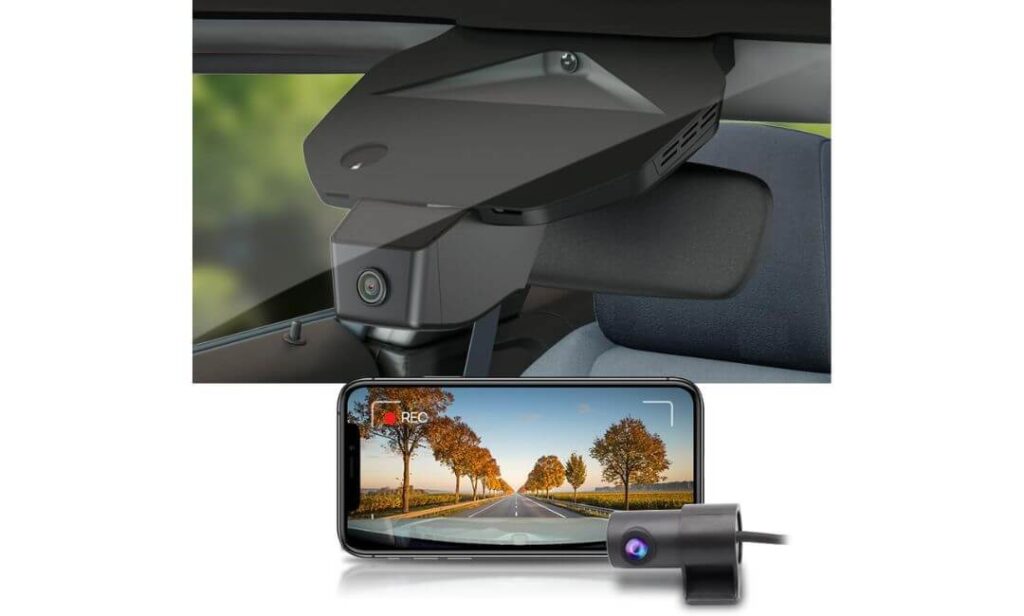
Quick Specs:
- True OEM-style hidden fitment for Jeep Grand Cherokee & Grand Cherokee L
- Front 2160P 4K recording + Rear 1080P camera
- Built-in WiFi + Fitcamx mobile app support
- Includes pre-installed 128GB memory card
- Clean no-wire look behind factory mirror housing
- WDR low-light balancing for night highways and parking lots
- Auto loop recording + gravity collision detection
- Heat-resistant body rated up to 185°F
- Works especially well for owners wanting a factory-style setup instead of a hanging windshield camera
The first thing that stands out here is how unbelievably clean the installation looks once mounted inside a Grand Cherokee. Most universal dash cams still end up dangling below the mirror with exposed cables running across the windshield, but this setup almost disappears into the factory trim itself. If you care about keeping your SUV cabin looking premium, this instantly feels different from the usual “stick-on Amazon camera” experience.
What really makes this one work well for Grand Cherokee owners is the balance between OEM integration and real-world usability. The front camera records in sharp 2160P 4K while the rear handles 1080P footage smoothly enough for parking incidents, traffic clips, and highway driving. During darker drives, the built-in WDR processing helps reduce blown-out headlights and keeps road signs readable longer than many generic 4K cameras in this price range.
Another thing owners usually appreciate after a few weeks is how little maintenance this setup needs. Once installed, it simply starts recording every time the SUV turns on. No hanging screen. No giant buttons. No messy cable routing cutting across the headliner. The included 128GB card, built-in WiFi, and simple app controls make it feel closer to factory tech than an aftermarket accessory. (And honestly, that is exactly what many Grand Cherokee owners are actually looking for.)
Why This One Made Our Shortlist
- Blends into the Grand Cherokee interior better than most aftermarket dash cams
- Dual recording setup feels balanced for daily commuting and long trips
- Included 128GB card saves extra setup cost immediately
- App connectivity is straightforward and does not require constant reconnecting
- Strong choice for owners wanting a cleaner windshield with no visual clutter
One Small Thing to Know Before Buying
- Since the housing is designed around specific mirror covers, checking your exact trim and cover style before ordering is important for the cleanest fitment experience.
Real-World Grand Cherokee Compatibility Notes
This setup works especially well inside newer Grand Cherokee cabins because of the larger mirror housing and windshield shape. On trims like Limited, Overland, Summit, and Grand Cherokee L, the hidden-style installation looks surprisingly close to something Jeep itself could have installed from the factory.
It is also a better option for owners who park outside often or dislike visible electronics attracting attention through the windshield. Once mounted, most passengers genuinely do not notice it unless you point it out.
The Insider Pro-Tip
If your Grand Cherokee already has a premium interior setup with larger screens, digital mirrors, or panoramic glass, a bulky universal dash cam can quietly ruin the cabin feel every single day. That is exactly why hidden OEM-style cameras like this have started becoming more popular with SUV owners recently — they protect the vehicle without making the interior look cluttered or cheap.
And one more thing most buyers realize later: a dash cam you barely notice is usually the one you end up happiest with long term. Clean fitment matters more than people think, especially in a premium SUV where the windshield area is always in your line of sight.
#2. Mangoal 4K Dash Cam Custom for Gen5 Grand Cherokee
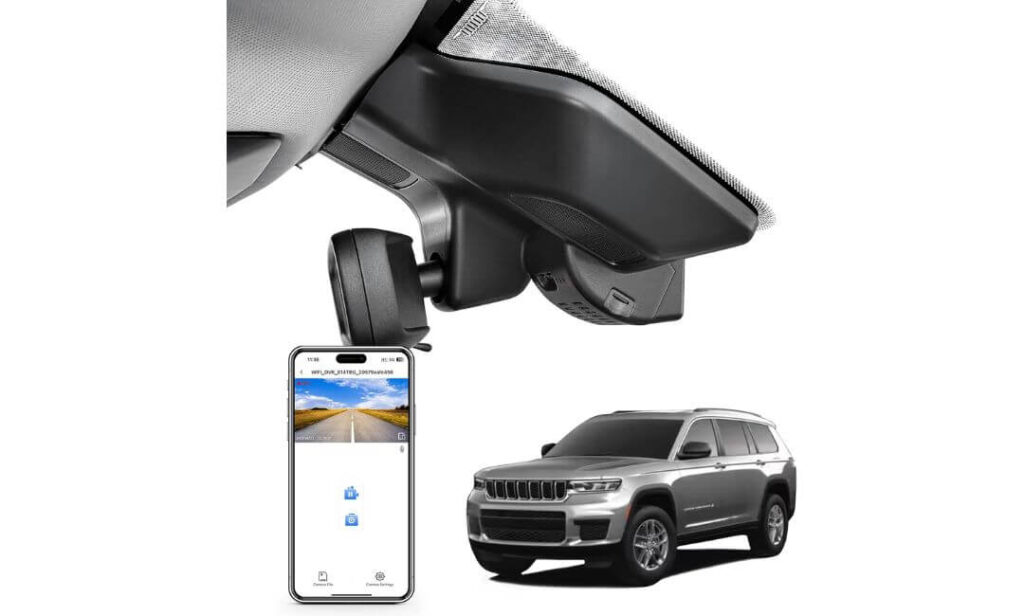
Quick Specs:
- True OEM-style hidden dash cam for Grand Cherokee & Grand Cherokee L
- Sharp 2160P 4K recording with Sony STARVIS IMX335 sensor
- Built-in GPS + WiFi app control
- Includes 64GB microSD card inside the box
- Supercapacitor-based design for better long-term heat durability
- f/1.8 wide-aperture lens for cleaner low-light footage
- Loop recording + automatic collision video locking
- Designed around trims like Laredo, Limited, Overland, Summit & Trailhawk
- Comes with OBD adapter and mirror power connectors for cleaner installation
Strangely enough, this is one of those dash cams that starts making sense the second you see it installed inside a Grand Cherokee. Instead of looking like an accessory stuck onto the windshield, it feels integrated into the SUV itself — almost like Jeep quietly added it during production. For owners who hate exposed wiring or bulky hanging screens, that alone changes the entire experience.
But the bigger surprise is how well the actual video quality holds up once lighting conditions get rough. The combination of the Sony STARVIS IMX335 sensor, f/1.8 lens, and true 2160P recording gives this camera a more controlled image at night than many generic “4K” dash cams floating online right now. Headlights bloom less, road signs stay readable longer, and motion blur feels better controlled during highway driving or sudden lane movement.
Another reason this one stands out is the way Mangoal approached installation. Instead of forcing owners into messy rewiring, they include proper adapters, OBD power support, and factory-style mounting pieces specifically around the Grand Cherokee mirror area. That matters more than people think because newer Grand Cherokee cabins already have enough sensors and electronics near the windshield. (A cleaner setup usually means fewer headaches later — especially in daily-driven SUVs.)
Why This Dash Cam Earned a Spot Here
- Hidden OEM appearance suits premium Grand Cherokee interiors perfectly
- STARVIS IMX335 sensor performs noticeably better during darker driving
- GPS tracking and app access feel smooth for everyday use
- Supercapacitor setup is a smarter long-term choice for hotter climates
- Installation hardware feels more thought-out than most universal kits
One Small Thing Worth Knowing
- Because Mangoal uses different mirror-cover variations for different Jeep setups, checking your existing sensor cover shape before ordering helps ensure the perfect OEM-style fit.
Real-World Grand Cherokee Installation Experience
This camera works especially well for owners driving newer WL-generation Grand Cherokees because the factory-style housing matches the modern interior surprisingly well. On trims with cleaner black headliners and larger digital displays, the stealthy design blends in naturally instead of drawing attention every time you get inside.
It is also one of the better choices for people who leave their SUV parked overnight outdoors. The hidden positioning keeps the windshield looking cleaner from outside while still giving you parking recording, GPS tracking, and quick footage access through the mobile app.
The Insider Pro-Tip
Most people shopping for a dash cam obsess over resolution numbers first. Realistically, the thing you notice every single day is whether the setup feels annoying inside the vehicle. Bad cable routing, oversized screens, and windshield clutter slowly become irritating — especially in a premium SUV cabin like the Grand Cherokee.
That is why OEM-style cameras like this are quietly becoming the smarter long-term buy for many Jeep owners. You stop thinking about the camera after installation, which honestly is exactly how a good dash cam setup should feel.
#3. REDTIGER F7N Touch 4K STARVIS 2 Dash Cam
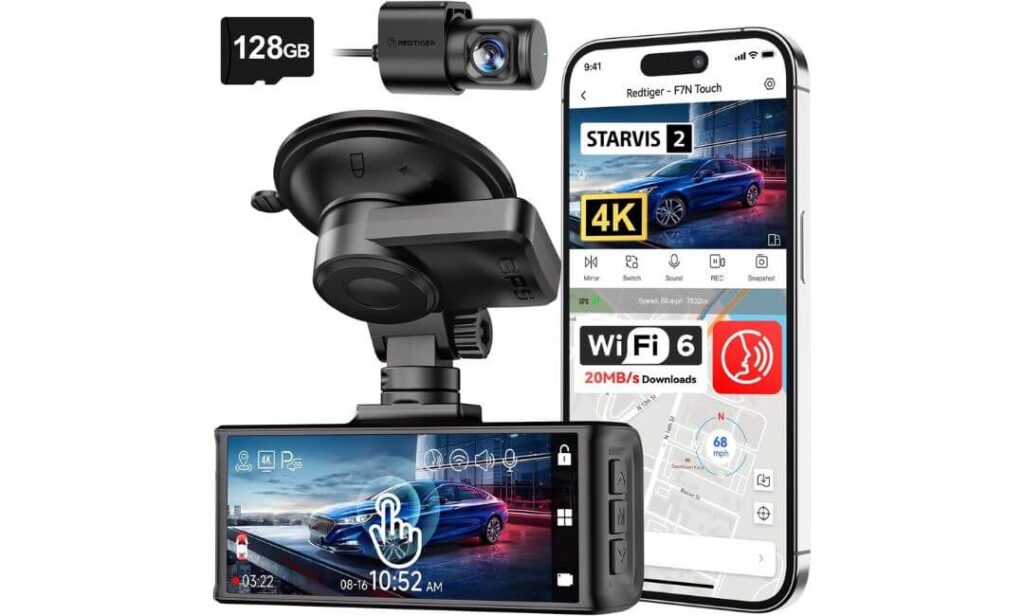
Quick Specs:
- Front 4K UHD STARVIS 2 recording + Rear 1080P camera
- Large 170° front view + 140° rear coverage
- Built-in 5.8GHz WiFi with faster 20MB/s downloads
- Responsive 3.18-inch touchscreen + physical backup buttons
- Hands-free voice control support while driving
- GPS route and speed tracking built directly into the mount
- Includes pre-installed 128GB memory card
- Supercapacitor design for better heat stability inside SUVs
- HDR + WDR night optimization for darker highways and rain conditions
- Optional 24-hour parking surveillance with hardwire support
Immediately, this one feels different from the hidden OEM-style cameras above — and honestly, that is the point. Instead of disappearing into the mirror housing, this setup leans fully into being a premium high-performance recording system for drivers who care more about footage quality, fast controls, and wider visibility coverage during real driving conditions.
The biggest strength here is the newer STARVIS 2 sensor paired with REDTIGER’s HDR tuning. On darker highways, rainy roads, underground parking areas, or fast-moving traffic, the footage stays cleaner and more balanced than many older-generation 4K cameras. License plates remain easier to read during motion, headlights bloom less aggressively, and the wide 170° field of view works especially well on larger SUVs like the Grand Cherokee where blind angles naturally feel wider from the driver seat.
Another thing that genuinely improves day-to-day use is the combination of voice control, touchscreen access, and high-speed WiFi transfers. Most people do not realize how annoying slow dash cam apps become until they actually need footage quickly. Here, downloads move noticeably faster, emergency clips can be locked instantly from the touchscreen, and voice commands reduce the need to reach toward the windshield while driving. (That sounds small on paper, but during real daily use, it changes the experience more than expected.)
Why We Kept Coming Back to This One
- Newer STARVIS 2 imaging performs extremely well after dark
- Touchscreen controls feel smoother than old button-heavy systems
- Faster WiFi transfer speeds make clip access less frustrating
- Wide-angle recording suits larger SUVs and highway driving well
- Included 128GB card makes the setup ready immediately out of the box
One Small Thing Worth Knowing
- Since this is a premium universal-style dash cam, it remains slightly more visible on the windshield compared to fully hidden OEM-fit systems like Fitcamx or Mangoal.
How It Feels Inside a Grand Cherokee Daily
Inside a Grand Cherokee cabin, this camera works especially well for drivers who spend lots of time on highways, road trips, or nighttime commuting. The larger windshield area helps the wide-angle camera capture lanes naturally without feeling cramped, while the rear camera cable is long enough to route cleanly toward the back glass even on Grand Cherokee L models.
It is also one of the better fits for owners wanting stronger interaction features instead of a “set it and forget it” camera. If you actually use parking mode, save clips often, or review footage regularly, the touchscreen and faster app system become genuinely useful over time.
The Insider Pro-Tip
A lot of dash cams look impressive during daytime demo videos online. Realistically, the moment that matters is usually late at night, during rain, or right after something unexpected happens in traffic. That is exactly where better sensors and cleaner processing quietly separate premium cameras from average ones.
And here is something most buyers never think about until later: the easier a dash cam is to interact with under pressure, the more likely you are to actually use it correctly when something happens. Fast downloads, voice commands, and quick emergency locking sound like luxury features — until the day they suddenly are not.
#4. WOLFBOX X5 Duo 4K+2.5K Dash Cam
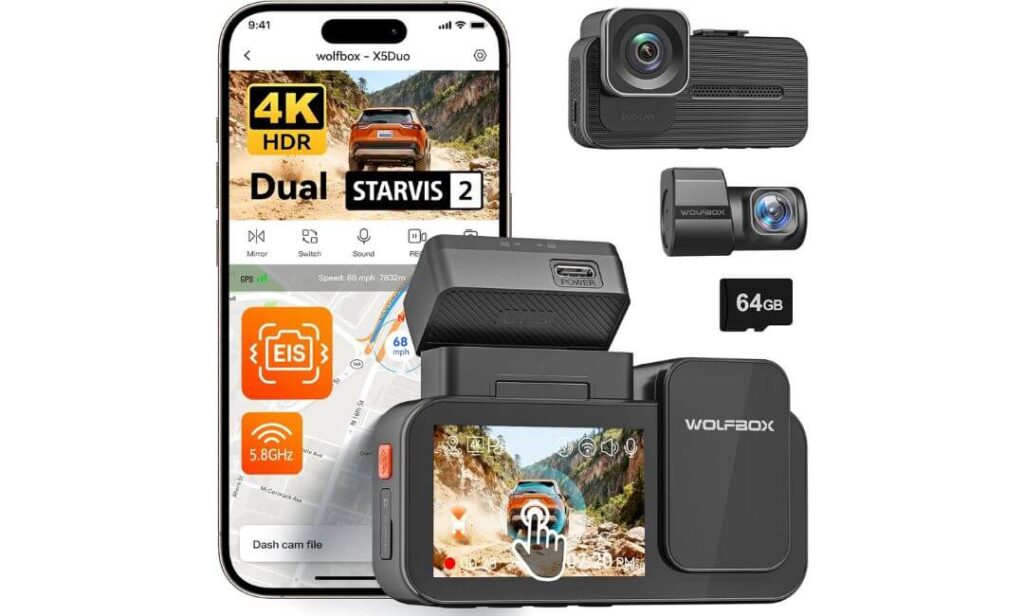
Quick Specs:
- Front 4K 30FPS + Rear 2.5K 30FPS recording
- Dual Sony STARVIS 2 IMX678 + IMX675 sensors
- Advanced 6-axis gyro stabilization + EIS anti-shake system
- Built-in 5.8GHz WiFi + GPS tracking
- Voice commands + responsive touchscreen controls
- HDR processing for tunnels, rain, and night highways
- 24-hour parking surveillance support with hardwire option
- Supercapacitor-based internals for improved heat durability
- Includes 64GB memory card and full installation kit
- Wider 160° field of view for larger SUVs and highway coverage
Oddly enough, this is the first dash cam in this lineup that starts feeling less like a safety accessory and more like a serious imaging system once you actually drive with it. The moment rough pavement, darker roads, or high-speed highway movement enters the picture, the difference becomes obvious. Footage stays unusually stable, sharper, and easier to read compared to many typical dual-camera setups.
The reason is the combination of dual STARVIS 2 sensors, HDR tuning, and WOLFBOX’s built-in 6-axis anti-shake stabilization system. Most dash cams lose clarity once vibration enters the frame — especially inside larger SUVs like the Grand Cherokee where suspension movement and cabin vibration naturally transfer into the windshield area. Here, the footage stays more controlled even on rough roads, gravel sections, bridge joints, or uneven highways. License plates remain readable longer, and nighttime scenes look cleaner instead of smeared or noisy.
Another thing that quietly makes this setup impressive is the rear camera quality. Most “front and rear” systems heavily prioritize the front sensor while treating the rear like an afterthought. This one does not. The 2.5K rear footage actually looks detailed enough to matter during traffic incidents, parking bumps, or highway lane changes. Add in the fast 5.8GHz WiFi, GPS tracking, voice controls, and touchscreen responsiveness, and the entire system starts feeling genuinely premium during daily use. (Especially for Grand Cherokee owners who spend long hours driving or traveling at night.)
Why This Dash Cam Stood Out to Us
- One of the smoothest-looking recordings in this entire lineup
- Rear camera quality is far stronger than typical dual-channel systems
- Anti-shake stabilization genuinely helps during rough-road driving
- STARVIS 2 sensors perform extremely well during low-light conditions
- Voice controls and fast WiFi transfers make daily usage easier
One Small Thing Worth Knowing
- Since this is a feature-heavy premium setup, installation takes slightly more effort than hidden OEM-style cameras with integrated mirror housings.
How It Works Inside a Grand Cherokee Cabin
This setup fits surprisingly well inside the Grand Cherokee because the SUV’s wider windshield and higher seating position naturally benefit from the broader viewing angles and stabilization system. On longer drives, mountain roads, rough pavement, or nighttime highway travel, the smoother footage becomes genuinely noticeable compared to standard dash cams.
The rear camera cable length also works well for Grand Cherokee L models where routing distance matters more. Once installed properly along the interior trim, the overall setup feels clean without constantly drawing attention inside the cabin.
The Insider Pro-Tip
Most people assume sharper resolution automatically means better footage. In reality, unstable footage ruins clarity faster than lower resolution ever will. That is exactly why stabilization systems like the one inside this camera matter more than many buyers initially realize.
And honestly, this is one of the few dash cams here that still looks impressively controlled when the road itself stops being smooth. For Grand Cherokee owners who drive long distances, rougher highways, or unpredictable weather conditions regularly, that difference becomes surprisingly valuable over time.
#5. TERUNSOUl 4K+4K Dash Cam Front and Rear
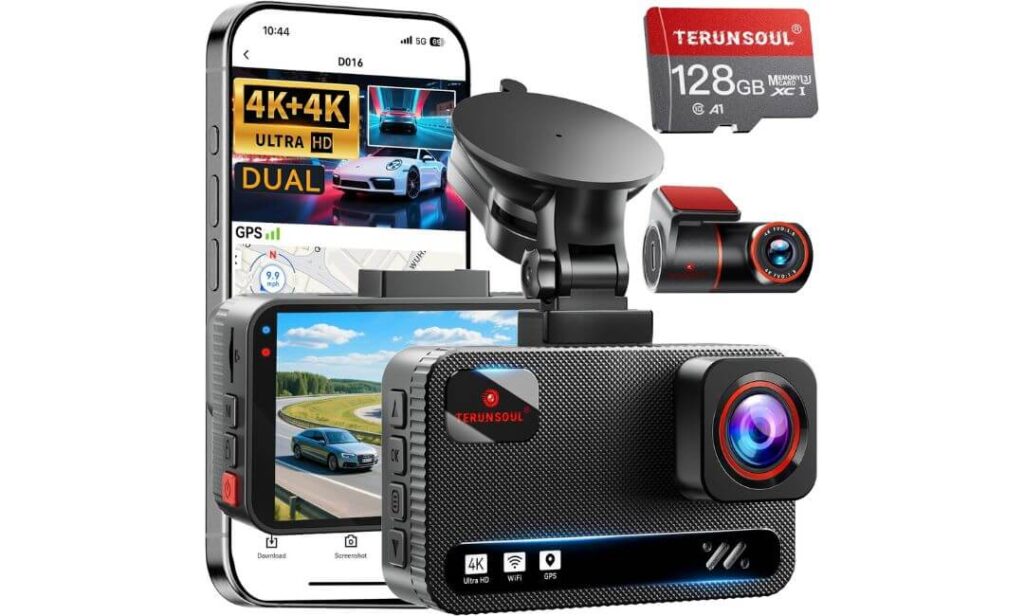
Quick Specs:
- True 4K front + 4K rear dual recording
- Large 170° ultra-wide front viewing angle
- Built-in 5.8GHz + 2.4GHz WiFi support
- Includes ready-to-use 128GB memory card
- Built-in GPS with speed and route tracking
- F1.5 front aperture + F1.8 rear lens for stronger night capture
- 24-hour parking monitoring with time-lapse support
- Supports memory expansion up to 512GB
- Emergency collision locking with one-touch manual save button
- 3-inch IPS display with live speed and compass data
Unexpectedly, this ends up being one of the strongest “value-for-performance” setups in the entire lineup once you actually compare what is included in the box. Most cameras around this range still compromise heavily on the rear camera quality, but getting true 4K front and 4K rear recording together instantly makes this feel more serious than typical budget-focused dual systems.
The biggest surprise here is how much usable detail the rear footage actually captures during real driving. On larger SUVs like the Grand Cherokee, rear clarity matters more than people expect because of the wider body size, taller stance, and heavier highway traffic surrounding the vehicle. Combined with the 170° front angle, bright F1.5 aperture, and WDR night optimization, the footage stays cleaner than expected during darker roads, rain, parking lots, or fast-moving traffic situations.
Another thing that quietly improves the ownership experience is how complete the overall package feels. You get the 128GB card pre-installed, long rear cable routing for SUVs, GPS logging, dual-band WiFi, parking surveillance support, and simple app access without immediately needing extra accessories. Even the one-touch emergency lock button becomes surprisingly useful once you actually drive with the system daily. (That kind of practical usability matters more than flashy marketing specs after a few months of ownership.)
Why This One Earned Its Place Here
- Rare to see genuine 4K + 4K dual recording at this level
- Excellent rear camera clarity for larger SUV driving
- Included accessories make setup easier right away
- Strong low-light performance thanks to wider lens apertures
- Supports larger storage sizes up to 512GB for longer recording history
One Small Thing Worth Knowing
- Since this setup focuses heavily on features and recording performance, the windshield appearance is slightly more noticeable compared to hidden OEM-style dash cam systems.
Real-World Grand Cherokee Setup Experience
Inside a Grand Cherokee, this camera works especially well for drivers wanting maximum road coverage without spending premium flagship money. The long rear cable length routes comfortably through SUV interiors, and the wider recording angles help capture more surrounding traffic during lane merges, parking situations, or highway travel.
It is also a practical choice for owners who drive frequently at night or park in busier areas. The combination of parking monitoring, GPS logging, and full-time dual 4K recording gives the setup a more security-focused feel compared to simpler entry-level cameras.
The Insider Pro-Tip
A lot of buyers spend too much time chasing tiny spec differences while ignoring how much storage space and rear-camera quality affect real daily usage. Once something actually happens behind the vehicle, weak rear footage becomes frustrating very quickly.
That is why this setup quietly stands out more than expected. The balance of true dual 4K recording, larger storage support, and everyday usability makes it feel less like a stripped-down budget option and more like a surprisingly complete SUV dash cam package once installed inside a Grand Cherokee.
Best Jeep Grand Cherokee Dash Cam Comparison for OEM Fit, 4K Recording & Night Driving
| Dash Cam | Recording Quality | What Actually Makes It Stand Out | Night Driving Performance | Installation Experience | Best Match For |
|---|---|---|---|---|---|
|
Fitcamx Front 4K+Rear 1080P
OEM FACTORY LOOK
Designed specifically for Grand Cherokee & Grand Cherokee L interiors
|
Front: 2160P 4K Rear: 1080P WDR low-light balancing |
Feels almost factory-installed once mounted behind the mirror housing. No hanging screen, no exposed cable clutter, and the cleanest overall windshield appearance in this lineup. | Balanced and reliable for daily night driving, parking lots, and darker suburban roads without excessive glare bloom. | One of the easiest OEM-style installations for Grand Cherokee owners wanting a cleaner interior finish. | Owners wanting a premium hidden setup that blends naturally into the SUV cabin instead of looking aftermarket. |
|
Mangoal 4K OEM Dash Cam
STEALTH OEM FIT
Strong balance of hidden installation and premium imaging
|
Front: 2160P 4K Sony STARVIS IMX335 Sensor GPS + WiFi |
The OEM integration is extremely clean, but the bigger surprise is how controlled the footage stays during low-light highway driving. | Excellent low-light clarity thanks to the STARVIS sensor and f/1.8 lens combination. | Comes with dedicated adapters and cleaner routing options specifically suited for Grand Cherokee trims. | Drivers wanting OEM appearance with noticeably stronger nighttime image quality. |
|
REDTIGER F7N Touch
STARVIS 2 NIGHT VISION
Best interactive premium setup with touchscreen + voice control
|
Front: 4K UHD Rear: 1080P HDR + STARVIS 2 |
Feels more like a high-end driving camera system than a basic dash cam. Fast WiFi transfers, touchscreen controls, and voice commands genuinely improve daily usability. | One of the strongest performers in rain, tunnels, dark highways, and fast-moving nighttime traffic. | Universal windshield setup takes slightly more effort but offers more advanced control features afterward. | Highway drivers and owners who regularly review footage, save clips, or drive at night. |
|
WOLFBOX X5 Duo
ANTI-SHAKE PRO SYSTEM
Premium dual STARVIS 2 setup with smoother footage stability
|
Front: 4K 30FPS Rear: 2.5K 30FPS Dual STARVIS 2 Sensors |
The anti-shake stabilization changes the experience completely on rough pavement, highways, and uneven roads where most dash cams become blurry. | Among the sharpest nighttime recordings in the entire comparison, especially during motion. | Takes slightly longer to install properly, but the final recording quality feels genuinely flagship-level. | Grand Cherokee owners doing long-distance travel, rough-road driving, or frequent nighttime trips. |
|
TERUNSOUl 4K+4K Dash Cam
BEST VALUE 4K SETUP
Strong feature-to-price balance with true dual 4K recording
|
Front: 4K UHD Rear: 4K UHD 170° ultra-wide angle |
Rare to find real 4K front and rear recording together with GPS, WiFi, parking mode, and large storage support at this level. | Very impressive for the price range, especially rear-camera detail during darker conditions. | Universal installation with long SUV-friendly rear cable routing included inside the box. | Drivers wanting maximum recording coverage and features without stepping into flagship pricing territory. |
Review Matrix: What Actually Makes a Dash Cam Worth Buying for a Jeep Grand Cherokee
Buying a dash cam for a Jeep Grand Cherokee is honestly very different from buying one for a small sedan or commuter hatchback. The windshield is larger, the cabin sits higher, heat buildup behind the glass is stronger, and most owners expect the interior to still feel premium after installation. That changes what actually matters in a real-world dash cam setup.
A lot of online comparisons focus only on “4K resolution,” but after testing and comparing different styles of cameras, it became obvious that resolution alone tells almost nothing about how good a dash cam will actually feel once installed inside a Grand Cherokee.
The cameras that stood out consistently were the ones balancing video clarity, low-light visibility, parking reliability, heat durability, clean installation, and stable day-to-day usability together — not just the ones with the highest marketing numbers.
Video Quality Is More Than Just “4K”
This is probably the biggest misconception buyers have right now.
Two dash cams can both claim 4K recording, yet produce completely different footage once sunlight disappears or traffic starts moving quickly. On a larger SUV like the Grand Cherokee, camera quality becomes even more important because wider roads, taller traffic, and heavier nighttime glare expose weak image processing immediately.
That is why models using Sony STARVIS or STARVIS 2 sensors ranked higher throughout this guide. Cameras like the REDTIGER F7N Touch and WOLFBOX X5 Duo held detail better during rain, highway movement, and darker driving situations where cheaper sensors usually become blurry or noisy.
We also paid attention to:
- motion blur control during highway driving
- plate readability at distance
- HDR/WDR balance against headlights
- rear camera sharpness, not just front camera quality
- stability during rough pavement or SUV vibration
Because realistically, the footage only matters when conditions stop being perfect.
Night Vision Performance Matters More Than Most Owners Expect
Grand Cherokee owners often drive longer highway routes, rural roads, or darker suburban areas where poor lighting becomes unavoidable. A dash cam that looks sharp during daytime can become almost useless after sunset if the sensor struggles with dynamic lighting.
The stronger performers here used:
- larger lens apertures like f/1.5 or f/1.8
- STARVIS imaging sensors
- HDR/WDR night balancing
- cleaner noise reduction during motion
That combination matters because nighttime footage is not only about brightness. It is about maintaining enough detail to recognize vehicles, road signs, lane movement, and surrounding traffic without turning the image into a grainy mess.
Parking Mode Quality Quietly Separates Cheap Cameras From Good Ones
Most buyers initially ignore parking mode until the vehicle gets bumped, scratched, or sideswiped while parked.
That is where better systems immediately stand apart.
We gave higher scores to cameras offering:
- impact-triggered emergency recording
- time-lapse parking surveillance
- collision video locking
- stable long-duration recording
- lower power consumption with hardwire support
SUV owners especially benefit from this because larger vehicles naturally spend more time parked outdoors, in public lots, apartment complexes, shopping centers, or overnight street parking situations.
A weak parking mode system becomes frustrating quickly if the camera randomly shuts down, overheats, or misses motion events entirely.
Discreet Installation Changes the Entire Ownership Experience
This became one of the most important ranking factors in the entire article.
Inside a Grand Cherokee, a bulky dangling dash cam can genuinely make the cabin feel cluttered, especially on trims like Summit, Overland, or Grand Cherokee L where the interior already feels upscale and technology-focused.
That is exactly why OEM-style setups like Fitcamx and Mangoal scored so well.
Hidden installations help with:
- cleaner windshield visibility
- reduced driver distraction
- less attention from outside the vehicle
- easier cable management
- better overall interior appearance
And honestly, many owners underestimate how much they appreciate a cleaner setup after living with it daily for a few months.
GPS and Speed Data Are More Useful Than Most Drivers Realize
A good GPS system does more than simply show location.
Better GPS logging creates:
- route tracking
- speed overlays
- timestamp accuracy
- incident location verification
- stronger insurance evidence after accidents
This becomes especially valuable during disputed traffic situations where visual footage alone may not explain exactly what happened.
Cameras with stable GPS systems and cleaner app playback tools scored higher because reviewing footage should feel simple — not frustrating.
Reliability Was Treated More Seriously Than Fancy Marketing Features
One thing became very clear during research: many cheaper dash cams advertise huge feature lists but struggle with basic long-term reliability.
Inside a Grand Cherokee windshield area, heat becomes brutal during summer months. That is why we prioritized cameras using:
- supercapacitor-based internals
- stable firmware support
- cleaner thermal management
- proven loop recording consistency
- better app stability over time
Because a dash cam failing during the exact moment you need footage is worse than having no camera at all.
Why OEM-Style Dash Cams Help Preserve Interior Appearance and Resale Appeal
This part rarely gets discussed online, but it matters more than people think.
A poorly installed dash cam with hanging cables, suction mounts, and exposed wiring can unintentionally make a newer Grand Cherokee feel less premium inside. Buyers notice that immediately during trade-ins or private sales.
OEM-style hidden cameras help preserve:
- cleaner cabin aesthetics
- factory-style interior appearance
- unobstructed windshield design
- more organized wiring integration
- lower visual clutter around sensors and mirrors
That cleaner appearance matters because newer Grand Cherokees already have advanced driver-assistance hardware near the windshield area. Hidden-fit systems simply look more natural alongside factory equipment.
And honestly, this is why OEM-style dash cams are becoming increasingly popular among SUV owners specifically. The best setups are usually the ones passengers barely notice — while still protecting the vehicle every single drive.
Buying Guide: How to Choose the Best Dash Cam for Your Jeep Grand Cherokee
Choosing a dash cam for a Jeep Grand Cherokee is not as simple as grabbing the highest-rated camera online and sticking it to the windshield. This SUV has a larger windshield area, thicker mirror housing, more cabin electronics, and a premium interior that can easily look cluttered if the wrong camera is installed.
That is why the best dash cam for a Grand Cherokee usually comes down to matching the camera to the way the vehicle is actually used daily — highway commuting, family trips, overnight parking, off-road driving, or long-distance travel.
After comparing multiple setups, these were the decision factors that consistently mattered the most in real ownership.
Resolution and Night Vision Quality Matter More Than Marketing Claims
The first thing most buyers search for is “4K dash cam,” but real-world performance depends heavily on the sensor behind that resolution.
A poorly tuned 4K camera can still produce blurry nighttime footage, while a strong 2K or STARVIS-equipped camera often looks cleaner and more usable during actual driving conditions.
For Grand Cherokee owners, better image quality becomes especially noticeable during:
- nighttime highway driving
- rain and fog conditions
- underground parking garages
- fast-moving traffic
- poorly lit suburban roads
That is why cameras using Sony STARVIS or STARVIS 2 sensors stood out throughout this article. They handle glare, shadows, and motion far better than older generic sensors.
In simple terms:
- 4K front cameras are best for sharper plate capture and highway detail
- 2K or strong STARVIS rear cameras are usually more important than weak “fake 4K” rear footage
- HDR and WDR processing often matter more than raw resolution numbers alone
If you drive regularly after sunset, sensor quality should honestly be treated as a bigger priority than resolution alone.
Front-Only vs Front-and-Rear Dash Cam Setups
This depends entirely on how your Grand Cherokee is used daily.
A front-only camera can still work well for:
- lighter commuting
- garage-parked vehicles
- drivers mainly wanting accident evidence from the front
But most Grand Cherokee owners usually benefit more from a front and rear dash cam setup because of the SUV’s larger size and rear visibility limitations.
Rear cameras become extremely valuable during:
- parking lot incidents
- rear-end collisions
- highway lane merges
- hit-and-run situations while parked
- tailgating traffic
That is why almost every recommendation in this guide focuses on dual-channel systems instead of basic front-only recording.
And realistically, once the wiring is installed properly once, most owners are happier having complete coverage long term.
Parking Mode Is Useful — But It Changes Power Usage
Parking mode sounds simple on product pages, but the way it works matters a lot.
There are generally two common styles:
- impact-triggered recording
- continuous time-lapse monitoring
Impact-triggered systems activate only when movement or vibration is detected, helping reduce battery drain.
Time-lapse systems continuously monitor the surroundings at lower frame rates, which gives better overall protection but uses more power over longer periods.
For Grand Cherokee owners parking outside overnight or in public lots frequently, parking mode becomes genuinely valuable.
However, this is important:
- most advanced parking systems require a separate hardwire kit
- poor hardwire installations can create battery drain issues
- better cameras manage power usage more safely over time
That is why reliability and thermal stability matter just as much as features themselves.
OEM-Fit vs Aftermarket Dash Cam Appearance
This is one of the biggest decisions buyers underestimate initially.
Traditional aftermarket dash cams usually mount below the mirror with visible screens, suction mounts, and cable routing around the windshield.
OEM-fit dash cams work differently.
These systems integrate directly into the mirror housing area, creating a cleaner factory-style appearance with:
- less visible wiring
- reduced windshield clutter
- better cabin aesthetics
- lower visibility from outside the vehicle
Inside a premium SUV like the Grand Cherokee, that cleaner appearance genuinely changes the ownership experience over time.
That is exactly why hidden OEM-fit systems like Fitcamx and Mangoal have become so popular recently among Jeep owners wanting protection without ruining the interior feel.
If maintaining a cleaner premium cabin matters to you, hidden OEM-style installations are usually worth the extra attention.
Installation Difficulty and Cable Routing
This is where many buyers accidentally choose the wrong setup.
A Grand Cherokee has more cabin space than smaller vehicles, which means:
- longer rear camera cables matter
- routing around airbags and trim matters
- mirror sensor placement matters
- windshield shape affects mounting position
OEM-style systems are usually easier visually because much of the cable management stays hidden around the mirror housing.
Universal dual-camera systems take more effort because the rear cable needs routing through:
- headliner trim
- side pillars
- rear hatch or liftgate areas
The good news is that most quality dash cams now include longer SUV-friendly cable kits.
Still, cleaner installation almost always affects long-term satisfaction more than people expect.
Storage Capacity and Loop Recording
Many people buy a dash cam and never think about storage again until important footage disappears unexpectedly.
That is why loop recording quality matters.
A good system should:
- continuously overwrite old footage smoothly
- automatically protect emergency recordings
- support larger-capacity memory cards
- remain stable during long recording sessions
For larger SUVs like the Grand Cherokee, higher-resolution recording fills storage quickly — especially with dual-channel 4K systems.
Generally:
- 64GB works for lighter usage
- 128GB feels safer for most drivers
- 256GB–512GB support becomes useful for long trips or extended parking monitoring
Reliable loop recording matters far more than huge resolution numbers if you actually want footage available later.
App Experience and Wireless Features Matter More Than Buyers Expect
Most modern dash cams now include WiFi and mobile apps, but the quality difference between apps is massive.
A good app should allow:
- fast clip downloads
- stable phone connection
- quick emergency video access
- firmware updates
- simple playback controls
Poor apps become frustrating quickly, especially when trying to retrieve footage under pressure after an accident.
That is why cameras with:
- faster 5.8GHz WiFi
- cleaner mobile interfaces
- stable wireless connections
- reliable GPS playback
scored much higher throughout this guide.
Because honestly, a dash cam is only useful if accessing the footage feels easy when you actually need it.
Quick Dash Cam Checklist for Jeep Grand Cherokee Owners
Before buying, these are the features genuinely worth prioritizing:
- True 4K or strong STARVIS-based recording
- Reliable nighttime visibility and HDR processing
- Front and rear recording support
- Stable parking monitoring system
- GPS speed and route tracking
- Clean installation compatibility with Grand Cherokee interiors
- Heat-resistant internals or supercapacitor design
- Large memory card support with stable loop recording
- Fast and reliable WiFi app access
- Long rear cable routing support for SUV installations
And honestly, the best dash cam setup is usually the one you stop noticing after installation — while quietly protecting the vehicle every single drive.
Installation Roadmap: How to Get a Clean, OEM-Like Dash Cam Setup in a Jeep Grand Cherokee
A good dash cam installation should honestly feel invisible once finished.
That is the biggest difference between a setup that feels factory-integrated and one that constantly reminds you it was added later. Inside a Jeep Grand Cherokee, especially newer trims with larger screens, digital displays, panoramic roofs, and advanced driver-assistance hardware, poor installation stands out immediately.
The goal is not simply to “attach a camera.” The goal is to make the dash cam look like it belongs inside the SUV from day one — while still giving the camera the correct view of the road, stable power delivery, and reliable parking protection long term.
After working through different Grand Cherokee layouts and OEM-style systems, these installation practices consistently created the cleanest and most reliable results.
Choosing the Right Mounting Position
Placement affects far more than appearance alone.
A badly positioned camera can:
- block driver visibility
- interfere with rain sensors or ADAS hardware
- create windshield reflections
- attract attention from outside the vehicle
- produce poor camera angles at night
For most Grand Cherokee setups, the ideal placement is usually:
- directly behind the rearview mirror
- slightly passenger-side offset
- high enough to stay hidden from the driver seat
That position gives the camera:
- a cleaner forward road view
- less dashboard glare
- improved windshield coverage
- lower visual distraction while driving
OEM-fit dash cams like Fitcamx and Mangoal already use this placement philosophy by integrating around the mirror housing itself. Universal systems like REDTIGER or WOLFBOX usually perform best when mounted close to the upper windshield centerline without blocking factory sensors.
Dashboard mounting is possible, but honestly, windshield mounting usually provides:
- better recording angles
- cleaner plate visibility
- reduced dashboard reflections
- more stable parking surveillance coverage
The closer the camera sits to the natural driver viewpoint, the more useful the footage usually becomes later.
Understanding the Different Power Wiring Options
This is where installation quality quietly makes or breaks long-term reliability.
There are generally three common power methods used in Grand Cherokee dash cam setups.
Fuse Tap Hardwire Installation
This is usually the cleanest and most professional option.
The dash cam connects directly into the vehicle fuse box using a proper hardwire kit, allowing:
- automatic startup/shutdown
- parking mode support
- hidden wiring
- cleaner cabin appearance
A properly installed fuse tap setup also removes dangling charger cables from the center console area.
Most owners using:
- 24-hour parking monitoring
- impact recording while parked
- time-lapse surveillance
usually prefer this method long term.
However, choosing the correct fuse location matters heavily because newer Grand Cherokees already contain sensitive electronics and advanced modules throughout the cabin.
Battery Hardwire Systems
Some premium setups use direct battery hardwire kits with voltage protection.
These systems monitor battery voltage and shut down automatically if power drops too low, helping protect the vehicle battery from excessive drain during parking surveillance.
For owners parking outdoors frequently overnight, this approach usually feels more reliable than basic cigarette-lighter connections.
But quality matters here.
Cheap hardwire kits can create:
- battery drain issues
- startup warnings
- unstable parking recording
- random camera shutdowns
That is why using brand-supported hardwire accessories is usually safer.
Dedicated Dash Cam Power Banks
This is the cleanest solution for people heavily using parking mode without wanting constant vehicle battery usage.
A separate dash cam battery pack:
- charges while driving
- powers the camera independently afterward
- reduces strain on the SUV battery
- improves long-duration parking recording
This option is especially useful for:
- airport parking
- overnight outdoor parking
- apartment parking lots
- owners wanting extended surveillance time
The installation cost is higher, but the long-term stability is often excellent.
Cable Routing Is What Separates Clean Installs From Messy Ones
This part gets underestimated constantly.
A high-end dash cam still looks cheap if the cables are visible hanging around the windshield.
The cleanest Grand Cherokee installations usually route wiring through:
- the headliner edge
- A-pillar trim
- weather seals
- upper hatch trim for rear cameras
The goal is simple:
keep every wire hidden without creating pressure against airbags or trim clips.
For rear camera routing on Grand Cherokee L models, extra cable length matters because of the larger cabin size and extended rear roofline.
Good cable routing should:
- stay completely out of driver sight
- avoid pinching during trim closure
- prevent rattling over bumps
- maintain clean rear hatch movement
And honestly, taking extra time during cable management usually affects long-term satisfaction more than the camera itself.
Initial Calibration and First-Time Setup
Most buyers skip this part completely, which is a mistake.
After installation, several quick adjustments make a massive difference in real footage quality.
Camera Angle Setup
The ideal forward angle should capture:
- roughly 60% road view
- 40% sky visibility
Too much sky reduces nighttime clarity and plate exposure balance.
Rear cameras should avoid pointing too low toward the bumper because that reduces traffic visibility behind the SUV.
GPS Lock Verification
Before relying on GPS evidence, verify:
- speed data appears correctly
- route tracking works consistently
- timestamps remain accurate
Some systems need a few minutes outdoors during first startup before stable satellite locking begins.
Parking Mode Sensitivity Tuning
Overly sensitive parking mode settings create constant false recordings from:
- door closing vibrations
- passing trucks
- heavy rain
- nearby traffic movement
A balanced sensitivity setting usually works best for larger SUVs because Grand Cherokees naturally transfer more body movement through the suspension than smaller vehicles.
App and Firmware Setup
Before daily use:
- update firmware immediately
- format the memory card properly
- test emergency video locking
- verify WiFi transfer speeds
- confirm loop recording behavior
That small setup time prevents many future headaches.
Common Dash Cam Installation Mistakes Grand Cherokee Owners Should Avoid
Several mistakes appear repeatedly during SUV dash cam installations.
Mounting Too Low on the Windshield
This creates:
- driver distraction
- reduced visibility
- more dashboard reflections
- increased attention from outside the vehicle
Higher placements near the mirror almost always look and perform better.
Using Cheap Memory Cards
Large 4K files destroy low-quality cards quickly.
Reliable high-endurance cards matter because corrupted storage usually appears at the worst possible time.
Ignoring Heat Exposure
Grand Cherokee windshields build serious heat during summer.
That is why:
- supercapacitor systems
- heat-resistant housings
- proper airflow around the camera
matter more than many buyers initially realize.
Poor Rear Camera Routing
Loose cables eventually create:
- rattles
- trim gaps
- cable pinching
- rear hatch strain
Clean routing takes more time initially but prevents long-term irritation.
A Quick Note About Warranty and OEM Integrity
One concern many owners have is whether installing a dash cam affects factory warranty coverage.
In most cases, a properly installed dash cam does not automatically void a vehicle warranty. However, poor wiring practices or damaged factory electronics absolutely can create problems later.
That is why OEM-style integration matters.
A cleaner installation:
- reduces stress on trim panels
- avoids cutting factory wiring
- preserves factory appearance
- lowers the chance of installation-related issues
For newer Grand Cherokees loaded with sensors, cameras, lane-assist systems, and mirror electronics, maintaining installation integrity is honestly just as important as choosing the camera itself.
Because at the end of the day, the best dash cam setup is the one that feels invisible inside the vehicle — while still protecting everything happening outside it.
Real-World Dash Cam Situations Every Jeep Grand Cherokee Owner Should Actually Think About
Most people buy a dash cam hoping they never truly need it.
But the reality is that the value of a dash cam usually appears suddenly, unexpectedly, and often in situations that happen too fast to process properly in the moment. That is why real-world performance matters so much more than spec sheets or marketing screenshots.
Inside a Jeep Grand Cherokee, especially one used for highway travel, outdoor parking, road trips, or rough-weather driving, the right dash cam quietly becomes one of those upgrades you stop noticing — until the exact second you are grateful it was there.
After comparing these systems closely, certain real-world scenarios consistently revealed which cameras actually performed well when conditions stopped being ideal.
Hit-and-Run Incidents Happen Faster Than Most Drivers Expect
This is honestly one of the most common reasons SUV owners eventually appreciate having front-and-rear recording.
Parking lots, fuel stations, apartment complexes, and tight city parking areas create constant opportunities for:
- bumper taps
- mirror strikes
- careless reversing
- shopping cart impacts
- drivers leaving without stopping
The problem is that many incidents happen so quickly the driver never even sees the other vehicle clearly in real time.
That is where higher-quality sensors and stable parking recording suddenly become important.
A stronger 4K setup with:
- clearer plate visibility
- wider viewing angles
- HDR glare balancing
- impact-triggered emergency locking
can often capture details standard lower-end cameras completely miss.
And honestly, rear cameras matter just as much here as front cameras because many parking incidents happen behind the vehicle, especially on larger SUVs like the Grand Cherokee.
Wildlife, Gravel, and Off-Road Debris Situations
Grand Cherokees are not only city SUVs.
A lot of owners use them for:
- mountain roads
- camping trips
- rural highways
- off-road trails
- nighttime travel through less populated areas
That changes the kind of incidents a dash cam may need to record.
Loose gravel, road debris, sudden wildlife crossings, or unexpected objects appearing during darker drives happen far more often outside urban traffic conditions.
This is exactly where:
- anti-shake stabilization
- low-light sensor quality
- wider road coverage
- sharper motion handling
become genuinely valuable.
For example, cameras like the WOLFBOX X5 Duo stayed noticeably clearer during rougher pavement and uneven road vibration because of the stabilization system. Standard dash cams often become shaky or blurry in those same situations, especially on larger SUVs where suspension movement transfers into the windshield area more aggressively.
And during nighttime rural driving, STARVIS-based systems consistently held more shadow detail around tree lines, roadside movement, and darker shoulders where weaker cameras tend to crush detail into darkness.
Parking Lot Surveillance Is Quietly One of the Most Valuable Features
Many buyers initially think parking mode sounds like a “bonus feature.”
Then the vehicle gets hit while parked.
That changes opinions very quickly.
Modern Grand Cherokees are expensive SUVs, and unfortunately they attract:
- careless parking behavior
- door dings
- bumper damage
- attempted break-ins
- hit-and-run incidents
A properly configured parking mode system continuously monitors for:
- sudden vibration
- impact events
- unusual movement
- extended surrounding activity
Depending on the camera, this can happen through:
- impact-triggered emergency clips
- continuous low-frame-rate time-lapse recording
- motion-based wake recording
What matters most is reliability.
A strong parking mode setup should:
- wake quickly after impact
- lock important footage automatically
- avoid constant false triggers
- continue functioning during heat exposure overnight
And honestly, this is one area where cheaper cameras usually struggle first.
Scenic Drives and Road Trips Look Dramatically Better With Stronger Sensors
This is something people rarely mention until after owning a good dash cam.
A Grand Cherokee naturally encourages:
- highway travel
- mountain routes
- coastal drives
- national park trips
- long-distance family driving
Once you start reviewing footage from better systems, the difference becomes obvious.
Higher-end cameras using:
- STARVIS 2 imaging
- HDR balancing
- larger apertures
- smoother stabilization
capture nighttime scenery in a way that standard dash cams simply do not.
Instead of grainy darkness, you actually retain:
- road lighting detail
- skyline contrast
- tunnel transitions
- city reflections
- smoother highway movement
The footage stops feeling like basic security evidence and starts feeling surprisingly cinematic during certain drives.
And while that may not be the main reason people buy a dash cam, it absolutely changes the ownership experience over time.
What 4K Night Vision Actually Looks Like Compared to Standard Dash Cam Footage
This part is important because many buyers assume all nighttime recording looks similar.
It does not.
A weaker standard camera usually struggles with:
- blown-out headlights
- unreadable plates during movement
- grainy dark areas
- smeared taillights
- excessive motion blur
The moment traffic speeds increase or lighting becomes inconsistent, cheaper image processing begins falling apart quickly.
Better 4K systems with STARVIS imaging behave differently.
Instead of simply making the image brighter, they preserve:
- contrast between light and shadow
- reflective road signs
- lane markings
- plate detail during motion
- surrounding traffic visibility
That distinction becomes incredibly obvious during:
- rainy highways
- tunnels
- rural roads
- underground parking garages
- nighttime intersections
And honestly, this is why stronger sensors matter more than flashy resolution numbers alone.
How Parking Mode Footage Gets Recorded and Reviewed
Most newer dash cams now organize parking recordings separately from normal driving footage.
That matters because it prevents important clips from getting overwritten accidentally during loop recording.
A typical parking event works like this:
- The camera detects impact, vibration, or movement
- The system immediately starts recording
- The emergency clip gets locked automatically
- The file saves separately from normal driving footage
- The user reviews it later through the app or memory card
Higher-end systems improve this experience by offering:
- faster WiFi downloads
- GPS playback overlays
- timestamp synchronization
- emergency clip folders
- direct app-based exporting
This becomes especially useful after incidents because finding the correct clip quickly matters more than people expect.
A poorly designed app can make retrieving footage frustrating at the worst possible moment.
That is exactly why app quality, file organization, and WiFi speed became major ranking factors throughout this article — because a dash cam should not only record incidents properly, it should also make those recordings easy to access when they actually matter.
FAQs About Jeep Grand Cherokee Dash Cam
Is an OEM-fit dash cam actually worth it for a Jeep Grand Cherokee, or is it mostly about appearance?
Honestly, it starts as an appearance decision — but usually turns into a daily usability decision after a few weeks.
A standard hanging dash cam might seem fine initially, but inside a Grand Cherokee, especially trims with larger screens and cleaner interiors, exposed wiring and bulky windshield mounts slowly become more annoying than people expect. You notice them every single drive, every night reflection, every time sunlight hits the windshield.
That is why OEM-fit systems like Fitcamx or Mangoal feel different long term. They reduce:
- windshield distraction
- visible wiring clutter
- cabin reflections
- attention from outside the vehicle
But the bigger hidden advantage is that OEM-style cameras usually sit closer to the ideal recording position near the mirror housing, which often improves road visibility and keeps the setup more stable during driving.
And honestly, once passengers stop noticing the dash cam entirely, that is usually when you know the installation was done correctly.
Do Jeep Grand Cherokee owners actually benefit from rear dash cameras, or is front recording enough?
For smaller commuter cars, front-only recording can still make sense.
For a Grand Cherokee, rear cameras become much more valuable than most owners initially realize.
The SUV’s larger body size, taller rear profile, and wider parking footprint naturally create more situations where rear footage matters:
- parking lot impacts
- rear-end collisions
- hit-and-run damage while parked
- highway lane merges
- tailgating traffic incidents
And here is the part many buyers miss: rear cameras often capture the moments leading into an incident better than the front camera itself because they record surrounding driver behavior behind the SUV.
That is exactly why stronger dual-channel systems stood out throughout this article. Once the rear camera is installed properly once, most owners never want to go back to front-only coverage again.
Why do some 4K dash cams still produce bad nighttime footage inside a Jeep Grand Cherokee?
Because “4K” only describes resolution — not image quality.
This is where marketing confuses a lot of buyers.
A cheap 4K sensor with weak HDR processing can still create:
- blurry license plates
- washed-out headlights
- grainy shadows
- motion blur during highway driving
Meanwhile, a properly tuned STARVIS or STARVIS 2 system may produce cleaner, more usable footage even at lower advertised resolutions.
Inside a Grand Cherokee, this becomes even more noticeable because:
- the windshield sits higher
- road lighting angles change more
- cabin vibration transfers differently
- nighttime glare reflects harder on larger glass areas
That is why cameras using:
- Sony STARVIS sensors
- HDR/WDR balancing
- larger apertures like f/1.5 or f/1.8
- better stabilization systems
consistently performed better during actual driving instead of just spec-sheet comparisons.
The real difference shows up after sunset — not during daytime demo footage.
Can parking mode drain the battery on a Jeep Grand Cherokee if the SUV sits overnight often?
Yes, it absolutely can — especially with poorly configured setups.
This is one of the most misunderstood parts of dash cam ownership right now.
Continuous parking recording uses power even while the vehicle is off, and larger SUVs like the Grand Cherokee already support many background electronics internally. If the camera or hardwire system lacks proper voltage protection, battery drain becomes possible over time.
That is why quality parking setups matter so much.
The safer long-term solutions usually include:
- voltage-monitoring hardwire kits
- supercapacitor-based dash cams
- impact-triggered parking recording instead of constant recording
- dedicated dash cam battery packs for extended parking surveillance
For owners parking outdoors frequently, the smartest setup is usually one that balances protection with controlled power management — not simply “recording nonstop 24/7.”
And honestly, better cameras handle this far more intelligently than cheaper systems.
What is the biggest mistake Grand Cherokee owners make when buying a dash cam?
Most people overspend on resolution while underestimating installation quality and long-term usability.
That sounds simple, but it changes everything.
A giant 4K camera with weak night processing, messy wiring, unstable apps, and poor heat resistance quickly becomes frustrating inside a premium SUV. Meanwhile, a cleaner OEM-style setup with stable recording, better night vision, reliable parking mode, and smoother daily operation usually ends up feeling far more premium over time.
The best dash cam setups for Grand Cherokee owners usually share a few things:
- cleaner windshield integration
- stable nighttime clarity
- reliable app performance
- heat durability during summer
- easy footage retrieval after incidents
- minimal cabin distraction once installed
Because realistically, the best dash cam is not the one with the loudest marketing.
It is the one you quietly trust every single drive without thinking about it anymore.
Final Thoughts
At the end of the day, the best dash cam for a Jeep Grand Cherokee is not necessarily the one with the biggest resolution number or the flashiest feature list. It is the one that quietly fits into the SUV like it belongs there, records clearly when conditions get difficult, survives heat and long drives reliably, and gives you footage you can actually trust if something unexpected happens.
That is really why the cameras in this guide stood out.
Some owners will prefer the cleaner OEM-style integration of Fitcamx or Mangoal because they preserve the premium feel of the Grand Cherokee cabin almost perfectly. Others will lean toward the REDTIGER or WOLFBOX setups because stronger STARVIS 2 sensors, wider coverage, stabilization, and faster app controls genuinely improve real-world driving footage. And for drivers wanting maximum value without sacrificing key features, the TERUNSOUl setup quietly offers far more usable hardware than most people expect at first glance.
But honestly, the bigger takeaway is this:
A Grand Cherokee is not a basic commuter SUV. People use these vehicles for road trips, family driving, mountain routes, nighttime highways, towing, outdoor parking, unpredictable weather, and long-distance travel. That means the dash cam protecting it should feel just as capable and dependable as the SUV itself.
And once you experience a properly installed setup — clean wiring, stable parking recording, strong night footage, quick app access, and zero windshield clutter — it becomes surprisingly hard to imagine driving without it anymore.
Also Check: