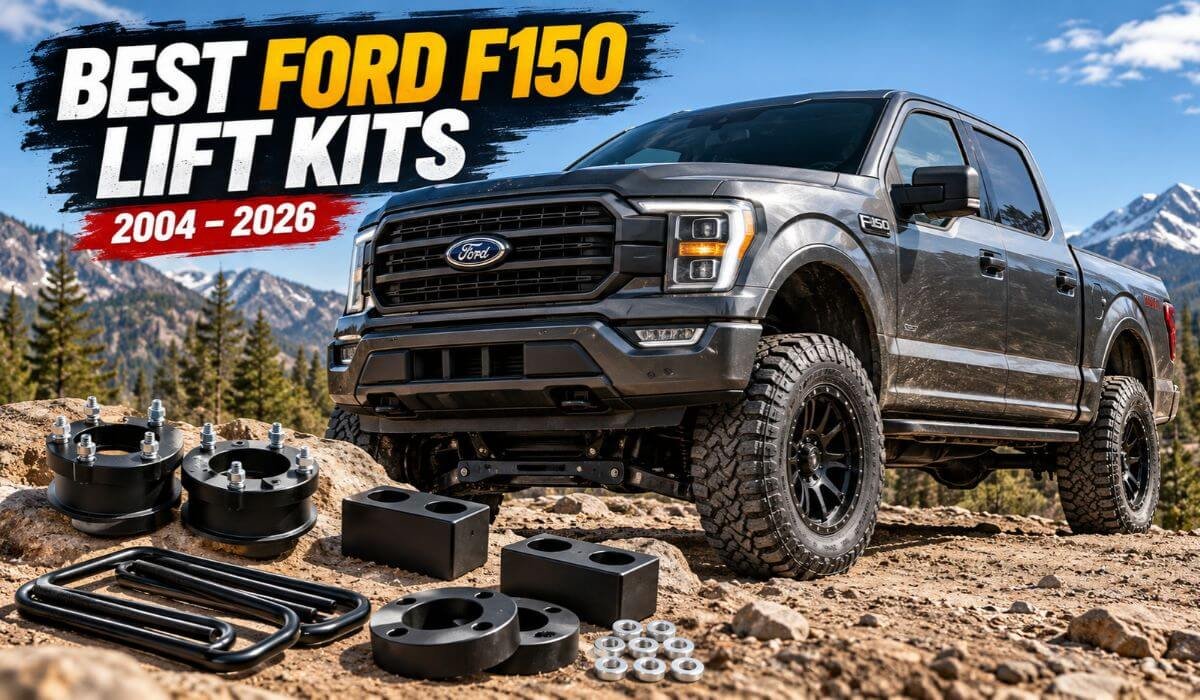
Best Ford F150 Lift Kits (2004–2026) for 2WD/4WD Models
A Ford F-150 lift kit can change your truck’s stance, tire clearance, and overall appearance, but the right choice depends on your model year, 2WD or 4WD configuration, and how much front-end lift you actually need. A 2-inch leveling kit may be enough to reduce the factory nose-down stance, while a taller spacer can provide additional front ride height. However, lift height alone does not guarantee tire clearance or compatibility with your wheels and suspension.
In this guide, we compare five Ford F-150 lift and leveling kit options from KSP, maXpeedingrods, and Nilight for model years ranging from 2004 to 2026. We focus on lift height, listed fitment, and practical differences to help you narrow down your choices. Since these picks primarily raise the front of the truck, we identify them as front leveling kits or lift spacers, rather than complete suspension lift systems. Always verify your exact truck’s fitment and arrange a professional alignment after installation.
Top 5 Ford F-150 Leveling Lift Kits in 2026: 2–3-Inch Options
#1. KSP 2.5″ Front Leveling Lift Kit (2004–2026 F-150) – Best Overall Choice
#2. KSP 3″ Front Leveling Lift Kit (2004–2026 F-150) – Aggressive Stance Upgrade
#3. KSP 2″ Front Leveling Lift Kit (2004–2026 F-150) – Mild Leveling Setup
#4. maXpeedingrods 3″ Front Lift Spacer (2004–2026 F-150) – Best Alternative Brand
#5. Nilight 2.5″ Leveling Kit (2004–2023 F-150) – Balanced Front Profile Setup
Must Check:
Expert Tip: Before choosing a leveling kit, compare its advertised lift with your F-150’s actual factory rake—not just the number on the box. A 2.5″ front lift does not mean the truck will sit exactly level, because the final stance depends on its original ride height and suspension configuration. Ask the manufacturer for the expected installed height on your specific model, and verify whether the kit changes the factory suspension components or requires additional hardware. This helps you avoid buying a kit that delivers a different stance than you expected.
Ford F150 Lift Kits (2004–2026) Compared in 2026
| Comparison | KSP 2.5-Inch Front Leveling Kit Best Overall Choice | KSP 3-Inch Front Leveling Kit Aggressive Stance | KSP 2-Inch Front Leveling Kit Mild Leveling | maXpeedingrods 3-Inch Front Lift Spacer Front Height Adjustment | Nilight 2.5-Inch Front Leveling Kit Balanced Front Profile |
|---|---|---|---|---|---|
| Advertised Front Lift | 2.5 inches | 3 inches | 2 inches | 3 inches | 2.5 inches |
| Material | 6061-T6 aircraft-grade aluminium | Forged 6061-T6 aircraft-grade aluminium | Forged 6061-T6 aircraft-grade aluminium | Billet 6061 aluminium | 6061 aluminium alloy |
| Construction and Finish | CNC-machined spacers | CNC precision-machined spacers | CNC precision-machined spacers | CNC-machined with an anodised surface | CNC-machined with a black anodised finish |
| Mounting Hardware | Grade 10.9 studs; six bolts and mounting hardware included | Grade 10.9 studs; six bolts and mounting hardware included | Grade 10.9 studs; six bolts and mounting hardware included | Grade 12.9 bolts; six bolts and necessary hardware included | Included hardware details require confirmation before purchase |
| F-150 Model Years | 2004–2026 | 2004–2026 | 2004–2026 | 2004–2026 | Product description states 2004–2026, but the title and set information mention 2004–2023. Confirm compatibility for your model year with the seller. |
| Drive Type | 2WD / 4WD | 2WD / 4WD, subject to exclusions | 2WD / 4WD | 2WD / 4WD | 2WD / 4WD, subject to fitment confirmation |
| Raptor Compatibility | Does not fit Raptor models. | Does not fit Raptor models. | Does not fit Raptor models. | Raptor-specific compatibility is not confirmed in the supplied details. | Raptor-specific compatibility is not confirmed in the supplied details. |
| CCD Suspension Restriction | Does not fit 2021+ models equipped with CCD. | Does not fit 2021+ models equipped with CCD. | Does not fit 2021+ models equipped with CCD. | Check the exact suspension configuration with the seller. | Does not fit 2021+ models equipped with CCD. |
| Other Fitment Restrictions | Confirm exact suspension and vehicle configuration. | Not for FX4, Tremor or factory pre-lifted models. Also excludes trucks with stock wheel-centre-to-fender height over 22 inches. | Confirm exact suspension and vehicle configuration. | Specific suspension-package exclusions are not provided. | Confirm model year and suspension configuration before ordering. |
| Upper Control Arms | Manufacturer recommends arms engineered for the same lift height. | Manufacturer recommends arms engineered for the same lift height. | Check whether your setup needs compatible aftermarket arms. | Confirm suspension geometry and component compatibility. | Check suspension geometry and component compatibility. |
| Warranty | Limited lifetime warranty; check terms. | Limited lifetime warranty; check terms. | Limited lifetime warranty; check terms. | Warranty details not provided in the supplied specifications. | Warranty details not provided in the supplied specifications. |
| Best Use Case | A moderate front lift for a more level stance. | A more pronounced front lift for compatible trucks. | A subtler change in front height. | A 3-inch front spacer with billet aluminium construction. | A 2.5-inch front lift with a black anodised finish. |
| Key Buying Consideration | Check CCD status, tyre clearance and control-arm compatibility. | Check every stated exclusion and measure factory ride height. | Verify fitment and the intended wheel-and-tyre combination. | Confirm exact fitment and suspension-package compatibility. | Resolve the model-year discrepancy and confirm included hardware. |
Fitment note: These products raise the front of the truck and are not complete suspension lift systems. Actual tyre clearance depends on tyre dimensions, wheel offset, suspension geometry and vehicle configuration. Verify fitment with the manufacturer before ordering. Professional installation and a post-installation wheel alignment are recommended.
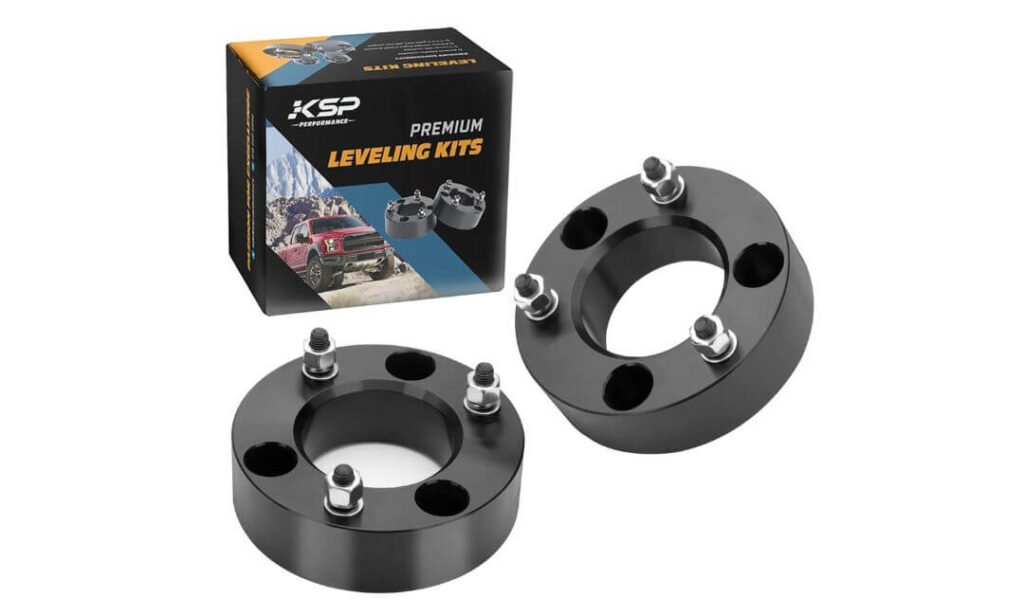
#1. KSP 2.5-Inch Front Leveling Lift Kit
Key Features:
- Lift Height: 2.5 inches at the front
- Fitment: 2004–2026 Ford F-150, 2WD and 4WD
- Material: CNC-machined 6061-T6 aircraft-grade aluminium
- Hardware: Grade 10.9 studs made from heat-treated SCM435 steel
- Kit Includes: Two strut spacers, six bolts and mounting hardware
- Warranty: Limited lifetime warranty, subject to the manufacturer’s terms
The factory stance of a Ford F-150 often leaves the front sitting lower than the rear. If you want a more level profile without investing in a complete suspension lift, a 2.5-inch front leveling kit is one option worth considering. It raises the front of the truck, giving it a taller appearance and potentially creating extra room around the front tyres. However, the actual clearance you gain depends on your F-150’s suspension setup, wheel offset and tyre size.
One important factor when choosing a leveling kit is the quality of its materials and mounting hardware. This kit uses CNC-machined 6061-T6 aluminium spacers, along with Grade 10.9 studs made from heat-treated SCM435 steel. These specifications provide useful details when comparing it with other spacer kits, particularly if you’re looking for a metal construction rather than a lower-cost alternative with different materials. The manufacturer also offers a limited lifetime warranty, so check its terms to understand what is covered.
Before choosing a 2.5-inch lift, consider how you use your F-150 and whether the additional height suits your intended setup. Raising the front can change suspension geometry, so compatible upper control arms may be needed to help maintain appropriate suspension movement and alignment. KSP recommends pairing the spacers with control arms designed for the same lift height. Also, don’t assume that the added height will automatically accommodate a specific tyre size. Check your exact model year and suspension configuration first, as the kit is not compatible with the F-150 Raptor or 2021-and-newer models equipped with the CCD system.
What Makes It Worth Considering?
For F-150 owners who want to reduce the factory nose-down appearance, this kit offers a straightforward way to raise the front without replacing the entire suspension system. Its aluminium construction, specified high-strength hardware and broad model-year coverage make it a practical option to compare against other leveling kits. The main consideration is the complete cost of the setup: if your truck needs compatible upper control arms or additional installation work, factor those expenses into your budget rather than judging the kit on its purchase price alone.
Fitment and Installation Notes
- Compatible models: 2004–2026 Ford F-150, 2WD and 4WD.
- Not compatible: Ford F-150 Raptor models.
- CCD suspension: The manufacturer excludes 2021-and-newer F-150 models equipped with the CCD system. Confirm your truck’s suspension before ordering.
- Upper control arms: Compatible control arms designed for the same lift height are recommended.
- Spacer thickness: The spacer itself may measure less than 2.5 inches. The advertised figure refers to the resulting lift height, not necessarily the spacer’s physical thickness.
- Installation: Professional installation and a wheel alignment afterward are recommended. Confirm that the suspension components and alignment remain suitable for your truck’s configuration.
- Tyre clearance: Actual clearance varies with tyre dimensions, wheel offset and suspension setup. Verify the combination before buying larger tyres.
Pros
- Raises the front by a stated 2.5 inches for a more level stance.
- CNC-machined 6061-T6 aluminium construction.
- Grade 10.9 mounting studs made from heat-treated SCM435 steel.
- Broad fitment range covering many 2004–2026 F-150 configurations.
- Limited lifetime warranty, subject to the manufacturer’s terms.
Cons
- Raises the front only; it is not a complete suspension lift system.
- Excludes Raptor models and specified CCD-equipped trucks.
- Compatible upper control arms may add to the overall cost.
- Does not guarantee clearance for every larger tyre and wheel combination.
#2. KSP 3-Inch Front Leveling Lift Kit
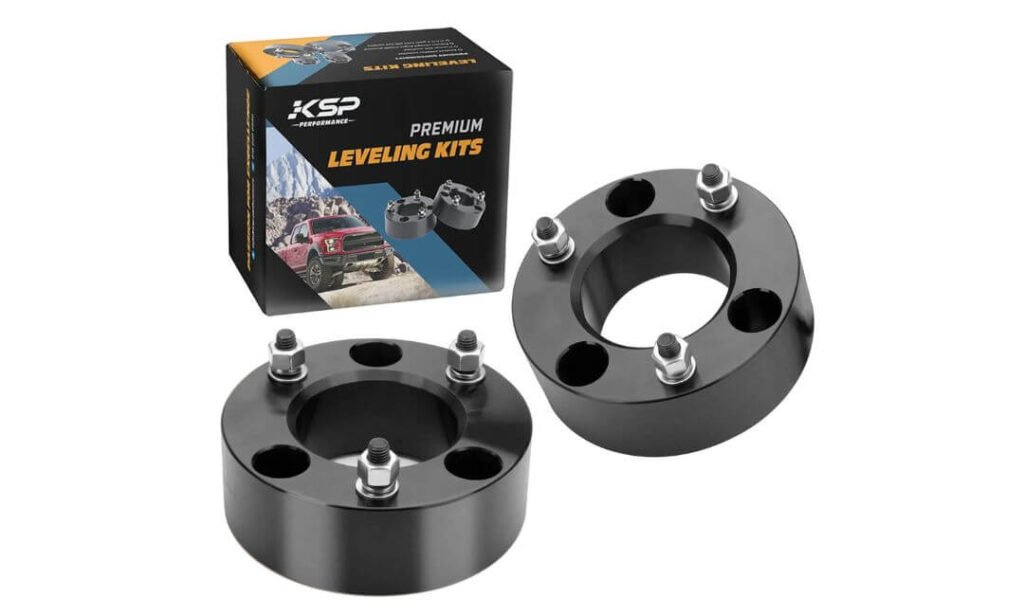
Key Features:
- Lift Height: 3 inches at the front
- Fitment: 2004–2026 Ford F-150, subject to model-specific exclusions
- Material: Forged 6061-T6 aircraft-grade aluminium
- Construction: CNC precision-machined strut spacers
- Hardware: Grade 10.9 studs made from heat-treated SCM435 steel
- Kit Includes: Two strut spacers, six Grade 10.9 bolts and mounting hardware
- Warranty: Limited lifetime warranty, subject to the manufacturer’s terms
If you want your Ford F-150 to have a more aggressive stance, a 3-inch front leveling kit provides a taller front profile than a typical 2-inch setup. Raising the front can reduce the factory nose-down appearance and may create additional space around the front tyres. However, a taller stance doesn’t automatically mean every larger tyre will fit, and the result depends on your truck’s wheel offset, tyre dimensions and suspension configuration.
The spacers are made from forged 6061-T6 aluminium and CNC precision-machined for their intended fit. The kit also uses Grade 10.9 studs made from heat-treated SCM435 steel, giving buyers specific material and hardware details to compare when choosing between leveling kits. These specifications are useful when evaluating construction, but they do not independently prove long-term durability or guarantee that the original ride quality will remain unchanged after installation.
A 3-inch front lift also makes fitment checks especially important. KSP recommends pairing the spacers with upper control arms engineered for the same lift height. More importantly, the manufacturer excludes certain F-150 configurations, including Raptor, FX4, Tremor, factory pre-lifted models and trucks with the specified CCD suspension system. It also warns against installation on vehicles with a stock ride height exceeding 22 inches, measured from the centre of the wheel to the fender lip. Check these restrictions before ordering rather than relying on the model year alone.
What Makes It Worth Considering?
This kit is worth considering if your priority is a more pronounced front lift and a taller-looking Ford F-150. Compared with a milder leveling setup, the 3-inch height creates a more noticeable change in the truck’s stance. The aluminium spacers and specified high-strength hardware are additional points to weigh when comparing products. However, the fitment restrictions are significant, so this is not a universal choice for every F-150. Confirm your suspension package, factory ride height and control-arm requirements before deciding whether the extra lift suits your truck.
Fitment and Installation Notes
- Compatible models: Ford F-150 models from 2004–2026, subject to the exclusions below.
- Not compatible: Ford F-150 Raptor models.
- Excluded packages: The manufacturer says the kit is not suitable for FX4, Tremor or factory pre-lifted models.
- CCD suspension: Does not fit 2021-and-newer models equipped with the CCD system, according to the manufacturer.
- Factory ride height: Do not use the kit if the stock measurement exceeds 22 inches from the wheel centre to the fender lip.
- Upper control arms: KSP recommends control arms engineered for the same lift height.
- Spacer thickness: The physical spacer can be thinner than three inches because its thickness does not necessarily equal the resulting lift height.
- Installation: Have a qualified installer verify fitment and complete the installation. A professional wheel alignment afterward is recommended.
- Tyre clearance: Check the exact tyre size and wheel offset before upgrading. A 3-inch lift alone does not guarantee clearance under all driving or suspension conditions.
Pros
- Provides a stated 3-inch front lift for a more aggressive stance.
- Uses forged 6061-T6 aluminium spacers with CNC machining.
- Includes Grade 10.9 studs made from heat-treated SCM435 steel.
- Includes mounting hardware.
- Comes with a limited lifetime warranty, subject to the manufacturer’s terms.
Cons
- Raises the front only and is not a complete suspension lift system.
- Has significant exclusions for Raptor, FX4, Tremor, factory pre-lifted and specified CCD-equipped models.
- Cannot be used when the factory ride-height measurement exceeds the manufacturer’s 22-inch limit.
- Compatible upper control arms and professional installation may increase the total cost.
- Does not guarantee fitment for every larger tyre and wheel combination.
#3. KSP 2-Inch Front Leveling Lift Kit
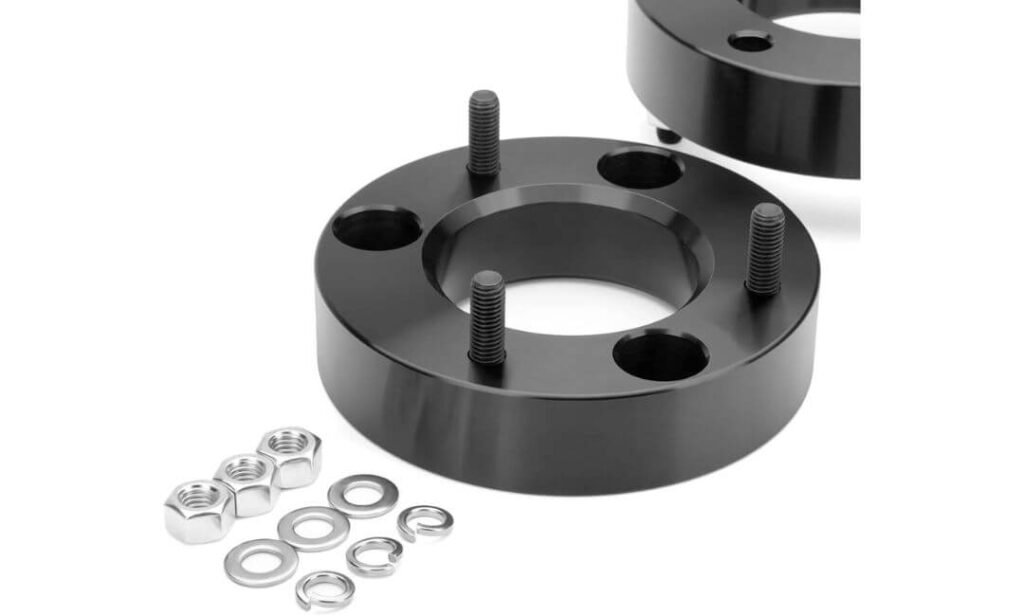
Key Features:
- Lift Height: 2 inches at the front
- Fitment: 2004–2026 Ford F-150, 2WD and 4WD
- Material: Forged 6061-T6 aircraft-grade aluminium
- Construction: CNC precision-machined strut spacers
- Hardware: Grade 10.9 studs made from heat-treated SCM435 steel
- Kit Includes: Two strut spacers, six Grade 10.9 bolts and mounting hardware
- Warranty: Limited lifetime warranty, subject to the manufacturer’s terms
Not every Ford F-150 owner wants a dramatically lifted truck. If you prefer a cleaner, more balanced appearance without raising the front too much, a 2-inch front leveling kit is a sensible option to consider. It raises the front end to help reduce the factory nose-down stance when the truck is unloaded. The result depends on the vehicle’s existing suspension condition and configuration, but this smaller lift may suit daily drivers who want a subtle change rather than the more pronounced appearance of a 2.5- or 3-inch setup.
Construction is another factor worth considering when comparing leveling kits. This setup uses forged 6061-T6 aluminium spacers with CNC precision machining, along with Grade 10.9 studs made from heat-treated SCM435 steel. Aluminium offers a lightweight alternative to steel spacer construction, while the specified hardware provides useful information about the components supplied. The kit also comes with mounting hardware and a limited lifetime warranty, although the warranty terms should be checked before purchase.
A 2-inch front lift may help when planning a different wheel and tyre combination, but it does not guarantee clearance for every upgrade. Tyre width, overall diameter, wheel offset and suspension configuration all affect whether a particular setup will fit without rubbing. The manufacturer also excludes the F-150 Raptor and 2021-and-newer models equipped with the CCD system. Check your exact truck before ordering, especially if it has a specialised suspension package or previous modifications.
What Makes It Worth Considering?
The main appeal of this kit is its moderate 2-inch lift, which can improve the front-to-rear stance without going as high as a 3-inch leveling setup. For an F-150 used primarily for commuting, everyday driving or occasional trips on rough roads, this height may be a better match if you want a subtle visual change. The aluminium construction and included mounting hardware are additional points to compare against competing options. Before buying, make sure the kit suits your truck’s suspension and your planned tyre setup rather than choosing solely by lift height.
Fitment and Installation Notes
- Compatible models: 2004–2026 Ford F-150, 2WD and 4WD.
- Not compatible: Ford F-150 Raptor models.
- CCD suspension: The manufacturer excludes 2021-and-newer F-150 models equipped with the CCD system.
- Tyre and wheel upgrades: Check tyre dimensions and wheel offset carefully. A 2-inch lift does not guarantee that every larger tyre will fit without rubbing.
- Spacer thickness: The spacers may be physically thinner than two inches. The advertised lift refers to the resulting lift height rather than necessarily matching the spacer’s measured thickness.
- Installation: Have a qualified installer check compatibility and install the kit correctly. Arrange a professional wheel alignment afterward to check the front suspension geometry.
- Existing modifications: If your truck already has a lift or modified suspension, confirm compatibility with the manufacturer before purchasing.
Pros
- Provides a moderate 2-inch front lift for a more balanced stance.
- Uses forged 6061-T6 aluminium with CNC precision machining.
- Includes Grade 10.9 studs made from heat-treated SCM435 steel.
- Supplied with mounting hardware.
- Comes with a limited lifetime warranty, subject to the manufacturer’s terms.
Cons
- Raises the front only rather than providing a complete suspension lift.
- Not compatible with Raptor models or specified CCD-equipped trucks.
- Does not guarantee clearance for every aftermarket wheel and tyre combination.
- Installation and alignment costs should be included in the overall budget.
#4. maXpeedingrods 3-Inch Front Lift Spacer
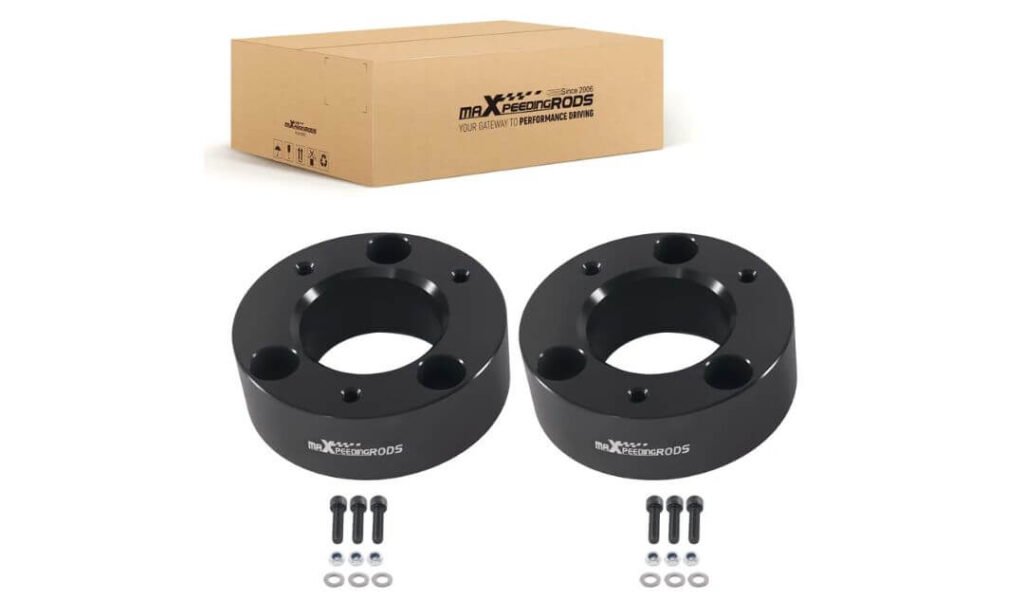
Key Features:
- Lift Height: 3 inches at the front
- Compatibility: 2004–2026 Ford F-150, 2WD and 4WD
- Material: Billet 6061 aluminium
- Finish: Anodised surface for corrosion resistance
- Spacer Thickness: 50 mm (approximately 2 inches)
- Hardware: Grade 12.9 bolts
- Kit Includes: Two front spacers, six bolts and necessary mounting hardware
If your Ford F-150 has a noticeable nose-down stance and you want a more elevated front end, this 3-inch front lift spacer is an option to compare with other leveling kits. Raising the front can give the truck a taller appearance and may create additional space for an aftermarket wheel and tyre setup. However, the actual clearance depends on your F-150’s model year, suspension configuration, wheel offset and tyre dimensions, so a 3-inch lift should not be treated as a guarantee that a particular tyre size will fit.
The spacers are manufactured from billet 6061 aluminium and feature an anodised surface designed to help resist corrosion. The kit also includes Grade 12.9 bolts, which have a higher specified strength class than standard lower-grade fasteners. These construction details are useful when comparing products, but material specifications alone cannot establish the kit’s overall durability or prove that it will maintain the factory ride quality in every situation.
One detail worth understanding before purchasing is the difference between spacer thickness and advertised lift height. These spacers measure approximately 50 mm (2 inches) thick, while the stated front lift is 3 inches. The two measurements are not necessarily identical because suspension geometry affects the resulting height. Since raising the front changes the suspension’s operating position, check the kit’s compatibility with your exact F-150 and have a qualified mechanic install it. A wheel alignment after installation is also recommended.
What Makes It Worth Considering?
The main reason to consider this option is its billet aluminium construction, anodised finish and Grade 12.9 mounting bolts. It offers a stated 3-inch front lift for owners who want a more pronounced stance than a mild leveling setup can provide. The supplied spacers and mounting hardware also mean the main installation components are included in the package. Before choosing it, however, compare the manufacturer’s fitment information with your truck’s exact configuration and account for installation and alignment costs. Don’t select a lift height based on appearance alone; the suspension must remain suitable for your intended driving conditions.
Fitment and Installation Notes
- Compatible models: 2004–2026 Ford F-150, 2WD and 4WD.
- Lift height: The advertised front lift is 3 inches, while the spacer itself is approximately 50 mm thick.
- Tyre clearance: Confirm your planned tyre size and wheel offset before upgrading. Actual clearance varies by vehicle and wheel setup.
- Suspension compatibility: Check the fitment details for your exact model year and suspension configuration before ordering. The supplied product information does not specify every possible suspension-package exclusion.
- Installation: The manufacturer recommends installation by a licensed mechanic in accordance with local vehicle-modification regulations.
- Wheel alignment: Arrange a professional alignment after installation to check the suspension geometry.
- Ride quality: Although the manufacturer states that the kit is designed to maintain factory ride quality, the result can vary with the truck’s condition, suspension setup and installation quality.
Pros
- Provides a stated 3-inch front lift for a taller F-150 stance.
- Uses billet 6061 aluminium construction.
- Anodised finish helps resist corrosion.
- Includes Grade 12.9 bolts and necessary mounting hardware.
- Compatible with 2WD and 4WD F-150 models within the specified year range.
Cons
- Raises the front only rather than replacing the complete suspension system.
- The 2-inch spacer thickness can be confusing if mistaken for the advertised 3-inch lift.
- Does not guarantee clearance for every aftermarket tyre and wheel combination.
- Professional installation and post-installation alignment add to the total cost.
- Detailed exclusions for specific F-150 suspension packages are not provided in the supplied product information.
#5. Nilight 2.5-Inch Front Leveling Kit
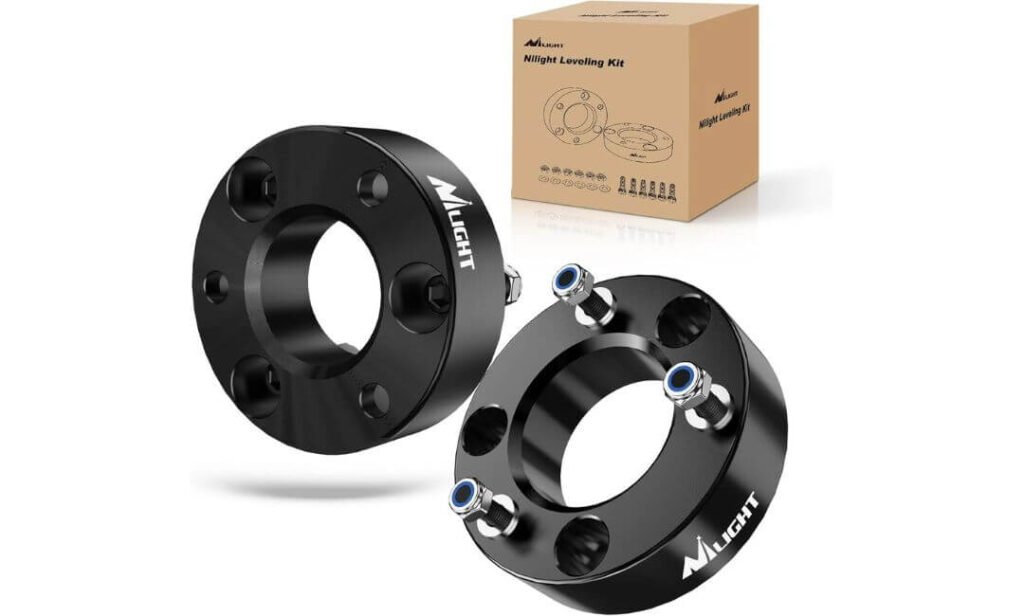
Key Features:
- Lift Height: 2.5 inches at the front
- Compatibility: 2004–2026 Ford F-150, 2WD and 4WD
- Material: 6061 aluminium alloy
- Construction: CNC-machined spacers
- Finish: Black anodised surface to help resist corrosion
- Installation: No cutting or drilling required, according to the manufacturer
- Model Number: 92369B
- Fitment Exclusion: Does not fit 2021-and-newer F-150 models equipped with the CCD system
A Ford F-150 with its original suspension can sit lower at the front than at the rear, particularly when unloaded. If you want to reduce that nose-down appearance without opting for a more aggressive 3-inch lift, a 2.5-inch front leveling kit offers a middle-ground option. It raises the front of the truck to create a more balanced profile and may provide additional space for certain aftermarket wheel and tyre combinations. Actual clearance varies with tyre size, wheel offset and suspension configuration, so check your intended setup before making a purchase.
Nilight manufactures this kit from 6061 aluminium alloy, using CNC machining to shape the spacers. The components have a black anodised finish intended to help protect the surface against corrosion. These details are useful when comparing it with other F-150 leveling kits, particularly if you prefer an aluminium design. However, the material and finish alone do not prove how the kit will perform over years of use, and the final result will also depend on correct fitment and installation.
Before ordering, check your truck’s exact model year and suspension system. Nilight specifically excludes 2021-and-newer F-150 models equipped with the CCD system. The manufacturer also explains that spacer thickness does not necessarily equal the resulting lift height because suspension geometry affects the final measurement. It recommends measuring your vehicle before purchasing to avoid choosing the wrong kit. Although installation is described as requiring no cutting or drilling, professional installation and a wheel alignment afterward are sensible steps to help ensure the suspension and steering geometry are checked properly.
What Makes It Worth Considering?
This kit is worth comparing if you want a 2.5-inch front lift with an aluminium construction and corrosion-resistant finish. Its lift height sits between a mild 2-inch setup and a taller 3-inch option, giving F-150 owners another choice when deciding how much to change the factory stance. The manufacturer describes the installation as requiring no cutting or drilling, which may simplify the process compared with modifications that involve more extensive vehicle changes. Still, confirm compatibility before ordering, particularly for newer trucks, and include installation and alignment in your budget.
Fitment and Installation Notes
- Compatible models: 2004–2026 Ford F-150, 2WD and 4WD, subject to the stated exclusion.
- CCD suspension: Not compatible with 2021-and-newer F-150 models equipped with the CCD system.
- Measure before ordering: Follow the manufacturer’s guidance to measure your truck and verify the required lift. Spacer thickness and final lift height are not always the same.
- Tyre and wheel upgrades: A 2.5-inch lift does not guarantee that every larger tyre will fit. Check tyre dimensions, wheel offset and available clearance.
- Installation: The manufacturer states that cutting and drilling are not required. Installation time and difficulty can vary by vehicle and installer.
- Wheel alignment: Arrange a professional alignment after installation and have the suspension geometry checked.
- Existing modifications: If your F-150 already has a lift or aftermarket suspension components, confirm compatibility before fitting this kit.
Pros
- Provides a stated 2.5-inch front lift for a more balanced stance.
- Uses CNC-machined 6061 aluminium alloy.
- Black anodised finish helps resist corrosion.
- Designed for F-150 models with both 2WD and 4WD configurations within the specified range.
- Manufacturer states that cutting and drilling are not required.
Cons
- Raises the front only rather than providing a complete suspension lift.
- Not compatible with specified CCD-equipped models from 2021 onward.
- Does not guarantee clearance for every aftermarket tyre and wheel setup.
- The product information does not specify the included hardware in sufficient detail to confirm every installation component.
- Installation and alignment costs may add to the total expense.
How to Choose the Right Ford F150 Lift Kit
Choosing the right Ford F150 lift kit involves more than deciding how high you want your truck to sit. Your model year, 2WD or 4WD configuration, factory suspension, intended tire size, and daily driving needs all affect which setup makes sense. A front leveling spacer may be sufficient to reduce the factory nose-down stance, while a complete suspension lift kit is a better option if you want to raise both ends or build a truck for more demanding off-road use.
The five options compared in this guide are primarily front leveling kits or lift spacers. Use the following factors to narrow down your choice, then confirm the manufacturer’s fitment information for your exact truck before ordering.
1. Choose the Right Lift Height
The difference between a 2-inch, 2.5-inch, and 3-inch front lift is not just appearance. Raising the front suspension changes its operating position, and a taller spacer does not automatically provide better ride quality, greater suspension travel, or guaranteed clearance for larger tires.
- 2-inch lift: A sensible starting point if your main goal is to reduce the factory nose-down stance while keeping the modification relatively mild.
- 2.5-inch lift: Worth considering if you want a more noticeable change in front ride height. Check the manufacturer’s fitment restrictions and whether compatible upper control arms are recommended.
- 3-inch lift: Suits owners seeking a more pronounced front-end height change, but requires particular attention to suspension geometry, alignment, and component compatibility.
These are general selection guidelines, not guarantees of the final ride height or tire clearance. The actual result depends on the truck’s existing suspension, factory ride height, and the kit’s design. A spacer’s physical thickness can also differ from the advertised amount of lift because of suspension geometry.
2. Confirm Your F-150 Model Year and Drivetrain
Never select a lift kit based on the Ford F-150 name alone. A kit advertised for a broad range of model years may still exclude particular trims or suspension configurations.
Before purchasing, verify:
- Your exact F-150 model year.
- Whether your truck is 2WD or 4WD.
- Your trim and factory suspension package.
- Whether the truck already has a factory lift or aftermarket suspension modifications.
- Any restrictions involving Raptor, Tremor, FX4, or other specially equipped versions.
- Whether the kit’s stated model-year range matches the manufacturer’s current fitment information.
This check is especially important for the products compared above. Some have specific exclusions for Raptor or models equipped with Continuous Controlled Damping (CCD), while the 3-inch KSP option has additional restrictions. Do not assume that a kit fits simply because your truck falls within its advertised year range.
3. Decide Whether a Leveling Kit or a Complete Lift Kit Fits Your Goal
A front leveling kit generally raises the front of the truck to reduce its factory rake. It does not necessarily raise the rear, and it is not equivalent to a complete suspension lift.
A front leveling spacer is worth considering if your primary goal is a more level stance and a modest front ride-height increase. It generally works with selected factory suspension components, subject to the kit’s design and installation instructions.
A complete suspension lift kit is a different solution. Depending on the design, it may include replacement suspension components, brackets, control arms, and front and rear lift components. This route may be more appropriate if you need a larger overall lift or a setup engineered for a particular off-road application.
If you regularly tow or carry heavy loads, think carefully before removing too much of the factory rake. The rear suspension can settle under load, and a level-looking truck when empty may not maintain the same stance when towing. A leveling kit also does not increase the truck’s payload or towing ratings.
4. Match the Lift to Your Planned Tire Size
If larger tires are the main reason you’re shopping for Ford F150 lift kits, plan your tire and wheel setup before choosing the spacer.
Actual clearance depends on several factors, including:
- Tire diameter and width.
- Wheel width and offset.
- Factory or aftermarket wheel specifications.
- Fender liners, bumper components, and other nearby parts.
- Suspension travel and steering position.
- Model year, trim, and existing modifications.
A stated 2-inch or 3-inch lift does not guarantee that a particular tire will fit without rubbing. Two F-150 trucks with the same advertised lift can have different results if their wheels, tyres, or suspension configurations differ.
Before ordering, check the kit manufacturer’s tire-fitment guidance for your exact configuration. If that information is unavailable, ask the manufacturer or a qualified installer to confirm the proposed wheel-and-tire combination. The finished setup should be checked for clearance through the steering range and at relevant suspension positions—not just while the truck is parked.
5. Check the Material, Hardware, and Included Components
The material and construction of a lift spacer are worth checking, but material alone does not establish overall quality. Look at the design, machining, fasteners, installation instructions, and the manufacturer’s stated fitment limits.
For the products in this comparison, several KSP kits specify 6061-T6 aluminum construction and Grade 10.9 hardware. The maXpeedingrods option specifies billet aluminum and Grade 12.9 bolts, while the Nilight option describes CNC-machined 6061 aluminum with a black anodized finish.
When comparing any of these kits, check the actual product listing for:
- The number and type of spacers supplied.
- The specified fasteners and mounting hardware.
- Whether installation instructions are included.
- Whether any additional components are required.
- The stated warranty and its conditions.
- Whether compatible upper control arms are recommended or required.
Do not assume that every kit includes upper control arms, rear lift components, alignment hardware, or replacement shocks. The contents vary by product, so verify the exact package before purchasing.
6. Consider Upper Control Arms and Suspension Geometry
A front lift changes the position at which the suspension operates. Depending on the lift height and the truck’s configuration, this can affect alignment adjustment, ball-joint angles, and the operating angles of other suspension components.
Some lift-kit manufacturers recommend upper control arms designed for the chosen lift height. That recommendation should be checked for the specific kit rather than treated as a universal requirement for every F-150.
Before choosing a taller spacer, confirm whether the manufacturer specifies compatible upper control arms or other supporting components. On a 4WD truck, also consider the effect of the lift on front CV axle angles. If the truck is used off-road, regularly carries heavy loads, or already has suspension modifications, have a qualified installer assess the complete setup.
The objective is not simply to achieve the advertised height. It is to choose a configuration that is compatible with the truck and can be aligned and maintained appropriately.
7. Factor in Installation and Wheel Alignment
Even when a kit is marketed as a bolt-on installation, fitting it involves working with suspension components. Installation time and difficulty can vary with the truck’s model year, condition, rust, suspension design, and the kit’s instructions.
Before installation, read the manufacturer’s instructions and confirm whether specialist tools or additional parts are needed. If you do not have the appropriate equipment and suspension experience, use a qualified professional.
A professional wheel alignment should be arranged after installation. Raising the front suspension can change alignment angles, so the truck should not be assumed to retain its previous alignment. Have the installer check the relevant alignment specifications for your exact model and drivetrain, and inspect for unusual tyre contact or suspension interference before normal use.
After installation, follow the manufacturer’s instructions for any required fastener checks and maintenance. If the truck develops unusual noises, vibration, steering changes, or tyre rubbing, have it inspected before continuing to drive it normally.
8. Choose According to How You Use Your Truck
The right setup also depends on the job your F-150 does most often.
- Daily driving: A modest front lift may be enough if your priority is appearance and a more level stance. Pay attention to alignment, ride quality, and factory suspension compatibility.
- Larger tyres and a more aggressive look: Choose the lift and wheel combination together, using confirmed fitment information rather than lift height alone.
- Regular off-road driving: Consider suspension travel, component angles, ground clearance, and whether a spacer is appropriate for the terrain you tackle. A complete suspension system may better suit some builds.
- Towing and hauling: Preserve a setup appropriate for the truck’s intended loads. A leveling kit does not increase payload or towing capacity, and rear suspension sag should be considered when planning the modification.
Final Buying Checklist
Before purchasing a Ford F150 lift kit, confirm each of the following:
- The kit explicitly fits your model year and 2WD or 4WD configuration.
- Your trim and factory suspension package are not excluded.
- The advertised lift height suits your intended stance and use.
- Your planned tyre and wheel combination has been checked for clearance.
- You understand which components are included and which may be needed separately.
- Any manufacturer recommendations for upper control arms or supporting parts have been reviewed.
- The installation instructions, warranty terms, and maintenance requirements are available.
- You have planned for a professional alignment after installation.
The bottom line: Choose a Ford F150 lift kit based on verified fitment, the height you genuinely need, and the suspension setup you want to maintain. A taller lift is not automatically the better choice. For the five front leveling options reviewed in this guide, checking the manufacturer’s exclusions and matching the kit to your exact truck should come before appearance or price.
What to Know Before Installing a Ford F150 Lift Kit
Installing a Ford F150 lift kit changes more than the truck’s appearance. Raising the front suspension can affect alignment, suspension component angles, tyre clearance, and how the truck behaves on the road. The amount of change depends on the kit design, lift height, model year, drivetrain, and existing suspension condition.
Before installation, confirm that the kit is engineered for your exact F-150 configuration and understand what the package includes. A front leveling spacer is not a complete suspension lift system, and installation requirements can differ between products. The following checks can help you avoid compatibility problems and make a more informed decision.
1. Inspect the Factory Suspension Before Installation
Start by checking the condition of the truck’s existing suspension. Worn ball joints, damaged bushings, leaking shocks, deteriorated mounts, or other existing problems should not be ignored simply because a lift kit is being installed.
A lift does not repair worn suspension components. Depending on their condition, existing parts may need attention before the modification can be completed safely.
Ask the installer to assess the relevant suspension and steering components, mounting points, and fasteners. If your F-150 already has an aftermarket lift, leveling kit, or non-standard suspension components, disclose those modifications before selecting another kit. Combining incompatible parts can create fitment or operating problems.
2. Follow the Correct Installation Instructions
Do not assume that all Ford F150 lift kits install in the same way. Even when two products advertise the same lift height, their spacer design, mounting arrangement, hardware, and installation requirements may differ.
Before work begins:
- Verify the kit’s part number and fitment for your exact truck.
- Read the manufacturer’s complete installation instructions.
- Confirm that all specified hardware and components are present.
- Check whether the manufacturer recommends additional suspension components.
- Use the required tools and appropriate vehicle-support equipment.
- Follow the specified fastener tightening procedures and torque values.
Never guess torque specifications or substitute hardware without manufacturer approval. If the instructions are unclear or the truck’s configuration differs from the application shown, contact the manufacturer or a qualified installer before proceeding.
3. Arrange a Professional Wheel Alignment
Wheel alignment is an important part of a front lift installation. Raising the suspension can change alignment angles, and the amount of adjustment available depends on the truck’s suspension design and the kit installed.
After installation, have a qualified shop check and adjust alignment to the specifications applicable to your exact F-150. The installer should also identify whether the chosen setup allows the required alignment settings to be achieved.
Incorrect alignment can contribute to uneven tyre wear, steering concerns, or unstable-feeling handling. Do not rely on the steering wheel appearing straight as proof that the alignment is correct.
Keep the alignment report with your installation records. It provides a useful baseline if you later notice tyre wear or steering changes.
4. Check Tyre Clearance Before Driving Normally
A lift kit does not guarantee that larger tyres will fit without rubbing. Clearance depends on tyre diameter and width, wheel offset, wheel width, suspension configuration, and nearby body or liner components.
After installation, the complete wheel-and-tyre setup should be inspected for interference through the steering range and at relevant suspension positions. A tyre that clears while the truck is parked straight ahead may contact a liner or other component when the steering is turned or the suspension compresses.
If you plan to install larger tyres later, verify compatibility before purchasing the lift kit. Use manufacturer-specific fitment guidance or seek an assessment from a qualified installer rather than relying on a general statement that a certain lift height fits a particular tyre size.
5. Understand the Effect on Ride Quality and Handling
A front leveling spacer raises the suspension’s resting position, but it does not automatically improve suspension travel, shock performance, or off-road capability.
The effect on ride quality depends on the lift design, the truck’s existing components, and whether the suspension continues to operate within its intended range. A taller spacer is not necessarily better for a daily-driven truck, especially if comfort, towing, and regular highway use are priorities.
After installation, pay attention to any new vibration, unusual noises, steering changes, or harshness. These symptoms should be inspected rather than dismissed as normal consequences of lifting the truck.
6. Consider Towing, Payload, and Daily Use
If your F-150 regularly tows a trailer or carries heavy loads, consider how changing the front ride height affects the truck’s overall stance when loaded. A front leveling kit does not increase the manufacturer’s payload or towing ratings, and it does not automatically address rear suspension sag.
Choose a setup that suits your normal use, including the loads you carry and the roads you travel. If towing stability or load-carrying performance is a major concern, discuss the complete vehicle setup with a qualified professional before making suspension changes.
Always remain within the truck’s specified payload, axle, and towing limits, regardless of the lift kit installed.
7. Check Local Regulations and Warranty Conditions
Before purchasing or installing a lift kit, review the applicable vehicle-modification rules in your area. Requirements can vary by location and may involve vehicle inspections, lighting, tyre coverage, bumper height, or other safety-related matters.
Also read the kit manufacturer’s warranty and check the terms of any relevant vehicle warranty. Do not assume that every modification automatically voids the entire vehicle warranty—or that every resulting repair will necessarily be covered. Coverage depends on the applicable terms and circumstances.
Keep the product receipt, installation instructions, alignment report, and any records of professional installation. These documents can help when checking warranty conditions or diagnosing a problem later.
8. Perform Post-Installation Checks
Once installation is complete, do not judge the result on appearance alone. Follow the kit manufacturer’s instructions for inspection and maintenance, and ask the installer to confirm that the relevant components have been fitted correctly.
Before regular driving, verify that:
- The steering operates normally without binding.
- The tyres and wheels clear surrounding components.
- No unusual noises or vibrations are present.
- The alignment has been checked.
- The specified fasteners and mounting points have been inspected according to the manufacturer’s procedure.
- Any required follow-up checks have been scheduled.
If the truck develops new steering problems, persistent vibration, unusual suspension noises, or tyre interference, stop using it normally until the cause has been assessed.
Common Ford F150 Lift Kit Installation Mistakes to Avoid
Choosing a kit based on lift height alone: Two kits advertising the same height may differ in construction, fitment restrictions, and installation requirements. Check the exact product specifications.
Ignoring trim and suspension exclusions: A kit that fits some F-150 configurations may not fit Raptor, CCD-equipped, factory-lifted, or other specifically excluded versions. Confirm compatibility before ordering.
Assuming larger tyres will fit automatically: Lift height is only one factor in tyre clearance. Wheel offset, tyre dimensions, and suspension movement also matter.
Skipping wheel alignment: A completed installation should be followed by a professional alignment check appropriate to the truck’s configuration.
Treating a leveling spacer as a complete lift system: Most front leveling spacers primarily change front ride height. They do not necessarily include rear lift components, replacement shocks, or other suspension upgrades.
Ignoring manufacturer instructions: Do not improvise fastener specifications, combine incompatible components, or overlook stated installation restrictions.
Final Installation Advice
A successful Ford F150 lift kit installation starts with verified fitment and a suspension system in suitable condition. Follow the instructions for the specific kit, arrange a professional alignment, and confirm tyre clearance before returning the truck to normal use.
For the front leveling kits compared in this guide, check each product’s model-year range and exclusions carefully. Taking these steps helps you choose a setup that matches your truck and intended use rather than relying on advertised lift height alone.
FAQs About Ford F150 Lift Kits
Can a Ford F-150 lift kit cause problems if the factory suspension is already modified?
Yes, compatibility problems are possible when a new lift spacer is combined with an existing leveling kit, aftermarket control arms, modified coilovers, or other suspension changes. The combined lift height and component geometry may differ from what either manufacturer intended. Before buying, identify every existing suspension modification and ask the kit manufacturer or a qualified installer to confirm whether the components can be used together. Avoid stacking spacers unless the manufacturer explicitly approves that configuration.
Why might two Ford F-150 trucks with the same lift kit sit at different heights?
The advertised lift height does not guarantee an identical final measurement on every truck. Factory ride height, existing suspension components, vehicle configuration, and the kit’s design can influence the result. Spacer thickness also does not always equal the amount of lift at the wheel because of suspension geometry. Compare the manufacturer’s stated lift with the actual front ride height measured consistently before and after installation rather than judging the result from photographs alone.
Can a 2.5-inch leveling kit fit 35-inch tires on a Ford F-150 without rubbing?
Not in every configuration. A 2.5-inch front leveling kit may provide room for a larger tyre, but 35-inch tyre fitment also depends on tyre width, wheel offset, wheel backspacing, model year, trim, and the shape of nearby components. Some combinations may require trimming or other changes, while others may still experience rubbing at particular steering or suspension positions. Confirm the exact tyre-and-wheel combination against manufacturer fitment information before purchasing. Do not treat lift height alone as a guarantee of clearance.
Is a front leveling spacer a good choice for an F-150 that regularly tows a trailer?
It can suit an owner whose main goal is changing the front stance, but towing requirements deserve special consideration. Ford designs the factory suspension with a particular front-to-rear relationship, and the rear can settle when trailer tongue weight is applied. A front leveling spacer does not increase towing capacity, payload, or rear suspension capacity. If you tow frequently, evaluate the loaded vehicle stance and follow the truck manufacturer’s towing limits before deciding whether a front-only modification suits your use.
Should you replace the factory upper control arms when installing a 2.5-inch or 3-inch F-150 lift spacer?
It depends on the kit design and the truck’s suspension configuration. Some manufacturers recommend upper control arms designed for a particular lift height to help address changes in suspension geometry and component operating angles. Other setups may have different requirements. Follow the instructions for the exact kit rather than applying one rule to every F-150. If the manufacturer recommends compatible upper control arms, confirm whether they are included or must be purchased separately before ordering.
Does a 3-inch front leveling kit provide the same benefits as a 3-inch suspension lift?
No. The advertised height may sound similar, but the design and scope of the two products can be different. A front leveling spacer primarily raises the front of the truck using a spacer-based arrangement. A complete suspension lift may include engineered replacement components or brackets and may raise both the front and rear, depending on the system. Their effects on suspension geometry, travel, ground clearance, and tyre fitment can therefore differ. Compare the actual components and installation instructions rather than choosing by the advertised number alone.
What should you verify when a Ford F-150 lift kit advertises fitment from 2004 to 2026?
Treat a broad model-year claim as a starting point, not proof that the kit fits every truck in that range. Check your exact model year, 2WD or 4WD configuration, trim, factory suspension equipment, and any stated exclusions. Confirm the product part number and review the manufacturer’s current fitment information, particularly for Raptor, Tremor, factory-lifted, or CCD-equipped versions. If the product page gives conflicting year ranges, get written confirmation from the seller or manufacturer before ordering.
Final Verdict on Ford F150 Lift Kits
The right Ford F150 lift kit depends on your truck’s configuration, desired ride height, and intended use. A 2-inch spacer suits a milder front-leveling goal, while 2.5-inch and 3-inch options provide more noticeable height changes. Before purchasing, verify model-year fitment, suspension exclusions, tyre clearance, and any recommended supporting components. For the five options reviewed above, prioritise confirmed compatibility over lift height alone, and arrange a professional wheel alignment after installation.