Best Ford F-150 Upper Control Arms for Lifted Trucks (2004–2026)
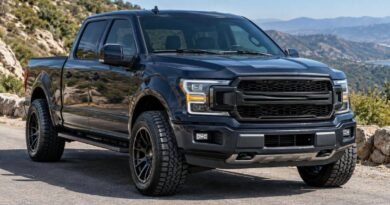
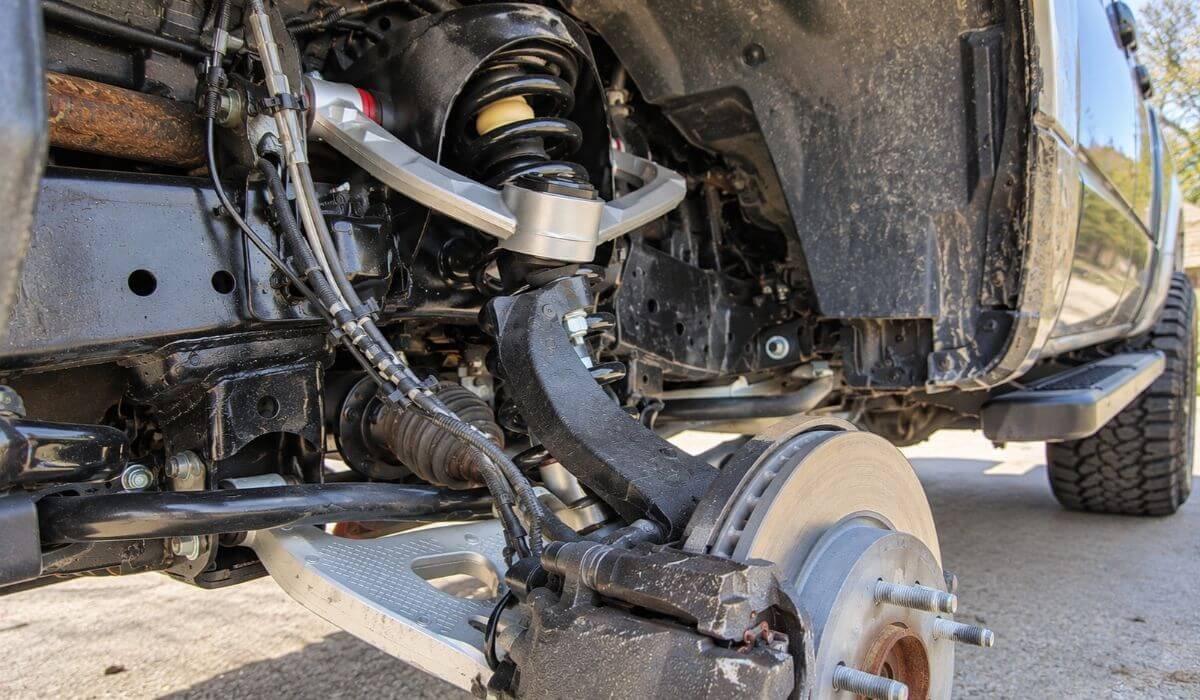
If you’ve lifted your Ford F-150 by 2–4 inches, choosing the right upper control arms is worth getting right. A lift changes the front suspension geometry, and the factory control arms may not provide the alignment range or ball joint angle needed for your setup. That can make it harder to achieve proper alignment and may contribute to uneven tyre wear or added stress on suspension components, depending on the lift and vehicle configuration.
The good news is that aftermarket upper control arms are available in different designs, including forged aluminium and tubular steel, with options for specific F-150 model years and lift heights. But not every set will fit every truck, and a higher price doesn’t automatically make one the best choice.
In this guide, we’ve selected five upper control arm options for Ford F-150 models spanning 2004–2026, focusing on stated fitment, construction, lift compatibility and practical features. Whether you’re running a 2-inch levelling setup or a 4-inch front lift, the goal is to help you compare suitable options and choose a set that matches your truck—not simply buy the first one labelled “lifted.” Always confirm compatibility with your exact model year, drivetrain and suspension setup before ordering.
Best Upper Control Arms for Lifted F-150: 2026 Buyer’s Picks
#1. Best Overall: KSP 2–4″ Aluminum Upper Control Arms (2021–2026 F-150)
#2. Best for Older Models: KSP 2-4″ Forged Aluminum Upper Control Arms (2004–2020 F-150)
#3. Lifted Pick: maXpeedingrods Forged Aluminum Upper Control Arms (2004–2024 F-150)
#4. Ball Joint Kit Option: maXpeedingrods Front Upper Control Arm Kit (2015–2021 F-150)
#5. Tubular Design Option: Dynofit 2–4″ Front-Lift Upper Control Arms (2004–2020 F-150)
Must Check:
Expert Tip: Check Your Suspension at Ride Height, Not Just on the Lift
Here’s a detail worth checking before you buy upper control arms for a lifted F-150: ask the installer to evaluate the ball joint angle and available suspension travel with the truck sitting at its normal ride height. A control arm that clears everything while the suspension hangs in the air may behave differently once the truck is back on the ground.
If you’re running a 2–4-inch front lift, don’t judge a control arm by its advertised lift range alone. The actual geometry also depends on your lift design, strut or coilover setup, wheel and tyre combination, and the truck’s model year. Ask whether the arms maintain adequate ball joint articulation through the suspension’s intended travel and whether the alignment can be brought within Ford’s specifications.
One more thing: after installation, get a proper alignment and keep the printout. If the shop cannot achieve the required alignment, or the ball joints appear to be operating near their limits, investigate the setup rather than assuming an aftermarket arm will automatically solve it. That simple check can help you avoid buying parts twice.
| Product | Material | Lift Compatibility | F-150 Model Years | Key Features | Best Suited For | Important Fitment Checks | Check Price |
|---|---|---|---|---|---|---|---|
| PICK 01 KSP 2–4″ Aluminum Upper Control Arms Newer-generation F-150 | Forged aluminum |
2–4 inches Front lift |
2021–2026 | Replaceable ball joints, CAD-engineered design and stated lifetime warranty on the arm body with an 18-month ball joint warranty. | Owners with a compatible lift who prefer aluminum arms and serviceable ball joints. | Raptor excluded. Confirm Tremor-specific fitment and lift range before ordering. | Check Price ↗ View current offer |
| PICK 02 KSP Forged Aluminum Upper Control Arms Earlier-generation F-150 | Forged aluminum |
2–4 inches Lifted setup |
2004–2020 | Replaceable ball joints and polyurethane bushings; stated lifetime arm-body warranty and 18-month warranty on ball joints and bushings. | Owners of compatible older F-150s who want aluminum arms with replaceable wear components. | Check hub-to-fender height and wheel offset. Stock ET44 wheels may rub. Raptor excluded. | Check Price ↗ View current offer |
| PICK 03 maXpeedingrods Forged Aluminum Upper Control Arms Lift-focused option | Forged aluminum |
2–4 inches Front lift |
2004–2024 | Greaseable polyurethane bushings, serviceable ball joints and stated lifetime arm warranty with a 12-month warranty on ball joints and bushings. | Lifted F-150 owners looking for aluminum arms with serviceable components. | Raptor excluded. Stock ET44 wheels may rub. Confirm wheel clearance before considering spacers or different wheels. | Check Price ↗ View current offer |
| PICK 04 maXpeedingrods Upper Control Arm with Ball Joint Kit Replacement-style assembly | Powder-coated steel |
Verify first Dedicated lift compatibility not established |
2015–2020* | Driver-side and passenger-side upper control arms, plus two front lower ball joint assemblies. | Owners needing a replacement-style assembly with additional ball joint components. | Product title mentions 2015–2021, but detailed application ends at 2020. Confirm year and lift suitability with the seller. | Check Price ↗ View current offer |
| PICK 05 dynofit 2–4″ Tubular Upper Control Arms Steel construction option | 1.25-inch DOM steel tubing |
2–4 inches Front lift |
2004–2020 | Powder-coated tubular design, replaceable polyurethane bushings and grease fittings; stated lifetime arm warranty with a 12-month warranty on ball joints and bushings. | Compatible lifted F-150s where the owner prefers tubular steel arms and serviceable bushings. | Check year-specific exclusions and wheel offset. Stock ET44 wheels may rub; verify clearance before purchase. | Check Price ↗ View current offer |
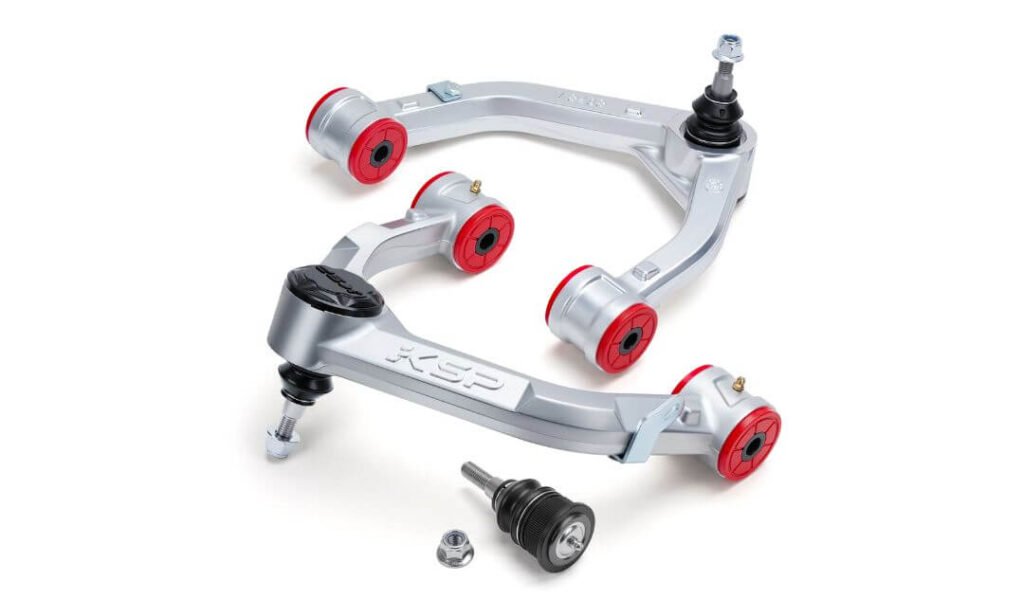
#1. KSP 2–4″ Aluminum Upper Control Arms (2021–2026 Ford F-150)
Key Features:
- Forged Aluminium Construction: Lightweight design with natural corrosion resistance.
- Lift Compatibility: Designed for F-150 trucks with 2–4 inches of front lift.
- Suspension Geometry: CAD-engineered design intended to improve ball joint operating angles on lifted trucks.
- Vehicle Fitment: Compatible with 2021–2026 F-150 models with 2WD or 4WD, excluding the Raptor.
- Replaceable Ball Joints: Serviceable ball joints with an 18-month warranty; the tubular control arm body has a lifetime warranty.
- Included Components: A pair of control arms, ball joints, bushings, sensor link brackets and mounting hardware.
Lifting a Ford F-150 changes the relationship between the upper control arm, ball joint and other suspension components. KSP’s forged aluminium upper control arms are designed for 2021–2026 F-150 models running a 2–4-inch front lift, with revised geometry intended to help address ball joint angles associated with a lifted suspension. Their CAD-engineered design also aims to maintain clearance around the shock assembly, although actual clearance depends on the complete suspension setup.
The aluminium construction is worth considering if you want an alternative to heavier steel control arms. Aluminium naturally resists rust, while the design and finish may appeal to owners who prefer a clean, rugged appearance. More importantly, the replaceable ball joints offer a practical maintenance advantage because the entire control arm assembly may not need replacement when a compatible ball joint eventually requires servicing. KSP specifies an 18-month ball joint warranty and a lifetime warranty on the tubular control arm body; check the manufacturer’s current warranty terms for coverage conditions.
Before ordering, confirm your exact model year, trim and lift configuration. KSP lists compatibility with 2WD and 4WD F-150 models and notes that the arms fit the Tremor with a 1–2-inch lift, but they do not fit the Raptor. That Tremor-specific fitment note differs from the general 2–4-inch lift range, so Tremor owners should verify their precise setup with KSP before purchasing. Also, check whether your lift kit requires additional sensor-link adjustments and have the alignment and suspension clearances inspected after installation.
Ideal For: F-150 owners with a compatible 2–4-inch front lift who want lightweight aluminium control arms, revised suspension geometry and replaceable ball joints.
Consider Another Option If: You own an F-150 Raptor or need arms for a stock-height suspension. Tremor owners and trucks with unusual aftermarket suspension combinations should confirm fitment with KSP before ordering.
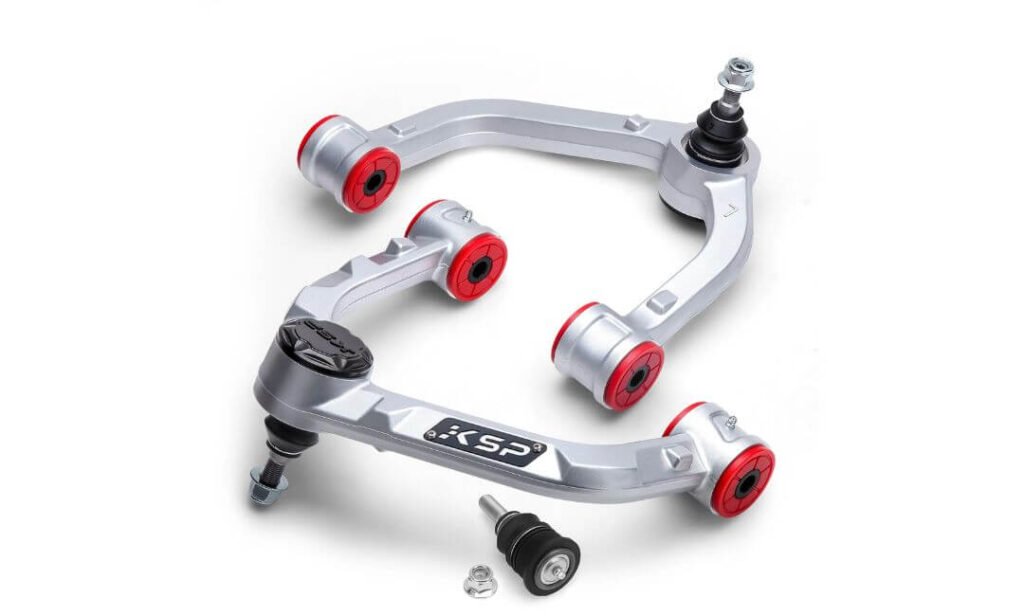
#2. KSP Forged Aluminum Upper Control Arms (2004–2020 F-150)
Key Features:
- Forged Aluminium Construction: Lightweight design with natural corrosion resistance.
- Lift Compatibility: Designed for trucks with a 2–4-inch lift.
- Vehicle Fitment: Fits 2004–2020 Ford F-150, plus specified Ford Expedition and Lincoln Navigator models.
- Replaceable Components: Ball joints and polyurethane bushings can be replaced separately.
- Warranty Coverage: Lifetime warranty on the tubular control arm body and an 18-month warranty on ball joints and bushings.
- Fitment Restrictions: Does not fit Raptor models; wheel offset and hub-to-fender height must be checked before ordering.
For owners of older Ford F-150 models, these KSP forged aluminium upper control arms offer an aftermarket option for trucks running a compatible 2–4-inch lift. Lifting a truck changes its front suspension geometry, so choosing arms designed around a lifted setup can help address ball joint angle concerns. KSP also uses aluminium construction to reduce weight compared with its steel options and provide natural resistance to corrosion.
One useful feature is the ability to replace the ball joints and polyurethane bushings separately rather than automatically replacing the entire assembly when those components wear. The kit includes two control arms, eight polyurethane bushings, ball joint covers, bushing tubes, grease fittings and mounting hardware. KSP provides a lifetime warranty on the tubular control arm body and an 18-month warranty on the ball joints and bushings, subject to its warranty terms. These details are worth weighing when comparing long-term maintenance and replacement costs.
Fitment needs particular attention with this kit. KSP lists compatibility with 2004–2020 F-150 models in both 2WD and 4WD configurations, but the manufacturer warns that stock wheels with an ET44 offset can cause tyre rubbing against the control arm. It also excludes Raptor models and trucks with a hub-to-fender height exceeding 26 inches. If your F-150 has an FX4 or Snow Prep package, measure the hub-to-fender height before ordering and confirm that your specific lift spacer is compatible. Checking wheel clearance and alignment requirements beforehand can help prevent avoidable installation problems.
Ideal For: Owners of compatible 2004–2020 F-150 models who want lightweight forged aluminium arms for a lifted suspension and appreciate replaceable wear components.
Consider Another Option If: Your truck is a Raptor, has a hub-to-fender height above 26 inches or uses wheels with an offset that creates clearance issues. Confirm your measurements and wheel fitment with KSP before choosing this kit.
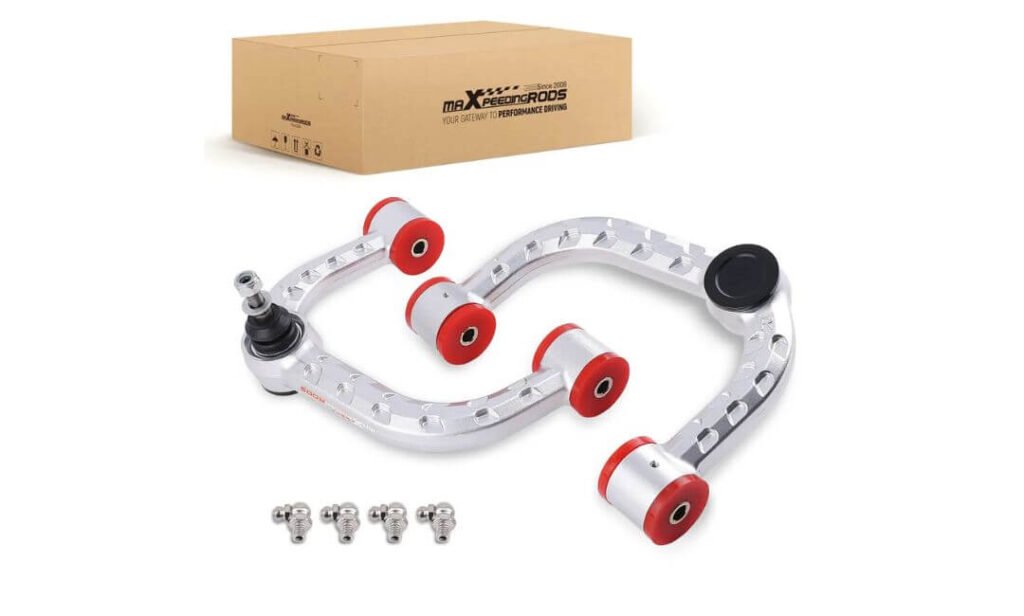
#3. maXpeedingrods Forged Aluminum Upper Control Arms (2004–2024 F-150)
Key Features:
- Forged Aluminium Construction: Lightweight design with an anodised finish for corrosion resistance.
- Lift Compatibility: Designed for a 2–4-inch front lift.
- Greaseable Bushings: Polyurethane bushings with grease fittings for routine maintenance.
- Serviceable Ball Joints: Hardened steel ball and socket with angled grease fittings.
- Wheel Clearance: Stock ET44 wheels may rub against the control arms.
- Fitment: Compatible with specified 2004–2024 F-150 models, excluding the Raptor.
If your Ford F-150 has a 2–4-inch front lift, the maXpeedingrods forged aluminium upper control arms are worth considering as an alternative to the factory arms. A suspension lift changes the operating angles of the upper control arms and ball joints, so the replacement design needs to suit the truck’s actual ride height. These arms use forged aluminium with an anodised finish, offering a lightweight construction with added protection against corrosion.
One practical advantage is the combination of greaseable polyurethane bushings and serviceable ball joints. The bushings have grease fittings to support routine lubrication, while the ball joints use a hardened steel ball and socket with angled fittings for access. These features provide maintenance options over time, although their lifespan will still depend on road conditions, driving style, installation and regular inspection. Also, don’t assume that aftermarket control arms automatically eliminate tyre wear: correct wheel alignment and suspension geometry remain important after a lift.
Check your wheels before ordering. The manufacturer warns that stock wheels with an ET44 offset may contact the control arms and recommends a minimum 1.5-inch wheel spacer or aftermarket wheels with a 0 offset. However, wheel spacers are not a universal fix; you need to confirm hub fitment, stud engagement, tyre clearance and safe wheel positioning for your particular F-150. These arms are designed for compatible 2004–2024 models but do not fit the Raptor. Confirm your truck’s model year and lift setup, and have a qualified installer check clearance and alignment before driving.
Ideal For: Ford F-150 owners running a compatible 2–4-inch front lift who want forged aluminium arms with greaseable bushings and serviceable ball joints.
Consider Another Option If: You want to keep your stock wheels and avoid potential clearance modifications. First confirm that the arms will clear your wheels and tyres with your existing suspension setup.
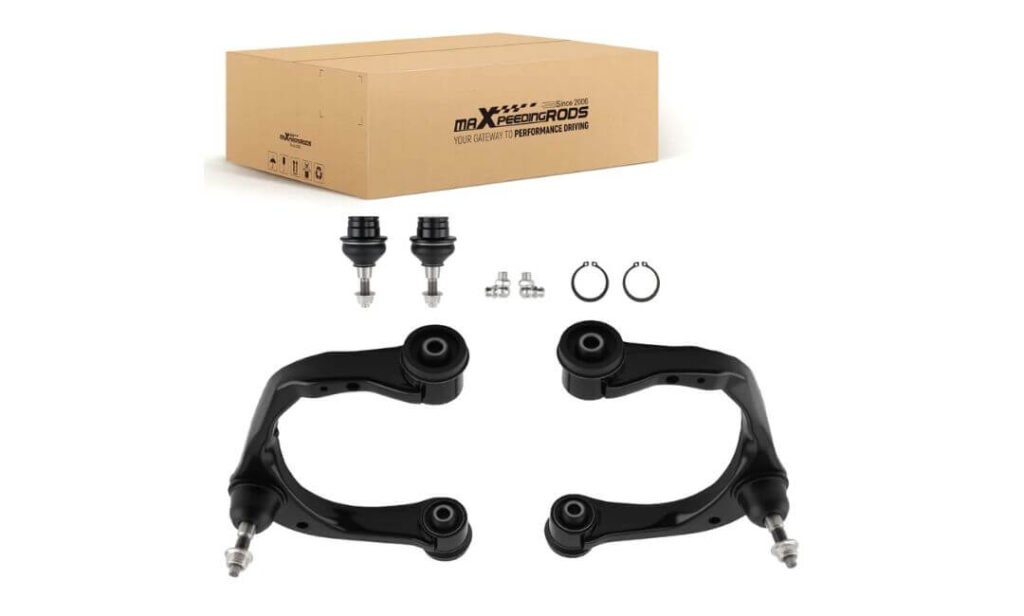
#4. maXpeedingrods Front Upper Control Arm with Ball Joint Kit (2015–2020 F-150)
Key Features:
- Steel Construction: Steel control arms with a powder-coated finish to help resist corrosion.
- Complete Assembly: Includes driver-side and passenger-side upper control arms with ball joints.
- Additional Components: Includes two front lower ball joint assemblies.
- Direct Replacement Design: Designed for replacement installation without drilling, subject to correct vehicle fitment.
- Reference Numbers: K623339, K623340 and K500318, among others.
- Vehicle Compatibility: Designed for 2015–2020 Ford F-150 models; does not fit Raptor models.
If your Ford F-150 needs replacement upper control arms rather than components specifically designed for a 2–4-inch lift, this maXpeedingrods kit offers a complete assembly-based option to consider. It uses steel control arms with a powder-coated finish and comes with the upper ball joint assemblies already included. This can simplify parts selection compared with buying separate arms and ball joints, provided the kit matches your truck’s original suspension configuration.
The main advantage is the range of components included in the package. Along with the driver-side and passenger-side upper control arms, the kit includes two front lower ball joint assemblies. That makes it particularly important to check the contents against the parts you actually need: if your upper control arms are worn but your lower ball joints remain in good condition, you may not need every component supplied. The powder coating helps protect the steel against corrosion, but long-term durability will still depend on road exposure, installation quality and maintenance.
Fitment is the most important consideration before buying. The supplied application information specifies 2015–2020 Ford F-150 models and excludes the Raptor. Although the product title mentions 2015–2021, the detailed application information stops at 2020, so confirm compatibility for a 2021 truck directly with the seller before ordering. Also, this kit is presented as a replacement assembly, not a dedicated solution for a 2–4-inch lift. If your F-150 has aftermarket suspension components, verify that the arms are appropriate for your ride height and suspension geometry. After installation, have the suspension inspected and the wheel alignment checked to help maintain predictable handling and tyre wear.
Ideal For: Owners of compatible 2015–2020 Ford F-150 trucks who need a replacement upper control arm assembly and want upper and lower ball joint components included in one kit.
Consider Another Option If: Your F-150 has a 2–4-inch lift and needs upper control arms specifically engineered for lifted suspension geometry. Check lift compatibility and confirm the exact model year before choosing this replacement kit.
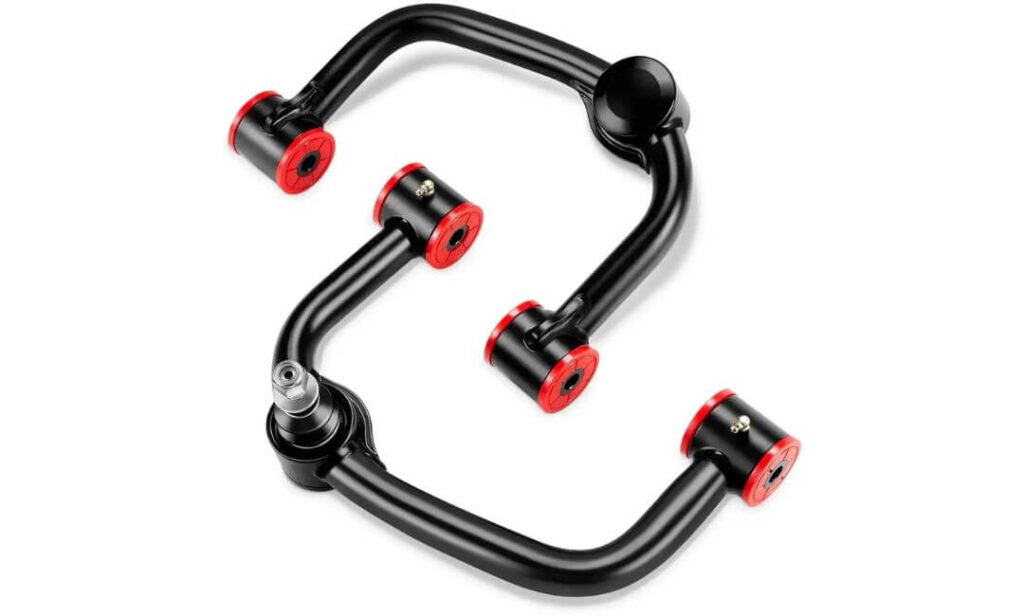
#5. Dynofit 2–4″ Front-Lift Tubular Upper Control Arms (2004–2020 F-150)
Key Features:
- Tubular Steel Construction: Uses 1.25-inch DOM steel tubing with a powder-coated finish for strength and corrosion resistance.
- Lift Compatibility: Designed for Ford F-150 trucks with a 2–4-inch front lift.
- Heavy-Duty Ball Joints: Heat-treated ball joints with an extended range of motion for lifted suspension setups.
- Replaceable Polyurethane Bushings: Includes polyurethane bushings designed for serviceability and routine lubrication.
- Wheel Clearance: Stock wheels with ET44 offset may rub against the control arms.
- Included Components: Two upper control arms, eight polyurethane bushings, four sleeves and four grease fittings.
- Warranty: Lifetime warranty on the tubular arms and a 12-month warranty on ball joints and bushings, subject to the manufacturer’s terms.
For a Ford F-150 running a 2–4-inch front lift, dynofit’s tubular upper control arms offer a steel alternative to the forged aluminium options in this guide. The arms use 1.25-inch DOM steel tubing and a powder-coated finish, making them worth considering if you prefer a tubular design for a lifted truck. Their geometry is intended to improve ball joint operating angles and accommodate suspension changes associated with lifting, but the results depend on the exact lift kit, ride height and overall suspension configuration.
A notable feature is the use of replaceable polyurethane bushings and greaseable joints. The kit includes eight polyurethane bushings, four sleeves and four grease fittings, allowing the relevant components to be lubricated and serviced. Polyurethane differs from conventional rubber in stiffness and feel, so it should not automatically be considered better for every driver: the effect on noise, vibration and handling depends on the bushing design and the rest of the suspension. The manufacturer also specifies a lifetime warranty for the tubular arms and a 12-month warranty for the ball joints and bushings. Review the warranty conditions to understand what is covered.
Before ordering, check both the model-year fitment and wheel clearance. These arms are intended for 2004–2020 F-150 models, with exclusions for specified Raptor models and years. The manufacturer also warns that stock wheels with an ET44 offset may rub against the arms and suggests a wheel spacer of at least 1.5 inches or aftermarket wheels with a 0 offset. Do not assume either solution will suit your truck without checking hub fitment, stud engagement, tyre clearance and wheel positioning. After installation, have a qualified technician inspect ball joint articulation, suspension clearance and alignment throughout the intended operating range.
Ideal For: Ford F-150 owners with a compatible 2–4-inch front lift who prefer tubular steel arms and serviceable polyurethane bushings.
Consider Another Option If: You prefer an aluminium control arm design or want to retain your existing wheels without checking potential clearance issues. Confirm fitment for your exact F-150 model and suspension setup before purchasing.
How to Choose the Right Upper Control Arms for Your Ford F-150
Choosing upper control arms for a lifted Ford F-150 is not simply a matter of matching the advertised lift height. Two trucks with a nominal 3-inch lift can have different suspension geometry depending on the lift kit, strut assembly, control-arm mounting points, wheel offset and final ride height. The right replacement needs to work with that complete setup—not just the number printed on the product listing.
Before comparing brands, work through these four checks. They can help you narrow your options, avoid preventable fitment problems and choose control arms that suit how your truck is actually configured.
1. Match the Control Arms to Your Actual Lift and Suspension Setup
Start by identifying how your F-150 has been lifted. A front levelling spacer, a replacement strut assembly and a complete suspension lift can produce similar changes in ride height without creating identical suspension geometry.
As the front suspension sits higher, the relationship between the upper control arm, steering knuckle and ball joint changes. Depending on the design and amount of lift, the factory arm may have less favourable ball-joint operating angles or the suspension may become more difficult to align within Ford’s specified ranges. However, not every lifted F-150 automatically needs aftermarket upper control arms.
Use these checks before choosing a set:
- For a 2-inch lift: Check whether the original arms retain adequate ball-joint articulation, suspension travel and alignment adjustment. Some setups work acceptably with factory arms; others benefit from replacement arms designed for the revised ride height.
- For a 3–4-inch lift: Pay closer attention to ball-joint angles, alignment results and clearance throughout suspension travel. A control arm advertised for a 2–4-inch lift is a starting point, not proof that it will suit every lift kit.
- For coilovers or a complete suspension system: Confirm compatibility with the specific strut or coilover assembly. Changes to spring position, shock-body diameter and mounting geometry can affect clearance.
- For a truck that has already been lifted: Ask for an inspection of the existing ball joints, bushings, alignment readings and suspension travel before buying replacement arms.
One detail worth asking your installer about is what happens when the suspension moves from full droop towards compression. The ball joint must remain within its intended range of motion, and the arm must not contact nearby components. A setup that appears clear with the truck parked can behave differently as the suspension cycles.
2. Aluminium vs Steel Upper Control Arms
Both aluminium and steel upper control arms can be suitable for a lifted F-150. The better choice depends on the individual design, manufacturing quality, joint and bushing construction, corrosion protection and compatibility with your suspension.
| Factor | Forged Aluminium Arms | Tubular Steel Arms |
|---|---|---|
| Weight | Often lighter than comparable steel designs, although actual weight varies | Often heavier, depending on tubing dimensions and design |
| Corrosion | Aluminium naturally forms a protective oxide layer; finishes can provide additional protection | Coatings help protect the steel, but scratches or coating damage can expose the metal |
| Construction | Forging can provide a strong, shaped component with a favourable strength-to-weight ratio | Tubular construction can provide strength through the tube’s material, diameter and wall thickness |
| Maintenance | Depends on whether ball joints and bushings are serviceable or replaceable | Also depends on the specific joint, bushing and hardware design |
| What matters most | Design quality, material specification, joint articulation and verified fitment | Tube specification, weld quality, corrosion protection and verified fitment |
Do not choose based on material alone. A well-designed steel arm may be a better match for your truck than an unsuitable aluminium arm, and a forged aluminium product is not automatically stronger in every application. Compare the actual design, included hardware, serviceability, warranty conditions and manufacturer fitment information.
For the products in this guide, KSP and maXpeedingrods offer aluminium options, while dynofit provides a tubular steel alternative. Check each product’s exact application and specifications before deciding which construction suits your priorities.
3. Check Wheel Offset, Tyre Clearance and Suspension Travel
Wheel fitment deserves attention because an upper control arm can be compatible with a particular F-150 model year yet still create a clearance issue with a particular wheel and tyre combination.
Wheel offset determines how the wheel sits relative to the hub mounting surface. Backspacing, wheel width, tyre dimensions and suspension geometry also influence available clearance. That is why a stock wheel, an aftermarket wheel and a wheel fitted with a spacer can produce different results on the same truck.
Before ordering, check the following:
- Wheel offset and backspacing: Compare your actual wheel specifications with the control-arm manufacturer’s clearance guidance. Do not assume all factory wheels have identical dimensions.
- Tyre size: Larger or wider tyres can introduce interference elsewhere in the suspension or steering system, even if the wheel itself clears the arm.
- Full steering lock: Have clearance checked with the steering turned in both directions.
- Suspension movement: Clearance should be assessed through the intended suspension travel, not only while the truck is parked at normal ride height.
- Wheel spacers: Do not add spacers simply because a listing recommends them. Confirm hub compatibility, correct hardware, sufficient stud engagement and safe wheel positioning before making changes.
Some of the aluminium and tubular-arm products compared above carry a warning about potential rubbing with stock wheels using an ET44 offset. Treat that as a reason to verify your own wheel specifications—not as a universal rule that every F-150 with ET44 wheels will rub.
4. Verify Model Year, Drivetrain and Exact Fitment
Ford F-150 suspension applications vary across generations, trims and configurations. A product that fits one model year may not fit a later truck, even when both vehicles belong to the same broad generation. Raptor models and certain specialised suspension packages can have different requirements from standard F-150 versions.
Before purchasing, confirm:
- Exact model year: Use the truck’s actual model year rather than relying only on a broad generation label.
- Drivetrain and trim: Verify 2WD or 4WD compatibility and check any trim-specific restrictions.
- Factory and aftermarket suspension: Tell the seller about levelling kits, lift kits, coilovers and other suspension changes.
- Product-specific exclusions: Check Raptor restrictions and any limits involving ride height, wheel offset or other modifications.
- Included components: Confirm whether the package includes both upper arms, ball joints, bushings, sleeves, mounting hardware and any required additional parts.
If a product title gives a wider model-year range than the detailed fitment information, resolve that discrepancy before ordering. For example, the replacement-style maXpeedingrods kit discussed in this guide has a title that mentions 2015–2021, while its detailed application information ends at 2020. Owners of a 2021 truck should obtain explicit confirmation from the seller rather than assuming compatibility.
Final buying check: Before placing your order, give the manufacturer or seller your F-150’s model year, drivetrain, trim, lift kit details and wheel specifications. After installation, have a qualified technician inspect ball-joint articulation, suspension clearance and alignment. If the alignment cannot be brought within the vehicle manufacturer’s specifications, investigate the underlying setup instead of assuming that a different control arm will automatically solve the problem.
Signs Your Ford F-150 Upper Control Arms May Need Attention
Upper control arms do not always fail with one obvious warning sign. On a Ford F-150, worn ball joints, deteriorated bushings, damaged mounting points or suspension geometry changes can produce symptoms that overlap with problems involving tyres, steering and other suspension components.
If your truck has a lift, pay particular attention to changes that appear after installation or become more noticeable over time. The following signs can help you decide when to arrange an inspection.
Uneven Tyre Wear After a Lift
If the inside or outside edges of your front tyres are wearing faster than expected, have the alignment checked. A lifted suspension can change camber and caster, and worn suspension joints can make alignment harder to maintain. However, uneven tyre wear can also result from incorrect toe settings, tyre pressure problems or other suspension issues.
What to check: Ask for an alignment measurement and inspection of the upper and lower ball joints, control-arm bushings and other relevant suspension components. Compare the readings with the specifications for your exact F-150.
Clunking or Knocking Over Bumps
A clunk from the front suspension when driving over bumps, entering a driveway or turning can indicate a worn or loose suspension component. Upper control-arm bushings and ball joints are possible causes, but sway-bar links, lower control arms, struts and loose hardware can produce similar noises.
What to check: Have the source of the noise identified before ordering parts. Replacing the upper control arms without confirming the cause may not resolve the problem.
Steering Feels Different After Installation
If your F-150 starts pulling to one side, the steering wheel sits off-centre or the truck feels less stable after a lift, arrange an alignment and suspension inspection. Changes in caster, camber and toe can affect steering behaviour, while tyre differences and other mechanical problems can create similar symptoms.
What to check: Review the alignment report and ask the installer to confirm that the control arms and lift components are compatible with your truck. Do not assume that aftermarket upper control arms alone will correct every steering issue.
Visible Ball-Joint or Bushing Damage
Cracked or deteriorated bushings, a damaged ball-joint dust boot, excessive joint play or visible deformation around an arm or mounting point warrant closer inspection. Grease around a damaged boot may also indicate a problem, depending on the joint design.
What to check: Have a qualified technician inspect the joints and bushings using the correct procedure for your suspension. Do not rely on a visual check alone to determine whether a ball joint has excessive play.
Ball-Joint Angles Look Excessive on a Lifted Truck
A lifted F-150 may operate its factory ball joints at different angles from the original design position. Whether those angles are acceptable depends on the specific suspension geometry and the joint’s intended operating range.
What to check: Ask the installer to assess ball-joint articulation and clearance through the intended suspension travel. An advertised lift-height range is not, by itself, proof that a particular control arm will work correctly with your setup.
When Should You Stop Driving and Get the Truck Checked?
If you notice severe steering looseness, sudden changes in handling, a visibly damaged control arm or suspected excessive ball-joint play, arrange prompt professional inspection. If steering control is compromised or a suspension component appears broken, do not continue driving the truck; arrange recovery instead.
Important: These symptoms are inspection clues, not a diagnosis. Confirm the underlying fault before purchasing replacement upper control arms. If the arms do need replacing, select a product that matches your exact F-150 model year, suspension configuration and lift setup.
FAQs About Ford F-150 Upper Control Arms
Do I Need to Replace the Factory Upper Control Arms on a Lifted Ford F-150?
Not necessarily. Whether your factory upper control arms need replacing depends on the lift height, suspension design, ball-joint operating angles, alignment results and available suspension travel. Some F-150 levelling setups can work with the original arms, while other configurations may benefit from aftermarket arms designed for the revised suspension geometry.
Before buying replacements, check whether the truck can achieve the manufacturer’s specified alignment settings and whether the ball joints retain adequate articulation throughout the intended suspension travel. If the alignment is outside specification or a joint operates beyond its permitted range, have the setup assessed by a qualified suspension technician. Do not assume that every 2-inch lift requires aftermarket arms or that factory arms will always be suitable for a 4-inch lift.
Are Aftermarket Upper Control Arms Necessary for a 2-Inch or 4-Inch Lift on an F-150?
The lift height is an important starting point, but it does not determine compatibility on its own. A 2-inch levelling spacer and a 2-inch lift using a different strut or suspension design may affect geometry differently. The same applies to 4-inch lift systems, which can vary in their components and mounting arrangements.
For a 2-inch lift, check alignment, ball-joint articulation and clearance before deciding whether replacement arms are needed. For a 4-inch lift, pay particular attention to the lift manufacturer’s recommendations and the control arm’s approved application. Choose arms based on the specific suspension system, model year and actual ride height—not just a product label that says “2–4-inch lift.”
Do You Need a Wheel Alignment After Replacing F-150 Upper Control Arms?
Yes. A professional alignment check is recommended after replacing upper control arms, particularly on a lifted F-150. Removing and reinstalling suspension components can affect alignment, and replacement arms may change the available adjustment range depending on their design.
Ask the shop to measure and adjust alignment to the specifications appropriate for your truck and suspension setup. Keep the before-and-after alignment report so you can see whether the required settings were achieved. If the shop cannot bring the measurements within specification, investigate the lift configuration, component compatibility and other worn suspension parts rather than assuming another alignment alone will fix the issue.
Are Aluminium or Steel Upper Control Arms Better for a Lifted Ford F-150?
Neither material is automatically better for every F-150. Forged aluminium arms are often lighter than comparable steel designs and aluminium naturally forms a protective oxide layer. Tubular steel arms can offer a robust construction, but their weight and corrosion resistance depend on the tubing, design and protective finish.
The more useful comparison is between the complete products. Check the manufacturer’s fitment information, joint articulation, bushing design, serviceable components, construction details and warranty terms. Also consider your driving conditions and maintenance preferences. For example, replaceable ball joints or greaseable bushings may be useful features, but they do not guarantee longer service life. A correctly engineered arm that suits your suspension is more important than choosing by material alone.
How Do I Know Which Upper Control Arms Fit My Ford F-150?
Start with your exact model year, drivetrain and trim, then confirm your front lift height and the type of suspension installed. Check the product’s fitment guide for exclusions, including Raptor models, and verify whether it supports your wheel and tyre combination. If your truck has aftermarket coilovers, a levelling kit or other suspension modifications, provide those details to the manufacturer or seller before ordering.
Pay attention to discrepancies between a product title and its detailed application information. A listing that mentions a wider model-year range in its title may have more limited fitment in the specifications. Also confirm what the package includes, such as ball joints, bushings and mounting hardware. If compatibility is unclear, obtain confirmation for your specific truck before purchasing; a broad “fits F-150” claim is not enough to establish that the part suits every configuration.
Final Verdict
The best upper control arms for your Ford F-150 are the ones that match your truck’s suspension setup—not simply the ones with the biggest lift rating or highest price tag.
For 2021–2026 F-150 owners, the KSP aluminium arms are worth considering if your truck has a compatible 2–4-inch front lift. For 2004–2020 models, the KSP and maXpeedingrods aluminium options offer alternatives with serviceable components, while dynofit is worth comparing if you prefer tubular steel construction. If you’re looking for a replacement-style assembly rather than arms specifically designed for a lifted suspension, check the maXpeedingrods ball-joint kit carefully before buying.
One final piece of advice: don’t skip fitment checks just because a product claims to fit your model year. Confirm your lift setup, wheel clearance and ball-joint articulation, then get the alignment checked after installation. These details matter more than a flashy product description.
Choose the arms that suit your actual setup, verify the fitment before ordering, and you’ll be in a much better position to make a confident purchase.