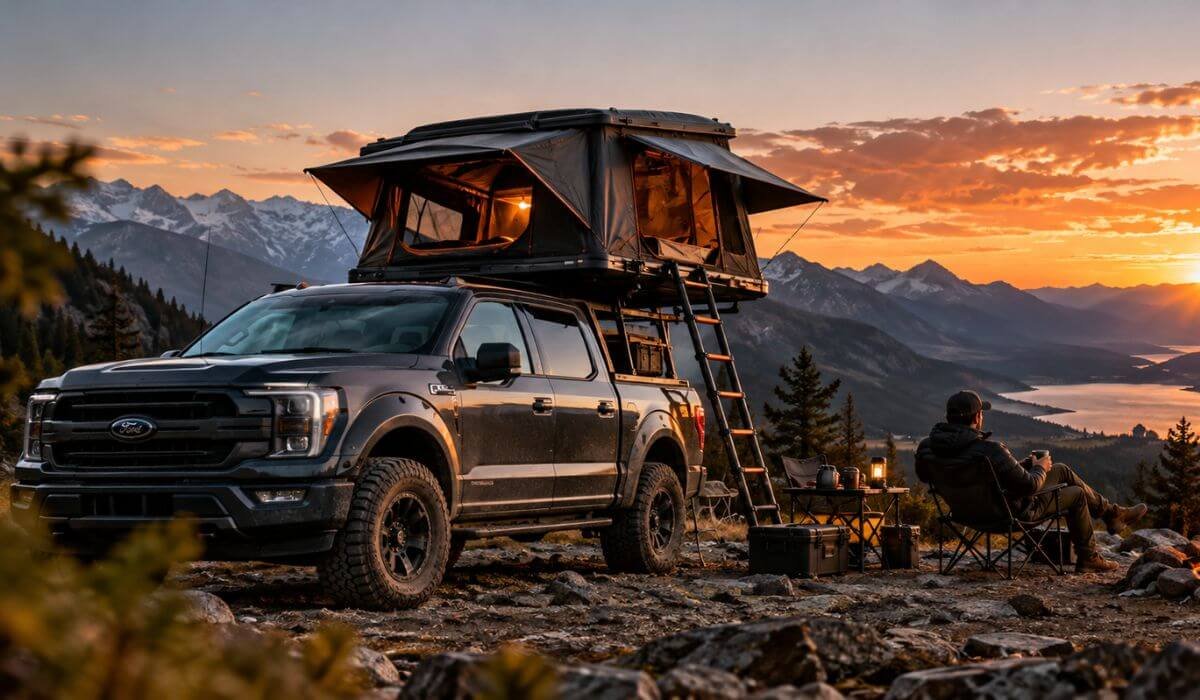
Best Rooftop Tents for Ford F-150 (2026): Rapid Setup and Rugged Shells
A rooftop tent can turn your Ford F-150 into a capable camping rig, but the wrong choice can add unnecessary weight, create mounting problems or limit access to your truck bed. The best rooftop tent for your F-150 depends on your rack setup, available load capacity and the kind of trips you actually take. Getting those details right matters whether you own a 2026 model or an older F-150.
This guide compares six hard-shell rooftop tents with different strengths, from the San Hima Jervis Overland’s stargazer window and integrated LED lighting to the ARB Altitude’s powered opening system. Each option brings a different combination of construction, comfort and convenience, so the focus is on what those features mean in everyday camping rather than simply repeating manufacturer claims.
Weight and compatibility deserve just as much attention as the tent itself. The rack, mounting hardware and other equipment all affect your overall setup, while roof-mounted and bed-rack installations have different requirements. A rack’s stationary load rating is not the same as its driving limit, and neither should be assumed to override the applicable vehicle or mounting-system restrictions. Similarly, a four-season label or quick-opening mechanism does not guarantee comfort in every weather condition.
The goal is straightforward: help you compare rooftop tents for your Ford F-150, understand the trade-offs and choose a setup that suits your camping plans without overlooking the practical details that matter after the purchase.
Best Ford F-150 Rooftop Tents for 2026 With Comfortable Sleeping Space and Durable Builds
#1. San Hima Jervis Overland Aluminium Hard Shell Rooftop Tent
Best Lightweight Hard Shell Rooftop Tent for Ford F-150 with Stargazer Window, Integrated LED Lighting and USB Charging
#2. Naturnest Sirius 1 Plus Premium Pop-Up Rooftop Tent
Best Four-Season Rooftop Tent for Ford F-150 with Blackout Fabric, Honeycomb Insulation and Quick Setup
#3. ARB Altitude Electric Hard Shell Rooftop Tent
Best Premium Electric Rooftop Tent for Ford F-150 with Powered Opening, Rechargeable Battery and Convenient Campsite Setup
#4. Wildfinder Aluminium Hard Shell Overland Rooftop Tent
Best Overland Rooftop Tent for Ford F-150 with Aluminium Shell, Condensation Mat and Adventure-Ready Storage
#5. Jiadrooe Insulated Hard Shell Pop-Up Rooftop Tent
Best Insulated Rooftop Tent for Ford F-150 with Detachable Thermal Liner, Anti-Condensation Mat and Adjustable Crossbars
#6. HEYFUN Voyager Pro Aluminium Pop-Up Rooftop Tent
Best Alternative Hard Shell Rooftop Tent for Ford F-150 with Aluminium Construction, Skyview Window and Quick-Opening Design
Expert Tip
Before buying a rooftop tent for your Ford F-150, check your rack’s load rating and the tent’s actual mounting requirements. A tent that fits one F-150 setup may not fit another, even if both trucks are the same model year. Pay attention to the tent’s weight, mounting hardware, closed dimensions and sleeping area rather than relying on advertised capacity alone. If you plan to camp with two adults, make sure the interior dimensions offer enough room for both.
How We Choose the Best Rooftop Tents for Ford F-150
We selected these six hard-shell rooftop tents based on their design, practical features and intended camping use. Each brings something different to the comparison, which makes it easier to narrow down the right option for your setup.
The San Hima Jervis Overland offers a stargazer window and integrated LED lighting, while the Naturnest Sirius 1 Plus features blackout fabric and a design marketed for four-season camping. The ARB Altitude stands out for its electric opening system, making it worth considering if convenient campsite setup is a priority. We also included the Wildfinder for its aluminium construction and supplied crossbars, the Jiadrooe for its detachable thermal insulation liner and anti-condensation mat, and the HEYFUN Voyager Pro for its aluminium hard-shell pop-up design.
Features alone, however, do not determine whether a tent is right for your truck. We also consider the details buyers should verify before ordering, including tent weight, mounting dimensions, rack compatibility and weather protection. A product advertised for trucks and SUVs is not automatically compatible with every Ford F-150, so check the manufacturer’s fitment instructions and the load limits of your specific setup.
We also avoid treating marketing claims as proof of real-world performance. A four-season label does not guarantee comfort in every climate, and an advertised waterproof rating does not tell the whole story about ventilation or condensation. Where independent long-term testing is limited, we focus on the available specifications and clearly distinguish listed features from proven results. Our goal is to help you compare these tents realistically and choose one that suits your truck, camping needs and budget.
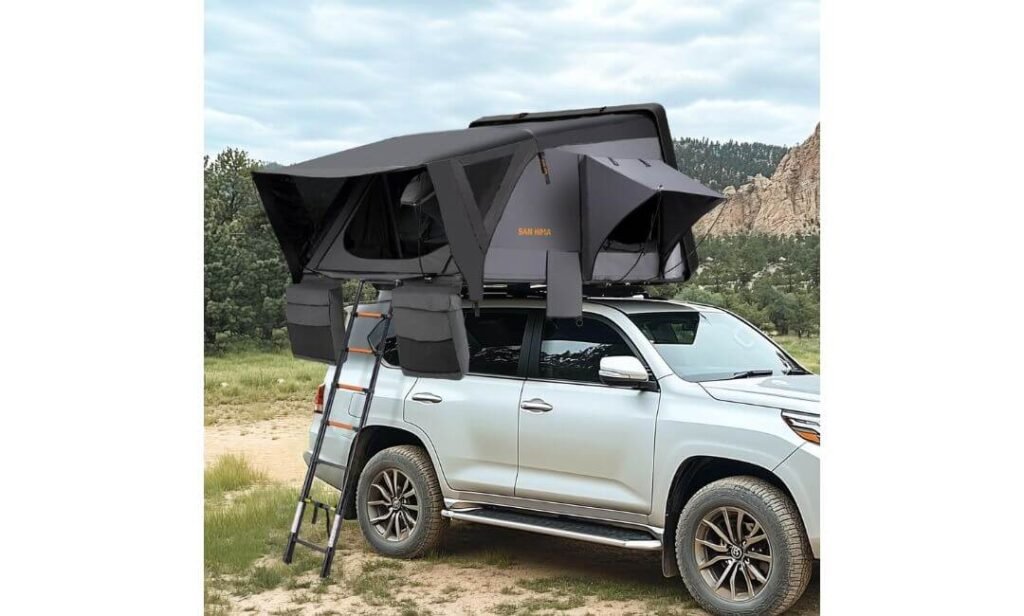
#1. San Hima Jervis Overland Aluminium ABS Hard Shell Rooftop Tent
Quick Specs:
- Tent Type: Hard-shell pop-up rooftop tent
- Shell Material: ABS anti-aging polymer
- Fabric: 420D double-ripstop Oxford and 280G polyester-cotton
- Sleeping Capacity: 2–3 people (manufacturer-rated)
- Sleeping Area: 83.07 × 61.42 inches
- Interior Headroom: 41.34 inches
- Closed Height: 11.22 inches
- Tent Weight: 124.56 lbs
- Waterproof Rating: 5,000 mm
- UV Protection: UPF 50+
- Mattress: 1.18-inch cloud foam with anti-condensation mat
- Charging Options: USB-C, USB-A and 12V cigarette-lighter socket
- Additional Features: Stargazer window, tri-colour LED strip, AC hose port and 90.55-inch ladder
- Warranty: 1 year, according to the supplied product information
Some rooftop tents add considerable bulk to a truck before you even load your camping gear. This model takes a different approach, with a closed height of just 11.22 inches and a listed weight of 124.56 lbs. Its ABS shell and relatively slim profile make it worth considering for a Ford F-150 owner who wants a permanent camping setup without choosing a particularly bulky tent. However, the actual fit depends on your rack, mounting points and available roof space.
The sleeping area measures 83.07 × 61.42 inches, with 41.34 inches of interior headroom. That gives two adults a useful space for overnight trips, although the manufacturer’s two-to-three-person rating should not be mistaken for a guarantee of comfortable sleeping room for three adults. The 1.18-inch foam mattress and included anti-condensation mat add practical comfort, especially when you’re spending several nights away from home.
The stargazer window is more than a cosmetic addition. Combined with the mesh windows, it helps bring in fresh air and gives campers a view of the night sky. The fabric is rated at 5,000 mm waterproofing with UPF 50+ protection, and the canopy provides an additional layer of coverage in heavy rain. These are useful specifications, but correct closure, ventilation and campsite selection still matter when the weather turns.
Features That Make Everyday Camping Easier
The built-in digital panel includes USB-C, USB-A and a 12V socket, giving you several ways to charge compatible devices. A tri-colour LED strip provides bright white, warm ambient and amber lighting, while interior pockets, shoe storage and a ceiling organiser help keep smaller items off the mattress. There’s also an AC hose port for campers planning a compatible external cooling setup; the tent does not include an air conditioner.
What We Like About This F-150 Camping Setup
- Low closed profile: The 11.22-inch height is useful when considering overall vehicle clearance, although the rack and mounting hardware add to the total height.
- Useful sleeping dimensions: The 83.07 × 61.42-inch bed gives two adults a practical sleeping area.
- Weather-conscious construction: The 5,000 mm waterproof rating, UV protection and canopy offer more meaningful buying information than a generic weather-resistant claim.
- Built-in conveniences: Device charging, integrated lighting and organised storage reduce the need to add several separate accessories.
- Straightforward opening design: The latch-and-lift setup avoids the pole assembly associated with some tent designs.
One Thing to Check Before Buying
The 1.18-inch mattress is relatively thin, so campers who prefer a plush sleeping surface may want to assess whether it suits their needs. A separate mattress topper could improve comfort, but it will also use some of the available interior space.
Why It Deserves a Place on Your Ford F-150 Shortlist
This tent combines a low-profile shell with a useful sleeping area and integrated features without relying on a motorised opening system. That makes it a sensible option for buyers who value a relatively simple pop-up design, ventilation and built-in conveniences over powered deployment. Its strongest selling point is the balance of compact closed dimensions and everyday camping features.
For an F-150, though, the deciding factor is not the tent alone. Confirm that the intended roof or bed-rack mounting arrangement is approved for the installation and can handle the relevant loads. Do not assume that a rack’s dynamic driving capacity also establishes its safe stationary capacity with occupants inside the tent.
The Insider Pro-Tip
Before ordering, measure the usable mounting area and check the tent’s closed dimensions against the rack manufacturer’s compatibility guidance. The listed tent weight of 124.56 lbs is only the starting point: the rack and mounting hardware contribute additional weight, and occupants and gear matter when assessing the setup at camp. Follow the vehicle and rack manufacturers’ separate limits for driving and stationary use.
One final detail worth planning for is power. The built-in USB ports and 12V socket provide convenient connections, but you should confirm the required power source and connection arrangements before relying on them during a trip. A little preparation here can make the difference between a neat, usable camping setup and an expensive installation that needs changing later.
The specifications above are based on the product information provided. Independent long-term durability and Ford F-150-specific fitment have not been established here; verify both with the manufacturer before purchase.
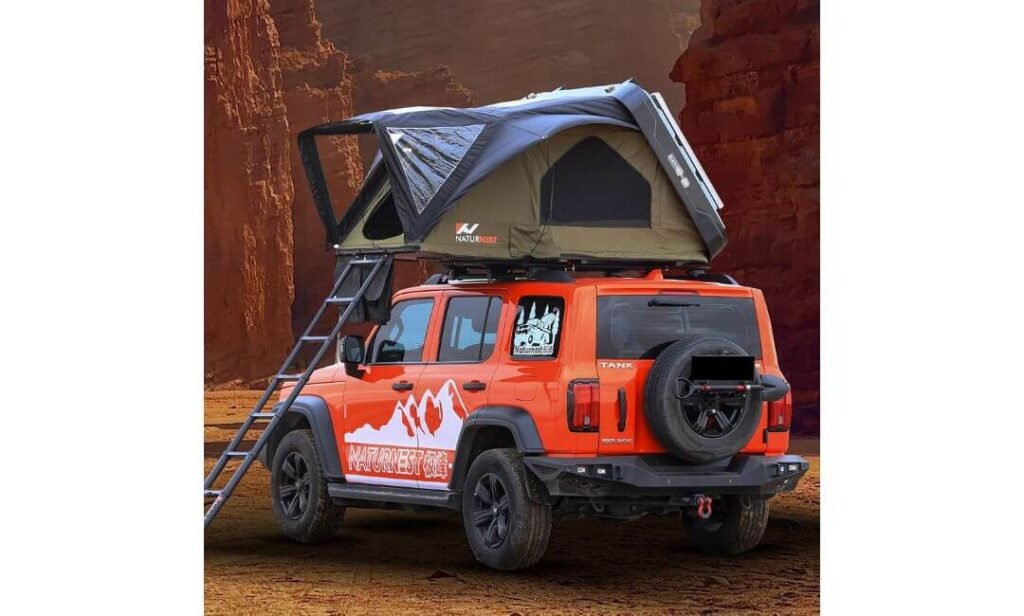
#2. Naturnest Sirius 1 Plus Premium ABS Hard Shell Rooftop Tent
Quick Specs:
- Tent Type: Hard-shell pop-up rooftop tent
- Shell Material: High-strength ABS
- Frame: Aluminium
- Insulation: Honeycomb panels designed for thermal and sound insulation
- Sleeping Capacity: Up to 2 adults and 1 child, according to the manufacturer
- Sleeping Area: 82.7 × 63 inches
- Mattress Thickness: 1.97 inches
- Setup Time: Approximately 30 seconds, according to the manufacturer
- Fabric: Weather-resistant, replaceable, tear-resistant material
- Hardware: 316 stainless steel gas struts and YKK zippers
- Additional Features: Blackout fabric, roof crossbars and dedicated ventilation port for compatible heating or cooling equipment
- Mounting: Requires a compatible roof rack and crossbars
- Warranty: Verify the current warranty terms with the seller
A quick-opening tent is useful, but the quality of your sleep matters just as much when you’re camping away from home. The Sirius 1 Plus puts considerable emphasis on that side of the experience, pairing an 82.7 × 63-inch sleeping area with a 1.97-inch mattress and blackout fabric. The dimensions provide useful space for two adults, with room for a child according to the manufacturer’s capacity rating. Actual comfort will depend on the occupants’ sizes and how much sleeping gear they bring.
The ABS shell, aluminium frame and honeycomb insulation panels are designed to provide a more insulated enclosure than a basic fabric shelter. Its four-season positioning makes it worth investigating for campers who travel through changing conditions, but it should not be treated as a guarantee of suitability for every temperature, heavy snowfall or severe storm. Check the manufacturer’s weather limits and ventilation guidance before planning trips in demanding conditions.
Fast Deployment With Useful Storage Options
The manufacturer advertises a setup time of approximately 30 seconds, using a lock-release and ladder-deployment process. That can be appealing when you reach camp late or move between locations frequently, although actual setup time will vary with the vehicle, mounting arrangement and user’s familiarity with the tent. The supplied roof crossbars also create options for carrying compatible lightweight equipment, such as solar panels or skis. Check their load limits carefully before adding accessories.
A dedicated vent allows connection to compatible heating or cooling equipment, but the tent does not automatically include those appliances. Any heater must be suitable for the application and installed according to its safety instructions; never operate fuel-burning equipment inside an enclosed tent unless the manufacturer explicitly approves that use and provides the required safety arrangements.
What We Like About This Rooftop Tent
- Thicker mattress: The 1.97-inch sleeping pad provides more cushioning than many thin rooftop tent mattresses.
- Blackout sleeping area: Useful for reducing incoming light during early mornings and bright camping conditions.
- Insulated construction: Honeycomb panels and an ABS shell are designed to improve thermal and acoustic insulation.
- Repairable fabric design: Replaceable fabric can be useful if part of the tent becomes damaged over time.
- Additional carrying options: Roof crossbars can help accommodate compatible lightweight gear without using the sleeping area.
One Detail Worth Checking
The extra insulation and hard-shell construction do not remove the need to manage condensation and ventilation. Moisture can accumulate when several people sleep in a confined space, especially in cold or humid weather. Use the supplied ventilation features as directed and allow the tent to dry properly before storing it for long periods.
Why It Makes Sense for Certain Ford F-150 Owners
The Sirius 1 Plus is worth considering if your priority is a more comfortable sleeping space combined with fast deployment and a relatively enclosed hard-shell design. The thicker mattress, blackout fabric and insulation panels distinguish its feature set from simpler pop-up tents. The included crossbars may also be useful for carrying additional equipment, provided the intended loads and mounting arrangements are approved.
For a Ford F-150, however, vehicle compatibility must be confirmed for your exact rack system. The manufacturer’s general claim of broad vehicle compatibility does not establish fitment for every model year, cab configuration or roof rack. Verify the tent’s actual weight, crossbar spacing, mounting dimensions and the relevant rack load ratings before purchasing.
The Insider Pro-Tip
Before committing to this tent, consider how you will use it throughout the year. If you regularly camp in colder conditions, the insulated panels and thicker mattress may be useful, but your sleeping bag, bedding, ventilation and campsite exposure will still determine much of your comfort. In warmer weather, airflow and condensation management remain important even with blackout fabric.
Also, don’t assume the included roof crossbars automatically make the tent ready for every F-150. Confirm that the complete mounting arrangement is approved for your truck, and account for the tent, rack, hardware and other accessories when checking load limits. A suitable fit and properly rated mounting system matter more than a quick setup time.
Specifications and advertised features are based on the supplied product information. The advertised setup time, four-season positioning and general vehicle compatibility should be verified against the manufacturer’s current documentation before purchase.
#3. ARB Altitude Electric Hard Shell Rooftop Tent
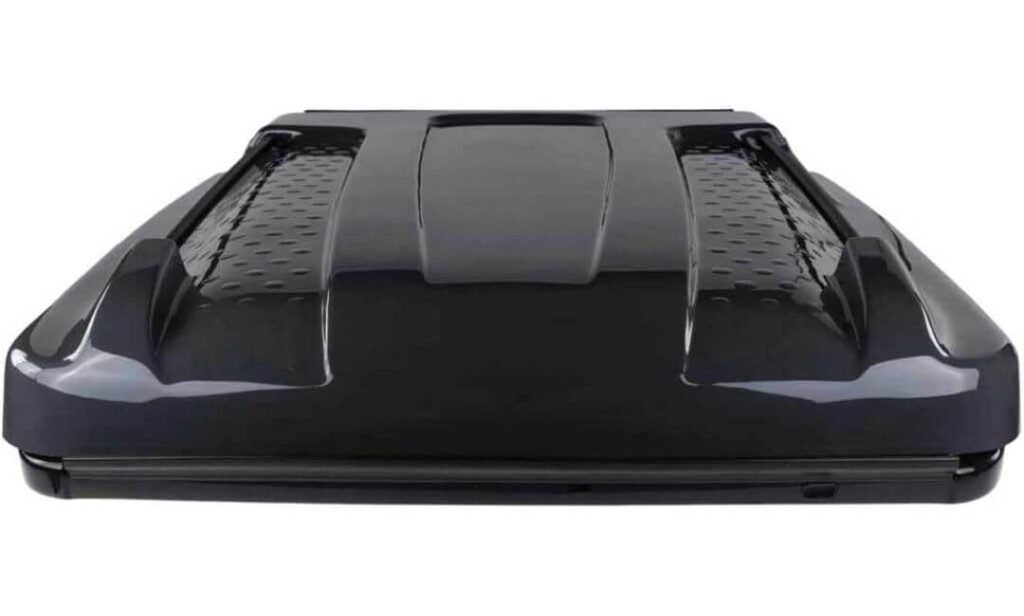
Quick Specs:
- Tent Type: Electric hard-shell rooftop tent
- Shell Construction: Hard shell with an aluminium frame, according to the supplied product information
- Advertised Sleeping Capacity: 3 people
- Closed Dimensions: 91.7 × 66.1 × 19.6 inches, as supplied
- Opening System: Powered electric deployment
- Power Options: Rechargeable battery and 12V connection, as supplied
- Mattress: Foam mattress included
- Weather Protection: Confirm the exact model’s tested waterproof rating and operating limits
- Ladder: Extension ladder, according to the supplied product information
- Optional Accessory: Separate awning option, subject to model compatibility
- Mounting: Requires a compatible rack and verified load capacity
Setting up camp after a long drive is easier when you don’t have to manually unfold a large tent. The ARB Altitude’s main attraction is its electric opening system, designed to simplify deployment and pack-up. That convenience could be especially appealing to F-150 owners who frequently move between campsites or arrive late in the day. However, the advertised 30-second setup time should be treated as a manufacturer claim until verified for the exact model and conditions.
Its hard-shell construction and aluminium frame are intended for a more substantial rooftop setup than a traditional fabric-covered tent. The supplied closed dimensions are 91.7 × 66.1 × 19.6 inches, so check the available mounting area and overall vehicle clearance before purchasing. A hard shell may also provide a more streamlined exterior than some soft-shell designs, but actual wind noise and fuel economy depend on the complete vehicle and rack setup.
A Spacious Layout With Powered Operation
The supplied product information lists a three-person sleeping capacity and an included foam mattress. That makes the tent worth considering for two adults travelling with a child, although sleeping comfort depends on the actual usable mattress dimensions and the occupants’ sizes. Confirm the manufacturer’s interior measurements before assuming the tent will comfortably accommodate three people.
The advertised rechargeable battery and 12V power connection are also worth examining. Before installation, establish how the system charges, whether the truck connection is required for normal operation and what happens if the battery runs low. These details matter more with a powered tent than with a manually operated model, where opening and closing generally do not depend on an electrical system.
What We Like About the Electric Rooftop Design
- Powered opening: Reduces the manual effort involved in deploying and closing the tent.
- Hard-shell construction: Offers a protective outer enclosure for travel and storage.
- Included mattress: Provides a ready-made sleeping surface without requiring an immediate separate mattress purchase.
- Potentially convenient power options: The listed battery and 12V connection may simplify operation once the system requirements are confirmed.
- Optional awning provision: Could help expand the sheltered area around camp if a compatible accessory is available.
One Thing to Verify Before Buying
An electric opening mechanism adds convenience, but it also introduces another system that needs power and proper maintenance. Confirm the battery specifications, charging procedure, manual override arrangements and availability of replacement components with the manufacturer. These details are especially important if you camp far from electrical supplies.
Is It a Sensible Choice for a Ford F-150?
This tent is best suited to buyers who prioritise powered deployment and want a premium-style hard-shell camping setup. Its main distinction is the electric operating system, rather than simply its exterior construction or sleeping capacity. If you camp often and value reducing setup effort, that feature may justify investigating it further.
The key consideration is weight. The supplied information states 331 lbs, but that figure must be verified against the exact model’s official specification sheet before use. Do not assume it represents the confirmed tent weight or that a rack rated for 331 lbs is automatically suitable. Your F-150’s roof limits, rack capacity, mounting hardware and the manufacturer’s permitted driving and stationary loads all need to be checked separately.
The Insider Pro-Tip
Before choosing an electric rooftop tent, ask the seller for the installation manual and electrical requirements—not just the product listing. Confirm the operating voltage, battery charging method, power draw and what to do if the mechanism stops working while the tent is open. A clear answer to these questions is more valuable than an unverified claim about deployment speed.
For your F-150, also verify the actual tent weight and the complete mounting arrangement with the truck and rack manufacturers. Do not rely on the stated 331-lb figure as a confirmed load rating or assume factory crossbars can support the installation. A powered tent is only a worthwhile upgrade when the rack, electrical setup and vehicle are all suitable.
The details above are based on the supplied product information. The stated weight, dimensions, sleeping capacity, power system and weather ratings should be checked against ARB’s current documentation for the exact model. F-150-specific compatibility has not been independently established here.
#4. Wildfinder Aluminium Hard Shell Overland Rooftop Tent
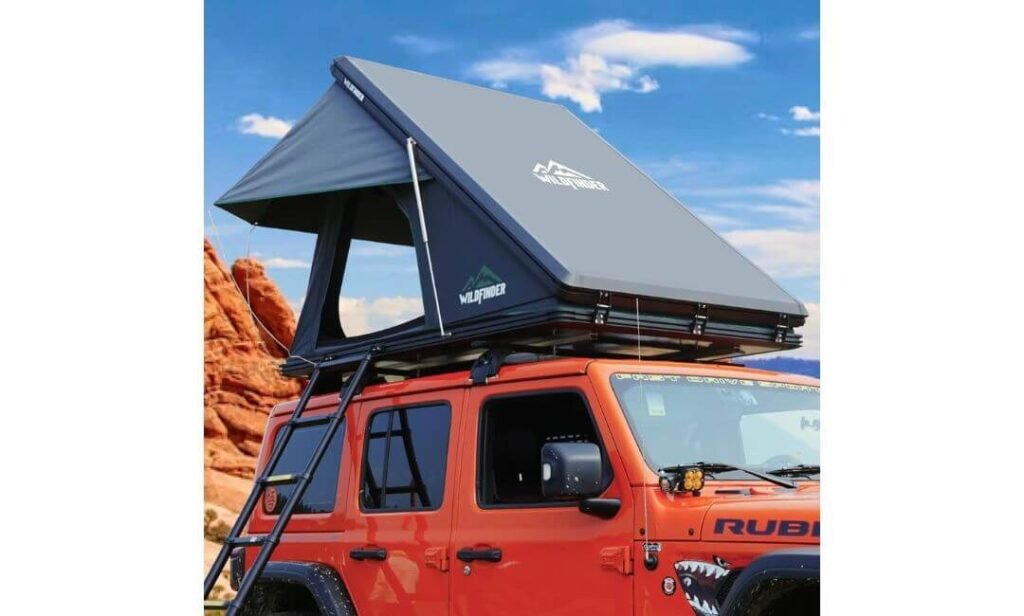
Quick Specs:
- Tent Type: Hard-shell rooftop tent
- Shell Material: Aluminium alloy
- Opening Mechanism: Gas-strut-assisted opening, according to the supplied product information
- Tent Weight: Approximately 170 lbs, as listed in the supplied information; verify with the seller
- Sleeping Area: Approximately 83 × 52 inches, according to the supplied information
- Mattress: 5 cm non-deforming mattress
- Moisture Management: Condensation pad and recessed marine pad
- Waterproof Rating: 5,000 mm, as advertised
- Weather Protection: Advertised wind, UV and snow protection; independent performance verification is unavailable here
- Ventilation: Three mesh windows
- Lighting: Integrated LED strip
- Ladder: 7.5-foot telescoping ladder
- Storage: Ten organiser bags and two shoe organisers, according to the supplied list
- Mounting: Requires compatible crossbars and mounting hardware; luggage crossbars are not included
The Wildfinder takes a different approach from rooftop tents built around ABS shells. Its aluminium-alloy construction is aimed at buyers who prefer a metal enclosure, while stainless-steel pressure levers are intended to provide durable support during opening and closing. Material choice alone cannot guarantee a longer service life, but the construction is worth considering if your camping routine involves frequent travel and repeated setup.
The supplied specifications list a sleeping area of approximately 83 × 52 inches, paired with a 5 cm mattress. That should be a useful starting point for two adults, although the relatively narrow width makes it important to check the actual usable interior dimensions before purchase. The recessed marine pad and condensation pad are designed to help manage moisture, which can accumulate when warm breath meets a colder tent interior overnight.
Weather Protection and Setup Details
The advertised 5,000 mm waterproof rating and blackout polyester fabric are notable features for campers who expect rain, bright sunlight and changing conditions. The product listing also advertises wind and snow protection, but those descriptions should not be treated as a guarantee of safety in severe weather. Check the manufacturer’s operating limits and avoid camping beneath exposed trees or in locations vulnerable to high winds.
Gas-strut-assisted opening is intended to reduce the effort required to raise the shell. Once open, three mesh windows provide ventilation, while the integrated LED strip helps illuminate the interior. The included telescoping ladder, organiser bags and shoe organisers are practical extras that can make a campsite easier to manage. However, the luggage crossbars are not included, so factor in the cost and compatibility of any additional mounting equipment you need.
What We Like About This Overland Setup
- Aluminium shell construction: An appealing alternative for buyers who prefer a metal hard shell.
- Moisture-management features: The condensation pad and recessed marine pad are useful additions for overnight camping.
- Useful included accessories: The ladder, lighting and storage organisers reduce the number of separate accessories you may need to source.
- Multiple mesh windows: Help provide ventilation when conditions allow.
- Low-profile design: The supplied listing advertises a closed height of around 9 inches, although the exact measurement should be confirmed for the model being sold.
One Detail to Consider Before Ordering
At approximately 170 lbs, the tent is not a lightweight item to lift onto a vehicle. Plan for a suitable lifting arrangement or help from another person, and confirm the mounting instructions before installation. The supplied information also notes that the luggage crossbars are sold separately.
Why It Deserves Consideration for a Ford F-150
The Wildfinder is worth comparing if you prefer an aluminium hard shell, want a straightforward gas-strut opening mechanism and value included camping accessories. Its combination of a 5 cm mattress, moisture-management pads and storage organisers gives it a practical feature set for regular trips. It is not automatically the best choice for every owner, particularly if minimal weight or a wider sleeping area is your priority.
For the F-150, rack compatibility must be confirmed rather than assumed. Check the exact tent weight, the spacing and dimensions of your crossbars, the required brackets or U-bolts, and the rack manufacturer’s load limits. A general claim of compatibility with trucks does not establish that the tent fits every F-150 roof or bed-rack configuration.
The Insider Pro-Tip
Before buying, check whether the rack and tent use a compatible mounting arrangement and whether the required brackets are included. The supplied listing specifically excludes luggage crossbars, so don’t assume the tent arrives with everything needed for installation. If you’re fitting it to an F-150, arrange safe assistance for lifting and follow the rack and vehicle manufacturers’ instructions.
Pay attention to the sleeping dimensions as well. An 83 × 52-inch sleeping area may suit two campers who pack light, but it can feel restrictive for larger occupants. Confirm the internal measurements and consider your bedding before committing to the purchase.
Product details are based on the information supplied. Verify the current model’s weight, dimensions, mounting hardware, weather ratings and warranty with the seller. Ford F-150-specific fitment and independent long-term durability have not been established here.
#5. Jiadrooe ABS Hard Shell Rooftop Tent with Adjustable Aluminium Crossbars
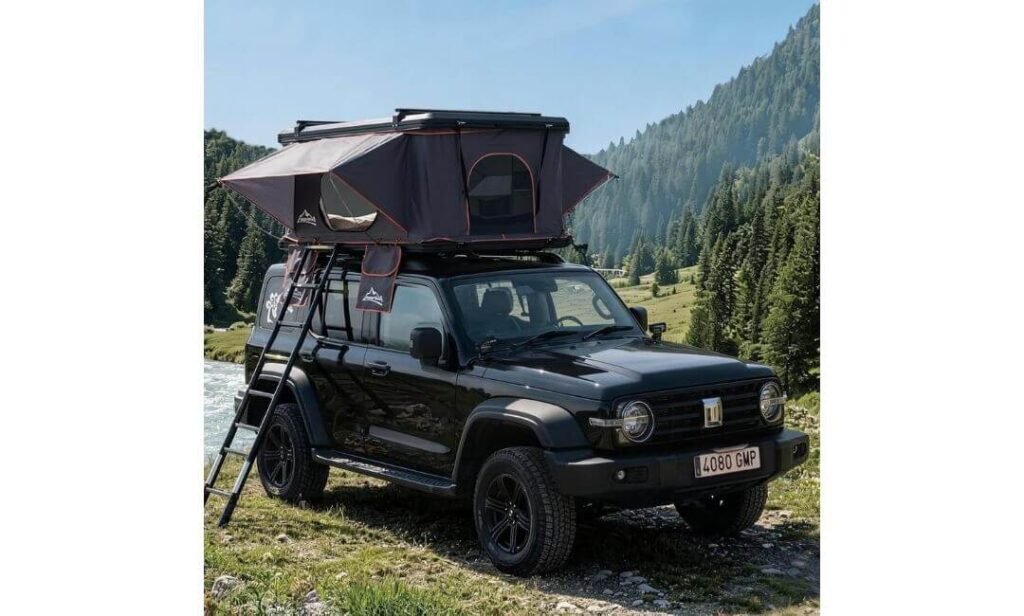
Quick Specs:
- Tent Type: Hard-shell pop-up rooftop tent
- Shell Material: ABS, according to the supplied product listing
- Crossbars: Two adjustable aluminium crossbars
- Crossbar Load Capacity: 150 lbs, according to the primary product description; verify before carrying additional gear
- Sleeping Capacity: Advertised for up to 3 people
- Interior Dimensions: Approximately 82.7 × 52 × 43.3 inches, based on the supplied metric dimensions
- Insulation: Detachable thermal insulation liner
- Mattress: High-density, two-layer mattress with anti-condensation mat
- Fabric: 280G ripstop waterproof canvas, according to the primary listing
- Waterproof Rating: 3,000 mm, according to the primary listing
- Setup Mechanism: Hydraulic struts
- Advertised Setup Time: Approximately 60 seconds
- Power Features: Built-in USB power hub and dual-mode LED lighting
- Ladder: Telescoping aluminium ladder
- Mounting: Universal mounting hardware advertised; F-150 fitment requires verification
A rooftop tent can look impressive on a truck, but the real test comes when temperatures drop or moisture builds up overnight. The Jiadrooe addresses these concerns with a detachable thermal insulation liner and a two-layer mattress paired with an anti-condensation mat. These features are worth considering if you camp in changing conditions and want more than a basic fabric sleeping enclosure. However, insulation alone cannot guarantee a warm night; your sleeping bag, ventilation and outside temperature still make a difference.
The ABS hard shell is designed to protect the tent when closed, while the supplied listing specifies 280G ripstop canvas with a 3,000 mm waterproof rating. That rating provides a useful point of comparison, but it should not be confused with a guarantee against leaks in every storm. Correctly secured fabric, closed openings and proper maintenance remain important when camping in prolonged rain.
Built-In Power and Gear-Carrying Options
The integrated USB power hub lets you charge compatible devices inside the tent, while the dual-mode LED strips provide cool or warm lighting. These are convenient features when you want to keep essentials within reach after dark. Check the exact power outputs and connection requirements before relying on the USB hub for higher-demand devices.
The two adjustable aluminium crossbars also offer a way to carry compatible lightweight equipment above the tent. The primary listing specifies a 150-lb crossbar capacity, but this figure must be verified against the manufacturer’s current documentation. Do not assume that the tent’s crossbars can carry the same load as the vehicle’s rack, or that the advertised capacity automatically permits carrying bikes or kayaks at highway speeds.
What We Like About This Rooftop Tent
- Detachable insulation liner: Adds flexibility for campers who want to adjust the setup to different seasons.
- Anti-condensation mattress design: Helps manage moisture beneath the sleeping surface.
- Integrated charging and lighting: The USB power hub and dual-mode LEDs reduce the need for separate interior accessories.
- Adjustable crossbars: Offer additional carrying options when the intended accessory and load are approved.
- Hydraulic-strut opening: Designed to make raising the hard shell easier than assembling a tent frame manually.
One Detail to Check Before Ordering
The product information contains conflicting specifications for the waterproof rating, crossbar capacity and overall load requirements. The primary description lists 3,000 mm waterproofing and 150-lb crossbars, while the additional supplied claims give different figures. Confirm the exact model’s specification sheet before treating any higher rating or load capacity as established.
Why It Deserves Consideration for a Ford F-150
The Jiadrooe is a useful candidate for buyers who want a hard-shell tent with insulation, built-in lighting and charging, plus the option to carry compatible gear on top. Its appeal lies in combining several practical camping features rather than relying on the shell design alone. It may suit campers who spend several nights outdoors and want to organise their sleeping area and equipment in one setup.
For an F-150, however, the mounting system and total load must be checked before purchase. The supplied information lists a tent weight of approximately 183 lbs in one section, but that figure needs confirmation. Verify the actual tent weight, crossbar spacing, mounting hardware and the vehicle and rack manufacturers’ load limits. A universal-fit claim is not proof of compatibility with every F-150 roof or bed rack.
The Insider Pro-Tip
Before choosing this model, ask the seller for the exact manual and specification sheet for the version being sold. In particular, confirm the tent’s weight, waterproof rating, crossbar capacity, electrical outputs and the hardware supplied with the package. Those details are more useful than relying on broad claims about extreme-weather performance or customer experiences that cannot be independently verified.
If you plan to carry extra gear, calculate the complete load rather than looking only at the crossbars’ advertised rating. The tent, vehicle rack, mounting hardware and additional equipment all need to be considered within the applicable manufacturer limits. This is especially important on a Ford F-150, where compatibility depends on the specific rack arrangement rather than the truck model name alone.
Specifications are based on the supplied product information, with conflicting figures flagged rather than treated as confirmed facts. Verify the current model’s weight, dimensions, load ratings, weather specifications and warranty with the seller before purchasing. Ford F-150-specific fitment has not been independently established here.
#6. HEYFUN Voyager Pro Aluminium Hard Shell Pop-Up Rooftop Tent
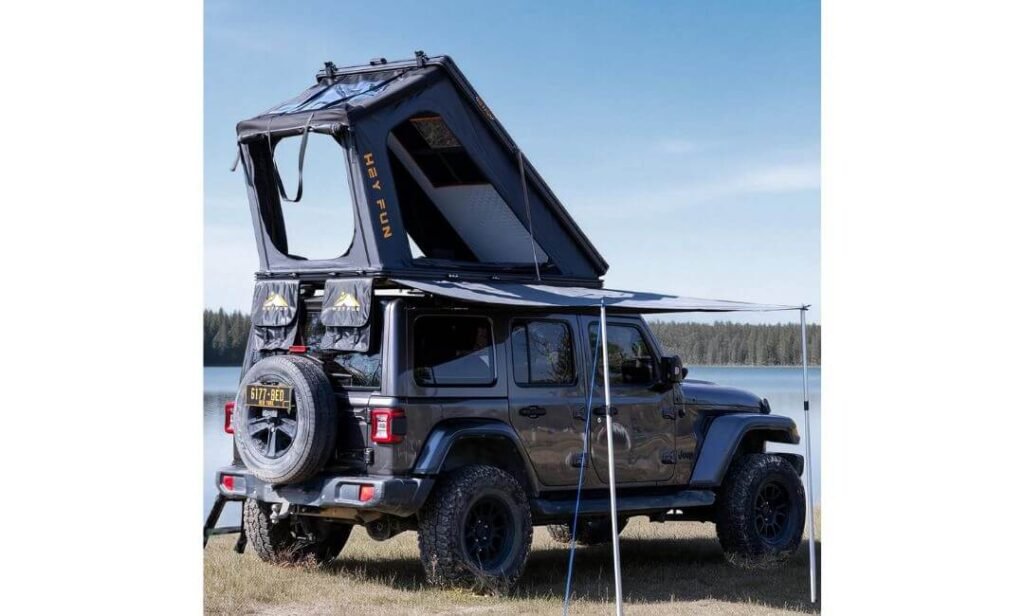
Quick Specs:
- Tent Type: Hard-shell pop-up rooftop tent
- Shell Material: Aircraft-grade aluminium, according to the supplied product listing
- Fabric: 320G polyester
- Sleeping Capacity: Advertised for 2–3 people
- Closed Dimensions: 83.86 × 51.57 × 7 inches
- Open Dimensions: 83.86 × 51.57 × 60 inches
- Advertised Maximum Load: 660 lbs; confirm the exact meaning and applicable limits with the manufacturer
- Tent Weight: Approximately 166 lbs, according to the supplied information
- Opening Mechanism: Hydraulic gas struts with dual buckles
- Mattress: Thick, non-deformable sleeping mat
- Moisture Management: Condensation mat and flocked floor lining
- Windows: Skyview window and mesh-window ventilation
- Lighting: Integrated LED strip
- Additional Features: Attachable side awning, extendable ladder and waterproof shoe-storage bags
- Mounting: Requires compatible crossbars with adequate load capacity
The Voyager Pro combines an aluminium hard shell with a design focused on sleeping space and convenient setup. Its listed dimensions are 83.86 × 51.57 inches when closed and 83.86 × 51.57 × 60 inches when open. The manufacturer advertises 30% more space than its comparison design, although that percentage should be checked against the specific model used for comparison. For buyers who want room for two adults and a child, the actual mattress dimensions are more useful than the headline capacity alone.
The aircraft-grade aluminium shell is paired with 320G polyester fabric, a flocked floor lining and a thick sleeping mat. A separate condensation mat is also included to help manage moisture beneath the mattress. These features make the tent worth considering for regular camping trips, but they do not eliminate condensation in cold or humid weather. Ventilation and allowing the tent to dry before storage remain important.
Quick Opening With Useful Camping Extras
The hydraulic gas struts and dual buckles are designed to make opening and closing straightforward, without manually assembling a frame. The advertised five-second operation is a manufacturer claim, so expect the real process to depend on conditions, familiarity and how easily the shell can be secured. The skyview window adds another way to enjoy the surroundings, while the integrated LED strip provides convenient lighting after dark.
The supplied package also includes an extendable ladder, shoe-storage bags and an attachable side awning. These extras can make campsite organisation easier, although you should confirm exactly what is included with the version you purchase. The awning’s mounting arrangement and weather limitations should also be checked before relying on it for shelter.
What We Like About This Rooftop Tent
- Aluminium hard shell: An appealing option for buyers who prefer a metal shell over ABS construction.
- Skyview window: Adds a view of the night sky while retaining a mesh barrier when configured appropriately.
- Moisture-conscious sleeping setup: The flocked floor lining and condensation mat address practical overnight comfort concerns.
- Quick-opening mechanism: Gas struts are designed to reduce the effort needed to deploy the tent.
- Useful included accessories: The LED strip, ladder and shoe-storage bags help organise a campsite without sourcing every item separately.
One Detail to Check Before Buying
The supplied information lists a 660-lb maximum load, but it does not establish whether this refers to occupants, the tent’s structural capacity or another rating. Do not interpret it as the safe load for your F-150’s roof rack. Ask the manufacturer to clarify the rating and check the vehicle and rack limits separately.
Why It Deserves a Place on Your Ford F-150 Shortlist
The Voyager Pro is worth comparing if you want an aluminium hard-shell tent with a skyview window, quick-opening mechanism and several practical accessories. Its combination of a listed 60-inch open height and a separate condensation mat gives buyers specific features to assess rather than relying on a generic all-season claim. The main appeal is convenience combined with an enclosed sleeping space.
For an F-150, the approximately 166-lb listed tent weight needs particular attention. Confirm it with the seller, then check the permitted load of your exact rack and crossbars, the mounting dimensions and the supplied hardware. The fact that the tent is advertised for trucks, SUVs and vans does not prove that it fits every F-150 configuration.
The Insider Pro-Tip
Before ordering, ask the seller for the current specification sheet and installation manual. Confirm the tent’s weight, crossbar requirements, actual mattress dimensions and the precise meaning of the 660-lb load claim. These details are more useful than relying on a broad statement that the tent is suitable for three people or every season.
Also, plan the installation before the tent arrives. At approximately 166 lbs, lifting it onto your truck is a substantial task, and the rack must be suitable for both the tent and the intended accessories. Follow the vehicle and rack manufacturers’ limits for driving and stationary use, and verify the awning’s compatibility separately if you intend to use it.
Product details are based on the information supplied. Verify the current model’s weight, dimensions, load ratings, included accessories and warranty with the seller. Independent long-term durability and Ford F-150-specific fitment have not been established here.
Best Ford F-150 Rooftop Tents (2026) Compared for Hard Shells and Camping Comfort
| Rooftop Tent | Shell & Setup | Sleeping Space | Listed Weight | Weather & Comfort | Ford F-150 Fitment Check |
|---|---|---|---|---|---|
|
San Hima Jervis Overland
Low-Profile Pick
|
ABS hard shell Manual pop-up with latches Closed height: 11.22 in | 83.07 × 61.42 in 41.34 in headroom | 124.56 lbs Supplied specification | 5,000 mm Waterproof rating; UPF 50+ protection Stargazer window, LED strip and charging panel | Verify rack capacity, mounting dimensions and total installed height. Account for occupants and gear when checking applicable load limits. |
|
Naturnest Sirius 1 Plus
Insulated Comfort
|
ABS shell + aluminium frame Quick-release pop-up Advertised setup: about 30 seconds | 82.7 × 63 in 1.97-in mattress | Not confirmed Obtain exact model weight | Four-season design Blackout fabric and honeycomb insulation panels Weather rating needs confirmation | Confirm the actual tent weight, crossbar spacing and mounting compatibility before installation on the specific F-150 rack. |
|
ARB Altitude Electric
Powered Setup
|
Electric hard shell Powered opening system Battery and 12V details require verification | 3-person capacity Advertised; verify usable interior dimensions | Verify with ARB 331-lb figure supplied but unconfirmed | Powered deployment Foam mattress included, according to supplied information Exact weather rating needs verification | Confirm the exact model, official weight, electrical requirements and approved vehicle/rack load limits before purchase. |
|
Wildfinder Aluminium Hard Shell
Metal Shell
|
Aluminium alloy Gas-strut-assisted opening Advertised closed height: about 9 in | 83 × 52 in 5-cm mattress | About 170 lbs Verify exact model weight | 5,000 mm Advertised waterproof rating Condensation pad, LED strip and mesh windows | Check the required brackets and crossbars. Luggage crossbars are not included in the supplied product description. |
|
Jiadrooe Hard Shell Pop-Up
Gear-Carrying Option
|
ABS shell Hydraulic-strut opening Two adjustable aluminium crossbars | Verify dimensions Three-person capacity advertised | About 183 lbs Supplied figure requires confirmation | 3,000 mm Primary listing’s waterproof rating Detachable insulation liner, USB hub and dual LEDs | Resolve conflicting load specifications with the seller. Confirm rack limits and crossbar capacity before carrying extra gear. |
|
HEYFUN Voyager Pro
Skyview Design
|
Aluminium hard shell Hydraulic gas struts Closed height: 7 in, as listed | 83.86 × 51.57 in 60-in open height | About 166 lbs Verify with seller | Four-season design Skyview window, condensation mat and LED strip Waterproof rating not confirmed | Verify the 166-lb weight, crossbar requirements, mounting hardware and meaning of the advertised 660-lb maximum load. |
Comparison note: Specifications reflect the product information supplied for this article. Unconfirmed or conflicting figures are identified rather than treated as verified facts. Before buying, confirm the exact model, rack compatibility, dynamic driving limits and stationary load limits with the vehicle, rack and tent manufacturers.
Buying Guide to Choosing the Right Rooftop Tent for Your Ford F-150
A rooftop tent can make camping with a Ford F-150 far more convenient, but the right choice depends on more than shell material or how quickly the tent opens. Your truck’s roof configuration, the rack you plan to use, the tent’s actual weight and the space available for mounting all affect whether the setup will work safely. A tent advertised for trucks and SUVs is not automatically compatible with every F-150, so check the specifications for your exact model and installation before spending your money.
Check Your F-150’s Roof and Rack Compatibility First
Start by deciding where the tent will sit. Some owners prefer a roof-mounted setup, while others use a dedicated bed rack to keep the tent above the truck bed. These arrangements have different mounting requirements, and neither should be assumed suitable without checking the manufacturer’s guidance.
- Roof rails and crossbars: Factory roof rails do not necessarily provide the mounting points or load capacity required for a rooftop tent. Confirm that the crossbars are approved for the intended installation, including their spacing and attachment method.
- Bed rack: A bed rack can provide a practical mounting position above the cargo bed, particularly if you want to preserve space inside the cab. Check that the rack is designed for rooftop tents and that the tent’s mounting rails align with its crossbars.
- Aftermarket rack systems: Some setups require dedicated brackets, adapters or different crossbar positions. Confirm what is included with the tent and whether additional hardware is needed.
- Model-year differences: Do not assume that a rack fitted to an older F-150 will suit a newer model. Cab configuration, factory equipment and rack design can change the available mounting space.
Before ordering, obtain the tent’s closed dimensions and mounting diagram. Measure the usable rack area rather than the truck’s overall roof length, and check that the tent can open without interfering with the cab, accessories or other equipment.
Understand Tent Weight and Load Capacity
Weight deserves particular attention because rooftop tents place loads on the mounting system both while driving and when parked with people inside. The tent’s advertised weight is only one part of the installation, and a rack’s driving-load rating should not be treated as its stationary-load rating.
| What to check | Why it matters |
|---|---|
| Tent weight | Establishes the starting load before adding mounting hardware and accessories. |
| Rack dynamic rating | Determines the permitted load while the truck is moving, according to the rack manufacturer. |
| Stationary load limits | Relevant when the tent is open and occupants are inside; confirm the limits specified for the vehicle, rack and mounting system. |
| Crossbar capacity and spacing | The bars must support the installation and match the tent’s mounting requirements. |
| Added accessories | Awnings, storage boxes and other equipment add weight and may affect the permitted load. |
Do not assume that a rack advertised for a particular weight is automatically suitable simply because the tent weighs less than that figure. The vehicle, rack, mounting hardware and tent must form a compatible system. If the relevant ratings or installation instructions are unclear, obtain written confirmation from the manufacturers before proceeding.
Choose Between a Roof-Mounted Tent and a Bed Rack
The best mounting position depends on how you use your F-150. A roof-mounted setup can keep the bed available for cargo, but access, overall height and roof-load restrictions need attention. A bed rack can offer a dedicated mounting platform, although it may occupy some of the cargo area or affect how you load taller equipment.
A bed rack is worth considering if you regularly carry camping supplies, recovery equipment or other bulky gear. Check whether the tent sits at a suitable height, whether the tailgate and bed remain usable, and whether any accessories interfere with opening the tent. If you frequently enter garages or park beneath low structures, calculate the truck’s total height with the rack and tent installed rather than relying on the tent’s closed height alone.
Compare Sleeping Space, Not Just Advertised Capacity
A two-to-three-person rating does not guarantee that a tent will comfortably sleep three adults. Interior width, mattress dimensions, headroom and the space occupied by bedding all affect how comfortable the arrangement feels overnight.
For two adults, compare the actual sleeping surface and allow enough room for the way you sleep. If a child will be sharing the tent, check the manufacturer’s usable interior dimensions before relying on the stated capacity. A larger mattress can be more valuable than extra storage pockets or a long list of accessories if you regularly spend multiple nights at camp.
Also consider how much headroom you need when sitting up, changing clothes or getting ready in poor weather. The advertised open height is useful, but it should not be confused with the usable headroom above the mattress.
Decide Which Shell and Opening System Suits Your Trips
The six tents in this guide use hard-shell designs, but they differ in their construction, opening mechanisms and additional features.
- ABS hard shells: These provide a protective outer enclosure and can be relatively compact when closed. Check the shell’s construction, weight and manufacturer’s care instructions rather than assuming every ABS design performs identically.
- Aluminium hard shells: These appeal to buyers who prefer a metal enclosure. Actual durability depends on the complete design, hardware, seals and maintenance, not material choice alone.
- Manual pop-up systems: Latch-and-lift designs avoid the need for a powered opening mechanism. Check how the tent closes and whether you can manage the process comfortably.
- Electric opening systems: These reduce manual effort, but add electrical components that may require charging, maintenance or troubleshooting. Ask about battery operation and emergency closing procedures before buying.
Advertised deployment times are best treated as guides rather than guarantees. Weather, mounting position, user familiarity and the need to secure the tent properly can all affect how long setup takes.
Look Beyond the Four-Season Label
Waterproof ratings, insulation liners, blackout fabric and condensation mats are useful features, but none of them independently proves that a tent is suitable for every climate. Compare the manufacturer’s stated waterproof rating, seam construction, ventilation options and weather limitations.
A higher waterproof rating can help when comparing fabrics, but it does not tell you everything about how the complete tent performs in prolonged rain. Seals, closures, fabric condition and correct setup also matter. Likewise, insulation can improve comfort in cold weather, but your sleeping bag, bedding and ventilation remain important.
Condensation deserves attention because moisture can accumulate inside a closed sleeping space even when the outer shell is waterproof. Mesh windows, appropriate ventilation and allowing the tent to dry before storage can help manage this issue. For snow or strong winds, follow the manufacturer’s specific operating limits instead of assuming that a four-season description means the tent can remain deployed in severe conditions.
Check What Comes in the Box and What Costs Extra
Two tents can appear similar on paper but differ in the accessories supplied. Before purchasing, check whether the package includes the mounting hardware, ladder, mattress, condensation mat, lighting and any crossbars shown in the listing.
If you plan to carry bicycles, solar panels or other equipment above the tent, verify that the relevant crossbars are included and approved for that purpose. A crossbar’s stated capacity does not automatically establish the permitted load for the complete tent installation, and some accessories may have separate restrictions while driving.
Warranty coverage matters too. Confirm the warranty period, what it covers, whether fabric and mechanical components are treated differently, and how replacement parts or repairs are handled. For a tent with electric deployment, check the support arrangements for the battery and operating mechanism before committing to the extra convenience.
Quick Checklist Before You Buy
Use this checklist to narrow down your options before placing an order.
- Confirm the exact tent model and obtain its current specification sheet.
- Verify compatibility with your F-150’s roof rack or bed rack.
- Check the tent’s weight, mounting dimensions and required hardware.
- Confirm the rack’s dynamic driving rating and the applicable stationary load limits.
- Measure the closed tent and the total installed vehicle height.
- Compare the usable mattress dimensions with the number of people who will sleep inside.
- Review the waterproof rating, ventilation, condensation management and weather limitations.
- Check whether crossbars, ladders, mattresses, lighting and other advertised accessories are included.
- Review the warranty, replacement-part availability and installation instructions.
- If the specifications conflict or compatibility is unclear, ask the manufacturer or rack supplier for confirmation before buying.
The best rooftop tent for your Ford F-150 is the one that fits your actual mounting setup, offers enough room for the people using it and provides the features you will genuinely use. Confirm fitment and load limits first, then compare comfort, weather protection and convenience. That order helps you avoid paying for features that look appealing in a product listing but do not suit your truck or camping routine.
Ford F-150 Rooftop Tent Installation and Mounting Guide
Installing a rooftop tent on a Ford F-150 involves more than lifting the tent onto a set of crossbars and tightening a few bolts. The rack must be suitable for the tent, the mounting hardware must match the tent’s rails, and the complete setup must remain within the applicable vehicle and rack load limits. These details matter whether you’re installing a compact manual pop-up tent or a heavier model with an electric opening system.
Before starting, identify the exact F-150 model year, cab configuration, rack system and rooftop tent model. Use the installation instructions supplied for those specific products rather than assuming that a setup shown on another truck will fit yours.
Step-by-Step Guide to Installing a Rooftop Tent on a Ford F-150
Step 1: Confirm the Tent and Rack Are Compatible
Start with the tent’s installation manual and the rack manufacturer’s specifications. Check the mounting rail dimensions, crossbar spacing, required brackets and approved load limits. If the tent listing simply says it fits trucks and SUVs, ask the manufacturer to confirm compatibility with your particular rack.
Before proceeding, establish the permitted load while driving and the applicable stationary load limits when the tent is open. These ratings serve different purposes, and you should not use one as a substitute for the other.
Step 2: Prepare the Truck and Installation Area
Park the F-150 on firm, level ground, engage the parking brake and clear the installation area. Check that the rack is correctly secured to the vehicle and inspect the mounting points for damage, loose fasteners or corrosion.
A rooftop tent can be awkward to lift, even when its listed weight appears manageable. Arrange enough capable helpers or suitable lifting equipment before moving it. Do not attempt to balance a heavy tent overhead while trying to position the mounting hardware at the same time.
Step 3: Position the Tent on the Crossbars
With assistance, lift the closed tent onto the approved rack and align its mounting rails with the crossbars. Check that the tent sits evenly, that the mounting points line up correctly and that the shell will have enough room to open without striking the cab, an awning or other accessories.
Do not drill new holes, modify the tent rails or improvise brackets unless the relevant manufacturer explicitly approves the modification. Incorrect mounting can damage the tent, compromise its attachment or create a safety risk while driving.
Step 4: Secure the Mounting Hardware
Install the specified brackets, plates, bolts or other supplied hardware according to the tent and rack instructions. Tighten fasteners using the manufacturer’s specified procedure and torque values, where provided. Avoid guessing the torque or substituting unrelated hardware simply because it appears to fit.
Once the mounting system is secured, check that all required fasteners are present and that the tent cannot shift on the crossbars. If the instructions require a particular locking arrangement or safety retention component, make sure it is fitted correctly before driving.
Step 5: Test the Opening and Closing Mechanism
Open and close the tent while the vehicle is parked on level ground, following the manufacturer’s instructions. For manual pop-up designs, check the latches, gas struts and ladder arrangement. For electric models, verify the specified power supply, battery charge and operating procedure before relying on the motor.
Check that the fabric, seals, windows and ladder move freely and that the tent closes completely. Never force a stuck mechanism or stand beneath a shell that is not properly supported.
Step 6: Check Clearance and Reinspect the Installation
Measure the truck’s overall height with the tent installed and account for any additional accessories. This is particularly important if you use parking garages, covered structures or trails with low branches.
Before the first trip, follow the manufacturer’s instructions for checking fasteners and rechecking the installation after initial use. Inspect the rack, mounting hardware, tent shell and ladder periodically, especially after rough roads or repeated campsite setups.
Bed Rack Installation vs Roof Rack Mounting
Both mounting approaches can work, but the right choice depends on your F-150’s equipment, how you use the truck bed and the manufacturer’s approved installation requirements.
| Installation consideration | Roof rack or crossbars | Bed rack |
|---|---|---|
| Mounting position | Above the cab or on an approved roof mounting system | Above the cargo bed |
| Main advantage | Can preserve the bed for camping equipment and other cargo | Provides a dedicated mounting platform above the bed |
| Main limitation | Roof load limits and available mounting space may restrict your options | May affect cargo access and the way tall equipment fits in the bed |
| Fitment checks | Roof mounting points, rail compatibility, crossbar spacing and permitted loads | Rack attachment points, tent rail alignment, bed configuration and permitted loads |
| Access and clearance | Consider ladder access, cab clearance and total vehicle height | Consider access from the bed, tailgate use and clearance around the cab |
| Best next step | Confirm that the rack manufacturer approves the intended tent installation | Confirm that the bed rack is designed and rated for rooftop tent use |
Neither mounting position is automatically safer or better. The correct choice is the one supported by the relevant manufacturers’ specifications and suited to your cargo, camping and driving needs.
Common Installation Mistakes That Can Cause Problems
Assuming Every F-150 Rack Fits Every Tent
A rack advertised for an F-150 may not have the correct crossbar spacing or mounting arrangement for every rooftop tent. Check the tent’s mounting diagram and confirm the rack model before ordering.
Confusing Driving Load With Stationary Load
A tent that appears to fall within a rack’s stated capacity may still require further checks. Driving loads, stationary loads and the vehicle manufacturer’s own limits are different considerations. Follow the instructions for the complete installation rather than relying on a single number in an online listing.
Forgetting the Weight of Additional Equipment
The tent is not the only load to consider. Mounting hardware, racks, awnings and other accessories add weight. Equipment carried on top of the tent also needs to be included in the relevant load calculations, and the crossbar manufacturer’s restrictions must be followed.
Tightening Fasteners Without Following the Instructions
Over-tightening can damage components, while under-tightening can allow movement. Use the supplied hardware and specified tightening procedure, then perform any follow-up checks required by the manufacturer.
Ignoring the Closed Height and Opening Clearance
A low-profile tent may still raise the total vehicle height considerably once the rack and other equipment are included. Measure the installed height, and make sure the shell can open without contacting the cab, an awning or nearby obstructions.
Skipping the First Inspection
A setup that looks secure in the driveway still needs to be checked according to the manufacturer’s instructions before and after initial use. Inspect mounting hardware, latches, seals and the ladder, and address any movement or unusual noise before continuing your trip.
Before Taking Your First Trip
After installation, open and close the tent, check the ladder and verify that all mounting hardware is secure. Make sure the windows and seals operate correctly, the mattress and accessories are stored as directed, and any electrical connections are protected and routed according to the manufacturer’s instructions.
Take a final look at the truck’s overall height and the rack’s permitted load while driving. If anything moves, the shell fails to latch, or the installation does not match the supplied instructions, resolve the issue before driving.
A properly installed rooftop tent should suit the truck and rack as a complete system. If the fitment, load rating or mounting instructions remain unclear, pause the installation and obtain confirmation from the manufacturer or a qualified installer rather than improvising a solution.
Making a Rooftop Tent Work With Your Ford F-150 Setup
A rooftop tent is only one part of a useful camping setup. On a Ford F-150, you also need to think about where your recovery gear goes, how you access the truck bed, whether the tailgate can open fully and how much equipment you carry on the road. A well-planned arrangement makes campsite setup easier without turning everyday truck use into a compromise.
Organising Cargo Around an F-150 Bed Rack Rooftop Tent
A bed rack can provide a dedicated platform for a rooftop tent while leaving some space underneath for camping supplies. How much usable room remains depends on the rack height, tent position, bed accessories and the equipment you carry. Before buying a rack, consider the items you routinely load rather than choosing one based on appearance alone.
A practical cargo arrangement separates frequently used equipment from items you only need after reaching camp.
- Keep everyday essentials accessible: Store recovery straps, a tyre inflator, a first-aid kit and other frequently used items where you can reach them without unloading the entire bed.
- Use organised storage for camping gear: Storage boxes or secured bags can keep cooking equipment, clothing and smaller accessories from shifting during travel. Check that their placement does not obstruct the tailgate or access to essential equipment.
- Protect the sleeping area: Keep muddy boots and wet gear out of the tent where possible. Shoe organisers and separate storage bags are useful, but they should not block doors, windows or ventilation.
- Plan for equipment carried above the tent: Crossbars may accommodate approved lightweight accessories, depending on the particular tent and mounting system. Verify the permitted load, accessory compatibility and driving restrictions before adding bikes, solar panels or other equipment.
- Leave room for heavier cargo: Keep heavy items properly secured and distribute them according to the vehicle and rack manufacturers’ guidance. Do not assume a bed rack increases the F-150’s overall payload capacity.
The main goal is to avoid building a setup that looks organised when empty but becomes difficult to use when fully loaded. Test how you will access the equipment you need most often before heading out.
Check Tailgate Access Before Finalising the Rack Position
The relationship between the tent, bed rack and tailgate deserves attention before installation. A tent mounted too far towards the rear can interfere with tailgate movement, depending on its dimensions and the rack design. Other accessories, including storage drawers and bed covers, may also affect how much clearance remains.
Before tightening the mounting hardware, check the following:
- Open and close the tailgate fully, confirming that it does not contact the tent, ladder or rack.
- Check whether the tent’s ladder can be positioned securely without obstructing the tailgate or creating an awkward entry point.
- Confirm that any tonneau cover, bed liner or storage system is compatible with the rack and its attachment points.
- Make sure cargo can be loaded and removed without placing unnecessary pressure on the tent shell or mounting hardware.
- Check that the tent doors and windows can open without hitting the cab, nearby accessories or stored equipment.
If your setup requires a particular rack position, verify the available adjustment range before purchasing. Do not assume that sliding the tent forward or backward will solve a clearance issue unless the mounting instructions permit that arrangement.
Account for Hitch Accessories and Rear-Mounted Equipment
Hitch-mounted bike racks, cargo carriers and other rear accessories can be useful for camping trips, especially when the bed is already occupied. However, a rooftop tent does not automatically make every hitch accessory compatible with your F-150 setup.
Check the accessory manufacturer’s requirements alongside the truck’s towing and hitch specifications. Consider the carrier’s weight, the equipment loaded onto it, rear clearance and any restrictions that apply when the tailgate or rear access points are in use.
If you carry bicycles on a hitch rack, confirm that they do not obstruct essential vehicle lighting or the licence plate, and that the rack and load remain within the applicable limits. A rear cargo carrier also needs proper load distribution and secure attachment. Avoid placing heavy equipment on a carrier simply because space is available; the hitch, vehicle and accessory each have their own ratings.
Also consider the extra length behind the truck. A loaded hitch accessory can change parking and reversing clearance, particularly on narrow trails or at crowded campsites. Check the combined arrangement before departure rather than discovering a clearance problem after arriving.
Plan Power and Other Camping Accessories Around the Truck
Some rooftop tents include USB ports, LED lighting or an electric opening mechanism, while others use a simpler manual setup. Decide how you will power the equipment before installation. A built-in USB hub does not necessarily provide enough power for every device, and an electric opening system may have specific battery and charging requirements.
If you intend to add an awning, solar panels or other accessories, confirm that they are compatible with the tent and rack. Account for their weight and mounting positions, and follow the manufacturers’ guidance on electrical connections, cable routing and weather protection. Keep cables away from moving parts, sharp edges and locations where they could become trapped when the tent opens or closes.
A Practical Pre-Trip Check for Your Complete Setup
Before your first camping trip, load the truck as you normally would and check the entire arrangement while parked on level ground. Make sure the tailgate opens, cargo remains accessible, hitch accessories have sufficient clearance and the tent can be deployed without interference.
Recheck the installed height, securement of all cargo and the applicable vehicle and rack load limits. Follow the manufacturers’ instructions for inspecting mounting hardware and electrical components, particularly after the first trip or after travelling on rough roads.
The best F-150 camping setup is one that works when the truck is fully loaded, not just when it is parked empty in the driveway. Plan the tent, rack, cargo and rear accessories together so you can reach your equipment, deploy the tent safely and still use the truck for the jobs it was built to do.
Rooftop Tent Maintenance and Care for Long-Term Use
A rooftop tent on a Ford F-150 is exposed to road dust, rain, UV radiation, temperature changes and vibration long before you reach the campsite. Regular maintenance helps protect the shell, fabric, seals and mounting hardware, while proper drying and storage reduce the risk of mould, corrosion and avoidable repairs.
The right care routine depends on the tent’s construction. An aluminium or ABS hard shell needs different attention from its canvas, hinges, gas struts and electrical components. Always follow the care instructions for your specific model rather than applying a product or cleaning method simply because it works on another tent.
How to Clean the Hard Shell Without Damaging It
Start by removing loose dust, leaves and grit with water and a soft cloth. Use a mild, manufacturer-approved cleaning solution when necessary, then rinse away residue and dry the surface with a clean cloth. Avoid abrasive pads, harsh solvents and aggressive pressure washing, which can damage the finish, seals, decals or surrounding components.
For aluminium-shell tents, check the manufacturer’s recommendations for cleaning the finish and preventing corrosion, particularly around fasteners and exposed edges. For ABS shells, avoid chemicals that may cause discolouration, surface damage or material degradation. Do not assume that every plastic-safe or automotive cleaning product is suitable for the particular shell.
Pay attention to areas that collect dirt, including the shell’s edges, hinges, latches and drainage channels. Remove trapped debris carefully, but do not force tools into seals or moving mechanisms. If you notice cracks, deep scratches, loose fittings or deformation around mounting points, investigate the cause before the next trip.
Fabric Care and Waterproofing Checks
The tent’s fabric needs regular inspection even when the outer shell appears to be in excellent condition. Dust, tree sap, bird droppings, mud and prolonged dampness can affect the material and may contribute to premature wear.
- Clean gently: Brush off loose dirt and use a mild cleaner approved for the fabric. Avoid bleach, strong detergents and unapproved waterproofing sprays.
- Inspect seams and stitching: Look for fraying, loose threads, damaged seam tape and areas where water may enter.
- Check zippers and mesh: Remove grit from zipper tracks and inspect insect screens for small tears or separated stitching. Avoid forcing a zipper that catches.
- Inspect the rainfly and windows: Look for worn fabric, damaged closures and loose attachment points, particularly after windy trips.
- Treat waterproofing carefully: Reapply a suitable treatment only if the manufacturer recommends it for that fabric. Some materials have factory-applied coatings that can be affected by incompatible products.
A waterproof rating is not a guarantee that every part of a tent will remain leak-free indefinitely. Worn seams, damaged closures, incorrectly fitted covers and poor ventilation can all affect weather protection. If you notice a leak, identify its source before applying a sealant or coating.
Inspect the Mattress, Insulation and Condensation Mat
Comfort inside a rooftop tent depends on more than mattress thickness. Moisture from breathing, damp bedding and temperature differences can accumulate beneath the mattress, especially when airflow is restricted. Over time, persistent moisture can cause unpleasant odours, mildew or damage to nearby materials.
After each trip, remove bedding and allow the mattress and sleeping area to dry thoroughly. If the mattress is removable, lift it to inspect the underside and the surface beneath it. Check the condensation mat for trapped dirt, damp patches or signs of deterioration, and clean it according to the manufacturer’s instructions.
If your tent includes a detachable insulation liner, inspect its attachment points and look for dampness, compression or damage. Make sure the liner is completely dry before reinstalling or storing it. Insulation can improve comfort in certain conditions, but it does not eliminate condensation or replace appropriate ventilation.
Do not pack the tent away while the mattress, liner or fabric is still damp. If weather conditions prevent complete drying at camp, reopen the tent at the earliest suitable opportunity and let the interior air out before long-term storage.
Maintain Hinges, Gas Struts, Latches and Electric Opening Systems
Hard-shell rooftop tents rely on moving parts that need to remain clean and operate as intended. Inspect the hinges, latches, gas struts and locking points periodically, looking for corrosion, looseness, unusual resistance or visible damage.
Keep these areas free from grit and accumulated dirt. Lubricate moving parts only with products and methods approved by the tent manufacturer. Applying the wrong lubricant can attract debris or damage nearby materials.
For tents with gas struts, watch for uneven movement, reduced lifting assistance or signs of leakage. Do not disassemble or attempt to repair a pressurised strut yourself. Have defective components assessed and replaced using compatible parts.
Electric-opening models need additional attention. Check visible wiring, connectors and battery arrangements for damage, moisture intrusion or loose connections, following the supplied electrical guidance. Disconnect power before carrying out any maintenance that requires it, and do not open electrical components unless the manufacturer permits user servicing.
Check Mounting Hardware and Rack Condition
Because a rooftop tent travels with the vehicle, its mounting system experiences vibration and changing road conditions. A shell that looks undamaged can still have a problem at the mounting brackets, fasteners or rack attachment points.
Inspect the rack, brackets, bolts and contact surfaces for movement, corrosion, cracking or deformation. Follow the manufacturer’s inspection schedule and specified torque values when checking fasteners. Do not guess the torque or overtighten hardware in an attempt to make the installation more secure.
Also inspect the truck’s mounting points and the rack’s supporting structure. If you notice shifting, unusual noises or visible damage, stop using the setup until the cause has been identified. After an off-road trip or other demanding journey, a closer inspection is sensible, but it should supplement rather than replace the manufacturer’s regular maintenance schedule.
Seasonal Storage Tips to Protect the Shell and Fabric
If you do not plan to use your rooftop tent for several months, prepare it before leaving it closed for an extended period. Long-term storage is easier on the materials when the tent is clean, completely dry and protected from unnecessary stress.
- Clean and dry everything: Remove dirt from the shell and fabric, dry the mattress and condensation mat, and make sure the interior has no lingering dampness.
- Inspect before closing: Check the seals, hinges, latches, mounting hardware and fabric for damage that could worsen during storage.
- Store in a suitable environment: If the tent is removed from the truck, use a dry, sheltered storage area and support it according to the manufacturer’s instructions. Avoid placing heavy objects on the shell.
- Avoid prolonged moisture and heat exposure: Do not store the tent wet or leave it in an environment where trapped moisture and excessive heat can damage materials.
- Protect seals and closures: Keep sealing surfaces clean and free from debris. Use protective treatments only when approved for the specific material.
- Follow the correct closing procedure: Ensure fabric is tucked away from hinges, latches and sealing surfaces. Trapped material can prevent proper closure or become damaged.
- Inspect periodically: During extended storage, check for moisture, pests, corrosion or other signs of deterioration.
If you leave the tent mounted on your F-150 throughout the year, inspect it regularly rather than assuming the closed shell protects every component. Road grime, standing water, tree debris and UV exposure can still affect seals, finishes and exposed hardware.
When to Repair, Replace or Seek Professional Help
Minor dirt and routine cleaning are straightforward, but structural and mechanical problems deserve more caution. Do not continue using a tent with a cracked shell near a mounting point, damaged brackets, failing latches or a compromised rack attachment. Similarly, a damaged gas strut or malfunctioning electric mechanism should be addressed before relying on the tent at camp.
Use manufacturer-approved replacement parts and repair methods where available. Avoid covering a structural crack with sealant and treating it as a permanent repair. If a problem affects the shell’s integrity, secure mounting or ability to close and lock properly, obtain guidance from the manufacturer or a qualified service provider.
A Simple Maintenance Schedule for Your F-150 Rooftop Tent
| When | What to check |
|---|---|
| After every trip | Dry the tent, air out the interior, clean obvious dirt and inspect for damage |
| Before a long journey | Check mounting hardware, latches, rack condition and secure cargo |
| Periodically during the season | Inspect seams, seals, zippers, mattress, condensation mat and moving parts |
| After demanding off-road travel or severe weather | Look for shifting, loose hardware, fabric damage and shell or rack problems |
| Before seasonal storage | Clean and dry all components, inspect for wear and store according to the manufacturer’s instructions |
| Before the next camping season | Check the full mounting system, opening mechanism, fabric, seals and any electrical components |
The most effective way to extend a rooftop tent’s life is to prevent small problems from becoming structural ones. Keep the fabric dry, use suitable cleaning products, inspect the mounting system and address damaged components promptly. These habits help preserve your investment while keeping your F-150 camping setup ready for the next trip.
FAQs About Ford F-150 Rooftop Tent
Can a rooftop tent be mounted on a 2026 Ford F-150 without exceeding its weight limits?
Yes, but the mounting method matters more than simply choosing a tent advertised as compatible with the F-150. A tent mounted on a bed rack places its load on the rack and truck bed structure, while a roof-mounted setup depends on the vehicle’s approved roof load limits and the specific mounting system.
Before buying, check three separate figures: the tent’s actual weight, the rack’s permitted load and the relevant vehicle or mounting-system limits. Include mounting hardware and any accessories that the applicable rating requires you to count. Do not assume a rack’s stationary capacity is safe for driving; dynamic and static load ratings serve different purposes.
Is a hard-shell rooftop tent worth the extra cost for Ford F-150 camping, or is a soft-shell tent more practical?
A hard-shell tent can be worth the additional cost if you camp frequently, move between locations or want a setup that opens and closes with less fabric handling. Its rigid shell can also protect the folded tent fabric while travelling. However, it does not automatically provide better insulation, eliminate condensation or guarantee faster setup in every situation.
A soft-shell tent may offer more sleeping space for the money, depending on the model, but usually involves more fabric handling during setup and pack-down. Consider how often you camp, where you store your gear and whether the closed tent’s height and weight suit your truck. If you camp only a few weekends each year, paying more for a hard shell may not deliver enough practical benefit to justify the difference.
Will a rooftop tent affect fuel economy, garage clearance or the way a Ford F-150 drives?
It can affect all three, although the degree depends on the tent’s shape, total height, weight, mounting position and driving conditions. A rooftop tent adds aerodynamic drag, so fuel economy may decrease, particularly at highway speeds. There is no reliable universal percentage that applies to every F-150 and tent combination.
Measure the truck’s total height with the tent closed, including the rack, mounting hardware and any accessories. Check that measurement against garage entrances, parking structures and other height restrictions, leaving a sensible margin rather than relying on a rough estimate. Added weight and a higher centre of gravity can also influence handling, so keep heavy cargo secured and drive more cautiously on corners, uneven surfaces and in crosswinds.
Are four-season hard-shell rooftop tents genuinely suitable for winter camping in a Ford F-150?
A four-season label does not mean a rooftop tent is automatically comfortable or safe in every winter condition. Shell construction, fabric insulation, ventilation, wind exposure, bedding and the expected temperature all affect how well the tent performs. A hard shell can offer useful protection, but it does not replace adequate insulation or suitable cold-weather sleeping equipment.
For winter trips, check whether the tent has an available insulation liner, how its ventilation works and what the manufacturer actually specifies about weather use. Keep vents managed according to the conditions to reduce condensation, and dry the mattress and liner after the trip. Never use a fuel-burning heater inside a closed tent unless the equipment is specifically designed and approved for that use and all safety instructions are followed; carbon monoxide can be fatal.
What should you check before buying a rooftop tent for a Ford F-150 in 2026?
Start with the exact tent model and the mounting system you intend to use. Product listings can leave important details unclear, including actual tent weight, compatible rack types, dynamic load limits, warranty coverage and whether accessories shown in photographs are included.
Before paying, confirm:
- The tent’s verified weight and closed dimensions.
- Compatibility with your F-150’s specific rack or bed rack.
- The rack’s driving and stationary load limits.
- Whether the ladder reaches the ground correctly at your mounting height.
- Whether the tent interferes with a tonneau cover, tailgate or other accessories.
- What the warranty covers and whether replacement fabric, struts and mounting hardware are available.
Do not choose a tent solely because it advertises a 30-second setup, a high waterproof rating or a three-person capacity. Those specifications do not tell you everything about long-term durability, usable sleeping space or fitment. The best rooftop tent is the one that works with your actual truck setup, not simply the one with the longest feature list.
Final Verdict
Choosing the best rooftop tent for your Ford F-150 comes down to how well the tent fits your truck, your camping habits and the equipment you already carry. A premium hard shell may offer convenient opening, a protected outer shell and useful built-in features, but those advantages matter only if the tent’s weight, mounting requirements and usable sleeping space work for your setup.
The San Hima Jervis Overland stands out on paper for its stargazer window, integrated lighting and practical interior features, while the Naturnest Sirius 1 Plus appeals to buyers looking for an insulated design and a quick-opening mechanism. The ARB Altitude is worth considering if its electric opening system suits your needs and the verified specifications fit your budget and mounting arrangement. The Wildfinder, Jiadrooe and HEYFUN options offer different combinations of shell construction and accessories, but their listed specifications should be confirmed carefully before purchase.
Here is the part worth getting right before spending your money: do not buy a rooftop tent based on its shell material or advertised setup time alone. Confirm the actual weight, rack compatibility, load limits, closed height and warranty for the exact model. If you regularly carry tools, recovery gear, bikes or other camping equipment, account for those items before deciding how much weight your truck can accommodate.
A well-matched setup should make camping easier without turning everyday driving, parking or cargo access into a compromise. Choose the tent that works with your F-150 as a complete vehicle—not just the one that looks best in a product photograph.


