
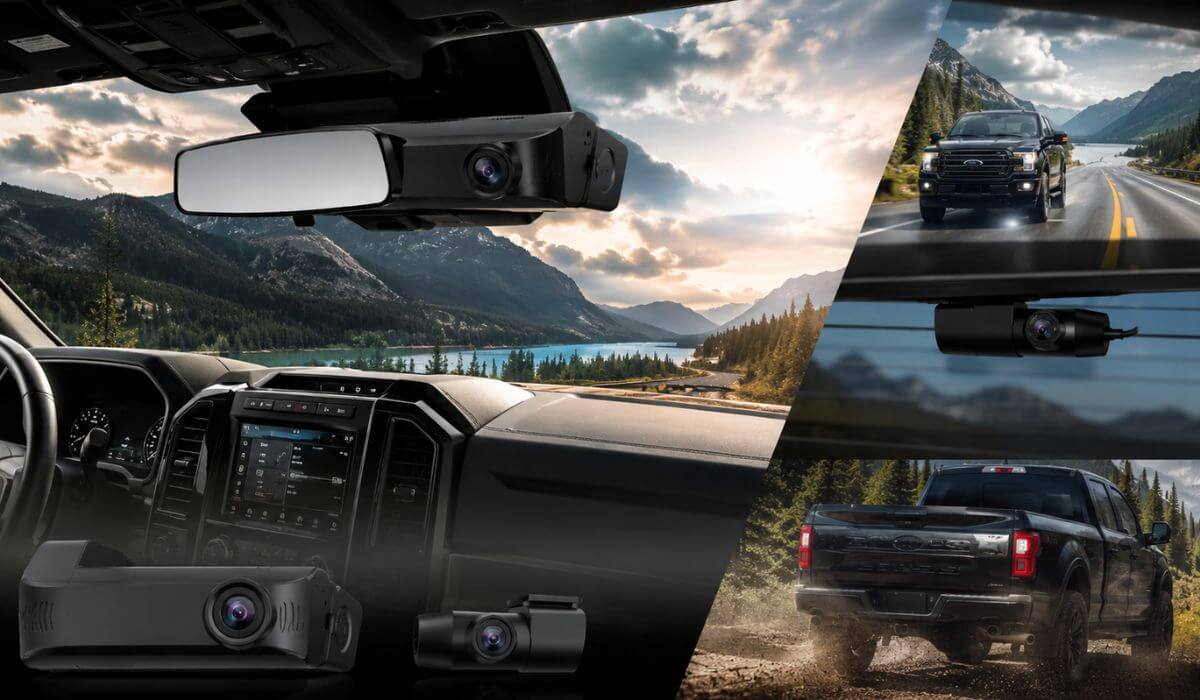
6 Best Dash Cams for Ford F150 in 2026: Hidden OEM Designs, 4K Recording & Smart Parking Mode
If you drive a Ford F-150, you already know this truck gets used for everything—daily commuting, highway hauling, job sites, camping weekends, boat towing, and long overnight drives where one close call can turn into an insurance nightmare. That’s exactly why cheap generic dash cams usually don’t last long in an F-150. The cabin sits higher, windshield angles vary between trims, and vibration from rough roads or larger tires exposes weak mounts and bad video stabilization fast.
For this guide, I focused on dash cams that actually make sense for the 2018–2026 Ford F-150 lineup, including newer trucks with larger infotainment layouts and tighter windshield housing designs. Some owners want a completely hidden OEM-style setup that looks factory-installed from day one. Others care more about true 4K clarity, better night footage, reliable parking surveillance, or fast phone connectivity that doesn’t feel outdated every time you download a clip.
That’s also why this list mixes both integrated factory-look dash cams and premium standalone systems with newer imaging hardware like Sony STARVIS 2 sensors. A few of these are built specifically around the F-150’s windshield and trim structure, while others simply outperform almost everything else once you start driving at night, towing, or parking in crowded lots every day.
After testing specs, installation design, parking mode features, app quality, storage support, heat resistance, and real-world usability, these are the dash cams that genuinely stand out for Ford F-150 owners right now.
Best Ford F150 Dash Cam Systems: Top 2026 Picks for Hidden Installation & WiFi Access
#1. Fitcamx Front 4K+Rear 1080P Dash Cam
Best OEM Dash Cam for Ford F150 With Hidden Factory Fit, Front and Rear Recording & Clean Plug-and-Play Installation for 2021–2026 Models
#2. VIOFO A329S 4K 60FPS Dash Cam Front and Rear
Best Premium 4K Dash Cam for Ford F150 With STARVIS 2 Night Vision, Ultra-Smooth 60FPS Recording & Advanced Parking Protection
#3. ROVE R2-4K DUAL Dash Cam Front and Rear
Best Front and Rear Dash Cam for Ford F150 With Fast 5G WiFi Transfers, Reliable Daily Recording & Excellent Night Clarity
#4. GATGIT Front 4K Dash Cam
Best Hidden OEM-Style Dash Cam for Ford F150 With HDR Video, Built-In GPS & Factory-Look Installation for 2018–2026 Trucks
#5. Mangoal Front 4K & Rear 1080P Dash Cam
Best Factory-Style Dash Camera for Ford F150 With WiFi App Control, GPS Tracking & Seamless Integrated Design
#6. kutaitai Front 4K + Rear 1080P Dash Cam
Best Budget 4K Dash Cam for Ford F150 With OEM-Style Housing, Loop Recording & Front and Rear Coverage for Daily Driving
Expert Tip: One thing most Ford F-150 owners realize too late is that video quality alone doesn’t make a dash cam good. A lot of cameras look impressive on Amazon screenshots, but once summer heat hits, the app starts lagging, clips fail to save, or the mount begins rattling every time the truck hits rough pavement. On an F-150, especially lifted trims or trucks running all-terrain tires, vibration and windshield angle matter far more than most people think. A clean install, stable recording, and reliable parking mode end up being more important than chasing marketing numbers you’ll never actually use.
How We Chose These Dash Cams for Ford F-150 Owners
There are hundreds of dash cams online right now, but most of them were never really designed around a full-size truck like the Ford F-150. That’s why this list was built differently.
First, we ignored generic “best dash cam” rankings and focused specifically on models that make sense for 2018–2026 Ford F-150 owners, including trims like XLT, Lariat, King Ranch, Platinum, Tremor, Limited, Raptor, and Lightning. Some cameras here are fully integrated OEM-style systems designed to sit neatly behind the mirror housing without making the cabin look cluttered. Others were chosen because they simply deliver better real-world footage and smarter parking protection than factory-style alternatives.
We also paid close attention to windshield fitment and installation design. That matters more than people realize. Many universal dash cams work fine in smaller sedans but start feeling bulky inside trucks with larger glass areas and higher seating positions. Cameras with poor mounting systems often shake during highway driving, off-road use, towing, or rough pavement. That vibration can ruin plate clarity at night even if the camera claims “4K.”
Another major factor was night recording performance. A Ford F-150 sits higher than most vehicles, which changes how headlights, reflections, and road glare hit the lens. That’s why models using newer imaging hardware like Sony STARVIS 2 sensors stood out immediately during low-light evaluation. Better dynamic range, cleaner shadow detail, and reduced glare matter far more than overprocessed sharpness that looks good only in advertisements.
We also filtered out cameras with weak app support, unstable WiFi connections, outdated interfaces, or unreliable parking mode behavior. In real ownership, those small frustrations become the reason people stop using a dash cam entirely after a few months. Fast clip transfer speeds, dependable loop recording, heat management, and stable mobile connectivity were treated as core requirements here—not bonus features.
And finally, we intentionally included a mix of options for different types of F-150 owners. Some drivers want a completely hidden OEM-style dash cam that nobody notices from outside the truck. Others want the absolute best footage possible for highway driving, work fleets, towing, or overnight parking. Instead of forcing every buyer into one category, this guide focuses on what actually works best depending on how the truck is used every day.
That’s the real reason these six models made the list. Not because of flashy marketing claims—but because they solve the problems Ford F-150 owners actually deal with once the truck leaves the driveway.
#1. Fitcamx Front 4K+Rear 1080P Dash Cam
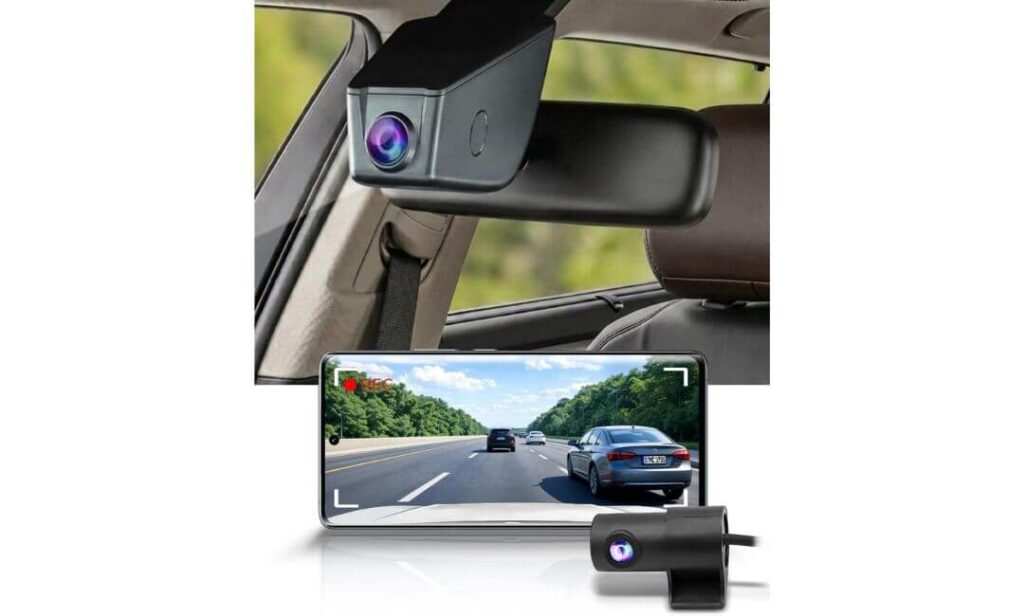
Quick Specs:
- Designed specifically for Ford F-150, Raptor, Lightning & F-250 windshield housing layouts
- Front 4K UHD recording with rear 1080P coverage
- Fully integrated OEM-style hidden design
- Rearview mirror mounted with no hanging wires
- Built-in WiFi + app video access
- Includes 128GB memory card in the box
- WDR support for cleaner night exposure and reduced glare
- Works in extreme temperatures from -4°F to 185°F
- Loop recording + G-Sensor emergency clip locking
- Keeps factory cabin look clean without bulky screens or suction mounts
The biggest reason this setup stands out is simple: it doesn’t look aftermarket once installed. In a truck like the Ford F-150, that matters more than most buyers expect. A lot of dash cams end up hanging below the mirror like an old GPS from 2012, but this one blends directly into the factory housing so cleanly that passengers usually don’t even notice it’s there until you point it out.
What surprised me most wasn’t the 4K resolution — it was how well the footage stays usable during actual truck driving. Highway vibration, rough pavement, oversized tires, towing movement… those things expose weak dash cams immediately. Here, the rearview-mirror-mounted design keeps the camera stable while the WDR tuning helps balance harsh headlights and dark roadside areas at night. The footage looks natural instead of artificially sharpened like many cheaper “4K” cameras online.
The dual-channel setup also makes real-world sense for F-150 owners. You get clear front coverage in 4K while the rear 1080P camera handles parking lots, rear impacts, trailers behind the truck, and daily traffic situations without overcomplicating installation. The WiFi app is straightforward too — open the app, pull clips, save footage, done. No weird menus, no frustrating learning curve. (Honestly, this feels less like adding a gadget and more like unlocking a feature Ford should’ve included from the factory.)
Why This One Earned a Spot on Our List
- Hidden OEM dash cam design made specifically for Ford truck interiors
- Stable footage quality even on rough roads and larger wheel setups
- Clean installation without dangling power wires across the cabin
- Included 128GB card saves buyers from immediate extra spending
- Excellent balance between factory appearance and everyday usability
One Small Thing Worth Knowing
- The built-in WiFi cannot run simultaneously with Bluetooth connections, though it does not interfere with normal CarPlay usage.
Real-World Ford F-150 Compatibility Notes
This setup makes the most sense for owners who care about keeping the interior looking stock. On trims like Lariat, Platinum, King Ranch, Tremor, Raptor, and Lightning, the hidden housing design fits naturally with the upscale dashboard layout instead of making the windshield look cluttered.
It’s also one of the easier options for owners who don’t want to mess with fuse taps or complicated hardwiring kits. Everything feels designed around the truck first, which is rare in the dash cam market right now.
The Insider Pro-Tip
Most people shopping for a dash cam focus only on resolution numbers, but in trucks like the F-150, mount stability and placement angle matter just as much as raw video specs. A poorly mounted “8K” camera with vibration issues will miss plates faster than a properly integrated 4K setup designed around the windshield structure.
That’s why OEM-style systems like this tend to age better in real ownership. Months later, owners still use them because the install feels invisible, the app stays simple, and the truck never feels cluttered every time you get behind the wheel.
#2. VIOFO A329S 4K 60FPS Dash Cam Front and Rear
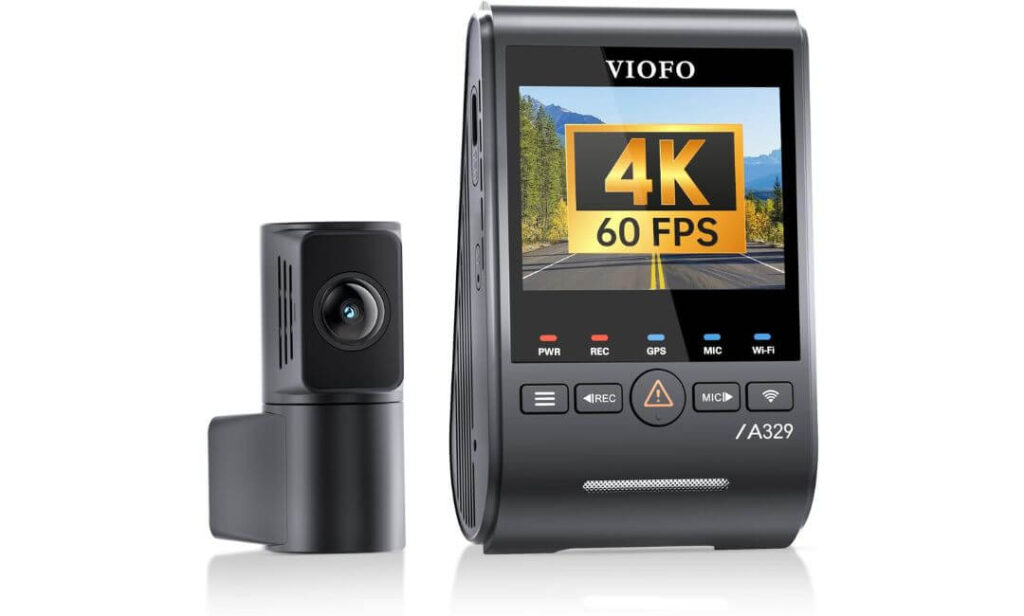
Quick Specs:
- Front camera records in true 4K 60FPS with rear 2K coverage
- Dual Sony STARVIS 2 sensors for advanced low-light clarity
- Ultra-fast Wi-Fi 6 transfers up to 30MB/s
- Supports up to 4TB external SSD storage
- Built-in GPS with multi-satellite positioning support
- Voice command support for hands-free operation
- HDR recording for cleaner nighttime license plate capture
- Advanced low-power parking surveillance system
- Slim coaxial cable design for cleaner hidden installation
- Includes anti-glare CPL filter in the box
There’s a very obvious difference between a dash cam that looks impressive on a product page and one that still impresses you after a month of driving a full-size truck every day. This is one of the rare models that falls into the second category. The first time you pull footage from the front 4K 60FPS camera, you immediately notice how smooth motion stays — highway signs remain readable longer, lane changes look cleaner, and fast-moving traffic doesn’t smear into a blurry mess once the sun goes down.
What really separates this setup, though, is the imaging hardware underneath. The dual STARVIS 2 sensors do an exceptional job controlling glare, balancing shadows, and preserving plate detail in ugly nighttime conditions where cheaper cameras usually collapse. That matters a lot in trucks like the Ford F-150 because the higher ride height changes how headlights reflect into the lens. Instead of crushing dark areas or overexposing bright ones, this camera keeps footage surprisingly balanced even during rain, highway construction zones, or late-night towing runs.
Then there’s the overall ownership experience — and honestly, this is where many premium dash cams quietly fail. Here, the Wi-Fi 6 transfer speeds are genuinely useful instead of feeling like marketing filler. Pulling large 4K clips to your phone takes seconds, not minutes. Add the SSD storage support, voice controls, GPS tracking, low-power parking mode, and interference-resistant coaxial cable system, and the whole package starts feeling less like a basic dash cam and more like a proper long-term truck setup. (If you spend serious time behind the wheel, this is the kind of camera that slowly makes every cheaper model feel outdated.)
Why This Camera Stood Out During Evaluation
- Exceptional night visibility with dual STARVIS 2 image sensors
- True 4K 60FPS recording keeps motion sharper during highway driving
- Fastest app transfer performance in this entire lineup
- SSD support is ideal for road trips, towing footage, and long recording sessions
- Premium cable design creates a noticeably cleaner install inside larger truck cabins
One Small Thing Worth Knowing
- To unlock the full low-power parking protection system, a separate hardwire kit is recommended and sold separately.
Ford F-150 Installation & Daily Use Notes
Unlike OEM-style mirror-integrated cameras, this one uses a universal windshield mount — but the slim body and ultra-thin coaxial cables make it look far cleaner inside the F-150 than most standalone systems. The cable routing also hides nicely along the headliner without creating bulky trim gaps.
This setup especially makes sense for F-150 owners who drive long highway miles, tow frequently, travel at night, or simply want the absolute best footage quality possible instead of prioritizing factory-style appearance above everything else.
The Insider Pro-Tip
A lot of buyers chase “8K” marketing because it sounds impressive, but frame rate and sensor quality usually matter far more in real driving situations. In a truck moving at highway speeds, smoother 60FPS footage often captures usable plate details that lower-frame-rate cameras completely miss once motion blur kicks in.
That’s also why experienced dash cam users tend to upgrade toward better sensors and faster processing instead of just bigger resolution numbers. Cleaner night footage, faster clip access, stable parking recording, and long-term reliability end up being the things owners appreciate most six months later — especially in a truck that spends real time on the road instead of sitting in a garage.
#3. ROVE R2-4K DUAL Dash Cam Front and Rear
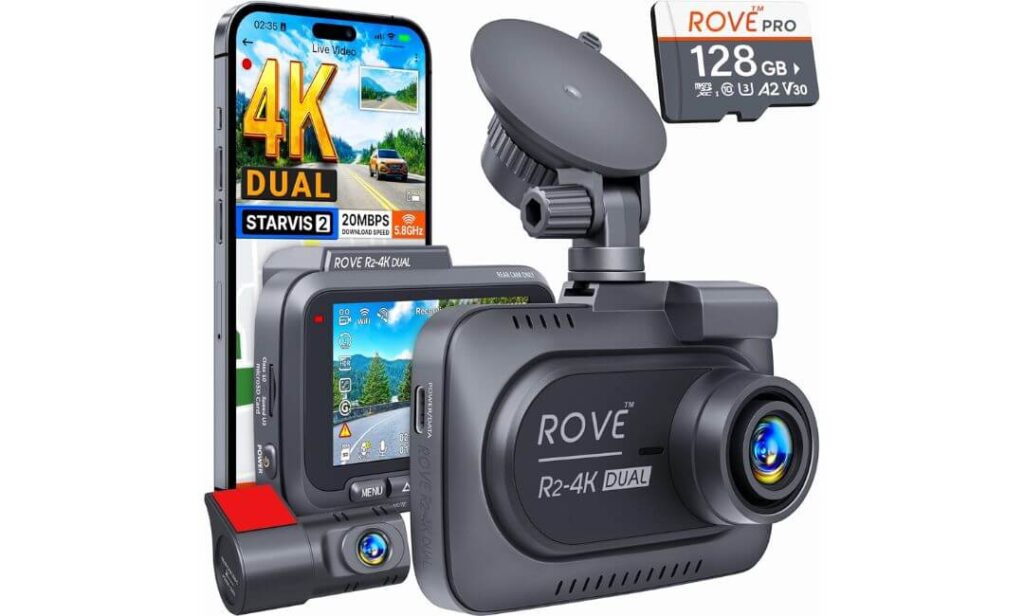
Quick Specs:
- Front 4K UHD recording with rear 1080P dual-channel coverage
- Sony STARVIS 2 sensor with enhanced low-light clarity
- Ultra-fast 5G WiFi downloads up to 20MB/s
- Includes a free 128GB microSD card
- Built-in GPS with live speed and route tracking
- 150° front + 140° rear wide-angle recording
- Supercapacitor design for better heat and cold durability
- Supports up to 1TB external storage
- Three-mode 24-hour parking surveillance system
- Large 3-inch IPS display with voice guidance support
Some dash cams feel overly complicated the moment you open the box. This one goes in the opposite direction — and honestly, that’s a huge reason so many truck owners end up sticking with it long-term. You mount it, plug it in, route the rear cable, and within minutes the whole system already feels natural inside the Ford F-150 cabin instead of feeling like another tech project waiting to frustrate you later.
What immediately stands out is how balanced the entire package feels. The front 4K footage stays sharp enough for highway detail while the rear 1080P camera covers daily traffic, parking incidents, and tailgating situations without overprocessing the image into artificial-looking sharpness. The STARVIS 2 sensor also does a genuinely solid job once daylight disappears. Street signs stay readable longer, glare remains controlled, and dark areas don’t turn into muddy black patches the second another truck’s headlights hit the lens.
Then there’s the stuff owners usually appreciate after a few weeks — the things product pages rarely explain properly. The included 128GB card means you’re not immediately shopping for extra storage after delivery. The supercapacitor design matters more in trucks exposed to summer heat. The WiFi transfer speeds are fast enough that grabbing clips on your phone actually feels convenient instead of annoying. And the GPS data becomes surprisingly useful anytime footage needs to prove location, direction, or speed during insurance situations. (This is one of those rare setups that quietly covers almost every important feature without making ownership feel complicated.)
Why This Setup Earned Its Position in the Lineup
- Excellent balance between price, video quality, and daily usability
- Reliable low-light recording with Sony STARVIS 2 hardware
- Faster app downloads than many cameras costing far more
- Included memory card adds immediate real-world value
- Simple installation works especially well in larger truck cabins
One Small Thing Worth Knowing
- Full 24-hour parking protection requires a separate hardwire kit if you want continuous monitoring while the truck is parked.
Ford F-150 Installation & Real-World Use Notes
This setup fits naturally inside the F-150 because the cabin gives enough windshield space for clean placement without blocking visibility. The rear cable routing is also surprisingly manageable in these trucks, especially along the headliner and rear trim sections.
It’s a particularly smart choice for owners who want premium night recording and modern app features without jumping into ultra-expensive enthusiast-level systems. The balance here feels very intentional — strong footage quality, fast performance, easy ownership.
The Insider Pro-Tip
A lot of people underestimate how important fast clip access becomes after owning a dash cam for a while. If downloading footage takes forever, most owners eventually stop checking recordings altogether unless something serious happens.
That’s why cameras with genuinely fast WiFi systems tend to stay useful longer in real ownership. When clips transfer quickly, parking events get reviewed faster, road-trip footage gets saved more often, and important evidence is actually available when you need it instead of buried inside a memory card nobody wants to remove every week.
#4. GATGIT Front 4K Dash Cam
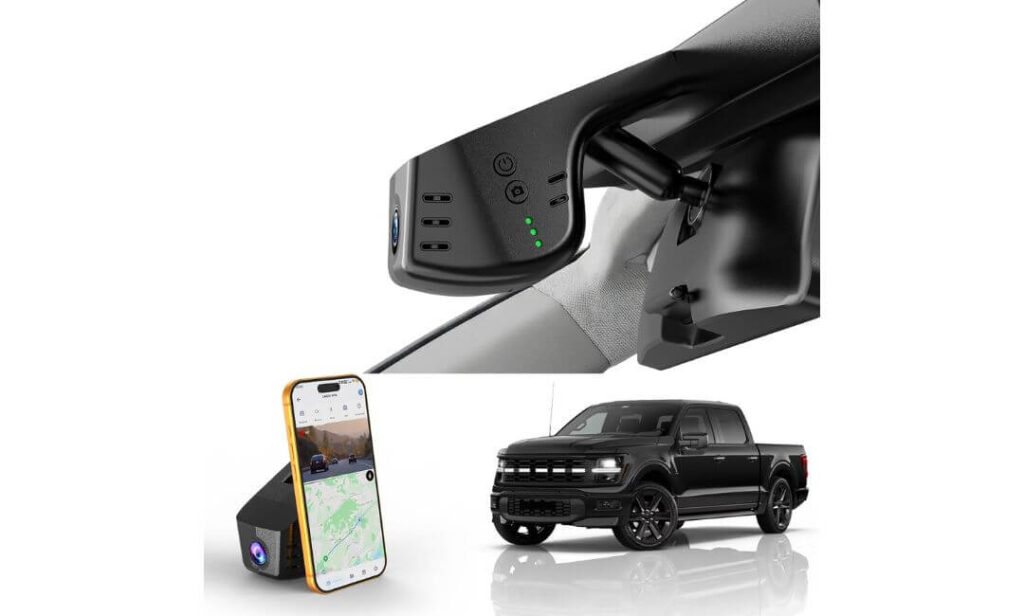
Quick Specs:
- Built specifically for Ford F-150, F-250, F-350 & F-450 Super Duty cabins
- Native 4K 2160P HDR recording
- Fully integrated OEM-style hidden installation
- Direct plug-and-play connection with no exposed wiring
- Built-in 5.8GHz WiFi with app-based footage access
- GPS route, speed, and location tracking
- 155° wide viewing angle for broader road coverage
- Supercapacitor design for improved heat durability
- Loop recording with automatic emergency clip locking
- Includes 64GB card, card reader, tools & Y-cable in the box
Oddly enough, some of the best dash cams for the Ford F-150 are the ones you barely notice after installation — and this setup understands that better than most. The moment it clicks into place near the mirror housing, the cabin still feels factory-clean. No dangling screens, no thick cables crossing the windshield, no suction mount making the truck look cluttered every time sunlight hits the glass.
The real strength here is how intelligently the entire system is tuned around truck ownership. The 4K HDR footage stays surprisingly controlled during difficult lighting situations where many integrated cameras struggle. Highway glare, dark backroads, parking garages, rain reflections — the camera keeps detail balanced instead of crushing shadows or blowing out headlights into white blobs. Even fast-moving license plates remain readable more often than expected thanks to the f/1.6 lens and sharper HDR processing.
Then there’s the ownership side most buyers don’t think about initially. The included 64GB card, Y-cable converter, installation tools, GPS support, fast 5.8GHz WiFi, and direct factory-style connection remove a lot of the small frustrations that normally come with aftermarket dash cams. Everything feels designed to reduce hassle instead of creating more of it. (This is the type of setup that quietly feels “right” every single time you start the truck — which honestly matters more than flashy marketing specs.)
Why This Setup Deserved a Place in the Lineup
- Excellent OEM-style integration for Ford truck interiors
- Cleanest installation experience among universal alternatives
- Strong HDR tuning improves night and backlit footage noticeably
- Fast WiFi transfers make reviewing clips genuinely convenient
- Supercapacitor design handles heat exposure better during long parking hours
One Small Thing Worth Knowing
- The advanced 24/7 parking monitoring system works best when paired with the optional hardwire kit for continuous parked protection.
Ford F-150 Real-World Fitment Notes
This camera makes the most sense for F-150 owners who care about keeping the cabin looking clean and factory-finished. On trims like Lariat, King Ranch, Platinum, Tremor, and Raptor, the integrated design blends naturally into the windshield area without drawing attention.
It’s also a smart option for owners who don’t want complicated installations. Since it connects directly to the factory connector, setup feels much simpler compared to routing bulky power systems across the dashboard or fuse box area.
The Insider Pro-Tip
A lot of factory-style dash cams look similar in photos, but small details separate the good ones from the forgettable ones once real ownership begins. Better heat resistance, cleaner HDR tuning, stable app connectivity, and properly designed wiring matter far more after six months than a flashy product page ever will.
That’s why integrated systems like this tend to work especially well in trucks people actually drive hard. The cleaner the install feels, the more likely owners are to leave the system running permanently instead of eventually unplugging it because the cabin started feeling messy or overcomplicated.
#5. Mangoal Front 4K & Rear 1080P Dash Cam
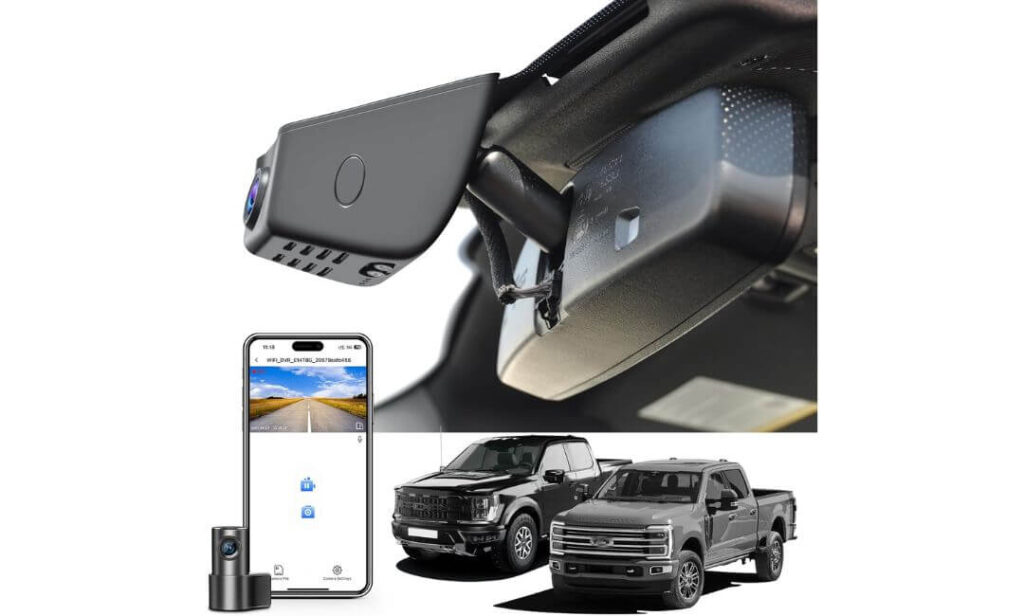
Quick Specs:
- Designed specifically for Ford F-150, Lightning & Super Duty interiors
- Front 4K Ultra HD plus rear 1080P recording
- Hidden OEM-style fit behind the rearview mirror
- Built-in WiFi + mobile app access
- GPS module included inside the package
- 150° front and 140° rear viewing coverage
- Includes a 128GB microSD card out of the box
- Supercapacitor design for improved long-term durability
- Motion sensing, parking monitoring & G-sensor protection
- Powered directly through compatible auto-dimming mirror adapter
Some dash cams try too hard to stand out. This one succeeds because it does the opposite. Once installed inside the Ford F-150 cabin, it blends into the windshield area so naturally that it honestly feels closer to a factory tech package than an aftermarket accessory. That clean integration matters more than people expect, especially in higher trims where bulky hanging cameras immediately ruin the premium feel of the interior.
The video quality also lands in a very smart sweet spot for truck owners. The front 4K footage captures enough detail for road signs, lane movement, and license plates without creating oversized files that become annoying to manage later. Meanwhile, the rear 1080P camera quietly handles the situations most F-150 owners actually deal with every week — parking lots, trailers, rear traffic, tailgaters, and unpredictable stop-and-go driving. The wide-angle coverage helps too, especially in larger trucks where blind zones naturally feel bigger than smaller vehicles.
Where this setup becomes genuinely appealing is in the ownership experience itself. The included GPS module, WiFi connectivity, 128GB card, installation tools, and mirror-powered setup remove most of the extra purchases buyers usually discover after checkout. Even the installation flow feels calmer and more thought-out than many universal dash cams that leave wires hanging across half the dashboard. (This feels like the kind of system someone buys specifically because they want the truck to stay clean, organized, and factory-looking for years.)
Why This Dash Cam Made Sense for the List
- Excellent factory-style integration inside Ford truck cabins
- Balanced front and rear recording setup for daily driving
- Included accessories reduce extra installation costs
- Wide viewing angles work especially well in full-size trucks
- Simple app connectivity keeps footage management easy
One Small Thing Worth Knowing
- This setup works best in F-150 models equipped with the compatible auto-dimming mirror power connection or supported rain sensor adapter system.
Ford F-150 Daily Use & Installation Notes
This camera fits particularly well in trims like XLT, Lariat, King Ranch, Platinum, Raptor, and Limited because the OEM-style housing blends naturally into the upper windshield area without making the interior look modified.
It’s also a very comfortable choice for owners who prefer cleaner installations over complicated custom wiring projects. Since power can draw directly from compatible mirror systems, the final result usually looks far more organized than traditional suction-mounted dash cams.
The Insider Pro-Tip
One of the biggest mistakes truck owners make is buying a dash cam purely for “highest resolution” without thinking about how the system will actually live inside the cabin every day. A cleaner installation often matters more long-term than chasing extreme specs you rarely notice during normal driving.
That’s why integrated systems like this continue gaining popularity in trucks like the F-150. When the camera disappears into the interior naturally, owners tend to trust it more, leave it installed permanently, and actually use the footage instead of treating the dash cam like temporary tech that eventually becomes annoying.
#6. kutaitai Front 4K + Rear 1080P Dash Cam
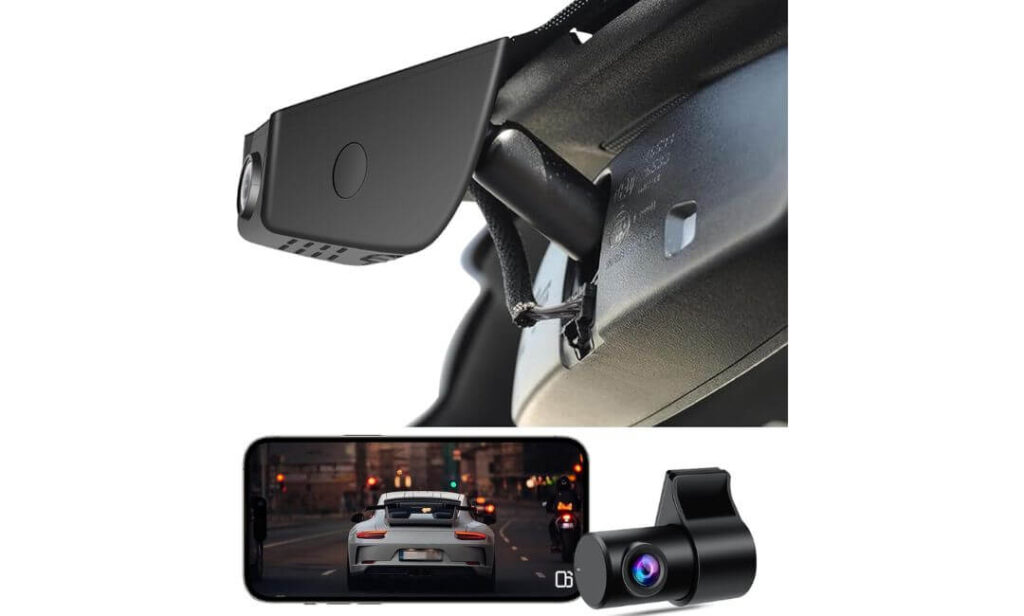
Quick Specs:
- Designed for Ford F-150 & Super Duty interiors with OEM-style fitment
- Front 4K recording with rear 1080P camera coverage
- Plug-and-play hidden installation with no exposed wiring
- Built-in WiFi with mobile app access
- Includes a 128GB memory card in the package
- 170° front and 140° rear wide-angle coverage
- G-Sensor emergency clip protection
- Seamless loop recording system
- 24-hour parking monitoring support
- Uses advanced Novatek processing hardware for stable recording
Here’s the part most budget dash cams never get right: they either look cheap inside the truck, feel frustrating to use after a week, or cut corners so aggressively that the footage becomes unreliable when you actually need it. Surprisingly, this setup avoids a lot of those problems. The moment it’s installed inside the Ford F-150 cabin, the clean OEM-style layout immediately makes it feel more expensive than its price category normally allows.
The footage itself is also better balanced than expected for an entry-level integrated system. The front 4K camera captures enough road detail to keep signs, lane movement, and nearby plates reasonably clear during daily driving, while the rear 1080P unit quietly adds the extra protection most truck owners eventually wish they had after one parking lot incident or rear-end close call. The wide viewing angles help a lot too, especially in larger trucks where standard cameras can leave noticeable blind spots near the edges.
What really makes this option easy to recommend is how approachable the ownership experience feels. The WiFi app stays simple, the included 128GB card means you can start recording immediately, and the installation avoids the messy “aftermarket gadget” feeling many budget cameras create inside premium truck cabins. (Honestly, this feels less like a compromise budget pick and more like a practical everyday setup for owners who simply want solid protection without overspending.)
Why This Setup Still Earned a Spot on the List
- Clean OEM-style design at a more approachable price point
- Wide-angle coverage works nicely in full-size truck cabins
- Included memory card adds immediate value for first-time buyers
- Straightforward app experience keeps footage easy to access
- Simple plug-and-play installation avoids unnecessary complexity
One Small Thing Worth Knowing
- For full-time parking monitoring functionality, the system works best when connected to a compatible ACC power source or hardwire solution.
Ford F-150 Ownership & Installation Notes
This camera fits especially well in XL, XLT, Lariat, Platinum, Tremor, King Ranch, and Raptor interiors because the housing stays tucked neatly near the mirror area instead of hanging lower across the windshield.
It’s also a very practical choice for first-time dash cam buyers who want the cleaner look of a factory-style system without jumping into higher-priced premium models right away.
The Insider Pro-Tip
A lot of truck owners spend weeks chasing the “perfect” dash cam and end up overbuying features they rarely use. In reality, the best setup is usually the one that records reliably every single day without making the cabin feel cluttered or complicated.
That’s why simpler OEM-style systems continue gaining traction in trucks like the F-150. When installation stays clean, footage remains easy to access, and the camera quietly works in the background without constant attention, owners are far more likely to keep using it long-term instead of treating it like another gadget that eventually gets ignored.
Best Ford F150 Dash Cam Comparison for OEM Fit, 4K Recording & Parking Protection
| Dash Cam | Best For | Video Quality | Night Performance | Installation Style | Storage Included | Parking Mode | Real Owner Vibe |
|---|---|---|---|---|---|---|---|
|
Fitcamx Front 4K+Rear 1080P
OEM FAVORITE
|
Drivers wanting the cleanest factory-style setup | 4K Front + 1080P Rear | Strong HDR balance for daily night driving | Mirror-integrated hidden OEM fit | 128GB Included | 24H monitoring supported | Feels like a factory tech package instead of an aftermarket gadget |
|
VIOFO A329S
PREMIUM PICK
|
Highway drivers and serious night recording | 4K 60FPS + 2K Rear | Outstanding STARVIS 2 low-light clarity | Universal slim windshield setup | Up to 4TB SSD Support | Advanced low-power parking protection | Built for owners who genuinely care about footage quality |
|
ROVE R2-4K DUAL
BEST VALUE
|
Balanced everyday driving and fast app access | 4K Front + 1080P Rear | Very reliable night detail with STARVIS 2 | Windshield mount with flexible placement | 128GB Included | 3-mode 24H parking surveillance | Easy to live with daily, even for first-time buyers |
|
GATGIT Front 4K Dash Cam
HIDDEN OEM LOOK
|
Clean interior lovers wanting invisible setup | Native 4K HDR | Excellent glare control and HDR tuning | Direct plug-and-play OEM connection | 64GB Included | 24/7 parking support available | Makes the cabin feel untouched and factory-clean |
|
Mangoal Front 4K & Rear 1080P
SMART DAILY PICK
|
Drivers wanting balanced OEM integration | 4K Front + 1080P Rear | Consistent detail during daily night driving | Mirror-integrated hidden layout | 128GB Included | Parking monitoring supported | Feels organized, simple, and genuinely truck-friendly |
|
kutaitai Front 4K + Rear 1080P
BUDGET OEM PICK
|
Affordable OEM-style protection for daily use | 4K Front + 1080P Rear | Good clarity considering the price range | Plug-and-play hidden windshield setup | 128GB Included | 24H monitoring support available | Simple, practical, and surprisingly clean inside the cabin |
Buying Guide: What Actually Matters Before Choosing a Dash Cam for Your Ford F-150
A lot of Ford F-150 owners end up buying the wrong dash cam for one simple reason — they shop only by resolution numbers. On paper, almost every product claims “4K,” “night vision,” or “parking protection,” but once the camera is mounted inside a real truck, the differences become obvious very quickly. Windshield angle, cabin vibration, towing use, summer heat, app stability, wiring layout, and long-term reliability matter far more than most buyers expect at first.
That’s why choosing the right dash cam for an F-150 is less about chasing the most aggressive marketing specs and more about understanding how the truck is actually used every day.
Compatibility With the Ford F-150 Interior Matters More Than Most Buyers Expect
The Ford F-150 cabin is very different from smaller SUVs or sedans. The windshield sits taller, mirror housings vary between trims, and newer models pack more sensors and tech around the upper windshield area. Because of that, generic dash cams sometimes look awkward or block visibility once installed.
This is exactly why OEM-style systems have become so popular in F-150 builds recently. Cameras designed specifically around the truck’s mirror housing usually look cleaner, route power more naturally, and avoid the messy “afterthought gadget” appearance many universal systems create.
If your goal is a factory-like appearance, hidden integrated models such as Fitcamx, GATGIT, Mangoal, or kutaitai simply make more sense than bulky suction-mounted units hanging below the mirror.
Real 4K Recording vs Marketing “4K”
Not every 4K dash cam performs the same once the truck starts moving. Some cameras technically record at high resolution but struggle with motion blur, glare control, or low-light detail once highway speeds increase.
That’s especially important in the F-150 because larger tires, suspension setups, towing vibration, and rough pavement can expose weak image processing very quickly.
A good 4K dash cam should preserve:
- License plate readability
- Highway sign clarity
- Balanced HDR exposure
- Stable footage during vibration
- Cleaner low-light detail at speed
That’s also why premium image sensors like Sony STARVIS 2 genuinely matter. They improve usable footage instead of just increasing resolution numbers on the product page.
Front-Only vs Front-and-Rear Dash Cam Systems
A surprising number of truck owners initially buy front-only cameras and later wish they had rear coverage too. In daily use, rear cameras become extremely useful for:
- Parking lot incidents
- Rear-end collisions
- Trailer monitoring
- Tailgating evidence
- Hit-and-run situations while parked
For most F-150 owners, a front-and-rear setup simply gives better long-term protection. That’s why nearly every camera in this guide includes dual-channel recording instead of focusing only on the windshield view.
Night Vision Quality Is More Important Than Daytime Footage
Almost every modern dash cam looks decent during daylight. The real difference appears after sunset.
The Ford F-150’s higher ride height changes how headlights, reflective signs, rain glare, and dark roads appear on camera. Weak sensors often blow out bright lights while crushing dark areas into black shadows, making footage far less useful during actual emergencies.
Strong night performance usually comes from:
- Better sensors
- Wider apertures
- Smarter HDR tuning
- Cleaner image processing
- Reduced motion blur
This is one area where premium cameras like the VIOFO A329S and ROVE R2-4K DUAL clearly separate themselves from cheaper generic systems.
Parking Mode Can Be More Valuable Than Driving Footage
Many owners buy a dash cam thinking mainly about accidents while driving, but parked incidents are often just as common. Shopping carts, hit-and-runs, break-in attempts, careless parking lot damage, and overnight impacts happen constantly.
A properly designed parking mode should:
- Activate automatically
- Detect impacts accurately
- Minimize battery drain
- Save locked footage separately
- Continue working reliably during long parking periods
Some systems use motion detection, others use impact-triggered recording, and premium setups combine multiple methods together. Just remember: most advanced parking systems require either a hardwire kit, OBD adapter, or dedicated power solution.
Hidden OEM-Style Dash Cams vs Traditional Windshield Units
This usually comes down to what kind of ownership experience you want.
OEM-style dash cams focus on:
- Clean cabin appearance
- Hidden wiring
- Factory-like integration
- Minimal distraction
- Easier long-term ownership feel
Traditional windshield-mounted systems usually focus more on:
- Maximum video performance
- Easier repositioning
- Larger displays
- More enthusiast-level controls
For many F-150 owners, integrated OEM-style systems feel better long-term because the truck still looks organized and uncluttered after installation.
Installation Quality Changes the Entire Ownership Experience
A bad installation can ruin even an excellent dash cam.
Loose wiring, poor cable routing, weak mounts, and unstable power setups eventually become annoying in a truck that gets driven daily. That’s why plug-and-play mirror-powered systems are becoming increasingly popular inside newer F-150 trims.
If you prefer simpler installation:
- OEM-style integrated systems are usually easier
- Mirror-powered adapters reduce wiring mess
- Included installation tools save extra cost
- Slim coaxial cables hide more cleanly
Universal systems still work extremely well, but they usually require more attention during cable routing.
Wireless Connectivity and Storage Capacity Matter More Than Buyers Realize
Fast app connectivity completely changes how useful a dash cam feels after purchase.
If downloading footage takes forever or the app constantly disconnects, most owners stop checking clips regularly. Better systems now include:
- 5GHz or WiFi 6 connectivity
- Faster download speeds
- Stable mobile apps
- GPS playback support
- Larger storage compatibility
Storage size also matters heavily in 4K recording. Higher bitrate footage fills memory cards much faster than many buyers expect, especially during long road trips or parking surveillance.
Long-Term Reliability Is What Separates Good Dash Cams From Forgettable Ones
The best dash cam isn’t always the one with the craziest specs. It’s the one that still works reliably six months later during heat, vibration, long drives, winter mornings, and everyday truck use.
That’s why things like:
- Supercapacitor durability
- Stable firmware
- Reliable app support
- Heat resistance
- Consistent recording behavior
- Clean installation design
end up mattering far more than flashy marketing once the excitement of buying a new gadget wears off.
In the end, the right Ford F-150 dash cam is the one that quietly works every day, captures clear footage when needed, and feels like it naturally belongs inside the truck instead of constantly reminding you it was added later.
Installation & Setup Guide for Ford F-150 Dash Cam Systems
A surprisingly large number of dash cam complaints have nothing to do with video quality. Most problems actually start during installation. Loose wiring, unstable power delivery, poor windshield placement, rattling cables, battery drain, weak adhesive mounting — these small mistakes quietly ruin the ownership experience over time, especially inside a truck like the Ford F-150 where cabin size, windshield height, and daily vibration expose shortcuts very quickly.
The good news is that modern F-150 dash cam systems have become dramatically easier to install than older setups. OEM-style mirror-integrated systems now reduce most wiring headaches entirely, while newer universal cameras use thinner coaxial cables and smarter power management than the bulky kits people dealt with a few years ago.
Choosing the Right Power Setup for Your Driving Style
Before installing anything, the first thing worth deciding is how you actually want the camera to behave when the truck is parked.
If you simply want recording while driving, using the included cigarette lighter adapter or USB power source is usually enough. The camera powers on when the truck starts and shuts down once the ignition turns off. It’s simple, reliable, and avoids unnecessary wiring work.
But if you want:
- 24/7 parking surveillance
- Impact-triggered recording while parked
- Motion detection protection overnight
- Long-term parking monitoring at work sites or apartments
then a hardwire setup becomes much more important.
Most advanced parking systems need continuous low-voltage power through:
- Hardwire kits
- OBD adapters
- Mirror-powered adapters
- Fuse-box integration
This allows the camera to remain in standby mode without draining the battery aggressively. Better systems intelligently lower power consumption until impact or movement is detected.
For many Ford F-150 owners, OEM-style mirror-powered dash cams feel like the cleanest compromise because they reduce visible wiring while still maintaining stable power delivery.
Windshield Placement Makes a Bigger Difference Than Most People Think
A dash cam can technically “work” almost anywhere on the windshield, but proper placement changes everything about the final footage quality.
The best mounting location is usually:
- High near the rearview mirror
- Centered for balanced road visibility
- Slightly below the tinted windshield strip
- Positioned outside the driver’s direct sightline
This improves:
- Road angle visibility
- Night glare handling
- Interior reflections
- Vibration control
- Driver comfort during long trips
On the Ford F-150 specifically, mounting too low often creates unnecessary distraction because of the truck’s taller windshield design.
It’s also important to avoid placing cables near:
- Side curtain airbag deployment zones
- Moving trim sections
- Steering-column pathways
- High-heat windshield edges
Clean cable routing matters not only for appearance, but also for long-term durability.
Understanding Front and Rear Camera Cable Routing
Front-only systems are naturally easier to install, but front-and-rear setups provide significantly better overall protection for most truck owners.
In typical Ford F-150 installations:
- The front camera mounts near the mirror
- Rear camera cables route along the headliner
- Wiring continues through door trim or weather stripping
- Rear camera mounts near the rear windshield center
The good news is that newer dash cam systems use thinner cables than older models. Cameras like the VIOFO A329S especially benefit from slim coaxial wiring that hides much more naturally inside larger truck cabins.
For OEM-style systems like Fitcamx, Mangoal, GATGIT, and kutaitai, installation often becomes dramatically simpler because power already routes through mirror or factory connector locations instead of crossing the entire dashboard.
Parking Mode Integration and Battery Protection
Parking mode is one of the most misunderstood features in the dash cam market.
Many buyers assume parking monitoring works automatically forever, but the truth is more nuanced. Continuous parked recording requires careful power management so the truck battery doesn’t slowly drain overnight.
Higher-quality systems usually offer multiple parking modes such as:
- Motion detection recording
- Collision-triggered recording
- Low-bitrate continuous surveillance
- Time-lapse parking mode
- Ultra-low-power standby mode
Some cameras prioritize battery protection aggressively, while others focus more on constant recording coverage.
For F-150 owners who park outdoors frequently, travel for work, tow equipment, or leave valuables inside the truck, parking mode quickly becomes one of the most valuable features in daily ownership.
App Setup, WiFi Connectivity & Firmware Updates
The app experience is where many dash cams quietly separate themselves from competitors.
A strong dash cam app should allow:
- Fast video downloads
- Stable live preview
- Easy settings adjustment
- GPS playback review
- Firmware updates without frustration
- Reliable phone pairing
Modern systems using:
- 5GHz WiFi
- WiFi 6
- Faster onboard processors
feel dramatically smoother than older cameras once you start transferring large 4K clips regularly.
Firmware updates matter too. Good brands continue refining:
- App stability
- Recording reliability
- Parking mode tuning
- Heat management behavior
- Camera compatibility
This becomes especially important in newer Ford F-150 models where software integration and electronic interference can sometimes affect lower-quality aftermarket systems.
Keeping the Installation Looking Factory-Clean
This is the part many buyers underestimate until after installation is finished.
A technically functional dash cam setup can still feel disappointing if:
- Wires hang near the windshield
- Trim pieces don’t close properly
- Connectors remain visible
- Power cables dangle near the center console
- Adhesive mounts look bulky from outside the truck
That’s why OEM-style systems have exploded in popularity among F-150 owners recently. Once properly installed, many integrated cameras become nearly invisible from the driver’s seat while still delivering full-time protection.
Some simple tricks that help preserve the factory appearance:
- Use trim tools instead of forcing panels by hand
- Route cables along existing factory wire paths
- Avoid excessive adhesive clips
- Leave slight cable slack near moving panels
- Clean windshield glass thoroughly before mounting
The cleaner the installation feels, the more natural the dash cam becomes during everyday ownership.
The Real Truth About Dash Cam Installation in a Ford F-150
Most people assume installation is the stressful part. In reality, the real difference comes afterward.
A properly installed dash cam fades into the background completely. The truck stays clean, the camera records automatically, parking mode works quietly, clips transfer quickly, and the whole system simply becomes part of daily driving without demanding attention.
That’s ultimately the goal with a good F-150 dash cam setup — not just impressive specs on paper, but a system that feels natural enough to trust every time the truck leaves the driveway.
Which Type of Ford F-150 Owner Each Dash Cam Actually Fits Best
One thing that becomes obvious after testing multiple dash cams inside the Ford F-150 is that there’s no single “perfect” option for every driver. The right setup depends heavily on how the truck is used daily. A work truck running highway miles all week needs something very different from a weekend Raptor build, a family road-trip setup, or a clean Platinum interior where the owner doesn’t want visible aftermarket hardware hanging from the windshield.
That’s why choosing based on real-world driving style usually leads to a far better ownership experience than simply buying whichever camera advertises the highest resolution.
Best Choice for Everyday Ford F-150 Driving
For most daily-driven F-150s, balance matters more than extreme enthusiast-level specs.
A daily-use dash cam should:
- Start recording automatically every time
- Stay reliable in heat and cold
- Download clips quickly
- Avoid distracting the driver
- Blend naturally into the cabin
- Require minimal maintenance over time
This is exactly where systems like the ROVE R2-4K DUAL become extremely appealing. The setup feels simple without feeling cheap. Fast WiFi access, reliable STARVIS 2 night performance, included storage, GPS tracking, and smooth daily usability make it one of the easiest cameras to live with long-term if the truck gets driven constantly.
For many F-150 owners, that balance between usability, video quality, and everyday convenience matters far more than chasing the absolute highest-end specifications.
Best Front and Rear Dash Cam Setup for Maximum Protection
Some owners want complete coverage from every direction — especially trucks used for:
- Highway commuting
- Trailer towing
- Fleet work
- Overnight parking
- Family travel
- Urban driving
- Long-distance road trips
In those situations, front-and-rear systems become far more valuable than front-only cameras.
The VIOFO A329S stands out heavily here because the combination of:
- Front 4K 60FPS recording
- Rear 2K recording
- Dual STARVIS 2 sensors
- Advanced parking monitoring
- Massive storage support
creates a much more complete protection system overall.
This is the type of setup that makes sense for owners who spend serious hours behind the wheel and want footage quality that still holds up during difficult weather, fast highway speeds, and ugly nighttime conditions where weaker cameras usually fail.
Best Hidden OEM-Style Dash Cam for a Clean Factory Cabin
This category matters more in the Ford F-150 than many people initially expect.
Modern F-150 interiors — especially trims like:
- Lariat
- Platinum
- King Ranch
- Tremor
- Limited
- Raptor
already feel refined from the factory. Adding a bulky universal dash cam with hanging wires can instantly ruin that clean interior layout.
That’s why OEM-style integrated systems have become so popular recently. Cameras like:
- Fitcamx
- GATGIT
- Mangoal
- kutaitai
blend directly into the mirror housing area instead of looking like separate accessories stuck onto the windshield later.
Among these, the Fitcamx setup probably feels the most naturally integrated overall. Once installed, it genuinely looks like something Ford could have included directly from the factory. No exposed cables, no oversized display hanging lower on the windshield, no distracting aftermarket appearance every time sunlight hits the glass.
For owners who care heavily about maintaining a clean premium cabin aesthetic, this type of setup simply feels better long-term.
Best Option for Drivers Who Hate Cluttered Wiring
A lot of people don’t mind installing a dash cam. What they actually hate is seeing:
- Hanging cables
- Loose trim pieces
- USB wires across the dashboard
- Bulky power adapters
- Messy windshield mounts
every single day afterward.
That’s why cleaner installation systems matter so much in full-size trucks.
OEM-style mirror-powered dash cams reduce most visible wiring almost entirely because power routes directly through factory-style connection points instead of crossing the dashboard or center console area.
Even universal systems like the VIOFO A329S improve this experience significantly by using thinner coaxial cables that hide much more naturally along the F-150 headliner.
The cleaner the installation looks, the more likely owners are to leave the system installed permanently instead of eventually unplugging it out of frustration.
Best Setup for Night Driving and Highway Use
Not every dash cam handles nighttime truck driving properly.
The Ford F-150’s height changes how:
- Headlights reflect
- Rain glare appears
- Road signs expose
- Motion blur behaves
- Highway lighting affects sensors
Lower-quality cameras often produce footage that technically looks “sharp” until a real nighttime incident happens and critical details disappear under glare or motion blur.
This is where premium sensors and better image processing matter enormously.
The VIOFO A329S and ROVE R2-4K DUAL both stand out strongly for nighttime highway driving because:
- STARVIS 2 hardware improves shadow detail
- HDR processing controls glare better
- Faster frame handling reduces blur
- Higher bitrate recording preserves detail longer
If most driving happens after dark, these differences become immediately noticeable.
Best Choice for Simpler Ownership and First-Time Buyers
Not every F-150 owner wants an enthusiast-level dash cam setup with advanced wiring, SSD storage, custom parking voltage settings, and complex app controls.
Some people simply want:
- Reliable recording
- Easy installation
- Good enough footage
- Clean appearance
- Stable app access
- Minimal setup frustration
That’s where simpler OEM-style systems like the Mangoal or kutaitai setups become very appealing.
They focus more on:
- straightforward installation,
- integrated appearance,
- included storage,
- easier daily usability,
instead of overwhelming first-time buyers with endless advanced settings most people never actually touch.
And honestly, for many truck owners, that approach ends up being the smarter long-term decision anyway.
The Real Secret Behind Choosing the Right F-150 Dash Cam
The best dash cam isn’t automatically the most expensive one.
It’s the camera that matches how the truck is genuinely used every day.
Some owners care most about:
- factory-clean installation,
- hidden wiring,
- and simple daily reliability.
Others prioritize:
- maximum footage clarity,
- premium night recording,
- and advanced parking surveillance.
Neither approach is wrong.
The important part is choosing a system that actually fits the truck, the driving habits, and the ownership style — because once the dash cam disappears naturally into daily life, that’s when you know the setup was chosen correctly.
Dash Cam Maintenance, Privacy & Legal Considerations Every Ford F-150 Owner Should Know
Most people focus heavily on buying the right dash cam, but very few think seriously about what happens after installation. That’s usually where the real ownership experience begins. A dash cam is not a “set it and forget it forever” device — especially inside a truck like the Ford F-150 where heat, vibration, long highway drives, towing movement, and constant parking exposure can slowly affect storage reliability, firmware stability, and recording consistency over time.
The good news is that modern dash cams have become far more reliable than older systems, but maintaining them properly still makes a major difference if you actually want dependable footage months or years later when an accident or insurance dispute suddenly happens.
Understanding How Dash Cam Storage Actually Works
One of the biggest misconceptions new buyers have is assuming the camera simply stores footage forever like a phone gallery. In reality, almost all dash cams use loop recording systems.
That means:
- Older footage gets automatically overwritten
- Emergency clips remain locked separately
- Parking events may save in different folders
- Storage fills faster with higher resolutions
This becomes especially important with 4K recording because larger files consume memory much faster than many buyers expect.
For example:
- Front-only 1080P systems use far less storage
- Dual-channel 4K + rear recording fills cards rapidly
- Parking surveillance records additional footage continuously
- Higher frame rates increase storage usage further
That’s exactly why larger-capacity systems matter more in modern F-150 dash cam setups.
Cameras like:
- VIOFO A329S with SSD support,
- ROVE R2-4K DUAL with up to 1TB support,
- or OEM systems including pre-bundled 128GB cards,
offer noticeably better long-term usability for owners who drive frequently or travel long highway distances.
microSD Cards vs SSD Storage in Real Ownership
Most OEM-style integrated dash cams rely on microSD cards, which remain perfectly fine for most drivers. They’re simple, affordable, easy to replace, and compact enough for hidden installations.
However, premium systems are now moving toward SSD-compatible recording because:
- SSDs store dramatically more footage
- Heat tolerance can improve
- Long recording sessions become easier
- Continuous parking mode becomes more practical
That said, SSD setups usually make the most sense for:
- long-distance highway drivers,
- work trucks,
- fleet use,
- road-trip builds,
- or owners constantly recording high-bitrate 4K footage.
For average daily commuting, a high-quality endurance-rated microSD card still works extremely well.
The important part is avoiding cheap low-end memory cards. Many dash cam failures blamed on “bad cameras” are actually storage-card problems caused by overheating, corruption, or poor write endurance.
Why Regular Footage Checks Matter More Than Buyers Realize
A surprising number of drivers assume the dash cam is recording correctly for months without ever checking it.
Then an accident happens, and they discover:
- the memory card failed,
- the camera stopped recording,
- footage became corrupted,
- or parking mode never activated properly.
That’s why experienced owners periodically:
- review recent clips,
- check recording timestamps,
- verify parking events,
- inspect app connectivity,
- and confirm GPS logging still works properly.
This takes only a few minutes occasionally, but it dramatically increases long-term reliability.
Especially in trucks like the Ford F-150 where heat exposure and vibration are higher than smaller vehicles, occasional maintenance checks become genuinely worthwhile.
Privacy Concerns Most Dash Cam Buyers Never Think About
Dash cams record far more than accidents.
Depending on settings, they may capture:
- GPS locations,
- driving speed,
- conversations inside the cabin,
- nearby pedestrians,
- passengers,
- license plates,
- and parked surroundings continuously.
That’s why privacy awareness matters more today than it did several years ago.
Some owners prefer:
- disabling audio recording,
- turning off GPS overlays,
- avoiding cloud-based uploads,
- or limiting footage sharing outside insurance situations.
Others actively want GPS and location tracking enabled because it strengthens evidence during accident disputes.
Neither approach is wrong — it simply depends on personal comfort and local legal expectations.
Legal Considerations Vary by State and Region
Dash cam legality itself is generally not the issue in most areas. The important differences usually involve:
- windshield placement laws,
- audio recording consent,
- privacy expectations,
- and evidence handling rules.
For example:
- Some regions restrict windshield obstruction placement
- Certain states require consent for audio recording
- Commercial-use vehicles may follow additional monitoring laws
- Shared footage online can create privacy concerns unexpectedly
This becomes particularly relevant for:
- rideshare drivers,
- fleet trucks,
- work vehicles,
- or owners recording public interactions regularly.
That’s why keeping the camera positioned high near the mirror area usually works best — it reduces visibility obstruction while maintaining cleaner recording angles.
Cloud Storage Sounds Convenient, But Local Storage Still Matters More
Some newer dash cam ecosystems promote cloud-based storage heavily, but local onboard recording still remains the backbone of reliable footage protection.
Cloud systems can help with:
- remote notifications,
- instant backups,
- parking alerts,
- or theft monitoring,
but they also depend on:
- stable connectivity,
- stronger power management,
- subscription systems,
- and mobile network availability.
For most Ford F-150 owners, local storage reliability matters far more than flashy cloud marketing.
A camera that consistently records clean local footage every day is usually more valuable than a cloud-connected system that becomes unreliable due to power interruptions or weak network coverage.
Firmware Updates Quietly Affect Long-Term Reliability
Most buyers completely ignore firmware updates after installing a dash cam. That’s a mistake.
Good manufacturers continuously improve:
- recording stability,
- app performance,
- WiFi connectivity,
- parking mode efficiency,
- GPS accuracy,
- heat management,
- and memory compatibility.
This is especially important in newer trucks filled with electronics, wireless systems, and evolving smartphone integrations.
Brands that continue supporting firmware updates generally age much better long-term because small bugs get refined instead of remaining permanent frustrations forever.
That’s also one reason premium brands tend to earn stronger long-term reputations — not just because of hardware quality, but because software support continues after purchase.
The Real Secret to Long-Term Dash Cam Reliability
The best dash cam setups are usually the ones owners barely think about after installation.
The camera powers on automatically, recordings stay organized, parking mode works quietly, footage remains accessible, and the entire system fades naturally into the background of daily truck ownership.
That only happens when:
- storage stays healthy,
- firmware remains updated,
- wiring stays clean,
- recording settings are checked occasionally,
- and the system is treated like important vehicle equipment instead of disposable tech.
Because when something serious finally happens on the road, nobody cares how impressive the product page looked months earlier.
What matters is whether the footage is actually there when it counts.
FAQs About Ford F-150 Dash Cam
Is an OEM-style dash cam actually better for a Ford F-150, or does it just look cleaner?
Honestly, this is one of the biggest misunderstandings in the entire dash cam market right now. Most people assume OEM-style cameras are chosen only for appearance, but inside a Ford F-150, the cleaner integration actually improves the ownership experience in ways many buyers don’t expect until months later.
A properly integrated OEM-style system usually means:
- less windshield vibration,
- cleaner cable routing,
- fewer heat-exposed hanging wires,
- lower visibility from outside the truck,
- and a cabin that still feels factory-finished afterward.
That matters a lot in trucks because the taller windshield and stiffer ride setups expose cheap mounts and loose wiring faster than smaller vehicles.
The real difference is psychological too. Owners are far more likely to leave a hidden integrated camera running permanently because the truck still feels clean every time they get inside. With bulky universal setups, some drivers eventually unplug them simply because the cabin starts feeling cluttered or visually noisy after a while.
Does 4K really make a noticeable difference in a Ford F-150 dash cam, or is it mostly marketing?
The honest answer is: yes, but not for the reasons most advertisements claim.
The biggest improvement from good 4K systems isn’t “cinematic quality.” It’s the ability to preserve small details while the truck is actually moving at speed. In a Ford F-150, especially with larger tires, highway vibration, towing movement, and rough pavement, weaker cameras lose plate clarity surprisingly fast once motion blur enters the equation.
A proper 4K setup helps preserve:
- highway sign readability,
- lane detail,
- distant vehicle information,
- and cleaner freeze-frame evidence after incidents.
But here’s the important twist most buyers miss: sensor quality matters just as much as resolution.
That’s why cameras using:
- STARVIS 2 hardware,
- better HDR tuning,
- faster frame handling,
- and stronger low-light processing
usually outperform cheaper “4K” cameras that technically record higher resolution but fail once conditions become difficult.
A well-tuned 1080P or 2K camera with a strong sensor can sometimes look more usable than a poorly processed fake-sharp 4K image.
Why do so many Ford F-150 owners eventually upgrade from front-only dash cams to front-and-rear systems?
Because most real-world incidents don’t happen exactly the way people imagine when they first buy a dash cam.
Initially, many owners think only about forward-facing accidents. Then real ownership starts:
- parking lot damage,
- rear-end collisions,
- trailer incidents,
- tailgaters,
- hit-and-runs,
- or someone backing into the truck while parked.
Suddenly rear footage becomes extremely valuable.
The Ford F-150’s larger size also changes how surrounding traffic interacts with the truck. Rear coverage helps much more than many first-time buyers realize, especially for:
- towing,
- city parking,
- overnight street parking,
- or crowded work areas.
That’s exactly why most experienced dash cam users eventually move toward dual-channel setups instead of staying front-only long-term.
Can a dash cam drain the Ford F-150 battery if parking mode stays active overnight?
Yes — but good systems are designed specifically to prevent that from happening aggressively.
Modern parking-mode dash cams use different approaches depending on the setup:
- impact-triggered recording,
- motion detection standby,
- low-bitrate time-lapse,
- or ultra-low-power sleep modes.
Higher-quality systems monitor voltage carefully and reduce power usage automatically before battery levels become unsafe.
The important part is choosing the right power method.
Simple cigarette-lighter setups usually shut off completely once the truck turns off. But hardwired systems or OBD-powered setups maintain standby power for parking surveillance.
That’s why proper installation matters so much. A badly configured parking setup can absolutely create battery issues over time, especially in trucks parked for long periods without driving.
But a properly tuned parking system with voltage protection should quietly balance surveillance and battery safety without constant owner attention.
What’s the biggest mistake people make after buying a dash cam for their Ford F-150?
Ironically, the biggest mistake usually happens after installation — not during product selection.
Most owners never check the footage again after the first week.
Then months later:
- the memory card fails,
- the app disconnects permanently,
- timestamps drift,
- firmware becomes outdated,
- or parking clips quietly stop saving correctly.
And nobody notices until an accident happens.
Experienced dash cam owners usually do three simple things occasionally:
- Check recent footage briefly
- Confirm parking mode still works
- Verify storage and firmware health
That’s it.
The cameras that stay reliable long-term are usually the ones treated like actual vehicle equipment instead of disposable electronics. Especially inside a Ford F-150, where heat, vibration, towing movement, and long highway hours create harsher conditions than many smaller vehicles ever experience.
A good dash cam isn’t just the one with the best specs on day one.
It’s the one still recording perfectly the day you unexpectedly need proof the most.
Final Thoughts
The interesting thing about choosing a dash cam for a Ford F-150 is that the “best” option usually has very little to do with flashy marketing once real ownership begins.
After enough highway miles, rough roads, parking lot close calls, late-night drives, towing trips, and daily commuting, most owners start caring about completely different things:
- whether the footage actually stays usable at night,
- whether parking mode works reliably,
- whether the app becomes annoying after a month,
- whether the cabin still feels clean,
- and whether the camera quietly does its job without demanding attention every few days.
That’s exactly why the dash cams in this guide were chosen the way they were.
Some setups here focus on:
- factory-clean OEM integration,
- hidden wiring,
- and simple long-term ownership.
Others prioritize:
- maximum footage clarity,
- STARVIS 2 night performance,
- faster frame rates,
- advanced parking surveillance,
- and enthusiast-level recording quality.
Neither approach is automatically better.
It really comes down to how the Ford F-150 is used every day.
If keeping the interior looking stock matters most, integrated OEM-style systems like Fitcamx, GATGIT, Mangoal, and kutaitai make a lot of sense because they disappear naturally into the cabin instead of constantly reminding you they were added later.
If footage quality, night driving clarity, and higher-end performance matter more, cameras like the VIOFO A329S and ROVE R2-4K DUAL clearly separate themselves once real driving conditions become difficult.
And honestly, that’s the biggest takeaway after spending time with these systems: the right dash cam should eventually become boring in the best possible way.
You start the truck, it records automatically, parking mode works quietly in the background, clips stay accessible when needed, and the entire system simply becomes part of daily driving without adding stress or clutter.
That’s when you know the setup was chosen correctly.
Because when something unexpected finally happens on the road, nobody cares which product had the loudest marketing.
They care whether the footage is clear, reliable, and already saved before the conversation even starts.
Also Check:


