
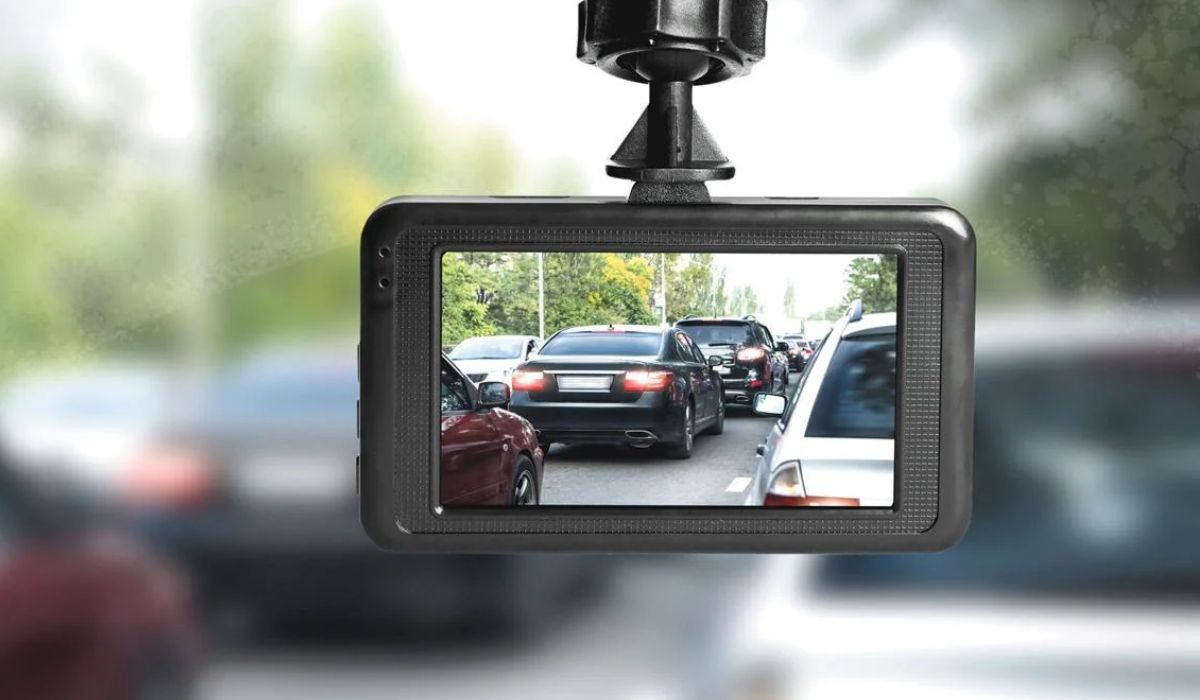
Best Battery Powered Dash Cams for Cars (No Wires, Fully Wireless Picks)
Not all “wireless” dash cams are truly battery powered—this guide breaks down what actually runs without wires and what doesn’t.
There’s a quiet shift happening among car owners—and it has nothing to do with 4K resolution or bigger screens. It’s about removing friction. Wires dangling from windshields, trim panels being pried open, and fuse boxes being tapped into have become deal-breakers for a growing number of drivers.
Battery powered dash cams with no wires exist to solve exactly that problem. These are cameras designed for people who want protection without commitment—no hardwiring, no permanent install, and no risk to factory electronics. Whether you lease your car, switch vehicles often, or simply don’t want cables running through your cabin, fully wireless dash cams offer a cleaner, faster, and more reversible solution.
But here’s the part most guides miss: not all battery operated dash cams behave the same in real-world use. Some excel at short daily drives but struggle with overnight parking. Others promise “wireless” but quietly rely on hidden cables. Understanding these differences is the key to choosing the right camera—and avoiding disappointment.
This guide focuses specifically on battery powered dash cams for cars with no wires, breaking down what actually matters beyond marketing claims.
Best Battery Powered Dash Cam No Wires (Top 5 Picks)
#1. ROVE R2-4K Dual Dash Cam (High-quality wired reference, not battery powered)
#2. Kingslim E2PRO Wireless Dash Cam (Compact dual-cam, wireless control but wired power)
#3. Kingslim O3 Pro 3-Channel Dash Cam (Full front-rear-inside coverage, wired system)
#4. ARIFAYZ Q3 1080P WiFi Dash Cam (Minimal front-only cam, simple wired setup)
#5. AKEEYO 1080P WiFi Dash Cam (Low-profile daily driver cam, app-controlled but not battery based)
Note: The models listed below are commonly searched as “wireless” dash cams. However, most rely on vehicle power rather than internal batteries. They’re included here to clearly show how wired systems differ from truly battery powered, no-wire dash cams.
Also Check:
Why Trust This Guide
Most dash cam roundups are built around spec sheets. This one isn’t.
This guide is structured around real-world usage patterns, not just advertised features. The research behind it includes:
- Owner feedback from long-term users who rely on battery dash cams daily
- Installation realities in sedans, SUVs, and windshields with steep rake angles
- Practical limitations of internal batteries in hot and cold climates
- How “no-wire” dash cams behave during parking incidents vs driving incidents
Instead of pushing products, the goal here is to help you understand how battery operated dash cams actually fit into daily car ownership, so when you do add products later, the picks feel logical—not forced.
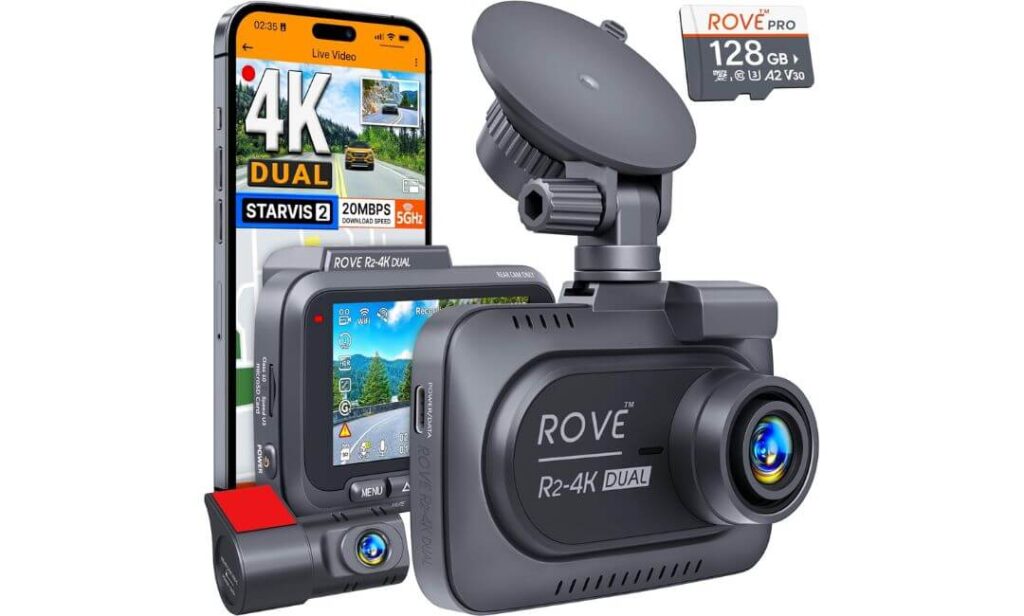
#1. ROVE R2-4K Dual Dash Cam (Front + Rear)
Key Features:
- True 4K front + 1080p rear recording with wide-angle coverage
- Sony STARVIS 2 sensor for strong night and low-light clarity
- Supercapacitor design for heat resistance and long-term reliability
- Requires wired power and hardwiring for full parking mode
At first glance, the ROVE R2-4K Dual feels like a spec-sheet heavyweight. True 4K front recording, a dedicated rear camera, Sony’s STARVIS 2 sensor, built-in GPS, and some of the fastest Wi-Fi transfer speeds available in a consumer dash cam. On paper, it delivers nearly everything a performance-focused buyer would ask for.
However, within the context of battery powered, no-wire dash cams, it’s important to be precise: this is not a fully wireless dash cam.
Power and Installation Reality
The ROVE R2-4K Dual operates on continuous vehicle power. It uses a supercapacitor, not an internal battery, which improves heat resistance and long-term durability—but it does not allow standalone operation.
- The front camera must remain connected via USB power
- The rear camera requires a long extension cable routed through the cabin
- Full parking protection requires a hardwire kit, sold separately
For drivers specifically trying to avoid wiring altogether—no trim removal, no cable routing, no fuse tapping—this places the ROVE outside the true “no wires” category.
Where the ROVE R2-4K Clearly Stands Out
Despite that limitation, the ROVE R2-4K excels in areas where most battery powered dash cams simply can’t compete.
The Sony STARVIS 2 sensor delivers noticeably cleaner night footage, with better contrast, reduced noise, and improved license-plate readability. This becomes especially apparent in low-light city driving and poorly lit highways.
Dual-channel recording is another major advantage. Most fully wireless dash cams are front-only due to battery constraints. The ROVE records both front and rear simultaneously, offering stronger coverage for rear-end impacts and parking lot incidents.
Its 5GHz Wi-Fi performance is also genuinely practical. File transfers are fast enough that downloading footage to a phone doesn’t feel like a chore—an often-overlooked pain point in daily use.
Finally, the supercapacitor design makes this dash cam far more tolerant of cabin heat than battery-based models, which can degrade faster in hot climates.
Parking Mode: What You Should Know
The ROVE R2-4K offers multiple parking mode options—timelapse, motion detection, and collision detection—but all of them require hardwired power. Without that connection, the camera cannot provide continuous or event-based parking coverage.
This makes it powerful for wired setups, but unsuitable for users specifically looking for battery-powered parking protection with zero cables.
Who This Dash Cam Is Best Suited For
The ROVE R2-4K Dual makes sense for drivers who prioritize:
- Maximum video clarity over installation simplicity
- Front and rear recording rather than portability
- Long-term reliability in hot environments
- Full-time recording with hardwired parking mode
It is less suitable for drivers who want:
- A truly wireless, battery operated dash cam
- Quick installation with no cable routing
- Easy transfer between multiple vehicles
Editor’s Context Note
Included for comparison: While not battery powered or wire-free, the ROVE R2-4K Dual highlights the performance gap between wired dash cam systems and fully wireless, battery-powered alternatives.
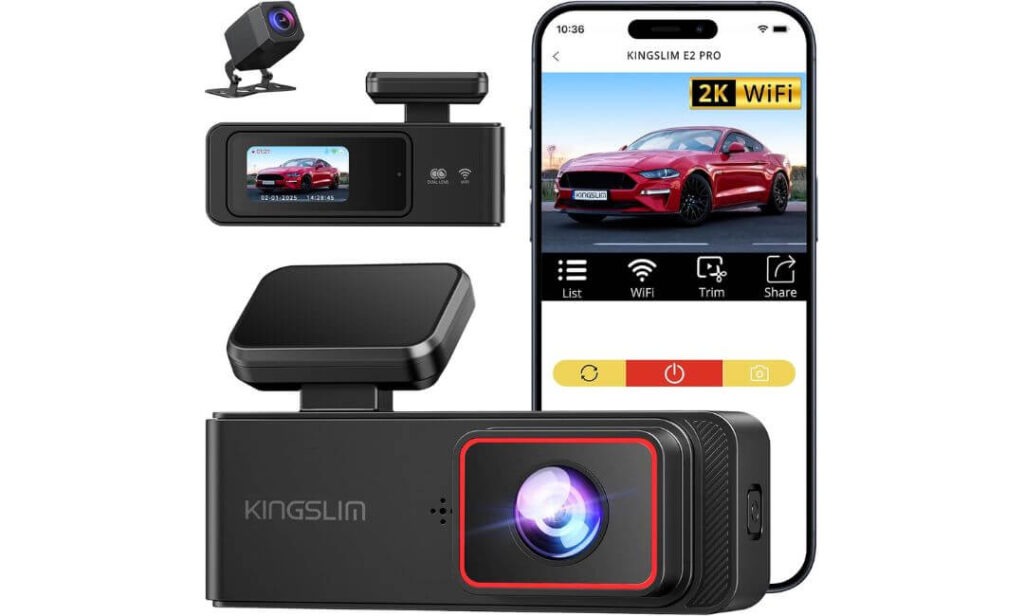
#2. Kingslim E2PRO Wireless Dash Cam (Front + Rear)
Key Features:
- 2K front + 1080p rear dual-camera setup
- App-based Wi-Fi control for settings and video access
- Compact design with no lithium battery (better heat tolerance)
- Wireless control, but still depends on wired power and rear cable
The Kingslim E2PRO is one of those dash cams that often shows up in searches for “wireless” or “no-wire” systems—and understandably so. It’s compact, discreet, app-controlled, and marketed as a mini dash cam with front and rear coverage. For drivers who want something that doesn’t dominate the windshield, its small footprint is immediately appealing.
But in the context of battery powered, no-wire dash cams, clarity matters more than labels.
What “Wireless” Means Here
The Kingslim E2PRO is wireless in connectivity, not in power. The built-in Wi-Fi allows you to control the camera, review footage, and download videos through a smartphone app without removing the unit from the windshield. That part works exactly as advertised.
However, the camera itself does not run on an internal battery. It uses a no-lithium, capacitor-based design, which means:
- It still requires power from the vehicle to operate
- There is no standalone recording once power is cut
- Rear camera functionality requires a physical cable connection
This distinction is important for readers specifically seeking a fully battery powered, cable-free dash cam.
Strengths That Make Sense for Certain Drivers
Where the Kingslim E2PRO earns its place is in practical, everyday usability rather than pure performance numbers.
The 2K front camera paired with a 1080p rear camera delivers solid daytime clarity, with a wide 170-degree front field of view that captures adjacent lanes well. The rear camera, while wired, provides useful coverage for rear impacts—something many compact systems skip entirely.
Its 1.5-inch built-in screen is intentionally minimal. It’s not meant for constant viewing, but it’s enough for quick framing checks and basic playback without relying entirely on the app.
Heat management is another quiet advantage. By eliminating lithium batteries altogether, the E2PRO avoids common long-term issues like battery swelling and thermal shutdowns—especially relevant for cars parked outdoors in warmer climates.
Parking Monitoring: The Real Limitation
Kingslim offers two parking monitoring modes:
- G-sensor impact detection
- Time-lapse recording
Both sound appealing, but there’s a critical caveat: a hardwire kit is required for true 24/7 parking monitoring. Without it, parking protection is limited and dependent on external power.
For users hoping for battery-based parking recording with no wiring involved, this model does not meet that expectation.
Who This Dash Cam Fits Best
The Kingslim E2PRO works well for drivers who:
- Want a compact, low-profile dash cam that blends into the windshield
- Prefer app-based control without removing the camera
- Value heat resistance over internal battery operation
- Are okay with wired power but want a clean, minimal setup
It’s less suitable for drivers who:
- Specifically want a battery powered dash cam with no cables
- Expect parking recording without hardwiring
- Plan to move the camera frequently between vehicles
Editor’s Context Note
Included for comparison: While often labeled as “wireless,” the Kingslim E2PRO relies on vehicle power and rear-camera wiring. It helps illustrate the difference between wireless connectivity and truly battery powered, no-wire dash cam systems.
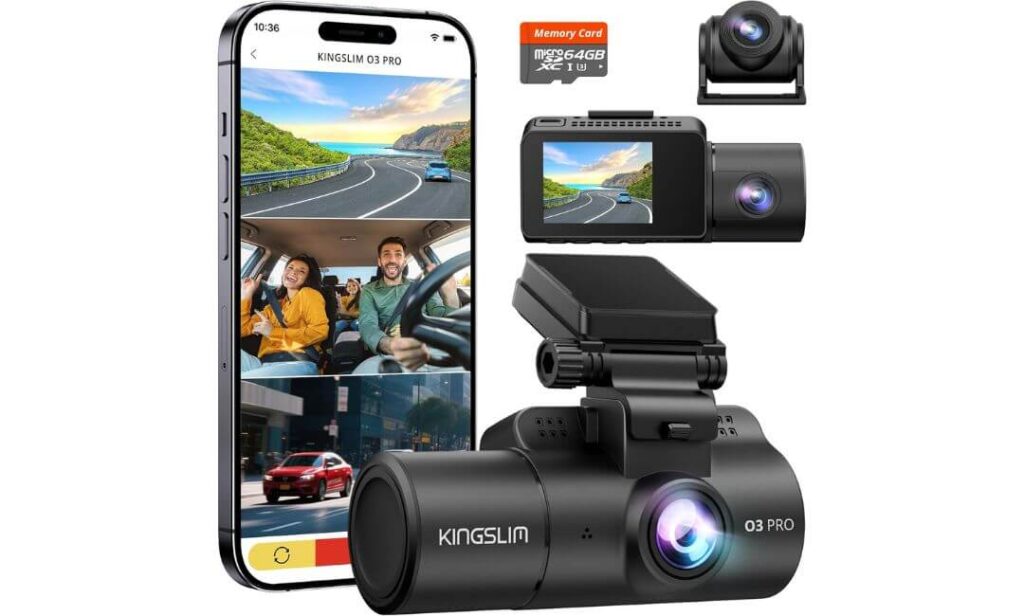
#3. Kingslim O3 Pro 3-Channel Dash Cam (Front + Rear + Inside)
Key Features:
- 2.5K front + rear + interior three-channel recording
- Auto IR night vision for clear cabin footage in darkness
- Wide-angle coverage to reduce blind spots
- Multi-camera system that requires wired installation and power
The Kingslim O3 Pro takes a very different approach compared to compact dual-camera dash cams. Instead of focusing on minimalism, it leans into coverage. With a three-channel setup—front, rear, and interior—it’s clearly designed for drivers who want visibility in every direction, not just the road ahead.
Within a guide focused on battery powered, no-wire dash cams, this immediately raises an important question: how wireless is it, really?
Understanding the “Wireless” Claim
Like many multi-channel dash cams, the O3 Pro is wireless in control, not in power. The built-in 5GHz Wi-Fi allows fast app access, video downloads, and settings changes without touching the camera itself. From a usability standpoint, this works smoothly and feels modern.
Power, however, still comes from the vehicle:
- The main unit requires a continuous USB power connection
- Rear and interior cameras are physically wired into the system
- 24-hour parking monitoring requires a hardwire kit
There is no internal battery designed for independent operation once the car is turned off. That distinction is crucial for readers specifically searching for fully battery powered, cable-free dash cams.
Where the O3 Pro Delivers Real Value
The biggest strength of the Kingslim O3 Pro is situational awareness.
The 2.5K front camera captures strong daytime detail with a wide 170-degree field of view, while the interior and rear channels cover blind spots most dash cams ignore. For ride-share drivers, fleet vehicles, or families who want cabin visibility, this setup adds a layer of documentation that front-only systems simply can’t offer.
Low-light performance is another area where the O3 Pro stands out. The F1.4 aperture, combined with HDR and automatic infrared night vision, allows the interior camera to record usable footage even in complete darkness. This isn’t just a spec-sheet feature—it’s practical for night driving and parked incidents involving occupants or break-ins.
Parking Mode: Power-Dependent by Design
Kingslim advertises 24-hour parking protection through 1FPS time-lapse recording, but it’s important to note that this capability depends entirely on hardwired power. Without it, the camera cannot maintain continuous monitoring once the vehicle is off.
This reinforces a key theme of this guide: multi-camera systems prioritize coverage and detail, not wire-free independence.
Who This Dash Cam Makes Sense For
The Kingslim O3 Pro is a strong option for drivers who:
- Want full front, rear, and interior coverage
- Drive professionally (ride-share, taxi, fleet use)
- Value interior night vision and cabin documentation
- Are comfortable with a wired installation
It is not ideal for drivers who:
- Want a truly battery powered dash cam with no wiring
- Prefer quick removal or frequent vehicle swapping
- Expect parking protection without hardwiring
Editor’s Context Note
Included for comparison: The Kingslim O3 Pro emphasizes multi-channel coverage and interior visibility, but relies on wired power and accessories. It highlights how added cameras increase protection at the cost of true wireless, battery-powered operation.
#4. ARIFAYZ Q3 1080P WiFi Dash Cam (Front Only)
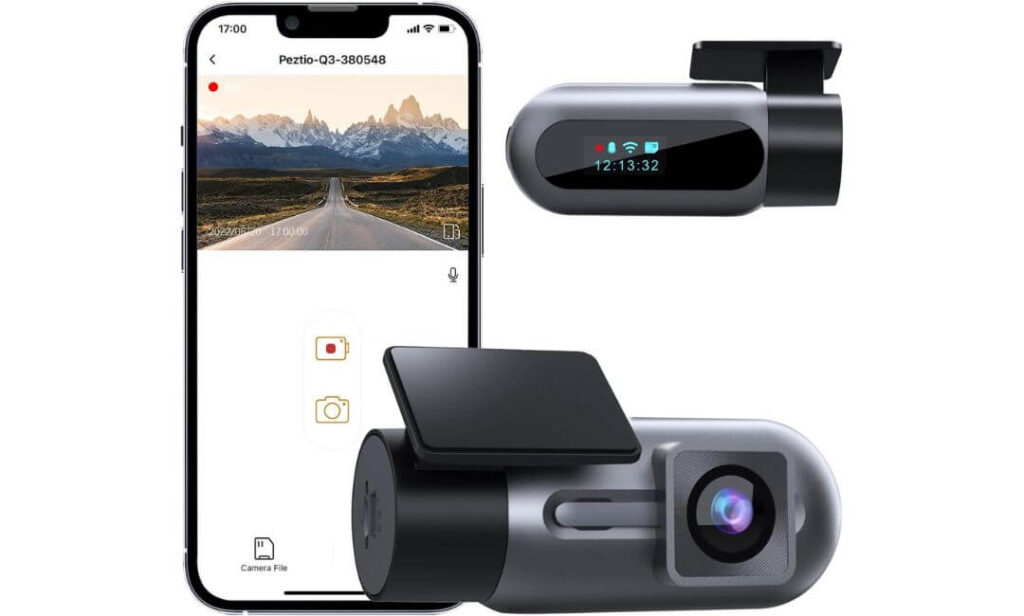
Key Features:
- Front-only 1080p recording with wide 150° field of view
- Built-in Wi-Fi for app control and quick video downloads
- Ultra-compact, low-profile design for discreet mounting
- Parking mode and recording depend on wired power or hardwiring
The ARIFAYZ Q3 is aimed squarely at drivers who want a simple, low-profile front dash cam without the bulk, screens, or complex wiring associated with larger systems. It’s compact, discreet, and intentionally basic—designed to disappear behind the rear-view mirror rather than draw attention to itself.
In a guide focused on battery powered, no-wire dash cams, this model sits on the edge of that category, which makes honest positioning especially important.
What It Does — and What It Doesn’t
The ARIFAYZ Q3 includes built-in Wi-Fi for app control, letting you review footage, adjust settings, and download clips directly to your phone. From a daily usability standpoint, this removes the need to touch the camera after installation.
Power, however, still comes from the car:
- The camera relies on a USB power cable
- There is no internal battery designed for independent recording
- Parking mode requires a hardwire kit, sold separately
So while installation is straightforward, this is not a true battery powered, cable-free dash cam.
Practical Strengths in Everyday Driving
Where the Q3 makes sense is in its no-nonsense approach.
The 1080p front camera delivers reliable daytime clarity with a 150-degree field of view that captures enough of the road without excessive edge distortion. Night footage is aided by a combination of WDR processing and a light-sensitive lens, which performs adequately for city driving and lit highways.
Its compact size is a genuine advantage. The camera doesn’t obstruct the driver’s view, and once installed, it’s easy to forget it’s even there—something many drivers prefer over larger, screen-heavy units.
Heat resistance is another quiet win. With a design rated to handle high cabin temperatures, the Q3 is less prone to the swelling and shutdown issues that plague cheaper battery-based models in hot weather.
Parking Mode: Expectations vs Reality
The Q3 advertises 24-hour parking monitoring, but this feature is entirely dependent on hardwired power. Without a hardwire kit, the camera cannot provide continuous or event-based parking coverage once the engine is off.
For users specifically searching for battery-backed parking protection with no wiring involved, this is a key limitation.
Who This Dash Cam Fits Best
The ARIFAYZ Q3 works well for drivers who:
- Want a small, discreet front-only dash cam
- Prefer app-based access without removing the camera
- Value easy installation over advanced features
- Need basic incident recording for daily driving
It’s less suitable for drivers who:
- Want a fully battery powered dash cam with no wires
- Expect parking protection without hardwiring
- Need rear or interior camera coverage
Editor’s Context Note
Included for comparison: The ARIFAYZ Q3 offers simplicity and a clean, low-profile install, but relies on vehicle power and optional hardwiring. It highlights the difference between compact wired dash cams and truly battery powered, no-wire solutions.
#5. AKEEYO 1080P WiFi Dash Cam (Front Only)
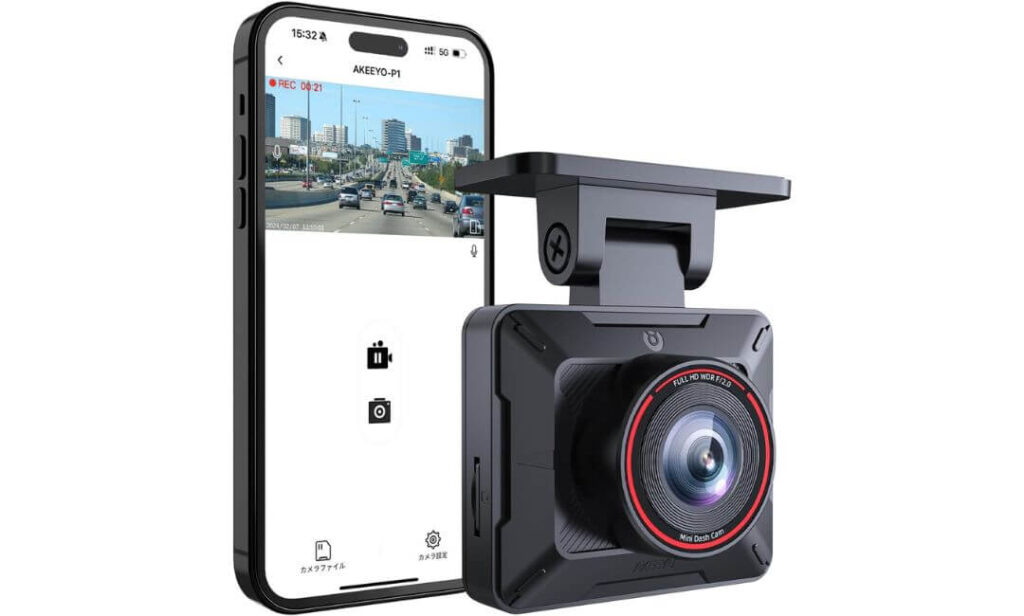
Key Features:
- 1080p front camera optimized for daily driving evidence
- App-controlled Wi-Fi access without removing the camera
- Small, hidden design that doesn’t block driver view
- No internal battery; operates only when powered by the vehicle
The AKEEYO 1080P dash cam is designed for drivers who want the simplest possible front-facing camera with app-based control and minimal visual clutter. It’s small, lightweight, and intentionally stripped down—focused on recording the road without turning the windshield into a gadget display.
Within a guide centered on battery powered, no-wire dash cams, this model highlights a common point of confusion in the market.
“Wireless” Here Refers to Control, Not Power
The AKEEYO dash cam connects to your phone via built-in Wi-Fi, allowing you to review footage, adjust settings, and download clips directly through the app. Once installed, you rarely need to interact with the physical camera itself.
Power, however, still comes from the vehicle:
- The camera must be connected to a USB power cable to operate
- There is no internal battery for standalone recording
- Parking mode requires a hardwire kit, sold separately
This means it does not function as a true battery powered, cable-free dash cam.
Where the AKEEYO Makes Practical Sense
For daily driving documentation, the AKEEYO performs exactly as intended.
The 1080p front camera captures clean daytime footage with a 140-degree field of view that balances coverage and clarity without excessive edge distortion. Night recording is supported by WDR processing, which helps retain usable detail under street lighting and headlights.
Its mini, hidden design is one of its biggest advantages. Mounted properly, it stays out of your line of sight and avoids drawing attention—ideal for drivers who prefer a low-profile setup.
The camera’s heat resistance is another strength. Designed to operate in extreme temperatures, it avoids the swelling and shutdown risks commonly associated with low-quality internal batteries.
Parking Mode: Power-Dependent by Design
While AKEEYO advertises 24-hour parking protection, this feature only works when the camera is hardwired to the vehicle’s electrical system. Without that connection, the dash cam cannot monitor the car once the engine is off.
This distinction is important for buyers who expect battery-backed parking recording without any wiring involved.
Who This Dash Cam Is Best For
The AKEEYO 1080P dash cam suits drivers who:
- Want a discreet, front-only camera with app control
- Prefer a simple setup without screens or extra cameras
- Are comfortable using vehicle power or hardwiring
- Need basic evidence recording for everyday driving
It’s not the right fit for drivers who:
- Want a fully battery powered dash cam with no wires
- Expect parking protection without a hardwire kit
- Plan to move the camera frequently between vehicles
Editor’s Context Note
Included for comparison: The AKEEYO 1080P dash cam emphasizes simplicity and a hidden install, but relies on wired power and optional hardwiring. It reinforces the difference between app-controlled wired dash cams and genuinely battery powered, no-wire alternatives.
Battery Powered vs “Wireless” Dash Cams: What Most Buyers Get Wrong
If you’ve gone through the dash cams listed above and felt a bit confused, that’s completely normal. The dash cam market uses terms like wireless, no wires, and battery powered almost interchangeably—even though they mean very different things in real-world use.
Most dash cams marketed as “wireless” are only wireless when it comes to connectivity. You can access footage through an app, change settings, or download clips without touching the camera. But when it comes to power, many still rely on USB cables, rear-camera wiring, or hardwire kits.
True battery powered dash cams are built around a different idea. Instead of running continuously, they focus on event-based recording, portability, and independence from the vehicle’s electrical system. That’s why they’re often smaller, front-only, and designed for flexibility rather than 24/7 surveillance.
This difference matters more than specs. Choosing between wired and battery powered dash cams isn’t about which one is “better”—it’s about which one matches how you actually use your car.
What to Look For in a Battery Powered Dash Cam (No Wires)
Choosing a fully wireless dash cam is less about raw specs and more about usage alignment. These are the factors that separate a genuinely useful camera from one that ends up in the glove box.
This section focuses on what actually defines a true battery powered, no-wire dash cam—not what the box claims.
Battery Capacity vs Recording Logic
Internal batteries aren’t designed to record nonstop for hours. High-quality battery powered dash cams use event-based logic—recording during driving, impacts, or motion triggers. Understanding this behavior prevents unrealistic expectations.
True “No-Wire” Design
Some models market themselves as wireless but still require:
- USB charging cables left semi-permanently
- External battery packs
- Hardwiring for parking mode
A true no-wire dash cam should function independently for meaningful periods without relying on vehicle power.
Parking Protection Reality
Battery dash cams approach parking mode differently. Instead of continuous surveillance, they rely on:
- Impact detection
- Motion bursts
- Time-limited standby modes
Knowing this upfront helps you decide if a battery powered solution matches how and where you park.
Heat Management Inside the Cabin
Cars are brutal environments. A battery dash cam must handle:
- Heat soak when parked in the sun
- Cold starts in winter
- Battery degradation over time
Thermal tolerance and smart shutdown behavior matter more here than raw resolution numbers.
Mounting Stability Without Wires
Since there’s no cable to stabilize the unit, mount design and adhesive quality become critical. Poor mounting equals missed footage—regardless of camera quality.
Who Battery Powered Dash Cams Are Actually For
Fully wireless dash cams aren’t for everyone—and that’s okay.
They make the most sense for:
- Lease holders who can’t modify trim or wiring
- Ride-share drivers using multiple vehicles
- City drivers who park in monitored or semi-secure areas
- Owners who value clean interiors over always-on surveillance
If your priority is 24/7 parking coverage in an open lot, a hardwired system may still be the better tool. This guide exists to help you recognize that difference early.
Common Misconceptions About Battery Operated Dash Cams
One reason users feel disappointed is because expectations don’t match design intent.
- “Battery powered means it records all night”
It doesn’t—and it’s not supposed to. - “Wireless means no maintenance”
Battery cameras still need periodic charging or removal.
“Smaller size means weaker performance”
Many battery dash cams trade size for efficiency, not quality.
Understanding these realities upfront leads to smarter buying decisions.
Do battery powered dash cams drain the car battery?
No. Fully wireless dash cams operate independently and do not draw power from the vehicle once charged.
How long do battery operated dash cams last on a single charge?
It depends on recording logic. Most are designed for days of standby with short recording bursts, not continuous filming.
Are no-wire dash cams legal to use?
In most regions, yes—provided they don’t obstruct the driver’s view. Always check local windshield-mount laws.
Can battery powered dash cams survive summer heat?
Quality models use heat-resistant batteries and smart shutdown features. Cheap units often fail here first.
Is video quality compromised in wireless dash cams?
Not necessarily. Modern battery dash cams prioritize efficient encoding rather than raw bitrates.
Final Thoughts: Choosing Convenience Without Compromise
Battery powered dash cams for cars with no wires aren’t a downgrade—they’re a different philosophy. They trade permanence for flexibility, and constant power for intelligent recording.
If you value clean installs, easy transfers between vehicles, and minimal interference with factory wiring, a fully wireless dash cam can be the most practical choice you make for your car’s security.
When chosen with the right expectations, these cameras don’t feel like a compromise at all—they feel intentional.


