
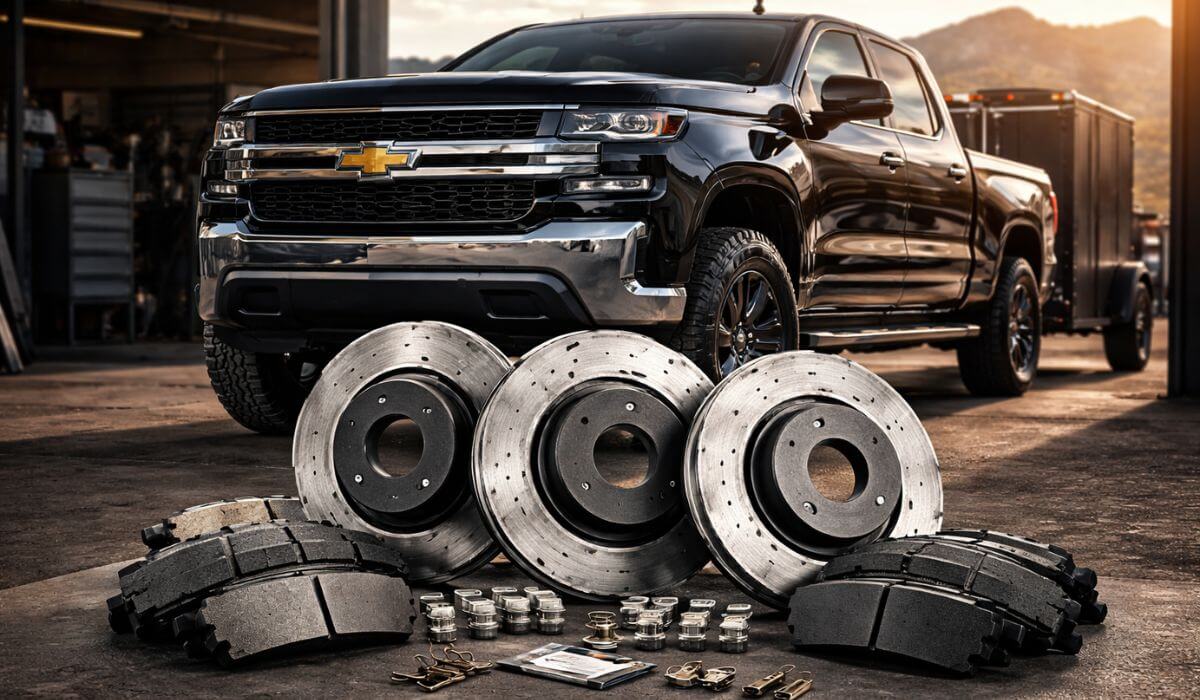
6 Best Brake Pads for Chevy Silverado 1500 (2026 Towing, Daily & Heavy-Duty Picks)
If you drive a Chevy Silverado 1500 long enough, one thing becomes obvious fast — factory brake pads don’t last, and they definitely don’t love towing.
Whether you’re hauling a trailer, running oversized tires, or just dealing with daily stop-and-go traffic, the stock braking setup starts fading way sooner than it should. Heat builds up, pedal feel gets soft, dust coats your wheels, and that confidence you once had while braking with a loaded truck? Gone.
That’s exactly why most Silverado owners eventually start looking for a serious brake pad upgrade — something that can handle truck weight, towing stress, and real-world abuse without squealing or fading out.
After digging through owner feedback, real truck forums, mechanic installs, and long-term wear reports, two options kept coming up again and again.
The Power Stop Truck & Tow Brake Pads stand out if your Silverado sees frequent towing or hauling duty. They’re built with carbon-fiber ceramic compound, designed to handle higher heat ranges, reduce brake fade under load, and deliver stronger bite compared to OEM pads — especially noticeable when braking downhill with a trailer.
Right behind that, the Akebono ACT1092 ProACT Ultra-Premium Ceramic Pads are a favorite for daily drivers who still want premium stopping power without noise or dust headaches. They’re known for ultra-smooth braking response, long pad life, and one of the cleanest ceramic formulas you can run on a full-size truck.
Of course, not every driver uses their Silverado the same way.
Some want maximum towing control. Others want quiet daily braking. And a few want performance-grade bite for lifted or highway-driven builds.
So instead of a one-size-fits-all pick, we broke down the six best brake pads for Chevy Silverado 1500 based on real truck use — towing, daily driving, and heavy-duty braking included.
Best Brake Pads for Silverado 1500 for Heavy Loads, Highway Driving & City Use
#1. Power Stop Front Truck & Tow Carbon-Fiber Ceramic Brake Pads
Best Heavy-Duty Towing Brake Pads for Silverado 1500
#2. Akebono ACT1092 ProACT Ultra-Premium Ceramic Disc Brake Pad Kit
Best OEM-Style Premium Ceramic Brake Pads for Daily Driving
#3. Bosch BC1092 QuietCast Premium Ceramic Disc Brake Pad Set (Front)
Best Quiet & Low-Dust Ceramic Brake Pads Upgrade
#4. EBC Brakes Yellowstuff 4000 Series Street Performance Brake Pads – DP41630R
Best Performance Brake Pads for Aggressive Truck Driving
#5. SCITOO Front Semi-Metallic & Rear Ceramic Brake Pads Kit (8-Piece Set)
Best Budget Front & Rear Brake Pads Replacement Kit
#6. EBC Brakes Yellowstuff Performance Brake Pads – DP42295R
Best High-Heat & Heavy-Load Performance Brake Pads
Expert Tip From Real Silverado Ownership
How We Chose These Brake Pads for Silverado 1500
Every pad on this list wasn’t picked from a spec sheet — it was filtered through real truck use.
We looked at how these pads perform on full-size GM trucks where weight, wheel size, and towing stress actually push braking systems to their limits.
First came heat handling. Silverado trucks — especially when towing — generate far more brake temperature than midsize vehicles. Pads that couldn’t manage fade resistance or downhill load braking didn’t make the cut.
Next was compound performance. Carbon-fiber ceramic, premium ceramic, and performance semi-metallic blends were prioritized because they hold bite longer and recover faster after repeated stops.
We also factored in real owner feedback — long-term wear reports, noise complaints, dust levels, and rotor compatibility. Pads that stopped well but destroyed rotors or squealed under light braking were ruled out.
Fitment consistency mattered too. Every option here is known to seat properly on Silverado 1500 platforms without uneven wear or install headaches.
And finally — use-case spread.
Not every Silverado tows daily. So the list balances heavy-duty towing pads, quiet daily ceramics, performance street compounds, and budget full-axle kits — covering how trucks are actually driven in the real world.
The result isn’t a random roundup — it’s a purpose-built selection designed around how Silverado owners really brake.
#1. Power Stop Front Truck & Tow Carbon-Fiber Ceramic Brake Pads
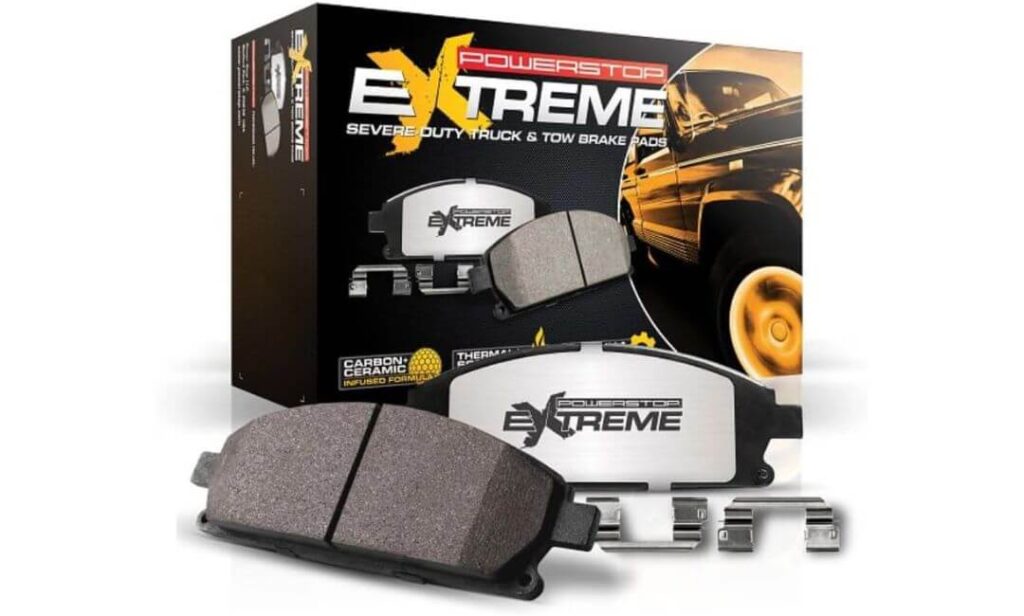
Key Specs:
- Pad Compound: Carbon-Fiber Ceramic
- Brake Position: Front
- Fitment: 2007–2019 Chevy Silverado 1500 + Full-Size GM Trucks/SUVs
- Friction Output: ~17% Higher Than OE Pads
- Hardware Included: Stainless Steel Kit + Brake Grease
- Noise Control: Chamfered & Slotted w/ Premium Shims
- Backing Plate: Powder-Coated Rust-Resistant Steel
If your Silverado spends weekends pulling trailers or weekdays hauling jobsite weight, stock brake pads don’t hold confidence for long. The moment heat builds up, pedal feel softens — and that’s where these start making sense.
Power Stop’s Truck & Tow compound is built around load braking. The carbon-fiber ceramic formula bites harder than OEM pads, but what stands out more is how consistent it feels once temperatures rise. Whether you’re slowing down a loaded bed or controlling speed downhill with a trailer, braking stays firm instead of fading out halfway through the stop.
Daily driving doesn’t get punished either. Despite being a heavy-duty pad, noise isn’t an issue. The thermal-scorched surface helps them bed in quicker, while chamfered edges and stainless shims keep squeal away during light braking. Dust levels stay noticeably lower than factory pads too — so you’re not cleaning wheels every few days just because you upgraded stopping power.
Install is straightforward, especially since the kit comes with stainless hardware and brake lubricant. Small details like the powder-coated backing plate matter more than people think — it resists corrosion, holds pad structure longer, and helps extend service life in wet or salted road conditions.
Put simply, these are built for trucks that brake under weight — not trucks that just commute empty.
What Makes It Stand Out
- Carbon-fiber ceramic compound built for towing heat loads
- ~17% higher friction than OEM pads
- Stronger bite under trailer or hauling weight
- Thermal-scorched surface for faster break-in
- Chamfered & slotted design reduces noise
- Low dust ceramic performance
- Stainless hardware + grease included
- Rust-resistant powder-coated backing plate
Best For
Silverado 1500 owners who tow trailers, haul equipment, or run heavier wheel setups and need front brake pads that won’t fade once heat builds up — especially during highway towing or downhill braking.
Bottom Line
The difference shows up the first time you brake under load — firmer pedal response, steadier stopping control, and far less dust than factory pads.
They’re not meant for light commuter duty — they’re built for Silverados that actually work, tow, and carry weight regularly. And in that role, they hold braking confidence exactly where stock pads start giving up.
#2. Akebono ACT1092 ProACT Ultra-Premium Ceramic Disc Brake Pad Kit
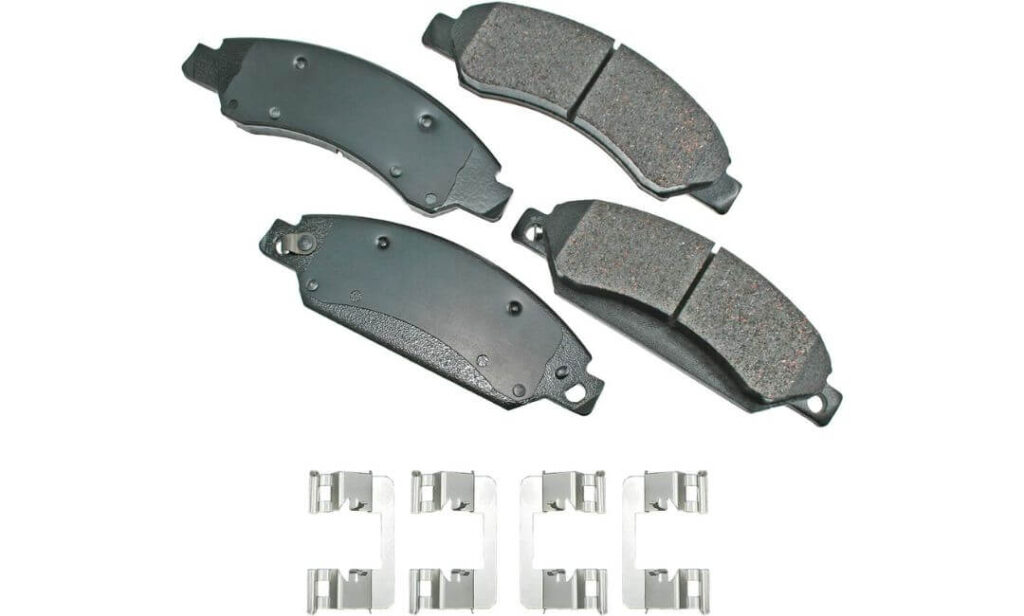
Key Specs:
- Pad Compound: Ultra-Premium Ceramic
- Brake Position: Rear
- Fitment Type: Vehicle Specific
- Dust Level: Ultra-Low
- Noise Control: OEM-Grade Shim Technology
- Build Origin: Made in USA
- Use Focus: Daily Driving / Street Comfort
If your Silverado spends most of its life unloaded — commuting, highway cruising, or city driving — rear brake performance isn’t about aggressive bite… it’s about smooth control and long-term comfort. That’s exactly where the Akebono ACT1092 starts making sense.
Akebono supplies ceramic pads to several OEM manufacturers, so the braking feel here is very close to what trucks come with from factory — just cleaner and quieter. Pedal modulation stays smooth, rear braking engagement feels balanced, and there’s no harsh grab when coming to gradual stops. Compared to some semi-metallic or performance pads, these feel more refined than aggressive — which daily drivers usually prefer.
Dust output is where owners notice the biggest difference. Wheels stay cleaner for longer, and that annoying black film you get with cheaper pads is almost nonexistent. Noise control is equally solid — no squeaks reversing out of driveways, no chirping at traffic lights. If you’ve ever run budget ceramics or entry-level pads, the refinement gap is obvious within the first week.
Now to be clear — these aren’t built for extreme towing loads. Rear pads rarely carry the majority of braking force anyway, and heavy hauling trucks usually pair stronger front compounds like PowerStop’s Truck & Tow or performance sets from EBC up front. But for rear axle stability, daily braking balance, and long pad life — Akebono’s ceramic formula is hard to beat.
They’re the kind of pads you install once… and forget about for years.
What Makes It Stand Out
- OEM-grade ceramic compound refinement
- Ultra-low brake dust output
- Virtually noise-free braking
- Smooth rear braking modulation
- Long pad lifespan vs budget ceramics
- Made in USA manufacturing quality
- Direct-fit Silverado rear compatibility
Best For
Silverado 1500 owners focused on daily driving comfort — especially those who want quiet rear braking, cleaner wheels, and long-lasting ceramic pads rather than heavy-duty towing performance.
Bottom Line
If front pads handle the workload, rear pads should handle refinement — and that’s exactly what these do. Smooth engagement, minimal dust, and near-silent braking make them an easy upgrade over factory rear pads without changing how the truck feels on everyday drives.
#3. Bosch BC1092 QuietCast Premium Ceramic Disc Brake Pad Set (Front)
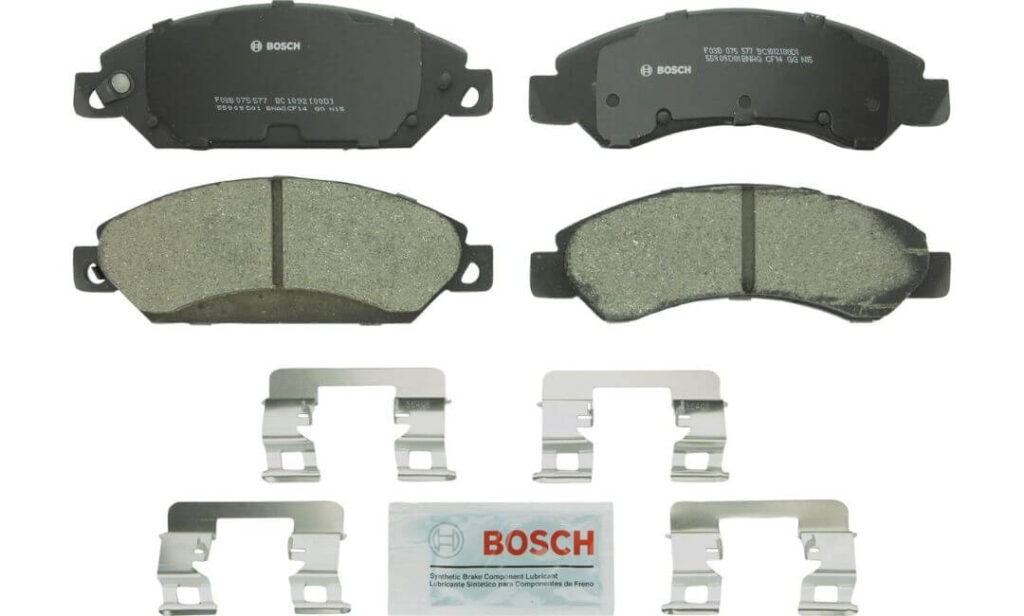
Key Specs:
- Pad Compound: Premium Ceramic
- Brake Position: Front
- Fitment: 2005–2006 Chevy Silverado 1500 (Front Axle) + Select GM Full-Size SUVs/Trucks
- Shim Tech: OE-Style Multilayer Rubber Core Shims
- Backing Plate: Powder-Coated Rust-Resistant Steel
- Hardware: Installation Kit + Synthetic Lubricant Included
- Noise Level: Low to Minimal
If your goal isn’t aggressive towing bite but clean, quiet, everyday braking — Bosch QuietCast pads sit right in that sweet spot between OEM feel and aftermarket refinement.
The ceramic friction compound here is tuned for balanced stopping rather than harsh initial grab. Pedal pressure builds predictably, braking feels controlled, and front-end response stays smooth in traffic or highway slowdowns. Compared to entry-level ceramics, these hold stopping consistency better once heat builds during repeated braking.
Noise insulation is where Bosch leans heavily into OE engineering. The multilayer rubber core shims aren’t just marketing — they actually dampen vibration between pad and caliper, which is what causes most brake squeal. Cold starts, reverse rolls, stoplights — braking stays composed without that high-pitched chatter cheaper pads develop over time.
Dust output stays impressively low too. If you’ve run factory semi-metallic pads before, you’ll immediately notice cleaner wheels within the first week. The powder-coated backing plate also helps prevent rust buildup — especially useful if the truck sees rain, snow, or salted roads.
While they can handle occasional towing, they’re better positioned as a daily driving front upgrade rather than a dedicated truck & tow compound like PowerStop’s Z36 or performance-focused EBC sets. Think refined stopping power — not heavy-load aggression.
What Makes It Stand Out
- OE-engineered ceramic friction formula
- Multilayer rubber core shims reduce brake noise
- Smooth, predictable front braking response
- Low dust output vs factory pads
- Powder-coated backing plate resists corrosion
- Hardware kit + lubricant included
- Direct-fit front axle installation
Best For
Silverado 1500 owners who want a quiet, low-dust front brake upgrade for daily driving — with OEM-like pedal feel but cleaner operation and longer pad life than stock replacements.
Bottom Line
If you’re not towing heavy every weekend and just want dependable, noise-free braking up front, QuietCast pads deliver that factory-refined feel — only cleaner, smoother, and longer lasting than what came on the truck.
#4. EBC Brakes Yellowstuff 4000 Series Street Performance Brake Pads – DP41630R
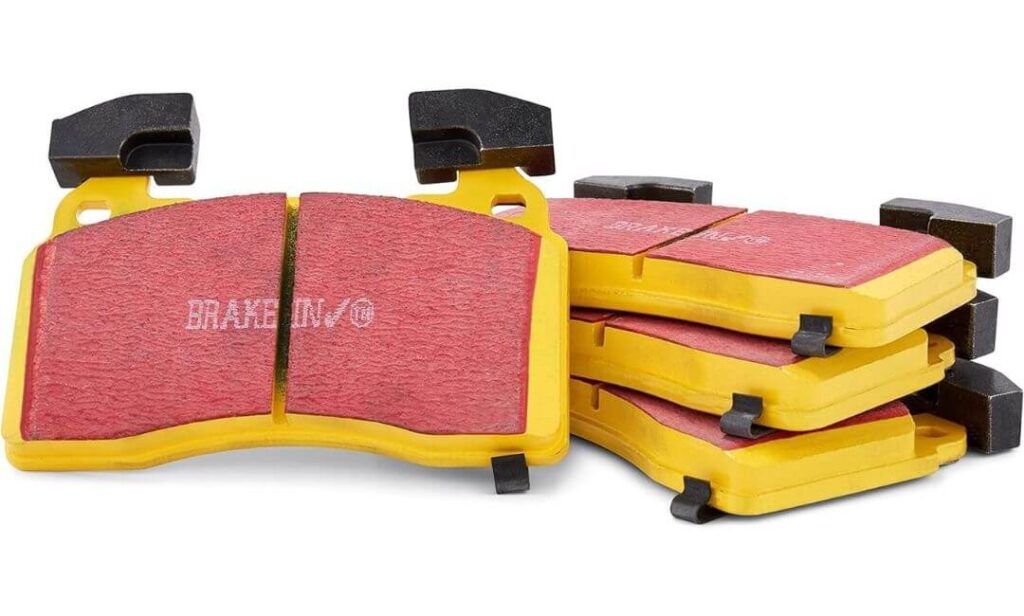
Key Specs:
- Pad Compound: High-Friction Aramid Performance Blend
- Brake Position: Rear
- Use Type: Street + Performance Driving
- Heat Range: High-Temperature Fade Resistant
- Cold Bite: Effective From Cold Start
- Dust Level: Moderate (OEM-Like)
- Fitment: Chevy Silverado 1500 + Full-Size GM Platforms
If your Silverado isn’t stock anymore — bigger wheels, leveled stance, maybe tuned or highway-pushed — rear braking balance starts mattering more than most owners realize. That’s where Yellowstuff pads come into play.
EBC built this compound off race-derived friction formulas, so the braking character feels noticeably more aggressive than OEM ceramics. The rear axle engagement is sharper, especially during high-speed slowdowns where factory pads tend to feel passive. When you brake hard from highway speeds, the rear stays more planted instead of relying entirely on front bias.
What surprises most drivers is cold performance. Despite being a performance compound, they don’t need heat to start working. First stop of the day still feels responsive — no “dead pedal” sensation you get with track-only pads. But once temperatures climb, braking stability holds far better than daily ceramics like Akebono or Bosch.
They’re not designed around towing loads — that’s more front-pad territory anyway — but for aggressive street driving, lifted truck builds, or performance setups, they balance the rear braking system much better. Dust levels sit around OEM range, and slight noise under hard braking isn’t unusual — tradeoffs that come with higher friction output.
This is the kind of rear pad you run when your truck drives harder than average.
What Makes It Stand Out
- Race-developed high-friction compound
- Stronger rear braking at high speeds
- Fade resistant under heat buildup
- Effective bite even from cold starts
- Street + performance dual usability
- Improves braking balance on modified trucks
Best For
Silverado 1500 owners running performance builds, larger wheels, or aggressive highway driving who want stronger rear braking support rather than comfort-focused ceramic pads.
Bottom Line
If daily comfort is the goal, ceramics win — but if your Silverado brakes hard, runs fast, or carries performance upgrades, Yellowstuff rears add the kind of high-speed stopping stability factory pads simply don’t deliver.
#5. SCITOO Front Semi-Metallic & Rear Ceramic Brake Pads Kit (8-Piece Set)
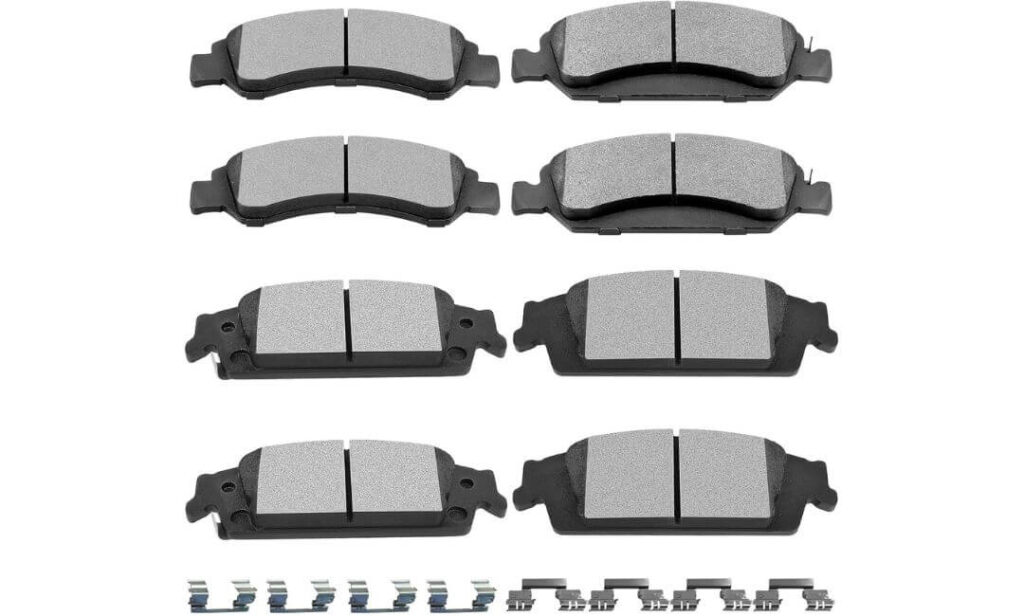
Key Specs:
- Pad Type: Front Semi-Metallic + Rear Ceramic
- Kit Coverage: Front & Rear (8 Pads Total)
- Fitment: 2014–2019 Chevy Silverado 1500 + Full-Size GM Trucks/SUVs
- Break-In: Scorch Friction Treated Surface
- Noise Control: Anti-Vibration Gasket Shims
- Install Type: Direct Bolt-On Replacement
- Use Case: Daily Driving + Light Towing
- Pad Type: Front Semi-Metallic + Rear Ceramic
- Kit Coverage: Front & Rear (8 Pads Total)
- Fitment: 2014–2019 Chevy Silverado 1500 + Full-Size GM Trucks/SUVs
- Break-In: Scorch Friction Treated Surface
- Noise Control: Anti-Vibration Gasket Shims
- Install Type: Direct Bolt-On Replacement
- Use Case: Daily Driving + Light Towing
If you’re replacing pads on both axles at once, cost stacks up fast — and that’s usually where most Silverado owners start looking at full kits instead of piecing front and rear separately.
This SCITOO setup takes a balanced approach: semi-metallic compound up front for stronger braking force, paired with ceramic pads in the rear for quieter operation. That mix actually works well for trucks that see mixed use — daily commuting during the week, occasional hauling or highway loads on weekends.
Front semi-metallic pads handle heat better than budget ceramics, which helps during heavier stops or trailer pulls. Meanwhile, the ceramic rears keep noise and dust under control so the truck doesn’t feel harsh during normal driving. It’s not a performance setup — but it’s a practical one.
Break-in time is shorter too thanks to the scorch friction treatment. Pads seat faster, initial braking feels more consistent, and you don’t go through that long “soft braking” phase cheaper pads often have. Anti-vibration gasket shims help reduce noise, though like most budget kits, some light squeal over time isn’t unheard of.
Installation is straightforward — direct fit, no modifications, full 8-piece coverage in one box. For owners wanting a complete refresh without overspending on premium brands, that convenience alone makes a difference.
What Makes It Stand Out
- Full front + rear 8-pad replacement kit
- Semi-metallic front pads for stronger braking
- Ceramic rear pads for quieter daily driving
- Scorch-treated surface for faster break-in
- Anti-vibration shims reduce brake noise
- Direct factory-fit installation
- Balanced performance for mixed truck use
Best For
Silverado 1500 owners looking for an affordable full brake pad replacement — especially those who want stronger front braking for light towing but quieter rear operation for daily driving comfort.
Bottom Line
It’s not built to outperform premium towing pads or performance compounds — but for the price, coverage, and balanced front-rear setup, it delivers exactly what most truck owners need: dependable braking without overspending on a full axle refresh.
#6. EBC Brakes Yellowstuff Performance Brake Pads – DP42295R
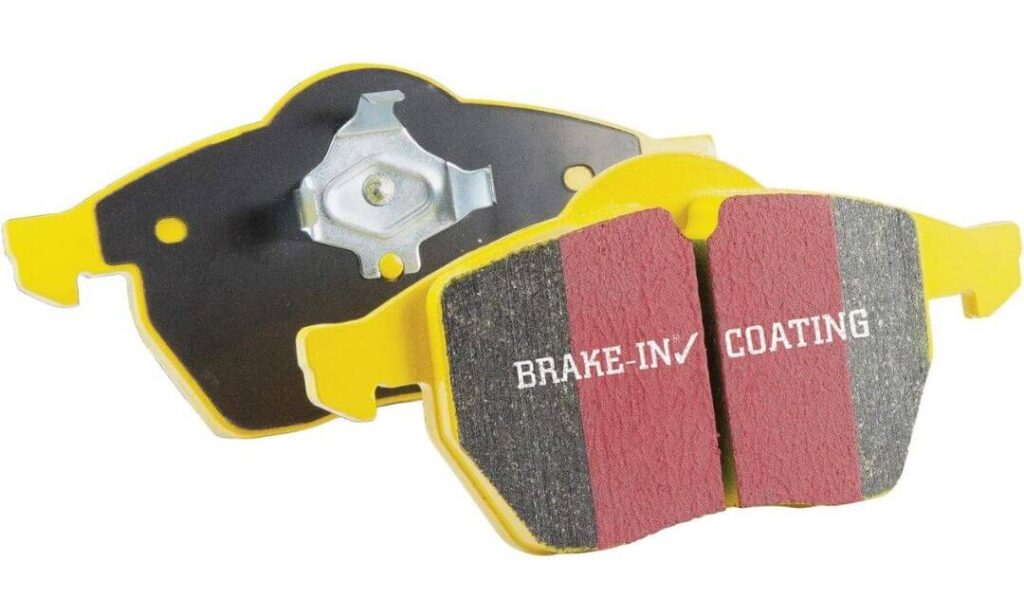
Key Specs:
- Pad Compound: Synthetic Fiber Performance Blend
- Brake Position: Performance Front/Universal Fit Applications
- Friction Level: High-Friction Upgrade Over OEM
- Heat Resistance: Fade-Resistant Under Repeated Heavy Braking
- Cold Performance: Effective From Cold Starts
- Pedal Feel: Medium-Firm Performance Response
- Rotor Wear: Low Abrasiveness vs Metallic Pads
- Use Case: Towing + Performance + Heavy Truck Duty
- Pad Compound: Synthetic Fiber Performance Blend
- Brake Position: Performance Front/Universal Fit Applications
- Friction Level: High-Friction Upgrade Over OEM
- Heat Resistance: Fade-Resistant Under Repeated Heavy Braking
- Cold Performance: Effective From Cold Starts
- Pedal Feel: Medium-Firm Performance Response
- Rotor Wear: Low Abrasiveness vs Metallic Pads
- Use Case: Towing + Performance + Heavy Truck Duty
If you want braking that feels stronger the harder you push the truck — this is where Yellowstuff steps into a different league than daily ceramics.
The first thing most Silverado owners notice is bite. Not harsh, not jerky — just stronger. Pedal pressure translates into stopping force quicker than OEM pads, which becomes especially useful when slowing down heavier setups or larger wheel builds. It doesn’t feel like you’re waiting on the brakes to catch up.
Where these pads really separate themselves is heat stability. Repeated heavy braking — downhill towing, off-road descents, highway slowdowns — doesn’t phase them the way factory pads tend to. There’s no “fall-off” once temperatures climb. Pedal response stays consistent instead of fading halfway through aggressive stops.
Despite being performance-tuned, they’re still street usable. Cold bite is solid, so morning commutes don’t feel numb, and the synthetic fiber compound is easier on rotors than traditional semi-metallic performance pads. That balance — strong friction without excessive rotor wear — is why many truck owners prefer them over harsher race compounds.
They sit in that middle ground perfectly: stronger than daily ceramics, but more livable than full track pads.
What Makes It Stand Out
- High-friction compound improves stopping over OEM
- Fade-resistant under repeated heavy braking
- Built for towing, truck loads, and performance driving
- Strong pedal response with controlled bite
- Works effectively even from cold starts
- Synthetic fiber blend reduces rotor wear
- Balanced street + heavy-duty usability
Best For
Silverado 1500 owners who want one pad that can handle towing weight, aggressive driving, and high-heat braking — without stepping into full race-only compounds.
Bottom Line
If your truck works hard but still drives daily, this is the kind of pad that keeps braking confidence steady no matter how much heat or weight you throw at it — stronger than stock, tougher than ceramics, and built for real truck use.
Best Brake Pads for Silverado 1500 — Side-by-Side Comparison
| Brake Pad | Brake Position | Compound Type | Best Use Case | Dust Level | Noise Control | Performance Level |
|---|---|---|---|---|---|---|
|
Power Stop Truck & Tow Z36 Towing Duty |
Front | Carbon-Fiber Ceramic | Heavy Towing & Hauling | Low | Very Quiet | Heavy-Duty |
|
Akebono ACT1092 ProACT Daily Comfort |
Rear | Ultra-Premium Ceramic | Daily Driving | Ultra Low | Silent | OEM-Refined |
|
Bosch QuietCast BC1092 Quiet Upgrade |
Front | Premium Ceramic | Daily + Light Towing | Low | Very Quiet | Balanced |
|
EBC Yellowstuff DP41630R Performance |
Rear | Aramid Performance | Aggressive Driving | Moderate | Low-Moderate | High Bite |
|
SCITOO Front + Rear Kit Budget Kit |
Front + Rear | Semi-Metal + Ceramic | Full Replacement | Moderate | Moderate | Value Upgrade |
|
EBC Yellowstuff DP42295R High Heat |
Front | Synthetic Fiber | Towing + Performance | Moderate | Low | Extreme Duty |
Silverado 1500 Brake Pads Buying Guide — Choosing the Right Pads for How Your Truck Actually Brakes
Buying brake pads for a Silverado 1500 isn’t just routine maintenance — it’s a braking strategy decision.
A full-size pickup doesn’t brake under the same conditions as smaller vehicles. Added curb weight, larger wheels, towing loads, and highway speeds all place more thermal and friction demand on the braking system. That’s why the right pad isn’t universal — it depends on how your truck works when braking matters most.
Below are the real-world factors that separate average pad replacements from the right upgrade.
Match the Pad Compound to Your Driving Load
Brake pad compound determines how stopping power behaves under stress.
If your Silverado tows trailers, boats, or jobsite loads, braking temperatures rise quickly — especially downhill or during repeated stops. Heavy-duty compounds like carbon-fiber ceramics or performance blends are designed to hold friction longer once heat builds, preventing fade and maintaining pedal confidence.
For unloaded daily driving, premium ceramic pads make more sense. They engage smoothly, stay quiet, and produce far less brake dust — ideal for commuting and highway use.
Performance-oriented trucks — especially those running oversized wheels or lift kits — benefit from higher-friction compounds that compensate for increased rotational mass and braking demand.
Choose the compound based on your heaviest braking condition, not your lightest one.
Understand Front vs Rear Brake Roles
Brake upgrades aren’t evenly distributed across axles.
Front brakes handle the majority of stopping force — particularly during towing, emergency braking, or downhill load control. That’s where heavy-duty or performance compounds create the biggest improvement in stopping confidence.
Rear pads contribute more to braking balance and vehicle stability. For many Silverado owners, quieter ceramic pads in the rear maintain comfort without sacrificing braking effectiveness.
Upgrading front pads increases stopping strength. Pairing front and rear compounds correctly improves overall braking balance.
Heat Resistance Matters More Than Most Owners Expect
Brake fade rarely shows up during light driving — it appears under sustained stress.
Towing downhill, braking from highway speeds, or controlling a loaded truck builds heat quickly. Lower-grade pads lose friction once temperatures spike, softening pedal feel and increasing stopping distance.
Heavy-duty compounds are engineered to operate inside higher temperature ranges without losing bite — which is why they’re favored for truck-duty braking.
If heat is part of your braking reality, compound strength matters more than brand name.
Noise and Dust Are Compound Tradeoffs
Stronger braking materials usually trade comfort for performance.
Performance and semi-metallic pads generate higher friction — which can increase brake dust and occasional noise. Premium ceramic pads prioritize quiet operation and cleaner wheels but sacrifice some aggressive bite under load.
There’s no universal winner here — it depends whether you value stopping aggression or daily refinement more.
Many Silverado owners balance both by running heavy-duty fronts and comfort-focused rear ceramics.
Understanding “FG” and “GG” Friction Codes on Brake Pads
If you look closely at the edge of most brake pads, you’ll notice two stamped letters — codes like FF, FG, or GG.
These are standardized SAE friction ratings that indicate how much stopping friction the pad produces under cold and hot conditions.
The first letter represents cold friction performance.
The second represents friction once the pad reaches operating temperature.
An FG rating means moderate friction cold and stronger friction once warm. A GG rating indicates high friction in both cold and hot braking conditions — typically found on heavy-duty or performance compounds.
For Silverado 1500 trucks, this matters more than many buyers realize.
Towing and hauling generate more braking heat, and higher-friction ratings like GG hold stopping bite more consistently under load. Daily-driving ceramics often fall into FF or FG ranges — smoother and quieter, but less aggressive under sustained stress.
Higher friction isn’t automatically better though. Stronger compounds can increase dust, rotor wear, and sharper pedal engagement.
Friction codes don’t replace real-world reviews — but they offer a quick performance snapshot beyond brand marketing.
Consider Rotor Compatibility
Brake pads and rotors function as a matched surface.
Aggressive metallic compounds can accelerate rotor wear if paired with softer factory rotors. Ceramic and synthetic fiber blends are less abrasive and extend rotor lifespan under normal driving.
If you’re not upgrading rotors alongside pads, choosing a rotor-friendly compound helps prevent premature wear and vibration issues later.
Full Kits vs Individual Axle Upgrades
Some Silverado owners upgrade braking in stages — others prefer a complete refresh.
Front-only upgrades improve stopping power immediately, especially for towing trucks. But replacing both axles ensures even wear, balanced braking feel, and simplified installation.
Full kits are practical for higher-mileage trucks where both pad sets are already nearing service limits.
Final Buying Perspective
The best brake pad for a Silverado 1500 isn’t defined by brand or price — it’s defined by braking demand.
A truck that tows needs heat resistance.
A truck that commutes needs refinement.
A truck running performance mods needs friction strength.
Choose for the weight you stop, the speeds you slow from, and the roads you drive most — because braking confidence isn’t built during easy miles… it’s built when the truck is working hardest.
Installation Tips & Brake Pad Maintenance — Getting the Most Out of Your Silverado’s Braking System
Upgrading brake pads is only half the job — how they’re installed, broken in, and maintained determines how well they actually perform once the truck is back on the road.
A proper install and bedding process doesn’t just improve stopping power — it extends pad life, protects rotors, and prevents noise issues that many owners mistakenly blame on the pads themselves.
The Bedding-In Process — Why Proper Break-In Is Crucial
New brake pads don’t deliver full performance straight out of the box.
The friction surface needs time to transfer an even material layer onto the rotor face — this is what allows pads and rotors to work together as a matched braking surface. Skipping this step often leads to uneven deposits, vibration, or reduced stopping efficiency later.
A proper bedding-in cycle typically involves:
- 6–8 moderate stops from 40–45 mph
- Followed by 2–3 stronger slowdowns from highway speed
- Allowing brakes to cool between runs
- Avoiding full panic stops during the first 200 miles
This controlled heat cycling stabilizes the pad compound, prevents glazing, and ensures consistent bite once fully broken in.
Heavy-duty compounds — especially towing or performance pads — benefit the most from correct bedding since they operate across higher temperature ranges.
Installation Practices That Prevent Future Problems
Even premium pads underperform if installed poorly.
Before installing new pads, rotors should always be cleaned — either with brake cleaner or mild soap and water — to remove protective oils and debris. Installing pads on contaminated rotors can cause noise, uneven wear, or vibration.
Hardware matters too.
Worn clips, shims, or guide pins create uneven pad pressure and premature wear. That’s why many premium kits include stainless hardware and lubricant — it ensures smooth pad movement and even braking force.
Torque specs should also be followed carefully. Over-tightened caliper bolts can cause binding, while under-tightening creates vibration and noise.
A clean install is just as important as pad quality.
Signs Your Brake Pads Are Wearing Out
Brake pads rarely fail without warning — they leave clear performance signals first.
One of the earliest signs is squealing. Most pads include wear indicators that create a high-pitched noise once friction material drops below safe thickness.
Pulsation through the brake pedal is another sign — often linked to uneven pad deposits or rotor surface variation caused by worn pads.
Longer stopping distances, reduced pedal confidence, or increased brake dust can also indicate compound degradation.
If braking feels weaker under load — especially during towing — pad friction material may already be nearing service limits.
Ignoring early signs usually leads to rotor damage next.
Rotor Health and Pad Life Go Hand in Hand
Pads don’t wear alone — they wear against rotor surfaces every mile.
Grooved, warped, or heat-spotted rotors accelerate pad wear and reduce braking efficiency. Installing new pads on damaged rotors often leads to noise and vibration returning quickly.
Resurfacing or replacing rotors alongside pad upgrades ensures even contact and proper bedding.
This is especially important when upgrading to higher-friction compounds, which rely on smooth rotor surfaces for consistent performance.
Ongoing Maintenance That Extends Pad Life
Brake longevity isn’t just about driving style — it’s about routine checks.
Periodic inspections help monitor pad thickness, rotor condition, and hardware wear before performance drops. Cleaning excessive brake dust buildup also prevents contamination between pad and rotor surfaces.
For towing trucks, more frequent inspections are recommended since heavy braking loads accelerate wear cycles.
Properly maintained pads don’t just last longer — they brake more consistently throughout their lifespan.
Final Installation Perspective
The difference between average braking and confident braking often comes down to installation discipline and break-in patience.
Pads that are bedded correctly, installed cleanly, and monitored regularly don’t just stop better — they stay quieter, last longer, and protect the rest of the braking system from premature wear.
In other words, performance doesn’t start when you press the pedal — it starts the moment the pads go on the truck.
FAQs — Chevy Silverado 1500 Brake Pads
Ceramic vs. Semi-Metallic — Which is better for a Silverado 1500 that frequently tows over 5,000 lbs?
If towing above 5,000 lbs is a regular part of your truck’s workload, semi-metallic or carbon-fiber ceramic compounds handle heat far better than standard ceramics. Heavy trailer braking generates sustained temperature, and softer ceramic pads can lose bite once heat builds. Semi-metallic blends maintain friction longer under load, though they may produce more dust and slight noise. Many Silverado owners run heavy-duty compounds up front for towing strength and ceramics in the rear for comfort balance.
Will upgrading to performance brake pads void my Chevy factory warranty or affect the StabiliTrak system?
Upgrading brake pads alone does not void your factory warranty, as pads are considered wear items. As long as the pads are direct-fit and installed correctly, they won’t interfere with systems like StabiliTrak or ABS. Those systems rely on wheel speed sensors — not pad material. Warranty concerns typically arise only if improper installation causes damage. Using reputable aftermarket brands keeps both braking performance and vehicle electronics operating normally.
Why are my new Silverado brake pads squealing even though they still have most of their life left?
New pad noise is usually linked to installation or bedding — not pad failure. If rotors weren’t cleaned properly, or pads weren’t bedded in through controlled heat cycles, uneven deposits can cause squeal. Missing hardware, dry guide pins, or lack of brake lubricant also create vibration noise. Performance compounds may produce slight sound under hard braking, but constant squealing typically points to install setup rather than worn friction material.
How much does a full brake pad replacement cost for a Silverado 1500 in 2026?
Parts pricing varies widely based on compound and brand. Premium front pads typically range from $80–$150, while full front-and-rear kits can run $150–$300. Labor adds another $150–$300 depending on region and shop rates. If rotors are replaced alongside pads, total cost can climb higher. Owners doing DIY installs save significantly, especially since many kits include hardware and lubricant for direct bolt-on replacement.
Do I need to replace rotors every time I change brake pads on my Silverado?
Not always — rotor condition determines that. If rotors are smooth, within thickness spec, and free of heat spotting or grooves, resurfacing or reusing them is fine. However, warped or heavily worn rotors will cause vibration and uneven pad wear if left unchanged. Many truck owners replace rotors when upgrading to heavy-duty pads to ensure proper bedding and long-term braking stability.
Final Verdict — Choosing the Right Brake Pads for Your Silverado 1500
Brake pads aren’t the most exciting upgrade you’ll make to a Silverado — but they’re one of the few you feel every single time the truck slows down.
And once you’ve driven on worn factory pads long enough, the difference a proper compound makes becomes obvious fast.
If your truck tows, hauls, or brakes under real weight, heavy-duty compounds like carbon-fiber ceramics or performance blends deliver the kind of pedal confidence stock pads lose once heat builds. They’re built for loaded braking — not empty commuting.
If your Silverado lives mostly on highways and city roads, premium ceramic pads bring refinement back into the braking feel — quieter stops, cleaner wheels, and smoother engagement without sacrificing daily control.
Performance builds fall somewhere in between — where stronger friction response and heat stability matter more than comfort alone.
The key takeaway isn’t which pad is “best” overall — it’s which pad is best for how your truck actually brakes when it’s working.
Match the compound to your load.
Match the axle to the workload.
And don’t overlook installation, bedding, or rotor condition — because braking performance isn’t defined by parts alone… it’s defined by how the whole system works together once you’re back on the road.
Get that balance right, and your Silverado won’t just stop — it’ll stop with the kind of confidence you only notice once you didn’t have it before.
Also Check: