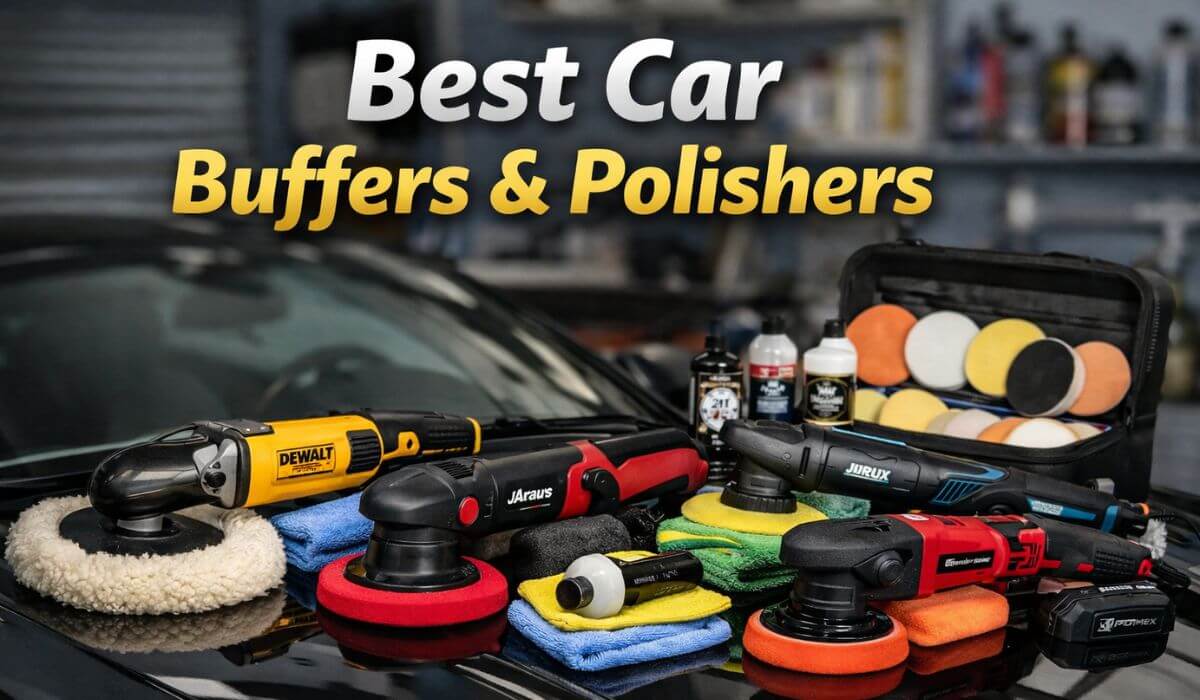
Best Professional Car Buffers and Polishers of 2026 (DA, Rotary & Pro-Grade Picks)
Last updated on January 6th, 2026 at 02:18 am
Most people searching for the best professional car buffers and polishers aren’t experimenting or browsing out of curiosity. They’re usually trying to fix something specific—swirl marks that won’t come out, faded paint that still looks tired after washing, or clear coat that needs real correction, not another layer of wax. At this stage, hand polishing is already off the table. The real question isn’t whether to use a machine—it’s which car buffer and polisher can deliver professional results without risking the paint.
That’s where the confusion starts. The market is full of machines labeled as “professional,” yet the gap between a true pro-grade tool and a budget buffer becomes obvious the moment it touches paint. Throw length, torque delivery, heat control, vibration, and long-term reliability matter far more than flashy specs or inflated RPM numbers. Choosing the wrong unit doesn’t just waste money—it can slow correction, leave uneven results, or worse, damage clear coat.
This guide focuses on car buffers and polishers built for real paint work, not casual shine jobs. You’ll find a clear breakdown of dual-action and rotary polishers, where each type excels, and which models make sense depending on how often you polish and how demanding your results need to be. Whether you’re comparing professional car polishers and buffers or trying to find the best buffer and polisher for cars that actually justifies its price, the goal here is simple: help you choose a machine that performs consistently, safely, and efficiently every time it’s switched on.
We’ll also cover the best way to buff and polish a car using professional tools, so the machine you choose works with your technique, not against it. No filler, no marketing hype—just tools that earn their place through real-world results.
6 Best Car Buffers and Polishers for the Money in 2026 (Professional Picks)
#1. DEWALT DWP849X 7″–9″ Buffer Polisher
(Best Professional Rotary Polisher Buffer for Heavy Paint Correction)
#2. Adam’s 9mm Dual Action Car Polisher
(Best Professional DA Polisher Buffer for Swirl Removal & Paint Safety)
#3. Chemical Guys TORQX Random Orbital Polisher Kit
(Best Beginner-Friendly Polisher Buffer with Complete Kit)
#4. SPTA 5″ Dual Action Random Orbital Polisher Kit (DAPSET-US)
(Best Value Polisher Buffer for Learning & Versatile Use)
#5. Protmex 1200W Dual Action Car Buffer Polisher
(Best High-Power Polisher Buffer for the Money – Under $100)
#6. Jruav Cordless Buffer Polisher (21V, Brushless)
(Best Lightweight Cordless Polisher Buffer for Quick Detailing)
Note: This lineup isn’t ranked by hype or price. Every buffer and polisher here was chosen for consistent correction, paint safety, and how well it holds up during real-world use.
Also Check:
Buffer vs Polisher vs Dual-Action (DA): What Actually Matters for Paint
Most buyers use the words buffer and polisher interchangeably, but in real paint correction, they behave very differently. Understanding this difference is the line between clean, professional results and avoidable paint damage.
Rotary Buffer: Maximum Power, Zero Margin for Error
A rotary buffer spins on a single axis. It cuts fast, removes heavy defects quickly, and is still the weapon of choice for deep correction work in experienced hands. But that same direct rotation builds heat rapidly. Without proper technique, a rotary can burn edges, haze clear coat, or leave holograms that require a second polishing step to fix.
Best suited for:
- Experienced detailers
- Severe swirl removal and oxidation
- Production environments where speed matters
Not ideal for:
- Beginners
- Soft clear coats
- One-step correction without follow-up polishing
Dual-Action (DA) Polisher: Control Without Compromise
A DA polisher combines rotation with an orbital movement. This design dramatically reduces heat buildup and makes it far more forgiving on modern clear coats. It may correct slightly slower than a rotary, but the trade-off is consistency, safety, and cleaner finishes—which is why DA machines dominate both professional studios and high-end enthusiast garages.
For many users, the best buffer and polisher for cars is actually a DA unit, because it delivers professional results without demanding professional-level risk.
Best suited for:
- Most professional and semi-professional users
- Swirl removal, gloss enhancement, and one-step corrections
- Anyone prioritizing paint safety
“Buffer” vs “Polisher”: Why the Terms Get Messy
Technically speaking, a buffer usually refers to high-powered rotary machines, while a polisher covers both DA and rotary tools. In modern usage, however, the term car buffer and polisher has become a catch-all phrase—especially online.
What matters isn’t the label. It’s how the machine delivers power:
- Rotary = aggressive, fast, high skill required
- DA = controlled, versatile, safer for repeated use
This distinction is why many so-called “professional car polishers and buffers” perform very differently in real-world detailing, even if their specs look similar on paper.
Which One Makes Sense for You?
If you’re correcting paint regularly, working on different vehicles, or simply want predictable results, a pro-grade DA polisher is usually the smartest investment. Rotary buffers still have their place—but only when their strengths are genuinely needed and the user knows how to manage them.
This difference is also why price alone doesn’t determine value. The best car buffer and polisher for the money isn’t the cheapest option—it’s the one that matches your correction goals, skill level, and frequency of use.
What Separates a True Professional Car Polisher From Consumer Machines
On paper, many car buffers and polishers look similar. They list comparable RPM ranges, motor wattage, and “professional” labels. In actual use, the difference shows up after a few panels—sometimes after a few minutes. Professional machines aren’t built to impress on a product page; they’re built to perform the same way on the tenth car as they do on the first.
Consistent Torque Under Load
Consumer-grade polishers often feel strong until pressure is applied. Once the pad meets resistance, speed drops, correction slows, and heat becomes inconsistent. Professional car polishers maintain torque under load, which means the pad keeps working evenly across curved panels, edges, and harder clear coats.
This consistency is a big reason pros prefer certain DA and rotary machines even when cheaper options advertise similar specs.
Vibration Control and Balance
Long polishing sessions expose flaws most buyers don’t think about—vibration, handle ergonomics, and machine balance. Excess vibration doesn’t just cause fatigue; it reduces control and increases the chance of uneven correction. Pro-grade buffers and polishers are designed to stay stable at working speeds, not just at idle.
Over time, this stability is what allows clean, repeatable results without fighting the machine.
Heat Management and Paint Safety
Heat is the silent variable in paint correction. Entry-level machines can spike temperatures unpredictably, especially when paired with cutting pads. Professional tools manage heat better through motor design, speed regulation, and smoother power delivery. That’s why they’re safer on modern clear coats—even during extended correction passes.
If you’re looking for the best buffer and polisher for cars, heat control matters just as much as raw cutting power.
Durability for Repeated Use
Professional car buffers and polishers are built for repetition. Switches, bearings, cords, and backing plates are designed to handle daily use, not occasional weekend detailing. This is where long-term value comes in. The best car buffer and polisher for the money isn’t always cheaper upfront—it’s the one that doesn’t need replacing after a season.
Pad and Backing Plate Compatibility
Another overlooked difference is how well a machine works with different pad sizes and materials. Pro machines are tuned to stay stable with microfiber, foam, and wool pads across multiple backing plates. That flexibility matters when switching between cutting, polishing, and finishing stages without swapping tools.
Why This Matters Before Choosing a Model
Understanding these differences explains why some machines dominate professional studios while others stay limited to light-duty use. It also sets realistic expectations—no single tool does everything equally well, and choosing the right category matters more than chasing numbers.
How We Chose These Professional Car Buffers and Polishers
This list wasn’t built by scanning spec sheets or repeating manufacturer claims. Professional car buffers and polishers behave very differently once they’re under real load, working on real paint, and moving through different correction stages. The goal here was simple: identify machines that deliver predictable results on paint, not just impressive numbers on paper.
Real-World Correction Ability
The first filter was how each machine performs during actual paint correction. That means consistent pad rotation under pressure, smooth power delivery, and the ability to correct defects without forcing the user to fight the tool. Machines that stall easily, surge unpredictably, or require constant speed adjustment didn’t make the cut—regardless of price or brand reputation.
Control Over Raw Power
More power doesn’t automatically translate into better results. We prioritized car buffers and polishers that balance torque with control, especially at working speeds. A professional-grade machine should feel planted at the panel, not aggressive or twitchy. That balance is what allows clean one-step corrections and refined finishes without unnecessary heat buildup.
Long-Term Reliability
Professional use exposes weaknesses quickly. Switch quality, bearing longevity, cord durability, and backing plate stability all start to matter once a machine is used regularly. The models included here have demonstrated the ability to hold up over time, which is essential when evaluating the best car buffer and polisher for the money, not just the cheapest option.
Versatility Across Pads and Paint Types
Different vehicles demand different approaches. Machines that work well with multiple pad materials—foam, microfiber, and wool—and remain stable across various backing plate sizes ranked higher. Versatility matters, especially for users working across a mix of soft and hard clear coats.
Value Based on Performance, Not Price
Price alone wasn’t used to determine value. Instead, we focused on what each machine delivers relative to its cost. Some higher-priced professional car polishers and buffers justify their premium through refinement and durability, while others don’t. Only tools that earn their price through real-world performance made the list.
Why These Criteria Matter
Choosing the best buffer and polisher for cars isn’t about chasing trends or brand names. It’s about finding a tool that works consistently, protects paint, and stays reliable over time. These criteria ensure that every pick below earns its place through results—not marketing language.
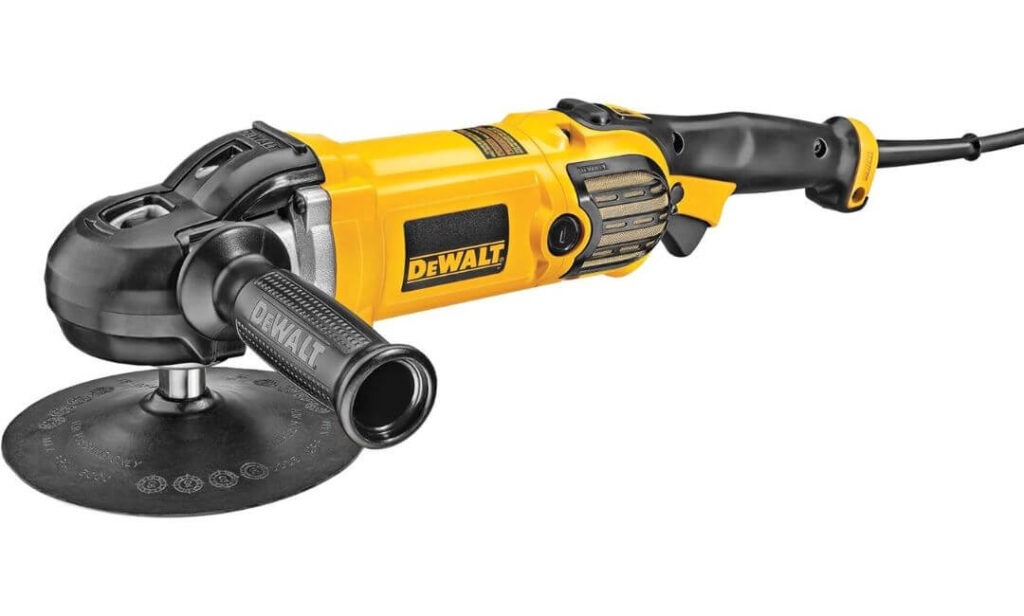
#1. DEWALT DWP849X 7″–9″ Variable Speed Buffer Polisher
Key Specifications:
- Motor: 12-amp professional-grade motor
- Speed Range: Variable speed up to 3,500 RPM
- Pad Compatibility: 7″ and 9″ backing plates
- Power Source: Corded electric with soft-start
- Warranty: 3-year limited warranty
The DEWALT DWP849X immediately feels like a tool built for correction, not casual polishing. Its size, weight, and balance are clearly aimed at stability rather than light handling. The soft-start feature makes a noticeable difference during initial pad contact, reducing sudden torque and helping maintain control when working near edges or complex panel shapes.
Performance is where this buffer earns its professional label. The 12-amp motor delivers steady, uninterrupted cutting power, even when pressure is applied during compounding. Speed doesn’t fluctuate unpredictably, which allows consistent defect removal without forcing excessive passes. The combination of a variable-speed trigger and a dedicated speed dial makes fine adjustments intuitive while working across different paint conditions.
During longer correction sessions, the machine stays composed. Heat buildup remains controlled, and the buffer doesn’t feel strained or unstable as time goes on. Its all ball-bearing construction and precision-cut steel gears contribute to smooth operation, especially when running larger pads that often expose weaknesses in lower-grade rotary buffers.
This buffer is clearly designed for repeat use. Practical details like the replaceable wool ingestion shield, no-volt release switch, and serviceable brush system reflect long-term thinking rather than short-term convenience. It’s the kind of machine meant to stay in rotation for years, not get replaced after a season of hard use.
Key Strengths
- Holds working speed consistently under load
- Smooth power delivery with controlled startup
- Stable operation with large 7″ and 9″ pads
- Effective heat control during extended correction
- Built for durability with serviceable internal components
Best For: This buffer is best suited for professional detailers, body shops, and experienced users who regularly perform heavy paint correction. It excels at compounding, oxidation removal, and deep swirl correction where sustained torque is essential. Users working on larger vehicles or harder clear coats will benefit from its ability to maintain speed without stalling. It’s a practical choice when reliability and correction efficiency matter more than convenience.
Not Ideal For: The DWP849X isn’t ideal for beginners or users looking for a simple polish-and-wax machine. Its rotary action requires proper technique, and misuse can lead to excess heat or holograms. It’s also unnecessary for light finishing work, where a dual-action polisher would be safer and easier to control.
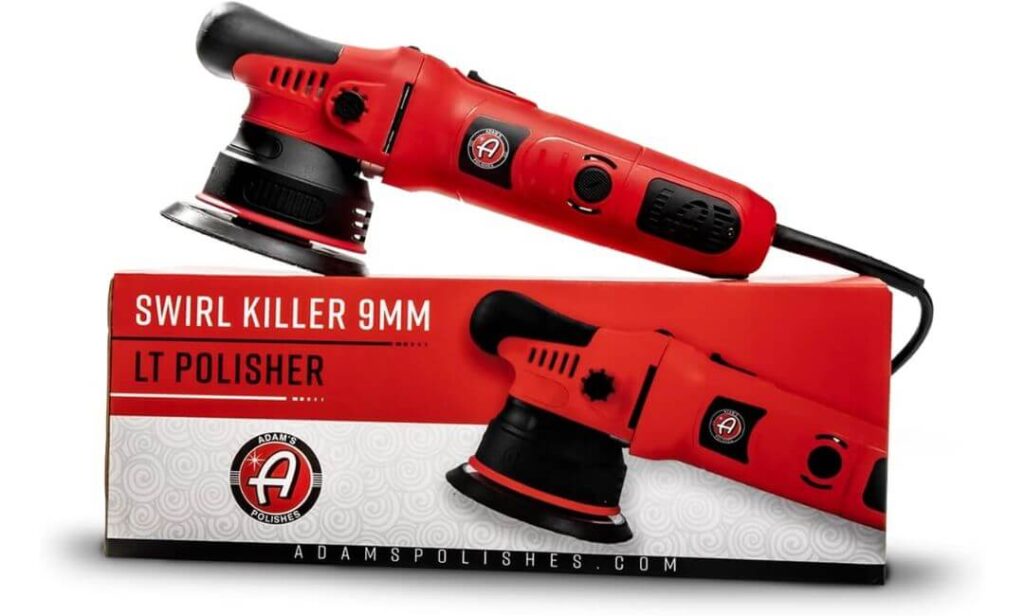
#2. Adam’s 9mm Dual Action Car Polisher (Swirl Killer DA)
Key Specifications:
- Motor Output: 1000W high-efficiency motor
- Orbit Throw: 9mm dual-action movement
- Speed Range: Up to 6,500 OPM
- Weight: Under 5.5 lbs for better control
- Power Source: Corded electric (120V)
This dual-action (DA) polisher is designed specifically for car detailing, combining both buffing and polishing capabilities into a single, paint-safe machine. The 9mm orbit is tuned for controlled correction, making it well suited for swirl removal, light scratch correction, and overall paint refinement. It’s also part of a broader lineup, with 12mm, 15mm, and 21mm versions available for users who want different levels of cut and coverage.
On paint, the machine feels balanced and easy to guide. The ergonomic housing and rubberized contact points noticeably reduce vibration, which helps maintain steady pad contact across panels. This stability becomes more apparent during longer sessions, where the polisher remains comfortable to handle without forcing grip adjustments or excessive pressure.
In terms of performance, the 1000W motor provides consistent correction power without feeling aggressive. The DA motion keeps heat under control while still allowing compounds and polishes to break down evenly. Swirls, light scratches, and oxidation are corrected progressively rather than abruptly, which is exactly what most users want from a DA polisher aimed at clean, repeatable results.
What sets this machine apart is its versatility. Beyond paint correction, it can be used for applying sealants and waxes, polishing metals, and even light interior scrubbing tasks. The long cord and manageable weight make it practical for working around an entire vehicle without constant repositioning, reinforcing its role as a reliable all-around detailing tool.
Key Strengths
- Dual-action motion for paint-safe correction
- Smooth, low-vibration operation during extended use
- Consistent power delivery for even polish breakdown
- Lightweight design that reduces user fatigue
- Versatile performance across paint, metal, and finishing tasks
Best For: This polisher is ideal for enthusiasts, weekend detailers, and professionals who want reliable correction without the risks associated with rotary buffers. It’s especially well suited for users focused on swirl removal, gloss enhancement, and one-step paint corrections. Those working on multiple vehicles or different paint types will appreciate its predictable behavior. It’s also a strong option for anyone stepping up from entry-level machines to more professional car buffers and polishers.
Not Ideal For: This DA polisher isn’t the best choice for heavy compounding or severe defect removal where maximum cut is required. Users needing rapid correction on hard clear coats or production-level speed may find a larger-throw DA or rotary buffer more efficient. It’s also not designed for those who prefer ultra-aggressive correction in fewer passes.
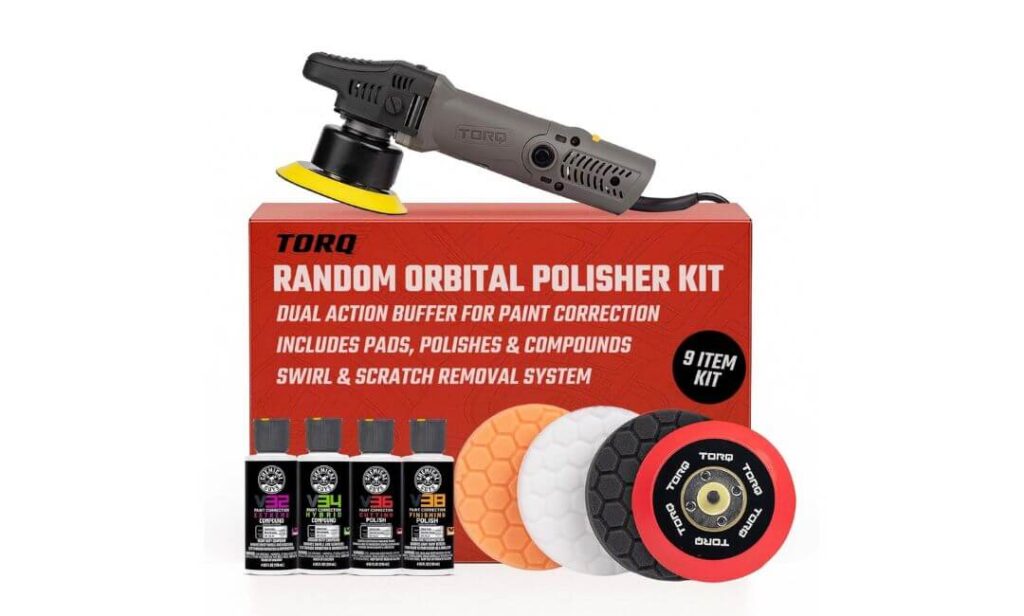
#3. Chemical Guys TORQX Random Orbital Polisher Kit (8mm DA, 9-Piece Set)
Key Specifications:
- Motor Output: 700W
- Orbit Throw: 8mm random orbital
- Kit Type: Complete polishing kit with pads & compounds
- Power Source: Corded electric (120V)
- Primary Use: Automotive paint correction & finishing
This 9-piece kit comes complete with the polisher, pads, compounds, and polishes—everything needed to remove swirls, scratches, oxidation, and restore shine without figuring out compatibility or buying parts separately. The TORQX is built around an 8mm random orbital movement, which immediately tells you what it’s meant for: controlled correction that favors safety and consistency over aggressive cutting.
Once you start working with it, the machine feels predictable in a good way. It doesn’t surge, jerk, or fight back when pressure is applied. The 700W motor isn’t trying to overpower the surface—it lets compounds do their job steadily, which makes it easier to see progress panel by panel instead of guessing whether you’re correcting or just heating the paint.
Heat control is where this polisher quietly earns trust. The dual-action motion keeps temperatures in check even during longer passes, and the tool doesn’t feel stressed or unstable as time goes on. That matters when working on clear coat, headlights, or trim, where too much heat can do more harm than good. The TORQX stays calm, even when the user isn’t rushing.
What really separates this kit from standalone machines is how little friction it adds to the process. You’re not stopping to wonder which pad to use or whether a compound will match the tool. The included components cover compounding, polishing, and finishing well enough to take a vehicle from tired paint to a noticeably cleaner, glossier finish in one workflow.
Key Strengths
- All-in-one kit removes the guesswork for users
- Predictable, paint-safe correction behavior
- Easy to control across curved and flat panels
- Manages heat well during longer polishing sessions
- Strong overall value for a complete setup
Best For: This kit makes the most sense for enthusiasts and DIY detailers who want real results without jumping straight into professional-only machines. It’s well suited for regular swirl removal, light scratch correction, and restoring gloss on daily-driven vehicles. Users who prefer working carefully and methodically will appreciate how forgiving the TORQX feels. It’s especially useful for those building their first serious car buffers and polishers setup without overbuying.
Not Ideal For: The TORQX isn’t built for heavy, high-volume correction work or deep defect removal on very hard clear coats. Full-time professionals may find it underpowered for daily compounding jobs. It’s also not the right choice if you’re only looking for a bare polisher and already own pads, compounds, and finishing products.
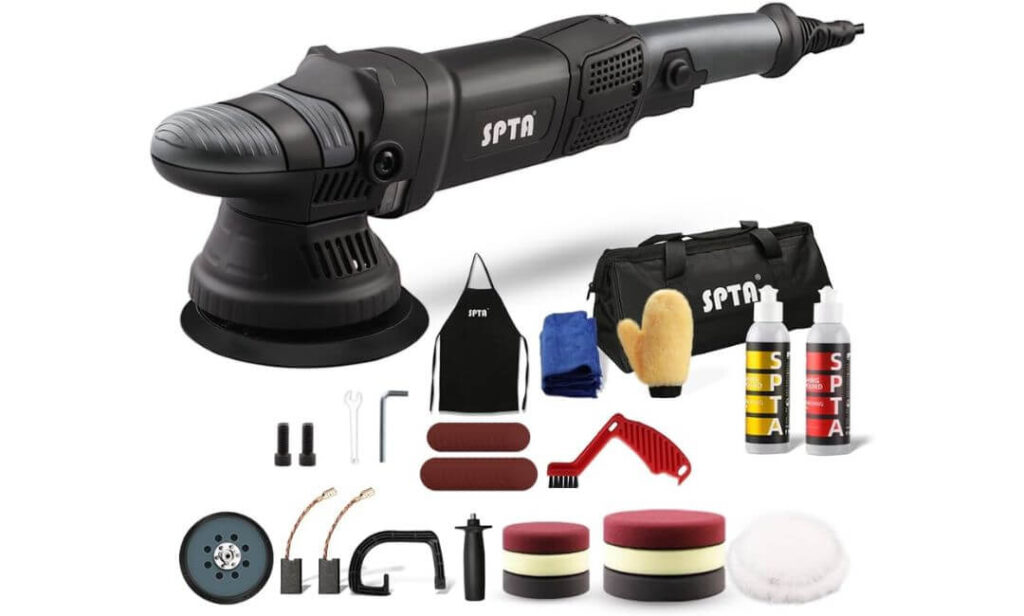
#4. SPTA 5″ Dual Action Random Orbital Polisher Kit (DAPSET-US)
Key Specifications:
- Motor Output: 750W dual-action motor
- Orbit Type: Random orbital (DA)
- Speed Range: 2,000–5,200 OPM (6-speed dial)
- Pad Support: 5″ and 6″ pads included
- Power Source: Corded electric (110V)
This polishing set is suitable for both beginners and professional users its design clearly leans toward versatility rather than specialization. The SPTA DA polisher uses a random orbital motion that keeps correction controlled and forgiving, which makes it approachable for first-time users while still offering enough power for regular detailing work. From the start, it feels like a tool meant to handle a wide range of tasks instead of excelling at only one.
Once on paint, the machine behaves predictably. The 750W motor provides steady power, and the constant-speed electronics help prevent sudden slowdowns when pressure is applied. The variable speed dial gives enough range to move comfortably between waxing, polishing, and light defect removal without feeling rushed or underpowered. It doesn’t feel aggressive, but it doesn’t feel weak either.
Heat control stays well within reason during longer sessions. The dual-action movement limits excessive temperature buildup, and the smooth start function makes pad engagement less abrupt. This is especially useful for users still developing technique, as the machine doesn’t punish small mistakes with sudden surges or sharp reactions.
What stands out most is how much comes in the box. Pads in multiple sizes, sanding discs, compounds, brushes, handles, and storage gear make this kit feel more like a complete workspace than just a polisher. It’s designed to let users experiment, learn, and work through different stages without needing immediate upgrades or extra purchases.
Key Strengths
- Broad speed range suited for multiple detailing tasks
- Stable, predictable correction behavior
- Good heat control for longer working sessions
- Supports both 5″ and 6″ pad setups
- Extensive accessory kit adds practical value
Best For: This kit works best for beginners stepping into machine polishing and enthusiasts who want flexibility without overspending. It’s well suited for swirl removal, light scratch correction, waxing, and general paint maintenance. Users working on cars, motorcycles, or even household surfaces will appreciate how adaptable it is. It also makes sense for semi-professional use where variety matters more than outright speed.
Not Ideal For: This polisher isn’t built for heavy compounding or production-level correction work. Professionals who correct paint daily on hard clear coats may find the power ceiling limiting over time. It’s also not the right choice for users who already own pads and compounds and only want a refined, high-end standalone machine.
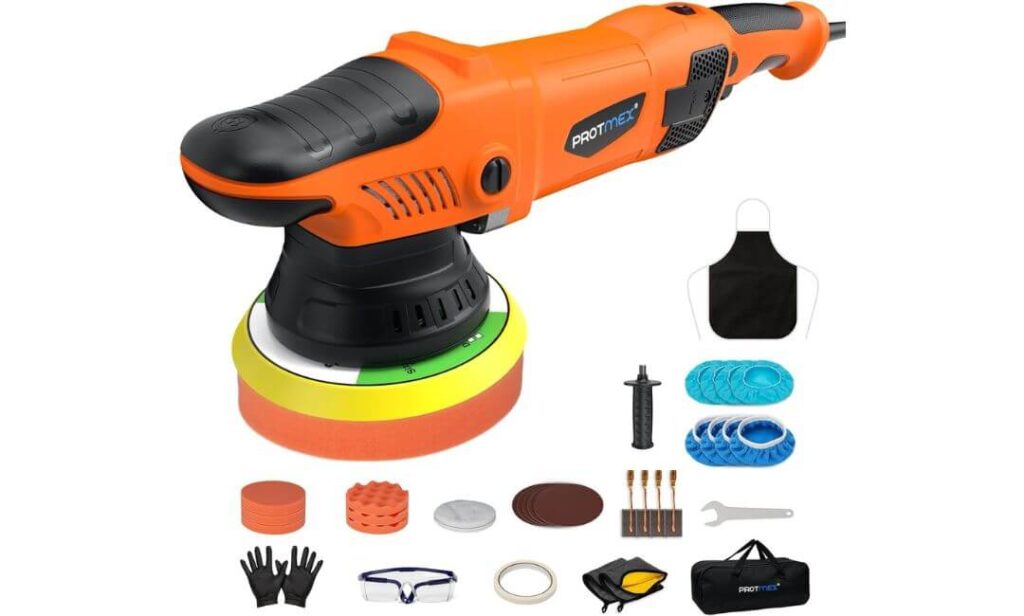
#5. Protmex 1200W Dual Action Car Buffer Polisher (6″, Constant Power)
Key Specifications:
- Motor Output: 1200W pure copper motor
- Orbit Throw: 9mm dual action
- Speed Range: 2,500–6,000 RPM (6 levels)
- Pad Size: 6-inch backing plate
- Power Source: Corded electric (110V)
Under $100, this polisher aims to offer something most budget tools don’t even try to—consistent power under pressure. The Protmex 1200W DA uses a constant power system that keeps torque steady instead of fading once the pad meets resistance. On paper it sounds ambitious, but in use, the difference is noticeable, especially during correction passes where cheaper machines tend to stall.
On paint, the polisher feels more composed than expected for its price bracket. The 9mm orbit gives it a balanced correction style—strong enough to handle swirls and oxidation, but still controlled enough to stay paint-safe. It doesn’t lunge or hesitate when pressure is applied, which makes it easier to work panel by panel without constantly adjusting technique.
Heat control is handled better than most entry-level machines. The vented housing does its job, keeping temperatures reasonable during longer sessions. While it’s not built like a high-end shop tool, it doesn’t feel fragile or stressed when pushed. The grip design and lock-on switch also help reduce fatigue, which matters once polishing stretches past a few panels.
What really defines this machine is how much it packs into the box. Pads, bonnets, sanding discs, safety gear, and storage accessories make it feel like a full setup rather than just a standalone polisher. For users starting out—or those wanting a capable secondary machine—the value proposition is hard to ignore at this price point.
Key Strengths
- Maintains torque under pressure without stalling
- Strong correction ability for a budget DA polisher
- Balanced, paint-safe operation with 9mm throw
- Good heat control for extended use
- Exceptional accessory bundle for the price
Best For: This polisher is best suited for DIY detailers, budget-conscious enthusiasts, and users who want strong correction without spending premium money. It works well for swirl removal, oxidation cleanup, and general paint restoration on cars, bikes, and even boats. Anyone looking for a capable car buffer and polisher under $100 will find it surprisingly usable. It also makes sense as a backup or secondary machine alongside a higher-end setup.
Not Ideal For: This isn’t the right tool for full-time professional shops doing daily, high-volume correction. Long-term durability won’t match premium brands built for constant abuse. It’s also more power than necessary for users who only plan to apply wax or sealant occasionally.
#6. Jruav Cordless Buffer Polisher (21V, Brushless, 29-Piece Kit)
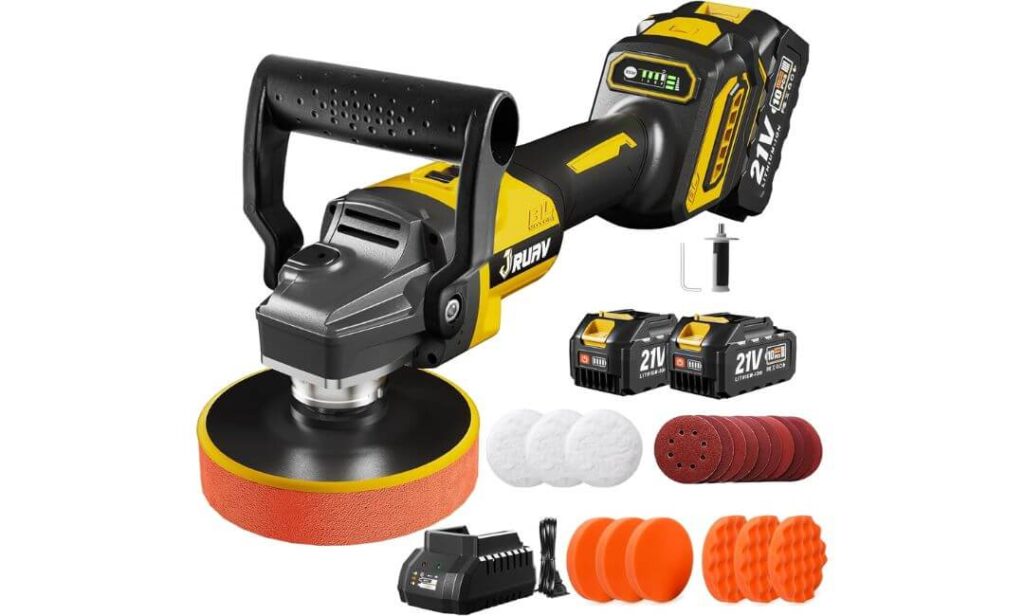
Key Specifications:
- Motor Output: 900W brushless motor
- Max Speed: Up to 7,230 RPM
- Power Source: 21V 4.0Ah Li-ion batteries (2 included)
- Weight: Approx. 4 lbs (tool only)
- Pad Compatibility: 125mm / 150mm / 180mm
Despite its compact size and lesser-known brand identity, the Jruav cordless buffer surprises with how much power it packs into a lightweight, cable-free setup. The brushless motor delivers strong output for polishing and waxing tasks, and the absence of a power cord changes how you move around the vehicle—no drag, no snagging, no repositioning every few minutes.
In use, the polisher feels quick and responsive rather than refined. The high RPM ceiling gives it plenty of bite for light correction and surface restoration, but it also demands attention. Pressure matters here. The built-in overload protection helps by cutting power if you push too hard, which adds a layer of safety, especially for users still learning how much force is too much.
Battery performance is solid within its intended role. With two 4.0Ah batteries included, it’s realistic to complete a full wash-and-polish cycle on a daily driver, swapping packs as needed. At higher speeds, runtime drops noticeably, but recharge times are reasonable enough that downtime doesn’t become frustrating for casual or weekend use.
Where this tool leans clearly toward DIY territory is in refinement. It doesn’t have the same smooth, damped feel of professional DA machines, and the direct-drive behavior means technique matters more to avoid marks. That said, the accessory bundle is generous, and the range of pads and sanding discs makes it flexible for everything from waxing to light restoration work across cars, boats, and household surfaces.
Key Strengths
- Cordless design eliminates cable drag and setup hassle
- Strong power output for a battery-driven polisher
- Built-in overload protection adds paint safety
- Lightweight and easy to maneuver around tight areas
- Extensive accessory kit included out of the box
Best For: This polisher makes the most sense for DIY detailers, home users, and anyone who values mobility over refinement. It’s well suited for waxing, polishing, and light scratch work on personal vehicles where setup speed and convenience matter. Users working in driveways, shared parking spaces, or locations without easy power access will appreciate the cordless freedom. It also works well as a secondary tool for quick touch-ups.
Not Ideal For: This isn’t the right choice for full-time professional detailing or long correction sessions. Battery runtime at high speed limits continuous use, and the direct-drive behavior is less forgiving than random orbital designs. Users chasing flawless finishes or working on sensitive clear coats will be better served by a quality DA polisher.
Professional Comparison: Car Buffers and Polishers That Actually Perform
| Polisher | Type | Power & Drive | Correction Style | Heat Control | Ease of Use | Best Suited For |
|---|---|---|---|---|---|---|
| DEWALT DWP849X Rotary Power Tool |
Rotary | 12A corded, constant torque | Heavy cut, fast defect removal | High heat if misused | Low (skill required) | Pros, body shops, heavy correction |
| Adam’s 9mm DA Balanced DA |
Dual Action | 1000W corded, smooth delivery | Controlled swirl & scratch correction | Very stable | High | Enthusiasts & working professionals |
| Chemical Guys TORQX Beginner-Friendly Kit |
Dual Action | 700W corded | Light–medium correction | Excellent | Very high | DIY users, first-time polishers |
| SPTA DAPSET-US Value Kit |
Dual Action | 750W corded | Light–moderate correction | Good | High | Beginners & budget-focused users |
| Protmex 1200W DA Best Under $100 |
Dual Action | 1200W corded, constant power | Strong correction for price | Good | Medium–High | DIY detailers wanting power on budget |
| Jruav Cordless Polisher Cordless Convenience |
Direct Drive | 900W brushless, battery-powered | Light correction & waxing | Moderate | Medium | Home users, quick touch-ups |
Quick Decision Guide: Choose the Right Car Buffer & Polisher in 30 Seconds
If you’ve read this far, you already know there’s no single “best” machine for everyone. The right buffer or polisher depends less on specs and more on how you actually work on a car. This quick guide cuts through the noise and points you to the right type without overthinking.
If you do heavy correction and want results fast
Choose a rotary buffer like the DEWALT DWP849X.
It removes defects quickly and doesn’t slow down under pressure, which matters when dealing with deep swirls or oxidation. Just remember—this type of machine rewards experience. If you know how to manage heat and pad angle, it’s hard to beat.
If you want professional results with lower risk
A dual-action polisher is the safest all-around choice.
Models like the Adam’s 9mm DA balance correction and control, making them suitable for both enthusiasts and working professionals. You get clean, consistent results without constantly worrying about paint damage.
If you’re new to machine polishing and want everything in one box
Go with a complete DA kit such as the Chemical Guys TORQX or SPTA DAPSET-US.
These setups remove guesswork by including pads and compounds, letting you focus on technique instead of compatibility. They’re slower than pro tools, but far more forgiving.
If you want strong correction without spending premium money
Look at budget-focused DA options like the Protmex 1200W.
For the price, it delivers more power than expected and holds speed under pressure. It’s a practical pick for DIY users who want noticeable correction without jumping into high-end territory.
If convenience matters more than perfection
A cordless polisher like the Jruav makes sense.
It’s easy to move around, quick to set up, and perfect for waxing, light polishing, or touch-ups. Just don’t expect it to replace a full-size DA or rotary for serious correction work.
Final Buying Tip
The best car buffer and polisher isn’t the most powerful or the most expensive—it’s the one that matches your skill level and how often you’ll actually use it. A tool that feels predictable and comfortable will always produce better results than one that’s technically stronger but harder to control.
Common Mistakes People Make When Buying a Car Buffer & Polisher
Most bad results don’t come from bad machines—they come from the wrong expectations. These are mistakes people usually realize after spending money.
Buying Too Aggressive a Machine Too Early
Rotary buffers look tempting because they promise fast correction. But without experience, they also create holograms, burn edges, and undo clear coat in seconds. Many users would have been better off with a dual-action polisher and more patience.
Chasing Power Numbers Instead of Control
High wattage and RPM don’t guarantee better results. What matters is how smoothly a machine delivers power under load. Tools that surge, stall, or vibrate excessively make correction harder, not faster.
Ignoring Heat Management
Paint doesn’t fail immediately—it fails gradually. Machines that spike heat or feel unstable during long passes often cause damage that only shows up later. Heat control is just as important as cutting ability.
Buying a Kit Without Understanding Its Limits
All-in-one kits are great for learning, but many buyers expect them to perform like professional shop tools. When correction takes longer, they assume something is wrong—when in reality, the machine is doing exactly what it was designed to do.
Overlooking Comfort and Fatigue
Specs don’t show how a machine feels after 45 minutes. Excess vibration, poor balance, or awkward grip leads to rushed work and uneven results. Comfort directly affects finish quality.
FAQs About Car Buffers & Polishers
Is a dual-action polisher safe for beginners?
Yes. Dual-action polishers are designed to reduce heat buildup and minimize paint damage. They’re far more forgiving than rotary buffers and are the best starting point for most users.
Can one machine handle cutting, polishing, and waxing?
A good DA polisher can handle all three with the right pads and products. Rotary buffers excel at cutting but usually need a second step for finishing.
Are cordless polishers as powerful as corded ones?
Cordless polishers are convenient, but they’re limited by battery runtime and sustained power. They work well for light correction and waxing, not long heavy correction sessions.
Do expensive polishers always give better results?
Not always. Higher-end machines offer smoother operation, better durability, and comfort—but technique matters more than price. A mid-range DA in skilled hands can outperform an expensive tool used poorly.
How often should I polish my car?
For most daily-driven cars, once or twice a year is enough. Over-polishing removes clear coat unnecessarily and shortens paint life.
Final Buying Call: Choose Based on Control, Not Claims
At this level, buying a car buffer and polisher isn’t about chasing the most watts, the longest kit list, or the boldest promises. It’s about choosing a tool that behaves predictably on paint, because predictability is what produces consistent results over time.
If paint correction is something you do regularly and speed matters, a rotary buffer still has its place—but only when skill and discipline come with it. For most users, including many professionals, a well-balanced dual-action polisher delivers cleaner results with far fewer compromises. It allows you to focus on technique and finish quality instead of constantly managing risk.
Budget-friendly machines and all-in-one kits make sense when expectations are realistic. They’re excellent learning tools and perfectly capable of maintaining daily-driven vehicles. Where they fall short is sustained, high-volume correction—not because they’re bad tools, but because they’re built for a different pace of work.
Cordless polishers add convenience, not magic. They shine in flexibility and ease of use, especially for quick jobs and tight spaces, but they don’t replace a full-size corded machine when correction depth and consistency matter.
The best choice is the one that matches how often you polish, how patient you work, and how much control you want at the panel. A tool that feels comfortable, stable, and repeatable will always outperform a more powerful machine that pushes you out of your comfort zone. Choose for confidence first—everything else follows.