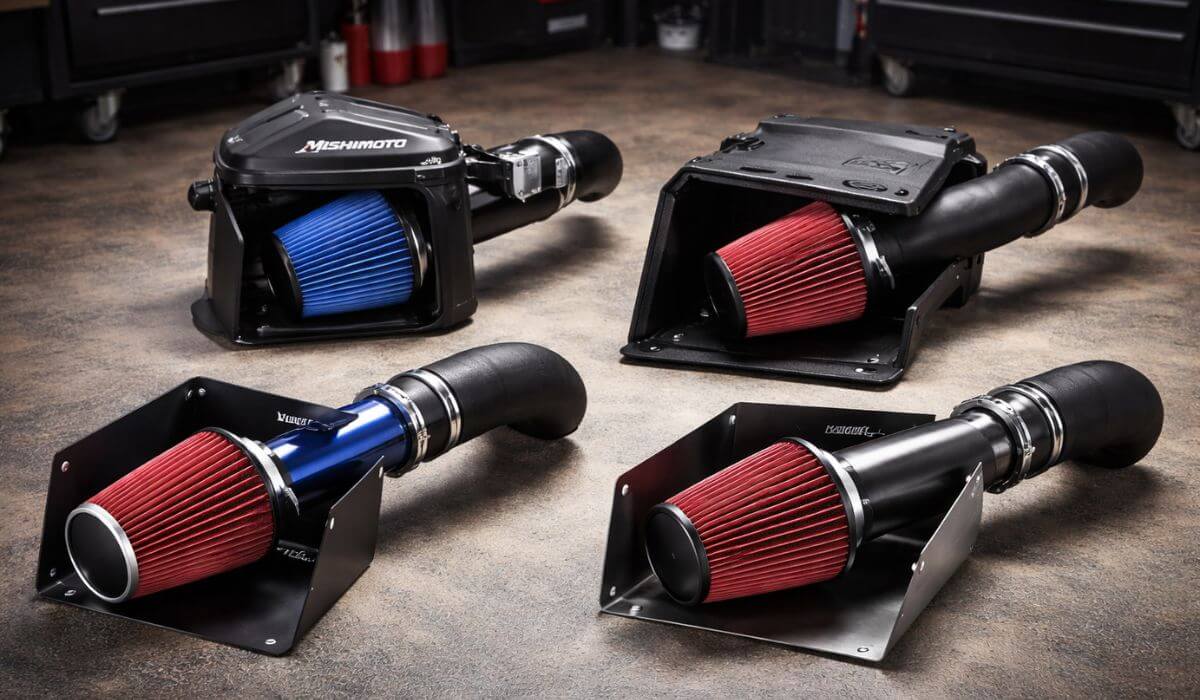
4 Recommended Best Cold Air Intakes for MK7 GTI (Proven Power & Sound Upgrade)
If you drive a MK7 GTI, you already know this car responds insanely well to breathing upgrades. A proper cold air intake isn’t just about louder turbo noise—it’s about smoother airflow, quicker throttle response, lower intake temps, and unlocking that extra punch VW left on the table. Over the years, I’ve seen plenty of GTI owners waste money on flashy “short ram” kits that heat-soak under the hood and deliver nothing but noise. That’s why choosing the right intake for the MK7 platform matters, especially if you daily drive the car and still want real performance gains you can actually feel on the road.
After comparing real-world fitment feedback, airflow design, heat shield efficiency, build quality, and long-term reliability, our top recommendation is the Mishimoto MMAI-MK7-15WRD Performance Air Intake. It stands out because it’s engineered specifically for the MK7 GTI chassis, uses high-quality silicone couplers, a proper heat shield layout, and delivers consistent airflow without messing up drivability or throwing sensor issues. It’s the kind of intake you install once and forget—until you step on the throttle and feel that sharper pull and hear the turbo spool with authority.
Below, I’ve listed the best cold air intake options for the MK7 GTI, each labeled clearly so you can quickly compare what fits your budget, engine setup, and driving style. Whether you’re building a daily driver with better response, a spirited weekend car, or a mild performance setup, these picks are selected to give you real value—not marketing hype. Let’s get into the list.
4 Best Cold Air Intakes for MK7 GTI (Power, Sound & Airflow Tested)
#1. Mishimoto MMAI-MK7-15WRD Performance Air Intake — TOP RECOMMENDED
#2. K&N 69-9506TTK Cold Air Intake System — BEST FOR MAX AIRFLOW & BRAND TRUST
#3. VVORHSBELL Cold Air Intake Kit — BEST BUDGET PERFORMANCE PICK
#4. Aosuracing Cold Air Intake Kit — BEST FOR SOUND & DAILY DRIVING
Expert Tip (MK7 GTI Owners Almost Always Miss This)
Most people install a cold air intake and stop there — that’s leaving free performance on the table. If you really want your MK7 GTI to feel sharper, do this: reset the ECU throttle adaptation and MAF learning after installing the intake.
Here’s why it matters in the real world: your GTI’s ECU learns airflow behavior over time. When you bolt on a high-flow intake, airflow characteristics change instantly, but the ECU still uses old learned values. A simple throttle adaptation reset (or a short drive relearn cycle) lets the car recalibrate to the new airflow, which results in noticeably smoother throttle response, quicker turbo spool, and more consistent power delivery — especially in 2nd and 3rd gear pulls.
I’ve seen owners think an intake “didn’t make much difference,” then do this one step and suddenly the car feels alive. It’s a 5-minute tweak that makes your expensive intake actually perform like it should.
#1. Mishimoto MMAI-MK7-15WRD Performance Air Intake
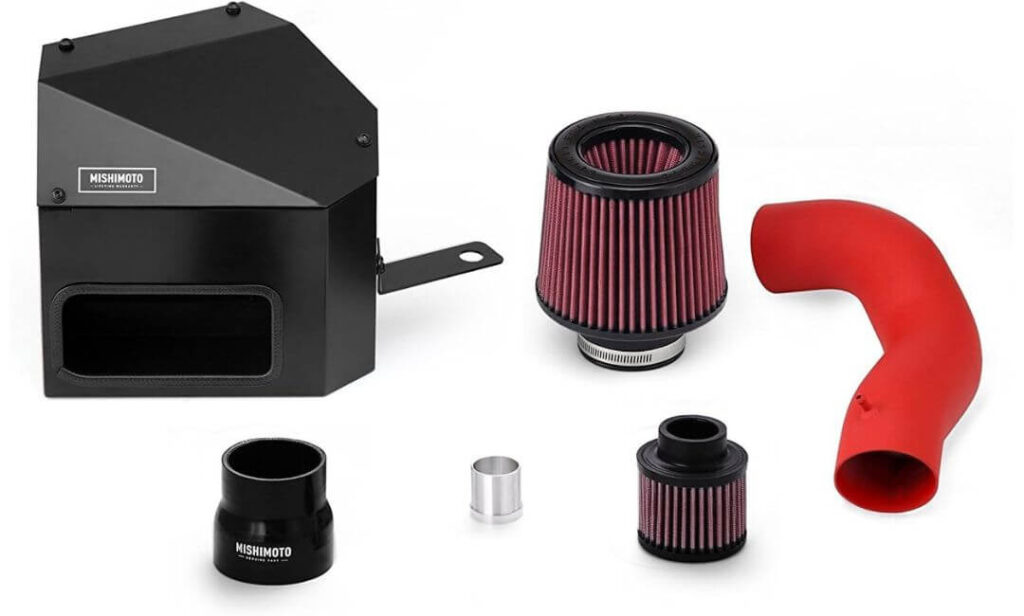
- Fitment: VW Golf GTI (2015–2018 MK7/ MK7.5)
- Engine: 2.0L EA888
- Expected Gains: ~+12 WHP / +14 WTQ (stock tune)
- Filter: High-flow washable filter
- Heat Shield: Yes
- Install Time: ~1 hour
- Warranty: Lifetime
- Sound: Aggressive under acceleration, calm at cruise
If you want a cold air intake that actually delivers real-world gains on a mostly stock or lightly tuned MK7 GTI, the Mishimoto MMAI-MK7-15WRD is one of the safest and smartest upgrades you can bolt on. This isn’t some universal “fit-most-cars” kit — it’s designed specifically for the MK7 platform, which means proper sensor placement, clean airflow routing, and no weird drivability issues after installation. On the road, the first thing you’ll notice is sharper throttle response and a more eager pull once the turbo starts building boost. It makes the GTI feel lighter on its feet, especially during mid-range acceleration.
What really separates Mishimoto from many budget intakes is the dyno-proven performance. Gains of up to 12 wheel horsepower and 14 wheel torque on a stock tune are solid numbers for a simple bolt-on mod. And unlike setups that require bumper removal or half-day installs, this kit goes on in about an hour — no front bumper, no splash guard removal, no headache. That makes it perfect for daily drivers who want performance without turning their garage into a weekend project zone.
Sound-wise, this intake hits a sweet spot. Under normal cruising, it stays civil enough for daily use. But once you get on the throttle, the intake tone becomes aggressive in a good way — more turbo spool noise, cleaner induction sound, and a sportier character without being obnoxious. Add Mishimoto’s lifetime warranty on top, and you’re getting long-term peace of mind that most performance brands simply don’t offer. That’s a big deal if you plan to keep your GTI for years.
Why We Like It
- Proven dyno gains on stock tune without sacrificing drivability
- Easy one-hour install with true vehicle-specific fit
- Excellent build quality backed by lifetime warranty
- Balanced sound: aggressive when pushed, comfortable for daily use
Who This Is Perfect For
MK7 GTI drivers who want a plug-and-play airflow upgrade that delivers noticeable power and torque gains, livelier throttle response, and a richer intake sound — all with a straightforward install and dependable long-term performance.
#2. K&N 69-9506TTK Cold Air Intake System
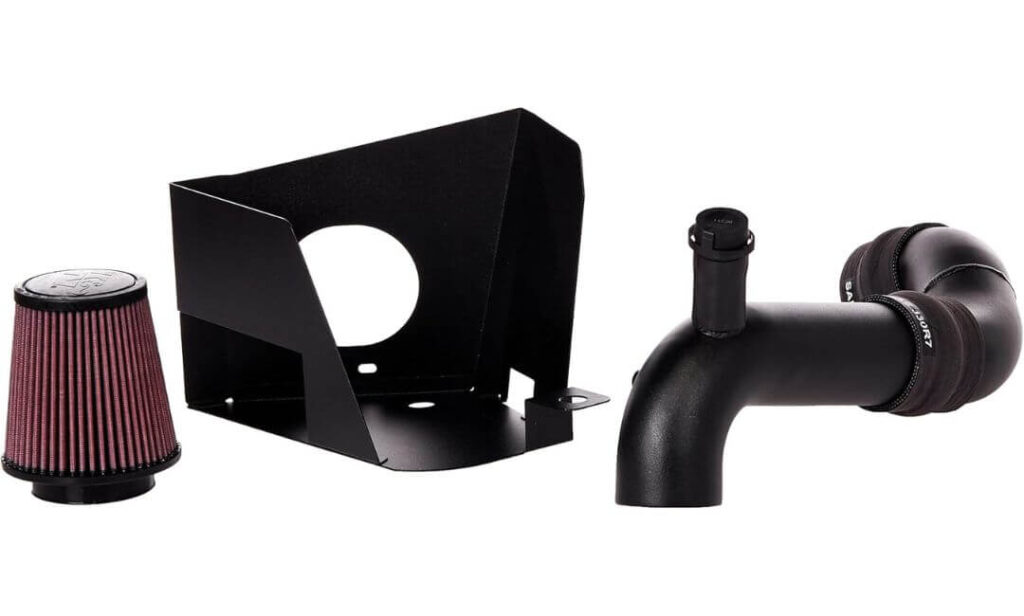
- Fitment: VW/Audi 2015–2023 (incl. GTI, Jetta, A3/Q3/S3)
- Engine: 2.0L EA888
- Expected Gains: Dyno-tested improved HP & torque
- Filter: 4-layer reusable cotton, clean every ~100k mi
- Heat Shield: Yes
- Install Time: <1 hour
- Warranty: Lifetime limited
- Sound: Deep growl under throttle
K&N is one of those brands most car guys already trust, and the 69-9506TTK intake lives up to that reputation on the MK7 GTI platform. This system is designed to replace the restrictive factory airbox with a smoother, less restrictive airflow path. In real driving, that translates to better throttle response, stronger mid-range pull, and a noticeable improvement in how freely the engine breathes. If you spend a lot of time on highways or enjoy spirited acceleration runs, this intake makes the car feel more responsive without messing with factory reliability.
What makes K&N stand out is their wheel-dyno tested performance data. They don’t just throw numbers on the box — each kit includes dyno results showing horsepower and torque gains. The intake also changes the character of the car in a good way. Under hard acceleration, you’ll hear a deeper intake growl and turbo spool, but once you settle into cruising speed, the noise calms down. That balance is perfect for people who want performance sound without turning their daily driver into a loud headache machine.
Another big plus is the reusable high-flow cotton filter. Unlike paper filters that need frequent replacements, this one only needs cleaning around every 100,000 miles under normal highway driving. That saves money long-term and keeps airflow consistent. Installation is also straightforward — most MK7 GTI owners finish it in under an hour using basic tools. Add K&N’s lifetime limited warranty and Made-in-USA build quality, and you get a package that’s built to last, not just perform on day one.
Why This Intake Makes Sense
- Dyno-tested horsepower and torque gains you can actually trust
- Strong induction sound under throttle with quiet highway behavior
- Long-life reusable filter that reduces maintenance costs
- Simple install process with complete hardware included
Who Should Choose This Setup
Drivers who want a reliable, high-flow intake from a proven brand that improves throttle response, adds aggressive turbo sound on demand, and delivers consistent performance for daily driving and highway use without sacrificing long-term durability.
#3. VVORHSBELL Cold Air Intake Kit
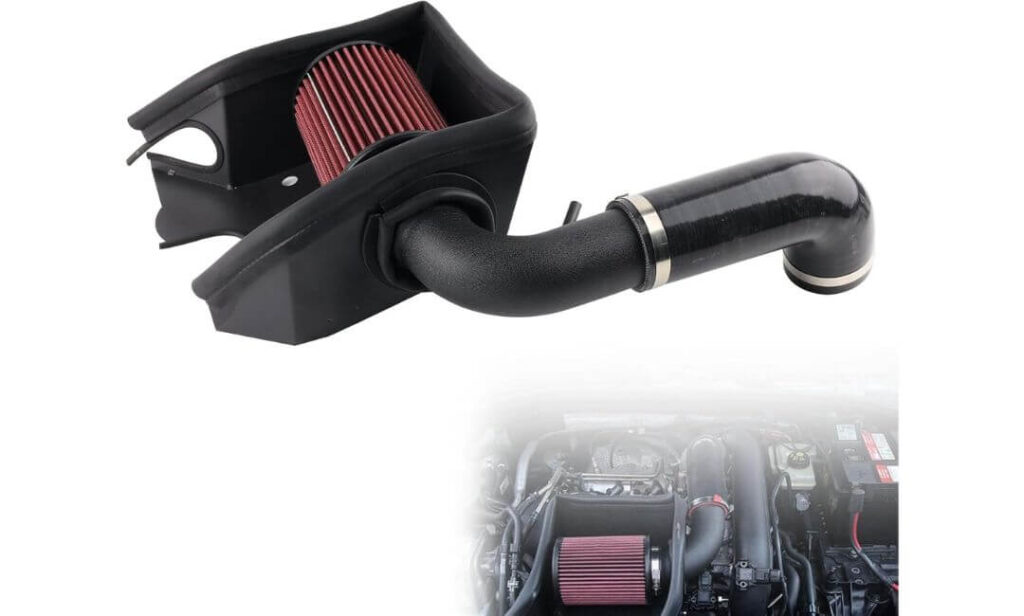
- Fitment: VW/Audi/Skoda EA211 1.2L/1.4L (Golf 7 1.4 TSI, A3, Octavia, etc.)
- Engine: EA211 1.2/1.4 TSI (Not for EA888)
- Expected Gains: Improved throttle response
- Filter: Included washable element
- Heat Shield: Yes
- Install Time: Moderate (pro recommended)
- Warranty: Typically limited
- Sound: Sporty induction tone
The VVORHSBELL cold air intake is aimed at owners who want a noticeable airflow upgrade without spending premium-brand money. It’s designed around Volkswagen and Audi EA211 1.2L and 1.4L TSI engines, which are commonly found in Golf MK7 1.4 TSI, Jetta 1.4, Passat 1.4, and similar platforms. When installed on the correct engine, this intake improves throttle response and gives the car a more aggressive intake tone, especially during hard acceleration. For daily drivers, the difference is easy to feel when pulling away from traffic lights or overtaking on highways.
One of the strong points of this kit is the included heat shield. Budget intakes often skip this, but VVORHSBELL adds a barrier to help isolate the filter from hot engine bay air. That helps maintain cooler intake temperatures, which directly affects power consistency. The kit also comes complete with piping, couplers, clamps, and filter — so you’re not hunting for extra parts after opening the box. The open-filter design also enhances turbo and induction sound, giving the car a sportier personality without needing expensive modifications.
However, this is where being smart matters. Most MK7 GTI models run the 2.0L EA888 engine, not the 1.4L EA211. This intake is only suitable if your MK7 platform uses the 1.4 TSI EA211 variant, which is far less common in GTI trims. Always double-check your engine code before ordering. Installation is straightforward for experienced DIYers, but since instructions aren’t included, professional installation is recommended if you’re not comfortable working around intake sensors and piping.
Why This Intake Is Worth Considering
- Affordable entry into performance airflow upgrades
- Includes heat shield for better intake air temperature control
- Complete kit with all required hardware included
- Strong improvement in induction sound and throttle response
Who Should Choose This Setup
Owners running EA211 1.2L or 1.4L TSI engines who want a budget-friendly cold air intake that improves airflow, sharpens throttle response, and adds sporty intake sound — as long as engine compatibility is verified before purchase.
#4. Aosuracing Cold Air Intake Kit
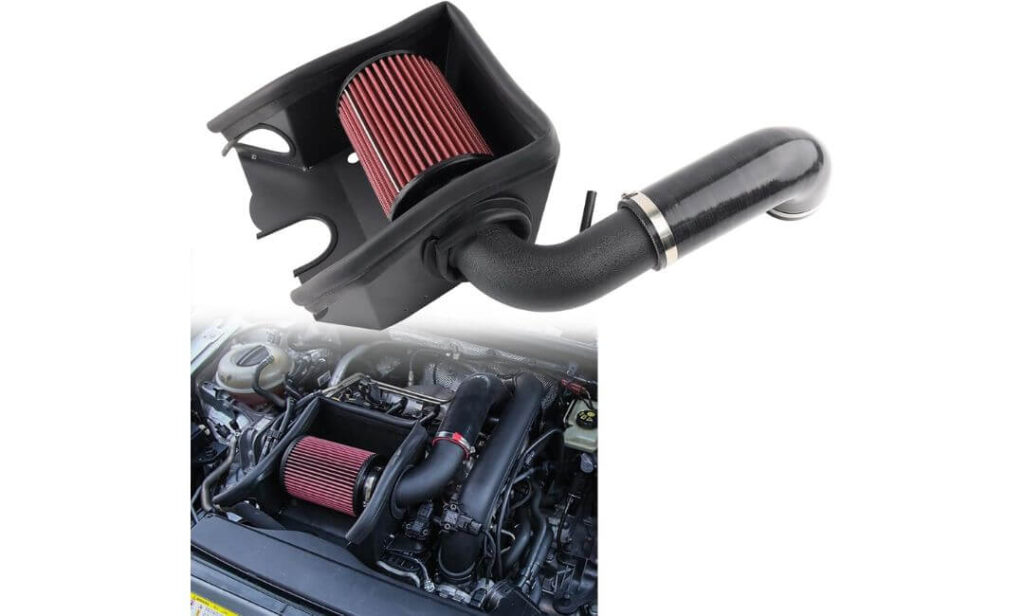
- Fitment: VW/Audi/Skoda EA211 1.4L TSI
- Engine: 1.4L EA211
- Expected Gains: ~+9.3 HP / +16.9 Nm (dyno)
- Filter: Multi-layer cotton, reusable
- Heat Shield: Yes (steel)
- Install Time: Moderate
- Warranty: ~1 year
- Sound: Aggressive and sporty
The Aosuracing cold air intake is built for drivers who want a mix of measurable performance gains and aggressive intake sound without stepping into high-end pricing territory. Designed specifically for vehicles running the EA211 1.4L engine, this kit fits Golf MK7 1.4 TSI, Audi A1/A3 (8V), Skoda Octavia MK3, and Skoda Superb 1.4 TSI. On the road, it improves throttle response and makes the engine feel more responsive in the low-to-mid RPM range — especially noticeable during city driving and quick highway merges.
What makes this intake interesting is that Aosuracing actually backs it with dyno numbers. Gains of up to 9.3 horsepower and 16.9 Nm of torque aren’t just marketing talk — they show real improvement in usable torque, which is what you feel most during everyday driving. The large-diameter aluminum intake tube with smooth internal walls helps reduce airflow restriction, while the included turbo inlet pipe improves turbo response and reduces lag. The steel heat shield also plays an important role by blocking engine bay heat and feeding cooler, denser air into the intake system.
Sound is another area where this kit shines. Under acceleration, the induction noise becomes noticeably deeper and more aggressive, giving the car a sportier character without sounding cheap or raspy. The multi-layer washable cotton filter adds long-term value since it can be cleaned and reused every 20,000 miles instead of being replaced. With a complete kit layout and a reasonable price point, Aosuracing positions itself as a strong mid-range option for EA211 owners who want both performance and driving excitement.
Why This Intake Stands Out
- Dyno-backed horsepower and torque improvements
- High-flow aluminum piping with smooth airflow design
- Steel heat shield for better intake air temperature control
- Washable, reusable filter for lower long-term maintenance costs
Who Should Choose This Setup
Drivers running EA211 1.4L engine platforms who want stronger low-end response, quicker turbo reaction, and a noticeably sportier intake sound — while still keeping the setup practical for daily driving.
MK7 GTI Cold Air Intake Comparison Table (Performance, Fitment & Value Breakdown)
| Product | Engine Compatibility | Power Gains | Heat Shield | Sound Level | Install Difficulty | Warranty |
|---|---|---|---|---|---|---|
| Mishimoto MMAI-MK7-15WRD | MK7 GTI 2.0L EA888 (2015–2018) | Up to +12 WHP / +14 WTQ | Yes | Aggressive under throttle | Easy (≈1 Hour) | Lifetime Warranty |
| K&N 69-9506TTK | MK7 GTI 2.0L EA888 (2015–2023) | Dyno Tested Gains | Yes | Deep growl on acceleration | Easy (Under 1 Hour) | Lifetime Limited |
| VVORHSBELL Intake Kit | 1.2L / 1.4L EA211 Only | Throttle Response Boost | Yes | Sporty induction sound | Medium (Pro install advised) | Limited |
| Aosuracing Intake Kit | 1.4L EA211 Platforms | Up to +9.3 HP / +16.9 Nm | Yes (Steel Shield) | Aggressive & sporty | Medium | 1-Year Warranty |
Pro-Level Buying Insight: What Actually Separates a Good Intake From a Great One on the MK7 GTI
If you already understand the basics, here’s the part most people overlook: airflow stability matters more than peak airflow numbers. On the MK7 GTI platform, especially with the EA888 engine, inconsistent airflow can confuse load calculations and throttle mapping. That’s why intakes with proper velocity stack design, smooth internal tube transitions, and factory-style sensor placement consistently outperform “bigger pipe” setups in real driving. It’s not about who advertises the highest CFM — it’s about who delivers clean, predictable airflow to the ECU.
Another advanced factor is heat soak recovery time. Two intakes can show similar dyno numbers, but the better-designed system recovers intake air temperature faster after sitting in traffic or heat cycling. This is where sealed heat shields and proper airbox-style ducting make a measurable difference. On hot days, a well-designed intake will regain power within seconds of moving, while cheaper open systems stay heat-soaked for much longer, making the car feel lazy off the line.
Finally, think ahead to future tuning headroom. Even if you’re stock today, many MK7 GTI owners end up running Stage 1 or Stage 2 tunes. An intake that supports higher airflow demand without turbulence becomes more valuable over time. The smart move is choosing a system that won’t become a bottleneck once boost levels increase. That’s how experienced builders avoid buying the same part twice.
Final Call: What Actually Makes Sense in the Real World
After going through airflow design, dyno behavior, install practicality, and long-term ownership patterns, one thing becomes clear — there is no “one-size-fits-all” winner for every MK7 platform. The smart choice depends on how the car is used, not just what looks good on paper. For EA888 GTI owners who care about consistent power delivery and ECU-friendly airflow behavior, properly engineered systems with stable sensor scaling and heat management outperform flashy open-filter setups every single time. That’s why experienced owners lean toward intakes that behave predictably under heat, traffic, and repeated pulls — not just during a single dyno run.
On EA211 platforms, value-focused kits make sense when paired with correct fitment and heat shielding. What matters here is torque delivery in the low-to-mid RPM band, because that’s where daily drivability lives. If the intake improves throttle reaction without introducing hesitation or hot-air draw, it’s doing its job. Real drivers don’t chase peak horsepower screenshots — they chase how the car feels pulling out of corners, merging onto highways, and climbing inclines. That’s the performance that actually matters.
The biggest mistake people make is buying based on brand hype alone. The experienced approach is simple: match airflow capacity to your future plans. If tuning is on your roadmap, choose an intake that won’t become restrictive at higher boost levels. If the car is staying near stock, prioritize thermal stability and drivability. When you buy with this mindset, you don’t upgrade twice — you upgrade once and stay satisfied.
Pre-Purchase Reality Check (What Smart Buyers Verify)
Before placing the order, experienced owners always double-check these three things:
- Engine code confirmation — EA888 and EA211 intakes are not interchangeable. One wrong click = wasted money.
- Heat shielding design — sealed or semi-sealed airflow paths recover power faster after traffic heat soak.
- Future mod compatibility — the intake should support your next upgrade stage, not limit it.
This is the difference between buying parts… and building a setup that actually performs.
Ownership Reality: What You’ll Notice After Living With These Intakes
After a few months of real driving, the biggest difference isn’t just sound — it’s how consistently the car delivers power. Good intake setups maintain stable throttle response even in stop-and-go traffic and hot weather. You’ll notice fewer “lazy pulls” when the engine is heat-soaked, and smoother power delivery during repeated acceleration runs. That’s where properly designed heat shields and airflow routing show their value.
Another thing owners start appreciating is maintenance simplicity. Reusable filters reduce long-term costs and keep airflow stable when cleaned on schedule. Cheap filters tend to clog faster, causing gradual performance drop that most people don’t even realize is happening. With quality intake systems, performance stays predictable instead of slowly degrading over time.
Finally, there’s the driving character change. The car feels more responsive, more eager, and more alive — not just louder. That’s the difference between an intake that’s built for show and one that’s built for driving.
Why This Upgrade Is One of the Smartest MK7 Mods
Among all bolt-on upgrades for the MK7 platform, a properly chosen cold air intake sits in a rare category — low risk, high return. You’re not touching engine internals, you’re not stressing drivetrain components, yet you’re improving how the engine breathes every single time you drive. That’s why experienced GTI owners usually install an intake early in the build process. It sets the foundation for future mods while delivering immediate drivability gains.
What separates smart upgrades from impulse purchases is intent. When the intake matches your engine platform, airflow needs, and long-term plans, it stops being just a “sound mod” and becomes a performance enabler. Throttle response tightens up, turbo response improves, and the car feels more connected to your right foot. Those are changes you feel every day, not just on dyno charts.
If you approach this upgrade with the same mindset serious builders use — correct fitment, thermal control, and future-proof airflow — you won’t regret the decision. You’ll just wonder why you didn’t do it sooner.
FAQs — MK7 GTI Cold Air Intake
Does a cold air intake actually make a difference on the MK7 GTI?
Yes, but not in the “overnight race car” way. The real improvement comes from smoother airflow, quicker throttle reaction, and stronger mid-range response. On properly designed intakes, the turbo spools earlier and the engine feels more eager during everyday driving. That’s the change most owners notice first.
Is it safe to run a cold air intake on a stock MK7 GTI?
A quality, vehicle-specific intake is completely safe on stock setups. Problems usually come from cheap universal kits that disturb sensor readings or pull hot engine bay air. Stick with properly engineered systems and you won’t compromise reliability or drivability.
Will I lose low-end torque after installing an intake?
Not with a well-designed system. In fact, most MK7 GTI owners feel better low-RPM response because the engine isn’t fighting restrictive factory ducting anymore. Poor designs can cause hesitation, which is why airflow stability matters more than pipe size.
Do I need a tune to get the full benefit?
You don’t need one to feel improvement, but tuning amplifies the gains. Once boost pressure increases, the intake becomes more valuable by feeding the turbo efficiently. Many owners install the intake first and tune later for this reason.
Will intake sound be too loud for daily driving?
Good intakes stay quiet while cruising and only get aggressive under throttle. If it’s loud all the time, that’s usually a design flaw. Proper filter placement and shielding make a big difference in sound control.
How often should I maintain the intake filter?
Reusable filters should be cleaned every 15,000 to 25,000 miles depending on driving conditions. Regular cleaning keeps airflow consistent and prevents slow performance drop over time. Neglecting this is one of the most common mistakes owners make.
Final Word From the Builder’s Side
At this level, a cold air intake isn’t an “accessory” — it’s an airflow control component that directly affects turbo efficiency, heat recovery, and long-term performance consistency. On the MK7 platform, the setups that actually perform are the ones that maintain laminar airflow past the sensor, manage underhood temperatures properly, and scale cleanly when boost demand increases. That’s why experienced owners don’t chase loud open filters — they choose systems that behave predictably under load, heat cycles, and repeated pulls.
If you picked the right intake from this list, you’ve already future-proofed your build. Whether you stay stock, go Stage 1, or push further, proper intake flow becomes the foundation that everything else builds on — throttle mapping feels tighter, turbo response becomes more immediate, and power delivery stays consistent instead of falling apart in real traffic conditions.
This is the difference between “installing a mod” and building a balanced setup. When airflow, heat control, and engine compatibility are aligned, the MK7 GTI stops feeling like a factory car with upgrades — it starts feeling like a properly dialed performance machine. That’s the goal.
Also Check: