
Best Dash Cams for Truckers in 2026 (Front/Rear Coverage for Day and Night Driving)
Most truck drivers don’t start searching for the best dash cam for truckers because they want another gadget on the windshield. They start looking after a close call, a false claim, a roadside stop that didn’t go their way, or a near-miss that could’ve ended their livelihood.
Driving a truck is different from driving a car. You’re on the road longer, you deal with higher cabin heat, stronger vibrations, wider blind spots, and situations where fault is decided before the story is even heard. A dash cam that works fine in a sedan can quietly fail in a truck — overheating mid-shift, skipping files, or missing the exact moment you needed most.
This guide was built with that reality in mind. The dash cams listed here were selected based on how they perform during extended highway runs, how consistently they record in hot cabs, how well they handle front and rear coverage on larger vehicles, and how reliable their footage is when it actually needs to be pulled and used. No showroom features, no spec-sheet padding — only what matters when you’re logging hours and miles.
If you’re a long-haul driver, owner-operator, or regional trucker who wants dependable video evidence that doesn’t quit halfway through a shift, this list is designed for you. We’re covering seven dash cams that hold up where most consumer models don’t — on real trucks, in real driving conditions.
7 Best Dash Cams for Truckers (2026) Top Picks for Serious Drivers
#1. ROVE R2-4K Dash Cam (Heat-Stable Front Recording for Long Highway Runs)
#2. Nextbase 622GW Dash Cam (High-Detail 4K Footage with Image Stabilization)
#3. Garmin Dash Cam 67W (Ultra-Wide 180° Front Coverage in a Compact Body)
#4. VIOFO A129 Plus Duo (Reliable Front and Rear Recording with Supercapacitor)
#5. Nexar Beam GPS Dash Cam (Automatic Cloud Backup and 24/7 Parking Protection)
#6. Kenwood DRV-A601WDP Dash Cam (Balanced Dual Cameras with On-Screen Playback)
#7. OldShark GS505 Dash Cam (Simple Plug-and-Play Front Recorder)
Important:
Also Check:
How We Chose the Best Dash Cam for Truckers
Choosing a dash cam for trucking isn’t about chasing the highest resolution number or the longest feature list. Most cameras look impressive on a product page — far fewer survive long hours, heat-soaked cabins, constant vibration, and the reality of professional driving. That difference is where this selection process started.
Instead of relying on manufacturer claims alone, this list was shaped by how dash cams are actually discussed and used in trucking environments. We reviewed long-term owner feedback across trucking forums, owner-operator groups, and fleet discussions where reliability problems tend to surface quickly — overheated units, corrupted footage, weak mounts, or rear cameras that fail after a few months. Patterns matter more than one-off reviews, and only models with consistent real-world reliability made it past the first filter.
We also focused heavily on use-case alignment. A dash cam that works fine for short city commutes often struggles when asked to record for extended highway stretches. Priority was given to cameras known for stable loop recording, dependable memory card handling, and thermal protection suited for vehicles that stay on the road far longer than average passenger cars.
Mounting and vibration resistance played a bigger role than most guides admit. Truck windshields, cabin angles, and ride characteristics are different, so cameras with weak suction mounts or inconsistent alignment were avoided. The same applied to rear-camera systems — only setups proven to maintain signal stability over longer cable runs were considered.
Finally, we looked at footage usefulness, not just footage quality. Clear license plates, balanced night exposure, and readable context during incidents matter far more than ultra-sharp video that drops frames or skips files. Cameras that consistently deliver usable evidence — not just attractive demo clips — earned their place here.
The result is a short list of seven dash cams selected for how they hold up in real trucking conditions, not how well they market themselves. Each pick serves a different type of driver, from long-haul operators to regional routes, so you can match the camera to how — and where — you actually drive.
#1. ROVE R2-4K Dash Cam
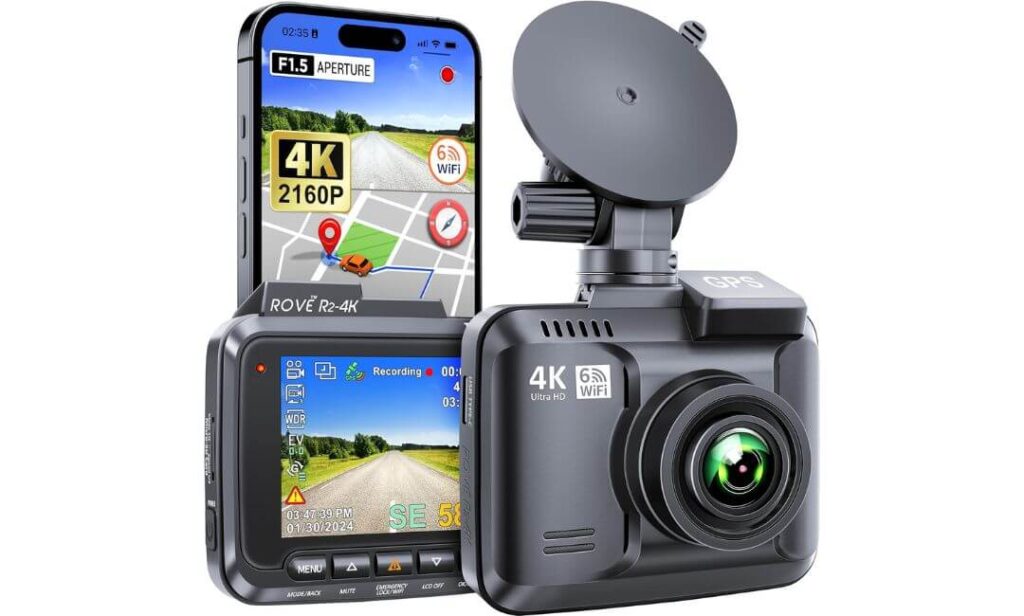
- Heat-stable supercapacitor design
- Consistent 4K front recording
- Reliable loop recording on long drives
- Built-in GPS for speed and route data
- Fast Wi-Fi clip transfer
The ROVE R2-4K has earned its place among truckers not because it’s flashy, but because it stays consistent during long driving hours. This is a front-facing dash cam that focuses on recording stability first — the kind that keeps rolling through extended highway stretches without overheating or dropping files when the cab temperature climbs.
For truck drivers who spend most of their time moving rather than parking, the R2-4K’s strength lies in how predictable it behaves. Once installed and set up, it records quietly in the background, looping footage properly and locking clips when sudden braking or impact occurs. There’s no constant babysitting required, which matters when your attention belongs on the road, not on a screen.
The 4K footage isn’t just about sharpness — it’s about usable detail. License plates, road signs, and surrounding traffic remain readable during daylight highway driving, and low-light performance holds up well enough to capture context at night without blowing out headlights or losing shadow detail.
Front Camera Coverage: What to Expect in a Truck
This is a front-only setup, which works well for drivers who primarily want forward-facing evidence — lane changes, brake-check incidents, and highway collisions. The 150° field of view captures wide lanes without excessive edge distortion, making footage easier to interpret later. For truckers not running a rear camera system, this keeps installation simple and reduces cable management issues inside the cab.
What the ROVE R2-4K Does Well
- Maintains stable loop recording during long driving shifts
- Handles cabin heat better than battery-dependent cameras thanks to its supercapacitor
- Footage is clear enough for evidence, not just playback
- Wi-Fi transfers are reliable for pulling clips roadside when needed
Where It Falls Short
- No rear camera support for drivers who want full front-and-back coverage
- App interface works fine but isn’t the fastest to navigate at first
- Larger body than ultra-compact cams, more noticeable on the windshield
Who This Dash Cam Fits Best
The ROVE R2-4K is best suited for long-haul and regional truckers who want dependable forward-facing footage without dealing with complex multi-camera setups. It’s a strong choice if your priority is protecting yourself during highway incidents rather than monitoring trailers or rear impacts.
Bottom Line: If you want a front dash cam that records consistently through long hours, handles heat without shutting down, and produces footage that actually holds up when reviewed, the ROVE R2-4K fits the way most truckers really drive.
#2. Nextbase 622GW Dash Cam
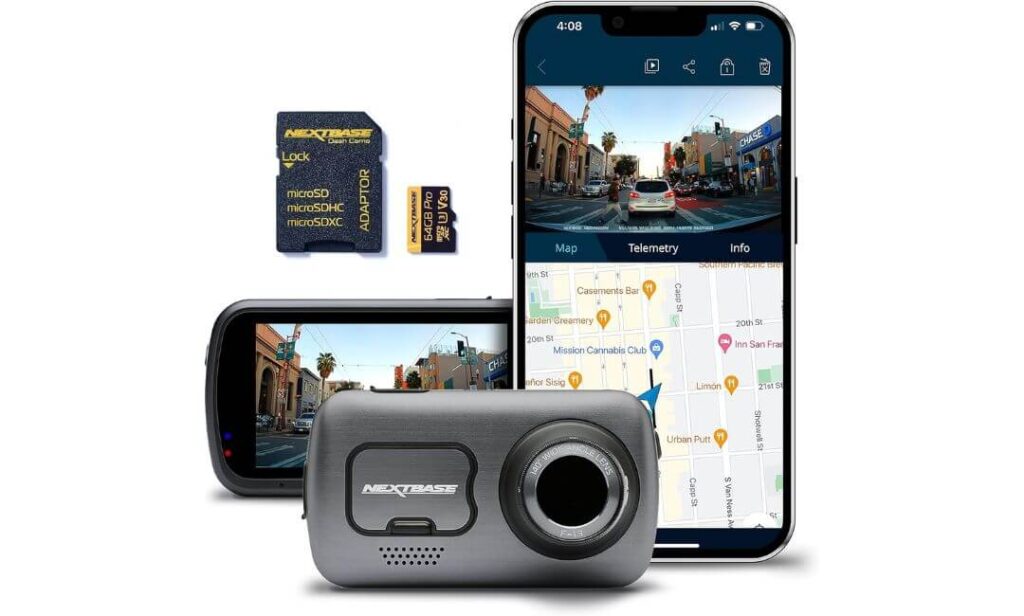
- High-detail 4K video with stabilization
- Extreme weather image processing
- Large touchscreen for quick review
- Fast 5GHz Wi-Fi transfers
- Smart parking incident detection
With 4K Ultra HD recording at 30fps, the Nextbase 622GW is built for drivers who want the highest possible detail from a front-facing dash cam, even when road conditions aren’t ideal. The footage stays sharp at highway speeds, and image stabilization helps keep recordings readable on rough surfaces where vibration usually blurs important details.
What separates the 622GW from simpler truck-friendly cameras is how much support tech it adds on top of recording. GPS logging runs quietly in the background, Wi-Fi transfers are fast enough to pull clips during a stop, and Bluetooth connectivity keeps everything linked without constant reconnecting. For drivers who like having more control and visibility, the larger touchscreen makes reviewing footage straightforward without relying entirely on a phone.
Low-light and poor-weather performance is where this camera earns its reputation. Headlight glare, rain haze, and foggy conditions are handled well enough that footage remains usable when conditions are working against you. That matters when incidents happen during overnight runs or early-morning starts.
Front Camera Coverage: What to Expect in a Truck
This is a front-only dash cam, designed to capture forward incidents with clarity rather than manage multi-camera setups. The 140° field of view strikes a good balance for trucks — wide enough to cover lanes and shoulders without stretching details at the edges. Image stabilization helps counter the constant vibration common in heavier vehicles, keeping license plates and road context readable.
What the Nextbase 622GW Does Well
- Produces very sharp, stabilized 4K footage even on uneven roads
- Fast Wi-Fi transfers make clip retrieval less frustrating on the road
- Touchscreen is practical for quick checks without pulling out a phone
- Included memory card means it’s ready to run out of the box
Where It Falls Short
- No rear camera support for drivers who want full front-and-back evidence
- Feature-heavy interface may feel unnecessary for minimal-setup drivers
- Battery-based design is less heat-tolerant than supercapacitor systems in hot cabs
Who This Dash Cam Fits Best
The Nextbase 622GW suits truckers who value maximum video detail and smart features over simplicity. It works well for drivers who frequently review footage, want weather-resistant clarity, and don’t mind a more advanced interface in exchange for better control.
Bottom Line: If you want top-tier front-facing footage with stabilization, fast access to clips, and extra driving assistance features built in, the Nextbase 622GW delivers clarity that holds up when conditions aren’t perfect.
#3. Garmin Dash Cam 67W
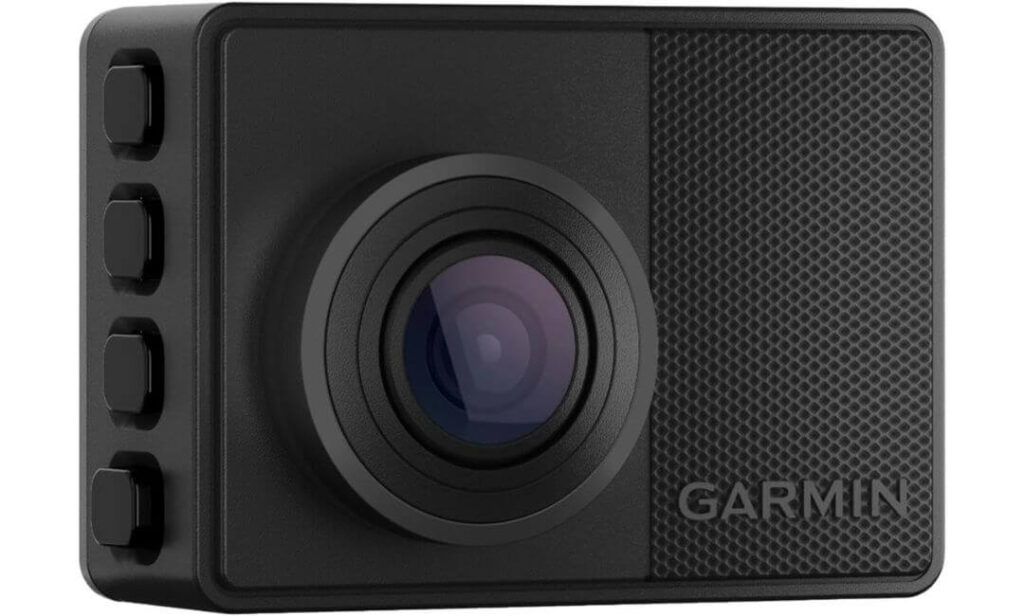
- Extra-wide 180° front coverage
- Compact, discreet windshield mount
- Heat-tolerant internal design
- Hands-free voice control
- Parking Guard activity alerts
With a 180-degree wide lens capturing more than just the lane ahead, the Garmin Dash Cam 67W focuses on situational awareness rather than raw resolution numbers. The extra-wide field of view pulls in adjacent lanes, shoulders, and side movement that narrower cameras often miss — useful in highway merges, tight traffic, and sudden cut-ins common around larger vehicles.
Despite its small size, this camera doesn’t behave like a lightweight gadget. It’s built to stay discreet on the windshield while continuing to record reliably in bright sunlight and hot interiors. For drivers who prefer a “set it and forget it” camera that doesn’t draw attention or block visibility, the low-profile design is a real advantage.
Garmin’s clarity processing keeps 1440p footage sharp enough to identify vehicles and road context without pushing file sizes too hard. Daytime recordings are crisp, and night footage stays balanced without aggressive glare from headlights. Voice control also reduces the need to reach for the camera mid-drive, which matters when you’re handling a larger vehicle.
Front Camera Coverage: What to Expect in a Truck
This is a front-facing dash cam with one of the widest views available. The 180° lens is particularly useful for truckers who want broader incident context rather than zoomed-in detail. It captures more of what’s happening around the front of the vehicle, though the tradeoff is slightly less fine detail at long distances compared to 4K-focused models.
What the Garmin 67W Does Well
- Extremely wide field of view captures side activity and lane changes
- Compact body stays out of the driver’s line of sight
- Handles heat and direct sunlight without frequent shutdowns
- Voice commands make it easier to save clips hands-free
Where It Falls Short
- Not designed for rear camera expansion
- Ultra-wide footage prioritizes coverage over tight plate detail at distance
- Connected features require consistent power and Wi-Fi access
Who This Dash Cam Fits Best
The Garmin Dash Cam 67W works best for truckers who want maximum forward awareness in a small, discreet unit. It’s a good fit for drivers who deal with dense traffic, frequent lane changes, or urban highway routes where side context matters as much as what’s directly ahead.
Bottom Line: If your priority is seeing more of what’s happening around your truck — without cluttering the windshield or worrying about heat tolerance — the Garmin 67W delivers wide-angle coverage that stays dependable shift after shift.
#4. VIOFO A129 Plus Duo
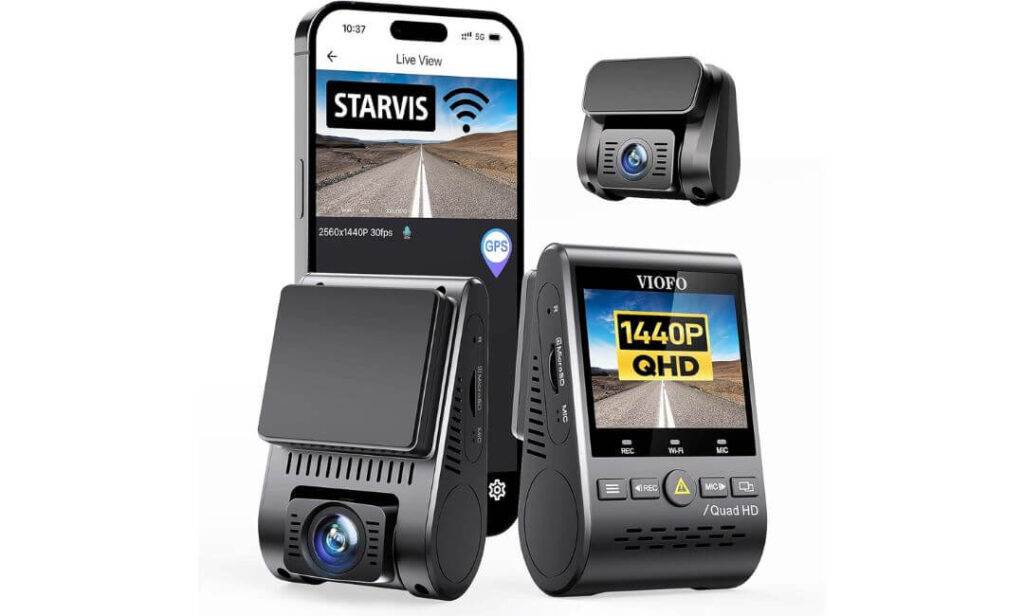
- Front and rear recording support
- Supercapacitor for hot cabins
- Smooth 60fps front footage
- Strong night visibility on both cameras
- Multiple parking mode options
Thanks to its supercapacitor design, the VIOFO A129 Plus Duo is built to handle long driving hours and hot interiors without the reliability issues that battery-based cameras can run into. This matters in trucks, where heat buildup and continuous operation are part of daily driving rather than edge cases.
What makes this setup stand out is how well the front and rear cameras work together. The front camera records at a smooth 1440p 60fps, which keeps motion clear at highway speeds, while the rear camera quietly captures what’s happening behind you — lane changes, rear impacts, or trailer-related incidents. Both channels stay synchronized, making footage easier to review if something goes wrong.
Night driving is another strong point. With quality sensors on both cameras, the footage holds onto detail under headlight glare and uneven lighting. Plates and signboards remain readable more often than not, which is exactly when rear footage usually fails on cheaper dual systems.
Front and Rear Coverage: What to Expect in a Truck
This is a true dual-channel dash cam, well-suited for truckers who want front-and-back evidence rather than relying on mirrors alone. The rear cable length is workable for larger cabins, and once installed properly, signal stability stays consistent. Parking mode options add another layer of protection during overnight stops, especially when the truck is left unattended.
What the VIOFO A129 Plus Duo Does Well
- Supercapacitor design handles heat and long operating hours reliably
- Smooth front footage at highway speeds with clear rear support
- Night recordings remain usable on both channels
- Flexible parking modes for different stop durations
Where It Falls Short
- Hardwire kit required to unlock full parking features
- Rear camera installation takes more time than single-channel setups
- No built-in screen shortcuts for quick clip locking without optional accessories
Who This Dash Cam Fits Best
The VIOFO A129 Plus Duo is a strong fit for owner-operators and long-haul truckers who want solid front and rear coverage without stepping into overly complex systems. It’s especially useful for drivers who park overnight and want recording coverage even when the engine is off.
Bottom Line: If you want a dual dash cam that stays stable in heat, records smoothly at speed, and delivers usable footage day and night, the VIOFO A129 Plus Duo matches the real demands of trucking life.
#5. Nexar Beam GPS Dash Cam
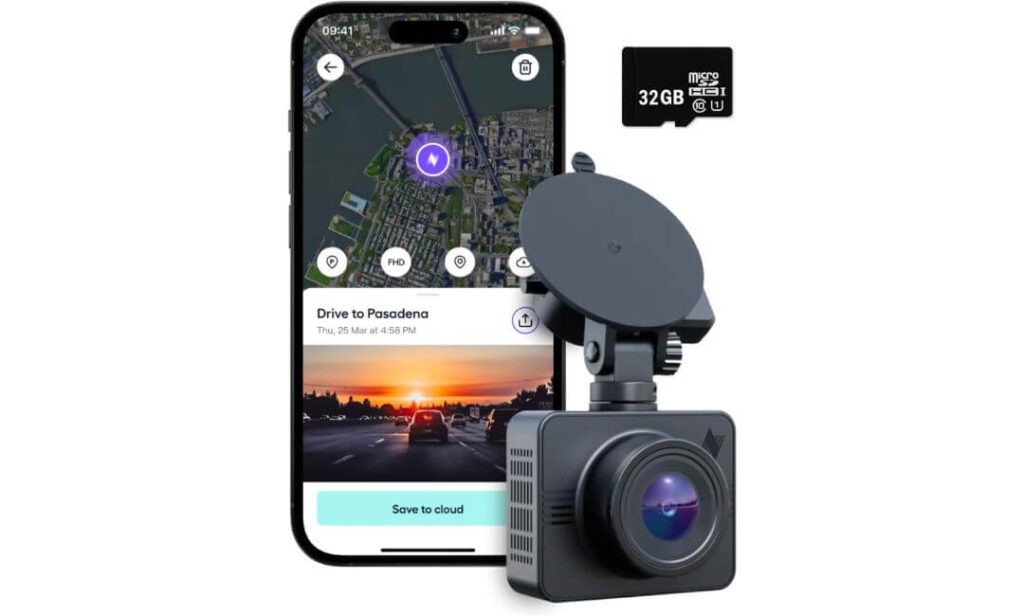
- Automatic cloud video backup
- 24/7 parking impact monitoring
- App-based live access to footage
- Hands-free incident detection
- No manual file management needed
Nexar Beam is built around a simple idea: footage should be saved automatically, backed up safely, and available when you actually need it — without pulling SD cards or worrying about overwriting clips. Instead of acting like a traditional dash cam, it works more like a connected recorder that quietly uploads important moments to the cloud.
For truckers, this changes how incidents are handled. Sudden braking, impacts, or unusual events are detected automatically, clipped, and backed up without manual input. Even if the camera or memory card is damaged, the footage isn’t lost. That kind of redundancy matters when disputes or insurance claims show up days later.
The camera itself stays low-profile and unobtrusive. Once paired with the app, it runs in the background without interfering with navigation or calls. You don’t need to interact with the screen often — most drivers won’t touch it at all after setup.
Front Camera Coverage: What to Expect in a Truck
This is a front-facing dash cam designed for context rather than extreme sharpness. The 1080p footage captures enough detail for incident review, lane behavior, and surrounding traffic, while the 135° view avoids heavy distortion. It won’t zoom plates from far distances, but it records a clean, stable picture that holds up well when reviewed later in the app.
Parking and Away-From-Truck Monitoring
Where Nexar Beam really stands out is 24-hour parking protection. When the truck is parked, impacts are detected automatically and recorded. Alerts are sent once the phone reconnects, so you’re not left guessing what happened while you were away. For drivers who park overnight at unfamiliar locations, this adds a layer of awareness most basic dash cams don’t offer.
What the Nexar Beam Does Well
- Automatic cloud backup removes the risk of lost or overwritten footage
- Incident detection works without driver input
- Parking mode provides coverage when the vehicle is unattended
- App-based access makes sharing clips straightforward
Where It Falls Short
- Relies heavily on smartphone connectivity to unlock full functionality
- Video resolution prioritizes reliability over fine detail
- Subscription required after the first year for cloud features
Who This Dash Cam Fits Best
The Nexar Beam is best for truckers who want hands-off evidence management. If you don’t want to think about memory cards, file transfers, or manual clip saving — and you value automatic backups — this camera fits that mindset well.
Bottom Line: If your priority is making sure important footage is saved, backed up, and easy to access without extra effort, the Nexar Beam offers a cloud-driven approach that traditional dash cams simply don’t match.
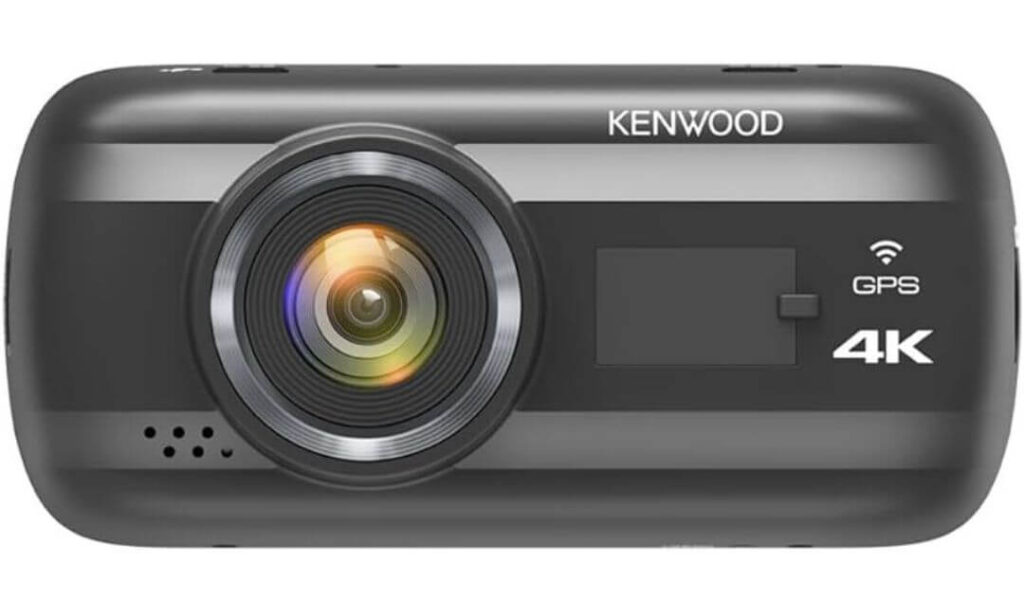
#6. Kenwood DRV-A601WDP
- Dual camera front and rear setup
- On-screen playback with LCD display
- GPS-stamped video recording
- Balanced wide-angle coverage
- Long rear cable for larger vehicles
With 4K recording up front and Quad HD in the rear, the Kenwood DRV-A601WDP takes a practical approach to dual-camera coverage. Instead of pushing both channels to the limit at all times, it prioritizes stable, synchronized recording that’s easy to review and reliable during everyday driving.
This setup suits drivers who prefer seeing footage directly on the device rather than relying on a phone app. The 3-inch LCD screen gives you immediate playback of both front and rear clips, along with GPS data and recording status, which is useful during roadside checks or quick reviews after an incident. Controls are straightforward and responsive, keeping interaction simple.
Kenwood’s image handling is tuned for balance. Wide Dynamic Range helps maintain visibility when lighting changes quickly — tunnels, glare, night traffic — without washing out details. The system feels composed rather than aggressive, which translates to footage that’s easier to interpret later.
Front and Rear Coverage: What to Expect in a Truck
This is a dual-camera configuration that records front and rear together, with an option to prioritize front-only 4K when needed. The rear camera cable length supports larger cabins, and once mounted, the feed remains steady. The wide viewing angles provide good lane and context coverage without excessive edge distortion.
What the Kenwood DRV-A601WDP Does Well
- Stable dual recording with clear front and rear synchronization
- Built-in screen makes on-device review quick and practical
- GPS stamping adds location and speed context to footage
- Rear cable length works for larger vehicles
Where It Falls Short
- Dual mode limits both cameras to Quad HD rather than full 4K
- App features are more basic compared to cloud-first systems
- Larger body is more noticeable on the windshield
Who This Dash Cam Fits Best
The Kenwood DRV-A601WDP fits drivers who want straightforward dual coverage with easy on-screen access. It’s a good match for truckers who prefer checking footage without pulling out a phone and value stable, readable recordings over advanced cloud automation.
Bottom Line: If you want dependable front and rear recording with clear on-device playback and GPS context — without leaning heavily on apps or subscriptions — the Kenwood DRV-A601WDP delivers a composed, workmanlike setup that gets the job done.
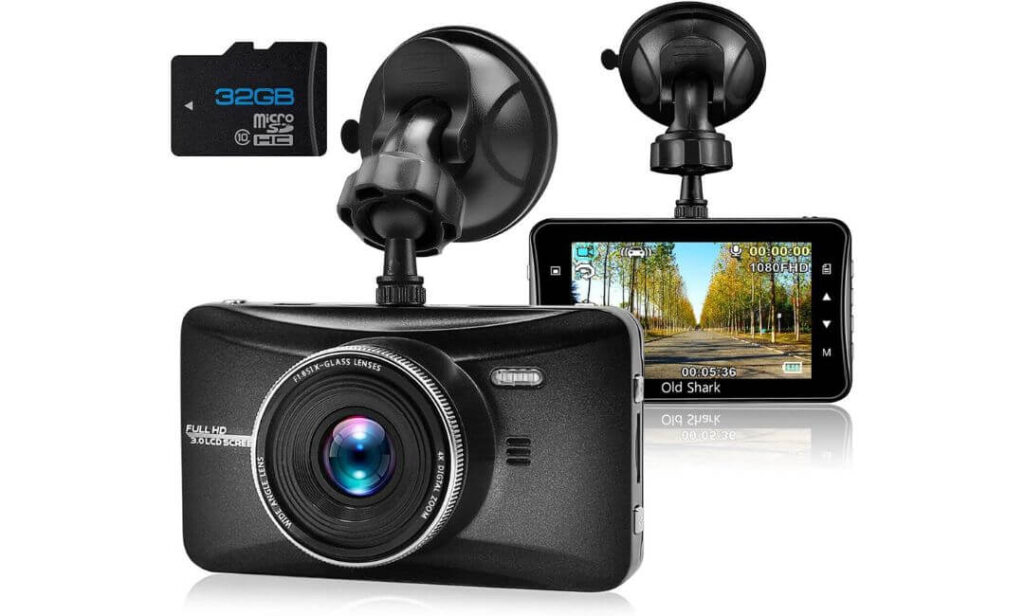
#7. OldShark GS505
- Simple plug-and-play operation
- Wide 170° front view
- Automatic impact clip locking
- Included memory card
- No app or setup complexity
Not every trucker is looking for cloud storage, apps, or advanced alerts. Some just want a dash cam that turns on with the key, records what’s in front of the truck, and saves footage when something goes wrong. That’s exactly the space the OldShark GS505 fits into.
This is a straightforward 1080p front dash cam that focuses on doing the basics without complication. Once mounted and powered, it records continuously, overwriting old clips as needed and locking footage automatically when sudden movement or impact is detected. There’s no app pairing, no Wi-Fi setup, and no background syncing — which for some drivers is actually a plus.
The included 32GB card means it’s usable right out of the box. For drivers who want a secondary camera, a backup recorder, or a low-cost option for short routes, this kind of simplicity can be more practical than feature-heavy systems.
Front Camera Coverage: What to Expect in a Truck
This is a front-facing camera with a wide 170° view, giving broad lane coverage and reducing blind spots directly ahead. The footage captures general road behavior, traffic flow, and incident context well enough for basic evidence. Fine details like distant plates aren’t its strong suit, but nearby activity is clearly documented.
What the OldShark GS505 Does Well
- Simple plug-and-play setup with no app dependency
- Wide viewing angle captures more of the road scene
- Automatic clip locking during sudden impacts
- Included memory card makes it ready to use immediately
Where It Falls Short
- No rear camera support or expansion
- Video quality is functional, not detailed
- No Wi-Fi, GPS, or remote access features
Who This Dash Cam Fits Best
The OldShark GS505 makes sense for drivers who want a no-frills recorder. It’s well-suited as a budget-friendly primary cam for short routes, a backup camera in a secondary vehicle, or an entry-level option for drivers who don’t want to manage apps or subscriptions.
Bottom Line: If you’re looking for an inexpensive dash cam that records reliably, installs quickly, and doesn’t ask for your attention once it’s running, the OldShark GS505 covers the fundamentals without trying to be more than it is.
Side-by-Side Comparison of the Best Dash Cams for Truckers in 2026
| Dash Cam | Channels | Video Quality | Field of View | Heat Handling | Parking Coverage | Connectivity | Best Use Case |
|---|---|---|---|---|---|---|---|
| ROVE R2-4K | Front | 4K UHD | 150° | Very Strong (Supercapacitor) | Basic Impact Detection | Wi-Fi, GPS | Long highway runs, heat-heavy cabs |
| Nextbase 622GW | Front | 4K @ 30fps | 140° | Moderate (Battery-Based) | Intelligent Parking Mode | Wi-Fi, Bluetooth, GPS | Drivers who want max detail & stabilization |
| Garmin Dash Cam 67W | Front | 1440p HDR | 180° | High (Heat-Tolerant Design) | Parking Guard Alerts | Wi-Fi, GPS | Wide-angle awareness, dense traffic routes |
| VIOFO A129 Plus Duo | Front + Rear | 1440p + 1080p | 140° / 140° | Excellent (Supercapacitor) | Advanced (Hardwire Supported) | Wi-Fi, GPS | Owner-operators needing full evidence |
| Nexar Beam | Front | 1080p | 135° | Good | 24/7 Cloud Parking Mode | Wi-Fi, Cloud App | Drivers who want automatic cloud backups |
| Kenwood DRV-A601WDP | Front + Rear | 4K / Quad HD | 170° | Good | Event-Based Parking | Wi-Fi, GPS | Drivers preferring on-screen playback |
| OldShark GS505 | Front | 1080p | 170° | Basic | Impact Detection | None | Budget or backup recording |
Which Dash Cam Makes Sense for Your Type of Driving
If you’ve reached this point and still feel torn between a few options, that’s normal. Most dash cams look similar on paper. The difference shows up only when you line them up against how you actually drive.
If you’re a long-haul driver covering serious miles every day
Look toward cameras built for heat tolerance and recording stability over long shifts. A front-focused setup like the ROVE R2-4K or VIOFO A129 Plus Duo (for those who want rear coverage as well) makes sense here. These models prioritize staying powered, recording continuously, and surviving hot cabs without random shutdowns.
If overnight parking is part of your routine
Drivers who regularly leave their truck unattended benefit from parking coverage that doesn’t rely on luck. Dual-channel systems such as the VIOFO A129 Plus Duo add rear visibility, while cloud-enabled options like the Nexar Beam ensure important clips are backed up even if you’re not nearby when something happens.
If you just want simple, forward-facing proof
Not everyone needs apps, alerts, or cloud storage. If your goal is basic evidence for highway incidents and insurance protection, a straightforward front camera like the Garmin Dash Cam 67W or OldShark GS505 keeps things simple. Fewer features often mean fewer distractions and fewer things to manage.
If you want automatic backups without managing files
For drivers who don’t want to deal with SD cards, file transfers, or manual clip saving, cloud-first cameras like the Nexar Beam fit better. Footage is handled in the background, which is useful if you’d rather focus on driving than data management.
There’s no universal answer — only the camera that fits your routes, parking habits, and tolerance for technology. Match the dash cam to how you drive, and the decision usually becomes obvious.
How to Choose the Right Dash Cam for Truckers
Choosing the best dash cam for truckers isn’t about buying the most expensive model or the one with the longest feature list. It’s about understanding how your truck is actually used — day after day, mile after mile.
Driving duration comes first. A camera that works fine for a 40-minute commute can quietly fail on a 10-hour shift. Long-haul drivers should prioritize heat tolerance and recording stability over resolution hype. Supercapacitor-based cameras exist for a reason: they survive hot cabs, direct sunlight, and continuous power without swelling batteries or random shutdowns.
Coverage matters more than sharpness. Front-only cameras are often enough for highway incidents, brake-checks, and lane disputes. But if you park overnight, run city freight, or deal with tight docks, front and rear coverage becomes evidence — not convenience.
Parking mode needs context. Many dash cams advertise parking protection, but few explain the tradeoff. Event-based parking modes work best when paired with stable power and realistic expectations. If your truck sits for days, cloud-backed or low-bitrate recording makes more sense than motion-triggered clips that miss the moment.
File handling is underrated. A dash cam that records beautifully but loses clips under pressure isn’t helping anyone. Reliable loop recording, proper file locking, and easy retrieval matter more than cinematic footage when you’re dealing with insurance or compliance questions.
The right dash cam fits your driving reality — not a marketing checklist.
Which Dash Cam Fits Your Driving Style
Not all truckers drive the same, and no single camera fits everyone. Here’s how the picks in this guide line up with real driving patterns:
If you spend most of your time on highways and long routes, a heat-stable front camera that records predictably is often the smartest choice. You want footage that’s there at the end of the shift, not a system that needs babysitting.
If you park overnight at rest stops or unfamiliar areas, cameras with reliable parking modes or cloud backups make more sense. Knowing something was recorded — even if you weren’t there — removes a lot of uncertainty.
If you run regional or city routes, wider fields of view and rear coverage help capture side movement, sudden merges, and rear impacts that happen more often in dense traffic.
If you prefer simple, no-app setups, basic front-facing cameras still have a place. Less tech can mean fewer distractions, especially for drivers who just want straightforward evidence.
The best dash cam for truckers is the one that matches how and where you actually drive — not the one that tries to do everything.
Real-World Installation Notes Truckers Should Know
Installation is where good dash cams turn bad if it’s rushed.
Windshield angle matters. Trucks often have steeper or differently curved windshields than cars. A camera mounted too high can miss critical angles; too low and it becomes a distraction. Always check footage before finalizing placement.
Rear camera routing takes patience. In larger cabs, rushing the rear cable is the fastest way to introduce signal issues. Secure the cable away from sharp edges and moving trim — especially around doors and sleepers.
Memory cards fail silently. Many recording issues blamed on cameras are actually SD card problems. High-endurance cards aren’t optional for trucking use; they’re insurance against corrupted footage.
Parking mode drains power faster than expected. Continuous or cloud-connected parking features assume a healthy electrical system. If your truck sits for extended periods, understand how the camera behaves when voltage drops — not all of them shut down gracefully.
Small setup decisions decide whether a dash cam becomes reliable evidence or dead weight.
FAQs
Can dash cam footage actually protect me in a fault dispute?
Yes — but only if the footage is clear, complete, and properly timestamped. Partial clips or corrupted files rarely help.
Is front-only coverage enough for trucking?
For highway driving, often yes. For urban routes, overnight parking, or rear-impact risks, dual cameras add real value.
Do cloud dash cams work without constant signal?
They record locally first. Uploads happen when connectivity returns, which is why they’re useful even in low-signal areas.
Will extreme heat damage my dash cam?
Battery-based models are more vulnerable. Heat-resistant designs exist specifically because trucks create harsher environments than cars.
Is a more expensive dash cam always better?
No. Reliability, not price, decides whether footage is usable when it matters.
Final Recommendation — Choose for How You Actually Drive
There’s no single “winner” in the search for the best dash cam for truckers — and that’s the point. Some drivers need full front-and-rear evidence. Others need simple, heat-proof recording that runs all day without attention. A few want cloud backups because they’d rather never think about files at all.
The cameras in this guide were chosen because they work in real trucking conditions, not because they look good on a spec sheet. Pick the one that matches your routes, your parking habits, and your tolerance for tech. Do that, and you won’t be shopping for another dash cam anytime soon.