4 Best Dual Action (DA) Polishers for Beginners in 2026 (No Experience Needed)
Buying your first dual action polisher isn’t about chasing the highest wattage or copying what seasoned detailers use in professional shops. For a beginner, the real priority is control—being able to correct paint without constantly worrying about burning clear coat, fighting vibration, or losing pad rotation the moment pressure changes. Most people give up on polishing not because it doesn’t work, but because their first machine feels unpredictable and stressful.
That’s the exact mindset behind this guide.
Instead of leaning on spec sheets alone, we focused on how these polishers behave during real first-time correction sessions—soft starts, balance in the hands, vibration at working speeds, and how forgiving the machine feels when technique isn’t dialed in yet. These are tools judged on how they respond to hesitation, uneven pressure, and slower learning curves, not how impressive they look on paper.
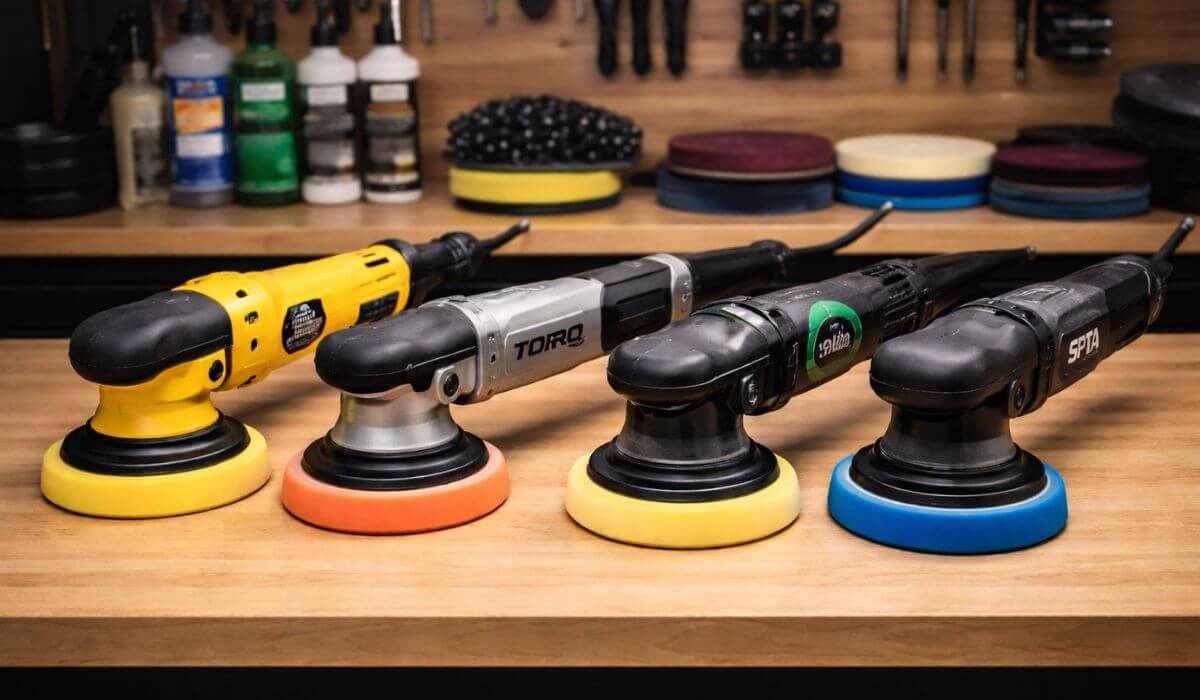
Two models consistently stand out once you actually use them. The Chemical Guys TORQX Dual-Action Polisher Kit is one of the easiest ways to get started because it removes uncertainty completely. The machine, pads, and accessories are already matched, which lets beginners focus on learning section passes and pad control instead of questioning their setup. It’s confidence-building from the first panel.
On the more refined end, the Meguiar’s MT300 Dual Action Polisher offers a noticeably calmer, more controlled experience. Its Digital Torque Management keeps the pad moving consistently under load, which matters far more than raw power when you’re still learning. It’s light, balanced, and forgiving—yet capable enough that you won’t feel the need to replace it once your skills improve.
The remaining polishers on this list earn their place for similar reasons. Whether it’s the lightweight precision of Adam’s 9mm, the planted stability of the Maxshine M8S V2 G, or the overall predictability shared across these picks, each machine prioritizes control, balance, and paint safety. These are tools chosen for real cars, real clear coats, and real beginners—not controlled test panels or ideal conditions.
Why We Recommend These 4
We didn’t choose these polishers because they’re popular—we chose them because they’re consistently forgiving in real use. Every model here uses true dual-action motion, beginner-friendly backing plate sizes, and speed control that ramps in smoothly rather than hitting all at once. More importantly, they maintain stable pad behavior under light to moderate pressure, which is where beginners usually struggle.
Low vibration, predictable torque delivery, and manageable throw lengths mean these machines work with you as you learn, instead of punishing small mistakes. If your goal is safe correction, steady improvement, and real confidence in a modern clear coat, these are the polishers that repeatedly deliver that experience in the hands of first-time users.
Quick Picks: Best Dual Action (DA) Polishers for Beginners (2026)
#1. Chemical Guys TORQX Dual-Action Polisher Kit
(Best All-In-One Starter Kit for Beginners)
#2. Meguiar’s MT300 Dual Action Polisher
(Best Long-Term DA for Beginners Who Want to Grow)
#3. Adam’s 9mm Dual Action Polisher
(Best Lightweight & Easy-Control DA Polisher for First-Time Users)
#4. Maxshine M8S V2 G Dual Action Polisher
(Best Value DA with Extra Power, Still Beginner-Safe)
Note: Every polisher here was chosen for how it behaves in a beginner’s hands, not for spec-sheet bragging rights. If a machine felt unpredictable or rushed learning, it didn’t make the list.
Must Check:
Why Beginners Are Better Off With a Dual Action Polisher
When you’re just starting out, the goal isn’t maximum correction—it’s control, consistency, and confidence. That’s where a dual action polisher makes the most sense. While the market offers a few different types of polishers, a true DA stands apart because it doesn’t concentrate heat in one spot. The pad keeps moving in a way that protects modern clear coat, even when your technique isn’t perfect yet.
This matters more than beginners realize. Rotary and forced-rotation machines demand precision from the first minute, but a DA responds gradually. Speed changes are smoother, pressure mistakes are forgiven, and the machine doesn’t suddenly pull you off the panel. That predictability gives you space to learn—how to overlap passes, how residue behaves, and how paint reacts—without the constant fear of damage.
That understanding is exactly why this guide focuses only on dual action polishers, and why the four models here were chosen so carefully. Each one uses true dual-action motion, beginner-friendly pad sizes, and balanced power delivery that stays stable under real-world pressure. These aren’t picks driven by popularity or spec-sheet hype; they’re tools that behave well when a beginner hesitates, slows down, or applies uneven pressure—which is how learning actually happens.
A good dual action polisher doesn’t rush you or punish mistakes. It lets you build muscle memory, understand paint behavior, and improve results session by session. That’s why beginners who start with the right DA don’t just finish their first correction—they come back for the second, third, and fourth with noticeably more confidence and control.
#1. Chemical Guys TORQX Dual-Action Random Orbital Polisher

Quick Specs:
- Motor Output: ~680W corded electric
- Backing Plate: 5.5-inch (foam & microfiber compatible)
- Motion Type: True dual-action random orbital
- Weight: ~7.21 lbs
- Speed Control: Variable speed with soft-start behavior
The first thing you notice when you put the TORQX on paint is how uneventful it feels—and that’s exactly the point. There’s no sudden torque hit, no awkward surge when you pull the trigger, and no sense that the machine is waiting for you to make a mistake. Power ramps in smoothly, the pad stays planted, and you can concentrate on overlap and arm speed instead of fighting vibration.
On a daily-driven car with typical wash swirls, the TORQX corrects at a pace that feels deliberate, not rushed. You don’t need to run it at full speed to see results, and that matters when you’re learning. The 5.5-inch pad size strikes a sweet spot: wide enough to make progress, small enough to stay controlled around body lines and edges. Even when pressure isn’t perfectly consistent, the dual-action motion keeps things safe and predictable.
What really separates this setup is how little second-guessing it creates. Because the kit includes the pads and essentials, you’re not stopping to wonder if you chose the wrong combination. Everything works together, and that alone removes a huge mental barrier for first-time users. After a couple of sections, the machine starts to feel familiar—almost reassuring—which is something beginners don’t often get with power tools.
Why Beginners Trust It
- The dual-action motion genuinely minimizes the risk of burning or hazing clear coat
- Power delivery stays smooth even when technique isn’t dialed in yet
- Balanced feel makes one-hand control realistic on flat panels
- The included kit removes common beginner mistakes before they happen
What Living With It Is Like
You’ll feel the weight during longer sessions, and at higher speeds the vibration is more noticeable than on premium units. But most beginners don’t polish for hours at max speed—and that’s where the TORQX makes sense. It prioritizes safety, control, and confidence over chasing numbers, which is why so many first-time users actually finish their first correction instead of stopping halfway through.
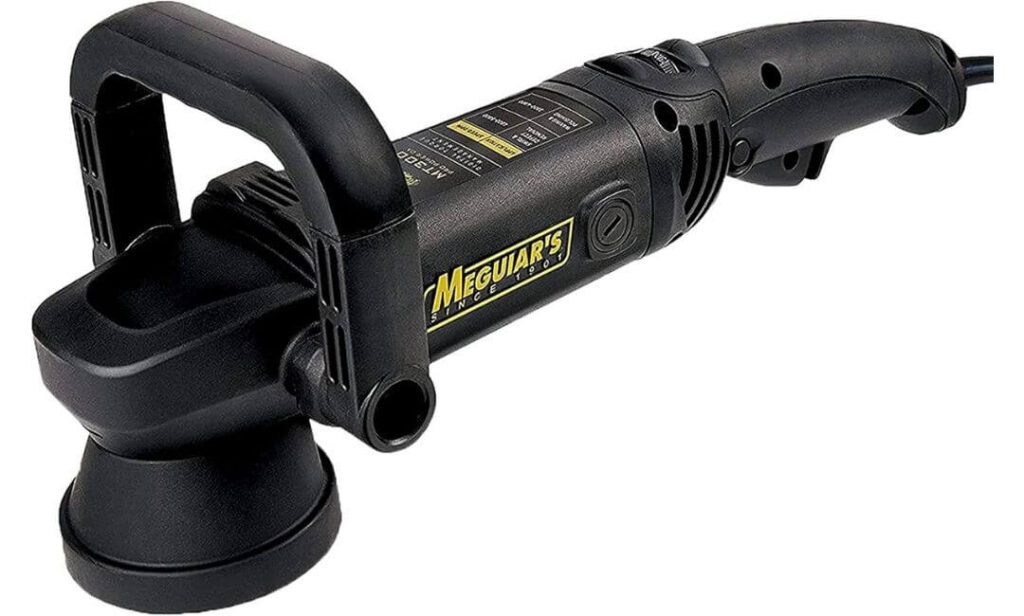
#2. Meguiar’s MT300 Variable Speed Dual Action Polisher
Quick Specs:
- Motor Output: ~4.5 amps (≈540W)
- Weight: ~5.4 lbs
- Backing Plate Support: 3″, 5″, and 6″ (DBP3 / DBP5 / DBP6)
- Motion Type: True dual-action with Digital Torque Management
- Speed Range: Variable, up to ~7500 OPM
The MT300 feels different the moment you pick it up. It doesn’t feel like a “starter” tool, but it also doesn’t intimidate you. The weight is immediately noticeable—in a good way. At just over five pounds, it feels balanced and controlled, especially when working vertical panels where fatigue shows up fast with heavier machines.
On paint, the Digital Torque Management is the quiet hero. As you apply pressure, the machine doesn’t bog down or surge unexpectedly. Instead, it holds its speed in a very composed, predictable way. That consistency matters more than raw cutting power when you’re learning, because it lets you focus on section passes and pad movement rather than reacting to the tool. The soft-start behavior also keeps the first contact clean—no sudden kick, no compound sling.
Where the MT300 really shines is during polishing and finishing stages. It stays smooth across speed ranges, and the billet counterweight does exactly what it’s supposed to do: keep vibration low enough that your hands don’t go numb after a few panels. It’s especially confidence-inspiring on modern clear coats, where you want correction without pushing your luck near edges or tighter curves.
This isn’t a machine that encourages rushing. It rewards patience and proper technique, and that’s why beginners tend to get better results with it than with more powerful, less controlled alternatives.
Why Beginners Trust It
- Extremely light and well-balanced, reducing fatigue and improving control
- Digital Torque Management keeps performance steady under pressure
- Soft start eliminates sudden movement and product sling
- Low vibration makes long learning sessions more comfortable
What Living With It Is Like
The MT300 won’t muscle through deep scratches or neglected paint the way higher-amperage machines can. You’ll notice that during heavy compounding. But for beginners focused on safe correction, polishing, and maintaining clear coat health, that limitation is also its strength. It’s a machine that prioritizes control and consistency over aggression—exactly what most first-time users need to build skill and confidence.
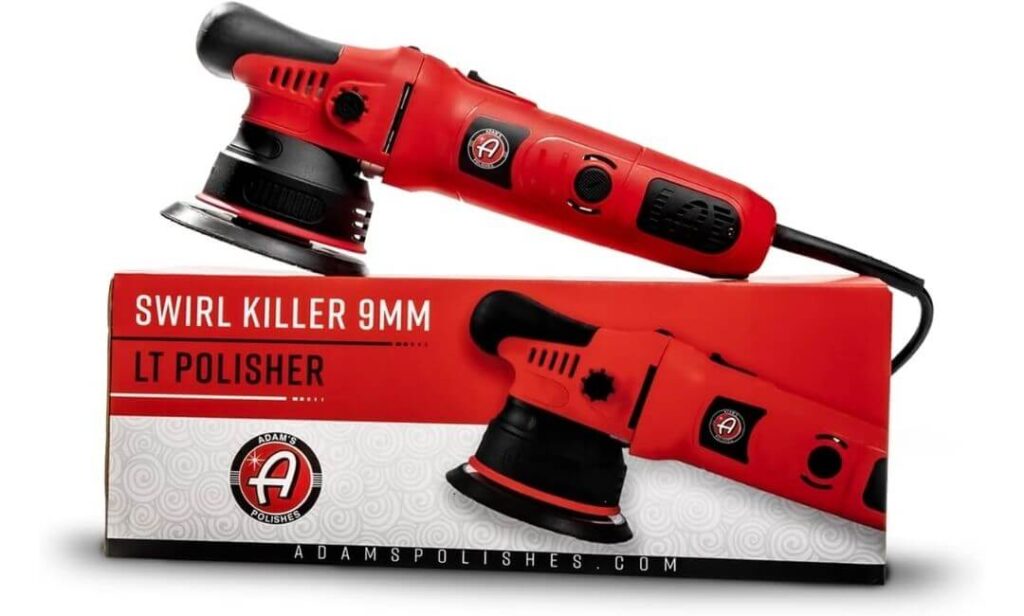
#3. Adam’s 9mm Dual Action Car Polisher
Quick Specs:
- Motor Output: 1000W (≈9 amps)
- Weight: ~5.5 lbs
- Backing Plate: 5-inch (6-inch optional)
- Motion Type: True dual-action, 9mm throw
- Speed Range: Variable, up to ~6500 OPM
The Adam’s 9mm feels like it was designed by someone who actually remembers their first polishing session. It’s light in the hands, balanced from the moment you set the pad down, and surprisingly calm for a machine with this much power on paper. The 9mm throw keeps movement tight and predictable, which makes it easier to stay in control while you’re still learning pad pressure and section passes.
On paint, the motor has more than enough torque to correct light-to-moderate defects without needing to push speed to the top. That matters because beginners tend to overcompensate with RPMs when they don’t see instant results. With this machine, you don’t have to. Correction happens steadily, and the pad rotation stays consistent even when your technique isn’t perfect yet.
The vibration control is noticeable right away. The rubberized contact points do a good job absorbing feedback, especially during longer passes. It’s the kind of polisher you can use across multiple panels without feeling like your hands are doing all the work. Edges, curves, and tighter areas feel manageable rather than stressful, which is usually where beginners lose confidence.
Why Beginners Trust It
- Lightweight, well-balanced feel reduces fatigue and improves control
- 9mm throw keeps correction smooth and predictable
- Strong motor delivers results without forcing high speeds
- Forgiving behavior makes it hard to damage modern clear coat
What Living With It Is Like
You’ll notice that the standard setup uses a 5-inch backing plate, which slightly favors control over outright coverage. For beginners, that’s usually a good thing. The machine doesn’t rush you, doesn’t surprise you, and doesn’t punish small mistakes. It simply does what you ask of it—section by section—until you realize polishing no longer feels intimidating.
#4. Maxshine M8S V2 G Dual Action Polisher
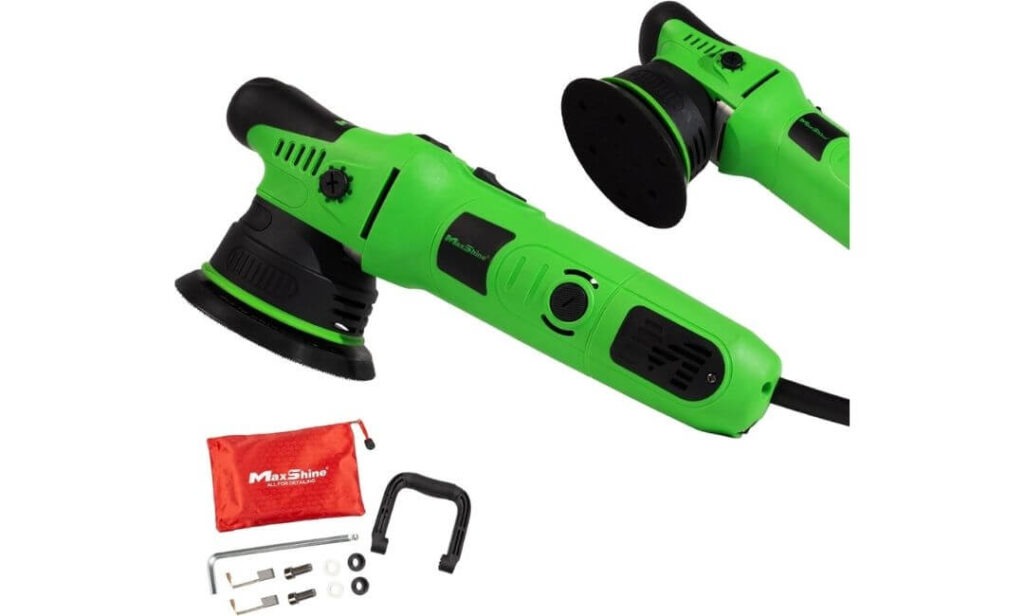
Quick Specs:
- Motor Output: 1000W
- Weight: ~6.98 lbs
- Backing Plate: 5-inch
- Motion Type: True dual-action, 8mm throw
- Speed Range: 6-speed control, up to ~6500 RPM
The M8S V2 G comes across as more serious the moment you lift it—but once it’s on paint, that impression softens quickly. Despite the higher power rating, the machine doesn’t feel aggressive or jumpy. The 8mm throw keeps movement tight and controlled, which is exactly what you want when learning how to manage pad rotation and pressure without chasing the tool across the panel.
On real-world paint—daily drivers with swirls and light scratches—the motor feels confident without being overwhelming. You don’t need to push hard or max out the speed to see correction happening. In fact, the machine stays remarkably stable even when your technique isn’t dialed in yet. It resists stalling better than most entry-level DAs, which means beginners aren’t constantly compensating or second-guessing their pressure.
What stands out during longer sessions is the balance. Yes, it’s heavier than ultra-light beginner machines, but the weight is well distributed. Vibration stays low, and the body design makes it easy to guide the polisher rather than wrestle it. On flat panels, it feels planted; on curves and edges, it remains predictable, which is usually where beginners start to feel uneasy.
Why Beginners Trust It
- 8mm throw keeps correction precise and easy to control
- Strong motor resists stalling without forcing aggressive technique
- Low vibration reduces fatigue during longer learning sessions
- Predictable behavior builds confidence instead of rushing results
What Living With It Is Like
You’ll notice the weight if you’re coming from a lighter DA, especially during overhead or extended use. But that extra mass also adds stability, which many beginners actually prefer once they get started. The M8S V2 G feels like a machine you can grow into—calm enough to learn with, capable enough to keep using once your skills improve.
We Compared These Dual-Action Polishers With Beginners in Mind
| Polisher | Beginner Safety | Control Feel | Power Behavior | Weight & Comfort | Best Beginner Scenario |
|---|---|---|---|---|---|
|
Chemical Guys TORQX 🏷 All-In-One Starter |
⭐⭐⭐⭐⭐ | Very forgiving | Smooth, non-aggressive | Heavier, but well balanced | First-time users who want zero setup confusion |
|
Meguiar’s MT300 🏷 Long-Term Beginner Pick |
⭐⭐⭐⭐⭐ | Extremely stable | Consistent under pressure | Light & fatigue-free | Beginners who want safety now, growth later |
|
Adam’s 9mm DA 🏷 Easy-Control Favorite |
⭐⭐⭐⭐⭐ | Tight & predictable | Strong but controlled | Light and ergonomic | Nervous beginners learning pad pressure |
|
Maxshine M8S V2 G 🏷 Power-Value Pick |
⭐⭐⭐⭐☆ | Planted & steady | High torque, stall-resistant | Heavier, very stable | Beginners who want power without chaos |
Which One Should You Buy First? (Beginner Verdict)
If this is your first-ever time holding a dual action polisher, the best choice isn’t about specs or price—it’s about how calm the machine makes you feel once the pad touches paint. Confidence decides whether you finish the job or stop halfway.
Go with the Chemical Guys TORQX Kit if you want the easiest possible entry. It removes every early doubt—pads, accessories, compatibility—everything is already matched. You spend your time learning movement and pressure, not questioning your setup. For nervous beginners, this matters more than anything else.
If you already know you’ll stick with detailing and want a machine that won’t feel limiting six months from now, Meguiar’s MT300 is the smarter long-term pick. It’s lighter, more refined, and stays incredibly stable under pressure. You won’t get rushed results, but you’ll get consistent ones—and that’s how good technique develops.
For beginners who feel unsure about control and don’t want a machine that wanders, Adam’s 9mm DA feels reassuring from the first pass. The shorter throw and balanced body make it easier to stay precise, especially on curves and tighter panels. It’s often the least intimidating option once you start polishing.
And if you want stronger correction without jumping into unsafe territory, Maxshine M8S V2 G makes sense. It has more power and weight, but it stays planted and resists stalling. It’s a good fit for beginners who want results a little faster but still value control.
Simple rule:
If you want zero stress → TORQX
If you want long-term refinement → MT300
If you want maximum control → Adam’s 9mm
If you want extra power without chaos → Maxshine M8S
What Beginners Notice After Their First 2–3 Uses
The first thing beginners realize isn’t about shine or defect removal—it’s about how much calmer everything feels compared to that first nervous attempt. On day one, every sound, vibration, and pad movement feels louder than it actually is. By the second or third session, that noise fades, and what’s left is rhythm.
Most beginners notice that results don’t come from speed, but from consistency. Slowing down arm movement, keeping sections smaller, and letting the machine work starts to feel natural. The polishers in this list reward that behavior. They don’t suddenly surge when pressure changes, and they don’t punish hesitation. That’s when confidence quietly replaces fear.
Another unexpected realization is how quickly muscle memory develops. After a few uses, you stop thinking about grip, trigger pressure, or balance. Your hands adjust automatically. Machines with stable torque and low vibration—like the ones here—make that transition smoother. Instead of fighting the tool, you start guiding it.
Beginners also notice that paint tells you when you’re doing it right. Pads stay flatter, residue wipes off cleaner, and the surface starts feeling slick even before the final wipe-down. It’s not perfection—but it’s proof that the process works when the machine stays predictable.
By the third use, most people stop worrying about damaging paint and start focusing on improving results. That shift—from fear to curiosity—is exactly what a good beginner DA polisher is supposed to create.
Common Beginner Mistakes These Polishers Help You Avoid
1. Thinking more speed means better results
Most beginners instinctively turn the speed dial up when they don’t see instant correction. That usually leads to sling, extra vibration, and panic. The polishers in this list are tuned to work at moderate speeds, so correction happens steadily without forcing you into unsafe RPMs. You learn patience early—and that’s a good habit.
2. Applying pressure to “help” the machine
It’s natural to push harder when defects don’t disappear right away. The problem is, pressure kills pad rotation on lesser machines. These DAs maintain predictable movement even when pressure isn’t perfect, teaching beginners that guidance beats force every time.
3. Letting the machine wander across the panel
Unbalanced tools tend to pull, especially on curves and vertical panels. Beginners then overcorrect with their wrists, which creates fatigue and uneven results. The balanced weight and controlled throws here keep the polisher planted, so your hands learn smooth, straight passes instead of constant correction.
4. Chasing perfection in the first session
This is the biggest mental mistake. Beginners expect a flawless finish immediately and get frustrated when deeper defects remain. These machines are forgiving enough that you can stop early, reassess, and come back later without harming the paint. They quietly teach that polishing is a process, not a one-pass miracle.
5. Worrying too much about damaging clear coat
Fear causes hesitation, hesitation causes inconsistency. Because these polishers stay calm under load and resist sudden surges, beginners quickly realize they’re not on the edge of disaster. That confidence alone improves results more than any spec ever could.
Expert Tip Most Beginners Never Hear (But Should)
Your first mistake as a beginner won’t be using the wrong polish or pad—it’ll be trying to correct too much paint in one pass. New users think the machine should do everything at once. In reality, the biggest gains come from short, controlled sessions, not long aggressive ones.
Here’s what experienced users quietly do: they treat the first session as a familiarization run, not a full correction. One or two slow passes, moderate speed, light pressure—then they stop. Not because the paint is perfect, but because the goal is understanding how the machine behaves, not chasing defects.
Another overlooked detail is section size. Beginners tend to polish large areas because it feels efficient. Smaller sections—about the size of a laptop—keep pad rotation consistent and results predictable. Every polisher in this list performs best when you let it work methodically instead of rushing.
Finally, don’t judge results under harsh lighting immediately after your first pass. Paint often looks better after it cools and residue fully wipes away. Beginners who pause, wipe down, and reassess almost always get better outcomes on the next section. Confidence grows when you slow the process down—not when you try to dominate it.
This mindset shift—learning the machine before demanding results—is what separates people who stick with detailing from those who abandon it after one stressful attempt.
FAQs: Dual Action Polishers for Beginners
Is a dual action polisher really safe for beginners?
Yes, a true dual action polisher is designed to minimize the risk of paint damage. Because the pad both rotates and oscillates, heat doesn’t build up in one spot the way it can with rotary machines. That makes it far more forgiving when your technique isn’t perfect. As long as you use moderate speeds and let the machine do the work, modern clear coats are very safe with a DA.
Can I actually damage my car’s clear coat using these polishers?
It’s extremely unlikely with the machines listed here. These polishers are built to stay stable under pressure and avoid sudden surges that cause burns or holograms. Most beginner damage comes from rushing or using aggressive compounds, not the machine itself. If you start slow and work in small sections, the margin for error is very wide.
What’s easier for beginners: an 8mm or 9mm throw?
Both are beginner-friendly, but they feel slightly different. An 8mm throw stays very controlled and precise, which helps nervous first-time users. A 9mm throw adds a bit more correction speed while still remaining predictable. Neither is “better” universally—it depends on whether you value calm control or slightly faster results.
Do I need professional-grade pads and compounds to get good results?
No, and starting too aggressive often causes more problems than it solves. Beginner-friendly foam pads and mild polishes are usually enough to improve paint noticeably. These polishers are designed to work well with common pad types, so you can learn technique first and upgrade products later if needed. Good habits matter more than premium supplies early on.
How long does it take to feel comfortable using a DA polisher?
Most beginners feel noticeably more confident after two or three short sessions. The first attempt is usually slow and cautious, the second feels smoother, and by the third you start focusing on results instead of fear. These machines are forgiving enough that muscle memory builds quickly. Comfort comes faster when the tool behaves predictably.
Final Thoughts
Learning paint correction doesn’t start with the “perfect” machine—it starts with choosing one that lets you learn without fear. Every dual action polisher in this guide was picked because it stays calm when you’re not, and predictable when your technique is still developing. That’s what actually matters in the beginning.
If this is your first step into polishing, don’t worry about chasing flawless results right away. Focus on getting comfortable with the process—slow passes, light pressure, and small sections. The right DA polisher makes that learning curve enjoyable instead of stressful, and that’s how good habits are built.
The best part is that none of these choices lock you in. Each one gives you room to grow, refine your technique, and come back stronger on the next session. When a tool builds confidence instead of pressure, you’re far more likely to keep using it—and that’s where real results start showing.
If you finish your first correction feeling calmer than when you started, you picked the right machine. And with any of the polishers here, that’s exactly the experience most beginners walk away with.