7 Best Jeep Wrangler Fender Flares in 2026: Wide Coverage, Extra Clearance, No-Drill Fit, Heavy-Duty Build
Owning a Jeep Wrangler JL isn’t just about getting from A to B—it’s about what happens when the road ends. And if you’ve spent even one weekend off-road, you already know this: stock fender flares don’t cut it. They crack, they flex too much, and once you step up to bigger tires, they start looking out of place real quick.
This list isn’t pulled from spec sheets alone. These are the fender flares Wrangler owners actually switch to when they want more clearance, tougher materials, and a fit that doesn’t feel like an afterthought. Steel builds, TPO durability, proper wheel coverage—everything here solves a real problem, not just adds looks.
Before you scroll, here are the two that stand out immediately:
👉 Hooke Road Wide Flat JL Fender Flares — steel construction, integrated LED turn signals, wide flat design for extra tire clearance, and proper front + rear coverage that actually holds up on rough trails.
👉 WOLFSTORM Steel Fender Flares JL/JLU — heavy-duty steel build, sequential LED turn lights + DRLs, tight OE-style fitment, and aggressive width that instantly fixes that “small flare, big tire” mismatch.
These two aren’t just upgrades—they’re the kind of mods you notice every time you walk up to your Jeep.
Now here’s the thing most people won’t say: choosing the wrong fender flare isn’t just a cosmetic mistake. It affects tire clearance, mud protection, and even how your Wrangler looks from a distance. The right set makes your build feel complete. The wrong one? You’ll be replacing it sooner than you think.
Best Jeep Wrangler Fender Flares: Top 2026 Picks for JL/JLU Sport, Sahara, Rubicon Setups
#1. Hooke Road Wide Flat JL Fender Flares (2018–2026)
Wide Flat Steel Fender Flares for Jeep Wrangler JL/JLU (Max Tire Clearance + LED Signals)
#2. WOLFSTORM Steel Fender Flares JL/JLU (2018–2026)
Heavy-Duty Steel Fender Flares for Wrangler JL (Sequential LED + Wide Coverage Fitment)
#3. YZONA JL/JLU Fender Flares Kit (2018–2026)
Steel Mud Guard Fender Flares for Jeep Wrangler JL Unlimited (Off-Road Protection + Turn Signals)
#4. OMP Offroad Desert Viper Blade Fender Flares (2018–2026)
No-Drill Bolt-On Fender Flares for Wrangler JL (5-Inch Wide, High Clearance Off-Road Design)
#5. Bushwacker Hyperform Fender Flares (2018–2026)
TPO Durable Fender Flares for Jeep Wrangler JL (OE Fitment + Scratch Resistant Build)
#6. Rough Country WF1 Fender Flares JL/JLU (2018–2026)
Wide Off-Road Fender Flares for Jeep Wrangler JL (35–37” Tire Fit + TPO Construction)
#7. OEDRO Flat Steel Fender Flares JL/JLU (2018–2026)
Flat Metal Fender Flares for Jeep Wrangler JL Unlimited (Heavy-Duty Build + Full Coverage)
Expert Tip (From Someone Who’s Seen These on Real Builds)
If you’re running bigger tires or planning a lift, don’t chase looks first—chase clearance and material. Steel flares like Hooke Road or WOLFSTORM will feel heavy in hand, but that weight is exactly why they don’t shake, crack, or warp after a few trail runs. On the flip side, if your Wrangler is mostly city with occasional dirt, a quality TPO build like Bushwacker or Rough Country saves weight and still handles road abuse without fading.
One more thing most people ignore: LED integration isn’t just for looks. On wider flares, those signals actually improve side visibility at night—something you’ll appreciate the first time you’re turning on a dark highway with oversized tires sticking out.
How We Chose These Fender Flares for Jeep Wrangler JL/JLU
We didn’t just pick what looks aggressive in photos. Every option here had to prove itself in the areas that actually matter once your Wrangler leaves the parking lot.
First, fitment had to be exact. Every product on this list is built specifically for 2018–2026 JL/JLU, not “universal fit.” That means proper alignment with factory mounting points, no awkward gaps, and no cheap brackets that start rattling after a few drives.
Then comes material honesty. Steel flares like Hooke Road, WOLFSTORM, YZONA, OMP, and OEDRO are here because they deliver real-world toughness. They take hits from rocks, debris, and trail abuse without flexing out of shape. But we didn’t ignore TPO either—Bushwacker Hyperform and Rough Country WF1 earned their place because modern TPO isn’t cheap plastic anymore. It’s lighter, resists cracking, and handles daily driving better than most steel setups.
We also looked hard at tire clearance and coverage. A Wrangler with 35s or 37s needs space—otherwise you’re dealing with rubbing, mud spray, and an unbalanced stance. That’s why wide designs and flat profiles dominate this list. These flares don’t just sit on the body—they actually fix the geometry of your build.
Installation matters more than people admit. Products like OMP’s no-drill setup and properly engineered bolt-on kits made the cut because they save time without compromising strength. If something required unnecessary cutting or felt like a weekend headache, it didn’t make it here.
And finally, we paid attention to the small details most lists ignore—LED integration, finish quality, hardware strength, and real-world durability over time. Not just how it looks on day one, but how it holds up after months of sun, rain, and trail dust.
At the end of the day, this isn’t a random roundup. Every flare here earns its spot because it solves a specific problem Wrangler owners actually face. That’s the difference—and that’s exactly why you can trust what’s on this list.
#1. Hooke Road Wide Flat JL Fender Flares (2018–2026)
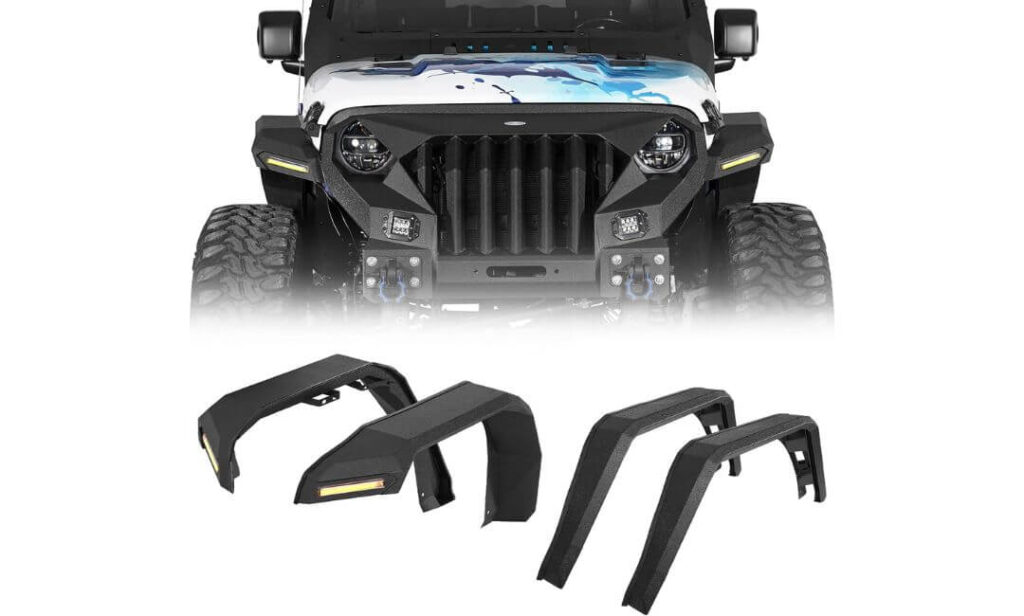
Quick Specs:
- Material: 16-gauge carbon steel (fenders) + 11-gauge steel brackets (real heavy-duty, not cosmetic metal)
- Width Coverage: 6.8″ front / 3.6″ rear (actual usable tire coverage, not marketing numbers)
- Lighting: Integrated LED turn signals + DRLs (plug-and-play wiring)
- Finish: Textured matte black powder coat + E-coating inside (anti-rust from both sides)
- Weight: ~72 lbs total (40 lbs front / 32 lbs rear – tells you how solid these are)
- Install Type: Front bolt-on, rear requires drilling + rivet nuts
- Kit: Full 4-piece set + hardware + wiring + instructions
The first time you hold these in your hands, you’ll get it—this isn’t lightweight plastic pretending to be tough. This is actual steel that belongs on a Wrangler, the kind that doesn’t flinch when rocks start flying or when your tires push out wider than stock. That 6.8-inch front coverage isn’t just for looks—it solves the exact problem most JL owners face after upgrading to bigger tires: exposed tread and constant mud spray.
What really changes the game here is how everything works together. The flat fender design opens up clearance, so your tires don’t feel cramped anymore, especially if you’re running 35s or planning to go bigger. Add to that the LED DRLs and turn signals—not those cheap dim strips, but properly integrated lighting that actually improves visibility when your stance gets wider. It’s one of those details you don’t think about… until you drive at night and realize how useful it is.
And then there’s the build quality. The combination of 16-gauge steel with internal E-coating means these aren’t going to rust out after one monsoon or a few muddy trails. Even the rubber edge strips are there for a reason—they protect your paint when things start flexing slightly off-road. This is the kind of setup that feels “right” on a Wrangler—balanced, aggressive, and built to last.
(Once installed, your Wrangler stops looking modified… and starts looking complete.)
What Stands Out in Real Use
- Real steel thickness you can feel—no flex, no cheap vibration on rough roads
- Wide, usable tire coverage that actually keeps mud and debris off your doors
- Flat design = more clearance, especially noticeable with bigger tires
- Integrated LED signals + DRLs that improve both style and night visibility
- Dual-layer coating (powder + E-coat) that holds up in rain, dust, and long-term use
What Could Be Better
- Rear installation needs drilling—nothing complicated, but not a pure bolt-on job
Jeep Wrangler Compatibility & Real Fitment
These are built specifically for 2018–2026 Jeep Wrangler JL and JLU (2-door & 4-door), including trims like Sport, Sahara, Rubicon—everything lines up the way it should. No weird gaps, no forced adjustments. Once mounted, they sit tight against the body and look factory-level clean, just more aggressive.
If you’re running wider tires or planning a lift, this is where they make the biggest difference. The added width and flat profile don’t just improve looks—they fix proportion issues that happen when stock flares look too small for upgraded wheels.
Installation Insights (What to Expect)
Front side is honestly simple—remove stock flares, align, bolt them in, and plug the LEDs. The wiring is clean and doesn’t require guesswork. You can do this part without stress.
Rear is where you slow down a bit. You’ll need to drill a 9mm hole and install rivet nuts, but the process is straightforward if you take your time. The included tool helps, and once it’s done, the fit feels solid—not temporary or loose.
One thing worth noting: these have real weight. Having a second pair of hands makes installation smoother, especially when aligning everything properly. But once they’re on, you’ll understand why they’re built this way.
#2. WOLFSTORM Steel Fender Flares JL/JLU (2018–2026)
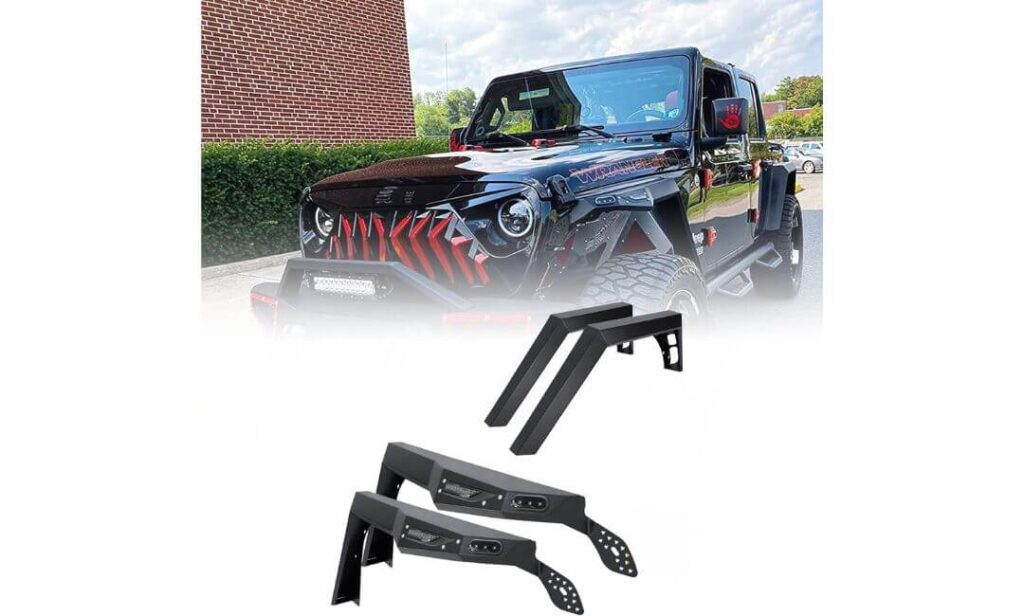
Quick Specs:
- Material: Alloy steel construction (lighter than full steel setups but still trail-capable)
- Finish: Powder-coated black (clean finish, but needs care in harsh weather)
- Lighting: LED DRLs + sequential LED turn signals (dynamic flow style, not basic blinkers)
- Weight: ~56 lbs (balanced weight—strong but easier to handle than heavier steel kits)
- Install Type: Front uses factory mounts, rear requires rivet nuts (not full no-drill)
- Design: Custom modern profile (not generic flat—more styled, sharper edges)
- Fitment Range: Built for full JL lineup (Sport, Sahara, Rubicon, Unlimited)
This is the kind of setup you pick when you want your Wrangler to stand out without going overboard on bulk. Right away, the sequential LED turn signals grab attention—they don’t just blink, they flow. It’s a small detail on paper, but on the road, it changes how your Jeep is noticed, especially at night or in traffic.
The alloy steel build hits a different balance. It’s not as heavy as some full steel kits, but still strong enough for real off-road use. That makes a difference during installation and daily driving—you’re not adding unnecessary weight, but you’re also not stuck with weak plastic. The design itself leans more modern, sharper, less “blocky,” which works well if you want a Wrangler that looks updated, not just rugged.
Where these really fit in is for owners who want both style and function without going extreme. You get proper coverage, improved stance, and lighting that actually adds visibility—not just decoration. It’s a cleaner, slightly more refined take on off-road flares, without losing the toughness that matters.
(You don’t just upgrade protection here—you upgrade how your Wrangler shows up, day and night.)
What Stands Out in Real Use
- Sequential LED turn signals that instantly look premium and more visible
- Balanced alloy steel build—strong enough, but not overly heavy
- Modern design profile that feels sharper than typical flat flares
- Factory-mount front install keeps things straightforward where it matters
- Good overall coverage for daily driving + light to moderate off-road use
What Could Be Better
- Powder coat can show early rust in harsh rain/snow if not protected—adding a clear coat helps long-term
Jeep Wrangler Compatibility & Real Fitment
Designed for 2018–2026 Jeep Wrangler JL/JLU (2-door & 4-door) across all major trims, and the fit is generally tight when installed correctly. The front lines up with factory points, so you don’t get that uneven spacing some aftermarket kits suffer from.
These work best if your build sits in that middle ground—bigger than stock, but not a full extreme crawler setup. They complement upgraded tires well without making the Jeep feel overly bulky or heavy.
Installation Insights (What to Expect)
Front install is straightforward—factory holes, basic tools, no drama. That part feels almost OEM-level simple.
Rear takes a bit more patience. You’ll need a rivet nut tool, and getting everything aligned can require slight adjustments while tightening. It’s not difficult, but it’s not something you rush either.
A quick tip from real installs: set your inner fender liner first, then mount the flares. It makes alignment easier and avoids rework later. Also, double-check your hardware before starting—small step, but it saves time.
Give yourself about 1–2 hours, and once done, the fit feels secure—not temporary or loose.
#3. YZONA JL/JLU Fender Flares Kit (2018–2026)
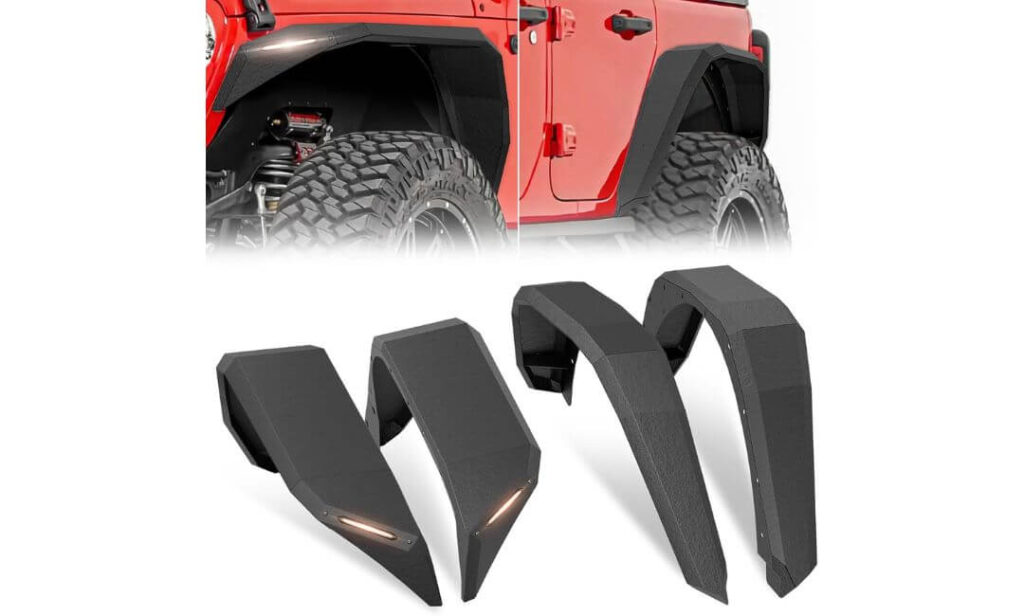
Quick Specs:
- Material: Carbon steel construction (solid, weighty feel—not hollow or thin)
- Finish: Black powder-coated exterior (clean look, needs care to avoid scratches during install)
- Coverage: Full front + rear protection (designed more for shielding than extreme width)
- Lighting: Integrated turn signal lights (simple, functional—not over-styled)
- Install Type: Front bolt-on via factory holes, rear requires drilling + rivet nuts
- Kit: Complete 4-piece set + hardware + wiring + instructions + rivet tool
- Dimensions: Large profile design (47 x 27 x 8 inches overall packaging footprint)
If you’re looking at this, you’re probably not chasing hype—you’re chasing something that works without draining your wallet, and that’s exactly where this setup lands. The moment these go on your Wrangler, the first thing you notice isn’t flash—it’s coverage. Mud, sand, road grime… all the stuff that usually ends up on your doors starts getting stopped where it should: at the fender.
The steel construction here feels honest. Not overbuilt like premium heavy kits, but definitely not weak either. It’s the kind of “daily + weekend trail” strength that most Wrangler owners actually need. You still get that aggressive stance, especially once paired with slightly wider tires, but it doesn’t feel overkill or unnecessarily bulky.
Lighting is kept simple—and that’s a good thing. The integrated turn signals do their job cleanly, without trying too hard to stand out. And installation? Front goes on without drama, while the rear asks for a bit of patience. Nothing complicated, just the kind of work that reminds you this is a proper upgrade, not a clip-on accessory.
(It’s the kind of upgrade you install once… and then stop worrying about mud, debris, or daily wear altogether.)
What Stands Out in Real Use
- Reliable steel construction that feels sturdy without excessive weight
- Full wheel coverage that actually reduces mud spray and paint damage
- Clean, simple lighting setup that works without overcomplicating things
- Balanced design—aggressive enough, but still practical for daily use
- Complete kit included, no extra runs for missing hardware
What Could Be Better
- Powder coating can chip during install—touch-up or clear protection helps long-term
Jeep Wrangler Compatibility & Real Fitment
Made for 2018–2026 Jeep Wrangler JL/JLU (2-door & 4-door), and overall fitment is solid once installed correctly. The front aligns easily with factory mounting points, while the rear gives you some adjustment room to get everything lined up properly.
These suit builds where you want real protection without going extreme on width or weight. If your Wrangler is your daily driver with occasional off-road use, this setup fits naturally into that lifestyle.
Installation Insights (What to Expect)
Front side is quick—remove stock flares, bolt these on using factory holes, and connect the wiring. No confusion there.
Rear takes more effort. You’ll need to drill and install rivet nuts, and alignment may need slight adjustment before tightening everything down. The included tool works, but take your time with it—it’s functional, not premium.
Give yourself around 2–3 hours total, especially if it’s your first time. Once installed properly, everything sits tight and does exactly what it’s supposed to do.
#4. OMP Offroad Desert Viper Blade Fender Flares (2018–2026)
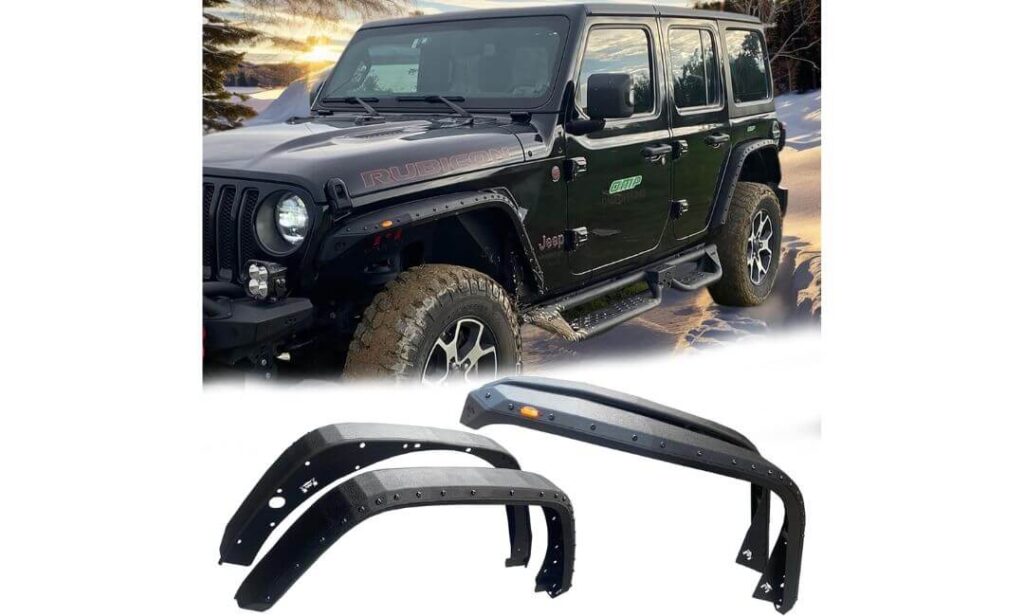
Quick Specs:
- Material: Q235 carbon steel + aluminum components (true mixed-metal strength, not basic steel-only)
- Width Coverage: ~9″ front / ~5.5″ rear (extreme clearance, built for lifted setups)
- Finish: Textured black powder coat (trail-ready, hides scratches and scars)
- Lighting: LED turn signal lights with 50W resistors (stable output, no hyperflash issues)
- Install Type: True no-drill bolt-on (factory-matched mounting points)
- Weight: ~46.8 lbs total (strong yet manageable compared to heavier steel kits)
- Kit: 4 flares + LED lights + resistors + hardware + install guide
This is where things stop being subtle. The moment you look at this setup, you can tell—it’s not built for casual driving. That 9-inch front coverage changes the entire stance of your Wrangler. Wider, taller, more planted. It’s the kind of flare that only makes sense if you’re running bigger tires or planning to—because anything less and you’re not using what it’s capable of.
The Desert Viper blade design isn’t just styling, it’s clearance. The sharp, cut-back profile opens up space around the wheel well, which matters when your suspension is flexing hard off-road. And unlike bulky rounded flares, this design keeps things aggressive without looking oversized or clumsy. It pairs naturally with lifted builds and aftermarket bumpers—it doesn’t fight the setup, it completes it.
Then comes the biggest win: no-drill installation. For something this aggressive and wide, you’d expect cutting or heavy modification—but it bolts straight onto factory points. Add in the Q235 steel construction, and you’re getting serious durability without turning installation into a full-day project. It’s rare to see this level of design and practicality in the same product.
(This isn’t an upgrade you add later—it’s the kind you build your whole Wrangler around.)
What Stands Out in Real Use
- Massive front width (9″) that completely transforms tire clearance and stance
- Blade-style design that improves articulation space during off-road flex
- True no-drill install, rare for flares this aggressive
- Q235 steel construction that handles rocks, debris, and long-term abuse
- LED setup with resistors—clean signals, no flickering or errors
What Could Be Better
- Aggressive width may feel excessive if you’re running near-stock tire setup
Jeep Wrangler Compatibility & Real Fitment
Built specifically for 2018–2026 Jeep Wrangler JL/JLU (2-door & 4-door), and the fitment feels intentional—not forced. These hug the body tightly, especially around the edges, giving that custom-built look instead of aftermarket add-on vibes.
This setup makes the most sense on lifted Wranglers or builds pushing larger tires. If your Jeep is heading toward a serious off-road setup, this fits right into that direction without compromise.
Installation Insights (What to Expect)
Installation is where this really surprises people. Despite the aggressive design, it’s a true bolt-on system—no drilling, no cutting. Everything lines up with factory mounting points, and the included hardware gets the job done without extra trips.
LED lights come pre-configured, so wiring is straightforward. Just take your time aligning everything before tightening—mainly to protect that powder-coated finish during install.
Overall, this is one of those rare setups where installation feels easier than expected, but the end result looks like a full custom build.
#5. Bushwacker Hyperform Fender Flares (2018–2026)
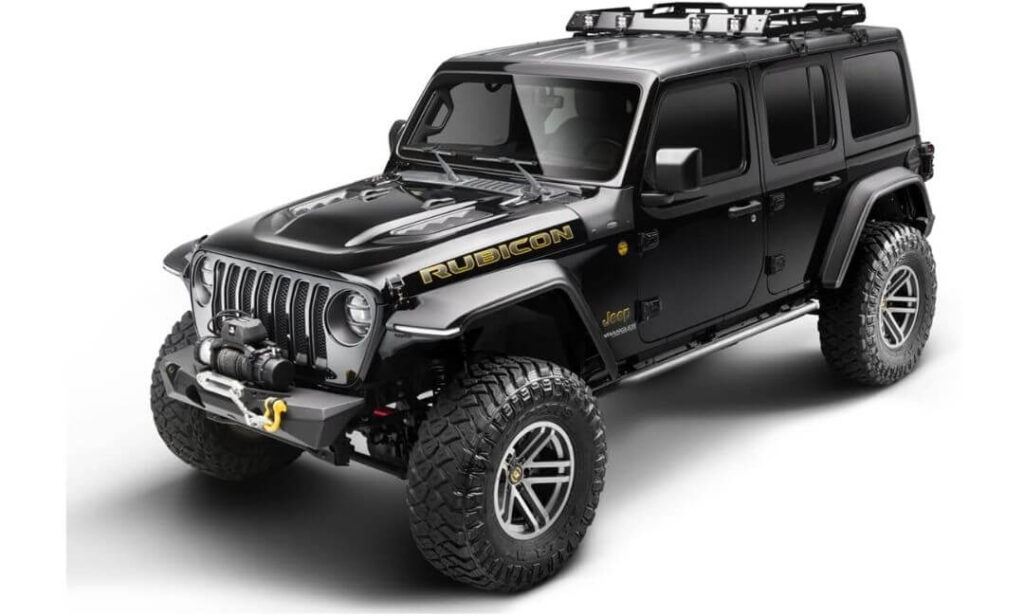
Quick Specs:
- Material: Dura-Flex 2000 TPO (impact-absorbing, flexible—not brittle plastic)
- Finish: Smooth matte black (paintable surface, clean OEM+ look)
- Weight: ~32 lbs (lightweight compared to steel, easier handling)
- Coverage: Extended tire coverage with full wheel well molding
- Lighting: DOT-compliant LED side marker lights (pre-installed)
- Install Type: Mostly bolt-on with bracket system (minimal modification)
- Fitment Range: JL Sahara / Sport / Sport S (2 & 4-door)
Not every Wrangler needs heavy steel armor. Sometimes, what actually works better is something that flexes instead of fights back—and that’s exactly where this setup stands apart. The moment you install these, you notice how clean everything looks. No bulky edges, no over-aggressive cuts—just a refined, factory-level finish that still adds real capability.
The real strength here is the Dura-Flex 2000 material. It doesn’t crack when hit, it doesn’t stay bent—it absorbs impact and comes back. That matters more than people think, especially if your Wrangler sees mixed use: city roads during the week, trails on weekends. Add in the built-in UV protection, and you’re not dealing with fading or chalking after a few months in the sun.
Coverage is smart, not excessive. You get enough width to legally run bigger tires while keeping mud off your paint, but without making the Jeep look oversized. And those LED side markers? Subtle, clean, and actually useful—not something that screams for attention, but something that quietly improves safety.
(This is the kind of upgrade that feels stock… until you realize how much better it actually is.)
What Stands Out in Real Use
- Dura-Flex 2000 material that absorbs hits instead of cracking
- Lightweight design—easier install, no unnecessary strain on body
- Clean OEM+ styling that blends perfectly with Wrangler lines
- UV-resistant build that won’t fade or chalk over time
- Pre-installed LED side markers for added visibility and legality
What Could Be Better
- Not as rigid as steel—hardcore rock crawling setups may want heavier-duty metal options
Jeep Wrangler Compatibility & Real Fitment
Designed for 2018–2026 Jeep Wrangler JL Sahara, Sport, and Sport S (2-door & 4-door), and the fitment is exactly what you’d expect from a premium brand—tight, consistent, and factory-like.
These are perfect for builds where you want larger tires without ruining daily drivability or clean aesthetics. They don’t overpower the Jeep—they enhance it in a way that feels intentional.
Installation Insights (What to Expect)
Installation is refreshingly simple compared to most aftermarket flares. The bracket-based system bolts directly onto factory points, which means less guesswork and fewer chances of alignment issues.
Minimal cutting or drilling may be required depending on setup, but nothing complicated. Everything comes in the box, and the instructions are actually usable—not vague.
Overall, this is one of those installs where you finish and think, “That was easier than expected”, and the result looks like it came that way from the factory.
#6. Rough Country WF1 Fender Flares JL/JLU (2018–2026)
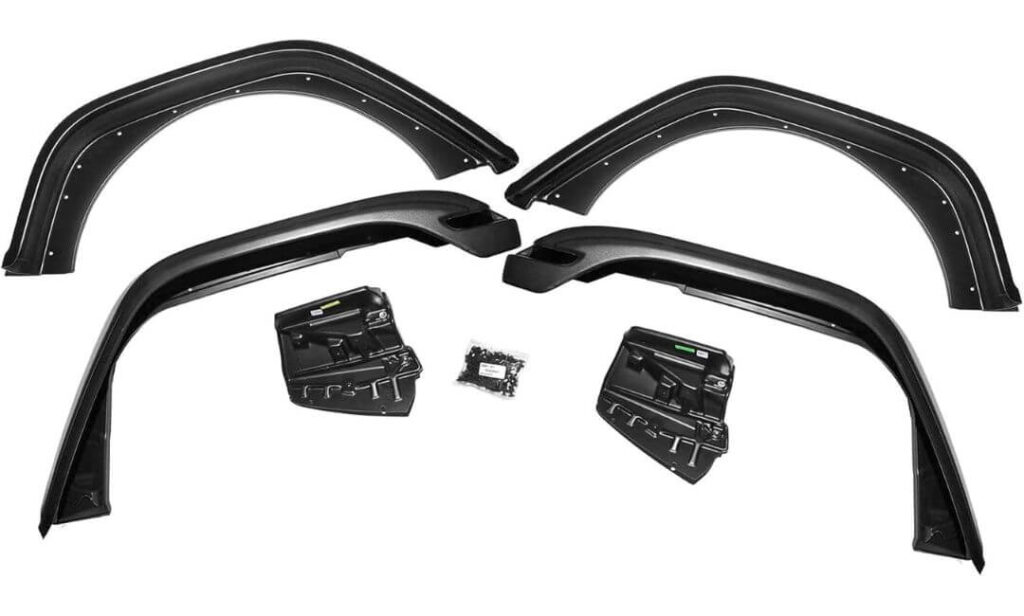
Quick Specs:
- Material: UV-protected TPO (tri-blend ABS + nylon mix, flexible but durable)
- Width Coverage: 10″ front / 6″ rear (one of the widest in this list)
- Clearance Gain: +¾” over Rubicon flares / up to +2″ over non-Rubicon
- Tire Fit Support: Up to 35″ (non-Rubicon) / 37″ (Rubicon) without lift
- Finish: Lightly textured flat black (fade-resistant, low maintenance)
- Install Type: No-drill bolt-on (light trimming required)
- Weight: ~26 lbs total (lightest in this category)
If your Wrangler still looks “stock” even after bigger tires, this is the kind of upgrade that fixes it instantly. That 10-inch front width is no joke—it pushes your stance outward in a way you actually notice from a distance. Not just wider, but more planted, more purposeful. And unlike heavy steel kits, this does it without adding unnecessary weight.
The biggest win here is how it handles tire clearance without forcing a lift. That extra ¾” to 2″ clearance gain might sound small on paper, but in real use, it’s the difference between rubbing and clean articulation. You can run 35s or even 37s (on Rubicon) without immediately jumping into suspension mods—and that’s where this setup quietly outperforms a lot of others.
Material-wise, the TPO construction works smarter, not harder. It flexes when needed, resists cracking, and doesn’t fade out under sun exposure. It’s built for real driving conditions—dust, heat, daily use—not just weekend trails. And the fact that it keeps your factory blinkers intact makes the final look feel clean, not over-modified.
(This is one of those rare upgrades where you step back after install and think—this should’ve come like this from the factory.)
What Stands Out in Real Use
- Massive 10″ front width that transforms stance instantly
- Real clearance gains—fits bigger tires without forcing a lift
- Lightweight TPO build that avoids stress on body and mounts
- No-drill install with factory integration (clean final look)
- UV-resistant finish that holds up in sun, dust, and daily driving
What Could Be Better
- Requires light trimming during install—not difficult, but needs attention
Jeep Wrangler Compatibility & Real Fitment
Engineered for 2018–2026 Jeep Wrangler JL & JLU (2-door & 4-door), and the fitment feels intentional. Everything lines up with factory mounting points, and retaining the original blinkers keeps the Jeep looking clean—not overdone.
This setup works best for builds aiming at bigger tires without jumping straight into full suspension upgrades. It bridges that gap perfectly between stock and fully built.
Installation Insights (What to Expect)
Installation is straightforward overall—no drilling, just bolt-on with supplied hardware. The only extra step is light trimming, which is manageable if you take your time.
Everything is designed to integrate with factory components, so you’re not dealing with complicated rewiring or fitment issues. Once installed, it feels secure and properly seated—not like an add-on.
Quick tip: after installation, check bolt tightness after your first few drives. It’s a small step, but it keeps everything locked in long-term.
#7. OEDRO Flat Steel Fender Flares JL/JLU (2018–2026)
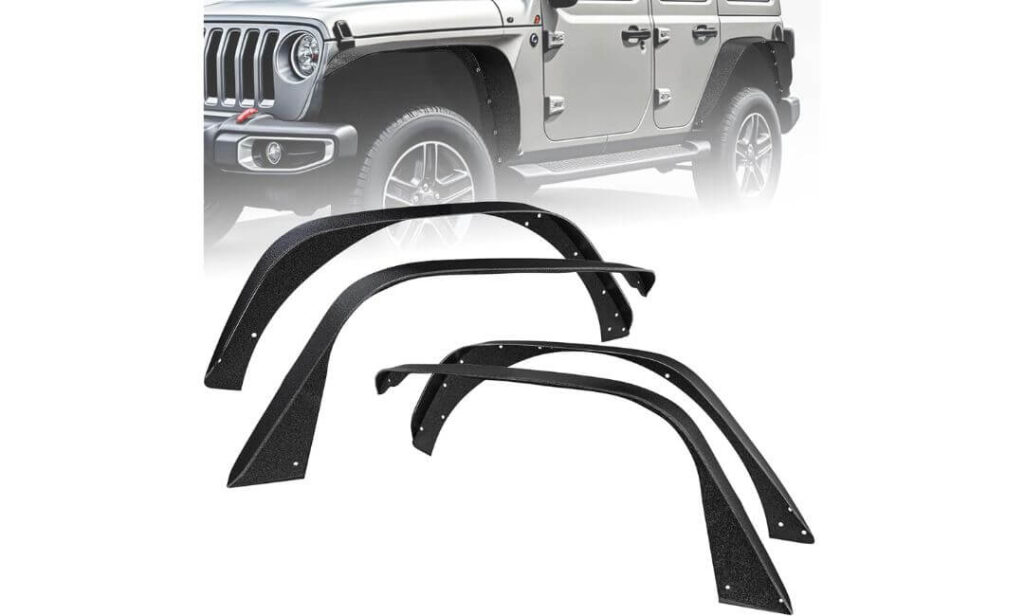
Quick Specs:
- Material: Heavy-duty stainless steel (solid feel, not thin sheet metal)
- Finish: Textured black powder coat (scratch-resistant, off-road ready)
- Design: Flat-style profile (adds clearance without bulky overhang)
- Coverage: Increased tire-to-fender gap (supports larger tire setups)
- Install Type: Factory-hole bolt-on (no cutting or drilling into body)
- Weight Class: Mid-heavy steel build (balanced strength vs install effort)
- Kit: 4-piece set + mounting hardware + installation manual
This is the kind of setup that quietly surprises you. No loud branding, no over-the-top design—just a clean, flat steel flare that does exactly what most Wrangler owners actually need. The moment it’s on, you notice how much better the wheel area looks—more open, more proportional, especially if you’ve upgraded your tires even slightly.
The flat design plays a bigger role than it seems. Instead of wrapping around the tire like bulky flares, it gives your wheels space to breathe. That means better clearance during turns and articulation, without making the Jeep look oversized. It’s a subtle shift, but once you see it, you won’t want to go back to stock.
Build quality is where this really earns its place. The stainless steel construction with textured coating feels dependable—not flashy, just strong where it matters. It handles mud, sand, debris, all the usual abuse without feeling like it’s going to give up after a few months. And because it uses factory mounting points, the overall fit feels tight and natural.
(It’s one of those upgrades that doesn’t try too hard—but ends up making your Wrangler look exactly how it should’ve from day one.)
What Stands Out in Real Use
- Flat steel profile that improves clearance without bulky overhang
- Stainless steel build that feels solid and long-lasting
- Clean, balanced look—not too aggressive, not too plain
- Factory-hole installation keeps things simple and aligned
- Great value-to-performance ratio compared to heavier premium kits
What Could Be Better
- Rivet nut setup can feel tricky without a proper rivet gun tool
Jeep Wrangler Compatibility & Real Fitment
Designed for 2018–2026 Jeep Wrangler JL & JLU (2-door & 4-door), and the fitment is generally clean when installed properly. The use of factory holes keeps alignment straightforward, and the overall design blends well with both stock and slightly upgraded builds.
These work best for Wranglers that need better clearance and protection without going full aggressive or oversized. It’s a practical upgrade that fits naturally into most setups.
Installation Insights (What to Expect)
Installation is mostly bolt-on using factory holes, which keeps things simple. However, you’ll need to install rivet nuts, and that’s where having a proper rivet gun makes a big difference.
Some users mention slightly tight or misaligned holes in the rear, so it’s worth test-fitting before tightening everything fully. Once secured, the flares sit firm and don’t feel loose or temporary.
Give yourself around 1–2 hours, and with the right tool, the process becomes much smoother than expected.
Best Jeep Wrangler Fender Flares for JL/JLU Sport, Sahara, Rubicon (Quick Compare)
| Product | Material | Width / Clearance | Installation | Lighting | Best For |
|---|---|---|---|---|---|
| Hooke Road Top Pick |
16-Gauge Steel | 6.8″ Front / 3.6″ Rear | Front Bolt-On Rear Drill |
LED DRL + Turn | Serious off-road + balanced build |
| WOLFSTORM | Alloy Steel | Wide Coverage | Front Easy Rear Rivet |
Sequential LED | Style + modern lighting setup |
| YZONA Best Value |
Carbon Steel | Full Coverage | Front Easy Rear Drill |
Basic LED | Budget + daily protection |
| OMP Offroad Extreme Build |
Q235 Steel | 9″ Front / 5.5″ Rear | No-Drill Bolt-On | LED Included | Lifted builds + max clearance |
| Bushwacker | Dura-Flex TPO | Legal Coverage | Easy Bolt-On | LED Markers | Daily driving + OEM+ look |
| Rough Country WF1 | TPO | 10″ Front / 6″ Rear | No Drill (Trim) | Factory Retained | Big tires without lift |
| OEDRO | Stainless Steel | Flat Clearance | Bolt-On + Rivet | No | Simple steel upgrade |
Buying Guide: How to Choose the Right Fender Flares for Your Jeep Wrangler JL/JLU
Let’s get one thing straight—fender flares aren’t just cosmetic upgrades. On a Wrangler, they directly affect how your build performs, how clean it stays, and even whether it’s street legal. Most people rush this decision and regret it later. If you want to get it right the first time, here’s what actually matters.
Fitment Comes First (Not All “JL Flares” Fit the Same)
Every option in this list is technically made for 2018–2026 JL/JLU, but real fitment goes deeper than that. You need to think about your trim (Sport, Sahara, Rubicon) and how your current setup looks.
Flat fender designs (like Hooke Road, OMP, OEDRO) are built for maximum clearance and aggressive builds. They open up the wheel well and work better with larger tires and suspension travel.
More refined or molded styles (like Bushwacker or Rough Country) lean toward daily driving with better integration. They follow body lines more closely and feel closer to OEM.
Then comes install type. Some are true bolt-on (OMP, Rough Country), while others need rear drilling or rivet nuts (Hooke Road, WOLFSTORM, YZONA, OEDRO). That difference matters more than you think once you’re halfway through installation.
Coverage and Clearance (Where Most Buyers Go Wrong)
This is where your decision either works… or fails.
If you’re running bigger tires, your flares need to do two things:
- Cover the tire properly (to stop mud, debris, and legal issues)
- Create space for movement (so tires don’t rub under flex)
Numbers matter here. A 10-inch front width (Rough Country) or 9-inch aggressive design (OMP) isn’t just for looks—it physically changes how your Wrangler handles bigger wheels.
On the other hand, mid-range widths like Hooke Road give you a balanced setup—enough clearance without going extreme.
If your tires stick out past the flare, you’ll deal with:
- Constant mud spray
- Paint damage
- Possible road fines in some regions
So don’t guess—match flare width to your tire size and stance.
Material & Build Quality (Steel vs TPO Is a Real Decision)
This isn’t about “which is better”—it’s about what fits your usage.
Steel (Hooke Road, OMP, WOLFSTORM, YZONA, OEDRO)
You go steel when you want real protection. Rocks, debris, trail hits—steel handles it. It feels solid, doesn’t flex easily, and lasts longer in harsh use. But it’s heavier and can rust if coatings are ignored.
TPO / Dura-Flex (Bushwacker, Rough Country)
This is smarter for mixed use. It’s lighter, flexible, and UV-resistant, meaning no cracking or fading over time. It absorbs impact instead of denting. Perfect for daily driving with occasional off-road use.
A small detail most ignore: coating quality matters as much as material. Powder coating + inner E-coating (like Hooke Road) or UV-treated TPO (Bushwacker) decides how these look after 1–2 years—not day one.
Design: Looks vs Real Function
Some flares are built to look aggressive. Others actually improve performance.
Flat designs = better articulation, more clearance, cleaner stance
Pocket/riveted styles = visual aggression, less functional gain
Textured finishes are practical—they hide scratches and trail marks. Smooth finishes (like Bushwacker) look premium but require more care.
If your Wrangler is a build, go functional.
If it’s a daily driver, balance both.
Lighting Integration (Small Detail, Big Impact)
Wider flares push your body outward. That means visibility becomes important, especially at night.
Options like:
- Hooke Road (LED DRL + signals)
- WOLFSTORM (sequential LEDs)
- OMP (resistor-supported signals)
…actually improve safety, not just style.
On the other hand, setups like Rough Country that retain factory blinkers keep things clean but don’t add visibility.
If you’re going wider, integrated lighting is worth having.
Legal Coverage (Most People Ignore This)
This is where a lot of builds fail quietly.
In many places, your tires must not stick out beyond the fender. If they do:
- You can get fined
- Your vehicle may fail inspection
- Insurance claims can get complicated
That’s why wider flares exist—to bring your build back into compliance.
If you’re upgrading tires, don’t treat flares as optional—they’re part of the setup.
Installation Reality (Be Honest With Yourself Here)
Every product claims “easy install”—but here’s the real breakdown:
- No-drill bolt-on (OMP, Rough Country): quickest, cleanest
- Front bolt-on + rear drilling (Hooke Road, YZONA): moderate effort
- Rivet nut installs (WOLFSTORM, OEDRO): requires tools + patience
If you’re comfortable with tools, most of these are doable at home in 1–3 hours.
If not, getting it professionally installed saves time—and avoids alignment issues that ruin the final look.
One honest tip:
A good rivet nut tool makes or breaks the experience. Don’t skip it.
Final Thought (What Actually Matters)
The best fender flare isn’t the most expensive one—it’s the one that matches your Wrangler’s setup.
- Running big tires + planning trails → go wide, go steel
- Daily driving + occasional off-road → go TPO, lighter build
- Want aggressive stance without headache → focus on no-drill options
Everything in this list works—but only if you pick it for the right reason.
That’s the difference between a Wrangler that looks modified… and one that feels properly built.
Installation & Maintenance Tips for Jeep Wrangler Fender Flares (Real-World Guide)
This is the part where most builds either come together clean… or start showing problems within weeks. Fender flares aren’t difficult to install—but how you install them decides how they’ll look and last.
No-Drill vs Drill Install (What You’re Really Signing Up For)
Let’s be honest—“easy install” means different things depending on the product.
No-drill options like OMP or Rough Country are straightforward. You’re using factory mounting points, tightening bolts, and aligning panels. These are usually done in under 1–2 hours if you take your time.
But once you step into setups like Hooke Road, WOLFSTORM, YZONA, or OEDRO, things change slightly. The front is still simple, but the rear often involves rivet nuts or light drilling. It’s not difficult—but it requires patience and the right tool.
The biggest mistake people make here is rushing. Misaligned rivet nuts or uneven tightening leads to:
- Gaps between flare and body
- Slight tilt in the flare line
- Long-term loosening
If you slow down and align properly, even a drill-required install looks factory clean.
Common Mistakes That Ruin the Final Look
Most issues don’t come from the product—they come from installation habits.
One of the most common problems is scratching the powder coat during install. Steel flares, especially, can chip if you drag them across mounting points or overtighten bolts too quickly. Once that coating is damaged, rust becomes a possibility over time.
Another issue is tightening everything at once. The right way is to loosely mount all bolts first, align the flare perfectly, and then tighten gradually. This keeps everything straight and prevents stress on mounting points.
Wiring is another overlooked area. If your flares include LEDs, don’t just plug and leave them. Secure the wiring properly using clips or zip ties—loose wires lead to rattling or long-term damage.
And finally, always check your hardware. Missing or mismatched bolts happen more often than people admit. A quick check before starting saves a lot of frustration mid-install.
Maintenance That Actually Makes a Difference
Once installed, most people forget about fender flares. That’s where problems start.
For steel flares, the focus is protection. Even with powder coating, small chips from rocks or installation can expose metal underneath. A quick touch-up or clear coat layer in high-impact areas goes a long way in preventing rust.
For TPO or flexible materials, the main enemy is sunlight. Over time, cheaper plastics fade or chalk—but high-quality ones (like Bushwacker or Rough Country) resist this well. Still, occasional cleaning and UV protectant sprays keep them looking fresh.
Mud and dirt buildup is another silent issue. After off-road drives, debris gets trapped around mounting areas. If left there, it can hold moisture and affect both finish and hardware. A simple rinse after heavy use keeps everything clean and long-lasting.
Installation Day Checklist (Don’t Skip This)
Before you even start, make sure you have everything ready. This is where a smooth install begins.
Check that all parts and hardware are present. Lay everything out so you’re not searching mid-process.
Have the right tools ready:
- Socket/wrench set
- Drill (if required)
- Rivet nut tool (very important for some kits)
- Basic wiring tools for LED connections
Work on a clean, flat surface. It sounds basic, but uneven ground makes alignment harder than it should be.
If your flares are steel and heavy, get a second person to help. Holding and aligning at the same time is where most scratches and misfits happen.
And one last thing—test your LED lights before final tightening. Fixing wiring after full installation is always more frustrating.
Final Thought (What Most People Learn Too Late)
A good set of fender flares can last years. A rushed installation can make even the best product feel average.
Take your time, align everything properly, and protect the finish from day one.
Because once they’re on, these aren’t just accessories—they become part of how your Wrangler looks, drives, and holds up over time.
Real-World Use Cases: Where Fender Flares Actually Make a Difference on a Jeep Wrangler
Most lists stop at specs. Real owners care about what happens after installation—on trails, in traffic, and months down the line. Here’s how these flares from the list actually perform when your Wrangler is used the way it’s meant to be.
Off-Road Reality: Clearance, Protection, and Why Width Matters
The first time you take your Wrangler off-road with wider tires, you realize quickly—stock flares don’t keep up. Tires throw mud, rocks, and debris straight onto your doors and rear panels.
That’s where wide coverage setups like Rough Country (10″) or OMP (9″) start making sense. They don’t just change how your Jeep looks—they physically block debris and control spray, especially in muddy or loose terrain.
Flat designs (Hooke Road, OEDRO, OMP) also play a huge role here. When your suspension flexes on uneven ground, tires move upward and inward. Flat flares give that extra room, so you’re not dealing with rubbing or awkward contact under articulation.
Steel builds take it further. On tighter trails with branches or rocks, metal flares act like armor. They take hits that would crack plastic. That’s why serious off-road setups lean toward steel—even if it adds weight.
Daily Driving: Clean Body, Less Mess, Better Visibility
Even if your Wrangler spends most of its time on-road, fender flares still do real work.
Wider flares help reduce mud spray during rain, which means cleaner doors, mirrors, and rear panels. It’s something you don’t notice until you switch from stock—and then you won’t want to go back.
For daily use, materials matter more than aggression. TPO setups like Bushwacker or Rough Country handle city driving better. They flex over bumps, resist fading under sun exposure, and don’t feel overbuilt for normal roads.
Lighting also becomes more useful here. When flares extend outward, your stock signals don’t always cover the full width visually. That’s where integrated LEDs (Hooke Road, WOLFSTORM, OMP) improve side visibility—especially at night or in heavy traffic.
Street Legality: The Part Most Builds Ignore
Once you move to bigger tires, your Wrangler can easily cross into a zone where tires stick out past the body line. That’s not just a visual issue—it can become a legal one depending on local rules.
Wider flares bring everything back into line. They:
- Cover exposed tire tread
- Reduce road spray for vehicles behind you
- Help maintain compliance with vehicle regulations
Products like Bushwacker and Rough Country are designed with this balance in mind—enough coverage to stay legal without overdoing width.
Ignoring this part often leads to fines or failed inspections—something most people only realize later.
Style vs Function: What Actually Holds Value Over Time
Here’s something most people don’t talk about—not all aggressive builds age well.
Overly bulky or mismatched flares can make a Wrangler look good for a while, but over time, clean and balanced setups tend to hold more value. That’s where options like Bushwacker or well-fitted flat steel flares stand out—they look intentional, not forced.
Flat designs also age better visually. They don’t rely on trends like rivets or oversized shapes—they just follow the Jeep’s lines and improve stance naturally.
From a resale perspective, buyers notice:
- Clean fitment (no gaps or misalignment)
- Proper tire coverage
- Quality materials that haven’t faded or rusted
A Wrangler with well-chosen flares doesn’t look “modified”—it looks properly built, and that difference matters when someone is deciding whether it’s worth buying.
What This Means for Your Build
If your Wrangler is:
- Trail-focused → go wider, go steel, prioritize clearance
- Daily + occasional off-road → balanced width, TPO or lighter steel
- Show + clean build → focus on fitment, finish, and integration
Every option in this list fits one of these use cases. The key is choosing based on how you actually use your Jeep—not just how you want it to look.
FAQs About Jeep Wrangler Fender Flares
Do wide fender flares on a Jeep Wrangler JL actually improve off-road performance or just change the look?
They do both—but the performance gain is real if you’re running bigger tires. On a Wrangler JL, once you move past stock tire size, the limiting factor isn’t always suspension—it’s space inside the wheel well. Wider, flat flares (like the ones we covered) give your tires room to travel upward without rubbing.
That means better articulation on uneven terrain, fewer chances of tire bite during turns, and less debris hitting your body. If your setup is still near stock, you won’t feel a big difference. But once you go 35s or beyond, flares stop being cosmetic and start becoming functional parts of your build.
For a Jeep Wrangler JL daily driver, is steel overkill compared to TPO flares?
In most daily-driven Wranglers, yes—full steel can be more than you actually need.
Steel shines when you’re hitting trails regularly, dealing with rocks, branches, and real impact situations. But for daily driving, TPO options like Bushwacker or Rough Country make more sense. They’re lighter, they flex instead of denting, and they handle sun exposure better over time.
That said, if you want that solid feel and aggressive stance, steel still works—it just comes with trade-offs like weight and potential maintenance. The smart move is matching material to usage, not hype.
Will adding fender flares fix the “tire sticking out” issue on a Jeep Wrangler JL with bigger wheels?
Yes—but only if you pick the right width.
A lot of people install new tires, notice they’re sticking out, and assume any aftermarket flare will fix it. That’s not how it works. You need to match the flare width to how far your tire extends past the body.
For example:
- Mild poke → mid-width flares (Hooke Road, Bushwacker)
- Aggressive poke → wide setups (OMP, Rough Country)
If the flare isn’t wide enough, you’ll still have exposed tread. And that’s where mud spray, paint damage, and even legal issues come in. So the fix works—but only when it’s chosen correctly.
Why do some Jeep Wrangler fender flares start rusting or fading even when they claim “heavy-duty”?
Because “heavy-duty” doesn’t always mean long-term protection.
With steel flares, the real protection comes from the coating. Powder coating looks strong, but if it gets chipped during install or trail use, moisture can reach the metal underneath. That’s when rust starts.
With plastic/TPO, fading happens if UV protection isn’t built into the material.
The difference between a flare that lasts 6 months vs 3 years usually comes down to:
- Coating quality (dual-layer vs basic)
- How carefully it was installed
- Whether it’s cleaned and maintained after off-road use
So it’s not just the product—it’s how it’s handled after you get it.
What’s the biggest mistake people make when upgrading fender flares on a Wrangler?
They choose based on looks instead of setup.
It sounds simple, but it’s the most common issue. Someone sees an aggressive wide flare, installs it on a near-stock Wrangler, and ends up with a build that looks off. Or they go too narrow with bigger tires and still deal with spray and clearance issues.
The right way to approach it is backwards:
- First decide your tire size and usage (daily vs off-road)
- Then match the flare width, material, and design to that
When flares are chosen to match the build, everything looks natural. When they’re chosen just for style, the Jeep feels unfinished—no matter how expensive the parts are.
Closing Thoughts: What Actually Makes a Wrangler Build Feel “Right”
By now, you’ve probably realized—this isn’t about picking the “best-looking” fender flare. It’s about choosing the one that fits how your Jeep Wrangler is built and used.
Every option in this list earns its place for a reason. Some go all-in on steel and clearance, built for trails where things hit back. Others focus on balance—clean fitment, lighter materials, and everyday usability without losing that off-road edge. There’s no single winner here—only the one that matches your setup the closest.
The difference shows up after installation.
A properly chosen flare doesn’t feel like an add-on. The stance looks right. The tire sits where it should. Mud stops hitting your doors. Nothing rattles, nothing feels forced. You walk up to your Wrangler and it just looks… complete.
On the other hand, the wrong choice sticks out immediately. Too wide, too narrow, poor fitment—it breaks the flow of the build. And that’s something no amount of money fixes later.
If you’re running bigger tires or planning to, prioritize clearance and coverage first. If your Wrangler is your daily with occasional trails, focus on material and fitment quality. And if you want something that holds value over time, always lean toward clean integration over aggressive styling alone.
At the end of the day, fender flares aren’t just accessories—they’re part of how your Wrangler carries itself on and off the road.
Get that part right, and everything else around it starts to make sense.
Also Check: