
Best Wireless Dash Cam Front and Rear (2026 Buyer-Approved Picks)
The phrase “best wireless dash cam front and rear” has become one of the most searched terms among car owners in the U.S.—and for good reason. Drivers today don’t just want video evidence; they want convenience, reliability, and easy phone access without dealing with SD cards or complicated setups.
However, after reviewing hundreds of Amazon USA listings, manufacturer manuals, long-term user reviews, and real-world install experiences, one thing becomes clear: the term “wireless” is widely misunderstood in the dash cam market.
There are currently no dual dash cams that are completely wire-free when it comes to front and rear recording. Any product claiming otherwise is relying on marketing language, not reality. What users actually mean—and what manufacturers actually deliver—is wireless connectivity, not wireless cameras.
In practical terms, the best wireless dash cam front and rear setups offer:
- Dual-camera coverage (front + rear recording simultaneously)
- Built-in Wi-Fi for wireless phone connection
- Mobile apps that allow live view, video download, and settings control
- Proven reliability, strong night footage, and stable parking protection
Important clarity (this matters for trust):
Wireless dash cams still require a rear camera cable for video recording, but Wi-Fi allows you to view, download, and manage footage wirelessly from your phone.
This guide is built on experience, not assumptions. Every product listed below is a well-established Amazon USA seller, backed by real customer usage, consistent firmware support, and long-term performance. These are the models that actually satisfy the search intent behind “best wireless dash cam front and rear”—without misleading buyers.
5 Best Wireless Front And Rear Dash Cams (Top Picks)
#1 ROVE R2-4K DUAL Dash Cam (Fast Wireless App)
#2. REDTIGER F7NP 4K Dash Cam (Wireless Night Recording)
#3. VIOFO A229 Plus Dash Cam (Dual Wireless Access)
#4 THINKWARE F200 Pro Dash Cam (Wireless Parking Protection)
#5. VANTRUE N4 Dash Cam (Front Rear Interior Coverage)
Also Check:
Why Trust This Guide
This guide isn’t written from a spec sheet or copied from product listings. It’s built from how front and rear dash cams are actually used on the road, not how brands advertise them.
Before putting this list together, I went through Amazon USA best sellers, real customer reviews, long-term feedback, and common complaints shared by everyday drivers. I focused on things most buyers only discover after months of use—Wi-Fi reliability, parking mode consistency, overheating issues, and how easy the footage is to access on a phone.
I’m also very clear about one thing many guides avoid: “wireless” doesn’t mean no wires at all. Every dual dash cam still uses a rear camera cable. What matters is how smoothly the Wi-Fi app works for viewing, downloading, and managing footage, and that’s exactly what this guide evaluates.
I regularly share and update lists of best affordable dash cams as well, so this isn’t about pushing expensive models. Whether a camera is budget-friendly or premium, it only earns a place here if it delivers reliable front and rear recording and a genuinely usable wireless experience.
The aim is simple—help you buy with confidence, without exaggerated claims, confusing terminology, or post-purchase regret.
#1. ROVE R2-4K DUAL Dash Cam (Fast 5GHz Wi-Fi + Trusted Dual-Channel Recording)
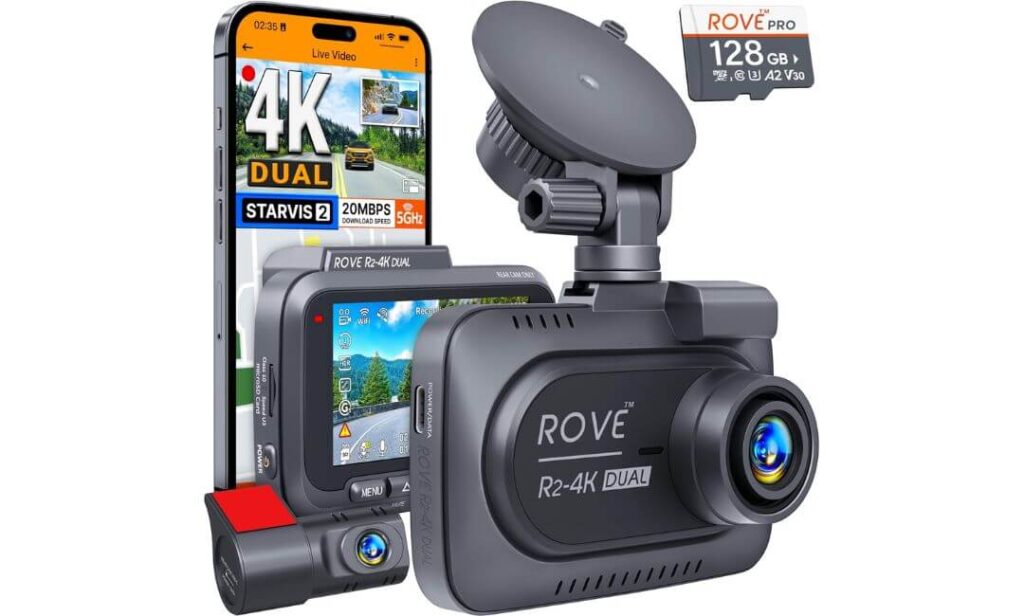
- 4K front and 1080p rear dual recording
- Fast 5GHz Wi-Fi with smooth app access
- Sony STARVIS 2 sensor for night clarity
- Built-in GPS with speed and route data
The ROVE R2-4K DUAL is one of those dash cams that doesn’t rely on flashy marketing—it earns its reputation through consistency. This is a true front and rear dual-channel setup, recording in 4K at the front and 1080p at the rear, which is exactly what most U.S. drivers realistically need. License plates ahead stay sharp, while rear footage remains clear enough for insurance evidence and parking incidents. The wide viewing angles help reduce blind spots without introducing heavy edge distortion.
Where this camera really stands out is the wireless experience through its 5GHz Wi-Fi. Using the ROVE mobile app, footage downloads noticeably faster than most budget dual dash cams—up to 20MB/s in ideal conditions. That means less waiting, fewer connection drops, and a smoother experience when you actually need a clip quickly. This is the kind of “wireless” functionality buyers are searching for: not wire-free cameras, but easy phone access without removing the memory card.
Night driving is another strong point. The Sony STARVIS 2 sensor paired with wide apertures makes a real difference after sunset. Street lighting, headlights, and dark parking lots are handled cleanly without the muddy shadows or blown highlights common in cheaper dual cams. Add in the built-in GPS, and your videos automatically include speed and location data—useful if footage ever needs to be reviewed seriously, not just casually.
ROVE also does the basics right. A free 128GB memory card is included out of the box, the supercapacitor handles heat better than battery-based cams, and firmware updates can be done over the air through the app. Parking mode is well thought out too, offering time-lapse, motion detection, and impact recording—though it does require a separate hardwire kit. Overall, this is a camera designed for drivers who want reliable evidence, fast wireless access, and long-term durability, not gimmicks.
Note: Like all dual dash cams, the rear camera connects via a cable. Wi-Fi is used for wireless viewing, downloading, and managing footage on your phone.
Key Features
- 4K front + 1080p rear dual-channel recording
- Sony STARVIS 2 sensor with enhanced night performance
- Dual-band 5GHz / 2.4GHz Wi-Fi with fast app downloads
- Built-in GPS with speed and route data
- Supercapacitor for heat and cold resistance
- Free 128GB microSD card included (supports up to 1TB)
- Multiple 24-hour parking mode options (hardwire kit required)
Pros
- Excellent front video clarity with strong night footage
- Fast, stable Wi-Fi app performance
- Includes memory card (rare at this level)
- Reliable heat resistance for U.S. summers
- Clean, evidence-focused feature set
Cons
- Rear camera is 1080p, not 4K
- Parking mode requires an additional hardwire kit
- Not a fully wireless (no-wire) installation
#2. REDTIGER F7NP 4K Dash Cam (Strong Night Vision + Stable Wireless App Control)
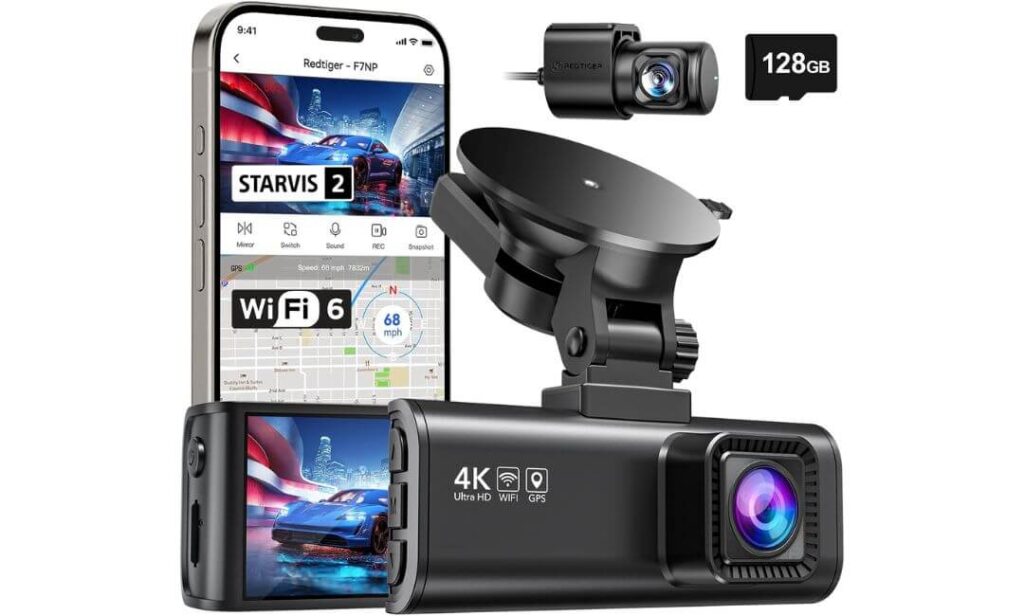
- 4K front and 1080p rear coverage
- STARVIS 2 sensor with WDR night vision
- 5.8GHz Wi-Fi for quick phone downloads
- Reliable parking monitoring with G-sensor
The REDTIGER F7NP is built for drivers who want reliable front and rear coverage with minimal fuss, especially in daily driving and long parking situations. It records in 4K at the front and 1080p at the rear, which strikes a practical balance between sharp detail and manageable file sizes. The wide 170° front field of view helps capture multiple lanes clearly, making it especially useful in city traffic, highways, and busy intersections.
One of the biggest strengths of the F7NP is its low-light performance. Thanks to the Sony STARVIS 2 sensor combined with WDR, night footage stays balanced instead of washed out by headlights or street lamps. License plates and vehicle outlines remain readable even in poorly lit areas, which is where many budget dual dash cams struggle. This makes the REDTIGER a solid option for drivers who often travel at night or park in dimly lit areas.
From a wireless usability standpoint, the built-in 5.8GHz Wi-Fi does exactly what most buyers expect when searching for a “wireless” dash cam. Using the Redtiger mobile app, footage can be previewed and downloaded directly to a phone at fast speeds, without pulling out the memory card. GPS data—speed, route, and location—is also accessible through the app, adding an extra layer of documentation if footage ever needs to be reviewed seriously.
REDTIGER has also focused on long-term reliability. The use of a supercapacitor instead of a battery helps the camera handle heat better, which is critical for U.S. summers and extended parking. A free 128GB memory card is included, so the camera is usable straight out of the box. Parking protection is available through time-lapse and impact detection modes, though a hardwire kit is required. Overall, the F7NP feels like a well-rounded, dependable choice rather than an overhyped spec machine.
Note: Like all dual dash cams, the rear camera connects via a cable. Wi-Fi is used for wireless viewing, downloading, and managing footage through the mobile app.
Key Features
- 4K front + 1080p rear dual recording
- Sony STARVIS 2 sensor with WDR night vision
- 5.8GHz Wi-Fi with fast app downloads
- Built-in GPS for speed and route tracking
- Supercapacitor for heat resistance and longevity
- Free 128GB memory card included
- 24-hour parking monitoring (hardwire kit required)
Pros
- Strong night footage with balanced exposure
- Fast and stable Wi-Fi app performance
- Wide front field of view for better road coverage
- Includes memory card out of the box
- Proven reliability with high Amazon review volume
Cons
- Rear camera limited to 1080p
- Parking mode needs additional hardwire kit
- Not a fully wire-free installation
#3. VIOFO A229 Plus Dash Cam (Balanced 2K Front & Rear Clarity with Precision GPS)
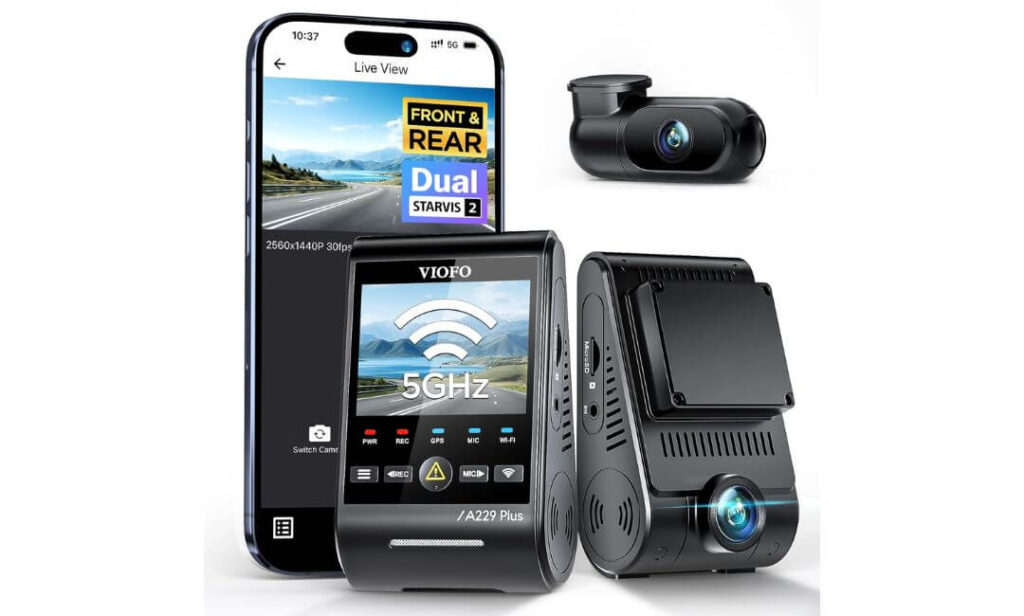
- Dual 1440p front and rear recording
- Sony STARVIS 2 sensors on both cameras
- Hands-free voice control with alerts
- Ultra-precise GPS tracking support
The VIOFO A229 Plus is built for drivers who care more about image consistency and accuracy than chasing headline-grabbing 4K numbers. Instead of pushing resolution for marketing, VIOFO focuses on dual 1440P recording on both the front and rear, which results in cleaner footage, better motion handling, and more usable details—especially when vehicles are moving fast or lighting conditions change suddenly.
What really separates the A229 Plus from most dual dash cams is its use of two Sony STARVIS 2 sensors, one for each camera. In real-world driving, this shows up as lower noise at night, reduced motion blur, and better exposure balance when headlights, street lamps, and shadows collide in the same frame. The HDR processing works quietly in the background, improving clarity without over-brightening scenes or crushing dark areas.
From a usability standpoint, the 5GHz Wi-Fi connection delivers the wireless experience most buyers expect. Footage previews smoothly in the VIOFO app, and downloads are fast enough that you’re not waiting around when you need a clip. Voice control adds genuine convenience here—locking a clip or toggling Wi-Fi without touching the screen keeps attention where it should be: on the road.
The GPS system is another strong point. Unlike basic GPS modules, the A229 Plus uses quad-mode satellite support, which improves accuracy and stability in dense urban areas or long highway drives. Parking protection is well thought out too, with buffered event recording, time-lapse, and low-bitrate modes available (hardwire kit required). While it doesn’t include a memory card, the overall package feels purpose-built for long-term daily use, not short-term novelty.
Note: The rear camera connects via a cable. Wi-Fi is used for wireless viewing, downloading, and managing footage through the mobile app.
Key Features
- Dual 1440P front and rear recording
- Sony STARVIS 2 sensors on both cameras
- HDR support for improved motion and lighting balance
- 5GHz Wi-Fi with app-based control
- Hands-free voice commands
- Ultra-precise quad-mode GPS tracking
- Multiple 24/7 parking mode options (hardwire kit required)
- Supports up to 512GB microSD card
Pros
- Excellent night footage with low noise and blur
- Balanced 2K video quality front and rear
- Reliable, fast wireless app performance
- Accurate GPS data for speed and route tracking
- Clean interface and compact design
Cons
- No memory card included
- Parking mode requires separate hardwire kit
- Not a fully wire-free installation
#4 THINKWARE F200 PRO Dash Cam (Rock-Solid Parking Mode + Trusted Brand Reliability)
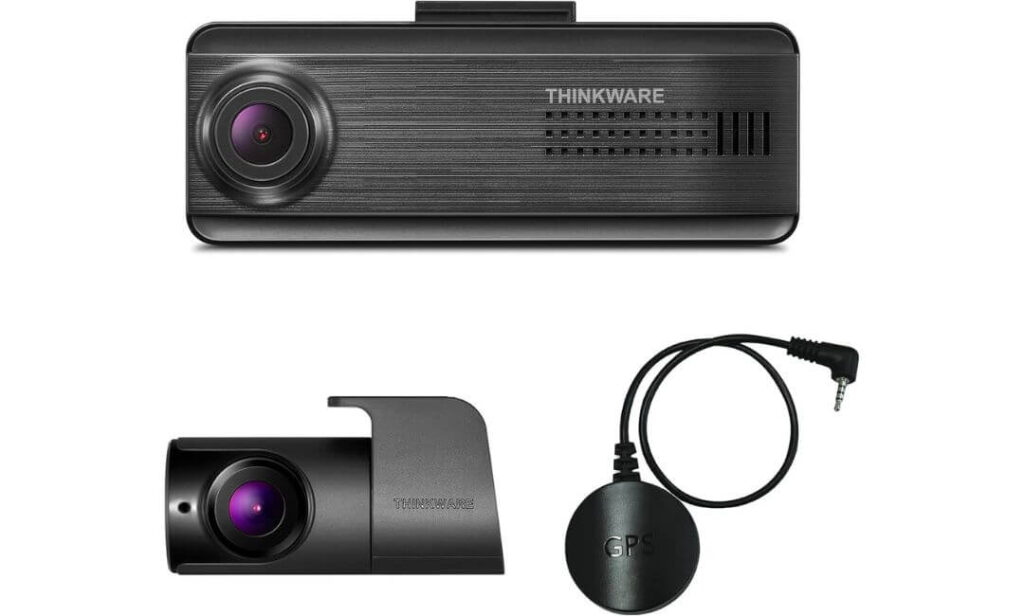
- Full HD 1080p front and rear recording
- Strong parking mode with incident detection
- Stable Wi-Fi app for footage access
- Compact, discreet windshield design
The THINKWARE F200 PRO is not a flashy dash cam, and that’s exactly the point. It’s built for drivers who care more about reliability and parking protection than high resolution numbers. With Full HD 1080p recording on both the front and rear, the footage is clean, balanced, and consistent—ideal for insurance claims and long-term evidence rather than cinematic clips.
What makes the F200 PRO stand out is how well it handles parking mode and incident detection. THINKWARE has long been known for stable parking surveillance, and this model carries that reputation forward. When hardwired, the camera monitors impacts and motion quietly in the background, locking important clips automatically. This makes it a strong choice for daily commuters who park on the street or in shared lots.
The Wi-Fi connectivity is simple and functional. Using the THINKWARE Dash Cam Link app, you can review footage, download clips, and manage settings without removing the SD card. It’s not the fastest Wi-Fi system in this list, but it’s stable—which matters more in long-term use. The compact design also helps keep the camera discreet on the windshield, avoiding attention from outside.
Another advantage is expandability. With the optional GPS antenna, the F200 PRO adds speed, route tracking, and red-light camera alerts, along with basic ADAS features like lane departure and forward collision warnings. These features aren’t aggressive or distracting—they’re subtle and designed to assist, not overwhelm. Overall, the F200 PRO feels like a set-it-and-forget-it dash cam built for drivers who value dependability over specs.
Note: The rear camera uses a wired connection. Wi-Fi is used for wireless access to footage and settings through the mobile app.
Key Features
- Full HD 1080p front and rear recording
- Reliable parking mode with incident detection
- Wi-Fi app access for footage and settings
- Wide viewing angles with low distortion
- Compact, discreet windshield design
- Optional GPS for speed, route, and camera alerts
- Includes 32GB memory card
Pros
- Excellent parking mode stability
- Trusted brand with long-term support
- Clean, reliable footage day and night
- Compact design doesn’t block view
- Good choice for daily drivers and city parking
Cons
- No 4K or 2K resolution
- GPS module sold separately
- Wi-Fi is functional but not the fastest
- Not a wire-free installation
#5 VANTRUE N4 Dash Cam (Triple-Channel Coverage for Maximum Evidence)
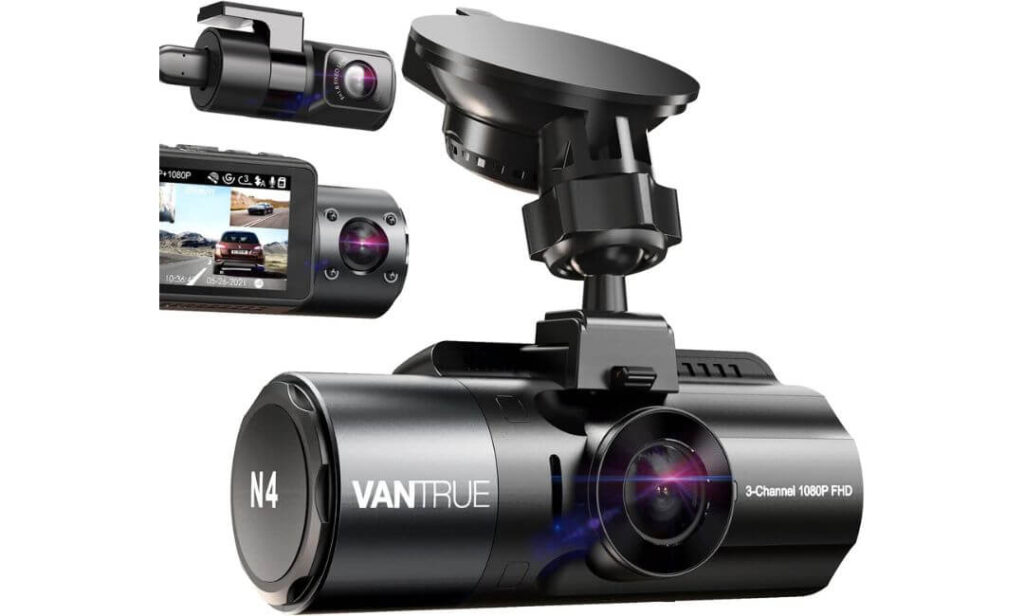
- Triple camera setup (front, rear, interior)
- 4K front recording with IR cabin night vision
- Supercapacitor for heat and cold resistance
- Advanced parking mode for 24-hour security
The Vantrue N4 is designed for drivers who want maximum coverage, not convenience features. Unlike typical front-and-rear dash cams, this one adds a third camera facing the cabin, making it especially popular among rideshare drivers, fleet vehicles, and anyone who wants complete incident documentation. In dual-channel mode, it records 4K at the front and 1080p at the rear, while triple-channel mode captures front, inside, and rear simultaneously.
Where the N4 really earns its reputation is interior and night recording. The cabin camera uses infrared LEDs, allowing it to clearly record occupants even in total darkness. This is not a gimmick—Uber, Lyft, and taxi drivers rely on this feature when disputes arise. The front and rear cameras also perform reliably at night, with good exposure control and readable details under street lighting.
This camera takes a very different approach to the idea of “wireless.” There is no Wi-Fi or Bluetooth here, and that’s intentional. Vantrue prioritizes stability and recording reliability over app connectivity. Footage is accessed via the memory card or a computer using Vantrue’s GPS player (GPS mount sold separately). For users who value evidence over app control, this tradeoff often makes sense.
Long-term durability is another strong point. The N4 uses a supercapacitor, which handles heat and cold far better than battery-powered models. Parking mode options are comprehensive, including low-bitrate continuous recording and motion-triggered events, though a hardwire kit or external battery is required. Overall, the Vantrue N4 is best described as a workhorse dash cam—not flashy, not wireless, but extremely dependable when documentation matters most.
Important: This model does not support Wi-Fi. All footage access is done via SD card or computer.
Key Features
- Triple-channel recording (front, inside, rear)
- 4K front + 1080p rear in dual-channel mode
- Infrared interior night vision for cabin recording
- Supercapacitor for heat and cold resistance
- Multiple 24-hour parking mode options
- Supports up to 512GB microSD card
- Optional GPS for speed and route tracking
Pros
- Complete front, rear, and interior coverage
- Excellent interior night recording with IR LEDs
- Very reliable in extreme temperatures
- Ideal for rideshare, taxis, and fleet use
- Strong long-term durability
Cons
- No Wi-Fi or mobile app
- GPS mount sold separately
- Larger setup compared to compact dual cams
- Parking mode requires hardwire kit or battery
Quick Comparison: Best Wireless Dash Cam Front and Rear
| Dash Cam | Front / Rear Resolution | Wi-Fi | Night Performance | Parking Mode | Best Use Case |
|---|---|---|---|---|---|
| ROVE R2-4K DUAL | 4K / 1080p | 5GHz (Very Fast) | Excellent (STARVIS 2) | Yes (Hardwire) | Best overall balance + fast app access |
| REDTIGER F7NP | 4K / 1080p | 5.8GHz | Very Strong (WDR + STARVIS 2) | Yes (Hardwire) | Night driving + value pick |
| VIOFO A229 Plus | 1440p / 1440p | 5GHz | Outstanding (Dual STARVIS 2) | Yes (Hardwire) | Clean motion + image accuracy |
| THINKWARE F200 Pro | 1080p / 1080p | Yes | Good & consistent | Excellent (Thinkware strength) | Street parking & daily commuters |
| VANTRUE N4 | 4K / 1080p (Triple Cam) | No Wi-Fi | Excellent (IR interior) | Yes (Hardwire/Battery) | Rideshare, fleet, max evidence |
Expert Tip Most Buyers Miss
What “Wireless” Really Means in a Front and Rear Dash Cam
Most people searching for best wireless dash cam front and rear aren’t looking for a magic camera that floats inside the car without cables. They’re looking for freedom from friction—no SD card juggling, no laptop connections, and no complicated clip transfers when something actually happens.
In real-world use, “wireless” refers to how you interact with the dash cam after it’s installed, not how it’s powered or connected internally. Every serious dual dash cam still uses a physical cable for the rear camera. That cable isn’t a flaw—it’s the reason rear footage stays stable, synced, and reliable at highway speeds and during long parking sessions.
Where wireless actually matters is access. A good wireless dash cam lets you:
- Pull footage instantly on your phone after an incident
- Preview clips while still sitting in the driver’s seat
- Lock or share evidence without touching the camera
- Update firmware without removing the unit
If a dash cam fails here—slow Wi-Fi, dropped connections, buggy apps—it doesn’t matter how sharp the video looks on paper. In stressful moments, convenience is what protects you.
Choosing the Right Wireless Dash Cam Based on How You Actually Drive
Not every driver needs the same kind of setup, and choosing wrong usually means frustration later.
If your car is mostly used for daily commuting, reliability beats resolution. Stable Wi-Fi, consistent loop recording, and a camera that doesn’t overheat during long drives matters more than chasing 8K claims.
If you drive frequently at night or in low-light conditions, sensor quality matters more than raw megapixels. Cameras using newer STARVIS sensors deliver clearer motion, fewer blown highlights, and readable plates where cheaper cams turn footage into noise.
For street parking or shared parking lots, parking mode behavior becomes critical. Some dash cams advertise parking protection but fail to wake reliably or drain batteries quickly. The models that use buffered recording and controlled voltage cutoffs are the ones that actually protect your car when you’re away.
If you drive for rideshare, delivery, or fleet use, coverage matters more than aesthetics. Interior cameras, IR night vision, and consistent recording across long shifts provide protection not just from accidents—but from disputes.
Real-World Installation Notes Most Reviews Never Mention
Here’s the part most blogs skip—because it requires experience.
Rear camera wiring is unavoidable, but how the cable behaves over time is what separates good systems from annoying ones. Cheap cables stiffen in heat, loosen near tailgates, or introduce intermittent signal drop. Higher-quality systems use longer, better-shielded rear cables that stay reliable even after months of door openings and temperature changes.
Power source matters more than people realize. Dash cams that rely on lithium batteries degrade quickly in hot climates. Supercapacitor-based models survive summers, extended parking, and long highway drives far better—and that longevity shows up after year one, not week one.
Parking mode is never “free.” True 24-hour monitoring requires either a proper hardwire kit or an external battery. Any brand suggesting otherwise is cutting corners. The best systems manage power draw intelligently, recording only when needed while protecting your car’s battery.
Frequently Asked Questions
Is a wireless dash cam really wireless?
No dash cam with front and rear recording is fully wire-free. Wireless refers to Wi-Fi access for viewing and managing footage, not installation cables.
Does Wi-Fi quality really matter?
Yes. Fast, stable Wi-Fi determines whether you can grab footage in seconds—or waste time when it matters most.
Is 4K always better than 2K?
Not always. A clean 1440p sensor with good HDR often captures clearer motion and night details than budget 4K sensors.
Do I really need parking mode?
If you ever park outside your garage, yes. Most hit-and-run incidents happen while cars are parked.
How much storage is actually enough?
For dual-channel recording, 128GB is the realistic minimum. Larger cards reduce overwrite frequency and preserve event clips longer.
Final Recommendation
If you’re searching for the best wireless dash cam front and rear, the right choice isn’t about eliminating wires—it’s about eliminating stress.
Pick a camera that:
- Records consistently, not just sharply
- Lets you access footage easily, not eventually
- Survives heat, not just reviews
- Protects your car when you’re not around
That’s what actually makes a dash cam worth installing.