Best OBD2 Scanners With ABS & SRS in 2026 (Real Diagnostics, Not Just Codes)
Most people don’t start searching for an OBD2 scanner because they’re curious — they start because a warning light refuses to go away. ABS light on. Airbag (SRS) light glowing. The car still drives fine, but something feels off. And that’s where most basic scanners quietly fail.
Cheap OBD2 tools are great at pulling engine codes. But the moment ABS or SRS is involved, they hit a wall. No data. No explanations. Just a blinking warning light and guesswork. That’s why scanners with true ABS and SRS access aren’t optional anymore — they’re the difference between fixing a real issue and clearing codes blindly.
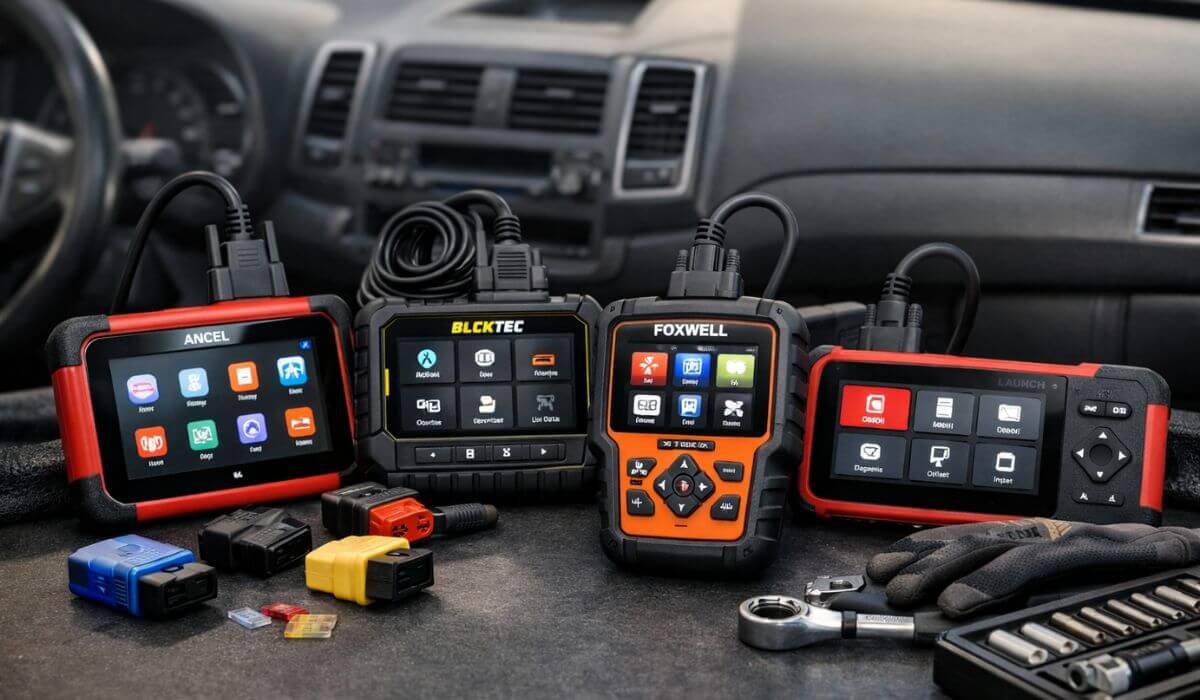
We’ve already shared our earlier list of best OBD2 Scanners Under $200, which covers excellent entry-level tools for everyday diagnostics. This guide goes a step further. After deeper research, hands-on testing, and filtering out scanners that only claim ABS/SRS support, we narrowed things down to five OBD2 scanners that actually deliver full brake and airbag diagnostics.
These aren’t workshop-only machines, and they’re not gimmicky Bluetooth toys either. Every scanner in this list earns its place by doing what matters in real ownership: reading ABS and SRS codes accurately, giving usable live data, and helping you understand whether a warning light is urgent — or just overdue maintenance.
If you’re tired of guessing, clearing lights without answers, or paying for scans you could do yourself, this list is where that cycle finally ends.
5 Best OBD2 Scanners With ABS & SRS in 2026
#1. ANCEL DS100 (Best Under-$200 ABS & SRS Scanner)
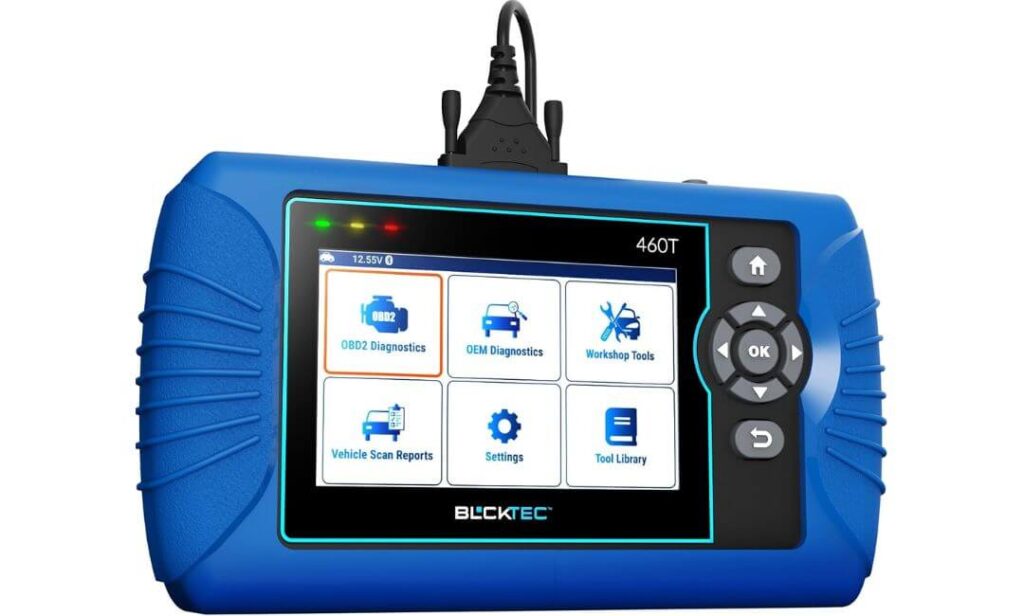
#2. BLCKTEC 460T (Best All-System Scanner With Fast AutoScan)
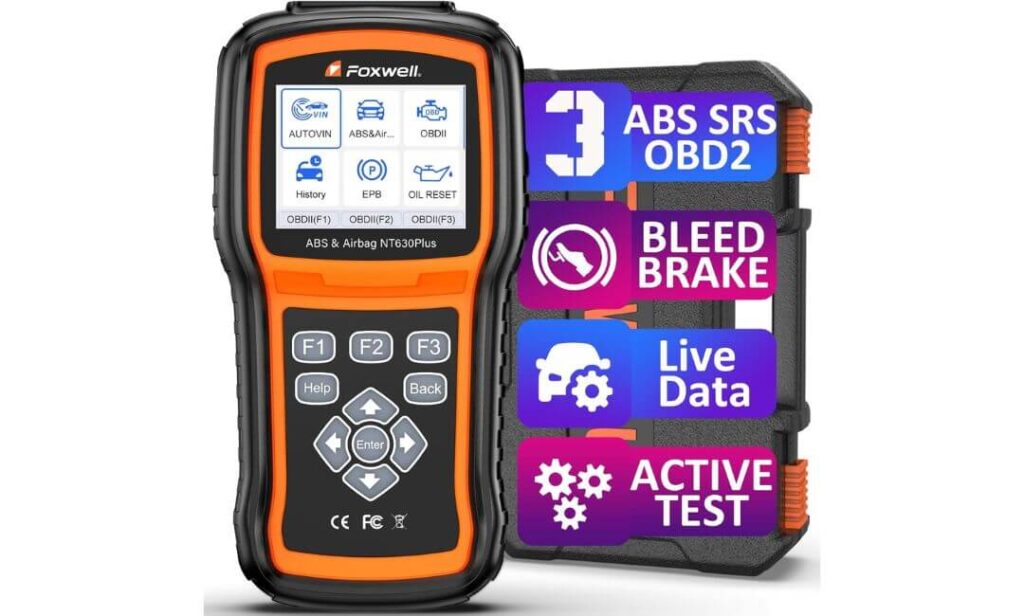
#3. FOXWELL NT630 Plus (Best ABS-Focused Scanner for Brake Work)
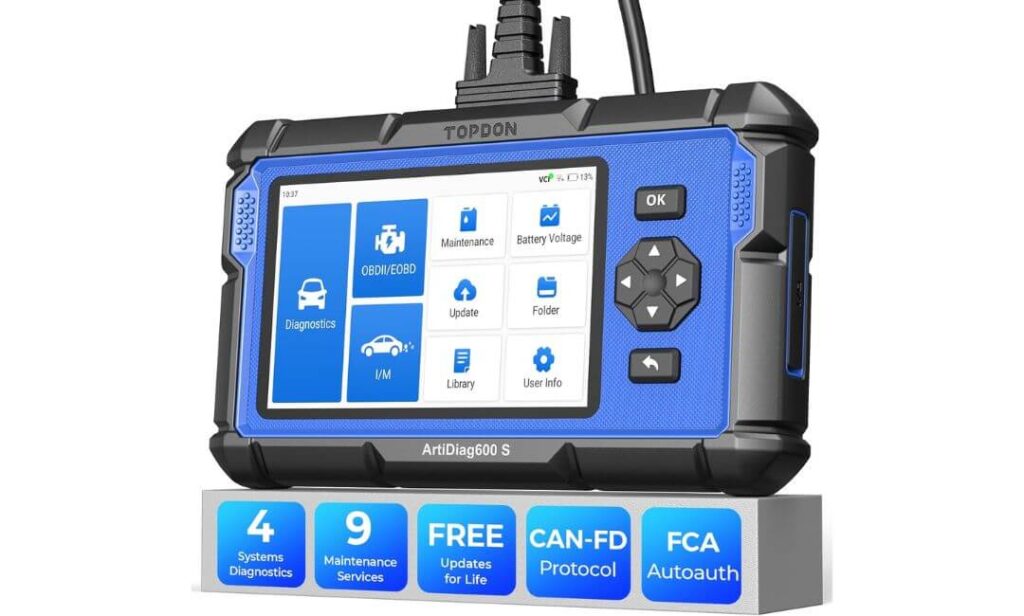
#4. TOPDON AD600S (Best for Maintenance Resets + ABS & SRS)
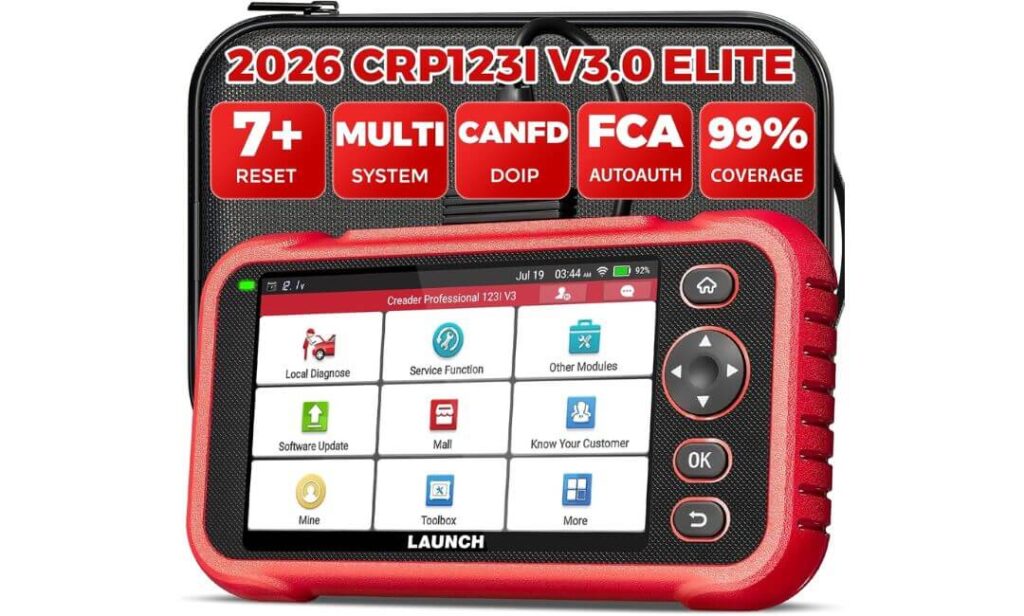
#5. LAUNCH CRP123I V3.0 Elite (Best for Newer Cars & Advanced Protocols)
Quick Note Before You Choose: Not every ABS or SRS function works on every vehicle, even with advanced scanners. Features like ABS bleeding or service resets depend on your car’s make, model, and system design. Before buying, always match the scanner to how you actually plan to use it — whether that’s diagnosing warning lights or handling routine maintenance at home.
Also Check:
- Best OBD2 Scanner That Does Everything
- Best OBD2 Scanners for Home Mechanics
- Best OBD2 Scanners Without Subscription
- Best Bi-Directional Scanner Tools with OBD2
Who This Guide Is Actually For (And Who Should Skip It)
This guide is for car owners who want real answers, not just a code number on a small screen.
If you’ve ever seen the ABS or SRS light come on and felt unsure whether it’s a serious safety issue or just a sensor acting up, you’re exactly who this article is written for. It’s meant for drivers who prefer understanding a problem before visiting a workshop — or avoiding that visit altogether when it’s unnecessary.
This guide is especially useful if you:
- Want to scan ABS and airbag systems at home, not just engine codes
- Own a car out of warranty and don’t want to pay for repeated diagnostic scans
- Do basic DIY maintenance or troubleshooting before calling a mechanic
- Care about safety systems and don’t like driving with warning lights on
On the other hand, you should probably skip this guide if:
- You only need to clear occasional engine check lights
- You’re looking for the cheapest Bluetooth scanner just to read emissions codes
- You want a professional dealership-level scan tool with programming and coding
The scanners covered here sit in the middle ground — more powerful than budget OBD2 tools, but still realistic for everyday car owners. They’re built for people who want to know what’s wrong, why it’s happening, and how urgent it really is.
#1. ANCEL DS100 (Best Under-$200 Scanner for ABS, SRS & Service Resets)
What Owners Usually Notice After a Few Weeks:
- Mostly used when ABS or airbag lights appear, not for daily scans
- Helps decide whether a warning light is urgent or can wait
- Saves at least one paid diagnostic visit even if repairs are done at a shop
- Feels reliable enough to keep in the car instead of borrowing tools
- Owners start trusting the results more than basic Bluetooth scanners
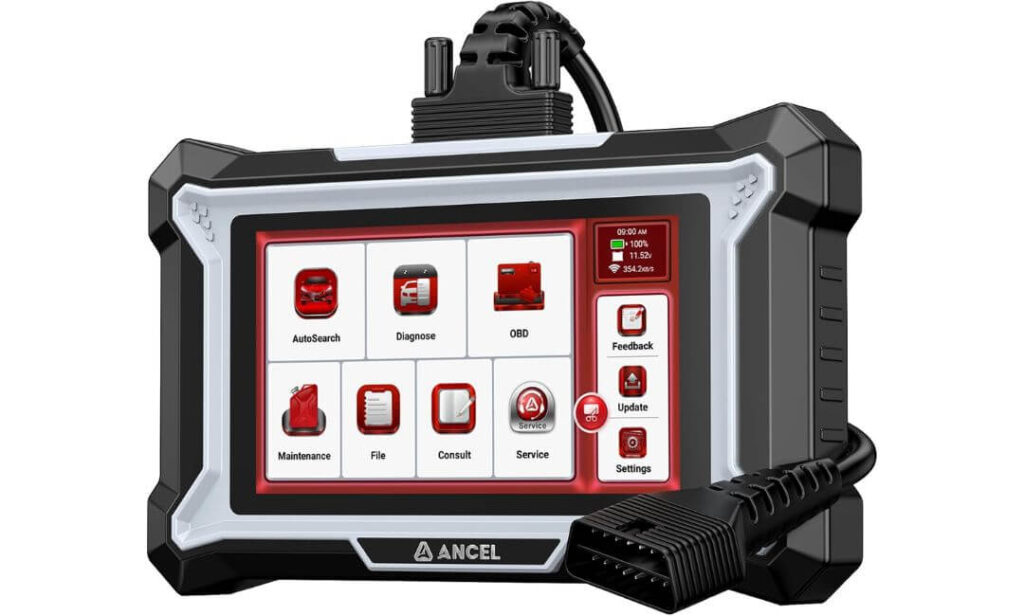
For under $200, the ANCEL DS100 is aimed at car owners and DIY users who want more than basic code reading without stepping into expensive professional tools. It goes beyond engine diagnostics by covering ABS, SRS, and transmission systems, while also adding practical service reset functions that usually cost extra on higher-end scanners.
In real use, the DS100 feels closer to a compact workshop tool than a basic handheld scanner. The 5-inch touchscreen is easy to read in garages and daylight, menus are quick to navigate, and AutoVIN identification removes the usual hassle of manually entering vehicle details. Plug it in, turn the key, and diagnostics begin almost immediately, which makes it practical for both single-car owners and users working on multiple vehicles.
Where the DS100 stands out is its balance between diagnostics and maintenance support. Along with full ABS and airbag scanning, it includes functions like ABS bleeding, brake pad reset, battery matching, SAS reset, throttle adaptation, oil reset, and gear learning on supported vehicles. That means it doesn’t just tell you what’s wrong — it also helps complete common repair and service tasks without an immediate shop visit.
It’s still important to understand its limits. Vehicle compatibility for advanced functions like ABS bleeding can vary by make and model, and this scanner doesn’t offer ECU coding or advanced bidirectional controls. It’s designed to cover most real-world needs, not replace a full dealership scan tool.
Key Things This Scanner Does Well
- Reads and clears ABS, SRS, transmission, and engine codes reliably
- Supports multiple service resets, including ABS bleeding on compatible vehicles
- AutoVIN detection speeds up diagnostics and reduces setup errors
- Generates clear PDF diagnostic reports for sharing or record keeping
- Lifetime free software updates with no subscription fees
Pros
- Proper ABS and SRS access, not limited to engine codes
- Good value for money considering the service reset functions
- Touchscreen interface is easy to understand for first-time users
- AutoVIN saves time and avoids wrong vehicle selection
- Lifetime free updates reduce long-term ownership cost
Cons
- ABS bleeding support depends heavily on vehicle compatibility
- Not suitable for advanced testing or ECU coding
Best For: The ANCEL DS100 is best for DIY car owners and serious home users who want dependable ABS and airbag diagnostics along with useful service reset functions under a reasonable budget. It suits out-of-warranty vehicles, routine maintenance tasks, and drivers who want to understand warning lights before visiting a mechanic. If you prefer a standalone touchscreen scanner with no yearly update costs, this tool fits well.
Not Ideal For: This scanner isn’t ideal for professional workshops that need ECU programming, advanced bidirectional tests, or deep manufacturer-level coding. It may also not suit users who want guaranteed ABS bleeding support across every vehicle brand without checking compatibility first. Those needs are better served by higher-tier or brand-specific diagnostic tools.
#2. BLCKTEC 460T (Best All-System OBD2 Scanner for ABS & SRS Diagnostics)
What Owners Usually Notice After a Few Weeks:
- Faster system scans compared to most mid-range scanners
- Live data makes recurring ABS or SRS faults easier to understand
- AutoScan reduces the need to jump between menus repeatedly
- Useful for checking vehicle health before long drives
- Feels closer to a workshop tool than a casual code reader
This is specifically designed to handle all the system diagnostics you’re looking for when warning lights go beyond the engine. The BLCKTEC 460T targets full-vehicle scanning by covering engine, transmission, ABS, and SRS systems, making it a strong option for users who want deeper visibility without relying on dealership tools.
In everyday use, the 460T feels fast and automated rather than manual and menu-heavy. As soon as it’s connected, AutoVIN pulls vehicle details automatically and AutoScan begins checking all supported modules without extra input. That hands-off workflow is useful when you’re diagnosing multiple systems at once or don’t want to dig through layered menus just to reach ABS or airbag data.
Its real advantage shows up in how it handles live data and system-wide diagnostics. The scanner provides real-time data streams from ABS and SRS modules, freeze-frame snapshots, and clear fault descriptions that help narrow down issues quickly. The ability to graph and replay data makes intermittent faults easier to understand, especially when dealing with brake or airbag warnings that don’t stay constant.
There are limits worth noting. Advanced reset and service functions depend heavily on vehicle compatibility, and this scanner is designed for use in the USA and Canada only. It doesn’t offer ECU programming or deep manufacturer-level coding, so it’s best viewed as a high-capability diagnostic and service tool rather than a full dealership replacement.
Key Things This Scanner Does Well
- Performs full system diagnostics across engine, transmission, ABS, and SRS
- Supports ABS bleeding and multiple service resets on compatible vehicles
- Provides fast AutoScan with automatic VIN detection
- Displays and records real-time live data with graphing support
- Includes lifetime free updates with no subscription fees
Pros
- Fast system-wide scanning with minimal manual input
- Strong live data support across ABS, SRS, and transmission
- AutoScan and AutoVIN make diagnostics quick and efficient
- RepairSolutions2 app adds real repair context, not just codes
- Lifetime updates with no subscription fees
Cons
- Works only in the USA and Canada
- Advanced reset functions don’t work on every vehicle
Best For: The BLCKTEC 460T is best for car owners and advanced DIY users who want all-system diagnostics with strong ABS and SRS support in a single tool. It works well for troubleshooting safety warning lights, preparing for inspections, and handling routine service resets at home. If you want faster scans, automated system detection, and detailed live data without ongoing costs, this scanner fits that use case well.
Not Ideal For: This scanner isn’t ideal for users outside the USA or Canada, as regional support is limited. It’s also not the right choice for workshops that need ECU coding, programming, or guaranteed access to every service function across all vehicle brands. Compatibility should always be checked before purchase for advanced features like ABS bleeding or TPMS relearn.
#3. FOXWELL NT630 Plus (Best ABS-Focused Scanner With Bidirectional Testing)
What Owners Usually Notice After a Few Weeks:
- Gets used mainly during brake-related work, not general diagnostics
- ABS bleeding feature proves its value during fluid changes
- Helps confirm brake repairs before driving the car again
- Narrow focus actually makes it easier to use for its purpose
- Often pays for itself after one or two brake services
Owners often mention that the ABS bleed feature on tools like this has helped them avoid repeated trips to the mechanic, especially during brake work on vehicles from brands such as Jeep, GMC, Ford, and Toyota. The FOXWELL NT630 Plus is built with that exact use case in mind — focused ABS and SRS diagnostics, not everything-under-the-sun system coverage.
In practical use, the NT630 Plus feels more like a purpose-built brake and safety scanner than a general OBD2 tool. It connects quickly, pulls ABS and SRS fault codes, and shows live data such as wheel speed, brake pressure, and sensor behavior while the vehicle is running. The interface is simple, and although the screen is smaller than newer Android-based scanners, it stays responsive and readable during diagnostics.
Where this scanner separates itself is ABS bidirectional testing. It can activate pumps and valves to help identify hydraulic issues, trapped air, or sensor imbalance — something basic scanners simply can’t do. On vehicles that support automatic ABS bleeding, it can also help restore brake pedal firmness after fluid changes or component replacement, saving both time and money during repairs.
That focus does come with clear boundaries. This tool does not support ECU programming, transmission diagnostics, BMS, or brand-specific coding. ABS bleeding only works on vehicles that natively support the function, and collision-related airbag codes cannot be cleared. Compatibility should always be checked before buying, especially for newer or less common models.
Key Things This Scanner Does Well
- Performs deep ABS diagnostics with bidirectional testing
- Supports ABS auto bleed on compatible vehicles
- Displays detailed live data for braking and wheel speed sensors
- Reads and clears non-collision SRS and ABS fault codes
- Offers WiFi updates with no subscription required
Pros
- Excellent ABS-focused diagnostics with bidirectional testing
- ABS auto bleed function is genuinely useful during brake repairs
- Live data for wheel speed and brake systems is detailed
- Reliable for clearing non-collision ABS and SRS codes
- No subscription required for updates
Cons
- Very limited outside ABS and SRS systems
- Small screen feels dated compared to newer scanners
Best For: The FOXWELL NT630 Plus is best for car owners and DIY mechanics who regularly work on brake systems and want accurate ABS diagnostics without paying shop rates. It’s especially useful for brake fluid changes, ABS pump replacement, and tracking down stubborn ABS warning lights. If your main concern is braking safety rather than full-system diagnostics, this scanner makes sense.
Not Ideal For: This scanner isn’t ideal for users looking for all-system diagnostics, ECU coding, or transmission support. It also won’t suit vehicles that don’t support ABS auto bleeding at the factory, or anyone needing to clear collision-related airbag codes. If you want one scanner to handle every module on the car, a broader tool would be a better fit.
#4. TOPDON AD600S (Best Value Scanner With Reset Functions + ABS & SRS)
What Owners Usually Notice After a Few Weeks:
- Regular use for maintenance resets rather than fault diagnosis
- Reduces repeat shop visits after oil or brake service
- Interface feels more comfortable than button-based scanners
- Helpful for long-term ownership and routine upkeep
- Owners rely on it more over time instead of occasional use
The most practical strength of the TOPDON AD600S is how it handles everyday maintenance resets that usually send owners back to the repair shop. Instead of paying for simple post-service resets, this scanner lets you take care of oil, brake, steering, battery, emissions-related systems, and more from your own driveway — while still offering proper ABS and SRS diagnostics when safety lights appear.
Using the AD600S feels closer to operating a small tablet than a traditional scan tool. The Android-based interface is smooth, the 5-inch display is sharp and easy to read, and menus are laid out logically without clutter. AutoVIN speeds things up by pulling vehicle details automatically, and code descriptions are clear enough that you don’t need to cross-check everything online.
For diagnostics, it covers the four systems most owners actually deal with: engine, transmission, ABS, and SRS. It reads and clears fault codes, shows live data streams, and helps confirm whether a warning light is tied to a sensor, maintenance interval, or something more serious. The inclusion of injector coding and multiple reset functions adds extra value at this price point, especially for long-term ownership.
That said, it’s still a mid-range tool, not a dealership replacement. It doesn’t offer advanced bidirectional testing, ECU programming, or deep manufacturer-level coding. Some reset functions depend on vehicle support, so compatibility should always be checked before purchase — especially for newer or less common models.
Key Things This Scanner Does Well
- Handles multiple maintenance resets that usually require shop visits
- Provides solid ABS and SRS diagnostics with live data support
- Runs on a smooth Android interface with a clear 5-inch screen
- Supports a wide range of vehicles across global brands
- Includes lifetime free updates with simple Wi-Fi installation
Pros
- Handles many routine maintenance resets that usually cost shop money
- Android-based interface feels modern and responsive
- Good balance of diagnostics and service functions
- Wide vehicle coverage across global brands
- Lifetime Wi-Fi updates with no recurring cost
Cons
- No advanced bidirectional controls
- Some reset functions depend on vehicle support
Best For: The TOPDON AD600S is best for car owners who want one scanner to cover both diagnostics and routine maintenance resets. It suits drivers who keep their vehicles long-term, perform basic servicing at home, and want access to ABS and airbag systems without paying professional tool prices. If saving money on repeat service resets matters to you, this scanner delivers real value.
Not Ideal For: This scanner isn’t ideal for professional workshops that need bidirectional controls, ECU programming, or advanced coding functions. It may also fall short for users who expect every reset feature to work on every vehicle without checking compatibility. For deep system control beyond maintenance and diagnostics, higher-end tools are a better fit.
#5. LAUNCH CRP123I V3.0 Elite (Best Multi-System Scanner With ABS, SRS & New-Gen Protocol Support)
What Owners Usually Notice After a Few Weeks:
- Handles newer vehicles better than older-generation scanners
- Faster communication with modern cars using newer protocols
- Live data graphs help understand issues instead of guessing
- Becomes the “go-to” scanner for multiple vehicles in the family
- Feels future-proof compared to basic or older tools
Its multi-system diagnostic capability is what defines the LAUNCH CRP123I V3.0 Elite — specifically the ability to read and clear fault codes across ABS, SRS (airbag), engine, and transmission systems from a single device. Instead of switching tools or relying on partial scans, this scanner brings all core safety and driveline diagnostics together in one place.
In daily use, the CRP123I V3.0 feels quick and responsive. The Android-based interface loads fast, the 5-inch touchscreen is easy to read, and menus are laid out in a way that doesn’t overwhelm first-time users. AutoVIN speeds up the initial setup, while system scans return results quickly enough to make live troubleshooting practical rather than frustrating.
Where this scanner really pulls ahead is its support for newer vehicle protocols and security systems. FCA SGW access, along with CAN FD and DoIP support, allows it to communicate with many newer vehicles that older scanners simply can’t talk to. Add in ABS bleeding, EPB reset, throttle adaptation, and battery monitoring, and it becomes a strong all-rounder for both diagnostics and post-repair checks.
It’s still important to keep expectations realistic. While it covers a wide range of systems and resets, it doesn’t offer ECU programming or deep dealer-level coding. Some advanced functions may require additional adapters or vehicle compatibility checks, especially on newer platforms.
Key Things This Scanner Does Well
- Scans engine, transmission, ABS, and SRS systems in one tool
- Supports newer protocols like CAN FD and DoIP for modern vehicles
- Offers ABS bleeding and multiple service reset functions
- Displays clear live data with multi-graph viewing
- Provides lifetime free Wi-Fi updates with no subscription costs
Pros
- Strong multi-system diagnostics for engine, ABS, SRS, and transmission
- Supports newer vehicle protocols like CAN FD and DoIP
- FCA SGW support makes it usable on newer secured vehicles
- Clear live data with multi-graph display
- Lifetime free updates help future-proof the tool
Cons
- Some features require extra adapters on newer vehicles
- Overkill if you only need basic engine diagnostics
Best For: The LAUNCH CRP123I V3.0 Elite is best for car owners and advanced DIY users who want one scanner that handles core diagnostics across safety, drivetrain, and engine systems. It’s especially useful for newer vehicles with secure gateways or updated communication protocols. If you work on multiple cars or want long-term coverage without update fees, this scanner fits well.
Not Ideal For: This scanner isn’t ideal for professional shops that require ECU programming, advanced bidirectional control, or manufacturer-specific coding. It may also not be the best fit for users who only need basic engine code reading, as many of its strengths would go unused. Compatibility should always be checked for newer models requiring additional adapters.
Best OBD2 Scanners With ABS & SRS — Feature Comparison
Which One Should You Buy? (Quick, No-Confusion Buying Call)
If your priority is saving money under a tight budget while still getting real ABS and SRS diagnostics, ANCEL DS100 makes the most sense. It covers the core systems well and adds useful service resets without pushing into expensive territory. For most home users, this is the cleanest entry point.
If you want faster scans, automated system detection, and strong all-system visibility, the BLCKTEC 460T is the better pick. It feels more refined in day-to-day use, especially when diagnosing multiple systems together. It’s a good fit if you value speed, live data depth, and smoother workflows.
If your main concern is brake work and ABS troubleshooting, not general diagnostics, go with the FOXWELL NT630 Plus. Its bidirectional ABS testing and bleed functions are genuinely useful during brake repairs. This is the scanner you buy for stopping problems, not for scanning everything else.
If you want one tool that handles routine maintenance resets plus ABS and SRS, the TOPDON AD600S stands out. It’s ideal for long-term ownership where oil resets, brake resets, TPMS, and injector-related functions save repeated shop visits. Think of it as a maintenance-focused all-rounder.
If you work on newer vehicles or multiple brands and want future-proof protocol support, the LAUNCH CRP123I V3.0 Elite is the smartest choice. Its support for newer communication standards and secure gateways gives it a longer usable lifespan, especially as cars become more software-driven.
Final Shortcut
- Tight budget, solid basics → ANCEL DS100
- Fast, automated diagnostics → BLCKTEC 460T
- Brake & ABS work focus → FOXWELL NT630 Plus
- Maintenance resets + diagnostics → TOPDON AD600S
- New cars, long-term coverage → LAUNCH CRP123I V3.0 Elite
How ABS & SRS Scanning Is Different From Basic OBD2
Most people assume that an OBD2 scanner is an OBD2 scanner — plug it in, read a code, problem solved. That assumption holds true only for engine-related faults. The moment ABS or SRS warning lights come on, basic OBD2 tools quietly step out of the conversation.
A standard OBD2 scanner talks mainly to the engine computer. It can tell you about misfires, oxygen sensors, or emissions-related problems because that’s what the OBD2 standard was originally designed for. ABS and SRS systems live outside that world. They have their own control modules, their own fault logic, and their own safety rules — and cheap scanners simply aren’t allowed inside.
ABS systems monitor wheel speed sensors, brake pressure, pump motors, and hydraulic valves hundreds of times per second. When something goes wrong, the fault isn’t always a simple “bad part.” It could be inconsistent wheel speed data, air trapped in the ABS module, or a pump that activates but doesn’t respond correctly. A basic scanner might show nothing at all, leaving you guessing while the ABS light stays on.
SRS systems are even more locked down. Airbags and seatbelt pretensioners are designed to work once — and only when absolutely necessary. Because of that, the SRS module doesn’t share information freely. Many scanners can’t even read SRS codes, let alone explain whether a fault is a loose connector under the seat or a system issue that needs immediate attention. Without proper SRS access, clearing codes blindly can actually make things worse.
An ABS & SRS–capable scanner doesn’t just read codes — it communicates. It pulls live data from wheel sensors, checks system readiness, and in some cases can command components during testing. That’s why these tools cost more than basic code readers. You’re not paying for extra buttons or a bigger screen — you’re paying for permission to access safety systems that were never meant to be generic.
In real ownership terms, this difference matters. With a basic scanner, you clear a light and hope it stays off. With an ABS & SRS scanner, you understand why the light came on, whether it’s safe to drive, and what actually needs to be fixed. That clarity is the line between guessing and diagnosing — and it’s exactly why these scanners exist.
Common ABS & SRS Problems These Scanners Can Detect
ABS and SRS warning lights usually don’t come on for dramatic failures. Most of the time, they’re triggered by small issues that go unnoticed until the dashboard lights up. This is exactly where a capable ABS & SRS scanner proves its value — not by guessing, but by narrowing the problem quickly.
On the ABS side, these scanners commonly detect wheel speed sensor faults, which are among the most frequent causes of ABS lights. A dirty sensor, damaged wiring, or mismatched wheel speed data can disable ABS even though the brakes feel normal. They can also point to hydraulic pump or valve issues, low brake fluid warnings, and system communication errors that basic scanners never show.
SRS systems are more sensitive and more misunderstood. Many airbag lights are triggered by loose connectors under seats, faulty seatbelt pretensioners, or occupancy sensor problems rather than actual airbag deployment faults. A proper scanner helps identify whether the issue is a simple connection problem or something that requires immediate attention for safety reasons.
These tools are also useful for catching intermittent or recurring faults. Live data and stored freeze-frame information can show patterns — like a sensor dropping out while driving or a voltage issue that only appears during startup. Instead of replacing parts blindly, you get direction.
The key benefit isn’t just clearing a light. It’s knowing why the light came on, how serious the problem is, and what needs to be fixed first. That’s the difference between diagnosing and guessing.
Frequently Asked Questions (ABS & SRS OBD2 Scanners)
What is the best OBD2 scanner with ABS and SRS support?
The best OBD2 scanner with ABS and SRS is one that can access safety system modules directly, not just engine codes. Tools like ANCEL, LAUNCH, TOPDON, and BLCKTEC scanners can read and clear ABS and airbag faults on supported vehicles. The right choice depends on whether you want budget value, reset functions, or support for newer cars. Always check vehicle compatibility before buying.
Can a normal OBD2 scanner read ABS and SRS codes?
Most basic OBD2 scanners cannot read ABS or SRS codes. They are limited to engine and emissions-related faults only. ABS and airbag systems use separate control modules that require advanced scanner access. That’s why the ABS or airbag light stays on even after scanning with a cheap tool.
Is it safe to clear ABS or SRS warning lights with a scanner?
It’s safe to clear ABS or SRS codes only after the actual problem is fixed. Clearing codes without repairing the fault will usually cause the warning light to return. In some cases, especially with airbag systems, clearing codes blindly can hide serious safety issues. A proper scan helps you decide whether the car is safe to drive or needs immediate repair.
Do OBD2 scanners with ABS and SRS work on all cars?
No scanner works on every car for every function. ABS and SRS support depends on vehicle make, model, year, and system design. Some features like ABS bleeding or advanced resets work only on vehicles that support them from the factory. That’s why checking compatibility is always more important than just looking at feature lists.
Is an ABS & SRS scanner worth buying for home use?
Yes, if you plan to keep your car long-term or do basic troubleshooting yourself. Even one avoided diagnostic fee can justify the cost. These scanners help you understand warning lights, avoid unnecessary part replacements, and decide when a shop visit is actually needed. For many owners, that clarity alone makes them worth it.
Future of OBD2 Scanners Beyond 2026
The future of OBD2 scanners isn’t about adding more buttons or flashy screens. It’s about adapting to how modern cars are actually being built.
- Stronger vehicle security will shape diagnostics
Newer cars are locking down their systems with secure gateways and encrypted modules. Future scanners will need proper authorization and frequent software updates just to access ABS, SRS, and transmission systems. - Protocol support will matter more than hardware
Support for CAN FD, DoIP, and newer communication standards will decide whether a scanner stays usable or becomes outdated. This is why update support is becoming more important than raw specs. - Live data analysis will replace simple code reading
Instead of just showing fault codes, scanners will focus more on trends — sensor behavior, voltage drops, and system response over time. The goal will be understanding why a problem happens, not just identifying it. - Cloud integration will become more practical
Scan reports, vehicle history, and diagnostic data will increasingly be stored and shared digitally. This makes second opinions easier and helps track recurring problems across months or years. - Dealer-level functions will still have limits
Even in the future, programming and safety-critical coding will remain restricted on many vehicles. Advanced scanners will continue closing the gap, but they won’t fully replace dealership tools. - Long-term value will favor update-friendly tools
Scanners that receive lifetime updates and protocol support will age far better than one-time-purchase tools. Future-proofing will matter more than feature count.
Final Conclusion
If you’ve made it this far, one thing is clear: you’re no longer guessing when a warning light comes on. A proper OBD2 scanner with ABS and SRS support changes how you deal with your car — from reacting in panic to diagnosing with confidence. Instead of relying on quick scans or unnecessary shop visits, you get real insight into what your vehicle is actually telling you.
Every scanner in this guide solves a slightly different problem, but they all do the same important thing well: they give everyday car owners access to safety-system information that used to be locked behind dealership tools. Pick the one that matches how you use your car, and you’ll not only save money over time — you’ll drive with a lot more peace of mind.
When the next ABS or airbag light shows up, you won’t wonder what if. You’ll already know what to do.