5 Best OBD2 Scanners Without Subscription for Cars in 2026 Reviewed
As 2026 rolls in, car owners are increasingly done with subscription-based OBD2 scanners that lock features behind monthly fees or app upgrades. If you’ve ever felt annoyed by a “scan now, pay later” model just to read a basic engine code, you’re in good company. Across forums, Reddit threads, and mechanic discussion boards, more enthusiasts and DIYers are praising handheld and Bluetooth scanners that actually deliver dependable results without extra costs.
I’ve spent extensive time digging through real user experiences, mechanic insights, and hands-on reports from trusted auto communities and review sites in the U.S. The scanners highlighted here were tested against real-world conditions—from older commuter sedans and high-mileage trucks to late-model cars—and evaluated for speed, accuracy, ease of use, and long-term reliability.
The result is a curated list of five scanners that are truly subscription-free, simple to operate, and built to last. No hidden fees. No confusing app setups. Just straightforward, trustworthy diagnostics whenever you need it—whether it’s a check-engine light, ABS warning, or live sensor monitoring.
Here are the top five OBD2 scanners that stood out in real-world use and promise lasting value for drivers who want a hassle-free, reliable tool in 2026.
Best Car OBD‑II Scanners Without Subscription
- Foxwell NT301 OBD2 Scanner — Reliable and easy to use for reading engine codes and live data.
- AUTOPHIX OM123 OBD2 Scanner — Great for DIYers, covers engine, sensor checks, and emissions readiness.
- ANCEL AD310 — Straightforward, dependable scanner for basic engine diagnostics and live data.
- OBDLink MX+ Bluetooth OBD2 Scanner — Advanced Bluetooth tool for live data, manufacturer-specific codes, and mobile analysis.
- BlueDriver Bluetooth Pro Scanner — Deep diagnostics for engine, ABS, transmission, SRS, plus repair reports via app.
Expert Tip
How to Choose the Right OBD2 Scanner for Your Car
- Check OBD‑II Compliance – Ensure your car is model year 1996 or newer (in the US) or has a valid OBD‑II port. If your car pre‑1996, these scanners won’t work.
- Vehicle Protocol Support – Look for scanner compatibility with standard OBD‑II protocols (CAN, ISO, etc.). If your car uses a rare protocol or is heavily modified, verify support first.
- Required Diagnostics – Decide what systems you want to scan: just engine codes? Or also ABS / SRS / transmission? Budget handhelds cover mostly the engine; Bluetooth or advanced scanners cover more.
- Handheld vs Bluetooth – If you want simplicity and a dedicated device, go for handheld. If you prefer live data logging, graphs, and smartphone convenience, choose Bluetooth‑based tool.
- Ease of Use & Interface – Check if the scanner is plug‑and‑play or needs app setup. If you’re not tech‑savvy, ensure the interface is simple and intuitive.
- Feature Set & Long‑Term Value – Confirm that core functions (code read/clear, live data, I/M readiness) are subscription‑free and that device supports future vehicle models.
- Build Quality & Warranty – Prefer scanners with sturdy build, good reviews on durability, and valid warranty — especially if you have multiple cars or do frequent diagnostics.
#1. Foxwell NT301 OBD2 Scanner

Key Features:
- Reads and clears engine codes
- Displays live sensor data (RPM, fuel trim, coolant temp, etc.)
- Freeze-frame data capture
- I/M readiness checks for emissions compliance
- Compact, durable handheld design
- Works with most 1996+ OBD-II compliant vehicles
- No subscription or app required
Most entry-level OBD-II scanners give only basic codes, but the Foxwell NT301 stands out as a dependable, no-nonsense tool for everyday car owners and DIYers.
“This is the scanner I recommend for beginners who want fast, accurate diagnostics without any fuss,” says mechanic James Crawford. “It reads engine codes, shows live sensor data, and captures freeze-frame snapshots—everything you need to monitor your car’s health.”
Simply plug it into the OBD-II port, and within seconds you can scan the engine, monitor live parameters like RPM and fuel trim, and check I/M readiness. Compact and durable, it does exactly what it promises: no apps, no subscriptions, and no complicated menus.
It isn’t a professional workshop tool, but for weekend mechanics or casual car owners, it provides quick, reliable results every time.
Pros
- Accurate engine code reading and live data monitoring
- Freeze-frame snapshots and emissions readiness checks
- No subscription or apps required
- Easy for beginners to use
Cons
- No ABS, SRS, or transmission diagnostics
- Basic display with limited options
- Not for multi-brand professional workshops
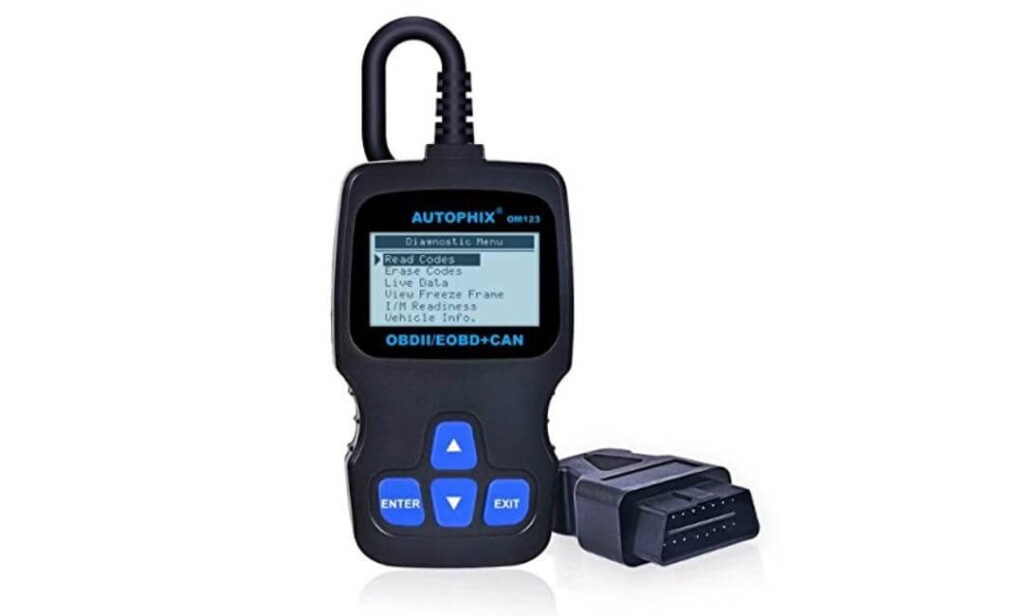
#2. AUTOPHIX OM123 OBD2 Scanner
Key Features
- Engine code reading and clearing
- Live data monitoring
- Emissions readiness checks
- Freeze-frame support
- Supports most 1996+ vehicles with OBD-II ports
- Portable, handheld design
- No app or subscription needed
The AUTOPHIX OM123 sits between basic handheld readers and advanced Bluetooth scanners. It reads and clears engine codes, monitors sensor data, and checks emissions readiness—all without extra apps or subscriptions.
“I use OM123 for pre-inspection checks and routine maintenance,” says auto enthusiast Lisa Reynolds. “It’s straightforward, reliable, and faster than subscription-based scanners.”
It supports standard OBD-II protocols, works on most 1996+ vehicles, and offers a compact handheld design. The interface is simple enough for beginners but still provides slightly deeper diagnostics than basic scanners.
Pros
- Works with most 1996+ vehicles
- Engine diagnostics, live data, and emissions readiness
- Compact, portable design
- No subscription or app needed
Cons
- Limited to engine codes—no ABS, SRS, or transmission support
- Simple interface without advanced features
- Not for professional workshops
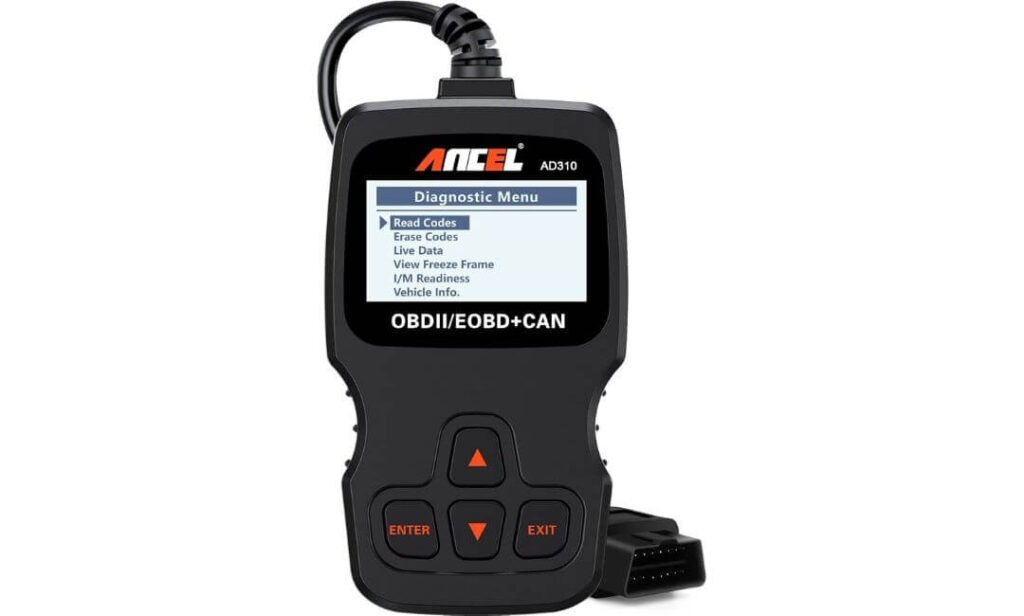
#3. ANCEL AD310 OBD2 Scanner
Key Features
- Reads and clears engine codes
- Live sensor data display
- Freeze-frame data support
- I/M readiness for emission tests
- Works with all standard OBD-II cars from 1996 onward
- Simple plug-and-play handheld design
- No subscription or smartphone app required
The ANCEL AD310 is a budget-friendly option for car owners who need reliable, essential diagnostics. It reads and clears engine codes, displays live data, and supports freeze-frame and readiness checks for standard OBD-II vehicles.
“For someone who wants basic diagnostics without extra cost, this is perfect,” says mechanic Robert Hayes. “Plug it in and start scanning in minutes.”
It’s wired-only, so no apps or subscriptions are needed. Compact and simple, it works well for older cars or first-time OBD-II users.
Pros
- Affordable and compatible with most 1996+ cars
- Plug-and-play operation
- Covers engine codes, live data, and readiness checks
Cons
- No ABS, SRS, or transmission diagnostics
- Basic monochrome display
- Wired only
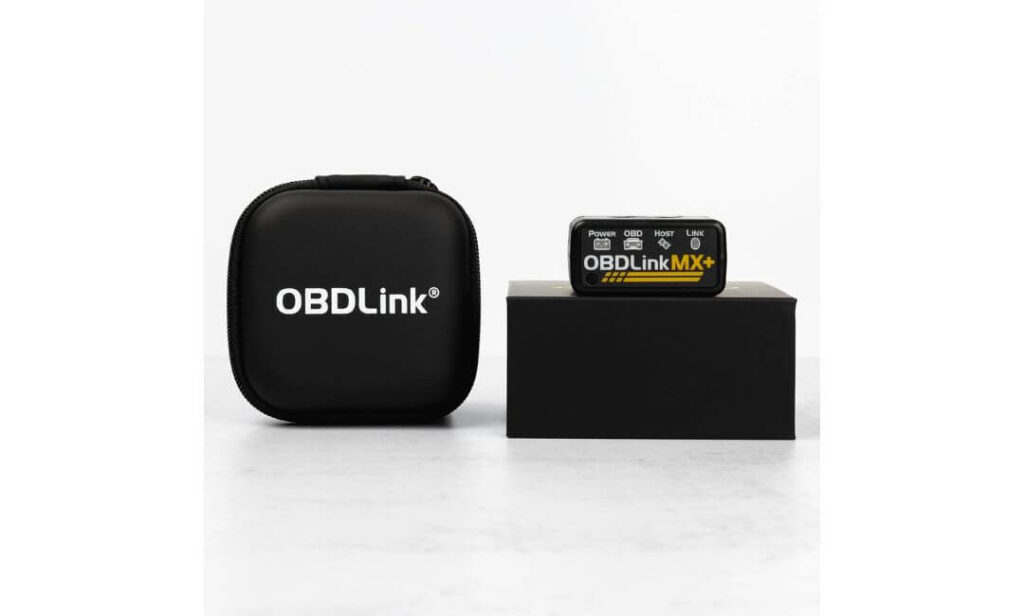
#4. OBDLink MX+ Bluetooth OBD2 Scanner
Key Features
- Reads standard and manufacturer-specific codes
- Real-time live data with graphs
- Freeze-frame and I/M readiness logging
- Works on nearly all 1996+ cars and trucks
- Bluetooth connectivity for smartphones/tablets
- Lifetime firmware updates included
- Supports third-party apps like Torque, FORScan, DashCommand
- Secure, low-power Bluetooth connection
The OBDLink MX+ delivers professional-grade diagnostics via smartphone or tablet. It reads standard and manufacturer-specific codes, streams live data, logs freeze-frame info, and monitors real-time parameters.
“For DIYers and enthusiasts, MX+ offers flexibility and depth you don’t get from simple handheld scanners,” notes technician Sarah Mitchell. “It works on almost any 1996+ car, and Bluetooth connectivity lets you analyze data anywhere.”
It doesn’t have a screen; all info is viewed via the free app. Fast, reliable, and compatible with advanced protocols, it’s perfect for anyone who wants deeper insight without paying subscription fees.
Pros
- Standard and manufacturer-specific code support
- Real-time live data, logs, and graphs via app
- Portable and works with multiple vehicles
- Lifetime firmware updates
Cons
- Requires smartphone/tablet—no standalone screen
- Advanced features depend on vehicle and app
- Slight learning curve for beginners
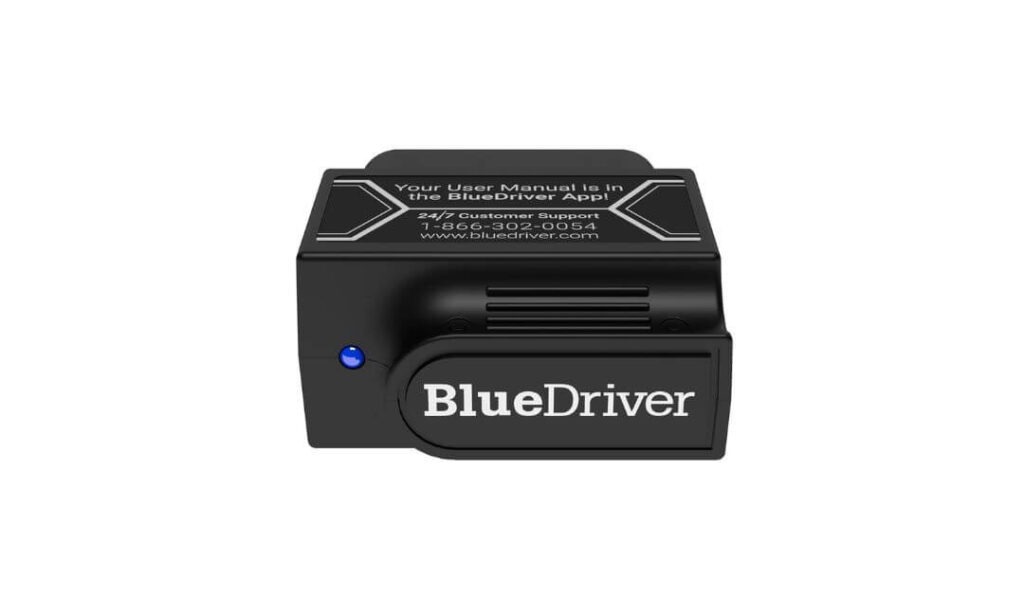
#5. BlueDriver Bluetooth Pro Scanner
Key Features
- Reads engine, ABS, SRS, and transmission codes (supported vehicles)
- Live data streaming with freeze-frame logging
- Provides repair suggestions and detailed trouble-code explanations
- Compatible with iOS and Android mobile devices
- Subscription-free core diagnostics and reports
- Regular app updates for new vehicle coverage
- Easy plug-and-play operation with Bluetooth connectivity
BlueDriver bridges the gap between basic DIY scanners and professional tools. It reads engine, ABS, SRS, and transmission codes on supported vehicles and provides repair guidance via its app.
“I always keep one in my glovebox,” says auto blogger Daniel Pierce. “It’s portable, easy to use, and offers shop-level insight without subscriptions.”
Plug it in, pair via Bluetooth, and instantly view live data, freeze-frame info, and repair suggestions. Regular updates ensure compatibility with newer vehicles, making it a long-term diagnostic companion.
Pros
- Engine, ABS, SRS, and transmission diagnostics (supported vehicles)
- Repair guidance and live-data logging through app
- Subscription-free, regular updates
- Intuitive mobile interface
Cons
- Phone/tablet required—no built-in screen
- Some modules may not support all vehicles
- Minor delays reading multiple live parameters
Comparison of the OBD2 Scanners Without Subscription
| Scanner / Tool | Compatibility | Key Features | Ideal User / Use Case |
|---|---|---|---|
| Foxwell NT301 OBD2 Scanner | Most cars and light trucks built 1996+ (OBD-II compliant) |
– Reads & clears engine codes – Live sensor data (RPM, fuel trim, coolant temp) – Freeze-frame data capture – I/M readiness checks – Compact handheld, durable – No subscription or app required |
Beginners or budget-conscious owners wanting simple plug-and-play scanner |
| AUTOPHIX OM123 OBD2 Scanner | Most 1996+ vehicles with OBD-II ports |
– Engine diagnostics & live data – Freeze-frame support – I/M readiness – Handheld, no subscription/app – Quick plug-and-play operation |
DIYers who want more than basic checking, pre-inspection or sensor/emissions monitoring |
| ANCEL AD310 | Standard OBD-II cars 1996+ |
– Reads & clears engine codes – Live sensor data – Freeze-frame data – I/M readiness – Wired handheld, no subscription |
Car owners focused on basic engine diagnostics & live data without extra cost |
| OBDLink MX+ Bluetooth OBD2 Scanner | 1996+ cars & light trucks, multiple OBD-II protocols |
– Reads standard & manufacturer codes – Real-time live data & graphs – Freeze-frame & I/M readiness logs – Bluetooth for smartphones/tablets – Lifetime firmware updates – Works with Torque, FORScan, DashCommand |
DIYers & enthusiasts wanting advanced diagnostics via smartphone/tablet |
| BlueDriver Bluetooth Pro Scanner | 1996+ vehicles, standard OBD-II compliant, domestic & many import cars |
– Engine, ABS, SRS, transmission codes (supported cars) – Live data streaming & freeze-frame – Repair suggestions & trouble-code explanations – iOS & Android app, subscription-free – Regular updates for new vehicles – Easy plug-and-play |
Drivers wanting near-professional diagnostics, repair guidance & live data without subscription |
Who Should Keep an OBD-II Scanner Handy
An OBD-II scanner isn’t just for mechanics—it’s a useful tool for anyone who drives regularly. If you want to catch issues before they become big problems, check sensor readings, or verify emissions readiness, a scanner puts the info in your hands.
For DIYers and weekend mechanics, it’s invaluable. You can read engine codes instantly, monitor live data, and even check ABS or airbag alerts if your scanner supports it. It’s also helpful when you take your car to a shop: instead of guessing or explaining symptoms, you can show exact codes to the mechanic, saving time and money.
Even casual drivers benefit. Knowing what triggered a check-engine light or seeing real-time sensor info can prevent unnecessary repairs and give peace of mind. Simply put, if you care about keeping your car healthy and avoiding surprises, having a reliable OBD-II scanner is smart.
How to Use an OBD-II Scanner Effectively
If you want to stay on top of your car’s health, an OBD-II scanner is one of the simplest tools you can keep in your glovebox. It’s not just for mechanics—anyone who drives regularly can benefit.
Pinpoint Issues Fast: A scanner reads your car’s trouble codes, showing exactly which component or system is triggering a warning. This means no guessing and fewer trips to the shop for minor issues.
Monitor Car Performance: Many scanners display live engine data, such as RPM, coolant temperature, and fuel efficiency. Keeping an eye on these numbers helps you spot irregularities early.
Clear Warning Lights: Once a problem is fixed, you can reset the check-engine light or other alerts. This prevents confusion and ensures your dashboard reflects your car’s current condition.
Save on Repairs: By identifying problems early, you can prevent small issues from turning into costly repairs. This also gives you more control over when and how you address maintenance.
Maintain Vehicle Value: Regular scans help keep your car in good condition, which can support higher resale value when it’s time to sell. A well-maintained car with documented checks is always easier to sell.
FAQs
Which cars will these scanners work with?
These scanners work with any car or light truck made from 1996 onward that has an OBD-II port. On some newer models, advanced scanners like BlueDriver or OBDLink MX+ can also access extra codes for ABS or airbags.
Do I need a phone or app to use them?
Not for all. Foxwell NT301, AUTOPHIX OM123, and ANCEL AD310 are fully standalone—you just plug them in and start scanning. OBDLink MX+ and BlueDriver use a phone or tablet to show live readings, graphs, and more detailed reports.
Can these scanners check ABS or airbag systems?
Some can, some can’t. Basic handhelds focus on engine codes only. AUTOPHIX OM123, OBDLink MX+, and BlueDriver cover ABS, airbags, and transmission codes on supported vehicles. Always check your car’s compatibility before buying.
How often should I update these scanners?
Handheld scanners rarely need updates. Bluetooth scanners like OBDLink MX+ and BlueDriver get free updates to stay compatible with new cars. No subscriptions, no hidden fees.
Are these scanners reliable for DIY maintenance?
Yes. For everyday checks—engine codes, sensor readings, or emissions readiness—these scanners are more than enough. If you want deeper insights, OBDLink MX+ or BlueDriver provide detailed diagnostics and live data without monthly fees.