
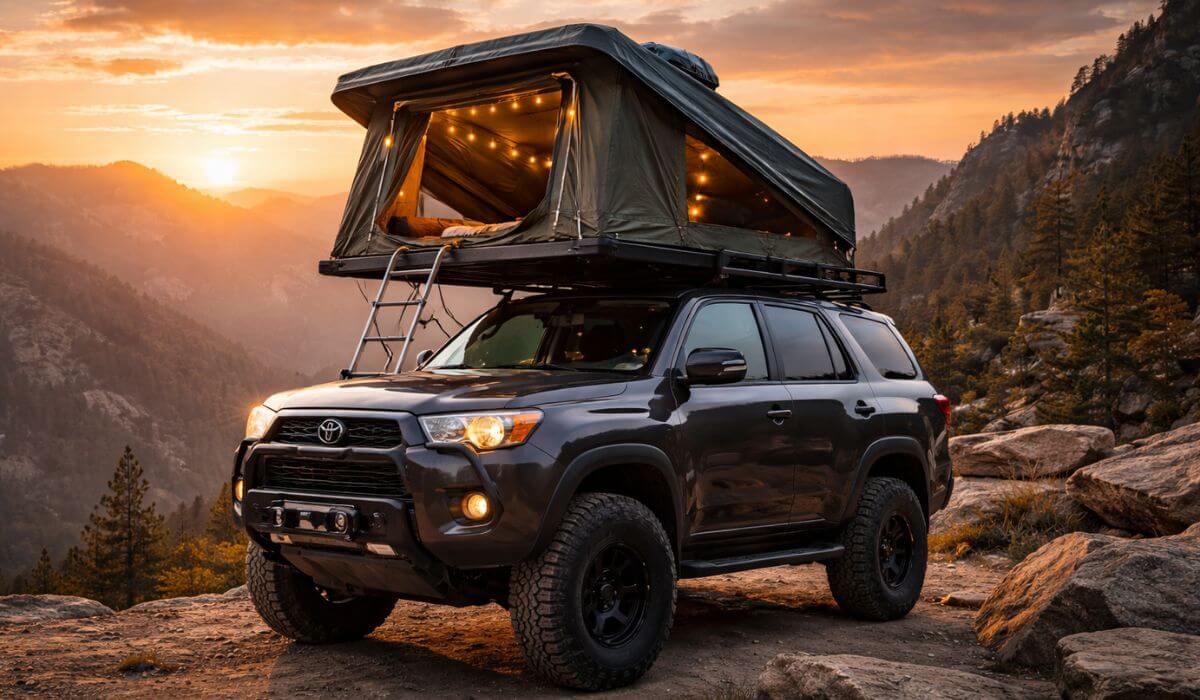
5 Best Rooftop Tents for Toyota 4Runner in 2026: Hard Shell, Fast Setup, 4-Season Ready
If you own a Toyota 4Runner, you already know it’s built for getting off the map—what most people don’t realize is how much the right rooftop tent changes that experience. I’ve seen setups that look great online but turn into a hassle in real use—slow to deploy, shaky on uneven ground, or just not made for the kind of weight and roof dynamics a 4Runner actually deals with.
That’s exactly why this list isn’t fluff. Every tent here is picked with real 4Runner use in mind—roof load limits, rack compatibility, quick deployment after a long drive, and actual all-weather reliability. These aren’t just “good tents”—these are the ones that make sense when you’re tired, it’s getting dark, and you just want your setup done in under a minute without fighting with fabric or poles.
If you’re serious about overlanding, weekend camping, or just building a clean 4Runner roof setup that actually works in the real world—this is where you start.
Best Toyota 4Runner Rooftop Tents: Top 2026 Picks for Off-Road & All-Weather Use
#1. WildFinder Hard Shell Rooftop Tent
Durable 4Runner roof top tent for fast setup & rugged camping
#2. Naturnest Sirius 2 by Bayati
Waterproof 4Runner tent with blackout privacy & easy pop-up design
#3. Sanhima Hotham Lite Rooftop Tent
Slimline 4Runner roof tent with LED lighting & thick mattress comfort
#4. HEYFUN Adventurer Pro Hard Shell Tent
Feature-packed 4Runner rooftop tent with USB, awning & storage racks
#5. BAMACAR Naturnest Hard Shell Tent
Reliable 4Runner roof top tent for all-season overland setups
Expert Tip (From Real 4Runner Use)
Most people overthink brands and underthink setup reality. On a 4Runner, what actually matters after a long drive isn’t the logo—it’s how fast your tent opens, how stable it feels on your rack, and whether you can trust it in sudden wind or rain. If a tent takes more than a minute or feels shaky when you climb in, you’ll stop using it—simple as that. Pick the one you’ll actually deploy every time, not the one that just looks good online.
How We Chose These 4Runner Rooftop Tents
We didn’t chase hype or reviews—because most of these are newer tents with limited long-term feedback. Instead, we broke them down the way a real 4Runner owner would—based on fit, function, and failure points that show up in actual use.
Weight & 4Runner Roof Compatibility
The Toyota 4Runner has specific dynamic and static load limits, and not every tent plays nicely with that. We focused on hard shell designs with balanced weight distribution, especially models like the Sanhima Hotham Lite with a slim profile that won’t feel top-heavy. If a tent risks stressing your rack or making your drive unstable, it’s out.
Setup Speed That Actually Holds Up
“Fast setup” gets thrown around a lot—but in reality, many tents slow down after a few uses. We prioritized true pop-up or gas-strut assisted systems that stay consistent over time—like Naturnest Sirius 2 and HEYFUN Adventurer Pro. These are the kind you can open in low light, solo, without fighting hinges or fabric.
Sleeping Comfort That Feels Worth It
A rooftop tent isn’t cheap—so the inside matters. We looked at mattress thickness, internal space, and real sleeping comfort, not just dimensions on paper. Sanhima’s thicker mattress and better interior usability stood out here—because after a full day on trails, comfort isn’t optional.
All-Weather Confidence (Not Just Claims)
Every brand says “4-season,” but we checked what that actually means—hard shell sealing, rain fly quality, blackout fabric, and wind resistance. Tents like BAMACAR Naturnest and WildFinder make sense here because they focus on basic reliability over gimmicks—which is exactly what you want when weather flips overnight.
Mounting System & Rack Fitment
Not every tent works smoothly with every rack. We leaned toward models that are less picky with crossbar spacing and mounting styles, so they work with common 4Runner setups—OEM racks, aftermarket crossbars, or full roof racks. If installation feels like a headache, most people never take the tent off once installed—which becomes a problem.
Real Value (Not Just Price)
We didn’t just look for cheap—we looked for what you’re actually getting for the money. Features like built-in LED lighting, USB ports, blackout interiors, or awnings only made the cut if they added real use value, not just marketing noise. HEYFUN stands out here because it gives practical add-ons you’ll actually use at camp.
How to Check Compatibility with Your Specific 4Runner
Before you pick any tent, check three things on your setup:
- Your roof rack rating (dynamic vs static load)
- Crossbar spacing and width
- Total combined weight (tent + rack + gear)
Most 4Runners can handle rooftop tents easily—but problems start when weight distribution is ignored. Keep it balanced, keep it within limits, and your setup will feel solid on-road and off.
This isn’t a random list—it’s built around what actually works on a 4Runner when you’re out there using it, not just looking at it.
#1. WildFinder Hard Shell Rooftop Tent
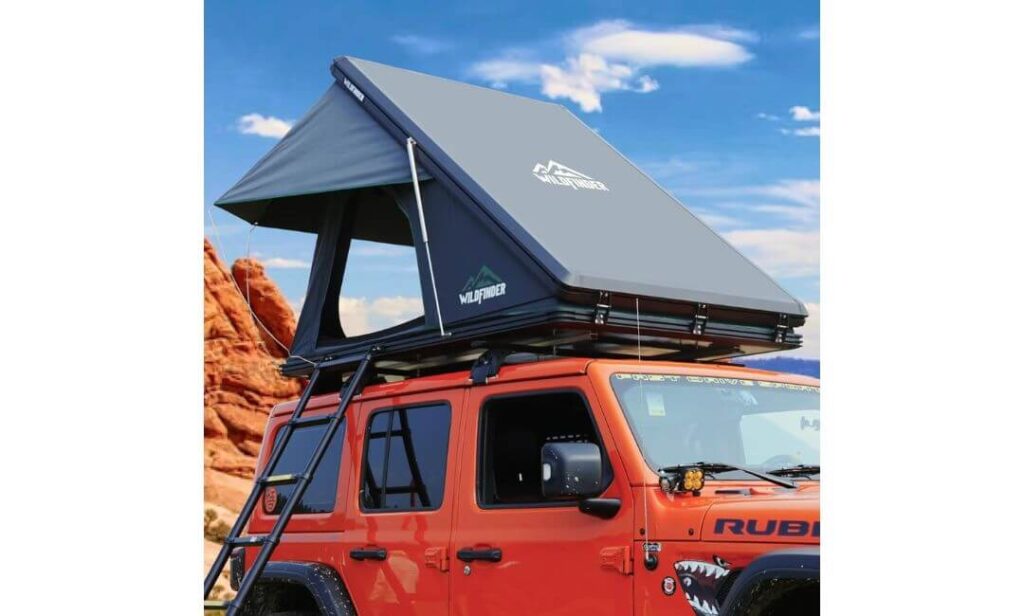
Quick Specs:
- Hard shell: 100% aircraft-grade aluminum (no plastic weak points)
- Weight: ~90 kg (heavy-duty build, not lightweight gimmick)
- Capacity: 2–3 people (real usable space, not cramped)
- Setup time: ~2 minutes (gas strut pop-up)
- Weather rating: 5000mm rainproof, Level 6 wind, snow-ready
- Mattress system: 5cm comfort mattress + condensation + marine pad
- Included: 7.5 ft ladder, LED strip, storage organizers, shoe bags
Let’s be real—this is the kind of rooftop tent you buy when you’re done dealing with flimsy setups that look good online but fail on actual trips. The aluminum hard shell alone tells you what this is about (no plastic expansion issues, no seasonal leaks), and on a Toyota 4Runner, that matters more than people admit. You’re mounting serious weight up top—you need something that feels planted, not something that flexes every time you climb in.
What stands out immediately is how quick and drama-free the setup is. After a long drive, you’re not messing with poles or struggling fabric—just release and it opens in about 2 minutes. Inside, it’s not just a basic mattress thrown in—there’s a proper layered system (marine pad + condensation control + 5cm mattress), which actually makes a difference when temperature drops at night or humidity builds up. That’s the kind of detail most brands skip.
Then there’s the all-weather side of things. 5000mm rain rating, proper blackout fabric, and strong wind resistance—it’s built for conditions where cheaper tents start making noise or leaking. Plus, small things like LED lighting, storage pockets, and shoe organizers actually add up when you’re living out of your 4Runner for a couple of days. It feels like a setup designed by someone who actually camps, not just sells gear.
(This is one of those tents that quietly solves problems you didn’t even realize your old setup had.)
What Stands Out in Real Use
- Solid aluminum shell — no flex, no seasonal wear issues
- Fast 2-minute deployment — actually holds up after repeated use
- Layered mattress system — noticeably better sleep vs basic foam
- Strong weather protection — handles wind, rain, and cold confidently
- Useful extras included — LED, organizers, ladder all feel practical
Where It Could Be Better
- Zipper feel isn’t perfect — works fine, but not the smoothest in class
4Runner Roof Compatibility & Real Fitment
This isn’t a “4Runner-branded” tent—but that’s not a problem. It fits well on most Toyota 4Runner setups as long as you’re running proper crossbars or a full roof rack. The key thing here is weight—this is a heavy-duty unit, so your rack setup needs to be solid, not stock-level basic if you’re planning long-term use.
Spacing matters too. Around 28-inch crossbar spacing works best, and once mounted correctly, it sits stable without awkward overhang. On-road driving feels planted if your rack is dialed in—off-road, that solid aluminum shell actually helps keep things rigid.
Installation Notes (Real Talk)
You’re not installing this solo—plan for 2–3 people to lift it safely onto your 4Runner. Once it’s up there, though, the mounting process is straightforward and takes around 10 minutes if your rack setup is ready.
One thing to know—depending on your rack brand, you might need minor adjustment on mounting plates. Nothing complicated, just don’t expect a perfect out-of-box fit on every setup. Once locked in, though, it stays put—and that’s what actually matters when you’re miles away from pavement.
#2. Naturnest Sirius 2 Hard Shell Rooftop Tent
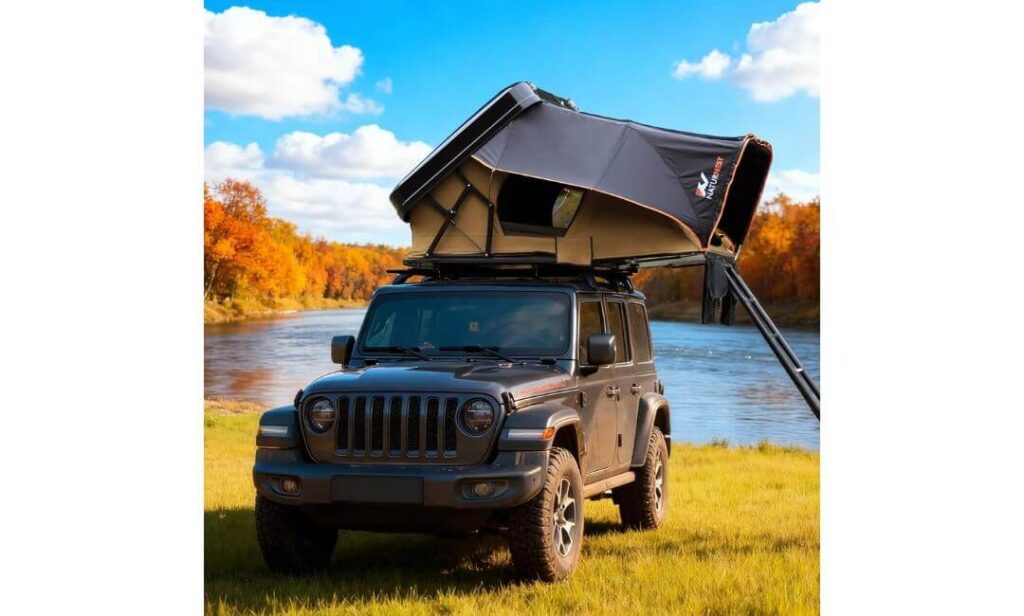
Quick Specs:
- Shell build: ABS hard shell + aluminum frame (lighter than full aluminum)
- Weight: ~174 lbs (balanced for size vs roof load)
- Capacity: 2–3 people (wide 63″ sleeping area)
- Setup time: ~30 seconds (ladder-assisted pop-up system)
- Fabric: 420D Oxford (5000mm waterproof, UV50+, blackout)
- Wind rating: Level 7 wind resistance
- Hardware: STABILUS gas struts (45,000 cycles), YKK zippers
The first thing you notice here isn’t just the design—it’s how effortlessly it works. One pull on the ladder and the whole tent lifts into place in under 30 seconds. No struggling, no second attempts. On a Toyota 4Runner, that kind of speed isn’t a luxury—it’s the difference between setting up instantly or putting it off after a long drive.
The elevated shell design changes how the space feels inside. Instead of the usual low roof squeeze, you get a noticeably taller interior (almost 47 inches when open), which actually makes sitting up, changing, or just relaxing feel natural. Combine that with the 63-inch width, and it comfortably fits two adults without that “tight fit” compromise most rooftop tents have.
Where it quietly stands apart is in the balance—lighter ABS shell means less strain on your 4Runner’s roof, better fuel efficiency over long drives, and easier handling overall. But it doesn’t feel cheap. The 420D Oxford fabric holds strong against rain (5000mm), blocks out harsh sunlight completely, and keeps things stable even in strong wind conditions. Add in premium touches like STABILUS gas struts and YKK zippers, and you’re looking at a setup that feels smooth every single time you use it.
(It’s one of those setups where everything just works without you thinking about it.)
What Makes It Worth Considering
- True 30-second setup — one of the fastest in this category
- Lighter shell design — easier on 4Runner roof load & mileage
- Spacious interior height — more usable than most hard shells
- Premium hardware — smooth operation over long-term use
- Blackout + UV protection — noticeably better sleep quality
Where It Falls Slightly Short
- ABS shell isn’t as rigid as full aluminum — trades strength for weight savings
4Runner Roof Compatibility & Real Fitment
This setup works well with most Toyota 4Runner builds as long as you’re running proper crossbars or a solid roof rack system. The lighter shell actually makes it a better match for stock or mid-level racks compared to heavier aluminum tents.
The key check here is weight capacity—your rack should comfortably support around 174 lbs plus gear. Once mounted, the footprint sits clean without excessive overhang, and the lower closed profile helps with daily driving and wind noise.
Installation Notes (What to Expect)
You can get this mounted with 1–2 people in about 10 minutes if your rack is already set up. No complicated tools or extra hardware needed—everything essential comes in the box.
The mounting system is fairly universal, but like most rooftop tents, slight adjustments may be needed depending on your crossbar design. Once secured, the real advantage shows up in daily use—open, close, done—without second-guessing the mechanism.
#3. Sanhima Hotham Lite Hard Shell Rooftop Tent
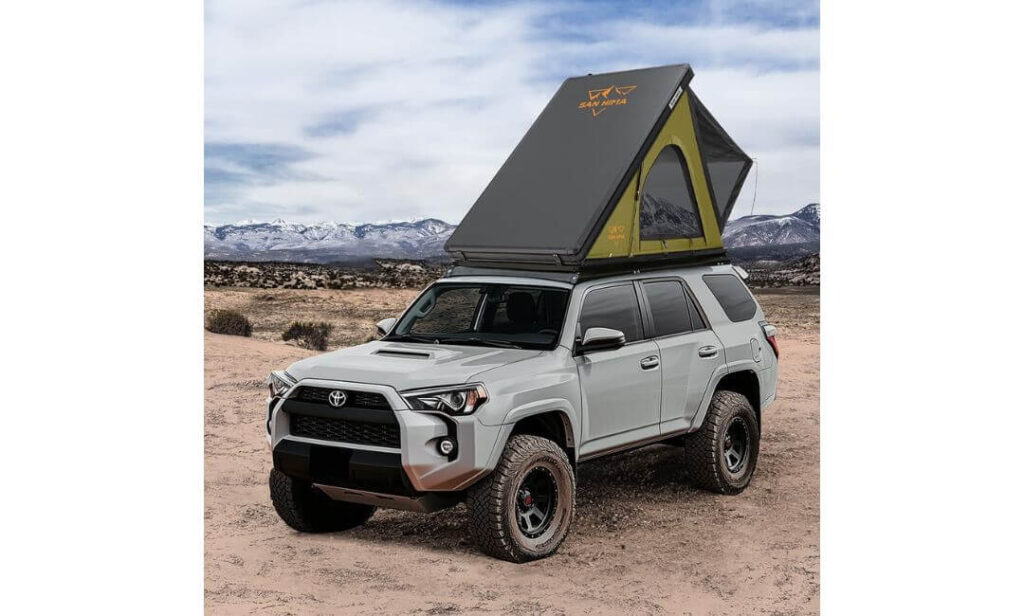
Quick Specs:
- Shell build: Aluminum honeycomb + frame (light yet rigid)
- Weight: ~146 lbs (32% lighter than older Hotham)
- Packed height: Just 4.57″ (garage-friendly low profile)
- Setup time: ~30 seconds (gas strut assisted)
- Capacity: 2–3 people (330 lbs load rating)
- Fabric: 420D ripstop Oxford + poly-cotton (5000mm waterproof, UV50+)
- Mattress: 1.97″ high-density foam + anti-condensation mat
- Extras: Tri-color LED, multi-side ladder access
This is the kind of rooftop tent that quietly fixes everything people complain about—bulk, wind drag, and daily usability. The first thing that changes your experience on a Toyota 4Runner is the 4.57-inch slim profile. You don’t feel like you’re driving a top-heavy build anymore, and suddenly parking in garages or tight spaces stops being a problem. That alone makes it stand out before you even open it.
Then comes the setup—unlock, slight push, and it lifts itself in about 30 seconds. No force, no awkward angles. On long drives or late arrivals, that simplicity matters more than specs on paper. Inside, it’s not oversized, but it’s intelligently laid out—usable width, proper airflow with mesh windows, and a ceiling vent that keeps the space from feeling closed in. The 1.97-inch foam mattress with condensation control actually holds up through temperature changes, which most thinner setups struggle with.
Where it really earns its place is in the details. The aluminum honeycomb base adds insulation without extra weight, the tri-color LED strip (including mosquito-safe amber light) solves a real problem at camp, and the overall build feels tight—no loose parts, no rattling. On a 4Runner, this feels like a setup designed for daily driving first, camping second—and that balance is rare.
(You stop noticing the tent while driving—and start appreciating it when you actually use it.)
What Makes It Stand Out
- Ultra-slim closed height — huge difference for daily driving
- Balanced lightweight build — easier on 4Runner roof dynamics
- Smooth gas-strut deployment — consistent every time
- Smart interior lighting system — practical, not gimmicky
- Insulated base + airflow design — better temperature control
Where It Falls Slightly Short
- Interior width is slightly narrower — fine for 2, tighter for 3 adults
4Runner Roof Compatibility & Real Fitment
This one pairs exceptionally well with Toyota 4Runner builds, especially if you’re conscious about weight distribution and height. The lighter design and ultra-slim packed size reduce strain on your roof setup and make daily driving feel normal again.
It fits most crossbar and rack systems without issues, but like any rooftop tent, you’ll want to confirm your rack’s load rating. Once mounted, it sits clean, low, and stable—no awkward overhang or bulky feel.
Installation Notes (What to Expect)
You’ll need 2 people to safely mount it due to size, but once it’s on your rack, the rest is straightforward. No complicated adjustments, no extra parts hunting.
The ladder can be positioned on multiple sides, which helps depending on how your 4Runner is parked or loaded. After installation, the real advantage shows up every time you use it—quick open, quick pack, no second thought.
#4. HEYFUN Adventurer Pro Hard Shell Rooftop Tent
Quick Specs:
- Shell build: Aircraft-grade aluminum hard shell
- Weight: ~174 lbs (heavy but feature-packed)
- Setup time: ~5 seconds (hydraulic auto pop-up)
- Capacity: 2–3 people (up to 660 lbs load)
- Mattress: 3-layer built-in detachable system
- Extras: USB outlet, LED strip, side awning, luggage racks
- Weather rating: Waterproof, UV-resistant, all-season capable
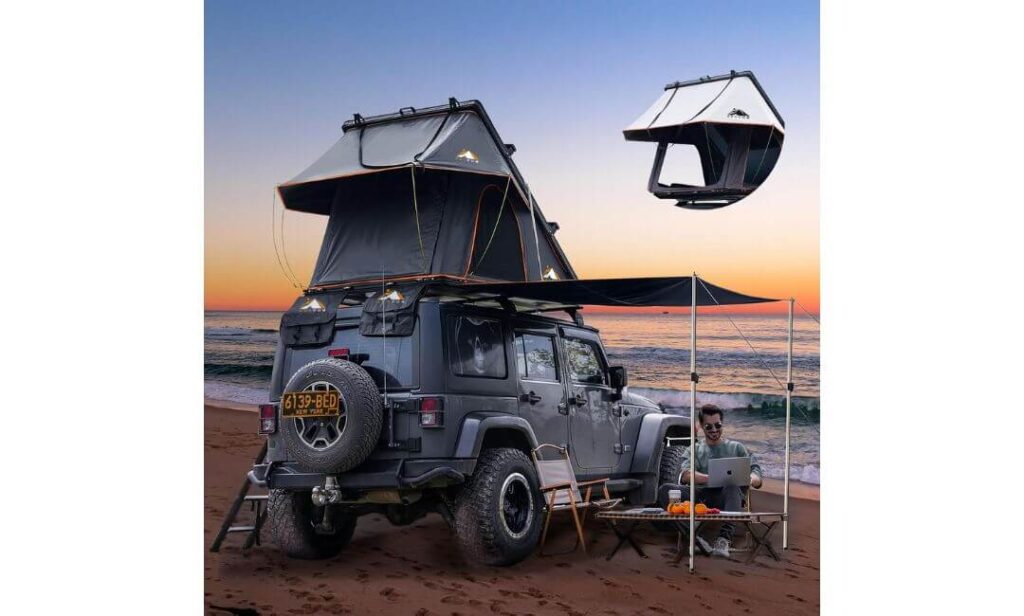
This is the kind of rooftop tent that doesn’t just sit on your Toyota 4Runner—it turns it into a complete camping setup. The moment you unlock it and it pops open in about 5 seconds, you realize this isn’t built like typical rooftop tents. No effort, no delay—just instant shelter, which makes a huge difference when you’re stopping late or dealing with weather.
What really changes the experience is everything built around that core. The side awning adds immediate covered space, the luggage racks let you carry extra gear without sacrificing roof room, and the built-in USB + LED setup means you’re not scrambling for power or lighting once you’re inside. It feels less like a tent and more like a fully thought-out system designed for people who actually spend nights out, not just weekend setups.
Inside, the space opens up properly with a tall triangular design (over 62 inches height), so it doesn’t feel boxed in. The 3-layer mattress system and insulated base handle comfort better than most single-layer setups, and the materials hold up well across seasons—rain, wind, heat shifts. On a 4Runner build, this is the kind of tent that makes you stop worrying about what you forgot—because most of it is already built in.
(It removes the usual “setup stress” and replaces it with something that just works every time.)
What Makes It Stand Out
- Instant 5-second deployment — fastest in this lineup
- Built-in power & lighting — no extra gear needed inside
- Side awning + luggage racks — adds real usable functionality
- Tall interior space — more breathable and open feel
- 3-layer mattress system — better long-night comfort
Where It Falls Slightly Short
- Heavier setup overall — needs a solid rack and careful mounting
4Runner Roof Compatibility & Real Fitment
This fits well on most Toyota 4Runner builds, but this is not a lightweight option—you’ll need a proper roof rack system that can handle ~174 lbs confidently. Once mounted correctly, it sits stable, but the added features and structure mean you shouldn’t rely on weaker stock crossbars long-term.
The footprint is well-balanced, and the added height when open doesn’t affect driving since it packs down compact enough. For 4Runner owners building a full overland-style setup, this integrates cleanly without needing extra accessories.
Installation Notes (What to Expect)
Plan for 2–3 people to lift and position it safely—this isn’t a solo install. The good part is that it comes mostly pre-assembled, so once it’s on your rack, installation is straightforward and takes around 10 minutes.
Everything you need is included, including mounting hardware and accessories. After setup, the real benefit shows every time you use it—unlock, and you’re done. No adjustments, no rechecking, just consistent operation.
#5. BAMACAR Naturnest Hard Shell Rooftop Tent
Quick Specs:
- Shell build: Aircraft-grade aluminum hard shell
- Weight: ~176 lbs (heavy-duty, high load capacity)
- Setup time: ~30 seconds (clam shell pop-up)
- Capacity: 2–3 people (wide 51″ base)
- Mattress: 5cm thick foam + condensation & marine pads
- Weather rating: 5000mm waterproof, UV-resistant, windproof
- Extras: USB socket, LED strip, storage system, roof crossbars
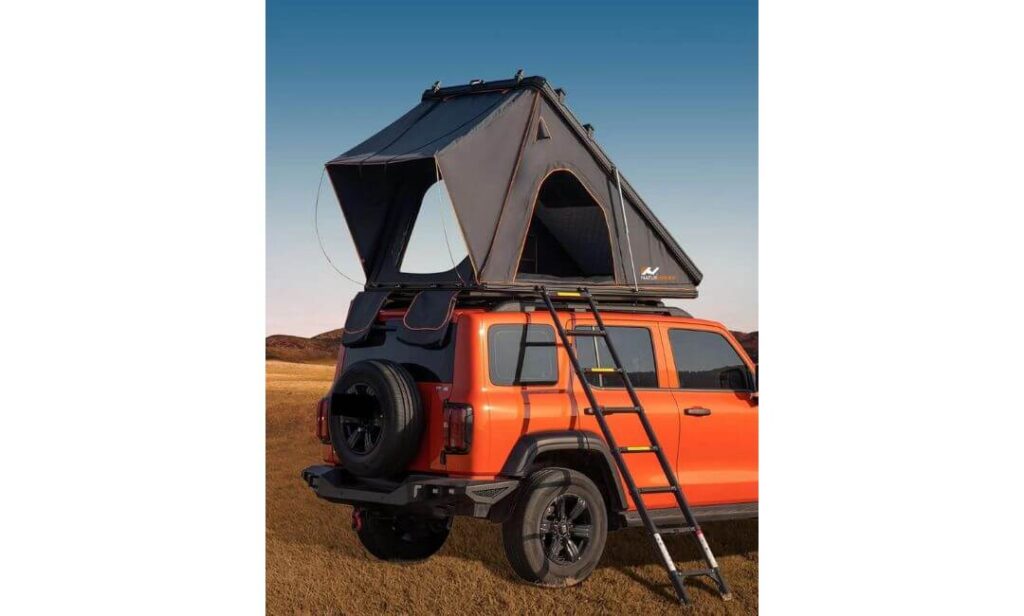
Some rooftop tents focus on simplicity—this one goes the opposite direction and builds everything into the system from the start. On a Toyota 4Runner, that shows up immediately in how solid and planted it feels once mounted. The aluminum shell paired with 8000N gas struts gives it a level of strength that doesn’t shift or flex, even when conditions aren’t ideal.
The setup is quick—around 30 seconds—but what matters more is how stable it feels after opening. No wobble, no second adjustments. Inside, it’s built for actual use, not just specs. The 5cm mattress combined with condensation and marine pads keeps things dry and comfortable through temperature swings, and the blackout fabric does its job properly when you need real rest. The three-door layout improves airflow without exposing you to wind directly, which makes a noticeable difference in mixed weather.
Where it stands apart is its adaptability. The built-in AC channel option, roof crossbars for extra gear, and integrated USB + lighting setup make it feel closer to a complete overland system than just a tent. On a 4Runner build, this is the kind of setup that supports longer trips without needing constant add-ons or adjustments.
(It’s built for people who stay out longer, not just overnight stops.)
What Makes It Stand Out
- Extremely strong gas struts (8000N) — stable even under load
- AC-ready design — rare feature for real all-season use
- Full storage system inside — keeps gear organized
- Integrated roof crossbars — carry extra equipment easily
- Reliable weather protection — handles rain, sun, and wind well
Where It Falls Slightly Short
- Fit and finish can vary slightly — works well, but not as refined as premium brands
4Runner Roof Compatibility & Real Fitment
This works with Toyota 4Runner setups, but this is a heavier unit (~176 lbs)—so your roof rack setup needs to be up to the task. Stock racks can work, but many users end up upgrading to stronger crossbars for better long-term stability.
The footprint fits most 4Runner roofs, but clearance checks are important—especially around antennas and rear edges. Once mounted properly, it sits secure, though initial positioning may take a bit more effort compared to lighter tents.
Installation Notes (What to Expect)
Expect a bit more effort during installation—2 people minimum recommended, especially due to weight and tight mounting access on some 4Runner racks. Once aligned, the process itself is straightforward and takes around 10 minutes.
One thing to note—depending on your rack design, bolt access can feel tight. Some users adjust hardware slightly for a better fit. After that, daily use becomes simple—open, close, done—without needing to revisit the setup again.
Best Toyota 4Runner Rooftop Tents Side-by-Side: Features, Build Quality & Daily Use
| Model | Setup Speed | Weight | Shell Type | Comfort | Best Use |
|---|---|---|---|---|---|
|
WildFinder
Strong aluminum build
|
~2 min | ~90 kg | Full Aluminum | Layered mattress system | Rugged trips & long durability |
|
Naturnest Sirius 2
Light + quick setup
|
30 sec | 174 lbs | ABS + Aluminum | Wide + blackout interior | Daily use + easy handling |
|
Sanhima Hotham Lite
Slim low-profile
|
30 sec | 146 lbs | Aluminum Slimline | Thick foam + airflow | Daily driving + low drag |
|
HEYFUN Adventurer Pro
Feature-loaded setup
|
5 sec | 174 lbs | Aluminum | 3-layer mattress | Full overland setup |
|
BAMACAR Naturnest
Heavy-duty all-season
|
30 sec | 176 lbs | Aluminum | 5cm mattress + pads | Long stays & harsh weather |
Why a Rooftop Tent on a Toyota 4Runner?
A Toyota 4Runner isn’t just another SUV—it’s one of the few platforms that actually makes sense for a rooftop tent setup when you look beyond the surface. The height, the body-on-frame construction, and the way the roof structure is designed all come together in a way that supports rooftop weight better than most crossovers. That’s why you’ll see more serious overland builds on 4Runners than almost anything else in this segment.
The biggest shift happens the moment you stop thinking of it as “adding a tent” and start seeing it as turning your 4Runner into a self-contained camping system. You’re no longer dependent on ground conditions, uneven terrain, or finding a perfectly flat spot. Park, deploy, and you’re done. That alone changes how often you actually go out and use your setup.
What You Actually Gain (Beyond the Obvious)
Space isn’t just about sleeping—it’s about how your entire setup works. With a rooftop tent, your ground space stays free for cooking, gear, or just moving around without stepping over everything. On a 4Runner, that matters because most people already carry recovery gear, storage boxes, or overland setups inside. This separation keeps things clean and usable.
Stability is another underrated factor. A properly mounted rooftop tent on a solid rack doesn’t shift the way ground tents do in wind or uneven terrain. The 4Runner’s wider stance and rigid frame help here—it doesn’t feel like you’re sleeping on something temporary. It feels planted.
Then there’s deployment speed. Whether it’s a 5-second hydraulic open or a 30-second pop-up, the difference shows up when you’re tired, it’s getting dark, or weather changes suddenly. You’re not negotiating with poles or struggling with fabric—you’re already inside while others are still setting up.
And finally, there’s gear integration. Tents like the HEYFUN or BAMACAR setups don’t just sit on the roof—they allow you to add awnings, lighting, storage, even extra cargo on top. That turns your 4Runner into something closer to a mobile base rather than just a vehicle with a tent on it.
Concerns People Have (And What Actually Matters)
Weight is the first thing everyone worries about—and it should be. But the real issue isn’t just total weight, it’s how that weight is distributed and supported. A 4Runner can handle rooftop tents easily when paired with a proper rack system, but pushing a heavy tent onto weak crossbars is where problems start. That’s why lighter options like Sanhima feel better for daily use, while heavier builds like BAMACAR or HEYFUN require a more serious rack setup.
Wind resistance is another common concern. Taller, bulkier tents can affect driving feel, but this is where design matters. Slimline options (like Hotham Lite) reduce drag noticeably, while even larger tents stay manageable if mounted low and centered. On a 4Runner, you’ll feel the difference—but it’s predictable, not unstable.
Installation is often overestimated as a problem. The reality is, most tents take about 10 minutes to mount once they’re on the roof. The only real challenge is lifting them up there safely. After that, it’s a one-time job—you’re not reinstalling this every trip. What matters more is choosing a tent that doesn’t need constant adjustment after installation.
How It Fits the 4Runner Platform (What Most People Miss)
Not every rooftop tent “fits” a 4Runner the same way. The key is matching the tent to your specific setup—roof rack type, crossbar spacing, and how you actually use your vehicle.
Stock racks can work for lighter tents, but once you move into the 170+ lb range, upgrading to a stronger rack system makes a noticeable difference in stability and long-term reliability. Crossbar spacing also matters more than people expect—most tents are designed around a certain range, and getting that right avoids awkward mounting or imbalance.
Height clearance is another detail people ignore until it’s too late. A bulky tent can turn your 4Runner into something that won’t fit in garages or tight spaces. That’s where slim-profile designs make a real difference in daily life—not just on trips.
And then there’s real-world usability. A rooftop tent only makes sense if you actually use it. The 4Runner gives you the foundation—but the right tent determines whether it becomes part of your routine or something that just sits on your roof.
At the end of the day, a rooftop tent on a Toyota 4Runner isn’t about looking built—it’s about removing friction from camping. The easier it is to set up, the more stable it feels, and the better it integrates with your vehicle, the more you’ll actually use it—and that’s what makes the whole setup worth it.
Practical Buying Guide for Toyota 4Runner Owners: Choosing the Right Rooftop Tent Without Regret
A rooftop tent looks simple on paper—pick one, mount it, and go. But on a Toyota 4Runner, the difference between a setup you love and one you quietly regret comes down to a few decisions most people rush through. This is where things need to be looked at the way they actually play out on the road, not just in product listings.
Start With Your Real Use, Not the Specs Sheet
Before anything else, be honest about how you’ll use your 4Runner. Weekend trips, long overland routes, or occasional camping all demand different setups.
If you’re driving daily and camping occasionally, a lighter, low-profile tent (like slimline designs) makes more sense—you’ll feel less drag, less noise, and your vehicle stays practical. But if you’re building a dedicated overland rig, then heavier, feature-loaded tents with awnings, storage, and integrated systems start making more sense because you’ll actually use those extras.
Most buying mistakes happen when people choose based on “best features” instead of how often they’ll actually deploy the tent.
Understand Roof Load Limits the Right Way
This is where many 4Runner owners get confused. Your vehicle has two types of limits:
- Dynamic load (while driving)
- Static load (when parked)
Almost all rooftop tents are safe when parked, but while driving, your rack and crossbars must handle the tent’s weight plus movement forces.
Heavier tents (~170+ lbs) like BAMACAR or HEYFUN need a strong rack system, not just basic factory crossbars. Lighter options reduce stress on your roof and improve daily driving feel.
Ignoring this isn’t just a numbers issue—it affects handling, braking feel, and long-term wear.
Setup Speed Isn’t a Feature—It’s a Habit Changer
People underestimate this until they live with it. A tent that opens in 5–30 seconds will get used every trip. A tent that takes effort slowly gets skipped.
On a 4Runner, where you’re often stopping in remote or uneven spots, fast deployment becomes part of the experience, not just convenience.
Hydraulic or gas-strut systems that stay smooth over time matter more than advertised setup time.
Interior Comfort Matters More Than Size Numbers
Don’t get distracted by “2–3 person” labels. What actually matters is:
- Mattress thickness and support
- Interior height (can you sit comfortably?)
- Airflow and condensation control
A slightly narrower tent with better airflow and insulation will feel more comfortable than a wider one with poor ventilation. After a long drive, this is what you notice—not dimensions on paper.
Weather Resistance Should Match Where You Travel
“4-season” gets used loosely, but real-world performance comes down to:
- Waterproof rating (5000mm is a solid baseline)
- Fabric quality and sealing
- Wind resistance and structural stability
If your trips include mountains, rain, or temperature swings, prioritize reliable sealing and insulation over extra features. A tent that keeps you dry and stable is always the better choice.
Mounting System & Rack Compatibility (Where Most People Slip Up)
Not all rooftop tents mount the same way, and not all racks support them equally. Before buying, check:
- Crossbar spacing compatibility
- Mounting hardware fit
- Access to bolts (some 4Runner racks make this tight)
A tent that technically “fits” but is difficult to mount or adjust becomes frustrating fast. The goal is a setup that locks in once and stays that way.
Daily Driving Impact (Don’t Ignore This)
This is something most guides skip. Once installed, your rooftop tent becomes part of your 4Runner every day—not just on trips.
Heavier, bulkier tents affect:
- Fuel efficiency
- Wind noise
- Parking clearance
Slim, low-profile designs feel invisible during daily use, while taller tents change how your vehicle behaves. Neither is wrong—but you need to choose based on your routine.
Value Isn’t About Price—It’s About Use
A cheaper tent that you stop using is wasted money. A slightly more expensive tent that you deploy every trip is worth it.
Look at:
- Build quality (materials, hardware, stitching)
- Included features that you’ll actually use
- Long-term usability, not just first impressions
The goal isn’t to buy the “best-rated” tent—it’s to buy the one that fits your 4Runner and your habits so well that you don’t think twice about using it.
Installation and Tuning Tips for Your Toyota 4Runner
Mounting a rooftop tent on a Toyota 4Runner isn’t just about getting it on the roof—it’s about getting it positioned, balanced, and dialed in so it feels solid every time you drive and every time you climb in. Most issues people face later—noise, instability, uneven wear—start from small mistakes during installation. Done right once, you won’t have to think about it again.
Roof Rack and Crossbar Requirements (Foundation Matters More Than the Tent)
Everything starts with your rack system. The tent is only as stable as what it’s mounted on.
Factory crossbars can work for lighter tents, but once you move into mid-to-heavy setups (around 150–180 lbs), a full roof rack or upgraded crossbars becomes the smarter choice. It’s not just about weight capacity—it’s about rigidity. A weak rack flexes under load, and that movement translates into noise, instability, and long-term stress on mounting points.
Crossbar spacing also needs attention. Most rooftop tents are designed to sit within a specific range (typically around 26–32 inches). Too narrow, and the load isn’t distributed properly. Too wide, and you start forcing the mounting system into awkward positions. A properly spaced setup keeps the tent planted and evenly supported across the roof.
Weight Limits and Centroid Positioning (Where Most Builds Go Wrong)
The number everyone checks is total weight—but the real factor is where that weight sits.
Your 4Runner has both dynamic (driving) and static (parked) limits, and rooftop tents fall well within static limits. But while driving, weight placement affects handling more than people expect. If the tent sits too far forward or backward, it changes how the vehicle feels under braking and cornering.
The goal is to keep the tent centered over the roof, aligned with the vehicle’s natural balance point. This reduces body roll and keeps the driving feel predictable. Heavier tents especially need this attention—poor positioning makes even a strong rack feel unstable.
Also consider added gear. If you’re stacking extra equipment (like on integrated crossbars), you’re raising the center of gravity further. Balance everything, not just the tent.
Aerodynamics and Wind Noise Reduction (Daily Driving Reality)
Once installed, your rooftop tent becomes part of your 4Runner every single day. That’s where aerodynamics come in.
Bulkier tents increase drag and wind noise, but the impact depends on how they’re mounted. A low-profile, tightly secured tent creates far less turbulence than one sitting high or slightly misaligned. Even a few millimeters of uneven mounting can create airflow gaps that turn into constant noise at highway speeds.
Positioning also matters. Keeping the tent slightly rearward (but still balanced) often reduces direct wind impact compared to pushing it fully forward. Slimline designs naturally perform better here, but even larger tents can feel controlled if mounted correctly.
Small adjustments—tightening mounts properly, aligning edges, and avoiding loose accessories—make a bigger difference than most expect.
Hardware Tightening and Mount Stability (Set It Once, Trust It Later)
Mounting hardware is something people install and forget—but it’s worth checking properly the first time.
All bolts should be tightened evenly—not over-tightened, not left slightly loose. Uneven pressure can create micro-movements that show up later as noise or shifting. After your first few drives, it’s smart to recheck everything once. If it stays tight after that, you’re set.
The goal is a setup that feels like part of the vehicle—not something sitting on top of it.
Maintenance for Long-Term Reliability (What Actually Keeps It Working)
A rooftop tent doesn’t need constant maintenance, but a few habits make a big difference over time.
After exposure to rain or humidity, always let the tent dry fully before closing or storing long-term. Trapped moisture leads to odor, fabric wear, and internal condensation issues. Even in dry conditions, opening it occasionally for airflow keeps everything fresh.
Check seals, hinges, and gas struts periodically—not because they fail often, but because catching small issues early prevents bigger ones later. Zippers and fabric don’t need special treatment, just normal care and avoiding forced closure.
If your setup includes electrical components (like LED or USB), keep connections clean and dry. These features add convenience, but only if they stay reliable.
Final Adjustment Mindset (Where Everything Comes Together)
The difference between a setup that feels “okay” and one that feels right comes down to small adjustments—alignment, balance, and how everything sits together.
Once your tent is mounted correctly, centered, and tightened properly, your 4Runner should still feel like a 4Runner while driving. No constant corrections, no unusual sway, no second thoughts. And when you stop, everything should work instantly without needing to fix or adjust anything.
That’s when you know the installation is done right—not when it’s mounted, but when you stop noticing it altogether.
Real-World Toyota 4Runner Rooftop Tent Use Cases: How These Setups Actually Perform in Different Scenarios
Reading specs is one thing—living with a rooftop tent on a Toyota 4Runner is something else entirely. The real difference shows up when the conditions aren’t ideal, when you’re tired, when space is tight, or when weather doesn’t cooperate. That’s where the right setup stops being a “feature” and starts becoming something you rely on without thinking.
Weekend Off-Road Runs (Where Speed and Simplicity Win)
Picture a typical weekend run—long highway stretch, followed by rough trails, and you’re reaching camp just as light starts fading. This is where fast-deploy rooftop tents completely change the experience.
On a 4Runner, setups like a hard shell 4Runner roof top tent with gas struts or hydraulic opening mean you’re done in seconds. No unloading gear, no searching for flat ground, no fighting with stakes. You park, pop it open, and you’re already ahead while others are still figuring out their setup.
The elevated position also keeps you clear of uneven terrain, rocks, or mud—something that matters more than expected once you’ve camped in real off-road environments. For short trips like this, the best 4Runner tent isn’t the one with the most features—it’s the one that gets out of your way and lets you relax faster.
Family Camping Trips (Where Space and Comfort Take Over)
Now shift to a slower-paced trip—family, longer stays, more gear. This is where rooftop tents start acting less like a sleeping solution and more like part of your entire setup.
A 4Runner rooftop tent for 2–3 people with wider sleeping space and better airflow makes a noticeable difference here. You’re not just sleeping—you’re changing, organizing gear, and spending time inside when needed. Tents with better interior height and ventilation feel less restrictive, especially with multiple people.
Features that seem optional at first—like storage pockets, blackout fabric, or built-in lighting—start to matter when you’re using the space repeatedly over a few days. The 4Runner’s cabin stays free for gear, while the rooftop handles sleeping cleanly. That separation keeps everything organized and reduces the usual clutter that builds up during longer trips.
Remote and Cold-Weather Trips (Where Reliability Gets Tested)
This is where weaker setups start showing their limits. Cold air, wind, and condensation expose every shortcut in design.
A properly built 4-season roof top tent for 4Runner use with solid sealing, insulation, and condensation control holds up differently. The elevated base keeps you off cold ground, while layered mattress systems and airflow design prevent moisture buildup inside.
Wind resistance becomes critical here. A stable hard shell with strong struts and proper mounting doesn’t shift or make noise through the night—it stays quiet and secure. That’s something you don’t notice in mild conditions, but in remote or winter environments, it becomes the difference between resting properly and constantly adjusting your setup.
Long Overland Trips (Where Integration Matters More Than Anything)
On extended trips, your 4Runner becomes more than transport—it becomes your base. That’s where integrated setups start making sense.
A 4Runner roof tent with awning, lighting, and storage options reduces how much you need to carry separately. You’re not setting up different pieces—you’re using a system that works together.
Being able to open your tent instantly, step into a lit interior, and have organized storage already in place saves time and effort every single day. Over multiple days or weeks, that consistency matters more than any single feature. It removes friction from the entire experience.
What These Use Cases Actually Show (The Real Pattern)
Across all scenarios, one thing stays consistent—the best rooftop tent for a Toyota 4Runner isn’t the one with the longest feature list. It’s the one that fits how you actually use your vehicle.
Fast setups matter when time is tight. Comfort matters when trips get longer. Stability matters when conditions turn rough. And integration matters when your setup becomes part of your routine.
Once those pieces align, your 4Runner stops feeling like a vehicle you’re adapting for camping—and starts feeling like something built for it from the start.
FAQs About Toyota 4Runner Rooftop Tents
Will a rooftop tent actually affect how my Toyota 4Runner drives on highways and long trips?
Yes—and pretending it doesn’t is where most people get surprised. A rooftop tent adds weight up high, so you will feel it, especially during lane changes, braking, and strong crosswinds. But here’s the part most people miss: the type of tent matters more than the weight itself.
Slim, low-profile tents (like slimline aluminum builds) keep the driving feel close to stock. Bulkier or taller tents create more wind resistance and slight body roll—but it’s predictable, not dangerous.
Once installed properly and centered, your 4Runner still feels stable—it just feels like you’re carrying something solid, not dragging something unstable. The adjustment happens within a few drives, and after that, it becomes normal.
Can a stock Toyota 4Runner roof rack really handle a hard shell rooftop tent long-term?
Short answer: sometimes yes, but not always comfortably long-term.
Stock racks can handle lighter rooftop tents, especially if you’re not constantly off-roading or carrying extra gear. But once you move into heavier setups (170+ lbs) or start adding accessories, you’re pushing the limits of what stock crossbars were designed for.
The real issue isn’t immediate failure—it’s long-term stress and flex. Over time, weaker racks can develop noise, slight movement, or uneven pressure points. That’s why serious 4Runner builds usually move to stronger crossbars or full roof rack systems.
If you plan to keep the tent mounted regularly, upgrading your rack isn’t overkill—it’s what keeps everything feeling solid.
Is a hard shell rooftop tent actually worth it over a ground tent for a 4Runner setup?
If you only camp occasionally and stay in easy locations, a ground tent still works fine. But once you start using your 4Runner for real trips—uneven terrain, unpredictable stops, or frequent travel—the difference becomes obvious.
A 4Runner roof top tent removes friction. No searching for flat ground, no dealing with mud or rocks, no packing and unpacking every time. You stop thinking about setup and start focusing on the trip itself.
The real value isn’t comfort—it’s consistency. Every stop feels the same, whether it’s a planned campsite or a random pull-off spot. That’s what makes people stick with rooftop tents once they switch.
How do I know if a rooftop tent will feel cramped or actually comfortable for 2–3 people?
Ignore the “2–3 person” label—it’s mostly marketing. What matters is usable space, not just dimensions.
A tent with slightly less width but better height, airflow, and mattress quality will feel more comfortable than a wider tent with poor layout. For two adults, most tents in this category work well. For three, it depends on how you use the space—adults vs adults + child makes a big difference.
The key detail most people overlook is interior height and airflow. If you can sit up comfortably and the tent doesn’t trap heat or moisture, it feels livable. If not, even a larger tent starts feeling restrictive after one night.
What’s the one mistake most 4Runner owners make after installing a rooftop tent?
They stop paying attention after installation.
Mounting the tent is only half the job—how it’s positioned and maintained over time matters just as much. Small things like slightly loose hardware, uneven mounting, or ignoring moisture buildup don’t show immediately—but they slowly turn into noise, wear, or discomfort.
The setups that feel “perfect” months later are the ones that were installed carefully, centered properly, and occasionally checked—not constantly adjusted, just maintained with awareness.
Once everything is dialed in, a rooftop tent becomes something you trust without thinking. That’s the difference between a setup you tolerate and one you actually enjoy using every time.
Final Thoughts: What Actually Makes a Rooftop Tent Worth It on a 4Runner
At this point, it’s not about which rooftop tent looks the best or has the longest feature list—it’s about which one fits your Toyota 4Runner and the way you actually use it.
Because once it’s mounted, this isn’t gear you take on and off. It becomes part of your vehicle. You’ll feel it on daily drives, rely on it at night, and judge it in moments when you’re tired, it’s dark, or the weather isn’t cooperating. That’s when the right choice proves itself—and the wrong one quietly starts to bother you.
The tents in this list aren’t here because they sound impressive. They’re here because they solve real problems—fast setup when you don’t have the energy, stability when conditions aren’t perfect, and comfort that actually holds up after a long day on the road. Some are lighter and easier to live with daily, some are heavier but more capable for extended trips. The difference isn’t better or worse—it’s alignment with your setup.
And that’s really what this comes down to.
If your 4Runner is your daily driver that occasionally escapes the city, you’ll appreciate something low-profile and simple. If it’s turning into a dedicated overland build, you’ll want something more integrated—something that adds to the system, not just sits on top of it.
There’s no perfect rooftop tent. There’s only the one that makes your trips easier, your setup faster, and your time outside more consistent.
Choose that—and you won’t second-guess it later.
Also Check: