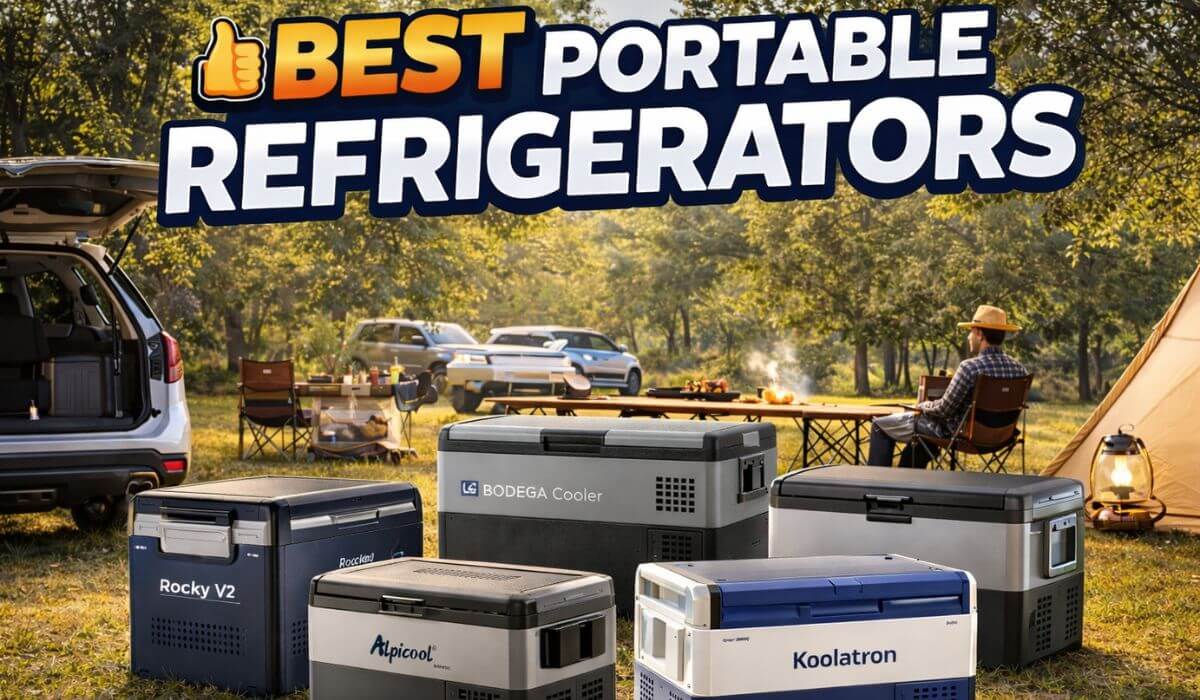
Best Portable Refrigerator for Car 2026 (Top Fridge Freezer Picks)
If you’ve ever tried carrying ice boxes on road trips or camping drives, you already know the problem — melted ice, soggy food, warm drinks, and constant refilling. That’s exactly why more travelers, campers, and truck owners are switching to portable refrigerator freezers made specifically for cars. These units plug directly into 12V outlets, maintain real cooling temperatures, and keep food fresh without the mess.
Among the models available today, two options stand out for serious travel use. The BougeRV Rocky V2.0 Dual Zone Car Fridge Freezer is popular for its app control, fast compressor cooling, and flexible dual-compartment setup, making it ideal for overlanding and long-distance driving. For users who want more storage capacity with smart temperature control, the BODEGACOOLER 50 Quart Portable Car Refrigerator offers strong cooling performance, wide temperature range, and stable power efficiency for extended trips.
Whether you’re planning road trips, camping weekends, RV travel, or daily truck use, choosing the right portable refrigerator makes a real difference. Below are the best portable refrigerator fridge freezers for cars that balance cooling performance, power efficiency, storage capacity, and real-world usability.
5 Best Portable Car Refrigerators in 2026
#1. BougeRV 12V Rocky V2.0 Dual Zone Portable Refrigerator Freezer
Best Overall Car Fridge Freezer for Overlanding & Long Trips
#2. BODEGACOOLER 50 Quart Portable Car Refrigerator Freezer
Best Large Capacity Smart Car Refrigerator
#3. Alpicool LGT60 Dual Temperature Control Portable Fridge Freezer
Best Dual-Zone Freezer for RV & Truck Use
#4. Whynter FM-45G 45 Qt Portable Refrigerator Freezer
Best Heavy-Duty Compressor Fridge for Travel
#5. Koolatron 12V Iceless Mini Cooler & Warmer
Best Budget Mini Portable Refrigerator for Car
What Is a Portable Refrigerator for Car?
A portable refrigerator for car is basically a compact, plug-and-play cooling unit designed to work directly from your vehicle’s power system. Unlike ice coolers that depend on melting ice, these units use real compressor or thermoelectric cooling to maintain stable temperatures for food, drinks, medicine, and frozen items.
What makes them different from normal home fridges is their power efficiency and mobility. They are built to run on 12V car outlets and can also switch to AC power when connected at home or in RV setups. That means you can cool items while driving, park the car, and continue using the same fridge without transferring anything.
Another key advantage is temperature control. Most portable car refrigerators allow you to set exact cooling levels, whether you want chilled beverages or freezer-level storage for meat and frozen food. This level of control is what makes them popular with campers, truck drivers, road trippers, and overland travelers.
In simple terms, a portable refrigerator turns your car into a moving cold storage unit — reliable, clean, and far more practical than traditional ice boxes. When used correctly, it keeps supplies fresh for days without the mess, water leakage, or constant refilling problems.
Portable Refrigerator vs Ice Cooler (What Actually Works on Long Trips)
On paper, both options look similar — they keep things cold. But in real travel conditions, the experience is completely different.
An ice cooler depends on melting ice. That means temperature keeps changing throughout the day. In the morning, everything is freezing cold. By evening, water collects at the bottom, food gets wet, and drinks turn lukewarm. You also lose storage space because half the box is filled with ice instead of usable room.
A portable refrigerator works like an actual fridge. You set the temperature once and it stays there. No water buildup, no soggy packaging, no guessing whether your food is still safe. Whether you’re driving for 3 hours or camping for 3 days, the cooling stays stable.
Another big difference is daily convenience. With ice coolers, you keep stopping to buy ice, drain water, and repack items. With a portable fridge, you just plug it in and forget about it. For road trips, overlanding, and RV travel, that convenience alone saves time and effort.
Power usage is also misunderstood. Many people think portable refrigerators drain car batteries quickly. In reality, most modern compressor fridges are designed to cycle on and off efficiently. Once the target temperature is reached, they don’t run continuously like cheap coolers with fans.
In short:
Ice coolers are fine for short picnics.
Portable refrigerators are built for real travel.
If you care about food safety, consistent cooling, and hassle-free trips, the difference becomes obvious after the first long drive.
#1. BougeRV 12V Rocky V2.0 Dual Zone Portable Refrigerator Freezer

Key Specs:
- Capacity: 41 Quart
- Temperature Range: -4°F to 68°F
- Cooling System: Compressor (5.7cc)
- Power Input: 12/24V DC, 110–240V AC
- Zones: Dual Zone (removable divider)
- Control: Mobile App + onboard panel
- Dimensions: 28.03” W × 17.72” D × 15.79” H
We noticed right away that this fridge feels built for actual travel and not just occasional use. The compressor cools fast — dropping from room temp to chilled in about 15 minutes — which matters when you’re loading up for a trip. Even in hotter conditions, it keeps frozen food solid and drinks cold without melting down like ice-only coolers.
We also liked the dual-zone setup. One side can run freezer temps while the other stays in fridge range, so you can pack frozen meat and fresh produce at the same time without juggling coolers. The removable divider makes it easy to switch to one large storage space when you need it.
The app control adds a layer of convenience most people don’t expect in a car fridge. You can adjust temps, switch modes, or check operating status without bending into the back of the vehicle. For camping, overlanding, RV travel, or daily use, that control feels genuinely useful.
What We Like
- Dual-zone design lets you run freezer and fridge at the same time without mixing temperatures.
- Fast compressor cooling reaches fridge temperature in about 15 minutes, useful for quick travel packing.
- App control makes temperature monitoring easy when the unit is placed in the trunk or truck bed.
- Wide power support (12/24V DC + AC) makes it flexible for cars, RVs, and home pre-cooling.
What Customers Are Saying
Based on 100+ verified reviews with an average rating of 4.5 out of 5 stars, most buyers are clearly satisfied with how this fridge performs in daily travel use. Many mention that it runs smoothly on both car power and home outlets without random shutdowns. Users also appreciate how quiet it stays inside vehicles and RV setups. A common highlight is the solid build quality and how well it fits in trucks and SUVs for long trips. Some buyers note small temperature differences between zones, but overall feedback points toward reliable cooling performance and good long-term value.
Pro Tip: When using the dual zones, set the freezer side a few degrees colder than your target. This balances airflow and helps both compartments stay closer to the temperatures you want, especially during frequent lid openings on the road.
#2. BODEGACOOLER 12V Portable Car Refrigerator Freezer
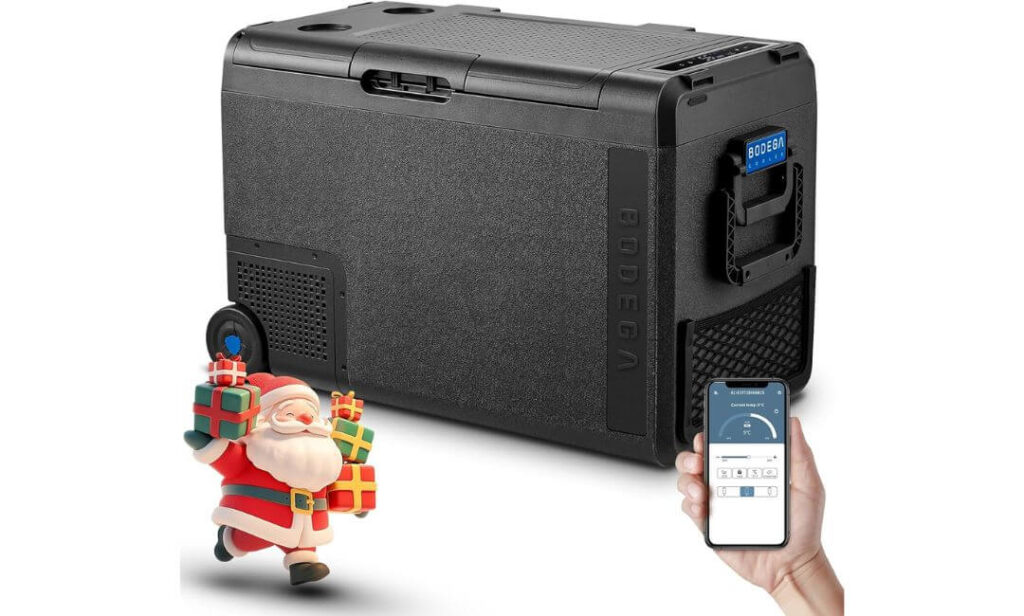
Key Specs:
- Storage Capacity: 50 Quart (plenty for long trips)
- Temperature Range: -4°F up to 68°F
- Power Options: 12V/24V car power and 100–240V AC at home
- Noise Level: Quiet — around 40dB during operation
- Control: App control and manual buttons
- Extras: LED light inside, sturdy wheels, retractable handle
- Size: 28.5” deep × 14.8” wide × 18.27” high
When you load this fridge up, you immediately notice how much it holds. Even full, the compressor gets down to cold temps quickly — not just cool, but genuinely cold — without needing ice. That matters when you’re stocking up in hot weather or packing meat, drinks, and produce together.
The design makes a surprisingly big difference on trips. The wheels and pull handle aren’t just for show; once you’ve lugged a heavy fridge across a campsite or garage floor, you’ll appreciate how easily it rolls without tipping. The LED light inside is also useful, especially at night or early morning when you’re grabbing snacks without waking everyone up.
The app control feature is something you start using right away. Instead of constantly opening the lid to check temperatures, you can look at or change settings right from your phone. It’s particularly handy when the fridge is tucked in a truck bed or back of an SUV.
What We Like
- Large 50-quart capacity fits full trip groceries without overcrowding storage space.
- Built-in wheels and retractable handle make transport easy when fully loaded.
- Quiet compressor operation around 40dB keeps cabin noise low during long drives.
- Battery protection modes help prevent vehicle battery drain during overnight stops.
What Customers Are Saying
This model sits around 4.3 out of 5 stars from over 300 real customer reviews, and most of the feedback is practical and detailed. A lot of people say it runs quietly — you barely hear it even when you’re sitting nearby. Many buyers also mention the size and portability — saying it’s more capable than they expected for the price. A few note that the smaller compartment doesn’t get fully independent temperature control, but for most folks that hasn’t been a deal-breaker. Overall, the consensus is that you’re getting solid cooling performance and thoughtful design.
Pro Tip: If you’re heading out for a long overnight stay, set the fridge a bit colder than you need before you park, and switch to a low-power mode once it reaches the temperature. That helps keep things cold with less drain on your battery while you sleep or relax at the campsite.
#3. Alpicool LGT60 Dual Zone Portable Car Refrigerator Freezer
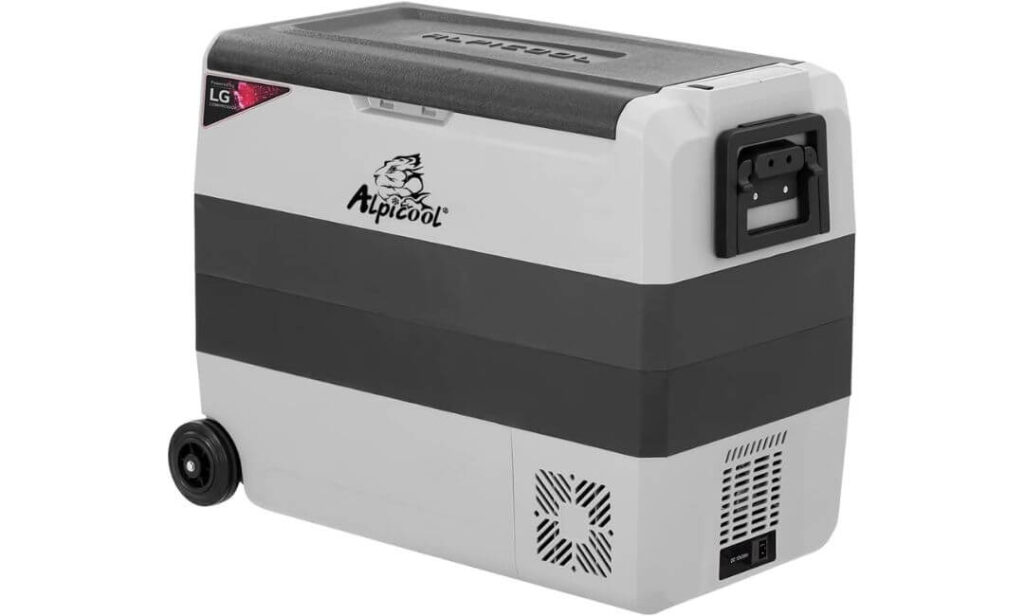
Key Specs:
- Storage Capacity: 63 Quart (60L – holds around 75 cans)
- Temperature Range: -4°F to 68°F
- Cooling System: LG compressor
- Power Input: 12V car power (works well with solar setups)
- Zones: Single or Dual Temperature Mode
- Battery Protection: 3-level system (Low, Medium, High)
- Mobility Features: Wheels, foldable handle, LED interior light
This portable refrigerator is a great option if you carry real food on trips, not just drinks. The storage space is the main advantage. You don’t have to squeeze items in or play stacking games. Everything fits properly, which makes packing for camping or long drives much easier.
What makes daily use better is the dual temperature setup. You can keep frozen items on one side and fresh food on the other without using two separate coolers. Once the temperature is set, it stays steady and doesn’t need constant adjustment. It also works well with vehicle power and small solar setups, which is useful when you’re parked for long hours.
Moving it around is simple even when it’s loaded. The wheels help when rolling it across parking areas or campsites, and the handle gives you better control. The battery protection feature is helpful for overnight stops, especially when the engine is off and you don’t want to risk draining your car battery.
What We Like
- Extra-large 63-quart storage works well for families, RV trips, and extended camping.
- Dual temperature control allows freezer and fridge use in one unit.
- LG compressor provides stable cooling and good power efficiency.
- Solar-friendly 12V operation makes it suitable for off-grid travel setups.
What Customers Are Saying
With more than 1,300 reviews and a 4.2-star average rating, most buyers use this fridge for camping, road trips, and RV travel. Many people mention that it keeps frozen food solid and doesn’t rely on ice at all. Power usage is another common positive point, especially for users running it from car batteries or solar systems. Some users say it takes a little time to get used to the temperature controls, and in very hot weather the compressor runs more often, but overall feedback shows good performance and strong value for the size.
Pro Tip: If you’re camping overnight without starting the vehicle, switch to single-zone mode and set the temperature slightly lower before parking. This helps keep food cold longer while reducing battery load.
#4. Whynter FM-45G Portable Refrigerator / Freezer
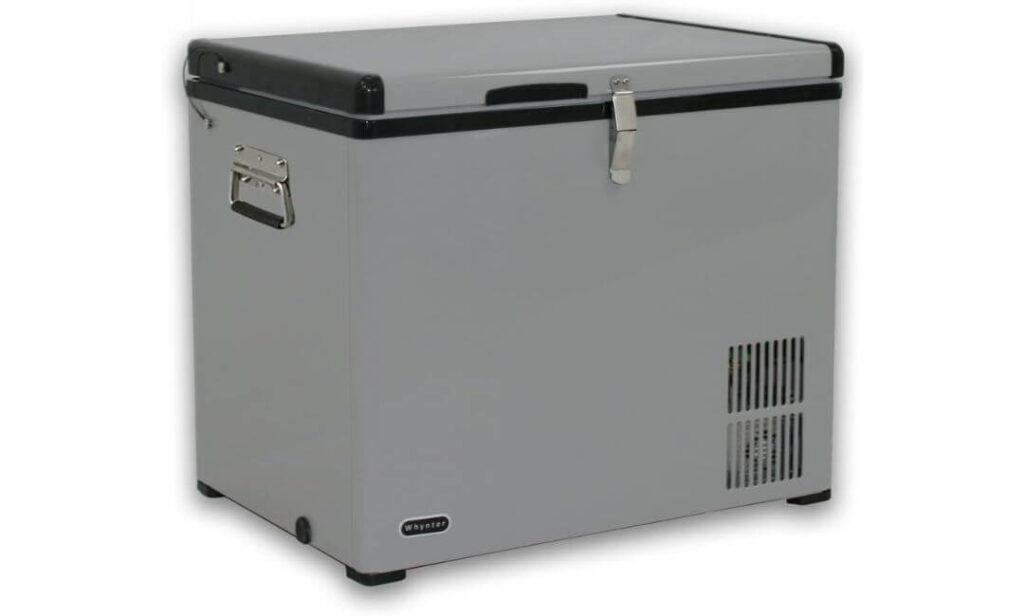
Key Specs:
- Storage Capacity: 45 Quart (1.41 cu ft)
- Temperature Range: -8°F to 50°F
- Cooling System: Compressor with “Fast Freeze” mode
- Power Input: 110V AC, 12/24V DC
- Design: Chest-style with removable wire baskets
- Build: Steel housing with carry handles and drain plug
- Size: 23.5” W × 16.5” D × 20.5” H
Whynter is well known for building appliances that are meant to last, and this portable fridge follows that same pattern. It doesn’t feel like a lightweight camping gadget — it feels solid. The steel body, strong handles, and overall weight give it a more “appliance-grade” feel compared to many plastic-bodied car fridges.
What stands out during real use is the cooling strength. The Fast Freeze mode actually works. When you need to chill groceries quickly or freeze items for travel, it reaches low temperatures without struggling. Once the target temperature is set, it holds steady even in hot weather, which is important for RV users and long highway drives.
The internal layout is practical. The removable wire baskets help keep food organized instead of everything piling up at the bottom. Cleaning is also easier than expected thanks to the built-in drain plug, especially after long trips where condensation and spills happen.
What We Like
- Strong “Fast Freeze” mode quickly drops temperatures for frozen food storage.
- Heavy-duty steel housing adds durability for RV and long-term travel use.
- Low power draw makes it compatible with solar and battery systems.
- Dual AC and DC power support allows use both in vehicles and at home.
What Customers Are Saying
With over 1,400 reviews and an average rating of 4.1 out of 5 stars, many long-term users share positive experiences. A common theme in reviews is reliability — several owners mention running this unit for years in RVs and trucks without major issues. Buyers also highlight strong freezing performance, quiet operation, and low power draw, which makes it popular for solar setups. Some users mention the weight makes it harder to move when fully loaded, and a few report maintenance needs over time, but overall feedback points toward durability and dependable cooling.
Pro Tip: If you’re using this fridge for extended trips, clean the condenser coils every few months with a soft brush. It improves airflow, keeps cooling efficient, and helps the compressor last longer — especially in dusty camping environments.
#5. Koolatron 12V Iceless Cooler & Warmer
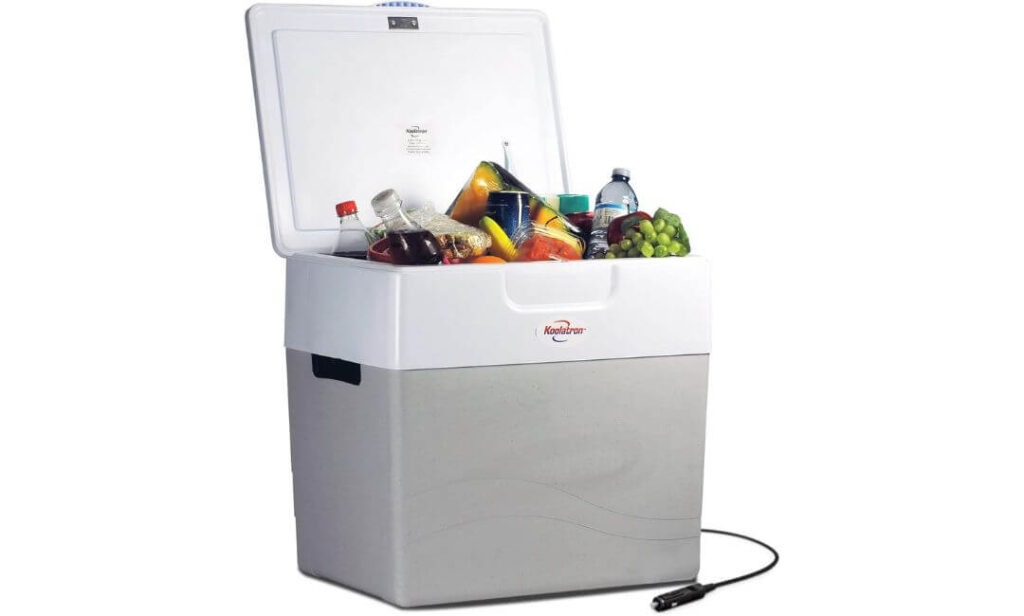
Key Specs:
- Storage Capacity: 52 Quart (49L – fits up to 80 cans)
- Cooling Method: Thermoelectric (no compressor)
- Cooling Range: Up to 40°F below ambient temperature
- Warming Mode: Up to 135°F
- Power Input: 12V DC (car outlet), optional 110V AC adapter
- Design: Hard-shell body, removable shelf, front-opening option
- Size: 20.75” W × 15.75” D × 19.75” H
This Koolatron unit works best when you treat it like a travel cooler, not a deep freezer. It’s made for keeping already cold drinks and food chilled during drives, not freezing meat or ice cream. For road trips, lunch storage, or daily commuting use, it does the job without needing ice.
One thing people notice quickly is the storage space. You can pack a lot into it without things getting crushed. The removable shelf and magnetic latch make it flexible to use either as a chest-style cooler or a small upright fridge. That’s useful when you’re loading bottles, lunch boxes, or meal containers.
It’s also quiet. The fan runs softly in the background and doesn’t add much noise inside the car. The warm mode is another bonus for people who carry hot food during deliveries or travel. Just flip the power direction and it switches from cooling to heating.
What We Like
- Large interior space fits up to 80 cans, ideal for drinks and daily travel storage.
- Dual cooling and warming function adds flexibility for food transport.
- Quiet fan operation keeps noise minimal inside the vehicle.
- Lightweight thermoelectric design makes it easier to carry and move around.
What Customers Are Saying
From real user feedback, most buyers use this cooler for road trips, daily driving, and weekend travel. Many mention that it keeps drinks cold throughout the day when the car is running. The large interior space and quiet operation are common positives. Some users say cooling performance improves a lot when items are pre-chilled before loading. A few customers report mixed long-term durability and slower cooling speed compared to compressor fridges. Overall, people who understand it’s a thermoelectric cooler — not a freezer — tend to be more satisfied with the performance.
Pro Tip: Always pre-cool your drinks and food in your home refrigerator before loading this unit. It dramatically improves cooling results and reduces the time the fan needs to run at full power during trips.
Portable Car Refrigerator Comparison Table (Specs & Features Overview)
| Feature | BougeRV 41Qt Best Overall |
BODEGACOOLER 50Qt Smart Pick |
Alpicool LGT60 Large Capacity |
Whynter FM-45G Heavy Duty |
Koolatron 52Qt Budget |
|---|---|---|---|---|---|
| Capacity | 41 Quart | 50 Quart | 63 Quart | 45 Quart | 52 Quart |
| Cooling Type | Compressor | Compressor | Compressor | Compressor | Thermoelectric |
| Temperature Range | -4°F to 68°F | -4°F to 68°F | -4°F to 68°F | -8°F to 50°F | 40°F below ambient |
| Dual Zone | Yes | Partial | Yes | No | No |
| Power Support | 12/24V DC + AC | 12/24V DC + AC | 12V DC (Solar Ready) | 12/24V DC + AC | 12V DC (AC Optional) |
| Fast Cooling | Yes | Yes | Yes | Fast Freeze Mode | No |
| Mobility | Baskets | Wheels + Handle | Wheels + Handle | Carry Handles | Lightweight Body |
| Best For | Travel & Camping | Long Road Trips | Family / RV Use | Heavy Travel Use | Daily Short Trips |
How to Choose the Right Portable Refrigerator for Your Car (Real Buyer Guide)
Choosing a portable refrigerator for car use isn’t just about picking the biggest number on the box. These units are an investment — whether you’re packing for road trips, weekend camping, long hauling, or daily work travel. The right choice saves food, keeps drinks cold, and avoids common problems like power drain and uneven cooling.
Below are the key things to think about when comparing models and deciding which one fits your needs.
1) Cooling Technology — Compressor vs Thermoelectric
Not all cooling systems are created equal:
Compressor Units
- Work like a real refrigerator — reach very low temperatures and hold them.
- Best for long trips, camping, RV use, and true freezer-level cold.
- More power-efficient over time and handle heat better.
- Examples: BougeRV, BODEGACOOLER, Alpicool, Whynter.
Thermoelectric Coolers
- Rely on ambient temperature difference (approx. 40°F below outside temp).
- Great for keeping drinks cold during summer drives but not for freezing.
- Usually lighter and cheaper.
- Example: Koolatron.
When to choose what:
Go compressor if you want true freezing or frequent long-distance use. Choose thermoelectric for short trips where you just need chill — not freeze.
2) Capacity — How Much Storage You Really Need
Fridge/freezers list capacity in quarts or liters, but think about what you actually pack:
- 40–50 Quart: Great for a small family or weekend trips; fits drinks, snacks, lunch, and a bit of meat.
- 60+ Quart: Better for larger families, RV trips, extended camping, or when you want freezer + fridge at the same time.
A larger fridge is only useful if you actually use the space — otherwise you’re paying for unused volume.
3) Dual Zone vs Single Zone
Some fridges let you split storage into two temperature zones:
Dual Zone
- One side freezer, one side fridge independently.
- Best when you need both frozen and chilled items at the same time.
- Strong choice for camping and long overlanding trips.
Single Zone
- One consistent temperature throughout.
- Works fine if you just need cooling or freezing on demand.
If you frequently carry both frozen goods and fresh food, dual zone is worth it.
4) Power Compatibility & Battery Protection
A portable fridge must work reliably from your vehicle’s power system.
Look for:
- 12V/24V DC support for cars, trucks, RVs.
- AC 110V capability so it works at home too.
- Battery protection modes to prevent draining your vehicle battery while parked or camping.
Power protection is especially important if you’re running a fridge overnight without the engine on.
5) Cooling Speed & Temperature Stability
Some models hit set temperatures much faster than others. Fast cooling is great if you load warm groceries or refreshments right before departure.
Also check:
- How stable the fridge stays once it reaches the target temperature.
- Whether it maintains performance in hot weather (90°F+).
Units with real compressors handle these better than thermoelectric ones.
6) Noise & Build Quality in Real Use
A fridge that rattles or whines becomes annoying on long trips and overnight stays.
Good signs of quality:
- Quiet compressor operation.
- Solid build that doesn’t vibrate on rough roads.
- Easy-to-clean interior and exterior.
- Practical features like baskets, LED lights, and sturdy handles.
7) Mobility — How Easy It Is to Move Around
Don’t underestimate this:
- Wheels and extendable handles make a difference when the unit is full and heavy.
- Built-in baskets help organize food instead of piling everything in.
- Durable housing means fewer dings and wear during travel.
Quick Decision Checklist:
If you want true freezer performance and long trips:
Go with a compressor model.
If you’re on a budget and just need chilled drinks:
Thermoelectric cooler works fine.
If you need space for a family or long RV travel:
Choose larger capacity (60+ quarts).
If you want both fridge + freezer functions at the same time:
Pick a dual-zone model.
Common Portable Car Refrigerator Mistakes (And How to Fix Them Properly)
Most cooling problems don’t come from bad products — they come from how people use them. If you want stable temperatures, longer fridge life, and zero travel headaches, these are the mistakes you should avoid.
1) Putting Warm Groceries Directly Inside
What goes wrong:
Many people load room-temperature drinks, cooked food, or supermarket groceries straight into the fridge and expect instant cooling. This forces the compressor to work nonstop, increases power draw, and slows down cooling for everything else inside.
What actually works:
Pre-cool items at home whenever possible. Even 30–60 minutes in your home fridge makes a big difference. If you can’t pre-cool everything, chill the fridge itself first, then load items gradually instead of dumping everything in at once.
This single habit improves cooling speed and reduces battery stress.
2) Parking the Fridge With No Airflow
What goes wrong:
People push the fridge tightly against seats, walls, or camping gear. When ventilation grills are blocked, heat builds up around the compressor. Cooling becomes weaker and the unit runs hotter and louder.
What actually works:
Leave at least a few inches of space on ventilation sides. If the fridge is in a truck bed or cargo area, make sure hot air can escape. Better airflow = better cooling + longer compressor life.
3) Leaving It Running Overnight Without Power Planning
What goes wrong:
This is the most common travel mistake. People leave the fridge running all night on the car battery and wake up to a dead vehicle.
What actually works:
Use battery protection modes built into the fridge. If you’re camping overnight, switch to ECO mode and raise the temperature slightly once everything is cold. For longer stays, a portable power station or auxiliary battery makes a huge difference.
Never assume your car battery can handle overnight loads.
4) Opening the Lid Too Frequently
What goes wrong:
Every time the lid opens, cold air escapes and warm air enters. This causes constant compressor cycling and uneven internal temperatures.
What actually works:
Organize your fridge before trips. Keep drinks on one side and food on another. Open the lid with a purpose. Fewer openings mean better temperature stability and lower power use.
5) Using Thermoelectric Coolers Like Real Freezers
What goes wrong:
Some users try freezing meat or ice cream in thermoelectric coolers. These units are not built for freezing and depend heavily on outside temperature.
What actually works:
Use thermoelectric coolers only to keep items cold — not frozen. If freezer temperatures matter, always choose compressor-based refrigerators. Knowing this difference saves frustration and wasted money.
6) Overloading Without Air Circulation
What goes wrong:
Packing items tightly against each other blocks airflow. Some areas become colder while others stay warm.
What actually works:
Leave small gaps between items. Use baskets or dividers if available. Cold air needs space to move. Balanced airflow keeps all items at similar temperatures.
7) Ignoring Regular Cleaning
What goes wrong:
Dust builds up around vents and condenser areas over time. This reduces cooling efficiency and makes the unit work harder.
What actually works:
Every few months, wipe the vents and gently brush off dust from external cooling areas. It takes 5 minutes and improves long-term performance.
Real Travel Habit That Makes a Difference
Before starting your trip:
👉 Plug the fridge in
👉 Set your target temperature
👉 Let it cool empty for 20–30 minutes
Then load your food.
This stabilizes the cooling system and prevents sudden temperature swings.
Can a portable car refrigerator really replace an ice cooler?
Yes, for most road trips and camping use, it does a better job. Unlike ice coolers, it keeps a fixed temperature instead of slowly warming up. There’s no melted water, no soggy food, and no need to buy ice every day. Once you set the temperature, it stays consistent. That reliability is what makes people switch permanently after using one.
Will a portable refrigerator drain my car battery?
It can, if used incorrectly. Most modern models include battery protection modes that shut the unit off before voltage drops too low. If you’re driving regularly, battery drain is usually not an issue. For overnight camping, lowering the cooling mode or using an auxiliary power source helps prevent problems. Planning power use makes all the difference.
What size portable refrigerator is best for a car?
For solo travelers or short trips, 40–50 quarts is usually enough. Families, RV users, and long camping trips benefit more from 60-quart or larger units. The right size depends on how much food you carry, not just the vehicle size. Bigger isn’t always better if you don’t use the space.
Can portable car refrigerators freeze food properly?
Compressor-based models can freeze food and keep items at true freezer temperatures. Thermoelectric coolers cannot. If you need to store frozen meat, ice cream, or medical supplies, always choose a compressor fridge. Knowing this difference prevents wrong purchases.
Is it safe to use a portable refrigerator while driving?
Yes, these units are designed for vehicle use. As long as the fridge is secured properly and ventilation is not blocked, it’s safe to operate while driving. Many drivers use them continuously on highways and long trips. Just avoid placing heavy items on top of the unit.
Final Thoughts
Once you start traveling with a portable car refrigerator, going back to ice boxes feels outdated. No water mess, no half-warm drinks, no rushing to buy ice at fuel stations. You pack once, set the temperature, and enjoy the trip without worrying about food storage.
What makes the real difference is convenience. Whether it’s grabbing a cold drink during a highway stop, keeping groceries fresh on the way home, or storing meals on camping nights, this small upgrade quietly improves every journey. It’s one of those things you don’t realize you needed until you use it.
If your travel involves long drives, outdoor trips, or regular road time, a good portable fridge becomes part of your setup, not just an accessory. And once it’s there, it earns its place trip after trip.
Also Check:


