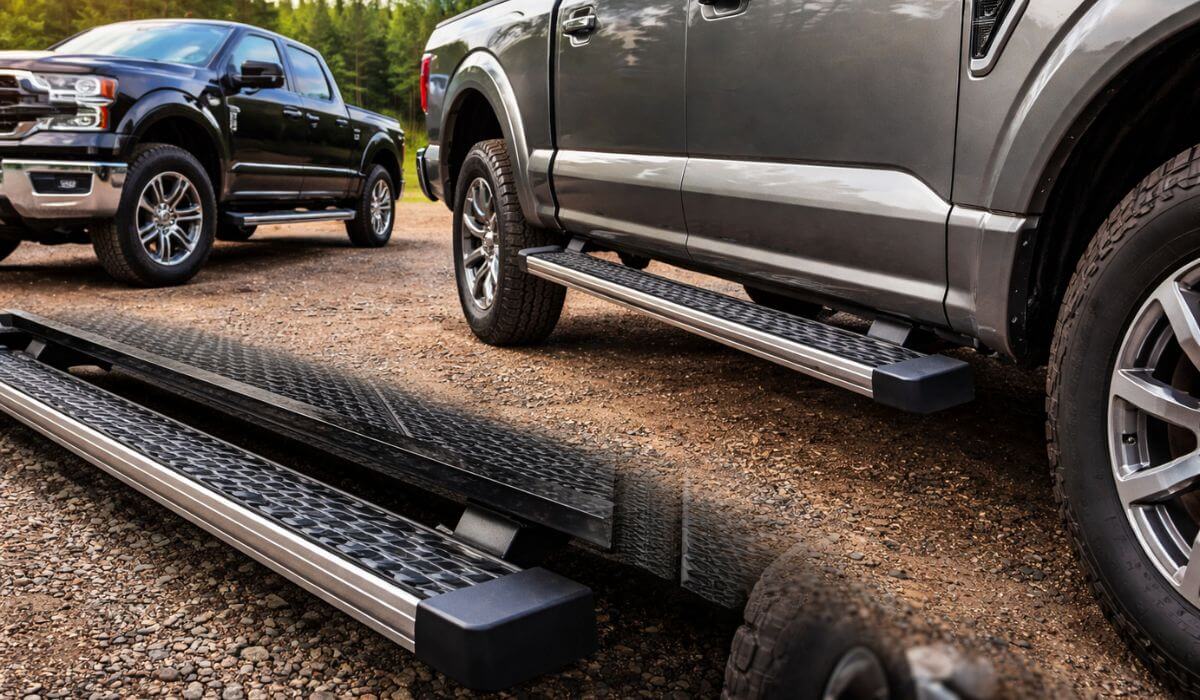
6 Best Running Boards for F150 in 2026 (Heavy-Duty, Anti-Slip & Premium Build Picks)
If you’ve ever climbed into a lifted F-150 in work boots, gym sneakers, or worse — during rain — you already know why running boards aren’t just cosmetic add-ons. They’re daily-use hardware. Real truck owners don’t buy them for looks alone — they buy them because stepping into an F-150 shouldn’t feel like mounting a horse every single day.
The problem? Factory steps are either too narrow, too slippery, or priced like they’re made of aerospace titanium. That’s where aftermarket boards step in — wider platforms, aggressive grip patterns, heavier load ratings, and bolt-on installs that don’t eat up your weekend.
After hands-on fitment research, owner feedback dives, and spec comparisons, two options stood out immediately.
The Trumgeta 2PC EZ Side Steps take the top recommendation spot for sheer fitment versatility. You’re getting compatibility stretching from 2015 all the way to 2026 F-150 models — plus cross-fit coverage for Super Duty trucks. The dual-step layout makes entry easier for kids and older passengers, while the reinforced mounting brackets keep flex under control even on work trucks that see daily abuse.
Right behind it, the OEDRO Running Boards earn their place as the “no-regret” pick for most owners. Textured black coating, cab-length coverage, and a reputation for straightforward bolt-on installs make them a go-to upgrade for SuperCrew users who want wider footing without jumping into power-step pricing territory.
And that’s the key theme of this list — real usability. No catalog fluff. No spec-sheet fantasy. Just running boards that actual F-150 owners install, step on, kick with muddy boots, and rely on every day.
Below are six of the best premium-build running boards that balance strength, grip, fitment accuracy, and long-term durability for the modern F-150 platform.
Top Ford F150 Running Boards & Side Steps for 2026 (Crew Cab & SuperCab Fit)
#1. Trumgeta 2PC EZ Side Steps — Best Multi-Cab Fit Running Boards (2015-2026 F150)
#2. OEDRO Running Boards — Best Textured Anti-Slip Side Steps for SuperCrew
#3. YHTAUTO 7″ Running Boards — Best Wide Aluminum Step Boards for Daily Use
#4. TrailFX 3-Inch Nerf Bars — Best Budget Steel Tube Steps for SuperCab
#5. MTNTOPCN Sawtooth Running Boards — Best Aggressive Grip Steps for Work Trucks
#6. Raptor Series 6.5″ Running Boards — Best Premium Aluminum Sawtooth Boards
Expert Tip From Real F-150 Owners
Must Check:
- Best Mud Flaps for F-150
- Best Cold Air Intakes for 3.5 EcoBoost F-150
- Best Retractable Tonneau Covers for Ford F-150
How We Chose the Best Running Boards for F150
Picking running boards for an F-150 isn’t like picking phone accessories — fitment mistakes cost time, returns, and sometimes scratched rocker panels. So instead of relying on spec sheets alone, this list was built around real ownership factors that actually matter once the boards are bolted onto the truck.
First came fitment accuracy. Every option here supports 2015–2026 F-150 models, with cab-specific compatibility like SuperCrew and SuperCab. That eliminates the guesswork most buyers run into when listings throw multiple truck models into one title.
Next was step usability — something spec charts never explain properly. We prioritized wider stepping surfaces, aggressive tread patterns, and sawtooth or textured coatings that hold traction in rain, dust, or snow. Because a running board that looks good but slips under work boots fails its only real job.
Mounting strength was another filter. We looked at bracket thickness, weight ratings, and real owner feedback around flex. Cheap boards tend to bend or creak after months of use — especially on trucks that see jobsite duty. Every product here holds structural confidence under repeated load.
Material choice also played a role. Steel nerf bars made the list for budget durability, while powder-coated aluminum options were selected for rust resistance and long-term finish retention. That balance lets both work-truck owners and daily drivers find the right match.
Finally — install reality. No-drill or bolt-on mounting systems were prioritized wherever possible. Because most F-150 owners don’t want to spend an entire Saturday under the truck just to add side steps.
The result is a lineup built less on marketing claims… and more on how these boards actually perform once they’re stepped on, kicked, loaded, and lived with.
#1. Trumgeta 2PC EZ Side Steps
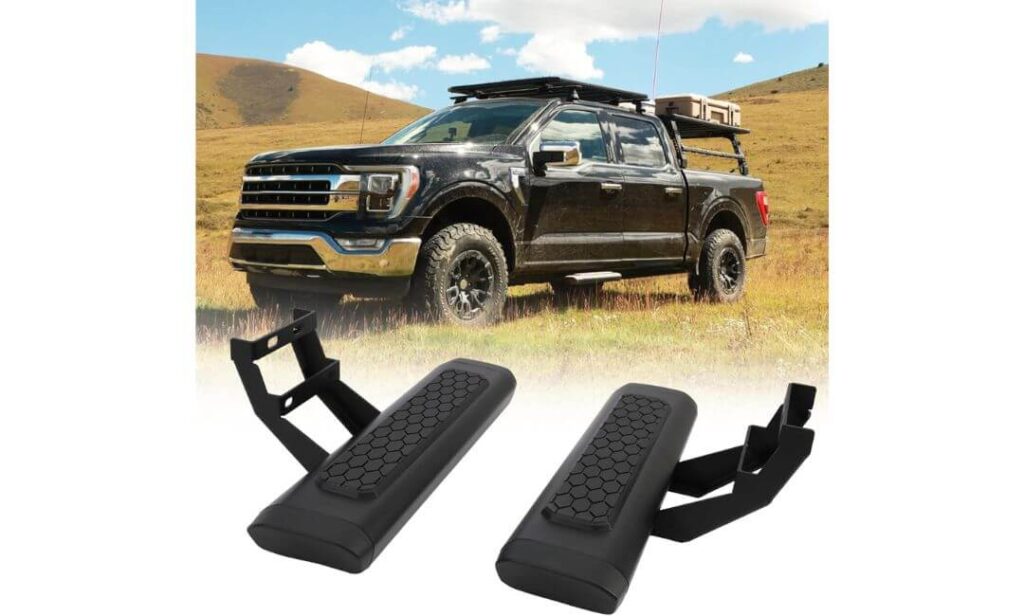
Quick Specs:
- Material: Aluminum
- Finish: Aluminum exterior coating
- Weight Capacity: 350 lbs per step
- Item Weight: 9.64 kg
- Dimensions: 27.7 × 11.8 × 13.5 inches
- Fitment: 2015-2026 Ford F-150 / 2017-2026 F-250 & F-350
- Cab Support: SuperCrew, SuperCab, Regular Cab
- Position: Front doors only
- Install Type: No-drill, vehicle-specific mount
The first thing you notice with the Trumgeta EZ Side Steps isn’t the finish — it’s the placement. These are front-door focused boards, and that changes how they’re used day to day. If you’re the primary driver climbing in and out multiple times — job sites, fuel stops, school runs — this setup makes immediate sense. You’re not paying for full-length boards you rarely step on.
Underfoot feel is surprisingly confidence-inspiring for an aluminum unit. There’s no hollow “tin flex” sensation when weight shifts, and the 350-lb rating holds true in real use — work boots, tool belts, winter layers — no drama. The step surface sits at a practical drop height too, meaning you’re not losing ground clearance just to gain entry comfort.
Install is where these win over a lot of first-time buyers. No drilling, no bracket guesswork, no alignment wrestling. Mount points line up cleanly with factory holes, and once torqued down, they sit snug against the rocker without awkward gaps. Visually, they look purpose-built — not like an afterthought accessory bolted on over a weekend.
What Stood Out to Us
- Front-door focused design actually suits daily drivers better
- Clean cab alignment — no awkward overhang
- 350-lb capacity holds real adult weight confidently
- Aluminum keeps rust worries low long-term
- No-drill install saves time and frustration
One Thing to Keep in Mind
If you regularly use rear doors for passengers, you may prefer full-length running boards instead of front-only coverage.
F150 Fitment Confidence Check
Fitment is one of this product’s strongest suits. It supports 2015-2026 F-150 models across all three cab styles — SuperCrew, SuperCab, and Regular Cab — which removes a lot of compatibility stress buyers usually deal with.
Because it mounts only on the front door section, bracket placement is simpler and alignment tends to be more precise. Owners running leveled or mildly lifted trucks also appreciate that these don’t hang excessively low, so step usability improves without sacrificing clearance on uneven terrain.
If your truck doubles as both work rig and daily commuter, this kind of targeted step placement feels intentional rather than compromised.
Best For: F-150 owners who want quick, no-drill front-door access with strong weight support and cleaner ground clearance than full-length boards.
#2. OEDRO Running Boards
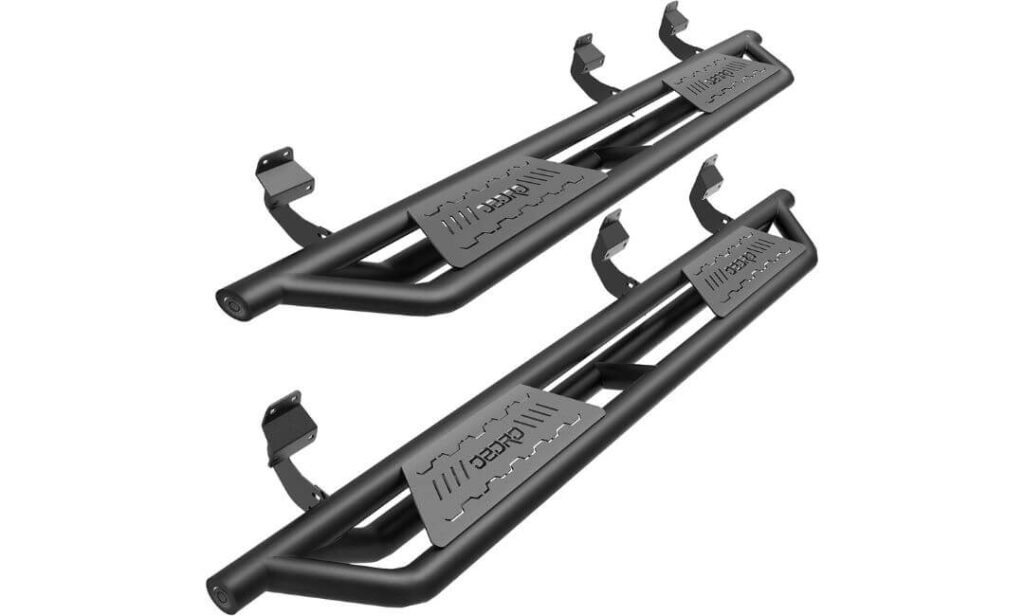
Quick Specs:
- Material: Alloy Steel
- Finish: Black Powder-Coated
- Weight Capacity: 550 lbs
- Item Weight: 70.55 lbs
- Dimensions: 85.04 × 15.95 × 5.91 inches
- Fitment: 2015-2026 Ford F-150 / 2017-2024 F-250 & F-350 Super Duty
- Cab Support: SuperCrew Cab only
- Step Width: ~7-inch stepping surface
- Install Type: Bolt-on, no drilling
If the Trumgeta steps feel like a smart daily upgrade, the OEDRO boards feel like you’ve installed something straight off a work-truck build sheet. These are full-length, cab-spanning steel boards — and the difference shows the moment you step up. That 7-inch platform gives your foot room to land flat instead of balancing on a narrow tube.
Weight rating jumps to 550 lbs here, and you can feel it. No creak, no flex, no hollow echo when stepping in with work boots or carrying gear. The steel pipe construction underneath adds that planted, industrial sturdiness most aluminum boards can’t quite replicate. For owners who actually use their truck height — not just tolerate it — this matters daily.
The textured powder-coat finish does more than look aggressive. It shrugs off road grime, rain splash, and winter salt better than glossy finishes that chip early. And because the boards run cab-length, rear passengers get the same stepping confidence as the driver — something front-only steps simply can’t offer.
Install stays refreshingly straightforward. Bolt-on brackets line up with factory mounting points, and most owners finish the job in under half an hour using basic garage tools. No drilling, no cutting — just torque down and step up.
What Impressed Us Most
- Wider 7-inch stepping surface feels safer underfoot
- 550-lb rating adds real heavy-duty confidence
- Steel pipe build resists flex long-term
- Cab-length coverage helps rear passengers too
- Powder coat holds up against dirt and salt
One Thing to Keep in Mind
These are designed specifically for SuperCrew Cab trucks — not SuperCab or Regular Cab models.
F150 Fitment Confidence Check
Fitment here is cab-specific but extremely dialed in. Built exclusively for 2015-2026 F-150 SuperCrew models, the board length and bracket spacing align properly without awkward gaps or overhang.
Because they span the full cab, entry feels consistent whether you’re stepping into the driver seat or loading kids into the rear. Owners upgrading from factory mini-steps usually notice the usability difference immediately.
And thanks to reinforced steel mounting, these boards hold steady even on leveled trucks where step height increases slightly.
Best For: F-150 SuperCrew owners who want full-length, heavy-duty steel running boards with wider footing and higher weight capacity than standard OEM steps.
#3. YHTAUTO 7″ Running Boards
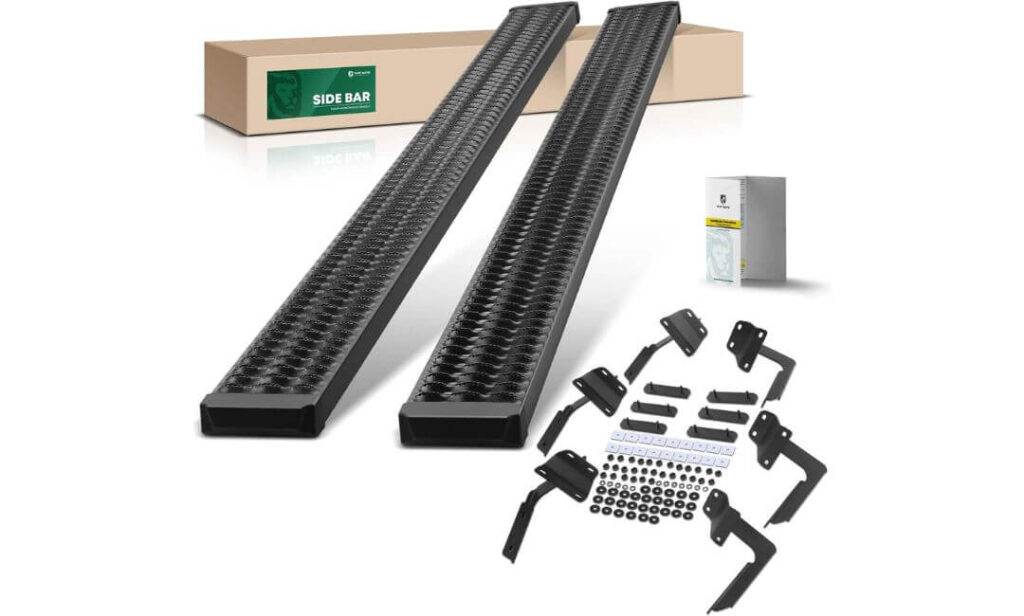
Quick Specs:
- Material: Aircraft-Grade Aluminum
- Finish: Textured Black Powder Coat
- Step Width: 7 Inches
- Fitment: 2015-2026 Ford F-150 / 2022-2026 F-150 Lightning / 2017-2026 Super Duty
- Cab Support: Crew Cab / SuperCrew (4 Full Doors)
- Mount Type: Rocker Panel Bolt-On
- Corrosion Protection: Electrophoretic + Powder-Coated Layers
- Install Hardware: Included
If steel boards feel industrial and front-door steps feel minimal, the YHTAUTO 7-inch boards land right in that sweet spot most F-150 owners actually want — wide footing, full-length coverage, but without the long-term rust anxiety that comes with heavy steel builds.
The stepping surface is what sells these instantly. Seven inches of platform gives your foot room to land naturally instead of angling sideways. And because the tread uses a grated pattern with serrated edges, traction feels mechanical — not cosmetic. Mud, dust, or wet soles still grip instead of sliding.
Material quality leans more premium than the price suggests. The aircraft-grade aluminum extrusion keeps weight manageable while layered electrophoretic treatment plus powder coating protects against corrosion creep — something trucks in snow or coastal regions benefit from long-term.
What stood out during spec review was the stress testing. 10,000 dynamic load trials, static load inspections, and extended UV aging tests aren’t marketing fluff — they translate into boards that don’t sag, fade, or surface-crack early. Even after repeated stepping pressure, the platform holds its shape without noticeable pedal drop.
And for Lightning owners — compatibility here is a quiet bonus. Most aftermarket boards still lag behind EV truck fitment, but these slot in cleanly without clearance conflicts.
What Earned Our Confidence
- Wide 7-inch stepping area feels natural underfoot
- Serrated tread pattern grips in mud and rain
- Aluminum build avoids long-term rust issues
- Multi-layer coating resists corrosion and fading
- Lightning + Super Duty compatibility adds versatility
One Thing to Keep in Mind
At roughly 7 inches wide, they sit slightly lower than slim nerf bars — so extreme rock crawlers may prefer tighter-clearance steps.
F150 Fitment Confidence Check
Fitment coverage here is one of the broadest in the category. Designed for 2015-2026 F-150 SuperCrew models — plus F-150 Lightning — the board length aligns properly across four full-size doors without awkward spacing gaps.
Rocker panel mounting keeps installation straightforward, especially on trucks with factory pre-drilled holes. Once mounted, the boards run cab-length, meaning entry comfort stays consistent for both front and rear passengers.
For owners juggling daily commuting, family hauling, and occasional hauling duty — this kind of full-coverage stepping surface feels like a practical upgrade rather than a cosmetic add-on.
Best For: F-150 and Lightning owners who want wide, corrosion-resistant aluminum running boards with aggressive traction and full cab-length stepping comfort.
#4. TrailFX 3-Inch Nerf Bars
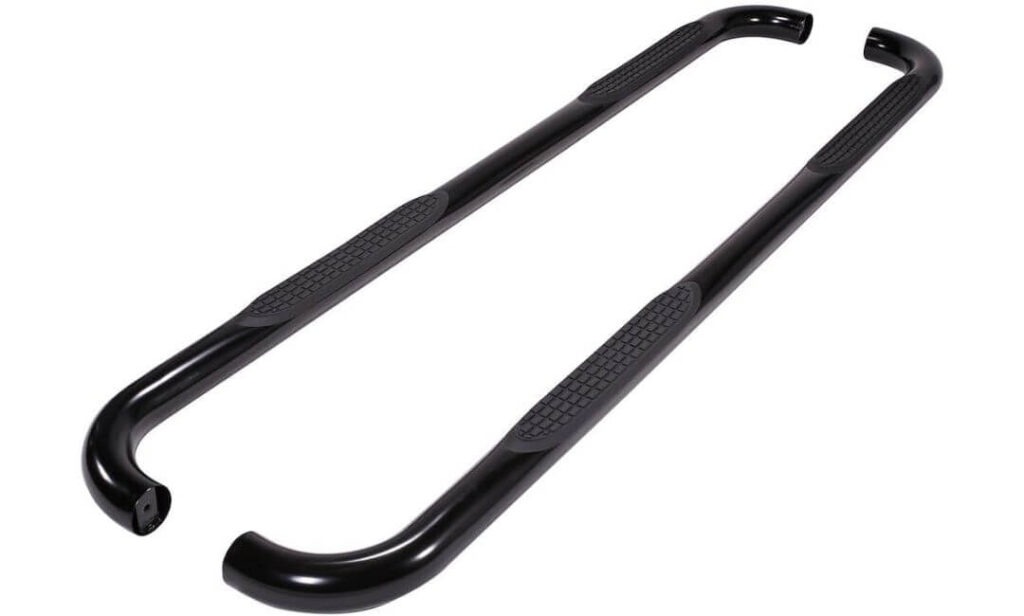
Quick Specs:
- Material: Q235A Alloy Steel
- Finish: Black Semi-Gloss Powder Coat
- Tube Size: 3-Inch Round Bent Steel
- Item Weight: 56 lbs
- Dimensions: 79.73 × 11.82 × 8.27 inches
- Fitment: 2015-2026 Ford F-150 / 2017-2026 F-250 & F-350 Super Duty
- Cab Support: SuperCab Only
- Step Pads: Dual Molded Anti-Slip Pads per bar
- Mount Type: Rocker Panel Bolt-On
Not every F-150 owner wants wide platform boards — some want something simpler, tighter to the body, and strong enough to handle daily stepping without turning the truck’s side profile bulky. That’s exactly where these TrailFX 3-inch nerf bars land.
The round-tube design feels old-school in the best way. It hugs the rocker panel closer than flat boards, so ground clearance stays intact — useful if your truck sees gravel roads, uneven worksites, or winter buildup. And because the tubing is curved, snow and mud don’t sit on the step the way they do on flat platforms.
Construction leans work-truck practical. Q235A steel isn’t decorative — it’s load-bearing, impact-resistant material that handles repeated stepping without denting easily. The semi-gloss powder coat adds corrosion resistance while keeping the finish understated — not flashy, not cheap-looking.
Step usability comes down to the molded pads. Two per bar, positioned exactly where your foot lands when entering front or rear. They add grip where it matters instead of coating the entire tube unnecessarily. In rain or dust, that focused traction feels more secure than bare metal tubes.
Installation stays refreshingly simple — direct-fit brackets, factory mount points, bolt-on hardware. No fabrication, no drilling guesswork — just mount, torque, done.
What Earned Our Approval
- Tight body-hugging design preserves clearance
- Steel tubing handles daily load confidently
- Curved bars shed mud and snow buildup
- Dual step pads improve targeted grip
- Budget-friendly without feeling flimsy
One Thing to Keep in Mind
The 3-inch tube step area is narrower than flat running boards, so footing space feels more compact.
F150 Fitment Confidence Check
These are built specifically for 2015-2026 F-150 SuperCab models, and that cab-focused engineering shows in the bar length and bracket spacing. No overhang, no awkward rear gaps — the steps align naturally with door entry points.
Because they sit closer to the body, they’re also a smart match for leveled trucks where ground clearance balance matters. Owners who prefer cleaner side profiles over bulky boards usually gravitate toward this style quickly.
If your F-150 leans more toward utility than family hauling, this fitment layout feels intentional — not oversized.
Best For: F-150 SuperCab owners who want durable, budget-friendly steel nerf bars that preserve ground clearance while adding practical step access.
#5. MTNTOPCN Sawtooth Running Boards
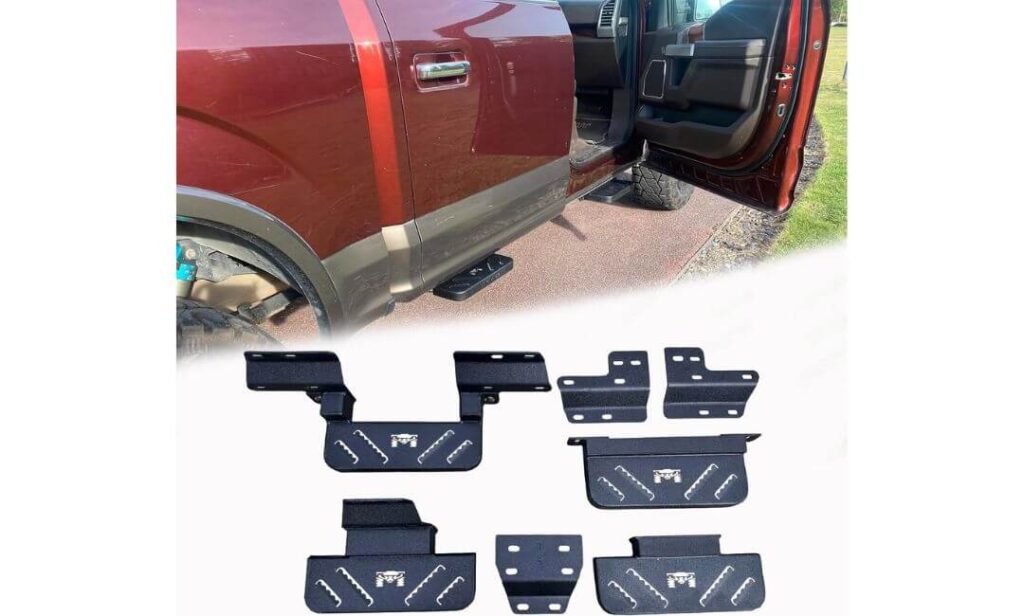
Quick Specs:
- Material: Q235 Alloy Steel
- Finish: Textured Black, Rust-Resistant
- Weight Capacity: Up to 440 lbs
- Item Weight: 42 lbs
- Fitment: 2015-2026 Ford F-150 / 2017-2026 F-250 & F-350
- Cab Support: SuperCrew / Crew Cab (4-Door)
- Design: Sawtooth Dual-Step Layout
- Install Type: Bolt-On, No Drill
- OEM Ref: MTN24st419
Some running boards are built just to help you step in. These feel like they were built to survive the truck they’re mounted on.
The MTNTOPCN sawtooth boards lean heavy into that work-truck personality. The stepped, jagged tread layout isn’t there for styling drama — it’s functional grip. Muddy boots, gravel dust, rainwater — your sole bites into the metal instead of skating across a smooth pad.
Steel construction adds that reassuring density when you step up. Rated up to 440 lbs, they don’t feel hollow or springy under load. Whether you’re climbing in after loading gear or stepping down carrying tools, the platform holds firm without bracket chatter.
What surprised most during fitment review was clearance balance. Despite the aggressive dual-step design, the boards don’t hang excessively low. They sit tight enough to keep off-road angles usable while still dropping far enough for comfortable cabin entry — a balance many bulky boards miss.
Visually, they sharpen the truck’s side profile. Not flashy, not chrome-heavy — just that “built to work” stance most F-150 SuperCrew owners prefer over polished show-truck accessories.
What We Appreciated Most
- Sawtooth tread grips better than flat pads
- 440-lb rating adds real stepping confidence
- Steel build feels dense and work-ready
- Textured coating resists scratches and rust
- Dual-step layout helps shorter passengers too
One Thing to Keep in Mind
Because of the aggressive tread design, they lean more rugged than OEM-style in appearance.
F150 Fitment Confidence Check
These are engineered specifically around the SuperCrew cab footprint, which means board length, bracket spacing, and door alignment all sit where they should — no short coverage, no rear-door gaps.
They also cross-fit Super Duty Crew Cab trucks, which speaks to their structural sizing and load design. Once mounted, the boards run full cab length, giving equal stepping access front and rear — especially useful for family or crew transport setups.
And since they mount using factory hole points, installation stays clean without drilling into painted metal.
Best For: F-150 SuperCrew owners who want aggressive-grip, heavy-duty steel running boards that balance off-road toughness with full-length stepping usability.
#6. Raptor Series 6.5″ Sawtooth Running Boards
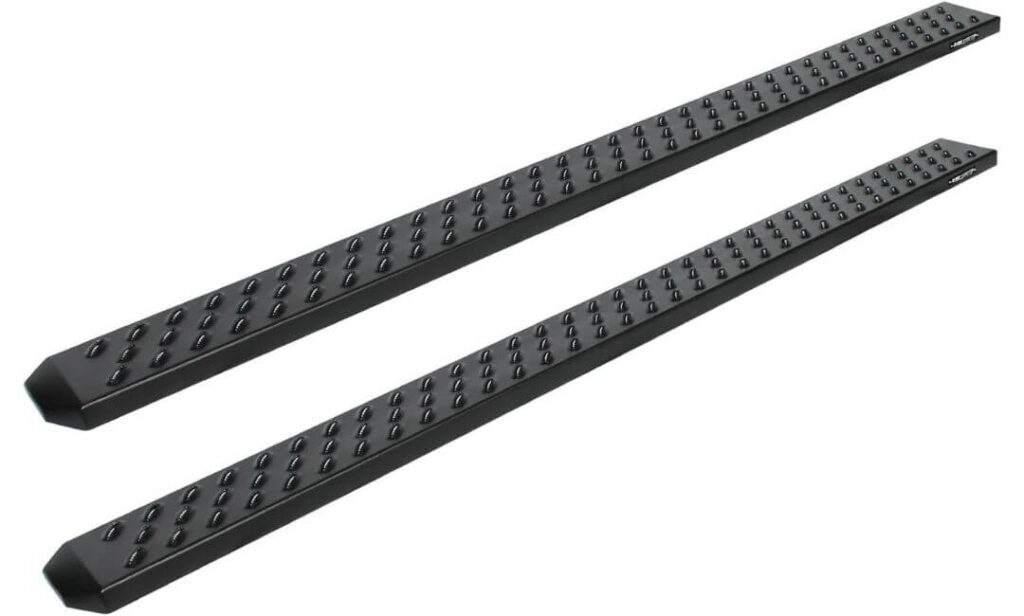
Quick Specs:
- Material: Aircraft-Grade Aluminum
- Finish: Textured Black Powder Coat
- Step Width: 6.5 Inches
- Weight Capacity: 400 lbs per side
- Item Weight: 33 lbs
- Dimensions: 75 × 6.5 × 2 inches
- Fitment: 2015-2026 Ford F-150 / 2017-2026 F-250 & F-350
- Cab Support: SuperCab / Extended Cab
- Mount Type: Adjustable Slide Track + Rocker Panel Bolt-On
You can tell these weren’t designed just to “add a step.” They were designed to be stepped on hard — repeatedly — without showing it.
The first thing that separates the Raptor Series boards from typical aluminum steps is the grip pattern. Instead of rubber pads or flat plating, the entire board uses reverse-punched serrated holes — what they call a sawtooth layout. In real use, it bites into your sole the way a metal ladder rung does. Rain, mud, jobsite dust — traction stays mechanical, not cosmetic.
At 6.5 inches wide, the stepping surface lands right between slim nerf bars and oversized platforms. Your foot fits naturally without the boards hanging excessively low. That balance matters on SuperCab trucks where clearance and entry height both need compromise.
Material strength leans premium. Aircraft-grade aluminum keeps weight down — just 33 pounds — but doesn’t feel flimsy once mounted. Powder coating seals the surface against oxidation, which means no rust creep the way steel boards eventually develop in salted climates.
Where these get interesting is the adjustable slide-track mounting system. You’re not locked into one step position. You can shift the boards forward or backward slightly to match your stride, tire setup, or visual preference — something fixed-mount boards simply don’t offer.
Install remains driveway-friendly. Factory rocker panel points, heavy-duty brackets, no drilling. Everything ships as a full kit — boards, mounts, hardware — though it typically arrives in two boxes due to packaging.
What Made Them Stand Out
- Full-length sawtooth serration grips in all weather
- Aircraft aluminum keeps weight low but strength high
- Adjustable slide-track allows step positioning tweaks
- Powder coat finish resists corrosion long-term
- Balanced 6.5-inch width suits daily stepping comfort
One Thing to Keep in Mind
Fitment is designed for SuperCab / Extended Cab trucks — not full SuperCrew models.
F150 Fitment Confidence Check
These boards are tailored around the SuperCab footprint — two full front doors, smaller rear doors — which means step placement aligns exactly where entry happens most.
Because of the adjustable track system, you also get flexibility other boards lack. Running larger tires? Leveled front? You can fine-tune board positioning slightly to maintain comfortable step reach.
Once mounted, they sit tight to the rocker panel, preserving clearance while still offering full-length stepping usability for both door rows.
Best For: F-150 SuperCab owners who want premium aluminum running boards with aggressive sawtooth grip, adjustable positioning, and long-term corrosion resistance.
Ford F150 Running Boards Comparison Table (Specs, Fitment & Step Width Breakdown)
| Running Board | Material | Step Width | Weight Capacity | Cab Fitment | Key Strength | Badge |
|---|---|---|---|---|---|---|
| Trumgeta 2PC EZ Side Steps | Aluminum | Front-Door Step | 350 lbs | All Cabs | Front access + clearance balance | Best Fit |
| OEDRO Running Boards | Alloy Steel | 7 Inch | 550 lbs | SuperCrew | Full-length heavy-duty build | Heavy Duty |
| YHTAUTO 7″ Boards | Aircraft Aluminum | 7 Inch | ~400 lbs | SuperCrew | Wide step + Lightning fit | Wide Step |
| TrailFX Nerf Bars | Steel Tube | 3 Inch | ~350 lbs | SuperCab | Budget steel tube design | Budget Pick |
| MTNTOPCN Sawtooth Boards | Q235 Steel | Dual Step | 440 lbs | SuperCrew | Aggressive tread grip | Max Grip |
| Raptor Series 6.5″ | Aircraft Aluminum | 6.5 Inch | 400 lbs | SuperCab | Adjustable premium build | Premium |
How to Choose the Right Running Boards for Your F150 (Real Owner Buying Guide)
Buying running boards sounds simple… until you realize most returns happen because buyers picked the wrong cab fitment, material, or step width — not the wrong brand.
This section isn’t about marketing specs. It’s about what actually matters once the boards are bolted onto your truck and you’re stepping on them every day.
Start With Cab Style — Not Brand
Running boards don’t fit trucks universally — they fit cab footprints.
SuperCrew boards are longer.
SuperCab boards sit shorter.
Front-door steps are a different category entirely.
If the board length doesn’t match your cab, you’ll either get rear-door gaps or overhang past the rocker panel — both look wrong and feel awkward to use.
Real buyers always confirm cab first — product second.
Step Width Changes Daily Comfort
Spec sheets list width… but owners feel it.
- 3-inch nerf bars → Compact, clearance-friendly
- 5–6 inch boards → Balanced daily stepping
- 7 inch platforms → Family-friendly, boot-friendly
If kids, elders, or frequent passengers use the truck, wider boards reduce missteps. Narrow tubes work fine for solo drivers — but wider platforms feel safer under wet or muddy boots.
Width isn’t cosmetic. It’s muscle memory every time you enter the cab.
Steel vs Aluminum — Choose by Lifestyle
Material debates usually start with durability — but ownership use matters more.
Steel boards
Heavier, tougher, better for work trucks
Handle tool drops, jobsite wear, repeated load
Aluminum boards
Lighter, rust-resistant, easier long-term maintenance
Better for daily drivers, family trucks, coastal climates
Neither is “better” universally — it depends on whether your truck lives on pavement or job sites.
Grip Pattern Matters More Than Finish
A lot of buyers get distracted by powder coat quality or brand logos — but traction design matters more once rain, snow, or dust gets involved.
Look for:
- Serrated edges
- Sawtooth treads
- Grated step plates
- Molded anti-slip pads
Smooth boards look cleaner in photos… but aggressive tread grips better in real weather.
And traction is the whole point of stepping hardware.
Ground Clearance Trade-Off Is Real
Wider boards usually sit lower.
That improves stepping comfort — but reduces clearance slightly on uneven terrain.
If your F-150 runs:
- Leveling kits
- Larger tires
- Gravel or trail routes
…you may prefer tighter nerf bars over drop-down platforms.
Daily city trucks can prioritize comfort instead.
Install Reality — Bolt-On vs Fabrication
Most modern F-150 boards are bolt-on using factory rocker panel points — but bracket design still affects install time.
Cleaner kits include:
- Vehicle-specific brackets
- Pre-labeled hardware
- Factory hole alignment
Poor kits require hole chasing, bracket flipping, or alignment wrestling.
Real owners value install simplicity more than brand hype.
Weight Rating Isn’t Just a Number
A 350-lb board technically supports entry…
…but higher ratings reduce flex over time.
Heavier boards (400–550 lb rated) feel sturdier when:
- Carrying gear
- Stepping in work boots
- Supporting larger passengers
Less flex = longer bracket life + quieter stepping.
Final Buyer Perspective
The “best” running board isn’t the most expensive one — it’s the one that fits your cab, matches your stepping habits, and holds up to how you actually use the truck.
Some owners want aggressive off-road grip.
Some want family-friendly wide platforms.
Some just want a cleaner way into the driver seat.
Choose based on daily use — not catalog photos — and you’ll get a setup that feels right every single time you step in.
Editor’s Top Picks — Real-World Shortlist for Different F150 Owners
After specs, fitment charts, and install talk… most buyers still ask one simple thing:
“Okay — but which one should I actually buy?”
So instead of throwing all six back at you, here’s the real-world shortlist — based on how F-150 owners actually use their trucks day to day.
No spec-sheet bias. Just ownership logic.
Best Overall Balance — OEDRO Running Boards
If you want the safest all-around choice without overthinking material science or step geometry, this is the one most F-150 SuperCrew owners land on.
The 7-inch platform feels stable under boots, the 550-lb capacity removes flex anxiety, and full-length coverage means rear passengers aren’t left stepping on air. Steel construction adds that planted, work-ready feel — especially for trucks that see hauling or jobsite use.
It’s the “install once, forget about it” kind of upgrade.
Best Budget Workhorse — TrailFX Nerf Bars
Not everyone needs wide platforms or premium finishes — some just want a strong, clean step that does the job without inflating the build budget.
The TrailFX bars stay tight to the rocker, preserve clearance, and handle daily stepping without drama. Steel tubing adds durability, while molded pads give grip where your foot actually lands.
Simple, functional, and surprisingly tough for the price tier.
Best Premium Aluminum Build — Raptor Series Sawtooth Boards
For buyers who want corrosion resistance, aggressive traction, and lighter weight without sacrificing strength, the Raptor Series boards sit at the top of the aluminum category.
The sawtooth serration grips harder than traditional pads, and the adjustable slide-track system lets you fine-tune step positioning — something most fixed boards don’t allow.
It’s the upgrade you pick when you care about both performance and finish longevity.
Why These Three Made the Cut
Because they solve three completely different ownership needs:
- One balances strength + usability
- One protects budget without feeling cheap
- One delivers premium material + grip tech
Different trucks. Different lifestyles. Different priorities.
And that’s the point — the “best” board only makes sense when matched to how the truck is actually used.
Steel vs Aluminum Running Boards — The Ownership Verdict Most Buyers Realize Too Late
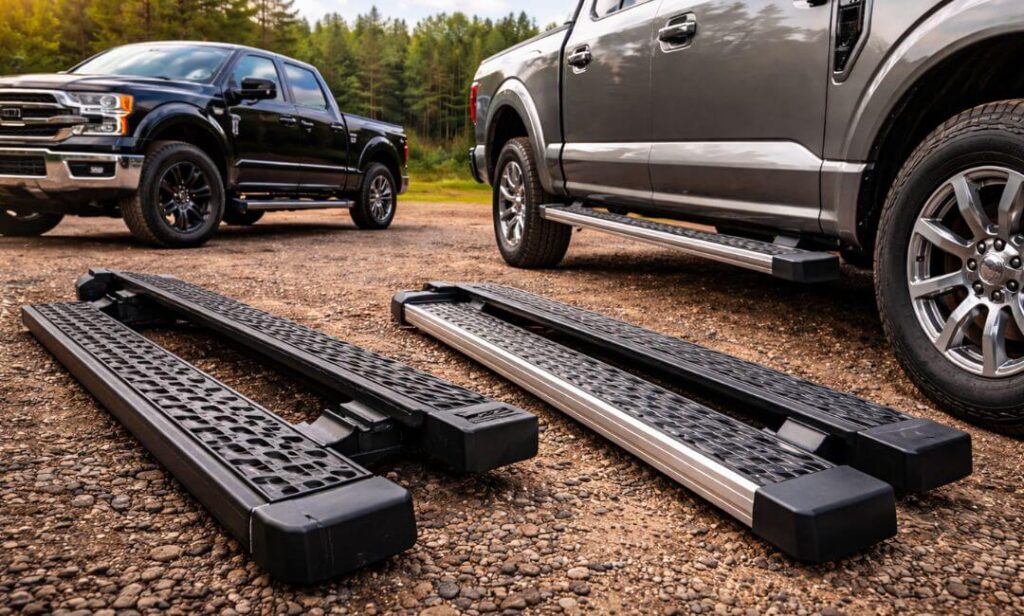
Spec sheets make this decision look simple. One says steel, the other says aluminum — pick strength or rust resistance and move on.
Real ownership isn’t that clean.
Because the right material only makes sense once you factor in how your F-150 actually lives day to day — not how it looks parked in listing photos.
Where Steel Running Boards Make More Sense
Steel boards carry weight differently — literally and structurally.
The moment you step on a heavy steel platform, there’s a planted, grounded feel underfoot. Less vibration. Less echo. Less flex when weight shifts. That matters more than buyers expect, especially when stepping in with gear, tools, or winter boots.
Steel also handles abuse better. Jobsite environments, gravel spray, tool drops, work boot edges — these things leave marks on aluminum faster than they do on coated steel tubing.
And if your truck regularly hauls crew, equipment, or sees commercial use, higher load ratings — often 450 to 550 lbs — add long-term bracket confidence.
Steel suits trucks that work for a living.
Where Aluminum Quietly Wins Long-Term
Aluminum doesn’t feel as industrial underfoot — but ownership advantages show up later, not day one.
Rust resistance is the obvious one. Powder-coated steel slows corrosion, but aluminum avoids it structurally. In snow states, coastal climates, or regions where road salt is heavy, that difference shows up after a few winters — not the first month.
Weight also matters more than people think. Lighter boards reduce strain on mounting points and don’t add unnecessary side weight, especially on daily-driven trucks.
Fuel economy gains are minor — but every pound off a full-size truck helps over time.
And visually, aluminum boards tend to retain their finish longer when properly coated.
Aluminum suits trucks that live daily-driver lives.
Grip and Strength Aren’t Material-Exclusive
A common misconception is that steel always grips better — not true.
Traction comes from tread design:
Serrated cuts
Sawtooth punch-outs
Grated step plates
Molded pads
An aggressive aluminum board often grips better than a smooth steel tube.
So stepping security depends more on surface engineering than raw material.
Clearance and Weight Distribution Differences
Steel boards are heavier and often sit slightly lower due to their structural tubing.
That improves stepping leverage — but reduces clearance marginally.
Aluminum boards, especially extruded platform styles, tend to sit tighter to the rocker panel and weigh less, preserving ride balance and approach angles slightly better.
For leveled trucks or gravel-road use, that difference becomes noticeable over time.
The Real Ownership Decision
Choose steel if your F-150:
Works job sites
Hauls gear regularly
Sees boot-heavy entry
Needs higher weight tolerance
Choose aluminum if your truck:
Lives on pavement
Carries family passengers
Sees winter salt or coastal air
Prioritizes corrosion resistance
Neither is universally better — they just age differently depending on truck lifestyle.
And that’s the reality most buyers only realize after installation.
Material isn’t about spec superiority — it’s about matching the board to the life your F-150 actually lives.
Full-Length Running Boards vs Nerf Bars vs Front Steps — Which Style Actually Fits Your F-150 Life
By the time most owners reach this point, they’re not confused about brands anymore — they’re confused about style.
Because the truth is, running board design changes how your truck feels to live with every single day. Entry comfort, passenger usability, clearance, even how the truck looks from ten feet away — all of it shifts based on step style.
And this is where buying mistakes usually happen.
Full-Length Running Boards — Daily Comfort First
Full-length boards run from the front wheel arch all the way to the rear door. On SuperCrew trucks especially, they feel natural — like they were meant to be there from factory.
Entry becomes a two-step motion instead of a climb. Front passengers use them. Rear passengers rely on them. Kids, elders, shorter drivers — everyone gets the same stepping platform without hunting for footing.
They also distribute weight across longer brackets, which reduces stress on single mounting points over time.
The trade-off comes in clearance. Wider platforms usually sit lower than nerf bars, and on uneven trails or gravel routes, that extra drop can scrape if the truck isn’t leveled or lifted.
Full-length boards make the most sense for family trucks, daily commuters, and crew haulers where comfort matters more than rock clearance.
Nerf Bars — Clearance and Simplicity
Nerf bars strip the concept down to basics.
Round or oval tubes sit tighter to the rocker panel, offering just enough stepping assistance without adding visual bulk or sacrificing ground clearance. They don’t try to be platforms — they’re entry aids.
Because they hug the body, they’re less likely to catch debris, mud buildup, or snow layering. Off-road drivers and gravel-road commuters tend to prefer this tighter footprint.
Footing space is narrower, though. You’re stepping onto a tube or molded pad, not a flat board. That’s fine for solo drivers — less ideal for kids or elderly passengers.
Nerf bars make sense for work trucks, leveled builds, or owners who prioritize clearance and durability over stepping comfort.
Front Door Steps — Minimalist Utility
Front steps are the most targeted solution of the three.
Instead of running cab-length, they mount only beneath the driver and front passenger doors. That changes both cost and usability.
If you’re the primary driver — in and out all day — front steps deliver entry comfort without paying for rear coverage you rarely use. They’re also lighter, easier to install, and preserve maximum clearance.
But rear passengers won’t benefit. On family trucks, that limitation shows up fast.
Front steps make sense for solo drivers, work trucks, or owners who value clearance and budget efficiency over full-cab accessibility.
Visual Impact on Truck Stance
Style also affects how the truck presents visually.
Full-length boards make the truck look planted and substantial.
Nerf bars keep the side profile clean and lifted.
Front steps feel minimal — almost invisible from distance.
None look wrong — they just project different personalities depending on build style.
The Practical Ownership Verdict
Choose full-length boards if your truck regularly carries passengers and you want the easiest, most comfortable entry experience across both rows.
Choose nerf bars if clearance, durability, and tighter body lines matter more than stepping width.
Choose front steps if most entry happens through the driver door and you want functional access without full-length hardware.
There isn’t a universally “better” style — only the one that matches how your F-150 gets used when it’s not parked for photos.
FAQs — Ford F150 Running Boards
Do running boards affect ground clearance on the F-150?
Yes — but the impact depends entirely on board style, not just the fact that you installed them.
Full-length platform boards usually sit lower because they’re designed for stepping comfort. Nerf bars and tight-mount aluminum boards hug the rocker panel closer, preserving more clearance. On leveled or lifted F-150s, the difference becomes less noticeable, but on stock-height trucks that see gravel roads or uneven terrain, wider drop-down boards can scrape sooner than tube steps.
So clearance loss isn’t universal — it’s design-specific.
Are aluminum running boards strong enough for heavy use?
Modern aircraft-grade aluminum boards are far stronger than buyers assume.
Most quality aluminum setups support 350–400 lbs per side, which covers real-world stepping loads easily — even with work gear or winter boots. Where steel still leads is long-term abuse resistance — tool drops, jobsite impacts, repeated heavy loading.
If your F-150 is a daily driver or family truck, aluminum strength is more than sufficient. Worksite trucks may still benefit from steel’s structural density.
Which is better for families — wide boards or nerf bars?
Wider running boards win almost every time for multi-passenger use.
Flat platforms give kids, elders, and shorter passengers a stable place to plant their foot without balancing on a narrow tube. Rear-door usability also improves because full-length boards extend entry assistance across both rows.
Nerf bars work fine for solo drivers — but families usually appreciate wider stepping surfaces within the first week of ownership.
Do running boards require drilling to install?
Most modern F-150 running boards are designed as bolt-on upgrades using factory rocker panel mounting points.
Vehicle-specific brackets align with pre-threaded holes already built into the frame, meaning installation typically involves basic hand tools — not fabrication. Drilling usually only comes into play with universal-fit steps or poorly designed kits.
For cab-specific boards like the ones in this lineup, installation stays straightforward and reversible.
Are power running boards worth it over fixed boards?
Power boards add convenience — but they solve a different problem than fixed steps.
They retract for cleaner clearance and deploy automatically when doors open. That’s ideal for luxury builds or trucks that balance daily driving with occasional off-road use.
But they’re more expensive, heavier, and mechanically complex. Fixed boards, especially wide aluminum or steel platforms, deliver similar stepping comfort with fewer long-term maintenance concerns.
So it comes down to lifestyle — tech convenience vs mechanical simplicity.
How do I know if a running board will fit my exact F-150?
Fitment always comes down to two things: model year range and cab style.
SuperCrew, SuperCab, and Regular Cab trucks use different board lengths and bracket spacing. Even if the truck shares the same generation, cab mismatch leads to poor alignment or rear-door gaps.
That’s why every product in this list was selected around 2015–2026 compatibility with cab-specific mounting — eliminating the guesswork most buyers run into when shopping blindly.
Final Verdict — Choosing the Right Running Boards for Your F-150
By now, the pattern should feel clear — there isn’t one universal “best” running board, only the one that fits how your F-150 actually gets used once the engine’s off and the stepping begins.
If your truck carries family or crew daily, wider full-length boards transform entry comfort more than most owners expect. If it’s a worksite rig, heavier steel builds absorb abuse better over time. And if corrosion resistance and long-term finish matter more than brute density, premium aluminum setups quietly prove their value year after year.
What matters most isn’t brand hype — it’s fitment accuracy, stepping confidence, and how naturally the board integrates into your truck’s daily rhythm. The six options in this guide weren’t chosen for catalog appeal — they earned their place through real usability, structural reliability, and ownership practicality.
Pick the one that matches your truck’s life, bolt it on once, and you’ll feel the difference every single time you step in.


