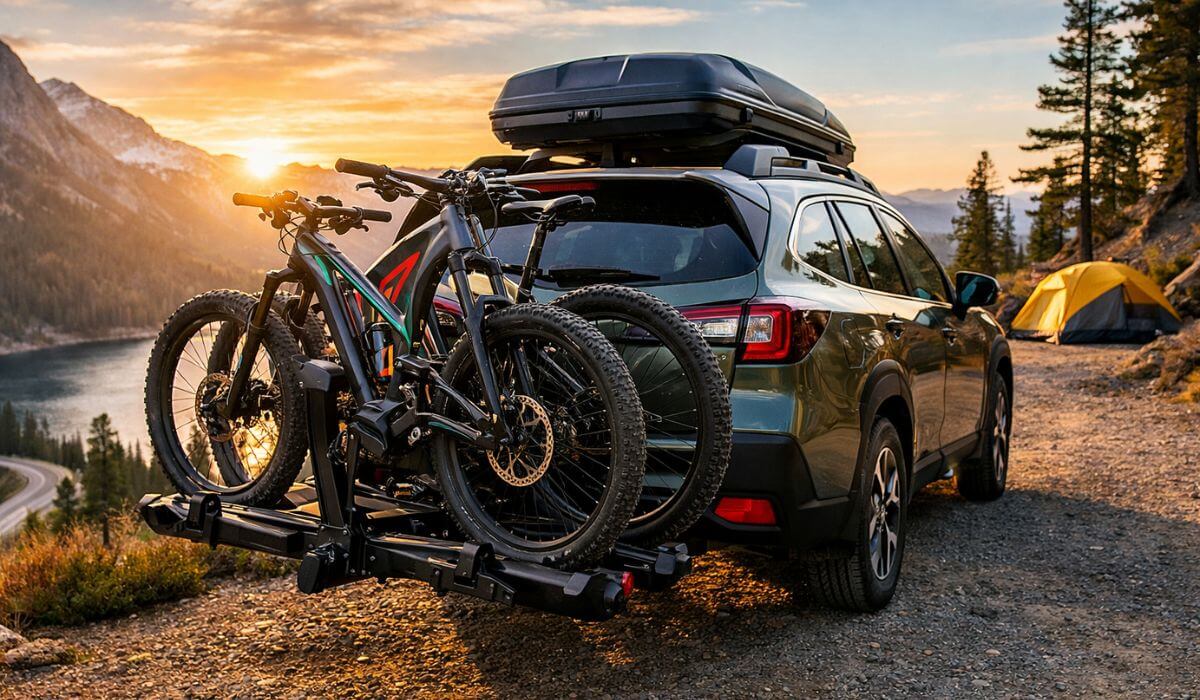
Best Bike Racks for Subaru Outback in 2026 for Hitch Platform and Trunk Carry Setups
When you drive a Subaru Outback, bikes aren’t an afterthought—they’re part of the plan. Weekend trail runs, cross-state road trips, campground mornings… this wagon was built for it. But the moment you actually try carrying bikes, reality hits fast. Cheap racks wobble at highway speeds. Trunk mounts fight with the spoiler. Some block the hatch completely. And e-bikes? Most racks simply tap out.
After years of hauling everything from lightweight road bikes to 70-lb e-MTBs on Outbacks—including long highway stretches, gravel access roads, and fully loaded family trips—I can tell you this: fitment and stability matter more than brand hype. The Outback’s rear geometry, hatch swing, and roof height make rack choice critical. Pick wrong, and you’ll deal with frame rub, strap fatigue, or constant mirror-checking at 70 mph.
That’s why this list isn’t theory—it’s built around racks that actually hold steady on an Outback.
Right at the top, the Saris Edge 2-Bike Hitch Rack sets the tone. This thing is engineered for modern bikes—zero frame contact, spring-loaded wheel holds, integrated locking system, and a true tool-free anti-wobble hitch mount. It’s RV-rated, e-bike ready, and the tilt function gives you real hatch access without unloading bikes. If you’re carrying expensive frames or heavier builds, this is the rack that removes anxiety completely.
From there, we’ve added heavy-load e-bike platforms with ramps, spoiler-safe trunk carriers, family-size 4-bike hitch racks, and premium all-metal trail-grade systems built for riders who travel hard.
If your goal is simple—carry bikes securely without wobble, paint damage, or hatch frustration—you’re in the right place.
Best Bike Rack for Subaru Outback (2026): Our Top Hitch Platform and Trunk Picks
#1. Saris Edge 2-Bike Hitch Rack
(Premium Hitch Bike Rack for Subaru Outback with Zero Frame Contact)
#2. Eco Pro Upgraded 200lbs EBike Hitch Rack with Ramp
(Heavy Duty E-Bike Carrier for Subaru Outback 2″ Receiver)
#3. Saris Bones EX 3-Bike Trunk Rack
(Spoiler Compatible Trunk Bike Rack for Subaru Outback)
#4. Allen Sports Deluxe Quick Install 4-Bike Hitch Rack
(Family Size Hitch Mounted Bike Rack for Subaru Outback)
#5. Kuat NV 2.0 2-Bike Hitch Rack
(All Metal Platform Bike Rack for Subaru Outback Riders)
Expert Tip Before You Pick Any Rack
Here’s something most Outback owners learn the hard way — don’t judge a bike rack in the parking lot… judge it at 70 mph.
A rack can feel rock solid while installing it in your driveway, but highway wind load, road vibration, and vehicle body roll change everything. That slight hitch play or strap flex you ignore at install turns into full bike sway on long drives. If you’re carrying carbon frames or heavy e-bikes, that movement adds up fast — paint wear, wheel misalignment, even long-term rack fatigue.
So before buying, think about how you actually travel.
If your drives include highways, camping routes, or mountain access roads, prioritize platform hitch racks with anti-wobble systems and tire hold designs over frame clamps. If you’re hauling multiple bikes, built-in spacing and anti-sway support matter far more than price tags.
It’s one of those upgrades you only appreciate after switching from a budget rack. The drive feels quieter, the rear view steadier, and you stop checking the mirror every few minutes.
That kind of stability isn’t visible on a spec sheet — but you feel it on every mile.
How We Chose These Subaru Outback Bike Racks
We didn’t build this list from spec sheets or brand brochures. Every rack here was evaluated the way real Outback owners use them — loaded bikes, long drives, mixed terrain, and repeated installs.
First thing we looked at was vehicle compatibility.
The Subaru Outback has unique rear geometry — sloped hatch, integrated spoiler, higher roofline, and varying hitch heights depending on trim. Many racks “fit SUVs” on paper but create hatch clearance issues or strap angle stress in real use. Every pick here either clears the hatch properly, tilts away cleanly, or mounts without spoiler interference.
Next came highway stability.
This was non-negotiable. We prioritized racks with true anti-wobble hitch systems, reinforced trays, or multi-point strap tensioning.
Then we evaluated bike protection.
Modern bikes — especially carbon frames and electric builds — don’t pair well with old-school frame hooks. That’s why zero frame contact designs, wheel cradle systems, and padded anti-sway arms carried more weight in our selection.
We also factored in real ownership usability:
- Can you still open the hatch?
- Is installation tool-free or time consuming?
- Does the rack fold when not in use?
- Can one person mount or remove it easily?
Finally, we balanced load range and lifestyle fit.
End result — five racks that genuinely work with the Subaru Outback’s design, travel habits, and bike types without the common wobble, hatch conflicts, or frame risk many owners face early on.
If a rack made this list, it earned its place through real carry miles — not marketing claims.
#1. Saris Edge 2-Bike Hitch Rack
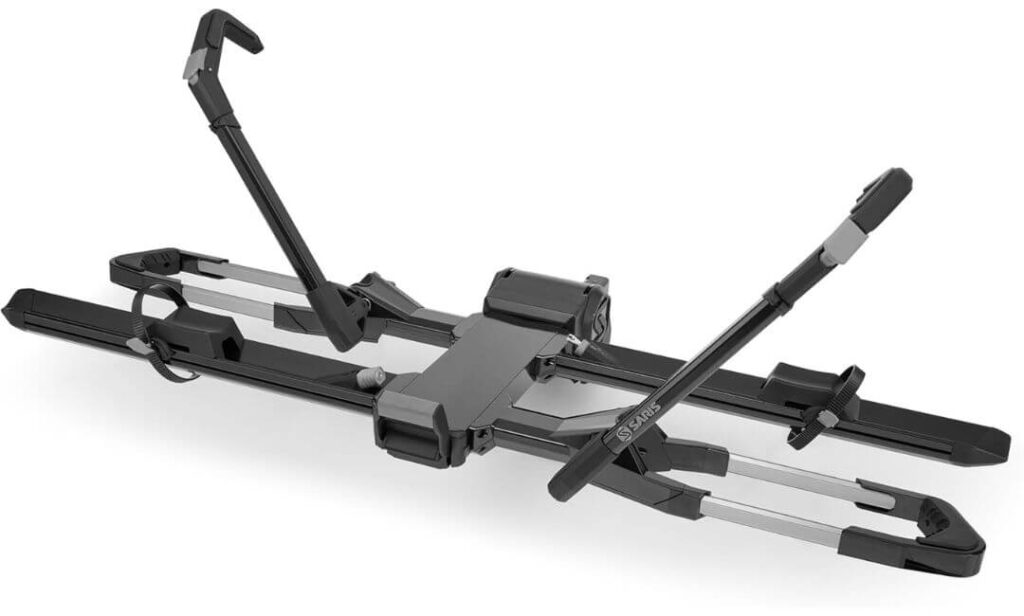
Quick Specs:
- Mount Type: 2″ Hitch Receiver
- Bike Capacity: 2 Bikes
- Load Rating: 80 lbs per bike / 160 lbs total
- Rack Weight: 65 lbs
- Material: Aluminum
- Frame Contact: Zero (Tire Hold Only)
- Tilt Function: Yes (With Bikes Loaded)
- Foldable: Yes
- Wheel Compatibility: Up to 53″ wheelbase / 5″ tires
- Security: Integrated Locks + Locking Hitch Pin
- RV Rated: Yes
If you’ve ever hauled expensive bikes on a Subaru Outback, you already know the anxiety—frame clamps too tight, fork rub on long drives, or that constant mirror check when the highway gets rough. The Saris Edge solves that entire mental load in one shot.
This rack doesn’t touch your frame at all. Instead, it uses fixed-position, spring-loaded arms that grab the tires directly. Whether it’s a carbon road bike, full-suspension MTB, or a 70-lb e-bike, the hold feels planted. Even if tire pressure drops mid-trip, the spring tension keeps everything locked in place. That’s the kind of engineering you appreciate more on mile 200 than mile one.
Where it really clicks for Outback owners is hatch usability. The tilting mechanism isn’t a half-tilt gimmick—it swings far enough to give you real cargo access without unloading bikes. Grocery runs, camping gear, camera bags… you’re not forced to choose between access and transport. Add in the rear wheel riser block, and bikes sit offset just enough to avoid handlebar and saddle clashes during travel.
Installation feels just as thought-through. The tool-free anti-wobble hitch system tightens down solid—no extra stabilizers, no DIY shims. Once locked, the rack feels like part of the vehicle, not an attachment. And with integrated cable locks plus a locking hitch pin, you’re covered whether parked at a trailhead or hotel overnight.
What Stood Out to Us in Daily Use
- Tire-only hold completely eliminates frame damage risk
- Highway stability feels planted even with heavy e-bikes
- Hatch access works without unloading bikes
- Anti-wobble system locks tighter than most premium racks
- RV rating adds confidence for long overland trips
Where It Could Improve
- At 65 lbs, solo mounting the rack the first time takes effort
(Once installed though, you rarely remove it.)
Subaru Outback Fitment and Real Compatibility
This rack pairs exceptionally well with the Outback’s stance and rear geometry—as long as you’re running a 2″ Class III hitch receiver. Most 2015–2026 models support this once a hitch is installed, whether factory or aftermarket.
Clearance wise, the tilt function compensates nicely for the Outback’s sloped hatch design. Even on Wilderness and XT trims with slightly different bumper depth, hatch opening remains usable when tilted. Wheelbase and fat-tire compatibility also make it a strong match for adventure builds commonly carried by Outback owners.
Pro Tip from Real Carry Miles
If you’re hauling e-bikes or mixed frame styles, set your heavier bike on the tray closest to the vehicle and use the riser block strategically to offset handlebar overlap. It reduces sway leverage and keeps weight centered over the hitch—small setup tweak, but on long highway runs, the difference in stability is noticeable.
It’s one of those racks where the more you use it, the more you trust it—and that trust is what makes you drive farther with bikes on the back.
#2. Eco Pro Upgraded 200lbs E-Bike Rack with Ramp
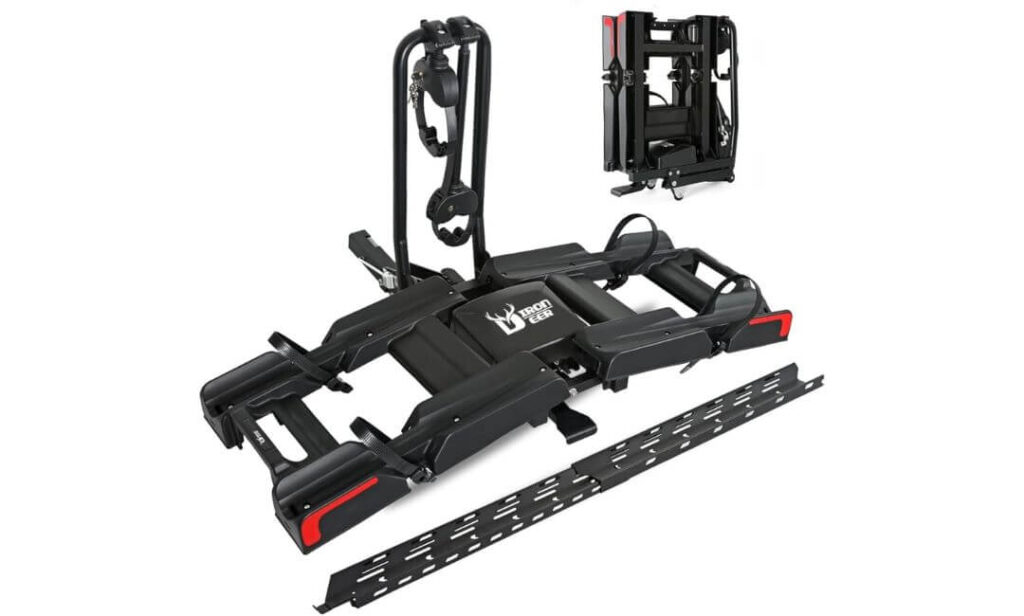
Quick Specs:
- Mount Type: 2″ Hitch Receiver
- Bike Capacity: 2 Bikes
- Load Rating: 100 lbs per bike / 200 lbs total
- Rack Weight: 58.5 lbs
- Material: Alloy Steel + High-Strength Nylon
- Bike Type Support: E-Bikes + Fat Tire Bikes
- Tire Width Fitment: Up to 5″
- Wheel Size Range: 16″ – 29″
- Ramp Included: Yes (Retractable)
- Tilt Function: Yes (Foot Pedal Release)
- Foldable: Yes
- Security: Locking Clamp Straps + Hitch Lock
If you’ve ever tried lifting a 65–75 lb e-bike onto a rack after a long ride, you already know—it’s not loading… it’s weightlifting. That’s exactly where this Eco Pro setup separates itself from most platform racks in its class.
The retractable loading ramp changes the entire ownership experience. Instead of deadlifting your bike chest-high behind the Outback, you simply roll it up into position. Whether it’s a fat-tire trail build or a fully loaded commuter e-bike, the ramp removes the strain completely. For riders carrying two heavy builds, that alone makes this rack feel purpose-built rather than adapted.
Capacity is where it really flexes. A true 200 lb total load rating (100 lbs per tray) puts it comfortably into serious e-bike territory. Add the extra-long wheel trays, 5-inch tire clearance, and wide spacing between bikes, and you’re not fighting pedal or handlebar clashes during transport. Even downhill rigs and carbon builds sit planted without needing adapters or frame mods.
On the road, the patented self-locking hitch pin plus anti-wobble system keeps the platform tight to the vehicle. No rear rattle, no tray sway at highway speed. The foot-activated tilt function is another everyday win—tap the pedal, tilt the loaded rack, and the Outback’s hatch opens without drama. Groceries, gear bags, charging kits—you keep cargo access without unloading bikes every stop.
And when it’s off the vehicle, the foldable frame plus integrated wheels let you move the rack like luggage instead of carrying dead weight across the garage.
What Impressed Us Most in Practical Use
- True 200 lb capacity handles heavy e-bikes confidently
- Ramp loading saves your back on daily use
- Wide tray spacing prevents bike contact
- Anti-wobble hitch lock holds steady at speed
- Fold + wheel mobility makes storage easier than expected
Where It Falls Slightly Short
- Not rated for RV or trailer mounting use
(Perfect for vehicle-mounted use like the Outback though.)
Subaru Outback Fitment and Real Compatibility
This rack works seamlessly with Subaru Outbacks running a 2″ hitch receiver, which covers most factory-equipped or aftermarket hitch setups from roughly 2010–2026 model years.
Because the Outback sits lower than body-on-frame SUVs, the ramp angle actually works in your favor—loading heavy bikes feels more natural and less steep. Hatch clearance also holds up well thanks to the balanced tilt design, even when both trays are loaded.
If you’re running rear accessories like a spare-tire mount (rare on Outbacks but possible with mods), a hitch extender may be required for clearance.
Pro Tip from Real E-Bike Hauling
When loading two e-bikes, face the handlebars in opposite directions and stagger pedal height before tightening straps. It sounds small, but it evens out weight distribution and eliminates micro-contact during long drives—especially useful with wide fat-tire builds.
Once dialed in, this rack turns heavy bike transport from a chore into a roll-and-lock routine… the kind you don’t think twice about before planning your next ride.
#3. Saris Bones EX 3-Bike Trunk Rack
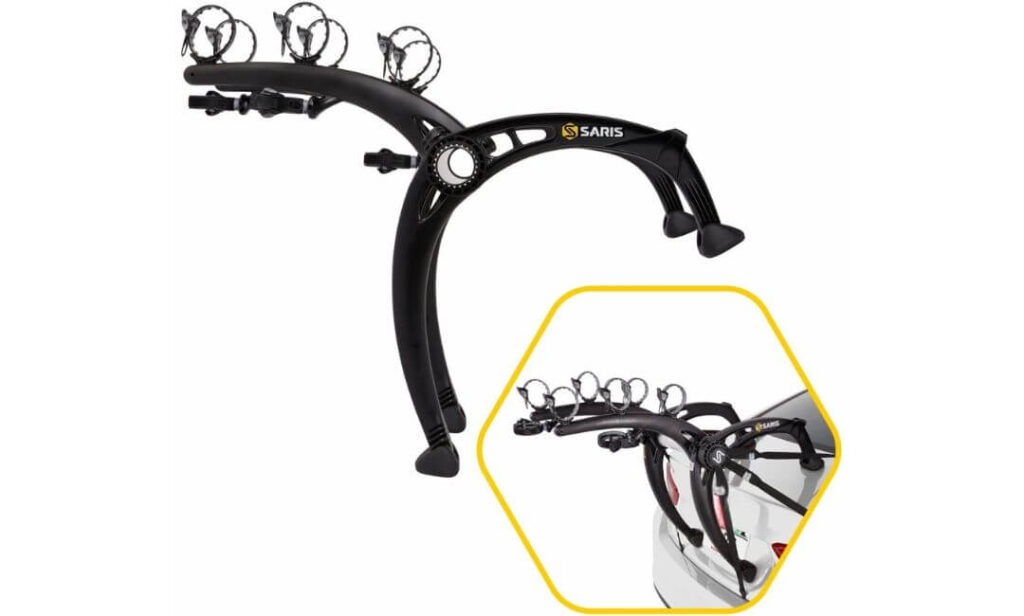
Quick Specs:
- Mount Type: Trunk Mounted
- Bike Capacity: 3 Bikes
- Load Rating: 35 lbs per bike
- Rack Weight: ~12 lbs
- Material: Injection-Molded Composite
- Design: Arc-Based Frame Structure
- Frame Contact: Yes (Padded Hold Downs)
- Spoiler Compatibility: Yes
- Foldable: Yes
- Origin: Made in USA
Not every Outback owner wants a hitch rack bolted on year-round. Some just want a rack they can mount Friday evening, load bikes, and head out—no wiring, no hitch install, no permanent hardware. That’s exactly the lane the Bones EX dominates.
First thing you notice lifting it out of the box—it’s ridiculously light for a 3-bike carrier. Around 12 pounds, yet the molded composite frame feels dense and planted, not flimsy. That arc-based design isn’t just styling—it staggers bike height levels so handlebars and saddles don’t constantly fight for space during transit.
Where it really earns trust for Outback owners is spoiler clearance. The “dog leg” arm structure bends outward just enough to sit over most hatch spoilers without pressure points. Add the articulated rubber feet and the rack settles onto the rear hatch without digging into paint or glass edges—huge confidence boost if you’re protective about your finish.
Loading bikes feels old-school simple but refined. Ratchet hold-downs tighten cleanly, anti-sway straps reduce side movement, and strap management caps keep excess webbing from flapping on the highway. For short road trips, park rides, or weekend trailheads, it’s the kind of rack that goes on fast and disappears when not needed.
What We Appreciated Most in Real Use
- Ultra-light frame makes install a one-person job
- Arc design reduces handlebar and saddle clashes
- Spoiler clearance works better than most trunk racks
- Rubberized feet protect paint contact zones
- Folds compact for garage or trunk storage
Where It Has Limits
- Not ideal for heavy e-bikes or oversized builds
(It’s built for standard bikes, not 70 lb electric rigs.)
Subaru Outback Fitment and Hatch Compatibility
The Bones EX is one of the few trunk racks that plays nicely with the Outback’s rear spoiler design. Thanks to its offset arm geometry, it clears most factory spoilers without needing awkward strap angles or foam padding hacks.
Fitment works across multiple Outback generations, especially for owners who haven’t installed a hitch receiver. It mounts securely using multi-point strap tensioning across the hatch edges, and once tightened properly, it sits planted for city and moderate highway drives.
Pro Tip from Real Weekend Use
Before your first trip, clean the hatch contact points and apply the rack with even strap tension—not max tight on one side. Balanced tension reduces paint pressure and keeps the rack centered over bumps.
It’s a small setup habit, but it keeps both your bikes and your Outback looking the way they should—scratch free and road ready whenever the next ride calls.
#4. Allen Sports Deluxe Quick Install 4-Bike Hitch Rack (Model 1540RR)
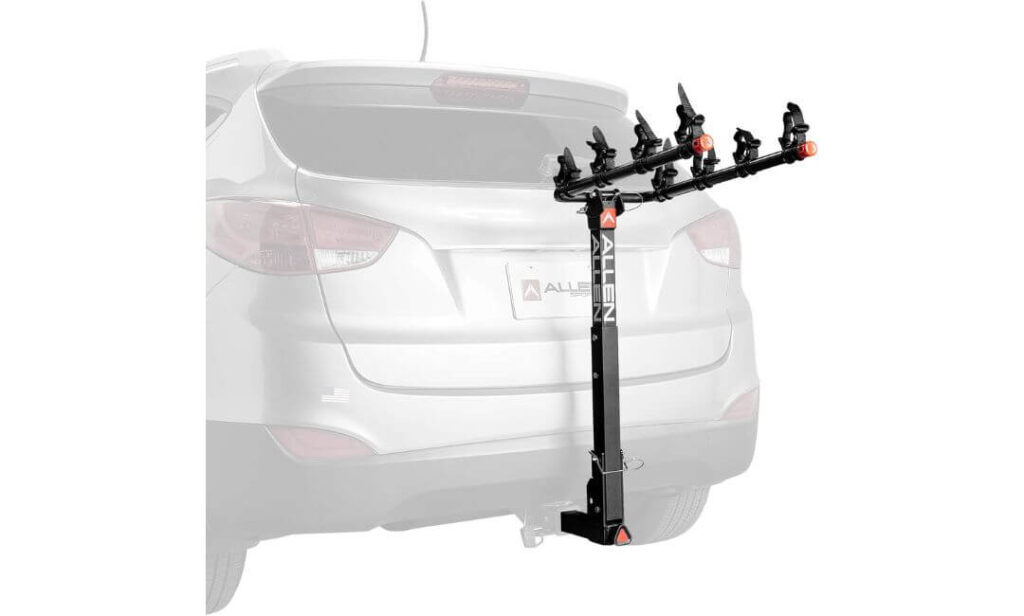
Quick Specs:
- Mount Type: 2″ Hitch Receiver
- Bike Capacity: 4 Bikes
- Load Rating: 120–150 lbs total
- Material: Alloy Steel
- Rack Weight: ~23 lbs range (class typical)
- Arm Style: Hanging Dual Support Arms
- Foldable Arms: Yes
- Tilt Function: Yes
- Fit Type: Universal Hitch Fit
There’s a point where platform racks stop making sense—usually when the bike count goes past two. Families, riding groups, or even couples carrying spare trail builds need capacity first… convenience second. That’s exactly where the Allen Sports 1540RR earns its place.
This is a classic hanging-style hitch rack, but built with thicker alloy steel tubing than most entry carriers. Once seated into a 2″ receiver and tightened down, the spine feels planted—not flexy or hollow. With four bikes loaded, the rack distributes weight evenly across dual support arms, keeping frames separated better than you’d expect at this price tier.
What Outback owners appreciate quickly is the tilt-away mast. Even with bikes mounted, you can angle the rack back enough to open the rear liftgate for gear access. Camping bags, helmets, hydration packs—you’re not locked out of your cargo space just because bikes are mounted.
Storage usability is another quiet win. When not carrying bikes, the arms fold down flat, reducing rear vehicle footprint and making garage parking easier. For owners who only haul bikes on weekends, that fold-down design keeps the rack from feeling permanent.
What Earned Our Trust in Group Travel Use
- True 4-bike capacity for family or crew rides
- Steel frame holds steady under full load
- Fold-down arms improve parking clearance
- Tilt-away function keeps hatch usable
- Lightweight enough for solo install
Where It Shows Its Budget DNA
- Frame contact hold means extra care with carbon bikes
(Works best with aluminum or trail builds.)
Subaru Outback Fitment and Real Compatibility
The 1540RR runs a universal 2″ hitch mount, making it compatible with most Subaru Outback models once a Class III receiver is installed—factory or aftermarket.
Because the Outback sits lower than truck platforms, loading bikes onto hanging arms feels easier and more controlled. The tilt function also compensates well for the wagon-style hatch swing, allowing usable rear access without full rack removal.
For families running kids’ bikes alongside adult frames, the adjustable cradle spacing helps dial in a balanced carry setup.
Pro Tip from Real Family Haul Runs
Load the heaviest bike closest to the vehicle spine and stagger handlebars opposite directions before strapping down. It minimizes side sway and keeps weight centered over the hitch—especially noticeable on long highway drives with four bikes mounted.
Do it right once, and this rack turns the Outback into a rolling trail shuttle… the kind that makes last-minute ride plans easy instead of complicated.
#5. Kuat NV 2.0 2-Bike Hitch Rack
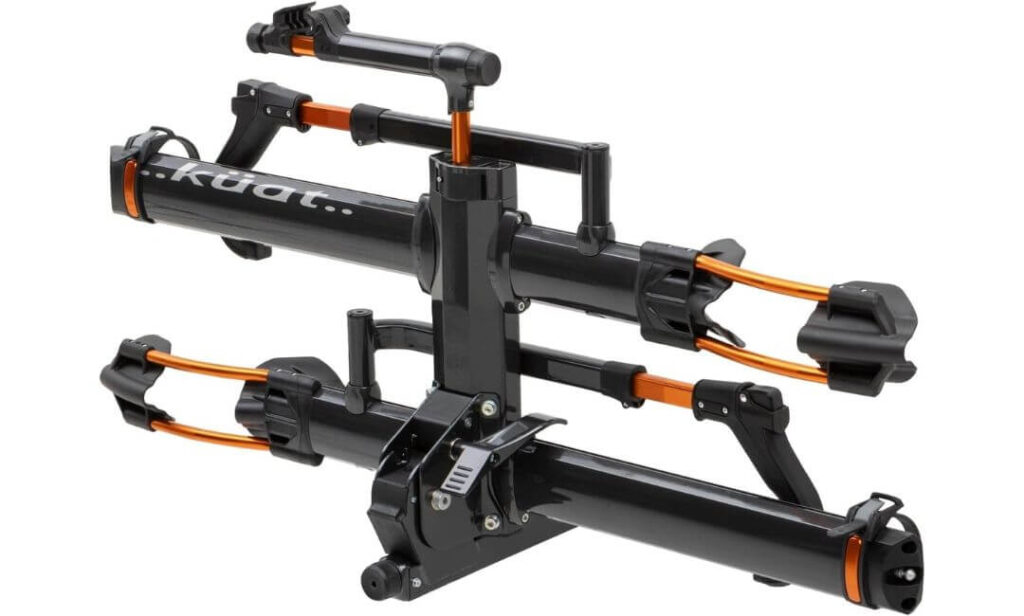
Quick Specs:
- Mount Type: 2″ Hitch Receiver
- Bike Capacity: 2 Bikes
- Load Rating: 60 lbs per tray
- Rack Weight: ~50 lbs (23.1 kg)
- Material: All-Metal Construction
- Tire Hold System: Adjustable Front Tire Cradle
- Max Tire Width: Up to 4.8″ (fat bike capable)
- Tilt Function: Foot + Hand Pivot
- Repair Stand: Integrated Trail Doc
- Foldable: Yes
- Finish: Gray Metallic with Orange Anodize
Some racks carry bikes. The NV 2.0 feels like it was built by people who ride.
The moment you handle it, the difference is obvious—thick all-metal construction, tight welds, zero flex in the trays. Mounted to a 2″ hitch, it locks into place with a cam-tightening system that eliminates movement before you even load a bike. On an Outback doing highway miles, that solidity shows up immediately—no tray bounce, no mirror paranoia, just steady transport.
The adjustable front tire cradle system is one of its strongest points. Instead of clamping frames, it secures bikes by the wheels, adjusting to different wheelbases easily. Road bikes, long-travel MTBs, even fat tire builds up to 4.8 inches—everything sits centered and planted. Each tray supports up to 60 lbs, making it fully capable for most e-bike builds without pushing limits.
Then there’s the feature that separates it from nearly everything else—the integrated Trail Doc repair stand. It slides out when needed and gives you a stable mount for tuning brakes, dialing a derailleur, or checking torque before a ride. On trail days or long road trips, that built-in stand turns a parking lot into a functional service bay. It’s one of those features you don’t think you need… until you use it.
Add in the foot-operated pivot lever and hand pivot control, and you get full hatch access on the Outback without unloading bikes. Grocery stop, gear grab, campsite setup—it tilts smoothly and locks back upright without wrestling it.
What Makes It Stand Apart
- True all-metal build feels premium and rigid
- Cam system eliminates hitch wobble completely
- Adjustable tire cradle fits multiple bike styles
- Trail Doc repair stand adds real ride-day value
- Clean design that looks factory-level on an Outback
Where It’s Not for Everyone
- Premium pricing compared to basic hitch racks
(You’re paying for durability and engineering.)
Subaru Outback Fitment and Practical Compatibility
The NV 2.0 is designed for vehicles equipped with a 2″ hitch receiver, which covers most Subaru Outback models once properly fitted with a Class III hitch.
On the Outback platform, ground clearance remains practical for daily driving, and the rack’s pivot design works well with the wagon-style hatch. Weight-wise, the rack plus two bikes stays within typical Outback hitch tongue limits when properly loaded.
For owners running XT, Wilderness, or standard trims—once a 2″ receiver is installed, compatibility is straightforward and stable.
Pro Tip from Real Ride Days
When mounting two bikes, offset the handlebars and adjust the front cradle slightly tighter on the heavier build. It centers weight better over the hitch and reduces micro-movement during long highway runs.
The NV 2.0 isn’t just about carrying bikes—it feels like an extension of the riding lifestyle itself. Load it once, drive a few hours without a single rattle, and you’ll understand why so many serious riders don’t downgrade after using it.
Subaru Outback Bike Rack Comparison Based on Capacity, Stability, and Fitment
| Rack | Best Use Case | Bike Capacity | Weight Support | Mount Type | Frame Protection | Hatch Access | Standout Advantage |
|---|---|---|---|---|---|---|---|
|
Saris Edge 2-Bike Editor Choice |
Highway travel + carbon bikes | 2 Bikes | 80 lbs each | Hitch Platform | Zero Frame Contact | Full Tilt Access | Spring-loaded tire hold + anti-wobble lock |
|
Eco Pro 200lbs Ramp Rack Heavy Duty Pick |
Dual e-bike hauling | 2 Bikes | 100 lbs each | Hitch Platform | Tire + Strap Hold | Foot Tilt Access | Roll-up ramp loading system |
|
Saris Bones EX No Hitch Needed |
Casual weekend rides | 3 Bikes | 35 lbs each | Trunk Mount | Padded Frame Hold | Limited | Spoiler-compatible arc design |
|
Allen Sports 1540RR Family Carrier |
Group / family trips | 4 Bikes | 120–150 lbs total | Hitch Hanging | Frame Cradle | Tilt Access | High capacity budget build |
|
Kuat NV 2.0 Premium Build |
Serious riders + trail trips | 2 Bikes | 60 lbs each | Hitch Platform | Wheel Cradle Hold | Foot Pivot Tilt | Integrated Trail Doc repair stand |
Bike Rack Types That Actually Work with a Subaru Outback
Before locking in any rack, it helps to understand how each style behaves once it’s mounted on an Outback. On paper, most racks look interchangeable. On the road, they feel completely different—especially once you factor in hatch access, bike weight, and highway stability.
Hitch Mounted Platform Racks
If stability is the priority, platform hitch racks sit at the top of the ladder.
They carry bikes by the tires instead of the frame, which matters more than most buyers realize—especially with carbon builds, full-suspension MTBs, and modern e-bikes. Weight stays centered over the hitch, sway is minimal, and loading height is far more manageable than roof systems.
On an Outback, this style also works best with the wagon’s rear balance. Even at highway speeds, a properly tightened anti-wobble platform rack feels planted rather than suspended. Add tilt functionality, and hatch usability stays intact without unloading bikes.
This is why racks like tray-style dual carriers dominate long-distance and e-bike setups—they remove both frame risk and movement anxiety in one design.
Hitch Mounted Hanging Racks
Hanging racks trade refinement for capacity.
Instead of wheel trays, bikes rest on dual support arms using frame cradles. This allows you to carry three or four bikes without the weight and cost of large platform systems. For families or group riders, that capacity matters more than frame isolation.
On the Outback specifically, hanging racks benefit from the vehicle’s lower hitch height—loading feels easier than on trucks or lifted SUVs. Tilt-away masts usually provide enough hatch clearance for gear access, though not as open as platform tilts.
The tradeoff comes down to frame contact and bike spacing. With careful strap setup, they work well for aluminum and trail bikes—but they’re less ideal for carbon frames or heavy e-bikes.
Trunk Mounted Bike Racks
Trunk racks fill the gap for owners who don’t have—or don’t want—a hitch installed.
They mount using multi-point straps across the rear hatch, creating a suspended carry system that’s surprisingly stable when tensioned correctly. For occasional riders, city trips, or short highway runs, they offer a quick, removable solution without permanent hardware.
Where they stand out on the Outback is spoiler clearance. Not all trunk racks clear the integrated rear spoiler cleanly, which is why spoiler-compatible arc designs make a difference. Weight limits are lower though, so they’re better suited to standard bikes rather than electric builds.
Convenience is the real appeal—you mount it when needed, fold it away when not.
Roof Mounted Bike Racks
Roof systems work differently—they prioritize interior and rear access over loading ease.
Since bikes sit above the vehicle, your hatch stays fully usable, and hitch space remains free for cargo carriers or towing. For solo riders or lightweight road bikes, this setup feels clean and balanced.
But on an Outback, roof height becomes the deciding factor. Lifting bikes overhead—especially heavier MTBs—takes effort. Wind resistance and fuel economy also come into play on long drives.
That’s why roof racks appeal more to riders carrying one or two lighter bikes rather than full-family or e-bike loads.
Choosing the Right Style Comes Down to Use
Each rack type solves a different transport problem:
- Platform hitch racks → best for stability and e-bikes
- Hanging hitch racks → best for carrying more bikes
- Trunk racks → best for no-hitch setups
- Roof racks → best for hatch access and light bikes
Once you match the rack style to how you actually ride—not just how often—you avoid the most common mistake Outback owners make: buying a rack that works in theory but frustrates in daily use.
Subaru Outback Hitch Size and Fitment Guide Before You Buy
This is the part most buyers skip—and regret later.
Every rack in this list depends on one simple thing: the correct hitch receiver. If that’s wrong, nothing else matters.
1.25 Inch vs 2 Inch Hitch Receiver
Subaru Outbacks typically run a 2 inch Class III hitch receiver when properly equipped. That’s the sweet spot. It supports heavier loads, reduces movement, and opens the door to platform racks built for e-bikes and multi-bike hauling.
Some lighter-duty setups use a 1.25 inch receiver. Those can work for smaller racks, but once you move into heavier tray systems or dual e-bike carriers, 2 inch becomes the smarter long-term choice. Less flex. Better stability. Higher tongue weight tolerance.
If you’re investing in a serious rack, match it with a 2 inch receiver. It future-proofs your setup.
Factory Hitch vs Aftermarket Hitch
Not all Outbacks leave the dealership with a hitch installed. Many owners add one later.
Factory-installed hitches sit clean and integrate well with bumper lines. Aftermarket hitches—when properly installed—offer similar strength, often at lower cost. The key isn’t brand. It’s proper torque spec installation and weight rating.
Look for a Class III rated hitch with at least 350 lb tongue weight capacity. That gives you room for rack weight plus loaded bikes without pushing limits.
Tongue Weight Matters More Than You Think
Your Outback may tow up to 3,500 lbs (depending on trim), but rack loads sit on the hitch—not behind it like a trailer. That means tongue weight is the real number to watch.
If a rack weighs 50 lbs and you load two 60 lb bikes, that’s already 170 lbs hanging directly on the receiver. Add a third or fourth bike and it adds up quickly.
Always calculate:
Rack weight + bike weight = total tongue load
Stay within your hitch rating and you’ll avoid long-term stress on mounting points.
Hatch Clearance and Receiver Height
The Outback’s wagon profile sits lower than trucks and larger SUVs. That’s good for loading bikes—but it also means tray angle and tilt design matter.
Most 2 inch platform racks sit level and clear the bumper cleanly. Hanging racks tilt enough for hatch access. If ground clearance is a concern, check how far the rack extends from the hitch pin.
The right hitch height keeps bikes stable and reduces leverage bounce at speed.
Quick Checklist Before Ordering
- Confirm you have a 2 inch Class III hitch
- Check tongue weight rating
- Consider rack weight plus bikes
- Make sure tilt function clears your hatch
Once those boxes are checked, compatibility becomes straightforward—and you can choose based on riding style instead of guesswork.
Getting this part right turns your Subaru Outback into a dependable bike hauler instead of a constant adjustment project.
Can You Open the Hatch with a Bike Rack Installed on a Subaru Outback?
This question decides whether a rack feels convenient… or becomes a daily annoyance.
The Subaru Outback’s rear hatch swings high and wide. That’s great for cargo access—but it also means rack geometry matters. If the pivot angle is shallow or the rack sits too close to the bumper, you’ll be unloading bikes just to grab a backpack.
Here’s how it actually plays out across rack styles.
Platform Hitch Racks with Tilt Mechanism
This is where premium tray-style racks separate themselves.
A proper tilt system—especially foot-operated designs—lets the rack swing away from the vehicle while bikes remain mounted. On the Outback, that usually provides enough clearance to fully open the hatch without contact.
The key detail is pivot distance. Better racks extend outward slightly as they tilt, creating a clean opening path for the liftgate. That means cooler access, gear access, or quick grocery stops don’t require unloading 120 pounds of bikes.
If hatch access matters to you—and for most Outback owners, it does—choose a rack with a true multi-angle tilt, not a shallow hinge.
Hanging Hitch Racks
Hanging racks typically tilt downward at the mast.
On the Outback, this gives partial to near-full access depending on bike size and handlebar width. Four-bike carriers especially may limit opening height slightly because of arm length and frame overlap.
That said, for family rides where bikes stay mounted until you reach the trailhead, tilt access is more than workable. It’s not luxury-level clearance—but it’s functional.
Trunk Mounted Racks
Here’s the honest truth—once installed and fully tensioned, trunk racks usually block hatch opening.
They’re designed for temporary mounting, not active cargo access. If you need something from the back, the rack must be loosened or removed.
For short trips, that’s manageable. For multi-stop travel days, it becomes repetitive.
Roof Racks
Roof-mounted systems leave the hatch completely untouched.
But while rear access is perfect, loading height increases significantly—especially on AWD wagons like the Outback. That tradeoff is personal preference: lift overhead or tilt behind.
The Smart Way to Think About It
If your trips involve frequent cargo access—camping, long drives, family stops—prioritize a tilting hitch platform rack.
If you load once, drive, unload once—hanging racks and trunk mounts remain practical.
The mistake most buyers make isn’t choosing the wrong rack… it’s choosing without thinking about how often they’ll need that rear hatch.
Match the rack to your routine, and the Outback stays just as usable with bikes mounted as it is without them.
Carrying E-Bikes on a Subaru Outback Without Overloading the Setup
Regular bikes are easy. E-bikes change the equation completely.
The moment battery packs, hub motors, and reinforced frames enter the picture, transport weight jumps fast. What used to be a 28 lb road bike becomes a 65 lb electric build—and suddenly rack limits, hitch strength, and tray design start mattering a lot more than brand names.
If you’re planning to haul e-bikes on an Outback, the setup needs to be chosen differently from day one.
Weight Adds Up Faster Than Expected
Most dual e-bike setups land between 120–150 lbs total bike weight—and that’s before adding the rack itself.
A platform rack can weigh 45–65 lbs on its own. Combine the two and you’re pushing close to 200 lbs sitting directly on the hitch receiver. That’s why load rating per tray matters more than overall rack capacity.
Racks rated for 60–100 lbs per bike hold steady because trays, wheel cradles, and mounting spines are reinforced for that load. Lighter racks technically “fit” e-bikes—but movement, flex, and long-term stress start creeping in.
Why Tire Hold Systems Work Better for E-Bikes
Frame clamp racks were designed when bikes were lighter and simpler.
With e-bikes, clamping down on oversized frames, integrated batteries, or step-through designs becomes awkward—and sometimes unsafe. Tire hold systems eliminate that issue completely.
Wheel trays with ratchet arms or spring-loaded tire grips secure the bike without touching sensitive frame sections. It’s cleaner, faster to load, and safer for wiring, brake hoses, and carbon components.
Ramp Loading Isn’t a Luxury Feature
Lifting a 70 lb bike chest-high isn’t just tiring—it’s where most loading accidents happen.
Ramp-equipped racks change the entire process. You roll the bike up, guide it into the tray, and secure it without strain. For frequent riders, that difference shows up not just in comfort but in consistency—you’re more likely to ride when loading isn’t a chore.
On lower ride-height vehicles like the Outback, ramp angles also feel more natural compared to tall SUVs.
Battery Removal Helps More Than You Think
A simple habit many riders overlook—remove the battery before transport.
It drops 6–10 lbs per bike instantly and reduces stress on trays and hitch mounts. Less weight means less sway, easier loading, and better long-distance stability.
It also protects the battery itself from vibration exposure during highway travel.
Clearance and Spacing Considerations
E-bikes tend to have wider handlebars, longer wheelbases, and bulkier frames.
That’s where tray spacing and adjustable cradle systems matter. Racks with offset trays or extended wheel holders prevent bike-to-bike contact—especially important when carrying two heavy builds side by side.
Without that spacing, even small road vibrations can create repetitive contact points.
The Practical Bottom Line
A Subaru Outback can absolutely handle e-bike transport—comfortably—when paired with the right rack style and hitch rating.
Stick with platform racks rated for heavier loads, prioritize tire hold systems, and consider ramp loading if you ride often. Once set up correctly, hauling electric bikes becomes just as routine as carrying standard builds—no strain, no sway, no second guessing on the highway.
Installation and Loading Tips for Subaru Outback Bike Racks
A bike rack should feel like part of the vehicle—not an attachment you keep adjusting every 20 miles. Most instability complaints don’t come from bad racks. They come from rushed installs and poor weight setup.
Here’s how to mount and load your rack properly on a Subaru Outback so it stays tight, balanced, and quiet on the highway.
1. Start with a Proper Hitch Connection
If you’re using a 2 inch receiver (which most Outback owners should), slide the rack in fully until the hitch pin holes align perfectly. Don’t force it at an angle.
Once inserted:
- Install the hitch pin fully through both sides
- Tighten the anti-wobble system completely
- Shake the rack side to side before loading bikes
There should be minimal movement before bikes even go on. If the rack shifts empty, it will move more under load.
2. Load the Heaviest Bike Closest to the Vehicle
This single step changes stability more than anything else.
Whether you’re using a platform or hanging rack, the bike closest to the hitch receiver should be the heaviest one. That keeps weight centered over the vehicle instead of pulling outward like a lever.
With two e-bikes, always position the heavier build on the inner tray.
3. Offset Handlebars and Pedals
When carrying two or more bikes:
- Face handlebars in opposite directions
- Stagger pedal heights
- Adjust tray spacing if possible
This reduces contact points and prevents small vibrations from turning into constant frame tapping over long drives.
4. Tighten in Sequence, Not Randomly
On platform racks:
- Secure front tire cradle
- Lock rear tire strap
- Engage secondary clamp or arm
On hanging racks:
- Set frame into cradle
- Tighten top straps evenly
- Secure anti-sway straps last
Balanced tension prevents bikes from leaning under road vibration.
5. Do a 5-Mile Recheck
After installation and loading, drive 5–10 miles and stop.
Re-check:
- Hitch anti-wobble tension
- Tire straps
- Frame cradles
- Clearance from bumper and hatch
Metal settles. Straps compress slightly. A quick recheck ensures everything stays locked for the long haul.
6. Keep Ground Clearance in Mind
The Outback sits lower than most trucks. If your rack extends far outward, approach steep driveways or ramps slowly.
Platform racks especially sit level—so take angles carefully when entering parking garages or trail access roads.
7. Remove Batteries on E-Bikes When Possible
It reduces weight instantly and improves overall balance. Less weight means less sway and less stress on the hitch over time.
Final Thought on Setup
When installed properly, a good bike rack doesn’t announce itself. No rattling. No bounce. No constant mirror checking.
Take 10 extra minutes during the first install, and the rack becomes something you trust—not something you monitor.
FAQs About Subaru Outback Bike Racks
Will a bike rack damage my Subaru Outback’s paint or rear hatch?
It can — if the rack isn’t installed or tensioned correctly. Platform hitch racks that hold bikes by the tires eliminate frame contact entirely, which removes most risk. Trunk racks rely on strap tension and rubber contact points, so surface cleanliness and even tightening matter. Before mounting, wipe down contact areas and avoid over-tightening one side more than the other. Most paint damage happens from movement, not pressure. A properly secured rack should sit stable enough that it doesn’t shift under load.
Can a Subaru Outback safely carry two heavy e-bikes?
Yes — if the rack and hitch are rated appropriately. Two e-bikes can easily exceed 130–150 lbs combined, and once you add rack weight, total tongue load climbs quickly. A Class III 2-inch hitch with sufficient tongue weight rating is essential. Choose a rack rated for at least 60–100 lbs per tray to avoid flex and sway. Removing the batteries before transport reduces strain and improves balance significantly. Done right, the Outback handles dual e-bike transport confidently.
Do I really need a 2-inch hitch receiver for a bike rack?
If you’re carrying more than lightweight road bikes, the 2-inch receiver is the smarter long-term choice. It reduces hitch flex, supports heavier platform racks, and keeps movement tighter at highway speeds. While 1.25-inch receivers can work for lighter loads, they limit rack options and future upgrades. Most serious hitch-mounted bike racks are engineered around 2-inch stability. For Outback owners planning trail trips or e-bike hauling, it’s the practical standard.
Can I open the rear hatch with bikes still mounted?
With most tilting platform and hanging hitch racks, yes — though clearance depends on rack design and bike size. Foot-pivot platform racks typically offer the cleanest access because they swing farther away from the vehicle. Trunk-mounted racks usually block hatch opening until removed. If frequent cargo access is part of your routine, prioritize a rack with a true tilt mechanism rather than a shallow hinge. Hatch usability often becomes more important after your first long trip.
How many bikes can a Subaru Outback realistically carry?
The vehicle itself can support racks carrying up to four bikes, depending on hitch rating and rack design. For maximum stability, two-bike platform racks feel the most balanced. Four-bike hanging racks work well for families but require careful weight distribution and strap tensioning. Roof systems handle lighter builds effectively but demand overhead lifting. The key isn’t just capacity — it’s matching bike weight and style to the rack’s structural limits.
Final Note: When properly matched and installed, a bike rack doesn’t compromise the Subaru Outback’s practicality — it expands it. Choose based on how you ride, how often you travel, and how much weight you’re carrying. The right setup disappears into the background and simply does its job mile after mile.
Final Thoughts Before You Load Up and Roll Out
At the end of the day, a Subaru Outback isn’t just a car you drive — it’s the vehicle that quietly signs up for your plans. Early trail mornings, last-minute weekend escapes, road trips where the bikes matter just as much as the destination.
And the right rack decides whether those trips start smoothly… or with frustration in the driveway.
What stood out across every rack in this list wasn’t branding or price — it was how each one solved a specific Outback reality. Stability at highway speed. Hatch access without unloading half your gear. Enough strength to carry modern bikes without flex or frame risk. Whether it’s a heavy dual e-bike setup, a four-bike family haul, or a quick trunk mount for casual rides, the difference shows up once the wheels start turning.
Because that’s the real test — not how a rack looks parked, but how it behaves 200 miles into a drive when crosswinds hit and the road stops being perfect.
Get the setup right, and everything changes. Bikes load faster. Drives feel quieter. You stop checking the rearview every few minutes. Trips feel lighter — not because the rack weighs less, but because it removes the small stresses you didn’t realize were there.
And that’s when the Outback does what it’s always done best — carry your plans without complaint, ready for whatever trailhead, campsite, or long highway stretch comes next.
Load up, lock in, and go make the miles count.


