
6 Best Batteries for Toyota Tacoma in 2026: Long Power, High-CCA Starts & Tough AGM Upgrades
A Toyota Tacoma can hide a weak battery for weeks—then fail the moment you need it most. Slow cranking, dim lights at idle, glitchy electronics, hard starts after sitting, and weak performance in winter are classic signs the stock battery is running out of reserve. For Tacoma owners who tow, commute daily, run off-road lights, audio upgrades, winches, or spend time on rough roads, a basic replacement often isn’t enough.
That’s why the best Toyota Tacoma batteries in 2026 are built around the specs that actually matter: high CCA for dependable cold starts, strong reserve capacity for accessories, AGM construction for vibration resistance, maintenance-free ownership, and the correct Group 94R / H7 fitment used by many newer Tacoma models. A good battery should start cleanly in freezing weather, recover quickly after short trips, and handle years of truck use without drama.
This guide skips hype and focuses on real-world value. Whether you drive an older Tacoma that needs an upgrade or a newer truck ready for a stronger AGM replacement, these picks were chosen for fitment class, usable power, durability, and everyday trust. Buy once, install it, and stop thinking about your battery.
Best Battery for Toyota Tacoma: Top 2026 Picks with High CCA & AGM Strength
#1. Mighty Max MM-H7 AGM Battery
Best Battery for Toyota Tacoma Overall with 850 CCA, 140RC Power Reserve & Strong AGM Value Upgrade
#2. Interstate MTX-94R/H7 AGM Battery
Best Battery for Tacoma Owners Wanting Trusted Brand Reliability, Strong Starts & Long Service Life
#3. Goodyear 94R-H7 Platinum AGM Battery
Best Tacoma Battery Upgrade for Daily Driving, Heavy Electrical Loads & Maintenance-Free Performance
#4. Weize Platinum 94R AGM Battery
Best Budget Battery for Toyota Tacoma with 850 CCA, AGM Durability & Solid Warranty Value
#5. ACDelco 94RAGM AGM Battery
Best Tacoma Battery Replacement from OEM-Level Brand with AGM Strength & Reliable Year-Round Starts
#6. Autocessking H7 94R AGM Battery
Best Tacoma Battery for High-CCA Starts, Stop-and-Go Driving & Affordable AGM Backup Power
Expert Tip: If your Tacoma still has the factory battery and it’s past the 3-year mark, don’t wait for a no-start morning to replace it. Most truck batteries fail with warning signs first—slower cranking, weaker headlights at idle, start/stop hesitation, or electronics acting strange after the truck sits. Replacing a battery before it fully dies usually saves more money than dealing with a tow, missed workday, or a stranded weekend trip. On a Tacoma, preventive replacement is often smarter than emergency replacement.
How We Chose These Tacoma Batteries
There are hundreds of batteries online that look impressive on paper. Big CCA numbers, flashy titles, and bold claims are easy to print on a listing. What matters is whether the battery makes sense in a real Toyota Tacoma after six months, one winter, a few rough roads, and daily starts. That’s where most weak options get exposed.
We started with the correct fitment class first. Many newer Tacoma owners search for Group 94R / H7 batteries because size, terminal layout, hold-down fit, and tray compatibility matter just as much as power. A battery with great specs that doesn’t sit right in the tray is a problem from day one. Every pick here was selected around the fitment range Tacoma shoppers are actually searching for.
Next came usable starting power, not empty bragging rights. Tacoma owners need confident starts in cold mornings, after sitting for days, or when accessories pull extra load. That’s why these picks lean into batteries with strong CCA output and enough reserve to crank cleanly without feeling stressed. More importantly, we looked for batteries that balance power with everyday reliability instead of chasing numbers alone.
We also prioritized AGM construction because Tacoma owners use their trucks harder than average owners use a commuter car. Rough roads, trail vibration, short-trip driving, stop-and-go traffic, added lights, audio systems, and weekend gear all punish standard flooded batteries faster. AGM batteries generally handle vibration better, recharge quicker, and require less babysitting over time.
Brand trust mattered too—but not blindly. A famous name helps, but only when specs, warranty, and fitment still make sense. That’s why the list includes established names like Interstate, ACDelco, and Goodyear, while also considering newer value brands that offer real-world numbers Tacoma buyers care about.
Finally, we filtered everything through one simple question: Would this be a smart battery to buy with your own money for a Tacoma you depend on? If the answer wasn’t clear, it didn’t make the list.
The result is not a random roundup. It’s a practical shortlist built for Tacoma owners who want to install a battery once, trust the truck every morning, and move on with life.
#1. Mighty Max MM-H7 AGM Battery
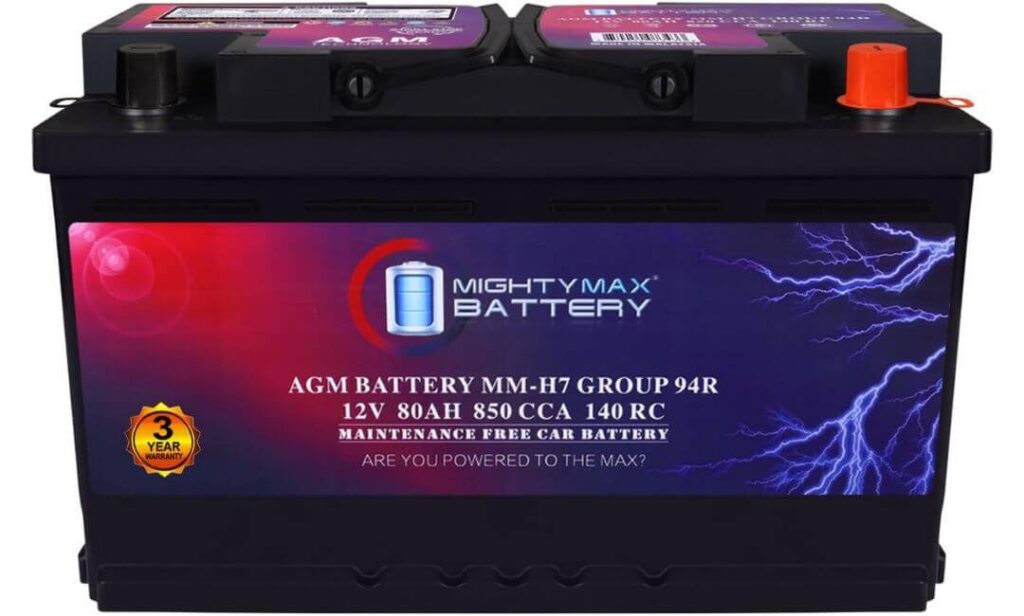
Quick Specs:
- Battery Group Size: 94R / H7 (strong match for many newer Toyota Tacoma models)
- Cold Cranking Power: 850 CCA for fast starts in winter and early mornings
- Capacity: 80Ah for steady daily use and accessory support
- Reserve Capacity: 140 minutes for backup power when engine load is high
- Battery Type: Sealed AGM, spill-proof and maintenance-free
- Weight: 50.95 lbs (solid internal build)
- Terminal Layout: Positive right, negative left
- Warranty: 3 Years
- Best Use Case: Daily driving, short trips, cold weather, upgraded electronics
Some batteries look good online, then feel average after a few weeks. This one earns attention because the numbers make sense for a Toyota Tacoma owner who wants real starting power, not marketing fluff. 850 CCA gives the truck a confident crank on cold mornings, while the 80Ah capacity helps when the Tacoma is used for commuting, stop-start traffic, or sits a few days between drives.
The sealed AGM construction is the bigger story here. Tacoma owners deal with vibration, rough roads, tools in the bed, weekend gear, trail runs, and everyday punishment. AGM batteries usually handle that life better than basic flooded units. No topping off water, no acid mess, no constant checking—install it and move on.
What makes it especially appealing is the balance. You’re getting 140RC reserve power, proper 94R/H7 sizing, and a truck-friendly spec sheet without paying premium-store pricing. That matters when you want dependable starts but don’t feel like overpaying for a logo.
(A smart buy for Tacoma owners who care more about results than shelf branding.)
Why It Made Our Tacoma Shortlist
- 850 CCA feels strong and immediate during starts
- 140-minute reserve capacity helps with accessories and idle load
- AGM design handles vibration better than cheap standard batteries
- 94R / H7 size fits the category many Tacoma owners search for
- Strong value play compared with many retail-store options
Where It Falls Short
- Brand recognition is lower than legacy names like Interstate or ACDelco
Toyota Tacoma Compatibility Notes
For many newer Toyota Tacoma models using Group 94R / H7, this battery checks the boxes on size class, power, and terminal orientation. It’s especially attractive for owners replacing a tired factory battery with something stronger.
If your Tacoma is an older generation, always compare tray size and your current battery label first. Tacoma fitment can vary by year, engine, and trim package.
The Insider Pro-Tip
If your Tacoma runs extra lights, dash cams, charging gear, or sits for several days at a time, reserve capacity matters more than most people realize. That 140RC can be more useful in daily life than chasing brand names alone.
For buyers who want a practical AGM upgrade with strong specs and less wallet pain, this is the kind of battery that quietly makes sense once installed.
#2. Interstate MTX-94R/H7 AGM Battery
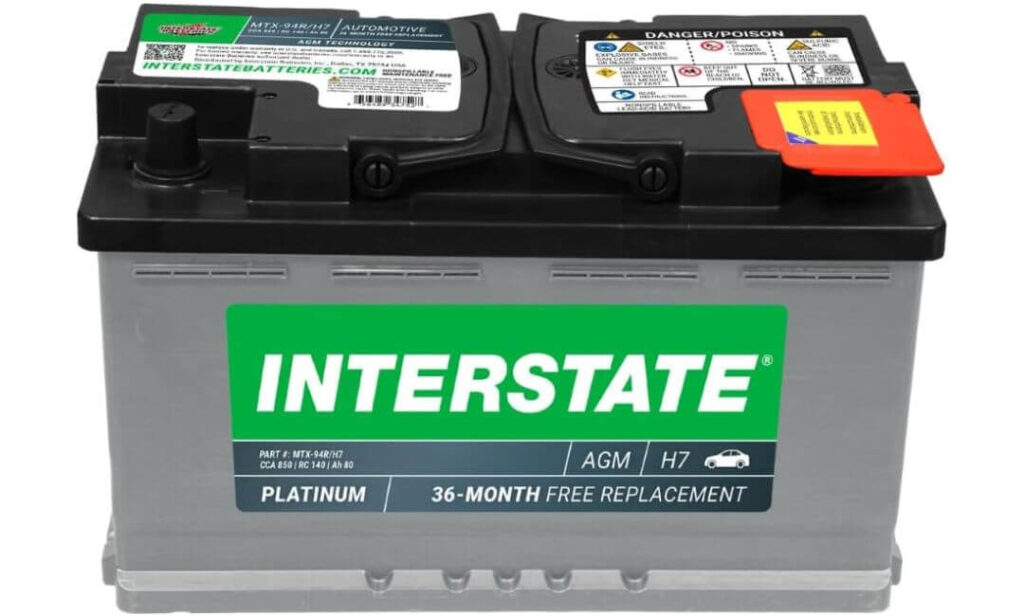
Quick Specs:
- Battery Group Size: 94R / H7 / LN4 (common fitment class for many newer Toyota Tacoma models)
- Cold Cranking Power: 850 CCA for confident starts in cold or damp weather
- Capacity: 80Ah for daily driving and accessory support
- Reserve Capacity: Approx. 140 minutes
- Battery Type: Premium Pure Lead AGM, sealed and maintenance-free
- Terminal Style: Top Post
- Fit Type: Vehicle Specific Fit
- Dimensions: 12.44″ x 6.94″ x 7.5″
- Best Use Case: Long-term ownership, dependable daily starts, premium replacement choice
Some batteries sell on price. This one sells on reputation earned the hard way—years of mechanics, shops, fleets, and repeat buyers coming back because it works. For a Toyota Tacoma owner who wants to install a battery and stop thinking about it, that matters more than flashy marketing.
The real strength here is the pure lead AGM design. Interstate uses a denser internal build that aims for longer life, stronger cycling durability, and steady output over time. Pair that with 850 CCA and around 140 minutes reserve capacity, and you get the kind of battery that feels ready on cold mornings, after the truck sits for days, or when electronics are pulling extra load.
This is also the kind of upgrade that suits Tacoma owners who keep their truck for years. If you’d rather buy once, choose a trusted name, and avoid rolling the dice on unknown brands, this option makes immediate sense.
(Less about hype, more about quiet confidence every time you turn the key.)
Why It Earned a Spot on Our Tacoma List
- Interstate brand trust is strong with shops and long-time owners
- 850 CCA gives clean, fast starts in rough weather
- Pure lead AGM build targets better durability than basic batteries
- Maintenance-free, spill-proof design with vibration resistance
- Smart choice for Tacoma owners planning to keep the truck long-term
Where It Falls Short
- Usually priced a little higher than value brands, but many buyers consider that the cost of peace of mind
Toyota Tacoma Compatibility Notes
For many Toyota Tacoma models using Group 94R / H7, this battery lands right in the sweet spot for size class, starting power, and modern AGM reliability. It’s especially appealing for newer Tacoma owners wanting a direct-feeling upgrade over a tired factory battery.
If your truck is an older generation or special trim, always compare your current battery label and tray layout first. Tacoma battery sizing can vary by year and setup.
The Insider Pro-Tip
If you depend on your Tacoma for work, early starts, travel, or daily commuting, battery downtime costs more than the battery itself. In those cases, paying a bit more for a proven name often ends up cheaper in the long run.
For owners who value trust, consistency, and less guesswork, this is one of the safest buys in the category.
#3. Goodyear 94R-H7 Platinum AGM Battery
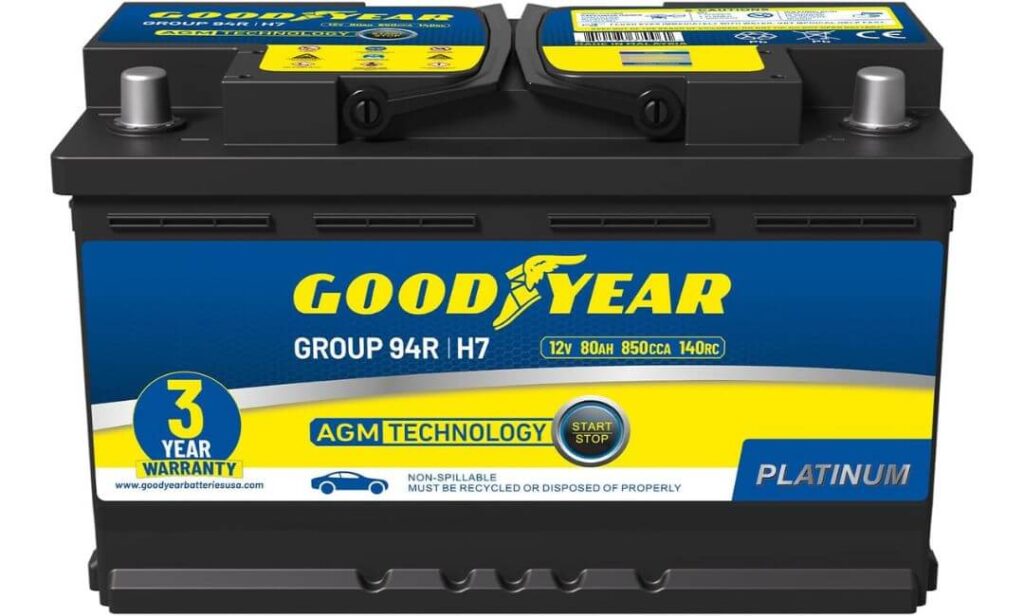
Quick Specs:
- Battery Group Size: 94R / H7 / LN4 (common fitment class for many newer Toyota Tacoma models)
- Cold Cranking Power: 850 CCA for dependable all-season starts
- Capacity: 80Ah for steady daily use and added electrical demand
- Reserve Capacity: 140 minutes
- Battery Type: Sealed AGM, maintenance-free and spill-proof
- Weight: 52.5 lbs
- Terminal Layout: Positive right, negative left
- Warranty: 36 Months
- Best Use Case: Daily Tacoma use, weather extremes, long idle loads, accessory-ready setup
Plenty of batteries can start a truck once. The better question is how they behave after heat, cold, rough roads, short trips, and months of real Tacoma use. This one stands out because the spec sheet is balanced where it matters most—850 CCA, 80Ah capacity, and 140RC reserve power without gimmicks.
The AGM construction is a major plus for Tacoma owners. Trucks see vibration, potholes, trail washboard roads, tool weight, weekend gear, and stop-start driving that can shorten the life of cheaper flooded batteries. A sealed AGM design helps resist shock, keeps maintenance off your list, and generally handles abuse with more composure.
Then there’s the practical side. Goodyear is a familiar name buyers already trust in automotive categories, which matters when choosing a battery from newer online options. Add the 36-month coverage, correct 94R/H7 sizing class, and strong start-up power, and it becomes a smart middle-ground pick for owners who want reliability without overspending.
(A sensible Tacoma battery for people who use their truck, not just talk about it.)
Why It Made Our Tacoma Picks
- 850 CCA gives strong cold-weather and early-morning starts
- 140RC reserve power helps during idle use and electrical load
- AGM build resists vibration and harsh road punishment
- Trusted Goodyear name adds buyer confidence
- Good balance of power, warranty, and everyday value
Where It Falls Short
- Not always the lowest-priced option, though many buyers prefer the added brand confidence
Toyota Tacoma Compatibility Notes
For many Toyota Tacoma models using Group 94R / H7, this battery fits the class Tacoma owners commonly shop for. It’s a strong candidate for replacing a weakening factory battery with something more durable and accessory-friendly.
If you drive an older Tacoma generation or special trim package, compare the battery tray and current label first. Tacoma fitment can differ depending on year and engine setup.
The Insider Pro-Tip
If your Tacoma spends time in both hot summers and cold winters, battery consistency matters more than peak numbers alone. A balanced AGM battery with good reserve capacity often feels better long-term than a cheaper option with only flashy CCA claims.
For owners wanting dependable starts, known branding, and truck-ready specs, this one lands in a very comfortable spot.
#4. Weize Platinum 94R AGM Battery
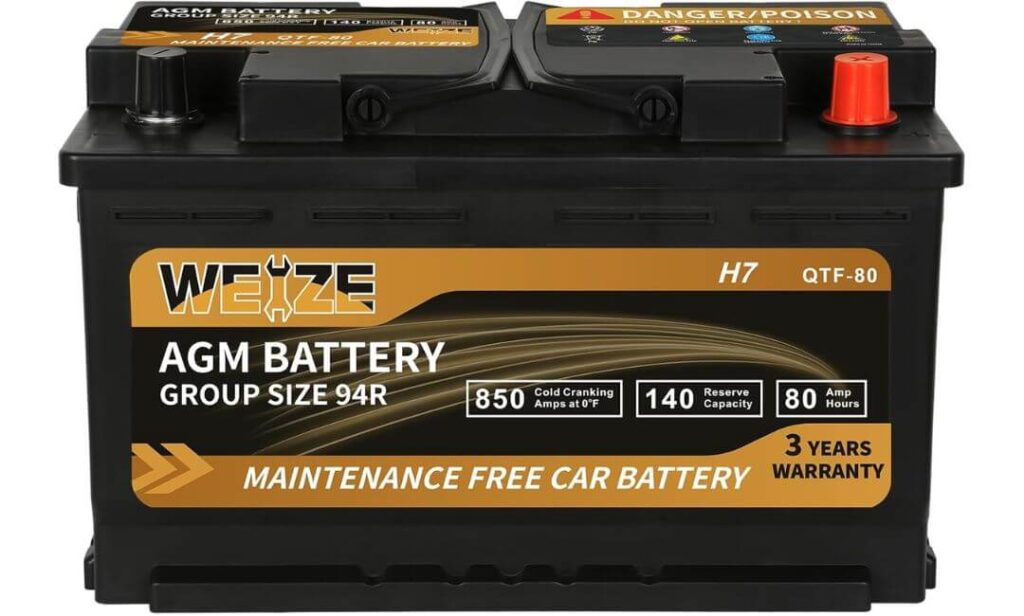
Quick Specs:
- Battery Group Size: 94R / H7 (common fitment class for many newer Toyota Tacoma models)
- Cold Cranking Power: 850 CCA for reliable cold-weather starts
- Capacity: 80Ah for stable daily use and accessory support
- Reserve Capacity: 140 minutes
- Battery Type: Sealed AGM, leak-proof and maintenance-free
- Weight: 50.93 lbs
- Terminal Layout: Left negative, right positive
- Dimensions: 12.4″ x 6.89″ x 7.48″
- Warranty: 36 Months
- Best Use Case: Budget-conscious Tacoma owners wanting strong AGM specs
Sometimes the best value in a battery lineup isn’t the loudest brand—it’s the one quietly offering the numbers that matter. This option earns attention because it brings 850 CCA, 80Ah capacity, 140RC reserve power, and AGM durability into a price range many Tacoma owners actually appreciate.
That combination matters in the real world. A Toyota Tacoma used for commuting, weekend gear runs, stop-start traffic, or sitting a few days between drives benefits from reserve power and clean starts more than flashy packaging. The strong cold cranking output helps in winter, while the AGM design adds vibration resistance for rough roads and truck use.
Where this battery really wins is cost-to-performance balance. Many owners simply want a battery that fits right, starts strong, and doesn’t punish the wallet. This one lands exactly there, making it a serious option for buyers who care about function first.
(A practical Tacoma battery for people who compare specs before logos.)
Why It Earned a Place on Our Tacoma List
- 850 CCA gives confident starts in cold or damp weather
- 140RC reserve capacity supports lights, charging gear, and idle loads
- AGM design is maintenance-free and better suited to vibration
- Competitive pricing compared with many retail-store brands
- Strong fitment class for Tacoma owners shopping 94R / H7
Where It Falls Short
- Brand recognition is still growing, so some buyers may naturally lean toward older household names
Toyota Tacoma Compatibility Notes
For many Toyota Tacoma models using Group 94R / H7, this battery checks the core boxes—size class, starting power, reserve capacity, and modern AGM construction. It’s especially appealing for owners upgrading from a weak stock battery without overspending.
If your Tacoma is an earlier generation or unique trim, compare tray measurements and terminal layout first. Battery fitment can vary across model years.
The Insider Pro-Tip
If you’re comparing a famous brand with weaker specs versus a lesser-known battery with stronger real numbers, always look at CCA, reserve capacity, warranty, and fitment first. Those are what you live with every morning.
For Tacoma owners who want maximum value per dollar, this is one of the smartest picks in the lineup.
#5. ACDelco 94RAGM AGM Battery
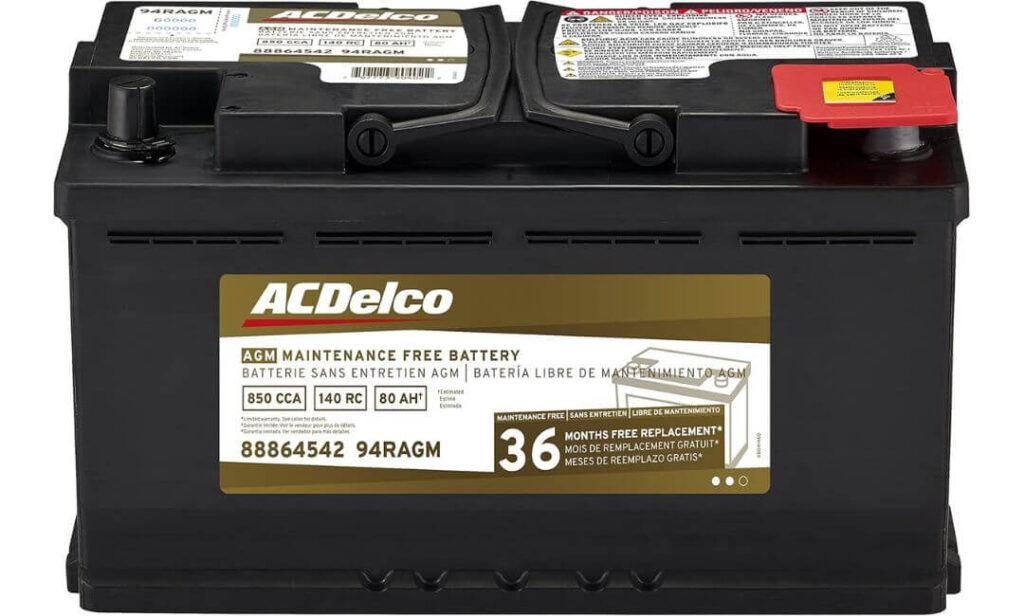
Quick Specs:
- Battery Group Size: 94R / H7 (common fitment class for many newer Toyota Tacoma models)
- Cold Cranking Power: Approx. 850 CCA class performance
- Capacity: Around 80Ah class for steady daily use
- Reserve Capacity: Approx. 140-minute category performance
- Battery Type: Premium AGM, sealed and maintenance-free
- Internal Build: Silver-Calcium enhanced construction for longer cycle life
- Warranty: 36 Months
- Brand Reputation: OEM-level legacy automotive supplier
- Best Use Case: Owners wanting premium brand confidence and long-term dependability
Some battery choices are about chasing deals. Others are about choosing a name that has earned trust over decades. This one lands in the second category. For Toyota Tacoma owners who prefer proven engineering, strong materials, and fewer surprises, ACDelco immediately stands out.
The internal design is where the value lives. Silver-Calcium alloy construction, high-density paste, and low-resistance grids are all aimed at one thing—better durability over time. That means stronger conductivity, cleaner starts, improved heat control, and less stress during repeated daily cycles. For a Tacoma used every day, that matters more than flashy marketing numbers.
Then there’s the AGM advantage. Sealed, spill-resistant, vibration-tolerant, and better suited for modern electrical loads, it fits how many Tacoma owners actually drive today. Whether it’s cold starts, stop-and-go traffic, charging devices, or short-trip driving, this is the kind of battery built to feel composed under pressure.
(The type of purchase people make when they’d rather avoid doing the job twice.)
Why It Earned a Spot on Our Tacoma List
- Trusted ACDelco reputation in the automotive world
- Silver-Calcium build targets longer service life
- AGM design resists vibration and requires no maintenance
- Strong choice for daily-driven Tacoma trucks with electronics load
- Balanced blend of premium feel and practical reliability
Where It Falls Short
- Usually not the bargain-bin option, but many buyers are paying for long-term confidence
Toyota Tacoma Compatibility Notes
For many Toyota Tacoma models using Group 94R / H7, this battery sits in the right fitment category and offers the type of premium AGM upgrade owners often look for when replacing a weakening OEM unit.
If your Tacoma is an older generation or uses a different tray layout, verify your current battery label first. Fitment can vary by year, engine, and trim.
The Insider Pro-Tip
If you keep vehicles for years, battery replacement should be judged over the life of the battery—not just the checkout price. A battery that lasts longer and causes fewer no-start headaches often costs less in the end.
For Tacoma owners who value trusted engineering and quiet dependability, this is one of the smartest premium picks available.
#6. Autocessking H7 94R AGM Battery
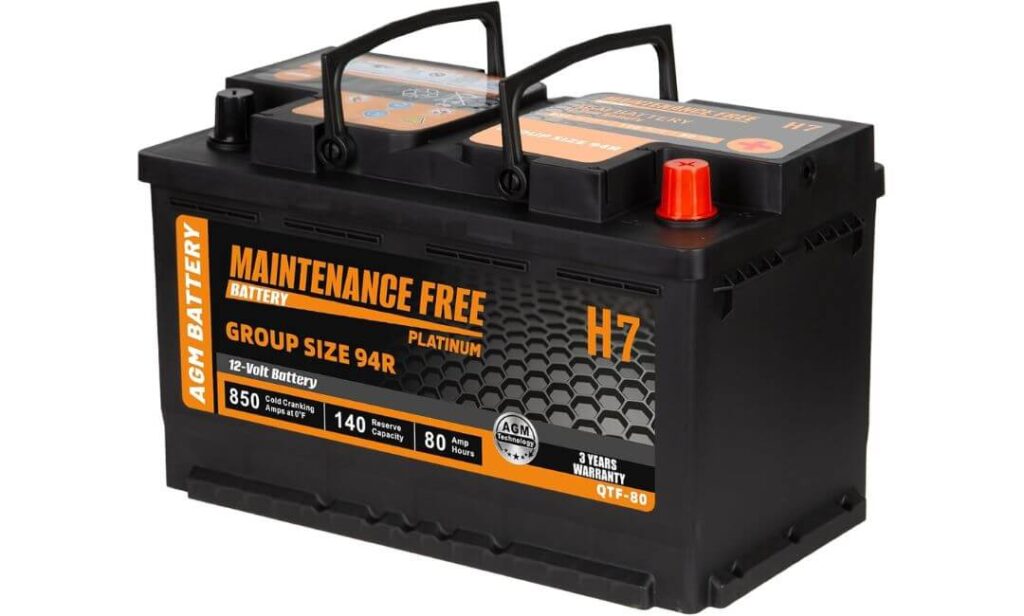
Quick Specs:
- Battery Group Size: 94R / H7 (common fitment class for many newer Toyota Tacoma models)
- Cold Cranking Power: 850 CCA for dependable cold-weather starts
- Capacity: 80Ah for daily use and added electrical demand
- Reserve Capacity: 140 RC
- Battery Type: Start-Stop AGM, sealed and maintenance-free
- Durability Claim: Up to 18X vibration resistance category claim
- Weight: 57 lbs (heavy-duty feel)
- Terminal Layout: Left negative, right positive
- Best Use Case: Tacoma owners wanting strong specs with value-focused pricing
Sometimes lesser-known batteries get ignored too quickly. That can be a mistake when the spec sheet is this competitive. With 850 CCA, 80Ah capacity, and 140RC reserve power, this option checks the same core boxes Tacoma buyers look for when replacing a tired battery.
The AGM start-stop design adds real value for modern driving. Frequent starts, short commutes, traffic lights, electronics charging, and weekend truck use all put stress on cheaper batteries. This one is built to handle repeated cycling better than standard flooded units while staying sealed and maintenance-free.
It also leans into durability. Extra vibration resistance, leak-protection design, and broad temperature operating claims make it appealing for Tacoma owners dealing with rough roads, changing seasons, or work-truck routines. If you care more about usable specs than logo status, this one becomes surprisingly interesting.
(A smart under-the-radar pick for buyers who shop by numbers, not noise.)
Why It Earned a Spot on Our Tacoma List
- 850 CCA gives confident starts in winter or after sitting
- 140RC reserve power helps with accessories and idle loads
- AGM start-stop build supports repeated daily cycling
- Strong durability focus with vibration-resistant construction
- Often attractive for buyers comparing value per dollar
Where It Falls Short
- Brand familiarity is lower than legacy names, so some buyers may prefer a more established label
Toyota Tacoma Compatibility Notes
For many Toyota Tacoma models using Group 94R / H7, this battery fits the sizing class owners commonly search for and brings truck-friendly power numbers. It can be a practical upgrade over an aging stock battery.
If your Tacoma is an earlier model year or uses a different tray setup, compare measurements and terminal layout before ordering. Tacoma fitment can vary by generation and trim.
The Insider Pro-Tip
When buying from a newer battery brand, focus on the things that matter after installation: fitment, CCA, reserve capacity, warranty, and real return support. Those matter far more than logo recognition.
For Tacoma owners willing to look beyond famous names, this can be one of the strongest value plays in the lineup.
Best Battery for a Tacoma: Side-by-Side Comparison of Top 94R/H7 AGM Picks
| Battery | Power | Reserve | Type | Best For | Value |
|---|---|---|---|---|---|
|
Mighty Max MM-H7
94R / H7 AGM
|
850 CCA | 140 RC | Maintenance-Free AGM | Best all-round Tacoma upgrade | Top Value |
|
Interstate MTX-94R
94R / H7 AGM
|
850 CCA | 140 RC | Pure Lead AGM | Long-term ownership confidence | Premium Pick |
|
Goodyear Platinum H7
94R / H7 AGM
|
850 CCA | 140 RC | Platinum AGM | Daily drivers & mixed weather | Balanced Choice |
|
Weize Platinum 94R
94R / H7 AGM
|
850 CCA | 140 RC | Sealed AGM | Budget smart buyers | Budget Winner |
|
ACDelco 94RAGM
94R / H7 AGM
|
850 CCA* | 140 RC* | Premium AGM | OEM-style trusted upgrade | Trust Pick |
|
Autocessking H7 94R
94R / H7 AGM
|
850 CCA | 140 RC | Start-Stop AGM | Spec-focused value shoppers | Hidden Gem |
Why Upgrading to the Best Battery for Toyota Tacoma Is Worth It in 2026
A lot of Tacoma owners only think about the battery when the truck refuses to start. That’s usually the most expensive time to think about it. By then, you may already be dealing with towing costs, a missed workday, a delayed trip, or a truck stranded in a parking lot with no warning.
The smarter move is upgrading before failure happens. A modern Toyota Tacoma asks more from its battery than older trucks ever did. Today’s trucks support keyless entry, infotainment memory, charging ports, sensors, safety systems, lighting upgrades, dash cams, and in many cases added accessories owners install themselves. That means the best battery for Toyota Tacoma is no longer just about cranking the engine—it is about supporting the whole vehicle every day.
AGM Batteries Make More Sense for Tacoma Owners
Many Tacoma owners still replace a worn battery with the cheapest flooded option available. It works—for a while. But trucks live a harder life than most commuter cars. Rough roads, trailer use, short trips, vibration, stop-and-go traffic, weather swings, and weekend gear all shorten the life of weaker batteries.
That’s where AGM batteries earn their reputation.
Compared with basic flooded batteries, AGM options usually offer:
- Better vibration resistance for truck use
- Faster recharge recovery after short drives
- Stronger reserve power for accessories
- Maintenance-free ownership
- Lower leak risk with sealed construction
- Better durability in heat and cold
For a Tacoma that sees real use, those benefits are practical, not theoretical.
High-CCA Power Matters More Than People Think
Many owners only notice CCA when winter arrives. But Cold Cranking Amps (CCA) matter year-round because they reflect starting strength under load.
A battery with healthy starting power helps when:
- Temperatures drop overnight
- The truck sits several days
- You make many short trips
- Lights, chargers, and accessories drain reserve power
- An aging starter needs stronger support
That’s why many top Tacoma battery upgrades focus on 850 CCA class AGM batteries. They give the truck a more confident, immediate start instead of that sluggish “maybe it will crank” feeling.
Battery Upgrades Improve Daily Reliability
Most owners don’t realize how many small annoyances come from a weakening battery before total failure happens.
Common early signs include:
- Slow morning cranks
- Dimmer lights at idle
- Random warning lights
- Electronics resetting
- Start-stop hesitation
- Weak performance after the truck sits
A strong replacement battery often fixes these issues quietly. The truck simply feels normal again—which is exactly what most owners want.
Better Support for Tacoma Accessories and Truck Use
Toyota Tacoma owners modify their trucks more than average drivers. That means battery demand rises quickly.
Popular add-ons include:
- Off-road lighting
- Dash cams
- Phone charging gear
- Audio systems
- Portable fridges
- Bed power setups
- Winch support (light use / starting support)
Even if those accessories are not running constantly, they increase electrical stress over time. A higher-quality AGM battery with solid reserve capacity handles that load more comfortably.
A Good Battery Can Protect Resale Value
Buyers notice how a truck starts. They notice corrosion around terminals. They notice slow crank hesitation. These small signals create doubt fast.
A Tacoma that starts instantly and feels well-kept sends a different message. When it’s time to sell or trade in, a newer premium battery can help support the perception that the truck has been maintained properly.
It won’t transform resale price overnight, but it absolutely improves buyer confidence.
Model Year Compatibility Matters
Not every Tacoma uses the same battery size, tray layout, or terminal orientation. That’s why buying “any battery that fits” can create headaches.
Always verify:
- Group size (many newer models commonly use 94R / H7)
- Terminal position
- Hold-down compatibility
- Height clearance
- CCA requirements
- Warranty coverage
Older Tacoma generations may use different battery classes, so checking the current label or owner documentation is always smart.
Heat and Climate Matter Too
People focus on winter, but heat kills batteries just as often—sometimes faster. In hot climates, internal battery wear accelerates. If your Tacoma lives in high temperatures, idles often, or sees stop-and-go traffic, investing in a stronger AGM battery usually pays off.
The Real Cost of Waiting Too Long
A cheap battery that fails early is rarely cheap in the end. Costs can include:
- Emergency replacement pricing
- Towing
- Lost time
- Missed work
- Trip delays
- Repeat installation hassle
That’s why many experienced owners upgrade early and move on.
Bottom Line for Tacoma Owners
The best battery upgrade for Toyota Tacoma is not about buying the most expensive option on the shelf. It’s about choosing the right mix of fitment, AGM durability, high-CCA starting power, reserve capacity, and proven reliability for how you actually use your truck.
When chosen well, a battery upgrade is one of the few parts you install once and appreciate every single day.
Buying Guide: How to Choose the Right Battery Upgrade for Your Toyota Tacoma
Buying a battery for a Toyota Tacoma looks simple until you start comparing real options. One listing says high CCA, another promises longer life, another looks cheaper but may not fit properly. That is where many owners make the wrong purchase—buying based only on price or brand name instead of fitment and real-world use.
A Tacoma battery should match how the truck is actually driven. Daily commuting, work use, weekend trails, towing, long storage periods, winter starts, and added accessories all change what the “best” battery really means. The smartest buy is not always the most expensive one. It is the battery that fits correctly, starts reliably, handles your load, and lasts.
Group Size Fitment Comes First
Before comparing specs, confirm the physical battery size your Tacoma uses. If the case size is wrong, even a powerful battery can create installation issues.
Always check:
- Group size (many newer Tacoma models commonly use 94R / H7)
- Length, width, and height clearance
- Hold-down bracket alignment
- Hood clearance after installation
- Cable reach without tension
A battery that barely fits is not a good fit. Tight cable strain, poor clamp alignment, or tray movement can shorten battery life and create starting problems later.
If your Tacoma is an older generation, do not assume it uses the same battery size as newer models.
Terminal Type and Orientation Matter More Than Buyers Expect
Many returns happen because buyers ignored terminal layout. Even the correct battery group size can become useless if positive and negative posts sit on the wrong sides.
Verify:
- Positive terminal position
- Negative terminal position
- Top-post style compatibility
- Cable length and bend angle
- Clearance around fuse box or covers
For many Tacoma owners shopping 94R batteries, right-side positive orientation is common, but always confirm your current battery first.
Never stretch cables to make a battery work. That creates long-term stress on terminals and connections.
AGM vs Flooded Battery: Which Makes More Sense for Tacoma?
This is where usage matters.
A standard flooded battery can work well for light-duty owners who:
- Drive mostly normal paved-road commutes
- Have no added accessories
- Replace vehicles often
- Want lowest upfront cost
An AGM battery usually makes more sense for Tacoma owners who:
- Keep the truck long-term
- Drive rough roads or off-road
- Use dash cams, lighting, charging gear, audio upgrades
- Make short trips often
- Face hot summers or cold winters
- Want stronger reliability with less maintenance
AGM batteries cost more upfront, but many truck owners find the extra durability worth it.
Understanding CCA, RC, and Amp-Hours Without the Confusion
Battery specs matter—but only when you know what they mean.
CCA (Cold Cranking Amps)
This is starting power under difficult conditions. Higher CCA helps when:
- Weather is cold
- The truck sits for days
- Engine cranks slowly
- You want stronger morning starts
For many Tacoma owners, 800+ CCA class batteries feel noticeably stronger than weak aging stock units.
RC (Reserve Capacity)
This tells you how long the battery can support electrical load if charging demand is interrupted.
Useful for:
- Lights on while parked
- Accessories running at idle
- Electronics load
- Buffer during heavy use
More RC often means a more comfortable real-world ownership experience.
Amp-Hours (Ah)
Think of this as stored energy capacity. It matters when you use accessories, short-trip drive often, or want steadier power delivery.
Match Specs to How You Use the Truck
Do not buy based on the highest number alone.
Choose priorities like this:
- Daily commuter Tacoma: reliable CCA + fair warranty
- Work truck: durability + dependable starts + support network
- Off-road build: AGM + vibration resistance + reserve power
- Cold climate use: stronger CCA
- Accessory-heavy setup: AGM + higher RC + higher Ah
- Long-term ownership: trusted brand + warranty + fitment confidence
Vibration Resistance Matters on a Tacoma
Tacomas see rougher use than many vehicles. Washboard roads, potholes, gravel, tools in the bed, and trail vibration all punish batteries.
That is why case strength and internal stability matter.
Look for:
- AGM construction
- Reinforced case design
- Tight internal plate support
- Strong hold-down fit once installed
A battery can have good specs on paper and still fail early if it cannot handle vibration.
Heat Resistance Is Often Ignored
Many owners only shop for winter performance. In reality, heat kills batteries fast. High under-hood temperatures accelerate internal wear, fluid loss (in flooded batteries), and plate damage.
If your Tacoma lives in hot climates or heavy traffic, paying more for a stronger AGM battery can be the smarter long-term move.
Warranty and Service Support Expectations
Warranty matters most when something goes wrong unexpectedly.
Look for:
- Clear replacement period
- Easy claim process
- Nationwide support if traveling
- Seller reputation
- Fresh manufacturing stock
A longer warranty is nice, but simple support is often more valuable than complicated fine print.
New Online Brands vs Legacy Brands
You will see newer battery brands offering strong specs at aggressive prices. Some are good values. Some are not.
Use this filter:
- Correct fitment
- Realistic specs
- Good warranty
- Consistent reviews
- Seller support
- Safe shipping reputation
Legacy brands often win on trust and network support. Newer brands sometimes win on value.
Mistakes Tacoma Buyers Should Avoid
- Buying the cheapest battery available
- Ignoring terminal orientation
- Choosing wrong group size
- Paying for huge specs you do not need
- Ignoring climate conditions
- Forgetting warranty support
- Waiting until total battery failure
The Smartest Tacoma Battery Purchase
The best battery for Toyota Tacoma is the one that fits properly, starts confidently, handles your driving habits, and gives you fewer problems over time.
For many owners, that means a 94R / H7 AGM battery with strong CCA, solid reserve capacity, and dependable warranty support.
Buy for the next three years of ownership—not just today’s price tag.
Installation & Safety Tips: Smart Battery Replacement Steps for Toyota Tacoma Owners
Installing a new battery in a Toyota Tacoma is one of the more straightforward maintenance jobs, but it is also one of the easiest places to create avoidable problems. A rushed install can damage terminals, trigger electrical issues, shorten battery life, or create dangerous sparks around the battery area.
The good news: if you follow the right order, keep things clean, and verify fitment before tightening anything down, battery replacement is usually simple and smooth.
Prepare Before You Remove Anything
Do not start by grabbing a wrench immediately. Spend two minutes checking the current setup.
Before removal, confirm:
- Battery group size and orientation
- Positive and negative terminal locations
- Hold-down bracket style
- Cable condition and length
- Corrosion around terminals
- Tray rust, dirt, or acid residue
- Radio presets or settings you may lose
If your old battery leaked or shows swelling, handle it carefully and avoid tipping it.
Turn the Truck Fully Off First
Before disconnecting the battery:
- Shut off engine completely
- Remove key or turn ignition fully off
- Turn off headlights, dome lights, accessories
- Remove chargers plugged into outlets or USB ports
- Let electronics power down for a minute
This reduces the chance of sparks or sudden electrical surges.
Disconnect the Negative Terminal First
This step matters more than many people realize.
Always remove the negative (-) terminal first. On most vehicles, the negative cable is connected to chassis ground. Removing it first lowers the chance of accidental shorting if a tool touches metal while loosening the positive side.
Recommended order:
- Loosen and remove negative (-) terminal
- Loosen and remove positive (+) terminal
- Remove hold-down bracket
- Lift battery straight up carefully
Batteries are heavy. Many AGM units weigh 50+ pounds, so lift with control and proper posture.
Clean the Tray and Inspect Cables
Once the battery is out, use the empty space wisely.
Check for:
- Corrosion buildup
- Loose terminal clamps
- Frayed cable ends
- Broken hold-down hardware
- Water or debris in tray
- Rust spots under battery base
Clean corrosion using a battery-safe cleaner or baking soda solution (avoid letting residue enter vents). Dry the area fully before installing the new unit.
A clean tray helps the new battery sit flat and reduces movement.
Confirm Correct Orientation Before Lowering the New Battery
Never assume the battery should be dropped in the same way every time without checking.
Verify:
- Positive terminal aligns with positive cable
- Negative terminal aligns with ground cable
- Labels face correctly if needed
- Venting design has proper clearance
- No cable stretching required
For many Toyota Tacoma owners using 94R / H7 batteries, terminal orientation is especially important. A reversed setup can create cable strain or unsafe routing.
Mount It Securely—Movement Kills Batteries
Once seated properly, reinstall the hold-down bracket and tighten it firmly.
The battery should not slide, rock, or tilt. Movement over time causes:
- Internal plate damage
- Vibration wear
- Terminal stress
- Cable loosening
- Shorter battery life
This is especially important for Tacoma owners who drive rough roads, job sites, trails, or pothole-heavy routes.
Reconnect Positive First, Negative Last
The safe reconnection order is the reverse of removal.
- Connect positive (+) terminal first
- Tighten securely
- Connect negative (-) terminal last
- Confirm both clamps are snug
This reduces accidental grounding risk during install.
Do not overtighten soft lead terminals. Tight is good. Crushed is expensive.
Check Voltage and Charging System Health
A brand-new battery cannot fix a weak charging system.
After installation, start the truck and verify charging performance. Ideally use a multimeter.
Typical running voltage often falls around:
- 13.7V to 14.7V depending on load and system behavior
If voltage is too low or too high, inspect:
- Alternator output
- Belt condition
- Ground connections
- Corroded cables
- Charging system faults
Many people blame a “bad new battery” when the real issue is the alternator.
Let the Truck Relearn Normal Settings
After battery replacement, some vehicles may temporarily reset learned settings.
You may notice:
- Idle adjustment period
- Clock reset
- Radio memory loss
- Window auto-up needing reset
- Temporary warning lights that clear after driving
This can be normal depending on model year.
AGM Battery Charging Notes
If you installed an AGM battery, use chargers compatible with AGM mode when charging externally. Standard chargers can work in some cases, but proper AGM charging profiles are better for long battery life.
If the truck sits often, a quality maintainer is smarter than repeated deep discharge cycles.
Safety Habits That Matter
Always follow these basics:
- Wear eye protection
- Remove metal jewelry
- Keep sparks/flames away
- Use insulated tools when possible
- Never lean metal tools across both terminals
- Keep children away during install
Even sealed batteries deserve respect.
Old Battery Disposal and Recycling
Never throw a vehicle battery in household trash. Automotive batteries contain lead and acid materials that must be recycled properly.
Best disposal options:
- Auto parts stores
- Battery retailers
- Service garages
- Municipal recycling centers
- Core return programs
Many sellers refund a core charge when you bring back the old battery.
Mistakes Tacoma Owners Should Avoid
- Buying correct size but wrong terminal layout
- Forgetting to tighten hold-down bracket
- Connecting positive first during removal
- Ignoring cable corrosion
- Assuming new battery solves charging issues
- Leaving accessories on during install
- Throwing old battery in trash
Quick Real-World Advice
If your Tacoma battery died unexpectedly, test the charging system within a week of replacement. Random no-start events often return when the alternator is the real culprit.
Bottom Line
Battery installation is simple when done carefully: negative off first, positive on first, secure fitment, clean connections, charging check afterward.
Take ten extra minutes during installation now, and you often avoid months of future headaches.
Maintenance After Upgrade: How to Make Your New Toyota Tacoma Battery Last Longer
Installing a better battery is only half the job. What happens in the next six months matters more than what happened on install day. Even a premium AGM battery can lose life early if it is repeatedly undercharged, left dirty, exposed to corrosion, or ignored during seasonal changes.
The good news is battery maintenance does not need to be complicated. A few smart habits each year can help your Toyota Tacoma battery start stronger, age slower, and stay reliable when you actually need the truck.
Check Battery Voltage Regularly Instead of Waiting for Trouble
Most batteries give subtle warning signs before failure. Voltage checks help you catch weakness early.
Use a basic digital multimeter and check the battery after the truck has been sitting several hours.
General resting voltage guide:
- 12.6V to 12.8V often indicates a healthy full charge
- 12.4V to 12.5V may suggest partial charge
- 12.2V or lower often means the battery needs attention soon
One low reading is not always a crisis. Repeated low readings usually mean something is draining power or the charging system needs inspection.
For Tacoma owners who use the truck lightly or only on weekends, monthly voltage checks are a smart habit.
Keep Terminals Clean and Connections Tight
Many battery complaints start at the terminals, not inside the battery.
Inspect every few months for:
- White or blue corrosion buildup
- Loose clamps
- Frayed cable ends
- Moisture around posts
- Dirty surfaces trapping grime
Corrosion increases resistance and can cause slow starts, charging issues, and random electronic behavior.
Clean gently with a battery-safe cleaner or baking soda solution, then dry thoroughly. After cleaning, a light terminal protectant or anti-corrosion spray can help reduce future buildup.
Prevent Corrosion Before It Starts
If you live in humid areas, coastal climates, or deal with road salt, prevention matters more than cleanup.
Helpful habits:
- Keep the battery top dry and clean
- Wipe off dirt during oil changes
- Use terminal protection pads or spray
- Check hold-down tightness so vibration does not loosen seals
- Inspect after rainy seasons or winter driving
A clean battery usually runs cooler and stays healthier.
Test Battery Health Before Winter or Summer Peaks
Many batteries fail during weather extremes, not mild seasons. That is why smart owners test before stress arrives.
Best times to test:
- Before winter cold starts begin
- Before peak summer heat
- Before long road trips
- If the truck sits more than usual
- After repeated jump-starts
Ask for a professional battery load test or use a quality tester that checks CCA health and state of charge.
When to Check RC and CCA Performance
Reserve Capacity (RC) and Cold Cranking Amps (CCA) matter more as the battery ages.
Have them checked if you notice:
- Slower morning cranking
- Headlights dimming at idle
- Battery recovering slowly after sitting
- Frequent short-trip driving
- Extra accessories running often
- A battery that is 3+ years old
CCA tells you starting strength. RC reflects how comfortably the battery handles electrical demand when charging load changes.
A battery can still start the truck yet already be declining.
Use a Battery Minder if the Tacoma Sits Often
One of the fastest ways to shorten battery life is letting it stay partially discharged for long periods.
If your Tacoma is:
- A weekend truck
- Seasonal vehicle
- Parked during travel
- Driven only short distances
- Stored during weather changes
Use a quality battery maintainer / minder designed for automotive batteries. If you upgraded to AGM, choose one with an AGM mode.
A maintainer keeps charge stable without overcharging and can add meaningful life over time.
Short Trips Can Quietly Hurt New Batteries
Many owners assume a new battery solves everything, but repeated short drives can still wear it down.
Examples:
- 5-minute errands
- Engine starts with little recharge time
- Stop-and-go city use
- Heavy accessory use during short drives
If this matches your routine, occasional longer drives help restore charge more effectively than constant short trips.
Watch the Charging System Too
A healthy battery still depends on a healthy alternator.
Have the charging system checked if you notice:
- Battery repeatedly low after driving
- Flickering lights
- Charging warning lights
- Strange electrical behavior
- Multiple battery failures in a few years
Many “bad battery” stories are really charging-system problems.
Hot Weather and Heat Management
Heat often damages batteries faster than cold.
If you live in hotter climates:
- Keep terminals clean
- Avoid long storage while discharged
- Inspect monthly in summer
- Check charging voltage
- Replace weakening batteries before peak heat
Heat accelerates internal wear, especially on already aging batteries.
Off-Road and Work Tacoma Owners Need Extra Checks
If your Tacoma sees trails, gravel roads, job sites, or heavy bed loads, inspect more often.
Check:
- Hold-down bracket tightness
- Case cracks or rub marks
- Cable movement
- Dust buildup
- Terminal looseness from vibration
Truck use can shake connections loose over time.
Realistic Lifespan Expectations
Even premium batteries are wear items. Climate, charging habits, storage time, and vibration all affect lifespan.
Many owners do best by testing annually once the battery reaches the 3-year mark rather than waiting for failure.
Smart Maintenance Routine (Easy Version)
Every month:
- Quick visual check
- Clean if dirty
- Voltage check if truck sits often
Every 6 months:
- Terminal inspection
- Charging system glance
- Battery test before seasonal changes
Every year after year three:
- Full load test
- Replacement planning if numbers drop
Bottom Line
A new battery does not need constant attention—but it does need occasional attention.
Keep it charged, keep it clean, test it before harsh seasons, and support it with a maintainer if the Tacoma sits often. Those simple habits can turn a decent battery life into a great one.
FAQs About Best Battery for a Toyota Tacoma
What is the best battery size for a 2026 Toyota Tacoma, and can I upgrade beyond stock specs?
For many newer Toyota Tacoma models, Group 94R / H7 is one of the most common fitment classes buyers look for, especially when upgrading to AGM batteries. But battery size is never just about dimensions—it also includes terminal orientation, hold-down compatibility, cable reach, and hood clearance. A battery that “almost fits” usually becomes a headache later.
Yes, you can upgrade beyond stock specs in areas like CCA, reserve capacity, and AGM durability, as long as the battery still fits correctly and matches the Tacoma’s charging system. Many owners move to stronger AGM options because they want cleaner cold starts, better accessory support, and less worry after the truck sits for several days.
The smartest upgrade is not the physically biggest battery. It is the battery that fits perfectly and performs better.
Is an AGM battery really worth it for a Toyota Tacoma, or is it just marketing?
For some drivers, a standard flooded battery is enough. But many Tacoma owners do not use their truck like a basic commuter car. They run accessories, drive rough roads, make short trips, deal with heat or cold, and keep the truck for years. That is exactly where AGM batteries usually justify the higher price.
Real AGM advantages for Tacoma owners often include:
- Better vibration resistance on rough roads
- Faster recharge after short drives
- Stronger reserve capacity for electronics
- Maintenance-free ownership
- Better durability in harsh climates
If your Tacoma is lightly used and leased short-term, flooded may be fine. If you depend on the truck, modify it, or keep it long-term, AGM is usually the smarter money.
Why does my Toyota Tacoma still crank slowly after installing a new battery?
A new battery does not automatically solve every starting issue. Slow cranking after replacement often points to another problem that was hiding behind the old battery.
Common causes include:
- Corroded battery terminals or weak cable connections
- Aging starter motor
- Poor engine ground strap
- Alternator undercharging
- Parasitic drain while parked
- Wrong battery fitment or weak internal charge from shelf storage
This is why experienced owners test the charging system and cable health when replacing a battery, not just the battery itself. If the Tacoma still sounds lazy when starting, do not assume the new battery is bad on day one.
How much CCA does a Toyota Tacoma actually need in real life?
Many buyers chase the highest CCA number they can find, but that is not always the smartest move. Tacoma needs depend on engine condition, climate, oil viscosity, and driving habits. A healthy truck in warm weather may start fine with less than a cold-climate truck parked outside overnight.
For many owners, batteries in the strong mid-to-upper CCA range provide the sweet spot because they give confident starts without sacrificing fitment or value. If you live in freezing areas, let the truck sit often, or use extra electronics, higher CCA becomes more valuable.
The real goal is not “maximum CCA.” It is reliable starts every morning.
How long should a premium Tacoma battery last, and when should I replace it before failure?
Battery life depends more on climate and usage than branding alone. Heat, short trips, vibration, and repeated low-charge conditions can shorten even expensive batteries. On the other hand, a well-maintained battery in moderate conditions can outlast expectations.
A smarter replacement strategy is to test annually once the battery crosses the 3-year mark and watch for warning signs:
- Slower starts
- Voltage dropping after sitting
- Dimming lights at idle
- Frequent jump-start needs
- Weak performance in weather changes
The best time to replace a Tacoma battery is usually before it strands you. Preventive replacement often costs less than emergency replacement once towing, delays, and frustration are added.
Final Verdict
A Toyota Tacoma asks for more from a battery than many owners realize. It is not just starting the engine anymore—it is supporting daily commutes, work use, weekend gear, changing weather, electronics, and the kind of long-term ownership Tacoma trucks are known for. That is why choosing the right battery matters more than choosing the cheapest one.
The strongest options in this guide were selected because they solve real owner problems: weak cold starts, short battery life, poor reserve power, rough-road vibration, and the frustration of replacing a battery too soon. Whether you want trusted brand confidence, premium AGM durability, or the best value per dollar, there is a Tacoma-ready pick here that makes sense for how you actually use your truck.
If your current battery is already slow-cranking, older than expected, or showing small warning signs, do not wait for a no-start morning to make the decision for you. Battery failure rarely happens at a convenient time.
Buy based on fitment, CCA, reserve capacity, warranty, and real-world reliability—not shelf labels or hype. Get that part right once, and your Tacoma will quietly reward you every single morning.
Because the best battery upgrade is the one you stop thinking about the moment it’s installed.
Also Check:

