
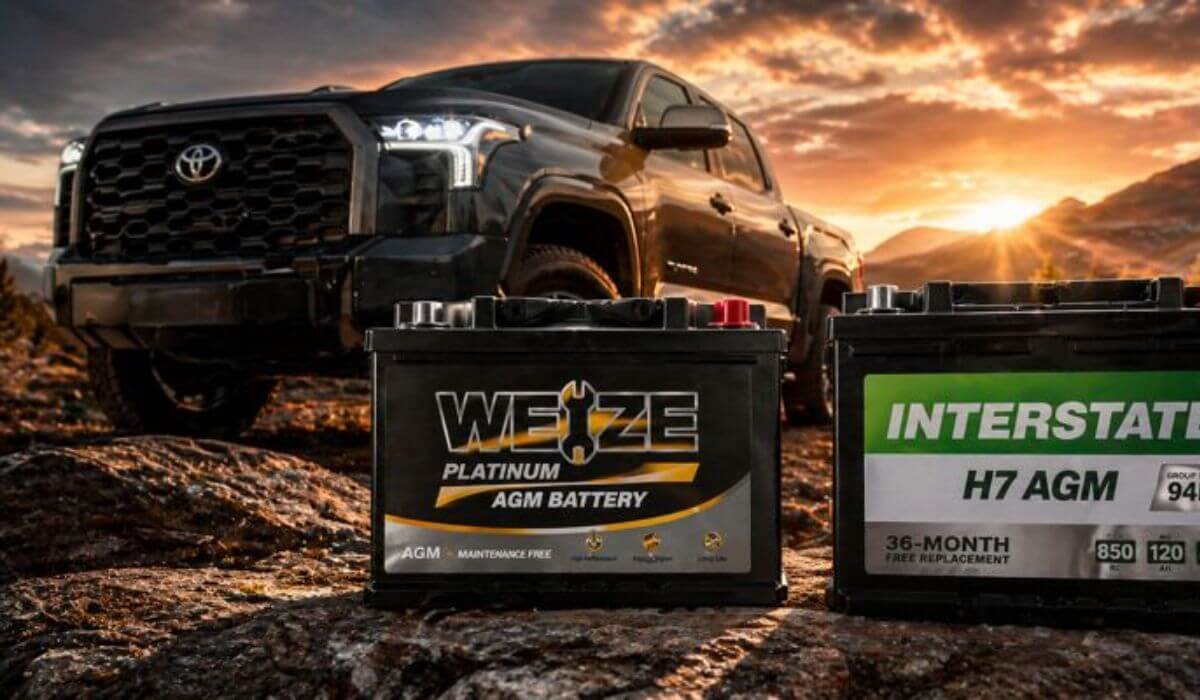
5 Best Batteries for Toyota Tundra in 2026: Top 710+ CCA Picks for Longer Life & Stronger Starts
Real talk—most Toyota Tundra battery problems don’t begin with a complete failure. They start with slower cranks, dimmer lights at idle, weak starts after cold nights, or electronics acting inconsistent. Because the Tundra is a full-size truck with higher starting demands, a weak battery shows up faster than it does in smaller cars.
Another thing owners often learn too late: not every Tundra uses the same battery. Depending on year, engine, and trim, common fitments include 24F, 27F, and H7/94R AGM. Choosing by price alone can lead to poor fitment, weak reserve power, or shorter life.
That’s why this guide focuses on batteries that match what Tundra owners actually need—strong cranking amps, solid reserve capacity, trusted build quality, and sizes commonly used across multiple generations. If you want fewer surprises on cold mornings and better long-term reliability, these are the batteries worth considering.
Best Toyota Tundra Battery: Top 2026 Picks for AGM Strength & Fitment
#1. Weize Platinum AGM Battery Group 24F
Best replacement battery for Toyota Tundra with premium AGM power
#2. Interstate Batteries Group 27F (MTP-27F)
Toyota Tundra battery size choice with trusted starting performance
#3. Interstate Batteries AGM H7 / 94R
Best AGM battery for Toyota Tundra with maximum reserve power
#4. 1AUTODEPOT BCI Group 24F AGM Battery
Top car battery for Toyota Tundra with smart value performance
#5. UPLUS BCI Group 24F AGM Battery
Long lasting battery for Toyota Tundra with daily-use durability
Expert Tip
If your current battery is more than 3 years old and your Tundra has started cranking even slightly slower, don’t wait for a no-start morning. Full-size trucks often give subtle warning signs before the battery quits completely. Replacing it early usually costs less stress than a tow truck, missed workday, or being stranded with a truck full of gear. Also, always match the correct group size first—power numbers mean nothing if the battery doesn’t fit securely or the terminals sit wrong.
How We Chose These Batteries for Toyota Tundra
There are hundreds of batteries online, but many are built for lighter cars, short commutes, or price shoppers who only look at the sticker. A Toyota Tundra needs more than that. It’s a heavier truck, often used for hauling, towing, highway miles, job sites, cold starts, and accessory loads. So we filtered these picks the way an experienced owner would—not the way a random marketplace list would.
First, we prioritized real starting power. That’s why most batteries here sit around 710 CCA, while the H7/94R Interstate jumps to 850 CCA. Strong cold cranking amps matter in a Tundra because a weak battery that works in summer can struggle badly when temperatures drop or the truck sits for several days.
Second, we looked at reserve capacity, not just CCA. Many buyers ignore this. Reserve capacity is what helps when lights, audio, dash electronics, or accessories are drawing power before the engine is fully running. Batteries like the 24F AGM options with 120RC stood out because they offer stronger backup stamina than bargain units.
Third, we gave extra weight to AGM construction. AGM batteries handle vibration better, recharge faster, and usually tolerate modern electrical loads more confidently than older flooded designs. That matters in trucks that see rough roads, frequent starts, stop-and-go driving, or upgraded electronics.
Fourth, we selected sizes that actually make sense for Tundra owners: 24F, 27F, and H7/94R. Instead of pretending one battery fits every year, we chose sizes commonly used across multiple generations and trims. That saves readers from buying a battery with great reviews that doesn’t belong in the tray.
Finally, we balanced brand trust and value. Interstate made the list because of long-standing reputation and consistent reliability. Weize, 1AUTODEPOT, and UPLUS made the cut because their specs compete strongly on paper for buyers who want AGM performance without premium-brand pricing.
The result is simple: these aren’t random top sellers. They’re batteries chosen for the real demands of a Toyota Tundra—fitment, cranking strength, reserve power, durability, and honest value. That’s the difference between buying a battery twice and buying the right one once.
#1. Weize Platinum AGM Battery Group 24F
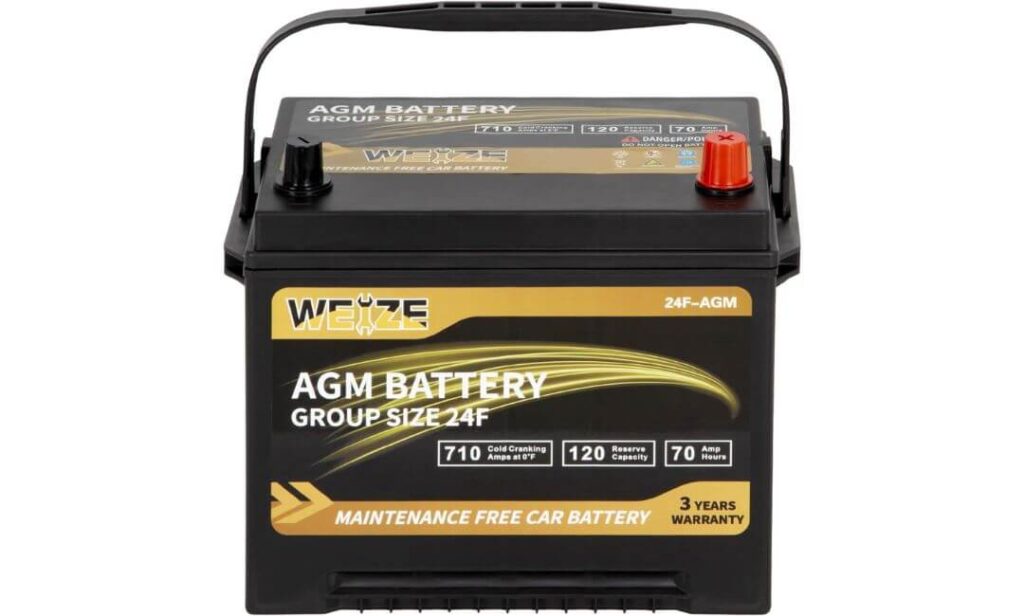
Quick Specs:
- Group Size: 24F
- Battery Type: AGM sealed lead-acid
- Cold Cranking Power: 710 CCA
- Reserve Capacity: 120 minutes RC
- Capacity: 70Ah
- Voltage: 12V
- Weight: 46.07 lbs
- Dimensions: 10.75″ x 6.81″ x 8.98″
- Warranty: 36 months
- Best For: Tundra owners wanting stronger starts and AGM durability
Real talk—this is the kind of battery that makes sense the moment your Toyota Tundra starts hesitating on cold mornings. With 710 CCA, it brings the kind of starting power a full-size truck actually needs, especially if your Tundra sits overnight, sees winter weather, or carries extra electrical load from lights, audio gear, or towing accessories. It doesn’t feel like a budget battery pretending to be premium.
The 120 reserve capacity is where this pick gets smarter. Many batteries can start a truck once; fewer can keep voltage stable when cabin electronics, headlights, and accessories are already working before the engine settles. That extra reserve gives more confidence during stop-and-go use, short trips, and heavy daily driving. For many Tundra owners, that matters more than flashy marketing numbers.
Then there’s the AGM build. Sealed design, better vibration resistance, lower self-discharge, and stronger durability versus many flooded batteries. That’s useful in a truck platform known for real-world work, rough roads, and long ownership cycles. Add the 36-month warranty, and this becomes a serious value pick rather than a gamble. (If your current battery tray uses Group 24F dimensions and terminal layout, this one checks the boxes fast.)
Why It Earned Our Shortlist
- 710 CCA gives strong, confident starts for V6 and V8-era truck demands
- 120RC helps support electronics and accessory load better than weak entry-level units
- AGM construction handles vibration and repeated use more confidently
- 36-month warranty adds peace of mind
- Strong specs for owners wanting premium feel without premium-brand pricing
Keep in Mind Before You Buy
- Always confirm 24F size and terminal orientation before ordering, since not every Tundra uses the same battery group.
Toyota Tundra Fitment Reality Check
This battery is a smart fit for many Tundra owners running a 24F-compatible tray, especially those who want to upgrade from an aging flooded battery to AGM strength. It suits daily drivers, weekend haulers, and trucks that see mixed city/highway use.
If your Tundra has factory stop-start behavior, extra accessories, frequent short drives, or sits between uses, AGM can be the better long-term move. Just verify tray space and terminal position first.
The Insider Pro-Tip
Real owners know this: battery failures usually show warning signs weeks before they happen—slower crank speed, weaker restart after fueling, or dimmer lights at idle. If you’re noticing that now, replacing early is smarter than waiting for a dead-truck morning.
Also, when choosing between similar prices, take the battery with higher reserve capacity and solid warranty coverage. In a Toyota Tundra, that often matters more than chasing the cheapest option on the page.
#2. Interstate Batteries Group 27F (MTP-27F)
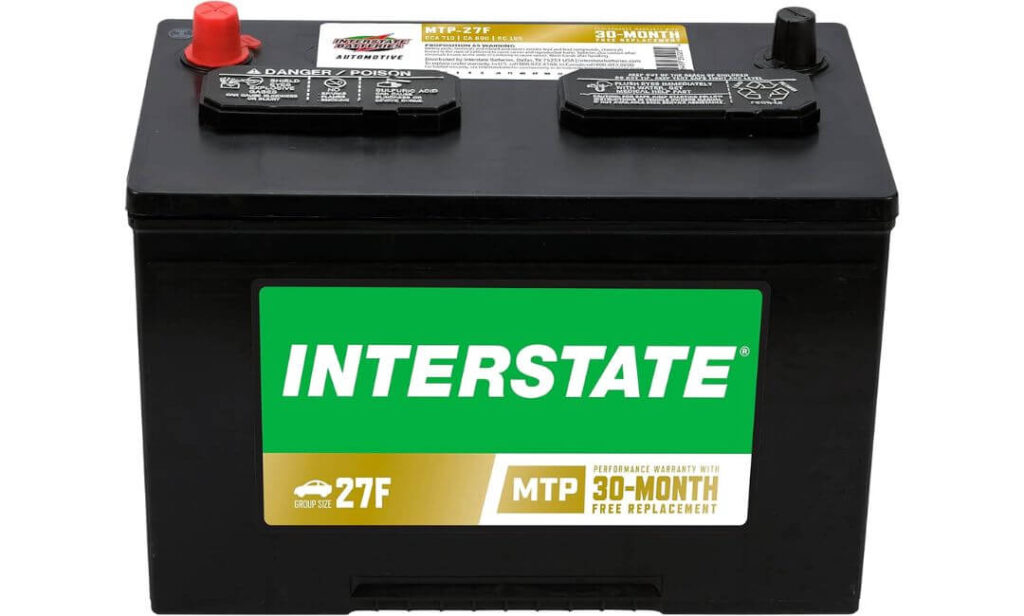
Quick Specs:
- Group Size: 27F
- Battery Type: Flooded lead-acid
- Cold Cranking Power: 710 CCA
- Cranking Amps: 885 CA
- Reserve Capacity: 165 minutes RC
- Voltage: 12V
- Weight: 49.4 lbs
- Dimensions: 12.52″ x 6.86″ x 9.45″
- Terminal Style: Top Post
- Warranty: 30 months
- Best For: Tundra owners wanting proven reliability and longer reserve power
Straight up—some batteries look good on paper, then feel average once installed in a real truck. This one has earned attention for a reason. The 710 CCA gives the kind of dependable starting strength many Toyota Tundra owners want, especially if the truck sees cold mornings, sits for a few days, or gets used like a truck should.
Where it quietly pulls ahead is the 165-minute reserve capacity. That number is stronger than many competing options and matters more than most buyers realize. Reserve capacity helps when headlights, cabin systems, phone charging, trailer wiring, or other electronics are already drawing power. In a Tundra, that extra cushion can make ownership feel smoother and less stressful over time.
Interstate’s long-standing reputation also adds confidence here. Some buyers simply want a battery from a brand known for consistency, not a mystery label with flashy numbers. This is a traditional flooded battery, so it keeps things simple while still delivering serious truck-grade output. (If your Tundra uses a Group 27F tray, this is one of the more trustworthy direct-style replacements.)
Why It Earned Our Shortlist
- 710 CCA delivers reliable starts in real truck conditions
- 165RC stands out for stronger backup power support
- Trusted Interstate reputation built over decades
- Good fit for owners who prefer classic flooded battery simplicity
- Strong balance of performance and long-term confidence
Keep in Mind Before You Buy
- This is a flooded battery, so owners specifically wanting AGM technology may prefer a sealed upgrade option instead.
Toyota Tundra Fitment Reality Check
This battery is a strong match for many Tundra models that use Group 27F sizing, especially older generations and trucks already equipped for this longer case format. If your current battery is a 27F, this one stays close to the straightforward replacement route.
It also suits owners who tow occasionally, drive long distances, or want stronger reserve power without stepping into AGM pricing. Just confirm tray size and terminal placement before purchase.
The Insider Pro-Tip
Real talk: if your truck runs multiple accessories or sees winter starts, reserve capacity often matters just as much as CCA. Many people shop by starting power only, then wonder why the battery feels tired later.
For a Toyota Tundra, a well-built 27F with 165RC can feel more stable in everyday use than a cheaper battery with similar CCA but weak backup stamina. That’s the kind of detail experienced owners notice fast.
#3. Interstate Batteries AGM H7 / 94R
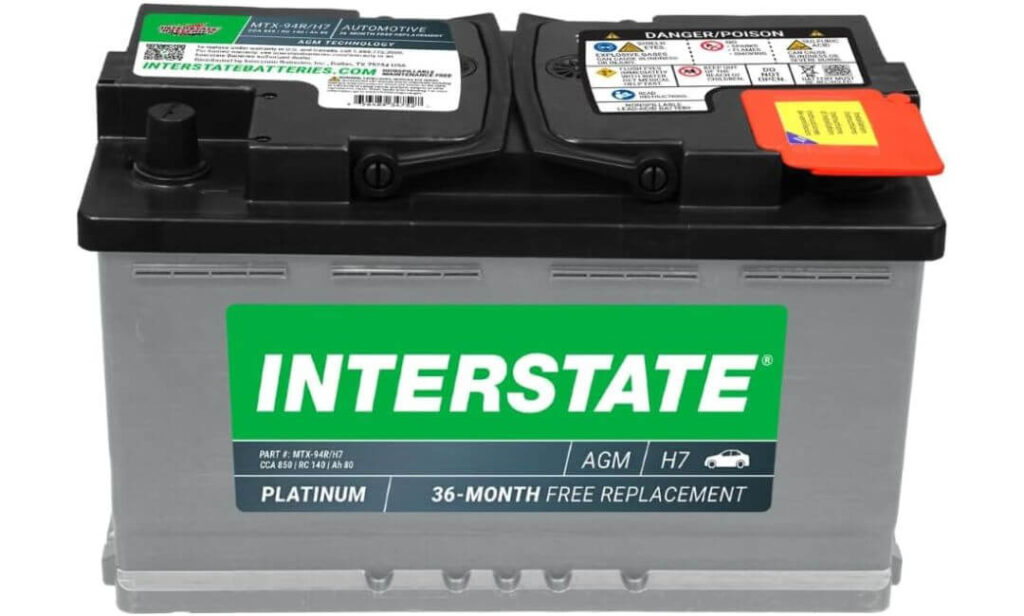
Quick Specs:
- Group Size: H7 / 94R
- Battery Type: AGM sealed lead-acid
- Cold Cranking Power: 850 CCA
- Capacity: 80Ah
- Reserve Capacity: 140 minutes RC
- Voltage: 12V
- Weight: Approx. 52 lbs
- Dimensions: 12.44″ x 6.94″ x 7.5″
- Terminal Style: Top Post
- Warranty: 36 months free replacement
- Best For: Tundra owners wanting premium AGM power and maximum starting confidence
Here’s the honest truth—if you want to stop thinking about battery drama for a while, this is the kind of upgrade that gets attention fast. With a serious 850 CCA, this battery brings more starting punch than most standard replacements. For a Toyota Tundra, that means stronger cold starts, less hesitation after sitting, and more confidence when the truck is loaded with accessories.
The 80Ah capacity and 140-minute reserve capacity make it more than a one-trick starter battery. It’s built to support modern electrical demands—screens, charging ports, lighting, trailer electronics, aftermarket gear, and frequent short-trip driving where weaker batteries slowly lose ground. If your Tundra works hard or sees daily stop-start use, that added depth matters.
Then comes the AGM advantage. Spill-proof, maintenance-free, vibration resistant, and designed for longer service life than many conventional batteries. Interstate also uses a higher-lead-density approach here, aiming for durability and output over time. This is the premium lane of the lineup, and it feels like it. (If your Tundra uses H7/94R fitment, this is the battery many owners move to when they’re done settling for average.)
Why It Earned Our Shortlist
- 850 CCA is standout power for strong truck starts
- 80Ah capacity supports heavier electrical loads
- AGM design is sealed, durable, and maintenance-free
- 140RC adds useful backup stamina
- Premium Interstate reputation with solid warranty support
Keep in Mind Before You Buy
- This is a larger premium-spec battery, so confirm H7 / 94R fitment before ordering rather than guessing by brand name alone.
Toyota Tundra Fitment Reality Check
This battery makes the most sense for Tundra owners using H7 / 94R sizing, including newer trucks or builds with higher accessory demand. If your current battery is already this size, it can be a major no-compromise replacement path.
It’s also a smart move for owners running upgraded lighting, sound systems, trailer braking setups, or trucks that do many short trips where battery recovery time matters.
The Insider Pro-Tip
Real owners learn this late: if your truck has more electronics than stock, buying only by CCA can be a mistake. You also need capacity and reserve strength so the battery doesn’t feel worn out early.
For a Toyota Tundra with real-world accessory use, an 80Ah AGM battery often feels stronger month after month than cheaper options that only advertise start power. That’s where premium batteries quietly earn their price.
#4. 1AUTODEPOT BCI Group 24F AGM Battery
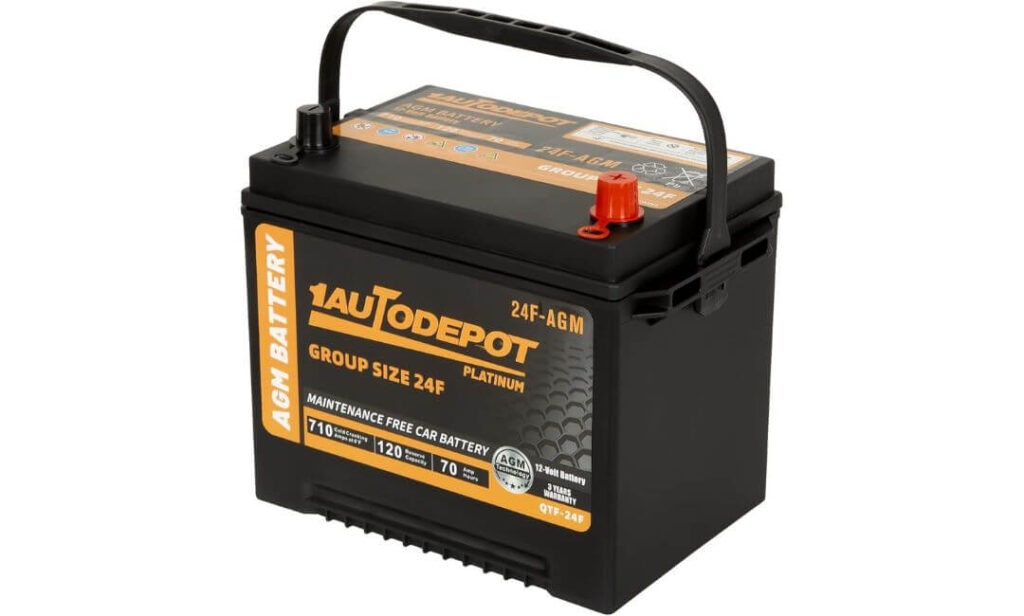
Quick Specs:
- Group Size: 24F
- Battery Type: AGM sealed lead-acid
- Cold Cranking Power: 710 CCA
- Reserve Capacity: 120 minutes RC
- Capacity: 70Ah
- Voltage: 12V
- Weight: 46.07 lbs
- Dimensions: 10.75″ x 6.81″ x 8.89″
- Terminal Layout: Left Negative / Right Positive
- Warranty: 36 months
- Best For: Tundra owners wanting AGM performance at a value-focused price
No exaggeration—this is the type of battery that catches smart buyers who compare specs before logos. On paper, the numbers are strong: 710 CCA, 70Ah, and 120 reserve capacity. For a Toyota Tundra, that translates to confident starts, steady electrical support, and enough reserve strength for real daily truck use instead of bare-minimum commuter duty.
The AGM construction is where it becomes more interesting. Sealed, maintenance-free, resistant to vibration, and better suited for trucks that deal with rough roads, changing weather, or frequent starts. If your Tundra sees stop-and-go traffic, short trips, accessory use, or occasional downtime between drives, AGM usually ages better than bargain flooded batteries.
It also handles temperature swings well, with an operating range listed from -22°F to 158°F. That matters more than many realize because batteries often fail during weather extremes, not mild days. Add the 36-month warranty, and this becomes a serious value pick for owners who want numbers that make sense. (If your truck uses 24F sizing, this one deserves a close look.)
Why It Earned Our Shortlist
- 710 CCA gives strong startup power for a full-size truck
- 70Ah capacity helps support modern accessories and daily use
- AGM design offers sealed, maintenance-free convenience
- 120RC adds useful reserve stamina
- Competitive specs with a strong warranty window
Keep in Mind Before You Buy
- Some owners may want to double-check battery tray height and hold-down clearance, since fitment can vary slightly by Tundra generation.
Toyota Tundra Fitment Reality Check
This battery is best suited for Tundra models using Group 24F dimensions, especially owners replacing an aging factory battery and wanting a practical AGM step-up without overspending.
It works well for mixed-use trucks—commuting during the week, hauling on weekends, or vehicles that sometimes sit for a few days before being driven again.
The Insider Pro-Tip
Real talk: when two batteries show similar CCA, the smarter buy is often the one with better reserve capacity, AGM build, and stronger warranty support. That’s where long-term satisfaction usually comes from.
For Toyota Tundra owners who keep trucks for years, buying balanced specs instead of chasing a famous sticker can save money and headaches later. This battery fits that mindset well.
#5. UPLUS BCI Group 24F AGM Battery
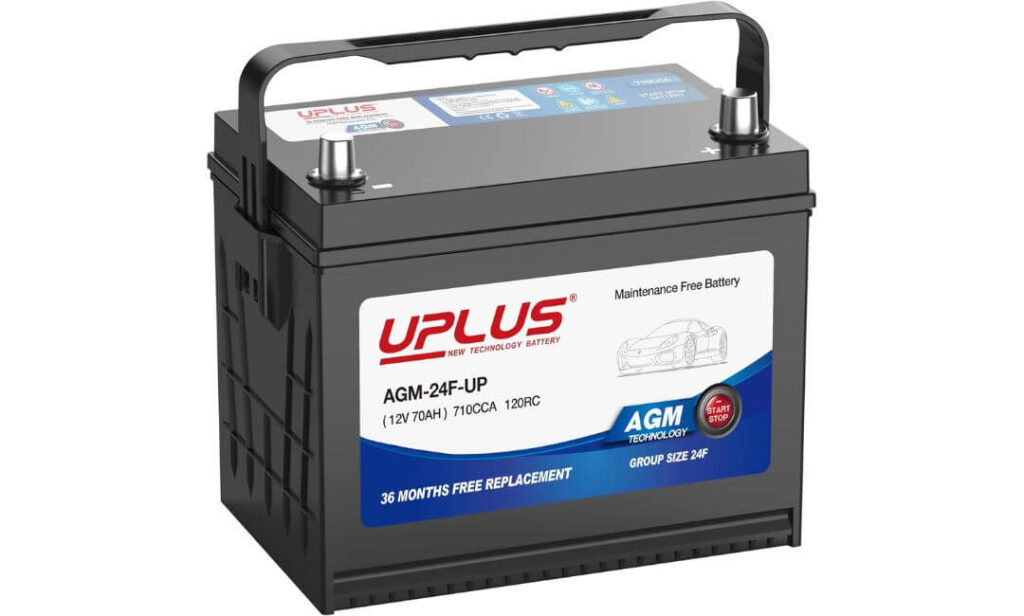
Quick Specs:
- Group Size: 24F
- Battery Type: AGM sealed lead-acid
- Cold Cranking Power: 710 CCA
- Reserve Capacity: 120 minutes RC
- Capacity: 70Ah (listing references vary)
- Voltage: 12V
- Weight: 46.8 lbs
- Dimensions: 10.7″ x 6.77″ x 8.98″
- Terminal Layout: Left Negative / Right Positive
- Warranty: 3 years
- Best For: Tundra owners wanting durable AGM value with strong everyday reliability
Honestly, this is the kind of battery many truck owners overlook until they compare the numbers. You’re getting 710 CCA, 120 reserve capacity, and AGM construction in a common 24F size—exactly the mix many Toyota Tundra owners want when replacing a tired stock battery without overspending.
Where this one separates itself is cycle-life focus. The brand highlights up to 4x extra cycling versus standard conventional batteries, which matters for trucks that see frequent starts, short errands, stop-and-go traffic, or periods of sitting between drives. Those patterns slowly punish weaker batteries. A stronger AGM build tends to handle that lifestyle better.
It also leans hard into durability with enhanced vibration resistance and sealed safety-focused construction. For a Tundra that sees rough roads, work use, highway miles, or weekend hauling, that’s more valuable than flashy packaging. It’s the kind of pick that makes sense once you think like an owner, not just a shopper. (If your battery tray takes 24F sizing, this one offers a lot of practical value.)
Why It Earned Our Shortlist
- 710 CCA gives dependable startup power in changing weather
- 120RC supports accessories and everyday electrical demand
- AGM design is sealed and maintenance-free
- Claimed enhanced cycle life for frequent-use vehicles
- Strong vibration resistance for truck-style use
Keep in Mind Before You Buy
- As with any 24F battery, it’s smart to verify tray size and terminal orientation before ordering for the smoothest install.
Toyota Tundra Fitment Reality Check
This battery works well for many Tundra owners using Group 24F fitment, especially trucks used as daily drivers with a mix of city starts, highway runs, and occasional downtime between uses.
It also makes sense for owners who want AGM benefits without jumping to the highest-priced premium options. Good middle-ground picks are often the smartest long-term buys.
The Insider Pro-Tip
Real talk: batteries usually fail from lifestyle before age. Frequent short trips, long parking periods, and heavy accessory use can wear down average batteries faster than people expect.
For a Toyota Tundra driven in the real world—not ideal conditions—a 24F AGM with solid reserve capacity often delivers a noticeably better ownership experience than a cheaper basic battery. That’s where value becomes real.
Best Toyota Tundra Battery Comparison Table: Top 24F, 27F & AGM Picks Ranked
| Battery | Group Size | Power | Reserve | Type | Best Match for Tundra Owners | Our Real Verdict |
|---|---|---|---|---|---|---|
|
Weize Platinum AGM Battery
Balanced all-round performer
Best Overall
|
24F | 710 CCA | 120 RC | AGM | Daily driving, mixed city/highway use, dependable starts | Smart Buy Strong specs + AGM + solid warranty. Hard to ignore at this level. |
|
Interstate Batteries MTP-27F
Traditional trusted replacement
Most Trusted
|
27F | 710 CCA | 165 RC | Flooded | Older Tundra models, long drives, owners wanting proven brand value | Dependable Choice Big reserve capacity and classic reliability reputation. |
|
Interstate AGM H7 / 94R
Premium high-demand setup battery
Premium Pick
|
H7 / 94R | 850 CCA | 140 RC | AGM | Newer Tundra trims, accessories, towing electronics, max confidence | Power Leader Highest starting strength in this lineup. Serious upgrade path. |
|
1AUTODEPOT BCI AGM Battery
Value-focused AGM performer
Best Value
|
24F | 710 CCA | 120 RC | AGM | Budget-conscious owners wanting AGM benefits | Worth Checking Specs compete well with pricier names if fitment checks out. |
|
UPLUS BCI AGM Battery
Everyday use durability pick
Daily Driver
|
24F | 710 CCA | 120 RC | AGM | Frequent starts, short trips, practical ownership use | Balanced Option Useful mix of AGM durability and everyday starting confidence. |
Understanding Toyota Tundra Battery Sizing
Choosing the right battery for a Toyota Tundra is not just about buying the most expensive option or picking the one with the highest numbers. Battery sizing matters because the wrong case size, weak power output, or incorrect terminal layout can create fitment issues, poor starting performance, or shortened battery life. Tundra trucks are built for heavier workloads than many standard vehicles, so matching the correct battery matters more than most owners realize.
Some Tundra owners only check voltage and assume any 12-volt battery will work. Real talk—that’s where mistakes begin. You also need the correct group size, enough cold cranking amps (CCA), healthy reserve capacity (RC), and a battery design that matches how the truck is actually used.
Common Toyota Tundra Battery Sizes
Depending on model year, trim level, engine setup, and factory configuration, the Toyota Tundra has commonly used these battery sizes:
- Group 24F – One of the most common fitments, especially for many standard-use setups. Popular because it balances size, starting power, and easy replacement options.
- Group 27F – Often found in trucks needing more reserve capacity or older configurations. Slightly larger footprint with strong backup power potential.
- H7 / 94R – Common in newer trucks or setups with heavier electrical demand. Often paired with AGM batteries and premium replacement options.
This is why two Tundra owners can own the same truck generation and still use different battery sizes depending on engine, options package, or previous replacement history.
How to Verify Which Battery Your Tundra Uses
The smartest way to confirm fitment is not guessing by year alone. Use these steps:
- Check the current battery label – The installed battery usually lists its group size clearly, such as 24F, 27F, or H7.
- Look in the owner’s manual – Toyota often lists recommended battery specs and replacement guidance.
- Measure the battery tray – Length, width, and hold-down position matter more than people think.
- Check terminal orientation – Positive and negative post positions must match your cable layout.
- Use VIN-based fitment tools – Especially useful if the truck has multiple trim-specific options.
If your current battery fits perfectly and performs well, replacing with the same group size is often the safest route.
Why Group Size Matters More Than Buyers Expect
Battery group size is not a “quality rating.” It is a standardized size code covering:
- Physical dimensions
- Terminal placement
- Post orientation
- Basic fitment category
A battery with huge CCA numbers is useless if it does not secure properly in the tray or if the cables barely reach the terminals. Loose fitment can lead to vibration damage, poor connections, and shortened life.
How to Read a Battery Label
Battery labels can look technical, but once you understand a few numbers, buying becomes easier.
Example label: 24F AGM 710 CCA 120 RC 70Ah
Here is what it means.
CCA (Cold Cranking Amps)
CCA tells you how much power the battery can deliver to start the engine in cold temperatures. This matters because cold weather makes oil thicker and engines harder to crank.
For a Toyota Tundra, stronger CCA ratings help with:
- Winter starts
- Trucks parked outside overnight
- Older engines needing more effort to crank
- Reliable starts after sitting several days
In many Tundra applications, 650 to 850 CCA is a realistic working range depending on battery size and setup.
RC (Reserve Capacity)
Reserve Capacity is one of the most overlooked numbers. It shows how many minutes a fully charged battery can supply power if the charging system is not keeping up.
Why it matters in a Tundra:
- Running lights, radio, and cabin electronics before startup
- Trailer wiring and accessory use
- Emergency backup if alternator output drops
- Better stability during stop-and-go driving
A battery with higher RC often feels stronger in daily ownership than one that only advertises high CCA.
Ah (Amp-Hour Capacity)
Amp-hour rating reflects how much energy the battery can store and deliver over time. While starting batteries are judged heavily by CCA, Ah still matters for trucks with accessories or repeated short trips.
Higher Ah can help with:
- Audio systems
- Charging devices
- Work lights
- Frequent short-distance driving where full recharge time is limited
AGM vs Flooded Battery Labels
You may also see battery type listed.
- AGM (Absorbed Glass Mat) – Sealed, maintenance-free, stronger vibration resistance, usually better for modern electrical loads.
- Flooded Lead-Acid – Traditional design, often lower cost, widely available, proven and simple.
For many Tundra owners, AGM becomes attractive if the truck sees rough roads, heavy accessory use, frequent starts, or long-term ownership plans.
Smart Buying Advice for Toyota Tundra Owners
Do not shop by one number alone. The best battery for a Toyota Tundra is usually the one that combines:
- Correct group size
- Enough CCA for your climate
- Strong reserve capacity
- Trusted warranty support
- Proper terminal layout
- Battery type that matches your driving habits
A correctly sized mid-range battery often performs better than an oversized “spec monster” that fits poorly.
Real-World Owner Tip
If your current battery lasted several years without trouble, use that setup as your baseline. Match the same size, then upgrade CCA, reserve capacity, or move to AGM if your truck’s usage has increased. That’s how experienced owners buy batteries—through fitment first, specs second, marketing last.
Buyer’s Guide: Choosing the Right Battery for Your Toyota Tundra
Buying a battery for a Toyota Tundra sounds simple until you realize how many owners end up replacing the wrong one twice. The Tundra is a full-size truck, often used for towing, hauling, job-site duty, long highway miles, family travel, or stop-and-go city driving. That means battery choice should match how the truck is actually used, not just whatever is cheapest today.
Real talk—many battery problems are not caused by bad brands. They happen because the battery was undersized, poorly matched for climate, or installed without checking fitment details. A smart purchase starts with your truck’s needs first, product name second.
How to Choose Based on Climate, Driving Style, and Electrical Demand
The best replacement battery depends heavily on where and how the truck lives.
Cold climates:
Prioritize higher CCA ratings. Cold weather slows chemical reactions inside the battery and makes engines harder to crank. If winters are serious, stronger start power matters.
Hot climates:
Heat often kills batteries faster than cold. Choose a battery with solid warranty coverage, strong internal build quality, and secure mounting. AGM batteries can be attractive in hotter regions because they often handle vibration and heat stress better.
Short-trip driving:
If your Tundra mainly does quick errands or short commutes, the battery may never fully recharge between starts. In that case, AGM batteries and stronger reserve capacity can be smart upgrades.
Towing and accessory use:
Trailer brakes, lights, winches, chargers, dash cams, air compressors, and sound systems increase electrical demand. Choose stronger RC and, ideally, AGM construction.
Long highway use:
Frequent highway driving is easier on batteries because charging time is longer. A quality flooded battery may serve many owners well here if fitment and specs are right.
Understanding CCA vs RC: What Matters More?
Many shoppers only look at CCA, then regret it later.
CCA (Cold Cranking Amps) measures how much power the battery can deliver to start the engine in low temperatures. It is about startup strength.
Choose higher CCA if you deal with:
- Cold mornings
- Outdoor parking
- Older engines
- Infrequent use where starts need extra punch
RC (Reserve Capacity) measures how long the battery can power systems if charging support drops or demand rises. It is about stamina.
Choose stronger RC if you use:
- Headlights often at idle
- Trailer wiring
- Cabin electronics
- Chargers, accessories, aftermarket gear
- Frequent stop-and-go driving
For many Toyota Tundra owners, the best battery balances both numbers instead of maxing only one.
How to Verify the Correct Toyota Tundra Battery Size
Never buy by title alone. Different Tundra years and trims may use different sizes such as 24F, 27F, or H7/94R.
Use this process:
- Check the current battery label for group size.
- Compare tray dimensions and hold-down bracket location.
- Confirm terminal orientation (positive and negative sides).
- Use the owner’s manual or VIN-based fitment tools.
- If upgrading types, ensure charging system compatibility.
A battery with excellent reviews can still be the wrong battery if the case size or posts do not match your truck.
Installation Basics and Safety Tips
Battery installation is straightforward, but mistakes can create sparks, damaged electronics, or poor connections.
Use these habits:
- Turn the truck fully off before starting.
- Disconnect the negative terminal first.
- Remove the positive terminal second.
- Install the new battery securely in the tray.
- Connect the positive terminal first, then negative last.
- Tighten terminals properly, not excessively.
- Confirm hold-down hardware is snug so the battery cannot move.
If you are unsure about torque values or battery monitoring systems, professional installation is worth it.
Maintenance Tips to Maximize Battery Life
Even premium batteries fail early when neglected.
Do this regularly:
- Keep terminals clean and corrosion-free.
- Make sure the battery is tightly mounted.
- Avoid leaving lights or accessories on with engine off.
- Drive long enough occasionally to recharge after short-trip use.
- Inspect cables for looseness or cracking.
- In extreme heat, park in shade when possible.
- If storing the truck, use a quality maintainer.
A well-maintained battery often outlasts a neglected premium battery.
AGM vs Flooded: Which Is Better for Tundra Owners?
Flooded batteries are often lower cost, proven, and widely available. Great for many stock trucks with normal use.
AGM batteries cost more but can offer:
- Better vibration resistance
- Faster recharge behavior
- Stronger support for electronics
- Lower maintenance hassle
- Better fit for stop-and-go or accessory-heavy use
If your Tundra works harder than average, AGM can make sense long term.
Warranty Matters More Than People Think
Battery warranties are not all equal. Some include free replacement periods, others are prorated, and some require specific testing procedures.
Before buying, check:
- Length of free replacement coverage
- Where warranty claims are handled
- Need for receipt or registration
- Availability of local support
- Brand reputation for honoring claims
A cheaper battery with weak support can become expensive fast.
How to Get the Most From Coverage
Keep your receipt, note the install date, and test the charging system if the battery starts weakening. Many warranty claims fail because the real issue was a bad alternator or parasitic drain, not the battery itself.
If the battery is tested early and documented properly, claims usually go smoother.
Smart Final Advice for Toyota Tundra Owners
Choose battery fitment first, then choose the strongest specs inside that correct size. Match the battery to your climate, driving style, and electrical load. That approach consistently beats buying by brand hype or lowest price.
For a Toyota Tundra, the right battery should feel invisible—strong starts, stable electronics, no surprises. That is the real goal.
Installation and Maintenance Checklist for Toyota Tundra Batteries
Replacing the battery in a Toyota Tundra is one of the more manageable maintenance jobs, but doing it carelessly can create electrical issues, damaged terminals, memory resets, or shortened battery life. A full-size truck battery is also heavier than many car batteries, so preparation matters.
Real talk—most battery complaints after installation are not caused by the battery itself. They come from loose terminals, poor hold-down mounting, corrosion left behind, or skipping a basic charging-system check. If you install it correctly once, ownership becomes much easier.
What You’ll Need Before You Start
Gather tools first so the battery is not left disconnected longer than necessary.
Recommended items:
- Correct replacement battery for your Tundra (24F, 27F, H7/94R, or verified fitment)
- Safety gloves
- Eye protection
- Ratchet and socket set
- Wrench set
- Battery terminal brush or cleaning tool
- Clean rag or microfiber towel
- Anti-corrosion terminal spray or dielectric protectant
- Multimeter for voltage testing
- Battery carrying strap if available
- Memory saver device (optional, helps preserve settings)
If the old battery is swollen, leaking, or heavily corroded, proceed carefully and consider professional service.
Before You Remove the Old Battery
Park the truck on a level surface, shut everything off, remove the key, and allow electronics to power down for a minute. Open the hood and identify the battery tray, terminals, and hold-down bracket.
Then do a quick inspection:
- Are cables damaged or cracked?
- Is there white or blue corrosion around posts?
- Is the battery loose in the tray?
- Are terminals already overtightened or distorted?
- Does the tray show rust or acid residue?
These details matter because a new battery installed into a bad environment can fail early.
Step-by-Step Quick Install Guide
Step 1: Disconnect the Negative Terminal First
Always remove the negative (-) terminal first. This reduces the chance of accidental short circuits if a tool contacts metal surfaces.
Move the cable aside so it cannot spring back.
Step 2: Disconnect the Positive Terminal
Now remove the positive (+) terminal. Keep tools controlled and avoid touching grounded metal.
Step 3: Remove Hold-Down Hardware
Loosen and remove the battery hold-down clamp or bracket. Keep bolts and hardware somewhere safe.
Step 4: Lift Out the Old Battery Carefully
Truck batteries are heavy. Lift straight up using proper posture. If needed, use a carrying strap.
Step 5: Clean the Tray and Cable Ends
This step is skipped too often.
Clean:
- Battery tray surface
- Hold-down bracket
- Terminal clamps
- Corrosion buildup
- Dirt and moisture around the area
A clean contact surface helps charging performance and connection quality.
Step 6: Install the New Battery
Set the new battery in place with terminals oriented correctly. Make sure it sits flat and fully inside the tray.
Step 7: Secure the Hold-Down
Tighten the hold-down bracket firmly so the battery cannot move during driving, bumps, towing, or off-road vibration.
Do not overtighten to the point of case damage.
Step 8: Connect Positive First, Negative Last
Reconnect in reverse order:
- Positive (+) first
- Negative (-) second
This is the safest standard method.
Step 9: Protect the Terminals
Apply anti-corrosion spray or approved protectant after tightening connections.
When Professional Installation Is the Better Move
DIY is fine for many owners, but professional installation is smart if your Tundra has:
- Tight battery access
- Added electronics or aftermarket wiring
- Persistent warning lights
- Heavy corrosion damage
- Battery monitoring system concerns
- Physical lifting limitations
Sometimes paying once saves troubleshooting later.
Post-Install Checks You Should Never Skip
A battery install is not complete until tested.
Voltage Check
Use a multimeter after installation.
Healthy resting voltage often lands near:
- 12.6V or higher = fully charged range
- Around 12.4V = partially charged
- Significantly lower = charge may be needed
Start-Up Check
Start the truck and observe:
- Quick crank speed
- No hesitation
- Stable idle
- No dimming lights
- No warning lights staying on
Charging System Check
With engine running, charging voltage often falls around the mid-13V to mid-14V range depending on system behavior. If voltage is too low or too high, alternator or regulator issues may exist.
Load Test (Highly Recommended)
A professional load test confirms the battery can hold power under demand, not just show voltage. This is especially useful if the truck has previous starting problems.
First Week Ownership Checklist
Watch for these signs:
- Slow starts
- Loose terminals after driving
- Flickering electronics
- Battery movement in tray
- Corrosion reappearing quickly
If any show up, correct them early.
Maintenance Tips to Extend Battery Life
Even a premium battery needs basic care.
Every few months:
- Inspect terminal tightness
- Clean corrosion early
- Keep the case dry and clean
- Ensure mounting hardware remains tight
- Drive long enough to recharge after repeated short trips
- Test battery before winter or summer extremes
If the truck sits often, a battery maintainer can dramatically help lifespan.
Common Mistakes That Kill New Batteries Early
Many failures are preventable.
Avoid:
- Installing wrong group size
- Leaving battery loose in tray
- Reusing damaged cable clamps
- Ignoring weak alternator output
- Repeated short trips without recharge time
- Running accessories heavily with engine off
Real Owner Advice
If the old battery failed suddenly, do not assume the battery was the only problem. Check charging voltage and cable condition too. Many new batteries get blamed for old vehicle issues.
A properly installed, properly charged battery in a Toyota Tundra should deliver strong starts and disappear into the background. That is what success looks like.
FAQs About Toyota Tundra Battery
What battery size does the Toyota Tundra actually use, and why do different websites show different answers?
Real talk—because there is no single battery size for every Toyota Tundra. Different model years, trims, engines, tow packages, and even previous owner replacements can change what is currently installed. That is why one source may say 24F, another says 27F, and another lists H7 / 94R.
The smartest move is to verify your truck directly instead of trusting a generic chart. Check:
- Current battery label
- Tray dimensions
- Terminal orientation
- Owner’s manual
- VIN-based fitment tools
If your existing battery fit correctly and performed well, using that as the starting reference is often smarter than chasing conflicting internet lists.
Is an AGM battery worth it for a Toyota Tundra, or is a standard flooded battery enough?
It depends on how your Tundra is used. If the truck is mostly highway-driven, stock, and used normally, a quality flooded battery can still be a solid value choice. Many owners do just fine with them.
But if your truck deals with short trips, sits for days, runs accessories, sees rough roads, or you simply keep vehicles a long time, AGM usually starts making real sense. AGM batteries often offer:
- Better vibration resistance
- Faster recharge recovery
- Lower maintenance hassle
- Stronger support for electronics
- Better resilience in tougher use cycles
Real truth: owners who use their Tundra harder than average are usually the ones who notice AGM benefits fastest.
For Toyota Tundra batteries, what matters more: CCA or Reserve Capacity?
This is where many buyers get tricked by marketing. CCA matters for starting power, especially in cold weather. Reserve Capacity (RC) matters for how the battery behaves in daily life when accessories, lights, trailer wiring, and stop-and-go use are involved.
If you live in colder climates, prioritize stronger CCA. If your truck runs added electronics, towing gear, or frequent idling, RC can be just as important—sometimes more important.
The best Tundra battery is usually not the one with the biggest single number. It is the one with the best balance of:
- Correct size
- Enough CCA
- Strong RC
- Good warranty
- Proper build quality
That is how experienced owners shop.
Why did my new battery feel weak only a few months after installation?
Honest answer: sometimes the battery is not the real problem. A new battery can feel weak because the truck has another issue hiding in the background.
Common causes include:
- Alternator undercharging
- Loose or dirty terminals
- Parasitic battery drain
- Frequent short trips with no recharge time
- Battery not fully charged when installed
- Wrong battery size for the truck’s demand
This is why smart owners test the charging system before blaming the battery. Many “bad new battery” stories are actually vehicle electrical problems wearing the battery down early.
How can I make a Toyota Tundra battery last longer in the real world?
Battery life is usually decided by habits more than brand names. The same battery can last years in one truck and fail early in another depending on usage.
To stretch battery life, do these consistently:
- Keep terminals clean and tight
- Make sure the battery is securely mounted
- Avoid repeated short trips only
- Drive long enough to recharge after many starts
- Reduce accessory use with engine off
- Test battery before extreme summer or winter seasons
- Use a maintainer if the truck sits often
Real talk—heat, vibration, and undercharging kill more batteries than age does. Owners who control those three factors usually get the best lifespan.
Final Verdict
Real talk—the best battery for a Toyota Tundra is rarely the one with the loudest marketing or the lowest price tag. It is the battery that matches your truck’s correct size, real electrical demand, climate, and daily use pattern. Get those four things right, and ownership becomes easy: fast starts, stable electronics, fewer surprises.
If you want the strongest all-around balance, the Weize Platinum 24F AGM stands out. If long-term brand confidence matters most, the Interstate 27F remains a dependable route. If your Tundra runs heavier accessories or you want premium no-compromise power, the Interstate H7 / 94R AGM is the serious upgrade in this lineup.
The bigger truth is simple: buying the right battery once is cheaper than buying the wrong battery twice. Verify your fitment, choose honest specs over hype, and buy for how your Tundra is actually used—not how it looks on paper.
Do that, and the next time you turn the key or hit the start button, the truck just does what it should. Every time.
Also Check:


