
7 Best Batteries for Toyota Camry in 2026: 760 CCA Power, Long Life & Reliable Cold Starts
A weak battery can make even a reliable Toyota Camry feel old overnight. Slow cranking, dim lights, random warning messages, and rough cold starts usually begin long before the battery fully dies. For most 2018–2026 Toyota Camry models, the common fitment is Group 48 / H6, making it the safest starting point for owners who want the right replacement without guesswork.
But size alone does not guarantee a smart buy. Camry owners usually want three things: dependable morning starts, long service life, and zero drama in extreme weather. That is why AGM batteries have become the go-to upgrade. They deliver stronger cranking power, better vibration resistance, and improved durability compared with standard flooded batteries.
After comparing warranty coverage, cold cranking amps, reserve capacity, brand trust, and real owner value, two batteries clearly lead this category.
- ACDelco Gold 48AGM Premium Battery — 36-month warranty, trusted OEM-grade reputation, maintenance-free AGM design, and dependable long-term performance. A serious buy-it-once option for Camry owners.
- Weize Platinum H6 AGM Battery — 760 CCA, 120 RC, 36-month warranty, and standout value. A strong choice for drivers who want more power and longer backup reserve without overspending.
If your Camry handles daily commutes, summer heat, winter mornings, or frequent stop-and-go traffic, the right battery upgrade can save time, stress, and future replacement costs. Below are the best Toyota Camry battery replacements worth your money in 2026.
Best Battery for Toyota Camry: Top 2026 Picks with AGM Power & Long Life
#1. ACDelco Gold 48AGM Premium Battery
Best Toyota Camry battery replacement for OEM-grade reliability and long lifespan
#2. Weize Platinum H6 AGM Battery
Best AGM battery for Toyota Camry with 760 CCA starting power
#3. MARXON Group 48 H6 Smart AGM Battery
Best value battery for Toyota Camry daily driving and start-stop use
#4. UPLUS Group 48 AGM-L70-M Battery
Best maintenance-free Toyota Camry battery for consistent performance
#5. Interstate M-48/H6 Performance Battery
Best trusted brand battery for Toyota Camry replacement needs
#6. Renogy 12V 70Ah AGM Power Battery
Best reserve capacity battery upgrade for Toyota Camry owners
#7. Daakmax Platinum Group 48 AGM Battery
Best budget H6 battery for Toyota Camry strong cold starts
Expert Tip Before You Buy
If your Camry still starts fine but the battery is 3 to 5 years old, do not wait for the day it leaves you stranded in a parking lot or refuses to start before work. Most batteries fail with little warning. Replacing it early is usually cheaper than paying for a tow, losing time, or dealing with random electrical issues. Also, always check the battery build date before buying. A fresh battery that was made recently is almost always a better purchase than an older unit that has been sitting on a shelf for months.
How We Chose These Toyota Camry Batteries
We did not build this list around brand names alone, flashy marketing claims, or the cheapest price tag. Every battery here was selected based on what actually matters to a Toyota Camry owner who wants reliable starts, long life, and real value.
First, we focused on the correct fitment. Most modern Camry models commonly use Group 48 / H6, so the list prioritizes batteries that match the tray size, terminal layout, and power needs of newer Camry trims. That means less guesswork, easier installation, and fewer return headaches.
Next came starting power. A battery may look good on paper, but if it struggles on a cold morning or after sitting for two days, it is the wrong battery. That is why high-output options like the Weize Platinum, UPLUS, and MARXON stood out with 760 CCA, giving stronger crank performance when the engine needs it most.
We also looked closely at reserve capacity. Modern Camrys run more electronics than older sedans—touchscreens, sensors, charging ports, climate controls, safety systems, and keyless entry all draw power. Batteries with stronger reserve ratings, such as 120 RC models, earned higher spots because they provide more backup energy when the alternator is under load.
Then there is battery construction. AGM batteries dominated this list for one simple reason: they usually outperform standard flooded batteries in real ownership. They resist vibration better, recharge faster, tolerate stop-and-go driving, and hold voltage more consistently. For Camry owners who commute daily or drive in heat and cold, AGM is often the smarter long-term buy.
We also weighed brand trust and warranty coverage. ACDelco ranked high because of its long-standing OEM-level reputation and 36-month warranty. Interstate made the cut because many drivers trust it for dependable replacement service. Weize earned a top spot by combining strong specs with better value than many premium-priced rivals.
Finally, we removed batteries that looked good only on paper but offered weak warranties, unclear fitment, or poor value for the money. If a battery could not justify its price or reputation, it did not stay on the list.
The result is a shortlist built for real Camry owners—not showroom talk, not marketing hype. Just batteries that fit properly, start strong, last longer, and make sense to buy in 2026.
#1. ACDelco Gold 48AGM Premium Battery
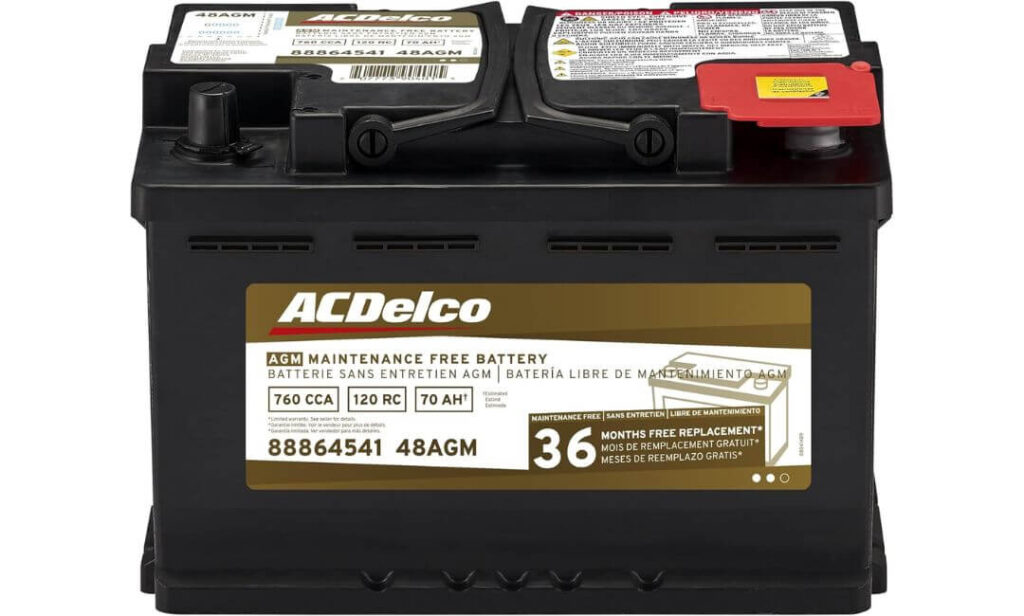
Quick Specs:
- Battery Group Size: BCI Group 48 / H6
- Battery Type: AGM (Absorbent Glass Mat), maintenance-free
- Voltage: 12V
- Cold Cranking Amps: Up to 760 CCA
- Warranty: 36-Month Free Replacement
- Weight: 45.5 lbs
- Dimensions: 11.9″ W x 7.5″ D x 7.6″ H
- Internal Build: Silver-Calcium alloy, low-resistance grid design
- Best For: Toyota Camry owners wanting OEM-grade reliability and longer battery life
Real talk—most people do not think about a battery until the morning their Camry refuses to start. This one is built for drivers who would rather avoid that moment completely. With up to 760 CCA, it delivers the kind of starting power that matters when temperatures drop, the car sits for days, or the engine needs a stronger first crank.
What makes it feel different from many average replacements is the internal build quality. The Silver-Calcium alloy construction helps improve cycle life, charge acceptance, and long-term durability. In plain English, it is designed to age slower, recover charge better, and handle repeated daily starts without feeling weak too early.
Then there is the AGM advantage. Because the electrolyte is absorbed inside glass mats instead of sloshing around like old-school flooded batteries, it is spill-resistant, vibration-resistant, and maintenance-free. That matters in real ownership more than most buyers realize. Less corrosion, steadier voltage, cleaner engine bay, fewer headaches.
For Camry owners who keep their car several years and want to install one battery that simply does its job, this is the type of purchase that makes sense on day one and still feels smart years later. (Sometimes the cheapest battery costs the most later.)
What Makes It Worth Buying
- 760 CCA starting power for dependable cold starts
- 36-month free replacement warranty adds real peace of mind
- AGM design resists leaks, vibration, and premature wear
- Silver-Calcium internals support longer service life
- Strong brand trust with OEM-level reputation
What to Know Before Ordering
- Heavier than standard flooded batteries, so installation takes a little more effort.
Toyota Camry Compatibility Notes
For many modern Toyota Camry models, Group 48 / H6 is one of the most common fitments, which puts this battery in a strong position for direct replacement use. It offers the tray size and power level many Camry owners need, especially on higher-equipment trims with more electronics.
Still, smart buyers always confirm the current battery label or owner’s manual before ordering. Some trims may use H5 / Group 47, and hybrids can differ from gasoline models.
The Insider Pro-Tip
If your Camry still has the factory battery and starts feeling slightly slower in the morning, do not wait for total failure. Batteries often give subtle warning signs before they quit completely.
Also, when this battery arrives, check the manufacture date sticker. A fresh battery that has not sat on a shelf too long usually delivers better lifespan right from the start.
#2. Weize Platinum H6 AGM Battery
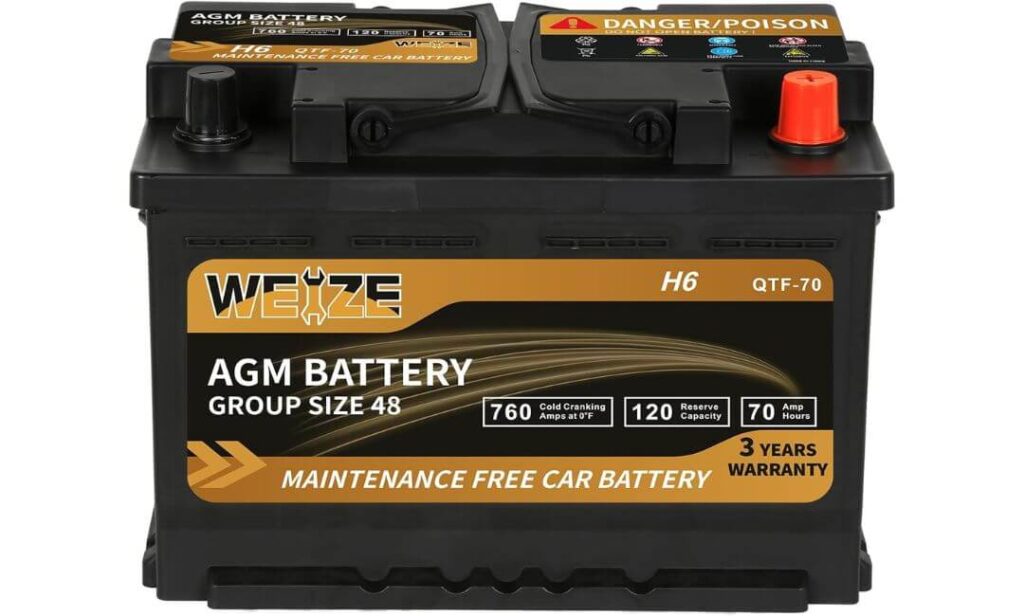
Quick Specs:
- Battery Group Size: BCI Group 48 / H6
- Battery Type: AGM, sealed and maintenance-free
- Voltage: 12V
- Capacity: 70Ah
- Reserve Capacity: 120 RC
- Cold Cranking Amps: 760 CCA
- Warranty: 36 Months
- Weight: 46 lbs
- Dimensions: 10.94″ W x 6.89″ D x 7.48″ H
- Terminal Layout: Left Negative (-), Right Positive (+)
- Best For: Toyota Camry owners wanting maximum value with premium AGM power
Here is the truth most buyers realize too late—many batteries cost premium money without giving premium performance. This one stands out because it delivers the numbers serious buyers actually look for: 760 CCA, 120 RC, 70Ah capacity, and a 36-month warranty. That combination is rare at this price level.
The first thing Camry owners will notice is starting confidence. With 760 CCA, it has the muscle to crank quickly on cold mornings, after long parking periods, or when the engine needs that strong first turn. If your current battery hesitates even slightly, this type of upgrade feels immediately noticeable.
Then there is daily practicality. The 120 reserve capacity gives extra backup power for lights, infotainment, charging ports, climate systems, and electronics when the alternator is under stress. For drivers who sit in traffic, run accessories often, or take shorter trips, that extra reserve matters more than flashy marketing ever will.
Its AGM construction also brings real ownership benefits—spill-proof design, stronger vibration resistance, faster recharge behavior, and less maintenance hassle. For many Camry owners, this lands in the sweet spot between budget pricing and premium-level specs. (Sometimes value is not the cheapest option—it is the smartest one.)
Why Buyers Keep Shortlisting It
- 760 CCA for quick, reliable starts
- 120 RC gives stronger backup power reserve
- 70Ah capacity supports modern electrical loads well
- 36-month warranty adds confidence
- AGM build handles vibration, heat, and stop-go driving better
What to Know Before Ordering
- Double-check tray space and terminal orientation before purchase, as dimensions can vary slightly from some older replacements.
Toyota Camry Compatibility Notes
Many gasoline-powered Toyota Camry trims commonly use an H6 / Group 48 battery size, making this a strong match for a wide range of models that need higher output and modern AGM performance.
If your Camry currently has an H5 battery, hybrid setup, or a previous aftermarket replacement, it is smart to compare the existing battery label and terminal layout first. A two-minute check can save a return later.
The Insider Pro-Tip
If you drive mostly short city trips, choose a battery with higher reserve capacity like this one instead of only chasing CCA numbers. Short trips often do not fully recharge the battery, so reserve strength becomes a hidden advantage over time.
When installing, clean the battery terminals before connecting the new unit. Even the best battery can feel average if corrosion is stealing voltage at the connection points.
#3. MARXON Group 48 H6 Smart AGM Battery
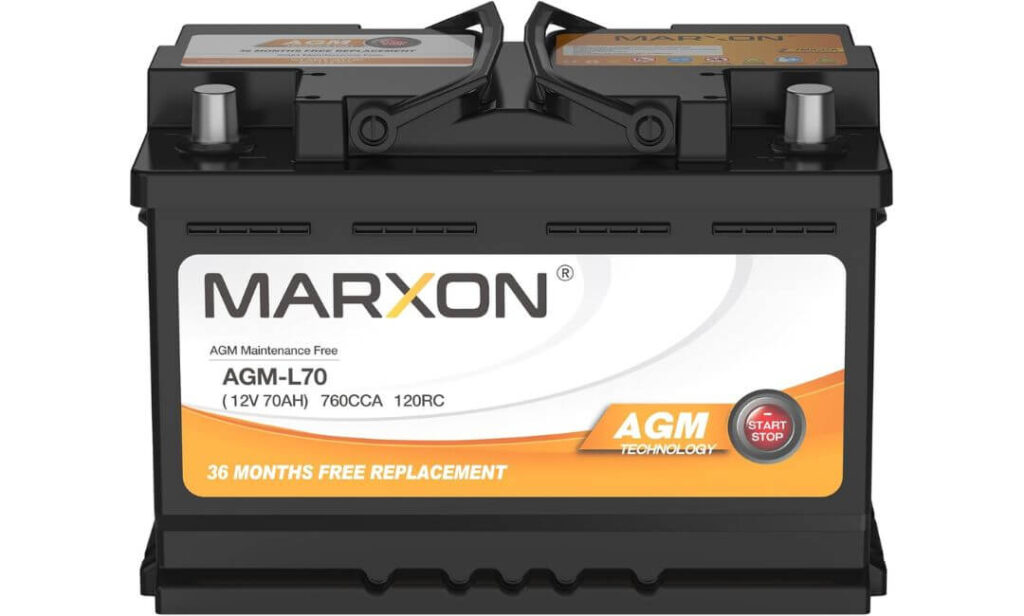
Quick Specs:
- Battery Group Size: BCI Group 48 / H6 / L3
- Battery Type: AGM, maintenance-free
- Voltage: 12V
- Capacity: 70Ah
- Cold Cranking Amps: 760 CCA
- Weight: Approx. 48 lbs
- Dimensions: 10.95″ W x 6.89″ D x 7.48″ H
- Start-Stop Ready: Yes
- Warranty: 3 Years
- Best For: Toyota Camry owners wanting strong specs at a more budget-friendly price
Honestly, this is the kind of battery people overlook at first—then come back to after comparing the numbers. It brings 70Ah capacity, 760 CCA, AGM construction, and start-stop support, which are specs usually associated with more expensive names.
For Camry owners, the real attraction is usable power. 760 CCA gives the confidence of quick starts in winter mornings, after a few parked days, or when the original battery has started feeling lazy. If your current battery cranks slower than it used to, this level of output can feel like a reset button.
The second standout feature is charging behavior. MARXON claims faster charging acceptance than conventional SLA batteries, which matters in real life more than people think. If your Camry does shorter commutes, school runs, city traffic, or stop-and-go driving, a battery that accepts charge faster can recover better between trips.
Then comes the AGM advantage—sealed design, stronger resistance to vibration, no topping up with water, and lower leak risk. For practical buyers, this often lands as a “why pay more if the specs are here?” type option. (Sometimes smart shopping is reading the numbers, not the logo.)
Why It Earned a Spot on This List
- 760 CCA gives strong cold-start confidence
- 70Ah capacity supports electronics and daily driving loads
- AGM design is cleaner, safer, and maintenance-free
- Works with start-stop capable vehicles
- Strong value compared with higher-priced alternatives
What to Know Before Ordering
- Brand recognition is lower than legacy names, so some buyers may prefer a more established label for peace of mind.
Toyota Camry Compatibility Notes
A wide range of Toyota Camry gasoline models commonly use Group 48 / H6 sizing, which makes this battery a realistic replacement option for many trims needing AGM power and modern specs.
Still, the smartest move is checking your current battery label, hold-down bracket space, and terminal position first. A correct fit always matters more than advertised compatibility charts.
The Insider Pro-Tip
If you are replacing a weak battery after years of use, inspect the battery tray and hold-down clamp before installation. Rusted hardware or a loose hold-down can shorten the life of even a brand-new battery through vibration damage.
Also, if your Camry mostly sees short drives, take it for one longer highway run after installation. That first proper recharge cycle helps any new battery settle in stronger.
#4. UPLUS Group 48 AGM-L70-M Battery
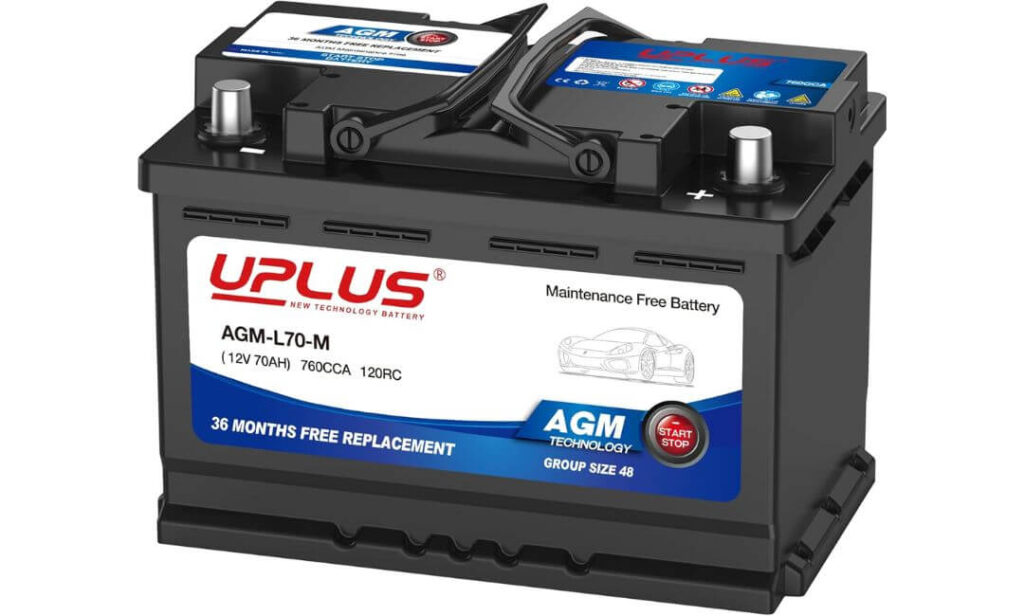
Quick Specs:
- Battery Group Size: BCI Group 48 / H6 / L3
- Battery Type: Premium AGM, maintenance-free
- Voltage: 12V
- Capacity: 70Ah
- Reserve Capacity: 120 RC
- Cold Cranking Amps: 760 CCA
- Weight: 46.73 lbs
- Dimensions: 10.98″ W x 6.81″ D x 7.51″ H
- Terminal Layout: Left Negative (-), Right Positive (+)
- Vibration Resistance: Up to 15x more than standard batteries
- Warranty: 3 Years
- Best For: Toyota Camry owners dealing with short trips, heavy electronics, or daily traffic use
Truthfully, some batteries are built for showroom specs, while others are built for actual daily driving. This one feels made for the second group. If your Camry sees city traffic, repeated short trips, frequent stop-start driving, or long idle time with electronics running, these specs begin to matter fast.
The headline numbers are serious: 760 CCA, 70Ah capacity, and 120 RC. That means strong engine starts, healthy power reserve, and better support for modern accessories like screens, charging ports, heated seats, navigation, and cabin electronics. For Camry owners who use their car like a real car—not just a weekend machine—this is where value shows up.
UPLUS also pushes cycle-life strength, claiming up to 4 times extra cycling versus many conventional batteries. In simple terms, repeated starts and recharge cycles can wear weaker batteries down early. AGM batteries like this are designed to handle that punishment better.
Another detail many buyers miss is vibration resistance. Roads are not smooth forever, and vibration quietly kills batteries over time. With claims of 15x more vibration resistance, this one targets the kind of hidden wear that shortens battery life before owners expect it. (Good batteries do more than start the engine—they survive ownership.)
Why It Deserves a Place on This List
- 760 CCA for dependable starts in all seasons
- 120 RC gives stronger backup reserve power
- 70Ah capacity suits modern Camry electrical loads well
- Designed for short trips, traffic, and start-stop conditions
- Strong vibration resistance can help long-term durability
What to Know Before Ordering
- If your current battery is an H5 or a hybrid-specific setup, confirm fitment first before moving to an H6 replacement.
Toyota Camry Compatibility Notes
Many Toyota Camry gas-powered trims commonly accept Group 48 / H6 batteries, making this a strong candidate for owners wanting more reserve power and AGM durability.
The safest move is still to compare your existing battery size, terminal direction, and hold-down bracket position before purchase. Fitment checks take minutes and prevent avoidable returns.
The Insider Pro-Tip
If your Camry often sits unused for several days, choose batteries with stronger reserve capacity like this one. Idle vehicles slowly drain power through alarms, memory systems, and keyless modules.
After installation, drive the car long enough for a healthy recharge cycle instead of only taking a five-minute trip home. New batteries perform best when fully topped up early.
#5. Interstate M-48/H6 Performance Battery
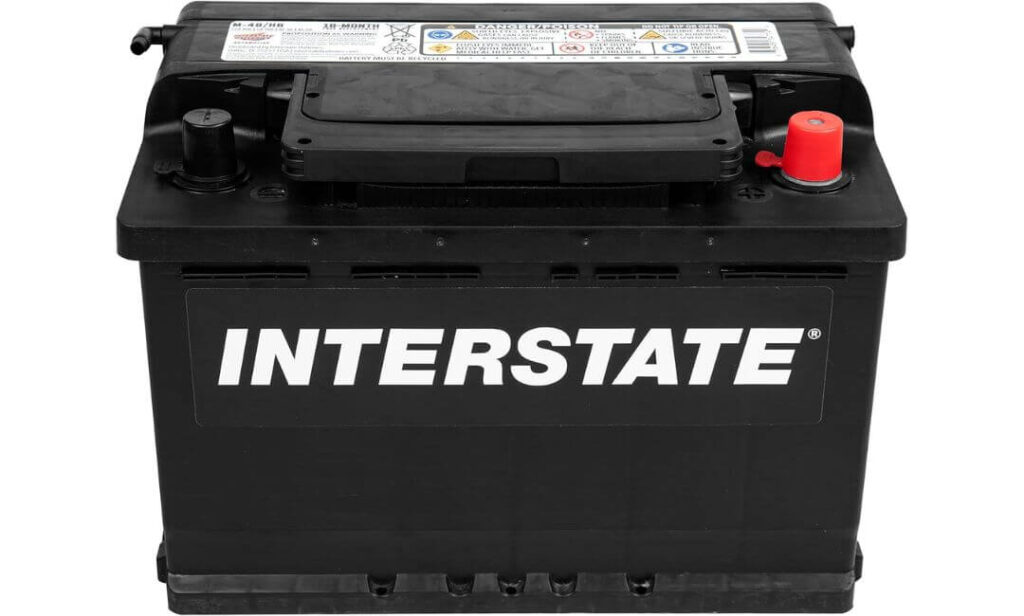
Quick Specs:
- Battery Group Size: H6 / Group 48
- Battery Type: Conventional Flooded Lead-Acid
- Voltage: 12V
- Cold Cranking Amps: 700 CCA
- Reserve Capacity: 95 Minutes
- Warranty: 18 Months
- Terminal Style: Top Posts
- Best For: Toyota Camry owners wanting a trusted brand at a practical price
Sometimes buyers do not need the most expensive AGM upgrade—they need a battery from a name they already trust. That is exactly where this one fits. Interstate has built a reputation for dependable replacements for decades, and many owners choose it because they simply want something proven.
The numbers are practical and honest: 700 CCA with 95 minutes reserve capacity. That is enough starting power for many Camry owners who use their car for normal commuting, family driving, and everyday errands. If your Camry is stock, starts normally, and does not carry heavy accessory demand, this can be all the battery you truly need.
Its conventional flooded design also keeps pricing more accessible than many AGM alternatives. For drivers who replace batteries on schedule, maintain clean terminals, and do regular driving, a quality flooded battery can still be a sensible buy.
What keeps this battery relevant is balance—trusted brand history, solid cranking power, and straightforward ownership without paying premium money for features some drivers may never need. (Not every smart purchase has to be the most expensive one.)
Why It Earned a Spot Here
- 700 CCA gives dependable everyday starts
- 95-minute reserve capacity supports normal accessory use
- Interstate has a long-standing trusted reputation
- Usually priced below many AGM alternatives
- Good fit for standard daily-driven Camry ownership
What to Know Before Ordering
- If your Camry does frequent short trips, sits often, or runs heavy electronics, an AGM battery may offer better long-term performance.
Toyota Camry Compatibility Notes
Many Toyota Camry gasoline models commonly use an H6 / Group 48 battery size, which places this battery in the right category for a wide range of trims needing standard replacement power.
As always, confirm your current battery label, tray size, and terminal layout first. Some Camry trims may use H5 sizing, and hybrid models can differ from gasoline versions.
The Insider Pro-Tip
If you choose a flooded battery like this one, driving habits matter more than most people realize. Regular longer drives help keep it healthier than repeated short five-minute trips.
Also, whenever replacing the battery, clean the hold-down area and cable ends first. A trusted battery performs best when the connections around it are just as healthy.
#6. Renogy 12V 70Ah AGM Power Battery
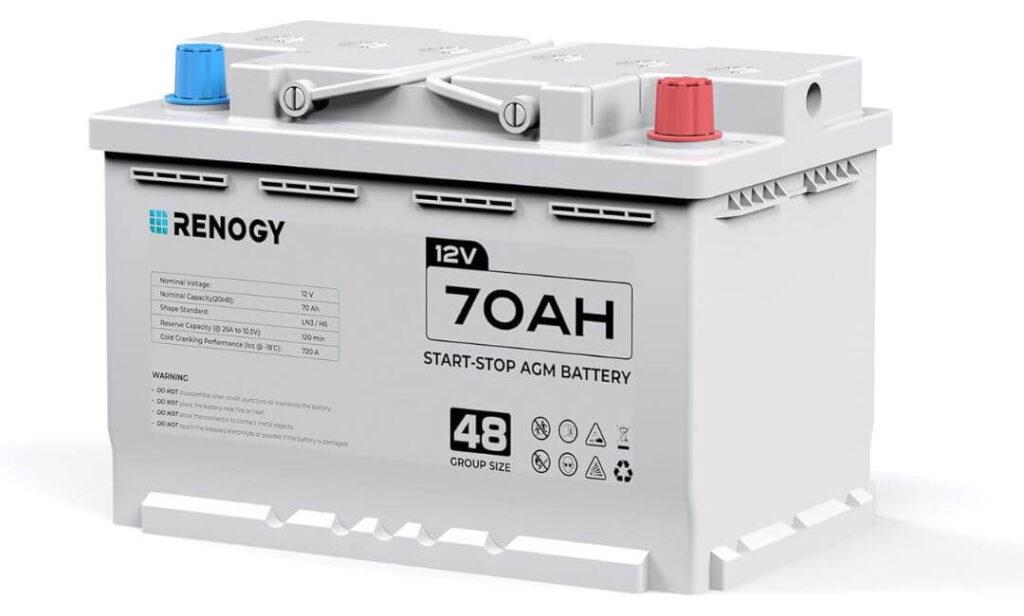
Quick Specs:
- Battery Group Size: H6 / Group 48
- Battery Type: AGM, sealed maintenance-free
- Voltage: 12V
- Capacity: 70Ah
- Cold Cranking Amps: 720 CCA
- Reserve Capacity: 120 RC
- Start-Stop Ready: Yes
- Operating Temperature Range: -22°F to 158°F (-30°C to 70°C)
- Best For: Toyota Camry owners in extreme climates or heavy daily-use conditions
Some batteries look good in a garage and struggle once real weather arrives. This one takes a different route. It is clearly aimed at drivers who deal with cold mornings, hot summers, stop-go traffic, and everyday use where reliability matters more than a logo.
Its 720 CCA output gives strong starting confidence for Camry owners, while the 120 reserve capacity adds useful backup power for electronics, lighting, climate control, and modern accessories. That combination works especially well for drivers who spend time in traffic or run multiple systems at once.
Where this battery separates itself is temperature tolerance. Rated to operate from -22°F to 158°F, it is built for owners who live where seasons are serious. Heat can quietly shorten battery life, and cold can expose weak batteries fast. This design targets both ends of that problem.
The AGM sealed construction also helps reduce leak risk, corrosion issues, and maintenance hassle. For Camry owners who want install-and-drive simplicity with strong all-season manners, this becomes a smart alternative pick. (Real batteries prove themselves in weather, not in marketing copy.)
Why It Made This List
- 720 CCA delivers dependable starting power
- 120 RC supports accessories and reserve demand well
- Strong extreme temperature performance
- Designed for start-stop systems and frequent restarts
- AGM build helps reduce leaks, corrosion, and upkeep
What to Know Before Ordering
- It offers slightly lower CCA than some 760 CCA rivals, though still more than enough for many Camry owners.
Toyota Camry Compatibility Notes
Many Toyota Camry gasoline trims commonly use H6 / Group 48 sizing, making this battery a realistic fitment option for owners wanting AGM durability and balanced output.
Before ordering, compare your current battery dimensions, terminal direction, and tray space. Correct physical fitment always matters more than universal compatibility claims.
The Insider Pro-Tip
If you live in very hot climates, battery lifespan often drops faster from heat than from cold. Choosing a battery built for higher temperature resistance can pay off more than chasing the highest CCA number alone.
After installation, make sure the hold-down bracket is secure. Heat plus vibration is a silent battery killer, especially on rough roads.
#7. Daakmax Platinum Group 48 AGM Battery
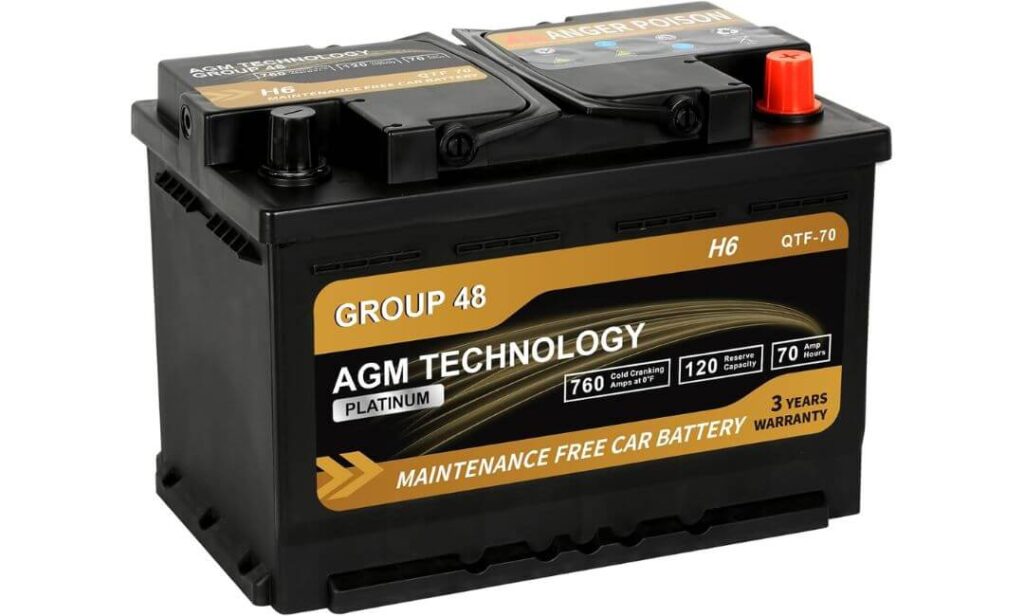
Quick Specs:
- Battery Group Size: BCI Group 48 / H6
- Battery Type: AGM, sealed maintenance-free
- Voltage: 12V
- Capacity: 70Ah
- Cold Cranking Amps: 760 CCA
- Reserve Capacity: 120 RC
- Weight: 44 lbs
- Dimensions: 10.94″ W x 6.89″ D x 7.48″ H
- Terminal Layout: Left Negative (-), Right Positive (+)
- Warranty: 36 Months
- Best For: Toyota Camry owners wanting strong specs with budget-friendly value
Here is something many buyers miss—sometimes the best value sits lower on the page simply because the brand name is newer. On paper, this battery checks nearly every box Camry owners care about: 760 CCA, 70Ah capacity, 120 RC, AGM design, and a 36-month warranty.
That 760 CCA output gives serious starting confidence during cold mornings, after sitting for days, or when an older battery would normally hesitate. For Camry owners who just want the car to fire up instantly and move on, that matters more than fancy branding.
Its 120 reserve capacity also adds real everyday value. Touchscreens, charging ports, climate control, lights, memory systems, and other electronics all draw power. Extra reserve means more breathing room when the alternator is under load or the car sees repeated short trips.
The AGM construction brings the upgrades people actually feel over time: maintenance-free ownership, leak-resistant safety, stronger vibration durability, and better cycle life than many standard flooded batteries. For practical shoppers, this is the kind of pick that can outperform expectations. (Sometimes lesser-known names win by offering more where it counts.)
Why It Made the Final Cut
- 760 CCA for confident all-season starts
- 120 RC helps support electronics and reserve demand
- 70Ah capacity suits modern sedan needs well
- AGM build offers cleaner, lower-maintenance ownership
- 36-month warranty adds useful protection
What to Know Before Ordering
- Brand recognition is smaller than legacy battery names, so some buyers may prefer a more established label.
Toyota Camry Compatibility Notes
Many Toyota Camry gasoline models commonly use Group 48 / H6 battery sizing, making this a realistic option for owners replacing an aging battery with stronger AGM specs.
Always compare your current battery size, terminal orientation, and bracket space before ordering. If your Camry uses an H5 setup or hybrid-specific battery, confirm first.
The Insider Pro-Tip
When two batteries offer similar specs, check the freshness date and warranty process before checkout. A newer battery with easier replacement support often beats a famous brand that has been sitting too long.
If your current battery is more than four years old, upgrading before winter or summer heat hits is usually smarter than waiting for the failure day.
Best Battery for a Toyota Camry Comparison Table: Top H6 AGM Picks Ranked
| Battery | Type | Power | Warranty | Best Use | Why It Stands Out | Verdict |
|---|---|---|---|---|---|---|
|
ACDelco Gold 48AGM
Best Overall
OEM Feel
Premium pick for long-term ownership
|
AGM | 760 CCA Strong cold starts |
36 Months | Daily Camry drivers who want install once, forget later. | Excellent brand trust, balanced power, strong lifespan reputation. | Top Choice |
|
Weize Platinum H6 AGM
Best Value
760 CCA
Big specs for the money
|
AGM | 760 CCA 120 RC |
36 Months | Owners wanting premium numbers without premium pricing. | Excellent reserve capacity, fast starts, smart price-to-performance ratio. | Best Buy |
|
MARXON Group 48 H6 AGM
Budget Smart Pick
760 CCA
Strong specs under bigger brands
|
AGM | 760 CCA | 3 Years | Camry owners wanting performance while saving money. | Great output, start-stop ready, competitive value choice. | Value Power |
|
UPLUS AGM-L70-M
Heavy Use Pick
120 RC
Made for city traffic life
|
AGM | 760 CCA 120 RC |
3 Years | Short trips, traffic jams, electronics-heavy driving. | High cycle life focus, strong reserve, vibration resistance. | Urban Winner |
|
Interstate M-48/H6
Trusted Name
Simple Choice
Traditional dependable route
|
Flooded | 700 CCA 95 RC |
18 Months | Drivers wanting known brand reliability at practical cost. | Solid everyday performer with long-standing reputation. | Safe Pick |
|
Renogy 70Ah AGM H6
Climate Ready
120 RC
Strong in heat and cold
|
AGM | 720 CCA 120 RC |
Varies | Extreme weather regions and mixed driving conditions. | Wide temperature tolerance, stable reserve power. | All-Season Pick |
|
Daakmax Platinum H6 AGM
Sleeper Value
760 CCA
Low-profile high-spec option
|
AGM | 760 CCA 120 RC |
36 Months | Buyers comparing specs first, brand name second. | Strong paper specs, modern AGM build, useful warranty. | Hidden Gem |
Buying Guide: What to Look for Before Choosing a Toyota Camry Battery
A Toyota Camry is known for reliability, but even the most dependable sedan becomes frustrating when the battery is weak, undersized, or poorly matched. Slow starts, flickering electronics, warning lights, and random no-start mornings usually begin with the wrong battery choice. That is why buying on price alone often turns into the most expensive mistake later.
For most Camry owners, the right battery should do three things well: start the engine instantly, support modern electronics without strain, and last through years of daily driving. Here is what actually matters before you buy.
Key Specs That Matter More Than Marketing Claims
When comparing batteries, ignore flashy labels first and focus on the numbers that affect real ownership.
- Cold Cranking Amps (CCA): Measures starting power, especially during cold mornings or when the battery has aged. Higher CCA usually means stronger, faster cranking confidence.
- Reserve Capacity (RC): Shows how long the battery can supply power if the charging system is under load. This matters for lights, infotainment, charging ports, and electronics.
- Amp Hour Capacity (Ah): Reflects stored energy. Helpful for stop-go traffic, repeated starts, and accessory use.
- Cycle Life: Important if your Camry sees frequent short trips or repeated restarts. Better cycle life often means longer useful battery life.
For modern Camry ownership, a battery with balanced CCA and reserve capacity usually beats one that only advertises a single big number.
AGM vs Flooded Batteries: Which Is Smarter for Camry Owners?
This is where many buyers either save money wisely or spend twice.
AGM batteries are usually the better upgrade for Camry drivers who want longer life and stronger performance. They resist vibration better, recharge faster, deliver steadier voltage, and require less maintenance. They also handle short-trip driving and heavy accessory use more effectively.
Flooded batteries still make sense for budget-focused owners who drive regularly, keep the car simple, and want a lower upfront cost. A good flooded battery can work well, but it usually offers fewer long-term advantages than AGM.
If you plan to keep your Camry several years, AGM often pays back the higher price through durability and fewer headaches.
Choosing the Correct Battery Size and Group Fitment
Even an excellent battery becomes a bad purchase if it does not physically fit.
Many newer gasoline-powered Toyota Camry models commonly use Group 48 / H6, while some trims may use H5 / Group 47. Exact fitment can vary by engine, trim level, market, and previous replacement history.
Before ordering, always compare:
- Current battery group size label
- Length, width, and height
- Terminal position (left negative / right positive, etc.)
- Hold-down bracket location
- Cable reach without stretching
Correct fitment is not optional. It affects safety, installation ease, and long-term reliability.
Why 760 CCA Is a Strong Sweet Spot for Many Camry Models
A lot of owners ask if higher CCA really matters. In real life, yes—it often does.
A battery around 760 CCA gives extra starting confidence during winter mornings, after the car sits for several days, or when the battery ages over time. It can also help when using climate control, lights, and electronics before startup.
Does every Camry require 760 CCA? No. But in many cases, it provides a healthy buffer instead of running close to minimum requirements. That extra margin is often what separates “starts fine” from “why is it struggling today?”
Warranty Length and Support Matter More Than Most Buyers Think
Two batteries can look similar on paper, then feel completely different when something goes wrong.
Look at:
- Free replacement period
- Total warranty term
- Ease of claim process
- Local store or service network
- Brand reputation for support
A battery with a smoother warranty process can be worth more than one with impressive specs and frustrating service.
Toyota Camry Battery Replacement Considerations Most Owners Miss
Replacing the battery is not just dropping a new one into the tray.
Before and after installation, check:
- Battery terminals for corrosion
- Hold-down clamp condition
- Cable tightness
- Charging system health
- Battery tray rust or vibration damage
After installing a new battery, longer drives help recharge it properly. Very short trips right after installation are not ideal.
If your old battery lasted unusually short or failed repeatedly, test the alternator and parasitic drain instead of blaming the replacement battery.
Smart Final Buying Advice
If you want the safest all-around route, choose a properly sized AGM Group 48 / H6 battery from a trusted brand with solid warranty support. If budget matters most, a dependable flooded battery can still work well when correctly matched.
The smartest Camry battery is not the cheapest one or the most advertised one—it is the battery that fits correctly, starts strong every morning, and still feels reliable years later.
AGM Battery for Toyota Camry vs Traditional Flooded Battery: Which One Actually Makes More Sense?
Many Toyota Camry owners replace a battery only once every few years, so the choice usually comes down to one simple question: Should you pay more for AGM, or save money with a traditional flooded battery?
Both types can start a Camry and both can be the right choice depending on how the car is used. The mistake happens when buyers choose only by price, or only by brand name, without matching the battery to real driving habits.
If your Camry is a daily commuter, sits in traffic, handles short trips, or runs a lot of electronics, the battery choice can noticeably affect reliability. If it is mostly basic highway driving with regular use, the answer may be different.
What an AGM Battery Really Gives Camry Owners
AGM stands for Absorbent Glass Mat. Instead of free-flowing liquid acid moving inside the battery, the electrolyte is held in glass mat separators. That design changes how the battery behaves in real ownership.
For Toyota Camry drivers, AGM batteries usually bring these advantages:
- Spill-resistant sealed design with less leak risk
- Stronger vibration resistance, useful on rough roads and long-term wear
- Better cycle life, especially with repeated starts and short-trip driving
- Faster charge acceptance, helpful when the alternator has limited time to recharge
- More stable voltage for modern electronics
- Lower maintenance compared with older battery designs
In daily life, AGM batteries often feel stronger for longer. They usually crank harder when older, recover faster after accessory use, and tolerate stop-go driving better than many flooded batteries.
That matters because many Camry owners use heated seats, screens, charging ports, dash cams, audio systems, and climate control regularly. Modern sedans ask more from a battery than older cars ever did.
Why AGM Is Often Worth the Extra Cost
The upfront price is higher, but ownership cost is not always the same as purchase price.
If an AGM battery lasts longer, avoids one tow bill, prevents one missed morning, or survives harsh weather better, it can become the cheaper decision over time. This is especially true for owners planning to keep their Camry several more years.
AGM is often the smarter route for:
- Daily commuters
- Drivers in very hot or very cold climates
- Cars used in traffic-heavy cities
- Owners who take frequent short trips
- Camrys with added electronics or accessories
- People who prefer fewer battery headaches
Where Traditional Flooded Batteries Still Make Sense
Flooded batteries remain common for a reason—they still work well when properly chosen and maintained.
A quality flooded battery can be a sensible match for Camry owners who:
- Want the lowest upfront cost
- Drive regularly enough to keep the battery charged
- Mostly do longer highway trips
- Have a simpler trim with fewer electrical demands
- Replace batteries on schedule before failure
Flooded batteries are also easier to find in many local stores and can be a practical emergency replacement if quick availability matters.
For some owners, paying extra for AGM features they may never fully use is unnecessary. Real value depends on usage, not internet hype.
The Hidden Differences Buyers Notice Later
On day one, both battery types may feel similar. Months or years later, the differences often show up.
AGM batteries commonly hold performance better as they age. Flooded batteries may still work well, but some begin to show slower starts earlier, especially after heat exposure, repeated short trips, or long sitting periods.
Heat is one of the biggest battery killers, and stop-go city use can quietly wear down weaker batteries faster than highway use.
That is why two owners with the same Camry can have completely different battery experiences.
Which Toyota Camry Owners Should Choose AGM?
Choose AGM if your priority is reliability, long-term ownership, and stronger everyday performance.
AGM is usually the better match if you often say:
- “I just want it to start every time.”
- “I keep my cars for years.”
- “I drive in traffic a lot.”
- “My summers are brutal.”
- “I use electronics constantly.”
- “I do many short trips.”
For these owners, AGM often feels worth it.
Which Toyota Camry Owners Can Stay with Flooded?
A traditional flooded battery is still a fair option if you mainly want lower cost and your driving habits are battery-friendly.
It often makes sense when:
- The Camry is driven regularly
- Trips are long enough to recharge the battery
- Climate is moderate
- Budget is the top concern
- You replace batteries proactively
There is nothing “wrong” with flooded batteries when used in the right scenario.
Smart Final Verdict
If most Camry owners asked for one recommendation without giving driving details, AGM would usually be the safer all-around answer. It handles more situations better and tends to reward long-term owners.
If budget is tight and your driving routine is easy on batteries, a quality flooded battery can still be a smart practical buy.
The best battery type is not decided by marketing claims—it is decided by how your Toyota Camry is actually driven every week.
The H6 AGM Upgrade Guide for Toyota Camry: Better Fitment, Stronger Starts, Smarter Long-Term Choice
A lot of Toyota Camry owners begin shopping for a new battery only after the original one starts cranking slower, struggling in winter, or showing its age after years of dependable service. That is usually when one term keeps appearing: H6 AGM.
For many Camry models, especially newer gasoline trims, an H6 / Group 48 battery is one of the most common replacement sizes. When paired with AGM technology, it often becomes one of the smartest battery upgrades available—not because it sounds premium, but because it solves real ownership problems.
If you want stronger starts, better reserve power, and fewer battery-related surprises, understanding the H6 AGM route is worth your time.
What “H6 AGM” Actually Means
Many buyers see battery codes and assume they are brand names or marketing labels. They are not.
H6 refers to a battery size classification, commonly linked with BCI Group 48 in many markets. It usually indicates the battery’s approximate case size, mounting footprint, and fitment category.
That matters because a battery can have excellent specs and still be useless if it does not fit your tray, hold-down bracket, or cable reach.
AGM stands for Absorbent Glass Mat, a sealed battery design where the electrolyte is held in fiberglass mats instead of sloshing freely as liquid. This improves durability, vibration resistance, and charge behavior.
So when someone says H6 AGM, they are usually talking about:
- A common modern battery size used in many Camry applications
- A sealed premium battery design
- Higher-performance replacement potential
- Better support for electronics-heavy daily driving
Why H6 AGM Is Popular With Camry Owners
Toyota Camry owners usually want reliability first. The H6 AGM setup aligns with that goal because it combines proper sizing with stronger battery behavior.
Common advantages include:
- Faster, stronger engine cranking
- Better reserve power for electronics
- More resistance to vibration and road shock
- Lower leak and corrosion risk
- Better short-trip recovery than many flooded batteries
- Longer useful life in many real-world conditions
That combination matters more today than it did years ago. Modern Camrys rely on infotainment systems, sensors, charging ports, memory functions, and convenience electronics that quietly increase battery demand.
Why Upgrading to H6 AGM Can Improve Cold Starts
Cold weather exposes weak batteries quickly. Oil thickens, chemical reaction slows, and the starter motor needs more effort. That is where stronger AGM H6 batteries often feel noticeably better.
Many H6 AGM options offer healthy CCA ratings such as 720 or 760 CCA. That extra cranking margin can mean:
- Faster starts on freezing mornings
- Less hesitation after the car sits unused
- Better performance as the battery ages
- More confidence during winter ownership
Even in milder climates, stronger starting power can still help after long parking periods or when the battery is no longer brand new.
Why Longevity Often Improves with AGM
Not every battery dies from age alone. Many fail from repeated stress.
Short trips, traffic jams, cabin electronics, summer heat, vibration, and incomplete charging cycles slowly wear batteries down. AGM designs are often better prepared for that punishment.
Compared with many standard flooded batteries, AGM batteries commonly offer:
- Better cycle durability
- Stronger resistance to plate damage from vibration
- More stable voltage delivery
- Reduced maintenance concerns
- Better charge acceptance after repeated starts
For Camry owners keeping the car several years, this can make the higher purchase price easier to justify.
Compatibility Tips Before You Upgrade
This is where smart buyers save money and careless buyers create returns.
Even if H6 AGM is common, always verify your exact vehicle first. Trim level, engine choice, region, and prior battery replacements can affect fitment.
Check these before ordering:
- Current battery group size label
- Length, width, and height clearance
- Terminal orientation
- Cable reach without tension
- Hold-down bracket alignment
- Whether the car is gasoline or hybrid
Some Camry trims may use H5 / Group 47 instead. Hybrid systems may also differ from standard gasoline models.
Common Fitment Notes Camry Owners Miss
A battery may physically drop into the tray but still not be the right fit.
Watch for:
- Cables stretched too tightly to reach posts
- Hood insulation touching taller battery tops
- Hold-down clamps that no longer align
- Reversed terminal positions
- Battery trays modified by previous owners
These details matter because poor fitment can shorten battery life and create avoidable electrical issues.
Is H6 AGM Worth the Upgrade for Every Camry?
Not always. If your current battery type works well, your driving is light, and budget is the priority, a standard replacement can still be reasonable.
But for many owners, H6 AGM is worth considering if you:
- Keep the car long term
- Want fewer battery surprises
- Drive in hot or cold climates
- Sit in traffic often
- Take short daily trips
- Use accessories constantly
Smart Final Verdict
For many Toyota Camry owners, moving to an H6 AGM battery is less about upgrading for status and more about upgrading for peace of mind. Better starts, stronger reserve power, and longer real-world durability are the reasons it remains a popular choice.
The smartest move is simple: confirm fitment first, then buy the strongest battery that realistically matches how your Camry is driven.
How to Verify Fit and Install a Toyota Camry Battery: Real-World Replacement Steps That Prevent Problems
Replacing a Toyota Camry battery is not the hardest job in the garage, but it is one of the easiest jobs to get wrong in small ways. A battery that “almost fits,” loose terminals, reversed polarity, or skipping post-install checks can create warning lights, charging issues, or shortened battery life.
The good news is that most Camry battery replacements are straightforward when handled carefully. Whether you are upgrading to an AGM H6 battery or replacing a worn-out original unit, the smartest approach is to verify fitment first, install cleanly, and check the system afterward.
Verify Fit Before You Touch a Wrench
Many battery returns happen because buyers assume all Group 48 or H6 batteries are identical. They are not always identical in dimensions, terminal layout, or hold-down design.
Before removal, compare the old battery and new battery for:
- Group size and physical dimensions
- Terminal position (positive and negative side)
- Height clearance under the hood
- Hold-down bracket location
- Venting provisions if applicable
- Cable reach without stretching
If the new battery forces cables to bend hard or clamps do not align naturally, stop and recheck fitment.
For many Camry gasoline trims, H6 / Group 48 is common, but some models may use H5 / Group 47 or other setups depending on trim and year.
Quick Safety Checklist Before Starting
Battery replacement is simple, but batteries still contain acid, heavy weight, and high current potential.
Use this quick checklist:
- Engine off, key removed, lights off
- Wear gloves and eye protection
- Work in a ventilated area
- Keep metal tools away from both terminals at once
- Remove rings, bracelets, or conductive jewelry
- Have memory settings or radio codes noted if needed
- Use proper lifting technique (batteries are heavier than they look)
If the old battery is cracked, leaking, or swollen, handle it more carefully and recycle it promptly.
Step-by-Step Toyota Camry Battery Removal
Take your time here. Five calm minutes beats one rushed mistake.
- Open the hood and locate the battery.
- Identify negative (-) and positive (+) terminals.
- Disconnect the negative cable first. This reduces accidental short risk.
- Disconnect the positive cable second.
- Remove the hold-down bracket or retaining clamp.
- Lift the battery straight up carefully. Use both hands if needed.
- Inspect the tray underneath for corrosion, moisture, or rust.
If corrosion is present, clean the tray and cable ends before installing the new battery.
Installing the New Battery Correctly
This is where long battery life often begins.
- Place the new battery in the tray with terminals facing the correct direction.
- Confirm the battery sits flat and stable.
- Reinstall the hold-down bracket firmly. It should secure the battery without crushing the case.
- Connect the positive cable first.
- Connect the negative cable second.
- Ensure terminals are fully seated and snug.
- Apply terminal protectant if desired.
A loose battery can suffer vibration damage. Loose terminals can mimic a bad battery. Both are common avoidable mistakes.
Terminal Tightness Matters More Than Many Realize
Overtightening can damage posts or clamps. Undertightening causes poor connection, heat, intermittent starts, and charging issues.
The connection should be secure enough that the clamp does not rotate by hand once tightened. If you are using a torque specification, follow the battery or vehicle service guidance for your Camry model.
When in doubt, snug and secure beats aggressive tightening.
Post-Install Checks Every Smart Owner Should Do
Many people stop once the engine starts. That is only half the job.
After installation:
- Start the engine and confirm quick crank speed
- Check for warning lights on the dash
- Verify headlights and interior electronics work normally
- Confirm windows, clock, radio presets, and seat memory if applicable
- Listen for unusual clicking or weak cranking sounds
- Make sure the battery does not move in the tray
Then test charging voltage if possible. A healthy charging system commonly reads around the mid-13 to mid-14 volt range with engine running, depending on conditions and system strategy.
Electrical System Reset Notes
After battery replacement, some Camry models may temporarily reset:
- Clock settings
- Radio presets
- Auto window calibration
- Trip data
- Idle learning behavior
This is normal in many vehicles. Drive cycles usually allow systems to relearn smoothly.
If windows lose auto-up/down function, recalibration procedures are often simple and model-specific.
Why Alternator Testing Is Worth It
If the old battery failed unusually early, do not assume the battery alone was the problem.
Have the charging system checked if you notice:
- Repeated dead batteries
- Flickering lights
- Battery warning light
- Burning smell
- Slow starts even with a new battery
A weak alternator or parasitic drain can destroy a good new battery faster than most owners expect.
Common Installation Mistakes to Avoid
These are the small errors that create big frustration:
- Connecting negative first during install
- Mixing terminal polarity
- Forgetting the hold-down clamp
- Leaving corrosion under cable clamps
- Choosing the wrong battery size
- Assuming “it starts, so it’s fine”
Starting is not the only test. Proper fit, secure mounting, and healthy charging matter just as much.
Smart Final Advice
If you are comfortable with basic tools, many Camry battery replacements are DIY-friendly. If not, professional installation is often inexpensive and worth it for peace of mind.
The best battery replacement is not just the battery you buy—it is the battery installed correctly, secured properly, and supported by a healthy charging system.
Real-World Toyota Camry Battery Scenarios: How to Choose the Right One for the Way You Actually Drive
A lot of battery guides talk only about specs, but real ownership is different. Two Toyota Camry owners can buy the same battery and have completely different experiences because they drive differently, park differently, and live in different climates.
That is why the “best battery” is not always the one with the biggest number on the box. It is the one that matches how your Camry is used every week.
If you commute daily in traffic, face freezing winters, let the car sit for days, or plan to keep it long term, those details should shape your buying decision more than branding alone.
If You Live in Extreme Cold, Prioritize CCA and Reserve Capacity
Cold weather is one of the fastest ways to expose a weak battery. As temperatures drop, engine oil thickens, battery chemistry slows, and the starter motor has to work harder.
That means a battery that felt fine in mild weather can suddenly struggle when winter arrives.
For cold-climate Camry owners, focus on:
- Higher CCA for stronger startup power
- Healthy reserve capacity (RC) for added electrical support
- Fresh battery date code, not old shelf stock
- Trusted brand with reliable warranty support
A battery in the 720 to 760 CCA range often gives more confidence than lower-output options, especially after a few years of aging.
If your Camry stays outside overnight, that extra margin matters even more.
If You Drive Mostly Short Trips, RC and AGM Matter More Than You Think
Many city drivers unknowingly shorten battery life with short trips.
Five-minute drives, school runs, stop-go traffic, and frequent restarts often do not give the alternator enough time to fully recharge the battery. Over time, partial charging becomes battery stress.
For this driving style, prioritize:
- Strong reserve capacity
- AGM battery design
- Good cycle-life reputation
- Stable voltage for electronics
AGM batteries are often better for repeated starts and incomplete recharge cycles than many standard flooded batteries. They also tend to recover faster after accessory use.
If your Camry mostly sees urban driving, battery design can matter more than raw CCA alone.
If You Want Maximum Lifespan, Look Beyond the Price Tag
Some buyers replace batteries every few years. Others want one purchase that lasts as long as realistically possible.
If lifespan is your main goal, focus on:
- Longer warranty coverage
- AGM construction
- Good vibration resistance
- Fresh inventory date
- Proper fitment and secure installation
- Consistent charging system health
A cheap battery that fails early is rarely cheaper in the long run. Towing costs, lost time, emergency replacement pricing, and frustration add up quickly.
Many Camry owners keeping the car long term are better served by paying more once for a stronger battery.
If Your Camry Sits Often, Reserve Capacity Becomes Critical
Some Camrys are second cars, weekend cars, or work-from-home vehicles that sit parked for days.
Even when parked, modern vehicles still use small amounts of power for alarms, memory systems, keyless entry modules, and computers. That slow drain adds up.
If your Camry sits frequently, prioritize:
- Higher reserve capacity
- AGM battery design
- Battery maintainer use if parked long-term
- Strong warranty support
This is where batteries with 120 RC can feel smarter than lower-reserve alternatives.
If You Run Electronics Constantly, Buy for Load Demand
Many owners underestimate how much power accessories use.
Dash cams, phone charging, heated seats, upgraded audio, climate control, navigation, and frequent idle time all increase battery workload.
If this sounds like your Camry, choose:
- AGM battery
- Higher Ah capacity when available
- Strong RC rating
- Reliable charging system
Your battery is no longer just starting the engine—it is supporting a mobile electronics hub.
If You Want the Safest All-Around Choice
If you are unsure which category you fit into, the safest general route for many Camry owners is:
- Correct fitment first
- H6 / Group 48 where applicable
- AGM battery
- Strong warranty
- 720–760 CCA range
- Trusted seller with fresh stock
That combination usually covers the widest range of real-world needs.
Common Mistake Buyers Make
They buy based on price, then ask the battery to handle:
- Winter mornings
- Daily traffic
- Short trips
- Long parking periods
- Heavy electronics
- Years of use
That mismatch is where disappointment begins.
Smart Final Verdict
The right Toyota Camry battery depends less on the badge and more on your routine.
Cold climate owners should lean toward higher CCA. City drivers should care deeply about reserve capacity and AGM durability. Long-term owners should prioritize warranty, fitment quality, and battery construction.
Buy for your real life, not for the label on the shelf, and your Camry will usually reward you every morning.
FAQs About Best Car Battery for Toyota Camry
What battery size does a Toyota Camry actually need, and why do some listings show H5 while others show H6?
This is one of the biggest reasons Camry owners buy the wrong battery online. Toyota Camry battery fitment can vary by model year, engine, trim level, region, and even previous replacement history. That is why one listing may show H5 / Group 47, while another shows H6 / Group 48.
The smartest move is not trusting a random fitment chart blindly. Check the battery already in your Camry, measure the tray space, and confirm terminal orientation. In many newer gasoline Camry models, H6 / Group 48 is common, but not universal. A battery that “almost fits” is still the wrong battery.
If there is any doubt, compare these three things first:
- Current battery group size label
- Physical dimensions
- Positive and negative terminal position
That two-minute check prevents the kind of return process nobody enjoys.
Is upgrading my Toyota Camry to an AGM battery really worth paying extra for?
For many owners, yes—but only if your driving habits justify it. AGM batteries usually make the most sense when the Camry sees short trips, stop-go traffic, heavy electronics use, extreme weather, or long-term ownership.
Why? Because AGM batteries generally handle repeated starts better, recharge faster, resist vibration more effectively, and maintain stronger performance as they age. In real life, that often means fewer weak-start mornings and less surprise failure.
If your Camry is mainly used for longer highway drives in mild weather and budget matters most, a quality flooded battery can still be sensible. But if you want a safer all-around upgrade with fewer headaches, AGM is often the smarter route.
The real question is not “Is AGM better?” It is “Will I benefit from AGM enough to justify the cost?”
Can I install a higher CCA battery in my Toyota Camry, or will it damage anything?
A properly sized battery with higher CCA (Cold Cranking Amps) does not force extra power into the car. The starter only draws what it needs. Higher CCA simply means the battery has more starting capability available when demanded.
That is why many Camry owners prefer batteries in the 720 to 760 CCA range when fitment is correct. It can help with:
- Cold-weather starts
- Older engines needing more effort
- Long parking periods
- Better performance as the battery ages
What matters more than chasing maximum CCA is choosing the correct group size, terminal layout, and secure fitment. Wrong size with high CCA is still a bad purchase.
Why did my new Toyota Camry battery die early even though it was recently replaced?
This is where many people blame the battery when the battery was only the victim.
Early battery failure often points to another issue, such as:
- Weak alternator charging output
- Parasitic drain while parked
- Corroded or loose terminals
- Frequent short trips with incomplete recharging
- Extreme heat exposure
- Battery sitting old on a shelf before purchase
A new battery installed into a bad charging system can fail faster than the old one. That is why smart buyers test the charging system if a replacement battery dies unusually early.
Real talk: replacing batteries repeatedly without diagnosing the cause is one of the most expensive habits in car ownership.
How long should a Toyota Camry battery realistically last, not just in marketing claims?
Most Camry batteries last somewhere around 3 to 5 years, but real lifespan depends more on conditions than labels. A battery in heavy summer heat with short daily trips may age faster than one used on regular highway drives in moderate weather.
If you want longer life, focus on ownership habits:
- Keep terminals clean
- Drive long enough to recharge regularly
- Replace weak alternators early
- Avoid leaving electronics on while parked
- Buy fresh inventory, not old shelf stock
Many owners wait until total failure, but batteries often warn you first through slower cranking, dimmer starts, or electronic glitches. Replacing during the warning stage is usually smarter than waiting for the no-start morning.
Final Verdict
A Toyota Camry has earned its reputation by starting, running, and staying dependable long after many cars begin asking for excuses. The battery you choose should follow that same standard. This is not the place to save a few dollars only to lose mornings, time, and patience later.
If you want the safest all-around route, a properly sized H6 / Group 48 AGM battery remains the strongest choice for many Camry owners. It delivers better cold-start confidence, stronger reserve power for modern electronics, and the kind of long-term reliability that feels worth it every single morning. That is why options like the ACDelco Gold 48AGM and Weize Platinum H6 AGM stand out at the top of this list.
If budget matters more right now, there are still smart value picks here that can serve a Camry well when matched correctly. The key is not buying the most expensive battery or the most advertised one—it is buying the battery that fits your exact Camry, matches your driving routine, and comes from a seller you trust.
Real talk: most people remember their battery only when it fails. Smart owners replace that memory with confidence. Choose once, choose right, and let your Camry keep doing what it has always done best—showing up every day without drama.
Also Check:

