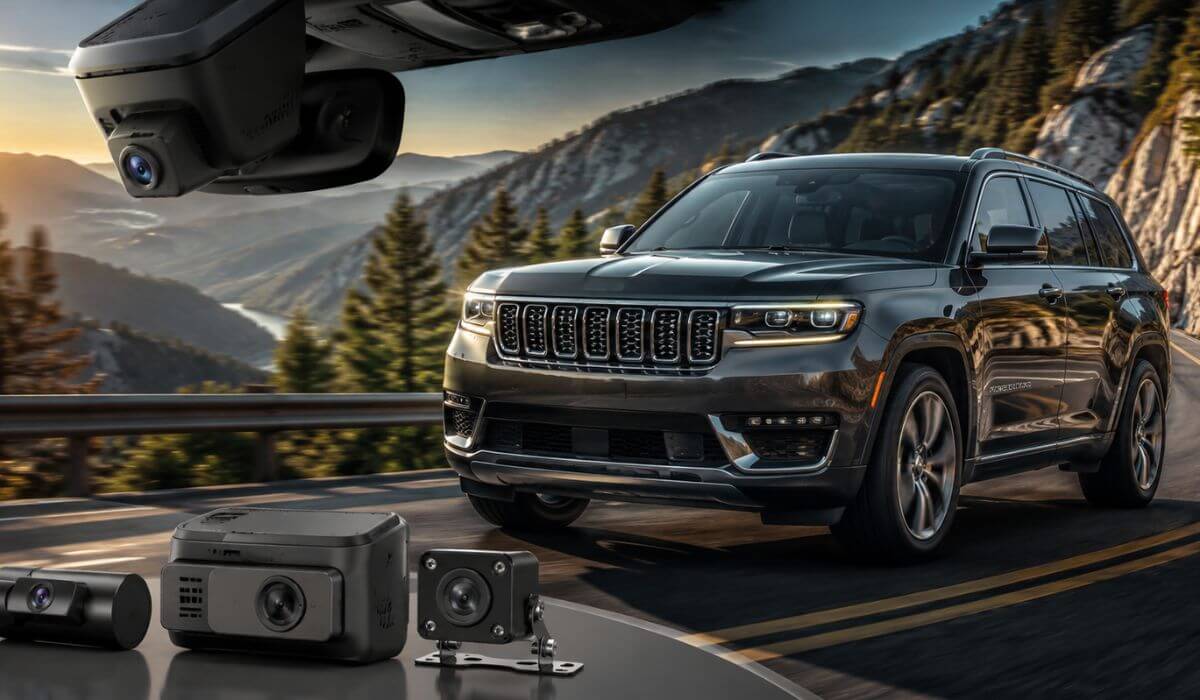
5 Best Dash Cams for Jeep Wagoneer in 2026: OEM Fit, 4K HDR & STARVIS 2 Picks
If you drive a 2022–2026 Jeep Wagoneer or Grand Wagoneer, you already know this SUV sits in a different lane from most family haulers. The windshield is huge, the cabin is quiet at highway speeds, and the front end sits higher than a typical crossover. That changes what actually works as a dash cam. A cheap universal camera that looks fine in a sedan can end up blocking visibility, vibrating on rough roads, or struggling with glare inside a Wagoneer.
That’s why this list wasn’t thrown together from random Amazon ratings. We focused on dash cams that actually make sense for the Wagoneer platform — OEM-style hidden installs, true 4K recording, reliable parking protection, clean app connectivity, and strong night performance for a large SUV windshield. Some owners want a factory-look setup that disappears behind the mirror, while others care more about STARVIS 2 low-light clarity, smoother rear recording, or faster 5GHz Wi-Fi transfers.
We also paid attention to compatibility across both the standard Jeep Wagoneer and the longer Grand Wagoneer L models from newer production years. Bigger SUVs create more cabin reflections at night, especially with panoramic roofs and light interiors, so cameras with weak HDR were immediately ruled out. The picks below are the ones that felt genuinely worth installing in a premium SUV — not just “good for the price.”
Best Jeep Wagoneer Dash Cams: Top 2026 Picks for OEM Fit & 4K HDR Recording
#1. Fitcamx 4K Dash Cam Suitable for Jeep Wagoneer 2022-2026 & Grand Wagoneer L S
Best OEM fit dash cam for Jeep Wagoneer owners who want a factory-style hidden install with clean 4K recording and zero hanging wires
#2. VIOFO A229 Pro 4K HDR Dash Cam
Best 4K front and rear dash cam for Wagoneer drivers needing premium STARVIS 2 night vision, sharper HDR footage, and reliable parking surveillance
#3. WOLFBOX X5 Duo 4K+2.5K Dash Cam
Best dual dash cam for Jeep SUV buyers wanting anti-shake stability, fast 5.8GHz Wi-Fi, touchscreen controls, and crisp highway footage
#4. Miofive 4K+4K Front and Rear Dash Cam
Best WiFi dash cam for Jeep Wagoneer owners looking for balanced value, dual 4K coverage, built-in GPS, and smooth everyday usability
#5. TERUNSOUl 4K+4K+1080P Dash Cam Front and Rear with Cabin
Best 3-channel dash cam for Grand Wagoneer drivers who want cabin recording, IR night vision, and extra interior coverage for family or rideshare use
Expert Tip: If you own a Wagoneer, don’t buy a dash cam the same way you’d buy one for a compact SUV or sedan. The height of the windshield, deeper dashboard, thicker insulation, and quieter cabin change everything — especially at night. In a large SUV like this, weak HDR processing becomes obvious fast because reflections from the wood trim, panoramic roof, and digital screens bounce back into the glass. That’s why cameras that look “sharp” in product photos can still produce washed-out night footage in a real Wagoneer.
Another thing most people ignore is heat. These SUVs have massive front glass areas, and summer cabin temperatures get brutal. A cheap battery-powered dash cam may work for a few months, then start randomly rebooting or failing during parking mode. That’s one reason several picks here use supercapacitor-based systems, STARVIS 2 sensors, or OEM-style hidden housings instead of generic suction-mounted designs.
How We Chose These Dash Cams for Jeep Wagoneer
We didn’t build this list around whichever camera had the loudest marketing or the most inflated specs. The goal was simple: find dash cams that actually make sense inside a full-size premium SUV like the Jeep Wagoneer and Grand Wagoneer.
The first thing we looked at was windshield compatibility and placement. The Wagoneer’s front glass is wide and upright compared to smaller crossovers, so bulky cameras hanging below the mirror can feel distracting surprisingly fast. That’s why the Fitcamx made immediate sense for this platform. Its OEM-style housing blends into the factory trim instead of looking like an afterthought stuck to the windshield.
After that, we focused heavily on real low-light performance, not just resolution numbers. A lot of newer dash cams claim “4K,” but many still struggle once street lighting drops or rain hits the windshield. Cameras using Sony STARVIS 2 sensors, like the VIOFO A229 Pro and WOLFBOX X5 Duo, stood out because they handle contrast and glare more naturally in large SUVs with reflective interiors.
We also paid attention to the kind of driving Wagoneer owners actually do. These vehicles are commonly used for long highway trips, family hauling, towing, and overnight parking, so stable recording mattered more than flashy gimmicks. Features like HDR tuning, parking mode reliability, GPS logging, faster 5GHz Wi-Fi transfers, and clean rear-camera clarity mattered far more than touchscreen animations or overloaded apps.
Another reason these picks made the list is because they fit different types of owners instead of forcing one “best” answer. Some people want a completely hidden factory-style setup. Others care more about premium video quality, smoother app performance, or full cabin coverage for passengers and family trips. That’s why the final lineup includes a mix of OEM-fit systems, dual-channel 4K setups, and triple-channel interior recording options rather than five cameras that all do the same thing.
Most importantly, we avoided products that looked impressive on paper but still felt unfinished in real use. Several newer dash cams today advertise huge specs, but once you dig deeper, you find unstable apps, weak parking recording, overheating complaints, poor rear footage, or unreliable Wi-Fi connections. The models here were chosen because they deliver the features Wagoneer owners actually notice every day — clean video, dependable recording, discreet installation, and less frustration once the camera is finally mounted and forgotten.
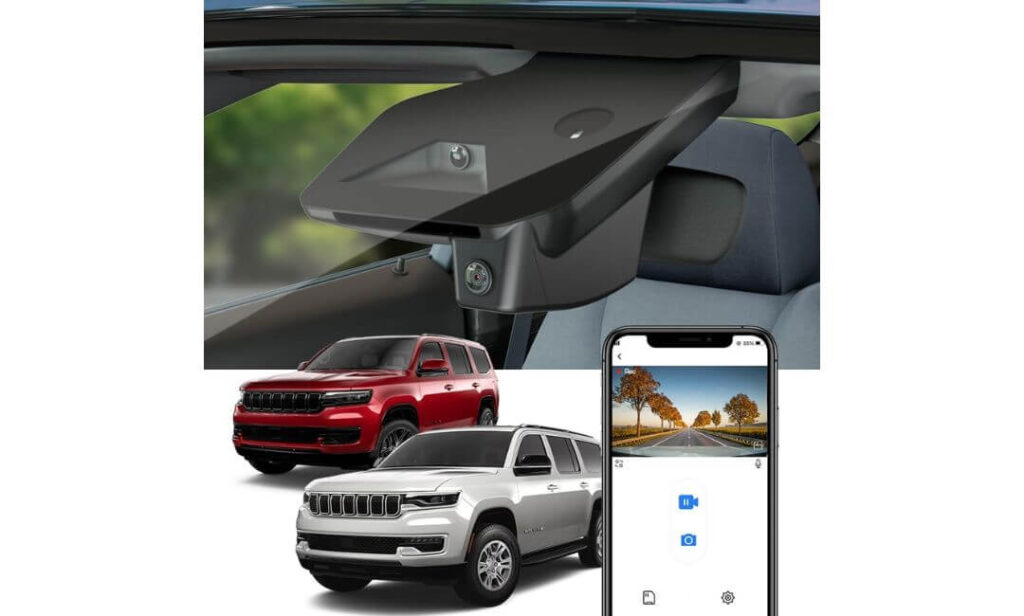
#1. Fitcamx 4K Dash Cam Suitable for Jeep Wagoneer & Grand Wagoneer
Quick Specs:
- True OEM-style hidden fit made specifically for Jeep Wagoneer & Grand Wagoneer
- Crisp 2160P 4K front recording with f/1.6 aperture lens
- Built-in WiFi + Fitcamx APP for quick video access on phone
- Clean plug-and-play installation with no exposed wiring hanging down
- Reliable WDR night vision for reflective SUV windshields
- Includes 64GB card and supports up to 256GB storage
- Designed for extreme cabin heat and cold from -20°C to 85°C
- Auto loop recording with built-in collision-triggered G-Sensor protection
The biggest reason this one instantly feels “right” inside a Jeep Wagoneer is simple — it doesn’t look aftermarket. Most dash cams end up hanging below the mirror like an accessory someone added later. This one blends into the factory trim so naturally that passengers usually don’t even notice it until you point it out. In a premium SUV where the cabin already looks clean and expensive, that matters more than people think.
What surprised us most was how well the 4K footage works with the Wagoneer’s massive windshield. Large SUVs create weird glare patterns at sunrise, under parking garage LEDs, and during rainy night drives. The f/1.6 lens and WDR processing help control those reflections better than typical universal dash cams in this price range. License plates stay readable longer, road signs don’t blow out as easily, and the footage keeps a calmer, more balanced look overall instead of that oversharpened “cheap 4K” effect.
The installation experience is honestly what makes this camera stand out from most of the market. No dangling power cable across the windshield, no awkward suction mount, no cheap plastic arm wobbling every time the road gets rough. It connects cleanly into the factory housing area and starts recording automatically once the vehicle starts. For Wagoneer owners who care about keeping the cabin looking premium, that alone can make this feel like the smartest buy on the list. (And yes — if your biggest concern is preserving the clean luxury feel of the interior, this is probably the one that’ll make you happiest long term.)
Why This One Made More Sense Than Most Universal Dash Cams
- Actually designed around the Wagoneer interior, not adapted from a generic sedan camera
- Hidden OEM-style fit keeps the windshield looking factory-clean
- 4K footage looks natural instead of overly processed or artificially sharpened
- WiFi app access is simple enough for quick clips without fighting menus
- Heat tolerance feels reassuring for large SUVs parked outside in summer
A Small Thing Worth Knowing Before You Buy
This is a front-camera-focused setup, so buyers wanting rear recording or advanced parking surveillance may prefer a dual-channel system further down this list.
Real-World Jeep Wagoneer Compatibility Notes
This setup works especially well in the Wagoneer because of how integrated the mounting position feels once installed. The higher seating position and wide windshield already give excellent road visibility, and this camera avoids cluttering that view with bulky hardware hanging near the mirror.
It also fits the personality of the vehicle better than most flashy touchscreen dash cams. The Wagoneer cabin is already loaded with screens, gloss trim, and tech interfaces. Adding another oversized gadget can start making the interior feel busy fast. This setup avoids that completely while still delivering sharp everyday footage.
The Insider Pro-Tip
If you mainly drive your Wagoneer for family trips, highway travel, school runs, or business commuting, a clean OEM-style dash cam usually ages better than feature-packed universal systems. After a few months, most owners stop caring about gimmicks and start appreciating the things they notice every single day — no windshield clutter, no rattles, no visible wires, and footage that simply works when needed.
One more thing people rarely mention: larger luxury SUVs amplify cheap interior vibrations more than smaller cars. That’s why factory-style integrated cameras often end up feeling more premium over time. They move less, look cleaner, and quietly become part of the vehicle instead of feeling like another gadget stuck onto the glass.
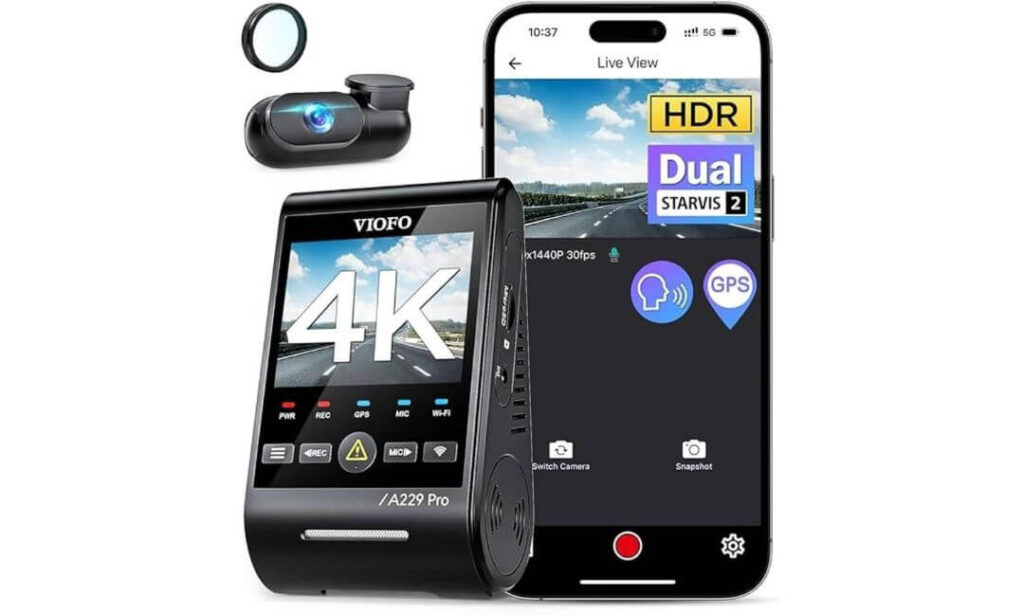
#2. VIOFO A229 Pro 4K HDR Dash Cam
Quick Specs:
- True 4K front + 2K rear recording with dual Sony STARVIS 2 sensors
- Advanced HDR processing on both cameras for cleaner night driving footage
- Built-in 24H parking protection with buffered event recording
- Ultra-fast 5GHz WiFi + VIOFO app control for smooth video transfers
- Voice commands for hands-free control while driving
- Quad-mode GPS support with speed and location tracking
- Included anti-glare CPL filter helps reduce dashboard reflections
- Supercapacitor-based design built for extreme heat and long-term durability
Here’s the thing most people notice within the first few drives using this setup: the footage looks expensive. Not “social media sharp,” not artificially oversaturated — just genuinely clean and controlled in the kind of lighting where many dash cams fall apart. On a Jeep Wagoneer or Grand Wagoneer, that difference becomes obvious fast because these SUVs create more windshield glare, deeper shadows, and stronger interior reflections than smaller vehicles. The dual STARVIS 2 IMX678 + IMX675 sensors handle that environment exceptionally well.
What really separates this setup from average dual-channel systems is consistency. Highway signs stay readable at speed, headlights bloom less aggressively during rainy night drives, and the rear camera doesn’t suddenly turn soft once the sun goes down. The HDR tuning feels mature instead of overprocessed. Even during harsh transitions — tunnels, parking garages, sunset glare — the footage stays balanced without constantly blowing out highlights or crushing darker areas. That matters more in daily driving than flashy spec-sheet numbers most buyers never actually notice.
The overall experience also feels designed for people who genuinely drive a lot. Fast 5GHz WiFi transfers, accurate GPS logging, voice controls, reliable parking modes — none of it feels gimmicky once you live with the camera for a few weeks. And because the Wagoneer cabin is already quiet and refined, little things like stable recording and cleaner audio capture become surprisingly noticeable compared to cheaper systems that rattle or distort under vibration. (If the Fitcamx feels like the cleanest factory-style option, this is the one that feels most like a serious long-term driving tool.)
Why This Setup Stood Out During Real SUV Use
- Dual STARVIS 2 sensors produce genuinely stronger night footage than most mainstream dash cams
- Front and rear HDR recording handles SUV windshield glare surprisingly well
- Parking mode system feels more advanced than basic motion-trigger recording
- Included CPL filter noticeably cuts dashboard reflections in bright daylight
- Supercapacitor design inspires more confidence during extreme summer heat
A Small Thing Worth Knowing Before You Buy
This system gives you far more control and recording flexibility than simpler OEM-style cameras, so installation takes a little more time because of the rear camera routing and optional hardwire setup for full parking protection.
Why It Fits the Wagoneer Platform So Naturally
Large SUVs like the Wagoneer create unique recording challenges that smaller sedans simply don’t. The higher ride height, thicker rear cabin area, and longer body length can expose weak rear cameras immediately — especially during storms, highway driving, or poorly lit roads. That’s where the stronger rear 2K sensor here earns its place.
It also complements the personality of the vehicle well. The Wagoneer already feels built for long-distance comfort, and this setup matches that energy perfectly. Quiet operation, stable footage, strong night clarity, and reliable parking coverage make it feel less like an accessory and more like part of a proper touring setup.
The Insider Pro-Tip
If you regularly drive at night, spend time on highways, or park your Wagoneer outside hotels, offices, airports, or apartment complexes, this type of dual HDR setup makes far more sense long term than a basic front-only camera. Most people don’t realize how much detail gets lost in rear footage until they actually need it after an incident.
Also — don’t underestimate how important stable night processing becomes in a luxury SUV with a large windshield. Cheap dash cams often look acceptable in daylight, then completely collapse once reflections, rain, and LED headlights enter the scene. Systems using newer STARVIS 2 sensors simply hold composure better when the environment gets difficult, and that difference becomes obvious the longer you own the vehicle.
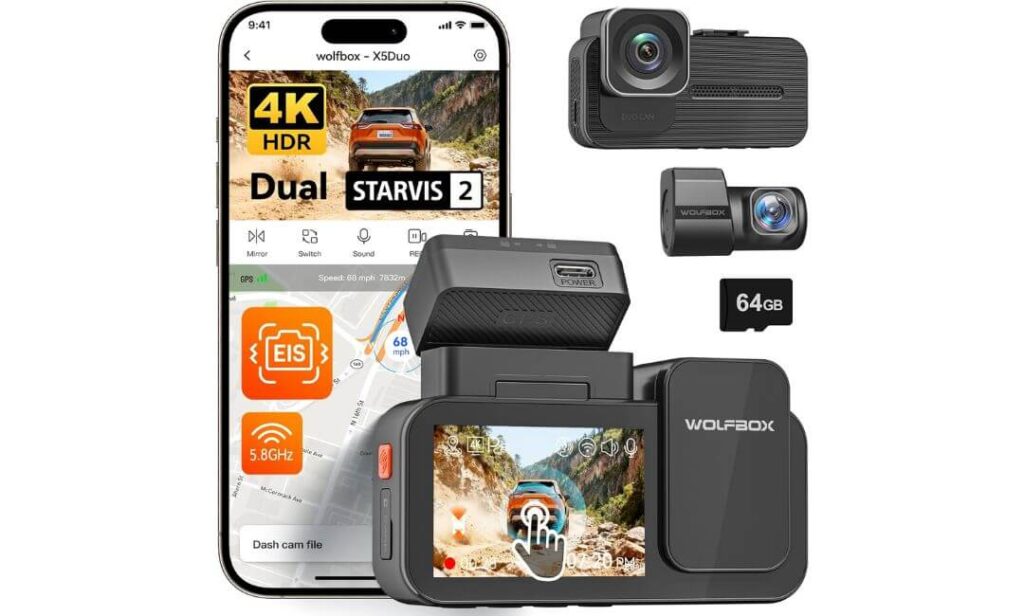
#3. WOLFBOX X5 Duo 4K+2.5K Dash Cam
Quick Specs:
- Sharp 4K front + 2.5K rear recording with dual STARVIS 2 sensors
- Advanced 6-axis gyro stabilization + EIS anti-shake system
- Fast 5.8GHz WiFi + GPS tracking through mobile app
- HDR-enhanced night footage with wide 160° field of view
- Built-in voice commands and responsive touchscreen controls
- 24-hour parking protection with impact detection and time-lapse recording
- Includes 64GB memory card right inside the box
- Supercapacitor-powered design for long-term heat resistance
What instantly makes this setup feel different inside a Jeep Wagoneer is the smoothness of the footage. Not just “clear video” — genuinely stable recording that looks composed even when the road isn’t. Large SUVs naturally move more over rough pavement, expansion joints, gravel roads, and uneven highways. Most dash cams quietly struggle there. This one doesn’t. The combination of 6-axis gyro stabilization and EIS anti-shake processing keeps footage surprisingly calm and readable instead of turning every bump into a blurry mess.
The image quality also feels tuned for real-world driving instead of showroom demos. During night drives, tunnels, rainy roads, or shaded highways, the dual STARVIS 2 IMX678 + IMX675 sensors keep details cleaner than most systems people install in SUVs. Headlights bloom less aggressively, road signs stay readable longer, and rear footage holds together far better than expected once darkness hits. The HDR tuning here has a more natural balance — not overly bright, not artificially sharpened, just easier on the eyes during long drives.
Another thing that works well in the Wagoneer specifically is how fast and modern the overall experience feels. The 5.8GHz WiFi transfers are genuinely quick, the touchscreen responds smoothly, and voice commands are useful enough that you’ll actually use them instead of forgetting they exist. It feels less like a basic evidence recorder and more like a premium travel companion for a vehicle already built around comfort and technology. (For drivers who want their dash cam to feel high-end every single day — not just during emergencies — this setup hits that sweet spot unusually well.)
Why This Setup Earned a Spot on This List
- Anti-shake stabilization genuinely improves SUV footage quality on rough roads
- Rear 2.5K camera stays impressively usable during nighttime driving
- Fast WiFi transfers make saving clips far less frustrating
- Voice controls feel practical during long highway drives
- Included 64GB card helps avoid extra setup costs on day one
A Small Thing Worth Knowing Before You Buy
The rear adhesive setup may take a little extra patience on some heated rear glass layouts, especially in larger SUVs, but once positioned properly, the overall system feels solid and dependable.
Why It Feels So Natural Inside a Wagoneer
The Wagoneer already leans heavily into smoothness, quietness, and long-distance comfort, and this camera matches that personality extremely well. Instead of adding clutter or complexity, it blends into the driving experience while quietly capturing very polished footage in the background.
Its stabilization system also matters more in a vehicle this size than most people realize. Bigger SUVs naturally create more body movement over uneven roads, especially during road trips or higher-speed travel. That’s exactly where the anti-shake technology here starts proving its value beyond simple marketing terms.
The Insider Pro-Tip
Most buyers focus only on resolution numbers, but in real SUV driving, stabilization is often what separates “usable evidence” from frustrating blurry footage. A camera can advertise 4K all day long — if the video shakes badly during motion, the extra pixels stop mattering very quickly.
Also, don’t underestimate how much nicer daily ownership feels when the app, touchscreen, and transfers actually work smoothly. After a few months, people rarely remember exact specs, but they absolutely remember whether the camera felt annoying or effortless every time they needed footage. This setup leans heavily toward the effortless side of that experience.
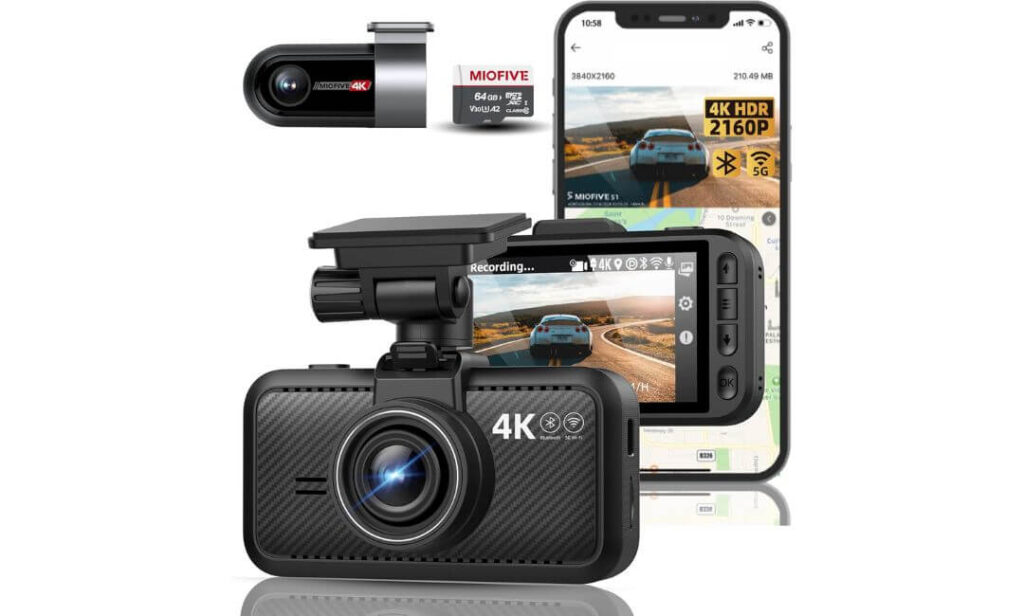
#4. Miofive 4K+4K Front and Rear Dash Cam
Quick Specs:
- True 4K front + 4K rear recording with HDR enhancement
- Built-in 5GHz WiFi + Bluetooth pairing for faster phone connectivity
- GPS tracking with speed and route logging included
- Super night vision with wide-angle front and rear coverage
- 3-inch IPS display for quick playback inside the vehicle
- Supercapacitor-powered design for heat durability and long-term stability
- Includes free 64GB microSD card and supports up to 512GB storage
- Optional 24-hour parking monitoring with hardwire support
Oddly enough, this is one of the few dual-camera setups in this lineup that immediately feels easy to live with. Not overly technical, not overloaded with menus — just clean 4K footage, smooth phone connectivity, and the kind of day-to-day usability most Wagoneer owners actually appreciate after the excitement of buying a new gadget wears off. The dual 4K + 4K recording setup also gives it a big advantage for larger SUVs where rear footage quality often gets sacrificed first.
Inside a Jeep Wagoneer, the footage has a balanced look that feels surprisingly refined for the price point. Bright sunlight through the panoramic roof, reflections from digital displays, nighttime LED glare — the HDR processing keeps things controlled without making the video look fake or overly sharpened. The rear camera especially performs better than expected during darker drives, where many “budget premium” systems start losing clarity quickly. Here, the extra rear resolution genuinely helps preserve road details and vehicle movement behind the SUV.
The ownership experience is also refreshingly uncomplicated. The app setup feels straightforward, GPS logging works quietly in the background, and the included 64GB card means you’re not instantly shopping for extra accessories before even installing the camera. The large IPS display makes quick playback easier while parked, and the supercapacitor setup adds confidence for people leaving their Wagoneer outside in serious summer heat. (For drivers wanting strong everyday 4K quality without turning the dash cam into a full-time hobby, this setup lands in a very comfortable middle ground.)
Why This Setup Felt Smarter Than Expected
- Dual 4K recording gives unusually strong rear footage clarity for a large SUV
- HDR tuning handles bright cabins and nighttime glare naturally
- Bluetooth + 5GHz WiFi pairing feels faster and less annoying than many competitors
- Included storage card makes initial setup feel more complete out of the box
- Simple interface works well for drivers who prefer straightforward daily use
A Small Thing Worth Knowing Before You Buy
The mobile app experience works well overall, though occasional connection hiccups can happen depending on phone settings and background wireless permissions.
Why It Matches the Wagoneer Lifestyle So Well
The Wagoneer isn’t really a vehicle people buy for aggressive driving or flashy performance — it’s built around comfort, space, long-distance travel, and quiet confidence. This camera fits that same personality surprisingly well. Nothing feels overly complicated or distracting once installed.
It also helps that the rear 4K camera doesn’t feel like an afterthought. On larger SUVs with longer body lengths, weak rear footage becomes obvious very quickly during parking lots, highway merges, or rainy traffic. Having proper high-resolution coverage at both ends simply feels more reassuring over time.
The Insider Pro-Tip
A lot of people obsess over “the sharpest front camera,” then completely ignore rear recording quality until they actually need footage from behind the vehicle. In real-world SUV ownership, rear footage matters far more than most buyers expect — especially in parking incidents, highway lane changes, or stop-and-go traffic claims.
Also, there’s something underrated about a dash cam that doesn’t constantly demand your attention. Clean connectivity, reliable recording, fast transfers, stable heat performance — those boring little details quietly become the reason owners stay happy months later. This setup understands that balance better than most cameras trying too hard to look futuristic.
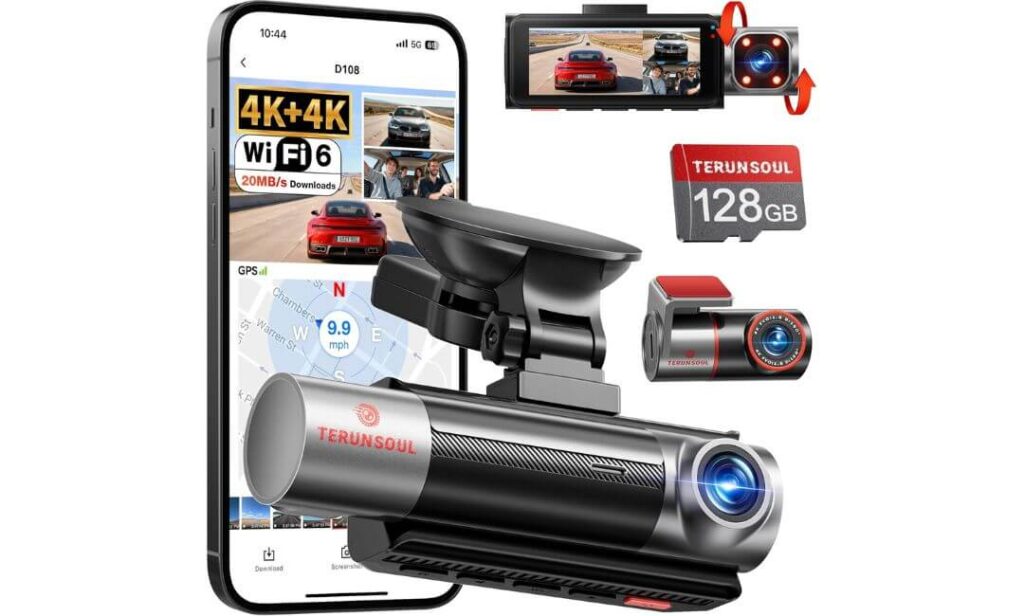
#5. TERUNSOUl 4K+4K+1080P Dash Cam Front and Rear with Cabin
Quick Specs:
- Triple-channel setup with 4K front + 4K rear + 1080P cabin recording
- Interior IR camera with invisible infrared LEDs for nighttime cabin visibility
- Ultra-fast dual-band WiFi 6 with transfer speeds up to 20MB/s
- Built-in GPS with speed, route, and timestamp tracking
- Includes a large 128GB memory card out of the box
- Wide-angle coverage across front, rear, and interior views
- Enhanced low-light performance with large F1.51 and F1.81 apertures
- 24-hour parking support with collision-triggered emergency recording
Some dash cams focus only on the road ahead. This one feels more like a complete “everything around the SUV” recording system. In a Jeep Wagoneer — especially one regularly carrying family, passengers, luggage, pets, or road-trip gear — that extra interior coverage starts making a surprising amount of sense. The triple-camera layout gives the vehicle a more complete layer of visibility instead of leaving blind spots inside the cabin.
What really catches attention here is the amount of recording quality packed into all three channels at once. The front and rear cameras both capture detailed 4K footage, while the interior lens uses invisible IR lighting to keep the cabin visible even in total darkness. That matters more in large SUVs because darker rear seating areas can become nearly impossible for standard cabin cameras to capture clearly at night. Here, passengers, movement, and interior details remain surprisingly visible without blasting the cabin with distracting lights.
The setup also feels unusually complete right out of the box. The included 128GB card, long rear cable, WiFi 6 connectivity, GPS tracking, and large IPS display remove a lot of the little frustrations that usually come with multi-camera systems. Transfers feel quick, playback is smooth, and the app experience stays fairly straightforward considering how much footage this camera handles at once. (If your priority is maximum coverage instead of the cleanest OEM appearance, this setup quietly becomes one of the strongest value-heavy options in the entire lineup.)
Why This Triple-Camera Setup Earned Its Spot
- Full interior recording adds peace of mind during family travel and overnight parking
- Dual 4K front and rear footage stays impressively detailed for a 3-channel system
- IR cabin night vision works better than expected in dark SUV interiors
- Included 128GB card makes the system feel ready immediately after installation
- WiFi 6 transfer speeds noticeably reduce waiting time for large video files
A Small Thing Worth Knowing Before You Buy
Because this is a full triple-channel setup, the windshield area naturally feels a bit busier compared to minimalist OEM-style systems designed to disappear behind the mirror.
Why It Works Surprisingly Well in a Wagoneer
The Wagoneer’s large cabin actually helps this system shine. Bigger interiors create more blind spots, deeper shadows, and more passenger movement than smaller vehicles, so having an additional cabin-facing camera adds a layer of awareness many drivers end up appreciating later.
It also suits the kind of ownership these SUVs often see — long-distance family trips, airport runs, hotel parking lots, school pickups, and heavily loaded travel days. In those situations, having front, rear, and cabin coverage together can feel genuinely reassuring instead of excessive.
The Insider Pro-Tip
Most drivers assume interior cameras are only useful for rideshare vehicles — until something happens inside the cabin that regular front and rear footage simply can’t explain. In larger SUVs especially, cabin activity, passenger movement, or side-window events can matter far more than people initially expect.
There’s also a practical side most buyers overlook: triple-channel systems tend to tell a more complete story during incidents. Instead of relying on one camera angle and assumptions, you end up with context from multiple directions at the same time. For Wagoneer owners carrying family, valuables, or frequent passengers, that extra context can quietly become the biggest advantage of all.
Best Jeep Wagoneer Dash Cam Comparison for OEM Fit, 4K HDR & Night Driving
| Dash Cam | Video Setup | What Actually Stands Out | Night Driving Performance | Install Experience | Best Match For |
|---|---|---|---|---|---|
|
Factory Style Favorite
Fitcamx 4K OEM Dash Cam
Feels like it came installed from Jeep itself. Cleanest overall look for Wagoneer owners who hate visible wires and bulky windshield gadgets.
|
4K Front Only 2160P UHD • WDR • f/1.6 Lens • WiFi App • G-Sensor |
OEM integration is the real win here. Disappears behind the mirror and keeps the premium Wagoneer cabin looking untouched. |
Very Balanced Handles windshield glare and night reflections surprisingly well for a compact OEM-style setup. |
Easiest in This Lineup No messy routing across the windshield. Plug-and-play feel is genuinely satisfying. |
Best for: Owners wanting a clean luxury-style setup that blends naturally into the SUV interior. |
|
Night Vision Beast
VIOFO A229 Pro
The most serious video-focused setup here. Built for drivers who care about clarity, HDR balance, and dependable evidence quality.
|
4K Front + 2K Rear Dual STARVIS 2 • HDR Front/Rear • Voice Control • GPS |
Dual STARVIS 2 sensors completely change nighttime footage. Headlights bloom less, rear detail stays sharp, and HDR feels genuinely premium. |
Outstanding One of the strongest low-light performers currently available for large SUVs. |
Moderate Setup Rear cable routing takes extra time, especially if adding full parking hardwire support. |
Best for: Highway drivers, night commuters, and owners wanting the strongest overall recording quality. |
|
Smoothest Daily Experience
WOLFBOX X5 Duo
Feels modern without becoming complicated. The anti-shake stabilization genuinely helps on rough SUV roads and highway expansion joints.
|
4K Front + 2.5K Rear STARVIS 2 • EIS Stabilization • Touchscreen • 5.8GHz WiFi |
The footage stability is what surprises people most. SUV vibration gets smoothed out noticeably better than typical dual-camera systems. |
Excellent Very clean nighttime detail with controlled glare and readable plate capture. |
Straightforward Included tools and memory card make setup feel complete right away. |
Best for: Drivers wanting premium tech features with smoother everyday usability. |
|
Best Balanced Value
Miofive 4K+4K Dash Cam
Quietly one of the easiest systems to live with daily. Strong rear 4K recording makes a bigger difference in SUVs than most people expect.
|
4K Front + 4K Rear HDR • GPS • Bluetooth • 5GHz WiFi • IPS Screen |
Dual 4K recording at this comfort level feels impressive. Simple controls, stable connectivity, and balanced footage quality throughout. |
Very Strong HDR tuning handles panoramic roof glare and reflective cabins naturally. |
User-Friendly Good option for buyers who want premium footage without complicated setup headaches. |
Best for: Wagoneer owners wanting high-end 4K coverage without overcomplicating daily use. |
|
Maximum Coverage Setup
TERUNSOUl 3-Channel Dash Cam
The most complete visibility package in this lineup. Adds full cabin awareness without sacrificing front and rear quality.
|
4K Front + 4K Rear + 1080P Cabin IR Cabin Vision • WiFi 6 • GPS • 128GB Included |
Three recording angles create serious peace of mind. Especially useful for family trips, passengers, parking incidents, and overnight travel. |
Excellent Cabin Visibility Infrared interior camera keeps cabin footage usable even in complete darkness. |
More Involved Triple-channel routing naturally takes more effort than simpler setups. |
Best for: Families, rideshare-style use, road trips, and drivers wanting complete interior coverage. |
Buying Guide: What Actually Matters Before Choosing a Dash Cam for a Jeep Wagoneer
A Jeep Wagoneer is not the kind of SUV where you can randomly stick any cheap dash cam onto the windshield and expect a great experience. The size of the cabin, the angle of the windshield, the amount of interior reflections, and even the quietness of the ride change what works and what becomes annoying after a few weeks.
That’s why many dash cams that look impressive online end up feeling frustrating in real ownership. Some block visibility, some overheat in large glass-heavy cabins, some struggle with nighttime glare, and others simply look out of place inside a premium SUV interior. The best setup for a Wagoneer usually comes down to understanding how you actually drive the vehicle — highway travel, family hauling, overnight parking, city commuting, or long road trips.
OEM Fit Dash Cam vs Aftermarket Systems
This is usually the first real decision Wagoneer owners should make.
OEM-style systems, like the Fitcamx in this lineup, are designed to blend directly into the mirror housing area. They look cleaner, reduce windshield clutter, and feel far more natural inside a luxury-focused SUV cabin. If you care about preserving the premium interior feel of the Wagoneer, this style of camera usually ages better over time because it stops feeling like an added gadget.
Traditional aftermarket systems, on the other hand, give you more flexibility. You get features like dual-channel recording, stronger parking modes, voice control, cabin cameras, touchscreen displays, and advanced HDR processing. Cameras like the VIOFO A229 Pro or WOLFBOX X5 Duo clearly outperform most OEM-fit cameras in raw video capability, especially at night.
The tradeoff is visibility and installation complexity. More features usually mean more cables, larger camera bodies, and longer setup time. Some owners won’t care. Others will notice it every single day the moment they sit in the driver’s seat.
Why 4K Recording Actually Matters in a Large SUV
A lot of buyers think “4K” is just marketing, but in a Wagoneer, higher resolution genuinely helps.
Large SUVs naturally create longer viewing distances because of their higher ride height and wider road perspective. Vehicles ahead sit farther away, lane activity spreads wider across the frame, and rear footage often covers much larger traffic areas than in compact vehicles. Lower-resolution cameras can lose important details quickly in those conditions.
That’s where true 4K recording becomes useful — especially for license plate readability, road sign clarity, and nighttime evidence capture. Cameras using stronger image sensors and HDR processing, like the STARVIS 2-equipped models in this article, maintain cleaner detail when glare, rain, shadows, or highway lighting start challenging the footage.
It’s also worth remembering that “4K” alone doesn’t guarantee quality. Sensor quality, HDR tuning, bitrate handling, stabilization, and low-light processing matter just as much as raw resolution numbers.
Why Front and Rear Coverage Makes More Sense in a Wagoneer
The longer body size of the Jeep Wagoneer changes how incidents happen around the vehicle. In smaller SUVs, most people only worry about what’s directly ahead. In a Wagoneer, rear coverage becomes just as important because the SUV takes up more road space, sits higher in traffic, and spends more time dealing with parking lots, highway merges, trailers, family loading zones, and crowded urban driving.
That’s why dual-channel setups make far more practical sense here than they might in compact vehicles.
Rear cameras help capture:
- Rear-end impacts in traffic
- Parking lot damage and hit-and-runs
- Tailgating incidents on highways
- Lane merge disputes
- Trailer or cargo visibility behind the SUV
- Aggressive drivers approaching from behind
The synchronization between front and rear footage also matters more than many buyers realize. Better systems don’t just record two separate videos — they sync timestamps, GPS data, speed information, and emergency event triggers together into one organized system. During insurance claims or incident reviews, that makes footage feel dramatically more credible and easier to understand.
Cameras like the VIOFO A229 Pro and Miofive setups do this especially well because both channels feel integrated rather than stitched together as an afterthought.
Why STARVIS Sensors Matter More Than Most Buyers Expect
This is one of those things people usually understand only after using a genuinely good dash cam for the first time.
The difference between an average sensor and a premium STARVIS 2 sensor becomes obvious the moment conditions stop being perfect. Bright headlights, rainy highways, underground parking garages, dark country roads, sunrise glare — these are the situations where weaker cameras suddenly fall apart.
STARVIS-based cameras handle:
- Motion blur more naturally
- Low-light detail more cleanly
- Nighttime plate readability better
- HDR balancing more smoothly
- Headlight glare with less blooming
- Interior reflection control more effectively
And in a Wagoneer specifically, those improvements matter more because the windshield environment is tougher than most vehicles. Large glass surfaces, digital screens, ambient lighting, and reflective trim create a more difficult recording environment than people expect.
That’s why systems like the VIOFO A229 Pro and WOLFBOX X5 Duo feel noticeably calmer and more controlled during nighttime driving compared to cheaper “4K” cameras relying mostly on marketing numbers.
Hidden Dash Cam Installation Tips for a Cleaner Luxury SUV Look
One of the easiest ways to ruin the premium feel of a Wagoneer interior is sloppy dash cam placement.
A clean installation should almost disappear once finished. That’s why mounting position matters so much. Cameras placed high near the mirror housing generally feel less distracting, preserve road visibility better, and blend more naturally into the cabin.
For the cleanest possible result:
- Route cables inside the headliner whenever possible
- Keep wiring away from visible windshield edges
- Use electrostatic stickers before permanent adhesive mounts
- Avoid oversized suction mounts in the driver’s main line of sight
- Position rear cameras higher on the rear glass for better viewing angles
OEM-style systems naturally win here because they’re designed specifically around the mirror housing area. But even universal cameras can look surprisingly clean if the installation is planned carefully instead of rushed.
And honestly, this matters more long term than many buyers expect. A dash cam becomes part of the visual experience every single day you drive the vehicle.
Does the Jeep Wagoneer Support OEM Dash Cams?
Yes — and the Wagoneer platform actually works quite well with OEM-style camera setups because of the amount of space available around the mirror housing area.
That said, newer trims can include rain sensors, lane-assist systems, forward cameras, adaptive cruise hardware, and other electronics clustered near the windshield. That’s why checking compatibility before installation is always smart, especially for direct-fit OEM-style systems.
Some owners also choose to involve dealership technicians or professional installers simply to ensure trim panels, mirror housings, and electrical systems are handled cleanly during installation. It’s not always necessary, but for premium SUVs, many people prefer the extra peace of mind.
Firmware support matters too. Modern dash cams increasingly rely on software optimization for WiFi stability, HDR tuning, parking mode behavior, GPS accuracy, and app improvements. Brands actively supporting updates usually stay reliable much longer than products abandoned after launch.
Which Dash Cam Is Actually Best for a Jeep Wagoneer?
Honestly, there isn’t one perfect answer for every owner.
The best setup depends on what matters most during real ownership:
- Want the cleanest luxury appearance? → OEM-style Fitcamx
- Want the strongest nighttime clarity? → VIOFO A229 Pro
- Want smoother stabilized footage? → WOLFBOX X5 Duo
- Want balanced everyday usability? → Miofive
- Want full interior coverage too? → TERUNSOUl
That’s why this article focused less on “one winner” and more on matching different dash cams to different types of Wagoneer ownership.
Because in real life, the best dash cam isn’t always the one with the flashiest marketing or biggest spec sheet. It’s the one that quietly fits the SUV, works reliably every day, and still feels worth installing six months later when the excitement of buying new tech has completely worn off.
Installation and Setup Tips for Jeep Wagoneer Dash Cams
A clean installation changes the entire ownership experience of a dash cam, especially inside a premium SUV like the Jeep Wagoneer. The difference between a properly installed system and a rushed universal setup becomes obvious every single time you get into the vehicle. Loose cables, windshield clutter, rattles near the mirror, weak adhesive mounts — all of those things slowly make even a good dash cam feel cheap.
The good news is that the Wagoneer’s large cabin and spacious trim layout actually make hidden installations easier than many smaller SUVs, as long as the setup is planned correctly from the beginning.
Choosing the Right Power Setup for Your Driving Style
Before installing anything, decide how you actually want the camera to behave daily. This matters more than most buyers expect.
A standard lighter socket installation is the easiest route and works perfectly fine for drivers who only want recording while driving. It’s fast, requires almost no vehicle modification, and keeps the install beginner-friendly. Many owners stop right here and stay perfectly happy.
Hardwire kits are different. These connect directly into the fuse box and unlock features like true 24-hour parking monitoring, motion-triggered recording, impact detection while parked, and low-voltage battery protection. Cameras like the VIOFO A229 Pro or WOLFBOX X5 Duo become much more useful once properly hardwired because their parking systems are designed around constant power access.
Fuse tap installations sit somewhere in the middle. They allow cleaner power routing without relying on visible plugs, while still keeping the install fairly serviceable later. On a Wagoneer, this often creates the cleanest overall result if done correctly.
One important thing many people overlook: large SUVs already carry more electronics than average vehicles — multiple displays, cameras, power modules, ambient lighting systems, and advanced driver-assistance hardware. That’s why using proper voltage-protected hardwire kits matters more here than on older basic vehicles.
Clean Cable Routing Makes the Entire Setup Feel More Premium
Good cable routing is honestly half the battle.
The cleanest installs usually start behind the rear-view mirror area, then move upward into the headliner before traveling down the base of the A-pillar trim. From there, rear camera cables can continue along the upper roofline toward the back of the SUV. Done properly, almost nothing remains visible from the driver’s seat.
The Wagoneer’s larger cabin actually helps here because there’s more room to hide wiring cleanly behind trim pieces without forcing cables aggressively into tight spaces. The included long rear cables on cameras like the TERUNSOUl and WOLFBOX systems make routing much easier for three-row SUVs compared to shorter generic kits.
One thing worth being careful about: modern A-pillars often contain curtain airbags. Cables should never be routed carelessly across airbag deployment paths. Tucking wires along factory channels or behind trim edges is safer and creates a cleaner result overall.
Why Front and Rear Camera Synchronization Matters
A lot of people focus only on image quality and completely ignore synchronization.
When front and rear footage timestamps match correctly, reviewing incidents becomes dramatically easier later. Better systems synchronize location data, speed logs, GPS coordinates, timestamps, and event triggers together inside the app or playback software. During accidents, parking incidents, or insurance reviews, this makes the footage feel more trustworthy and organized.
Dual-channel systems like the VIOFO A229 Pro, WOLFBOX X5 Duo, and Miofive setups do this especially well because both cameras operate as part of one integrated recording system instead of acting like separate devices stitched together afterward.
It also improves daily usability. Faster app syncing, cleaner video management, and reliable drive data tracking make a huge difference once the novelty of “having a dash cam” wears off and the camera simply becomes part of the vehicle.
Hidden Installation Tips That Preserve the Wagoneer Interior
The biggest mistake people make is treating the Wagoneer like a normal commuter SUV during installation.
This cabin was designed to feel clean, open, quiet, and upscale. A sloppy install immediately ruins part of that experience. That’s why OEM-style systems remain so popular in these vehicles — they respect the interior design instead of fighting against it.
If you’re using a universal dash cam, mounting position matters a lot. Keeping the camera high near the mirror helps reduce visibility from both inside and outside the vehicle. It also lowers windshield distraction during nighttime driving.
Using electrostatic stickers before applying adhesive mounts can also help protect the windshield surface and make future removal cleaner. Several cameras in this lineup already include them, and they genuinely help long-term.
For rear cameras, avoid placing them too low on heavily tinted rear glass. In larger SUVs, slightly higher placement often improves viewing angles and reduces interior reflection interference at night.
OEM Fit Considerations, Dealer Awareness, and Firmware Updates
OEM-style cameras often feel easier physically, but there are still a few smart things worth checking before installation.
Some Wagoneer trims include additional driver-assistance sensors, rain-sensing hardware, lane systems, or mirror-area electronics clustered near the windshield housing. Before forcing any trim pieces apart, it’s worth visually inspecting the mirror assembly area carefully or consulting dealership service diagrams if unsure.
Firmware support also matters more than many buyers realize. Newer dash cams increasingly rely on software refinement for app stability, WiFi improvements, parking mode behavior, GPS optimization, and HDR tuning updates. Brands actively supporting firmware updates usually age better over time than cameras abandoned after launch.
This becomes especially important with advanced systems using STARVIS 2 sensors, WiFi 6 transfers, or complex parking recording features. Good hardware matters, but stable software is often what separates a camera owners still love after a year from one they quietly stop trusting.
Real-World Use Cases Where a Jeep Wagoneer Dash Cam Actually Pays Off
Most people buy a dash cam thinking about “just in case” moments, but once you start driving a large SUV like the Jeep Wagoneer daily, the reasons quickly become much broader than simple accident footage. The size of the vehicle, the type of roads owners typically drive, the amount of family travel involved, and the value of the SUV itself all make reliable recording feel more important over time.
The reality is that dash cams become most valuable during situations drivers never planned for — sudden highway incidents, parking lot damage, wildlife crossings at night, or confusing insurance disputes where memory alone stops being enough.
Insurance Claims and Incident Documentation
This is still the biggest reason most Wagoneer owners eventually appreciate having a dash cam.
Large SUVs naturally sit higher on the road, which gives better visibility for driving, but it also means incidents often happen farther away within the frame compared to smaller vehicles. Cheap low-resolution cameras can miss details quickly in those situations, especially during fast-moving highway traffic or multi-lane intersections.
That’s where stronger setups with 4K recording, HDR processing, GPS data, and synchronized front/rear footage become incredibly useful. Cameras like the VIOFO A229 Pro, Miofive, and WOLFBOX systems capture cleaner detail during difficult lighting conditions where important evidence often disappears — license plates, lane positioning, brake activity, signal timing, or sudden merging behavior.
It’s also not only about proving fault anymore. Recorded speed data, timestamps, GPS location logs, and continuous footage create context that can make conversations with insurance companies much smoother later. Instead of relying entirely on memory during stressful situations, owners have something objective to review.
For larger family SUVs specifically, rear footage becomes especially important. Parking lot taps, rear-end incidents, shopping cart damage, or highway lane-change disputes frequently happen behind the vehicle rather than directly in front of it.
Night Driving, Wildlife Encounters, and Road Debris
The Wagoneer is exactly the kind of SUV people use for long nighttime drives, rural highways, mountain roads, weekend travel, and heavily loaded family trips. That environment creates challenges many basic dash cams struggle to handle.
Deer crossings, loose cargo, falling debris, sudden potholes, tire fragments, poorly lit construction zones — these things happen fast, often with almost no warning. During those moments, sensor quality matters far more than flashy marketing numbers.
That’s why cameras using STARVIS 2 sensors, advanced HDR tuning, larger apertures, and proper low-light processing stood out so strongly throughout this article. They maintain detail better when visibility suddenly drops, headlights flood the frame, or the road becomes unevenly lit.
Interior reflections also become a bigger issue in large luxury SUVs at night. Digital displays, ambient lighting, panoramic roofs, glossy trim pieces — all of them can create glare patterns across the windshield. Better HDR systems handle those reflections much more naturally, which is one reason the VIOFO and WOLFBOX setups feel noticeably calmer during difficult nighttime conditions.
Even if a driver never ends up needing footage for insurance purposes, simply being able to review unexpected road events later can become surprisingly valuable.
Scenic Drives, Road Trips, and Off-Road Wagoneer Travel
One thing people rarely talk about enough is that modern dash cams are no longer only “evidence tools.” For many Wagoneer owners, they quietly become travel cameras too.
These SUVs are built for long-distance comfort, national park trips, scenic highways, winter mountain travel, lake weekends, towing adventures, and family vacations. A good dash cam naturally ends up recording moments drivers would have otherwise missed completely.
That’s why smoother footage quality, stabilization, and wide dynamic range processing matter even outside emergency situations. Cameras like the WOLFBOX X5 Duo feel especially good here because the anti-shake stabilization helps maintain smoother footage on rough pavement, gravel roads, and uneven terrain where many dash cams become jittery.
Dual-channel systems also create a more immersive record of trips overall. Front footage captures the road ahead while rear cameras preserve weather changes, traffic movement, and scenery behind the vehicle in a way most people don’t expect until they actually review clips later.
And because Wagoneers often spend long hours parked during travel — hotels, campsites, trailheads, event parking lots — parking protection becomes part of that travel confidence too.
How Parking Mode Works With the Wagoneer’s Electrical System
Parking mode sounds simple on paper, but in modern SUVs, it’s actually one of the most misunderstood features.
The Wagoneer uses a far more advanced electrical architecture than older vehicles. Multiple computers, power management systems, driver-assistance modules, sensors, and sleep cycles constantly monitor battery usage in the background. Because of that, poorly installed hardwire setups can sometimes create battery drain issues or inconsistent recording behavior.
That’s why voltage-protected hardwire kits matter so much for premium SUVs. Better dash cam systems monitor battery levels and automatically cut power if voltage drops too low, helping avoid unnecessary strain during overnight parking.
Different parking modes also behave differently depending on the camera:
- Event detection modes activate only after motion or impact
- Time-lapse modes continuously record at lower frame rates
- Buffered parking systems save footage from before and after an event
- Basic G-sensor modes simply lock files after impacts
For Wagoneer owners parking in airports, apartment garages, hotel lots, office parking structures, or crowded city areas, buffered parking recording can become one of the most valuable features in the entire camera.
At the same time, not every owner actually needs aggressive 24-hour monitoring. Drivers mostly using private garages or short daytime commutes may be perfectly happy with simpler driving-only recording systems like the Fitcamx OEM setup, especially if preserving factory appearance matters more than full surveillance coverage.
That’s really the key theme across this entire article: the “best” dash cam for a Jeep Wagoneer depends less on flashy specs and more on how the SUV is actually used every day.
FAQs About Jeep Wagoneer Dash Cam
Does the Jeep Wagoneer windshield create more glare problems for dash cams than smaller SUVs?
Yes — and this is something many buyers only realize after installation.
The Wagoneer’s windshield is larger, more upright, and paired with a quieter, more reflective cabin than most midsize SUVs. Add in panoramic roofs, chrome accents, digital displays, ambient lighting, and lighter dashboard materials, and suddenly cheap dash cams start struggling badly at night. You’ll often see blown-out headlights, smeared reflections, or washed-out footage once conditions get difficult.
That’s exactly why cameras with stronger HDR processing and newer sensors matter more in this vehicle than they might in a basic commuter crossover. Systems using STARVIS 2 sensors or proper WDR tuning don’t just make footage “sharper” — they keep the image calmer and more readable when the windshield environment becomes challenging.
Oddly enough, many Wagoneer owners blame tint, weather, or the windshield itself at first, when the real issue is usually weak sensor processing inside the camera.
Is an OEM-style dash cam actually better for a Jeep Wagoneer, or does it just look cleaner?
For many owners, it genuinely ends up being the smarter long-term choice.
The Wagoneer cabin already feels upscale and visually busy with multiple displays, premium trim, and large glass surfaces. Hanging a bulky universal dash cam below the mirror can quietly ruin part of that clean luxury feel every single day. OEM-style systems solve that problem extremely well because they blend directly into the mirror housing area instead of fighting against the interior design.
That said, there’s still a tradeoff most honest reviews never mention:
- OEM-fit systems usually win in appearance and simplicity
- Premium aftermarket systems usually win in raw video capability
- Dual-channel setups provide stronger evidence coverage
- Triple-channel systems offer maximum awareness but add more visual hardware
So the “best” option depends less on price and more on personality. Some owners care most about preserving factory aesthetics. Others care more about advanced parking protection, rear HDR footage, or nighttime evidence quality.
Why do some high-resolution dash cams still look disappointing at night inside a Jeep Wagoneer?
Because resolution alone is honestly one of the most overrated specs in the dash cam world.
A poorly tuned 4K camera can still perform worse than a well-balanced lower-resolution setup once glare, rain, LED headlights, and motion enter the picture. In a Wagoneer specifically, the cabin environment amplifies weak processing because reflections become stronger across the larger windshield surface.
The real difference usually comes down to:
- Sensor quality
- HDR tuning
- Bitrate handling
- Lens aperture
- Stabilization
- Heat management
- Rear camera consistency
That’s why some cameras in this article feel dramatically more “premium” even before you zoom into footage. Better systems maintain contrast naturally, avoid excessive sharpening, and preserve movement detail instead of turning nighttime footage into a blurry glowing mess.
This is also why many experienced owners stop chasing “highest resolution” numbers after a while and start focusing more on balanced image processing overall.
Does parking mode drain the battery faster in a Jeep Wagoneer?
It can — but usually only when the installation is done incorrectly or the hardwire setup lacks proper voltage protection.
Modern Wagoneers use advanced electrical management systems with multiple modules constantly monitoring power behavior in the background. Cheap hardwire kits or poorly configured parking setups can sometimes confuse those systems or continue drawing power longer than expected.
Good dash cam systems handle this much better because they include low-voltage cutoff protection and smarter parking behavior. Buffered event recording, motion detection, and time-lapse modes all consume power differently, which is why setup matters more than people realize.
For most owners, the safest balance usually looks something like this:
- Daily commuters → lighter event-trigger parking mode
- Airport or hotel parking → buffered monitoring mode
- Garage-kept vehicles → standard driving-only recording often works fine
- Extreme weather regions → supercapacitor-based cameras become especially valuable
A properly installed system should feel invisible during ownership, not something constantly making you wonder about battery health every morning.
Which type of dash cam setup usually makes Jeep Wagoneer owners happiest long term?
Surprisingly, it’s rarely the setup with the most features.
The owners who stay happiest months later are usually the ones whose camera quietly fits their driving lifestyle without becoming annoying. That means clean installation, reliable recording, stable app behavior, strong nighttime clarity, and footage that simply works when needed.
In real ownership, people tend to appreciate different things over time:
- OEM-style systems age well because they disappear into the cabin
- STARVIS-based setups earn trust during difficult night driving
- Dual-channel systems become valuable after parking incidents
- Triple-channel systems help families and frequent travelers most
The funny part is that many buyers initially obsess over flashy specs, giant screens, or marketing buzzwords. Six months later, the things they appreciate most are usually much simpler — no rattles, no overheating, no constant reconnecting, and footage clear enough to trust immediately during stressful situations.
That’s ultimately what separates a genuinely good Wagoneer dash cam from one that just looked impressive on a product page.
Final Thoughts
The interesting thing about owning a Jeep Wagoneer is that it quietly changes what “good enough” means. A basic dash cam that feels acceptable in a smaller commuter SUV can suddenly feel noisy, distracting, outdated, or unreliable once it’s sitting inside a cabin this refined. The windshield is bigger, the interior is quieter, nighttime reflections are stronger, and long-distance driving becomes part of normal ownership. Small weaknesses become noticeable fast.
That’s why none of the cameras in this article were chosen only because of spec-sheet hype. Each one solves a different type of Wagoneer ownership problem realistically. The Fitcamx keeps the interior looking factory-clean. The VIOFO A229 Pro focuses heavily on serious recording quality and night clarity. The WOLFBOX setup feels modern and smooth during daily driving. Miofive balances strong dual 4K recording with simple usability, while the TERUNSOUl system covers nearly every angle possible for families and heavy travel use.
And honestly, that’s probably the biggest takeaway after testing and comparing setups like these for larger SUVs: the best dash cam usually isn’t the one with the loudest marketing. It’s the one you stop thinking about because it simply works every day without ruining the driving experience.
A few months from now, you probably won’t care which camera had the flashiest product page or the most exaggerated buzzwords. You’ll care about whether the footage stayed clear during a midnight rainstorm, whether the app connected quickly after an incident, whether the parking mode actually captured what happened, and whether the installation still feels clean every time you step into the vehicle.
That’s the difference between buying a random dash cam and choosing one that genuinely fits the personality of a Jeep Wagoneer.
Also Check: