
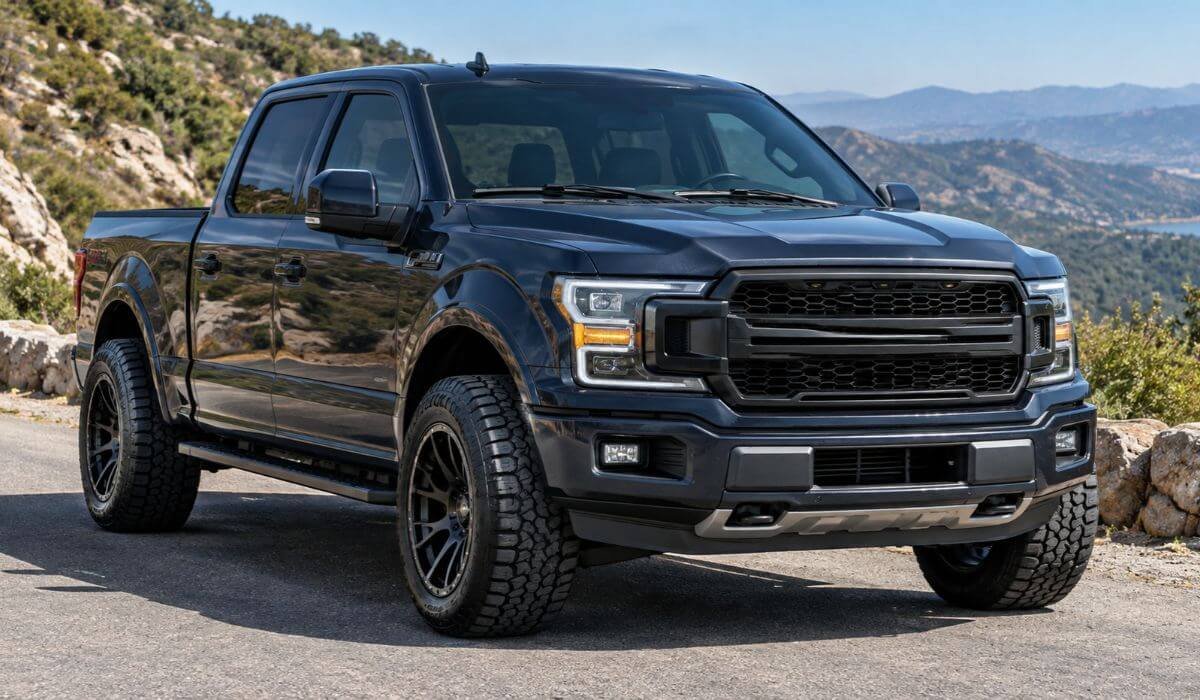
Best F-150 Wheel Spacers in 2026 for a Wider Stance (1.5″ to 2″)
Choosing the right F-150 wheel spacers can make a noticeable difference to your truck’s stance and overall appearance. Most F-150 owners install wheel spacers to push the wheels and tyres outward, away from the vehicle’s hub and suspension, giving the truck a wider, more aggressive look. This also changes the wheels’ position relative to the fenders, helping reduce the tucked-in appearance that some owners dislike with their factory wheel setup.
When it comes to 1.5-inch and 2-inch wheel spacers for the Ford F-150, the main difference is how far the wheels move outward. A 1.5-inch spacer offers a more moderate change, while a 2-inch spacer creates a more pronounced stance. KSP offers hubcentric options for different F-150 model-year ranges, including 2004–2014 and 2015–2026 trucks. In this guide, we’ll look at the three options, their intended applications and the practical differences that matter when choosing wheel spacers for your truck.
Best 1.5-Inch and 2-Inch Wheel Spacers for Ford F-150
#1. KSP 2-Inch Hubcentric Wheel Spacers for 2015–2026 Ford F-150 (M14×1.5)
#2. KSP 1.5-Inch Hubcentric Wheel Spacers for 2015–2026 Ford F-150 (M14×1.5)
#3. KSP 2-Inch Hubcentric Wheel Spacers for 2004–2014 Ford F-150 (M14×2.0)
Expert Tip: (Don’t Choose Spacer Thickness in Isolation) A 2-inch spacer does not automatically mean your F-150 will have the perfect flush stance. The final wheel position depends on your existing wheel offset, tyre width and fender shape. For example, two F-150s running the same spacer thickness can end up with noticeably different wheel poke if their wheels have different offsets.
Pro tip: Before choosing between 1.5-inch and 2-inch spacers, assess how far your current tyres sit inside the fenders and account for your existing wheel offset. This helps you avoid choosing a spacer that pushes the tyres farther out than intended.
Must Check: Best Traction Bars for F-150
1. KSP 2-Inch Hubcentric Wheel Spacers for 2015–2026 Ford F-150
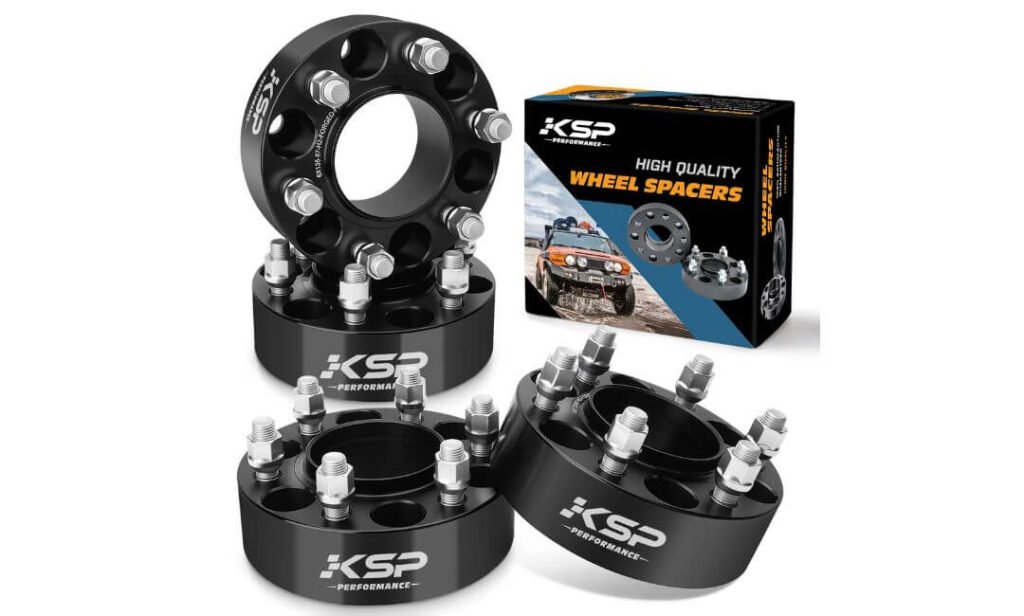
Specifications:
- Spacer thickness: 2 inches
- Vehicle fitment: 2015–2026 Ford F-150
- Bolt pattern: 6×135mm
- Centre bore: 87.1mm with locating lip
- Stud thread: M14×1.5
- Material: 6061-T6 aluminium
- Studs: Grade 10.9 SCM435 heat-treated steel
- Package: 4 spacers, 24 open-ended lug nuts and 1 tube of threadlocker
- Warranty: Limited lifetime warranty, subject to manufacturer’s terms
The KSP 2-inch hubcentric wheel spacers are designed for Ford F-150 owners who want to push their wheels and tyres farther outward for a wider, more aggressive stance. Moving the wheels outward by 2 inches per side creates a noticeable change in their position relative to the fenders. This can be particularly appealing if your factory wheels sit farther inward than you prefer. However, the final appearance depends on your existing wheel offset, tyre width and suspension setup, so the same spacer thickness will not produce an identical result on every truck.
Construction is another important consideration when choosing wheel spacers. This KSP set uses 6061-T6 aluminium with CNC precision machining, along with Grade 10.9 SCM435 heat-treated steel studs. Its hubcentric design is intended to centre the spacer on the vehicle’s hub when the dimensions match correctly. The additional tyre-to-suspension clearance may also help with rubbing in certain wheel and tyre configurations, especially on some lifted trucks. It is not a guaranteed fix, though, because tyre size, suspension geometry and fender clearance still determine whether rubbing occurs.
One detail that deserves attention before installation is the length of the factory wheel studs. Depending on the wheel design, the original studs may extend beyond the spacer’s outer mounting face. Wheels with sufficiently deep pockets on the back may accommodate these protruding studs, while flat-backed wheels or wheels with shallow pockets may not sit flush. Check this clearance before mounting the wheels and follow the manufacturer’s installation instructions. The package includes four spacers, 24 open-ended lug nuts and threadlocker, and the product carries a limited lifetime warranty subject to the manufacturer’s terms.
Key Benefits
- Wider stance: Moves the wheels outward for a more pronounced appearance.
- 6061-T6 aluminium construction: Provides a purpose-built spacer body with CNC-machined surfaces.
- Hubcentric design: Helps centre the assembly when correctly matched to the vehicle hub.
- Included hardware: Comes with four spacers, open-ended lug nuts and threadlocker.
Fitment and Compatibility
This set is listed for 2015–2026 Ford F-150 models with a 6×135mm bolt pattern, 87.1mm centre bore and M14×1.5 stud thread. It is not suitable for pre-2015 F-150 applications using M14×2.0 studs. The exact model-year application should match the manufacturer’s fitment listing.
Who Should Choose These 2-Inch Spacers?
These spacers are worth considering if you want a more pronounced outward wheel position and your current wheel and tyre setup can accommodate the additional spacing. If you prefer a more moderate change, the 1.5-inch option may be worth considering instead. Either way, correct fitment, sufficient clearance and proper installation matter more than spacer thickness alone.
Our Take: The KSP 2-inch set stands out for its hubcentric design, 6061-T6 aluminium construction and included hardware. It is worth considering if you’re after a wider F-150 stance, provided your truck and wheels are compatible.
2. KSP 1.5-Inch Hubcentric Wheel Spacers for 2015–2026 Ford F-150
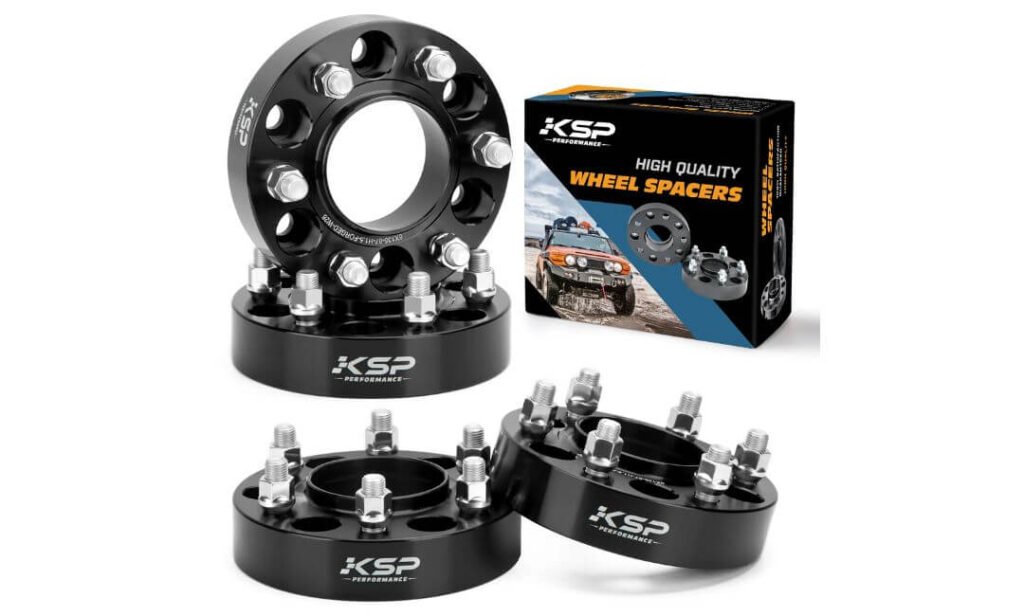
Specifications:
- Spacer thickness: 1.5 inches
- Vehicle fitment: 2015–2026 Ford F-150
- Bolt pattern: 6×135mm
- Centre bore: 87.1mm with locating lip
- Stud thread pitch: M14×1.5
- Material: Forged 6061-T6 aluminium
- Studs: Grade 10.9 SCM435 heat-treated steel
- Package: 4 spacers, 24 open-ended lug nuts and 1 tube of threadlocker
- Warranty: Limited lifetime warranty, subject to manufacturer’s terms
A wider stance doesn’t always require pushing the wheels out by the full 2 inches. For F-150 owners who want a noticeable change in wheel position but prefer a slightly less aggressive setup, 1.5-inch wheel spacers offer a practical alternative. They move each wheel outward by 1.5 inches, changing how the tyres sit relative to the fenders and increasing the space between the tyres and nearby suspension components. The final appearance still depends on the existing wheel offset, tyre width and suspension setup, so the same spacer thickness can look different from one truck to another.
The construction is another point worth considering. These spacers use forged 6061-T6 aluminium, CNC precision machining and Grade 10.9 SCM435 heat-treated steel studs. Their hubcentric design helps centre the spacer on the vehicle hub when the dimensions match correctly. The additional spacing may help reduce tyre-to-suspension rubbing on certain lifted trucks or setups running larger tyres, but it does not guarantee that rubbing will disappear. Tyre clearance also depends on wheel offset, suspension geometry and the available space around the fenders.
Before fitting the spacers, pay attention to the factory wheel studs and the pockets on the back of your wheels. If the original studs extend beyond the spacer’s outer face, deep wheel pockets may accommodate them, while a flat mounting surface or shallow pockets may prevent the wheel from sitting flush. This is an important fitment detail because the wheel must mount properly against the spacer. The package includes four spacers, 24 open-ended lug nuts and threadlocker. The manufacturer also offers a limited lifetime warranty, subject to its terms and exclusions.
Key Benefits
- Moderate stance change: Moves each wheel outward by 1.5 inches, offering a less pronounced change than the 2-inch option.
- Forged aluminium construction: Uses 6061-T6 aluminium with CNC precision machining.
- Hubcentric design: Helps centre the spacer on the hub when correctly matched to the vehicle.
- Included hardware: Comes with four spacers, open-ended lug nuts and threadlocker.
Fitment and Compatibility
This set is listed for 2015–2026 Ford F-150 models with a 6×135mm bolt pattern, an 87.1mm centre bore and M14×1.5 stud thread. It is not intended for pre-2015 F-150 applications using M14×2.0 studs. Factory stud length and wheel-pocket depth also matter: the wheel must sit flush against the spacer without interference. Follow the manufacturer’s installation instructions and specified torque requirements.
Who Should Choose These 1.5-Inch Spacers?
These spacers are worth considering if you want your F-150 wheels to sit farther outward but don’t need as pronounced a change as the 2-inch option provides. They offer a different approach to achieving a wider stance while retaining your existing wheels, provided the setup has sufficient clearance and the fitment is correct.
Our Take: The 1.5-inch option is worth considering for F-150 owners who prefer a more moderate change in wheel position. Its forged aluminium construction, hubcentric design and included hardware are useful features, while the final decision should come down to your existing wheel offset, tyre clearance and intended stance.
3. KSP 2-Inch Hubcentric Wheel Spacers for 2004–2014 Ford F-150
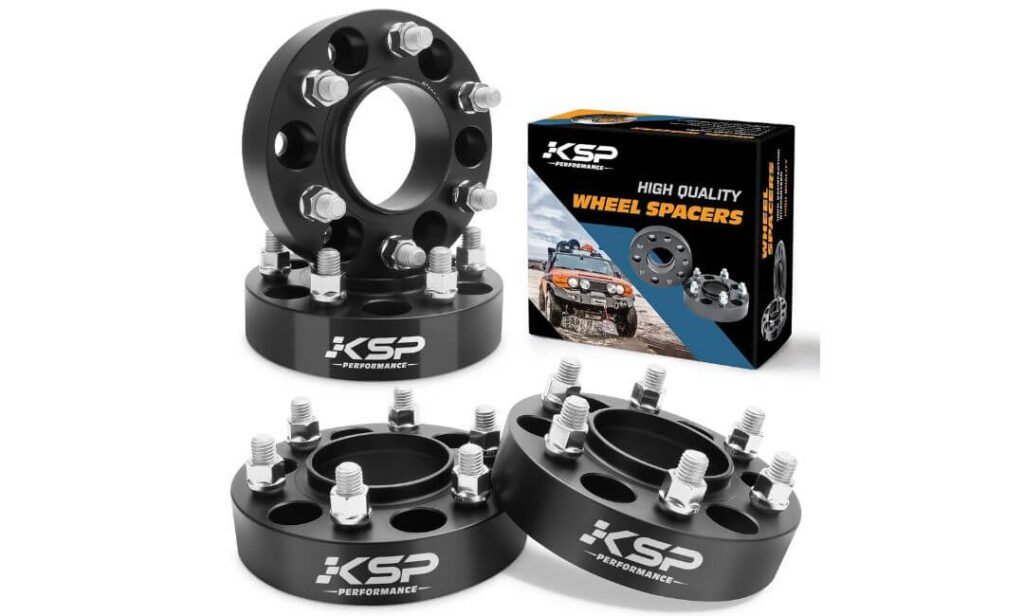
Specifications:
- Spacer thickness: 2 inches
- Vehicle fitment: 2004–2014 Ford F-150
- Bolt pattern: 6×135mm (6×5.31 inches)
- Centre bore: 87.1mm with locating lip
- Stud thread pitch: M14×2.0
- Material: 6061-T6 aluminium
- Manufacturing: CNC precision machined
- Studs: Grade 10.9 SCM435 heat-treated steel
- Package: 4 spacers, 24 open-ended lug nuts and 1 tube of threadlocker
- Warranty: Limited lifetime warranty, subject to manufacturer’s terms
Getting a wider stance on an older Ford F-150 starts with choosing spacers designed for its original wheel-mounting specifications. This 2-inch setup is listed for 2004–2014 Ford F-150 models and moves each wheel outward by 2 inches, creating a more pronounced stance. It can be an appealing option if your factory wheels sit farther inside the fenders than you prefer. The change in appearance will depend on your existing wheel offset, tyre width and suspension setup, so consider the complete wheel-and-tyre combination rather than spacer thickness alone.
The spacers are made from 6061-T6 aluminium and CNC machined, with Grade 10.9 SCM435 heat-treated steel studs. Their hubcentric design is intended to centre the spacer on the vehicle hub when the dimensions match correctly. Moving the wheels outward also increases the distance between the tyres and nearby suspension components, which may help reduce rubbing on certain lifted trucks or setups with larger tyres. However, the extra spacing does not guarantee that all rubbing will disappear; tyre size, suspension geometry and fender clearance remain important factors.
A particularly important detail on this application is the M14×2.0 stud thread pitch. It differs from the M14×1.5 specification listed for the newer F-150 spacer options, so these products should not be treated as interchangeable. The factory studs also need attention during installation: if they extend beyond the spacer’s outer face, the back of the wheel must have enough pocket depth to accommodate them without preventing the wheel from sitting flush. The package includes four spacers, 24 open-ended lug nuts and threadlocker. KSP also advertises a limited lifetime warranty, subject to the manufacturer’s terms.
Key Benefits
- Wider stance: Moves each wheel outward by 2 inches for a more pronounced appearance.
- 6061-T6 aluminium construction: Provides a CNC-machined spacer body designed for this application.
- Hubcentric design: Helps centre the spacer on the hub when correctly matched to the vehicle.
- Included hardware: Comes with four spacers, 24 open-ended lug nuts and threadlocker.
Fitment and Compatibility
This set is listed for 2004–2014 Ford F-150 models with a 6×135mm bolt pattern, an 87.1mm centre bore and M14×2.0 stud thread. The manufacturer states that it does not fit vehicles with a dually setup. Check the factory stud length and wheel-pocket depth before installation, and follow the specified mounting and torque procedures. The M14×2.0 thread specification is a key distinction from the 2015–2026 F-150 options covered earlier in this guide.
Who Should Choose These 2-Inch Spacers?
These spacers are worth considering if you own a compatible 2004–2014 F-150 and want a more aggressive outward wheel position. They are particularly relevant when you want to retain your existing wheels while changing their position relative to the fenders. The correct choice still depends on your wheel offset, tyre clearance and the truck’s configuration.
Our Take: For owners of compatible 2004–2014 F-150 models, this option offers a 2-inch spacer thickness, hubcentric design and 6061-T6 aluminium construction. Its M14×2.0 thread specification makes it distinct from the newer-truck options, so choosing the correct application is essential.
1.5-Inch vs 2-Inch Wheel Spacers for Ford F-150
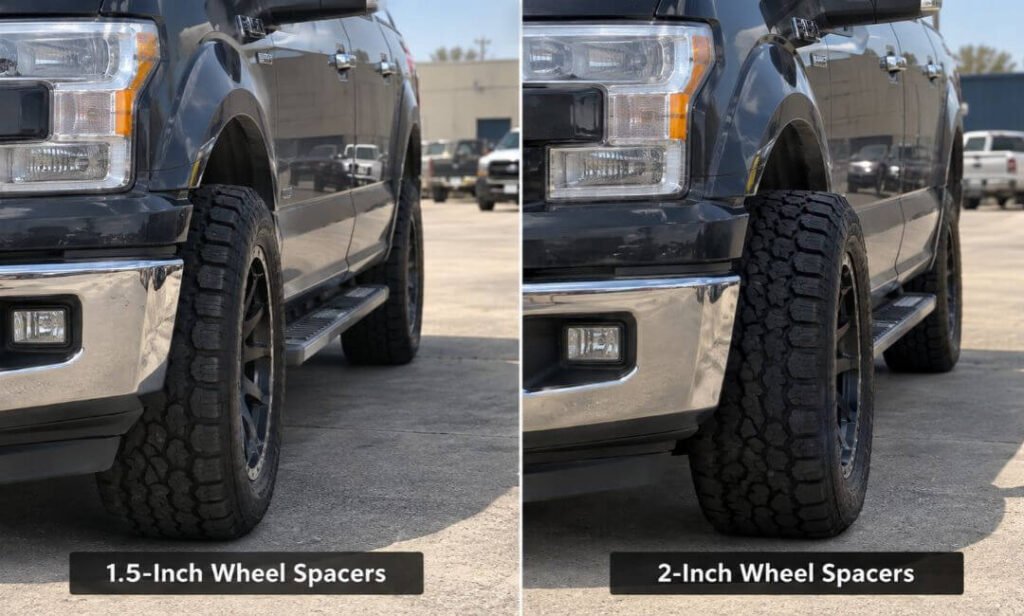
Choosing between 1.5-inch and 2-inch wheel spacers comes down to how far you want your wheels to sit outside their current position and how much clearance your setup allows. Both sizes move the wheels outward, but the difference can be noticeable when viewed from the front or rear of the truck. Before choosing a thickness, consider your existing wheel offset, tyre width, suspension setup and the relationship between the tyres and fenders.
1.5-Inch Wheel Spacers: A More Moderate Stance
A 1.5-inch spacer moves each wheel outward by 1.5 inches, making it an option for owners who want a wider appearance without going as far as a 2-inch setup. Depending on the factory wheel position and tyre dimensions, it may give the truck a more balanced look while providing additional space between the tyre and nearby suspension components.
This size is worth considering if your wheels already sit relatively close to the fender edges or if you prefer a less pronounced change. However, a 1.5-inch spacer is not automatically the better choice for clearance. The result depends on the wheel offset, tyre size and available space around the suspension and fenders.
2-Inch Wheel Spacers: A More Aggressive Look
A 2-inch spacer moves each wheel farther outward than a 1.5-inch spacer, creating a more pronounced change in wheel position. This can appeal to F-150 owners who want their tyres to sit farther out from the body, particularly when the factory wheels appear tucked inside the fenders.
The additional spacing can also help address tyre-to-suspension rubbing in some configurations. However, pushing the wheels farther outward can bring the tyres closer to the fender edges, so check clearance at full steering lock and through the suspension’s range of movement. A wider stance does not guarantee that a larger tyre will fit without rubbing.
Which Wheel Spacer Size Should You Choose?
| Your priority | Size to consider |
|---|---|
| A moderately wider stance | 1.5-inch spacers |
| A more pronounced outward wheel position | 2-inch spacers |
| Addressing tyre-to-suspension rubbing | Choose based on the actual contact point and measured clearance |
| Keeping tyres within the fenders | Check wheel offset, tyre width and local requirements before choosing either size |
One fitment detail matters more than the size alone: the spacer changes the wheel’s effective offset. For example, a wheel that already has a low offset may sit much farther outward with a 2-inch spacer than a factory wheel with a different offset. That is why two F-150s using the same spacer thickness can have different amounts of tyre poke.
For the products covered in this guide, the 1.5-inch and 2-inch options are listed for 2015–2026 F-150 models, while the older 2004–2014 application uses a different M14×2.0 stud thread specification. Choose the product intended for your truck rather than selecting by thickness alone.
Before and After Wheel Spacers on Ford F-150
Installing wheel spacers changes the position of your Ford F-150’s wheels relative to the hubs, moving them farther outward towards the fender edges. The difference is most noticeable when the factory wheels sit well inside the fenders and leave the truck looking narrower than you prefer.
With 1.5-inch wheel spacers, the wheels move outward by 1.5 inches per side, creating a more pronounced stance without using the thicker option in this guide. With 2-inch wheel spacers, the wheels move farther outward, giving the F-150 a wider, more aggressive appearance. The actual result depends on your existing wheel offset, tyre width, suspension setup and fender clearance.
Before choosing a spacer thickness, check how your current wheels sit in relation to the fenders. A setup that looks tucked in with the factory wheels may benefit from a moderate change, while a more outward position may be possible with the 2-inch option. However, moving the wheels outward does not automatically improve handling or off-road performance, and it can increase the chance of tyre contact with the fender or liner during turns or suspension compression.
Keep in mind that the visual result is not determined by spacer thickness alone. Two F-150s fitted with the same spacers can look different because of their wheel offset, tyre dimensions and suspension height. Check the available clearance at full steering lock and through the suspension’s expected range of movement, and make sure the tyres do not extend beyond the fenders in a way that conflicts with local requirements.
For most owners, the sensible approach is to choose the smallest spacer thickness that achieves the intended stance while preserving adequate clearance. A 1.5-inch spacer is the more moderate option; a 2-inch spacer creates a more substantial change in wheel position. Correct fitment, proper installation and regular inspection matter more than choosing the thickest spacer available.
Are Wheel Spacers Safe for Ford F-150?
Wheel spacers can be used on a Ford F-150 when they are correctly specified for the truck, properly installed and regularly inspected. However, they introduce an additional component between the wheel and hub, so fitment quality, fastener engagement and installation procedure deserve careful attention. Choosing a spacer based on thickness or price alone is not enough.
Hub-Centric Fitment Matters
A hub-centric spacer is designed to locate against the vehicle’s hub and provide a matching locating surface for the wheel. For the F-150 applications covered in this guide, the KSP options specify an 87.1mm centre bore. Confirm that the spacer seats flush against the hub and that the wheel sits correctly on the spacer’s locating lip. Dirt, rust, paint buildup or an incompatible centre bore can prevent proper seating.
Check the Correct Bolt Pattern and Thread Pitch
The F-150 spacers in this guide use a 6×135mm bolt pattern, but the required stud thread pitch differs by model-year application:
- 2015–2026 Ford F-150: M14×1.5
- 2004–2014 Ford F-150: M14×2.0
These specifications should be verified against the exact truck and product before purchase. Never force a nut with the wrong thread pitch, and do not assume that a spacer fits simply because its bolt pattern matches.
Use the Correct Installation Procedure
Follow the spacer manufacturer’s installation instructions and the vehicle manufacturer’s wheel-fastener specifications. The mounting surfaces must be clean, the spacer must sit flat, and the supplied hardware must be appropriate for the application. Tighten fasteners in the specified sequence and to the specified torque using a calibrated torque wrench. Do not guess the torque value or substitute a generic figure.
Also check wheel-stud engagement and clearance inside the wheel. Some wheel designs have deeper pockets than others, while others may not provide enough room for the factory studs. Do not cut or modify studs unless the spacer manufacturer explicitly approves that procedure for the exact application.
Inspect the Setup After Installation
After installation, check for vibration, unusual noises, loose fasteners or signs of tyre contact. Follow the manufacturer’s instructions on whether and when fasteners need to be rechecked. Inspect the setup periodically, especially after wheel removal or suspension work. If you notice vibration, looseness or abnormal handling, stop driving and have the installation inspected by a qualified technician.
Our Recommendation: For a Ford F-150, prioritise vehicle-specific fitment, correct thread pitch, secure mounting and adequate tyre clearance. A properly specified hub-centric spacer is a more considered choice than a universal spacer with uncertain compatibility, but no spacer design eliminates the need for correct installation and inspection.
How to Choose the Right Wheel Spacer Size for Ford F-150
Choosing the right wheel spacer size for your Ford F-150 depends on your current wheel setup, the stance you want and the clearance available around the tyres. A thicker spacer moves the wheels farther outward, but the best choice is not necessarily the one that creates the widest stance. You also need to account for wheel offset, tyre dimensions and the way the suspension moves.
1. Choose Between 1.5-Inch and 2-Inch Spacers
For the F-150 applications covered in this guide, KSP offers both 1.5-inch and 2-inch options for 2015–2026 trucks, alongside a 2-inch option for 2004–2014 models.
- Choose 1.5-inch spacers if you want a moderate change in wheel position without moving the wheels as far outward.
- Choose 2-inch spacers if you want a more pronounced, wider stance and have verified that your wheels and tyres will maintain sufficient clearance.
These are general selection guidelines, not a guarantee of fitment. The final position depends on the truck’s existing wheel specifications and tyre setup.
2. Check Your Wheel Offset and Tyre Width
Wheel offset affects how far the wheel sits in or out relative to the hub. Tyre width and tyre diameter also influence the overall position and clearance. If your current wheels already sit close to the fender edges, adding a spacer may push the tyres too far outward. If they sit well inside the fenders, a spacer may provide the appearance you’re looking for.
Before ordering, check your wheel’s offset, width and tyre size. Compare those details with your available fender and suspension clearance rather than relying on spacer thickness alone.
3. Confirm the Correct F-150 Fitment
Matching the spacer to the correct F-150 model-year application is essential. The three KSP options discussed above have different fitment ranges and thread specifications.
| F-150 application | Spacer option | Stud thread pitch |
|---|---|---|
| 2015–2026 | 1.5-inch or 2-inch | M14×1.5 |
| 2004–2014 | 2-inch | M14×2.0 |
The listed options use a 6×135mm bolt pattern and an 87.1mm centre bore. Confirm all specifications against your exact truck and the manufacturer’s current fitment information before purchasing.
4. Consider Tyre Clearance and Intended Use
A wider stance can change the relationship between the tyres, fenders, suspension components and inner liners. Check clearance with the steering turned fully in both directions, and consider how suspension compression may affect tyre contact. If the truck has aftermarket wheels, larger tyres or a modified suspension, do not assume that a spacer listed for the model year will automatically provide suitable clearance.
Also consider how you use your F-150. Daily driving, towing and off-road use place different demands on the vehicle, and wheel spacers do not automatically improve handling, towing capacity or off-road capability. If you are unsure about the setup, have a qualified technician check compatibility before installation.
Our Recommendation: Start with your existing wheel offset and tyre dimensions, then select the spacer thickness that achieves your intended stance while maintaining adequate clearance. The 1.5-inch option is the more moderate choice, while the 2-inch option moves the wheels farther outward. Correct fitment should take priority over appearance.
FAQs About Ford F-150 Wheel Spacers
Will 2-Inch Wheel Spacers on a Ford F-150 Affect the Factory Wheel Offset?
Yes. A 2-inch wheel spacer effectively moves the wheel mounting position outward by 2 inches, changing the wheel’s effective offset by approximately 50.8mm in the positive-to-negative direction. For example, a wheel with a given factory offset will sit significantly farther outward once the spacer is installed. This can change the tyre’s relationship with the fender, suspension components and inner liner. Before choosing 2-inch spacers, evaluate your wheel offset, tyre width and available clearance rather than relying on the spacer thickness alone.
Why Can Ford F-150 Wheel Spacers Cause Vibration Even When the Bolt Pattern Matches?
A matching 6×135mm bolt pattern does not guarantee a vibration-free installation. Vibration can result from a spacer that does not seat flush against the hub, incompatible centre-bore dimensions, dirt or corrosion between mounting surfaces, incorrect fastener tightening, wheel imbalance or a damaged component. A hub-centric design helps locate the wheel correctly, but it cannot compensate for poor installation or an out-of-balance wheel. If vibration appears after fitting spacers, have the mounting surfaces, fasteners, wheel balance and component condition inspected before continuing to drive.
Can You Install 1.5-Inch or 2-Inch Spacers on a Ford F-150 With Aftermarket Wheels and Larger Tyres?
Potentially, but compatibility must be checked for the complete wheel-and-tyre setup. Aftermarket wheel offset, wheel width, tyre section width and tyre diameter all influence clearance. A combination that clears the suspension with the truck parked may still contact a fender or inner liner during tight turns or suspension compression. Check clearance throughout the steering range and under expected suspension movement. Also verify that the wheel’s mounting face and centre bore are compatible with the spacer. Do not assume that a spacer suitable for a factory wheel will automatically work with every aftermarket wheel.
What Is the Difference Between M14×1.5 and M14×2.0 Wheel Spacer Stud Threads on a Ford F-150?
Both specifications refer to a nominal 14mm thread diameter, but the thread pitch differs: M14×1.5 has a 1.5mm pitch, while M14×2.0 has a 2.0mm pitch. The nuts are not interchangeable, even though the nominal diameter is the same. The KSP options covered here specify M14×1.5 for 2015–2026 F-150 applications and M14×2.0 for 2004–2014 applications. Verify the exact vehicle and product specifications before ordering. Never force a nut that does not thread on smoothly, as mismatched threads can damage the fasteners and compromise the wheel mounting.
Do Ford F-150 Wheel Spacers Reduce Wheel-Bearing Life or Affect Towing Safety?
They can increase the load and bending moment acting on wheel-end components because moving the wheel outward increases its distance from the hub and bearing assembly. The actual effect on service life depends on the spacer thickness, vehicle loading, wheel and tyre combination, driving conditions and component condition; it is not possible to predict a specific reduction in bearing life for every truck. For an F-150 used for towing or carrying heavy loads, check the spacer manufacturer’s suitability guidance, preserve the vehicle’s load ratings and have the installation assessed by a qualified technician. Wheel spacers do not increase the truck’s towing or payload capacity, and unusual wheel-end noise, vibration or looseness should be investigated promptly.
Final Verdict
Choosing the right wheel spacers for your Ford F-150 comes down to your preferred stance, existing wheel offset and available tyre clearance. A 1.5-inch spacer provides a more moderate change, while a 2-inch spacer moves the wheels farther outward for a wider appearance.
Before buying, confirm the correct model-year fitment, bolt pattern, thread pitch and centre bore. Also check clearance around the fenders and suspension, particularly if your F-150 has aftermarket wheels or larger tyres.
Ultimately, proper fitment matters more than spacer thickness. Choose a setup that meets your goals without compromising wheel security, tyre clearance or the truck’s intended use.


