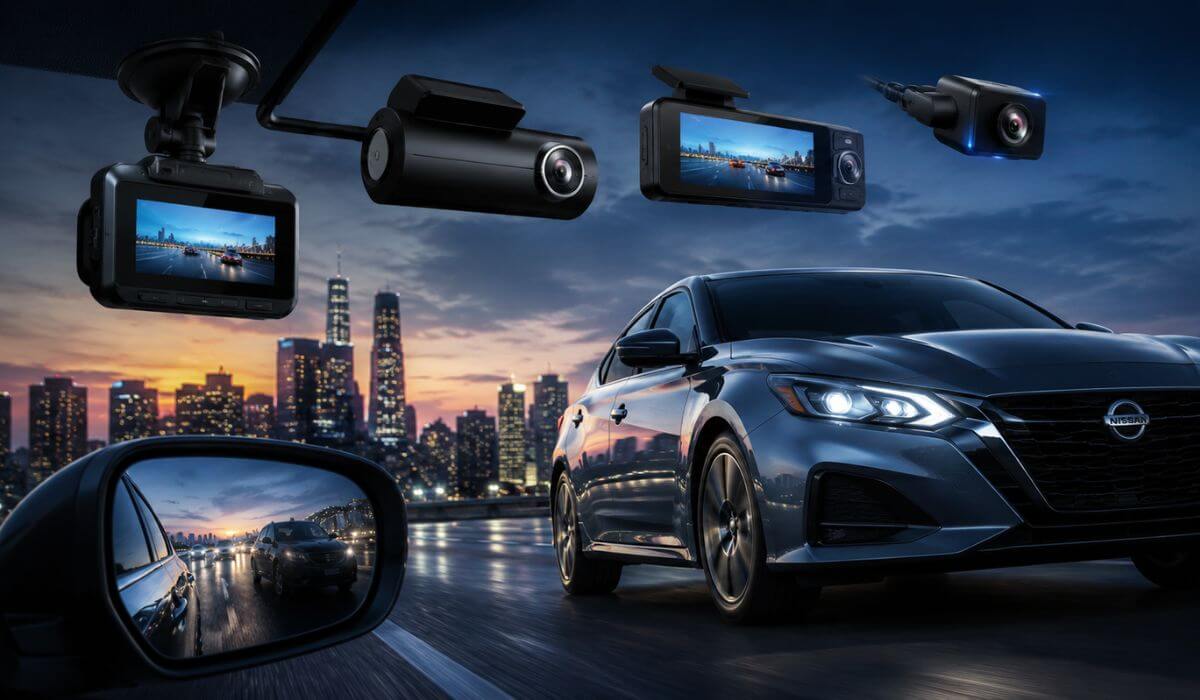
5 Best Dash Cams for Nissan Altima in 2026: 4K Video, STARVIS 2 Night Vision & 24/7 Parking Security
If you own a Nissan Altima, a dash cam isn’t just another gadget stuck to the windshield. It’s one of the few upgrades that can protect you every time the car leaves the driveway. From older 2013–2018 Altima models to the redesigned 2019–2026 generation, the right dash camera can provide clear evidence after an accident, record parking lot incidents, and capture details that are often missed in the moment.
One thing many Altima owners overlook is that windshield angle, night visibility, and parking exposure matter just as much as resolution. A 4K badge on the box means very little if the camera struggles to read license plates after dark or misses an impact while parked. That’s why this list focuses on models that combine STARVIS 2 sensors, dependable parking protection, strong HDR performance, GPS tracking, and proven reliability rather than simply chasing the highest resolution number.
After comparing the latest premium dash cameras currently available, these are the models that make the most sense for Nissan Altima drivers who want better video quality, stronger nighttime performance, and long-term peace of mind.
Best Nissan Altima Dash Cams: Top Options for Clear License Plate Capture, HDR Clarity & 24/7 Monitoring
#1. VIOFO A229 Plus Dash Cam Front and Rear
Best Dash Camera for Nissan Altima Owners Seeking Dual STARVIS 2 Sensors, Balanced HDR Recording and Everyday Reliability
#2. ROVE R2-4K Dual PRO Dash Cam Front and Rear
Top 4K Nissan Altima Dash Cam With Faster Wi-Fi Transfers, Premium Night Vision and Complete Front-to-Rear Coverage
#3. BlackVue DR770X II Dash Cam
Premium Hidden Dash Cam for Nissan Altima Drivers Who Want Advanced Parking Mode, GPS Tracking and OEM-Style Installation
#4. Vantrue N4 Pro S Dash Cam
Best Triple-Channel Dash Camera for Nissan Altima With Interior Monitoring, STARVIS 2 Imaging and 24/7 Vehicle Security
#5. WOLFBOX G900 PRO Mirror Dash Cam
Best Mirror Dash Cam for Nissan Altima Drivers Looking for 4K Recording, Digital Rear Visibility and Smart Voice Control
Expert Tip for Nissan Altima Owners
If you’re spending good money on a dash cam, don’t focus only on 4K resolution. In real-world Altima ownership, nighttime plate capture, parking protection, and sensor quality matter far more than a higher resolution number on the box.
A well-tuned STARVIS 2 camera recording in HDR will often capture more usable details on a dark highway or rainy evening than a higher-resolution camera with a weaker sensor. That’s especially important for Altima drivers who regularly commute before sunrise, park outdoors, or spend time on busy urban roads where incidents happen in seconds and evidence matters.
In short, buy the camera that gives you the best chance of identifying a vehicle when something goes wrong—not the one with the flashiest marketing headline.
How We Chose These Dash Cameras for Nissan Altima Owners
There are hundreds of dash cams on the market today, and on paper many of them look nearly identical. Most promise 4K recording, parking mode, Wi-Fi connectivity, and crystal-clear video. The reality is that once you start looking beyond the marketing claims, the differences become much more obvious.
For this guide, we didn’t focus on feature checklists alone. Instead, we looked at the factors that actually matter when a Nissan Altima owner needs footage they can rely on.
Video Quality That Holds Up Beyond Daylight Hours
Many cameras look impressive during sunny daytime drives. The real test happens after dark.
That’s why models equipped with Sony STARVIS 2 sensors received significant attention during our selection process. Cameras such as the VIOFO A229 Plus, ROVE R2-4K Dual PRO, and Vantrue N4 Pro S consistently stand out because sensor performance often matters more than resolution when reading license plates, street signs, and vehicle details at night.
A dash cam is only useful if the footage remains usable when lighting conditions become difficult.
Parking Protection That Works When You’re Away From The Car
For many Altima owners, the vehicle spends more time parked than moving.
Whether it’s a grocery store parking lot, apartment complex, office lot, or airport garage, unattended incidents happen every day. Because of that, we placed a strong emphasis on 24-hour parking surveillance, buffered event recording, impact detection, and dependable power management.
A camera that records only while driving may miss the moment you’ll need footage most.
Long-Term Reliability Over Short-Term Features
A dash cam isn’t something most drivers want to replace every year.
We prioritized models from manufacturers with established reputations for firmware support, stable performance, reliable GPS logging, and consistent video recording. Features are valuable, but reliability becomes far more important after months or years of daily use.
When a critical event occurs, the best dash cam is the one that recorded it without fail.
Features That Make Sense For Different Altima Drivers
Not every Nissan Altima owner has the same priorities.
Some drivers want the best overall balance of performance and value. Others prioritize discreet installation, cloud connectivity, interior monitoring, or a digital mirror experience.
That’s why this list includes multiple categories instead of repeating similar products. The VIOFO A229 Plus excels as an all-around choice, BlackVue focuses on premium ownership and parking protection, Vantrue serves drivers who want cabin coverage, while WOLFBOX targets those who prefer a mirror-based setup.
Each recommendation earned its place for a specific reason.
Value, Not Just Price
The cheapest dash cam rarely delivers the best ownership experience.
At the same time, the most expensive option isn’t automatically the smartest purchase.
We compared recording hardware, sensor technology, included accessories, Wi-Fi performance, GPS functionality, parking features, warranty support, and overall capability to determine which products deliver the strongest value for the money.
The result is a list built around what actually benefits Nissan Altima owners—not what looks best in a product advertisement.
Our Final Selection Philosophy
A dash cam should do three things exceptionally well:
Record clear footage when conditions are difficult.
Protect the vehicle when it’s parked.
Operate reliably without requiring constant attention.
Every model on this list met those standards. The rankings simply reflect which products currently provide the strongest combination of video quality, sensor technology, parking security, reliability, and long-term ownership value for Nissan Altima drivers in 2026.
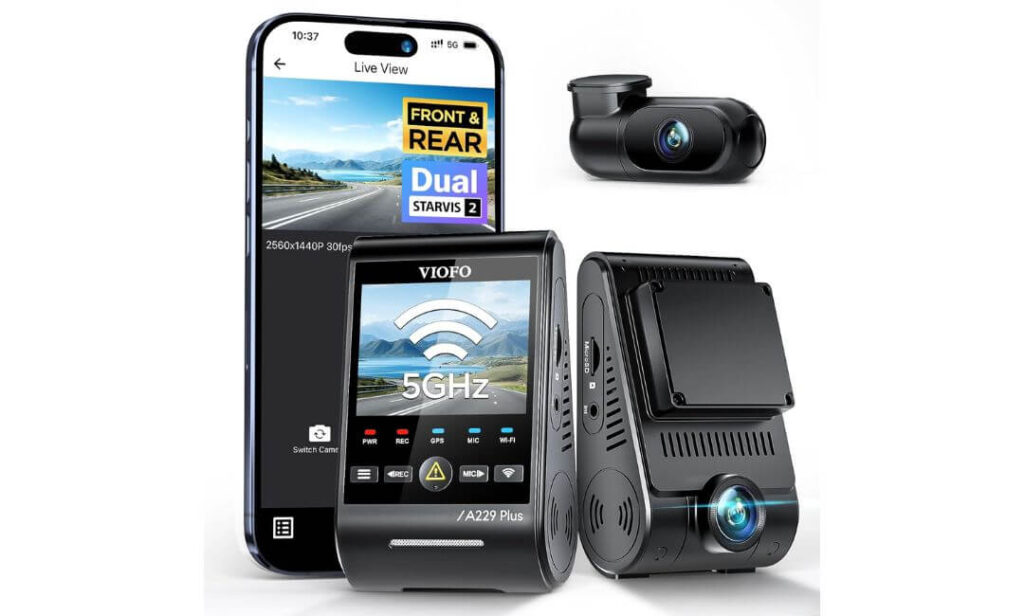
#1. VIOFO A229 Plus Dash Cam Front and Rear
Quick Specs:
- Dual Sony STARVIS 2 IMX675 sensors (front and rear)
- 1440P + 1440P HDR recording
- 140° front field of view
- Up to 60 FPS front recording
- Quad-Mode GPS (GPS, Galileo, GLONASS, BeiDou)
- 5GHz Wi-Fi connectivity
- Voice control support
- Buffered parking surveillance (hardwire kit required)
- Supports microSD cards up to 512GB
- Compact front and rear camera design
The easiest way to describe this setup is simple: it feels like a dash cam designed by people who actually drive every day. Instead of chasing flashy marketing numbers, the focus here is on the things that matter when footage is needed most—night clarity, readable license plates, balanced HDR exposure, and dependable dual-camera coverage.
What immediately separates it from many competitors is the use of dual Sony STARVIS 2 sensors on both cameras. Most systems save the better sensor for the front unit and compromise on the rear. That doesn’t happen here. Whether a vehicle approaches from ahead or comes up behind you at night, the image quality remains impressively consistent. For drivers who spend time on poorly lit highways, suburban roads, or crowded parking areas, that’s a meaningful advantage.
The other reason this model ranks so highly is how well the entire package comes together. The 5GHz Wi-Fi connection makes downloading footage far less frustrating, the Quad-Mode GPS system produces accurate location data, and the voice controls genuinely reduce distractions behind the wheel. Nothing feels unnecessary. Everything feels purposeful.
(If your priority is capturing clean, usable footage rather than simply owning a camera with a bigger resolution number, this is one of the strongest all-around options currently available.)
Standout Advantages We Noticed
- Dual STARVIS 2 sensors instead of upgrading only the front camera
- Excellent HDR performance during nighttime driving
- Smooth 1440P front and rear recording with strong detail retention
- Fast 5GHz Wi-Fi transfers compared to older wireless systems
- Accurate multi-satellite GPS tracking and route logging
- Compact design that stays discreet behind the windshield
- Voice commands are genuinely useful during daily driving
A Small Trade-Off Worth Knowing
- A memory card is not included, so you’ll want to budget for a high-endurance microSD card from the start.
Real-World Nissan Altima Compatibility Notes
The compact camera body works particularly well inside the Altima’s cabin because it doesn’t dominate the windshield or interfere with forward visibility. The front unit can be positioned neatly behind the rear-view mirror, while the slim rear camera integrates cleanly along the back glass.
Drivers using older Altima generations and newer models alike should find installation straightforward thanks to the included mounting hardware and long rear-camera cable. The overall setup feels surprisingly factory-like once installed properly.
The Insider Pro-Tip
Many buyers compare dash cams based solely on resolution. In practice, that’s often the wrong approach.
A dual-camera system with high-quality STARVIS 2 sensors and strong HDR tuning will usually provide more usable evidence than a higher-resolution setup with weaker image processing. The difference becomes obvious after sunset, during rain, or when another vehicle moves quickly across the frame.
That’s the real reason this model sits at the top of the list. It isn’t trying to impress you on a product page—it is designed to deliver footage you’ll actually be glad to have when something unexpected happens.
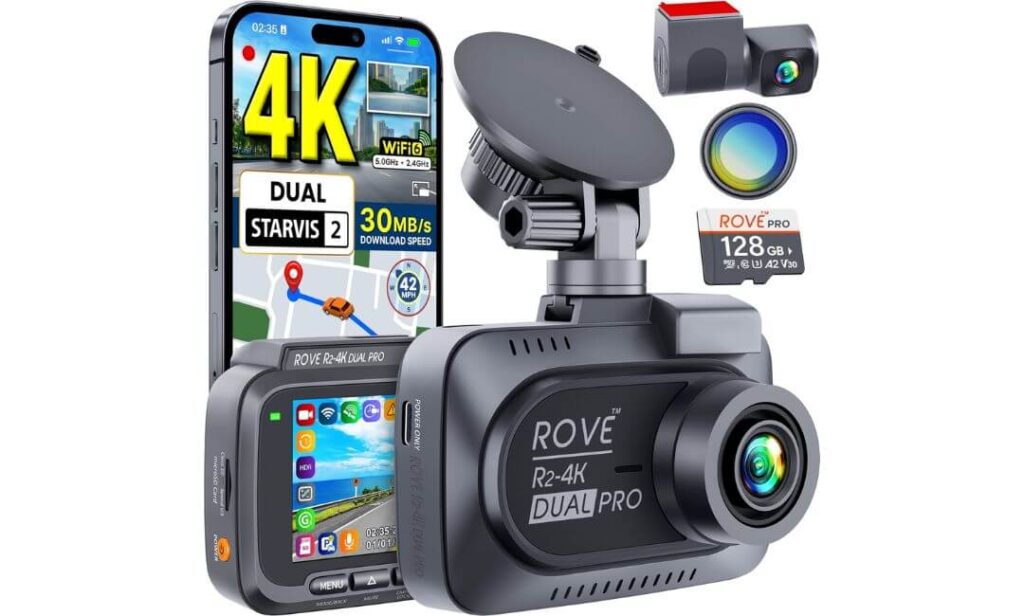
#2. ROVE R2-4K Dual PRO Dash Cam Front and Rear
Quick Specs:
- 4K Front + 2K Rear recording
- Sony STARVIS 2 IMX678 front sensor
- Sony STARVIS 2 IMX675 rear sensor
- HDR imaging on both cameras
- 150° front and 140° rear viewing angles
- WiFi 6 with transfer speeds up to 30MB/s
- Quad-Mode GPS positioning
- 24-hour parking monitoring options
- Free 128GB high-endurance memory card included
- Free CPL filter included
- Supports memory cards up to 1TB
- Heat-resistant supercapacitor design
Here’s something most buyers don’t realize until after installation: convenience matters just as much as video quality.
This setup immediately stands out because it arrives with things many competing brands charge extra for later. A 128GB memory card is already in the box, the CPL filter is included, and the camera is ready to record from day one without forcing additional purchases. For many drivers, that’s a surprisingly refreshing change.
The real star, however, is the camera hardware itself. Up front, you’re getting Sony’s highly respected 8MP STARVIS 2 IMX678 sensor, paired with a STARVIS 2 IMX675 sensor in the rear. Combined with HDR processing, wide-aperture lenses, and true dual-channel recording, the footage remains impressively sharp whether you’re driving through bright afternoon sunlight, entering a tunnel, or dealing with oncoming headlights after dark.
Then there’s the feature most owners end up appreciating more than expected: WiFi 6. Downloading large 4K video files to your phone is noticeably quicker than older Wi-Fi systems, which means less waiting and more convenience when you actually need access to footage.
(For drivers who want premium hardware, a complete accessory package, and some of the fastest wireless performance currently available in a dash cam, this option checks an impressive number of boxes.)
Highlights That Earned Its Place On This List
- Excellent 4K front and 2K rear video quality
- Premium dual STARVIS 2 sensor configuration
- Fast WiFi 6 connectivity for quicker downloads
- Included 128GB memory card adds immediate value
- CPL filter helps reduce windshield reflections and glare
- Accurate Quad-Mode GPS tracking
- Supports massive storage capacities up to 1TB
- Supercapacitor design is built for long-term durability
A Consideration Before You Buy
- To unlock full-time parking protection, you’ll still want to add the optional hardwire kit, which is common for most premium dash cam systems.
Nissan Altima Installation & Daily Use Notes
One of the biggest advantages of this setup inside the Altima is flexibility. The windshield-mounted front unit provides a broad field of view without feeling oversized, while the rear camera delivers strong coverage through the back glass.
The included accessories also simplify installation considerably. Between the mounting options, cable management tools, memory card, and CPL filter, most owners already have nearly everything needed for a clean, professional-looking setup straight out of the box.
The Insider Pro-Tip
A lot of dash cams advertise 4K recording.
Far fewer deliver a complete ownership experience.
When evaluating long-term value, pay attention to what comes in the package—not just what’s printed on the product page. Between the STARVIS 2 sensors, included storage, CPL filter, WiFi 6 connectivity, GPS tracking, and expandable storage support, this model reduces the number of upgrades you’ll feel compelled to make later.
That’s a big reason it ranks so highly here. It doesn’t simply give you excellent footage—it gives you a surprisingly complete setup from the moment the box arrives.
#3. BlackVue DR770X II Dash Cam Front and Rear
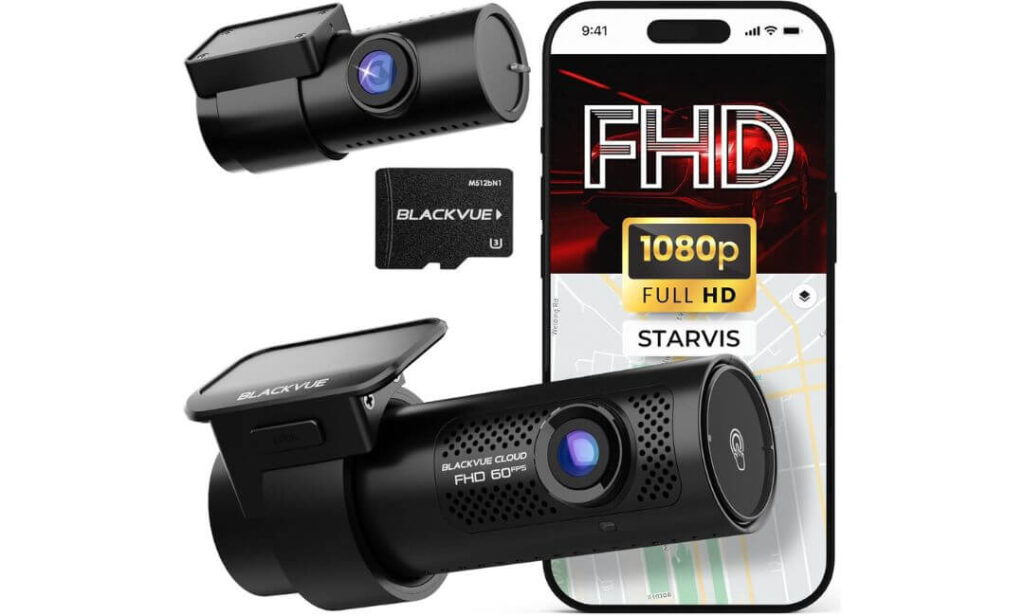
Quick Specs:
- Dual Full HD recording (1080P front and rear)
- 60 FPS front camera recording
- Sony STARVIS image sensors
- Built-in GPS tracking
- Wi-Fi smartphone connectivity
- BlackVue Cloud compatibility
- 24-hour smart parking surveillance
- 10-second pre-event recording buffer
- Included 64GB microSD card
- Included hardwire cable
- Supports storage up to 1TB
- Supercapacitor-powered system
- USB-C power connection
Interestingly, this is the only camera on this list that doesn’t try to win you over with the biggest resolution number.
Instead, it focuses on something many experienced owners eventually learn to value more: dependability, parking protection, and remote accessibility.
BlackVue has spent years building a reputation around cameras that simply work day after day without demanding attention. The footage may be recorded in Full HD rather than 4K, but the combination of Sony STARVIS sensors, refined image processing, efficient video encoding, and 60FPS front recording creates footage that remains surprisingly clean and usable in real-world driving conditions.
Where this model really separates itself, however, is the connected experience. Through Wi-Fi, GPS integration, and BlackVue Cloud support, owners can access footage remotely, receive notifications, review parking events, and maintain visibility over their vehicle even when they’re nowhere near it. Few systems on the market currently offer this level of ecosystem maturity.
(For drivers who value long-term reliability, premium parking surveillance, and advanced remote access more than chasing higher resolution figures, this remains one of the most respected names in the industry.)
Areas Where It Continues To Stand Out
- Mature and highly polished BlackVue Cloud ecosystem
- Reliable 24/7 parking surveillance features
- Included hardwire cable reduces additional setup costs
- Smooth 60FPS front-camera recording
- Efficient event detection with 10-second pre-buffer recording
- Strong GPS tracking and route history capabilities
- Compact cylindrical design blends naturally behind the mirror
- Supports large-capacity cards up to 1TB
Something Worth Keeping In Perspective
- While the video quality remains very good, buyers focused strictly on maximum resolution may find higher-resolution alternatives elsewhere on this list more appealing.
Nissan Altima Ownership Perspective
One reason many Altima owners gravitate toward this system is how discreet it feels once installed. The slim cylindrical body tucks neatly behind the rear-view mirror area, helping maintain a cleaner factory-style appearance compared with larger display-based dash cams.
The included hardwire cable is another practical advantage. Drivers interested in parking surveillance can begin building a complete setup immediately without having to source additional wiring accessories first, which simplifies the installation process considerably.
The Insider Pro-Tip
There’s a reason many professional installers, fleet operators, and long-time dash cam users continue recommending BlackVue long after newer competitors arrive.
When a dash cam becomes part of your vehicle for years rather than months, software stability, parking protection, cloud functionality, and reliability start becoming more important than a few extra pixels on a specification sheet.
That’s where this camera earns its place.
If your goal is owning a system that quietly records, reliably protects the vehicle while parked, and provides remote access when you need it most, this is one of the few options in this category that was built around that exact philosophy from the beginning.
#4. Vantrue N4 Pro S Dash Cam
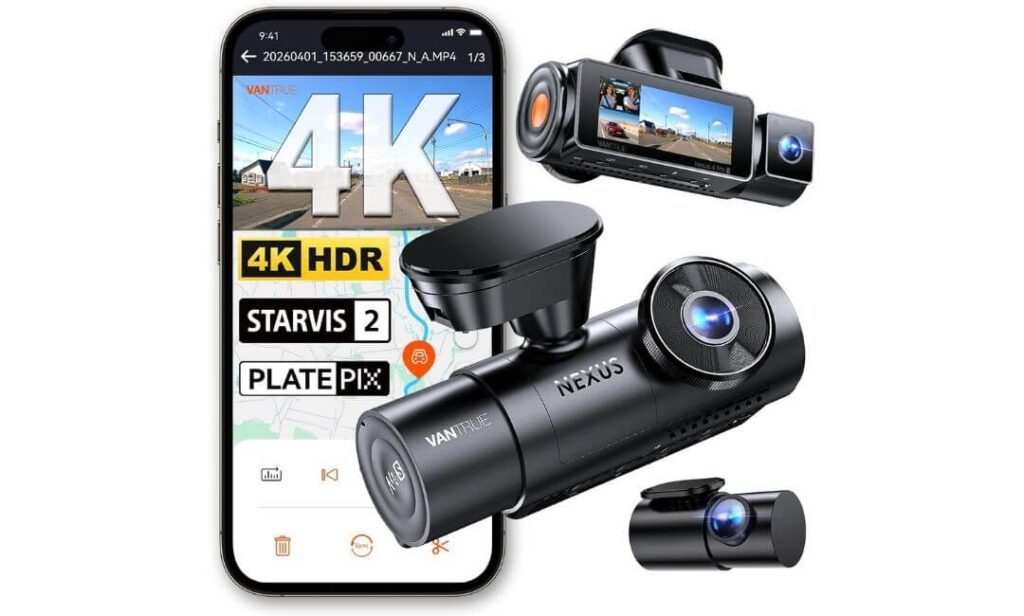
Quick Specs:
- 4K Front + 2.5K Rear + 1080P Interior recording
- Triple Sony STARVIS 2 sensor setup
- 155° + 160° + 165° coverage angles
- Triple HDR image processing
- PlatePix license plate recognition technology
- 5GHz Wi-Fi connectivity
- Built-in GPS tracking
- Voice command support
- 24/7 buffered parking surveillance
- 10-second pre-event recording
- Supports memory cards up to 1TB
- Supercapacitor-powered design
- 360° rotating rear camera
- OTA firmware update support
Let’s be honest—most drivers don’t need three cameras.
But if you’re the type of owner who wants to know exactly what happened both outside and inside the vehicle, this model enters a completely different category from everything we’ve discussed so far.
What makes it special isn’t merely the addition of an interior camera. It’s the fact that all three recording channels are supported by STARVIS 2 imaging technology, allowing the system to maintain impressive detail whether it’s recording traffic ahead, activity behind, or what’s happening inside the cabin. That’s a major distinction because many triple-camera systems compromise on one or more lenses. This one doesn’t.
The other standout feature is how aggressively it targets low-light performance. Between Night Vision 4.0, Triple HDR processing, PlatePix recognition technology, and three STARVIS 2 sensors, the footage remains remarkably composed after dark. For rideshare drivers, frequent highway commuters, or anyone who regularly parks in public areas, that additional visibility can be incredibly valuable.
(If maximum coverage is your priority rather than keeping the setup as simple as possible, this is easily one of the most comprehensive recording systems currently available.)
Reasons It Earned A Spot In This Ranking
- True three-channel recording for complete vehicle coverage
- Premium triple STARVIS 2 sensor configuration
- Excellent nighttime performance through Night Vision 4.0
- Strong license plate capture capabilities using PlatePix technology
- Buffered parking recording captures moments before an event
- Fast 5GHz Wi-Fi transfers
- Reliable GPS tracking and route history
- Massive storage support up to 1TB
- Voice controls help reduce distractions while driving
One Thing To Keep In Mind
- Because it records from three cameras simultaneously, setup takes slightly more time than a traditional front-and-rear dash cam.
Nissan Altima Compatibility & Installation Insights
The Altima’s cabin layout works surprisingly well with this system. The front camera mounts cleanly near the rear-view mirror, while the rear camera can be routed discreetly through factory trim panels for a tidy installation.
The interior-facing lens adds an extra layer of coverage that many owners don’t initially think they need. However, for drivers who frequently carry passengers, use the vehicle for business purposes, or simply prefer having a complete record of events, the additional perspective can become one of the most valuable features of the entire setup.
The Insider Pro-Tip
Most dash cams focus on recording what happened.
This one focuses on recording everything that happened.
That’s an important distinction.
After reviewing countless dash cam incidents over the years, one pattern appears repeatedly: the missing angle often becomes the missing piece of evidence. A vehicle enters from the side, an interaction occurs inside the cabin, or a rear impact unfolds outside the frame of a front-only camera.
That’s precisely why this model continues attracting attention from drivers who prioritize complete documentation over minimalism. When coverage matters more than simplicity, very few systems currently offer this level of protection in a single package.
#5. WOLFBOX G900 PRO Mirror Dash Cam
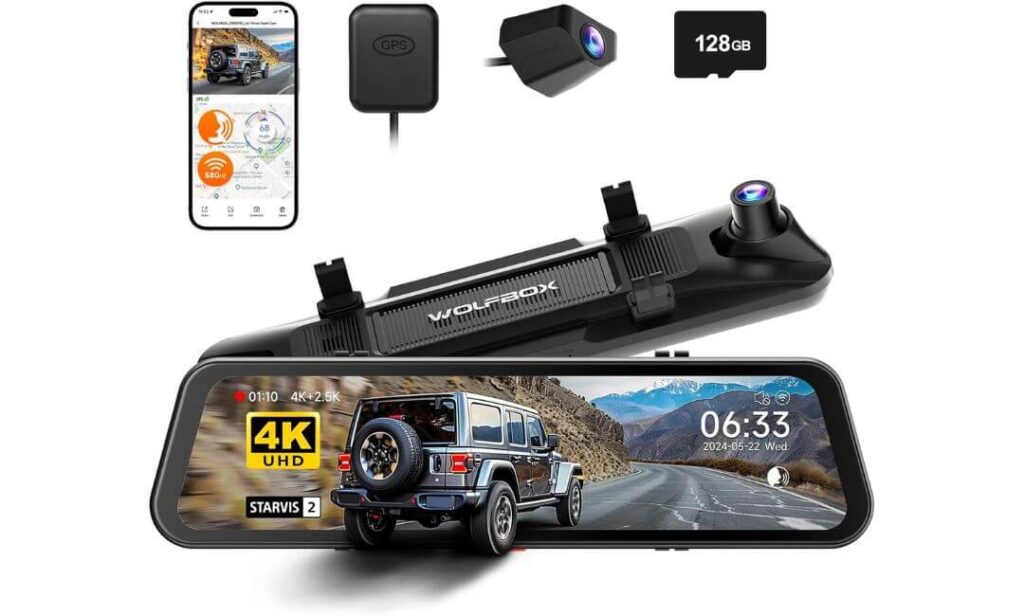
Quick Specs:
- 4K Front + 2.5K Rear recording
- Sony STARVIS 2 IMX678 sensor
- 12-inch full-screen mirror display
- 170° ultra-wide front viewing angle
- 5.8GHz high-speed Wi-Fi
- Voice control functionality
- Built-in GPS support
- Touchscreen operation
- Reverse assist camera view
- Included 128GB memory card
- Supports storage up to 512GB
- Supercapacitor-powered design
- Mirror-mounted installation
Here’s the truth.
Some drivers try a traditional dash cam and never think about it again.
Others immediately fall in love with a digital mirror system because it changes the way they interact with the vehicle every single day.
That’s exactly where this setup fits.
Instead of hanging a screen beneath the mirror or relying entirely on a smartphone app, this system transforms the mirror itself into a large 12-inch live display. The result feels surprisingly modern. You get continuous visibility behind the vehicle, clear front and rear recording, and a driving experience that feels closer to a premium factory technology package than a typical aftermarket accessory.
The camera hardware backs up the visual experience as well. A 4K front camera paired with Sony’s STARVIS 2 IMX678 sensor, a 2.5K rear camera, and a wide 170-degree field of view help capture impressive detail throughout the day and after sunset. Add in voice controls, GPS tracking, and fast 5.8GHz Wi-Fi, and the package feels far more sophisticated than many people expect from a mirror-based system.
(If you’ve ever wished your rear-view mirror could function like a high-end digital display while still providing dependable dash cam protection, this is one of the most compelling options available.)
Features That Make It Stand Out
- Large 12-inch digital mirror display
- Sharp 4K front and 2.5K rear recording
- Premium STARVIS 2 IMX678 sensor
- Excellent rear visibility compared with standard mirrors
- Included 128GB memory card saves additional expense
- Fast 5.8GHz wireless connectivity
- Useful voice command functionality
- GPS route and speed tracking
- Touchscreen controls feel intuitive and modern
One Practical Thing To Consider
- Drivers who strongly prefer a traditional rear-view mirror experience may need a short adjustment period before fully adapting to the digital display format.
Nissan Altima Installation & Ownership Notes
The Altima is actually a strong match for a mirror-style system because the cabin layout allows the display to sit naturally within the driver’s line of sight without creating a cluttered appearance.
Once installed, many owners find themselves using the live rear camera feed more often than expected, particularly during highway driving, parking maneuvers, and situations where rear-seat passengers or cargo would normally reduce visibility through a standard mirror.
The Insider Pro-Tip
Most dash cams focus entirely on recording.
This one improves visibility while recording.
That may sound like a small difference, but after spending time with a high-quality digital mirror, many drivers discover they appreciate the enhanced rearward view almost as much as the video evidence itself.
That’s ultimately why this model earned a place on this list.
It isn’t necessarily the best choice for every Nissan Altima owner. But for drivers who want modern digital-mirror functionality, premium video quality, strong night performance, and daily convenience in a single package, few products currently deliver the same blend of technology and practicality.
Best Nissan Altima Dash Cams: Top Picks for 4K Recording, STARVIS 2 Night Vision & Parking Protection
Why Every Nissan Altima Owner Should Seriously Consider a Dash Cam
The Nissan Altima has earned its reputation as one of the most popular midsize sedans on American roads. It’s used for daily commuting, long highway trips, business travel, college driving, family transportation, and even rideshare work. The problem is that the more time a vehicle spends on the road, the greater the chance of eventually dealing with an accident, parking lot damage, insurance dispute, or hit-and-run incident.
A dash cam won’t prevent those situations from happening. What it can do is provide something that’s often impossible to get afterward: an objective record of what actually occurred.
Modern dash cameras have evolved far beyond basic video recording. The best systems now offer high-resolution front and rear coverage, advanced night vision technology, GPS tracking, parking surveillance, voice controls, and cloud-connected features that continue protecting the vehicle even when the engine is off.
For many Altima owners, the question is no longer whether a dash cam is useful. The question is whether they’ll wish they had one after an incident occurs.
Clear Evidence When Facts Matter More Than Opinions
Most drivers assume fault determination is straightforward.
In reality, many accidents become a disagreement between two versions of the same story.
A dash cam changes that equation immediately. Instead of relying on memory, witness statements, or assumptions, video footage can show exactly what happened before, during, and after an incident. Traffic light behavior, lane positioning, sudden braking, unsafe lane changes, and unexpected road hazards become much easier to verify when footage is available.
This becomes especially valuable in busy intersections, highway merging situations, parking lot collisions, and rear-end accidents where responsibility is often disputed.
For Nissan Altima owners who commute regularly or spend significant time in traffic, having recorded evidence can remove a tremendous amount of uncertainty during the claims process.
Parking Lot Incidents Happen More Often Than Most Drivers Realize
Many vehicle owners focus exclusively on recording while driving.
However, a surprising number of incidents occur while the vehicle is parked.
Shopping centers, apartment complexes, office parking lots, airports, schools, and public garages all create opportunities for door dings, hit-and-runs, vandalism, and minor collisions that may otherwise go undocumented.
That’s one reason modern parking mode technology has become such an important feature. A quality parking mode dash cam for Nissan Altima owners can monitor motion, impacts, and suspicious activity around the vehicle even after the ignition is turned off.
Systems equipped with buffered parking recording are particularly valuable because they often capture footage from several seconds before an event occurs, providing additional context that standard event-triggered recordings may miss.
When reviewing today’s top dash cameras, parking protection was one of the most important factors considered throughout this guide.
Night Driving Creates Challenges Most Cameras Never Solve
Anyone can record clear footage on a bright afternoon.
The real challenge begins after sunset.
Headlight glare, poorly lit roads, reflections, rain, and fast-moving traffic create conditions that expose weaknesses in lower-quality cameras. This is exactly why modern sensor technology has become such a major consideration.
Many of the top recommendations in this guide use advanced Sony STARVIS 2 imaging sensors, HDR processing, and enhanced low-light tuning because these technologies directly affect whether important details remain visible when lighting conditions become difficult.
A license plate that cannot be read at night often has very little value when footage is actually needed.
Added Protection for Frequent Highway Drivers
The Nissan Altima is a popular choice among commuters because of its comfort, fuel efficiency, and long-distance driving capability.
Unfortunately, highway travel also introduces unique risks.
High-speed lane changes, distracted drivers, tire debris, road hazards, aggressive merging behavior, and sudden traffic slowdowns can all create situations where accurate documentation becomes extremely valuable.
Front-and-rear recording systems provide an additional layer of protection because they capture activity occurring around the entire vehicle rather than focusing exclusively on what’s happening ahead.
This broader perspective often becomes critical during insurance investigations and accident reviews.
Valuable for Rideshare, Business, and High-Mileage Use
While not every Altima owner uses the vehicle professionally, many drivers accumulate significant annual mileage through work, business travel, rideshare driving, delivery services, or client transportation.
For those situations, the value of comprehensive recording increases substantially.
Multi-channel systems such as front, rear, and interior-facing cameras can provide additional accountability, document passenger interactions, record vehicle activity while parked, and create a more complete record of events throughout the day.
Drivers who spend more time on the road naturally face more exposure to unpredictable situations, making reliable video documentation increasingly important over time.
The Real Benefit Most Owners Don’t Think About
The greatest value of a dash cam often has nothing to do with recording dramatic accidents.
It’s peace of mind.
Knowing that your vehicle is documenting what happens around it changes the ownership experience in subtle ways. Whether you’re parked outside a hotel overnight, leaving the vehicle at an airport, driving through heavy traffic, or navigating unfamiliar roads, there’s comfort in knowing an independent witness is always present.
That’s ultimately why dash cams continue growing in popularity among Nissan Altima owners.
Not because drivers expect something to happen every day.
But because when something eventually does happen, having clear footage is often far better than wishing you had it.
Buying Guide: How to Choose the Right Dash Cam for Your Nissan Altima
Shopping for a dash cam sounds simple until you start comparing specifications. Resolution numbers, sensor names, parking mode features, Wi-Fi versions, GPS systems, memory card support, cloud connectivity, and installation options can quickly make every product look similar on paper.
The reality is that not every feature carries the same importance.
For most Nissan Altima owners, the best dash cam isn’t necessarily the one with the longest feature list. It’s the one that delivers dependable footage when conditions become difficult, integrates cleanly into the vehicle, and continues working reliably year after year.
Before making a final decision, here are the areas that deserve the closest attention.
Video Quality: Understanding the Difference Between 4K and 1080P Recording
One of the first specifications buyers notice is resolution.
At first glance, a 4K dash cam for Nissan Altima appears to be the obvious choice because it records significantly more detail than traditional Full HD cameras. In many situations, that advantage is absolutely real. Higher-resolution footage can improve license plate readability, road sign visibility, and overall image sharpness.
However, resolution alone doesn’t tell the entire story.
A well-designed 1080P system with excellent image processing and strong low-light performance can often outperform a poorly optimized 4K camera after sunset. That’s one reason cameras such as the BlackVue DR770X II remain highly respected despite offering lower resolution than some competitors.
The ideal scenario combines both high resolution and advanced sensor technology. That’s exactly why models like the VIOFO A229 Plus, ROVE R2-4K Dual PRO, Vantrue N4 Pro S, and WOLFBOX G900 PRO earned strong rankings in this guide.
Why STARVIS 2 Technology Matters More Than Most Buyers Realize
Many buyers spend hours comparing resolutions while overlooking the component that often has a greater impact on image quality: the sensor.
Sony’s STARVIS 2 technology represents one of the most meaningful improvements in modern dash cameras. Compared with older imaging systems, STARVIS 2 sensors provide better light sensitivity, improved dynamic range, reduced motion blur, and stronger nighttime performance.
This becomes particularly important for Nissan Altima owners who regularly drive before sunrise, after dark, during rainstorms, or through poorly lit areas.
When evaluating footage quality, remember this simple rule:
A stronger sensor often contributes more to usable evidence than a higher resolution number.
That’s why multiple recommendations in this guide prioritize STARVIS 2-equipped cameras.
Front and Rear Coverage Is Usually Worth the Extra Investment
Many first-time buyers initially consider a front-only dash camera.
After reviewing real-world incidents, however, it becomes clear why a front and rear dash cam for Nissan Altima owners is generally the better long-term investment.
Rear-end collisions, parking lot impacts, hit-and-run incidents, and aggressive driving behavior frequently occur behind the vehicle. Without a rear camera, critical footage can be missing when it’s needed most.
Dual-channel systems provide significantly more context and create a more complete record of events surrounding the vehicle.
For most Altima drivers, front-and-rear coverage represents the best balance between protection, simplicity, and value.
Parking Mode and Around-the-Clock Vehicle Protection
A surprising number of vehicle incidents occur while the car isn’t moving.
Apartment complexes, shopping centers, airports, office parking lots, schools, and public garages expose vehicles to risks every day.
This is where parking mode becomes one of the most valuable dash cam features available.
A quality parking mode dash cam for Nissan Altima owners can monitor impacts, movement, suspicious activity, and collisions while the vehicle remains parked. Buffered parking systems provide an additional advantage because they preserve footage from several seconds before an event occurs, offering a clearer picture of what happened.
For drivers who park outdoors regularly, parking protection should be considered essential rather than optional.
Choosing Between OEM-Style and Hidden Dash Cam Designs
Not every owner wants a highly visible screen attached to the windshield.
Some drivers prefer a discreet setup that blends naturally into the interior.
An OEM style dash cam for Nissan Altima generally prioritizes a clean, factory-inspired appearance. These cameras are designed to remain unobtrusive while preserving the cabin’s original aesthetic.
A hidden dash cam for Nissan Altima owners takes that concept even further. Compact camera bodies can often be mounted behind the rear-view mirror where they remain virtually invisible during daily driving.
If maintaining a factory-like appearance matters to you, camera size and mounting design deserve careful consideration before purchase.
Why Wi-Fi and GPS Have Become Essential Features
Years ago, these features were considered luxury additions.
Today, they’re among the most useful technologies available.
A WiFi dash cam for Nissan Altima owners allows footage to be viewed, downloaded, shared, and managed directly from a smartphone. This eliminates the inconvenience of constantly removing memory cards.
GPS functionality adds another layer of documentation by recording vehicle speed, route history, location information, and timestamps alongside video footage.
When reviewing incidents, this additional data can provide valuable context that video alone may not fully capture.
Nissan Altima Dash Cam Installation Considerations
Fortunately, the Altima works well with most modern dash cameras.
The windshield design offers several mounting options, while interior trim panels provide convenient pathways for routing rear-camera cables cleanly throughout the cabin.
For the cleanest installation possible:
- Position the front camera near the rear-view mirror
- Route wiring through factory trim whenever possible
- Avoid placing cameras within the driver’s primary field of view
- Use electrostatic mounting films when available
- Consider professional hardwiring if parking mode will be used frequently
Taking additional time during installation often results in a cleaner appearance and better long-term reliability.
Storage Capacity, Loop Recording, and Long-Term Reliability
Storage is one of the most overlooked aspects of dash cam ownership.
Every camera on this list uses loop recording, meaning older footage is automatically overwritten when storage becomes full. This allows continuous operation without requiring manual file management.
However, storage capacity still matters.
Higher-resolution cameras generate larger files, especially when recording from multiple channels simultaneously. Choosing a high-endurance microSD card with adequate capacity helps ensure smoother operation and longer recording history.
Many premium models now support capacities ranging from 512GB to 1TB, providing substantially more recording time than older systems.
Reliability is equally important. A high-endurance memory card from a reputable manufacturer is often a smarter investment than simply purchasing the largest card available.
Finding a Dash Cam That Complements the Altima’s Interior
The best dash cam should protect the vehicle without making the cabin feel cluttered.
Whether you choose a compact hidden design, a traditional screen-based camera, a premium cloud-connected system, or a digital mirror setup, the goal should be seamless integration with the vehicle.
That philosophy guided every recommendation in this guide.
Each model was selected not only because of recording performance, sensor technology, parking protection, and connectivity features, but also because it offers a practical ownership experience for Nissan Altima drivers who expect modern functionality without compromising everyday usability.
Ultimately, the best choice comes down to how you use your Altima. Some drivers prioritize maximum image quality, others prioritize parking protection, and some simply want the most complete coverage possible. The good news is that every dash cam featured in this guide excels in at least one of those areas, making it easier to find a solution that genuinely fits your driving habits.
Installation and Setup Tips for Nissan Altima Dash Cam Owners
One of the biggest misconceptions about dash cams is that installation is complicated. In reality, most modern systems are far easier to install than many owners expect. The Nissan Altima is particularly dash-cam-friendly thanks to its windshield design, accessible power outlets, and interior trim layout that allows wiring to be hidden neatly throughout the cabin.
The difference between an average installation and a professional-looking installation usually comes down to planning rather than technical skill. Taking an extra thirty minutes to route cables properly, position cameras carefully, and configure settings correctly can dramatically improve both appearance and long-term reliability.
Whether you’re installing a compact hidden camera, a premium front-and-rear system, or a digital mirror dash cam, the following guidelines will help you get the most from your investment.
Nissan Altima Dash Cam Installation: A Simple Step-by-Step Overview
Before mounting anything permanently, spend a few minutes deciding where the camera should sit.
For most Altima owners, the ideal location is directly behind or slightly below the rear-view mirror. This position provides a clear forward view while keeping the camera outside the driver’s primary line of sight.
A typical installation process looks like this:
- Clean the windshield thoroughly using alcohol wipes or glass cleaner.
- Test camera placement before removing adhesive backing.
- Mount the front camera near the rear-view mirror area.
- Connect the power cable and verify camera operation.
- Route wiring along the headliner toward the passenger-side A-pillar.
- Continue cable routing through factory trim panels.
- Install the rear camera on the rear glass if using a dual-channel setup.
- Secure loose wiring using supplied clips or trim channels.
- Insert and format the memory card.
- Configure recording settings, Wi-Fi, GPS, and parking mode preferences.
Taking time to verify camera angles before finalizing installation can prevent frustration later.
Choosing Between a Hardwire Kit and a Standard Power Outlet
One of the most important installation decisions involves power delivery.
Most dash cameras can operate immediately using the Altima’s standard 12-volt accessory outlet. This is the fastest and easiest setup method because no vehicle wiring modifications are required.
However, there is one limitation.
When the vehicle shuts off, power typically stops as well.
That’s where hardwiring becomes valuable.
A hardwire kit connects the dash cam directly to the vehicle’s fuse panel and allows advanced features such as:
- Continuous parking surveillance
- Buffered parking recording
- Motion-triggered monitoring
- Impact detection while parked
- Low-voltage battery protection
For drivers who park outdoors regularly, use public parking lots frequently, or leave the vehicle unattended for long periods, hardwiring often delivers the greatest long-term value.
For drivers who primarily want protection while driving, the factory power outlet may be perfectly adequate.
Creating a Clean OEM-Style Installation
One of the reasons many owners hesitate to install a dash cam is concern about visible wiring.
Fortunately, the Altima’s interior makes clean cable routing relatively straightforward.
An OEM-style dash cam for Nissan Altima owners should look as though it belongs in the vehicle rather than appearing as an obvious aftermarket accessory.
The best results usually come from:
- Mounting the camera high on the windshield
- Routing wires inside the headliner whenever possible
- Following factory trim channels
- Avoiding exposed cable loops
- Keeping power adapters hidden inside the center console area
- Positioning rear-camera wiring behind interior panels
When completed properly, passengers often won’t notice the installation at all.
This cleaner appearance is especially beneficial when using compact cameras such as the VIOFO A229 Plus or BlackVue DR770X II, both of which naturally complement the Altima’s cabin design.
Configuring Wi-Fi, GPS, and Smartphone Connectivity
Most premium dash cameras now include wireless connectivity, and setting it up early makes ownership significantly easier.
A modern WiFi dash cam for Nissan Altima drivers allows quick access to:
- Live camera viewing
- Video playback
- Firmware updates
- File downloads
- Camera settings
- Emergency footage sharing
After installation, connect the camera to its companion app and verify that all functions operate correctly before relying on it for daily use.
GPS-equipped systems deserve similar attention.
Confirm that:
- Time and date are accurate
- Location tracking is active
- Speed data is recording properly
- GPS signal acquisition occurs consistently
This information can become extremely valuable during insurance claims and incident investigations.
Optimizing Recording Settings Before Your First Drive
Many owners install a dash cam and immediately start driving without reviewing settings.
That can be a mistake.
Factory defaults are not always ideal.
After installation, it’s worth reviewing:
- Resolution settings
- HDR activation
- Recording duration
- Parking mode sensitivity
- Motion detection thresholds
- Audio recording preferences
- GPS data overlays
- Voice command options
A few minutes of configuration can improve recording quality and reduce unnecessary storage consumption.
Memory Card Setup and Reliability Considerations
The memory card is often the most overlooked component of a dash cam system.
Yet it directly affects recording reliability.
High-resolution systems such as the ROVE R2-4K Dual PRO, Vantrue N4 Pro S, and WOLFBOX G900 PRO generate large video files continuously. Using a high-endurance microSD card specifically designed for dash camera use can significantly improve long-term performance.
Before daily operation:
- Format the card inside the camera
- Verify recording is functioning properly
- Check available storage capacity
- Enable loop recording
- Schedule periodic card health checks
A quality memory card often contributes more to reliability than many buyers realize.
Windshield Placement, Visibility, and Legal Considerations
Regardless of which dash cam you choose, safety should always remain the priority.
The camera should never obstruct the driver’s forward visibility or interfere with safe vehicle operation.
Placement requirements can vary depending on local regulations, so it’s worth reviewing applicable laws before installation.
In general, the safest approach is to:
- Mount cameras high on the windshield
- Keep devices outside primary sightlines
- Avoid blocking sensors or driver-assistance systems
- Ensure mirror movement remains unrestricted
- Verify rear-camera placement does not obstruct rear visibility
A properly installed dash cam should become almost invisible during daily driving.
Final Setup Advice Before Hitting the Road
The most common installation mistake isn’t poor wiring.
It’s assuming everything is recording correctly without verifying it.
Before considering the job complete, take a short test drive and review the footage carefully.
Check daytime clarity, nighttime visibility, rear-camera alignment, GPS accuracy, Wi-Fi connectivity, and audio quality. Confirm that license plates remain readable and that both front and rear cameras capture the areas you expect.
Those few minutes of testing can make the difference between discovering a problem immediately and discovering it after the footage was needed.
A dash cam is ultimately an evidence tool. Spending a little extra time on installation and setup ensures it’s ready to perform exactly as intended when the moment arrives.
Parking Mode and Security Best Practices for Nissan Altima Owners
When most people shop for a dash cam, they focus on recording quality while driving. That’s understandable because 4K resolution, STARVIS 2 sensors, HDR processing, and front-and-rear coverage are easy to compare.
What often gets overlooked is what happens when the vehicle is parked.
In reality, many Altima owners are far more likely to experience a parking lot incident than a major accident on the road. Shopping centers, apartment complexes, office garages, airports, schools, hotels, and public parking lots create opportunities for hit-and-runs, door impacts, vandalism, attempted break-ins, and careless drivers who leave without leaving contact information.
That’s why parking mode has become one of the most valuable features in a modern dash cam.
The cameras featured in this guide approach parking protection differently, but all of them offer solutions designed to continue protecting the vehicle after the engine is turned off.
Understanding How Parking Mode Works Across These Dash Cameras
Not all parking mode systems operate the same way.
Some prioritize storage efficiency, some focus on maximum event capture, and others emphasize continuous monitoring.
The VIOFO A229 Plus uses multiple parking-mode options, including buffered event detection, low-bitrate recording, and time-lapse recording. Its buffered recording capability is particularly valuable because it captures footage from before an impact or motion event occurs rather than only recording afterward.
The ROVE R2-4K Dual PRO combines motion detection, collision detection, and time-lapse monitoring. When an event is triggered, the camera automatically saves protected footage and notifies the driver during the next startup sequence.
The BlackVue DR770X II focuses heavily on intelligent parking surveillance. Combined with its cloud-based ecosystem, it can become one of the most sophisticated vehicle monitoring solutions available when configured correctly.
The Vantrue N4 Pro S expands coverage further by maintaining protection through three cameras simultaneously. Front, rear, and interior monitoring continue working together during parking events, providing additional context when activity occurs around the vehicle.
The WOLFBOX G900 PRO supports parking monitoring as well, giving drivers access to recording protection while benefiting from its digital mirror functionality during normal driving.
While each system approaches surveillance differently, the goal remains the same: documenting activity around the vehicle when nobody is inside.
Why Buffered Parking Recording Is Worth Prioritizing
Many buyers don’t notice the difference between standard event recording and buffered event recording.
The distinction is actually significant.
Traditional event-triggered systems begin recording only after motion or impact is detected. The problem is that critical moments sometimes occur before the trigger activates.
Buffered recording continuously stores a temporary video cache. When an event occurs, the system preserves footage from several seconds before the incident along with footage afterward.
This additional context often reveals:
- The vehicle responsible for an impact
- The direction of travel
- Pedestrian activity
- Suspicious behavior before damage occurs
- The sequence of events leading up to an incident
For Nissan Altima owners who regularly park in busy environments, buffered parking protection is one of the most valuable features available.
Maximizing 24/7 Protection Without Damaging Your Battery
One of the most common concerns surrounding parking mode is battery health.
Fortunately, modern systems have become far more intelligent than earlier generations.
Most premium hardwire kits now include low-voltage protection that automatically shuts down the dash cam before the battery reaches a level that could affect vehicle starting performance.
To maximize protection safely:
- Use a quality hardwire kit with voltage monitoring
- Select appropriate voltage cutoff settings
- Avoid extremely aggressive recording settings when unnecessary
- Consider time-lapse recording for extended parking periods
- Check battery health periodically, especially on older vehicles
- Verify parking mode activates correctly after shutdown
These precautions allow continuous protection without creating unnecessary strain on the electrical system.
Choosing the Right Parking Mode for Your Daily Driving Habits
The best parking mode settings often depend on where the vehicle spends most of its time.
For example:
Apartment Parking
- Buffered event recording works exceptionally well
- Motion detection can capture activity around the vehicle
- Dual-channel or triple-channel coverage adds valuable visibility
Airport Parking
- Time-lapse recording often provides better long-duration coverage
- Larger memory cards become particularly beneficial
Office Parking Lots
- Impact detection and buffered event recording are usually the highest priorities
Street Parking
- Full parking surveillance combined with wide-angle coverage delivers the strongest protection
Matching recording mode to parking environment typically produces better results than using identical settings everywhere.
Optimizing Storage for Long-Term Parking Surveillance
Parking mode can generate a surprising amount of footage.
Without proper storage planning, valuable recordings may be overwritten sooner than expected.
A few simple adjustments can dramatically improve storage efficiency:
- Use high-endurance microSD cards
- Choose larger capacities whenever possible
- Format cards periodically inside the camera
- Enable loop recording
- Use event-based recording when practical
- Reserve continuous recording for higher-risk environments
Many cameras in this guide support capacities ranging from 512GB to 1TB, which can significantly extend recording retention compared with smaller cards.
For high-resolution systems such as the ROVE R2-4K Dual PRO and Vantrue N4 Pro S, larger storage capacities become especially valuable.
Loop Recording: The Feature That Keeps Protection Continuous
Some new dash cam owners worry that storage will eventually fill up and stop recording.
That’s not how modern systems work.
Loop recording automatically overwrites the oldest non-protected footage when storage reaches capacity. This allows the camera to continue recording indefinitely without requiring manual intervention.
Important clips remain protected through:
- G-sensor event detection
- Manual video locking
- Parking mode event recording
- Emergency recording folders
As long as the system is functioning correctly, recording continues automatically in the background.
Why Parking Protection Matters Specifically for Nissan Altima Owners
The Altima is one of the most common midsize sedans on American roads.
That popularity creates advantages in terms of ownership, maintenance, and resale value. Unfortunately, it also means Altimas spend a lot of time parked in public spaces where vehicle damage can occur unexpectedly.
A quality parking mode dash cam for Nissan Altima owners provides an additional layer of accountability that simply didn’t exist a few years ago.
Whether the vehicle is parked outside a workplace, sitting in a shopping center lot, left overnight at a hotel, or stored at an airport for several days, parking surveillance creates a continuous record of activity around the car.
For many owners, that protection eventually becomes just as valuable as the footage recorded while driving.
The Security Mindset That Gets the Most Value From a Dash Cam
The most satisfied dash cam owners tend to view parking mode differently.
They don’t treat it as an extra feature.
They treat it as insurance.
Hopefully, the footage is never needed.
But if an impact occurs, a hit-and-run happens, someone damages the vehicle, or suspicious activity takes place nearby, having recorded evidence often turns a frustrating situation into a manageable one.
That’s ultimately why parking mode remains one of the most important considerations when choosing a dash cam for a Nissan Altima. The camera protects you while driving, but parking mode protects the vehicle during the many hours it spends sitting unattended.
FAQs About Nissan Altima Dash Cam
Which dash cam feature makes the biggest difference for Nissan Altima owners in real-world driving: 4K resolution, STARVIS 2 sensors, or parking mode?
If we’re talking about actual ownership rather than marketing materials, sensor quality usually matters more than resolution, and parking mode often becomes more valuable than drivers initially expect.
Many buyers focus on 4K because it’s easy to understand. Higher numbers sound better. The problem is that accidents, near misses, and insurance disputes rarely happen under perfect lighting conditions. They happen at night, during rain, in parking garages, at dawn, or under harsh headlight glare.
That’s where technologies such as STARVIS 2 and HDR processing start earning their keep.
For most Nissan Altima owners, the ideal combination looks something like this:
- Strong low-light sensor performance
- Reliable front and rear coverage
- Buffered parking mode
- GPS tracking
- Stable recording reliability
Resolution remains important, but it’s rarely the only reason footage becomes useful.
Is a front-and-rear dash cam really worth it for a Nissan Altima, or is a front-only setup enough?
After reviewing countless real-world dash cam incidents, one pattern appears repeatedly: the missing camera angle often becomes the missing piece of evidence.
A front-only camera can document what happens ahead of the vehicle. It cannot show rear impacts, parking lot collisions from behind, aggressive tailgating behavior, or many hit-and-run situations that occur outside its field of view.
That’s exactly why every recommendation in this guide includes rear coverage.
For Nissan Altima owners specifically, a front-and-rear dash cam usually provides the best balance of protection and value because it covers the situations most drivers encounter:
- Rear-end collisions
- Parking lot damage
- Highway incidents
- Merging disputes
- Unattended vehicle impacts
A front-only system is certainly better than no dash cam at all, but dual-channel coverage often delivers significantly more context when footage is actually needed.
Will a parking mode dash cam drain the battery in a Nissan Altima if it stays active all night?
This concern comes up frequently, and it’s a fair question.
Modern premium dash cams are far smarter than older systems. Most hardwire kits now include low-voltage protection that continuously monitors battery health. When voltage drops below a predefined threshold, the dash cam automatically powers down before battery levels become problematic.
That said, several factors influence how long parking mode can operate:
- Battery condition
- Ambient temperature
- Recording method
- Camera power consumption
- Vehicle usage frequency
A Nissan Altima that is driven regularly and equipped with a quality hardwire kit generally handles parking mode quite well. Drivers who leave the vehicle parked for extended periods may benefit from less power-intensive options such as time-lapse recording or motion-triggered monitoring.
The key is configuring parking protection intelligently rather than simply running the most aggressive recording mode at all times.
Why do experienced dash cam users often recommend reliability over chasing the newest specifications?
Because footage that doesn’t exist has no value.
It’s easy to become distracted by specifications such as higher resolution, larger screens, or additional features. Yet many long-term dash cam owners eventually prioritize different qualities:
- Stable firmware
- Reliable recording
- Consistent GPS tracking
- Dependable parking protection
- Strong memory card compatibility
- Long-term durability
The reason is simple.
The most impressive specification sheet in the world doesn’t matter if the camera fails to record when something actually happens.
This philosophy is one reason products from brands such as VIOFO, BlackVue, Vantrue, ROVE, and WOLFBOX continue attracting attention. Each approaches the market differently, but all place significant emphasis on recording reliability rather than feature inflation.
If you could only verify three things after installing a new dash cam, what would they be?
This is arguably one of the most important questions in the entire buying process.
Many owners install a camera, see a blinking recording light, and assume everything is working correctly. Unfortunately, that’s not always the case.
Before relying on any dash cam, verify these three areas:
First, review actual footage.
Don’t assume video quality is acceptable. Watch both daytime and nighttime recordings on a larger screen and confirm license plates, road signs, and vehicle details remain visible.
Second, confirm parking mode activation.
Turn the vehicle off, wait for the system to enter parking mode, and verify event recording functions as expected.
Third, test Wi-Fi, GPS, and file access.
Make sure footage can be downloaded, GPS information is recorded properly, and the companion app communicates consistently with the camera.
Most installation issues reveal themselves during these simple checks.
The surprising reality is that spending ten minutes validating footage after installation often provides more long-term value than spending hours comparing specifications before purchasing the camera.
Final Thoughts
After spending time comparing specifications, sensor technology, parking mode capabilities, installation requirements, and real-world usability, one thing becomes clear: the best dash cam for a Nissan Altima isn’t necessarily the one with the longest feature list.
It’s the one that fits how you actually use your car.
Some drivers want the strongest all-around balance of image quality and value. Others prioritize cloud connectivity, complete three-channel coverage, advanced parking protection, or the convenience of a digital mirror system. That’s exactly why the recommendations in this guide are so different from one another. Each product earned its place for a specific reason rather than simply competing on specification sheets.
What matters most is choosing a system you’ll trust enough to forget about.
A good dash cam shouldn’t demand attention every day. It should quietly record, protect the vehicle when parked, preserve important footage when needed, and continue doing its job year after year without becoming another gadget that gets ignored.
For most Nissan Altima owners, the smartest investment will usually be a camera with strong night performance, reliable front-and-rear coverage, dependable parking mode, GPS tracking, and proven long-term stability. Those features consistently provide more real-world value than chasing the latest marketing trend or the highest resolution number.
At the end of the day, a dash cam is one of the few upgrades that can still provide value even when you hope you’ll never need it. And if that unexpected moment ever arrives, whether it’s a parking lot incident, a disputed accident, or a late-night hit-and-run, having clear footage is often the difference between guessing what happened and knowing exactly what happened.
That’s what makes a great dash cam worth buying in the first place. It doesn’t just record the drive. It protects the story behind it.
Also Check: