5 Best Dash Cams for Nissan Sentra in 2026: 4K Clarity With STARVIS 2, HDR Night Vision & 24/7 Parking Mode
If you own a Nissan Sentra, chances are you use it exactly the way most people bought it for—daily commuting, long highway drives, weekend errands, and everything in between. That also means your car spends a lot of time in traffic, parking lots, and situations where having reliable video evidence can make a huge difference. A good dash cam isn’t just about recording accidents anymore. The best models can now capture license plates more clearly at night, monitor your vehicle while it’s parked, and automatically save important footage when something unexpected happens.
The challenge is that there are hundreds of dash cams on the market, and many look similar on paper. After comparing the latest options available in 2026, I focused on the features that matter most to Sentra owners: 4K video quality, STARVIS 2 image sensors, HDR night performance, dependable parking mode, GPS tracking, and long-term reliability. Whether you drive an older Sentra or one of the newest models, the cameras below offer the right balance of video quality, ease of use, and everyday protection without cluttering your windshield.
Best Nissan Sentra Dash Cams: Top 2026 Picks With GPS Tracking, WiFi & HDR Clarity
#1. Vantrue E1 Pro 4K Mini Dash Cam
Best Nissan Sentra Dash Cam for 4K Recording, Compact Installation & Advanced Parking Surveillance
#2. VIOFO A229 Plus Front and Rear Dash Cam
Best Front and Rear Dash Cam for Nissan Sentra Owners Seeking Complete Coverage
#3. 70mai A810 Lite 4K Dash Cam
Best Value Nissan Sentra Driving Recorder With HDR Night Vision, GPS & Smart Connectivity
#4. REDTIGER F7NP 4K Dash Cam
Best Budget-Friendly Dash Camera for Nissan Sentra With GPS and 24/7 Parking Mode
#5. XYGCACO 4-Channel 360° Dash Cam
Best Multi-Camera Nissan Sentra Dash Cam for Interior, Exterior & Full Vehicle Monitoring
Expert Tip
One thing I’ve learned after looking at countless dash cam recordings is that video quality alone doesn’t tell the whole story. Many cameras can record in 4K during perfect daylight conditions. The real difference shows up at night, during rain, inside parking garages, or when you’re trying to read a license plate from a moving vehicle. That’s why sensor quality, HDR processing, and parking protection matter far more than the resolution printed on the box. For most Nissan Sentra owners, a camera that captures clear details at 11 p.m. is far more valuable than one that simply advertises a bigger resolution number.
How We Chose These Dash Cams for Nissan Sentra Owners
There are hundreds of dash cams available today, but most never made it onto this list. Instead of focusing on marketing claims, I looked at the features that actually affect the ownership experience after months and years of daily use.
First, image sensor quality was a major factor. That’s why you’ll notice multiple models here using Sony STARVIS 2 technology. In real-world driving, especially after sunset, sensor performance often matters more than raw resolution. A properly tuned STARVIS 2 camera can reveal details that many ordinary 4K cameras simply miss.
Next came night visibility and HDR performance. Nissan Sentras are commonly used for commuting, highway travel, and city driving where lighting conditions constantly change. Cameras that struggled with headlights, streetlights, reflections, or dark parking lots were removed from consideration. The models that remained consistently delivered clearer footage when visibility matters most.
I also paid close attention to parking mode performance, because many incidents happen when the vehicle isn’t moving. A dash cam should continue protecting the car after you walk away. Features such as buffered parking recording, motion detection, impact monitoring, and reliable event storage received significant weight during the selection process.
Another factor was practical installation inside a Sentra. Large cameras can block visibility and create unnecessary windshield clutter. That’s one reason the Vantrue E1 Pro ranked so highly. Its compact footprint fits naturally behind the rearview mirror while still delivering flagship-level image quality.
Reliability mattered just as much as features. Some cameras offer impressive specifications but have inconsistent apps, unstable connections, or frustrating daily operation. The models on this list come from brands that have established reputations for producing dash cams people actually continue using long after the initial purchase.
Finally, I looked at different ownership needs rather than forcing a single winner for everyone. Some Sentra owners want the smallest possible camera. Others want front-and-rear coverage. Some prioritize value, while others need full multi-camera monitoring. That’s why every recommendation here fills a specific role instead of simply chasing the highest specification sheet.
The result is a shortlist built around real-world video quality, dependable parking protection, proven hardware, and everyday usability—the factors that matter most once the camera is installed and quietly doing its job every day.
#1. Vantrue E1 Pro 4K Mini Dash Cam
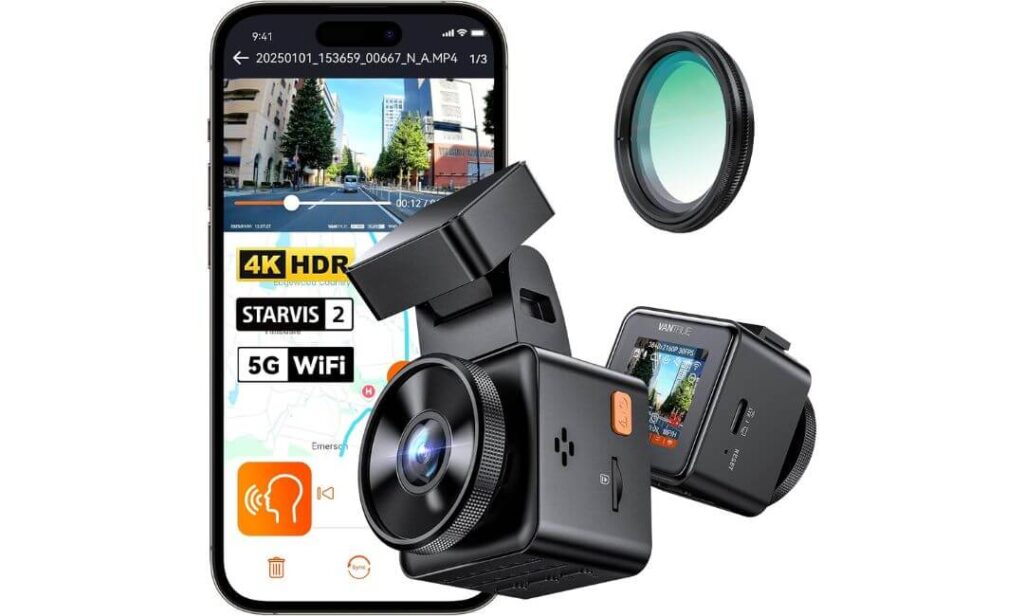
Quick Specs:
- Records in true 4K (3840×2160) with Sony STARVIS 2 imaging
- Compact body designed to sit discreetly behind the rearview mirror
- Advanced PlatePix HDR processing for improved license plate capture
- Wide 158° field of view without excessive fisheye distortion
- Built-in 5GHz WiFi and GPS for faster file transfers and trip data
- Supports 24/7 buffered parking monitoring with hardwire kit
- Includes a CPL filter to reduce windshield glare and dashboard reflections
- Voice control support for hands-free operation
- Supports memory cards up to 1TB
- Super capacitor design for improved heat resistance
Sometimes the best dash cam isn’t the one with the longest feature list—it’s the one you forget is even there. That’s exactly what stands out here. The compact housing practically disappears behind the rearview mirror, which is especially important in a Nissan Sentra where forward visibility is already one of the car’s strengths.
What impressed me most wasn’t the 4K badge; it was the combination of STARVIS 2, PlatePix processing, and HDR recording. Those three technologies work together in situations where many dash cams struggle. Think early-morning commutes, rainy evenings, poorly lit intersections, or vehicles approaching with bright LED headlights. Instead of producing a blurry mess, footage remains surprisingly readable and consistent.
The parking protection is another reason it earned the top position. Buffered recording means the camera captures moments before and after an event rather than starting after something has already happened. That’s a meaningful difference when reviewing footage later. Add in GPS tracking, voice controls, fast 5GHz WiFi transfers, and support for massive storage capacity, and it becomes easy to see why so many drivers view this as a long-term investment rather than just another accessory.
(If your priority is capturing clearer details after dark without adding a bulky device to the windshield, few options currently feel as complete as this one.)
What Stood Out During Our Evaluation
- Excellent nighttime plate readability compared with many similarly priced 4K cameras
- Compact footprint that blends naturally into the Sentra’s windshield area
- Buffered parking mode provides more useful event footage
- Included CPL filter helps reduce annoying daytime reflections
- Fast WiFi transfers make retrieving footage far less frustrating
- GPS and voice controls add genuine everyday convenience
One Thing Worth Knowing
- To unlock continuous parking surveillance, a separate hardwire kit is recommended.
Nissan Sentra Compatibility Notes
The compact design works particularly well inside the Sentra’s cabin because it doesn’t intrude into the driver’s line of sight. Once mounted behind the mirror, most owners will barely notice it’s there during daily driving.
Powering the unit is straightforward through the vehicle’s standard 12V outlet, while drivers who want full-time parking protection can add a hardwire kit for a cleaner installation and expanded monitoring features.
The Insider Pro-Tip
Many buyers focus entirely on resolution numbers and skip over the image sensor. In reality, that’s often the wrong approach. A well-tuned STARVIS 2 camera can outperform a higher-resolution camera with an average sensor when conditions become challenging.
For Nissan Sentra owners who regularly drive before sunrise, after sunset, or spend long hours parked in public lots, the combination of STARVIS 2 imaging, buffered parking recording, and compact installation is what truly separates this model from most of the field. Those are the features you’ll appreciate months later—not just on the day you install it.
#2. VIOFO A229 Plus Front and Rear Dash Cam
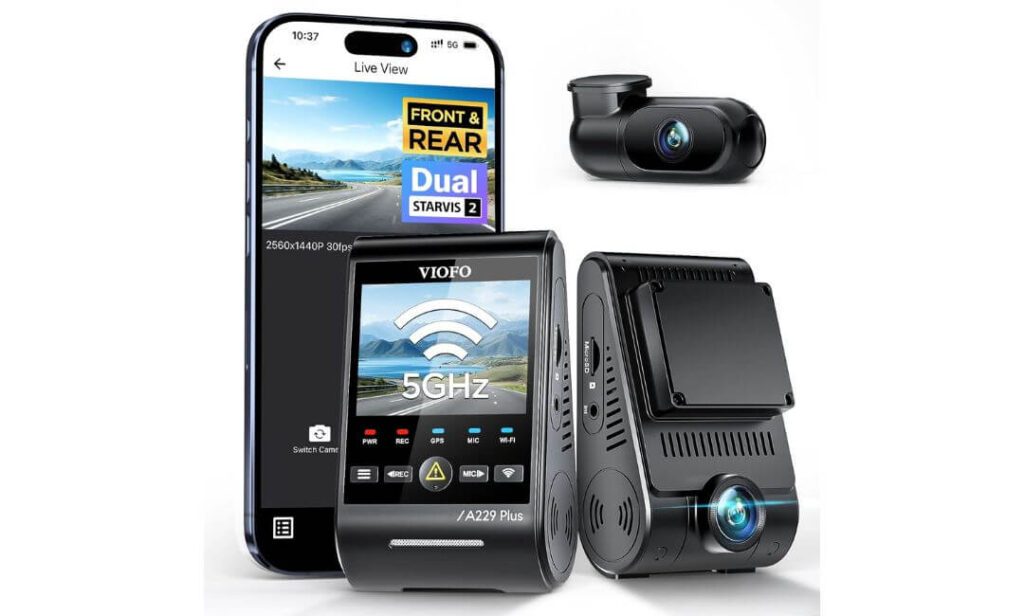
Quick Specs:
- Dual Sony STARVIS 2 IMX675 sensors front and rear
- Simultaneous 1440P + 1440P recording
- HDR enabled on both cameras for improved contrast and detail
- Front camera supports up to 60fps recording
- Quad-mode GPS support (GPS, Galileo, GLONASS, BeiDou)
- Ultra-fast 5GHz WiFi connectivity
- Hands-free voice commands for common functions
- Buffered parking mode support with hardwire kit
- Compact front and rear camera design
- Dedicated rear camera coverage for added protection
Here’s something many Sentra owners discover after installing their first dash cam: most incidents don’t happen directly in front of the vehicle. Rear-end collisions, parking lot bumps, and unexpected contact while stopped in traffic often occur behind the car. That’s where this setup immediately separates itself from many single-camera alternatives.
Instead of focusing all its resources on one camera, this system uses dual STARVIS 2 sensors, giving both the front and rear cameras access to the same advanced imaging technology. That’s a big deal because many front-and-rear systems pair a strong front camera with a weaker rear unit. Here, both cameras are capable of producing detailed footage that remains usable long after the moment has passed.
What ultimately pushed this model near the top of the rankings was balance. You get HDR recording from both cameras, reliable GPS tracking, fast wireless transfers, voice controls, and several parking-monitoring options without adding unnecessary complexity. For Nissan Sentra owners who want complete coverage every time the vehicle moves—or sits parked—few setups currently feel this well-rounded.
(If you regularly commute in dense traffic or spend time parked in busy public areas, the rear camera alone can become worth the investment.)
Highlights That Earned It a Place on This List
- Dual STARVIS 2 sensors instead of a stronger front camera and weaker rear camera
- Excellent front and rear HDR performance in mixed lighting
- Dedicated rear recording adds valuable protection during daily driving
- Fast 5GHz WiFi makes transferring footage much easier
- Ultra-precise GPS tracking records location, speed, and route information
- Voice commands work well when keeping both hands on the wheel
One Thing Worth Knowing Before Purchase
- A memory card is not included, so you’ll want to add a high-endurance card during checkout for the best long-term experience.
Nissan Sentra Installation & Ownership Notes
The compact front camera fits neatly near the rearview mirror, while the small rear unit mounts cleanly to the back glass without creating an overly noticeable presence inside the cabin.
For Sentra owners who keep their vehicles for years, the dual-camera design provides an added layer of confidence. Having footage from both directions often tells a much more complete story than relying on front-facing video alone.
The Insider Pro-Tip
Most buyers compare resolution numbers first, but when evaluating a front-and-rear system, the smarter question is this: “Will the rear camera be useful when I actually need it?” In many setups, the answer is only partially.
What makes this model stand out is that VIOFO didn’t treat the rear camera as an afterthought. By giving both cameras STARVIS 2 imaging and HDR capability, footage quality remains much more consistent from front to back. For Nissan Sentra owners looking for complete documentation rather than partial coverage, that’s the detail that matters most months after installation—not the number printed on the product box.
#3. 70mai A810 Lite 4K Dash Cam Front and Rear
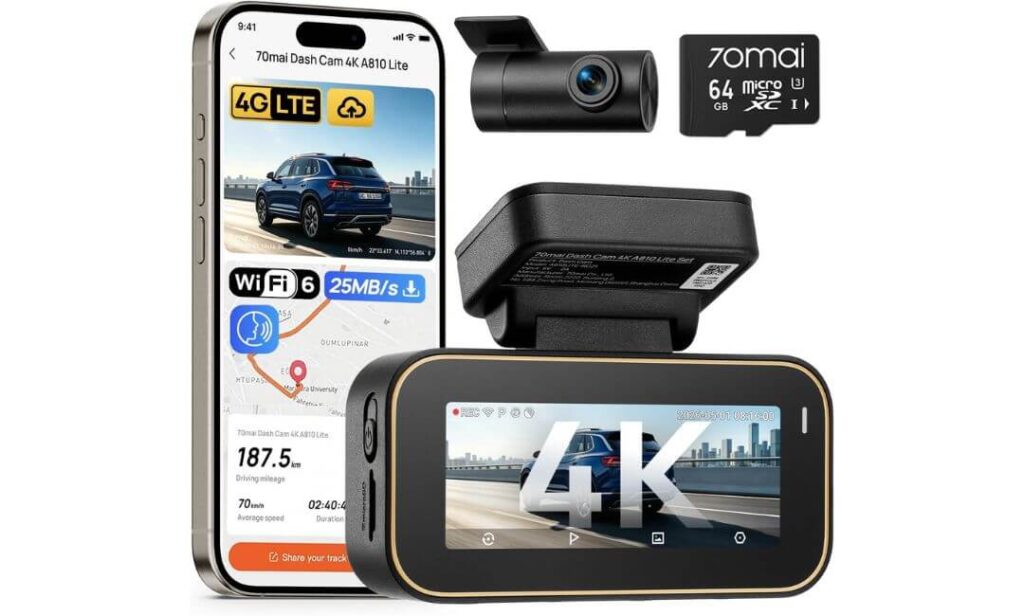
Quick Specs:
- True 4K front recording with dedicated 1080P rear camera
- HDR-enhanced night recording with bright F1.55 aperture
- Built-in 5GHz Wi-Fi 6 for faster downloads and app access
- Optional 4G LTE remote monitoring support
- 24-hour parking protection with impact detection and time-lapse recording
- Built-in GPS, GLONASS, and BeiDou positioning
- Voice control for hands-free operation
- Supercapacitor design for improved long-term durability
- Includes a 64GB microSD card in the box
- Compact windshield-friendly design
Not every Nissan Sentra owner wants to spend flagship money on a dash cam. Some simply want something dependable, modern, and loaded with features they’ll actually use every week. That’s exactly where this setup shines. The moment you look at what’s included—from dual-camera coverage to Wi-Fi 6 connectivity and a pre-installed memory card—it starts feeling more complete than many competitors in its price range.
The front camera records in full 4K while the rear camera covers what’s happening behind the vehicle. Combined with HDR processing and the bright F1.55 lens, footage remains surprisingly usable during evening commutes, parking garage exits, rainy drives, and poorly lit suburban roads. Headlight glare is handled well, shadows stay controlled, and important details remain visible when lesser cameras start losing information.
Another reason this model earned a place on this list is convenience. Fast Wi-Fi 6 transfers, GPS tracking, voice commands, emergency file locking, and optional LTE connectivity create an ownership experience that feels genuinely modern. Instead of treating a dash cam like a device you only access after an incident, this one feels connected to your daily driving routine.
(For Sentra owners who want premium features without stepping into premium pricing territory, this strikes one of the strongest balances currently available.)
Features We Kept Coming Back To
- Sharp 4K front footage with dependable rear-camera coverage
- HDR processing helps maintain clarity in difficult lighting conditions
- Wi-Fi 6 transfers are noticeably faster than many older systems
- GPS route tracking works seamlessly in the background
- Included memory card means less additional shopping
- Optional LTE support opens the door to remote vehicle monitoring
One Thing Worth Knowing Before Purchase
- The remote 4G monitoring features require an optional LTE hardwire accessory rather than working straight out of the box.
Nissan Sentra Ownership Notes
The compact front unit fits comfortably behind the rearview mirror and doesn’t overwhelm the cabin with bulky hardware. For a car like the Sentra that’s often used as a daily commuter, the discreet design feels like a natural fit.
Installation is straightforward using the included accessories, and the bundled memory card means most owners can start recording almost immediately after setup instead of waiting for additional components to arrive.
The Insider Pro-Tip
Many buyers focus heavily on resolution numbers, but convenience features often determine whether you’ll actually use a dash cam long term. Fast transfers, reliable GPS data, and easy access to recordings matter far more than most people realize.
What impressed me here is how many everyday frustrations have already been solved. The included memory card, quick Wi-Fi 6 transfers, voice controls, and optional remote access create a package that feels practical rather than complicated. For Nissan Sentra owners looking for strong protection without constantly managing their dash cam, that’s where this model earns its place on the list.
#4. REDTIGER F7NP 4K Dash Cam Front and Rear
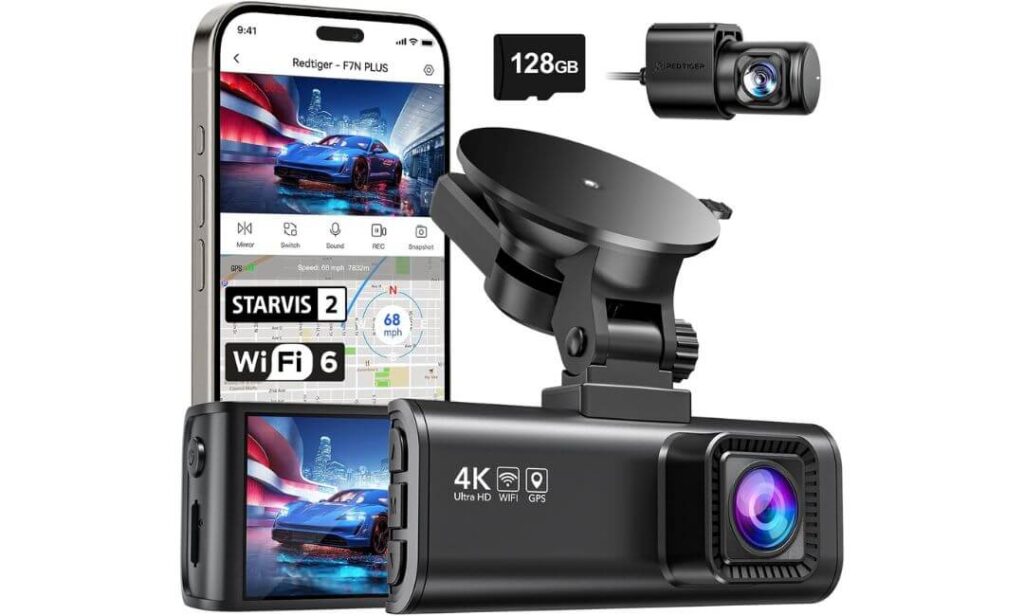
Quick Specs:
- True 4K front recording paired with a dedicated 1080P rear camera
- Sony STARVIS 2 sensor with F1.5 aperture lens
- Wide 170° front and 140° rear viewing coverage
- Built-in 5.8GHz WiFi with downloads up to 20MB/s
- Integrated GPS tracking and route history
- HDR and WDR processing for improved night visibility
- Includes a 128GB memory card in the box
- Supercapacitor design for better heat resistance
- 24-hour parking monitoring support with hardwire kit
- Loop recording and automatic incident locking
Here’s what immediately stood out to me about this setup: it doesn’t try to overwhelm buyers with complicated extras. Instead, it focuses on delivering the features most Nissan Sentra owners actually care about—strong image quality, dual-camera protection, easy installation, and enough storage to start recording right away.
The combination of 4K front recording, STARVIS 2 imaging, HDR processing, and a bright F1.5 lens creates a camera that performs confidently in situations many drivers experience every week. Whether you’re driving through heavy rain, dealing with harsh sunset glare, navigating dark suburban roads, or pulling into a crowded parking garage, footage remains clear enough to preserve important details.
What makes this option especially appealing is the overall ownership experience. You don’t have to immediately shop for a memory card. You don’t need extra accessories just to start recording. The included 128GB card, GPS tracking, fast WiFi connectivity, and straightforward app control create a setup that feels refreshingly hassle-free from day one.
(For Sentra owners who want strong protection without spending time researching additional accessories, this package arrives feeling surprisingly complete.)
What Earned It a Spot on Our Recommendation List
- STARVIS 2 sensor delivers stronger low-light performance
- Wide viewing angles capture more surrounding traffic activity
- Included 128GB card adds immediate value
- Fast 5.8GHz WiFi speeds make footage retrieval easier
- GPS tracking records route and speed information automatically
- Supercapacitor design is better suited for long-term vehicle use
One Thing Worth Knowing Before Purchase
- Full-time parking surveillance requires a separate hardwire kit, which is common among most premium dash cams in this category.
Nissan Sentra Installation & Daily Use Notes
The front camera fits comfortably near the rearview mirror and doesn’t feel oversized inside the Sentra’s cabin. Visibility remains unobstructed while still allowing the camera to capture a wide area of the road ahead.
The included memory card is a genuine advantage for many drivers because setup becomes much simpler. Mount the cameras, connect power, and recording can begin immediately without needing another purchase first.
The Insider Pro-Tip
One of the easiest mistakes buyers make is focusing entirely on recording resolution while overlooking storage and day-to-day usability. A dash cam only helps if it’s recording consistently and reliably every time you drive.
What I like here is that REDTIGER removed several common barriers that frustrate first-time buyers. The included memory card, dual-camera setup, GPS tracking, and fast wireless transfers create a package that’s easy to live with long after the excitement of unboxing has faded. For many Nissan Sentra owners, that convenience becomes just as valuable as the image quality itself.
#5. XYGCACO 4-Channel 360° Dash Cam
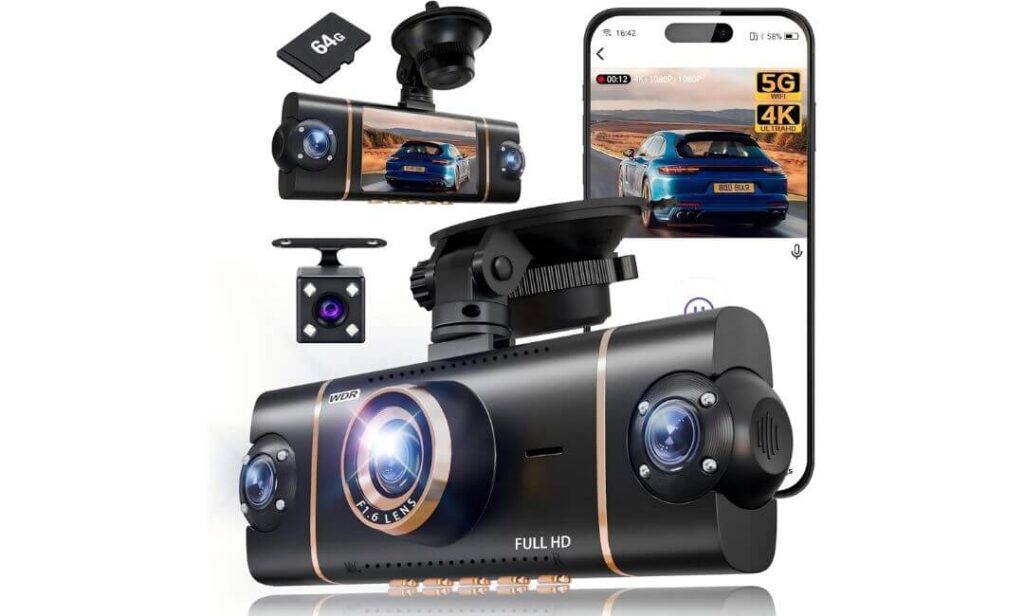
Quick Specs:
- Simultaneous 4-channel recording (Front, Rear, Left, and Right)
- 4K front camera plus three adjustable 1080P cameras
- True 360° vehicle coverage with minimal blind spots
- Built-in 5GHz WiFi and GPS tracking
- Includes a 64GB memory card in the box
- 8 infrared LEDs for enhanced cabin and low-light recording
- WDR image processing for balanced exposure
- Built-in G-sensor with event locking
- 24-hour parking surveillance support
- 3-inch IPS display for multi-camera viewing
Let’s be honest—most dash cams only tell part of the story. They show what happened in front of the vehicle and maybe behind it. But what about the driver-side scrape in a parking lot? The shopping cart that rolled into the door? The vehicle that squeezed too close during a lane change? Those situations are exactly why this setup exists.
Instead of focusing solely on image quality, this system focuses on visibility from every direction. The front camera records in 4K while three additional cameras monitor the rear and both sides of the vehicle simultaneously. For Nissan Sentra owners who spend time in crowded parking areas, busy city traffic, apartment complexes, rideshare driving, or high-traffic commuting environments, that extra coverage can be surprisingly valuable.
What I found most interesting is that despite having four cameras, the package remains relatively approachable. GPS tracking, 5GHz WiFi connectivity, parking surveillance, WDR processing, infrared-assisted night recording, and a pre-installed memory card all arrive in a single package. There aren’t many systems offering this level of coverage without requiring multiple separate devices.
(If your priority is documenting everything happening around the vehicle rather than simply recording the road ahead, this setup offers something the other recommendations cannot.)
Why It Earned a Place on This List
- Four-camera coverage dramatically reduces blind spots
- Side-view recording adds protection many dash cams simply don’t offer
- Included 64GB card allows immediate setup
- GPS tracking creates a detailed driving record
- Infrared-assisted recording improves visibility in darker environments
- Excellent choice for rideshare, delivery, and high-mileage drivers
One Thing Worth Knowing Before Purchase
- With four cameras recording simultaneously, installation takes a little more time than a traditional front-only or front-and-rear setup.
Nissan Sentra Coverage & Installation Notes
The system works well inside the Sentra because the additional cameras help monitor areas that standard dash cams never see. Drivers who frequently park in tight spaces or navigate congested urban environments may appreciate this extra visibility more than they initially expect.
Installation is still manageable using the included accessories, and the built-in screen makes it easy to verify camera positioning during setup. Once configured properly, the system creates a much more complete record of what’s happening around the vehicle.
The Insider Pro-Tip
Most drivers think they need the sharpest image possible. In reality, many insurance disputes come down to something much simpler: proving where an incident originated. That’s where additional camera angles can become incredibly valuable.
This isn’t the camera I’d recommend for every Nissan Sentra owner. However, if you frequently deal with crowded parking lots, side-impact risks, rideshare passengers, delivery routes, or situations where activity can happen around any side of the vehicle, the extra cameras may provide more practical value than upgrading from 2K to 4K ever could. That’s exactly why it earned the final spot on this list.
Best Dash Cameras for Nissan Sentra Compared: 4K Quality, Parking Protection & Real-World Value
Buying Guide: How to Choose the Right Dash Cam for Your Nissan Sentra
A dash cam is one of those purchases where the specification sheet only tells part of the story. Two cameras can advertise similar resolutions, similar features, and even similar prices, yet deliver very different results once they’re mounted on your windshield. After evaluating the options in this guide, a few factors consistently separated the models that simply looked good online from the ones that actually made sense for Nissan Sentra owners.
Front-Only vs Front-and-Rear Coverage
The first decision should be determining how much coverage you actually need.
A compact front-facing camera like the Vantrue E1 Pro is often enough for drivers who primarily want clear evidence of what happens ahead of the vehicle. These setups are easier to install, less visible from inside the cabin, and generally offer the strongest image quality for the money.
However, if you regularly drive in heavy traffic, spend time on busy highways, or park in crowded areas, a front-and-rear system can provide a much more complete record of events. Models such as the VIOFO A229 Plus, 70mai A810 Lite, and REDTIGER F7NP continuously document activity behind the vehicle as well as in front of it.
Drivers who prioritize maximum coverage may even benefit from a multi-camera solution that monitors the sides of the vehicle in addition to the front and rear.
Why Sensor Quality Matters More Than Resolution
Many buyers immediately focus on 4K recording, but the image sensor often plays an even larger role in real-world performance.
A high-quality sensor can improve low-light visibility, reduce motion blur, preserve details during difficult lighting conditions, and increase the chances of capturing readable license plates. That’s one reason several top-ranked options in this guide use Sony STARVIS 2 technology.
The difference becomes especially noticeable during sunrise, sunset, nighttime driving, rain, tunnels, parking garages, and situations involving bright LED headlights. In these conditions, sensor performance frequently matters more than resolution alone.
Night Vision and HDR Performance
A dash cam spends much of its life recording situations that aren’t taking place under perfect daylight conditions.
Look for features such as HDR, WDR, wide-aperture lenses, and advanced low-light sensors. Together, these technologies help balance shadows, reduce glare, and improve visibility when lighting conditions become challenging.
This is particularly important for Nissan Sentra owners who commute before sunrise, return home after dark, or regularly drive through urban areas filled with artificial lighting and reflections.
Understanding Parking Mode Before You Buy
Many drivers assume parking mode works automatically straight out of the box. In reality, most advanced parking-monitoring systems require a dedicated hardwire kit.
A quality parking mode can provide protection when the vehicle is unattended by monitoring motion, impacts, suspicious activity, or nearby movement. Some systems record continuously at lower bitrates, while others activate only when movement or vibration is detected.
If your Sentra regularly sits in apartment parking lots, public garages, office parking structures, or on-street parking spaces, investing in a camera with strong parking protection can be just as valuable as the recording quality itself.
Storage Capacity and Loop Recording
Video quality continues improving every year, but larger files require more storage.
Modern dash cams typically use loop recording, which automatically overwrites the oldest footage when storage becomes full. This allows continuous operation without requiring manual intervention.
The amount of footage retained depends on recording resolution, camera count, bitrate, and memory card size. Drivers planning to use parking mode frequently may benefit from larger-capacity cards because they provide more retained footage before overwriting begins.
WiFi Connectivity and Mobile App Experience
One feature that often gets overlooked during shopping is app performance.
A dash cam may produce excellent footage, but retrieving recordings can become frustrating if the wireless connection is slow or unreliable. Faster technologies such as 5GHz WiFi and WiFi 6 significantly reduce transfer times when reviewing incidents or downloading important clips.
A well-designed mobile app should allow you to review footage, adjust settings, download videos, update firmware, and access GPS information without unnecessary complications.
Installation Tips for Nissan Sentra Owners
One advantage of the Sentra’s interior layout is that most modern dash cams can be mounted neatly behind the rearview mirror without obstructing visibility.
Compact cameras generally blend into the windshield more naturally and create a cleaner appearance from both inside and outside the vehicle. When installing rear cameras, routing cables along factory trim panels usually provides the cleanest results while keeping wiring protected.
Drivers planning to use parking mode should consider professional hardwire installation if they prefer a factory-style appearance and uninterrupted monitoring.
Features That Add Long-Term Value
Some features become more important after months of ownership than they seem on day one.
GPS tracking can document speed and route information during important events. G-sensors can automatically lock collision footage before it gets overwritten. Voice controls allow basic camera operation without removing your hands from the wheel. Supercapacitors typically provide better heat resistance than traditional battery-powered systems, particularly during hot summer months.
These aren’t always the most exciting specifications on the box, but they’re often the features owners appreciate most after years of daily use.
The Final Thing Most Buyers Overlook
The best dash cam isn’t necessarily the one with the highest resolution, the largest screen, or the longest feature list.
The best dash cam is the one that reliably records every drive, remains easy to use months later, and captures the details you’ll actually need if an incident occurs. That’s why the cameras in this guide were selected based on a combination of image quality, parking protection, ease of ownership, installation practicality, and long-term value rather than specifications alone.
For most Nissan Sentra owners, those factors ultimately matter far more than marketing numbers.
Installation Guide: Setting Up a Dash Cam in Your Nissan Sentra the Right Way
A surprising number of dash cam complaints have nothing to do with the camera itself. Blurry footage, random shutdowns, poor GPS reception, unreliable parking mode, and excessive windshield glare are often caused by installation mistakes rather than hardware limitations.
The good news is that the Nissan Sentra is one of the easier vehicles to install a dash cam in. Its windshield layout, interior trim design, and power outlet placement allow for clean installations without major modifications. Whether you’re installing a compact front-facing camera like the Vantrue E1 Pro or a multi-camera system such as the XYGCACO 360° setup, taking a little extra time during installation can significantly improve long-term performance.
Choosing the Best Mounting Location
The ideal mounting position is usually behind or slightly beside the rearview mirror.
This location keeps the camera hidden from the driver’s direct line of sight while still providing a clear view of the road ahead. It also helps the camera blend into the windshield area, creating a cleaner factory-like appearance from both inside and outside the vehicle.
Avoid mounting the camera too low on the windshield. While it may seem convenient during installation, lower mounting positions can increase dashboard reflections, reduce visibility, and interfere with daily driving.
If your Sentra is equipped with safety technologies near the windshield, such as forward-facing cameras or driver-assistance sensors, leave sufficient space around those systems and avoid blocking their field of view.
Step-by-Step Installation Process
Before mounting anything permanently, connect the camera and verify that everything functions correctly.
- Clean the windshield thoroughly using an alcohol wipe or glass cleaner.
- Sit in the driver’s seat and identify the position where the camera will have the clearest view while remaining mostly hidden behind the mirror.
- Temporarily power the dash cam and verify the camera angle using the mobile app or built-in display.
- Attach the mount and allow the adhesive to bond properly before adjusting the camera.
- Route the power cable along the headliner and interior trim instead of allowing wires to hang freely.
- If installing a rear camera, continue routing the cable along the roofline and side trim panels toward the rear window.
- Secure loose wiring using the included clips or trim-routing tools.
Taking a few extra minutes during this stage usually results in a much cleaner installation that feels closer to an OEM factory setup.
Hardwire Installation vs 12V Power Outlet
Most Nissan Sentra owners start with the standard 12V power outlet because it is simple and requires no vehicle modifications.
This approach works perfectly for everyday recording while driving. The camera powers on when the vehicle starts and shuts down when the vehicle is turned off.
However, drivers who want full parking protection should strongly consider a hardwire kit.
A hardwire installation connects directly to the vehicle’s fuse box and allows compatible dash cams to continue monitoring the vehicle after parking. Features such as buffered event recording, motion detection, impact detection, and time-lapse surveillance generally depend on a hardwire connection.
For drivers who regularly park in public areas, apartment complexes, office garages, or airport parking lots, the added protection can be worthwhile.
Understanding the Nissan Sentra Fuse Box
If you plan to use a hardwire kit, you’ll need access to the vehicle’s interior fuse panel.
The purpose of the hardwire kit is not simply to provide power. Modern hardwire kits also monitor battery voltage and automatically shut down the camera if battery levels drop below a safe threshold.
This helps prevent excessive battery drain while still allowing parking surveillance to operate when needed.
Drivers unfamiliar with automotive electrical systems may prefer professional installation, especially if maintaining a factory-quality appearance is important.
Cable Routing Tips for a Cleaner Factory Look
One of the easiest ways to make a dash cam installation look professional is proper cable management.
The best installations are often the ones you barely notice.
Route wiring along the headliner, A-pillars, weather stripping, and factory trim channels whenever possible. Avoid stretching cables across visible areas of the cabin or leaving excess wiring exposed near the dashboard.
Most of the cameras featured in this guide include trim tools specifically designed to help hide wiring inside interior panels without damaging them.
Setting Up Parking Mode Correctly
Many owners install a dash cam and never revisit the parking settings.
That can be a mistake.
Depending on the camera, you’ll often find multiple monitoring options, including impact detection, buffered event recording, low-bitrate recording, and time-lapse recording. Each mode offers a different balance between battery usage, storage consumption, and event coverage.
For daily-driven Sentras parked in relatively safe environments, event-triggered recording is often sufficient. Drivers parking in busy public areas may prefer more aggressive monitoring settings.
Formatting the Memory Card Before First Use
One of the most overlooked setup steps is formatting the memory card.
Even brand-new cards should be formatted through the dash cam’s menu before recording begins. This ensures compatibility between the camera and storage device while reducing the likelihood of recording errors later.
Many experienced users also reformat their memory card periodically as part of routine maintenance, especially when recording large amounts of footage every day.
Connecting the App and Updating Firmware
Modern dash cams are designed around their companion apps.
After installation, connect the camera to its mobile application and check for firmware updates. Manufacturers frequently release improvements related to stability, GPS accuracy, app performance, WiFi connectivity, and recording reliability.
Taking five minutes to update firmware immediately after installation can help avoid issues that many owners mistakenly attribute to hardware problems.
The Installation Mistake Most People Regret Later
The most common mistake isn’t choosing the wrong dash cam.
It’s rushing the installation.
A carefully mounted camera, properly hidden wiring, a correctly configured memory card, updated firmware, and optimized parking settings often make a bigger difference to the ownership experience than spending extra money on additional features.
The Nissan Sentra provides an excellent platform for dash cam installation. Done properly, the camera becomes something you rarely notice day-to-day—until the moment you need it, and then you’ll be glad you took the time to install it correctly.
How to Get the Most Out of Your Nissan Sentra Dash Cam
Buying a good dash cam is only half the equation. What many owners don’t realize is that the settings chosen during the first few minutes of setup can have a significant impact on video quality, storage efficiency, parking protection, and long-term reliability.
I’ve seen expensive cameras produce disappointing footage simply because key settings were left at their factory defaults. The cameras featured in this guide already provide excellent hardware, but a few smart adjustments can help unlock their full potential and ensure they’re ready when you actually need them.
Start With the Highest Practical Recording Quality
The first thing I recommend checking is video resolution and frame rate.
For cameras capable of recording in 4K, such as the Vantrue E1 Pro, 70mai A810 Lite, and REDTIGER F7NP, it generally makes sense to keep the front camera at its maximum available resolution unless storage space becomes a concern.
However, resolution isn’t the only factor that matters.
In situations involving fast-moving traffic, complex intersections, or highway driving, a higher frame rate can sometimes provide smoother footage and improve the chances of capturing small details between frames. The ideal balance depends on how and where you drive most often.
For the majority of Nissan Sentra owners, prioritizing image clarity while maintaining sufficient storage retention is usually the smartest approach.
Keep HDR or WDR Enabled Whenever Available
This is one setting I rarely recommend turning off.
Modern HDR and WDR systems help balance scenes where bright and dark areas exist simultaneously. Think headlights at night, sunset driving, parking garage exits, reflective wet roads, or vehicles approaching with high-intensity LED lighting.
Without HDR or WDR, important details can disappear into shadows or become washed out by glare.
The STARVIS 2-equipped models in this guide particularly benefit from keeping these technologies active because they’re designed to work together to improve real-world visibility.
Choose the Right Loop Recording Length
Loop recording determines how footage is divided and stored on the memory card.
Most cameras offer options such as one-minute, three-minute, or five-minute segments. While all of them work, I generally find that three-minute loops provide the best balance.
Short clips create more files to manage, while longer clips can become cumbersome when reviewing footage after an event.
Three-minute segments tend to make searching, downloading, and sharing footage significantly easier without sacrificing recording continuity.
Optimize Parking Mode for Your Environment
One of the biggest mistakes owners make is treating parking mode as a one-size-fits-all feature.
The ideal settings depend entirely on where the vehicle spends most of its time.
If your Sentra is parked in a private garage, lower sensitivity settings may be sufficient. In busy apartment complexes, shopping centers, public parking lots, or urban streets, slightly higher sensitivity settings can help capture more relevant activity around the vehicle.
Many cameras now offer multiple parking-monitoring options, including:
- Buffered event recording
- Motion detection
- Impact detection
- Low-bitrate continuous recording
- Time-lapse recording
Each mode serves a different purpose, so it’s worth experimenting until you find the right balance between coverage and storage usage.
Use High-Endurance Memory Cards, Not Generic Storage
The memory card is one of the hardest-working components in any dash cam system.
Unlike normal storage devices, dash cams continuously write, overwrite, and rewrite data every time the vehicle is driven. Over time, this creates significant wear.
For long-term reliability, I strongly recommend high-endurance microSD cards designed specifically for surveillance or dash cam applications.
Several cameras in this guide support large capacities, including 512GB and even 1TB configurations. Larger cards can significantly increase footage retention, especially when using multiple cameras or advanced parking monitoring features.
Create a Simple Backup Routine
Most people assume important footage will always be there when they need it.
Unfortunately, that’s not always true.
Because dash cams use loop recording, older files are eventually overwritten. If something important happens, download and save the footage immediately.
A simple habit can make a huge difference:
- Save critical footage to your phone.
- Upload important files to cloud storage.
- Keep a backup copy on a computer or external drive.
This takes only a few minutes and can prevent the loss of valuable evidence later.
Take Advantage of WiFi Before You Need It
Many owners don’t open their dash cam app until after an incident occurs.
That’s the wrong time to learn how everything works.
Spend a few minutes becoming familiar with the app while everything is functioning normally. Learn how to preview recordings, lock important files, access GPS data, update firmware, and transfer videos.
The faster you can retrieve footage after an event, the easier it becomes to share it with insurance providers, law enforcement, or anyone else who may need it.
Keep Firmware Updated
Dash cams have become increasingly software-driven products.
Manufacturers regularly release updates that improve stability, fix bugs, enhance WiFi performance, optimize GPS accuracy, and occasionally improve image processing.
Checking for updates every few months is a simple maintenance habit that can improve long-term reliability without costing anything.
Reduce Windshield Reflections Whenever Possible
One often-overlooked factor affecting image quality is windshield glare.
Dashboard reflections can sometimes reduce contrast and make footage harder to review. Cameras equipped with CPL filters, such as the Vantrue E1 Pro, already help address this issue.
Regardless of the camera you choose, keeping the windshield clean and avoiding reflective dashboard accessories can noticeably improve recorded footage during bright daytime driving.
The Small Habits That Make the Biggest Difference
Most modern dash cams are capable of producing excellent footage. The difference between average results and exceptional results usually comes down to setup, maintenance, and everyday habits.
Keeping HDR enabled, using a quality memory card, optimizing parking mode, maintaining current firmware, and creating a simple backup routine will often improve the ownership experience more than upgrading to a more expensive camera.
For Nissan Sentra owners, the goal isn’t simply recording every drive. It’s making sure the footage is clear, accessible, and available the moment you need it most. That’s where these small adjustments become surprisingly valuable over time.
FAQs About Nissan Sentra Dash Cam
Which dash cam setup makes the most sense for a Nissan Sentra: front-only or front-and-rear?
This depends less on the vehicle and more on how the vehicle is used. For many Nissan Sentra owners, a premium front camera like the Vantrue E1 Pro can provide all the protection they need, especially if the goal is capturing clear license plates, intersections, and highway incidents.
However, drivers who spend significant time in dense traffic often discover that rear coverage becomes just as valuable as front coverage. Rear-end collisions, parking lot impacts, and stop-and-go traffic incidents frequently happen outside the view of a single-camera setup. That’s why models like the VIOFO A229 Plus and 70mai A810 Lite remain so popular among daily commuters.
The real question isn’t “Do I need a rear camera?” It’s “Would I regret not having footage from behind the vehicle if something happened tomorrow?” For many owners, that answer makes the decision surprisingly easy.
Does a 4K dash cam actually make a difference in a Nissan Sentra, or is it mostly marketing?
Sometimes it’s marketing. Sometimes it isn’t.
A poorly tuned 4K camera can absolutely produce worse footage than a well-engineered camera with a better sensor. That’s why cameras using technologies such as STARVIS 2 continue to dominate serious recommendations.
In real-world driving, image quality is influenced by several factors working together:
- Sensor quality
- HDR or WDR processing
- Lens quality
- Bitrate
- Exposure tuning
- Windshield glare control
That’s one reason the Vantrue E1 Pro consistently stands out. It isn’t simply recording at 4K. It’s combining 4K resolution with STARVIS 2 imaging, PlatePix processing, HDR technology, and a compact windshield-friendly design. Those details have a greater impact on footage quality than resolution alone.
Will parking mode drain the battery in my Nissan Sentra?
Under normal circumstances, a properly installed hardwire kit should prevent battery-related issues.
Modern parking-mode systems are designed with voltage protection features that automatically shut the camera down if battery levels drop below a predetermined threshold. This helps balance vehicle protection with battery preservation.
That said, parking mode settings matter. Continuous recording, aggressive motion detection, and extended monitoring periods consume more power than event-triggered recording modes. Owners who park in secure locations may not need the most sensitive settings available.
The smartest approach is matching parking mode behavior to your actual parking environment rather than simply selecting the highest monitoring level available.
Why do some dash cams capture license plates clearly while others struggle, even when both claim 4K recording?
This is one of the most misunderstood aspects of dash cam shopping.
Capturing a license plate isn’t just about recording a high-resolution image. The camera must also manage motion, changing light conditions, glare, reflections, vibration, and exposure simultaneously. That’s an incredibly difficult task, especially at highway speeds.
Several technologies help improve results:
- STARVIS 2 sensors
- HDR processing
- High-quality lenses
- Better image processing algorithms
- Higher recording bitrates
This is exactly why many experienced buyers focus on sensor technology before looking at resolution. A camera that consistently captures readable details during challenging conditions is far more valuable than one that simply advertises larger numbers on the box.
If I only plan to keep one dash cam for several years, which feature should I prioritize most?
Most people expect the answer to be 4K recording.
It usually isn’t.
If I had to choose one feature that continues delivering value year after year, it would be a combination of sensor quality and long-term reliability. Video resolution becomes meaningless if the camera struggles at night, overheats during summer, produces unreliable recordings, or becomes frustrating to use after a few months.
That’s why the strongest long-term performers often share similar characteristics:
- Reliable image sensors
- Stable parking protection
- Quality GPS integration
- Fast and dependable app connectivity
- Supercapacitor-based power systems
- Consistent firmware support
The best dash cam is rarely the one with the longest specification sheet. It’s the one that’s still recording properly years later when you unexpectedly need the footage. For most Nissan Sentra owners, that distinction matters far more than any individual feature listed on a product page.
Final Thoughts
After spending time comparing these dash cams side by side, one thing became clear: there isn’t a single perfect choice for every Nissan Sentra owner. The right camera depends on how you drive, where you park, and what kind of protection matters most to you.
If your priority is getting the strongest overall combination of image quality, compact design, license plate capture, and advanced parking protection, the Vantrue E1 Pro remains the standout recommendation. Drivers looking for complete front-and-rear documentation will likely appreciate the balance offered by the VIOFO A229 Plus, while value-focused buyers may find the 70mai A810 Lite difficult to ignore given everything included in the package. The REDTIGER F7NP delivers one of the easiest ownership experiences in the group, and the XYGCACO 4-Channel system fills a unique role for drivers who want visibility from virtually every direction around the vehicle.
What matters most, though, is choosing a camera you’ll actually install, configure properly, and use every day. The difference between having footage and wishing you had footage is often just one unexpected moment on the road. That’s why factors such as reliable recording, strong low-light performance, dependable parking monitoring, and easy footage access ultimately matter more than flashy specifications alone.
The good news is that every dash cam featured in this guide cleared the standards that mattered most during evaluation: real-world video quality, practical Nissan Sentra compatibility, dependable parking protection, modern connectivity, and long-term ownership value. Any of these options can serve as a meaningful upgrade over driving without a dash cam at all.
If you’re still undecided, start by asking yourself a simple question: Do I care more about maximum image quality, complete vehicle coverage, or overall value? Once you know that answer, the right choice usually becomes obvious—and you’ll have far more confidence every time you get behind the wheel.
Also Check: