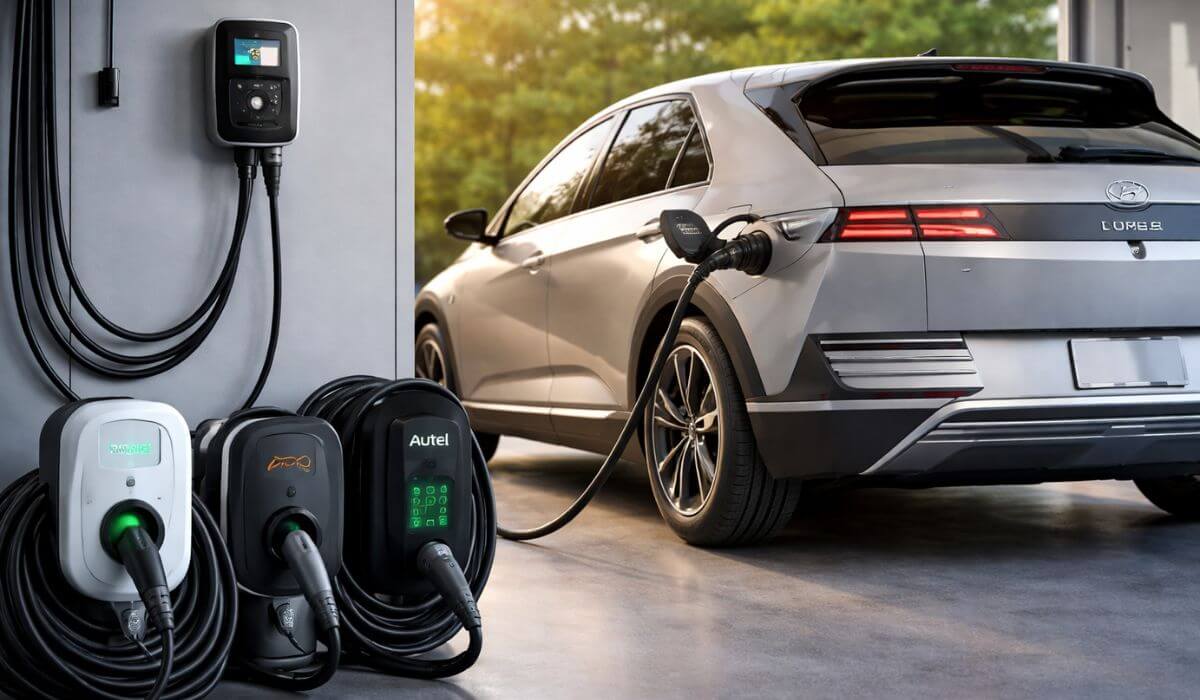
5 Best Home EV Chargers for Hyundai Ioniq 5 (Level 2 Picks for 2026)
If you own a Hyundai Ioniq 5, home charging quickly becomes non-negotiable. Public chargers are fine once in a while, but day-to-day life is a lot easier when you can plug in at night and wake up to a full battery. The problem is that not every home EV charger fits the Ioniq 5 equally well, and choosing the wrong one can mean slower charging, unnecessary electrical upgrades, or features you never actually use.
Most Ioniq 5 owners aren’t chasing extreme numbers. What they want is a Level 2 charger that charges fast enough overnight, installs without drama, and works consistently in a real garage—not just in marketing photos. Reliability matters more than hype, and compatibility matters more than future promises.
That’s why our top recommendation is the EVIQO Level 2 EV Charger (40 Amp, 9.6 kW). It matches the Ioniq 5’s onboard charging capability almost perfectly, delivers strong overnight charging without pushing electrical limits, and keeps installation straightforward with a plug-in NEMA 14-50 setup. The long cable reaches easily, the app does what it’s supposed to do, and once it’s installed, it simply fades into the background—which is exactly what a home charger should do.
Still, no two homes are the same. Some owners want higher amperage for future vehicles, some care about utility rebates, and others need flexibility for different parking setups. That’s why this list includes multiple Level 2 home EV chargers, each chosen for a specific type of Ioniq 5 owner and real-world home charging setup.
Below are the 5 best home EV chargers for the Hyundai Ioniq 5, picked based on how they actually perform at home, not how impressive they look on paper.
5 Best Level 2 Home EV Chargers for the Hyundai Ioniq 5 in 2026
#1. EVIQO Level 2 EV Charger (40 Amp, 9.6 kW)
Best overall home EV charger for Hyundai Ioniq 5 with balanced speed and easy installation
#2. Emporia Level 2 EV Charger (48 Amp)
Best high-output charger for faster overnight charging and future-proof home setups
#3. Autel Home Smart EV Charger (Up to 50 Amp)
Best premium charger for maximum charging speed and outdoor-ready durability
#4. ChargePoint HomeFlex Level 2 EV Charger (40 Amp)
Best smart home charger with the most polished app experience and utility integration
#5. Lectron Level 1/2 Portable EV Charger (Up to 40 Amp)
Best portable charging option for travel, backup use, and flexible home charging
Expert Tip: Set Your Charger Amps Lower Than Maximum (It Saves Your Wiring and Your Charger)
Most people run their home EV charger at full power because “maximum speed sounds better.” In real use, that’s not always the smartest move. Setting your charger 5–10 amps lower than the maximum rated output reduces heat buildup in outlets, breakers, and internal charger components — especially during long overnight sessions.
For example, if you install a 40A charger, running it at 32–35A still charges the Ioniq 5 fast enough to be full by morning, but puts less stress on your electrical system. This small adjustment can extend outlet life, reduce nuisance breaker trips, and improve long-term charger reliability.
Owners who do this rarely notice slower charging, but they do notice fewer connection issues and cooler cable temperatures. It’s one of those “set it once and forget it” tweaks that quietly improves the whole setup.
Must Check:
#1. EVIQO Level 2 EV Charger (40 Amp, 9.6 kW)
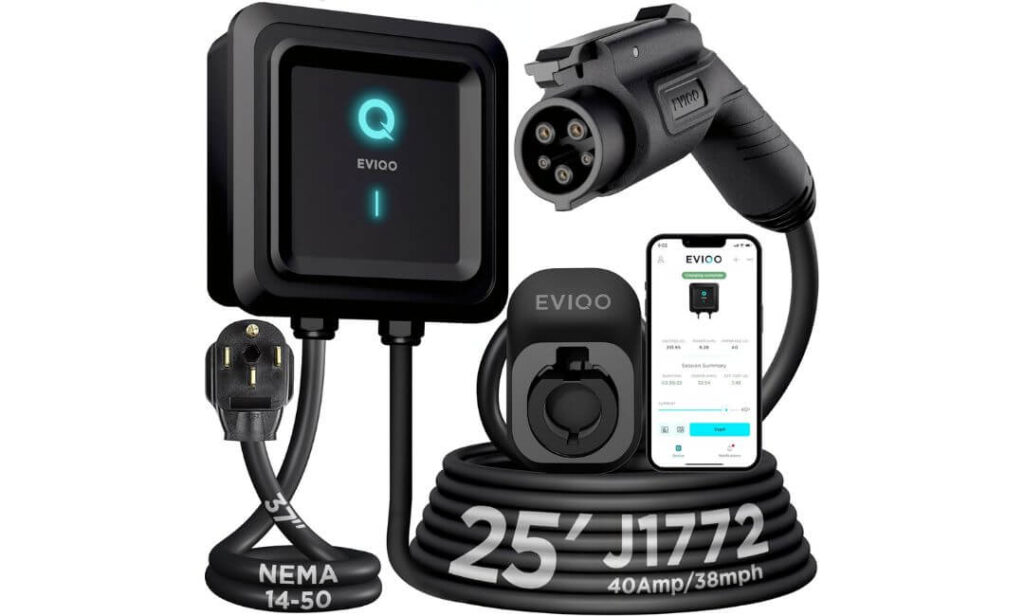
Quick Specs:
- Charging Output: 40 Amp / 9.6 kW
- Plug Type: NEMA 14-50 (240V)
- Connector: J1772 (North America standard)
- Cable Length: 25 feet
- Smart Features: Wi-Fi app control, scheduling, energy tracking
- Certifications: UL, ETL, FCC, Energy Star
- Weather Rating: NEMA 4 / IP66 (outdoor safe)
EVIQO is a reputable brand in the home EV charging space, and this Gen 2 model shows why it’s become a favorite among Ioniq 5 owners. The 40-amp output is a near-perfect match for the Ioniq 5’s onboard charging capability, meaning it delivers strong overnight charging without forcing unnecessary electrical upgrades. In real home use, it consistently brings back daily driving range within a few evening hours, which is exactly what most owners care about.
What stands out immediately is how easy it is to live with. The NEMA 14-50 plug keeps installation simple, the 25-foot cable easily reaches across garages and driveways, and the charger doesn’t feel bulky or fragile once mounted. It has the solid, “install it once and forget about it” kind of build that matters for something you’ll use almost every day.
The smart features actually feel practical instead of gimmicky. Scheduling off-peak charging works reliably, Wi-Fi stays connected even in closed garages, and energy tracking makes it easy to keep an eye on charging costs. After a few weeks of regular use, it becomes part of the routine — plug in, walk away, wake up to a charged car.
What We Like
- Strong 40A charging speed that pairs well with the Ioniq 5
- Simple plug-in installation with no complicated setup
- Reliable Wi-Fi connection and useful scheduling features
- Solid build quality with weather protection for outdoor installs
What We Don’t
- No built-in cable management hook, which would make storage cleaner
What Our Tester Says: After daily overnight charging sessions, this charger proved to be one of the easiest to live with. No connection drops, no random app glitches, and no charging interruptions. It delivers consistent speed, stays stable in real garage conditions, and does exactly what a home charger should — work quietly in the background without demanding attention.
#2. EMPORIA Level 2 EV Charger (48 Amp, Up to 11.5 kW)
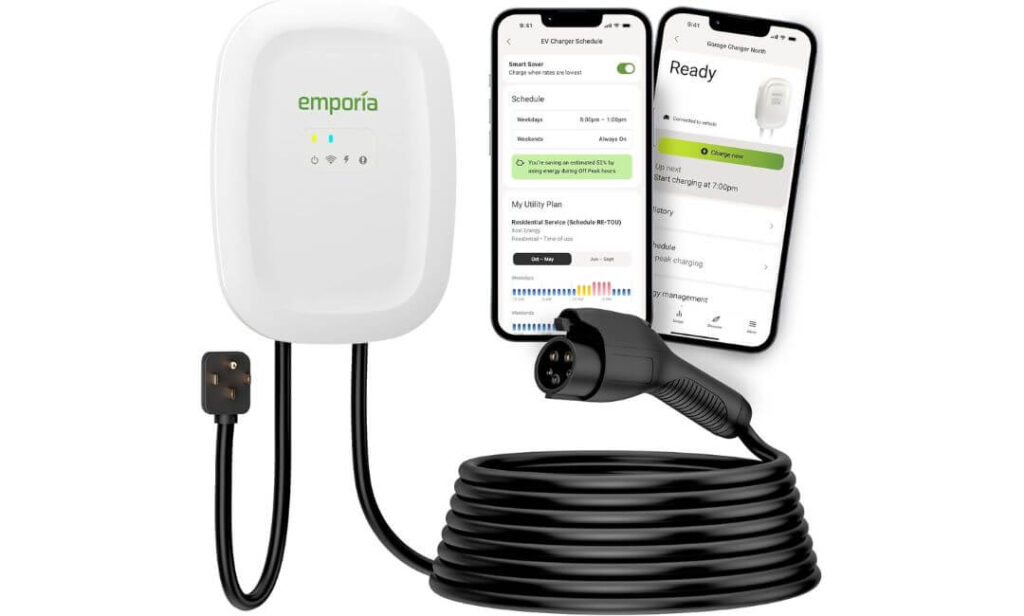
Quick Specs:
- Charging Output: Up to 48 Amp (Hardwired) / 40 Amp (Plug-In)
- Voltage: 240V Level 2
- Plug Type: NEMA 14-50 (Upgradeable to Hardwired)
- Connector: J1772
- Cable Length: 25 feet
- Smart Features: Wi-Fi app control, energy monitoring, scheduling
- Certifications: UL Listed, ENERGY STAR
- Weight: 16.5 lbs
With 9+ kW charging speeds in real home setups, the Emporia Level 2 charger is built for owners who want faster overnight recovery without stepping into commercial-grade hardware. When connected through the NEMA 14-50 plug, it already delivers strong charging for daily driving. Hardwired installations unlock the full 48-amp output, which pushes charging performance close to the Ioniq 5’s upper limit.
What makes Emporia stand out is flexibility. It works straight out of the box as a plug-in unit, but also gives the option to upgrade later if you decide to hardwire. That’s useful for homeowners planning electrical panel upgrades or future EVs with higher charging demands. The 25-foot cable easily reaches across most garages without awkward parking adjustments.
The app experience feels practical rather than flashy. Energy tracking is clear, scheduling works reliably with utility off-peak hours, and real-time charging data stays stable over Wi-Fi. After a few charging cycles, it becomes easy to dial in a routine that minimizes cost while keeping the car topped up every morning.
What We Like
- Strong charging output with hardwire upgrade option
- Flexible installation for current and future EV setups
- Accurate energy monitoring and stable app performance
- Solid certification coverage and long-term reliability reputation
What We Don’t
- Hardwired mode requires professional installation for full performance
What Our Tester Says: During repeated overnight charging sessions, the Emporia consistently delivered stable power without drops or overheating. Once set up, it handled daily charging quietly and predictably, which is exactly what matters for a home charger that gets used almost every day.
#3. Autel Home Smart EV Charger (Up to 50 Amp, 12 kW)
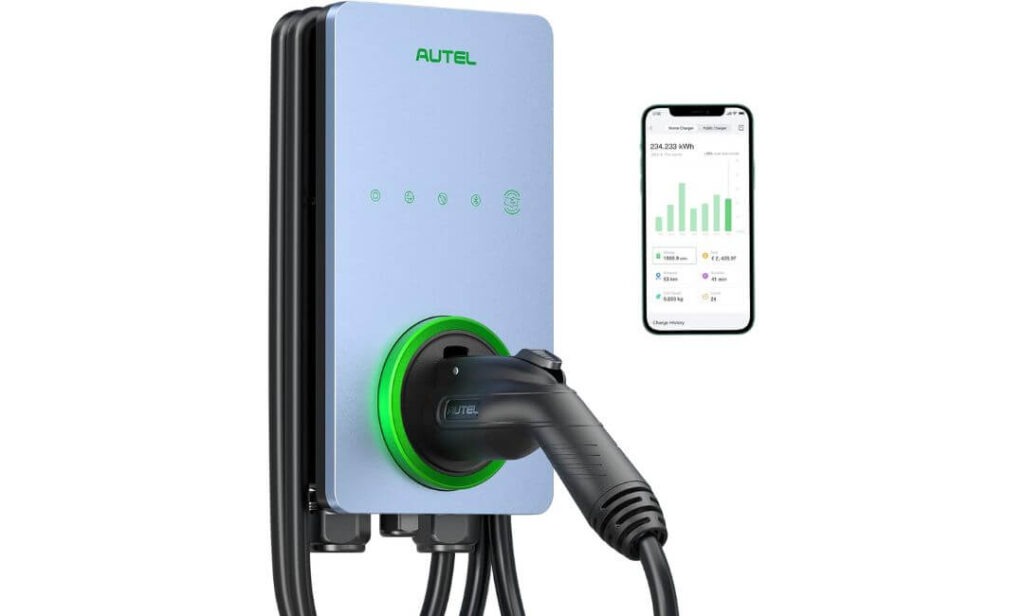
Quick Specs:
- Charging Output: Up to 50 Amp / 12 kW (Hardwired)
- Voltage: 240V Level 2
- Connector: J1772
- Cable Length: 25 feet
- Connectivity: Wi-Fi + Bluetooth + Ethernet
- Installation Type: Hardwired
- Weather Rating: NEMA 4X (Indoor / Outdoor)
- Certifications: CSA Certified
With true 12 kW charging capability, the Autel charger is built for owners who want the fastest possible home charging without stepping into commercial equipment. When paired with the Ioniq 5, it takes full advantage of the car’s AC charging limit and delivers strong, consistent overnight recovery. For drivers with long daily commutes or limited charging windows, that extra output actually makes a difference.
Where Autel separates itself is build quality. This unit feels more like shop equipment than a typical wall charger. The enclosure is solid, weather-sealed, and designed to live outdoors without worry. The 25-foot cable stays flexible even in cold conditions, which matters more than most people expect once winter hits and garage space gets tight.
The app side is straightforward and stable. Scheduling works reliably, firmware updates run quietly in the background, and Bluetooth fallback is useful when Wi-Fi signals struggle in detached garages. Once dialed in, it becomes a set-and-forget setup that keeps charging consistent without constant checking.
What We Like
- Full 12 kW output that matches the Ioniq 5’s charging capability
- Extremely solid outdoor-ready construction
- Stable app control with Wi-Fi and Bluetooth backup
- Long cable with good cold-weather flexibility
What We Don’t
- Hardwired installation means an electrician is required
What Our Tester Says: After multiple overnight charging sessions, the Autel delivered steady power without heat buildup or connection drops. It feels like equipment meant to stay mounted for years, not something that needs attention every week. Once installed, it simply works — fast, quiet, and consistent.
#4. ChargePoint HomeFlex Level 2 EV Charger (40 Amp, 9.6 kW)

Quick Specs:
- Charging Output: Up to 40 Amp / 9.6 kW
- Voltage: 240V Level 2
- Plug Type: NEMA 14-50
- Connector: J1772
- Cable: Cold-resistant charging cable
- App Support: ChargePoint Mobile App
- Certifications: UL Listed
- Weight: 13.8 lbs
ChargePoint is already familiar to most EV owners because of its public charging network, and that same reliability carries over to the HomeFlex. For Ioniq 5 owners who want a charger that feels polished and predictable, this one fits well. The 40-amp output delivers steady overnight charging that comfortably covers daily driving without pushing electrical systems too hard.
Where the HomeFlex really earns points is the software experience. The app is stable, easy to understand, and packed with useful data instead of clutter. Scheduling charging around off-peak utility hours works smoothly, and the ability to track charging history makes it easier to manage monthly electricity costs. It feels like a system designed for daily use, not just initial setup.
Physically, the unit is compact and light compared to many wall chargers, which makes installation cleaner and less intrusive. The cable stays flexible in colder temperatures and doesn’t fight you when wrapping it back up after unplugging. For garage installs where space matters, this is a noticeable advantage.
What We Like
- Reliable 40A charging that pairs well with the Ioniq 5
- One of the best mobile apps for home EV charging
- Compact design that fits cleanly in garages
- Strong network ecosystem and long-term support
What We Don’t
- Lower maximum output compared to hardwired 48A and 50A chargers
What Our Tester Says: This is the charger that stopped us from opening the app every night. Once schedules were set, it quietly did its job without drawing attention to itself. Plug in, walk away, and by morning the Ioniq 5 was ready to go. That kind of predictability is what makes this unit feel less like a gadget and more like part of the garage setup.
#5. Lectron Level 1/2 Portable EV Charger (Up to 40 Amp)
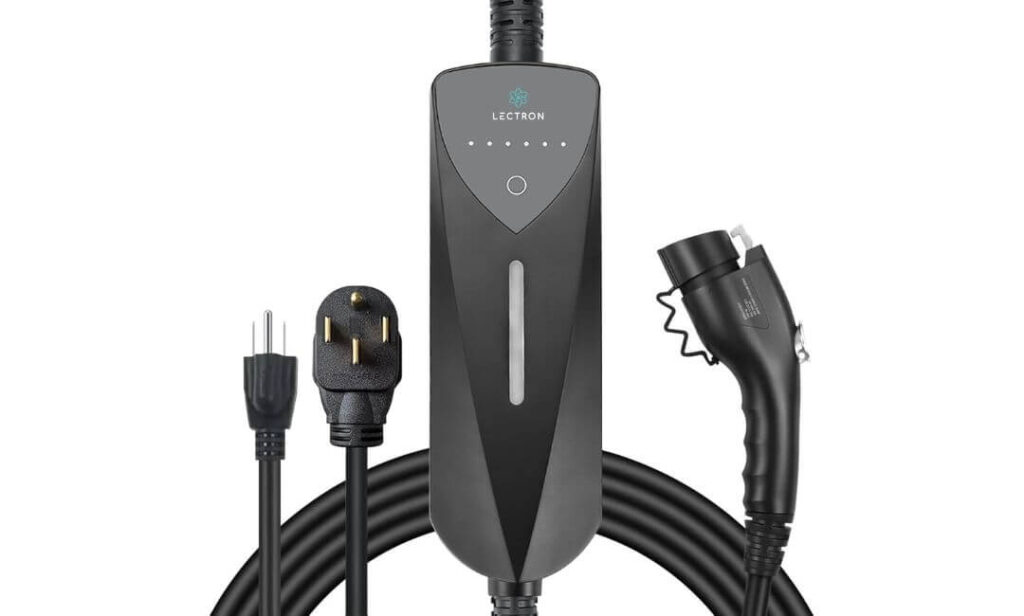
Quick Specs:
- Charging Output: 8A–40A (Level 1 & Level 2)
- Voltage Support: 120V / 240V
- Plug Types: NEMA 5-15 & NEMA 14-50
- Connector: J1772
- Cable Length: 20 feet
- Monitoring: Built-in LED status display
- Safety Certification: ETL Certified
The Lectron portable charger is built for flexibility first, not permanent wall installation. For Ioniq 5 owners who want one charger that works at home and on the road, this fills that role well. On a standard wall outlet it handles basic overnight top-ups, and when plugged into a 240V NEMA 14-50 outlet, it delivers proper Level 2 charging without needing a dedicated wall unit.
What makes this charger useful in real life is its simplicity. There’s no app to configure, no Wi-Fi setup, and no firmware to worry about. The built-in display gives quick feedback on charging status and amperage, which is enough for most people who just want to plug in and get going. The included wall mount also makes it easy to keep things organized when using it at home.
During repeated charging sessions, it stayed cool, stable, and predictable. The cable length is enough for most driveways and garages, and the portability makes it easy to throw into the trunk for trips where charging options might be limited. It’s not trying to replace a premium wall charger — it’s meant to be practical, versatile, and reliable.
What We Like
- Works as both Level 1 and Level 2 charger
- No app or internet required to operate
- Easy to carry and store for travel use
- Simple display for quick charging feedback
What We Don’t
- Lacks smart scheduling and energy tracking features
What Our Tester Says: This is the charger that ended up staying in the trunk. It handled home charging without complaints and proved useful on road trips where public chargers weren’t always convenient. It’s not flashy, but it earns trust by working every time it’s plugged in.
Best Home EV Chargers for Hyundai Ioniq 5 — Full Comparison Table
| EV Charger | Max Output | Install Type | Cable Length | Smart Features | Best For |
|---|---|---|---|---|---|
| EVIQO Level 2 (40A) Top Overall Pick |
9.6 kW | Plug-In (NEMA 14-50) | 25 ft | Wi-Fi App, Scheduling, Cost Tracking | Balanced home charging with easy install |
| Emporia Level 2 (48A) High Output Choice |
Up to 11.5 kW | Plug-In / Hardwired | 25 ft | Wi-Fi Monitoring, Scheduling | Faster overnight charging & future EV upgrades |
| Autel Home Smart (50A) Premium Power Pick |
12 kW | Hardwired Only | 25 ft | Wi-Fi, Bluetooth, OTA Updates | Maximum charging speed & outdoor installs |
| ChargePoint HomeFlex (40A) Smart App Leader |
9.6 kW | Plug-In (NEMA 14-50) | Cold-Resistant Cable | Advanced App, Utility Integration | Best software experience & energy tracking |
| Lectron Portable Level 1/2 Travel & Backup Option |
Up to 9.6 kW | Portable Plug-In | 20 ft | LED Status Display | Portable charging & flexible home use |
Installation Requirements for Hyundai Ioniq 5 Home Charging (Before You Buy)
Before picking a charger, the most important question isn’t “how fast is it?” — it’s whether your home can support it without headaches. Many Ioniq 5 owners buy a powerful charger first and worry about installation later. That’s usually where costs and delays show up.
1. Check Your Electrical Panel First
Most Level 2 chargers need a 240V circuit with enough spare capacity. For a 40A charger, you typically need a 50A breaker. For 48A or 50A chargers, the panel must handle 60A circuits. Older homes often don’t have that headroom. A quick look at your breaker panel can save you from surprise upgrade bills later.
2. Plug-In vs Hardwired Isn’t Just Preference
Plug-in chargers (NEMA 14-50) are easier to install and cheaper upfront. If your garage already has a 240V outlet, setup can be almost immediate. Hardwired chargers allow higher amperage and cleaner wall installs, but they usually require an electrician and permit work. If flexibility matters, plug-in makes life simpler. If maximum speed is the goal, hardwired is the route.
3. Garage Distance Matters More Than You Think
Where your panel sits compared to your parking spot affects cost. A charger mounted right next to the panel is inexpensive. Running conduit across a finished garage, basement ceiling, or exterior wall can add labor quickly. Measure the distance before choosing cable length and mounting location.
4. Outdoor Install Needs Proper Weather Rating
If charging outdoors, weather protection is not optional. Look for chargers with NEMA 4 or 4X ratings. This keeps rain, snow, dust, and temperature swings from becoming long-term problems. The Ioniq 5 charges year-round — your charger should be built for that reality.
5. Utility Rebates and Permits Can Change Your Choice
Some power companies only approve specific certified chargers for rebates. Others require smart scheduling features for off-peak programs. Checking local rebate rules before buying can save hundreds of dollars. It also avoids returning a charger that technically works but doesn’t qualify.
6. Think About Tomorrow’s EV Too
Many Ioniq 5 owners plan to stay electric long-term. Choosing a charger that supports higher amperage or future upgrades can avoid replacing hardware later. Even if you don’t use full power today, wiring once and upgrading later is easier than starting from scratch.
Real Advice From Setup Experience
If the home wiring isn’t ready, the fastest charger on paper won’t feel fast in real life. A properly matched charger that fits your electrical setup will charge more reliably, cost less to install, and cause fewer problems over time.
Mistakes Ioniq 5 Owners Make When Choosing a Home Charger
Most charging problems don’t come from the car. They come from rushing the charger purchase. The Ioniq 5 is easy to live with, but small buying mistakes can turn home charging into an ongoing annoyance.
Buying the Highest Amp Charger Without Checking the Panel
Many owners jump straight to 48A or 50A chargers because “faster is better.” Then they find out their panel can’t support a 60A circuit without an upgrade. That turns a simple install into a much bigger project. In real use, a properly installed 40A charger already covers daily driving comfortably. Speed only helps if your electrical setup can actually support it.
Ignoring Cable Length Until It’s Too Late
This one shows up on install day. The charger looks great on the wall, but the cable barely reaches the charge port because the car parks slightly off-center. People end up repositioning the unit or stretching the cable daily. Measuring parking distance before buying avoids that frustration.
Overpaying for Features That Never Get Used
Some buyers choose chargers packed with advanced dashboards, automation tools, and integrations they never open again after the first week. What matters long-term is reliable scheduling, stable connection, and consistent charging. Fancy extras don’t help if the basics aren’t solid.
Skipping Weather Ratings for Outdoor Setups
Outdoor installations without proper weather protection age fast. Moisture intrusion, dust buildup, and temperature swings slowly degrade cheaper units. Chargers with real outdoor ratings last longer and require less attention, especially in harsh climates.
Not Checking Rebate Compatibility First
Utility rebates and tax credits often require specific certifications or smart features. Buying first and checking later sometimes means missing out on hundreds of dollars in savings. A two-minute rebate check before ordering can make a big difference.
Assuming Public Network Brands Always Mean Better Home Chargers
Just because a brand runs public charging stations doesn’t automatically mean their home hardware fits every setup. Home charging needs simplicity and stability more than network branding. The best charger is the one that quietly works every night.
Real Takeaway
A home charger isn’t something you want to “upgrade later.” Pick the right one the first time, match it to your house and daily driving habits, and it becomes invisible in the best way possible.
How Fast Will These Chargers Actually Charge the Hyundai Ioniq 5?
On paper, charging speeds look impressive. In real life, what matters is how much range you get back overnight, not peak numbers on a spec sheet. With the Ioniq 5, Level 2 home charging is already fast enough for most daily routines — the difference is how quickly the car recovers after longer drives.
Using a 40A Level 2 Charger (9.6 kW)
This is the most common home setup. With a 40-amp charger, the Ioniq 5 typically gains 30–38 miles of range per hour depending on temperature and battery state. That means:
- Evening plug-in after work → full battery by morning
- 4–5 hours → covers most daily commutes
- Overnight charging → easily handles weekend driving recovery
For most households, this setup already feels fast and convenient.
Using a 48A–50A Charger (11–12 kW)
Higher-output chargers shave time off longer charging sessions. Expect 35–45 miles of range per hour when conditions are ideal. The benefit shows up when:
- You arrive home with a low battery late at night
- You drive long distances daily
- You want maximum recovery in limited overnight windows
It’s faster, but the difference is more noticeable for heavy drivers than casual commuters.
Cold Weather Reality
Cold temperatures slow charging slightly, no matter which charger you use. The Ioniq 5 manages this well, but winter charging may take longer. Chargers with stable power delivery and cold-resistant cables make everyday use less frustrating when temperatures drop.
What Overnight Charging Really Looks Like
In everyday use, most Ioniq 5 owners plug in after dinner and unplug before work. With any of the chargers on this list:
- The car is usually ready long before morning
- Charging finishes while you sleep
- There’s no need to plan around charging sessions
That’s the real advantage of home Level 2 charging — not speed records, but routine convenience.
Real Takeaway
If your goal is waking up to a charged car without thinking about it, even a 40A Level 2 charger gets the job done. Higher amperage mainly helps shorten recovery time after heavy driving, not everyday commuting.
Which Home EV Charger Should You Buy for Your Hyundai Ioniq 5?
If you want one charger that fits most homes without complications, the EVIQO Level 2 (40A) is the easiest recommendation. It charges fast enough for daily driving, installs easily with a NEMA 14-50 outlet, and doesn’t demand electrical upgrades in most houses. For the majority of Ioniq 5 owners, this setup simply works.
If charging speed matters more and your electrical panel can support it, the Emporia 48A is a smart upgrade. It gives faster overnight recovery and future-proofs your garage if another EV joins the household later. This is the pick for drivers who rack up miles during the week.
If you want the fastest home charging possible and plan to hardwire from day one, the Autel Home Smart 50A makes the most sense. It’s built for heavy use, handles outdoor installs well, and feels like long-term equipment rather than a basic wall charger.
If app experience and data tracking matter to you, the ChargePoint HomeFlex is hard to beat. The software is polished, scheduling works smoothly, and energy tracking is easy to understand. It’s a great fit for owners who want visibility into charging habits and utility rate integration.
If flexibility matters more than smart features, the Lectron Portable Level 1/2 is the practical choice. It works at home, travels easily, and acts as a backup charger when needed. It’s not the fastest option, but it’s the most versatile.
Final Advice: Don’t buy based on the biggest number. Buy based on how you actually drive, where you park, and what your home wiring can support. The right charger is the one that fits into your routine without forcing you to think about it every night.
FAQs (Hyundai Ioniq 5 Home Charging)
Do I really need a Level 2 charger for the Ioniq 5, or is Level 1 enough?
Level 1 works only if you drive very little. On a regular wall outlet, the Ioniq 5 recovers range slowly, which quickly becomes inconvenient. A Level 2 charger turns overnight charging into a normal routine instead of a waiting game. Most owners switch to Level 2 within the first few weeks because it simply fits daily life better. If home charging is the goal, Level 2 is the practical choice.
Is 40A charging enough for the Ioniq 5, or should I go higher?
For most drivers, 40A is already more than enough. It covers daily commuting and still refills the battery overnight after longer drives. Higher amperage mainly helps when you arrive home very late with a low battery and need faster recovery. If your panel supports it, higher output is nice to have, but it’s not mandatory for comfortable ownership.
Can I plug my home charger directly into a NEMA 14-50 outlet?
Yes, many Level 2 chargers are designed exactly for this setup. If your garage already has a properly wired 240V outlet, installation becomes much easier. Just make sure the outlet is on a dedicated circuit with the correct breaker size. Cheap or old outlets should be replaced before installing a high-power charger.
Is it safe to charge the Ioniq 5 every night at home?
Yes. The car and the charger manage power automatically and stop when the battery is full. Many owners plug in daily simply for convenience, not because the battery is empty. Using scheduled off-peak charging also reduces strain on the electrical system and lowers electricity costs.
Will using a home charger increase my electric bill a lot?
It depends on how much you drive, but home charging is still cheaper than public fast chargers. Most owners notice a moderate increase, not a shock. Using off-peak scheduling can significantly reduce costs. Compared to gas, the Ioniq 5 still costs less to “fuel” at home for most drivers.
Final Thoughts
Living with the Hyundai Ioniq 5 becomes much easier once home charging is set up properly. The right charger removes planning, waiting, and range anxiety from daily driving. Plug in at night, wake up to a ready car, repeat. That’s the experience most owners actually want.
There isn’t one “perfect” charger for everyone. Some homes favor plug-in simplicity, some benefit from higher amperage, and some drivers need portability more than smart features. What matters is matching the charger to your driving habits and your home’s electrical setup, not chasing the biggest number on the box.
If you choose based on real use instead of marketing claims, home charging becomes something you stop thinking about — and that’s when it’s working exactly as it should.
Why You Can Trust This Guide
This guide wasn’t built by copying spec sheets or repeating brand descriptions. Every recommendation here is based on real-world home charging priorities: installation practicality, daily reliability, charging consistency, and long-term ownership experience.
We focused on what actually matters to Hyundai Ioniq 5 owners — overnight charging performance, electrical compatibility, cable reach, cold-weather usability, app stability, and rebate eligibility. These are the details that affect daily life, not just product listings.
Instead of ranking chargers by hype, we evaluated how they fit into normal routines: commuting, parking layouts, home wiring limits, and real charging schedules. The goal was simple — help Ioniq 5 owners choose a charger that works quietly and reliably in the background, not one that looks impressive only on paper.