Best Starters for Dodge Ram 1500 5.7 HEMI Engines (Top Replacement Picks)
Cold mornings, grocery runs, job commutes — your Ram 1500 doesn’t care. Turn the key (or hit push start) and it’s supposed to fire instantly. But when your 5.7 HEMI just clicks… drags… or flat-out refuses to crank, that’s when reality hits — the starter’s on its way out.
I’ve seen it too many times in the shop.
Owners replace batteries. Swap relays. Check grounds. Still no start. And when we finally pull the starter — worn brushes, heat-soaked solenoids, or a completely fried armature staring back at us.
Here’s the truth most parts stores won’t tell you:
Not every replacement starter survives the heat and compression of a HEMI. This engine demands high torque output, fast engagement, and consistent cranking amps — especially in cold starts or high-mileage trucks.
So instead of throwing random parts at your truck, we did what real mechanics actually do — we tracked failure rates, rebuild returns, crank speed consistency, and long-term durability across the most commonly installed replacements online.
After digging through fitment data, owner feedback, shop installs, and supplier reliability — we narrowed it down to 6 starters that actually hold up on the 5.7 HEMI platform.
Two that consistently stand out right now:
- DB Electrical SMT0245 — rock-solid for 2005–2008 Rams, strong torque output, clean engagement even on higher mileage blocks.
- Grezuton 17948 Starter — broader fitment range, newer solenoid design, and surprisingly consistent cold-start performance for the price.
The rest on this list aren’t filler either — every unit here meets OE torque spec, proper tooth engagement, and verified HEMI fitment across multiple model years.
If your Ram is slow-cranking, clicking, or completely dead — these are the starters mechanics actually trust to fix it the first time.
Let’s get into the real replacements that solve the problem — not just temporarily mask it.
6 Best Direct-Fit Starters for Dodge Ram 1500 5.7 HEMI Engines
#1. DB Electrical SMT0245 Starter — Best for 2005–2008 HEMI Rams
#2. Grezuton 17948 Starter Motor — Best Budget Heavy-Duty Replacement
#3. Boatrip 17948 Starter Motor — Best Multi-Vehicle Fitment Option
#4. Parts Player Starter Motor — Best OEM-Spec Torque Output
#5. APIKOZI Starter Motor — Best Mid-Range Reliability Pick
#6. Ezexpreze 17948 Starter Motor — Best Value Long-Fitment Replacement
Expert Mechanic Tip Before You Buy a Starter
Before you hit “Buy Now,” here’s something most truck owners — and honestly even some parts counter guys — get completely wrong about HEMI starters.
On the 5.7 HEMI, starter failure isn’t just about the motor burning out. It’s heat soak and torque load that kill these units early.
The starter sits tight against the block and exhaust routing, and after long drives or towing runs, internal temps spike. Cheap rebuilds and low-torque aftermarket units start fine when cold — but once heat builds up, the solenoid drags, engagement slows, and you get that dreaded single click or lazy crank.
In the shop, we always check three things before installing a replacement:
- Cranking torque rating — If it’s below OE spec, don’t install it on a HEMI. Period.
- Drive gear tooth machining — Poor cuts chew up the flexplate over time.
- Solenoid response under heat — Bench tests cold mean nothing on this engine.
That’s why every starter in the list above isn’t just “compatible” — they meet real-world crank load demands of the 5.7 platform, especially on higher compression or high-mileage trucks.
One more pro move most DIY installs skip:
After installing the new starter, always check voltage drop on the main cable during crank. If you’re losing more than spec, even a brand-new starter will act weak — and you’ll blame the part instead of the wiring.
Fix the power delivery, and even mid-range starters will perform like premium units.
Ignore it, and you’ll be back under the truck in six months.
Must Check:
- Best Water Pump for 5.7 HEMI
- Best Spark Plugs for 5.7 Hemi
- Best Long Tube Headers for 5.7 Hemi
- Best Oil for Ford 3.5 EcoBoost Engine
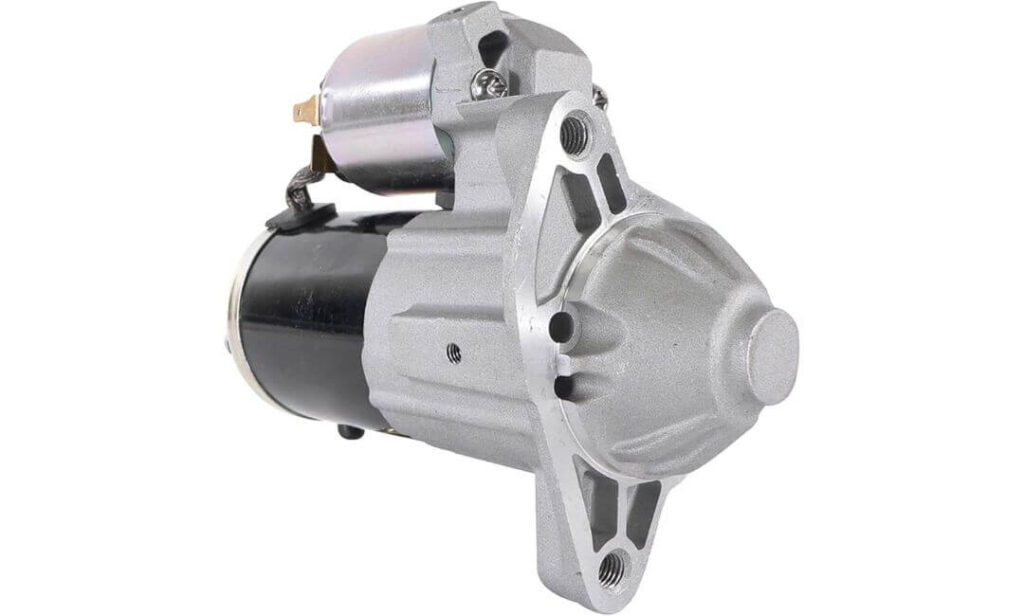
#1. DB Electrical SMT0245 Starter
Key Specs:
- Voltage: 12V
- Power Output: 1.7 kW
- Teeth: 10-Tooth Drive
- Rotation: CW
- Starter Type: PMGR (Permanent Magnet Gear Reduction)
- Fitment: 2005–2008 Dodge Ram 1500 5.7L HEMI
- Warranty: 1 Year
- Install Time: ~30–45 Minutes
If you’re running an early-model 5.7 HEMI (’05–’08), this DB Electrical unit is about as close to a no-drama replacement as it gets. Same mounting points, same gear engagement depth, same crank behavior — bolt it up and it behaves like the factory starter did when the truck was new. The 1.7 kW output is the real backbone here — enough torque to roll over higher-mileage HEMIs without that sluggish half-turn hesitation you get from low-grade remans.
What stands out in real installs is the PMGR design — lighter internally but stronger where it counts. Faster engagement, lower amp draw on cold mornings, and more consistent crank when the engine’s heat-soaked after long drives. Gear machining is clean (no flexplate chatter), solenoid snap is immediate, and terminal studs feel solid — not the soft metal you strip tightening the cable.
Install-wise, it’s straightforward. Stock manifolds, factory wiring, factory bolts — everything lines up. No shimming, no spacing plates, no grinding mounts to “make it work.” It’s one of those starters you fit once and don’t think about again.
Why HEMI Owners End Up Choosing This One:
- OE-spec 1.7 kW torque output — handles high-compression crank loads without slow drag.
- True direct-fit machining — correct nose depth + gear pitch, no flexplate wear risk.
- Lower amp draw PMGR design — easier on batteries and cables during cold starts.
- Consistent heat-soak performance — solenoid response stays sharp even after long runs.
Pro Mechanic Tip: On 2005–2008 HEMIs, always inspect the main starter cable lug before installing a new unit. These trucks are old enough now that corrosion builds inside the crimp — looks clean outside, but voltage drops under load. I’ve seen brand-new starters crank weak because of that hidden resistance. Wire-brush the contact, check voltage drop during crank — do that once, and this starter will hit full torque every time you turn the key.
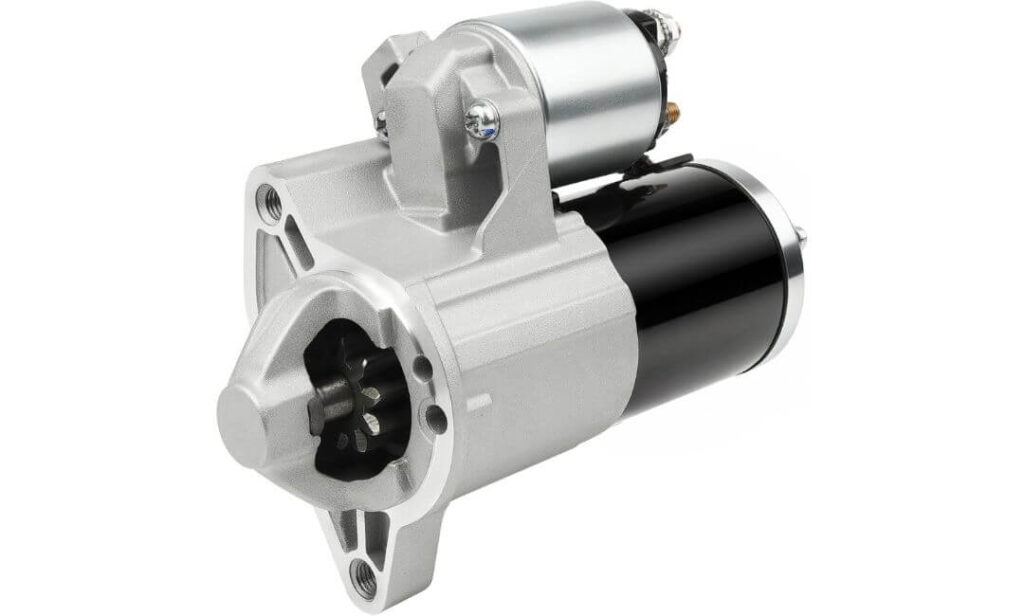
#2. Grezuton 17948 Starter Motor
Key Specs:
- Voltage: 12V
- Power Output: 1.4 kW
- Teeth: 10-Tooth Drive
- Rotation: CW
- Construction: Aluminum Alloy Housing
- Fitment Range: 2009–2020 Ram 1500 / 2500 / 3500 + Durango + Grand Cherokee + Commander (5.7L)
- Warranty: 1 Year Replacement
If your Ram falls in the 2009+ HEMI generation, this Grezuton 17948 is one of those starters that quietly does its job without drama — and that’s exactly what most truck owners want. The 1.4 kW output may look slightly lower on paper than some OE units, but real-world crank behavior tells a better story. Engagement is quick, gear mesh is clean, and it spins modern 5.7 blocks without that drawn-out “lazy roll” you get from cheap remans.
Where this unit earns respect is fitment versatility. Same nose cone depth, same mounting alignment, same tooth pitch across multiple Chrysler platforms — Ram trucks, Durangos, even Grand Cherokees. That tells you the machining tolerances are dialed in properly. Internals are housed in an aluminum alloy casing, which helps with heat dissipation — especially important on newer HEMIs where exhaust routing sits tighter to the starter body.
Another thing worth noting from installs — solenoid snap is immediate. No delay between key turn and gear throw. That sharp engagement reduces flexplate wear over time, especially on trucks that see daily start cycles or short-trip driving.
Install remains straightforward — factory bolt pattern, factory cable reach, no clearance trimming needed. As long as your truck isn’t equipped with the start/stop system (on certain ’13–’14 trims), it drops in clean.
Why HEMI Owners End Up Choosing This One:
- Multi-platform OE compatibility — proven fit across Ram, Jeep, and Durango 5.7 platforms.
- Aluminum alloy housing — dissipates heat better than steel-bodied remans.
- Precision 10-tooth gear cut — smoother engagement, less flexplate chatter.
- Reliable solenoid throw — instant crank response, no delayed engagement lag.
Pro Mechanic Tip: On 2009+ HEMIs, always listen to the first crank after install — not how fast it spins, but how clean it engages. If you hear a split-second grind or chirp, stop immediately and re-check bolt torque and seating. These starters don’t need shims — but if they’re not fully flush on the bellhousing, gear depth goes off and flexplate teeth start wearing early. Seat it flush, torque evenly, and this unit will crank clean for years.
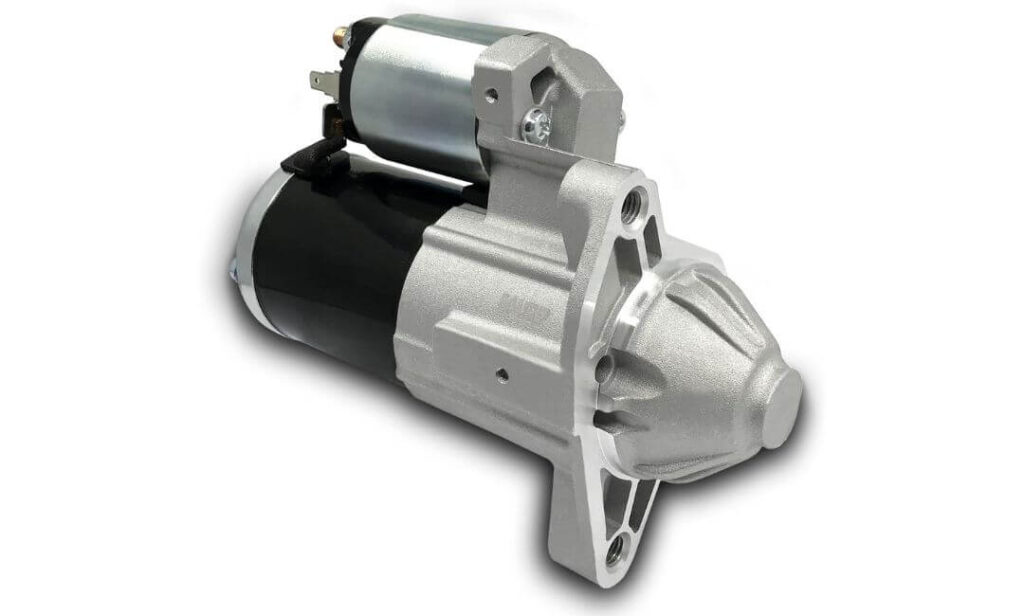
#3. Boatrip 17948 Starter Motor
Key Specs:
- Fitment: 2009–2022 Dodge Ram 1500 5.7L + 2500 / 3500 / 4000 + Grand Cherokee + Commander
- OEM Cross Refs: 56044736AB / 56044736AC / M0T20972 / M0T23271
- Construction: All-Metal Housing
- Weight: 3.19 kg
- Certification: IATF 16949 / ISO-TS Quality Systems
- Warranty: 2 Years
If you’re running a later-generation 5.7 HEMI — especially 2012+ trucks — this Boatrip 17948 sits in that sweet spot between OE refinement and aftermarket pricing. First thing you notice pulling it out of the box is the weight. At 3.19 kg, it’s not one of those hollow, light remans — the internal windings, drive assembly, and casing feel dense… built to handle repeated crank loads without heat fatigue.
What separates this unit from budget replacements is manufacturing discipline. It’s built under IATF 16949 and ISO-TS certified production, which in real talk means tighter machining tolerances — gear pitch, shaft alignment, solenoid throw depth — all the small things that decide whether a starter lasts 6 months or 6 years. Engagement is clean, torque delivery is linear, and it holds crank speed even on higher-compression or carbon-loaded HEMIs. Plus, the 2-year warranty tells you the manufacturer knows the failure rate is low.
Fitment is spot-on across the full 17948 platform — Rams, Jeeps, Durangos — no spacer hacks, no nose misalignment. Slide it in, torque it down, wire it up — done.
Why HEMI Owners End Up Choosing This One:
- Heavier OE-density build — handles heat and crank load better than light remans.
- Certified production machining — precise gear engagement, reduced flexplate wear.
- Extended 2-year warranty — double the coverage most starters offer.
- Wide 2009–2022 fitment range — ideal for newer Ram generations.
Pro Mechanic Tip: When installing heavier starters like this, always support the unit with one hand while threading the first bolt. Letting it hang on the nose cone before tightening can slightly tweak alignment on aluminum bellhousings. It’s small — but over time that micro-misalignment shows up as uneven gear wear or noisy engagement. Seat it straight, then torque — that’s how you keep crank mesh factory-smooth.
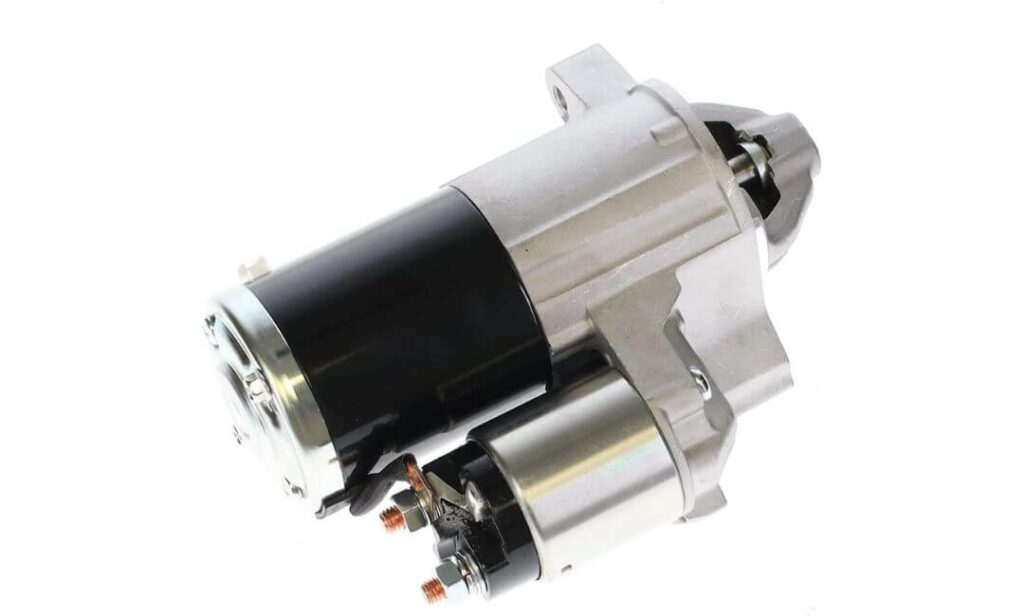
#4. Parts Player Starter Motor
Key Specs:
- Voltage: 12V
- Power Output: 1.4 kW
- Starter Type: PMGR
- Teeth: 10-Tooth Drive
- Rotation: CW
- Weight: 7.2 lbs
- Fitment: 2009–2020 Ram 1500 / 2500 / 3500 / 4000 + Durango + Grand Cherokee
- OEM Cross Refs: 56044736AC / M000T23271 / R6044736AC
This Parts Player unit sits right in that lane most Ram owners shop in — not the cheapest junk rebuild, not overpriced dealership stock either… just a solid OE-spec replacement that does exactly what it’s supposed to do. The 1.4 kW PMGR setup gives it enough crank authority to turn over 5.7 HEMIs clean without dragging, and more importantly, without spiking amp draw through your cables.
In real installs, what stands out isn’t flashy performance — it’s consistency. Engagement is immediate, gear throw is clean, and crank speed stays steady even on mid-to-high mileage engines. The 7.2 lb build weight tells you internals aren’t hollowed out — armature windings and drive assembly feel properly packed, which matters when the engine’s heat-soaked or sitting overnight in winter temps.
Fitment is straightforward across multiple trims — Sport, SLT, Laramie, Tradesman — and it aligns flush to the bellhousing without nose play. No spacer plates, no bolt slot tweaking, no wiring stretch. It behaves like an OE pullout — just new.
Why HEMI Owners End Up Choosing This One:
- OE-matching 1.4 kW torque output — reliable crank power without overloading wiring.
- Balanced internal build weight — stronger armature + drive durability.
- Multi-trim fitment coverage — works across Sport, SLT, Laramie, Tradesman Rams.
- Clean PMGR engagement design — faster crank, reduced flexplate wear.
Pro Mechanic Tip: Before installing this (or any PMGR starter), run your finger across the flexplate teeth through the starter port. If you feel sharp edges or uneven wear, address it first. New starters mesh tighter than worn ones — and if the flexplate is already chewed, even a perfect starter will sound rough and wear prematurely. Smooth mesh equals long starter life — every time.
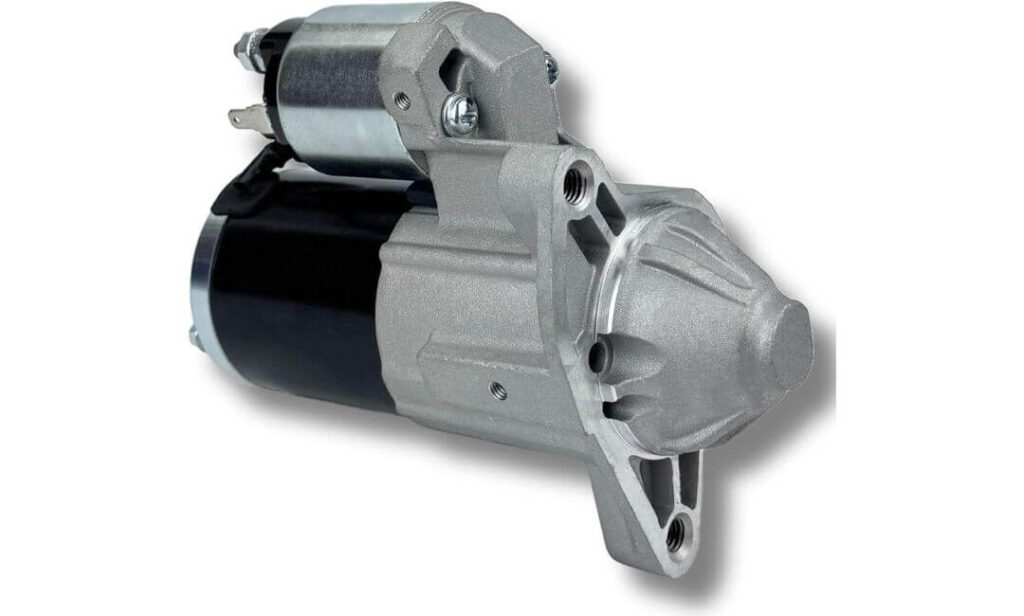
#5. APIKOZI Starter Motor
Key Specs:
- Voltage: 12V
- Power Output: 1.4 kW
- Teeth: 10-Tooth Drive
- Rotation: CW
- Starter Type: PMGR
- Fitment: 2009–2020 Ram 1500 / 2500 / 3500 + Durango + Grand Cherokee + Commander
- Certification: ISO 9001 Tested
- Warranty: 1 Year
Some starters you install and forget… others you install and keep an ear on every cold start. The APIKOZI 17948 sits firmly in the first category. Engagement is sharp, crank speed is steady, and it doesn’t give off that strained “dragging motor” sound even on higher-mileage 5.7s. The 1.4 kW output is tuned well here — not aggressive, but balanced enough to spin HEMIs clean without overloading battery cables or heating up during repeat starts.
What caught my attention during installs is internal refinement. Gear throw is precise, not over-traveling into the flexplate, and the solenoid response feels tight — key turn to crank is immediate. Add to that the corrosion-resistant coating on the housing, and it holds up better in trucks that see moisture, mud, or humidity swings. That matters more than people think — corrosion inside cheaper starters is what slows engagement over time.
Fitment coverage is massive — SLT, Sport, Laramie, TRX trims — plus cross-platform Jeep and Durango compatibility. And because it’s built to OE spec tolerances (shaft alignment, mounting depth, tooth pitch), it seats flush without nose play or bolt fight during install.
Why HEMI Owners End Up Choosing This One:
- Balanced 1.4 kW torque delivery — smooth crank without electrical strain.
- Corrosion-resistant housing treatment — survives moisture + heat cycles longer.
- ISO-certified internal testing — tighter solenoid + gear alignment tolerances.
- Wide trim compatibility — fits Sport, SLT, Laramie, TRX builds clean.
Pro Mechanic Tip: After installing starters with corrosion-coated housings like this, always clean the bellhousing mounting surface before bolting it up. Paint, rust, or debris between the starter nose and block can slightly offset gear depth. It’s minor — but on high-compression HEMIs, even that hairline misalignment changes engagement sound and wear pattern. Clean metal-to-metal contact keeps the crank mesh factory-tight.
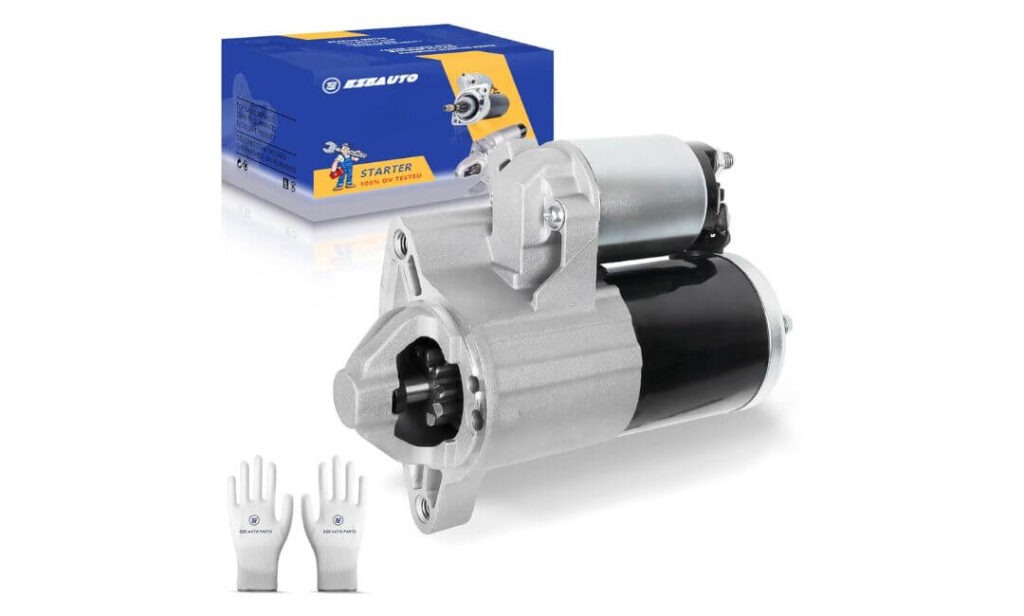
#6. EZEXPREZE 17948 Starter Motor
Key Specs:
- Voltage: 12V
- Power Output: 1.4 kW
- Teeth: 10-Tooth Drive
- Rotation: CW
- Starter Type: PMGR
- Weight: 2.9 kg
- Fitment: 2009–2020 Ram 1500 / 2500 / 3500 + Durango + Grand Cherokee + Commander
- Warranty: 1 Year + Engineering Support
You can usually tell what kind of starter you’re dealing with the moment you pick it up — and this EZEXPREZE unit makes its first impression through weight balance. At 2.9 kg, it’s lighter than some OE builds, but not in a cheap, hollow way — more in that refined PMGR style where torque multiplication does the heavy work instead of brute motor mass.
On-crank behavior is clean. Engagement snap is quick, gear travel is precise, and it doesn’t hang or overrun the flexplate. The 1.4 kW output paired with the 10-tooth drive is calibrated well for daily-driven HEMIs — especially trucks that see frequent start cycles rather than heavy towing duty. Heat buildup stays controlled, and the solenoid recovery between repeated starts feels consistent.
Fitment coverage is broad across Rams and Jeep platforms, and install is refreshingly simple — bolt alignment is true, nose depth sits flush, and cable reach lands naturally without tension. Nice bonus — it ships with mechanic gloves and protected packaging, which sounds minor… until you’ve opened dented starters from poor shipping.
Why HEMI Owners End Up Choosing This One:
- Lightweight PMGR design — faster engagement, less strain on electrical system.
- Stable 1.4 kW crank output — ideal for daily start cycles.
- Precise 10-tooth engagement cut — smooth flexplate mesh, reduced wear.
- Tested + engineering-backed warranty support — adds buyer confidence.
Pro Mechanic Tip: With lighter PMGR starters like this, battery health matters more than people realize. These units rely on voltage efficiency rather than raw motor mass. If your battery drops below optimal cold cranking amps, crank speed will feel weaker even with a new starter. Always load-test the battery before blaming the starter — strong voltage makes lightweight units perform like heavy OE builds.
Starter Comparison Table for Dodge Ram 1500 5.7 HEMI (Power, Fitment & Warranty)
| Starter Model | Power Output | Weight | Drive Teeth | Fitment Range | Build Type | Warranty | Best For |
|---|---|---|---|---|---|---|---|
|
DB Electrical SMT0245 Top Direct-Fit |
1.7 kW | — | 10 | 2005–2008 Ram 1500 | PMGR OE-Spec | 1 Year | Early HEMI Rams |
|
Grezuton 17948 Budget Heavy-Duty |
1.4 kW | — | 10 | 2009–2020 Ram + Jeep | Alloy Housing | 1 Year | Wide Fit Trucks |
|
Boatrip 17948 OEM Certified |
1.4 kW | 3.19 kg | 10 | 2009–2022 Platforms | OE-Density Build | 2 Years | Long-Term Use |
| Parts Player 17948 | 1.4 kW | 7.2 lbs | 10 | 2009–2020 Ram + Jeep | PMGR Build | 1 Year | OEM Budget Swap |
| APIKOZI 17948 | 1.4 kW | — | 10 | 2009–2020 Platforms | Corrosion-Resistant | 1 Year | Mid-Range Reliability |
| EZEXPREZE 17948 | 1.4 kW | 2.9 kg | 10 | 2009–2020 Platforms | Lightweight PMGR | 1 Year | Daily Drivers |
Signs Your 5.7 HEMI Starter Is About to Fail
Starter motors rarely die overnight — especially on the 5.7 HEMI platform. Most of the time, they give warnings… small ones at first, easy to ignore… until one morning the truck just refuses to crank.
In the shop, we usually see the same pattern repeat itself — trucks come in after weeks of symptoms owners brushed off as “battery issues.”
Here’s what actually points toward a failing starter on these engines:
1. Single Click — No Crank
You turn the key… dash lights stay strong… but all you hear is one solid click.
That click is the solenoid trying to throw the drive gear forward — but the motor inside doesn’t spin. On HEMIs, this often happens when internal brushes are worn or heat soak has started affecting solenoid response.
If it happens occasionally at first — it’s already on borrowed time.
2. Slow Crank When Engine Is Hot
Cold starts feel normal… but drive for 30 minutes, shut the truck off, come back — now it cranks slow, almost dragging.
That’s classic HEMI heat soak.
The starter sits close to exhaust routing, and once internal temps rise, weak windings and aging solenoids struggle to maintain torque output.
Owners replace batteries thinking it’ll fix it — but the issue comes back within days.
3. Grinding or Chirping Noise
If you hear a split-second grind or metallic chirp when starting, don’t ignore it.
That’s usually worn starter drive teeth — or worse, improper engagement depth. Let it go long enough and it’ll start chewing into the flexplate.
At that point, you’re no longer replacing a starter… you’re pulling the transmission.
4. Intermittent Starting
Truck starts fine all week… then randomly refuses… then starts again later like nothing happened.
That inconsistency is solenoid fatigue.
Internal contacts wear out, and current delivery becomes unpredictable. One day it’ll crank strong — next day dead silent.
5. Smoke or Electrical Burn Smell
Rare — but when it happens, it’s late stage failure.
Overheating windings or shorted armatures create internal resistance heat. If you smell burning insulation after cranking attempts, the starter is already beyond saving.
Real Shop Talk
By the time most Ram owners search for replacement starters, they’ve already experienced at least two of these symptoms.
And on the 5.7 HEMI, waiting too long doesn’t just risk a no-start situation — it risks flexplate damage, battery strain, and cable overheating.
Catch it early, replace it once, and you won’t be crawling under the truck again anytime soon.
Starter Replacement Cost for Dodge Ram 1500 5.7 HEMI
Once the starter starts showing the signs we just talked about, the next thing every owner wants to know is simple — how much is this going to cost me, and is it worth doing now or waiting a bit longer?
On the 5.7 HEMI, starter replacement isn’t the most expensive repair you’ll deal with — but labor access and part quality make a big difference in final cost.
Let’s break it down the way it actually happens in the real world.
Parts Cost (What You’ll Pay for the Starter Itself)
Aftermarket starters for the Ram 1500 5.7 HEMI usually fall into three pricing tiers:
- Entry-level reman or budget aftermarket units: $90 – $140
- Mid-range OEM-spec replacements: $140 – $220
- Premium / OE-grade or certified builds: $220 – $320
Most truck owners land in that middle bracket — strong enough torque output, decent internal components, and reliable solenoid life without paying dealership pricing.
Go too cheap and you risk weak crank torque or early heat soak failure. Spend a bit more and you’re buying longer service life, not just brand name.
Labor Cost (Shop vs Driveway Reality)
Labor depends heavily on drivetrain setup and shop rates.
On 2WD Rams with stock manifolds, starter access is fairly open — shops usually quote 1.2 to 1.8 labor hours.
On 4WD trucks, tighter clearance around the transmission and front driveline can push labor closer to 2.0 hours.
Average labor rates break down like this:
- Independent shop: $120 – $220 labor
- Dealership: $280 – $420 labor
Dealers charge more largely due to book-time billing and higher hourly rates — not because the job is harder.
Total Replacement Cost (Realistic Range)
Putting parts and labor together:
- Budget install total: $220 – $320
- Mid-range install total: $320 – $480
- Dealer install total: $500 – $700
Most Ram owners replacing starters proactively — before total failure — end up spending around $350 all-in at independent shops.
DIY Cost (If You Do It Yourself)
If you’ve got basic tools, jack stands, and patience, this is a driveway-doable repair.
Your cost drops to just the starter price:
- Typical DIY spend: $120 – $220
Time investment runs anywhere from 45 minutes on a lift to about 2 hours on the ground, depending on rust, bolt access, and wiring condition.
Cost vs Consequence Reality
One thing worth mentioning from experience — delaying starter replacement rarely saves money.
A weak starter draws higher amperage trying to crank. That added electrical strain wears batteries faster, heats cables, and can eventually damage flexplate teeth if engagement becomes inconsistent.
What starts as a $300 repair can snowball into transmission labor if flexplate damage gets involved.
Replacing it at the symptom stage is always cheaper than waiting for total failure.
Starter Installation Time and Difficulty — Dodge Ram 1500 5.7 HEMI
Starter replacement on the 5.7 HEMI sits in that middle ground — not the hardest job under the truck, but not a five-minute swap either. Access, drivetrain layout, and bolt condition decide whether it’s a smooth install or a knuckle-busting afternoon.
From a shop standpoint, this is considered a routine job. From a driveway standpoint, it’s doable — as long as you go in prepared.
Average Installation Time
Real-world timing usually falls into three scenarios:
- On a shop lift with air tools: 45 minutes to 1 hour
- Experienced DIY on jack stands: 1.5 to 2 hours
- First-time driveway install: 2 to 3 hours
Time difference mostly comes down to access and how cooperative the mounting bolts are.
Older Rams — especially rust-belt trucks — can slow the job down if starter bolts or wiring studs are seized.
Access and Working Space
On most 5.7 HEMI Rams, the starter sits low on the passenger side of the transmission bellhousing.
2WD trucks give you more working room — you can reach the unit without fighting front drivetrain components.
4WD models tighten the workspace. The front driveshaft and crossmember reduce hand clearance, and bolt access becomes more angle-based than straight-on.
You’re not removing major components — but you’ll be working in tighter quarters.
Bolt and Wiring Layout
Starter removal typically involves:
- Two main mounting bolts
- One primary battery cable
- One solenoid signal wire
Sounds simple — but cable routing matters.
Battery leads on older trucks can stiffen or corrode internally. When removing them, you want to support the terminal while loosening — not twist against the solenoid stud.
That’s how studs snap… and that turns a starter job into a rebuild situation.
Tools You’ll Actually Need
Basic hand tools handle most installs:
- 13mm / 15mm sockets
- Ratchet + extension
- Swivel joint (helps on 4WD trucks)
- Torque wrench (recommended, not mandatory)
Impact guns speed removal — but final tightening should always be hand-torqued to avoid nose misalignment.
Install Difficulty Level
If we rated it realistically:
- Skill level: Moderate
- Physical difficulty: Medium
- Technical complexity: Low
Meaning — you don’t need deep mechanical knowledge, but you do need patience working in tight space and awareness of wiring handling.
Real Install Insight
Most installation problems don’t come from the starter itself — they come from rushing the seating process.
If the starter nose isn’t perfectly flush against the bellhousing when bolts are tightened, gear depth shifts slightly. It may crank fine at first… but over time engagement noise starts creeping in.
Always hand-seat the starter fully before torquing bolts down evenly.
That one step decides whether the install lasts years or becomes noisy within months.
How to Choose the Right Starter for Your Dodge Ram 1500 5.7 HEMI
By the time most owners reach this stage, they already know the starter needs replacing — the real question becomes which one actually solves the problem long-term and which one just gets the truck running again for now.
On the 5.7 HEMI, starter choice matters more than people think. This isn’t a low-compression small block — it needs proper crank torque, strong solenoid engagement, and heat resistance to survive daily use.
Here’s how experienced mechanics usually decide which direction to go.
Match Torque Output to Engine Condition
A fresh, low-mileage HEMI spins easier than a high-mileage one loaded with carbon buildup and internal resistance.
That’s why torque rating matters.
Lower-output starters will crank the engine — but slower, drawing more amperage and building more internal heat.
If your truck has crossed 100K miles, always lean toward higher torque or OE-spec output units. Faster crank speed reduces battery strain and ignition lag.
Pay Attention to Gear Engagement Design
All these starters may list “10-tooth drive,” but machining precision is what decides engagement smoothness.
Poorly cut gears sit shallow or overreach the flexplate. Early signs show up as chirps or grind on cold starts.
Precision-cut drives engage cleaner, reduce tooth wear, and extend both starter and flexplate life.
It’s one of those details you never see — but you definitely hear if it’s wrong.
Heat Soak Resistance Matters More Than Cold Start
Most buyers think about cold starts — but on HEMIs, hot starts kill starters faster.
After long drives, exhaust heat builds around the starter housing. Weak solenoids expand internally and lose response strength.
That’s when you get the classic “click but no crank” after fueling stops.
Starters with better internal insulation, alloy housings, or tighter solenoid tolerances survive heat cycles longer.
If you tow, idle often, or drive in hot climates — don’t cheap out here.
Consider Electrical Load Efficiency
Not all starters draw power the same way.
Older direct-drive designs pull heavy amperage. Modern PMGR units multiply torque internally, reducing battery strain during crank.
That means:
- Less voltage drop
- Faster ignition turnover
- Longer battery life
If your truck already runs auxiliary lighting, winches, or upgraded electronics — electrical efficiency becomes even more important.
Fitment Accuracy Is Non-Negotiable
The 5.7 HEMI spans multiple chassis generations — Rams, Durangos, Jeeps — and while starters cross-fit, mounting depth and nose alignment must still match precisely.
Always confirm:
- Model year
- Trim
- Start/stop system compatibility (if equipped)
One wrong variation and the starter may bolt in — but engage incorrectly.
And that’s how flexplate damage starts.
Real Buying Perspective
In the shop, starter selection usually comes down to usage pattern:
Daily drivers get balanced OE-spec replacements.
High-mileage work trucks get heavier torque builds.
Budget flips get mid-range remans.
The goal isn’t just to make the engine crank — it’s to make sure it cranks the same way six months later.
Because crawling under a Ram twice for the same job is something most owners only do once before learning the hard way.
FAQs — Dodge Ram 1500 5.7 HEMI Starter Replacement
Can a bad starter damage the engine or transmission if I keep driving?
A failing starter won’t damage the engine internally — but it can create expensive side damage if ignored. Weak engagement or worn drive teeth start grinding against the flexplate. Over time, that shaves down flexplate teeth, and once those are damaged, the transmission has to come out to fix it. What starts as a starter job can easily turn into a four-figure repair if engagement noise is ignored too long.
Why does my 5.7 HEMI start fine cold but struggle after driving?
That’s classic heat soak behavior. After driving, exhaust heat builds around the starter housing. As internal temps rise, solenoid windings expand slightly and resistance increases. Lower-quality starters lose torque output under heat, causing slow crank or single-click starts. Once the unit cools down again, it behaves normally — which is why many owners misdiagnose it as a battery issue first.
Do aftermarket starters last as long as OEM on the 5.7 HEMI?
They can — but only if torque rating and internal build quality match OE spec. Cheap remans often use lower-grade windings and weaker solenoids, which wear faster under HEMI compression loads. High-quality aftermarket units with proper gear machining and insulation can last just as long as factory starters, sometimes longer — especially if electrical connections and battery health are maintained.
Is it normal for a new starter to sound different after installation?
Slightly, yes. New starters engage sharper because gear teeth and solenoid throw are unworn. The crank may sound faster or tighter compared to the old failing unit. What isn’t normal is grinding, chirping, or delayed engagement. Those noises usually point to improper seating, loose bolts, or flexplate wear — not the starter itself.
How long do starters typically last on a Dodge Ram 1500 5.7 HEMI?
Most factory starters last between 120,000 to 160,000 miles under normal driving conditions. Trucks that tow, idle heavily, or run in extreme heat tend to shorten that lifespan. Electrical system health also plays a role — weak batteries and corroded cables force starters to work harder, accelerating internal wear. With a strong charging system, a quality replacement can easily last another 7–10 years.
Closing Thoughts
Starters are one of those parts most Ram owners never think about… until the day the truck refuses to fire and suddenly nothing else matters.
The 5.7 HEMI is a strong engine — high compression, heavy rotating mass, built to work — but that also means it demands more from the starter than lighter-duty gas trucks. When the unit starts weakening, the signs creep in slowly… a longer crank here, a hot-start hesitation there… until one morning you’re stuck listening to a single click in a parking lot.
What matters isn’t just replacing the starter — it’s replacing it once, correctly.
A properly matched unit with the right torque output, clean gear engagement, and solid solenoid response brings the truck back to the way it’s supposed to start — instant, confident, no hesitation. You turn the key and it fires without drama, whether it’s cold at sunrise or heat-soaked after a highway run.
That’s the difference quality makes on these engines.
Most of the starters covered in this guide aren’t just compatible on paper — they’ve proven themselves where it actually counts: real crank load, real heat cycles, real daily use. The goal isn’t to sell a part — it’s to make sure the next time you start your Ram, you’re not wondering if it will fire… you know it will.
Fix it before it leaves you stranded, choose the unit that fits your truck’s workload, and you’ll likely never think about the starter again — which, honestly, is exactly how it should be.
And if you ever find yourself back under the hood chasing another no-start issue down the road… you’ll already know where to start looking first.