
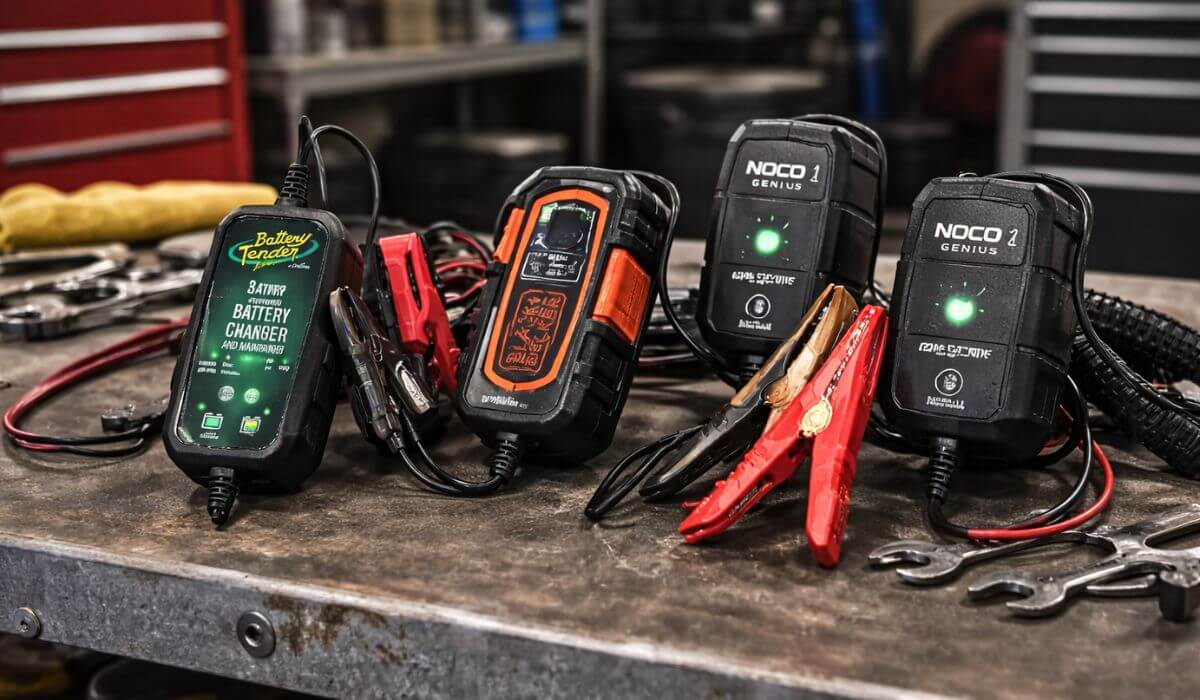
5 Best Trickle Chargers for Car Battery (2026 Mechanics Recommended)
If your car sits parked for days—or sometimes weeks—you already know the pain. You come back, turn the key… and the battery is weak or completely dead. That’s exactly where a best trickle charger for car battery becomes a must-have tool, not just an accessory.
We tested and compared multiple smart maintainers based on real-world use: overnight charging behavior, heat handling, long-term battery maintenance, safety features, and how well they protect batteries during storage. The goal wasn’t to find the cheapest option — it was to find chargers that actually extend battery life, prevent sulfation, and keep your car ready to start every time.
👉 If you want the most reliable all-around option, the NOCO GENIUS1 stands out for daily maintenance and smart safety protection.
👉 For long-term parking and smaller batteries, the Battery Tender Junior remains one of the most proven, set-it-and-forget-it maintainers on the market.
Before choosing a charger, we also recommend checking your battery health using the best car battery testers so you know whether maintenance charging will help or if replacement is already due.
Below, you’ll find the best car battery trickle chargers that actually deliver consistent performance — not just marketing promises.
5 Best Car Battery Trickle Chargers for Long-Term Storage & Daily Maintenance (2026)
Below are the best battery trickle chargers tested for real garage use — affordable under-$50 models for daily maintenance, plus one higher-output option around $70 for quicker charging.
#1. NOCO GENIUS1 – Editor’s Choice (Best All-Round Trickle Charger)
#2. Battery Tender Junior – Best for Long-Term Storage & Small Vehicles
#3. BLACK+DECKER BM3B – Best Affordable Trickle Charger for Home Garage
#4. Battery Tender 3 AMP – Best for Faster Charging Without Overheating
#5. NOCO GENIUS2 – Best Smart Trickle Charger for Dead Battery Recovery
Expert Mechanic Tip (From Real-World Garage Use)
Also Check:
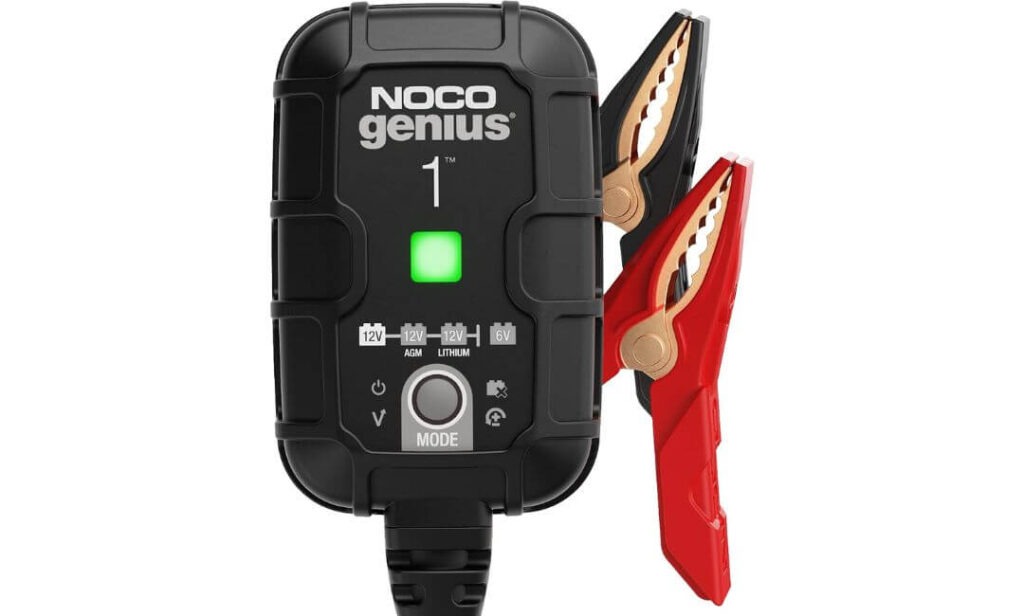
#1. NOCO GENIUS1 – 1A Smart Battery Trickle Charger & Maintainer
Key Specs:
- Power Output: 1 Amp (6V / 12V Support)
- Battery Support: AGM, Gel, Flooded Lead-Acid + Lithium (LiFePO4)
- Charging Mode: Automatic Smart Charging + Maintenance Mode
- Special Tech: Temperature Compensation + Desulfation
- Weight: 15.2 oz (lightweight, easy to hang or store)
- Warranty: 3 Years
With smart charging technology, the NOCO GENIUS1 is made for people who are tired of dead batteries after parking their car for a few days. You plug it in, connect the clamps (or eyelets), and that’s it — no settings, no guessing. Once the battery reaches full charge, it quietly switches into maintenance mode and keeps the voltage stable. No overheating, no overcharging drama.
What makes this charger feel “premium” in real use is how it handles weather. Hot garage? Cold winter storage? It automatically adjusts charging output based on temperature. That small detail actually matters. Cheap chargers don’t care — they just push power. GENIUS1 charges slow, controlled, and safe, which is exactly what you want for long-term battery health.
Another big win is battery recovery. This unit can bring back batteries sitting at very low voltage. In many real cases, users have revived neglected car and motorcycle batteries instead of throwing them away. Add to that the built-in desulfation pulses (which clean up internal battery buildup over time), and this charger doesn’t just “maintain” — it actively protects your battery investment.
For daily drivers, weekend cars, garage queens, bikes, lawn equipment — this one charger handles everything without switching devices.
What Makes It Great for Trickle Charging
- Automatically switches to float / maintenance mode after full charge
- Safe for long-term connection (leave it plugged in without stress)
- Smart temperature adjustment for summer + winter storage
- Desulfation pulses help restore weak batteries
- Works with both traditional and lithium batteries
What Customers Say
Most owners talk about reliability first. Many users leave this charger connected while traveling or storing vehicles for months — and come back to fully charged batteries. That’s the real test.
People also like how simple it feels. Plug, connect, walk away. No complicated screens, no confusing buttons. The compact size is another plus — easy to mount on a wall or toss on a shelf.
Some buyers mention slower charging speed, but honestly, that’s expected with a 1-amp maintainer. Slow charging is safer for battery plates and long-term health. A few reports mention early failures, but overall feedback strongly leans toward solid long-term performance for the price.
Pro Tip: If you’re using this charger for long parking (more than a week), install the included ring terminals once and route the cable near the hood edge. After that, you can plug the charger in within seconds — no clamps, no hassle, no dirty hands.
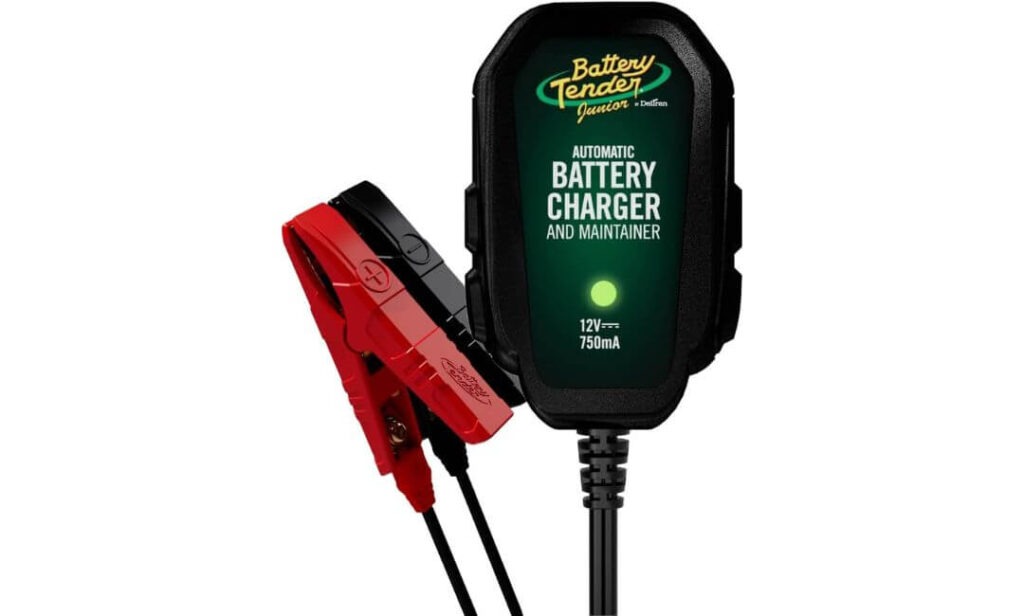
#2. Battery Tender Junior 021-0123 – 750mA Smart Battery Charger & Maintainer
Key Specs:
- Output Power: 750mA (0.75 Amp) – 12V Only
- Battery Support: Lead-Acid, AGM, Gel, Flooded
- Charging System: 4-Step Smart Charging + Auto Float Mode
- Safety Features: Spark-Proof, Reverse Polarity Protection
- Cable Length: 12-ft Output Cord
- Warranty: 5 Years
With smart automatic float charging, the Battery Tender Junior is built for one job — keeping your battery healthy while the vehicle sits. It fully charges the battery first, then drops into float mode and holds the voltage steady. No overcharging, no cooking the battery plates, no guesswork. That’s why it’s one of the most trusted maintainers for long-term storage.
Where this charger really shines is consistency. The 4-step charging process (initialization → bulk → absorption → float) makes sure the battery gets charged properly instead of just being “topped off.” For cars parked during winter, motorcycles in off-season, or backup vehicles that barely move, this controlled charging helps prevent sulfation and slow battery death.
Now let’s be honest — this is not a fast recovery charger. At 0.75 amps, it’s meant for maintenance, not jump-starting dead batteries. If your car battery is completely flat, this unit will take time or might not even start charging below very low voltage. But for keeping a good battery healthy? It does that job extremely well, day after day.
The small size is another plus. You can mount it, hang it, or tuck it anywhere in the garage. The included ring terminals also make daily plug-ins easy, especially if your battery is buried under covers or tight engine bays.
What Makes It Great for Trickle Charging
- Automatic float mode prevents overcharging
- True maintenance charger for long storage periods
- 4-step smart charging protects battery plates
- Spark-proof and reverse polarity safety protection
- Excellent for seasonal vehicles and parked cars
What Customers Say
Most users talk about reliability first. Many people run these chargers on motorcycles, cars, boats, and lawn equipment for months without touching them — and the batteries stay healthy. “Plug it in and forget it” is a common theme.
Buyers also like the quick-connect setup. Once the ring terminals are installed, reconnecting takes seconds. Charging speed gets mixed feedback — some say it’s slow for dead batteries, others point out it’s perfect for maintenance. But overall, customers consistently mention it works exactly as advertised and many own more than one unit for different vehicles.
Pro Tip: If you’re using this on a car that sits long-term, connect the fused ring harness directly to the battery and route it near the grille or hood edge. That way, you can plug in the charger without opening the hood every time — simple, clean, and safe.
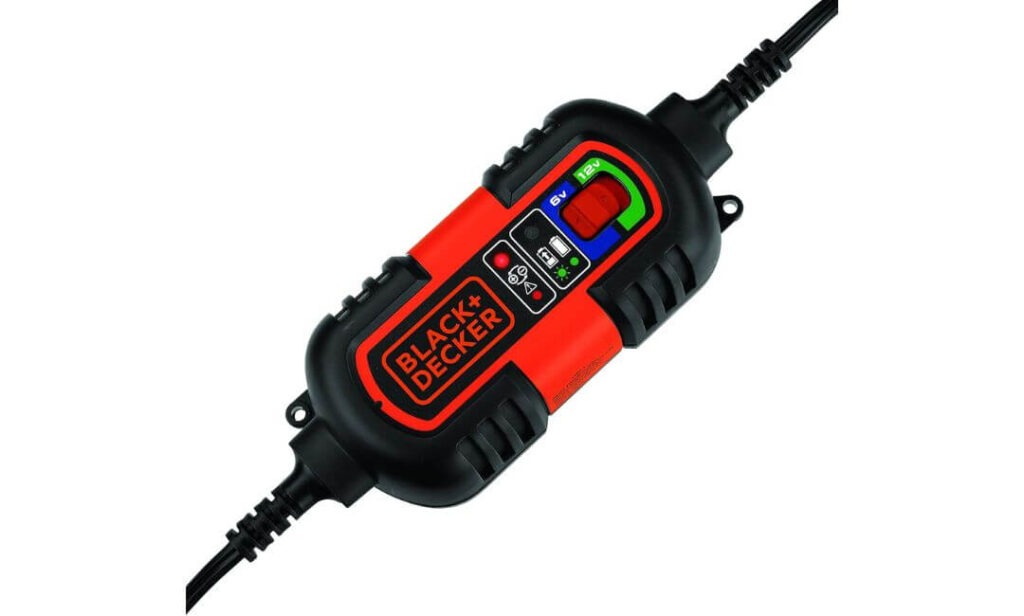
#3. BLACK+DECKER BM3B – 1.5A Automatic Battery Charger & Maintainer
Key Specs:
- Output Power: 1.5 Amp (6V / 12V Support)
- Battery Support: AGM, Gel, Wet / Flooded
- Charging Mode: Automatic Charging + Float Maintenance
- Safety Protection: Reverse Polarity, Short Circuit, Overcharge Protection
- Mounting Option: Built-in Wall / Surface Bracket
- Weight: 1.2 lbs
If you want a simple, no-nonsense charger that you can plug in and forget about, the BLACK+DECKER BM3B fits that role nicely. It automatically charges the battery first, then switches into float mode once the battery is topped off. No manual settings, no guessing when to unplug. For parked cars, motorcycles, lawn equipment, or backup vehicles — this “set it and leave it” behavior is exactly what most people want.
One thing that stands out in daily use is flexibility. You get both traditional battery clamps and O-ring terminals in the box, so you can choose quick temporary connections or permanent installs. The built-in mounting bracket also makes garage placement easy. Mount it on a wall, near a shelf, or close to your parking spot — no cable mess, no floor clutter.
Now let’s be realistic. This is a maintenance charger, not a rescue tool. It’s not meant to revive completely dead batteries or replace a jump starter. Charging speed is slow by design, which actually helps protect battery plates and reduces long-term damage. If your battery already has some life left, this charger does an excellent job keeping it healthy during long storage periods.
For the price, it delivers solid performance without unnecessary extras.
What Makes It Great for Trickle Charging
- Automatically switches to float mode after full charge
- Dual voltage support (6V and 12V) for multiple vehicles
- Built-in circuit protection for safe long-term use
- Includes clamps + ring terminals for flexible setup
- Easy wall mounting for clean garage setup
What Customers Say
Most buyers praise the BM3B for reliability during long storage. Many users run it on motorcycles, cars, boats, and lawn equipment through winter months and report zero battery issues when the season starts again.
People also like the value factor. It’s affordable, simple, and does what it promises. The LED indicator is another small but useful detail — blinking while charging, solid when maintaining.
Some concerns do show up around durability, with a few users reporting early failures. Charging speed is also mentioned as slow, but that’s expected for a maintainer. Overall, customers agree it works best for keeping healthy batteries topped off, not for reviving dead ones.
Pro Tip: Mount this charger near your parking spot and use the ring terminal harness for daily use. That way, plugging in becomes a 10-second job — no clamps, no sparks, no hassle.
#4. Battery Tender 3 AMP – Smart Battery Charger & Maintainer (6V / 12V Switchable)
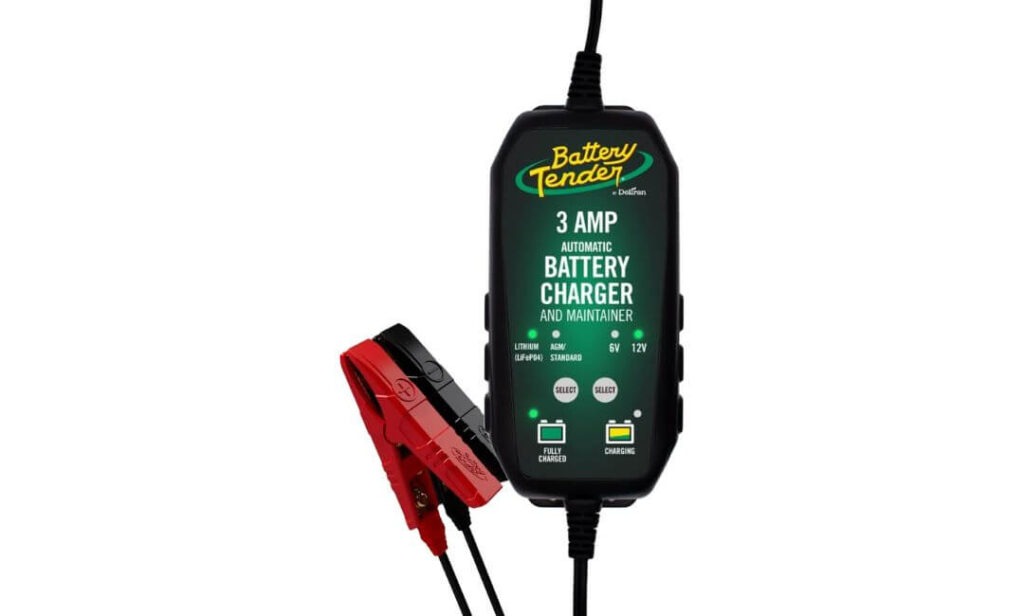
Key Specs:
- Output Power: 3 Amp (6V / 12V Selectable)
- Battery Support: Lead-Acid, AGM, Gel, Lithium (LiFePO4)
- Charging System: 4-Stage Smart Charging + Auto Float Mode
- Weather Rating: IP65 (Dust & Moisture Resistant)
- Cable Reach: 12+ Feet Total Length
- Warranty: 5 Years
If you want faster maintenance charging without sacrificing safety, the Battery Tender 3 AMP hits a sweet spot. It’s powerful enough to charge most car batteries overnight, yet smart enough to switch into float mode once the battery is full. That balance is what makes it popular with people who own multiple vehicles — cars, SUVs, bikes, ATVs — and don’t want different chargers for each one.
The push-button 6V/12V switching is simple but extremely useful. One press, and you’re ready for classic cars, modern vehicles, motorcycles, or small equipment. No menus, no confusing setup. Add automatic battery chemistry detection (lead-acid or lithium) and the charger basically thinks for you. Plug it in, connect, and walk away.
Build quality is another strong point. The sealed, weather-resistant body means you can use it in garages, carports, or covered outdoor storage without worrying about dust or moisture. Long cables make real-world placement easier — no stretching cords across the floor or hunting for extension leads. For long-term storage setups, this charger feels more “permanent solution” than temporary tool.
It’s not just about charging faster — it’s about doing it safely, repeatedly, without damaging expensive batteries.
What Makes It Great for Trickle Charging
- 3 AMP output charges faster than basic maintainers
- Automatic float mode prevents overcharging
- Switchable 6V / 12V for multi-vehicle garages
- Works with lithium and traditional batteries
- Weather-resistant design for long-term installation
What Customers Say
Most owners describe this charger the same way — “plug it in and forget it.” People use it for months on stored vehicles and consistently report stable battery voltage with no overcharging issues.
Users in cold and harsh environments mention reliable operation even during winter storage. The LED indicator system is another favorite feature — red while charging, green when maintaining — simple and easy to read from across the garage.
Quality feedback is strong. Many buyers say the charger pays for itself by preventing battery replacements. It’s especially popular with classic car owners and people who maintain multiple vehicles at once.
Pro Tip: If you’re storing more than one vehicle, mount this charger near a central power outlet and rotate connections weekly. The 3-amp output is strong enough to refresh each battery quickly while still staying in safe maintenance range.
#5. NOCO GENIUS2 – 2A Smart Battery Charger & Maintainer
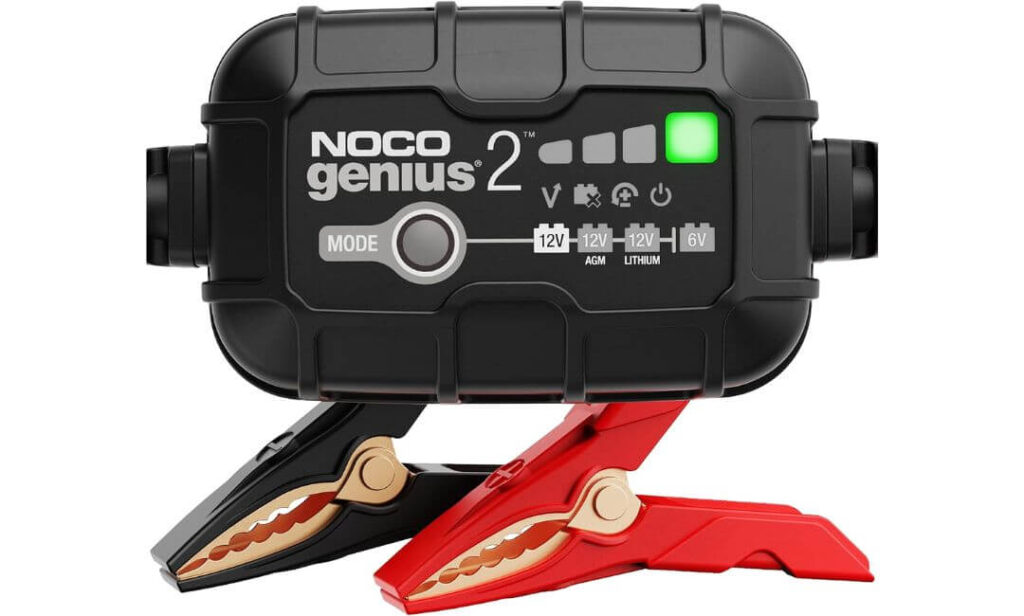
Key Specs:
- Output Power: 2 Amp (6V / 12V Support)
- Battery Support: Lead-Acid, AGM, Gel, Flooded, Lithium (LiFePO4)
- Charging Tech: Smart Automatic + Desulfation + Force Mode
- Climate Control: Temperature Compensation
- Weight: 1.2 lbs (Compact Design)
- Build Type: Weather-Resistant Housing
We love all-in-one smart technology, and that’s exactly where the NOCO GENIUS2 fits in. It’s not just a trickle charger — it’s a charger, maintainer, and battery reconditioner packed into a small, tough body. Once connected, it automatically figures out battery type, charging needs, and temperature conditions. You don’t touch settings. You don’t babysit the process. It simply works.
One feature that separates this unit from basic maintainers is Force Mode. If your battery is completely dead (even sitting at zero volts), this charger can still push power back in. That’s a big deal for neglected cars, seasonal vehicles, or batteries that sat too long without attention. Combine that with automatic desulfation cycles running every 24 hours, and the GENIUS2 actively helps restore battery health — not just maintain it.
Size is another advantage. It’s compact, easy to mount, and doesn’t take over your garage wall. Despite the small body, it handles everything from motorcycles and ATVs to cars, RV house batteries, and marine setups. For daily maintenance and long storage periods, it keeps voltage stable without overheating or overcharging.
For large truck batteries, charging from zero will take time (that’s normal at 2 amps), but as a maintainer and smart charger, this unit punches above its weight.
What Makes It Great for Trickle Charging
- Automatic smart charging with battery type detection
- Force Mode for reviving deeply discharged batteries
- Built-in desulfation cycles every 24 hours
- Temperature-based charging for hot and cold climates
- Safe to leave connected long-term
What Customers Say
Most buyers talk about reliability and simplicity. Plug it in, connect the clamps, and the charger takes over. Many users say it works on every battery type they own — cars, bikes, boats, and equipment.
People also like how quiet and compact it is. No loud fans, no bulky body hanging on the wall. Several customers mention owning more than one unit because of consistent performance.
Charging speed gets mixed reactions. It’s excellent for maintenance and smaller batteries, but slower when charging large car batteries from completely dead. Still, customers agree it delivers steady, safe charging without battery damage.
Pro Tip: If you’re using GENIUS2 on multiple vehicles, mount it at chest height and keep the cable routed neatly. The compact size makes it perfect for a permanent “charging station” setup in your garage.
Side-by-Side Comparison of the Best Car Battery Trickle Chargers
| Model | Charging Power | Battery Support | Best For | Special Feature | Price Range |
|---|---|---|---|---|---|
| NOCO GENIUS1 Editor’s Choice |
1 Amp | Lead-Acid + Lithium | Daily maintenance & long parking | Temperature control + Desulfation | Under $50 |
| Battery Tender Junior Best Budget |
0.75 Amp | Lead-Acid, AGM, Gel | Seasonal storage vehicles | 4-step float charging | Under $50 |
| BLACK+DECKER BM3B Best Value |
1.5 Amp | Lead-Acid, AGM, Wet | Home garage maintenance | Wall mount + auto float mode | Under $50 |
| Battery Tender 3 AMP Fast Charging |
3 Amp | Lead-Acid + Lithium | Cars, SUVs & multi-vehicle garages | 6V/12V switch + weatherproof body | Around $70 |
| NOCO GENIUS2 Most Advanced |
2 Amp | Lead-Acid + Lithium | Battery recovery + smart maintenance | Force Mode + auto reconditioning | Under $50 |
How We Chose These Trickle Chargers (Real Garage Buying Guide)
We didn’t pick these chargers by reading spec sheets or copying online lists. We filtered them the same way most car owners actually should — based on storage habits, battery behavior, safety reliability, and long-term use performance. That’s why you won’t see random brands here. These are chargers that consistently perform in real garages, not just on product pages.
1. Maintenance First, Not Just Charging Speed
Most people make one mistake — they chase higher amps. For trickle charging, that’s backwards. We focused on chargers that hold stable float voltage for weeks without drifting. A good maintainer protects the battery plates, prevents sulfation, and avoids heat buildup. That’s why models with proper auto-float switching and temperature adjustment made our list.
2. Real-World Storage Performance
A trickle charger only proves itself when a car sits for days or months. We prioritized units that can stay connected long-term without supervision. If a charger can’t safely remain plugged in overnight or during vacation storage, it didn’t qualify. Simple rule — plug it in, walk away, come back to a healthy battery.
3. Battery Type Compatibility (Future Proofing)
Many garages now have mixed batteries — traditional lead-acid in cars, AGM in SUVs, lithium in bikes or accessories. We selected chargers that adapt automatically instead of forcing manual settings. That means fewer mistakes, safer charging, and flexibility when you upgrade vehicles later.
4. Connection Quality Matters More Than People Think
Cheap chargers fail at the clamps and cables, not the electronics. We paid attention to build quality, terminal grip strength, wire thickness, and connection stability. Weak connections create heat, slow charging, and false voltage readings. The models above hold solid contact even after repeated use.
5. Real Ownership Value (Not Just Cheap Price)
We didn’t chase the lowest price tag. We chose chargers that actually save money by extending battery life. If a charger helps you avoid replacing one car battery, it already paid for itself. That’s the mindset behind these picks.
If there were better-performing trickle chargers easily available online, they’d be here. These models earned their spots because they consistently deliver safe charging, stable maintenance, and long-term reliability — the things that actually matter when your car sits in the garage.
Bottom Line: Which Trickle Charger Should You Buy?
It really comes down to how your vehicle is used, how long it sits parked, and whether you need simple maintenance or faster charging power.
- 👉 Go with NOCO GENIUS1 if you want the safest all-round charger that just works every day. Plug it in, forget about it, and your battery stays healthy without babysitting.
- 👉 Pick Battery Tender Junior if your car or bike sits for long periods and you only need solid maintenance charging. It’s simple, proven, and perfect for seasonal storage.
- 👉 Choose BLACK+DECKER BM3B if you want a budget-friendly option that still does the job right for home garage use. No fancy extras, just steady battery care.
- 👉 Upgrade to Battery Tender 3 AMP if you own bigger vehicles or multiple batteries and want faster charging without sacrificing protection. This one makes life easier when you rotate between cars.
- 👉 Grab NOCO GENIUS2 if you want smart features like battery recovery and automatic reconditioning. Great choice when you deal with weak or neglected batteries.
How to Use a Trickle Charger on Your Car Battery (Real Garage Method)
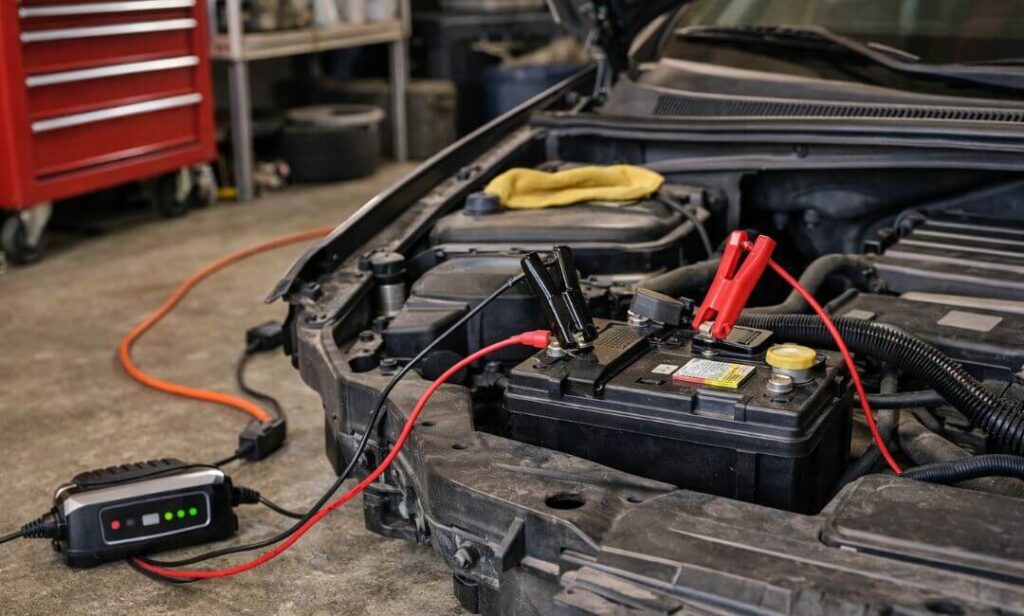
A trickle charger isn’t just something you plug in and forget. When used correctly, it protects your battery, prevents sulfation, and keeps your car ready to start even after weeks of sitting. When used carelessly, it can waste time and shorten battery life. The steps below are the same process many long-term car owners follow for safe, consistent results.
Step 1: Understand Your Battery’s Starting Point (12V System)
Before connecting anything, take a quick look at your battery condition. A healthy resting car battery usually reads between 12.4V and 12.7V. If the voltage is closer to 12.0V, the battery is already partially discharged and will need more time on the charger. Below 11.8V, charging becomes slower and some low-amp trickle chargers may struggle.
This quick check helps you set realistic expectations. A trickle charger is designed for maintenance, not fast recovery.
Step 2: Prepare the Terminals for Proper Contact
Dirty or oxidized terminals reduce charging efficiency. Even when terminals look clean, there is often a thin invisible layer that blocks proper current flow.
Wipe the terminals with a dry cloth and make sure there is no loose corrosion. Good contact means stable voltage readings and smoother charging cycles.
Step 3: Connect the Charger Correctly
Attach the red clamp to the positive (+) terminal and the black clamp to the negative (-) terminal or a solid metal ground point on the vehicle body.
For long-term use, ring terminals are better than clips. They stay tight, do not slip, and provide consistent contact over weeks of charging. This is especially helpful if your battery is hard to reach.
Step 4: Select the Correct Voltage Mode (6V or 12V)
Most modern cars use 12V batteries, so always confirm the charger is set to 12V mode before plugging it into the outlet. Selecting the wrong voltage does not damage the battery instantly, but it slows charging and causes inconsistent maintenance behavior.
Double-checking this setting takes two seconds and saves hours of confusion later.
Step 5: Plug In and Let the Smart System Work
Once connected, plug the charger into the wall outlet. A quality trickle charger will slowly bring the battery to full charge and then shift into float or maintenance mode.
During maintenance, voltage usually stays around 13.2V to 13.6V, which keeps the battery topped up without overheating or overcharging. At this point, the charger is not “charging hard” anymore — it is simply maintaining a healthy state.
Step 6: Position the Charger Properly
Where you place the charger matters. Avoid resting it directly on the engine or battery. Heat affects charging accuracy and shortens charger lifespan.
The best setup is slightly elevated, mounted on a wall, shelf, or hanging bracket. This improves airflow and keeps the unit away from moisture and vibration.
Real Storage Example
When storing a car for two to three weeks, many owners install ring terminals once and route the cable near the hood edge. After that, connecting the charger takes only a few seconds. The battery remains stable the entire storage period, and the car starts instantly when driven again.
This setup saves time and avoids repeated clamp adjustments.
Important Tip Most People Miss
After attaching the clamps or ring terminals, gently twist them once to improve metal-to-metal contact. This breaks microscopic oxidation layers that reduce conductivity. Better contact means more stable charging, less heat buildup, and more accurate float mode behavior.
It’s a small step, but it makes a noticeable difference.
Safety Practices That Actually Matter
- Never connect a charger to a cracked or leaking battery
- Always unplug the charger before removing the clamps
- Avoid using long extension cords when possible
- Keep the charger away from water, rain, and standing moisture
- Make sure cables are not pinched by the hood
Using a trickle charger correctly is about consistency and control, not speed. When done right, it keeps your battery strong, reduces replacement costs, and eliminates surprise no-start mornings.
Common Mistakes to Avoid When Using a Trickle Charger
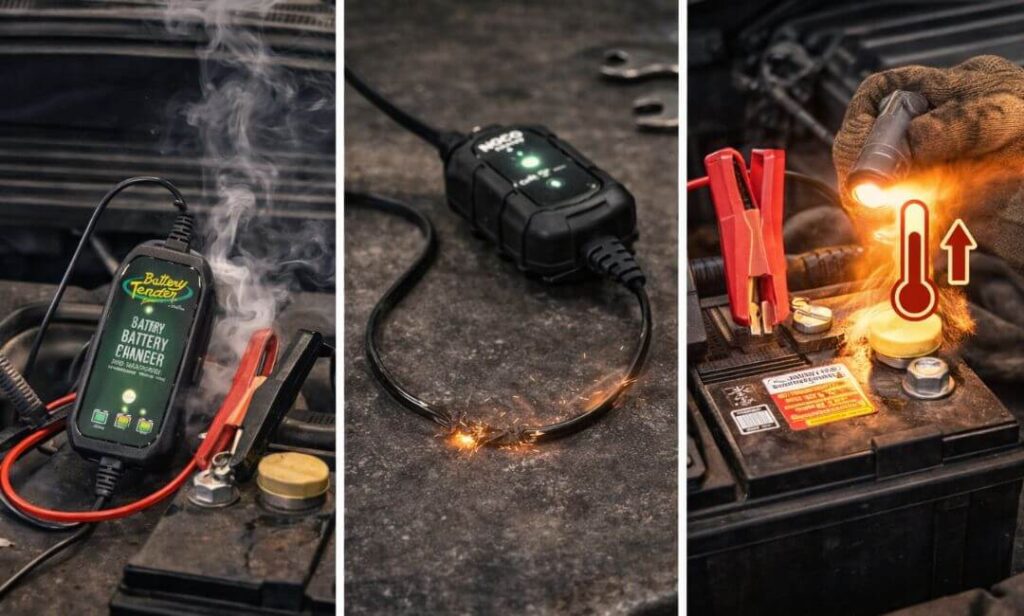
Most battery problems don’t happen because trickle chargers are bad. They happen because people use them the wrong way. These are mistakes we see again and again in real garages.
Leaving Dirty or Loose Connections
Many people clip the charger on and walk away without checking contact. Loose clamps or dirty terminals create resistance. That resistance causes slow charging, unstable voltage, and unnecessary heat.
Always make sure the clamps feel tight and stable. A solid connection is more important than charger power.
Using a Trickle Charger to Save a Completely Dead Battery
A trickle charger is designed to maintain batteries, not perform miracles. When a battery is deeply discharged or internally damaged, slow charging can take days or may not work at all.
In these cases, a higher-amp charger or professional battery testing is the better solution.
Placing the Charger in Hot or Wet Areas
Heat and moisture are silent killers of electronics. Putting the charger directly on the engine bay, near exhaust parts, or on a damp garage floor reduces its lifespan and affects charging accuracy.
Keep the charger elevated and away from direct heat sources.
Ignoring Voltage Mode Settings (6V vs 12V)
Some people forget to check voltage mode and assume the charger will figure it out. Selecting the wrong mode does not always trigger an error, but it slows charging and causes improper maintenance behavior.
Always double-check before plugging into power.
Unplugging Too Early
Many users unplug the charger as soon as the indicator turns green. That usually means the battery is charged, not fully stabilized. Leaving the charger connected for a few more hours allows the float cycle to balance the cells properly.
This extra time improves long-term battery health.
Using Cheap Extension Cords
Thin extension cords reduce power delivery and increase heat buildup. This can cause the charger to behave inconsistently or slow down charging.
If an extension cord is needed, use a short, heavy-duty one.
Assuming All Batteries Are the Same
AGM, flooded, and lithium batteries behave differently. Using a charger that does not support your battery type can shorten battery life.
Always confirm compatibility before connecting.
Final Reality Check
A trickle charger works best when it’s treated like a maintenance tool, not a quick fix. Good connections, correct placement, and patience make all the difference.
Avoid these mistakes and your battery will last longer, start stronger, and cause fewer headaches.
FAQs About Car Battery Trickle Chargers
Can I leave a trickle charger connected to my car battery all the time?
Yes, but only if you’re using a smart trickle charger with automatic float or maintenance mode. These chargers stop active charging once the battery is full and maintain safe voltage levels instead of pushing constant power. In real use, many car owners leave them connected for weeks or even months during storage. The key is using a quality charger and ensuring good terminal contact. Cheap manual chargers should never be left unattended.
Why does my trickle charger take so long to charge the battery?
Slow charging is normal and intentional. Trickle chargers are designed to protect battery plates by delivering low, steady current instead of fast bursts. This reduces heat buildup and internal stress. If your battery is already weak or partially discharged, charging time increases even more. The benefit is longer battery lifespan, not speed.
Will a trickle charger fix a weak or old car battery?
A trickle charger can help maintain and slightly improve a weak battery, but it cannot repair internal damage. If the battery has bad cells, heavy sulfation, or poor capacity, charging will not restore full performance. In real-world cases, trickle chargers work best for prevention, not resurrection. Testing the battery before relying on long-term maintenance is always smart.
Is it safe to use a trickle charger in cold weather or winter storage?
Yes, and it’s actually one of the best times to use one. Cold temperatures slow chemical reactions inside the battery and increase discharge rates. A smart trickle charger with temperature compensation adjusts output to prevent undercharging. This keeps voltage stable and prevents winter-start problems when the vehicle is parked for long periods.
Should I disconnect the battery from the car before using a trickle charger?
In most cases, no. Modern trickle chargers are designed to work safely while the battery is still connected to the vehicle. Disconnecting is only recommended when working on electrical repairs or dealing with damaged wiring. For storage and maintenance charging, keeping the battery connected allows the charger to maintain the system normally.
What is the biggest sign that I actually need a trickle charger?
If your car struggles to start after sitting for a few days, electronics reset randomly, or voltage drops below normal resting levels, those are clear signs. Vehicles that sit unused, weekend cars, seasonal vehicles, and backup cars benefit the most. A trickle charger prevents these problems before they turn into full battery failures.
Final Thoughts
Battery maintenance is not about charging speed or flashy features. It’s about voltage stability, thermal control, and consistent float behavior over long storage cycles. That’s where most cheap chargers fail — not on day one, but after weeks of continuous use.
The chargers listed here were chosen because they maintain proper charge curves, manage temperature fluctuations, and protect battery chemistry during idle periods. When this is done correctly, sulfation slows down, plate degradation reduces, and usable battery life extends noticeably.
A properly matched trickle charger turns battery maintenance into a background process. No jump-starts, no seasonal replacements, no unexpected voltage drops. Just stable performance and predictable starts.
That’s the difference between simply owning a charger and running a proper battery maintenance setup.
Why Trust Us?
Our recommendations are based on performance fundamentals, not brand promotion or surface-level specifications. We evaluate trickle chargers on factors that directly impact battery longevity — charge curve stability, float voltage accuracy, thermal compensation behavior, and long-duration maintenance reliability.
Instead of focusing on peak amp ratings or marketing features, we prioritize how chargers perform during extended connection periods, seasonal storage cycles, and real-world idle conditions. These are the scenarios where battery damage typically occurs and where quality chargers separate themselves from average ones.
Each product included here was selected using usage-based criteria: multi-vehicle garage compatibility, battery chemistry adaptability, connection stability, and long-term operational safety. Chargers that fail to maintain consistent output or show unreliable float behavior are excluded.
Our goal is straightforward — provide recommendations that protect battery investment, reduce failure risk, and deliver dependable long-term maintenance performance.