The Cybertruck Proves a Tough Nut
Last updated on April 19th, 2026 at 10:44 pm
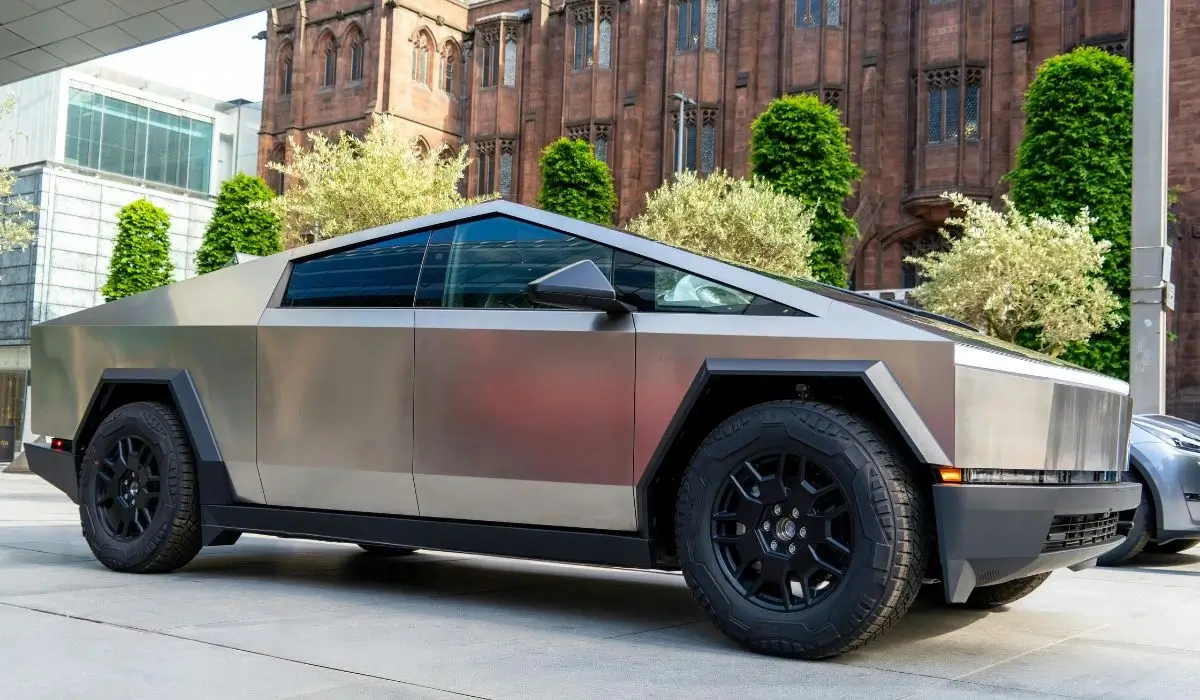
Despite the controversies and delays that have followed the Tesla Cybertruck since its debut, the edgy, stainless-steel pickup finally has something truly impressive to boast about, as noted by used car experts from the Indy Auto Man Indianapolis dealership. According to the Insurance Institute for Highway Safety (IIHS), the angular electric truck earned high marks in recent crash tests—proof that it’s one of the safest electric vehicles on the road today.
Durability Put to the Test
For years, crash test ratings for the Cybertruck weren’t a top priority for automotive regulators. Limited production and low sales made it seem less urgent compared to mainstream pickups. Some experts even speculated that Tesla hesitated to submit the vehicle for testing, concerned that any poor result could unleash more bad press. But the results were anything but disappointing.
The National Highway Traffic Safety Administration (NHTSA) awarded the Cybertruck an overall five-star safety rating—five stars in both frontal and side impacts, and four stars in rollover resistance. Its rollover score was particularly notable, showing less risk than its main rival, the Ford F-150 Lightning. The IIHS soon reinforced those findings, granting the Cybertruck the top “Good” rating in the small-overlap front test—a key measure of a vehicle’s structural resilience during real-world frontal crashes. In this demanding test, the Cybertruck even outperformed Tesla’s own Model 3 sedan and clearly bested the F-150 Lightning, which scored lower in the same category.
Safety that Goes Beyond Steel
The Cybertruck’s strong results don’t rely only on its stainless-steel shell. Tesla’s suite of active safety systems also earned praise for preventing collisions in the first place. In pedestrian detection and avoidance trials, the electric pickup again received a top “Good” score, avoiding all pedestrian dummies at various speeds—crucial for electric vehicles, which tend to be far heavier than gas-powered ones due to their battery packs.
To illustrate, the Ford F-150 Lightning has a minimum curb weight of about 6,000 pounds, while the Cybertruck is even heavier in some trims. That added mass can make occupants safer in a collision, but poses higher risks to people outside the vehicle. As a result, the ability to avoid an accident altogether becomes a vital safety advantage. Tesla’s success in this area shows that its advanced collision-avoidance technology isn’t just theoretical—it’s proven effective when tested.
When Perfection Isn’t Possible
Despite the outstanding results, the IIHS also pointed out weaknesses that preventing the Cybertruck from excelling in every category.
- Headlights: All versions of the Cybertruck earned a “Poor” rating for forward illumination. This issue is not unique to Tesla—many new electric models struggle with optimal lighting patterns, often due to design limitations or overly stylized housings.
- Rear Passenger Protection: The safety of second-row passengers, specifically chest protection in crash impacts, received a “Marginal” rating—considerably lower than the driver’s results.
- Child Seat Anchors: Evaluators also noted that the lower anchors for child safety seats are difficult to locate and reach, making installation unnecessarily tricky.
- Still, these shortcomings didn’t overshadow the Cybertruck’s broader achievements. For a vehicle that previously faced criticism over build quality and interior finishing—particularly for a model that can exceed $100,000—the strong safety performance is a welcome turnaround.
Strength and Speed
Tesla has repeatedly said the Cybertruck merges supercar performance with truck utility, a claim now validated by the latest figures. In its top Tri-Motor configuration, the electric pickup produces roughly 845 horsepower and rockets from zero to 60 mph in just 2.7 seconds. That’s faster than many high-performance sports cars and unprecedented for a full-size pickup.
Beneath the dramatic styling, the Cybertruck’s cold-rolled stainless-steel exterior and impact-resistant Armor Glass give it an almost indestructible feel. Tesla’s engineers designed it to endure abuse that would likely ruin the average aluminum-bodied truck. Now, with both NHTSA and IIHS validation, those bold claims about toughness carry real weight.
A Safer Future in the Making
For all its polarizing looks and unorthodox engineering, the Cybertruck has finally delivered what might be its most significant headline yet: strength backed by science. While its design continues to divide opinions, the test results prove that it’s more than automotive shock value—it’s a forward-looking experiment in safety, resilience, and electric performance.
What was once Tesla’s most criticized project has become a milestone in EV safety innovation, earning respect even from those who dismissed it as a design stunt.


