Best 50 Amp EV Chargers for Home in 2026 (Fast, Safe Level 2 Picks)
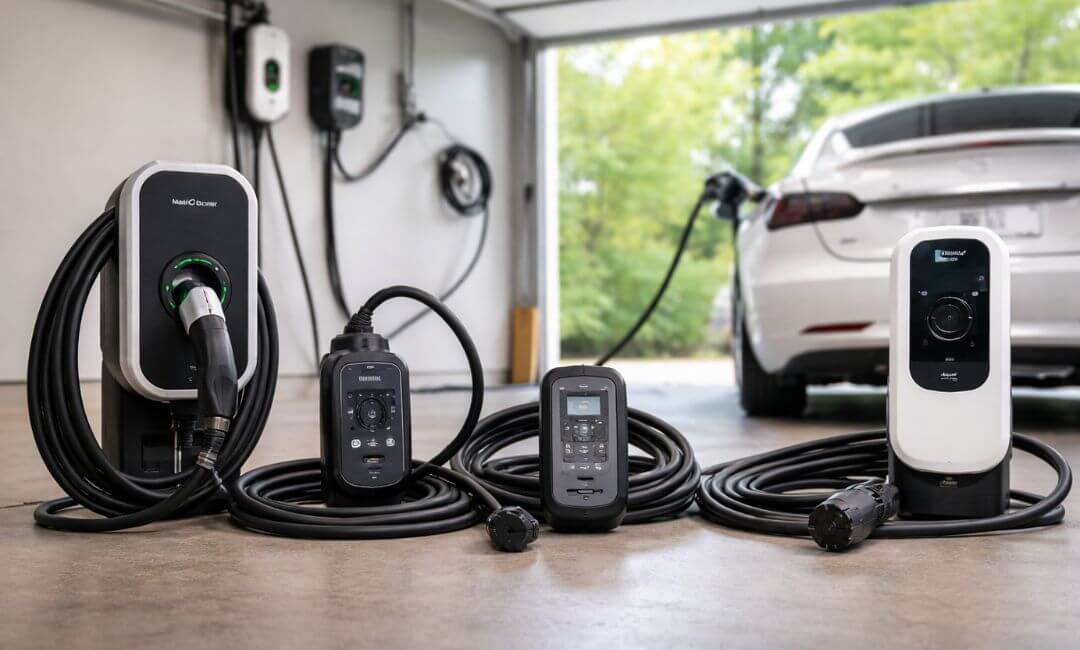
When people search for the best 50 amp EV charger, they’re usually past the “basic home charger” phase. This isn’t about convenience anymore — it’s about charging speed, electrical safety, and long-term reliability at home. A 50 amp Level 2 charger is what owners look for when overnight charging needs to be predictable, future EV upgrades are already on the radar, and slow charging is no longer acceptable.
We spent time comparing real-world factors that actually matter after installation — stable 50A output, heat management during long charging sessions, app reliability, cable quality, and how well each charger integrates into a typical home electrical setup. Spec sheets alone don’t tell you whether a charger feels trustworthy after months of daily use — that’s where most guides fall short.
After narrowing things down, Autel’s 50 Amp Level 2 EV Charger stood out as the most complete option for homeowners who want a permanently installed, smart charging setup with excellent power consistency and polished software control. It’s the kind of charger you install once and stop thinking about — which is exactly what most EV owners want at this level.
On the other end, the WOLFBOX 50 Amp Level 2 EV Charger impressed us for blending strong hardware, a clear smart display, and added access control features that make sense for shared garages or outdoor installs, without overcomplicating daily use.
The other chargers on this list aren’t here to fill space. They serve specific use cases — whether you need plug-and-play flexibility, a portable 50A solution, or a budget-friendly smart wall charger that still delivers true Level 2 speeds. Each one earned its spot based on how it performs in real home environments, not just marketing claims.
Why we recommend these chargers
- All four deliver true 50 amp Level 2 charging, not inflated peak ratings that drop under real use.
- Each one meets the expectations of daily home charging, including thermal stability and long-session reliability.
- The list covers different homeowner needs — permanent hardwired installs, smart-controlled setups, and flexible plug-in or portable options.
- Most importantly, these chargers continue to make sense after installation, when charging becomes routine rather than a spec comparison.
If you’re investing in a 50 amp EV charger, this is the point where choosing the right unit the first time saves money, avoids unnecessary upgrades, and removes friction from daily EV ownership — which is exactly what this guide is meant to help you do.
Quick List: 4 Best 50 Amp EV Chargers for Home (Level 2)
#1. Autel MaxiCharger Home 50 Amp (Hardwired Smart Charger)
Wi-Fi & Bluetooth enabled Level 2 EVSE for indoor/outdoor use, built-in cable holster, 25-ft charging cable
#2. VDLPOWERVP Level 2 EV Charger 50 Amp (Plug-In Smart Wall Charger)
11.5 kW fast charging, extra-long 27.3-ft cable, smart app control, NEMA 14-50 plug, J1772 connector
#3. TopAutoGear Level 2 EV Charger 50 Amp (Portable Charging Solution)
Plug-and-play NEMA 14-50 design, 25-ft cable, delay timer, portable for home and travel use
#4. WOLFBOX Level 2 EV Charger 50 Amp (Feature-Rich Hardwired Charger)
Smart display with RFID access, Wi-Fi connectivity, 25-ft cable, indoor/outdoor hardwired installation
Each charger below targets a different type of home setup—hardwired, plug-in, or portable—so the “best” choice depends on how permanent and flexible you want your charging solution to be.
Must Check:
#1. Autel MaxiCharger Home 50 Amp
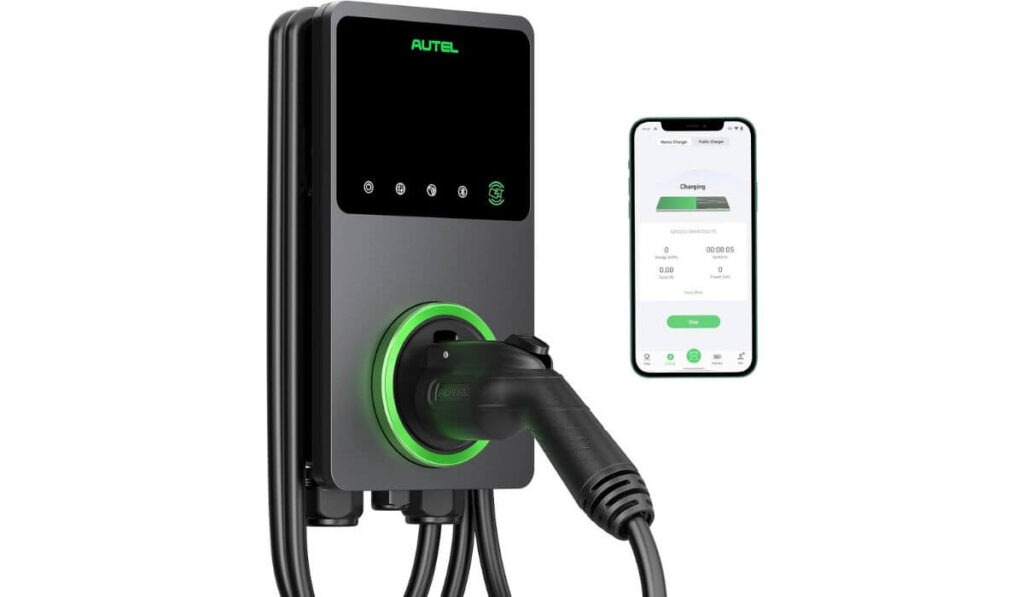
Quick Specs:
- Output: Up to 50 Amps (240V Level 2)
- Max Power: ~12 kW
- Connector: SAE J1772 (Tesla-compatible via adapter)
- Cable Length: 25 ft with integrated holster
- Weather Rating: NEMA 4X (Indoor / Outdoor)
- Installation: Hardwired (dedicated breaker required)
Autel isn’t a newcomer chasing the EV boom. They’ve been building professional automotive diagnostic equipment since 2004, and that engineering background is immediately obvious with the MaxiCharger Home 50A. This charger doesn’t feel like a consumer gadget dressed up with buzzwords — it feels like infrastructure.
Day to day, the charging experience is calm and predictable. Power delivery stays steady during long overnight sessions, and the unit manages heat far better than many 50-amp chargers that look similar on paper. One of our teammates has been running this charger for nearly three years — outdoors — through heat, rain, and daily use, without a single failure or forced reset. That kind of consistency is hard to overstate once charging becomes part of your routine.
Installation does require a licensed electrician, since this is a hardwired unit tied to a dedicated breaker. That said, electricians consistently speak highly of this charger’s internal layout and overall build quality. One installer described it as “one of the cleanest EVSE installs” he’s handled — a small detail that reflects thoughtful engineering rather than cost-cutting.
The Autel Charge app is another quiet strength. It doesn’t try to overwhelm you with gimmicks. Scheduling works reliably, Wi-Fi connections hold, and energy tracking is clear enough to actually use when planning off-peak charging. Compared to many smart chargers that look good in screenshots but fail in real use, Autel’s software feels mature and dependable.
Cable quality is also worth noting. The 25-foot J1772 cable remains flexible in colder weather and doesn’t fight you every time you plug in. It’s the kind of thing you only appreciate after living with a charger for a while.
Long-Term Ownership Impressions (Why This Charger Ages Better Than Most)
After the first few months, most EV chargers reveal their weak points — unreliable apps, random disconnects, stiff cables, or overheating warnings that weren’t mentioned in the specs. The Autel MaxiCharger stands out because those issues never seem to arrive.
Owners consistently report thousands of charging sessions without errors, missed schedules, or thermal throttling. Even after extended use, the charger behaves the same way it did on day one — quietly doing its job without demanding attention. That reliability is exactly what experienced EV owners value once the excitement of a new charger fades.
Rather than constantly reminding you it’s “smart,” the Autel simply integrates into daily life. You stop thinking about it — which, for a 50-amp home EV charger, is arguably the highest compliment you can give.
Key Features
- True 50A Level 2 charging with adjustable output
- CSA certified to UL standards
- NEMA 4X enclosure for harsh climates
- Stable Wi-Fi, Bluetooth, and Ethernet connectivity
- Integrated holster with durable 25-ft cable
#2. VDLPOWERVP Level 2 EV Charger 50 Amp
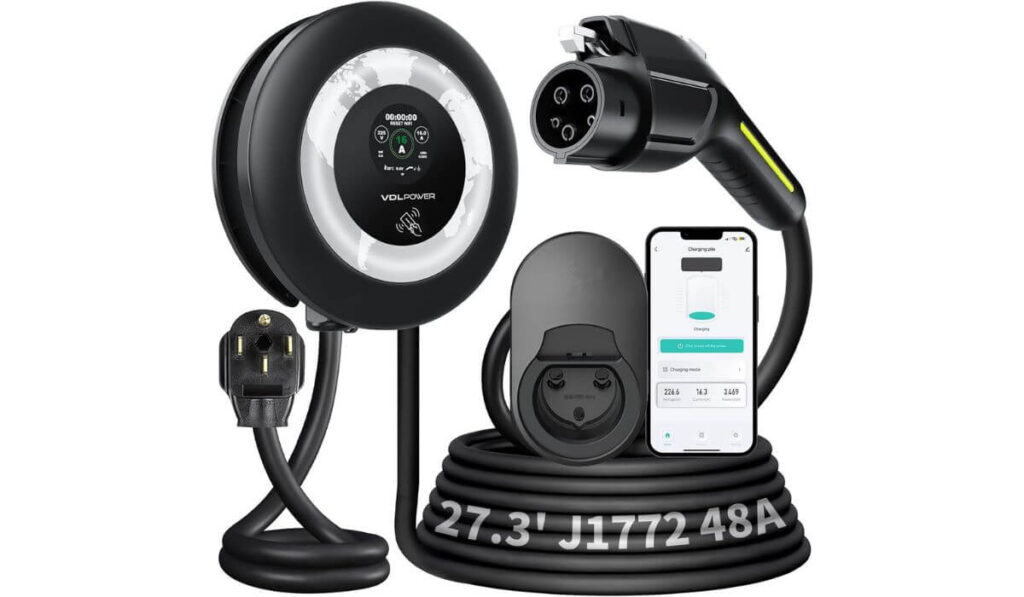
Quick Specs:
- Output: Up to 50 Amps (240V Level 2)
- Max Power: 11.5 kW
- Connector: SAE J1772
- Cable Length: 27.3 ft (extra-long)
- Plug Type: NEMA 14-50
- Installation: Plug-in wall mount (no hardwiring)
If you drive 30+ miles daily, juggle charging schedules, or occasionally rotate between two vehicles in the same driveway, this is the kind of charger that makes immediate sense. The VDLPOWERVP isn’t trying to be overengineered infrastructure — it’s designed to be fast, flexible, and ready the moment you mount it.
The biggest advantage here is the NEMA 14-50 plug. If your garage already has a 240V outlet (or you plan to add one), this charger skips the electrician-heavy install process entirely. Mount it, plug it in, and you’re charging at full Level 2 speeds. That simplicity is a huge win for homeowners who want power without permanent commitment.
Charging performance is exactly what you’d expect from a proper 50-amp unit. Power delivery stays consistent, and the adjustable amperage settings (16A all the way up to 50A) give you real control — whether you want to baby the battery overnight or top up quickly before an early morning drive.
The 27.3-foot cable deserves special mention. It’s noticeably longer than average, and in real garages, that changes everything. You don’t have to park with surgical precision or re-mount the charger just to reach a rear or front port. For shared driveways or outdoor installs, this alone can be the deciding factor.
Smart features are handled through a clean, straightforward app. Scheduling works reliably, remote monitoring is useful rather than decorative, and Wi-Fi connectivity holds up even in detached garages. We also like the inclusion of NFC access cards, which makes sense if the charger is installed outdoors or in a shared space — a detail many brands overlook.
Build quality feels reassuring without being bulky. At just under 15 pounds, it’s lighter than hardwired competitors but still solid, with tidy cable management and a clear LED display that shows charging status at a glance.
Long-Term Ownership Impressions (The Part Most Buyers Don’t Think About)
What owners tend to appreciate over time is how little effort this charger asks for. There’s no app babysitting, no random charging interruptions, and no anxiety about whether it’ll start charging when scheduled. Plug-in chargers often get dismissed as “less serious,” but this one doesn’t behave that way.
The flexibility also pays off months later. If you move homes, change garage layouts, or upgrade vehicles, the charger moves with you. That portability — combined with true 50-amp output — makes it a practical long-term option rather than a temporary solution.
In short, this is the charger people buy when they want real speed without permanent installation headaches — and end up appreciating even more once it becomes part of daily life.
Key Features
- True 50A / 11.5 kW Level 2 charging
- NEMA 14-50 plug for fast, electrician-free setup
- Extra-long 27.3 ft charging cable
- Wi-Fi app + NFC access control
- FCC & UL compliant, NEC 625 ready
#3. TopAutoGear Level 2 EV Charger 50 Amp
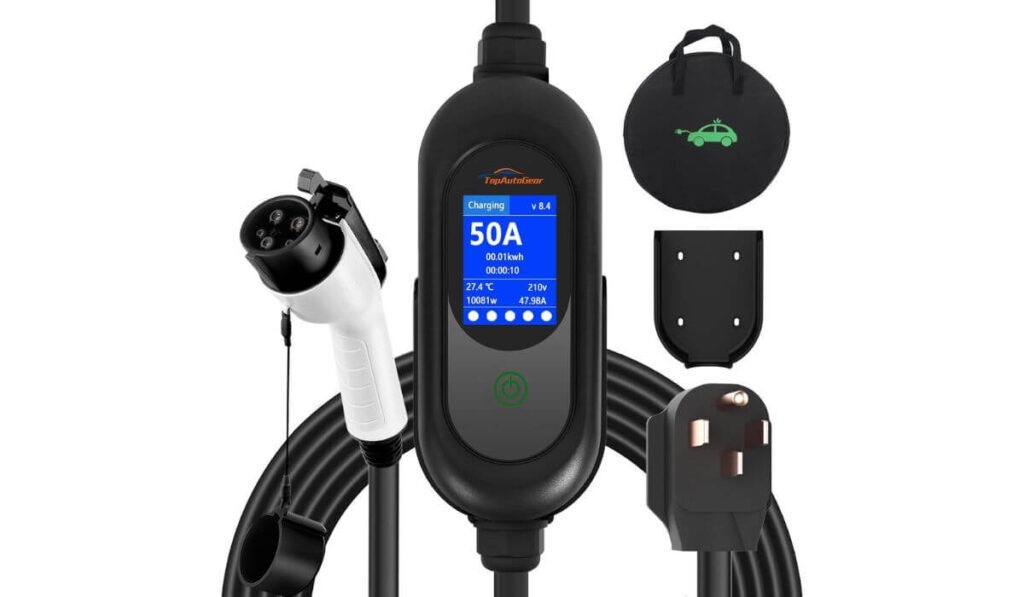
Quick Specs:
- Output: Up to 50 Amps (220–240V Level 2)
- Max Power: 11.5 kW
- Connector: SAE J1772
- Cable Length: 25 ft
- Plug Type: NEMA 14-50
- Portability: Fully portable (storage bag included)
- Warranty: 5 Years
If you want a 50 amp EV charger that doesn’t lock you into one garage forever, this is where TopAutoGear starts to make a lot of sense. It’s built for drivers who want flexibility — charging at home today, a vacation rental tomorrow, or a second location without buying another wall unit.
The big appeal here is value. Compared to most 50A chargers, this one delivers noticeably faster charging than 40A models (roughly 40% quicker) without carrying the premium price tag that usually comes with hardwired setups. For many owners, that difference alone is reason enough to look twice.
Plug it into a NEMA 14-50 outlet, hang it on the wall (or don’t), and you’re ready to charge. No permanent install, no electrician scheduling, no commitment. That ease shows up immediately if you move homes, share charging between locations, or simply don’t want to hardwire yet.
The charging speed feels properly Level 2. On compatible vehicles, owners report around 40–45 miles of range per hour, with full charges landing around the five-hour mark depending on battery size. The default setting ships at 40A for safety — a smart choice — and stepping it up to 50A is a quick manual adjustment once you’re comfortable with your circuit.
Long-Term Ownership Impressions (Why Portable Matters More Over Time)
What surprises most owners isn’t the speed — it’s how often portability ends up being useful. That 25-foot cable reaches awkward outlets easily, and the charger packs away cleanly when you don’t need it. For people who split time between homes, travel frequently, or charge at work occasionally, that flexibility becomes invaluable.
The 3.5-inch LCD screen also grows on you. It shows real-time voltage, current, power draw, and even estimated energy cost. It’s not flashy, but it’s practical — especially if you care about tracking usage or spotting electrical issues early.
The delay timer is another quiet win. Set it, forget it, and let charging start during off-peak hours. Several owners mention noticeable electricity savings over time, without needing a phone app or Wi-Fi connection to babysit the process.
Reliability feedback has been consistently positive. ETL and FCC certifications, fire-resistant materials, and built-in protections mean this charger behaves predictably — even during long sessions. Add the five-year warranty, and it feels like a purchase designed for actual ownership, not short-term use.
Key Features
- True 50A / 11.5 kW Level 2 charging
- Fully portable design with storage bag
- 25 ft cable for flexible outlet placement
- Clear LCD display with real-time data
- Delay charging to reduce electricity costs
- ETL & FCC certified with multi-layer safety protection
#4. WOLFBOX EV Charger Level 2 50 Amp
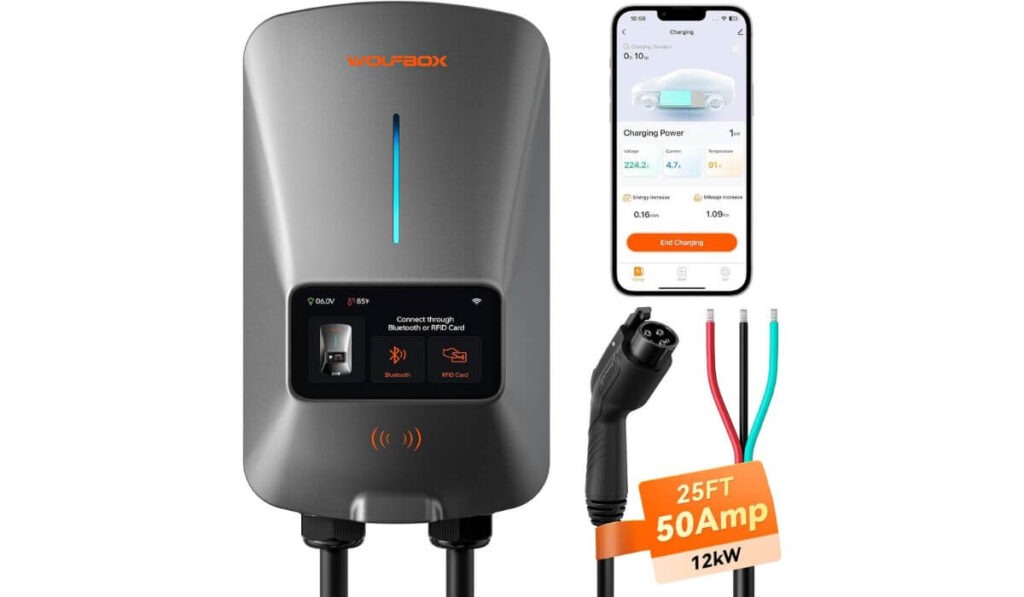
Quick Specs:
- Output: Up to 50 Amps (240V Level 2)
- Charging Speed: Up to ~48 miles of range per hour
- Connector: SAE J1772
- Cable Length: 25 ft
- Weather Rating: NEMA 4X (Indoor / Outdoor)
- Installation: Hardwired (70A breaker recommended)
This is the charger you look at when control and shared use matter as much as raw charging speed. The WOLFBOX isn’t trying to be the most minimal or the cheapest — it’s clearly designed for households where more than one person interacts with the charger, or where the unit sits outside and needs a bit more structure.
We’ve been using it with a plug-in hybrid (Toyota RAV4 Prime), and no — it can’t pull the charger’s full 50A potential. But that’s actually where the story gets interesting. Even capped by the vehicle, charging time dropped dramatically. What used to take most of the night now finishes in roughly a third of the time. Empty to usable went from an all-evening affair to something you barely plan around anymore.
The 4.3-inch display becomes surprisingly useful. You don’t need to open the app just to check status — voltage, current, time remaining, and energy delivered are always visible at a glance. That matters when the charger lives outside or in a shared garage.
Long-Term Ownership Impressions (Why Smart Control Pays Off)
Over time, the features you expect to ignore are the ones you end up using. The outage memory is a perfect example. After a brief power cut, the charger resumes automatically without spiking current or forcing a manual restart. You don’t notice it — and that’s the point. It protects both the car and the home wiring without turning charging into a chore.
Scheduling is more flexible than most chargers in this category. You can create multiple charging windows across the week, adjust amperage per session, and fine-tune charging to match variable electricity rates. If your utility pricing changes by day or season, that flexibility actually saves money over time.
The RFID card access is another underrated detail. In shared spaces or outdoor installs, it keeps charging intentional. No guessing, no unauthorized plugs, no awkward conversations.
Voice control support with Alexa and Google Assistant sounds gimmicky until you’ve used it a few times. Being able to start or stop a session without opening an app feels small — but it adds up in daily life.
Key Features
- True 50A Level 2 charging with adjustable amperage
- CSA certified, UL2594 compliant with 8 safety protections
- NEMA 4X enclosure for harsh weather
- Large LCD display with real-time data
- RFID access, outage memory, and multi-user app control
- Alexa & Google Assistant integration
Best 50 Amp EV Chargers for Home (Quick Comparison)
| EV Charger | Charging Type | Max Output | Installation Style | Smart Features | What It Does Best |
|---|---|---|---|---|---|
|
Best Overall Autel MaxiCharger Home 50A |
Level 2 (Hardwired) | 50A / ~12 kW | Permanent hardwired install | Wi-Fi, Bluetooth, scheduling, energy tracking | Rock-solid long-term reliability with the most mature app experience |
|
Best Plug-In Option VDLPOWERVP Level 2 EV Charger |
Level 2 (Plug-In) | 50A / 11.5 kW | NEMA 14-50 plug (no hardwiring) | Wi-Fi app, NFC access, scheduling | Near-hardwired speed without permanent installation commitment |
|
Best Portable TopAutoGear 50A Portable EV Charger |
Level 2 (Portable) | 50A / 11.5 kW | Plug-and-play, wall mount optional | LCD display, delay timer, manual current control | Maximum flexibility for home, travel, or multi-location charging |
|
Best Smart Control WOLFBOX Level 2 EV Charger 50A |
Level 2 (Hardwired) | 50A / ~12 kW | Hardwired (70A breaker recommended) | Wi-Fi, RFID, Alexa/Google, outage memory | Shared-use control with display-first, access-managed charging |
Quick Decision Guide: Pick the Right 50 Amp EV Charger in 30 Seconds
If you’ve read this far, you already know one thing: every 50 amp EV charger isn’t meant for the same kind of home. The right choice depends less on specs and more on how permanent, flexible, or shared your charging setup is.
👉 Choose Autel MaxiCharger Home 50A if…
You want a charger that feels like part of the house, not a gadget.
This is for homeowners planning to stay put, who don’t want to think about charging once it’s installed. It’s the most “install it and forget it” option here — stable power, reliable app behavior, and long-term durability matter more to you than portability or quick unplug convenience.
👉 Choose VDLPOWERVP 50A Plug-In Charger if…
You want real 50 amp speed without committing to hardwiring.
If your garage already has a NEMA 14-50 outlet (or you’re planning one), this charger gives you near-hardwired performance with far less installation hassle. It’s ideal if you might move homes, change garage layouts, or simply don’t want to lock yourself into one electrical configuration yet.
👉 Choose TopAutoGear 50A Portable Charger if…
You value flexibility more than permanence.
This is the charger for people who split time between locations, travel with their EV, or want one charger that works at home, vacation rentals, or a second property. It’s also a smart choice if you want 50 amp speed without paying hardwired prices. Portable today, useful years later.
👉 Choose WOLFBOX 50A Hardwired Charger if…
Your charger will be shared, visible, or installed outdoors.
RFID access, a large on-unit display, outage memory, and multi-user control make this a strong pick for families, shared driveways, or homes where more than one person interacts with the charger. It’s less about minimalism and more about control and structure.
Still unsure?
Ask yourself this one question — “Will I ever need to unplug or move this charger?”
- If the answer is no, go hardwired.
- If it’s maybe, plug-in wins.
- If it’s yes, portable saves money and future headaches.
That single answer narrows the choice faster than any spec sheet ever will.
The 50-Amp Reality Check Most Homeowners Miss
Buying a 50 amp EV charger isn’t just a speed upgrade — it’s a home infrastructure decision. Most people focus on how fast the car charges. Experienced owners focus on what happens around the charger once it becomes part of daily life.
Here’s what actually matters after the first few weeks.
Charging Speed Stops Being the Decision Maker
Once you move to 50 amps, charging speed differences become small. Whether a charger delivers 45 or 48 miles per hour doesn’t change your routine much. What does change your experience is how predictably the charger starts, stops, and resumes — especially overnight. Missed schedules and random pauses cause more frustration than slower charging ever did.
Your Garage Layout Matters More Than You Think
Cable length and mounting position quietly decide whether a charger feels convenient or annoying. Homes with multiple parking angles, outdoor driveways, or shared spaces benefit far more from longer cables or portable setups than from another kilowatt of power.
Electrical Headroom Is the Real Limiter
Many homes can technically support a 50 amp charger — but that doesn’t mean they should always run it at full output. Chargers that let you dial down amperage without sacrificing reliability age better with older panels and shared loads. This is why adjustable current ends up being more important than peak numbers.
Smart Features Are Only Useful If They’re Boring
The best smart chargers don’t demand attention. Reliable scheduling, consistent Wi-Fi connections, and simple displays beat flashy dashboards every time. When a charger fades into the background, that’s when you know it’s doing its job well.
The “Future EV” Question Is Real
Many buyers don’t realize they’re shopping for their next car as much as their current one. A charger that feels oversized today often becomes the perfect match two or three years later. That’s why 50 amp units tend to feel like overkill at first — and perfectly sized over time.
One Simple Way to Know You’re Buying the Right Charger
If the charger you’re considering still makes sense after imagining five years of ownership, you’re on the right track. If it only looks good in today’s setup, keep looking.
The Hidden Costs of Choosing the Wrong 50 Amp EV Charger
Most buyers assume the price of a 50 amp EV charger ends at checkout. In reality, the charger you choose quietly shapes costs, effort, and inconvenience for years — especially once daily charging becomes routine.
Installation Regret Shows Up Late
Hardwired chargers look clean on day one, but problems surface when homes change. Panel upgrades, garage renovations, or even moving houses can turn a “perfect install” into a sunk cost. Plug-in and portable chargers often age better for people whose living situation isn’t permanent — even if they cost slightly more upfront.
Cable Length Becomes a Daily Friction Point
A cable that’s too short doesn’t feel like a problem until the novelty wears off. Parking slightly off-angle, backing in during rain, or sharing a driveway exposes how much reach matters. Owners rarely regret a longer cable — but they often regret a short one.
Overbuying Smart Features Can Backfire
Not every smart feature improves life. Chargers with overly complex apps can become liabilities when firmware updates fail or connectivity drops. Simpler systems that schedule reliably tend to earn more trust long-term than feature-heavy dashboards.
Electrical Strain Is Easy to Ignore — Until It Isn’t
Running a 50 amp charger at full output on older panels or shared circuits may work today, but gradual strain shows up months later as nuisance trips or throttling. Chargers that allow manual amperage control give homeowners room to adapt without replacing hardware.
Warranty Length Signals Confidence
Short warranties aren’t always red flags, but long ones usually signal confidence. When a brand backs a charger for multiple years, it suggests the internals are designed for real-world duty cycles — not just lab testing.
A Practical Rule That Saves Money
If a charger solves today’s problem and tomorrow’s unknowns, it’s usually the right one. If it only fits perfectly right now, the hidden costs tend to appear later.
Why a 50 Amp Level 2 Charger Is the Sweet Spot for Most Homes
Once you cross into Level 2 charging, the biggest gains happen early. Moving from a regular wall outlet to a 240V setup feels transformational. Moving beyond 50 amps? For most homes, that’s where returns start to flatten.
A 50 amp Level 2 EV charger hits a rare balance: fast enough to fully recharge overnight, flexible enough for different home electrical setups, and powerful enough for future EVs without forcing costly upgrades.
Faster Charging Without Chasing Extremes
Yes, higher-output chargers exist. But in real homes, vehicles often become the limiting factor long before the charger does. A 50 amp unit already delivers more power than many EVs can continuously accept, especially overnight. That makes it fast where it counts — without pushing into diminishing returns.
Compatible With Real Home Infrastructure
Most residential panels can accommodate a 50 amp charger with planning. Going higher often means panel upgrades, service changes, or load management systems. For many homeowners, 50 amps is the highest performance level that still feels reasonable and manageable.
Future-Proof Without Being Overkill
Today’s EV might not pull full advantage of 50 amps. Tomorrow’s likely will. That’s why this category ages well — it quietly prepares your home for the next car without forcing a new charger purchase later.
Easier to Live With, Easier to Resell
Homes with a properly installed Level 2 charger are becoming more attractive to buyers. A clean 50 amp setup signals readiness without raising red flags about electrical complexity.
Lastly, For most households, a 50 amp Level 2 EV charger isn’t a compromise — it’s the point where charging becomes boring, predictable, and fast enough that you stop thinking about it. And that’s exactly what good home charging should feel like.
FAQs: Best 50 Amp EV Chargers for Home
Is a 50 amp EV charger worth it for home charging?
Yes, if you drive daily or want reliable overnight charging. A 50 amp Level 2 charger gives enough power to fully recharge most EVs in one night without pushing your home electrical system to extremes. It also avoids the frustration of slow top-ups that come with lower-amp setups. For most households, it’s the point where charging stops being something you plan around.
Do I really need a hardwired 50 amp EV charger?
Not always. Hardwired chargers make sense if you want a permanent setup and the cleanest install. But many plug-in 50 amp EV chargers using a NEMA 14-50 outlet deliver nearly the same performance with more flexibility. If you think you might move, remodel, or reconfigure your garage, plug-in options age better.
Will a 50 amp Level 2 charger damage my EV battery?
No, not when used properly. Modern EVs control how much power they accept, regardless of what the charger can supply. A 50 amp charger simply gives the car access to faster charging when needed. Using scheduled overnight charging often results in gentler charging than frequent fast DC sessions.
Can my home electrical panel handle a 50 amp EV charger?
Most modern homes can, but it depends on available capacity and existing loads. Many chargers allow adjustable amperage, which helps if your panel is shared with other appliances. A licensed electrician can confirm this quickly, and in many cases no major upgrades are required.
What should I prioritize when choosing the best 50 amp EV charger?
Focus less on peak numbers and more on daily usability. Cable length, reliable scheduling, weather resistance, and consistent power delivery matter far more over time than small differences in charging speed. The best 50 amp EV charger is the one that fits your home and routines without demanding attention.
Final Thoughts: Choosing a 50 Amp EV Charger That Actually Fits Your Life
By the time you reach this point, one thing should be clear: the best 50 amp EV charger isn’t about chasing the highest number on a spec sheet. It’s about choosing a setup that quietly works every day, fits your home, and still makes sense years from now.
Every charger in this guide earned its place for a different reason. Some are built to disappear into the background once installed. Others offer flexibility if your living situation changes. A few prioritize control and shared access. None of them are here because they look good on paper — they’re here because they hold up once charging becomes routine.
If this guide did its job, you’re no longer guessing. You know whether you want hardwired or plug-in, fixed or portable, simple or feature-rich. That clarity matters more than any single recommendation, because home charging is something you live with, not something you admire once and forget.
A good 50 amp Level 2 charger does one thing exceptionally well: it removes friction from owning an EV. You stop thinking about range. You stop planning around charging. You just plug in, walk away, and start every morning ready to drive.
That’s the goal — and once you experience it, you’ll wonder why you waited this long.