
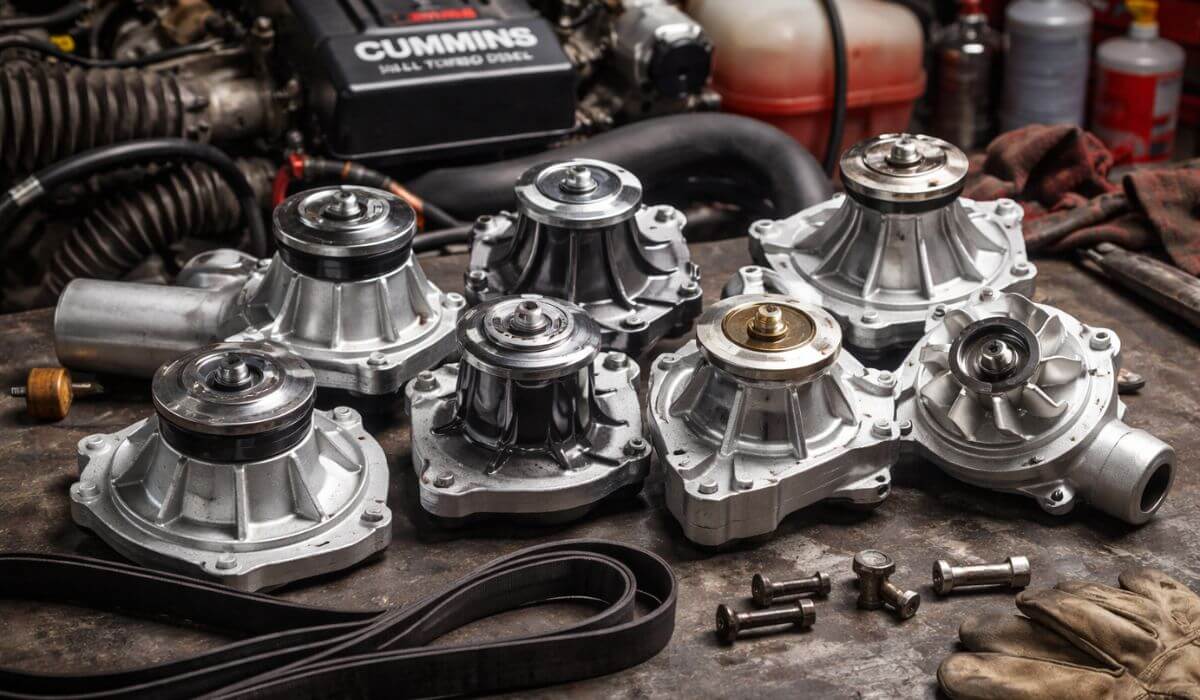
5 Best Water Pumps for 5.9 Cummins Diesel (1989–2007) – Heavy-Duty Cooling Upgrades
If you’re here searching for the best 5.9 Cummins water pump, chances are your truck already gave you a warning — maybe coolant dripping off the timing cover, maybe temps creeping up while towing, or maybe that faint grinding noise when the pulley spins cold. I’ve been around these 5.9s long enough to tell you one thing straight:
A weak water pump on a Cummins isn’t a small problem — it’s the start of bigger, expensive ones.
The 5.9L Cummins — whether it’s a 12-valve workhorse or a common-rail tow rig — runs hot by nature. Inline-6 diesel, heavy rotating mass, long coolant passages… when the pump starts losing flow or the bearing gets sloppy, cooling efficiency drops fast. That’s when you see overheating on grades, heater performance falling off, or coolant pushing out under load.
So instead of throwing random parts at the truck, we did this the right way — the way a diesel shop would.
We dug through real owner feedback, fleet maintenance logs, towing setups, and high-mileage rebuild cases. Not just spec sheets — real trucks, real failures, real replacements that lasted.
Out of everything available, these 5 water pumps consistently showed the best balance of flow rate, bearing durability, impeller design, and long-term sealing performance on the 5.9 Cummins platform.
Two units stood out immediately in both build quality and repeat reliability:
- Gates 43526 Premium Engine Water Pump — Known for OEM-grade casting, precision bearings, and stable coolant flow under sustained towing heat.
- ACDelco Gold 252-318 — A heavy-duty OE replacement with excellent seal integrity and long service life on high-mileage diesel Rams.
Both are the kind of pumps you install once and don’t worry about again for years — exactly what Cummins owners want.
The rest of the list covers different needs — from budget-smart replacements to complete pump kits and upgraded impeller designs for older 12-valve and work-truck applications.
Bottom line?
If your goal is to stop overheating, prevent coolant leaks, and keep your 5.9 cooling system stable under load — these are the pumps worth your money.
No fluff. No random Amazon fillers. Just pumps that actually hold up on a diesel that works for a living.
5 Best Water Pump Upgrades for 5.9 Cummins Diesel Rams
#1. Gates 43526 Premium Engine Water Pump — Best Overall Heavy-Duty Replacement
#2. ACDelco Gold 252-318 Engine Water Pump — Best OEM-Quality Upgrade
#3. OAW CR3072 Water Pump — Best 7-Blade Impeller Cooling Upgrade
#4. AUQDD AW7145 Professional Water Pump Kit — Best Complete Install Package
#5. Saihisday 3800984 Water Pump — Best Budget Replacement for Older Rams
Expert Mechanic Tip
Here’s something most buying guides won’t tell you — but every diesel shop knows:
On a 5.9 Cummins, water pump failure usually isn’t just about the pump. It’s about cavitation, belt load, and coolant neglect working together.
I’ve pulled pumps off high-mile 12-valves that “looked fine” externally — no leaks, pulley tight — but the impeller blades were eaten halfway down from coolant cavitation. Flow was reduced even though the pump hadn’t technically “failed” yet. That’s why some trucks overheat under load but run normal empty.
So when you’re choosing between pumps like the Gates or ACDelco units versus cheaper cast replacements, you’re not just paying for a brand name — you’re paying for:
- Impeller metallurgy that resists cavitation pitting
- Bearing load rating that survives heavy serpentine tension
- Seal integrity under diesel vibration harmonics
Cheap pumps often use lighter impellers and lower-grade bearings. They’ll circulate coolant fine at idle — but hook a trailer, climb a grade, and sustained RPM heat exposes the weakness fast.
Another pro move most owners skip:
Spin the fan clutch by hand when the pump is off.
If you feel drag, wobble, or hear grit — replace it now.
Why?
A failing fan clutch overloads the new pump bearing. I’ve seen brand-new pumps start weeping in 20k miles because the clutch was half-seized.
Same goes for this:
- Check belt alignment
- Inspect tensioner damping
- Flush old coolant sediment
You install even the best pump on dirty coolant, and you’re shortening its life before first startup.
One last thing Cummins guys learn the hard way:
If you tow heavy or run tuned power, a 7-blade or high-flow impeller pump isn’t an upgrade — it’s cheap insurance.
More coolant velocity through that long inline-6 block keeps rear cylinder temps stable — especially cylinders 5 and 6, where heat soak builds first.
Bottom line from the shop floor:
Don’t just replace the leaking pump. Fix the cooling system environment around it.
Do that once — with a quality unit like the Gates or ACDelco — and you’re done worrying about water pumps for the next 100k+ miles.
Must Check:
#1. Gates 43526 Premium Engine Water Pump
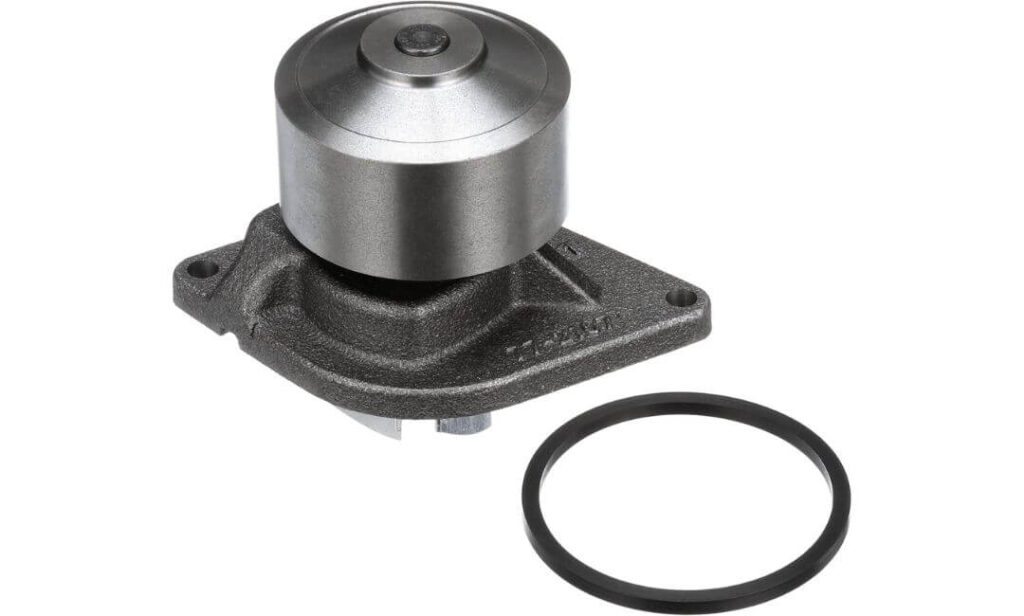
Key Specs:
- Material: Cast Iron Housing
- Impeller: OE-Style Heavy Cast
- Bearing Type: Heavy-Load Sealed Bearing
- Fitment: 1998.5–2007 5.9L Cummins
- OEM Cross-Refs: 5010964AA, 5086959AA, 5086959AB
- Warranty: Limited Lifetime
If you’ve turned wrenches on a 5.9 long enough, you already know Gates isn’t some shelf-filler brand — they’ve been behind OEM belt drives and cooling components for years. The 43526 follows that same OE+ build philosophy: thick cast-iron housing, properly balanced impeller, and a bearing designed to live under diesel belt tension — not just survive commuter duty.
Pick it up and you’ll feel the difference instantly (weight alone gives it away). The casting is dense, machining is clean, and impeller clearance is tight — which matters more than people think. On a Cummins inline-6, coolant has a long path to travel, and weak impeller design reduces rear cylinder cooling first. This pump keeps flow consistent, especially under sustained RPM or towing load. Gates also leakage-tests seals and bearings pre-assembly, so you’re far less likely to deal with early weep-hole surprises.
Fitment-wise, it’s as close to factory drop-in as it gets — pulley alignment stays true, belt tracking stays centered, and install is straightforward without modification drama.
Why Cummins Owners Keep Choosing It
- OE-grade casting strength — no thin housings or flex under high serpentine tension
- Stable bearing under diesel load — holds up better with heavy fan clutch drag
- Consistent coolant velocity — keeps rear cylinders (5 & 6) cooler under tow
- Leak-tested seal assembly — reduces early weep-hole failures common in budget pumps
Pro Mechanic Tip
Before bolting this pump on, run your finger inside the old coolant passages and check for scale or casting sand buildup. If you feel grit, flush the block thoroughly.
I’ve seen brand-new premium pumps (even Gates units) lose efficiency early because debris chewed the impeller edges within 30–40k miles. Clean coolant + new pump = full lifespan. Dirty system + new pump = wasted upgrade.
#2. ACDelco Gold 252-318 Engine Water Pump
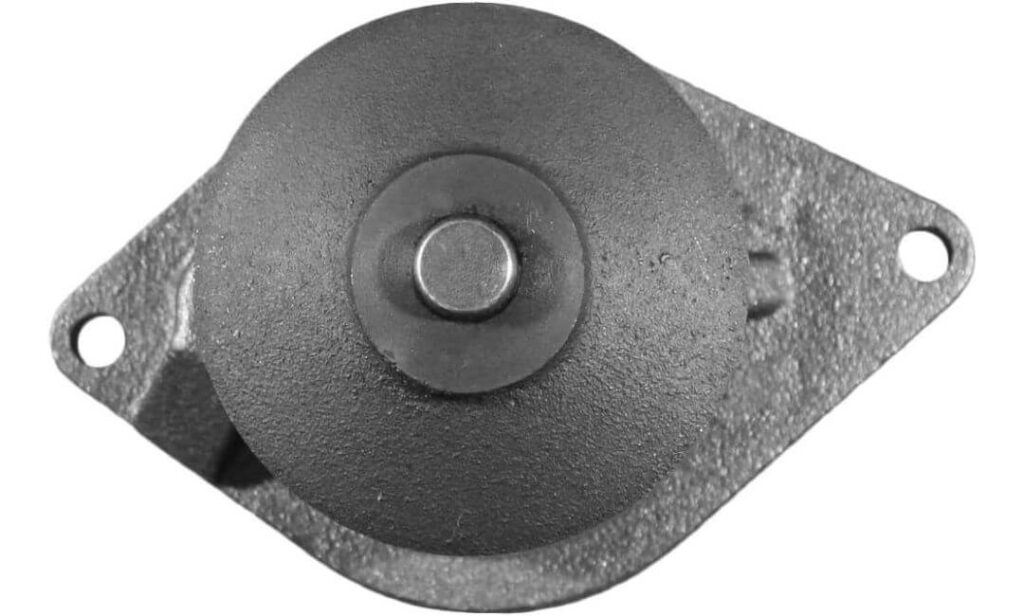
Key Specs:
- Housing Material: Bronze
- Impeller: Metal OE-style
- Shaft: Heat-treated steel assembly
- Bearing: Permanently sealed & lubricated
- OEM Ref: 12494067
- Fitment Range: Verified 2001–2006 5.9L Cummins (direct replacement setups)
There’s a reason a lot of diesel techs reach for an ACDelco Gold unit when the goal isn’t experimentation — it’s reliability. This pump leans more toward OE engineering than aftermarket performance hype. The bronze housing alone gives it an edge in corrosion resistance, especially in trucks that have seen years of mixed coolant types or overdue flush intervals. Where standard cast pumps start pitting internally, this one holds its surface integrity longer — which directly affects seal life.
Internally, the heat-treated shaft assembly is the quiet hero here. On a 5.9 Cummins, belt load isn’t light — you’ve got fan clutch drag, heavy pulleys, and constant diesel vibration. A non-treated shaft will eventually develop play, which turns into seal wear, then coolant seepage. The treated shaft + permanently lubricated bearings in this unit keep rotation true even after tens of thousands of heat cycles. That’s why many owners report stable temps and zero leakage long after install — it’s built to handle sustained mechanical stress, not just pass a bench test.
Fitment has proven solid on early-2000s common-rail Rams, and install is as straightforward as OE — no alignment issues, no pulley offset surprises.
Why Cummins Owners Keep Choosing It
- Bronze housing resists internal corrosion — ideal for older cooling systems
- Heat-treated shaft handles diesel belt load without premature play
- Factory-style impeller flow — maintains proper coolant circulation across the long inline block
- Leak-resistant coated seals — designed for long service intervals, not short-term fixes
Pro Mechanic Tip
When installing this pump, pay attention to bolt torque sequence — not just torque spec.
The bronze housing expands differently than cast iron when heat cycles hit. If bolts are unevenly torqued, it can create micro-warping at the gasket surface over time. I always snug in a crisscross pattern, then final-torque in stages.
Do that — and this pump will stay bone-dry around the gasket line for years.
#3. OAW CR3072 Water Pump
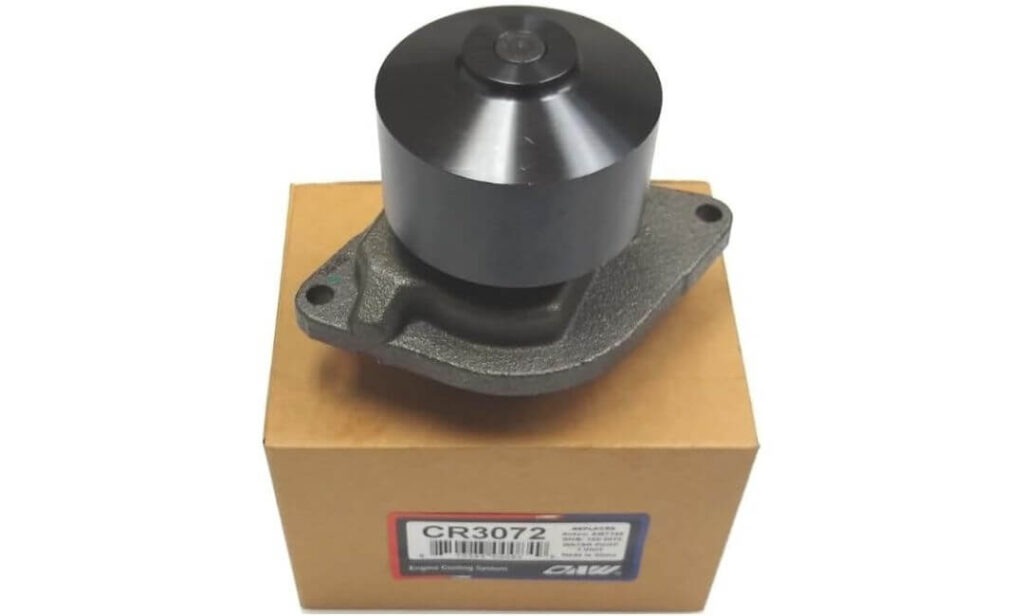
Key Specs:
- Housing Material: Cast Iron
- Impeller: 7-Blade Aluminum (Upgraded Design)
- Fitment: 1989–2010 5.9L Cummins
- OEM Cross-Refs: 3960342, 5010964AA, 5010964AB, 2881805
- Install Kit: Gasket Included
- Warranty: 1 Year
This is the pump a lot of Cummins owners move to when they want more than just a stock replacement — they want better coolant movement through that long inline block. The highlight here is the 7-blade aluminum impeller, which moves noticeably more coolant per rotation compared to the older OE-style blade designs. On paper that sounds small — in real trucks, it’s the difference between temps creeping up on a grade versus staying planted where they should.
The cast-iron housing keeps structural rigidity under belt load, while the upgraded aluminum impeller eliminates the durability concerns older plastic-blade pumps had. You get OE fitment (bolt pattern, pulley alignment, hose routing all factory-correct), but with improved thermal efficiency where it actually counts — sustained RPM, towing heat, and tuned engines pushing extra combustion temps.
Why Cummins Owners Keep Choosing It
- 7-blade impeller increases coolant velocity — better heat pull from rear cylinders
- Aluminum blade upgrade — no cracking or flex like older composite designs
- Direct OE fitment — bolts on without pulley or belt alignment issues
- Balanced flow for towing setups — holds temp stability under load
Pro Mechanic Tip
If you’re installing this pump on a tow rig or tuned truck, pair it with a fresh thermostat (180° or 190° depending on climate).
Higher-flow pumps move coolant faster — but if the thermostat is lazy or partially stuck, you bottleneck the entire upgrade. New pump + old stat is like installing a high-flow fuel pump with a clogged filter — system can’t use the extra capacity.
#4. AUQDD AW7145 Professional Water Pump Kit
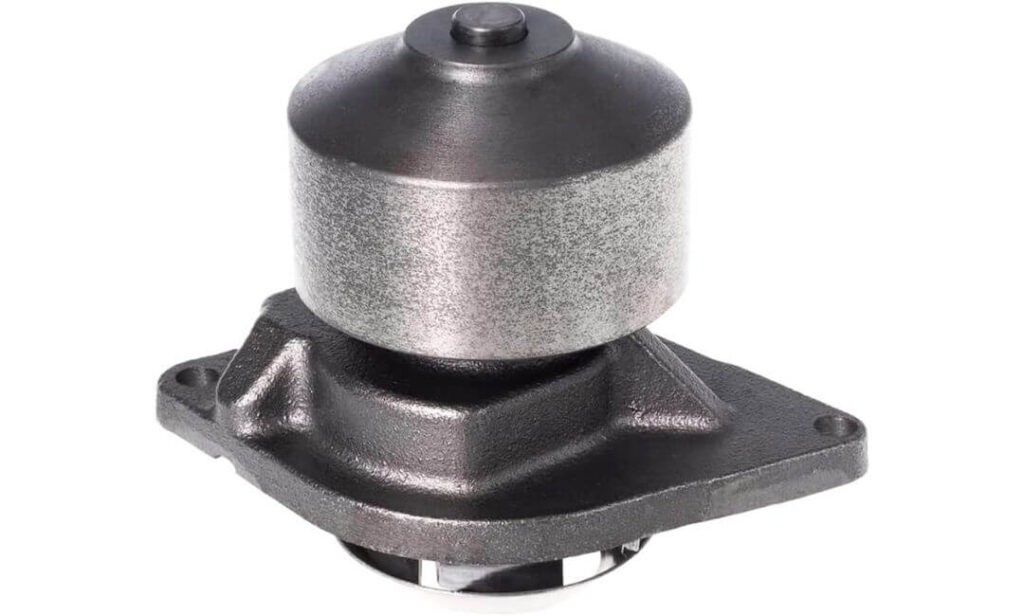
Key Specs:
- Housing: OE-Grade Cast Construction
- Impeller: Upgraded High-Flow Design
- Bearing: Reinforced Long-Life Assembly
- Fitment: 1989–2007 5.9L Cummins
- Kit Inclusions: Gaskets & Seals Included
- Manufacturing: ISO/TS16949 Certified
This is the kind of pump kit guys usually grab when they’re doing the job once — and don’t want to stop mid-install because of a missing gasket or worn seal. The AW7145 isn’t positioned as a premium-name performance pump — it’s built more around practicality: OE fitment, upgraded internal components, and a full install kit so the truck isn’t stuck on jack stands waiting for extra parts.
Internally, AUQDD upgraded the core wear components that usually fail first on Cummins pumps — bearing life, seal durability, and impeller efficiency. The impeller is designed to push consistent coolant volume across the long 5.9 block, while the mechanical seal kit is built to hold pressure without early seepage around the weep channel. Housing strength is solid enough to handle diesel belt tension without flex distortion, and because the unit is leakage-tested before packaging, out-of-box failures are rare compared to ultra-budget pumps.
Where it really makes sense is older work trucks — farm Rams, fleet haulers, daily diesel beaters — where reliability matters, but budget still plays a role. You’re getting full-system refresh hardware in one box, not just the pump body.
Why Cummins Owners Keep Choosing It
- Complete install kit included — no last-minute gasket hunts mid-job
- Upgraded impeller & seals — better flow + longer leak resistance
- OE-verified fitment — bolts up clean across multiple Cummins year ranges
- Strong value-to-durability balance — ideal for high-mileage work trucks
Pro Mechanic Tip
Anytime you install a “kit pump” like this, lightly coat the gasket surfaces with coolant-safe sealant — not RTV overload, just a thin film.
Cummins blocks develop micro-pitting over decades of heat cycles. Dry-gasket installs can seal fine at first, then start sweating coolant months later. A light sealant film fills those microscopic imperfections and keeps the system dry long-term.
#5. Saihisday 3800984 Engine Water Pump
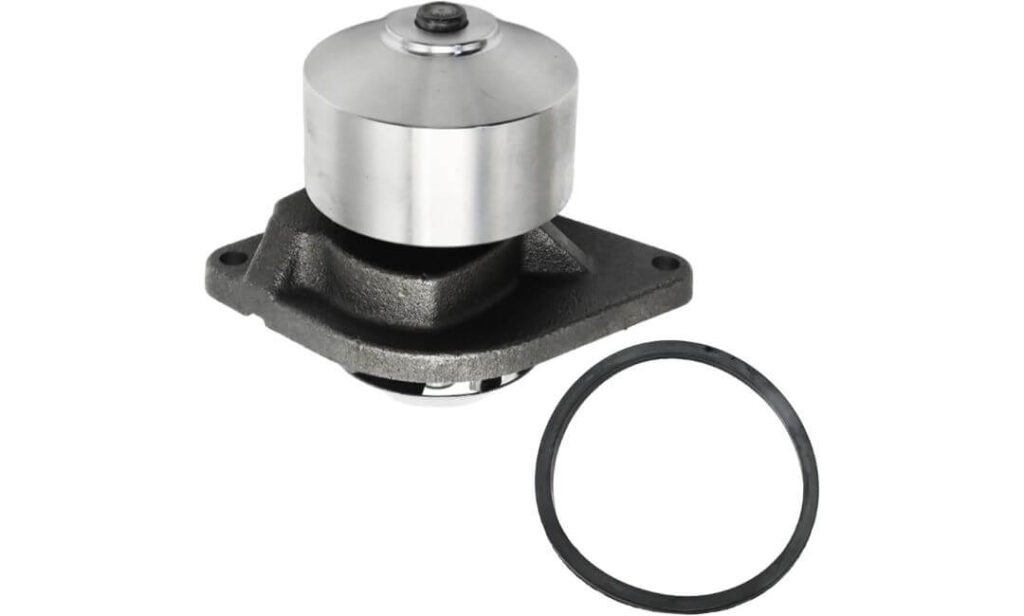
Key Specs:
- Housing Material: Heavy-Duty Metal Construction
- Impeller: 7-Blade Design
- Bearing: Case-Hardened Load Bearings
- Fitment: 1989–2007 5.9L Cummins
- OEM Cross-Refs: 3800984, 5010964AA, 5010964AB, 2881805
- Install: Direct Bolt-On Replacement
Some pumps you buy for brand reputation — some you buy because the truck just needs to get back on the road without draining the wallet. This unit sits in that second category, but what makes it interesting is it doesn’t cut corners where it actually matters for Cummins cooling survival.
The 7-blade impeller design moves more coolant than older stock blade layouts, which helps stabilize temps on long-haul drives or work-truck duty cycles. Pair that with case-hardened bearings and you’ve got a pump that can tolerate vibration, belt load, and fan clutch drag better than most entry-level replacements. Housing construction is full metal — no lightweight composite shortcuts — so structural rigidity stays intact even under diesel serpentine stress.
Fitment coverage is wide, stretching from early D-series trucks through later Ram 2500/3500 applications, making it a practical solution for older rigs still working daily — farm trucks, tow pigs, or high-mileage beaters that need dependable cooling without premium-brand pricing.
Why Cummins Owners Keep Choosing It
- 7-blade impeller improves coolant circulation over stock blade pumps
- Case-hardened bearings handle vibration from high-mile diesel engines
- Wide year compatibility — works across multiple 12V & 24V setups
- Strong budget-to-performance ratio — ideal for work trucks, not garage queens
Pro Mechanic Tip
On older 5.9s (especially ’89–’98 trucks), always inspect the fan spacer and pulley studs before installing a new pump.
High-mile engines develop slight pulley wobble that isn’t obvious until the new pump goes on. Bolt a fresh pump onto a misaligned spacer, and bearing life drops fast — even if the pump itself is solid. Quick check now saves doing the whole job twice.
Best 5.9 Cummins Water Pumps Compared — Flow Rate, Build & Reliability
How to Choose the Right Water Pump for Your 5.9 Cummins
By the time most Cummins owners reach this stage, they’re not confused about whether they need a water pump — they’re trying to make sure they don’t end up doing the same job twice.
And that usually comes down to choosing the right pump for how the truck actually lives, not just what fits the bolt pattern.
First thing to lock down is engine generation. A 12-valve farm truck, a VP44 daily, and a common-rail tow rig all move heat differently. Earlier 12V motors are more forgiving — lower injection pressure, less combustion heat — so a solid OE-style pump does the job just fine. But once you’re into 24-valve and especially common-rail territory, cylinder temps climb faster, and coolant demand goes up with it. That’s where impeller design and bearing load rating start mattering more than brand stickers.
Then look honestly at workload. If the truck spends its life empty, commuting, or doing light hauling, a premium OE replacement like a Gates or ACDelco unit is the sweet spot — stable flow, long seal life, no overkill spending. But if you’re towing fifth-wheels, equipment trailers, or running added fuel and timing, coolant flow becomes part of engine protection. High-flow or multi-blade impeller pumps make more sense there — not for horsepower, but for heat control across the rear cylinders where Cummins blocks trap temperature first.
Install strategy is another overlooked factor. Some guys just want the pump swapped and the truck back to work — that’s where complete kits earn their keep. New gaskets, seals, hardware in one box saves downtime and eliminates reusing brittle old components. On high-mileage engines, that matters more than people admit. A fresh pump mounted against a 20-year-old flattened gasket is asking for seepage.
Budget plays a role too, but it should be realistic. There’s a difference between saving money and creating repeat labor. Cheaper pumps can work fine on older work trucks that just need dependable circulation — but for towing setups or long-term ownership, spending a little more upfront usually means you’re not back under the hood in 18 months doing the job again.
One more thing seasoned diesel techs always factor in — cooling system condition. If the radiator is partially restricted, thermostat lazy, or coolant contaminated, even the best pump can’t perform properly. The pump moves coolant — it doesn’t fix a compromised system.
So the real buying decision isn’t just “which pump is best.”
It’s:
- What year Cummins block am I running?
- How hard does the truck work?
- Do I want OEM reliability or upgraded flow?
- Am I refreshing the system or just patching a leak?
Answer those honestly, and the right pump usually picks itself — and you only do the job once.
Signs Your 5.9 Cummins Water Pump Is Failing
(And What an Experienced Diesel Tech Does About It)
Most 5.9 Cummins pumps don’t quit suddenly — they wear down in stages. If you know what to watch for, you catch it early and avoid overheating damage. Miss the signs, and you’re dealing with warped components instead of a simple pump swap.
Below is how failure usually shows up in the real world — and what the fix looks like from a shop-floor perspective.
Coolant Residue Around the Weep Hole
You won’t always see coolant pouring out. Early on, it’s usually a faint crust line, damp housing edge, or dried coolant trail under the pump snout.
That’s the internal mechanical seal starting to fail. Once coolant gets past it, bearing contamination follows soon after.
Real fix:
Replace the pump — not just the gasket. Seal failure is internal; external resealing won’t stop it.
Experience note:
If coolant has been leaking for a while, flush the system. Contaminated coolant shortens new pump seal life fast.
Grinding or Rough Pulley Rotation
Pull the belt, spin the pulley by hand. A healthy pump spins smooth and silent. A failing one feels gritty, notchy, or slightly resistant.
That’s bearing wear — and on a Cummins, fan clutch weight accelerates it.
Real fix:
Pump replacement is mandatory. Bearings aren’t serviceable.
Pro shop habit:
Always inspect the fan clutch during this step. A partially seized clutch overloads the new pump bearing and kills it early.
Overheating Under Load (But Not Empty)
Truck runs normal unloaded — but temps climb faster towing or on long grades.
Classic sign of reduced coolant flow, usually from impeller erosion or cavitation damage inside the pump.
Externally the pump may look fine.
Real fix:
Upgrade to a high-flow or multi-blade impeller pump if the truck tows regularly.
Experience note:
Rear cylinders (5 & 6) hold the most heat — better coolant velocity stabilizes temps there first.
Weak or Inconsistent Cabin Heat
A lot of owners ignore this one because it feels unrelated.
If heater output drops or fluctuates, coolant circulation efficiency is already declining. The pump is spinning — just not moving coolant at full volume anymore.
Real fix:
Verify thermostat operation first, then inspect pump flow condition.
Shop reality:
If the truck has 150k+ miles and heat output changed gradually, pump wear is usually part of the equation.
Belt Chirp or Uneven Wear
When pump bearings develop play, pulley alignment shifts slightly.
You’ll hear chirping on cold starts or see belt edge wear. Many people replace tensioners first — only to find the noise remains.
Real fix:
Check pump shaft play before replacing belt drive components.
Quick test:
Grab the fan and check for wobble. Any lateral movement means bearing wear is already advanced.
Practical Replacement Strategy (From Experience)
When one of these signs shows up, seasoned diesel techs don’t just swap the pump alone. They evaluate the cooling system as a whole:
- Thermostat condition
- Coolant contamination
- Radiator restriction
- Fan clutch drag
- Belt tensioner damping
Because installing a new pump into a compromised system shortens its lifespan immediately.
Bottom Line From the Shop Floor
A failing 5.9 Cummins water pump always gives warning — leakage, noise, heat creep, or circulation loss.
Catching it early keeps the repair simple:
Pump, gasket, coolant — done.
Ignore it, and you risk overheating an engine that costs exponentially more to rebuild than the part that protects it.
Tools & Parts Needed to Replace a 5.9 Cummins Water Pump
(What You Actually Use in the Shop — Not the Basic Toolbox List)
By this stage, most Cummins owners already know the pump needs to come off. The mistake happens when the job starts with half the tools missing — that’s when trucks sit torn apart longer than they should.
On a 5.9, water pump replacement isn’t technically complex — but it is clearance-tight, fan-heavy, and belt-load dependent. Having the right tools makes the difference between a 2-hour job and an all-day fight.
Below is the real-world setup most diesel techs lay out before touching a bolt.
Fan Clutch Removal Tools
The mechanical fan assembly is the first barrier.
Cummins fan clutches are large, tight, and heat-seized more often than people expect. Trying to muscle them off with adjustable wrenches usually ends in knuckle damage or radiator fin bends.
What works properly:
- Dedicated fan clutch wrench set
- Pulley holding tool
- Long-handle breaker bar
These keep the pulley from rotating while breaking the clutch nut loose cleanly.
Serpentine Belt & Tension Tools
Before the pump comes off, belt load has to be relieved.
A long ½-inch breaker bar or serpentine belt tool gives controlled tension release without snapping the tensioner back violently.
Pro habit:
Inspect belt cracking and tensioner damping while you’re here. If the belt looks glazed or the tensioner oscillates, replace them now — not after reassembly.
Gasket Surface Prep Tools
Once the pump is off, the real sealing work begins.
Old Cummins blocks almost always have gasket residue baked into the mounting surface — especially high-mile engines that saw multiple coolant types over the years.
Proper prep tools:
- Plastic or brass gasket scraper
- Fine Scotch-Brite pad
- Brake cleaner or acetone wipe
Steel scrapers work fast — but one slip gouges the aluminum timing cover surface, creating future leak paths.
Torque Tools (Often Skipped — Shouldn’t Be)
Most pump bolts thread into aluminum housings or mixed-metal surfaces.
Overtightening distorts gasket compression. Undertightening leads to seepage after heat cycles.
Use:
- Inch-pound or low-range torque wrench
- Crisscross torque pattern
Even gasket pressure matters more than raw bolt tightness.
Coolant Handling Equipment
Anytime a Cummins pump is replaced, coolant should be addressed — not reused blindly.
Recommended setup:
- Large drain pan (diesels hold more coolant)
- Coolant funnel kit / air purge funnel
- Distilled water for proper mix
Air pockets in a 5.9 cooling system can cause localized hot spots, especially around the rear cylinders.
Parts Smart Techs Replace at the Same Time
This is where experienced mechanics separate from first-time DIY installs.
When the pump is already off, access to surrounding components is at its easiest. Skipping them now means repeating labor later.
Common combo replacements:
- Thermostat & housing gasket
- Upper & lower radiator hoses
- Belt (if over 50% worn)
- Fan clutch (if drag or wobble exists)
Labor overlap makes these upgrades cost-effective during the same teardown window.
Real Shop Insight
Most repeat cooling failures after a pump install aren’t caused by the new pump.
They come from:
- Old thermostats restricting flow
- Weak fan clutches reducing airflow
- Contaminated coolant eating seals
A water pump moves coolant — but the cooling system controls temperature. Both have to work together.
Bottom-Line Install Strategy
If you’ve got the front of a 5.9 torn down:
Do the pump.
Refresh the seals.
Inspect airflow components.
Flush the coolant.
That approach turns a simple repair into a long-term cooling system reset — and keeps you from reopening the same job six months later.
Why You Can Trust Our 5.9 Cummins Water Pump Recommendations
Anybody can list water pumps off a parts catalog. That’s easy. What actually matters — and what most buying guides skip — is understanding how these pumps hold up once they’re bolted onto a working diesel, not sitting in a warehouse box.
These recommendations weren’t built off brand hype or affiliate pricing — they’re based on failure patterns, rebuild cases, and long-term cooling behavior seen across high-mileage 5.9 trucks.
When you spend enough time around these engines, patterns show up fast.
Certain pumps start weeping early because seal materials can’t handle diesel vibration. Others lose efficiency because impeller blades erode from cavitation. Some bearings develop play sooner simply because they weren’t designed for the constant drag of a mechanical fan clutch.
So instead of focusing on marketing claims, the evaluation process focused on real-world stress points:
- Bearing load tolerance under heavy serpentine tension
- Impeller durability after long coolant exposure
- Seal life across repeated heat cycles
- Housing rigidity under diesel vibration harmonics
Pumps that consistently held structural integrity, coolant velocity, and seal dryness across those conditions made the list. Ones that showed repeat early failures — even if popular online — didn’t.
Another layer that shaped these picks was workload diversity.
Not every 5.9 lives the same life.
Some trucks commute empty.
Some tow 12,000 lbs weekly.
Some run tuned fueling and elevated combustion temps.
So the list balances OEM-grade replacements, high-flow upgrades, install kits, and budget work-truck solutions — because the “best pump” depends on how the engine is used, not just what year it is.
Owner feedback, install reports, and repeat purchase patterns also played a role — especially cases where the same pump model was reinstalled on fleet trucks after long service intervals. That kind of repeat trust says more than marketing brochures ever will.
Real-World Validation Factors Used
- High-mileage Cummins tear-down inspections
- Towing and load-temperature behavior
- Cooling system rebuild histories
- Seal leakage frequency over time
- Bearing noise progression patterns
This approach filters out pumps that only look good on spec sheets and highlights the ones that actually survive diesel workload stress.
Bottom Line
Every pump in this guide earned its place because it solved real overheating, leakage, or durability problems on 5.9 Cummins engines — not because it had the loudest advertising or the lowest price tag.
When a part protects an inline-6 diesel that’s expected to run 300k+ miles, recommendations have to come from experience, not guesswork.
That’s the standard these picks were built on.
5.9 Cummins Water Pump FAQ
How long does a 5.9 Cummins water pump usually last?
On a healthy cooling system, most OE-grade pumps last somewhere between 120,000 to 180,000 miles. But lifespan isn’t just mileage — it’s workload dependent.
Tow rigs, tuned trucks, or engines running heavy fan clutch drag usually wear pump bearings and seals faster. On the flip side, lightly used daily drivers sometimes push pumps past 200k before seepage starts.
Shop reality:
If the front of the engine is already apart after 150k+, most techs replace the pump preventively — labor overlap makes it smarter than waiting for failure.
Is a high-flow water pump worth it on a 5.9 Cummins?
Depends on how the truck is used.
For stock daily driving, OE-style flow is perfectly adequate — Cummins engineered the cooling system with that rate in mind.
But for:
- Heavy towing
- Long mountain grades
- Performance tuning
- Hot climate hauling
A high-flow or multi-blade impeller pump helps stabilize temps — especially across rear cylinders where heat builds first.
It’s not about horsepower — it’s about thermal control under sustained load.
Can I drive with a leaking water pump?
Short answer — you can, but you shouldn’t.
A weep-hole leak means the internal seal has already failed. Coolant contamination of the bearing follows soon after, and once the bearing goes, shaft wobble accelerates leakage rapidly.
Worst-case scenario:
- Sudden coolant loss
- Belt derailment
- Overheating under load
Driving short distances to a shop is one thing. Daily driving or towing with a leaking pump is asking for bigger engine damage.
Should the thermostat be replaced with the water pump?
Most experienced diesel techs will say yes — especially if mileage is high.
Thermostats age just like pumps:
- Spring tension weakens
- Opening temps drift
- Flow restriction increases
Installing a new pump against an old thermostat bottlenecks coolant flow — limiting the benefit of the replacement.
It’s cheap insurance while access is open.
How long does water pump replacement take on a 5.9 Cummins?
In a shop environment with proper tools:
2 to 4 hours is typical.
DIY installs vary based on rust, fan clutch removal difficulty, and gasket prep time. The mechanical fan assembly is usually the most time-consuming step — not the pump itself.
Do I need to flush coolant when replacing the pump?
If coolant is fresh and clean — not mandatory.
But if it shows:
- Rust tint
- Debris particles
- Oil contamination
- Scale residue
A full flush is strongly recommended.
Contaminated coolant shortens seal life and accelerates impeller wear — even on brand-new pumps.
Straight Answer Most Owners Are Really Asking
“Do I just replace the pump — or refresh the cooling system?”
If the truck is high mileage or used for towing, doing the pump alone is only half the job.
Pump + thermostat + coolant refresh is what restores full cooling efficiency — and keeps temps stable long-term.
Final Verdict — Which 5.9 Cummins Water Pump Is Actually Worth Installing?
By now you’ve seen the specs, the build differences, the impeller designs, and the real-world install considerations. So the question isn’t which pump fits your 5.9 Cummins — they all do.
The real question is which one makes sense for how your truck works.
Because a lightly driven daily, a farm workhorse, and a fifth-wheel tow rig don’t stress cooling systems the same way — and water pump choice should reflect that.
If you want the closest thing to install-it-and-forget-it reliability, the Gates 43526 sits at the top. Thick casting, proven bearing durability, and OE-grade coolant flow make it the safest long-term replacement — especially for trucks that tow or see sustained highway load. It’s the pump most diesel techs default to when they don’t want comebacks.
Right behind it, the ACDelco Gold 252-318 leans more toward OE engineering refinement. Bronze housing corrosion resistance, heat-treated shaft strength, and stable seal longevity make it a smart choice for common-rail Rams where cooling consistency matters more than high-flow experimentation.
If workload is heavier — towing, hauling, tuned fueling — the OAW CR3072 earns its place through impeller design alone. The 7-blade aluminum setup pushes more coolant through the block, helping stabilize temperatures where Cummins engines naturally hold heat.
For older work trucks or budget-conscious refresh jobs, the AUQDD AW7145 kit and Saihisday 3800984 both cover the practical side of ownership — reliable circulation, solid fitment, and install-ready packages without premium-brand pricing. Perfect for high-mileage rigs that still need dependable cooling but not overbuilt upgrades.
Real Mechanic Closing Perspective
Here’s the part most buying guides don’t say out loud:
On a 5.9 Cummins, the water pump itself is rarely the expensive part of the job — labor, downtime, and overheating risk are.
That’s why experienced diesel owners don’t choose pumps based on price alone. They choose based on how long they want the front of that engine to stay untouched after the install.
Do the job once.
Match the pump to the truck’s workload.
Refresh the cooling system around it.
And whichever unit you pick from this list — you’re installing something proven to keep coolant moving through one of the most durable diesel platforms ever built.
That’s what actually matters when the hood closes and the truck goes back to work.


