7 Best Bike Racks for Jeep Wrangler (2026 JL JK and 4xe Compatible)
If you’ve ever tried mounting a bike rack on a Jeep Wrangler, you already know the truth most “top rack” lists ignore — Wranglers don’t play by normal SUV rules.
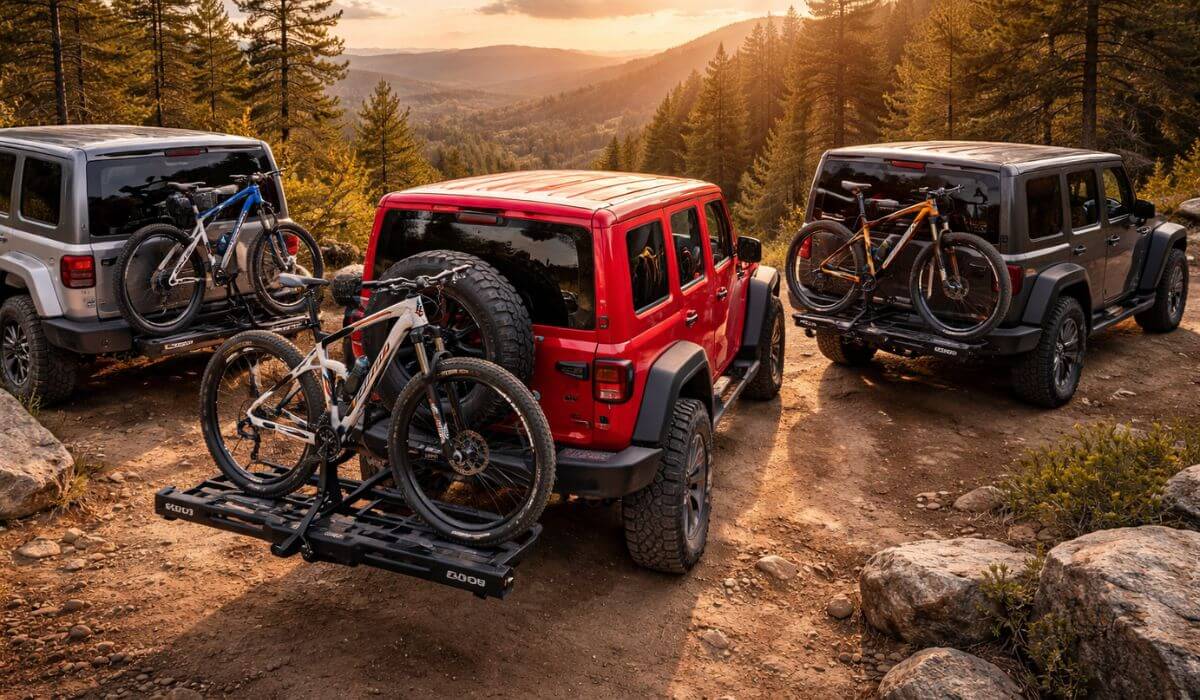
That oversized rear spare isn’t just a styling cue — it changes rack clearance, leverage, camera visibility, and even hitch stress. Add in JL vs. JK fitment differences and the electrified rear weight bias of the 4xe, and suddenly that “universal fit” rack starts looking like a very expensive mistake.
I’ve spent years around Wrangler builds — from daily Sahara commuters to trail-abused Rubicons running 35-inch rubber — and the number one failure I see isn’t bikes falling off… it’s owners choosing racks never engineered for the Wrangler’s rear geometry.
A standard hitch rack might bolt on, sure — but once loaded with two modern e-MTBs pushing 55 lbs each, the extra leverage from spare-tire clearance extensions can stress the hitch, block your backup camera, or stop the tailgate from opening entirely. And that’s before you hit washboard trails or off-camber climbs.
That’s exactly why this guide exists.
Not to recycle catalog specs — but to highlight racks that actually solve Wrangler-specific engineering challenges:
- Clearance for 35″ and 37″ spare tires
- Stable weight distribution behind short wheelbases
- Camera and ParkSense sensor visibility
- Tailgate usability with bikes mounted
- Trail vibration and anti-rattle integrity
Because in 2026, with heavier e-bikes, factory Extreme Recon tire packages, and more 4xe owners hauling bikes to silent trailheads, the wrong rack isn’t inconvenient — it’s incompatible.
Quick Top 3 Recommendations (If You Want Zero Guesswork)
If you don’t want to overthink it, these three racks consistently solve the biggest Wrangler pain points — clearance, strength, and real-world usability.
#1. Kuat Racks NV Base 2.0 Bike Rack
This is the rack most Wrangler owners upgrade to after failing with cheaper tray systems. A 60 lb per-bike capacity handles modern e-MTBs without flex, while the adjustable tire cradles clear wider off-road rubber. The integrated anti-wobble cam system keeps the rack silent even on washboard trails — something tailgate-mounted racks simply can’t match.
#2. Thule Apex XT Bike Hitch Rack
If you prefer a hanging rack that stays compact behind a rear spare, the Apex XT solves clearance without needing long hitch extenders. The arched mast design pushes bikes away from the spare tire, while tool-free tilt and fold functions preserve tailgate access — a major usability win for daily drivers.
#3. Allen Sports Premier Locking Quick Release 4-Bike Carrier (Model 400QR)
For families or group riders, this rack delivers serious carrying capacity without Wrangler fitment headaches. Built specifically to work around rear spares, it uses a quick-release tilt system plus dual compound tie-downs to stabilize four bikes. Add the integrated locking system, and you’ve got one of the most budget-friendly high-capacity Wrangler solutions available.
Why These 7 Racks Made the Cut
This isn’t a generic roundup. Every rack below was evaluated against Wrangler-specific criteria that most buyers don’t realize matter until it’s too late:
- Stinger Length vs. Spare Tire Depth — Critical for clearing 35″ tires without unstable hitch extensions
- 4xe Rear Load & EV Efficiency — Platform vs. hanging rack aerodynamic drag matters more on electric range
- Camera & Sensor Visibility — Offset masts and swing-away systems preserve backup safety tech
- Tailgate Functionality — Because removing bikes just to grab gear isn’t real-world practical
- Trail Stability — Anti-rattle systems that survive off-road articulation
Whether you’re hauling downhill rigs to Moab, e-bikes to forest trailheads, or family cruisers to weekend campsites — these racks represent the small group of hardware that actually works with the Wrangler chassis, not against it.
Best Bike Racks for Jeep Wrangler (2026) JL JK 4xe and Unlimited Models
#1. Editor’s Choice: Kuat NV Base 2.0 Platform Hitch Bike Rack
“Built for Wrangler owners hauling heavier MTBs and e-bikes, this all-metal platform rack supports 60 lbs per bike with zero frame contact. Adjustable tire cradles improve spare tire clearance, while the anti-wobble cam system keeps the rack stable even on rough trails. Integrated locks and tilt access complete the premium build.”
#2. Best 4-Bike Capacity Carrier: Thule Apex XT Hitch Rack
“A go-to solution for families, this hanging hitch rack carries four bikes with anti-sway cradles that prevent frame contact. The tilt feature maintains rear cargo access, and the raised mast design improves spare tire clearance on Wrangler builds. Lightweight yet impressively stable under load.”
#3. Best Value 4-Bike Rack for Spare Tire Wranglers: Allen Sports Premier 400QR
“Designed around rear spare tire setups, this quick-release hitch rack carries four bikes using dual compound cradles for frame protection. Foldable arms reduce bulk when not in use, while the locking hitch insert keeps the rack stable during highway or trail transport.”
#4. Best Swing Away Rack for Full Tailgate Access: RockyMounts BackStage
“Featuring a 180-degree swing-away system, this platform rack allows full tailgate access even when loaded. It supports 60 lbs per bike and fits tires up to 5 inches wide, making it ideal for heavier mountain bikes and overlanding setups needing uninterrupted cargo entry.”
#5. Best Spare Tire Mounted Rack: Yakima SpareRide
“This steel-built spare tire rack converts the Wrangler’s rear wheel into a stable 2-bike carrier. Anti-sway ZipStrip cradles secure frames, while the SKS locking system protects against theft. A clean solution for JK models and JL setups without camera interference.“
#6. Best Budget Platform Hitch Rack: Retrospec Lenox Tray Rack
“A tray-style platform rack offering 40 lbs per bike capacity with sliding wheel trays and adjustable frame grips. Lightweight yet stable for road trips and weekend rides, it folds down for cargo access and fits both 1¼” and 2” receivers — making it a strong entry-level platform choice.”
#7. Best Affordable Spare Tire Rack: Hollywood Racks SR1
“A lightweight, pre-assembled spare tire rack built for quick installs and everyday riders. Rubber cradles protect frames, integrated straps secure bikes, and foldable arms simplify storage. Best suited for stock spare tire Wranglers carrying lighter bikes.”
Expert Tip Before You Pick One
Here’s something most Wrangler owners only learn after wasting money on the wrong rack:
Measure from your hitch pin hole to the outer edge of your spare tire before you buy anything.
Not guess. Not eyeball. Actually measure it.
Because on a Wrangler, clearance is everything.
A rack might be rated for 60 lbs per bike and built like a tank — but if the stinger isn’t long enough to clear your spare, you’ll end up buying a hitch extender. And that extender doesn’t just push the rack back… it multiplies leverage on your hitch, increases wobble on trails, and cuts weight capacity — sometimes by 30–40%.
That’s how racks fail. Not from cheap metal — from bad geometry.
So if you’re running factory 33s, most racks here will clear fine.
Running 35s or Extreme Recon 37s? Stick to longer stinger platform racks or spare-tire-mounted systems.
Get that one measurement right, and you’ll avoid 90% of compatibility headaches Wrangler owners complain about.
How We Chose These Bike Racks for Jeep Wrangler
There are hundreds of bike racks online claiming “Wrangler compatibility.”
Most of them were never engineered with a Wrangler in mind.
They’re built around crossovers and pickup trucks — flat rear profiles, no spare tire obstruction, no tailgate swing clearance issues. Bolt them onto a Wrangler, and problems show up fast: blocked backup cameras, crushed bike frames against spare tires, tailgates that won’t open, or racks that wobble the moment pavement ends.
So instead of recycling spec sheets, we approached this the way a Wrangler owner actually would — by filtering racks through real-world fitment and usage conditions.
First came spare tire clearance testing.
Any rack that required unsafe hitch extenders or pushed bikes into the tire sidewall was out immediately. Wrangler owners upgrading to 35-inch rubber shouldn’t have to engineer workarounds just to carry bikes.
Next was rear access usability.
If you have to unload bikes just to grab recovery gear, camping equipment, or groceries — that rack doesn’t work for Wrangler life. Swing-away systems and tilt mechanisms were prioritized heavily here.
Then we evaluated load stability under trail vibration.
Wranglers don’t live on smooth highways. They see washboard roads, rock gardens, steep breakovers. Racks with weak anti-rattle systems or flex-prone joints didn’t make the list — even if they looked good on paper.
We also factored in modern bike weight realities.
Today’s e-MTBs routinely cross 50–60 lbs. Platform racks with reinforced trays and higher per-bike ratings earned priority over hanging racks that stress frames under that load.
Finally, we considered Wrangler tech integration — backup cameras, ParkSense sensors, and 4xe rear weight balance. Racks that preserved visibility and didn’t overload rear axle dynamics ranked higher.
The result is this list.
Seven racks that don’t just “fit” a Jeep Wrangler — they function with it. On pavement, on trails, loaded heavy, tailgate open, camera visible.
No filler picks. No catalog copy-paste.
Just hardware that Wrangler owners consistently rely on when the bikes actually need to make it to the trailhead — not just the driveway.
#1. Kuat Racks NV Base 2.0 Platform Hitch Bike Rack
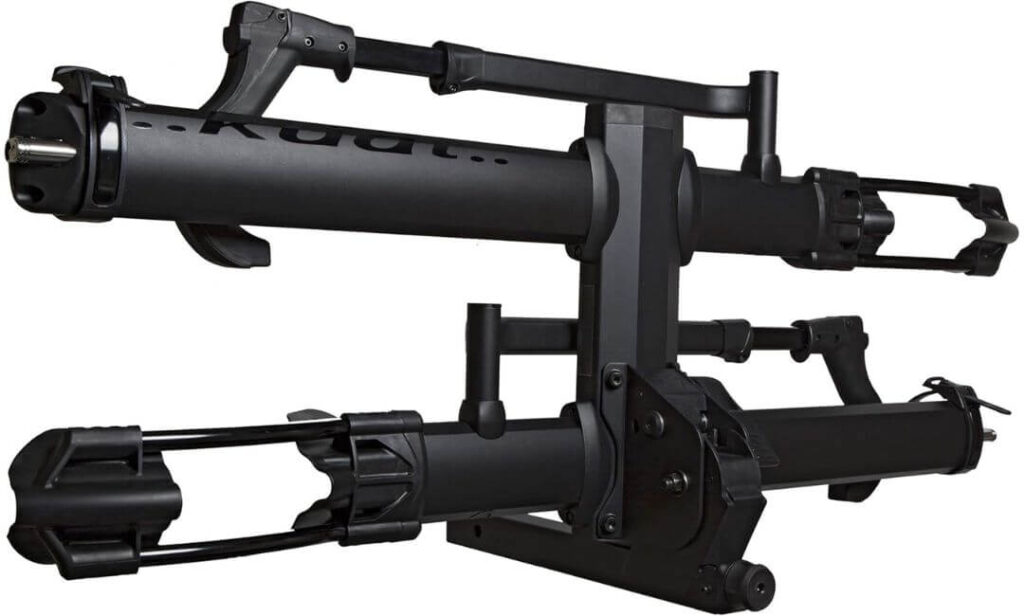
Quick Specs:
- Mount Type: 2-Inch Hitch Mount Platform Rack
- Bike Capacity: 2 Bikes (Expandable to 4 with add-on)
- Weight Capacity: 60 lbs per bike (120 lbs total)
- Rack Weight: 51 lbs
- Material: All-Metal Aluminum Construction
- Finish: Matte Black Powder Coat
- Foldable: Yes (Folds upright when not in use)
- Tilt Function: Foot-Operated Pivot System
- Security: Integrated Cable Locks + Hitch Lock
- Compatibility: Jeep Wrangler JL JK and 4xe (2″ receiver)
There’s usually a moment every Wrangler owner hits — when a basic rack just stops feeling safe.
Maybe it’s the first time you load a 50-lb e-MTB. Maybe it’s when you notice the rack flexing behind a 35-inch spare. Or when washboard roads turn your rearview mirror into a vibration test.
That’s where the NV Base 2.0 starts making sense.
This is an all-metal platform rack — no plastic trays, no frame-hanging stress points — built to hold bikes by the tires, not the frame. Each tray supports 60 lbs, which means modern downhill rigs and full-power e-bikes sit planted instead of swaying. The adjustable front tire cradle slides to dial clearance between handlebars and seat posts — small detail, big difference when hauling two wide MTBs.
The hitch cam system deserves mention too. Instead of tools, you hand-tighten the cam to eliminate play inside the receiver. On a Wrangler — especially short-wheelbase JKs — that anti-wobble integrity matters more than spec sheets admit.
Then there’s usability.
A foot-operated pivot lever tilts the rack down — even fully loaded — so you can still access the rear cargo area. Grocery runs, trail gear, recovery kits — no need to unload bikes just to open the back. Fold it upright when empty, and it sits tight to the vehicle instead of sticking out like scaffolding.
Security is integrated, not optional. Cable locks pull directly from the rack body, paired with a hitch lock to secure the entire system — useful when the Jeep’s parked at trailheads or campsites.
What Stands Out in Real Use
- True 60 lbs per bike capacity — handles heavy e-MTBs confidently
- All-metal construction feels trail-ready, not commuter-grade
- Adjustable tire cradles reduce bike-to-bike interference
- Hand-tight cam system removes hitch wobble without tools
- Integrated locks secure both bikes and rack together
One Thing to Know
With factory rear spare tires — especially 35″ setups — you may need a hitch extension for proper clearance, since the rack’s stinger length is built around standard rear profiles.
Wrangler-Specific Fitment Insights
On JL, JK, and 4xe Wranglers equipped with a 2-inch receiver, installation is straightforward — slide in, cam-tighten, load bikes.
Where things change is spare tire depth.
Wranglers running oversized tires push the rack further rearward. The NV Base 2.0 handles the added leverage well thanks to its all-metal structure, but clearance planning matters — particularly if you want full pivot tilt without tire interference.
For 4xe owners, the platform design also distributes bike weight lower and closer to the hitch — a subtle benefit when managing rear axle load alongside battery mass.
Pro Tip
If you’re running 35s or planning to upgrade, pair this rack with a reinforced hitch extension rated for e-bike loads — not a cheap hollow tube.
Do that, and the NV Base 2.0 stops feeling like an accessory… and starts feeling like part of the Jeep’s cargo system.
#2. Thule Apex XT Hanging Hitch Bike Rack
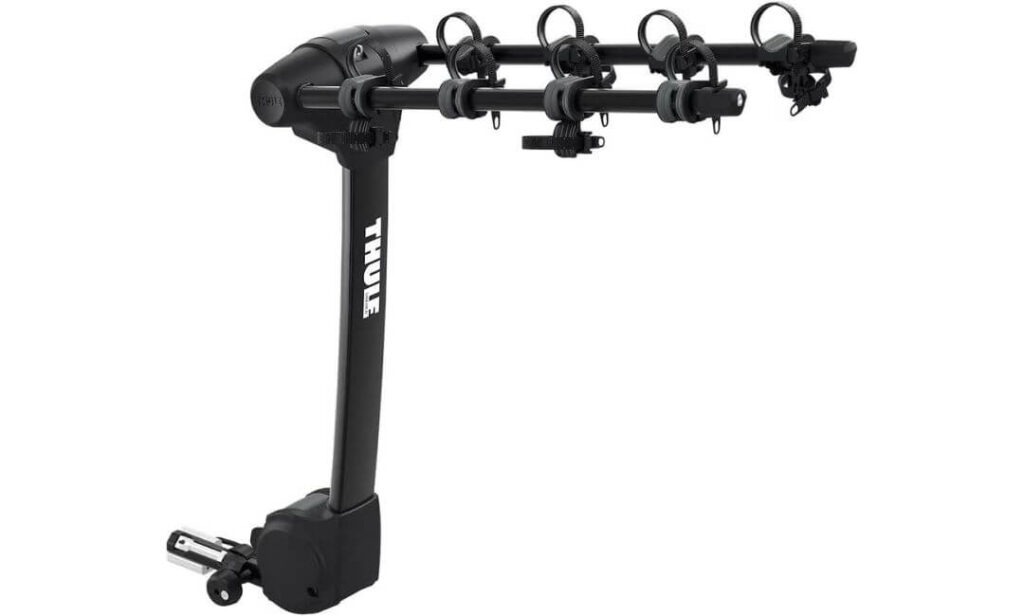
Quick Specs:
- Mount Type: Hanging Hitch Rack (Fits 1.25″ and 2″ Receivers)
- Bike Capacity: Up to 4 Bikes
- Total Load Capacity: 150 lbs
- Rack Weight: 35 lbs
- Construction: Metal Build
- Tilt Function: HitchSwitch Lever (Tilts for Rear Access)
- Arms: Foldable When Not in Use
- Stability: Anti-Sway Cradles + Ratcheting Straps
- Security: Integrated Cable Lock
- Compatibility: Jeep Wrangler JL JK and 4xe (with hitch receiver)
There’s a reason you see this rack everywhere from trailheads to ski-town parking lots.
Not because it’s flashy — but because it works.
The Apex XT isn’t a platform tray system. It’s a hanging rack — and that matters on a Wrangler. The elevated dual-arm design naturally pushes bikes away from the rear spare, which means fewer clearance headaches compared to some bulkier tray racks. On JL and JK models with factory 2-inch receivers, it slides in clean, tightens tool-free, and feels planted without wrestling with hardware.
At 35 pounds, it’s noticeably lighter than heavy-duty platform racks. That makes it easier to mount and remove — something Wrangler owners appreciate when the rack isn’t staying on full-time. Yet it still carries up to four bikes with a total capacity of 150 lbs. For families or group rides, that’s real utility without stepping into commercial-grade weight.
Where it really earns trust is stability.
The anti-sway cradles prevent bikes from knocking into each other — a common frustration with cheaper hanging racks. Ratcheting cradle straps cinch frames securely, and the integrated cable lock adds peace of mind when you’re parked at trailheads. The HitchSwitch lever tilts the rack down for rear access — so you’re not unloading four bikes just to grab gear from the cargo area.
It’s straightforward. Functional. Proven.
What Makes It a Strong Choice
- Carries up to 4 bikes with 150 lb total capacity
- Lightweight 35 lb design — easy to install and remove
- Anti-sway cradles prevent bike-to-bike contact
- HitchSwitch tilt system allows rear door access
- Fits both 1.25″ and 2″ receivers with included adapter
One Thing to Know
Because it’s a hanging-style rack, some unconventional bike frames may require a frame adapter for optimal positioning.
Wrangler-Specific Fitment Insights
On JL, JK, and 4xe models equipped with a hitch receiver, the Apex XT installs tool-free and locks into place quickly.
The elevated arms help reduce interference with rear spare tires, and the tilt feature maintains practical cargo access — critical for Wrangler owners who actually use their rear hatch daily.
For rougher terrain, some owners choose to add extra tie-down security for long off-road stretches — not because the rack is weak, but because Wranglers see terrain most SUVs never will.
For daily driving, family hauling, and weekend trail runs, this rack balances capacity, weight, and convenience in a way few 4-bike systems manage.
Pro Tip
If you’re hauling four bikes on a Wrangler, distribute heavier bikes toward the inside positions closest to the hitch. It reduces rear leverage and keeps handling predictable — especially on shorter wheelbase JK models.
#3. Allen Sports Premier Locking Quick Release 4-Bike Carrier (Model 400QR)
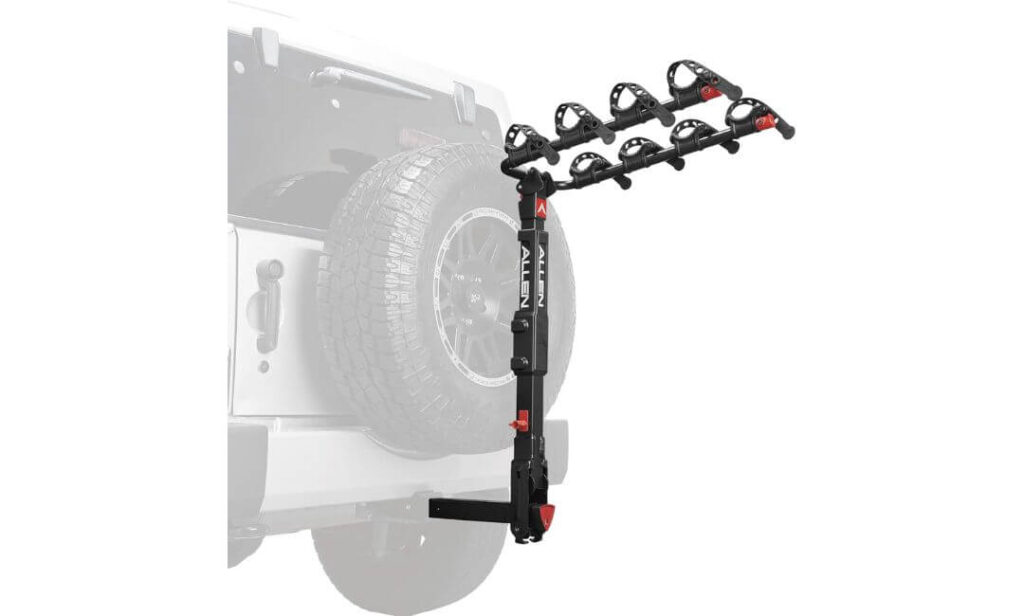
Quick Specs:
- Mount Type: 2-Inch Hitch Mount Hanging Rack
- Bike Capacity: 4 Bikes
- Total Load Capacity: 140 lbs
- Material: Alloy Steel Construction
- Color: Black
- Tilt Function: Internal Tilt-Away Release
- Arms: Quick-Set Foldable Carry Arms
- Security: Locking Hitch Insert with Keys
- Rack Weight: Lightweight Frame Design
- Compatibility: Jeep Wrangler JL JK and 4xe (2″ receiver)
This is the rack Wrangler owners usually land on when capacity becomes the priority.
Not everyone’s hauling two carbon trail bikes. Some are loading four full-size MTBs, kids’ bikes, or a mix of road and gravel setups — and that’s where most premium platform racks get expensive fast.
The Allen Sports Premier 400QR fills that gap.
It’s built around a quick-release hitch system that locks directly into a 2-inch receiver — no tools, no complicated assembly. Slide it in, tighten, lock it, done. The carry arms snap into position and fold flat when not in use, which keeps the rear profile cleaner when you’re driving rack-empty.
Stability comes from dual compound tie-down cradles paired with quick-set straps. Each bike sits in its own cradle pocket, reducing frame rub and side sway — something cheaper 4-bike racks struggle with once fully loaded. And with a 140 lb total capacity, it comfortably handles four adult bikes without feeling overstressed.
Where it becomes Wrangler-relevant is its spare tire clearance design.
Unlike shorter hanging racks, this one extends further off the hitch to accommodate rear-mounted spares — and the internal tilt release allows partial tailgate access without unloading bikes entirely. For quick cargo grabs, that matters more than spec sheets suggest.
What Makes It Stand Out
- Carries 4 bikes with 140 lb total load capacity
- Quick-release locking hitch insert for tool-free install
- Dual compound cradles stabilize frames individually
- Foldable carry arms reduce rear bulk when unused
- Designed to work around vehicles with rear spare tires
One Thing to Know
On Wranglers running oversized spare tires, you may still need a hitch extender to achieve full tailgate clearance.
Wrangler-Specific Fitment Insights
On JL, JK, and 4xe Wranglers with a 2-inch receiver, fitment is straightforward — but spare tire depth plays a role.
Stock tire setups usually clear fine. Step up to 35s, and spacing gets tighter. The rack’s extended hitch arm helps, but tailgate usability varies depending on tire size and wheel offset.
The tilt function allows access to the upper glass portion of the Wrangler’s split tailgate, though full lower gate swing may be limited without extensions.
For owners prioritizing bike capacity over full rear access, it remains one of the most practical high-volume hauling solutions available.
Pro Tip
If you’re loading four bikes, position the heaviest two closest to the vehicle and lighter bikes outward. It reduces frame sway and keeps hitch stress balanced — especially important on Wranglers with shorter rear overhang.
#4. RockyMounts BackStage Swing Away Platform Hitch Bike Rack
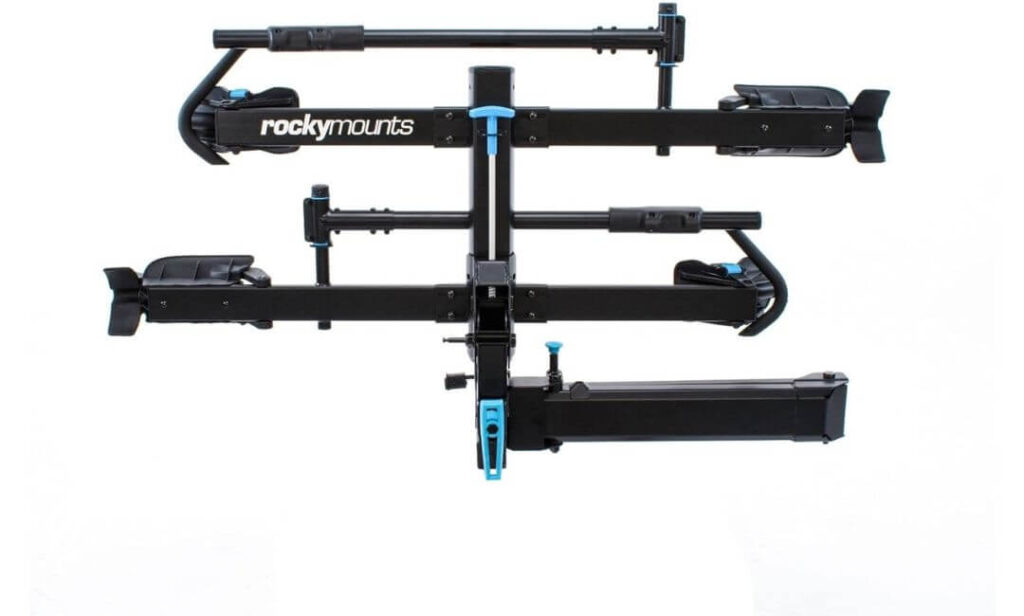
Quick Specs:
- Mount Type: 2-Inch Receiver Platform Rack
- Bike Capacity: 2 Bikes
- Weight Capacity: 60 lbs per bike
- Rack Weight: 59 lbs
- Swing Mechanism: 180° Full Swing Away
- Bike Mounting: Front Wheel Clamp (No Frame Contact)
- Tire Compatibility: Up to 5.0” Fat Bike Tires
- Wheel Size Support: 20” to 29”
- Wheelbase Compatibility: 34” to 49”
- Tilt Function: 30° Downward Tilt
- Anti-Wobble System: Premium 3-Axis Stabilization
- Security: Locking Hitch Pin + Cable Lock
- Compatibility: Jeep Wrangler JL JK and 4xe (2” hitch)
If you’ve ever tried opening a Wrangler tailgate with bikes mounted… you already know the frustration.
Most racks “tilt.” Few actually solve the problem.
The BackStage does — because it doesn’t just tilt… it swings completely out of the way. A full 180 degrees.
That means real rear access. Not partial. Not awkward. Full door swing — whether bikes are loaded or not. On a Wrangler where the tailgate is your primary cargo entry, that single feature changes daily usability more than load capacity ever will.
Structurally, this is a platform rack built for heavier bikes — 60 lbs per tray — and it secures them by the front wheel, not the frame. No top-tube pressure, no carbon frame stress, no awkward geometry conflicts. From skinny road tires to full 5-inch fat bike rubber, the trays adjust without drama.
Out on the road — or more realistically, off it — the rack’s 3-axis anti-wobble system keeps everything planted. That matters on Wranglers because the shorter rear overhang amplifies movement. Cheap racks bounce. This one doesn’t — once tightened, it feels like part of the chassis.
Fold it flat when empty, tilt it 30 degrees for quick hatch access, or swing it wide when you need full cargo entry. It’s built around real use, not showroom specs.
What Makes It Stand Out
- True 180° swing-away system allows full tailgate opening
- 60 lbs per bike capacity handles heavy MTBs and e-bikes
- Front wheel clamp design avoids frame contact damage
- Supports fat tires up to 5.0 inches wide
- Premium anti-wobble system keeps rack trail-stable
One Thing to Know
With larger rear spare tires, some Wranglers may need a small hitch extender for optimal swing clearance.
Wrangler-Specific Fitment Insights
On JL, JK, and 4xe Wranglers with a 2-inch receiver, the BackStage mounts directly without modification.
Where it earns its reputation is cargo usability. Swing the rack out, and the Wrangler tailgate opens fully — recovery gear, coolers, camping kits, all accessible without unloading bikes.
For off-road use, the rack’s heavier 59 lb build actually works in its favor — less flex, more planted feel over uneven terrain. Owners regularly run it on forest roads and trail approaches without the vibration fatigue common in lighter racks.
For overlanders, campers, and trail riders, this is less a bike rack… more a rear access solution that happens to carry bikes extremely well.
Pro Tip
Before installing, grease the swing-arm pivot joint lightly. It keeps long-term movement smooth — especially if your Wrangler sees dust, mud, or winter road salt.
#5. Yakima SpareRide Spare Tire Mounted Bike Rack
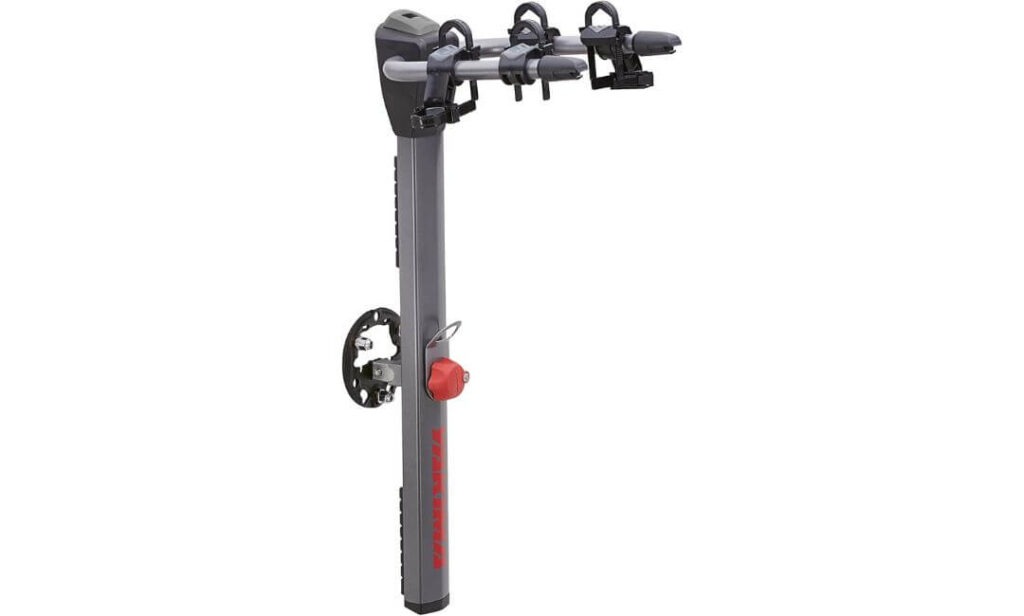
Quick Specs:
- Mount Type: Rear Spare Tire Mounted Rack
- Bike Capacity: 2 Bikes
- Total Load Capacity: 75 lbs (approx combined)
- Material: Alloy Steel Construction
- Color: Silver / Black
- Rack Weight: 8 kg
- Bike Hold System: SuperCush ZipStrip Cradles
- Security: SKS Integrated Locking System
- Vehicle Protection: TireTread Pads
- Extras: Built-In Bottle Opener
- Compatibility: Jeep Wrangler JK Fully / JL & 4xe Conditional
There’s a certain kind of Wrangler owner this rack immediately makes sense for.
The kind who doesn’t want a hitch rack hanging three feet off the rear.
The kind who keeps departure angles clean for trails.
The kind who looks at that rear spare tire and thinks — “Why not use what’s already there?”
That’s exactly what the SpareRide does.
Instead of mounting below the spare like hitch racks, it mounts directly onto the spare tire itself — turning the Wrangler’s most iconic design feature into a functional bike carrier. No hitch required, no receiver extensions, no added rear leverage.
The steel frame clamps securely to the spare using a locking knob system, backed by Yakima’s SKS lock core — securing both rack and bikes together. Once tightened, the rack sits surprisingly stable, even over uneven pavement or gravel approaches.
Loading bikes is simple thanks to SuperCush ZipStrip cradles — flexible, anti-sway holders that prevent bikes from colliding during transport. The cradles grip frames firmly without over-compressing tubing, which matters for lighter alloy and carbon builds.
And then there’s a small detail Wrangler owners oddly love — the integrated bottle opener. Trailhead convenience. Camping practicality. One of those touches that makes the rack feel designed for lifestyle, not just transport.
What Makes It Stand Out
- Direct spare tire mounting — no hitch required
- Stable steel construction with anti-sway cradle system
- SKS locks secure both rack and bikes together
- Preserves ground clearance for off-road driving
- Lightweight design compared to hitch racks
One Thing to Know
JL and 4xe Wranglers with spare-tire-mounted backup cameras may require camera removal for installation.
Wrangler-Specific Fitment Insights
On JK Wranglers — especially 2012–2018 models — the SpareRide fits cleanly with stock spare tires and most lug patterns. Even many 35-inch spare setups remain compatible as long as tire width stays under roughly 12.5 inches.
JL and 4xe models require more attention.
Because many newer Wranglers mount the backup camera directly through the spare tire hub, the rack’s mounting plate can conflict with camera hardware. On camera-free spares, installation remains straightforward. With integrated cameras, adjustments — or alternative rack types — may be necessary.
For Wrangler owners prioritizing clearance, lighter weight, and spare-tire utilization over hitch-mounted bulk, this rack remains one of the cleanest rear-mount solutions available.
Pro Tip
If you run oversized off-road tires, add a protective rubber spacer between the rack plate and wheel face. It reduces vibration transfer and keeps powder-coated wheels scratch-free over time.
#6. Retrospec Lenox Tray Style Hitch Mount Bike Rack
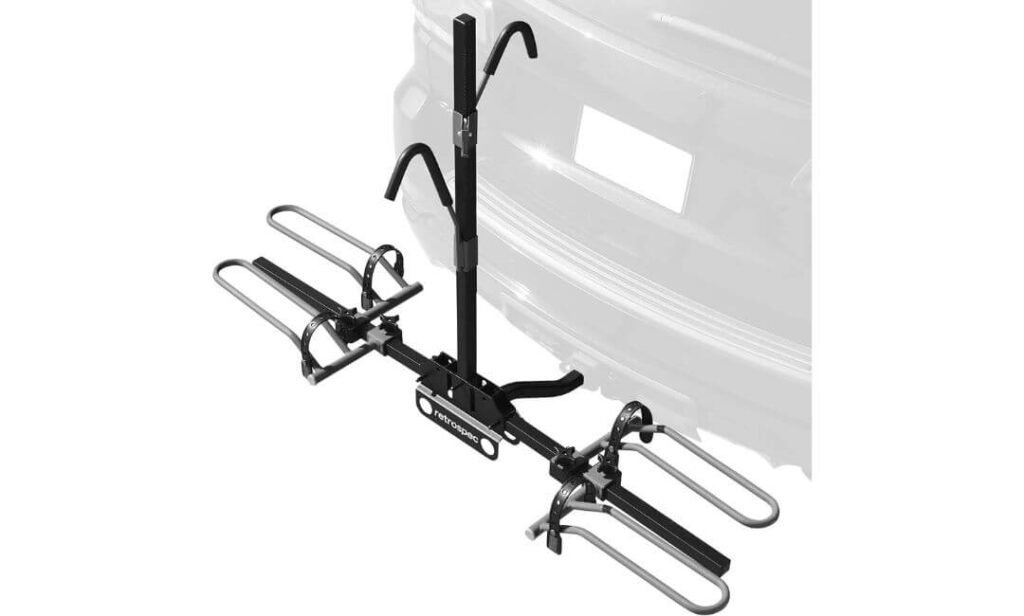
Quick Specs:
- Mount Type: Tray Style Hitch Mount (U-Bolt System)
- Bike Capacity: 2 Bikes
- Weight Capacity: 40 lbs per bike
- Rack Weight: 31 lbs
- Material: Alloy Steel Construction
- Wheel Compatibility: 20” to 29” Bikes
- Hitch Fitment: 1¼” and 2” Class II / III Receivers
- Foldable: Yes (Center Arm Folds / Removes)
- Rear Access: Tilt / Fold Down Function
- Color: Black
- Compatibility: Jeep Wrangler JL JK and 4xe (with hitch)
Not every Wrangler owner needs a $900 rack.
Some just want a clean, stable way to carry two bikes on weekends — without turning the rear of the Jeep into a steel jungle gym.
That’s where the Lenox makes sense.
This is a tray-style platform rack — meaning bikes sit on wheel trays rather than hanging from frames. That alone makes it more Wrangler-friendly than cheaper hanging racks, especially when dealing with heavier MTBs or mixed bike geometries.
The sliding wheel platforms adjust to fit bikes from 20-inch wheels all the way up to 29ers, and each tray supports up to 40 lbs — solid for road bikes, hybrids, and most trail MTBs. Grip arms clamp frames securely while ratcheting wheel straps stabilize the base, keeping bikes from swaying on highway runs.
At 31 lbs, it’s lighter than most platform racks, making install and removal far less of a chore. Fold the center mast down, and you regain access to the rear cargo area without fully removing the rack — practical for grocery runs, gear loading, or campsite stops.
Assembly is straightforward too. Most owners have it mounted and road-ready in under an hour — no specialty tools, no complicated alignment.
What Makes It a Smart Buy
- Budget-friendly tray platform design
- 40 lbs per bike capacity for everyday riders
- Adjustable wheel trays fit multiple bike sizes
- Fold-down mast allows rear cargo access
- Lightweight build simplifies installation
One Thing to Know
Under heavier loads, minor hitch wobble can occur — typical for racks in this price range.
Wrangler-Specific Fitment Insights
On JL, JK, and 4xe Wranglers equipped with a Class II or III hitch, the Lenox mounts without modification.
Because it’s a tray rack, bikes sit lower and further from the spare tire than hanging racks — improving clearance in most stock-tire setups. For oversized 35-inch spares, spacing should still be checked before purchase.
The fold-down mast helps maintain tailgate usability, though full door swing may require temporarily lowering or removing the center arm depending on tire size and bike positioning.
For Wrangler owners wanting platform stability without premium pricing, it’s a practical middle-ground solution.
Pro Tip
When mounting, tighten the U-bolt evenly from both sides instead of fully cranking one end first. It centers the rack better in the receiver and reduces long-term wobble.
#7. Hollywood Racks SR1 Spare Tire Bike Rack
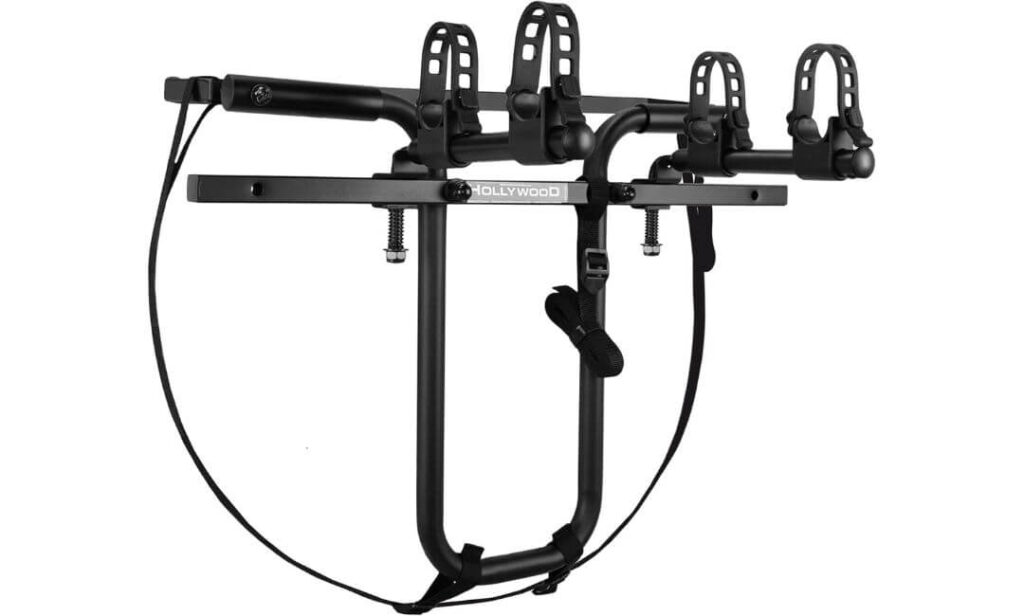
Quick Specs:
- Mount Type: Spare Tire Strap Mount Rack
- Bike Capacity: 2 Bikes
- Weight Capacity: 35 lbs per bike
- Rack Weight: 10 lbs
- Material: Steel Frame with Rubber Cradles
- Installation: Pre-Assembled Clamp System
- Arms: Foldable Support Arms
- Bike Hold System: Integrated Safety Straps
- Camera Compatibility: Works but may obstruct view
- Compatibility: Jeep Wrangler JL JK and 4xe (Stock Spare Tires)
Some Wrangler owners want maximum capacity.
Some want swing-away engineering.
And some just want the simplest possible way to carry two bikes without touching the hitch, adding extensions, or bolting on heavy platform steel.
That’s exactly where the SR1 lives.
This rack mounts directly onto the spare tire using a strap-and-clamp system — no receiver, no tools beyond basic tightening. It comes pre-assembled, so install time is measured in minutes, not hours. Once secured, the steel support arms extend outward while soft rubber cradles hold bike frames in place without paint scuffs or metal contact.
At just 10 lbs, it’s one of the lightest racks Wrangler owners can run. That matters if you don’t want permanent rear weight or if you remove the rack between trips. Fold the arms down when not in use, and it stores cleanly in a garage or cargo area without eating space.
Each bike position supports up to 35 lbs — ideal for road bikes, hybrids, and standard mountain bikes. Integrated straps keep frames tight against the rack, limiting sway during highway drives or light trail approaches.
It’s simple. Mechanical. No overengineering — just a functional spare-tire carrier that does its job without drama.
What Makes It a Practical Choice
- Direct spare tire mounting — no hitch required
- Lightweight 10 lb design easy to install/remove
- Pre-assembled system saves setup time
- Rubber cradles protect bike frames
- Foldable arms for compact storage
One Thing to Know
Not designed for oversized 35-inch spare tires or heavy e-bikes.
Wrangler-Specific Fitment Insights
On JL, JK, and 4xe Wranglers with factory spare tires, fitment is straightforward. The adjustable mounting system centers on the wheel and straps down securely — even over soft tire covers if tightened properly.
Because many newer Wranglers place the backup camera inside the spare hub, bikes will partially block the rear view when loaded. The rack itself remains compatible — visibility just becomes limited while transporting bikes.
For stock-tire daily drivers, though, it’s one of the fastest ways to add bike-carrying capability without modifying the vehicle or installing a hitch receiver.
Pro Tip
If your spare has a soft vinyl cover, remove it before installing the rack. Direct strap contact improves grip and reduces long-term strap loosening.
Side by Side Comparison of the Best Bike Racks for Jeep Wrangler
| Bike Rack | Mount Type | Bike Capacity | Per Bike Weight Limit | Wrangler Spare Tire Clearance | Rear Access | Best Use Case |
|---|---|---|---|---|---|---|
|
Kuat NV Base 2.0 Premium Platform Pick |
2” Hitch Platform | 2 Bikes | 60 lbs | May need extender on 35” tires | Tilts Down | Heavy e-MTBs & trail builds |
|
Thule Apex XT Best 4-Bike Carrier |
Hanging Hitch | 4 Bikes | ~37.5 lbs | Clears most stock spares | Tilt Access | Family & group rides |
|
Allen Sports 400QR Value Capacity Pick |
2” Hitch Hanging | 4 Bikes | 35 lbs | Extender needed on larger spares | Partial Tilt | Budget 4-bike hauling |
|
RockyMounts BackStage Full Access Swing Rack |
2” Swing-Away Platform | 2 Bikes | 60 lbs | May need small extender | 180° Swing Away | Overlanding & cargo access |
|
Yakima SpareRide Spare Tire Mount |
Rear Spare Tire | 2 Bikes | ~35 lbs | Fits up to ~35” tires* | Limited | No-hitch Wrangler setups |
|
Retrospec Lenox Budget Platform |
Tray Hitch Mount | 2 Bikes | 40 lbs | Check clearance on 35s | Fold / Tilt | Weekend riders |
|
Hollywood Racks SR1 Light Duty Spare Rack |
Strap Spare Tire | 2 Bikes | 35 lbs | Stock tires only | Blocked | Light bikes & short trips |
The 4xe Factor Most Bike Rack Guides Ignore
If you’re running a Wrangler 4xe, you’re not just carrying bikes — you’re carrying them on a chassis that behaves differently from every gas Wrangler before it.
Same body. Same spare tire. Same hitch location.
But the moment electrification entered the platform, rear-load physics changed.
And bike racks suddenly started affecting things owners never had to think about before — EV range, charging access, and weight balance.
This section matters more than most buyers realize.
EV Range vs Rack Aerodynamics
On paper, the Wrangler 4xe delivers around a 20-mile all-electric driving window.
In real life? Rack choice can shave measurable efficiency off that number.
Vertical hanging racks create more aerodynamic drag because bikes sit higher and catch direct airflow. Platform racks keep bikes lower, tucked closer to the vehicle’s wake zone.
On short EV-only drives — grocery runs, trailhead commutes, campground loops — that difference shows up faster than expected.
It’s not dramatic range loss… but it’s real.
If maximizing electric-only usage matters to you, platform racks tend to disturb airflow less than upright hanging systems — especially when folded up empty.
Rear Axle Load Distribution
The 4xe’s battery pack adds significant weight beneath the rear seating area.
Now add:
- A 50 lb rack
- Two 55 lb e-bikes
- A hitch extension for spare clearance
Suddenly you’re stacking over 150–180 lbs behind the axle line.
Short wheelbase Wranglers feel that load more than longer SUVs — especially over bumps or trail articulation.
That’s why heavier platform racks with reinforced stingers tend to perform better on the 4xe than lightweight hanging racks when hauling e-bikes. They distribute weight lower and closer to the receiver instead of suspending it outward.
Charging Port Clearance Reality
Here’s something almost no rack guide talks about.
The 4xe charging port sits on the front driver-side quarter panel — which sounds unrelated to bike racks… until you park in tight garages.
Swing-away racks — especially 180° systems — require rear clearance to open. In confined garage installs, owners often back in close to walls to reach charging cables comfortably.
If the rack swings wide, it can limit how tightly you can park — indirectly affecting charging convenience.
It’s a small lifestyle detail, but daily 4xe owners notice it fast.
Backup Camera & Sensor Load
Because many JL-based 4xe models run spare-tire-mounted cameras, rack positioning matters even more.
Platform racks sit lower, often preserving partial camera visibility. Hanging racks and spare-tire-mounted systems tend to block it more aggressively once bikes are loaded.
For urban EV driving — parking garages, silent low-speed maneuvering — that visibility becomes more relevant than trail users expect.
Real-World Takeaway for 4xe Owners
If you’re carrying heavier modern bikes on a plug-in Wrangler:
- Platform hitch racks balance weight better
- Lower bike positioning improves aero efficiency
- Reinforced anti-wobble systems reduce rear oscillation
- Swing-away clearance should be garage-tested
- Spare-tire racks may interfere with camera hardware
It’s less about “Will it fit?”
More about “How does it behave on an electrified Wrangler platform?”
Choose accordingly.
Hitch vs Spare Tire Bike Racks for Jeep Wrangler
Choose the right mount style by understanding how hitch and spare tire bike racks affect clearance, tailgate access, stability, and overall fitment on your Jeep Wrangler.
Which One Actually Works Better on a Wrangler Chassis?
This is the fork-in-the-road decision every Wrangler owner hits before buying a rack.
Not brand. Not price.
Mount type.
Because on a Wrangler, where the spare tire sits, how the tailgate opens, and how short the rear overhang is — rack style matters more than rack quality.
You can buy a premium rack in the wrong mount type and still hate using it.
So instead of generic pros/cons, let’s break this down the way Wrangler owners experience it in real use.
Load Strength & Bike Weight Reality
If you’re hauling modern mountain bikes or e-bikes, hitch racks immediately pull ahead.
Platform hitch racks commonly handle 60 lbs per bike, sometimes more. That covers downhill MTBs, enduro builds, and full-power e-bikes without stressing trays or arms.
Spare tire racks, on the other hand, typically cap around 30–35 lbs per bike.
They’re perfect for road bikes, hybrids, and lighter trail rigs — but once bike weight climbs, frame sway and tire mount stress increase fast.
Realistically:
- Heavy bikes → Hitch platform
- Mixed family bikes → Hanging hitch
- Lightweight bikes → Spare tire rack works fine
Spare Tire Clearance & Rack Geometry
This is where Wrangler-specific engineering comes into play.
Hitch racks mount below the spare — so clearance depends on stinger length vs tire depth.
Stock tires usually clear.
35-inch tires often need extenders.
37s almost always do.
Spare tire racks bypass the problem entirely because they mount directly onto the wheel hub — no clearance math required.
But that simplicity comes with trade-offs.
Tailgate Access & Cargo Usability
Wrangler tailgates open sideways — not upward like crossovers.
That changes everything.
Basic hitch racks tilt down — giving partial access.
Hanging racks do the same.
But swing-away hitch racks? They clear the entire rear door.
Spare tire racks don’t move at all — which means bikes must come off before opening the tailgate.
For overlanders, campers, or anyone accessing recovery gear frequently, swing-away hitch racks become lifestyle upgrades, not luxuries.
Camera & Sensor Visibility
JL and 4xe Wranglers often house backup cameras inside the spare tire hub.
Spare tire racks mount directly over that zone — so once bikes are loaded, rear visibility gets blocked or heavily reduced.
Hitch racks sit lower, leaving partial camera visibility intact depending on bike size and positioning.
If you rely heavily on parking sensors or tight urban maneuvering, hitch racks interfere less with rear tech.
Off-Road Stability
Wranglers don’t live on smooth pavement.
Short wheelbases amplify rear movement, especially with weight hanging off the back.
Platform hitch racks win here because:
- Bikes sit lower
- Weight stays closer to the hitch
- Anti-wobble systems reduce oscillation
Spare tire racks hold steady on-road but transfer trail vibration directly into the tire mount — which isn’t built for dynamic loads.
For forest roads? Fine.
For rock trails? Hitch platforms feel far more planted.
Real-World Decision Breakdown
If we strip away marketing language and look at how Wrangler owners actually use their rigs, the choice becomes clearer:
Go Hitch Rack If You:
- Carry heavy MTBs or e-bikes
- Run 2-bike premium setups
- Need better trail stability
- Want partial camera visibility
- Don’t mind hitch extensions
Go Spare Tire Rack If You:
- Don’t have a hitch receiver
- Carry lightweight bikes
- Want simpler installation
- Prefer lighter rack weight
- Drive mostly on-road
Where Most Buyers Go Wrong
They choose based on price — not usage.
A $150 spare tire rack sounds great… until you upgrade to heavier bikes.
A $900 platform rack feels excessive… until you load two 55-lb e-bikes and feel zero movement.
Wrangler rack buying isn’t about cost.
It’s about matching rack physics to how you actually use the Jeep.
How to Choose the Right Bike Rack for Your Jeep Wrangler
Make a confident buying decision by matching rack type, bike weight, spare tire size, and tailgate access needs to your specific Jeep Wrangler setup.
A Wrangler Owner’s Buying Framework — Not a Catalog Checklist
By this point, you’ve seen the racks.
You’ve seen the mount types.
You know hitch vs spare tire isn’t just preference — it’s compatibility physics.
Now comes the part where most buyers still mess up.
They choose based on price… or brand… or Amazon ratings.
But Wrangler rack buying doesn’t work like that.
Because the same rack that works perfectly on one Wrangler build can become unusable on another — simply due to tire size, hitch geometry, or how the Jeep is actually used day to day.
So instead of generic “buying tips,” here’s the real decision framework Wrangler owners use after they’ve lived with these racks.
1. Start With Your Spare Tire — Not Your Bikes
Most buyers start by looking at bike weight.
Wrong starting point.
On a Wrangler, your spare tire dictates rack compatibility before bike capacity even enters the conversation.
Stock 31–33” tires?
Most hitch racks clear without drama.
35” tires?
Now you’re measuring stinger length and tilt clearance.
37” Extreme Recon setups?
Swing-away racks or longer platform trays become mandatory if you want tailgate usability.
Ignore tire depth, and you’ll end up buying hitch extenders — which reduce weight ratings and increase rack movement.
The tire decides the rack… not the other way around.
2. Match Rack Style to Bike Weight Reality
Modern bikes aren’t light anymore.
A downhill MTB can hit 40 lbs.
Full-power e-bikes push 55–65 lbs.
If you’re hauling anything near those numbers, hanging racks and spare-tire carriers start reaching their limits fast.
Platform racks distribute weight through the wheels — not the frame — which reduces stress on both bike and rack structure.
If your garage holds carbon MTBs, long-travel enduro builds, or e-bikes… start with platform systems and work backward from there.
3. Decide How Often You’ll Access the Tailgate
This sounds small — until you live with the rack.
If your Wrangler carries:
- Recovery gear
- Camping equipment
- Tools
- Fridges or coolers
Then tailgate access matters daily.
Tilt racks give partial access.
Swing-away racks give full access.
Spare tire racks give none without unloading bikes.
Overlanders and campers almost always end up upgrading to swing-away systems — not for bikes, but for cargo usability.
4. Think About Where You Actually Drive
Highway driving and trail driving stress racks differently.
On pavement, almost any rack feels stable.
On forest roads, washboard surfaces, or rock approaches — rear oscillation starts showing.
Short-wheelbase Wranglers amplify rack movement more than longer SUVs.
That’s why anti-wobble hitch systems, reinforced stingers, and tray-style platforms become more important for off-road users than casual riders expect.
If your Jeep sees dirt regularly, build rack strength into the buying decision early.
5. Factor In Wrangler Tech Integration
JL and 4xe Wranglers introduced things older JK owners never had to consider:
- Spare-tire-mounted backup cameras
- Parking sensors
- Heavier rear curb weight (4xe battery)
Spare tire racks can block cameras.
Hanging racks can interfere with sensors.
Heavy bike loads can exaggerate rear sag on electrified models.
It’s not about rack compatibility anymore — it’s about tech coexistence.
Choose a rack that works with the Wrangler’s systems, not against them.
The Shortcut Most Experienced Owners Use
If you want the fastest way to narrow choices, answer these five questions first:
- What size spare tire am I running?
- How heavy are my bikes?
- Do I need tailgate access with bikes loaded?
- Will I drive off-road with the rack mounted?
- Do I run a backup camera in the spare hub?
Answer those honestly — and 70% of rack options eliminate themselves automatically.
Real-World Buyer Profiles
To simplify decisions even further:
- Weekend riders with stock tires → Spare tire rack or budget tray rack
- Families hauling 4 bikes → Hanging hitch rack
- E-bike owners → Heavy-duty platform rack
- Overlanders / campers → Swing-away platform rack
- 4xe efficiency-focused owners → Low-profile hitch platform
Match the rack to the lifestyle — not just the vehicle.
Jeep Wrangler Bike Rack Compatibility Guide
Understand how rack fitment changes across JL, JK, and 4xe models by factoring spare tire size, backup camera placement, hitch geometry, and rear weight distribution before choosing your setup.
JL vs JK vs 4xe — What Actually Fits, What Doesn’t, and Why
Most bike rack guides stop at “Fits Jeep Wrangler.”
That’s lazy.
Because a JK on stock 32s behaves nothing like a JL running 35s.
And a 4xe with a rear battery pack doesn’t load the same way a gas Rubicon does.
If you want your rack choice to feel right long-term — not just bolt on temporarily — you need to understand how each Wrangler generation changes the equation.
Let’s break it down properly.
JK Wrangler (2007–2018)
The Simplest Rack Platform — With One Catch
The JK is the most rack-friendly Wrangler generation.
- Most models run external spare tires without integrated backup cameras.
- Factory 2-inch receivers are common.
- Rear sensor tech is minimal compared to JL.
That makes hitch racks straightforward installs — especially platform trays and hanging 4-bike systems.
Spare tire racks also shine on JKs because there’s no camera hub conflict in the center of the wheel.
The only variable?
Oversized tires.
Once JK owners upgrade to 35-inch rubber, hitch stinger clearance becomes critical. Short-arm racks may need extenders, which reduce weight capacity. That’s where reinforced platform racks outperform lighter budget options.
JK Verdict:
Most flexible generation. Hitch or spare tire racks both work well — tire size determines final decision.
JL Wrangler (2018–Present)
The Camera & Clearance Generation
The JL introduced one major change that affects rack selection immediately:
The backup camera moved into the center of the spare tire.
That single design shift changes spare tire rack compatibility.
Spare-mounted racks can block camera visibility or require removal/relocation hardware. Some work — some don’t — but none behave as cleanly as they did on JK models.
Hitch racks became the safer universal option for JL owners.
However, JL models also introduced larger factory tire packages — including Extreme Recon 35-inch setups. That increases clearance challenges for shorter hitch racks.
Platform racks with longer stingers or swing-away mechanisms handle JL builds best.
JL Verdict:
Hitch-mounted platform racks are usually the cleanest solution. Spare tire racks require camera awareness.
4xe Wrangler (Electrified JL Platform)
Same Body, Different Physics
The 4xe shares the JL chassis — same spare location, same hitch geometry — but adds electrification.
That adds weight.
The battery pack sits under the rear seating area, increasing rear curb weight compared to gas models. Add two heavy e-bikes and a steel rack, and you’re stacking significant mass behind the axle line.
On-road? You’ll feel it during braking.
Off-road? You’ll notice it on steep climbs or uneven articulation.
That’s why heavier-duty platform racks with anti-wobble systems perform better on 4xe models than lightweight hanging racks.
There’s also the EV efficiency factor.
Lower-profile platform racks create less aerodynamic drag than tall hanging racks — which can help preserve more of that limited electric-only range during short drives.
And just like the JL, spare-tire-mounted camera placement remains a factor.
4xe Verdict:
Choose strong platform hitch racks. Weight balance and aero efficiency matter more here than on gas models.
2-Door vs 4-Door (Unlimited) Consideration
Short wheelbase 2-door Wranglers exaggerate rear rack movement more than Unlimited models.
Less rear overhang means:
- More visible bounce on rough terrain
- More leverage from heavier racks
- Greater sensitivity to hitch extensions
If you drive a 2-door, prioritize:
- Strong anti-wobble systems
- Platform racks over hanging racks
- Avoiding long hitch extenders
Unlimited owners get slightly more forgiveness due to longer wheelbase stability.
Quick Compatibility Snapshot
If you want it simplified:
- JK + Stock Tires → Most racks fit cleanly
- JK + 35” Tires → Check stinger length
- JL + Camera → Hitch racks preferred
- JL + 35s → Longer platform racks recommended
- 4xe + Heavy Bikes → Reinforced platform only
- 2-Door Models → Minimize rack leverage
Why This Section Matters
Most returns happen not because racks are defective — but because buyers don’t match rack style to Wrangler generation.
Fitment isn’t just about hitch size.
It’s about:
- Spare tire depth
- Camera placement
- Wheelbase length
- Rear weight distribution
When those align with the rack design, everything feels stable, accessible, and confidence-inspiring.
When they don’t, even premium racks feel like compromises.
FAQs About Bike Racks for Jeep Wrangler
Will a bike rack fit my Jeep Wrangler if I have a 35-inch spare tire?
It depends more on rack geometry than brand name. Most hitch racks are designed around standard rear profiles, not oversized Wrangler spares. With 35-inch tires, shorter stingers often force you into using hitch extensions — which reduce weight capacity and increase leverage. Platform racks with longer arms or swing-away systems usually clear better without compromising stability. Spare tire-mounted racks can fit 35s in some cases, but tire width becomes the limiting factor. Measure from the hitch pin hole to the outer edge of your spare before buying — that single number prevents 90% of clearance problems.
Can I open the Wrangler tailgate with bikes still mounted?
Tilt racks allow partial access. Swing-away racks allow full access. Spare tire racks require unloading bikes first. The Wrangler’s side-hinged tailgate changes everything compared to liftgate SUVs. If you regularly access recovery gear, camping equipment, or tools, a swing-away platform rack becomes more than convenience — it becomes necessity. Buyers who ignore this usually upgrade later. Decide based on how often you open the rear door, not just how often you carry bikes.
Are hitch extenders safe to use on a Wrangler?
They’re safe only if you understand what they do. Extenders increase distance from the hitch, which multiplies leverage and reduces rated capacity — sometimes by 30–50%. On short-wheelbase Wranglers, that extra leverage is felt more during braking and off-road articulation. If you must use one for spare clearance, choose a reinforced, weight-rated extender specifically approved for bike racks. Avoid lightweight hollow-tube adapters — they’re designed for cargo carriers, not dynamic bike loads bouncing on trails.
What’s the best type of rack for heavy e-bikes on a Wrangler 4xe?
Platform hitch racks with at least 60 lbs per bike capacity are the safest choice. Hanging racks stress frames, and spare tire racks typically cap at lower weight limits. The 4xe’s added rear weight means stability matters more, not less. Lower-profile platform trays also create less aerodynamic drag, which can help preserve some electric-only efficiency during short trips. Look for anti-wobble systems and reinforced hitch cams — not just high weight ratings on paper.
Is it safe to drive off-road with a bike rack mounted?
It depends on terrain and rack type. Gravel roads and mild forest trails are usually fine with properly secured racks. Technical rock crawling or steep departure angles increase stress dramatically — especially with long hitch extensions. Platform racks with tight anti-wobble systems handle vibration better than hanging or spare-mounted designs. Before any trail run, check hitch tightness and strap tension. A rack that feels solid on pavement should feel solid when you shake it by hand — if it moves easily, it will move more on the trail.
Closing Thoughts — The Rack You Choose Changes More Than Just How You Carry Bikes
By now, you’ve probably realized something most buyers don’t understand until after they’ve already spent money:
On a Jeep Wrangler, a bike rack isn’t just an accessory — it becomes part of the vehicle’s behavior.
It changes how the rear swings open.
How weight sits behind the axle.
How stable the Jeep feels on broken pavement.
Even how convenient trail stops and campsite unloads feel at the end of a long drive.
And that’s why the right rack feels invisible once installed — no rattles in the mirror, no clearance anxiety backing into parking spots, no unloading bikes just to grab gear.
You just load up… lock down… and go.
That’s really what separates Wrangler-specific racks from generic ones. Not marketing. Not brand logos. Real usability — the kind you notice at gas stations, trailheads, and dusty pull-offs miles away from pavement.
Some owners here will gravitate toward heavy-duty platform systems because their bikes demand it.
Some will lean into swing-away racks because cargo access matters more than anything.
Others will keep it simple with spare tire mounts that respect the Wrangler’s original design.
None of those choices are wrong — as long as the rack matches how the Jeep is actually used.
Because at the end of the day, the goal isn’t to buy the most expensive rack… or the most popular one.
It’s to buy the one that disappears behind you while you’re driving — quietly doing its job while your focus stays on the road, the trail, and wherever the ride starts next.
Pick the rack that fits your Wrangler’s build, your bikes’ weight, and your lifestyle’s reality — and you’ll never think about it again.
Which, honestly, is exactly how the best gear should work.
Also Check:


