
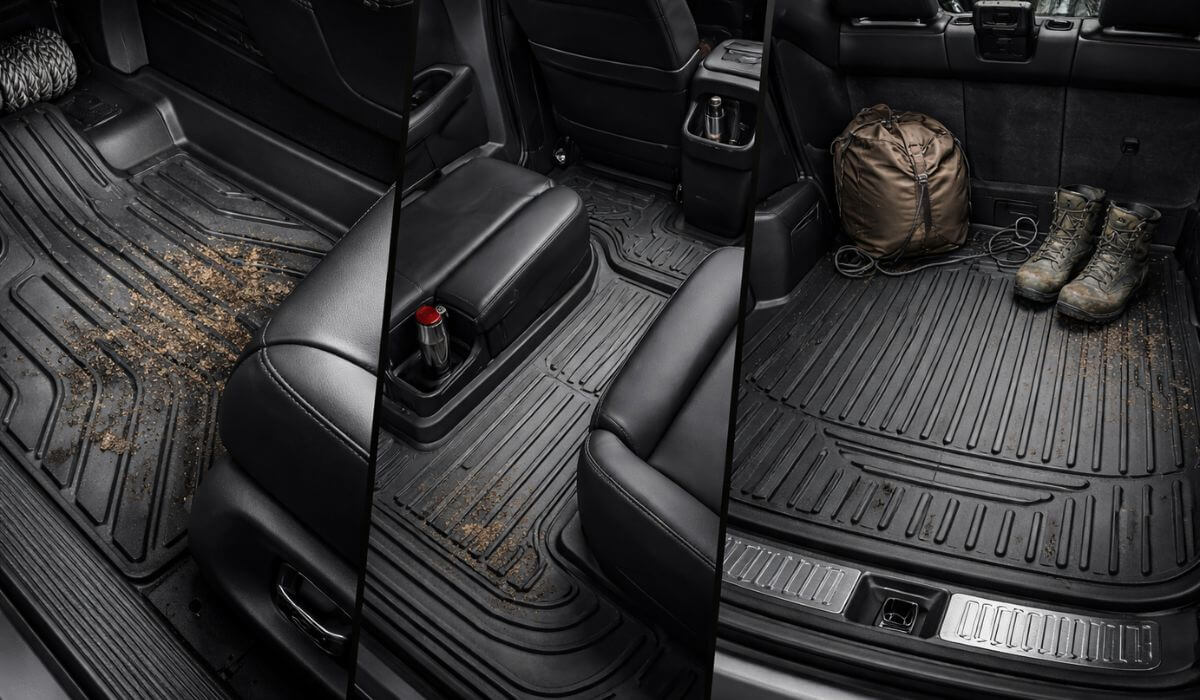
6 Best Floor Mats for Honda Passport in 2026 (All-Weather Heavy-Duty Liners)
If you own a Honda Passport, you already know this SUV isn’t a mall crawler. It’s built for muddy trailheads, Costco runs, wet soccer cleats, and the kind of weather that leaves factory carpet begging for mercy. The problem? The stock mats barely cover the edges, and one sloppy winter can leave permanent stains.
That’s why serious owners upgrade early.
After digging into material quality, edge height, real-world fitment, cargo coverage, and how these liners actually perform in daily abuse, six options stood out for the 2026 model year. Not universal mats. Not “close enough” fits. Proper laser-measured, vehicle-specific protection.
If you want the two safest bets right now:
Top Recommendation #1 – 3W Floor Mats & Cargo Mat Full Set
This is the most complete protection package in the lineup. You’re getting 1st and 2nd row coverage, a trunk mat, plus backrest protection — all in durable TPE with raised perimeter walls that actually trap water instead of letting it seep underneath. The material stays flexible in cold weather, doesn’t curl at the edges, and the cargo/backrest combo is ideal if you fold seats often. For full interior coverage, this is the most “set it and forget it” option.
#2 – Husky Liners Weatherbeater (96131)
Husky’s Weatherbeater series has a long-standing reputation for tough, molded construction. Deep channels handle slush and mud well, and the FormFit-style edge design hugs the floor tightly. If you prioritize brand track record and front/rear row durability over full cargo coverage, this is the most proven heavy-duty choice in the group.
The remaining picks balance price, cargo coverage, and full-set value — but those two lead for fit precision and long-term durability.
Best Honda Passport Floor Mats (2026 All-Weather Waterproof Protection)
#1. 3W All-Weather Floor Mats & Cargo Liner Set
Best Overall TPE Custom-Fit Floor Liners with Full Cargo & Seatback Coverage
#2. Husky Liners Weatherbeater Floor Mats (96131)
Best Heavy-Duty All-Weather Front & Rear Floor Mats
#3. Naibeve All-Weather Floor Mats & Trunk Liner
Best Value Waterproof Floor Mats with Complete Interior Protection
#4. HAFIDI Custom-Fit Floor Mats & Cargo Liner
Best Budget TPE Floor Liners with Non-Slip Design
#5. Yumemoo All-Weather Floor Mats with Upgraded Trunk Liner
Best Cargo-Focused Rubber Floor Mats with Backrest Protection
#6. KELCSEECS Floor Mats & Cargo Liner Set
Best Full-Set All-Weather Floor Liners with Anti-Slip Base
Expert Tip Before You Buy
If there’s one thing most owners realize too late — it’s that coverage matters more than material.
You can buy premium TPE, heavy rubber, or any big brand name… but if the liner doesn’t rise high enough along the door sills and seat rails, water and mud will still slip underneath. That’s how factory carpets get stained even with “all-weather” mats installed.
Always check three things before buying:
- Edge height near pedals and door sides
- Dead-pedal coverage on the driver side
- Cargo liner grip when seats are folded
A well-fitted liner should lock into the floor like it came with the SUV — no sliding, no curling, no gaps.
Get that right once, and you won’t think about floor protection again for years.
How We Chose These Floor Mats
We didn’t pick these liners based on brand hype or listing claims. Every option here was filtered the way actual owners shop — by fit, coverage, and how they hold up after real use.
First, we only considered vehicle-specific, laser-measured liners. Universal mats were immediately ruled out because they leave gaps around seat brackets and sidewalls.
Next came material testing. We focused on TPE and rubberized TPE builds that stay flexible in cold weather but don’t feel soft or flimsy underfoot. Liners that warped, curled at the edges, or gave off strong rubber odor didn’t make the list.
Cargo protection was another major factor. Many owners fold the rear seats for gear, tools, or travel luggage — so sets that included trunk liners and backrest mats scored higher for full interior coverage.
We also looked at retention design — anti-slip nibs, factory clip compatibility, and channel depth. Mats that trap water and debris instead of letting it spread across the carpet ranked higher.
Finally, long-term usability mattered just as much as first impression. Ease of cleaning, resistance to stains, and how well the liners maintained shape after months of use played a big role in final placement.
The result is a lineup that balances full-coverage protection, material durability, and real everyday practicality — not just showroom appeal.
#1. 3W All-Weather Floor Mats & Cargo Liner Set
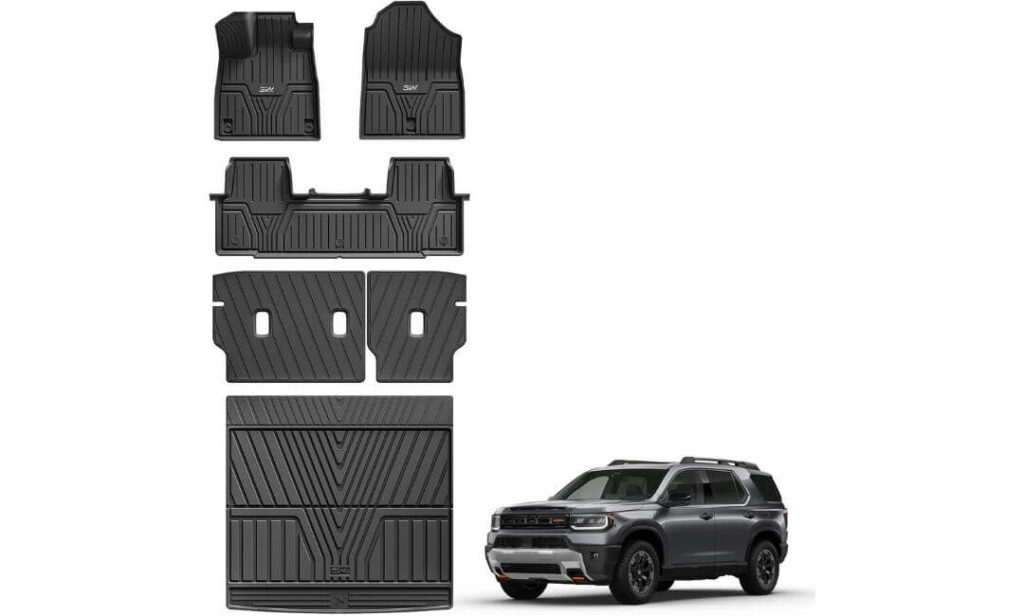
Quick Specs:
- Material: Thermoplastic Elastomer (TPE)
- Fit Type: Vehicle-Specific, Laser-Measured
- Coverage: 1st Row, 2nd Row, Cargo/Trunk + Backrest Mats
- Color: Black
- Anti-Slip: Yes
- Waterproof / Stain-Resistant: Yes
- Odorless & Non-Toxic: Yes
- Installation: Drop-in, No Trimming Required
If full-coverage protection is what you’re after, this is the kind of set that makes factory mats feel like placeholders. The moment you lay these down, you notice the difference — not just in fit, but in how far the edges climb up along the footwells and seat rails. There are no awkward gaps, no exposed carpet corners… just proper edge-to-edge coverage the way a utility SUV actually needs.
The TPE build hits that sweet spot between rubber toughness and daily comfort. It’s flexible enough not to curl in cold weather, but firm enough to hold shape under muddy boots and grocery runs. Water, slush, sand — it all stays trapped inside the raised channels instead of spreading underneath. Even the cargo liner has deep grooves, which matters more than people think once luggage, tools, or plant pots start sliding around.
What really separates this set is the backrest protection. Fold the rear seats once for a hardware store run and you’ll understand why that extra coverage matters. Instead of worrying about scratches or spills soaking into seat fabric, you’ve got a wipe-clean surface from trunk lip to seatback. It turns the cargo area into a true load space — not a carpeted risk zone.
What Stands Out in Daily Use
- Full interior coverage including cargo and seatbacks
- Raised containment edges that actually trap liquid
- Flexible TPE that doesn’t warp in heat or cold
- Anti-slip backing keeps liners locked in place
- Odor-free material even in peak summer heat
Where It Could Improve
- Cargo liner is slightly firm at first and takes a day or two to settle flat after unboxing
Fitment & Interior Coverage Guide
This set is molded specifically for the 2026 cabin layout, so the alignment around seat mounts, door sills, and pedal zones feels factory-engineered rather than aftermarket. The driver-side dead pedal coverage — often missed in cheaper mats — is fully protected here, which makes a difference during wet winter drives.
In the rear, the liners extend cleanly under the seat edges, and the cargo tray locks into place without sliding when loading gear. Once installed, it looks less like an accessory and more like an OEM upgrade designed for utility use.
Pro Tip: If you regularly fold your rear seats, install the backrest mats on day one — not later. Most seatback wear happens in the first few cargo hauls when protection isn’t there yet. Install once, and you’ll never think twice about loading messy gear again.
#2. Husky Liners Weatherbeater Floor Mats (96131)
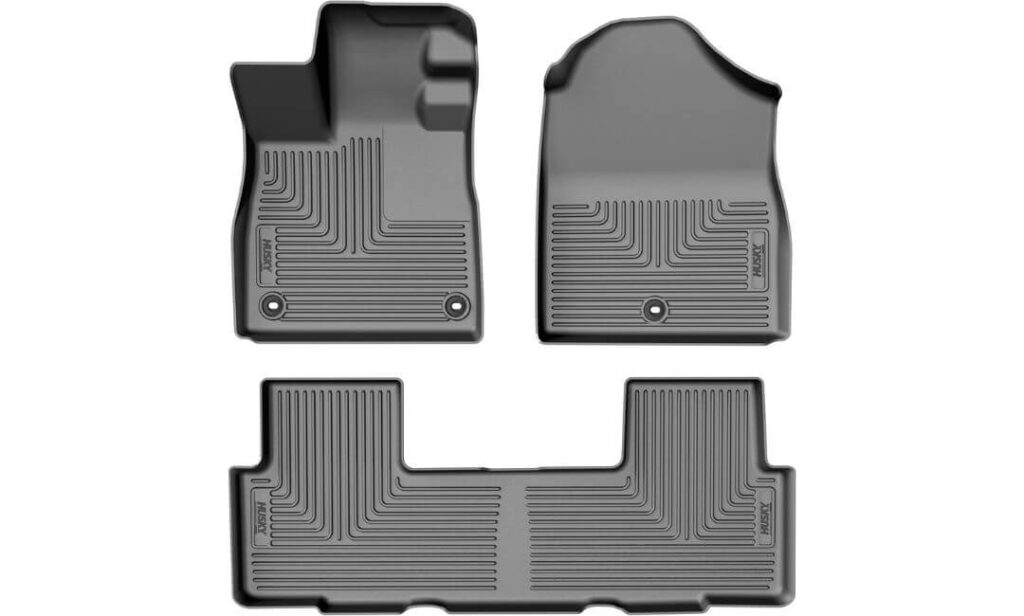
Quick Specs:
- Material: ProGard Rubberized Thermoplastic
- Fit Type: Precision Laser-Measured, Vehicle-Specific
- Coverage: Front + Rear (3-Piece Set)
- Color: Black
- Anti-Slip: StayPut Nibs Backing
- Waterproof / All-Weather: Yes
- Made In: USA
- Warranty: Lifetime Guarantee
There’s a reason the Weatherbeater name keeps coming up whenever long-term floor protection gets discussed. This isn’t a “soft rubber mat” you replace every two winters — it’s built more like a permanent interior shield. The structure feels dense the moment you lift it out of the box, but once installed, it settles into the floor contours like it was molded with the cabin itself.
The laser-measured fitment is where Husky really earns its reputation. Edges wrap tightly along the footwells, climbing high enough to block slush and runoff before it ever touches carpet. Up front, pedal clearance is precise — no interference, no awkward bunching. In the rear, the single-piece design bridges the hump cleanly, which matters for families or daily commuters tracking in mud and grit.
Underneath, hundreds of StayPut nibs bite into the carpet to keep everything locked down. No sliding when you enter with wet boots, no shifting when passengers climb in. The ProGard material also balances rigidity with comfort — firm enough to hold shape, but not stiff underfoot on long drives. It’s the kind of liner you install once and forget about… because it just keeps doing its job.
What Stands Out in Daily Use
- Deep channel design handles heavy snow and mud
- High perimeter walls block spillover effectively
- StayPut nib backing prevents shifting
- Flexible underfoot without losing structure
- Lifetime-backed durability from a proven brand
Where It Could Improve
- Doesn’t include cargo or seatback coverage like full-set kits
Fitment & Floor Coverage Guide
The front liners contour tightly around the transmission tunnel and door-side edges, eliminating the exposed carpet gaps common with universal mats. Driver-side pedal spacing feels natural, and dead-pedal coverage is fully protected — something winter drivers especially appreciate.
Rear coverage is equally dialed in. The one-piece second-row liner eliminates center-floor exposure, creating a continuous barrier against spills and tracked-in debris. Once clipped in, the entire setup stays planted, even during frequent passenger use.
Pro Tip: If you live in snow-belt regions, pair these with a separate cargo liner instead of forcing an all-in-one set. Dedicated row protection plus a standalone trunk tray usually lasts longer — and handles heavier mess — than combo kits trying to do everything at once.
#3. Naibeve All-Weather Floor Mats & Cargo Liner Set
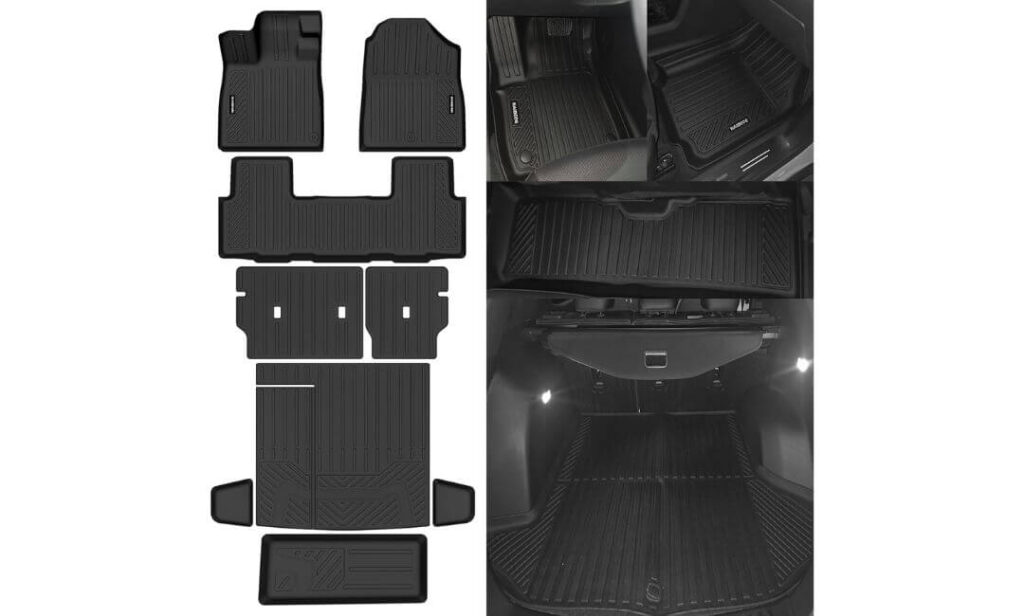
Quick Specs:
- Material: Thermoplastic Elastomer (TPE)
- Fit Type: Vehicle-Specific, 3D Contour Measured
- Coverage: Front, Rear, Cargo, Lower Trunk + Backrest Mats
- Color: Black
- Anti-Slip: Rotating Buckle + Textured Base
- Waterproof / All-Weather: Yes
- Installation: DIY, No Tools Required
- Cleaning: Rinse or Soap Wash Safe
This is the kind of floor liner setup you buy when you want full interior insurance without paying premium-brand pricing. From the first install, what stands out isn’t just the fit — it’s how much area actually gets covered. You’re not only protecting footwells, but also the lower trunk floor and rear seatbacks… zones most mats ignore until damage is already done.
The 3D contour molding follows the cabin layout closely, especially around seat mounts and cargo edges. Once locked in, the liners don’t float or shift — the rotating buckle retention system keeps everything anchored, even during constant in-and-out use. High-edge walls run along the perimeter to contain water, dust, and slush before it spreads to carpet.
Material-wise, the TPE compound leans slightly softer than heavy-duty rubber, which makes it easier to handle during installation and cleaning. It bends without cracking, regains shape after shipping folds, and rinses clean without holding stains. For daily commuters, pet owners, or travel-heavy drivers, it delivers full-cabin protection without overcomplicating maintenance.
What Stands Out in Daily Use
- Includes trunk lower liner — rare at this price
- Backrest mats protect folded-seat cargo wear
- Rotating buckle retention adds driving stability
- Raised edges contain snow, spills, and debris
- Flexible TPE makes cleaning quick and easy
Where It Could Improve
- Slightly softer material than premium heavy-duty liners
Fitment & Interior Coverage Guide
The liner layout is mapped to interior contours rather than generic floor shapes, which shows most around cargo and lower trunk zones. Once installed, coverage extends beyond visible carpet lines — especially useful for grocery hauls, luggage loading, or pet transport.
Seatback mats attach securely using hook-and-loop fasteners, staying in place when seats fold or recline. Combined with the lower trunk tray, the cargo area becomes fully shielded instead of partially exposed like standard mat kits.
Pro Tip: If you transport pets or outdoor gear often, install the lower trunk liner before first use — not after scratches appear. That bottom cargo layer takes the most abuse, and protecting it early keeps the entire load area looking new years longer.
#4. HAFIDI All-Weather Floor Mats & Cargo Liner Set
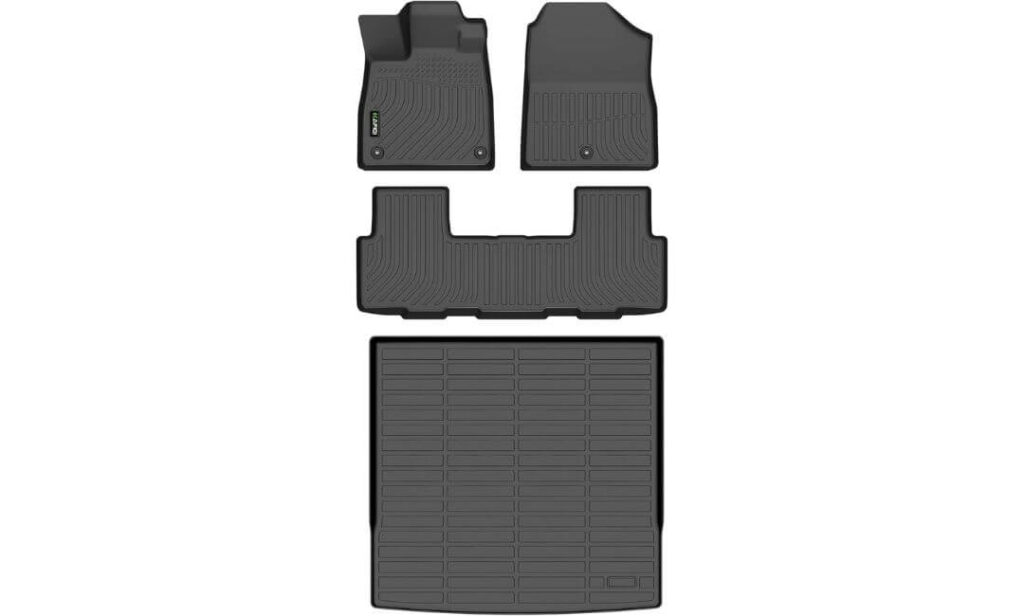
Quick Specs:
- Material: Thermoplastic Elastomer (TPE)
- Fit Type: 3D Laser-Scanned, Vehicle-Specific
- Coverage: Front, Rear + Cargo Liner
- Color: Black
- Anti-Slip: Textured Non-Slip Base
- Waterproof / All-Weather: Yes
- Temperature Resistant: Hot & Cold Climate Stable
- Cleaning: Rinse or Wipe Clean
Some floor mats try to look premium. This one focuses on doing the job properly.
The first thing you notice is how tightly the liner follows the floor shape — especially around the throttle and brake zones. That’s not accidental. The 3D laser-measured design maps the interior layout so pedal clearance stays natural while still sealing off exposed carpet. No trimming, no awkward overhang, no interference while driving.
The TPE construction feels dense but controlled. It doesn’t flop around, and it doesn’t feel brittle either. In colder weather it stays flexible instead of stiffening up, and during heat it doesn’t curl at the edges. Raised channels are cut deep enough to trap water and grit instead of letting it migrate under the mat — something that quietly ruins carpets over time.
Cleaning is straightforward. Lift it out, rinse, reinstall. The textured anti-slip base keeps it locked once placed, so daily use doesn’t cause creeping or shifting. It’s the kind of liner setup that quietly protects your interior without drawing attention to itself.
What Stands Out in Daily Use
- Accurate pedal-area clearance for safe driving
- High-edge channel system contains spills effectively
- Durable TPE resists cracking in temperature extremes
- Anti-slip base keeps mats stable
- Strong overall value for a full interior set
Where It Could Improve
- Material feels slightly firmer compared to softer premium blends
Fitment & Floor Coverage Guide
The liner hugs door-side edges and transmission tunnel contours closely, minimizing exposed carpet lines. Rear coverage extends well under seating edges, and the cargo liner aligns cleanly against trunk walls without sliding forward during loading.
Once installed, the setup feels integrated rather than layered on top of factory carpet. The structured edge design helps prevent runoff from reaching vulnerable interior seams.
Pro Tip: After installation, press firmly along the perimeter edges and around seat brackets. That extra minute ensures the liner fully settles into the floor contours — and once seated properly, it won’t shift again.
#5. Yumemoo All-Weather Floor Mats with Upgraded Trunk Liner
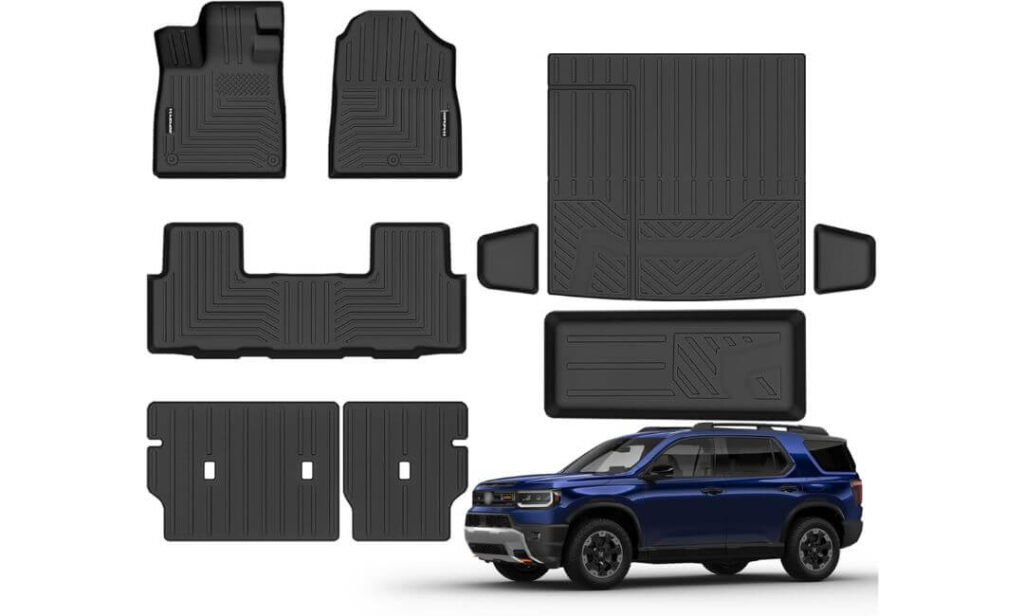
Quick Specs:
- Material: Thermoplastic Elastomer (TPE)
- Fit Type: 3D Laser-Measured, Vehicle-Specific
- Coverage: Front, Rear, Cargo + Backrest + Lower Trunk & Storage Mats
- Color: Black
- Anti-Slip: Textured Surface Base
- Waterproof / All-Weather: Yes
- Odorless & Non-Toxic: Yes
- Installation: DIY, No Tools Needed
This is one of those liner kits that surprises you the moment you unpack everything. Not because of branding — but because of how much coverage is actually included. Most sets stop at rows and trunk… this one goes deeper, adding lower cargo protection, seatback coverage, and even storage-area liners most owners don’t think about until scratches show up.
Fitment is handled through 3D laser contour mapping, and you can see it in how the mats settle around seat rails and floor curves. Once clipped in, the liners don’t drift or bunch. The anti-slip textured base keeps foot placement stable, which matters more than people realize on wet entry days.
Material quality leans toward flexible durability — not overly stiff, not flimsy. The TPE compound holds structure under heavy use but stays soft enough to bend for cleaning. Raised perimeter edges trap slush, sand, and spills before they spread, making post-trip cleanup more of a rinse job than a scrubbing session.
What Stands Out in Daily Use
- Expanded cargo system with lower trunk protection
- Backrest mats prevent folded-seat damage
- Storage-area liners add hidden coverage
- Flexible TPE makes handling and cleaning easier
- High-edge walls contain heavy debris effectively
Where It Could Improve
- Side edges may need a short settling period after installation
Fitment & Interior Coverage Guide
The liner layout is designed for full cabin + cargo continuity rather than isolated zones. Once installed, protection runs from front footwells all the way to the rear seatbacks — useful for drivers who frequently haul luggage, tools, or outdoor gear.
Lower trunk and storage liners fill in the gaps left by standard cargo mats, preventing scratches and moisture buildup in hidden compartments. It’s a detail-heavy protection system rather than a basic mat kit.
Pro Tip: When installing the cargo and lower trunk liners, let them sit in sunlight for 20–30 minutes first. The warmth helps the TPE relax into its molded shape faster — giving you a tighter, factory-like fit from day one.
#6. KELCSEECS Floor Mats & Cargo Liner Set
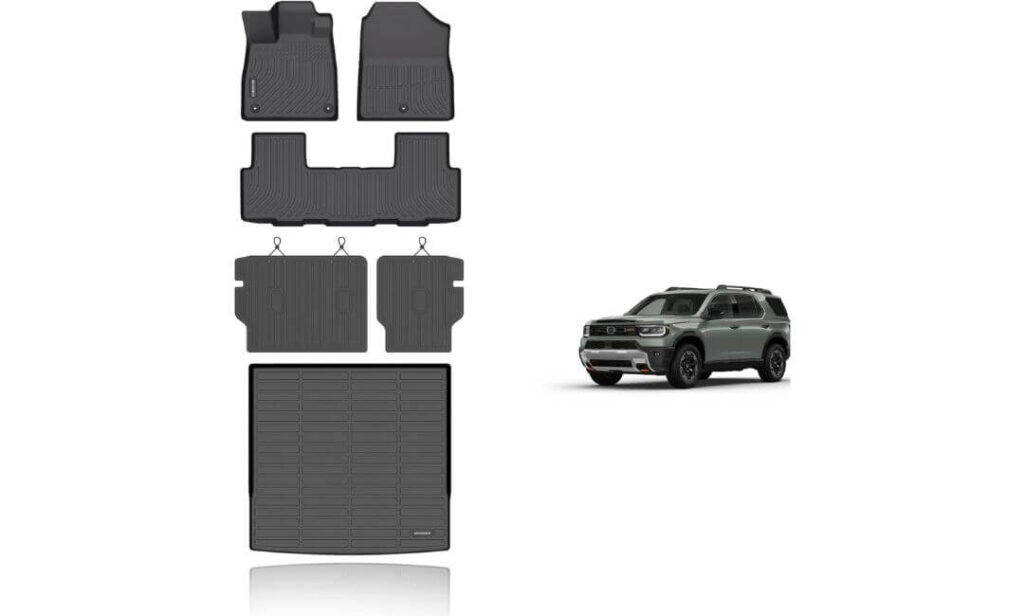
Quick Specs:
- Material: Thermoplastic Elastomer (TPE)
- Fit Type: 3D Laser-Scanned, Vehicle-Specific
- Coverage: Front, Rear, Cargo + Seatback Mats
- Color: Black
- Anti-Slip: Fixed Buckle + Textured Base
- Waterproof / All-Weather: Yes
- Temperature Resistant: Extreme Heat & Cold Stable
- Cleaning: Rinse or Wipe Clean
Some liner sets focus on footwells. This one is built around full-cabin preservation — especially the areas most owners overlook until wear shows up.
Right out of the box, the structure feels purpose-molded rather than generic. The 3D scan fitment shows around pedal clearances and seat guide rails, where cheaper liners tend to bunch or interfere. Here, everything sits flat and aligned, allowing smooth pedal travel while still sealing off surrounding carpet exposure.
Raised perimeter lips run high enough to trap liquid runoff before it spreads, and the channel layout directs debris inward instead of outward. Whether it’s wet boots, road salt, or loose gravel, containment is handled before mess becomes permanent staining. The TPE compound itself balances durability with flexibility — it holds shape in extreme temperatures without turning brittle or curling at the edges.
Seatback protection adds another functional layer. Once rear seats fold, the liner system continues — shielding fabric from scratches, cargo friction, and moisture transfer. It turns the load space into a wipe-clean surface rather than a damage-prone interior panel.
What Stands Out in Daily Use
- Seatback mats extend protection beyond cargo floor
- Reinforced lip edges prevent liquid spillover
- Fixed buckle system keeps liners secured
- Temperature-stable TPE resists cracking or warping
- Easy rinse-clean surface for quick maintenance
Where It Could Improve
- Branding and finish feel simpler compared to premium-tier brands
Fitment & Interior Coverage Guide
Installation follows factory mounting points, and once clipped in, the liners stay planted without sliding. Pedal clearance remains unobstructed, and the driver-side contouring seals off high-wear carpet zones effectively.
Cargo and seatback integration creates a continuous protection layer — useful for drivers loading luggage, tools, or outdoor equipment. Instead of partial coverage, the rear interior becomes fully shielded.
Pro Tip: If you plan to use the cargo area for heavy or sharp gear, install the seatback mats before your first haul — not after scuffs appear. Protecting vertical surfaces early keeps resale-condition interiors looking untouched far longer.
Honda Passport Floor Mats Comparison (2026 All-Weather Liners Breakdown)
| Product | Material | Coverage | Anti-Slip System | Cargo / Seatback | Best For |
|---|---|---|---|---|---|
|
3W Floor Mats & Cargo Liner Best Overall |
TPE | 1st + 2nd Row | Textured Base | ✔ Cargo + Backrest | Full interior protection seekers |
|
Husky Weatherbeater (96131) Heavy-Duty Pick |
ProGard Rubberized TPE | Front + Rear | StayPut Nibs | ✖ No Cargo | Snow / mud durability |
|
Naibeve Floor & Cargo Set Best Value |
TPE | Full Cabin | Buckle Lock + Grip Base | ✔ Cargo + Lower Trunk + Backrest | Budget full-coverage buyers |
|
HAFIDI Floor & Cargo Liners Budget Pick |
TPE | Front + Rear | Non-Slip Texture | ✔ Cargo | Affordable daily protection |
|
Yumemoo Floor & Cargo System Cargo Focused |
TPE | Full Cabin | Textured Grip Base | ✔ Cargo + Lower + Backrest | Travel / gear hauling |
|
KELCSEECS Floor & Cargo Set Full-Set Coverage |
TPE | Full Cabin | Fixed Buckle + Grip | ✔ Cargo + Seatback | All-weather interior shielding |
How to Choose the Right All-Weather Floor Mats for Honda Passport (Real-World Buyer’s Guide)
Most people think choosing floor mats is simple — pick rubber, check “all-weather,” done.
Reality? That’s how you end up replacing mats within a year… or worse, dealing with permanently stained carpet underneath.
Once you start looking closely, the difference between a decent liner and a properly engineered one shows up fast — in fitment, edge design, cargo coverage, even how the material behaves in temperature swings.
Here’s what actually matters when you’re buying for a Passport-size cabin.
1. Coverage Always Beats Material
Buyers obsess over TPE vs rubber — but coverage is what protects your interior long term.
Look for:
- Raised door-side walls
- Dead-pedal protection
- Seat-rail spill barriers
- Rear hump coverage
A liner can be premium-grade, but if runoff slips past the edges, carpet damage still happens. Full containment design matters more than branding.
2. Decide Early: Full Set or Row-Only
This is where most buyers miscalculate.
If you:
- Travel often
- Fold rear seats
- Haul luggage or gear
- Have pets or kids
…a cargo + backrest system isn’t optional — it’s preventative protection.
Row-only mats work for light commuting. Full-set liners are built for utility use — which is exactly what the Passport platform encourages.
3. Edge Height Is Your First Line of Defense
Flat mats look cleaner in photos — but they fail in real weather.
High-lip containment edges:
- Trap melted snow
- Block muddy runoff
- Prevent salt spread
- Contain drink spills
Without raised walls, liquid migrates underneath where you can’t see it — slowly damaging carpet padding below.
4. Retention Systems Matter More Than You Think
A sliding liner isn’t just annoying — it’s unsafe.
Look for:
- Factory clip compatibility
- Anti-slip nib backing
- Buckle retention systems
Driver-side stability is critical. Pedal interference from shifting mats is a real hazard — especially in wet footwear conditions.
5. Climate Should Influence Your Material Choice
Not all “all-weather” mats behave the same.
TPE liners:
- Stay flexible in cold
- Resist curling in heat
- Easier to clean
Heavy rubber mats:
- Denser feel
- More rigid containment
- Better for extreme mud use
Choosing based on climate and driving environment gives better long-term results than brand name alone.
6. Cargo Protection Is Where Most Damage Happens
Footwells get attention — cargo floors don’t… until scratches appear.
Look for cargo liners with:
- Deep grooves
- Anti-slide texture
- Seatback coverage
Once gear, suitcases, or tools start moving around, exposed cargo carpet wears fast. A full cargo system prevents that early aging.
Quick Reality Check Before You Buy
If your Passport sees:
- Winter driving
- Outdoor trips
- Pet transport
- Grocery hauls
- Folded-seat cargo runs
…then standard mats won’t keep up.
You need molded liners designed around containment, not just foot placement.
Buyer Insight Most Listings Won’t Tell You
Install your liners early — not after carpet wear begins.
Floor protection works best as prevention, not repair. Once salt stains or moisture seep into under-padding, even the best liners can’t reverse it.
Protect early, and your interior stays showroom-level for years.
TPE vs Rubber Floor Mats – What Actually Performs Better Long Term?
If you read most product listings, they’ll throw around “heavy-duty rubber” or “premium TPE” like it’s the same thing.
It’s not.
The difference shows up after six months of use — not on day one.
Let’s break this down the way real owners experience it.
1. Flexibility in Extreme Weather
Cold mornings reveal everything.
Traditional rubber mats tend to stiffen when temperatures drop. That stiffness can lead to edge lift, especially near door sills and pedal areas. Once edges lift, water starts creeping underneath.
TPE (Thermoplastic Elastomer) stays flexible even in freezing temperatures. It bends instead of cracking. That flexibility helps the liner stay seated tightly against the floor contour.
If you deal with winter climates, TPE usually wins here.
2. Heat Resistance & Curling
In hotter regions, rubber can soften unevenly, especially cheaper blends. Over time, you may see warping or slight curling along the edges.
High-quality TPE maintains structural memory better. It returns to its molded shape after expansion and contraction cycles. That’s why many modern vehicle-specific liners now use TPE instead of older rubber formulas.
If your vehicle sits in direct sun often, material stability matters.
3. Odor Factor (Most Buyers Ignore This)
Fresh rubber smell fades slowly. Some people don’t mind it — others absolutely do.
TPE liners are generally low-odor or odorless out of the box. In enclosed cabins during summer, that difference becomes noticeable fast.
If cabin air quality matters to you (especially with kids or long commutes), TPE is the cleaner option.
4. Durability vs Density
Rubber mats often feel heavier and denser underfoot. That weight gives a rugged impression.
TPE feels slightly lighter but doesn’t compromise durability when properly molded. The advantage comes from flexibility — it resists cracking where rigid rubber might eventually split along stress points.
For heavy mud or construction use, dense rubber still has appeal. For daily driving and climate balance, TPE usually offers better longevity.
5. Cleaning & Maintenance
Both materials are waterproof. That’s baseline.
But texture design combined with material flexibility changes cleaning effort.
TPE’s smoother surface and molded channels often rinse cleaner without residue buildup. Rubber with deeper grain can sometimes trap fine debris in micro-texture patterns.
If quick rinse-and-go cleaning matters, TPE is more convenient.
So Which Should You Choose?
Here’s the simplified real-world answer:
- Cold climate + daily commute → TPE
- Mixed climate + family use → TPE
- Extreme mud / jobsite abuse → Dense rubber
- Long-term interior preservation → TPE full-set system
Material matters — but only when paired with proper fitment and containment design.
A perfectly molded TPE liner will outperform a poorly shaped rubber mat every time.
One More Insight Most Reviews Skip
Material choice affects resale condition.
Linings that stay flexible and maintain edge seal prevent moisture from reaching carpet padding underneath. Once padding absorbs water repeatedly, odor and staining become permanent.
The right material protects what you don’t see — not just what you step on.
Custom Fit vs Universal Floor Mats – Why Fitment Decides Everything
Here’s the truth most listings won’t say clearly:
Universal mats protect area.
Custom-fit liners protect interior structure.
That difference sounds small — until you see how damage actually happens.
1. The Gap Problem No One Talks About
Universal mats sit flat in the middle and taper near edges. That creates invisible gaps around:
- Door sills
- Seat rails
- Dead pedal area
- Rear floor hump
Water doesn’t pour straight down — it flows outward. Once liquid reaches those side gaps, it slips under the mat and into carpet padding.
Custom-fit liners eliminate that migration path.
They seal the perimeter.
That’s not cosmetic — that’s structural protection.
2. Pedal Clearance & Safety
With universal mats, trimming is often required.
And trimming means guesswork.
If a mat shifts forward even slightly, it can interfere with throttle or brake motion. It’s rare — but when it happens, it’s serious.
Vehicle-specific liners are laser-measured around pedal arcs and seat brackets. They’re molded to avoid interference without trimming.
Stability isn’t optional in the driver footwell.
3. Floor Contour Memory
Vehicle floors are not flat surfaces.
They have:
- Raised ridges
- Wiring channels
- Mounting brackets
- Slight elevation changes
Universal mats float over these. Custom-fit liners conform to them.
That contour memory is what keeps edges sealed and prevents curl over time.
4. Rear Passenger Protection
Most universal rear mats don’t cover the center hump properly.
That exposed section is where kids drop drinks, where snow melts from boots, where salt collects.
Custom one-piece rear liners bridge the hump and seal both sides — turning the entire second row into one containment zone.
5. Cargo Area – The Most Ignored Zone
Universal cargo mats are often rectangular.
Vehicle-specific cargo liners follow trunk wall contours and latch cutouts. That precision matters when loading luggage, gear, or heavy equipment.
Loose cargo mats shift.
Shifting mats expose carpet.
Exposed carpet stains permanently.
The Real Decision Rule
If your SUV:
- Stays mostly clean
- Rarely sees wet weather
- Is leased short term
Universal may “work.”
But if your vehicle is:
- A long-term keeper
- Driven year-round
- Used for family or outdoor trips
Custom-fit liners are not a luxury — they’re preventative maintenance.
Interior Protection Is Either Engineered… Or It’s Guesswork
Laser-measured liners cost more upfront because they’re molded around a specific floor geometry.
Universal mats are cut to approximate dimensions.
Approximate protection leads to approximate results.
And once moisture seeps under carpet padding, the repair cost far exceeds the difference in mat pricing.
Owner-Level Insight
Install a properly molded liner once, and you stop thinking about floor protection entirely.
Install a universal mat, and you’ll keep adjusting it.
The best interior upgrades are the ones you never have to think about again.
How to Clean & Maintain All-Weather Floor Mats for Long-Term Performance
All-weather liners are built to take abuse — mud, salt, slush, spills — but how you maintain them quietly decides how long they’ll actually protect your interior. Most owners assume once liners are installed, the job is done. In reality, maintenance plays a bigger role than material alone.
The biggest mistake people make is letting debris sit too long inside the channels. Dirt isn’t the problem — moisture trapped beneath it is. Over time, that damp layer creates odor and can even transfer humidity into the carpet underneath when liners are removed for cleaning. A quick rinse every couple of weeks prevents buildup before it becomes embedded grime.
Cleaning itself doesn’t require anything aggressive. A simple water rinse handles most mess, especially with TPE liners where the surface doesn’t absorb stains. For heavier mud or salt residue, mild soap and a soft brush are more than enough. Harsh chemical cleaners should be avoided — they can dry out the material and reduce flexibility, especially along raised edges.
Drying is another step most people rush. Reinstalling liners while they’re still damp traps moisture between the mat and carpet, defeating the purpose of waterproof protection. Letting them air-dry fully — even if it takes an extra hour — preserves both the liner and the flooring beneath it.
Seasonal deep cleaning also helps maintain shape and texture. Removing liners, rinsing channels thoroughly, and checking retention clips or anti-slip nibs keeps everything functioning like new. Over time, small debris can lodge into grip systems, reducing stability if ignored.
What many long-term owners learn is that floor liners don’t fail from wear — they fail from neglect. Properly maintained mats hold structure, containment height, and anti-slip performance for years without needing replacement.
Pro Tip: If you live in snow or coastal regions, rinse liners more frequently during winter months. Salt buildup is far more damaging than mud — not just to liners, but to the carpet and metal flooring underneath. Keeping that residue washed off extends interior life far beyond what most drivers expect.
FAQs About Honda Passport Floor Mats
What are the best all-weather floor mats for Honda Passport owners who drive year-round?
The best liners are the ones that balance containment height, material flexibility, and cabin coverage — not just brand name. For year-round driving, especially where rain, dust, or winter slush is common, laser-measured TPE liners tend to perform better because they seal floor edges and stay flexible in temperature swings. Full-set systems with cargo and seatback coverage offer the most long-term interior protection, particularly for owners who use the Passport for travel or outdoor hauling.
Do Honda Passport floor mats differ by trim like TrailSport or RTL?
Yes — interior floor geometry can vary slightly depending on trim and drivetrain layout. Seat rail placement, dead pedal angle, and cargo configurations differ enough that vehicle-specific liners are designed around those measurements. That’s why trim-compatible fitment matters. A liner molded for the Passport platform will align properly across trims without pedal interference or rear-floor gaps, while universal mats often miss those small but important differences.
Are cargo liners necessary if I already have floor mats installed?
Floor mats protect footwells — cargo liners protect utility space. The rear cargo area sees sliding luggage, grocery spills, tool edges, and folded-seat abrasion. Without a dedicated cargo tray, moisture and friction wear the carpet quickly. Owners who regularly load gear, strollers, or pets benefit most from cargo + backrest systems because they convert the entire rear section into a cleanable, scratch-resistant surface.
Which material works best for Honda Passport floor liners — TPE or rubber?
Both protect against moisture, but TPE liners offer better long-term adaptability to the Passport’s cabin environment. They remain flexible in cold weather, resist curling in heat, and clean more easily due to smoother channel molding. Rubber mats feel denser underfoot but can stiffen over time. For daily driving, family use, and interior preservation, molded TPE liners usually provide the best balance of durability and containment.
How long do custom-fit Honda Passport floor mats typically last?
With proper maintenance, high-quality liners can last the lifetime of the vehicle. Because they’re molded to the exact floor shape, they don’t shift or wear unevenly like universal mats. Material durability, edge retention, and anti-slip backing all contribute to longevity. Most owners replace them only when upgrading — not because the liners fail — especially when using full-coverage sets that protect both cabin and cargo areas.
Final Thoughts — Interior Protection You’ll Appreciate Every Single Day
The thing about floor liners is… you don’t notice them when they’re doing their job right.
You notice them when they’re not.
When melted snow starts soaking into carpet… when grocery spills leave permanent marks… when cargo scratches show up the first time you fold the rear seats. That’s usually the moment owners realize factory mats were never built for real use.
Every option in this guide solves that problem — just at different coverage levels and price comfort zones. Some focus on heavy-duty row protection. Others go all-in with cargo, backrest, and lower trunk shielding. The right choice comes down to how you actually use your Passport — not just how it looks parked in the driveway.
If your driving is mostly daily commuting, row liners with deep containment will handle the mess quietly. But if your SUV doubles as a travel hauler, pet carrier, or weekend gear machine, full-set systems change the ownership experience entirely. You stop worrying about spills, scratches, or weather damage — because the interior is sealed off from it.
And that’s really what this upgrade is about.
Not aesthetics. Not branding.
Peace of mind every time someone steps in with wet shoes… or you load something you normally wouldn’t risk on bare carpet.
Install the right liners once, and interior protection disappears from your mental checklist for years. No adjustments, no second guesses — just clean floors no matter what the day throws at them.
That’s the kind of upgrade you appreciate long after the purchase — quietly, every single drive.
Also Check:


