
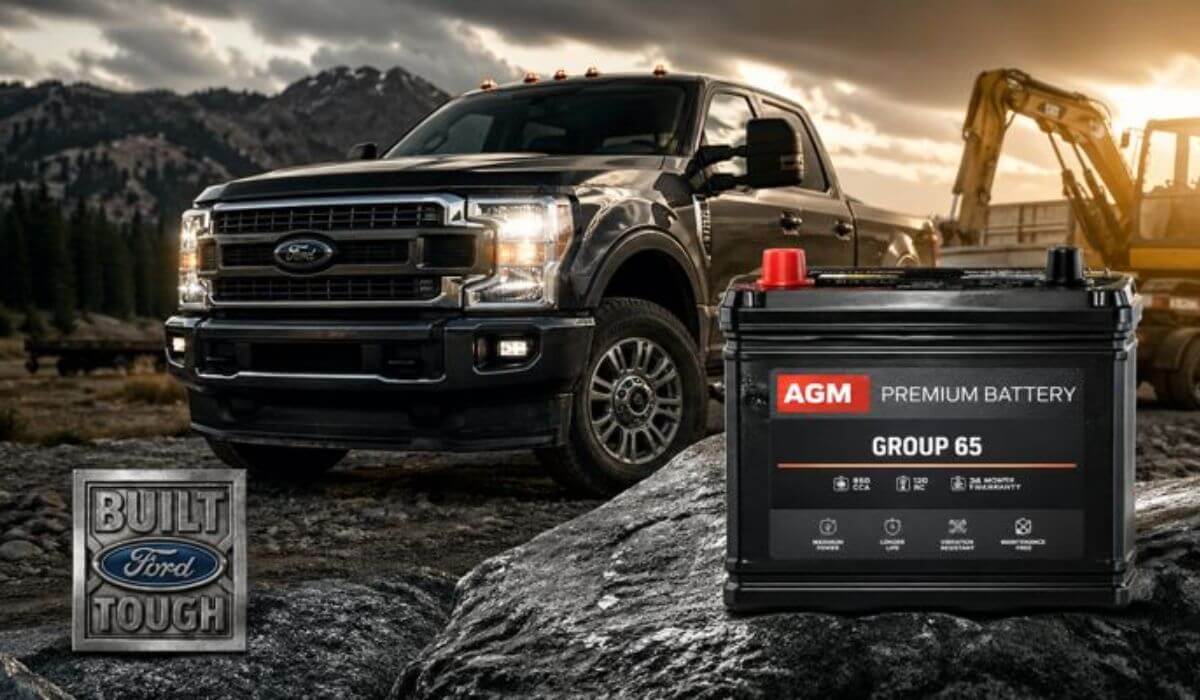
Best Battery for Ford F250 in 2026: Top Group 65 Picks for Long Life & Strong Starts
If your Ford F-250 has started cranking slower on cold mornings, hesitating after sitting for a few days, or struggling once the trailer lights, winch, and accessories come alive, the battery is usually the first place to look. These trucks ask more from a battery than the average pickup. A Super Duty has to fire up a big engine, support modern electronics, and stay dependable when the truck is loaded down with real work.
For most newer Ford F-250 models, the smart place to start is Group 65. It’s the size commonly matched to newer gas models and one of the most searched replacements for owners who want a battery that drops in correctly and starts strong without guesswork. If you tow, run tools, deal with winter starts, or simply want something that won’t leave you stranded at a fuel pump, choosing the right Group 65 battery matters more than chasing the cheapest price tag.
The batteries below were picked with real F-250 needs in mind: dependable starts, solid reserve power, proven fitment, and value that makes sense for a truck owner who actually uses the truck. No hype—just the options worth looking at in 2026.
Best Ford F250 Battery: Top 2026 Picks with High CCA & AGM Power
#1. Odyssey Battery ODX-AGM65 Extreme Series AGM Battery
Best AGM Battery for Ford F250 Owners Who Need Premium Power for Towing, Winter Starts, and Long Battery Life
#2. Interstate Batteries Group 65 Car Battery Replacement (MTP-65HD)
Best Ford F250 Battery Replacement for Daily Driving, Strong Cold Cranking, and Trusted Long-Term Reliability
#3. Weize Platinum AGM Battery BCI Group 65 Automotive Battery
Best Value Group 65 Battery for Ford F250 Drivers Wanting Affordable AGM Power and Solid Reserve Capacity
#4. Daakmax Platinum AGM Car Group 65 Battery – 12V 70Ah, 750 CCA
Best Budget Ford F250 Battery for Reliable Starts, Lower Cost Ownership, and Everyday Truck Use
Expert Tip
If you use your Ford F250 the way it was built to be used—cold starts, short trips, towing, jobsite idling, trailer brakes, lights, and long hours with accessories running—don’t shop by price first. Shop by fitment, reserve capacity, and starting power. A cheaper battery can look fine on paper, then start feeling weak the first cold morning or after one weekend of sitting. On a heavy-duty truck, the battery is not a place to gamble. Buy the one that starts the truck without drama six months from now, not just the one that looks cheap today.
How We Chose These Batteries for Ford F250
We didn’t build this list around hype, flashy claims, or random star ratings. We focused on what actually matters to Ford F250 owners who need their truck to start, work, and stay dependable.
First, we only looked at Group 65 fitment, because that’s the size most newer Ford F250 owners search for when replacing a battery. Getting the correct size matters just as much as brand name. A strong battery that doesn’t fit properly is useless.
Next, we compared cold cranking amps (CCA). A truck engine needs serious starting power, especially in winter or after sitting overnight. That’s why batteries with stronger cranking numbers stood out immediately. If a battery hesitates on a cold start, it doesn’t belong on this list.
We also looked at AGM construction versus standard flooded designs. AGM batteries cost more, but they usually handle vibration better, recharge faster, and perform stronger under accessory loads. On a Ford F250 with towing gear, electronics, or regular heavy use, that upgrade often makes real-world sense.
Then we checked reserve capacity and usable strength. Starting the engine once is easy. Holding voltage while lights, trailer connections, radios, and work accessories are running is where weak batteries get exposed. We favored options that offer more than just a quick start.
We paid attention to brand consistency and owner confidence too. Some newer products have fewer reviews, so we didn’t blindly trust review counts. We looked at warranty backing, published specs, battery type, and whether the product actually makes sense for a heavy-duty truck.
Finally, we balanced the list for different buyers. Not every owner needs the most expensive AGM model. Some need premium towing performance, some need a reliable daily replacement, and some simply want the best value that still respects what an F250 demands.
That’s why every battery here earned its spot for a clear reason: power, fitment, durability, value, or dependable everyday use. No filler picks. No random names. Just options that make sense for a real truck owner.
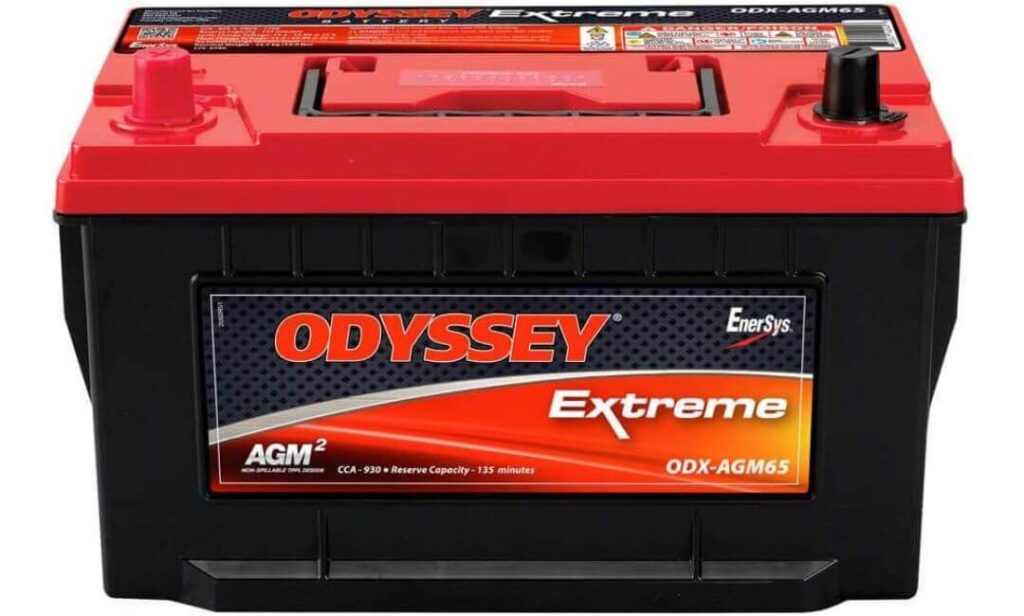
#1. Odyssey Battery ODX-AGM65 Extreme Series AGM Battery
Quick Specs:
- Battery Size: Group 65
- Battery Type: Premium AGM (sealed, maintenance-free)
- Voltage: 12V
- Cold Cranking Power: 930 CCA
- Reserve Capacity: 135 minutes
- Terminal Layout: SAE posts, right-side negative
- Weight: 60 lbs
- Best Use: Heavy-duty starts, towing, winter weather, trucks with added electrical load
- Warranty: 4-Year Manufacturer Coverage
The first thing you notice here is not the badge—it’s the numbers. 930 CCA is serious starting power, the kind that matters when an F250 has been sitting overnight in freezing weather or when the truck is loaded with tools and asked to fire up without hesitation. If your old battery gives that slow, lazy crank sound, this is the type of upgrade you feel on day one.
Then there’s the 135-minute reserve capacity, and that matters more than many owners realize. Trailer lights, worksite idling, interior electronics, aftermarket accessories—those small drains add up fast in a Super Duty. This battery is built to hold steady when the truck is doing truck things, not just sitting pretty in a parking lot.
Its pure lead AGM construction is the real story. More plate surface area means stronger delivery, faster recharge response, and better durability under vibration. That’s important in an F250 because rough roads, towing bounce, and jobsite use can punish cheaper batteries quickly. (If you want to buy once and stop thinking about batteries for a while, this is the kind of pick that makes sense.)
Why It Earned a Spot on Our List
- Outstanding 930 CCA for confident cold starts
- Strong 135-minute reserve capacity for accessory-heavy use
- AGM design resists vibration better than standard flooded batteries
- Excellent choice for towing, diesel-style workloads, and demanding use
- 4-year warranty adds real ownership confidence
One Thing to Consider
- Premium performance comes with a higher upfront price than entry-level options
Ford F250 Compatibility Notes
For many Ford F250 setups that use Group 65 fitment, this battery checks the right boxes: proper size class, strong terminal layout, and the kind of output a heavy-duty pickup actually benefits from. It makes the most sense for owners who tow often, run added electronics, or deal with harsh winters.
If your truck is a diesel trim or uses a dual-battery arrangement, always confirm your exact configuration before ordering. Fitment matters just as much as power on a Super Duty.
The Insider Pro-Tip
If your F250 does short trips, winter starts, or spends time parked between uses, premium AGM batteries usually outperform cheaper flooded options over time. They recover faster and handle deeper strain better.
A lot of owners focus only on CCA. Smart buyers look at CCA plus reserve capacity. That combination is what separates a battery that merely starts today from one that still feels strong months later.
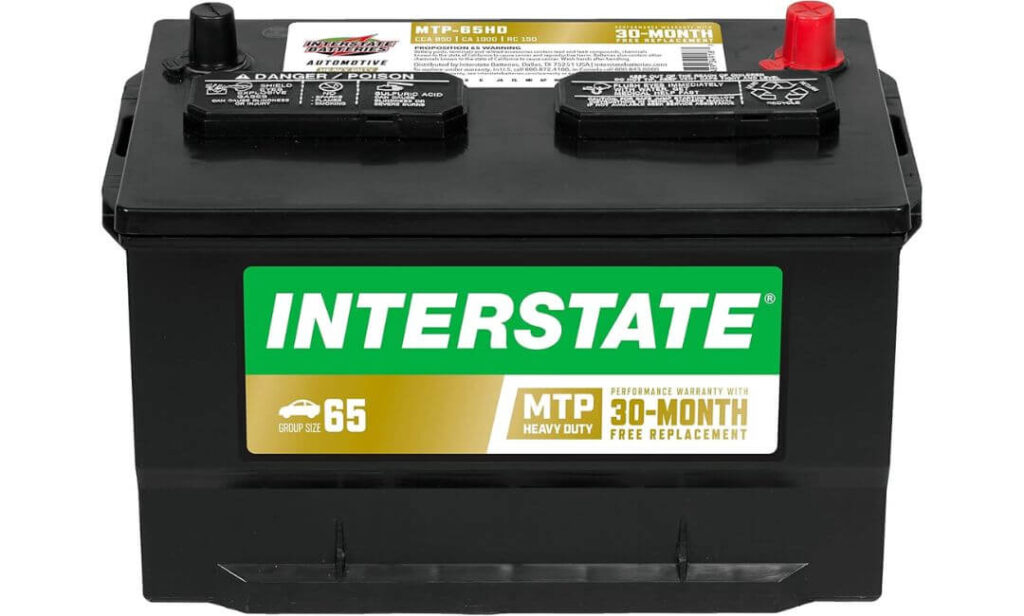
#2. Interstate Batteries Group 65 Car Battery Replacement (MTP-65HD)
Quick Specs:
- Battery Size: Group 65
- Battery Type: Conventional Flooded Lead-Acid
- Voltage: 12V
- Cold Cranking Power: 850 CCA
- Cranking Amps: 1060 CA
- Reserve Capacity: 150 minutes
- Terminal Layout: Top Post
- Weight: 46.4 lbs
- Best Use: Daily driving, dependable starts, work trucks, budget-conscious replacement
- Warranty: 30-Month Performance Coverage
Sometimes the smartest battery choice is not the most expensive one—it’s the one that shows up every morning and does its job without excuses. This model lands in that sweet spot. With 850 CCA, it brings more than enough starting strength for many Ford F250 gas setups, especially owners who need dependable starts in cold mornings or after the truck sits a few days.
The real sleeper spec here is the 150-minute reserve capacity. That’s impressive for a flooded battery and a genuine plus for truck owners who idle often, run trailer lighting, keep chargers plugged in, or use cabin electronics with the engine off. Many batteries look good on the shelf, then fall flat once real truck use begins. This one was clearly built for practical demands.
Being a traditional flooded design, it also keeps cost more reasonable than premium AGM options. That matters for owners who want strong performance without overspending. You still get a recognized brand, solid specs, and a battery that feels like it belongs in a hardworking pickup. (For many owners, this is the “buy it, install it, move on” option.)
Why It Earned a Spot on Our List
- Strong 850 CCA for reliable everyday starting power
- Excellent 150-minute reserve capacity for a non-AGM battery
- Trusted brand with decades of battery experience
- Good value for owners who don’t need premium AGM pricing
- Smart fit for daily-driven F250 trucks and light towing use
One Thing to Consider
- Flooded batteries usually need more long-term care and may not match AGM durability under heavy vibration
Ford F250 Compatibility Notes
For many Ford F250 models that use Group 65 fitment, this is a practical replacement choice when you want correct sizing and dependable output without paying premium AGM money. It especially suits trucks used for commuting, weekend hauling, and normal towing duty.
If your F250 runs heavy accessories, sees rough jobsite conditions, or spends long periods parked, AGM may still be the better long-game move. But for straightforward truck ownership, this one makes honest sense.
The Insider Pro-Tip
If you choose a flooded battery, clean terminals and stable charging voltage matter more than most people think. Even a strong battery can feel weak when corrosion builds or the alternator is undercharging.
For many F250 owners, spending a little more on a battery with higher reserve capacity pays off faster than chasing the cheapest sticker price. That extra reserve is what keeps a truck feeling dependable months later.
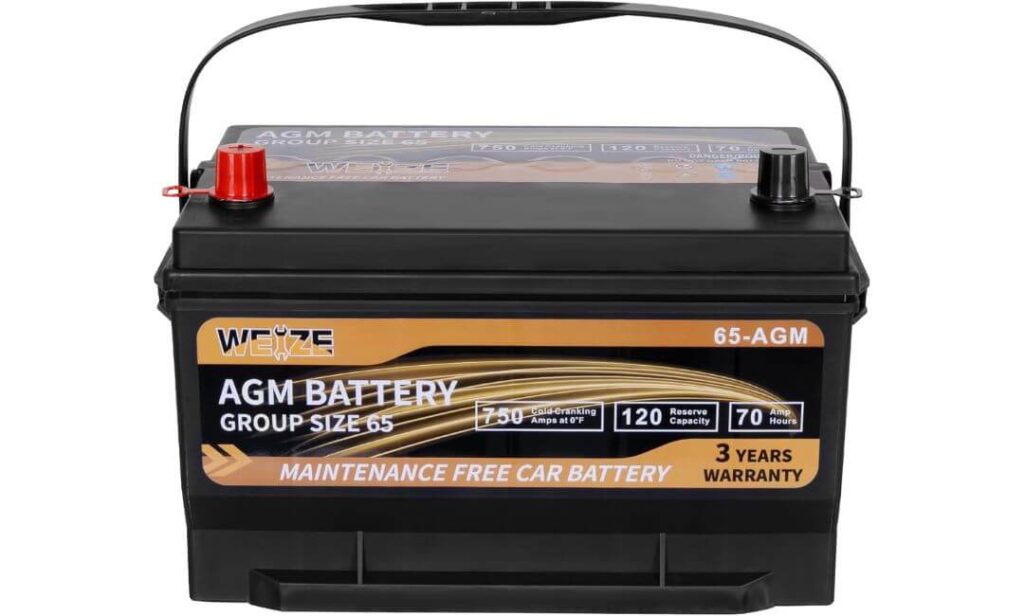
#3. Weize Platinum AGM Battery BCI Group 65 Automotive Battery
Quick Specs:
- Battery Size: Group 65
- Battery Type: AGM (sealed, maintenance-free)
- Voltage: 12V
- Capacity: 70Ah
- Cold Cranking Power: 750 CCA
- Reserve Capacity: 120 minutes
- Terminal Layout: Left positive, right negative
- Weight: 46 lbs
- Operating Range: -22°F to 158°F
- Best Use: Daily trucks, value buyers, stop/start systems, mixed weather use
- Warranty: 36 Months
Here’s where smart money usually goes. Not every Ford F250 owner needs the most expensive battery on the shelf, and this one proves it. You still get AGM construction, 750 CCA, and a healthy 70Ah capacity, which is enough for dependable starts, daily truck use, and the kind of real-world ownership most people actually live with.
The 120-minute reserve capacity gives it more depth than cheap entry-level batteries. That means better support when lights stay on, chargers stay plugged in, or the truck sits a little longer than planned. If your F250 is used for commuting during the week and hauling on weekends, this balance of power and reserve makes a lot of sense.
Its AGM build also brings practical advantages many owners notice later—less self-discharge when parked, better heat resistance, stronger cold-weather confidence, and reduced vibration stress compared with basic flooded batteries. (If you want a battery that feels smarter than its price tag, this is exactly that type of pick.)
Why It Earned a Spot on Our List
- AGM design with better durability than standard flooded batteries
- Solid 750 CCA for reliable everyday starts
- Useful 120-minute reserve capacity for accessories and idle time
- Strong value for owners wanting premium battery features at lower cost
- Good fit for mixed driving, weekend hauling, and year-round use
One Thing to Consider
- Not the strongest option here for extreme towing loads or maximum winter cranking demand
Ford F250 Compatibility Notes
For many Ford F250 models using Group 65 fitment, this is a smart middle-ground replacement. It offers enough power for normal truck ownership while giving AGM benefits that many budget batteries simply don’t provide.
If your truck runs heavy accessories daily, sees deep winter starts, or tows hard every week, stepping up to a higher-output premium option may be worth it. But for balanced ownership, this one lands nicely.
The Insider Pro-Tip
A value battery becomes a great buy when the specs line up with how the truck is actually used. Many owners overspend for performance they never need—or underspend and regret it later.
If your F250 is mostly daily use, family hauling, hardware-store runs, and occasional towing, a well-matched AGM battery like this often gives the best real-world return without paying premium-brand money.
#4. Daakmax Platinum AGM Car Group 65 Battery – 12V 70Ah, 750 CCA
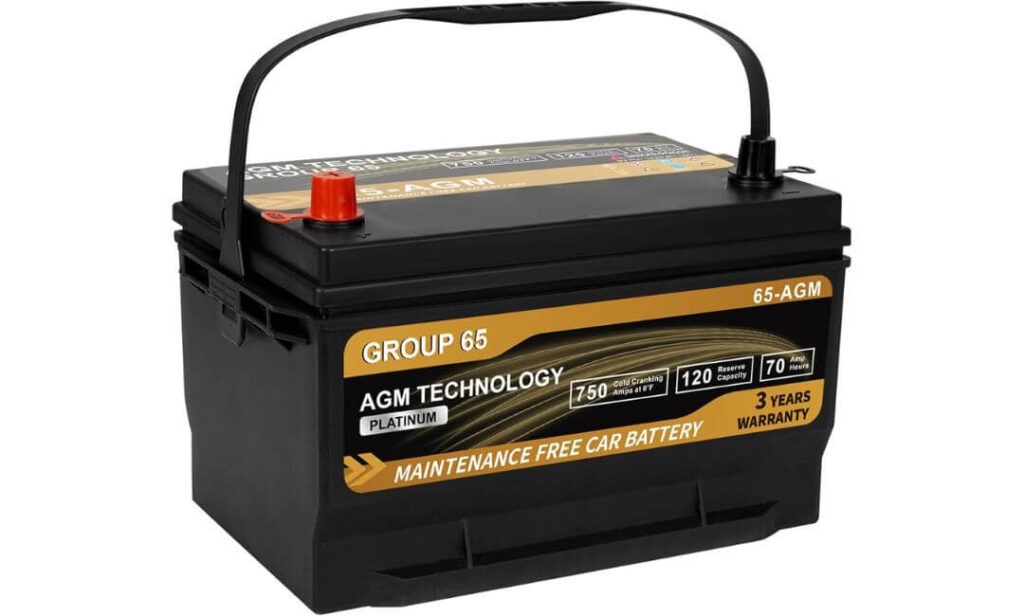
Quick Specs:
- Battery Size: Group 65
- Battery Type: AGM (sealed, maintenance-free)
- Voltage: 12V
- Capacity: 70Ah
- Cold Cranking Power: 750 CCA
- Reserve Capacity: 120 minutes
- Terminal Layout: Left positive, right negative
- Weight: 46 lbs
- Vibration Resistance: Up to 18x stronger than standard batteries
- Best Use: Budget-conscious truck owners, daily use, stop/start systems, mixed climates
- Warranty: 36 Months
Sometimes the best battery choice is the one that quietly covers all the basics without draining your wallet. This Group 65 AGM model delivers 750 CCA, 70Ah capacity, and 120 minutes of reserve capacity, which gives many Ford F250 owners exactly what they need—reliable starts, steady power, and useful backup strength for normal truck life.
What helps it stand out is the practical engineering. AGM construction means no water top-offs, no spill concerns, and better resistance to vibration than old-school flooded designs. The claimed 18x vibration resistance matters more than it sounds, especially in a truck that sees rough roads, trailers, tools in the bed, or daily work use.
It also handles weather better than many low-end batteries. With operating capability from -22°F to 158°F, it’s built for cold mornings and hot parking-lot summers alike. (If you want a lower-cost battery that still feels properly built, this is the kind of option worth a serious look.)
Why It Earned a Spot on Our List
- AGM build with maintenance-free ownership
- Solid 750 CCA for dependable everyday starts
- Useful 120 RC for lights, accessories, and idle time
- Strong vibration resistance for truck use
- Budget-friendly way to get AGM benefits
One Thing to Consider
- Lesser-known brand name may matter to buyers who prefer long-established labels
Ford F250 Compatibility Notes
For many Ford F250 models using Group 65 fitment, this can be a sensible lower-cost replacement when you still want AGM features instead of stepping down to a basic flooded battery. It fits best for commuting, errands, weekend hauling, and moderate truck duty.
If your F250 tows heavy often, faces harsh winters regularly, or runs multiple accessories every day, higher-output premium batteries may still be the smarter long-term play.
The Insider Pro-Tip
A lot of truck owners overpay for brand names when their real need is simple: dependable starts and decent reserve power. If the specs fit your usage, value options can make far more sense than chasing logos.
For many F250 owners, the smartest move is buying enough battery for how the truck is actually used—not the most expensive one on the page.
Best Ford F250 Battery Comparison Table: Top Group 65 Picks Ranked
| Battery | Type | Starting Power | Reserve | Best For | Our Real Take |
|---|---|---|---|---|---|
| Odyssey ODX-AGM65 Premium heavy-duty pick | AGM | 930 CCA | 135 Min | Towing, winter starts, hard-use trucks | Top performer in this lineup. If your F250 works hard, this is the battery that feels worth the money. |
| Interstate MTP-65HD Trusted everyday replacement | Flooded | 850 CCA | 150 Min | Daily driving, dependable starts | Strong balance of power and reserve capacity. Excellent choice for owners who want proven reliability. |
| Weize Platinum AGM Smart value option | AGM | 750 CCA | 120 Min | Mixed use, budget AGM buyers | Good specs for the price. Great fit for everyday F250 owners wanting AGM benefits without overspending. |
| Platinum AGM Group 65 Budget-friendly backup pick | AGM | 750 CCA | 120 Min | Practical ownership, lower-cost upgrade | Simple, useful, and cost-conscious. A sensible option if you want AGM features at a friendlier price. |
What Makes a Battery “Best” for the Ford F250?
Choosing the best battery for a Ford F250 is not about grabbing the highest price tag or the brand with the loudest marketing. A Super Duty truck asks more from a battery than a normal daily driver. It has a larger engine to crank, heavier electrical demand, and in many cases it sees towing, hauling, rough roads, winter mornings, and long idle time. The right battery is the one that matches how the truck is actually used.
A battery that feels fine in a small SUV can feel weak in an F250 after a few months. That is why real truck owners should focus on fitment, starting strength, reserve power, build quality, and long-term reliability—not just a sale price.
Starting Power Matters More Than Most Owners Realize
The first number many F250 owners should check is Cold Cranking Amps (CCA). This rating tells you how much starting power the battery can deliver in cold temperatures. That matters because engines need more effort to start when oil is thicker and temperatures drop.
For a Ford F250, stronger CCA often means faster, cleaner starts and less strain on the starter. If you live in colder areas, leave the truck parked outside, or use the truck early in the morning for work, higher CCA becomes even more valuable.
A weak battery usually warns you with slow cranking first. Smart owners replace before that weak start becomes a no-start day.
Reserve Capacity Separates Good Batteries from Great Ones
Many people focus only on starting the engine, but reserve capacity is what keeps a truck dependable after the engine is already running—or when accessories are being used with the engine off.
Reserve capacity matters when you are using:
- Trailer lights
- Phone chargers
- Interior electronics
- Audio systems
- Work lights
- Power inverters
- Long idle periods
On a Ford F250, reserve power is a real-world advantage. A battery with stronger reserve capacity usually feels more stable and less stressed over time.
AGM vs Standard Lead-Acid for the Ford F250
Both battery types can work, but they suit different owners.
AGM batteries are the stronger premium option for many F250 owners. They are sealed, maintenance-free, more vibration-resistant, recharge faster, and usually handle accessories better. They also tend to perform better in trucks used for towing, rough roads, or repeated short trips.
Standard flooded lead-acid batteries are often cheaper upfront and still work well for normal driving. If your truck is mostly used for commuting, errands, and light-duty tasks, a quality flooded battery can be a smart value move.
If you use your truck hard, AGM usually earns its extra cost.
Battery Durability Is a Bigger Deal on Heavy Trucks
The Ford F250 is heavier, stiffer, and often driven in tougher environments than a regular passenger vehicle. That means vibration resistance matters. Batteries that cannot handle constant movement and road shock may lose performance earlier.
This is one reason AGM batteries are popular in trucks. Their internal design tends to hold up better over time under demanding use.
Warranty Still Matters, But Read It Correctly
A long warranty sounds great, but the better question is whether the battery has a solid reputation plus useful coverage. Sometimes a battery with moderate warranty coverage from a trusted manufacturer is a better buy than a no-name product promising big numbers.
Look at warranty as backup confidence—not the only reason to buy.
Ford F250 Battery Size and Group Size Explained
For many newer Ford F250 models, Group 65 is the most common battery size owners search for and replace with. It is one of the most relevant fitments for many gas-engine Super Duty applications.
Some diesel trims may use dual battery setups, depending on year, engine, and configuration. That is why confirming fitment by exact model year and engine always matters before ordering.
Battery group size affects:
- Physical fit in the tray
- Terminal position
- Cable reach
- Hold-down fitment
- Safe installation
Even a powerful battery is the wrong choice if the size is incorrect.
Real Buying Advice for Ford F250 Owners
If your truck tows, works daily, runs accessories, or faces winter weather, prioritize:
- Higher CCA
- AGM construction
- Strong reserve capacity
- Trusted warranty support
If your truck is mainly normal daily use with occasional hauling, a quality flooded Group 65 battery can still be a smart and cost-effective option.
The Bottom Line
The best battery for a Ford F250 is the one that starts strong every time, fits correctly, handles truck-level demand, and still feels dependable months later. Numbers on a label matter—but matching those numbers to real truck use matters more.
How to Read Battery Labels for the Ford F250
Battery labels can look technical at first glance, but once you know what the numbers mean, choosing the right battery becomes much easier. For a Ford F250, reading the label properly matters because this is not a light-duty vehicle. A Super Duty truck needs the correct fitment, enough starting power, and enough reserve strength to handle real truck use.
Many owners buy based only on brand name or price, then realize later the battery was undersized, weak, or the wrong fit. A few minutes spent reading the label can save money, time, and frustration.
What CCA Means on a Ford F250 Battery
CCA stands for Cold Cranking Amps. This is one of the most important numbers on a truck battery because it measures how much power the battery can deliver to start the engine in cold weather.
For a Ford F250, stronger CCA usually means:
- Faster starts on cold mornings
- Less strain on the starter motor
- Better confidence after the truck has been sitting
- More dependable winter performance
If you live in a colder climate or use the truck for early-morning work starts, paying attention to CCA is smart. Many F250 owners prefer stronger numbers because heavy-duty engines ask more during startup than smaller vehicles.
What Ah Means and Why It Matters
Ah stands for Amp Hour rating. It reflects how much energy the battery can store and deliver over time.
In real ownership terms, higher Ah can help with:
- Running electronics longer with the engine off
- Supporting accessories and add-ons
- Better energy reserve during repeated short trips
- More stable performance in trucks with extra electrical demand
If your Ford F250 runs chargers, trailer electronics, lights, audio upgrades, or work equipment, Ah becomes more useful than many people realize.
What RC Means on the Label
RC means Reserve Capacity. This tells you how many minutes the battery can continue supplying usable power if the charging system is not keeping up.
This is valuable on an F250 because trucks often deal with:
- Long idle periods
- Trailer wiring loads
- Worksite accessory use
- Interior lights left on
- Heavy electrical demand at low RPM
A battery with stronger RC often feels more dependable in everyday truck life.
Why Battery Size Matters as Much as Power
Even a strong battery is the wrong battery if it does not physically fit your Ford F250. Battery labels include a group size, which identifies dimensions, terminal layout, and tray compatibility.
For many newer Ford F250 models, Group 65 is one of the most common fitments. Some diesel configurations may use dual battery setups depending on year and engine.
Group size affects:
- Battery tray fit
- Hold-down clamp alignment
- Cable reach
- Terminal position
- Safe installation
Never assume a battery fits just because the voltage matches.
How to Verify Compatibility with Your Ford F250
The smartest way to confirm battery compatibility is by checking more than one source.
Use these methods:
- Owner’s manual
- Existing battery label
- Under-hood battery sticker
- Trusted fitment lookup tools
- Exact year, engine, and trim information
A gas-engine F250 and diesel F250 from the same year can have different battery requirements, so always verify using your exact truck details.
Understanding Terminal Layout
Battery labels may also mention terminal position, such as left positive / right negative or top post layout. This matters because cable lengths on trucks are designed for specific positions.
Wrong terminal orientation can create:
- Cable strain
- Difficult installation
- Unsafe routing
- Poor connection angles
Always compare the new battery layout to the one currently in your truck.
AGM vs Flooded Label Differences
You may also see whether the battery is AGM or Flooded Lead-Acid.
AGM batteries are usually sealed, maintenance-free, and better for vibration resistance, accessory loads, and demanding truck use.
Flooded batteries are often lower cost and still work well for normal use when properly sized.
If your F250 already came with AGM, staying with AGM is often the better route.
Real Buying Advice Before You Order
Before purchasing any battery for a Ford F250, check these five things on the label:
- Correct Group 65 size (or your confirmed factory size)
- Enough CCA for your climate and engine needs
- Useful RC for accessories and reliability
- Correct terminal orientation
- Suitable battery type, AGM or flooded
The Bottom Line
A battery label tells you far more than a brand name ever will. For Ford F250 owners, understanding CCA, Ah, RC, and group size is how you avoid bad fits and weak performance. Read the numbers first, then choose the brand second.
Installation Basics for Ford F250 Owners (If You Do It Yourself)
Replacing the battery in a Ford F250 is one of the more realistic DIY jobs for truck owners, but it still deserves respect. A truck battery is heavier, more powerful, and physically larger than what many passenger cars use. One careless mistake—reversed terminals, loose hold-downs, metal tool contact, or skipping memory settings—can create expensive problems quickly.
If you take your time, use the right tools, and follow a clean process, battery replacement can be straightforward. The key is doing it safely and correctly the first time.
Safety Tips Before You Start
Before touching the old battery, make sure the truck is parked on level ground with the ignition fully off. Remove the key or keep the fob away from the vehicle.
Important safety habits:
- Wear gloves and eye protection
- Do not smoke or create sparks nearby
- Remove rings, watches, and metal jewelry
- Keep metal tools away from both terminals at once
- Work in a ventilated area
- Use proper lifting posture, many Group 65 batteries are heavy
Truck batteries can produce explosive gases and carry serious current. Treat the job carefully, not casually.
Tools That Make the Job Easier
Having the right tools saves frustration.
Recommended basics:
- Socket set or wrench set
- Battery terminal brush or cleaner
- Shop towel or rag
- Anti-corrosion terminal protectant (optional)
- Battery memory saver (optional)
- Gloves
For many F250 owners, the hardest part is often battery weight and hold-down access—not the wiring itself.
How to Remove the Old Ford F250 Battery
Start by opening the hood and locating the battery tray.
Follow this order:
- Loosen and remove the negative terminal first
- Then remove the positive terminal
- Remove the battery hold-down bracket or clamp
- Lift the battery straight up carefully
- Inspect the tray for rust, dirt, or corrosion
Disconnecting negative first reduces accidental shorting risk.
If the truck uses dual batteries or special equipment, work carefully and confirm routing before removal.
How to Install a New AGM Battery in the Ford F250
If you are upgrading to AGM, installation is usually straightforward when the battery matches the correct Group 65 fitment and terminal layout.
Install in this order:
- Clean the battery tray area
- Lower the new battery evenly into place
- Secure the hold-down bracket firmly
- Connect the positive terminal first
- Connect the negative terminal last
- Confirm both terminals are tight and stable
A loose terminal can create hard starts, warning lights, or charging issues even with a brand-new battery.
AGM batteries are sealed and maintenance-free, but they still need proper charging-system support from the truck.
Should You Reset Anything After Installation?
Some trucks may lose memory settings when power is disconnected.
You may need to reset:
- Clock
- Radio presets
- Window auto-up/down memory
- Seat memory features
- Trip data
This is normal and not a sign of a bad battery.
Warranty Registration and Coverage Tips
Many buyers ignore this part, then regret it later. Once the battery is installed, keep your receipt and product details immediately.
Best habits:
- Save digital invoice and printed receipt
- Photograph the battery label and serial sticker
- Register online if the brand offers it
- Note purchase date in your phone
- Keep warranty terms handy
A warranty is only useful if you can prove ownership and purchase timing.
How to Dispose of the Old Battery Properly
Never throw an old lead-acid battery in household trash. Used batteries contain lead and acid that require proper recycling.
Best disposal options:
- Auto parts stores
- Battery retailers
- Service garages
- Municipal recycling centers
- Core return programs
Many sellers provide a core credit or refundable deposit when you return the old battery.
Common Mistakes to Avoid
Even experienced DIY owners make simple errors.
Avoid these:
- Buying the wrong group size
- Reversing terminal connections
- Leaving terminals loose
- Forgetting the hold-down bracket
- Letting tools bridge terminals
- Ignoring corrosion on old cable ends
Most battery complaints after install are connection issues, not battery defects.
Smart Advice for Ford F250 Owners
If your old battery failed early, inspect the charging system too. A weak alternator, parasitic drain, or poor ground cable can ruin a new battery faster than people expect.
If the truck is mission-critical for work, winter travel, towing, or family use, install the battery before total failure—not after you get stranded. A planned replacement is always cheaper than an emergency one.
Maintenance & Longevity Tips for AGM Batteries in the Ford F250
A quality AGM battery can last impressively well in a Ford F250, but even the best battery will age faster if the truck’s charging habits, storage routine, or electrical system are ignored. Many battery failures blamed on “bad quality” are actually caused by undercharging, repeated short trips, loose terminals, or letting the truck sit too long.
The good news is AGM batteries are easier to live with than old-style flooded batteries. They are sealed, maintenance-free, and generally more resistant to vibration and harsh conditions. Still, a few smart habits can add real life to the battery and keep your truck feeling dependable.
Simple Habits That Help an AGM Battery Last Longer
The easiest way to shorten battery life is repeated shallow charging. If your F250 is used only for short errands, quick starts, or frequent stop-and-go runs, the battery may never fully recover what it used during startup.
Better habits include:
- Take the truck on longer drives regularly so the charging system can replenish the battery properly
- Keep terminals clean and tight
- Turn off lights, chargers, and accessories when parked
- Avoid leaving the truck unused for long stretches without a charger
- Inspect cables for corrosion or looseness
- Make sure the hold-down bracket is secure
Heavy-duty trucks vibrate more than many vehicles. A loose battery can age early from constant movement alone.
Why Short Trips Are Hard on Batteries
Many owners think starting the truck means the battery is fine. That is not always true. Every start takes energy, and short drives may not give enough time to recharge fully.
This matters more in an F250 because:
- Larger engines need stronger cranking effort
- Cold weather increases demand
- Accessories often stay active longer
- Trucks are sometimes started repeatedly during workdays
Over time, partial charging creates stress and reduces battery life.
Keep the Charging System Healthy
A new battery cannot compensate for a weak alternator or unstable voltage. If charging output is inconsistent, even a premium AGM battery can fade early.
Watch for:
- Dimming lights at idle
- Battery warning lights
- Slow cranking despite a newer battery
- Electrical glitches
- Repeated dead battery events
If these appear, test the charging system instead of blaming the battery first.
Signs It May Be Time to Replace the Battery
Most batteries decline gradually before they fail completely. Catching those warnings early can prevent being stranded.
Common signs include:
- Slower or hesitant starting
- Needing jump starts
- Voltage dropping after sitting
- Accessories acting weak with engine off
- Battery case swelling or damage
- Noticeably older battery with declining performance
On a truck you depend on daily, waiting for complete failure is usually the expensive move.
Cold Weather and Heat Both Matter
Extreme cold reveals weakness. Extreme heat speeds up battery aging internally. Many owners only worry in winter, but summer can quietly shorten battery life.
If your F250 lives outdoors in hot weather:
- Park in shade when possible
- Avoid long unused periods in heat
- Check charging condition regularly
If you deal with winter:
- Replace weak batteries before cold season
- Keep terminals clean
- Use a maintainer if parked often
Storage Tips for Trucks That Sit
If the truck is not being driven for weeks at a time, battery care becomes even more important.
Best storage habits:
- Use a quality battery maintainer or smart charger
- Disconnect unnecessary parasitic loads if needed
- Start and drive the truck periodically when practical
- Store in a secure, dry place if removing the battery
- Recheck charge level before returning to service
Letting a battery sit discharged is one of the fastest ways to shorten lifespan.
How Long Can an AGM Battery Last in an F250?
There is no single answer because usage matters more than the calendar. A lightly used truck with smart charging habits can see strong service life. A heavily used truck with short trips, harsh weather, and accessory loads can shorten that timeline.
What usually matters most:
- Climate
- Driving pattern
- Charging system health
- Vibration exposure
- Battery quality
- Storage habits
Smart Owner Advice
If your truck is important for work, towing, or family travel, replace a clearly weakening battery before it chooses the timing for you. AGM batteries usually give warning signs first—pay attention to them.
The owners who get the longest battery life are rarely lucky. They simply keep the truck charged properly, catch small issues early, and do not ignore the first slow crank.
FAQs About Ford F250 Battery
What is the best battery type for a Ford F250: AGM or standard lead-acid?
For most modern Ford F250 owners, AGM is usually the smarter long-term choice, especially if the truck tows, sits between uses, runs accessories, or sees winter starts. AGM batteries handle vibration better, recharge faster, and usually stay more stable under heavier electrical demand. That matters in a Super Duty where the battery is asked to do more than just start the engine.
A standard flooded battery can still be a smart buy if the truck is mostly daily-driven and used lightly. The real mistake is buying flooded only because it is cheaper, then expecting AGM-level durability. If the truck works hard, AGM often costs more once—but less over time.
How many CCA does a Ford F250 really need for reliable cold starts?
There is no single magic number because engine size, climate, and usage matter. In general, many Ford F250 owners feel more confident with stronger ratings in the 750 to 900+ CCA range, especially in colder regions or when the truck sits overnight outdoors.
If your truck starts easily in warm weather but slows down when temperatures drop, that usually means reserve strength is fading or your current battery is undersized. Smart buyers do not just match the minimum requirement—they buy enough starting power for the worst morning of the year.
Why does my Ford F250 battery keep dying even after I replaced it?
A new battery does not fix every battery problem. Many repeat failures are caused by something else in the truck.
Common causes include:
- Weak alternator output
- Parasitic electrical drain
- Loose or corroded terminals
- Ground cable issues
- Frequent short trips with incomplete charging
- Accessories drawing power while parked
If a fresh battery dies early, stop replacing batteries and start testing the charging system. That is where many owners waste money.
Is a premium battery actually worth it for a Ford F250, or is it just branding?
Sometimes premium pricing is branding. Sometimes it is real engineering. On a Ford F250, premium batteries often justify themselves through stronger internals, better reserve capacity, improved vibration resistance, and more consistent cold-weather starts.
If your truck is a weekend grocery hauler, you may never notice the difference. But if it tows, idles, hauls tools, or must start every single morning without drama, premium batteries often feel worth every rupee or dollar the first time conditions get tough.
How can I make my Ford F250 battery last as long as possible?
Battery life usually depends more on habits than luck. The owners who get the longest service life tend to keep the truck charged properly and fix small issues early.
Best habits:
- Drive long enough to recharge after starts
- Keep terminals clean and tight
- Avoid letting the truck sit discharged
- Use a maintainer during long storage
- Replace weak charging components early
- Secure the battery properly against vibration
Most batteries do not fail suddenly. They weaken gradually while owners ignore the signs. Catch the slow crank early, and you usually stay ahead of the problem.
Final Thoughts
A Ford F250 is not the kind of truck that forgives a weak battery for long. When the engine is larger, the truck is heavier, and the daily workload is tougher, the battery becomes more than a maintenance item—it becomes part of the truck’s reliability. Choose the right one, and the truck feels ready every morning. Choose the wrong one, and problems usually show up when you least need them.
That is why this guide focused on real fitment, honest specs, and batteries that make sense for how F250 owners actually use their trucks. Some drivers need maximum cranking power for winter starts and towing. Others need dependable everyday value without overspending. The best pick is not always the most expensive one—it is the one that matches your climate, workload, and expectations.
If your current battery is already slow to crank, losing charge after sitting, or forcing jump starts, that is usually the truck giving notice. Replacing it before total failure saves time, stress, and often money.
Buy for the next three years of ownership, not just today’s price tag. That is how smart truck owners stay ahead.
Also Check:

