
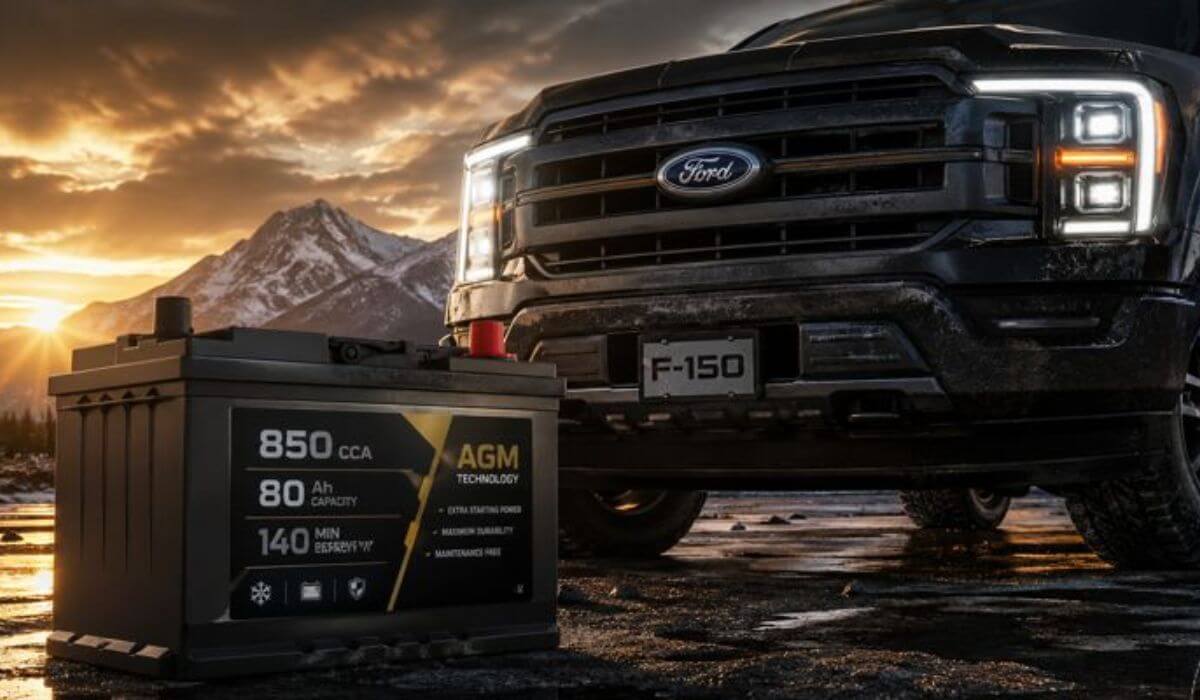
7 Best Batteries for Ford F150 in 2026: Top AGM Picks for Power, Cold Starts & Longer Life
If your Ford F-150 has been cranking slower on cold mornings, struggling after short trips, or acting weak when the lights, screen, and accessories are all running, the battery is usually the first place to look. Newer F-150 models put more demand on a battery than older trucks ever did—remote start, start-stop systems, towing electronics, larger infotainment screens, heated seats, and constant charging loads all add up fast. That is why a cheap replacement often feels fine for a few months, then starts letting owners down when weather changes or workload increases.
Most modern Ford F-150 trims commonly use AGM batteries in Group Size H6 (48) or H7 (94R) depending on engine, trim level, and factory equipment. H7 / 94R batteries are typically the stronger choice for higher trims, towing setups, colder climates, and trucks loaded with electronics. H6 / Group 48 options can be an excellent fit for standard daily-use trucks when chosen from a quality brand.
If I were buying today and wanted zero guesswork, these would be the first two batteries I’d look at:
- OPTIMA Batteries YellowTop DH6: Best AGM Battery for Ford F150 Owners Who Want Maximum Reliability — 800 CCA, sealed AGM design, strong vibration resistance, faster recharge recovery, and excellent performance for trucks with winches, lights, audio upgrades, or frequent short trips.
- ACDelco Gold 94RAGM: Best Ford F150 Battery Replacement for H7 / 94R Fitment — 36-month warranty, dependable cold-start power, OEM-style fit, maintenance-free AGM build, and a smart pick for newer F-150 trims needing strong everyday consistency.
The truth is simple: the right battery makes your F-150 feel healthy again. Faster starts, steadier voltage, better accessory performance, and fewer surprises when temperatures drop. Choose the correct size first, then choose the strongest AGM your budget allows.
Best Ford F150 Battery: Top 2026 Picks for H6, H7 & AGM Performance
#1. OPTIMA Batteries YellowTop DH6
Best AGM Battery for Ford F150 Power Users & Upgraded Trucks
#2. ACDelco Gold 94RAGM
Best Ford F150 Battery Replacement for Newer H7 / 94R Trims
#3. Interstate Batteries MTP-94R/H7
Most Reliable Truck Battery for Ford F150 Daily Driving
#4. UPLUS AGM-L80-UP Group 94R
Best Value 850 CCA Battery for Ford F150 Cold Starts
#5. Weize Platinum AGM Group 48
Best Budget H6 Battery for Ford F150 Standard Setups
#6. Renogy 12V 70Ah AGM Group 48
Best Start-Stop AGM Battery for Ford F150 Efficiency Focused Owners
#7. Mighty Max Battery MM-H7
Affordable H7 Ford F150 Battery With Strong Reserve Power
Expert Tip From Real F-150 Ownership Experience
If your truck still starts “fine,” but the crank sounds slower than it did six months ago, don’t ignore it. That soft, lazy start is usually the warning before a no-start morning. Ford F-150 owners often replace starters, alternators, or sensors first, when the battery was the real issue all along. A strong AGM battery does more than start the engine—it protects voltage-sensitive electronics, keeps start-stop systems stable, and reduces strain on the charging system. If your battery is over three years old and the truck feels different, trust what you hear before it leaves you stranded.
How We Chose These Best Batteries for Ford F150
We did not build this list around brand hype or random star ratings. We chose batteries the same way experienced truck owners do: by looking at what actually matters once the hood is closed and real life starts.
First, we prioritized correct fitment for modern Ford F-150 models. Most newer trucks need H6 (Group 48) or H7 (94R) sizing depending on trim, engine, and factory equipment. A battery can look great on paper, but if terminal layout, tray fit, or hold-down compatibility is wrong, it becomes a headache fast. Every pick here comes from the sizes most F-150 owners actually need.
Second, we looked at cold cranking amps (CCA) because trucks demand honest starting power. A battery that struggles on a cold morning or after sitting for two days is not worth buying. That is why stronger options like the UPLUS 94R and OPTIMA YellowTop stood out—they offer the kind of reserve muscle truck owners notice immediately.
Third, we valued AGM construction over basic flooded designs wherever possible. AGM batteries handle vibration better, recharge faster, resist leaks, and support newer F-150 electrical loads more confidently. On a truck used for towing, job sites, short trips, accessories, or stop-and-go driving, AGM usually pays for itself in reliability.
We also considered reserve capacity, which many buyers ignore until it matters. Reserve power helps when headlights, blower motor, audio, chargers, trailer connections, and screens are all working at once. It also gives more stability during repeated starts or unexpected drain situations.
Then we looked at real ownership value. That means warranty support, brand consistency, replacement confidence, and whether the battery has a reputation for lasting beyond the honeymoon phase. Some batteries sell on marketing. Others quietly keep trucks starting for years. We favored the second type.
Finally, we balanced this list for different owners. Not every F-150 needs the most expensive battery. Some need maximum power for towing and upgrades. Some need a dependable daily replacement. Some just want the smartest value without sacrificing quality. That is why this list includes premium, mid-range, and budget-friendly AGM options instead of forcing one choice on everyone.
If a battery made this article, it earned the spot by solving real Ford F-150 problems: hard starts, weak voltage, short lifespan, and replacement regret.
#1. OPTIMA Batteries YellowTop DH6
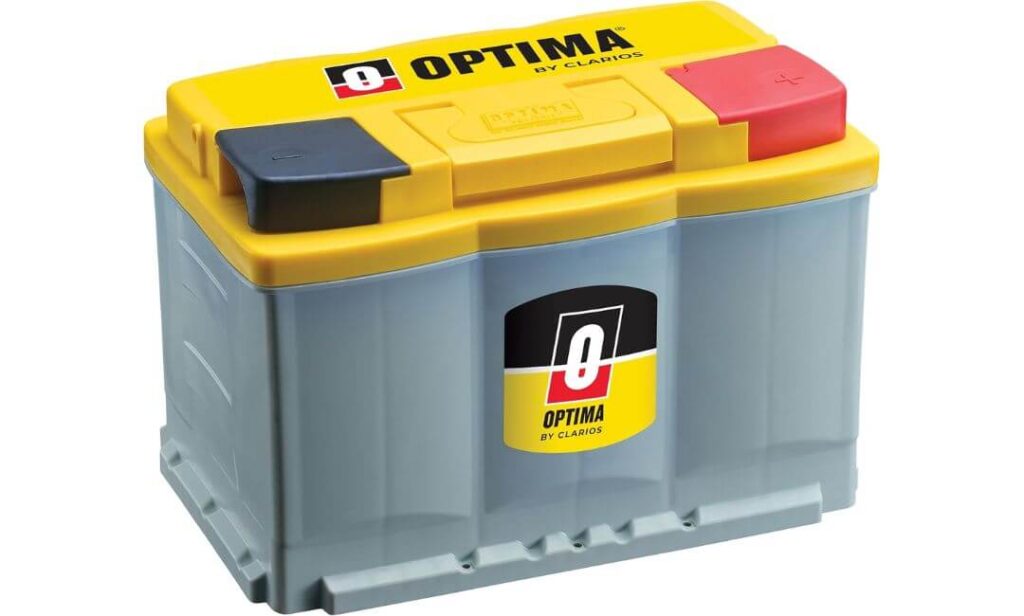
Quick Specs:
- Battery Type: Premium Sealed AGM Dual-Purpose
- Group Size: 48 / H6
- Cold Cranking Power: 800 CCA
- Reserve Capacity: 140 minutes
- Capacity: 72Ah
- Voltage: 12V
- Weight: 54 lbs
- Best Use: Ford F-150 trucks with accessories, towing gear, short-trip driving, added electronics
- Standout Feature: Deep-cycle strength + starting power in one battery
The moment you look past the badge and into the numbers, this one starts making sense fast. 800 CCA means serious cold-start confidence when your F-150 sits overnight, while the 140-minute reserve capacity gives breathing room when lights, chargers, trailer wiring, audio, and cabin electronics are all pulling power together. That matters more on modern trucks than many owners realize.
Where this battery separates itself is that it is not just a starter battery. It is a true dual-purpose AGM, which means it can handle repeated accessory drain better than many standard options. If your F-150 sees tailgate power use, job-site idling, aftermarket lighting, winches, or lots of short drives where charging time is limited, that extra cycling ability becomes real value—not marketing.
Then there is durability. OPTIMA’s spiral-cell internal design is known for handling vibration far better than traditional flooded batteries. In a truck that sees rough roads, towing loads, uneven terrain, or constant movement, that matters. You are buying more than a battery here—you are buying fewer headaches later. (For owners who use their truck like a truck, this one earns its price.)
Why We Rate It So Highly
- Strong 800 CCA for fast, confident starts
- 140 RC helps support electronics and accessory loads
- Dual-purpose design handles deeper discharge better than many standard batteries
- Excellent vibration resistance for truck use
- Maintenance-free sealed AGM construction
- Ideal for upgraded or hard-working F-150 setups
One Honest Trade-Off
- Premium pricing compared with standard AGM batteries
Ford F-150 Compatibility & Fitment Notes
This battery uses Group Size 48 / H6, which fits many Ford F-150 trims that call for H6 sizing. It can be an excellent match for owners who want stronger quality than a budget replacement while keeping factory-size fitment.
Before ordering, confirm your truck’s battery tray label or owner’s manual, because some F-150 configurations use H7 / 94R instead. Size check first, then buy once.
The Insider Pro-Tip
If your F-150 does frequent short trips, idles often, or runs accessories with the engine off, this type of dual-purpose AGM can outlast many standard batteries simply because it tolerates that lifestyle better.
Pair it with a quality AGM-compatible charger once in a while, especially in winter or low-mileage use, and you can get the kind of performance most owners only realize after they waited too long to upgrade.
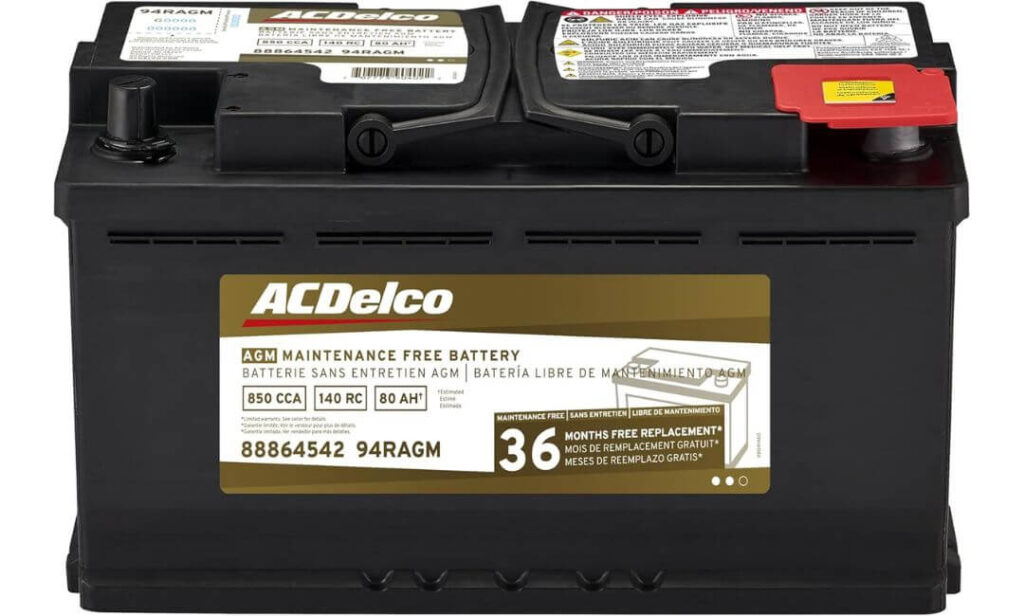
#2. ACDelco Gold 94RAGM
Quick Specs:
- Battery Type: Premium Sealed AGM
- Group Size: 94R / H7
- Cold Cranking Power: 850 CCA
- Capacity: 80Ah
- Voltage: 12V
- Weight: 51.6 lbs
- Warranty: 36-Month Replacement Coverage
- Best Use: Newer Ford F-150 trims, towing setups, cold climates, high electrical demand trucks
- Standout Feature: Strong OEM-style fit with high starting power and long-cycle AGM design
Some batteries look good on a shelf. This one makes sense the moment real truck use begins. With 850 CCA, it brings the kind of starting confidence F-150 owners notice immediately—especially on cold mornings, after sitting for days, or when the truck has multiple systems drawing power before ignition even starts.
What gives it an edge is the internal build quality. ACDelco uses Silver-Calcium alloy technology, high-density negative paste, and low-resistance grids to improve cycle life and keep power delivery stable over time. In plain English: it is built to stay stronger longer, not just feel strong on day one.
The 80Ah capacity also matters more than most buyers realize. It helps support modern truck loads like larger screens, charging ports, trailer brake controllers, heated seats, and stop-start systems without feeling stressed. If your F-150 is a daily tool, tow rig, or family truck, this battery feels like money spent in the right place. (It has the “install it and stop thinking about batteries” vibe owners appreciate.)
Why It Earned a Top Spot
- Strong 850 CCA for dependable cold starts
- 80Ah capacity supports modern truck electronics well
- AGM design resists leaks, vibration, and maintenance hassles
- Silver-Calcium internals help extend usable life
- Excellent choice for heavier-duty F-150 use
- Trusted replacement option with solid warranty backing
One Honest Trade-Off
- Slightly heavier and larger than some standard batteries, so fitment should always be checked first
Ford F-150 Size Match & Installation Notes
This model uses Group Size 94R / H7, a common fitment for many newer Ford F-150 configurations equipped with higher electrical demand systems or factory H7 battery trays.
If your truck currently has an H7 / 94R battery installed, this is the type of upgrade many owners prefer because it keeps factory-style sizing while delivering stronger AGM performance. Always verify tray space and terminal layout before purchase.
The Insider Pro-Tip
If your F-150 has start-stop, trailer wiring, heated seats, or spends time idling with electronics on, moving to a quality H7 AGM like this can make the truck feel more stable overall—not just easier to start.
When replacing your old battery, clean the terminals and reset battery monitoring systems if equipped. Many owners skip that small step, then blame the new battery for issues the truck itself is causing.
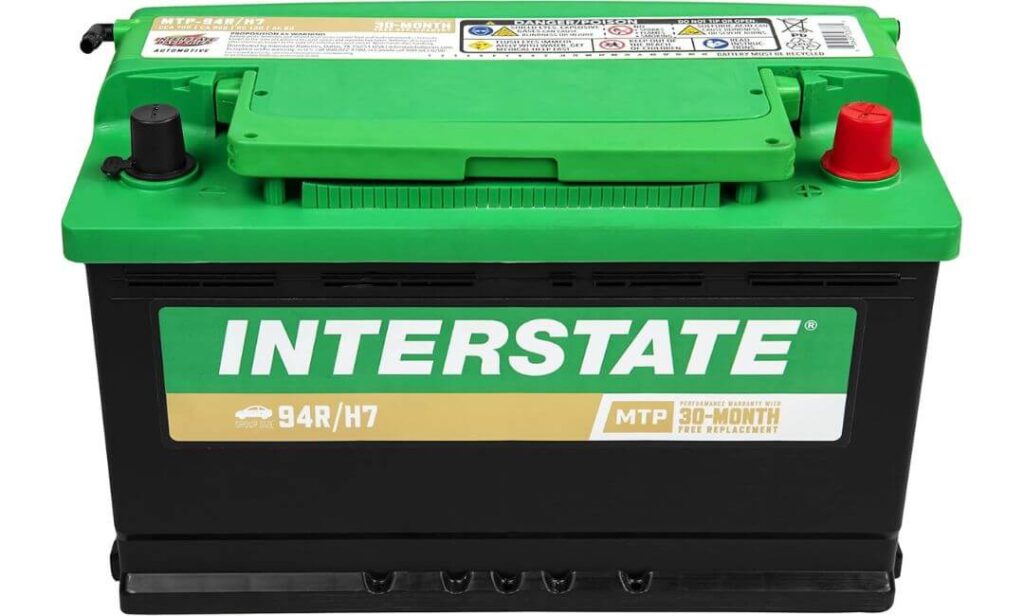
#3. Interstate Batteries MTP-94R/H7
Quick Specs:
- Battery Type: Premium Flooded Lead-Acid
- Group Size: 94R / H7
- Cold Cranking Power: 790 CCA
- Reserve Capacity: 130 minutes
- Voltage: 12V
- Weight: 42.9 lbs
- Warranty: 30-Month Coverage
- Terminal Type: Top Post
- Best Use: Ford F-150 daily drivers, stock trucks, dependable OEM-style replacement needs
- Standout Feature: Strong traditional battery performance from one of the most trusted names in the industry
Here is the truth many truck owners learn late: not everyone needs to pay AGM prices. If your Ford F-150 is mostly used for commuting, errands, highway miles, normal hauling, and dependable daily starts, a strong conventional battery like this can be the smarter buy.
With 790 CCA, it gives solid starting power for gas-powered F-150 setups in normal to colder climates. Add the 130-minute reserve capacity, and you get helpful backup strength when lights, blower motor, charging ports, and accessories are drawing current during stop-and-go use or engine-off moments.
What makes this pick stand out is consistency. Interstate has built a reputation for batteries that simply do their job without drama. No flashy claims, no gimmicks—just reliable starts, stable output, and broad replacement confidence. For many owners, that peace of mind matters more than exotic battery technology. (Sometimes the best battery is the one that never gives you a reason to think about it.)
Why It Made Our Recommended List
- Trusted brand with long-standing reliability reputation
- 790 CCA delivers dependable daily starting power
- 130 RC helps support accessory loads and reserve backup
- Smart value compared with many AGM options
- Good fit for stock or lightly equipped F-150 trucks
- Widely recognized replacement-grade quality
One Honest Trade-Off
- Flooded design is not as vibration-resistant or cycle-tolerant as premium AGM batteries
Ford F-150 Fitment & Best Use Case
This battery uses Group Size 94R / H7, which is common on many Ford F-150 configurations that require the larger battery tray and factory H7 sizing.
It is especially attractive for owners who want a dependable replacement without overspending on AGM tech they may never fully use. If your truck is mostly stock and driven regularly, this type of battery often makes excellent practical sense.
The Insider Pro-Tip
If you choose a flooded battery instead of AGM, regular driving matters more. Trucks that sit too long or only do short trips can shorten battery life faster than most owners realize.
For an F-150 used weekly and driven enough to recharge properly, this kind of battery can be one of the best dollar-for-dollar decisions on the market.
#4. UPLUS AGM-L80-UP Group 94R
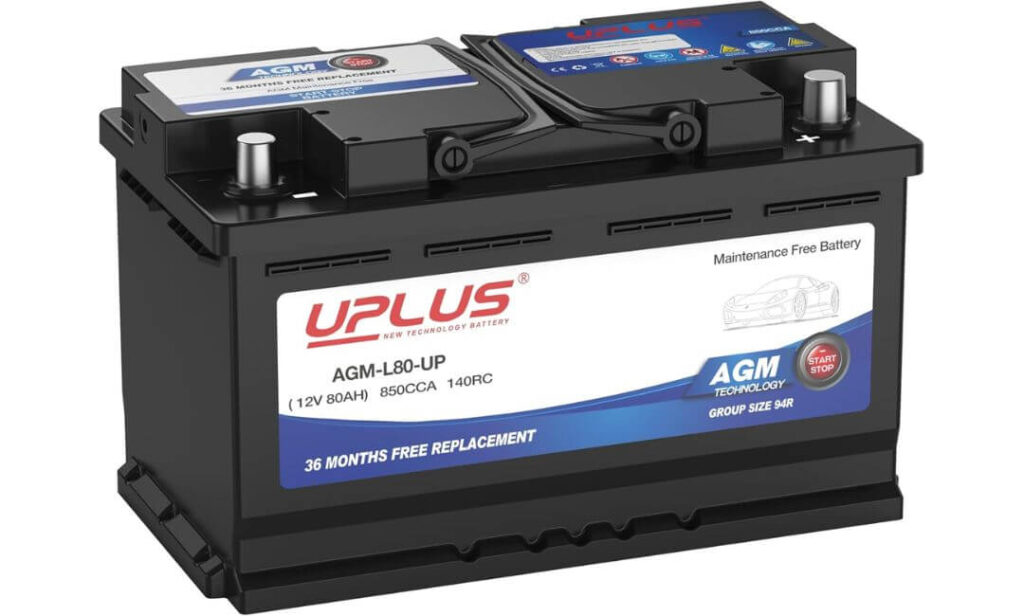
Quick Specs:
- Battery Type: Premium Sealed AGM
- Group Size: 94R / H7 / L4
- Cold Cranking Power: 850 CCA
- Capacity: 80Ah
- Reserve Capacity: 140 minutes
- Voltage: 12V
- Weight: 52 lbs
- Warranty: 3-Year Coverage
- Terminal Layout: Left Negative / Right Positive
- Best Use: Ford F-150 trucks with stop-and-go driving, short trips, towing loads, electronics-heavy setups
- Standout Feature: High-output AGM performance at a value-focused price
Sometimes the best buy is not the most famous badge—it is the battery that quietly overdelivers once installed. This one brings 850 CCA, 80Ah capacity, and 140 minutes reserve capacity, which are serious numbers for Ford F-150 owners who want strong starts and steady power without paying premium-brand money.
That combination matters in real truck use. If your F-150 deals with cold mornings, trailer wiring, heated seats, navigation screens, chargers, work lights, or frequent stop-start traffic, stronger reserve power keeps voltage steadier and reduces that “weak battery feeling” many trucks develop over time.
UPLUS also leans into durability with enhanced alloy construction and claims of higher cycle life than standard batteries. In practical terms, it is built for repeated use patterns that kill cheaper batteries early—short drives, sitting for days, repeated starts, and accessory loads. (For value hunters who still want real specs, this one gets attention quickly.)
Why It Earned Its Place on This List
- Excellent 850 CCA for confident starts in all seasons
- 140 RC gives strong backup power for accessories
- 80Ah capacity supports modern F-150 electrical loads well
- AGM design is sealed, maintenance-free, and cleaner to own
- Strong value compared with higher-priced premium brands
- Smart pick for trucks with heavy daily electrical demand
One Honest Trade-Off
- Brand recognition is lower than legacy names, so some buyers may be less familiar at first
Ford F-150 Fitment & Buying Notes
This battery uses Group Size 94R / H7, making it a strong candidate for many Ford F-150 models equipped with factory H7 trays or larger battery compartments.
If your truck currently runs a 94R battery and you want more power-per-dollar than many dealership replacements, this is the kind of option worth serious consideration. Always confirm terminal orientation and tray dimensions before ordering.
The Insider Pro-Tip
For F-150 owners who make lots of short trips, battery life often depends more on recharge time than brand name. A strong AGM like this helps, but it still benefits from occasional longer drives or a smart charger.
Install it fully charged, keep terminals clean, and this type of battery can feel like a much more expensive upgrade than the price suggests.
#5. Weize Platinum AGM Group 48
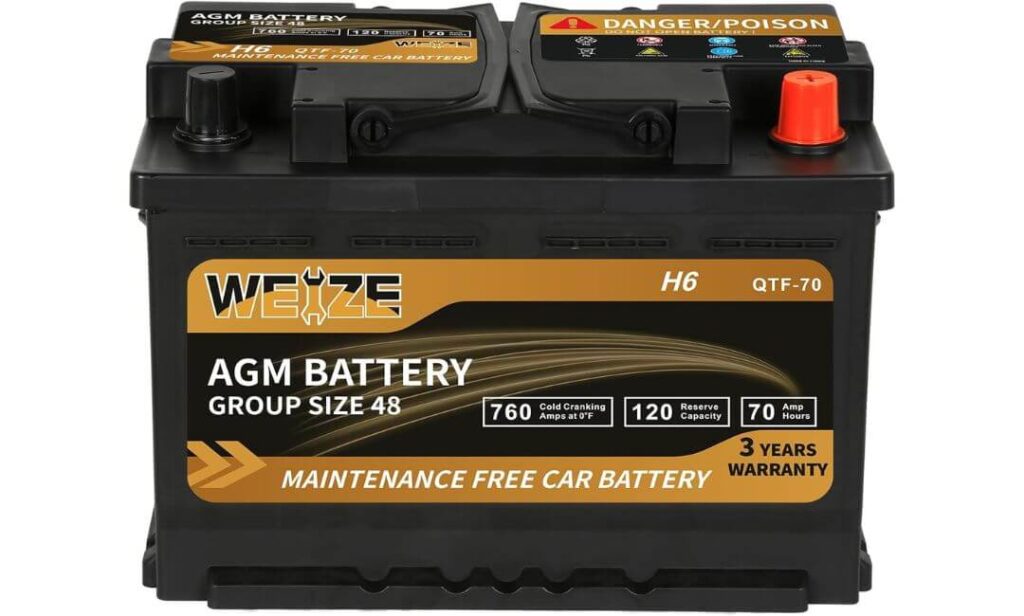
Quick Specs:
- Battery Type: Sealed AGM Automotive Battery
- Group Size: 48 / H6
- Cold Cranking Power: 760 CCA
- Capacity: 70Ah
- Reserve Capacity: 120 minutes
- Voltage: 12V
- Weight: 46 lbs
- Warranty: 36-Month Coverage
- Terminal Layout: Left Negative / Right Positive
- Best Use: Ford F-150 daily drivers, standard trims, start-stop use, value-focused replacements
- Standout Feature: Strong AGM specs at a budget-friendly price point
Here is where smart money often goes. Not every Ford F-150 owner needs the most expensive battery on the shelf, but they still need something that starts strong, handles electronics, and does not feel cheap after six months. That is exactly where this one fits.
With 760 CCA, 70Ah capacity, and 120 minutes reserve capacity, it brings numbers that genuinely matter in day-to-day truck life. Morning starts feel stronger, cabin electronics stay happier, and trucks used for errands, commuting, weekend hauling, or occasional towing get the kind of steady power many bargain batteries fail to deliver.
The AGM construction is another major reason it stands out. It is sealed, maintenance-free, vibration-resistant, and built for modern vehicles with heavier electrical loads. For an F-150 owner moving up from an aging flooded battery, this can feel like a bigger upgrade than expected. (This is the kind of battery people buy for price—then end up liking for performance.)
Why It Deserves a Spot on This List
- Strong 760 CCA for dependable starts
- 70Ah capacity supports modern accessories well
- 120 RC adds useful backup reserve power
- AGM design is cleaner and lower maintenance than flooded batteries
- Good fit for daily-driven F-150 trucks
- Excellent value for buyers avoiding dealership pricing
One Honest Trade-Off
- Not as high-output as premium H7 batteries built for heavier towing or max accessory loads
Ford F-150 Fitment & Smart Buyer Notes
This battery uses Group Size 48 / H6, which is common on many Ford F-150 trims that require H6 sizing rather than the larger H7 setup.
If your truck currently uses an H6 battery and you want a modern AGM replacement without overspending, this is the kind of option many owners end up happiest with. Just confirm tray size and terminal orientation before ordering.
The Insider Pro-Tip
For F-150 owners with mostly normal driving habits, battery quality matters more than chasing the highest CCA number on paper. Buying the correct size AGM often gives better long-term satisfaction than buying oversized specs you never use.
If your old battery lasted years, this can be a very smart reset button—especially when installed before winter rather than after the first no-start surprise.
#6. Renogy 12V 70Ah AGM Group 48
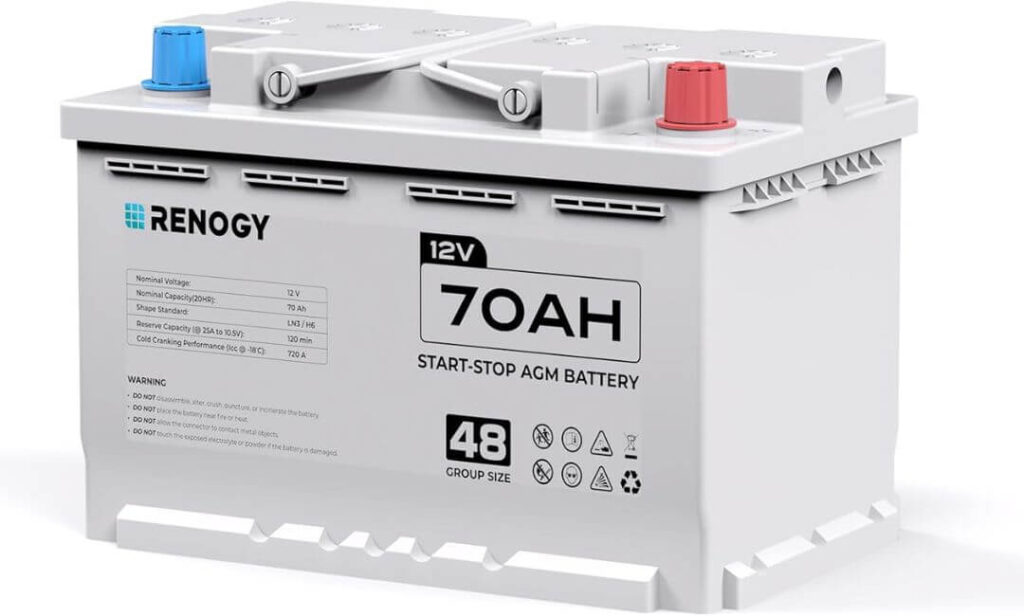
Quick Specs:
- Battery Type: Sealed AGM Start-Stop Battery
- Group Size: 48 / H6
- Cold Cranking Power: 720 CCA
- Capacity: 70Ah
- Reserve Capacity: 120 minutes
- Voltage: 12V
- Weight: Approx. 48.6 lbs
- Temperature Range: -22°F to 158°F
- Best Use: Ford F-150 daily use, start-stop driving, mixed climate conditions, electronics-supported trucks
- Standout Feature: Reliable AGM performance with wide temperature durability
Sometimes buyers chase the highest number and miss the better match. This battery is a smart example of balanced performance—strong enough for real Ford F-150 use, without forcing you to pay for extra specs many owners never actually need.
With 720 CCA, 70Ah capacity, and 120 minutes reserve capacity, it delivers dependable starts, stable voltage, and enough reserve support for everyday truck electronics. If your F-150 handles commuting, errands, weekend runs, family duty, or moderate hauling, those numbers are more useful than flashy marketing claims.
Where it becomes especially appealing is temperature resilience. Renogy rates it for use from -22°F to 158°F, which matters for owners dealing with cold mornings, summer heat, or trucks parked outdoors year-round. Add sealed AGM construction and start-stop readiness, and you get a battery built for modern driving habits. (This is the kind of practical pick people appreciate more after six months than on day one.)
Why It Earned a Spot on Our List
- Solid 720 CCA for dependable daily starts
- 70Ah capacity supports common F-150 accessory loads
- 120 RC provides useful reserve backup power
- Wide temperature operating range for harsh climates
- AGM design resists leaks, corrosion, and maintenance hassle
- Good fit for drivers wanting balanced value and reliability
One Honest Trade-Off
- Lower cranking output than premium H7 batteries designed for maximum-demand truck setups
Ford F-150 Fitment & Ownership Notes
This battery uses Group Size 48 / H6, making it suitable for many Ford F-150 models that require H6 tray sizing rather than the larger H7 battery.
If your truck is mostly stock and you want a clean AGM upgrade for normal use, this type of battery can be a smart fit. Always compare dimensions and terminal layout with your current battery before ordering.
The Insider Pro-Tip
For many F-150 owners, climate matters more than brand loyalty. Heat and repeated short trips kill batteries faster than most people realize, even when the truck seems fine.
If your truck lives outside or sees changing seasons, replacing early with a quality AGM like this often costs less than waiting for the first no-start morning.
#7. Mighty Max Battery MM-H7
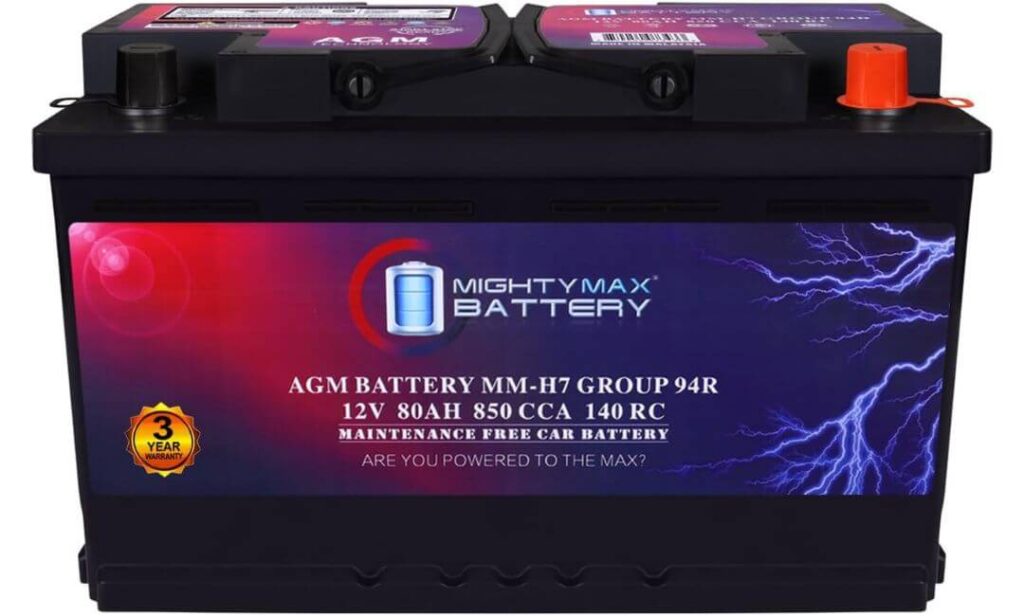
Quick Specs:
- Battery Type: Sealed AGM Start-Stop Battery
- Group Size: 94R / H7
- Cold Cranking Power: 850 CCA
- Capacity: 80Ah
- Reserve Capacity: 140 minutes
- Voltage: 12V
- Weight: 50.95 lbs
- Warranty: 3-Year Coverage
- Terminal Layout: Right Positive / Left Negative
- Best Use: Ford F-150 owners wanting H7 power at a budget-friendly price
- Standout Feature: High-output AGM specs without premium-brand pricing
Every battery list needs one smart value play—and this is it. On paper alone, 850 CCA, 80Ah capacity, and 140 minutes reserve capacity are the kind of specs many truck owners expect only after spending much more.
For Ford F-150 owners, those numbers translate into what actually matters: stronger cold starts, better voltage support for cabin electronics, steadier power during repeated starts, and less strain when the truck is loaded with chargers, trailer connections, lighting, or accessories.
Its AGM construction also adds real-world benefits. The battery is sealed, spill-resistant, vibration-tough, and built to recover better after heavier discharge than many standard flooded batteries. That makes it especially attractive for drivers who want strong capability without overspending on a badge name. (Sometimes the sleeper pick is the one buyers end up recommending later.)
Why It Made Our Top 7
- Impressive 850 CCA for powerful starts in all seasons
- 80Ah capacity supports modern truck demands well
- 140 RC gives strong reserve backup power
- AGM design is maintenance-free and cleaner to own
- Great price-to-spec value compared with premium rivals
- Good option for H7 F-150 owners wanting more for less
One Honest Trade-Off
- Long-term consistency can vary more than top-tier legacy brands
Ford F-150 Fitment & Buyer Notes
This battery uses Group Size 94R / H7, making it a potential fit for many Ford F-150 models equipped with factory H7 battery sizing.
If your truck currently uses an H7 battery and you want strong specs without paying dealership or premium-brand prices, this is the kind of option worth a serious look. Always confirm tray dimensions and cable reach before ordering.
The Insider Pro-Tip
When comparing batteries, many owners focus only on CCA and miss reserve capacity. On a modern F-150, reserve power often matters just as much because electronics continue drawing power long after startup.
If your truck sees accessories, trailer use, or frequent short drives, a battery with 140 RC can feel stronger in daily life than a battery with similar CCA but weaker reserve numbers.
Best Ford F150 Battery Comparison Table: Top H6 & H7 Picks Side by Side
| Battery | Group Size | CCA | Reserve | Type | Best For | Our Verdict |
|---|---|---|---|---|---|---|
| OPTIMA YellowTop DH6 Premium Pick | H6 / 48 | 800 | 140 Min | AGM | Accessories, towing, upgrades | Best Overall Quality |
| ACDelco Gold 94RAGM OEM Style | H7 / 94R | 850 | Strong | AGM | Newer trims, daily heavy use | Best H7 Choice |
| Interstate MTP-94R/H7 Trusted Brand | H7 / 94R | 790 | 130 Min | Flooded | Stock trucks, value buyers | Best Standard Battery |
| UPLUS AGM-L80-UP Value Power | H7 / 94R | 850 | 140 Min | AGM | Cold starts, electronics | Best Bang for Buck |
| Weize Platinum AGM Budget AGM | H6 / 48 | 760 | 120 Min | AGM | Daily driving, savings | Best Budget Pick |
| Renogy AGM Group 48 Balanced Pick | H6 / 48 | 720 | 120 Min | AGM | Mixed climates, normal use | Best Daily Driver |
| Mighty Max MM-H7 Spec Monster | H7 / 94R | 850 | 140 Min | AGM | High specs on budget | Best Value H7 |
What Makes the Best Battery for Ford F-150 Owners?
Choosing the best battery for a Ford F-150 is not about grabbing the most expensive name on the shelf or chasing one big number on the label. It is about matching the battery to how the truck is actually used. A lightly driven commuter truck, a towing setup, a cold-weather work truck, and an accessory-loaded weekend build can all need different strengths. The right battery should start confidently, hold voltage under load, survive vibration, and last long enough to justify the money spent.
Modern F-150 models place more demand on batteries than older trucks ever did. Between start-stop systems, trailer electronics, power seats, larger screens, charging ports, heated features, and constant background modules, the battery now does much more than simply crank the engine.
Cold Cranking Amps (CCA): Why Starting Power Still Matters
CCA measures how well a battery can start an engine in cold temperatures. For Ford F-150 owners, this matters because trucks use larger engines, heavier starters, and often sit outside overnight.
A weak CCA rating may still work in warm weather, then suddenly struggle when temperatures drop. That is why batteries in the 720 to 850 CCA range tend to be stronger real-world choices for many F-150 setups.
If you live in colder climates, tow regularly, or let the truck sit between drives, higher CCA is usually worth paying for. Fast starts also reduce strain on the starter and charging system over time.
Reserve Capacity: The Spec Many Buyers Ignore
Reserve Capacity tells you how long a battery can continue supplying usable power if the charging system is under stress or temporarily not charging as expected.
This matters on an F-150 because many owners run:
- Trailer brake controllers
- Phone chargers and inverters
- Cabin blowers and lights
- Audio upgrades
- Tailgate power use
- Work accessories
A battery with 120 to 140 minutes reserve capacity gives more breathing room during repeated starts, heavy accessory use, or unexpected electrical demand. In everyday ownership, this often feels more important than people expect.
Cycle Life: Why Some Batteries Die Early
Cycle life refers to how well a battery handles repeated discharge and recharge events. This is especially important for F-150 owners who make short trips, idle often, use start-stop systems, or leave accessories on.
Many cheap batteries fail early not because they were defective, but because they were never designed for repeated cycling. AGM batteries usually perform better here than standard flooded batteries.
If your truck sees city traffic, job-site stops, school runs, or frequent engine restarts, stronger cycle life is a smart investment.
Vibration Resistance: A Real Truck Advantage
Trucks experience more movement, road shock, trailer pull, and chassis vibration than many passenger cars. That constant movement can shorten battery life over time.
A battery with stronger internal construction, especially AGM designs, handles:
- Rough roads
- Off-pavement use
- Heavy hauling
- Trailer tongue load movement
- Daily truck abuse
This is one reason many serious F-150 owners upgrade from flooded batteries to AGM even when they do not need more starting power.
Warranty: What It Really Tells You
A warranty is not everything, but it often reflects how confident a manufacturer is in the product. Longer coverage can add peace of mind, especially on batteries that cost more upfront.
Still, real battery life depends on:
- Climate
- Driving habits
- Charging health
- Storage time
- Installation quality
Use warranty as one factor, not the only factor.
AGM vs Standard Lead-Acid for Ford F-150
AGM Batteries
AGM (Absorbent Glass Mat) batteries are sealed, maintenance-free, and better suited for modern trucks with higher electrical demand.
Best advantages include:
- Faster recharge response
- Better vibration resistance
- Cleaner ownership, no fluid maintenance
- Better support for electronics and start-stop systems
- Usually longer service life in tough use cases
They cost more, but many F-150 owners find the upgrade worth it.
Standard Flooded Lead-Acid Batteries
Traditional flooded batteries still make sense for some owners.
Best for:
- Stock trucks
- Moderate climates
- Normal commuting
- Lower upfront budgets
- Owners who drive regularly and do not overload accessories
They are often cheaper, but usually less durable under hard truck use.
Ford F-150 Battery Size Guide: H7 / 94R vs H6 / Group 48
Battery size matters just as much as battery quality. Buying the wrong group size can create tray fitment issues, cable stretch, terminal mismatch, or weak hold-down security.
H7 / 94R Battery Size
This is common on many newer Ford F-150 trims with higher electrical demand or factory larger battery trays.
Usually best for:
- Higher trims
- More electronics
- Towing packages
- Colder climates
- Owners wanting maximum reserve power
H6 / Group 48 Battery Size
Common on many standard F-150 configurations and excellent when matched correctly.
Usually best for:
- Daily driving
- Moderate electrical loads
- Lighter trims
- Budget-conscious AGM upgrades
- Owners wanting correct fit without oversizing
Real Owner Advice Before Buying
Always check your current battery label, owner’s manual, or tray size before ordering. Two F-150 trucks from the same generation can use different battery sizes depending on engine, trim, and equipment.
The best battery is not the biggest one or the most expensive one. It is the one that fits properly, matches how your truck is used, and starts every single time without drama.
How to Read Battery Labels for Ford F-150 Owners
Battery labels can look more confusing than they really are. Boxes and stickers are filled with letters, numbers, codes, and marketing phrases, but once you understand the key details, choosing the right battery for your Ford F-150 becomes much easier.
Most buying mistakes happen because owners focus only on price or one big number like CCA, while ignoring fitment, reserve power, or battery size. A battery can look powerful on paper and still be the wrong choice if it does not physically fit the tray or match your truck’s electrical needs.
The smartest way to read a battery label is to break it into four parts: starting power, reserve strength, battery capacity, and fitment size.
CCA: Cold Cranking Amps Explained Simply
CCA stands for Cold Cranking Amps. This number tells you how much starting power the battery can deliver in cold temperatures.
For Ford F-150 trucks, CCA matters because pickups often use larger engines, heavier starters, and more electrical systems than compact cars. If your battery has weak CCA, you may notice:
- Slow cranking in the morning
- Hesitation after the truck sits
- Hard starts in winter
- Dim lights during startup
For many F-150 owners, batteries in the 720 to 850 CCA range offer stronger real-world confidence, especially in colder climates or trucks used for towing.
Higher CCA does not always mean “best,” but too little CCA can absolutely become a problem.
Ah: What Amp Hours Actually Mean
Ah stands for Amp Hours, which measures how much energy the battery can store and deliver over time.
Think of it as stamina rather than punch. CCA is the sprint. Ah is the endurance.
On a Ford F-150, higher Ah capacity can help support:
- Cabin electronics
- Charging devices
- Audio systems
- Power seats
- Stop-start systems
- Repeated short-trip use
Many quality F-150 batteries in this guide fall around 70Ah to 80Ah, which is a strong working range for modern truck use.
RC: Why Reserve Capacity Matters More Than Most Buyers Think
RC stands for Reserve Capacity. It tells you how many minutes the battery can supply usable power if the alternator is not fully charging or the engine is off.
This becomes important when your truck is running accessories, lights, trailer systems, or when repeated starts are draining the battery faster than short drives can recharge it.
For F-150 owners, 120 to 140 minutes RC is a strong range that can provide noticeable daily-use benefits.
Many people shop only by CCA, then later wonder why the battery still feels weak under accessory load. RC is often the missing answer.
Group Size: The Number That Decides Fitment
Group size refers to the battery’s physical dimensions, terminal layout, and fitment pattern. This is one of the most important parts of the label.
For many Ford F-150 models, the most common sizes are:
- H7 / 94R
- H6 / Group 48
These numbers are not performance grades. They are fitment classes.
A battery with great specs but the wrong group size may cause:
- Battery tray mismatch
- Hold-down bracket issues
- Cable stretch problems
- Incorrect terminal position
- Hood clearance concerns
Always treat group size as a must-check item, not an optional detail.
H7 / 94R vs H6 / Group 48 for Ford F-150
H7 / 94R
Usually found on many newer or higher-demand F-150 setups. Often chosen when owners need more reserve power or factory larger tray sizing.
Common for:
- Higher trims
- Towing packages
- More electronics
- Colder weather use
H6 / Group 48
Often used on many standard F-150 configurations. Still a strong option when matched correctly.
Common for:
- Daily driving
- Standard electrical loads
- Value-focused AGM replacements
- Correct-size fitment without oversizing
How to Check Compatibility by Ford F-150 Model Year
Do not assume every Ford F-150 from one generation uses the same battery. Engine choice, trim level, towing package, hybrid systems, and factory options can change battery requirements.
Best ways to verify compatibility:
- Check the battery currently installed in the truck
- Read the owner’s manual battery section
- Measure tray dimensions
- Confirm terminal orientation
- Use VIN-based fitment tools from trusted sellers
- Compare OEM replacement size codes
A 5.0L V8 truck and an EcoBoost trim from the same year may not always be identical in battery setup.
How to Verify You’re Buying the Correct Size
Before ordering, compare these five details with your current battery:
- Group size (H7 / 94R or H6 / 48)
- Length, width, and height
- Positive and negative terminal positions
- Hold-down ledge location
- Required CCA range
This five-minute check prevents most return headaches.
Real Buyer Advice That Saves Money
If your current battery lasted years and the truck started fine until recently, replacing it with the same correct group size from a better-quality brand is usually the smartest move.
Many owners create problems by chasing the “biggest battery possible” instead of the correct battery possible.
The label is there to protect you. Read it carefully, match it properly, and your Ford F-150 will usually reward you with years of easy starts.
Buying Guide: How to Choose the Right Battery for Your Ford F-150 Without Regret
Buying a battery for a Ford F-150 should be simple, yet many owners end up replacing the wrong one, overpaying for features they do not need, or buying a cheap option that feels weak within months. The smartest purchase is not about picking the most expensive battery or the biggest brand name. It is about matching the battery to your truck, your climate, and the way you actually drive.
A Ford F-150 used for towing every weekend needs something different than a truck used for city commuting. A cold-weather truck needs different strengths than one living in a warm garage. Once you buy with that mindset, the right choice becomes much clearer.
Start With Fitment Before You Compare Anything Else
Always begin with battery size and tray compatibility. For many Ford F-150 models, common sizes include H7 / 94R and H6 / Group 48, but exact fitment can vary by year, trim, engine, and equipment package.
Before spending money, confirm:
- Current battery group size
- Length, width, and height
- Terminal location
- Cable reach
- Hold-down bracket position
- Hood clearance
Many battery returns happen because people shop by brand first and fitment second.
Match the Battery to How Your Truck Is Used
Think honestly about daily use, not ideal use.
If your F-150 is mostly used for commuting, grocery runs, family driving, and normal weekend errands, a quality H6 or H7 battery with balanced specs is usually enough.
If your truck handles towing, work duty, idling, off-road trips, power accessories, trailer lighting, or frequent stop-and-go traffic, step into a stronger AGM battery with higher reserve capacity.
If the truck sits for long periods between drives, battery quality becomes even more important because inactivity is hard on batteries.
Understand Which Specs Actually Matter
Battery labels throw numbers everywhere, but a few matter most.
CCA (Cold Cranking Amps) affects starting strength, especially in winter.
Reserve Capacity (RC) helps power electronics and adds backup strength.
Amp Hours (Ah) reflects energy storage endurance.
Warranty adds peace of mind.
Battery Type affects durability and maintenance.
For many Ford F-150 owners, a battery in the 720 to 850 CCA range with 120 to 140 RC is a practical sweet spot.
AGM vs Standard Battery: Buy for Lifestyle, Not Hype
AGM batteries cost more, but they often make sense for modern trucks. They recharge faster, handle vibration better, resist leaks, and usually perform better with accessories or start-stop systems.
Standard flooded batteries can still be smart buys when:
- The truck is mostly stock
- You drive regularly
- Climate is moderate
- Budget matters most
- Electrical demand is low
Do not buy AGM because it sounds premium. Buy AGM because your truck use justifies it.
Climate Should Influence Your Decision
Heat shortens battery life quietly. Cold exposes weak batteries dramatically.
If you live where winters are harsh, prioritize stronger CCA and dependable build quality.
If you live in hot climates, prioritize durability, heat tolerance, and strong warranty support.
Some owners only shop after weather causes failure. Buying before that moment usually saves money and stress.
Newer Trucks Need Better Voltage Stability
Modern Ford F-150 trucks have more modules, sensors, screens, and electronic systems than older models. A weak battery can create strange behavior long before complete failure.
You may notice:
- Slow starts
- Auto start-stop issues
- Flickering screens
- Warning lights
- Random electrical quirks
- Weak accessory performance
Sometimes replacing the battery solves problems owners blame elsewhere.
Do Not Ignore Installation Details
Even the best battery can disappoint if installed poorly.
Before installation:
- Clean battery terminals
- Inspect cables for corrosion
- Secure hold-down bracket tightly
- Confirm charging system health
- Reset battery monitoring systems if equipped
Small installation mistakes often get blamed on the battery unfairly.
Smart Budget Strategy Most Owners Miss
If you keep your truck for years, buying a better battery once can cost less than buying cheaper batteries repeatedly.
Low-cost batteries can look attractive upfront, but repeated replacements, weak starts, towing stress, and downtime add hidden cost.
The best value is often the battery you forget about because it keeps working.
When to Replace Before Failure
Waiting for a no-start morning is rarely the smartest plan.
If your battery is aging and you notice slower cranking, dimming during startup, recent jump starts, or voltage-related quirks, replacement before winter or before towing season is often the wiser move.
Preventive replacement feels expensive for one day. Emergency replacement usually feels expensive for much longer.
Final Real-World Advice
Choose the correct size first, then choose the best quality you can reasonably afford. Match it to how your Ford F-150 is truly used, not how you wish it was used.
A battery should give confidence every morning, not anxiety every time you turn the key.
Installation Basics: How to Replace a Ford F-150 Battery the Right Way
Replacing the battery in a Ford F-150 is one of the most practical DIY jobs an owner can do, but doing it carelessly can create problems that cost more than the battery itself. Modern trucks rely on stable voltage, clean connections, and proper fitment. A rushed installation can lead to warning lights, poor charging, loose terminals, or shortened battery life.
The good news is that with the right approach, battery replacement is straightforward. The key is to treat it like a precision maintenance job, not just a quick swap.
Quick Safety Tips Before You Start
Battery work is simple, but it still involves electricity, heavy weight, and corrosive materials. Take a few minutes to set up properly.
Before touching anything:
- Park on level ground and shut the truck off fully
- Remove the key or keep the fob away from the vehicle
- Let electronics power down for a few minutes
- Wear gloves and eye protection
- Keep metal tools away from both terminals at once
- Avoid sparks, cigarettes, or open flame nearby
- Lift carefully, batteries are heavier than many expect
If the old battery case is swollen, cracked, leaking, or smells strongly of sulfur, handle it carefully and replace it promptly.
Tools That Make the Job Easier
Most Ford F-150 battery changes require only basic tools.
Helpful items include:
- Ratchet with common socket sizes
- Battery terminal brush or cleaner
- Gloves
- Shop towel
- Dielectric grease or terminal protectant
- Battery carrying strap if available
- Memory saver device (optional)
A clean terminal connection matters as much as the battery itself.
Steps to Install an AGM Battery in a Ford F-150
AGM batteries install similarly to standard batteries, but they deserve cleaner handling and proper charging support.
Step 1: Confirm the Correct Replacement
Before removing the old battery, compare:
- Group size (H7 / 94R or H6 / Group 48, depending on your truck)
- Terminal orientation
- Tray fitment
- Height clearance
- Required CCA range
Never assume “close enough” is good enough with battery fitment.
Step 2: Remove the Negative Terminal First
Always disconnect the negative (-) terminal first. This reduces the chance of accidental shorting while working.
Then disconnect the positive terminal.
If terminals are corroded, loosen carefully and avoid forcing side-to-side damage.
Step 3: Remove the Hold-Down Bracket
Ford F-150 batteries are secured with a hold-down bracket or clamp. Remove it fully and keep hardware safe.
Do not skip reinstalling the hold-down later. Loose batteries fail earlier due to movement and vibration.
Step 4: Lift Out the Old Battery Carefully
Use proper lifting posture. Many truck batteries weigh 45 to 55 pounds or more.
Keep the battery upright while removing it.
Step 5: Clean the Battery Tray and Terminals
This step is skipped too often.
Clean:
- Battery tray dirt or rust
- Corrosion from cable ends
- Loose debris
- Acid residue if present
A fresh battery on dirty terminals can still perform poorly.
Step 6: Install the New AGM Battery
Place the new battery squarely in the tray with terminals positioned correctly.
Reinstall the hold-down clamp firmly. The battery should not shift.
Connect terminals in this order:
- Positive (+) first
- Negative (-) second
Tighten snugly, but do not overtighten and damage terminal posts.
Step 7: Start the Truck and Check Operation
Once installed:
- Start the engine
- Confirm fast, smooth crank
- Check for warning lights
- Verify accessories operate normally
- Confirm terminals remain secure after first drive
Some newer F-150 models may need battery monitoring system resets depending on year and equipment.
AGM Battery Tips Many Owners Miss
AGM batteries are tougher than standard flooded batteries, but they still benefit from proper care.
Best practices:
- Keep fully charged whenever possible
- Avoid repeated deep discharge
- Use an AGM-compatible charger if charging externally
- Do not leave the truck sitting for long periods without maintenance charging
Many AGM complaints come from undercharging, not battery defects.
Warranty Navigation and Registration
A strong warranty is valuable only if you can actually use it.
After purchase:
- Save the receipt immediately
- Photograph the receipt in case ink fades
- Record installation date
- Register online if the brand offers it
- Keep serial numbers visible
- Read free replacement vs prorated terms carefully
If warranty service is ever needed, proof of purchase often matters more than memory.
How to Dispose of the Old Battery Properly
Lead-acid batteries should never be thrown in household trash.
Best disposal options:
- Auto parts stores
- Battery retailers
- Recycling centers
- Service garages
- Core return programs
Many sellers charge a core fee refunded when the old battery is returned. Bring the old battery back clean and upright.
Recycling matters because batteries contain reusable lead and plastic that should be processed correctly.
Mistakes That Shorten Battery Life Immediately
Avoid these common errors:
- Buying the wrong group size
- Loose terminal connections
- Skipping tray cleaning
- Not securing the hold-down clamp
- Letting the battery sit discharged
- Ignoring charging system issues
- Using the wrong charger type for AGM batteries
A perfect battery can fail early when installation is careless.
Real Owner Advice Worth Following
If your old battery lasted years, do not rush the replacement. Take ten extra minutes to clean connections, verify fitment, and install correctly.
Most battery problems blamed on “bad brands” are often bad connections, weak charging systems, or poor installation habits.
Done right, a new battery should feel boring—in the best possible way. It should simply start your Ford F-150 every time and stay out of your life.
Maintenance & Longevity Tips for AGM Batteries in a Ford F-150
A quality AGM battery can last years in a Ford F-150, but battery life is rarely decided by the logo on top. It is usually decided by charging habits, driving patterns, climate, and how the truck is stored between uses. Many batteries get blamed for “failing early” when the real issue was undercharging, heat exposure, or constant short-trip use.
AGM batteries are tougher than many standard flooded batteries. They handle vibration better, resist leaks, and support modern electronics more confidently. But they are not magic. If neglected, they can age just like anything else under the hood.
The goal is simple: keep the battery charged, keep connections clean, and avoid unnecessary stress.
Why AGM Batteries Behave Differently
AGM (Absorbent Glass Mat) batteries are sealed and designed to deliver strong starting power with better cycling ability than many traditional batteries. That makes them a smart fit for newer Ford F-150 trucks with:
- Start-stop systems
- Larger infotainment screens
- Heated seats and accessories
- Trailer electronics
- Frequent restarts
- Higher standby electrical loads
Because they are more advanced, AGM batteries also respond best to proper voltage management and healthy charging systems.
Simple Habits That Add Real Battery Life
Most battery life gains come from small habits repeated consistently.
Drive Long Enough to Recharge Properly
Starting the truck takes energy. If your F-150 only makes short trips, the alternator may never fully replenish what was used.
Repeated patterns like:
- 5 to 10 minute drives
- Quick store runs
- Frequent restarts
- Long idle periods with electronics on
can slowly weaken even a new AGM battery.
Whenever possible, give the truck occasional longer drives so the battery reaches a healthier charge state.
Keep Battery Terminals Clean
Corroded or dirty terminals reduce charging efficiency and starting performance.
Check periodically for:
- White or blue corrosion buildup
- Loose clamps
- Moisture or grime
- Frayed cable ends
Clean connections can make an average battery feel stronger and a great battery last longer.
Secure the Battery Properly
Ford F-150 trucks experience vibration, rough roads, towing movement, and chassis flex. If the hold-down bracket is loose, internal battery wear increases over time.
A battery should never rock, slide, or shift in the tray.
Watch the Charging System, Not Just the Battery
Many “bad battery” stories are really charging system issues.
Have the alternator and voltage output checked if you notice:
- Repeated weak starts
- New battery draining quickly
- Flickering lights
- Battery warning lights
- Random electrical glitches
A healthy AGM battery still needs healthy charging support.
Use the Right Charger for AGM Batteries
If you charge the battery externally, use a charger with an AGM mode or smart charging profile.
Wrong chargers can:
- Undercharge the battery
- Overheat it
- Reduce lifespan over time
- Cause poor performance after storage
Smart chargers are inexpensive compared with replacing batteries early.
Signs It May Be Time to Replace the Battery
Battery failure usually gives warnings before complete no-start situations. The mistake many owners make is waiting until the worst possible morning.
Watch for these signs:
Slower Cranking Than Before
If your F-150 used to fire instantly and now sounds slower or lazier, pay attention. That subtle change often comes early.
Voltage-Related Weirdness
Modern trucks may show battery weakness through electronics first:
- Auto start-stop stops working
- Screens reset unexpectedly
- Random warning lights
- Dim interior lighting during startup
- Power windows feel slower
Frequent Jump Starts or Recharge Needs
Needing repeated jump starts is not normal. Even if it “still works,” the battery may be nearing the end.
Age Matters Too
Many AGM batteries can last several years, but climate and use patterns matter more than calendars.
Heat, short trips, and deep discharge cycles shorten life faster than highway miles.
Physical Warning Signs
Replace immediately if you notice:
- Swollen case
- Cracks
- Acid smell
- Leakage
- Burned terminals
These are not “wait and see” problems.
Storage Tips for Trucks That Sit
Many Ford F-150 owners have second vehicles, work trucks, seasonal use patterns, or travel periods where the truck sits unused. Storage habits can dramatically change battery life.
If Sitting for a Few Weeks
If the truck will sit two to four weeks:
- Start with a fully charged battery
- Turn off accessories
- Remove aftermarket parasitic draws if known
- Check charge before next use
If Sitting Longer
For longer storage, the smartest move is a quality battery maintainer.
A maintainer helps keep the AGM battery at a healthy level without overcharging. This is much better than letting it drain and trying to rescue it later.
Avoid Repeated “Idle to Charge” Thinking
Letting the truck idle occasionally is not the same as proper charging. It may help somewhat, but it is not ideal long-term battery care.
Driving or using a proper charger is usually better.
Protect From Extreme Heat When Possible
Heat is one of the biggest silent battery killers.
If available:
- Park in shade
- Use a garage
- Avoid prolonged high-heat storage
- Keep under-hood area clean for airflow
Cold reveals weak batteries, but heat often creates weak batteries first.
Seasonal Maintenance Smart Owners Follow
Before Winter
Test battery health, clean terminals, and make sure charge level is strong. Winter is when weak batteries get exposed.
Before Summer
Inspect case condition and charging health. High heat accelerates wear.
Before Towing Season or Road Trips
Load demands increase during towing and travel. If the battery is already questionable, replace early instead of gambling far from home.
Real Ford F-150 Owner Advice
The best battery maintenance is consistency, not complexity. A clean, fully charged AGM battery in a truck with a healthy charging system can last impressively long.
Most owners think about the battery only when it fails. The smarter move is noticing the small warnings early, correcting habits early, and replacing on your schedule—not the battery’s schedule.
FAQs About Ford F150 Battery
What battery size does a Ford F-150 actually need: H7 / 94R or H6 / Group 48?
There is no one-size-fits-all answer for every Ford F-150. Many owners assume all trucks use the same battery, then order the wrong one. In reality, battery size can change based on model year, engine choice, trim level, towing package, start-stop system, and factory electrical load.
For many modern F-150 models, the most common sizes are H7 / 94R and H6 / Group 48. H7 batteries are usually larger and often used where more reserve power is needed. H6 batteries are common on many standard configurations and can be the correct fit when matched properly.
The smartest move is simple:
- Check the battery currently installed
- Read the owner’s manual
- Verify tray dimensions
- Confirm terminal position
The best battery size is not the biggest one. It is the one Ford intended for your exact truck setup.
Is an AGM battery really worth it for a Ford F-150, or is it just marketing?
For many Ford F-150 owners, AGM is a genuine upgrade—not a buzzword. Trucks today carry more electrical demand than older generations ever did. Screens, charging ports, heated features, trailer electronics, start-stop systems, and standby modules all put more pressure on the battery.
AGM batteries usually offer:
- Better vibration resistance
- Faster recharge recovery
- Cleaner sealed construction
- Stronger support for repeated restarts
- Better performance under accessory load
If your F-150 is mostly stock, driven regularly, and lightly used, a standard flooded battery can still make sense. But if the truck tows, idles often, sees short trips, or runs accessories, AGM often pays back in reliability and reduced frustration.
Why does my Ford F-150 still crank slowly after installing a new battery?
This catches many owners off guard. A new battery does not automatically fix every starting issue. If your F-150 still cranks slowly, the battery may not be the real cause—or not the only cause.
Common hidden reasons include:
- Corroded battery terminals
- Weak ground cable
- Aging starter motor
- Poor alternator output
- Loose terminal connections
- Battery monitoring system needing reset
- Truck sitting long enough to drain the new battery
A battery is one part of the starting system. If the truck still sounds lazy after replacement, inspect cables and charging voltage before blaming the battery brand.
How long should a quality battery last in a Ford F-150 under real use?
Real-world battery life depends more on habits than advertising claims. A quality battery in a Ford F-150 can last several years, but climate and usage patterns decide whether it lives a short life or a long one.
Batteries tend to last longer when the truck gets regular drives, healthy charging cycles, and clean connections. They age faster when the truck does constant short trips, sits unused, faces extreme heat, or runs heavy accessories frequently.
Many owners think a battery “randomly died,” but warning signs usually appeared first:
- Slower starts
- Weak voltage behavior
- Frequent jump starts
- Auto start-stop problems
- Dimming during startup
If performance changes, pay attention early. That is often how you get maximum value before failure becomes inconvenient.
Should I buy the highest CCA battery possible for my Ford F-150?
Not always. Higher CCA can be helpful, especially in cold climates or demanding truck use, but chasing the biggest number alone can lead to overspending or ignoring better overall fitment.
A balanced battery with the correct size, strong reserve capacity, solid build quality, and enough CCA for your engine is usually the smarter buy than an oversized spec sheet hero.
Think of battery shopping like this:
- Correct size comes first
- Reliable brand/build quality comes second
- CCA matched to climate/use comes third
- Reserve capacity often matters more than buyers expect
For many F-150 owners, the right battery feels boring in the best way—it just starts every time and stays out of your life.
Final Verdict: Buy the Right Battery Once, Enjoy the Truck Every Day
A Ford F-150 asks more from a battery than most vehicles do. It has the size, electrical demand, and real-world workload of a true truck, which means the wrong battery usually reveals itself quickly—slow starts, weak voltage, electronic quirks, or failure at the worst possible time.
That is why the smartest move is not buying the cheapest option or the flashiest label. It is choosing the correct H7 / 94R or H6 / Group 48 fitment first, then selecting a battery that matches how your truck is actually used. Daily commuting, towing, cold-weather starts, job-site idling, short trips, and accessory loads all deserve different priorities.
If you want premium long-term confidence, AGM options from this list stand out for durability, cleaner ownership, and stronger support for modern F-150 demands. If you want practical value, there are also smart picks here that can serve a stock truck extremely well without overspending.
The real truth most owners learn late is simple: a great battery does not just start your truck. It makes the whole ownership experience better—more dependable mornings, steadier electronics, fewer surprises, and one less thing to think about.
Choose once, choose correctly, and let your Ford F-150 do what it was built to do.
Also Check:

